

Outfunnel solves a specific problem: keeping your CRM and email marketing tools in sync. If your sales team works in Pipedrive while marketing runs campaigns in Mailchimp, contact data drifts apart within days. Reps call leads without knowing who opened last week's email. New form submissions sit in one system but never reach the other. Outfunnel sits between these tools and keeps them connected, so both teams work from the same data without manual exports or multi-step automation chains.
To write this Outfunnel review, we analyzed it extensively. We believe it's the right choice if:
You use a dedicated CRM and a separate email marketing tool that need consistent data
You want email engagement data (opens, clicks, unsubscribes) visible on CRM contact records
You need a faster alternative to building multi-step Zapier workflows for data sync
You're an SMB with under 15,000 active contacts
You value simplicity over platform breadth
However, Outfunnel might not be sufficient if:
You need B2B contact and company data, not just syncing what you already have
You require buyer intent signals to identify accounts actively researching solutions
You want AI-powered prospecting, outreach, and deal execution in one place
You need enterprise security certifications like SOC 2 Type II and ISO 27001
You're looking for a go-to-market platform rather than a connector between existing tools
In this case, you should consider ZoomInfo: an AI GTM platform built on the largest B2B dataset in the industry, with intelligence and execution tools to turn that data into a pipeline. Where Outfunnel connects your existing tools, ZoomInfo provides the data, account intelligence, and execution environment that growing go-to-market teams need as they move beyond sync.
We've included a detailed look at ZoomInfo later in this Outfunnel review, as the natural next step for teams ready to move from data sync to data-driven go-to-market execution. If you'd like to explore the platform, you can start with ZoomInfo Lite for free here.
What is Outfunnel?
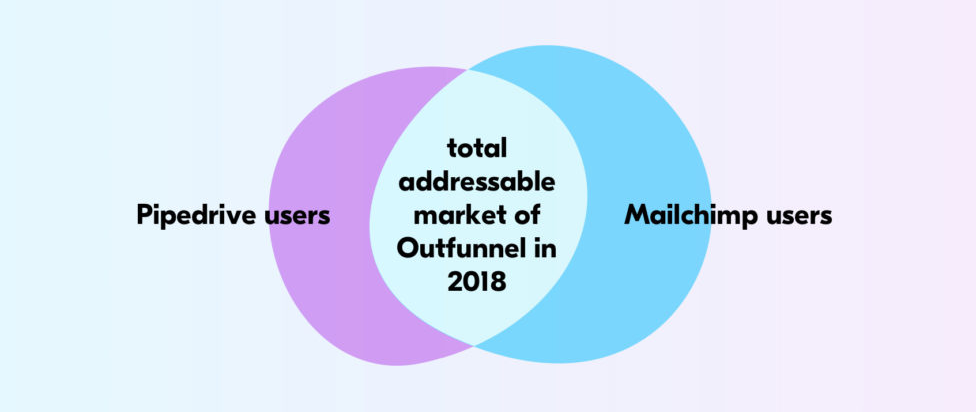
Outfunnel is a sales and marketing workflow platform founded in 2018 and headquartered in Tallinn, Estonia. Andrus Purde started the company after seven years as Head of Marketing at Pipedrive, where he watched SMB customers struggle with CRM-to-marketing integrations that required constant manual work.
The first version served one use case: syncing Pipedrive with Mailchimp. From there, the product expanded to cover additional CRMs and marketing platforms.
Source: Outfunnel
Today, Outfunnel does not replace your CRM or email marketing tool. It syncs your CRM with email platforms, spreadsheets, and more so both sales and marketing work from the same contact data, the same engagement history, and the same lead signals. The product has three capabilities: data sync (contacts, engagement, and lead forms), web tracking, and lead scoring.
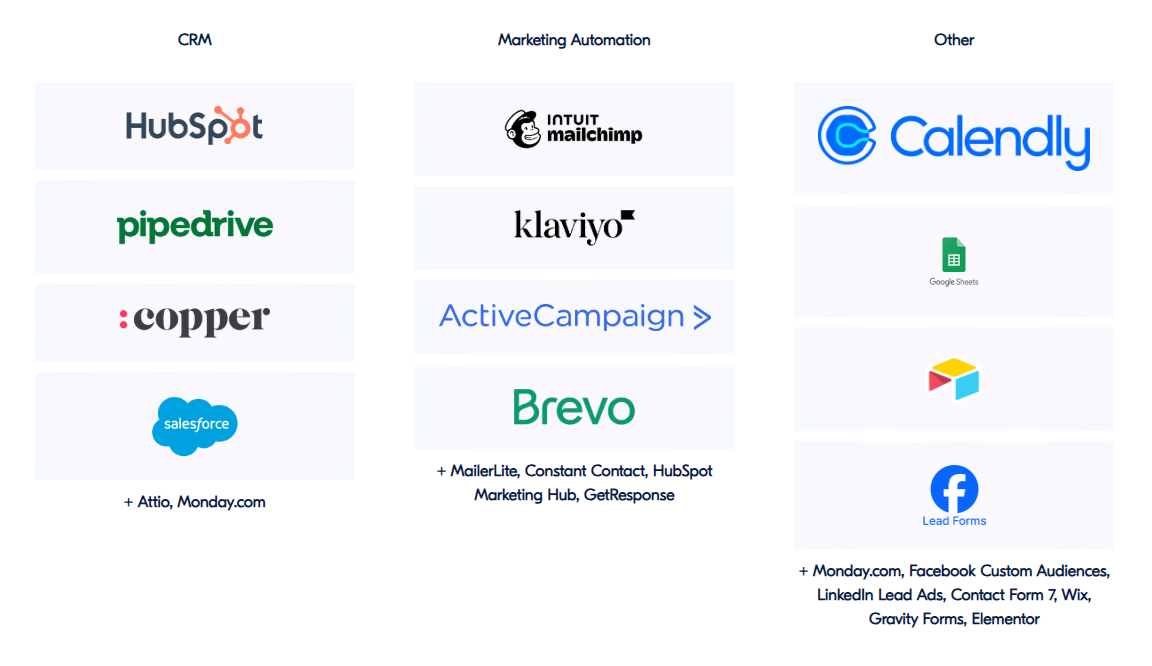
Outfunnel supports six CRMs (HubSpot, Pipedrive, Copper, Salesforce, Attio, and Monday.com) and eight email marketing tools (Mailchimp, Klaviyo, ActiveCampaign, Brevo, MailerLite, Constant Contact, HubSpot Marketing Hub, and GetResponse). It also connects to Google Sheets, Airtable, Facebook Lead Ads, LinkedIn Lead Ads, and Calendly.
Source: Outfunnel
The company has raised €1.1M in pre-seed funding and serves over 1,000 businesses. Its team of roughly 11 people keeps the product focused on data sync and workflow alignment rather than expanding into email sending or CRM functionality.
Outfunnel Pros & Cons
Pros | Cons |
|---|---|
Fast setup, under 15 minutes for most connections | Reporting is basic; no bounce breakdowns or reply tracking |
Bidirectional contact sync with custom field mapping | Does not send emails or replace marketing tools |
Email engagement data (opens, clicks) flows back to CRM records | Integration catalog narrower than iPaaS tools like Zapier |
Lead scoring combines email, web, and CRM activity | No B2B contact or company database included |
Pricing starts at $29/month with no per-seat fees | Occasional data discrepancies between synced systems |
4.9/5 on Capterra with a perfect 5.0 for customer service | No SOC 2 or ISO 27001 security certifications |
#1 rated app on the Pipedrive Marketplace | Small team (~11 employees); limited enterprise support options |
Outfunnel Review: How it Works & Key Features
Data Sync: Outfunnel keeps contacts, engagement data, and form submissions flowing between your CRM and marketing tools.
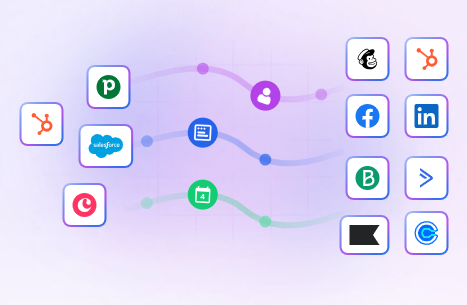
Data Sync is Outfunnel's core feature and the reason most customers adopt the platform. It has three components: Contacts Sync, Engagement Sync, and Lead Forms.
Source: Outfunnel
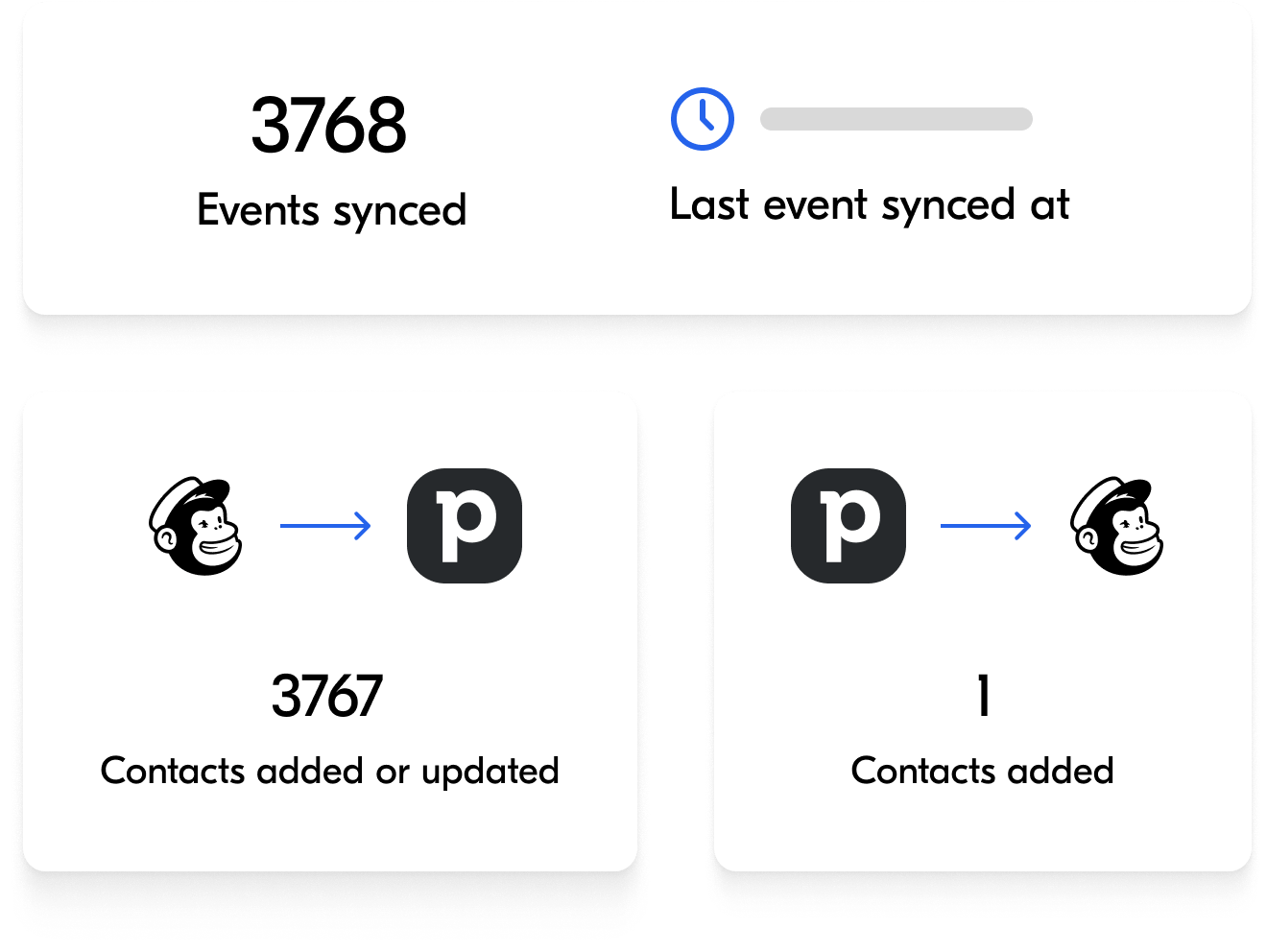
Contacts Sync handles bidirectional record keeping between your CRM and email marketing tool. You choose the sync direction (one-way or two-way), define which contacts to include using CRM filters or marketing list tags, and map fields including custom person, organization, and deal fields.
Source: Outfunnel
The system deduplicates by email address and syncs all existing contacts on activation, not just new ones created after setup. When field values conflict between systems, you configure a "conflict winner" app per field. Sync frequency varies: Pipedrive, HubSpot, and Salesforce check for segment changes every two hours, while Copper syncs in real-time.
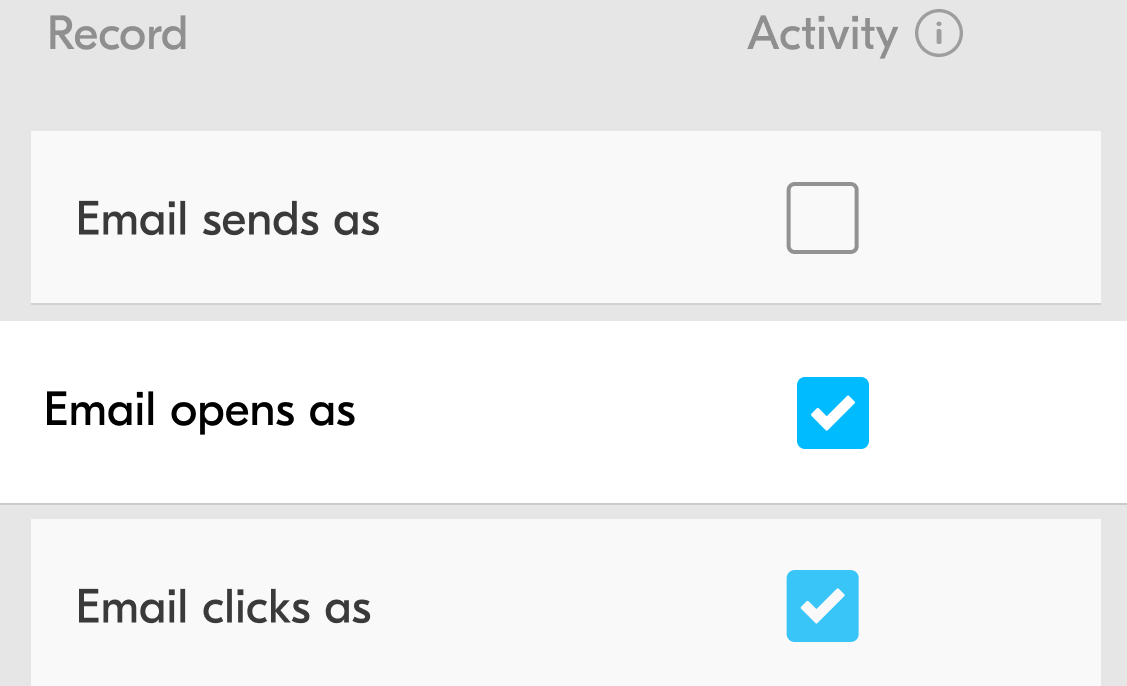
Engagement Sync pushes email activity data into CRM contact records. When a contact opens an email, clicks a link, unsubscribes, or bounces, that event is recorded in the CRM as an Activity, Task, Note, or Custom Field update.
Source: Outfunnel
Engagement data is linked at the contact level and automatically connected to associated organizations and deals. Pipedrive users see a panel on each contact profile showing recent engagement at a glance.
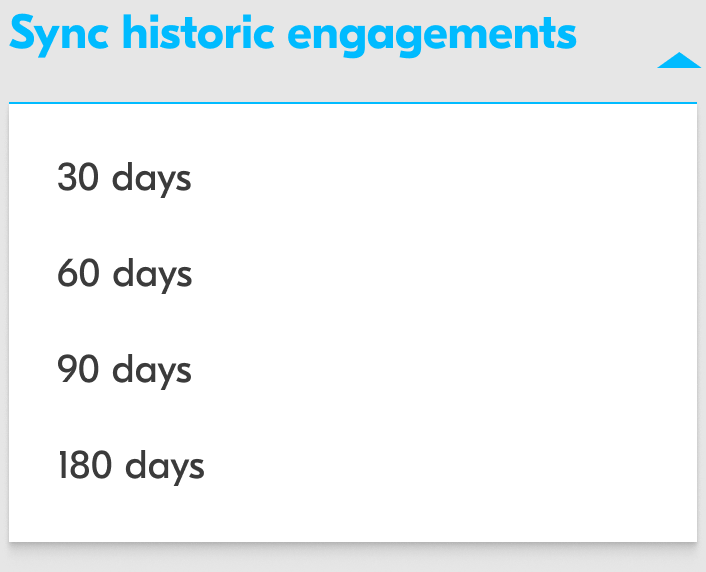
The sync includes a 30-day historical window on activation, with longer periods available on request.
Source: Outfunnel
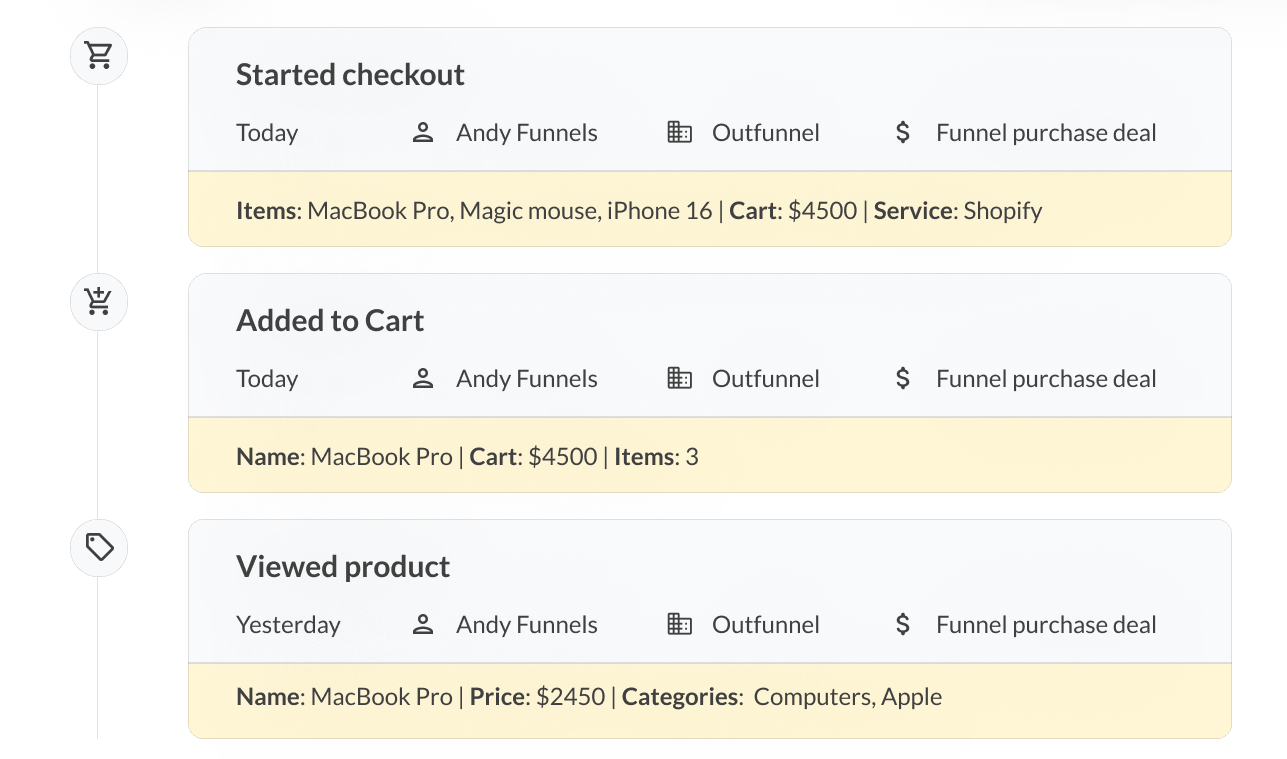
On the Professional plan, Klaviyo ecommerce events like cart abandonment and product views also flow into CRM timelines.
Source: Outfunnel
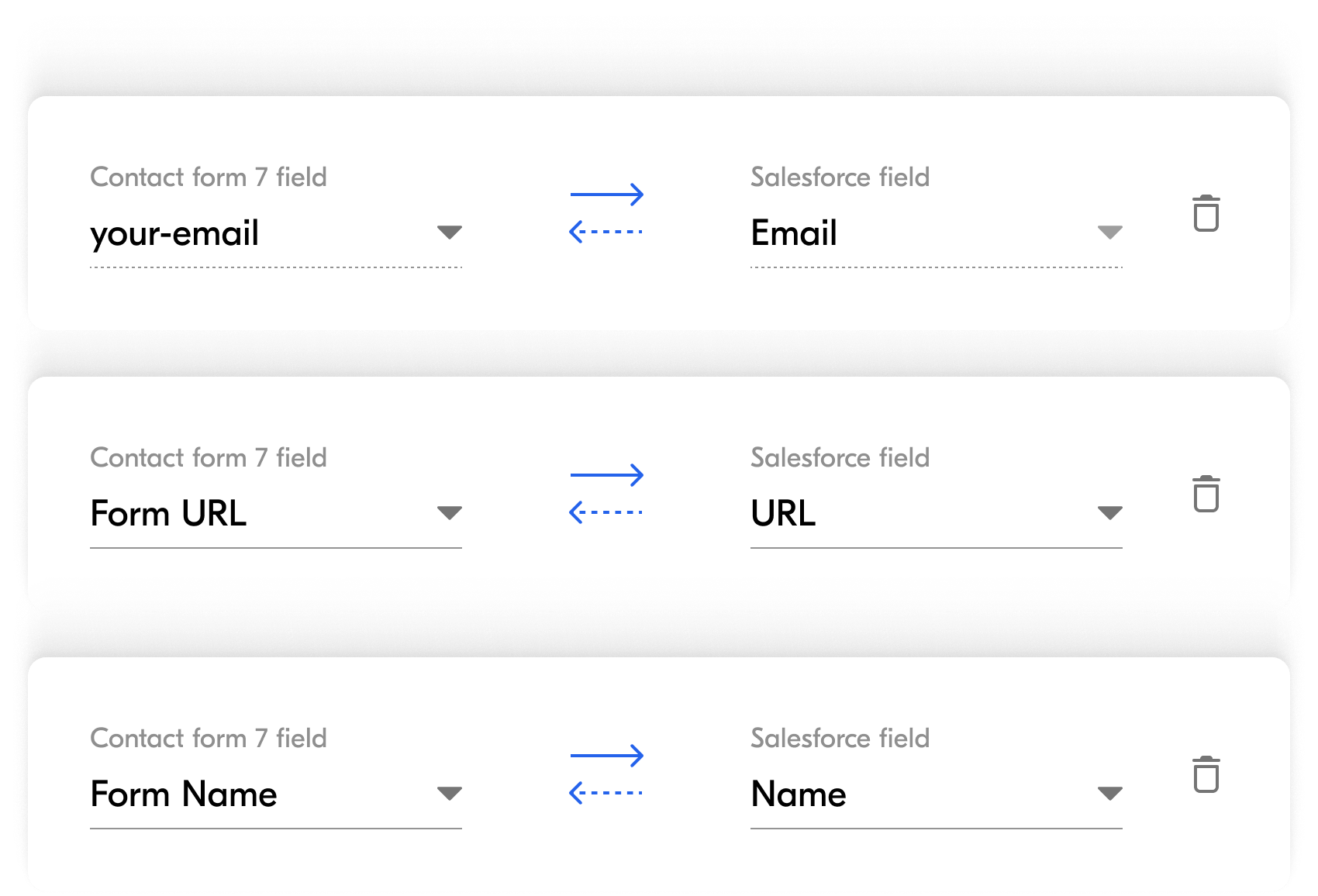
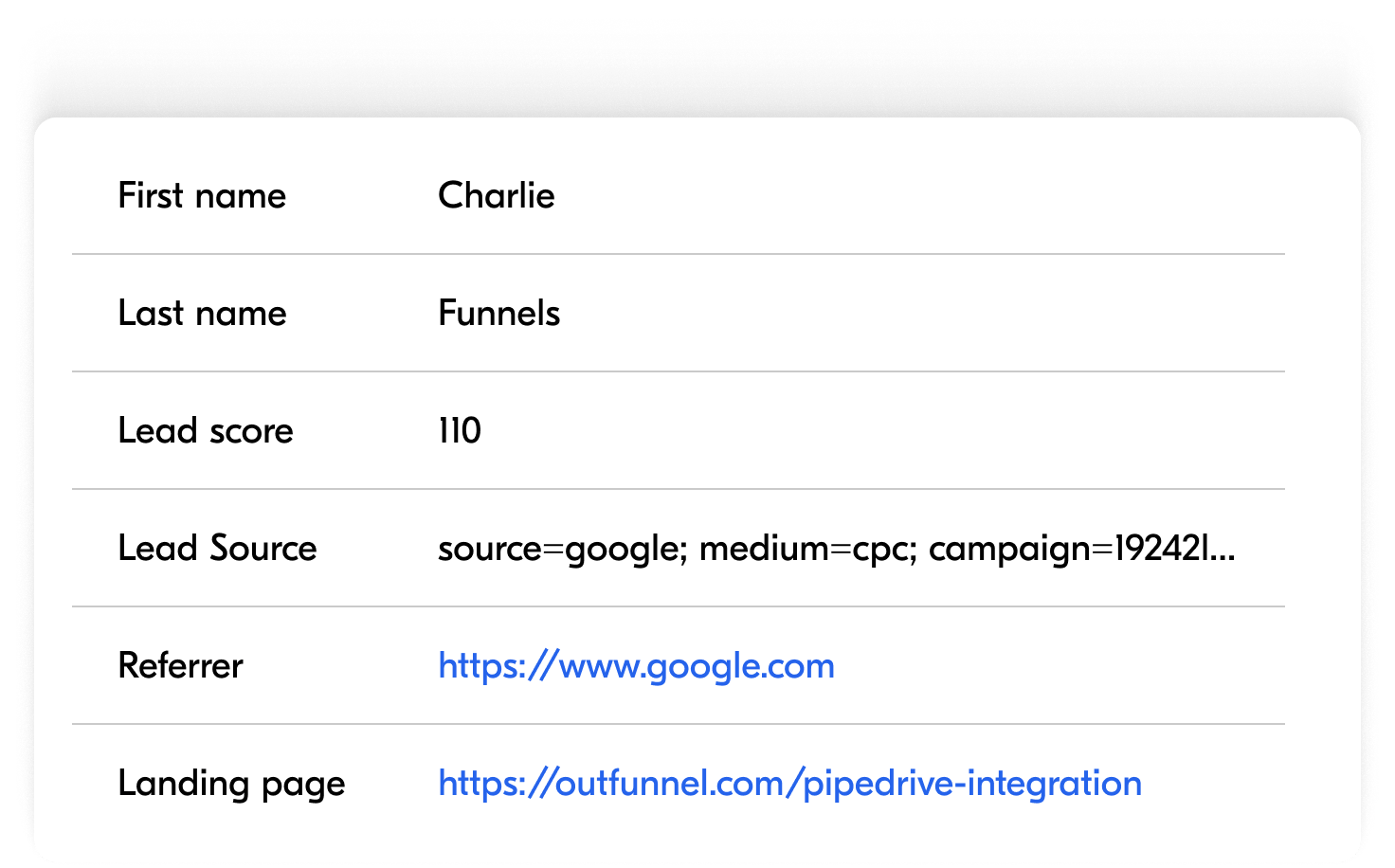
Lead Forms routes new leads from web forms, ad platforms, and scheduling tools directly into the CRM. Supported sources include Calendly, Facebook Lead Ads, LinkedIn Lead Ads, Webflow, Wix, Gravity Forms, Elementor, Contact Form 7, and any form that sends webhooks.
Source: Outfunnel
Each submission syncs instantly with automatic capture of UTM parameters, source, medium, and landing page data.
Source: Outfunnel
The cost structure matters: each unique contact counts once per billing period, regardless of how many updates flow through the system. In Zapier or Make, every field change and engagement event is a separate billable operation. For teams with frequent data updates on a moderate contact list, this difference adds up fast.
Web Visitor Tracking: Outfunnel identifies which known CRM contacts visit your website and records what they view.
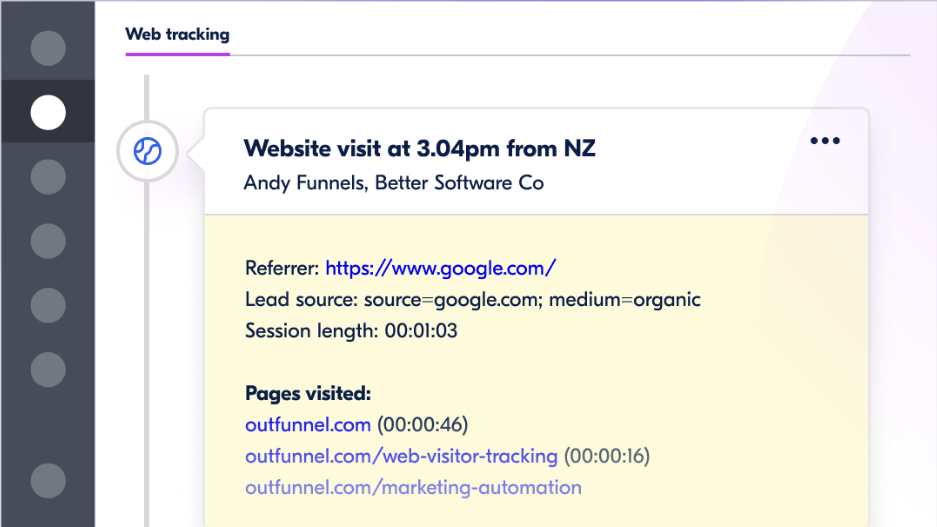
Web Visitor Tracking connects anonymous website sessions to named contacts in your CRM. After installing a JavaScript tracking snippet (directly in the HTML, via WordPress plugin, or through Google Tag Manager), every visitor gets an anonymous ID. When that visitor later fills in a form or clicks a tracked link in an email, they become identified.
Source: Outfunnel
The key behavior is backfill: Outfunnel captures visitor activity before identification. If someone browses your pricing page three times over two weeks and then fills out a form, their entire browsing history syncs retroactively to their CRM profile. The data includes visited pages, time spent per page, session length, country, and referral source. UTM parameters and ad click IDs (gclid, fbclid) are also captured.
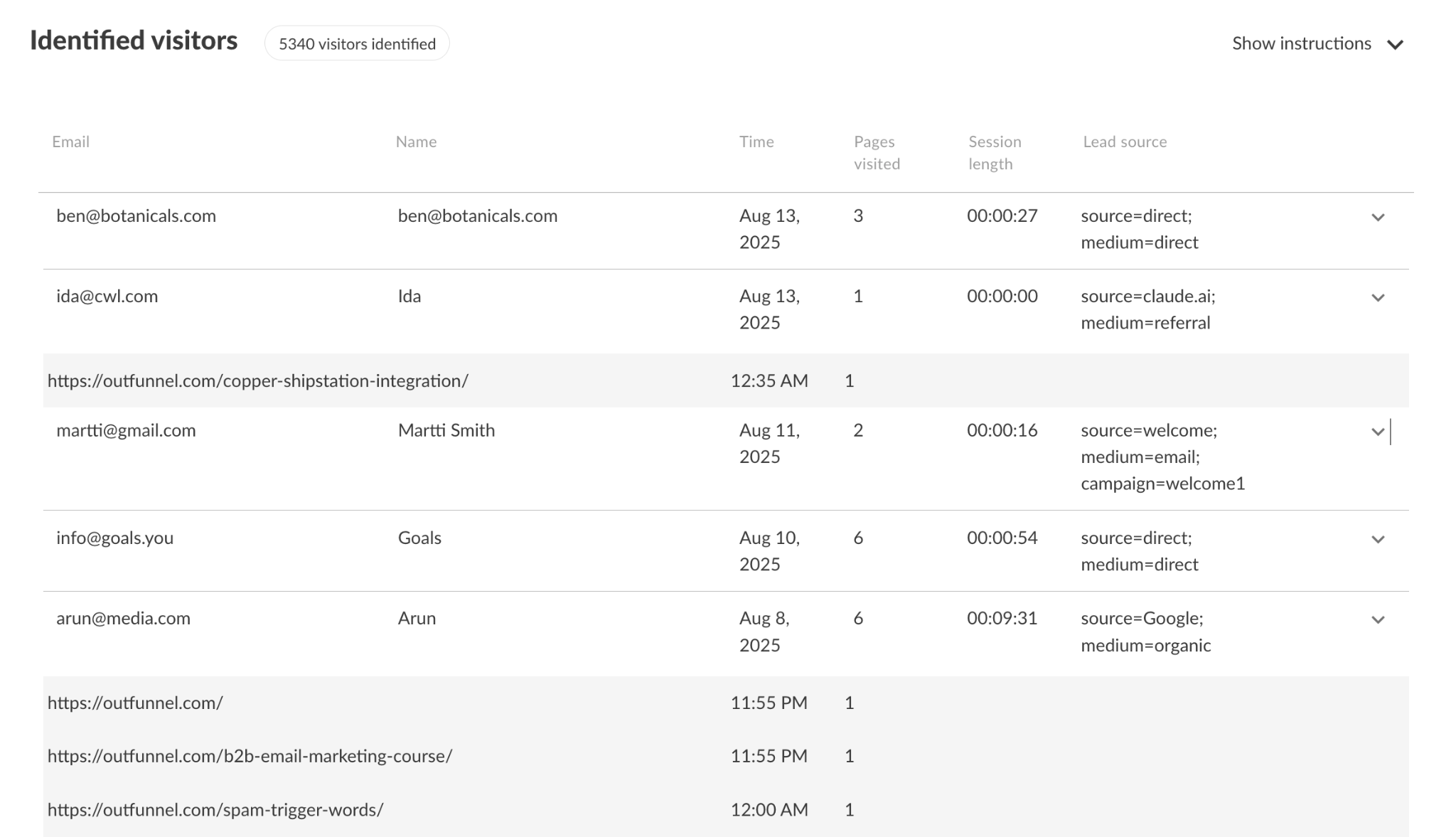
Identified visits appear in Outfunnel's in-app feed within one minute and sync to the CRM five minutes after the lead's last activity. Visits are recorded as Activities or Tasks in the CRM, making them available for workflow automations. A sales rep can, for example, receive a Slack alert when a key prospect visits the pricing page.
Source: Outfunnel
Outfunnel tracks individual people, not company names. This distinguishes it from IP-to-company matching tools that identify organizations but can't tell you which contact is browsing. The trade-off: visitors must interact with a form or tracked email link to be identified. Anonymous traffic stays anonymous.
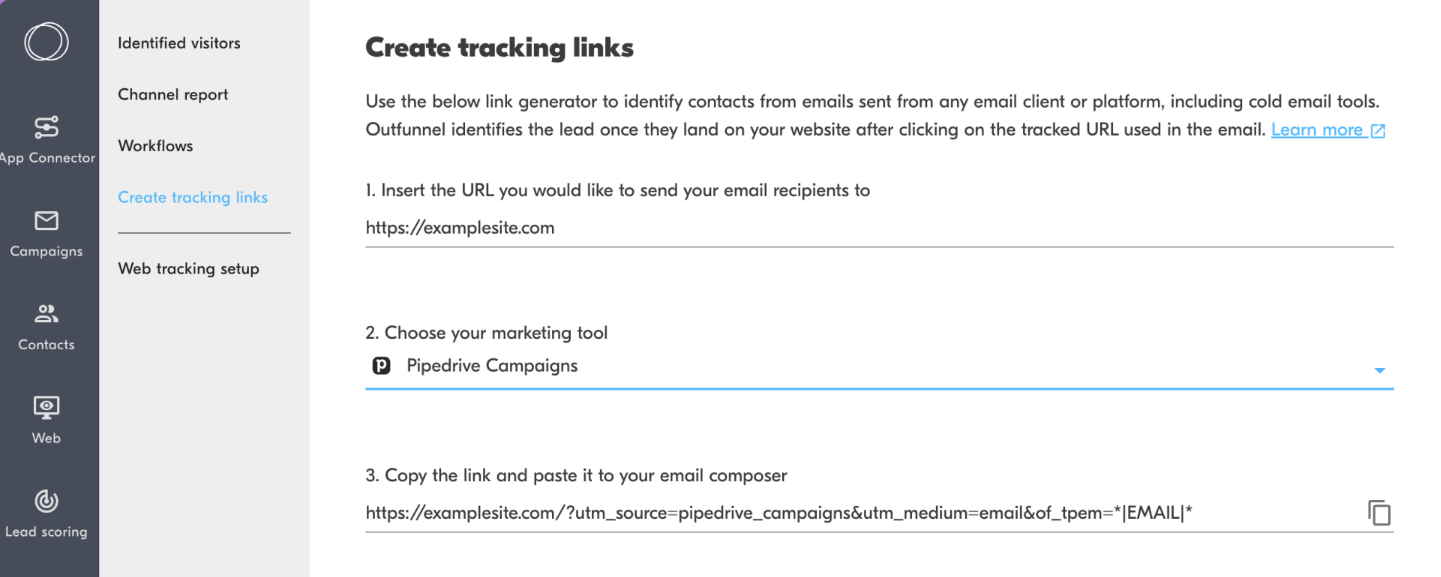
A tracking link generator extends identification beyond Outfunnel's native integrations. By appending a merge field parameter to any URL, leads from any email tool that supports merge fields become identifiable when they click through.
Source: Outfunnel
An in-app channel report (beta) connects first-touch lead sources to CRM deal outcomes, enabling basic marketing ROI measurement. Web tracking data also feeds into Outfunnel's lead scoring, with page visits contributing points alongside email engagement.
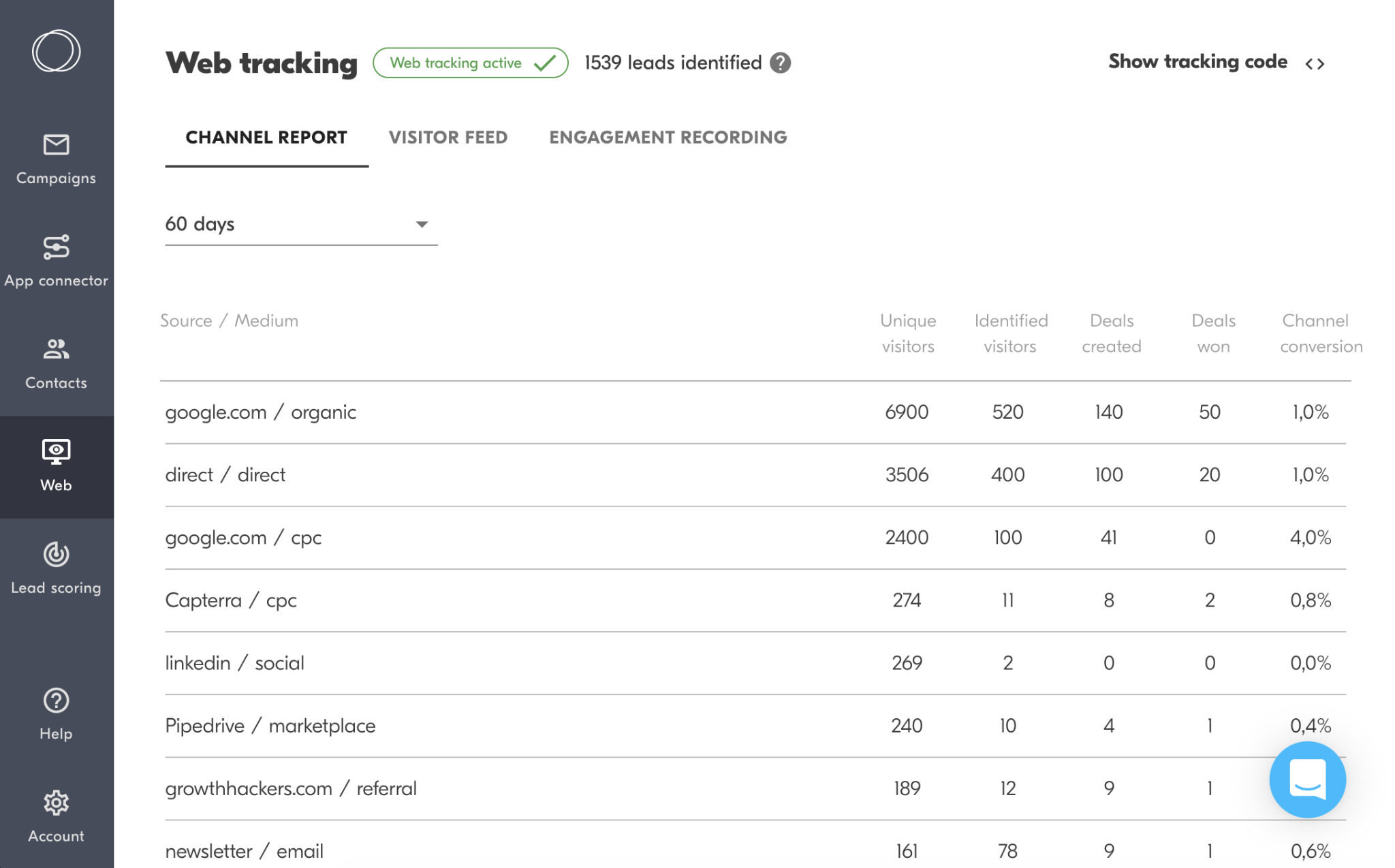
Source: Outfunnel
Lead Scoring: Outfunnel scores leads from email engagement, web visits, and CRM activity, then writes the score directly into your CRM.
Lead Scoring assigns a running numerical score to each contact based on how they engage across channels, then writes that score into a custom field in the CRM. The goal is simple: help sales reps know which leads to call first.
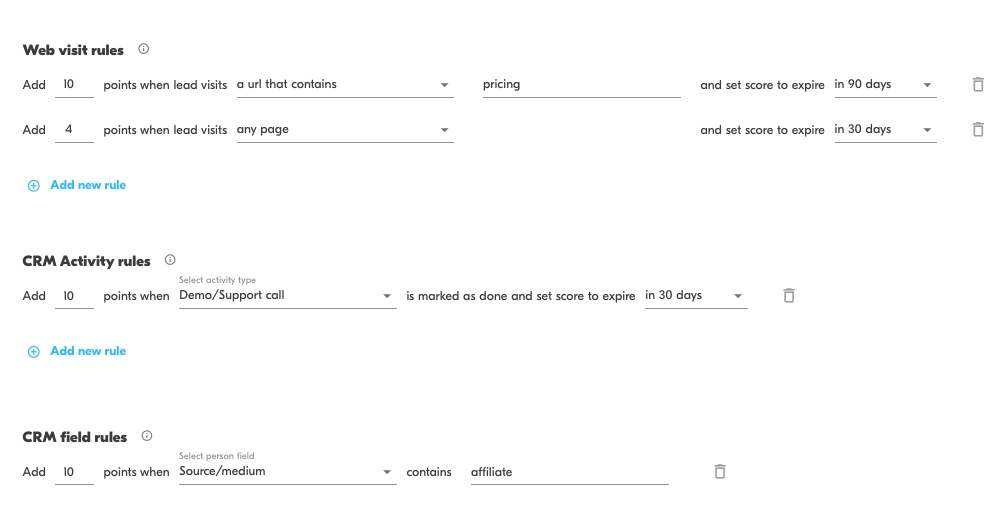
Source: Outfunnel
Scores draw from four signal types: email activity (opens, clicks, bounces, unsubscribes), web visits (all pages or specific URLs like pricing), CRM activities (meetings, calls, webinar attendance), and CRM field values (industry, company size, job title).
Each signal carries a configurable positive or negative point value. Bounces and unsubscribes subtract points, as do visits to disqualifying pages (like a careers page).
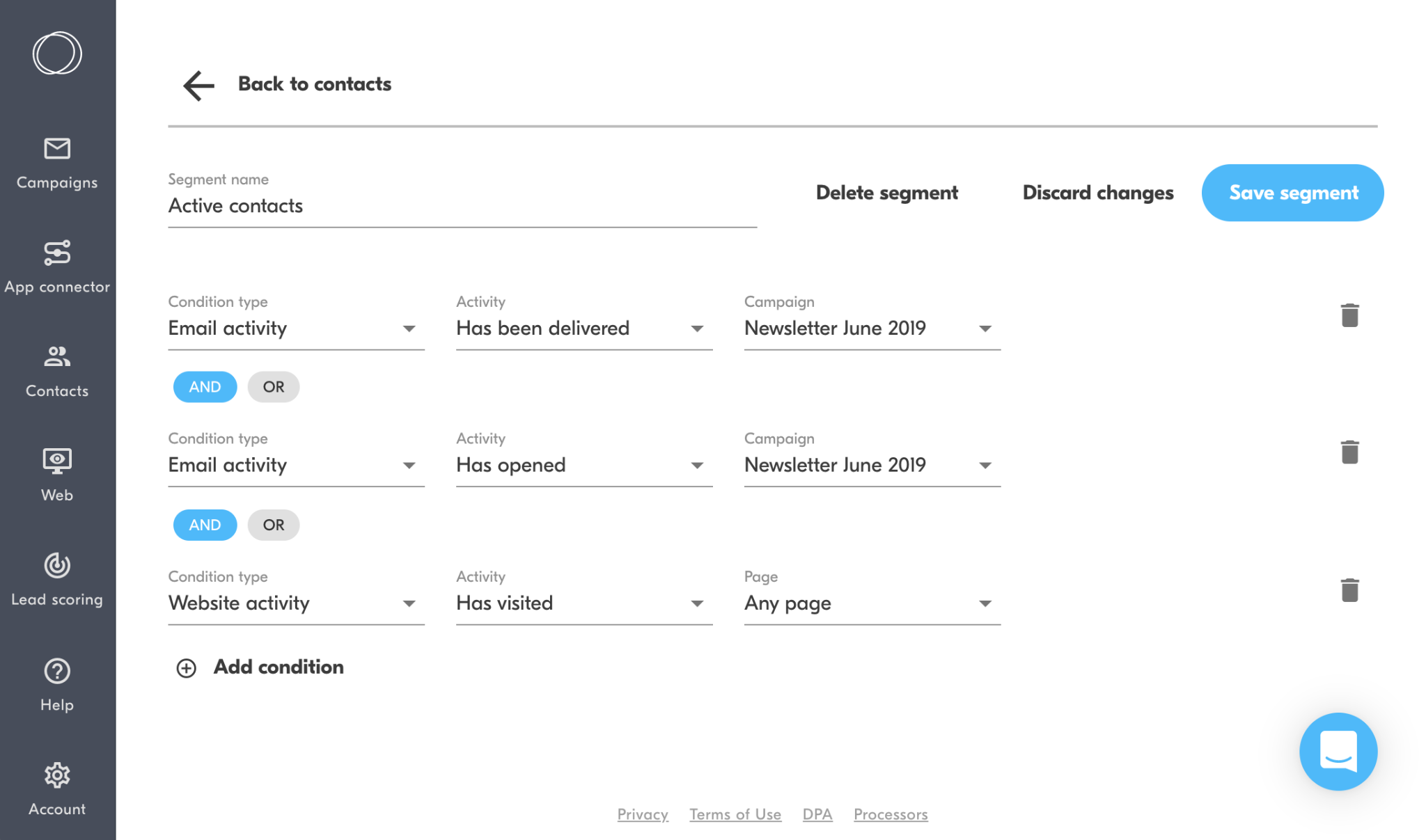
Source: Outfunnel
A score expiry window handles time decay automatically. Once an engagement event ages past the configured window, its points are deducted. Outfunnel recommends setting this slightly longer than your typical sales cycle.
The Lead Score field updates in the CRM within roughly one minute of a new event. Because it lives as a native CRM field (not inside Outfunnel's dashboard), it can trigger the CRM's own automation engine: creating follow-up tasks, sending Slack notifications, or auto-creating deals when a score crosses a threshold. CRM activity and CRM field scoring require the Professional plan or above.
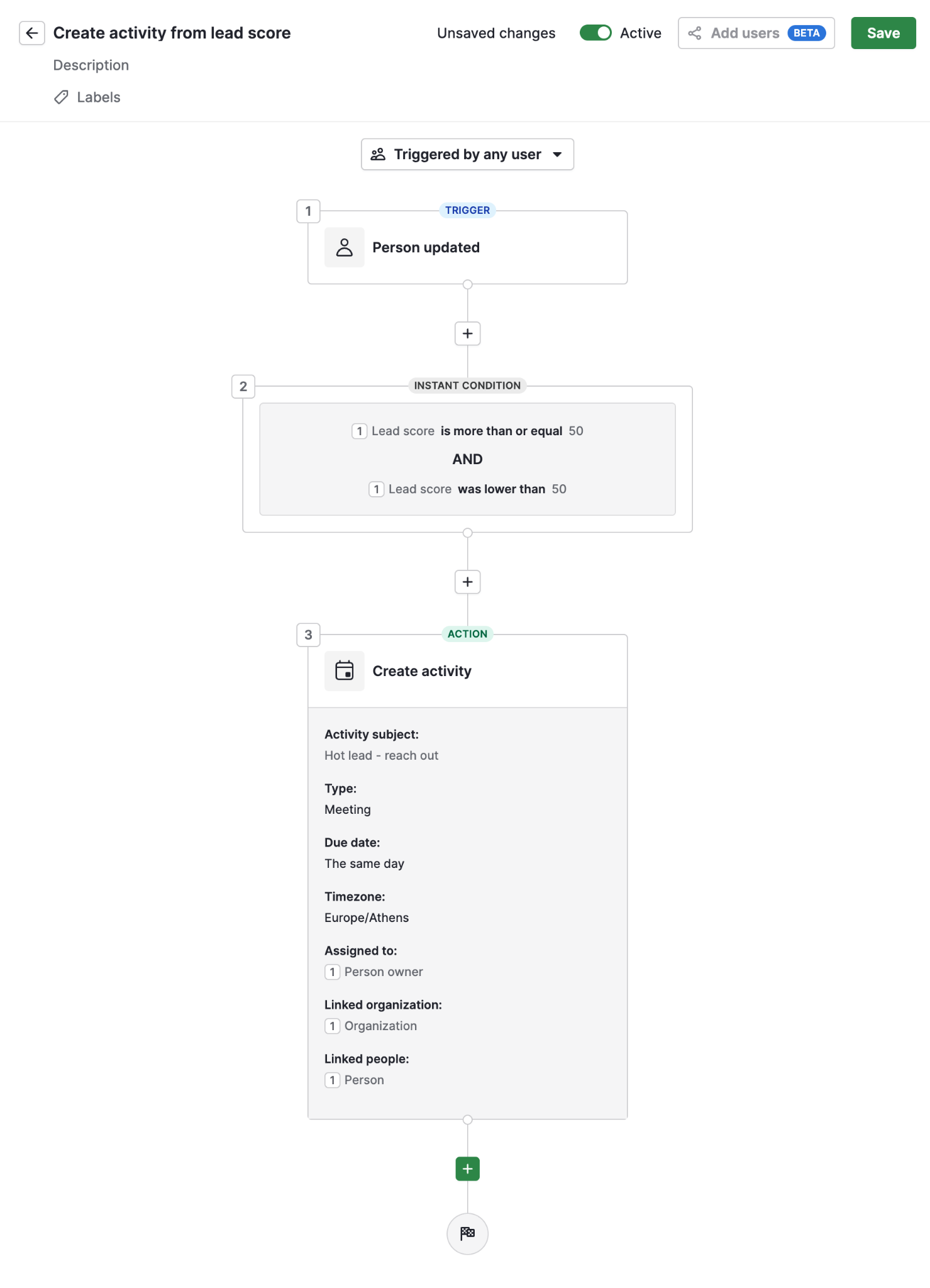
Source: Outfunnel
Pricing: Outfunnel uses contact-based pricing with no per-seat fees.
Outfunnel offers three plans, all priced by active contacts rather than users. Team members can be invited without additional charges.
Basic Plan (starts at $29/month):
1-way or 2-way contact sync and engagement sync
Chat and email support
Pricing scales from $29/month (100 contacts) to $99/month (3,000 contacts)
Does not include lead scoring, web tracking, or advanced data sync
Professional Plan (starts at $99/month):
Everything in Basic, plus lead scoring, web tracking, advanced data sync, ecommerce events, and deal/product field sync
Chat, email, and call support
Pricing scales from $99/month (1,000 contacts) to $249/month (15,000 contacts)
Scale Plan (starts at $299/month billed annually):
Everything in Professional, plus custom connectors and custom onboarding
For teams with 15,000+ active contacts
Annual billing carries a 16% discount on Basic and Professional plans. A 14-day free trial is available on all plans with no credit card required. There is no permanent free plan.
One pricing detail worth noting: when an account hits its contact limit, Outfunnel sends alerts at 80% and 100%. Accounts at 100% may be automatically upgraded to the next tier. If auto-upgrade is declined, syncing pauses and incoming data is dropped permanently.
Where Outfunnel Falls Short
Outfunnel does what it does well, but its focus on sync creates boundaries that become apparent as teams grow. These reflect the product's design as a connector rather than a platform.
No Data Layer of Its Own. Outfunnel syncs the contacts and engagement data you already have. It does not provide new contacts, company information, phone numbers, or email addresses. If your CRM has 500 accounts, Outfunnel keeps those 500 in sync with your marketing tool, but it won't help you find the next 500. Teams that need to identify new prospects, map buying committees, or enrich records with company attributes and technographic data need a separate data source.
Thin Reporting. G2 reviewers note the inability to see hard versus soft email bounces, and Capterra reviewers describe reporting as basic and insufficient for campaign optimization. There's no reply tracking, no funnel attribution, and no way to measure which synced engagement signals actually predicted closed deals. The platform defers analytics to the connected tools, but this leaves a gap for teams who want to understand the full impact of their sync workflows.
Integration Coverage Has Limits. Six CRMs and eight email marketing tools cover the most common SMB stacks. But reviewers have called out missing integrations for Google Lead Forms, Squarespace, and certain landing page platforms. There is no public API for building custom connections outside the Scale plan's custom connectors.
No Buyer Intent or Signal Intelligence. Outfunnel's web tracking identifies which known contacts visited your site. It does not track anonymous companies, monitor third-party intent signals, or identify accounts researching solutions across the broader web. For teams moving toward account-based strategies, this means missing the signals that show when a prospect is evaluating solutions before they ever visit your website.
Enterprise Readiness. With roughly 11 employees and no SOC 2, ISO 27001, or other third-party security certifications, Outfunnel serves its SMB audience well but lacks the compliance infrastructure larger organizations require. No SLA guarantees or dedicated account management are available outside the Scale plan.
These limitations reflect a product built for small teams that want their existing tools connected. For organizations that have outgrown connector-level tooling and need the data, intelligence, and execution capabilities to run a complete go-to-market motion, a broader platform is the natural next step.
Top Outfunnel Alternative for Growing GTM Teams: ZoomInfo
ZoomInfo addresses Outfunnel's limitations not by offering a better connector, but by providing the data, intelligence, and execution environment that make point-to-point sync a smaller part of the picture.
The platform is built on 500M contacts, 100M companies, 135M+ verified phone numbers, and 200M+ verified business emails.
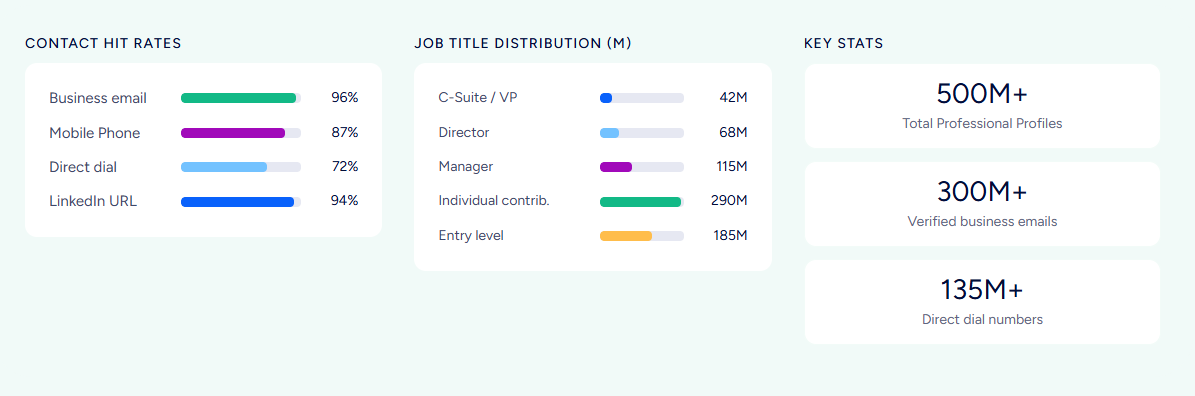
ZoomInfo pairs that data with the GTM Context Graph, an intelligence layer that processes 1.5B+ data points daily by combining ZoomInfo's B2B data with your CRM records, conversation transcripts, and behavioral signals to capture not just what happened in a deal, but why.
That intelligence reaches your team through GTM Workspace for sellers, GTM Studio for marketers and RevOps, or APIs and MCP in any front-end.
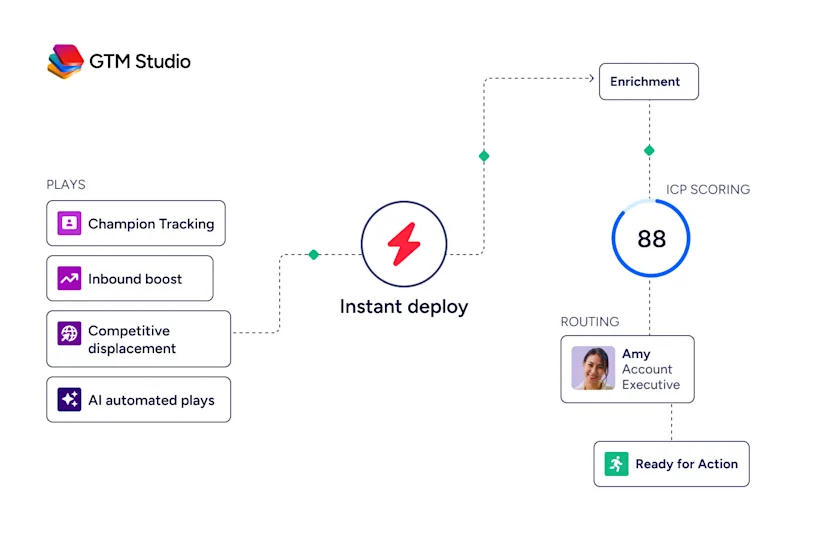
The platform serves 35,000+ companies worldwide, including enterprise customers like Adobe, Snowflake, and Thomson Reuters.
B2B Data at Scale: ZoomInfo provides the contacts, companies, and signals that a sync tool doesn't include.
Where Outfunnel syncs existing records between tools, ZoomInfo provides the records themselves. The platform covers 500M contacts, 100M companies, 135M+ verified phone numbers, 120M direct-dial phone numbers, and 200M+ verified business email addresses.
ZoomInfo verifies this data through a multi-source pipeline: automated ML scanning of 28 million site domains daily, a Data Training Lab of 300+ human researchers, and a community of 200,000+ ZoomInfo Lite users who share data back. First-party data reaches up to 95% accuracy.
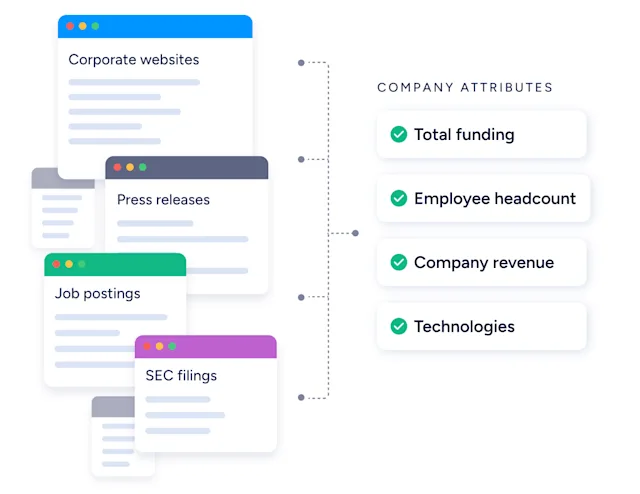
Beyond contact identity, ZoomInfo tracks Buyer Intent signals from 210 million IP-to-Organization pairings and 6 trillion+ new keyword-to-device pairings sourced monthly.
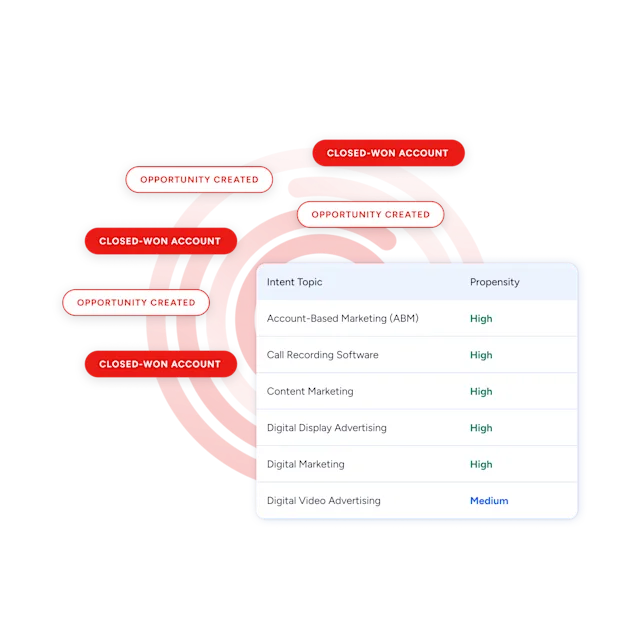
Guided Intent, exclusive to ZoomInfo, identifies the topics historically correlated with your closed-won deals rather than requiring manual topic selection. The platform also profiles the tech stack of 30+ million companies across 30,000+ technologies.
This data advantage is externally validated. In a Fortune 500 competitive RFP analyzing 25 million contacts across vendors, the independent consultant concluded that "no other competitor came even close." ZoomInfo holds 133 No. 1 rankings on G2 and is a Leader in the Gartner Magic Quadrant for ABM Platforms for the second consecutive year.
"ZoomInfo gives us the information we need to execute. We don't have to spend our time digging. It's already there, so we can be three steps ahead." (Vensure)
The GTM Context Graph: ZoomInfo captures not just what happened in a deal, but why.
Outfunnel syncs engagement events (email opens, web visits) into CRM records. ZoomInfo's GTM Context Graph goes further: it combines ZoomInfo's B2B data with a customer's own CRM records, conversation transcripts, email threads, and behavioral signals into a single intelligence layer that processes 1.5B+ data points daily.
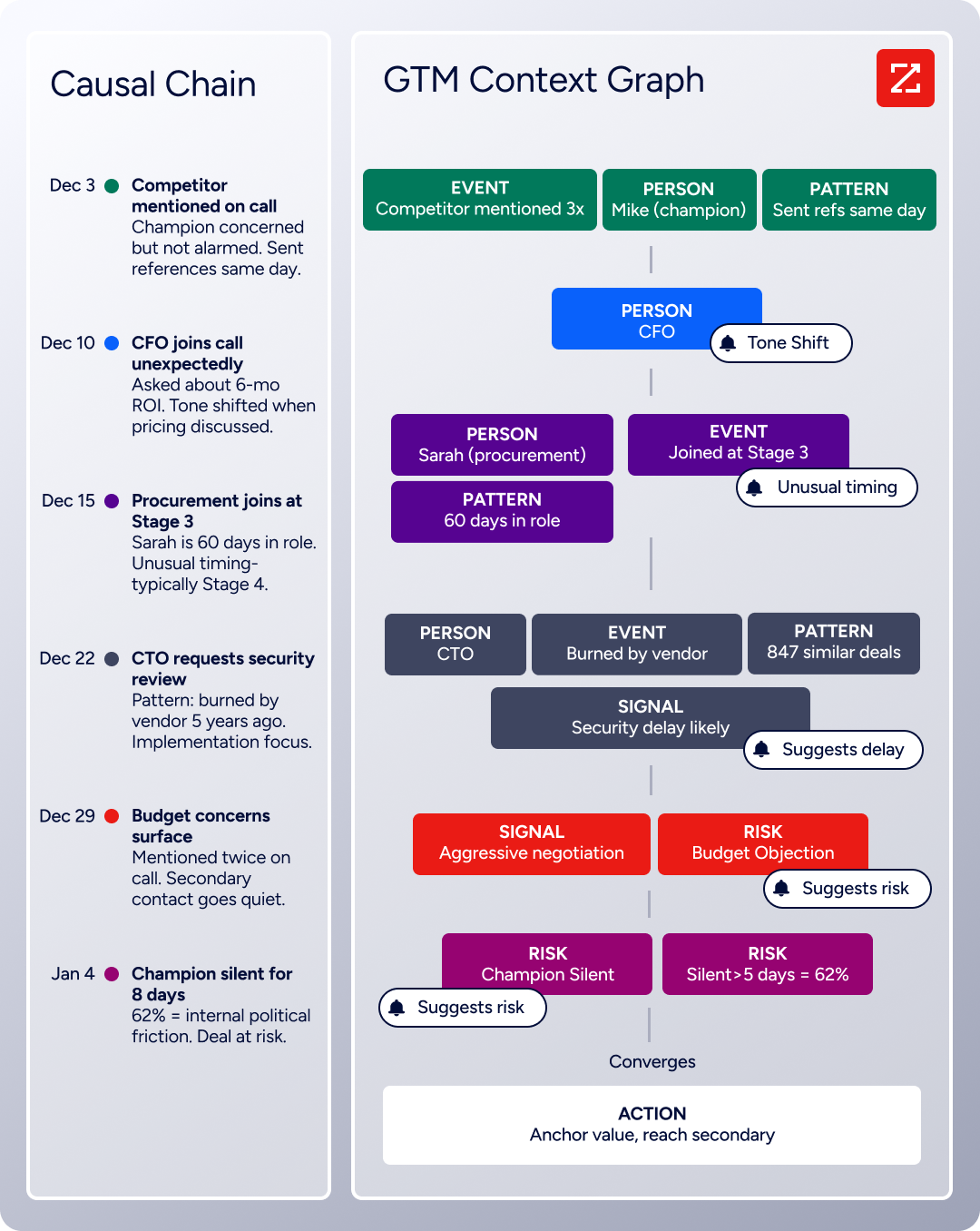
The distinction matters. A CRM records that a deal moved from stage 3 to stage 4. An engagement sync notes that the contact opened two emails. But as ZoomInfo's Chief Product Officer Dominik Facher writes: "The CRM recorded the state change. It has no record of why it happened." The GTM Context Graph connects the CFO joining a call and asking about ROI, the VP going quiet due to an internal budget discussion, and a third-party intent signal showing the company is hiring in the same department. That context makes AI-driven recommendations accurate rather than generic.
This intelligence powers every downstream action: follow-up emails address the specific concern a stakeholder raised, plays target accounts whose signal combinations match actual win patterns, and forecasts weight deals by buying evidence rather than stage labels.
Seismic attributed 39% of active pipeline to opportunities identified or influenced by ZoomInfo signals and saved 11.5 hours per week per seller. (Seismic)
Universal Access: ZoomInfo delivers its intelligence through dedicated products and open APIs.
ZoomInfo's intelligence is accessible in three ways:
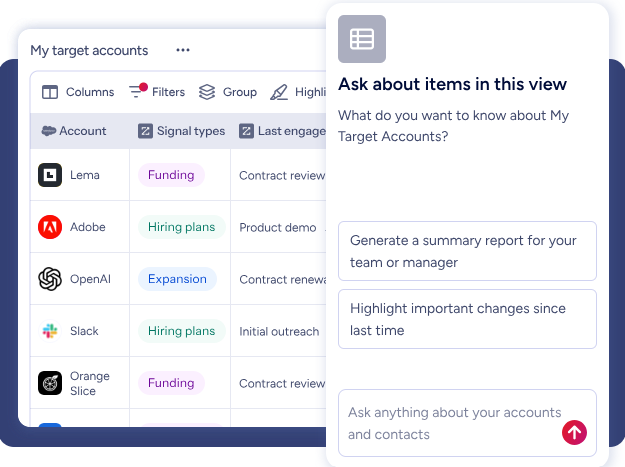
GTM Workspace is the seller's front-end: a single surface where prioritized accounts, AI-drafted outreach, and deal execution converge without toggling between tools.
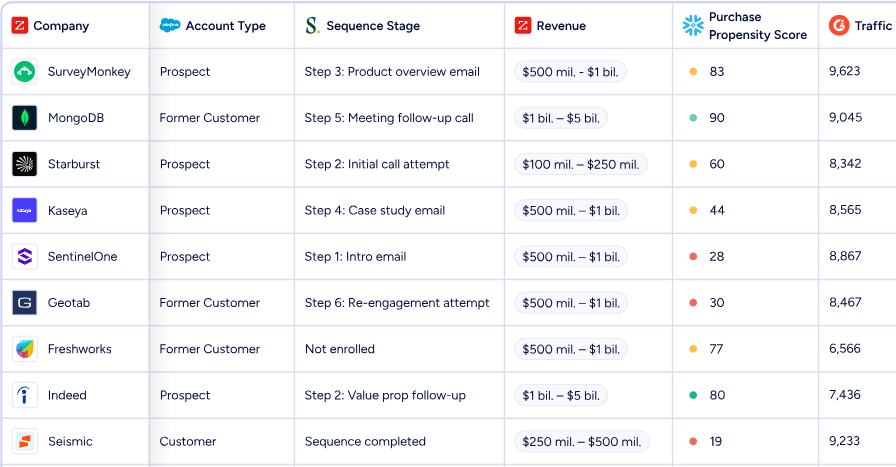
GTM Studio gives marketers, RevOps, and GTM engineers a canvas for audience definition, campaign orchestration, and pipeline measurement using natural language instead of engineering tickets.
For teams building beyond ZoomInfo's own products, APIs and MCP expose the same intelligence to any custom agent, internal tool, or partner platform.
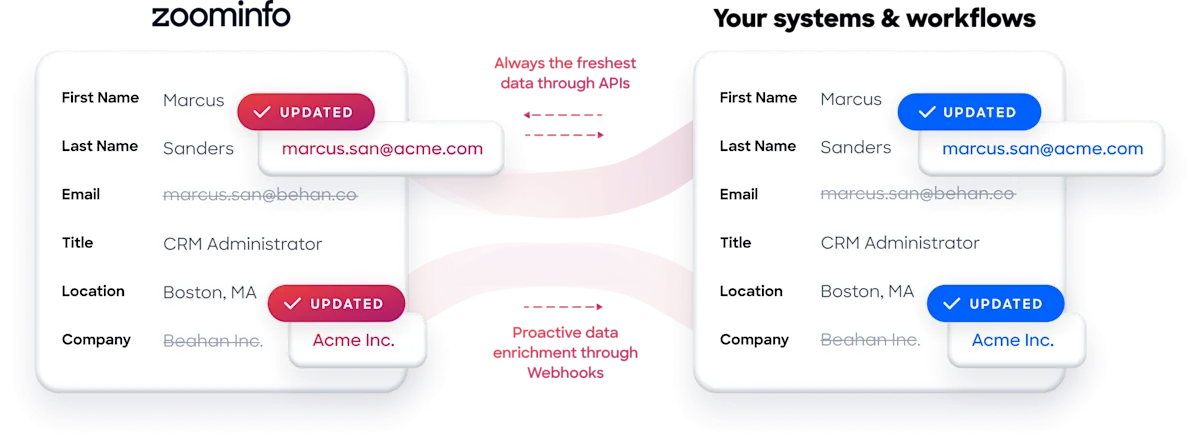
All three draw from one GTM Context Graph. A signal detected by one team is immediately actionable by every other team, and the choice of interface never limits the intelligence available.
API access is included in all relevant plans, and the MCP server currently supports Claude and ChatGPT, with additional tools coming soon. This positions ZoomInfo as infrastructure for the emerging agentic AI era: the same data and intelligence layer powering ZoomInfo's own products becomes accessible inside any AI agent or custom application.
"Anything that minimizes our team's need to switch contexts is beneficial. ZoomInfo offers a single view, eliminating the need to navigate between systems." (Spekit)
Pricing and Compliance: ZoomInfo offers a permanent free tier and enterprise-grade security.
ZoomInfo Lite is a permanent free tier (not a trial) that includes access to ZoomInfo's B2B database, 10 monthly export credits, the ReachOut Chrome Extension, WebSights Lite for up to 10 website visitor reveals per day, and a HubSpot integration. No credit card, no time limit.
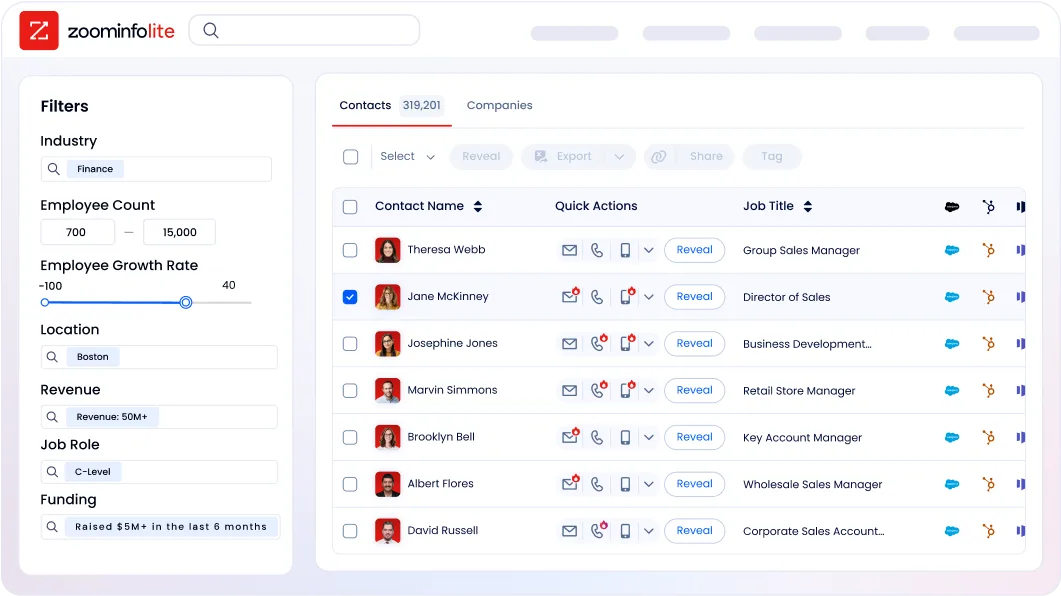
Paid plans use consumption-based pricing, custom-quoted based on usage patterns, user count, credit volume, and required features. ZoomInfo organizes pricing across Sales, Marketing, and Operations product lines, each with Professional, Advanced, and Enterprise tiers. Annual contracts are standard. A 7-day free trial (separate from Lite) is also available with no credit card required.
ZoomInfo holds ISO 27001, ISO 27701, SOC 2 Type II, TRUSTe GDPR, and TRUSTe CCPA certifications, all renewed annually. The company is a registered data broker in California and Vermont, with a dedicated Trust Center. This compliance infrastructure meets the requirements of enterprise and regulated-industry buyers that smaller sync tools typically cannot match.
Outfunnel or ZoomInfo: Comparison Summary
Outfunnel | ZoomInfo | |
|---|---|---|
Primary function | CRM-to-marketing data sync | AI GTM platform |
Target audience | SMBs using separate CRM and email tools | Enterprise and mid-market GTM teams |
B2B contact database | Not included | 500M contacts, 200M+ verified emails |
Buyer intent signals | Not available | 210M IP-to-Org pairings, Guided Intent |
Web visitor tracking | Known contacts only (form/email ID) | Company-level + contact-level identification |
Lead scoring | Email, web, and CRM activity signals | AI-powered scoring with predictive models |
CRM integrations | 6 CRMs | Salesforce, HubSpot, Dynamics + 120 marketplace integrations |
Email marketing sync | 8 platforms (Mailchimp, Klaviyo, etc.) | Native marketing orchestration via GTM Studio |
AI capabilities | None | GTM Context Graph, AI-drafted outreach, AI agents |
Security certifications | GDPR compliance (self-attested) | ISO 27001, ISO 27701, SOC 2 Type II |
Free option | 14-day trial (no credit card) | ZoomInfo Lite (permanent, no credit card) |
Paid pricing | Starts at $29/month | Custom-quoted (consumption-based) |
Best for | Syncing existing tools on a budget | Data-driven GTM execution at scale |
Final Verdict
The choice between Outfunnel and ZoomInfo depends on where your go-to-market operation stands today and where it's heading.
Choose Outfunnel if you run a small team with a CRM and a separate email marketing tool, and your main challenge is keeping data consistent between them. Outfunnel sets up in minutes, costs $29/month to start, and handles the sync workflows that would otherwise require hours of Zapier configuration or manual CSV work. For SMBs that have their stack figured out and need the plumbing to connect it, Outfunnel does the job without adding complexity.
Choose ZoomInfo if your team needs more than sync. It needs the data itself, the intelligence to act on it, and the tools to execute. ZoomInfo provides verified contacts, buyer intent signals, and contextual intelligence that a connector tool cannot, then delivers it through AI-powered workspaces for sellers, orchestration tools for marketers, and APIs for any custom application. For organizations moving past the "keep our tools connected" stage toward building a data-driven go-to-market engine, ZoomInfo provides the foundation.
Get started with ZoomInfo Lite for free here.
Outfunnel connects what you have. ZoomInfo gives you what you need. As your go-to-market operation grows, the question shifts from "how do I sync my tools?" to "how do I find, understand, and engage my buyers?" That's where a broader platform becomes necessary.
Outfunnel FAQ
What does Outfunnel actually do?
Outfunnel syncs data between your CRM and email marketing tools. It keeps contact lists in sync bidirectionally, pushes email engagement data (opens, clicks, unsubscribes) back into CRM records, routes web form and ad platform leads into your CRM, tracks which known contacts visit your website, and scores leads based on cross-platform engagement. It does not send emails, provide B2B contact data, or replace your CRM or marketing platform.
How much does Outfunnel cost?
The Basic plan starts at $29/month for 100 active contacts and scales to $99/month for 3,000 contacts. The Professional plan (adding lead scoring, web tracking, and advanced data sync) starts at $99/month for 1,000 contacts and goes up to $249/month for 15,000. A Scale plan for 15,000+ contacts starts at $299/month billed annually. Annual billing offers a 16% discount on Basic and Professional plans. There are no per-seat fees. ZoomInfo's paid plans use consumption-based pricing, but ZoomInfo Lite provides permanent free access to its B2B database with 10 monthly export credits.
Does Outfunnel have a free plan?
No. Outfunnel offers a 14-day free trial with no credit card required, but there is no permanent free plan. ZoomInfo offers ZoomInfo Lite as a permanent free tier with access to its B2B database, a Chrome extension, basic website visitor tracking, and a HubSpot integration, with no time limit or credit card needed.
What CRMs and email tools does Outfunnel support?
Outfunnel integrates with six CRMs (HubSpot, Pipedrive, Copper, Salesforce, Attio, and Monday.com) and eight email marketing tools (Mailchimp, Klaviyo, ActiveCampaign, Brevo, MailerLite, Constant Contact, HubSpot Marketing Hub, and GetResponse). It also connects to Google Sheets, Airtable, Facebook Lead Ads, LinkedIn Lead Ads, Calendly, and various web form builders. Freshsales and Zoho CRM are listed as upcoming.
How is Outfunnel different from Zapier?
Outfunnel ships pre-built connectors for CRM-to-marketing workflows that handle deduplication, conflict resolution, unsubscribe management, and engagement recording as native features. Each of these requires a separate step in Zapier. Outfunnel also charges per active contact rather than per operation, making it cheaper for teams with frequent data updates. Zapier offers broader app coverage (thousands of apps versus Outfunnel's focused set) but requires assembling each sync workflow manually.
Does Outfunnel include a B2B contact database?
No. Outfunnel syncs and routes existing data between your tools but does not provide new contacts, company information, or phone numbers. Teams that need to discover new prospects, enrich existing records with company data, or access verified email addresses and direct dials need a dedicated data provider. ZoomInfo's database covers 500 million contacts and 100 million companies with verified direct dials and business emails.
Does Outfunnel track website visitors?
Yes, but only known contacts. After installing a JavaScript snippet, Outfunnel tracks all visitors anonymously. A visitor becomes identified when they fill out a form or click a tracked email link, and their full browsing history then syncs retroactively to their CRM profile. Outfunnel does not use IP-to-company matching for anonymous visitors and cannot identify companies or contacts that have not interacted with a form or email. ZoomInfo's WebSights resolves anonymous website traffic to companies and buying team contacts without requiring prior identification.
Is Outfunnel secure enough for enterprise use?
Outfunnel is GDPR-compliant and stores data on EEA servers, with a published Data Processing Agreement and 24-hour breach notification commitment. However, it does not hold SOC 2, ISO 27001, or other third-party security certifications. Enterprise buyers in regulated industries who require formal compliance documentation should evaluate whether Outfunnel's self-attested security posture meets their requirements. ZoomInfo holds ISO 27001, ISO 27701, SOC 2 Type II, and TRUSTe GDPR/CCPA certifications, all renewed annually.
