

People.ai occupies a clear position in revenue intelligence, helping enterprise sales teams capture activity data automatically and turn it into pipeline visibility. For teams tired of manual CRM updates and guesswork forecasting, the platform offers a data-backed view of every deal. But as revenue teams expect more from their tools, the question is whether activity capture alone is enough.
To write this People.ai review, we've analyzed the platform extensively. We believe it's the ideal choice if:
You need automatic activity capture to eliminate manual CRM data entry
You want to standardize deal qualification on MEDDPICC or similar frameworks
You're focused on improving forecast accuracy through engagement analytics
You need relationship maps that auto-populate from real email and meeting data
Your sales org runs on Salesforce and you want native integration
However, People.ai might not be the best choice if:
You also need B2B contact and company data for prospecting
You want buyer intent signals that reveal when accounts are actively in-market
You need a platform that covers the full go-to-market workflow, not just deal execution
You require marketing, ABM, and multi-channel orchestration alongside sales intelligence
You want AI that reasons across both your internal deal data and external market signals
In this case, you should consider ZoomInfo: a GTM platform that starts with large-scale B2B data (500M contacts, 100M companies, 135M+ verified phone numbers, and 200M+ verified business emails), adds conversation intelligence and activity capture through Chorus, then connects it all in the GTM Context Graph, a layer that captures not just what happened in a deal, but why.
That intelligence is accessible through GTM Workspace for sellers, GTM Studio for marketers and RevOps, or APIs and MCP in any front-end.
We've included a detailed look at ZoomInfo later in this review as the broader alternative for teams that need more than activity capture. If you're ready to explore a platform that covers data, intelligence, and execution in one place, you can start with ZoomInfo's free trial here.
What is People.ai?
People.ai is a revenue intelligence platform founded in 2016 by Oleg Rogynskyy, who built it to consolidate scattered sales data across emails, calendars, Slack, and calls.
Rogynskyy, who moved to Boston at age 15 from Ukraine and later attended Boston University, brought over a decade of AI experience from previous ventures including Nstein Technologies and Semantria.
Y Combinator accepted People.ai within 30 days of its 2016 launch, and the company has since raised $198 million over six funding rounds, including a $100 million Series D at a $1.1 billion valuation in August 2021. The company calls itself a "Revenue Answers Platform" that answers pipeline questions from customer history rather than gut feel.
People.ai serves over 100,000 sellers daily at enterprise customers including NVIDIA, OpenAI, Red Hat, HPE, Zscaler, and Rubrik. The company appointed Jason Ambrose as CEO in October 2025 as part of a planned succession, bringing experience from McKinsey, Appirio, and Motive Partners. Gartner named People.ai a Visionary in the 2025 Magic Quadrant for Revenue Action Orchestration.
The ideal People.ai customer is an enterprise sales organization with complex, multi-stakeholder deals that needs to automate CRM data capture, standardize sales methodology, and improve forecast accuracy through engagement analytics.
People.ai Pros & Cons
Pros | Cons |
|---|---|
- Automatic activity capture eliminates manual CRM data entry | - No B2B contact or company database for prospecting |
- Salesforce integration with native workflows | - User interface not intuitive for end users |
- MEDDPICC and custom methodology support via ClosePlan | - High cost limits accessibility for smaller organizations |
- Relationship maps auto-populated from engagement data | - Data synchronization issues with Salesforce reported by users |
- AI-driven forecasting with deal-level risk alerts | - Lengthy implementation and onboarding timelines |
- PeopleGlass provides spreadsheet-like CRM editing | - Mobile app functionality is underdeveloped |
- Proven results at enterprise scale (Red Hat, Five9, Ping Identity) | - No buyer intent signals or market intelligence |
People.ai Review: How It Works & Key Features
Automatic Activity Capture: People.ai eliminates manual CRM entry by logging every email, call, and meeting automatically.
People.ai's platform automatically captures every email, call, and meeting across revenue teams and matches those activities to the right accounts and opportunities in Salesforce.
This solves one of the most persistent problems in B2B sales: reps spending hours updating CRM instead of selling.
The platform integrates across CRM, communication tools, and customer systems, matching every email, call, and meeting to the right account and opportunity.
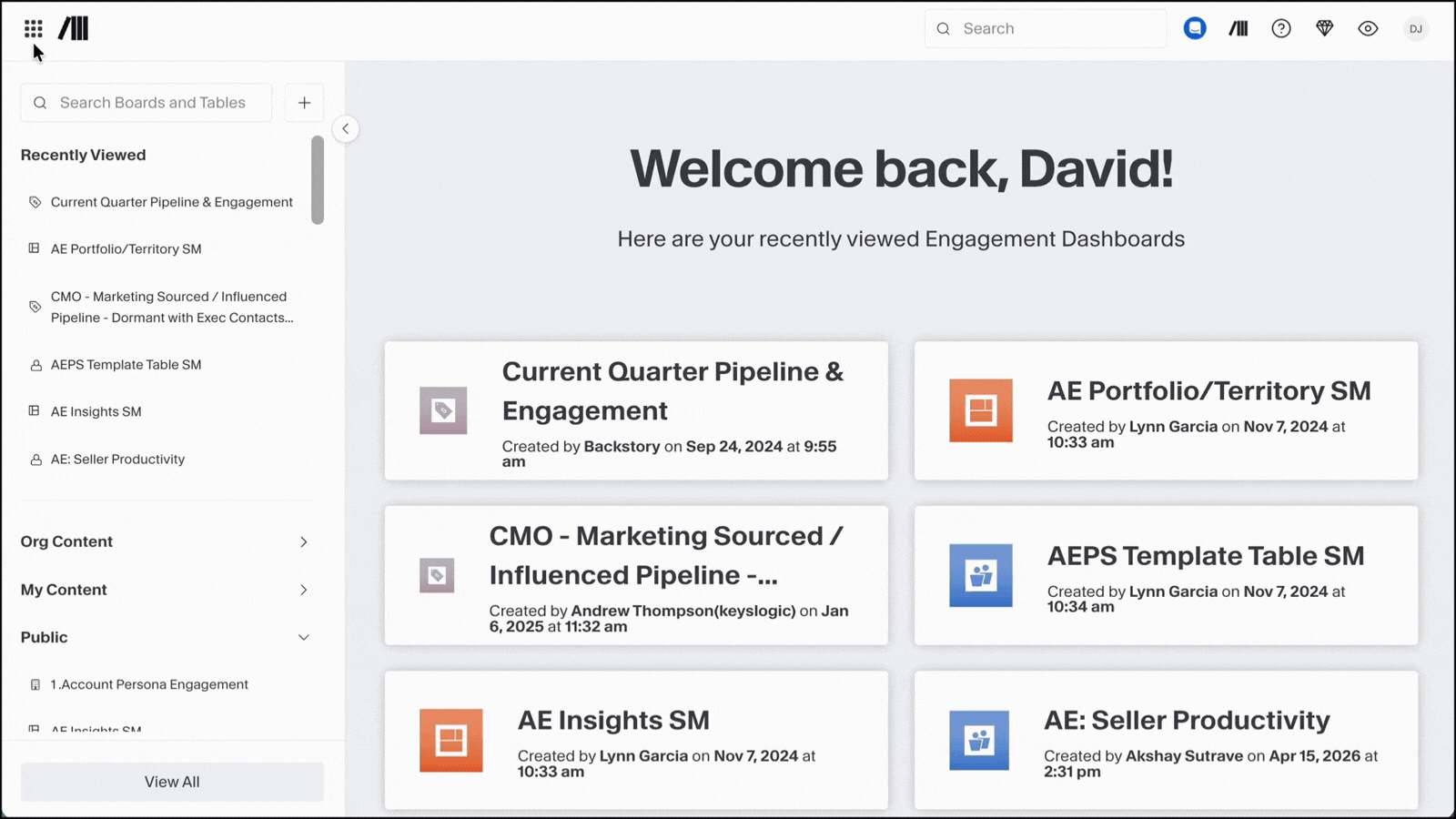
People.ai captures contact names, titles, and seniority, then matches them to the right opportunities, building a full view of engagement across every deal without manual effort from sellers.
Forecasting: AI-driven forecasting delivers real-time pipeline visibility with deal-level risk alerts.
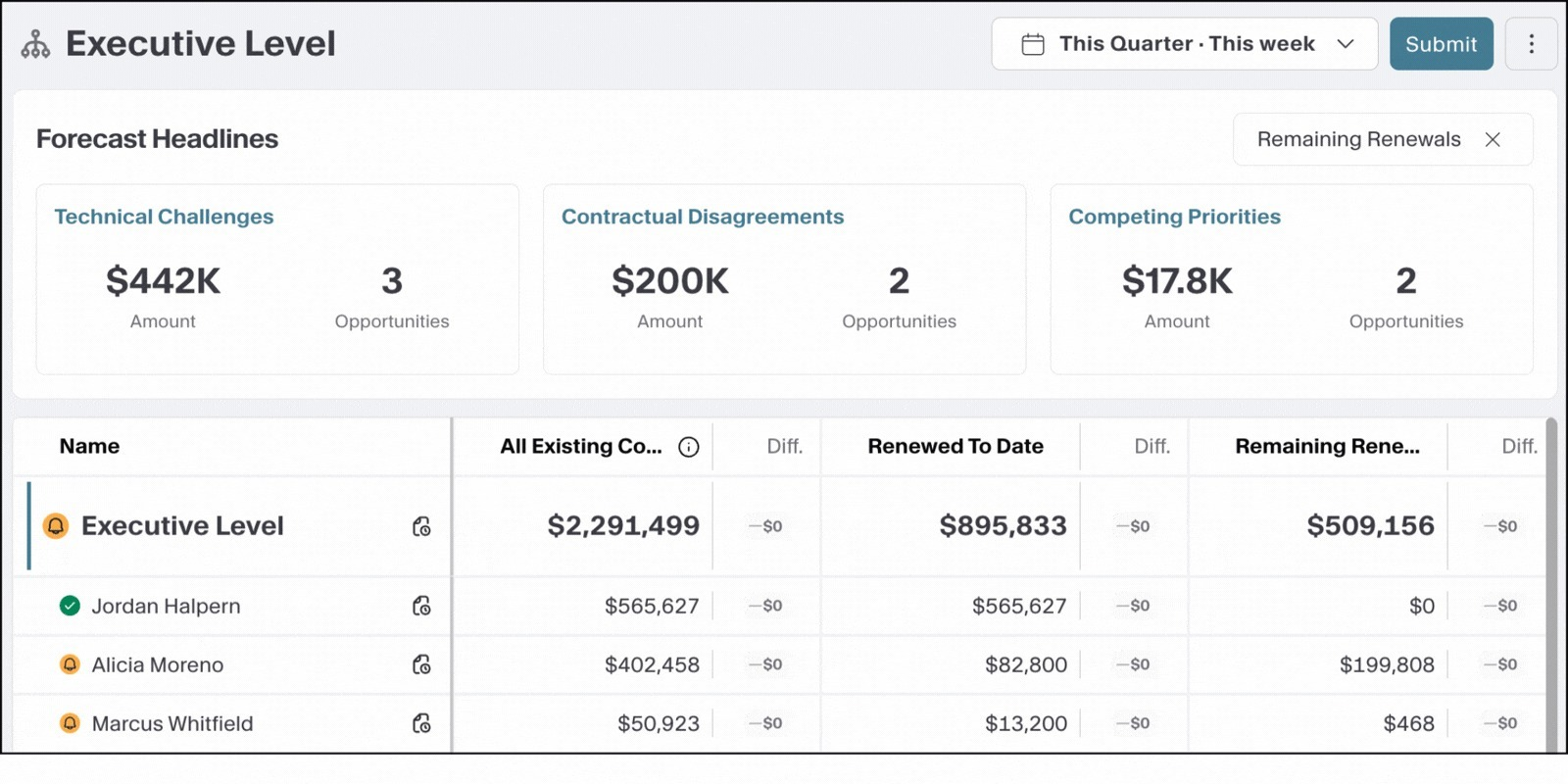
People.ai's Forecasting solution, announced in October 2025, addresses a real problem: most forecasting tools calculate numbers based on whatever is in the CRM, but if CRM data is incomplete the forecast is wrong.
Source: People.ai
Because People.ai captures activity automatically, the data feeding the forecast is more complete than what reps would enter manually.
The forecasting engine uses a bottoms-up approach focused on deal-level inspection and rep accountability, combining CRM data with engagement analytics from emails, calls, meetings, and custom AI signals.
Users can ask questions like "Why is this deal committed?" and the AI analyzes conversations against category definitions, or ask "Which deals are actually going to close?" to get answers based on engagement momentum, stakeholder coverage, and buying signals.
Real-time risk alerts called Headlines flag issues like stalled buyer engagement, delays in legal or procurement, or slipping close dates, quantifying potential impact in revenue terms. Forecast Waterfall Charts show how forecasts changed over time, breaking down events like new deals, lost opportunities, slippage, or changes in deal value week-over-week or quarter-over-quarter.
The platform also offers no-code customization, letting organizations adapt the tool to how they operate without engineering support.
ClosePlan: AI-powered deal qualification and account planning based on actual engagement history.
ClosePlan is People.ai's sales execution platform for account planning, deal qualification, and buyer mapping.
Originally a standalone product (People.ai acquired ClosePlan in October 2020), it now operates as a core module built natively in Salesforce.
The platform works through three workflows. First, automated qualification evaluates every deal against your sales methodology (MEDDIC, BANT, or custom frameworks), analyzing customer interactions to identify gaps like missing economic buyers or declining engagement.
The system analyzes dozens, potentially hundreds, of calls, emails, chats, meetings, transcripts, and CRM notes to score completeness from 0-100% and assess answer quality from low to high.
Second, the platform generates account plans in seconds by combining public data (earnings calls, press releases, 10-Ks) with private data from your CRM, emails, and meetings to spot expansion opportunities based on what you've sold, where gaps exist, and where competitors have landed.
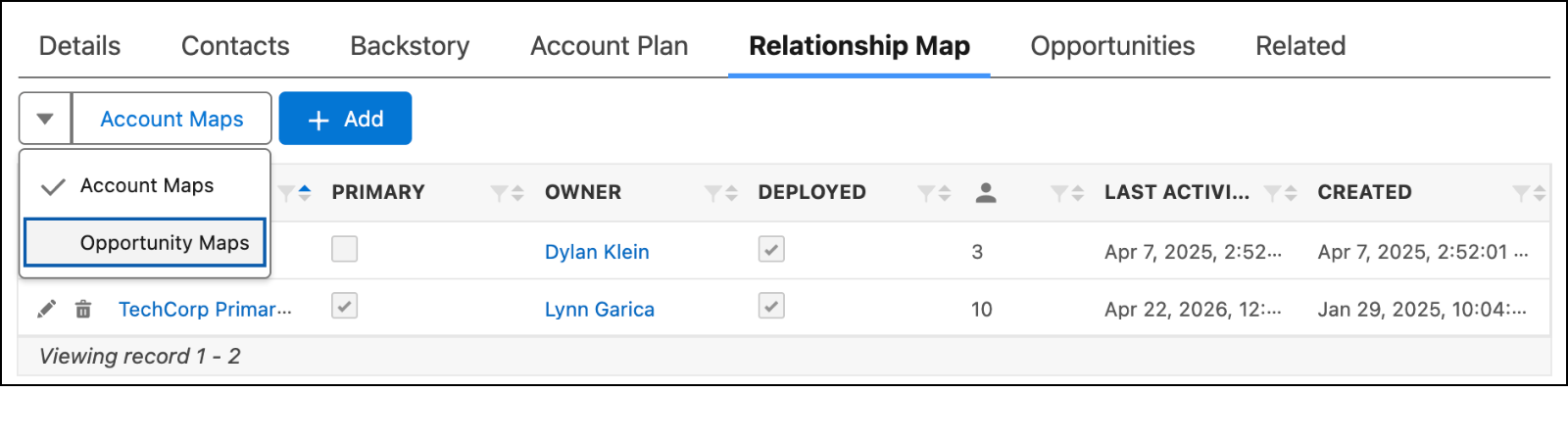
Third, ClosePlan automatically builds org charts from engagement history, creating relationship maps that surface predicted buying power, inferred win rate, and engagement levels for every stakeholder. These SmartMaps populate automatically inside Salesforce with contacts, then prompt reps to add new contacts as they get looped in.
Source: People.ai
The impact is measurable. Red Hat achieved a 50%+ increase in win rates on deals with 70% or higher MEDDPICC completion. Ping Identity used ClosePlan to standardize two separate sales orgs on one sales process in 6 months after a merger.
PeopleGlass: A spreadsheet-like interface for updating CRM data without the friction of Salesforce.
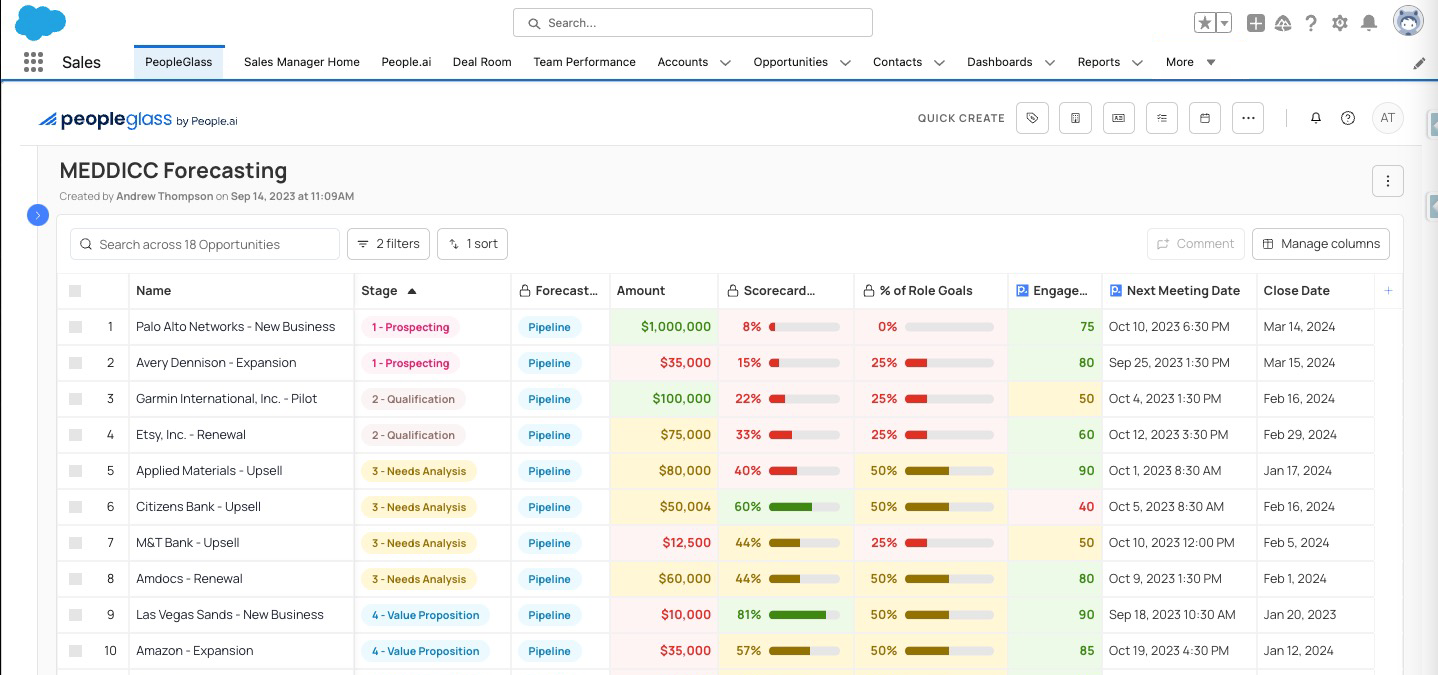
PeopleGlass is a spreadsheet-like application that People.ai describes as "like Google Sheets for Salesforce".
It lets users create and update accounts, contacts, events, leads, opportunities, and notes in bulk, with changes syncing automatically to Salesforce.
Source: People.ai
The interface displays Salesforce records in rows, with each row representing a record and Salesforce fields in columns. Users edit inline by double-clicking a cell, with changes syncing to Salesforce in near-real time. They can also select multiple records and update fields simultaneously using a bulk edit panel, cutting CRM maintenance time.
PeopleGlass is available as both a Chrome extension and a web application, and supports commenting on records and tagging teammates. The platform also supports custom columns that don't sync to Salesforce, letting users record private notes or set internal alerts.
The tool is only available for Salesforce users with API access.
Integrations: People.ai connects with major CRM, communication, and business intelligence platforms.
People.ai integrates with CRM systems, communication tools, marketing automation, business intelligence platforms, and AI assistants.
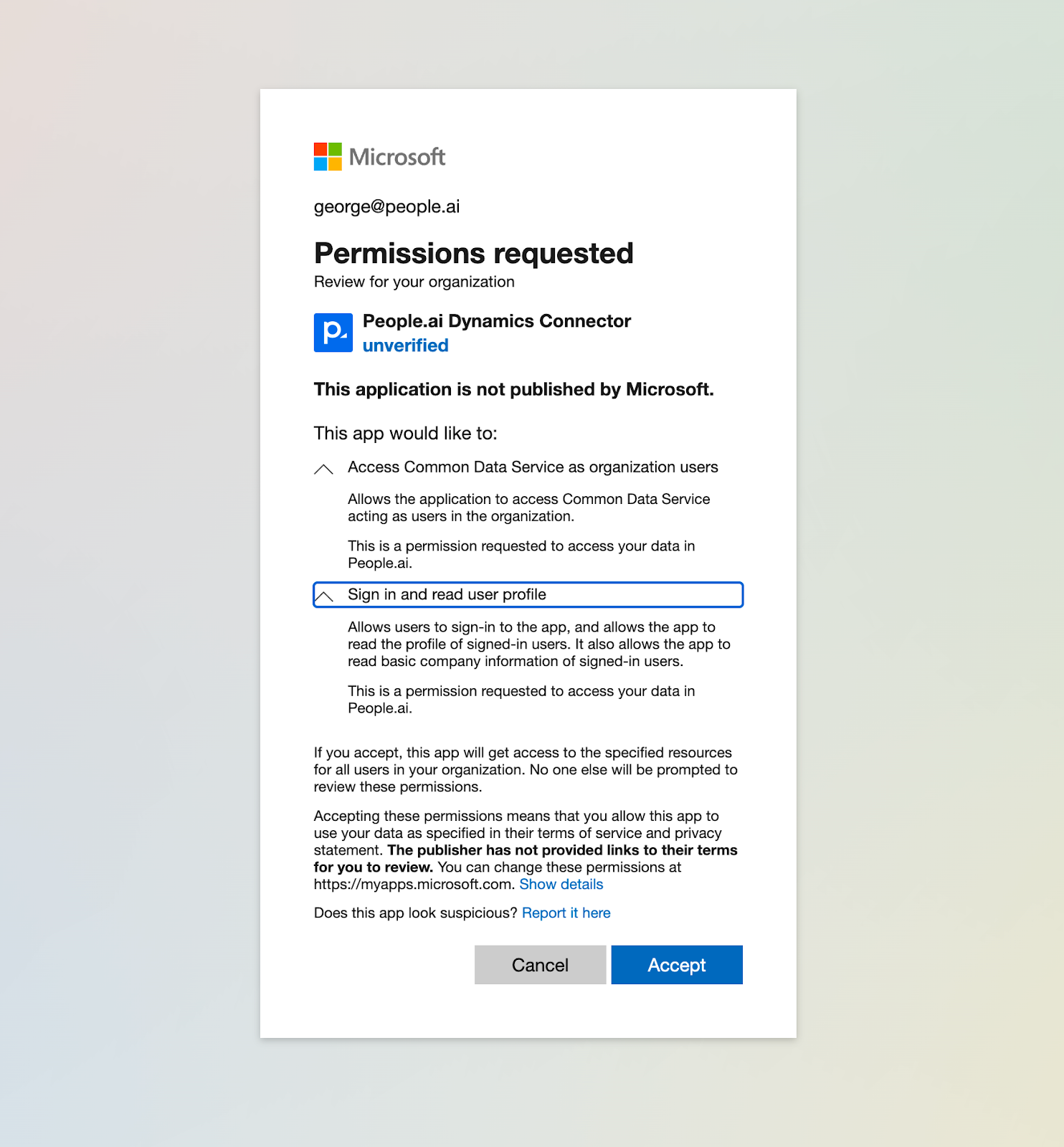
Core CRM integrations include Microsoft, Salesforce, and Oracle Fusion Sales. Communication platforms include Gmail, Google Calendar, Microsoft 365, Exchange, and LinkedIn, with meeting support for Zoom and Webex.
Source: People.ai
Data intelligence integrations include ZoomInfo with Relationship Maps visualization, 6sense for intent-driven ABM, and Clearbit for contact enrichment. Business intelligence support includes Tableau and PowerBI with pre-built dashboards, plus data warehousing through Snowflake, AWS S3, AWS Redshift, and Azure.
People.ai also offers MCP (Model Context Protocol) integration, letting users ask Claude, Copilot, or ChatGPT questions about accounts, deals, and pipeline using engagement and CRM data together.
People.ai Pricing
People.ai does not publish pricing.
The platform uses a subscription-based model where fees are specified in individual Order Forms negotiated with each customer. Fees are based on subscriptions purchased during the term, not actual usage, meaning customers pay for a set number of users regardless of how much they use the platform.
Each subscription is assigned to an individual user and cannot be shared, though customers may reassign subscriptions to new users who replace former users. Subscriptions automatically renew for terms of equal length unless either party gives written notice at least 30 days before the current term ends, and People.ai may increase fees per user by up to 5% on automatic renewals.
Fees are non-refundable except in specific breach scenarios, and invoices are due net 30 days from receipt. Additional costs may include professional services fees and support and maintenance fees beyond what's included with standard subscriptions.
Multiple users on review platforms identify high cost as a barrier to adoption. Prospective customers can request a demo to evaluate the platform, with most implementations reportedly taking 2-4 weeks to go live.
Where People.ai Falls Short
People.ai excels at capturing internal sales activity and turning it into pipeline intelligence, but several limitations appear for teams that need broader go-to-market capabilities.
These gaps reflect a platform built for deal execution rather than full-cycle revenue operations.
No Prospecting Data or Contact Database: People.ai captures activity data from your team's emails, calls, and meetings, but provides no B2B contact or company data for finding new prospects.
If your reps need verified phone numbers, business emails, or company intelligence to fill the top of the funnel, People.ai can't help. You'll need a separate data provider, which means additional cost and a disconnected workflow between prospecting and deal execution.
No Buyer Intent Signals: The platform analyzes engagement within your existing deals but doesn't track external buying signals. It can't tell you when a company outside your pipeline starts researching solutions in your category, when a competitor's customer begins evaluating alternatives, or when an account's hiring patterns suggest expansion.
Teams that want to act on market signals before a prospect raises their hand need separate intent data tools.
Implementation Complexity: Users consistently report lengthy onboarding and setup timelines. For enterprise organizations with complex Salesforce configurations, getting People.ai running takes real time and resources. This delays results and requires dedicated internal support during rollout.
User Interface Friction: Multiple reviewers note that the interface was not very intuitive for end users, requiring additional logins and creating a learning curve. Some users find limited customization options frustrating and wish for more flexibility in how they view and interact with data. When reps perceive the tool as difficult to use or as a "watchdog tool", adoption suffers.
Data Synchronization Gaps: Some users report occasional syncing issues with Salesforce data, with call data sometimes taking "a day or two to reveal the correct amount of calls" rather than updating in real time. For teams that need immediate visibility into activity metrics, these delays undermine the platform's core promise.
Opaque Pricing: People.ai doesn't publish pricing, and the subscription model charges for committed users regardless of actual usage. Combined with non-refundable fees and automatic renewals with up to 5% increases, the commercial terms require careful negotiation, particularly for organizations that aren't certain about adoption rates across their sales team.
These limitations aren't failures. They're the natural result of building a platform focused on capturing and analyzing internal sales activity. But they create clear gaps for teams that need revenue intelligence connected to external market data, prospecting capabilities, and a broader go-to-market workflow.
Top People.ai Alternative for Broader GTM Coverage: ZoomInfo
ZoomInfo addresses these gaps with an all-in-one GTM platform that covers the full revenue lifecycle, from finding and prioritizing buyers to executing deals and measuring outcomes.
Where People.ai focuses on what's happening inside your deals, ZoomInfo starts with B2B data at scale, adds conversation intelligence through Chorus, and connects it all in the GTM Context Graph, a layer that joins your internal deal data with external market signals to give context on every account.
Comprehensive B2B Data: ZoomInfo provides the prospecting data that People.ai lacks.
People.ai captures data from activities your team already performs.
ZoomInfo provides the data your team needs before those activities begin: 500M contacts, 100M companies, 135M+ verified phone numbers, 120M direct-dial phone numbers, and 200M+ verified business email addresses.
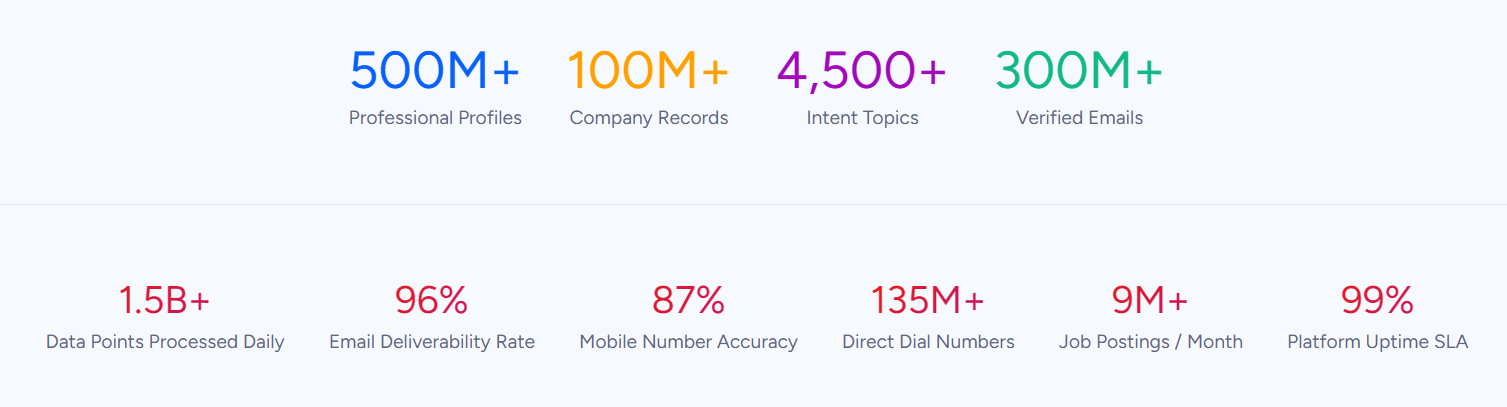
This data goes through a verification process using multiple sources, backed by 300+ human researchers, and reaches up to 95% accuracy on first-party data. The quality isn't self-reported. In a Fortune 500 competitive RFP analyzing 25 million contacts across vendors, the independent consultant concluded that "no other competitor came even close."
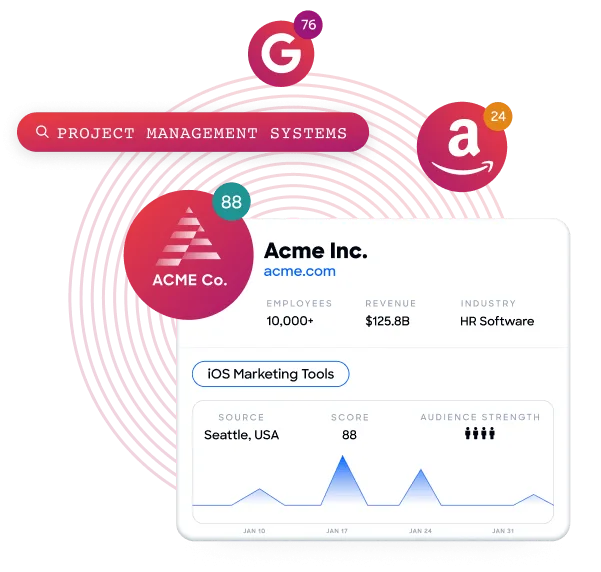
Beyond contacts, ZoomInfo tracks buyer intent signals from 210 million IP-to-Organization pairings and 6 trillion+ new keyword-to-device pairings sourced monthly. Guided Intent, exclusive to ZoomInfo, identifies topics historically correlated with deal success rather than requiring manual topic selection. Your team learns which accounts are in-market before they fill out a form or respond to an email.
Source: ZoomInfo
ZoomInfo also profiles the tech stack of 30+ million companies, tracking 30,000+ technologies across 200+ categories, and resolves anonymous website traffic to companies through WebSights, including buying team identification and direct contact info.
"ZoomInfo gives us the information we need to execute. We don't have to go through and spend our time digging. It's already there, so we can be three steps ahead." (Vensure)
GTM Context Graph and Chorus: ZoomInfo captures deal context through conversation intelligence and connects it to external market signals.
People.ai captures activity data (emails sent, meetings held, calls made) and matches it to CRM records.
ZoomInfo's GTM Context Graph combines your CRM records, conversation transcripts from Chorus, email interactions, and behavioral signals with ZoomInfo's third-party intelligence, then extracts connections between signals and outcomes across all of it.
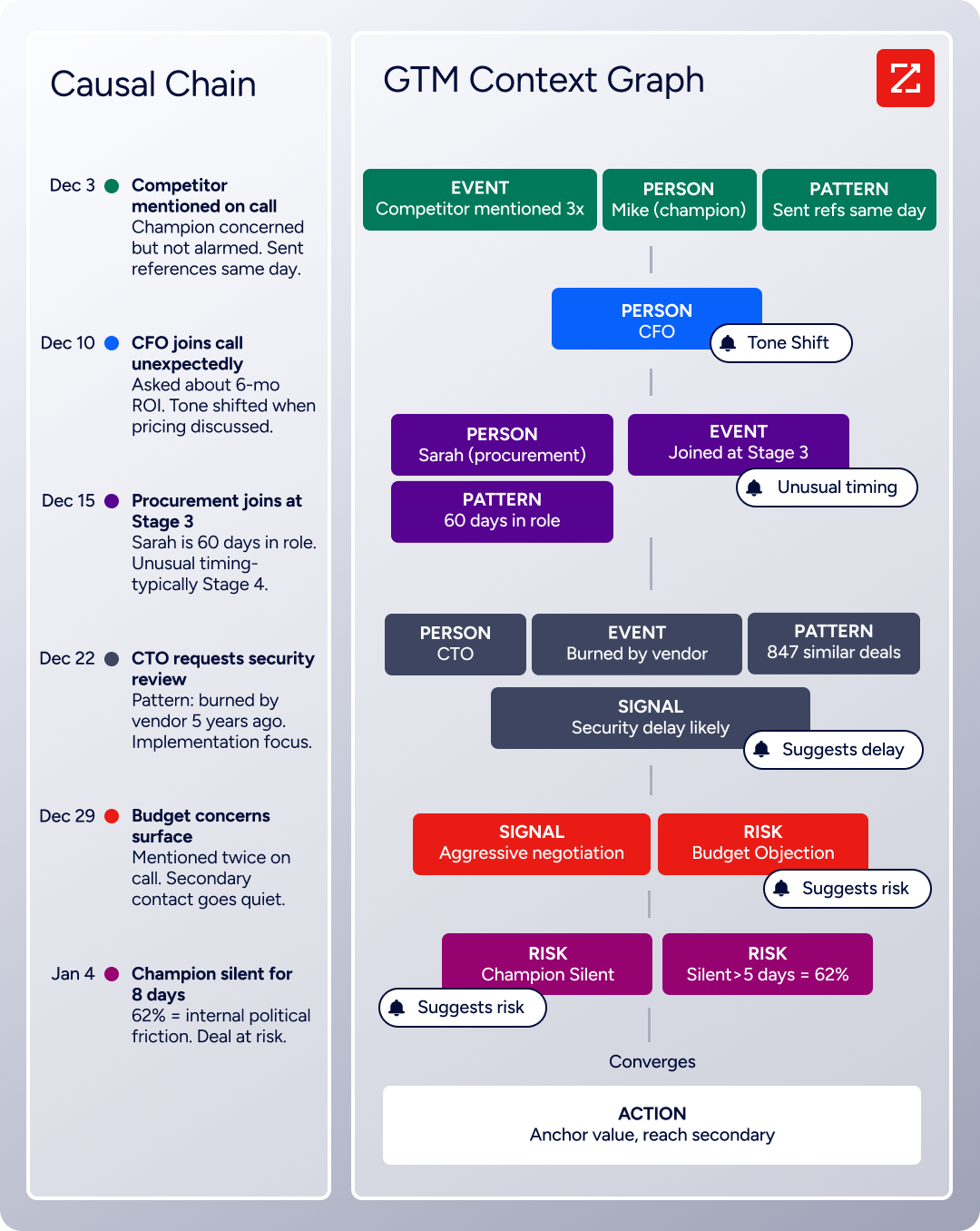
As ZoomInfo's Chief Product Officer Dominik Facher explains: "The CRM recorded the state change. It has no record of why it happened." The GTM Context Graph captures that "why" by processing 1.5B+ data points daily and connecting internal deal data with external market intelligence.
Chorus, ZoomInfo's conversation intelligence engine, records, transcribes, and analyzes all customer calls, meetings, and emails. It captures the context behind each interaction (why a deal accelerated, why a champion went quiet, what a competitive mention predicts about deal risk) and feeds that reasoning into the GTM Context Graph.
The Connected Intelligence feature means a manager reviewing a call sees ZoomInfo's profile and relationship history for every participant, including contact details, company data, and relevant signals, without switching to a separate system.
The practical difference: People.ai tells you engagement on a deal dropped.
ZoomInfo's GTM Context Graph tells you engagement dropped because the champion changed roles (detected via ZoomInfo's data layer), the company posted a competing RFP (detected via intent signals), and a new VP joined the buying committee last week (detected via Chorus and contact tracking), then recommends the next action based on patterns across thousands of similar deals.
Seismic attributed 39% of active pipeline to opportunities identified or influenced by ZoomInfo signals, with reps 54% more productive. (Seismic)
GTM Workspace and GTM Studio: ZoomInfo delivers intelligence through tools designed for each GTM role.
People.ai gives sellers PeopleGlass for CRM editing and ClosePlan for deal qualification, both built inside Salesforce.
ZoomInfo provides two interfaces designed for different roles, each drawing from the same GTM Context Graph.
GTM Workspace is where sellers work. It provides a Book of Business view across CRM, ZoomInfo data, conversation history, and market intelligence. AI agents handle account research, outreach drafting, CRM updates, and signal monitoring.
The Action Feed delivers a live stream of in-market buyers matched to target criteria, with pre-drafted actions on every signal. Built on Anthropic's Claude, the AI agents answer three questions for every rep: who to contact, when to engage, and what to say.
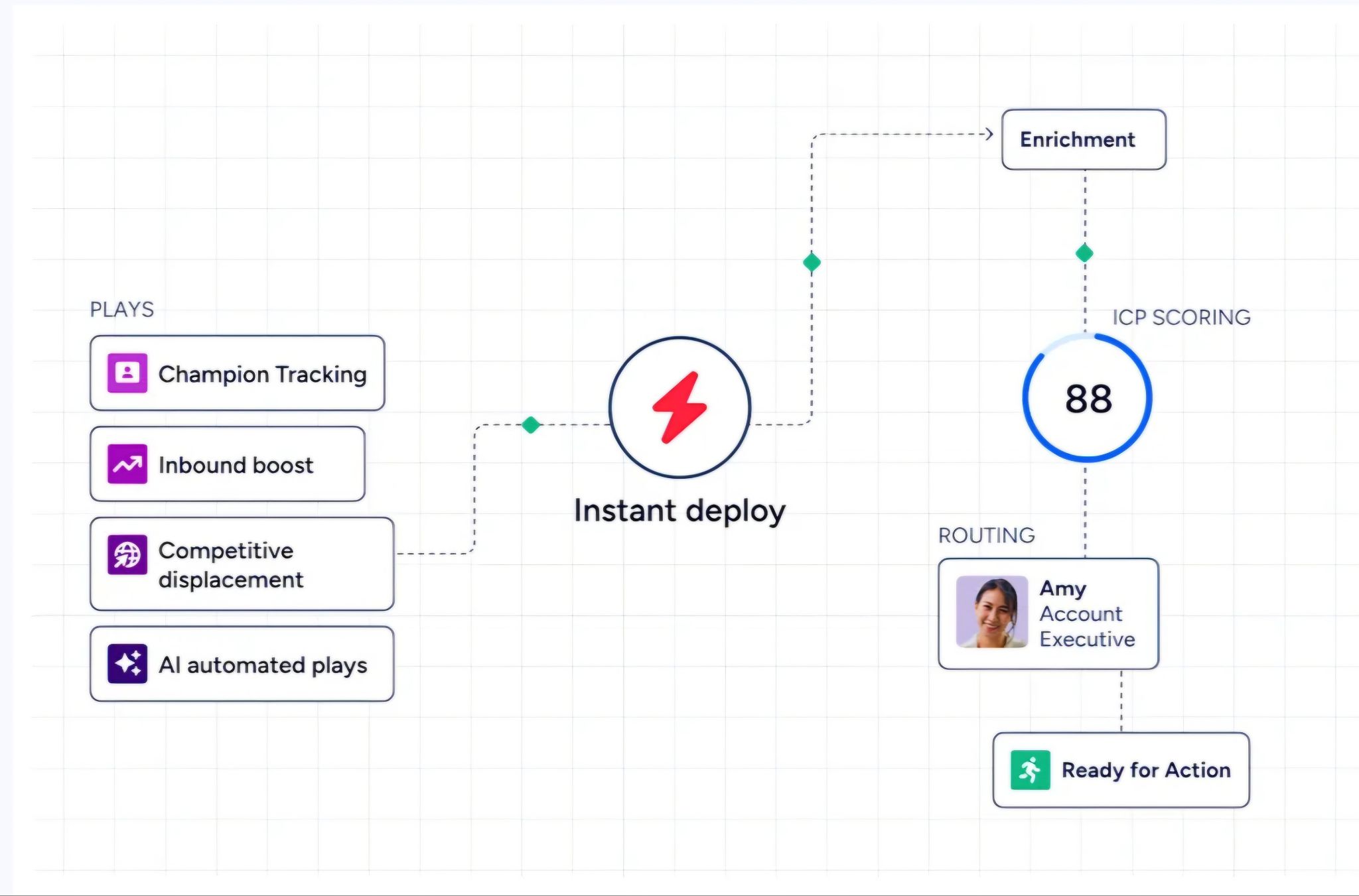
GTM Studio serves marketers, RevOps, and GTM engineers with a builder where teams define audiences, orchestrate campaigns, and measure pipeline using natural language instead of engineering tickets.
Source: ZoomInfo
Teams enrich with first- and third-party data, define triggers, and activate plays across channels. Expansion plays that used to take 3 weeks now launch in 30 minutes, and each click, open, and reply feeds back to improve targeting.
For teams that build beyond ZoomInfo's own products, APIs and MCP expose the same intelligence to any custom agent, internal tool, or partner platform. API access is included in all relevant plans.
"Anything that minimizes our team's need to switch contexts is beneficial. ZoomInfo offers a unified view, eliminating the need to navigate between systems." (Spekit)
Pricing and Accessibility: ZoomInfo offers permanent free access and multiple entry points.
People.ai requires contacting sales for pricing, with no free plan and no published rates. ZoomInfo provides two ways to try the platform before committing.
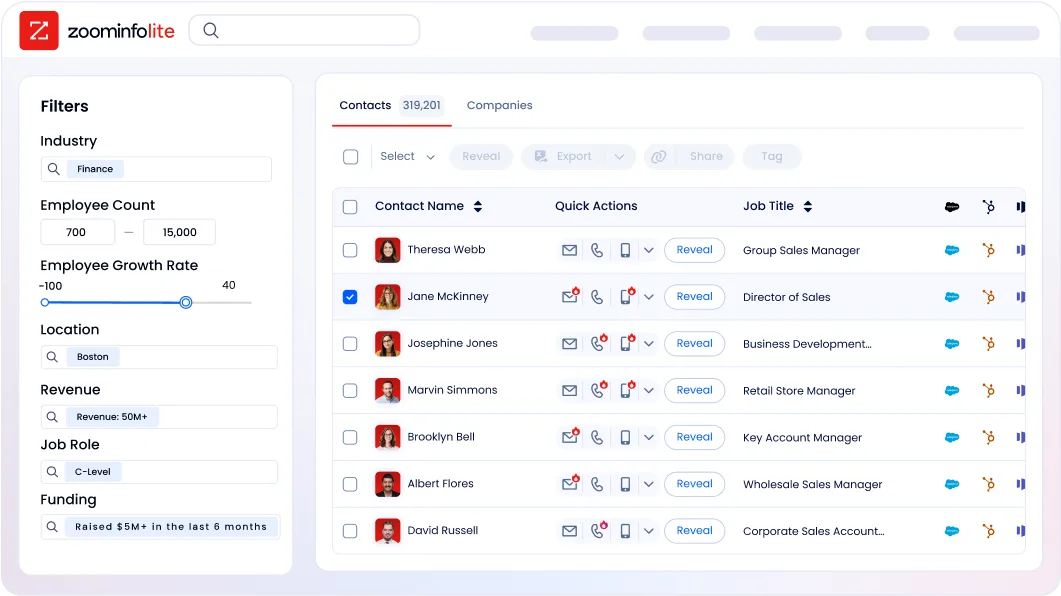
ZoomInfo Lite is a permanent free tier (not a trial) that includes access to ZoomInfo's B2B database, 10 monthly export credits, individual and company searches with advanced filters, the ReachOut Chrome Extension and mobile app, WebSights Lite (up to 10 website visitor reveals per day), built-in email sending, and HubSpot integration. No credit card, no annual commitment, no time limits.
A separate 7-day free trial provides access to core platform features including contact and company search, sales intelligence tools, intent signals, and email outreach. No credit card required.
ZoomInfo's paid plans use a consumption-based pricing model with custom quotes. Plans span Sales (Professional, Advanced, Enterprise), Marketing (Marketing Demand, ABM Lite, ABM Enterprise), and standalone products like Chorus and Chat. While ZoomInfo doesn't publish dollar amounts for paid tiers, the free entry points let teams evaluate the platform before committing.
People.ai or ZoomInfo: Comparison Summary
People.ai | ZoomInfo | |
|---|---|---|
Primary focus | Revenue intelligence through activity capture | GTM platform (data + intelligence + execution) |
B2B contact database | None | 500M contacts, 135M+ verified phone numbers, 200M+ verified emails |
Activity capture | Core strength: emails, calls, meetings auto-logged | Chorus captures and analyzes calls, meetings, and emails |
Buyer intent signals | Not available | 210M IP-to-Org pairings, 6T+ keyword-to-device pairings monthly |
Deal qualification | ClosePlan with MEDDPICC support | GTM Workspace with AI agents and deal intelligence |
Forecasting | AI-driven with deal-level risk alerts | GTM Context Graph powers forecast insights |
Relationship mapping | SmartMaps auto-populated from engagement | Org charts from data layer + engagement signals |
Marketing / ABM | Not available | Native DSP, ABM, FormComplete, multi-channel orchestration |
CRM integration | Salesforce, Microsoft, Oracle Fusion Sales | Salesforce, HubSpot, Microsoft Dynamics |
Conversation intelligence | Not native (captures metadata, not transcripts) | Chorus with full recording, transcription, and AI analysis |
Free plan | None | ZoomInfo Lite (permanent free tier) + 7-day trial |
Pricing transparency | Custom quotes only, no published pricing | Custom quotes, but free tier and trial available |
Target audience | Enterprise sales teams (1,000+ employees) | Enterprise and upper mid-market across Sales, Marketing, RevOps |
Best for | Teams focused on CRM hygiene and deal execution | Teams that need data, signals, and execution in one platform |
Final Verdict
The choice between People.ai and ZoomInfo depends on the scope of your go-to-market needs.
Choose People.ai if your primary challenge is getting accurate, complete data into Salesforce without manual effort. It's the right tool when your reps waste hours on CRM updates, your forecasts rely on incomplete data, and your deal qualification lacks rigor.
People.ai turns scattered activity data into structured pipeline intelligence, particularly for enterprise sales organizations already committed to MEDDPICC or similar methodologies. If your prospecting data and intent signals come from other tools and you need a focused solution for deal execution, People.ai delivers measurable results.
Choose ZoomInfo if you need more than deal execution. ZoomInfo covers the full go-to-market workflow: finding the right buyers through its B2B data, prioritizing them with intent signals and the GTM Context Graph, and executing through outreach in GTM Workspace.
Where People.ai captures what happened inside your deals, ZoomInfo connects that engagement data with external market signals to give context on each account, from deal risk to the next best action. For teams that want prospecting, conversation intelligence, intent data, marketing orchestration, and deal execution in one platform, ZoomInfo replaces the tool sprawl that slows revenue operations.
Get started with ZoomInfo here.
People.ai built a strong product for a specific problem: making internal sales data useful. ZoomInfo built a platform for the broader challenge: giving every go-to-market team the data, intelligence, and tools they need to find, win, and grow customers from one place.
People.ai FAQ
What does People.ai do?
People.ai is a revenue intelligence platform that automatically captures sales activity data from emails, calls, and meetings, then matches it to accounts and opportunities in your CRM. This eliminates manual data entry and gives visibility into deal health, pipeline risk, and team performance.
The platform also includes deal qualification tools (ClosePlan), AI-driven forecasting, and a spreadsheet-like CRM editing interface (PeopleGlass).
How much does People.ai cost?
People.ai does not publish pricing. The platform uses a subscription-based model with fees negotiated in individual Order Forms. Subscriptions are per-user, non-transferable (though reassignable), and automatically renew with up to a 5% fee increase unless cancelled with 30 days' notice.
Multiple review sites identify high cost as a barrier to adoption, particularly for organizations outside the enterprise segment.
Does People.ai have a free plan or free trial?
People.ai does not offer a permanent free plan. The company may make free services available at its discretion, but reserves the right to revoke access at any time without notice. Prospective customers can request a demo to evaluate the platform.
ZoomInfo, by contrast, offers ZoomInfo Lite as a permanent free tier with B2B data access and 10 monthly export credits, plus a separate 7-day free trial.
What CRMs does People.ai integrate with?
People.ai integrates natively with Salesforce, Microsoft Dynamics, and Oracle Fusion Sales. Salesforce has the tightest integration, with ClosePlan, PeopleGlass, and forecasting tools all built within the Salesforce environment.
The platform also connects with communication tools (Gmail, Google Calendar, Microsoft 365, Exchange, LinkedIn), meeting platforms (Zoom, Webex), and BI tools (Tableau, PowerBI).
Does People.ai provide B2B contact data for prospecting?
No. People.ai captures activity data from interactions your team already has, but does not include a database of B2B contacts, company information, or verified phone numbers and emails for finding new prospects. Teams using People.ai still need a separate data provider for prospecting.
ZoomInfo provides 500M contacts, 100M companies, 135M+ verified phone numbers, and 200M+ verified business email addresses alongside its deal intelligence capabilities.
Does People.ai offer buyer intent data?
No. People.ai analyzes engagement within your existing pipeline but does not track external buying signals. It cannot identify when a company outside your pipeline begins researching solutions in your category or when competitor customers start evaluating alternatives.
ZoomInfo tracks buyer intent from 210 million IP-to-Organization pairings and 6 trillion+ keyword-to-device pairings monthly, with Guided Intent that identifies topics historically correlated with deal success.
Who is People.ai best suited for?
People.ai is built for enterprise sales organizations with complex, multi-stakeholder deals running on Salesforce. Case study companies range from 3,000+ employees (Five9) to 20,000+ (Red Hat).
The platform is particularly strong for teams standardizing on MEDDPICC or similar deal qualification frameworks who need to improve CRM data completeness, forecast accuracy, and pipeline visibility. It is not suited for small businesses, transactional sales models, or teams that need prospecting data alongside deal intelligence.
How does People.ai compare to ZoomInfo's Chorus?
People.ai captures metadata about sales activities (who emailed whom, when meetings occurred, how many calls were made) and matches them to CRM records.
ZoomInfo's Chorus records, transcribes, and analyzes the content of every call, meeting, and email, extracting context like objection patterns, competitive mentions, and sentiment shifts. Chorus feeds this analysis into ZoomInfo's GTM Context Graph, where it connects to external market data, intent signals, and company intelligence, giving teams a fuller picture of why deals move or stall.
