
Revenue.io is a Salesforce-native sales engagement and conversation intelligence platform. It combines a dialer, real-time in-call coaching (via Moments), guided selling cadences, and AI call analytics in one platform that lives inside Salesforce. For mid-market and enterprise sales organizations standardized on Salesforce, it delivers real value.
But as your go-to-market strategy evolves, Revenue.io's architecture can become a constraint. Its Salesforce dependency means teams running HubSpot, Pipedrive, or Microsoft Dynamics are excluded. Its lack of built-in prospecting data forces buyers to contract separately with a data provider. And its custom enterprise pricing with minimum seat requirements puts it out of reach for smaller teams.
That's where this guide comes in. Whether you're looking to:
Fuel your GTM motion with B2B data and AI-driven intelligence
Manage revenue across the full lifecycle with multi-CRM flexibility
Scale pipeline with AI-powered sales engagement
Deploy affordable multi-CRM calling for smaller teams
Start prospecting immediately with a built-in contact database and transparent pricing
Maximize outbound call volume with parallel dialing and virtual salesfloor collaboration
We'll explore alternatives that excel in each area.
Some teams will use these tools alongside Revenue.io to fill gaps. Others will replace it with a platform better suited to their CRM, budget, or go-to-market motion. This isn't about finding a "better" platform; it's about finding the right fit.
Here are the Revenue.io alternatives and what each one does best.
The Best Revenue.io Alternatives
Best Alternative for B2B Data and AI-Powered GTM Intelligence We chose ZoomInfo because it fills Revenue.io's biggest gap: the data layer. With 500M+ contacts, 135M+ verified phone numbers, and the GTM Context Graph, ZoomInfo gives sales teams the verified contacts and account intelligence that Revenue.io requires from a separate vendor. | |
|---|---|
Best Alternative for Enterprise Revenue Orchestration with Multi-CRM Flexibility We chose Salesloft because its merger with Clari created a platform spanning engagement, conversation intelligence, deal management, and AI-driven forecasting, with native support for Salesforce, HubSpot, Microsoft Dynamics, and Zoho. | |
Best Alternative for AI-Powered Sales Engagement Built for Scaling Pipeline We chose Outreach because its sequence engine with A/B testing, Agent Studio for custom AI workflows, and multi-CRM support make it a strong fit for mid-market teams scaling pipeline. | |
Best Alternative for Conversation Intelligence and Data-Driven Coaching We chose Gong because its conversation AI, trained on over three billion customer interactions, delivers thorough post-call analytics and deal intelligence, with CRM-agnostic deployment across Salesforce, HubSpot, and Dynamics. | |
Best Alternative for Small Teams Needing Affordable Multi-CRM Calling We chose Kixie because it delivers reliable calling, ConnectionBoost connection rate optimization, and AI conversation intelligence starting at $35/user/month with no minimum seat count and native support for HubSpot, Salesforce, Pipedrive, and Zoho. | |
Best Alternative for Free-to-Start Prospecting with a Built-In Contact Database We chose Apollo.io because it bundles a 270M+ contact database with multichannel engagement, transparent pricing, and a permanent free plan, removing Revenue.io's dual-vendor dependency on a separate data provider plus Salesforce. | |
Best Alternative for High-Velocity Outbound with Parallel Dialing We chose Nooks because its parallel dialing (up to five lines simultaneously), virtual salesfloor for distributed teams, and AI prospecting assistant deliver 3-5x more live conversations per hour than sequential dialers. |
What is Revenue.io?
Source: Revenue.io
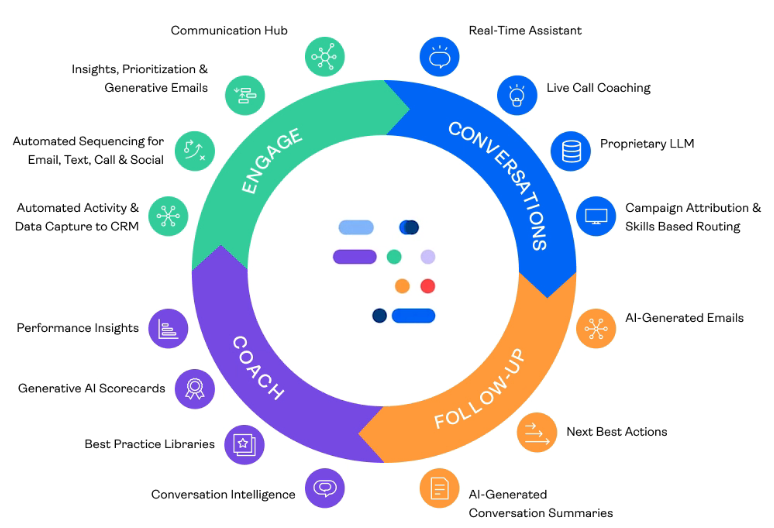
Revenue.io is a revenue orchestration platform built natively on Salesforce. Founded in 2012 as ringDNA (a Salesforce dialer), the platform has evolved into a sales execution and conversation intelligence system that combines engagement, real-time coaching, and AI-driven revenue analytics in one Salesforce-native application.
Its key features include:
RingDNA Salesforce Dialer with local presence dialing, voicemail drop, and automatic CRM activity capture
Moments real-time AI guidance that surfaces coaching prompts during active calls based on conversational cues and Salesforce deal data
Guided Selling cadences with multichannel sequences (call, email, SMS, social) and dynamic lead prioritization
Conversation AI with AI-generated call summaries, methodology-based scorecards, and coaching feedback
CallerDNA for inbound call tracking, routing, and marketing attribution within Salesforce
16+ AI agents covering call scoring, deal summarization, forecast analysis, and objection tracking
Revenue.io's strongest differentiator is its 100% Salesforce-native architecture. All calls, tasks, sequences, coaching signals, and AI outputs live directly in Salesforce objects, eliminating the data sync conflicts and shadow CRM issues that affect bolt-on tools. The patented Moments feature delivers real-time in-call coaching that surfaces objection responses and compliance reminders when reps need them, not in a post-call review days later.
For Salesforce-native sales organizations looking to consolidate their dialer, conversation intelligence, and sales engagement into one platform, Revenue.io delivers real value.
However, its architecture introduces specific constraints: it only works with Salesforce (no HubSpot, Pipedrive, or Dynamics support), it provides no built-in prospecting data (teams must separately contract with a data provider), its custom pricing with minimum seat requirements puts it out of reach for smaller teams, and its integration ecosystem outside Salesforce is limited.
That's why we've focused on platforms that excel where these constraints create friction.
Looking for the B2B data and intelligence layer that powers smarter selling? ZoomInfo gives your team verified contacts, buyer intent signals, and AI-driven account insights across any CRM. Learn more about ZoomInfo.
How We Curated Our List of Revenue.io Alternatives
After testing Revenue.io and researching the sales engagement and conversation intelligence market, we focused on tools that address the constraints teams encounter as they evaluate or outgrow the platform. Revenue.io consolidates sales execution inside Salesforce well, but some businesses need more in specific areas:
Fueling their sales motion with verified B2B contact data and buying signals
Managing revenue across the full lifecycle with multi-CRM flexibility
Scaling pipeline with AI-powered engagement and experimentation
Getting conversation intelligence from billions of analyzed interactions
Deploying affordable calling for smaller teams without Salesforce lock-in
Starting prospecting immediately with a built-in database and transparent pricing
Maximizing outbound call volume with parallel dialing and team collaboration
Each tool on this list leads in one of these areas. You might use them alongside Revenue.io to fill gaps, or switch entirely; it depends on your CRM environment, budget, and go-to-market priorities.
DISCLAIMER: We aren't covering every tool in the market! Our focus is on highlighting the best alternatives that address some of Revenue.io's limitations for various use cases. The goal is to provide insights into tools that serve specific business needs. |
|---|
1. ZoomInfo: Best Alternative for B2B Data and AI-Powered GTM Intelligence

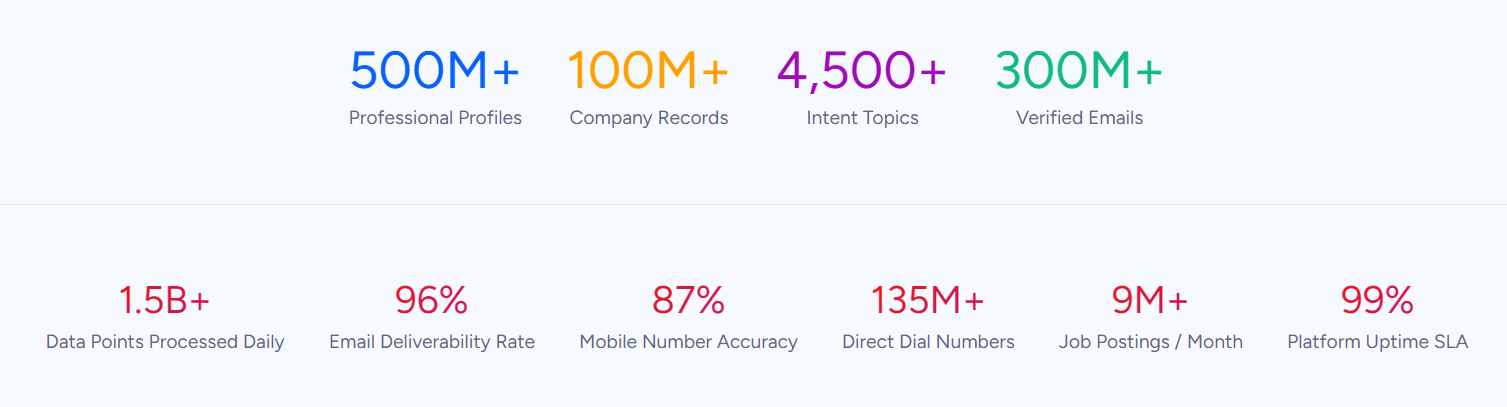
ZoomInfo is an AI GTM platform built on a large data foundation: 500M contacts, 100M companies, 135M+ verified phone numbers, and 200M+ verified business emails. By fusing this data with your CRM records, conversation transcripts, and behavioral signals, ZoomInfo's GTM Context Graph (which processes 1.5B+ data points daily) reveals the full context of your accounts.
Its key features include:
B2B data platform with 500M contacts, 135M+ verified phone numbers, 120M direct-dial phone numbers, and 200M+ verified business emails, backed by 300+ human researchers and up to 95% accuracy on first-party data
GTM Context Graph that unifies ZoomInfo's B2B data with your CRM, conversation intelligence, intent signals, and behavioral data to capture not just what happened in a deal, but why it happened
Buyer Intent Data tracking signals from 210 million IP-to-Organization pairings and 6 trillion+ keyword-to-device pairings monthly
Multiple access points through GTM Workspace for sellers, GTM Studio for marketers and RevOps, and APIs and MCP for any third-party tool or AI agent
Chorus conversation intelligence for call recording, AI analysis, coaching scorecards, and deal intelligence
Revenue.io explicitly identifies its own gap: it dials numbers but does not find them. Buyers need a separate data provider to populate contacts into Salesforce before Revenue.io adds value. ZoomInfo fills that gap with its B2B data platform, verified buyer intent signals, and an intelligence layer that tells your team not just who to call, but why they should call them now.
Why Choose ZoomInfo Over Revenue.io for B2B Data and GTM Intelligence
Revenue.io offers strong sales execution tools inside Salesforce. ZoomInfo provides the data and intelligence layer that powers effective go-to-market motion.
Here's where ZoomInfo steps up.
The Data Foundation: Verified Contacts and Direct Dials That Actually Connect
Revenue.io's dialer, cadences, and conversation intelligence are only as good as the contact data feeding them. If phone numbers are disconnected, emails bounce, or contacts are outdated, Revenue.io's execution tools run on a broken foundation.
Teams using Revenue.io must separately contract with data providers, creating a multi-vendor dependency where data quality, verification, and coverage gaps are managed by an external vendor with no feedback loop to the engagement layer.
ZoomInfo eliminates this dependency.
The platform provides 500M contacts with 120M direct-dial phone numbers and 200M+ verified business emails, processed through a multi-source verification pipeline: automated ML scanning of 28 million site domains daily, a community of 200,000+ ZoomInfo Lite users who share data back, and an in-house Data Training Lab of 300+ human researchers. The result is data verified at up to 95% accuracy.
This advantage holds up under independent scrutiny. In a Fortune 500 competitive RFP analyzing 25 million contacts across vendors, the independent consultant concluded that "no other competitor came even close."
Source: ZoomInfo
ZoomInfo in Action: Your SDR team needs VP-level decision makers at Series B SaaS companies with 200-500 employees that use Salesforce and are researching conversation intelligence solutions. Instead of working across multiple tools, a ZoomInfo search using 300+ company attributes returns verified direct dials and business emails for every matching contact, with Buyer Intent signals highlighting which accounts are in-market. Export directly to your CRM, and your reps start calling prospects ready to buy, not cold leads from a stale database.
ZoomInfo gives us the information we need to execute. We don't have to go through and spend our time digging. It's already there, so we can be three steps ahead. (Vensure)
The GTM Context Graph: Intelligence That Captures Why Deals Move
Revenue.io's conversation intelligence captures what happens on calls, and its AI can query both transcripts and Salesforce opportunity data. But CRM data records state changes (a deal moved from Stage 3 to Stage 4), not the reasons behind them. Revenue.io's intelligence is bounded by what it can observe: call recordings, CRM fields, and email interactions within Salesforce.
ZoomInfo's GTM Context Graph analyzes a broader dataset.
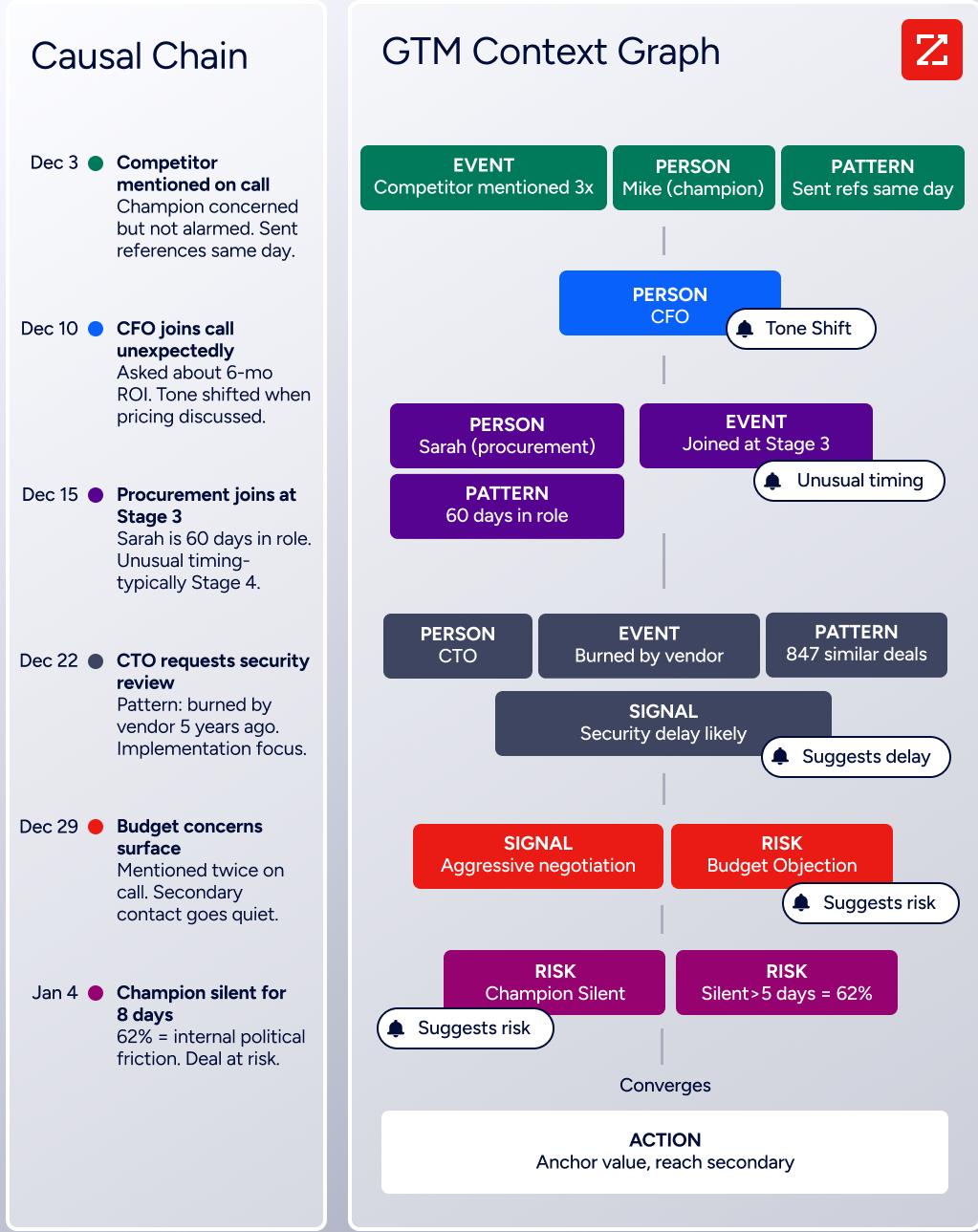
It fuses ZoomInfo's third-party data (identity, company attributes, technographics, intent signals) with a customer's first-party data (CRM records, conversation transcripts from Chorus, email interactions, and behavioral signals) into a single intelligence layer that captures why outcomes happen.
As ZoomInfo's Chief Product Officer Dominik Facher explains: "The CRM recorded the state change. It has no record of why it happened." The GTM Context Graph makes that decision context machine-readable: who influences whom, what actions drove outcomes, what patterns thousands of similar deals suggest happens next, and why things slipped.
Source: ZoomInfo
ZoomInfo in Action: A deal in your pipeline accelerated after the CFO joined the last call and asked about six-month ROI. Revenue.io can transcribe that call and surface a summary. ZoomInfo's GTM Context Graph connects the CFO's engagement with third-party signals showing the company just secured new funding, hired three new VPs, and started researching your competitor's product category. That combined intelligence flows into GTM Workspace, where the AI drafts a follow-up addressing the specific ROI concern the CFO raised, because it understands why that question matters now.
That combination of our internal CRM data, external signals, and AI that's given all that context has helped us craft very specific account- and persona-based messages. And people have responded to them right away. (Seismic)
Universal Access: Any Tool, Any CRM, Any AI Agent
Revenue.io is 100% Salesforce-native by design. It will not function with HubSpot, Pipedrive, Microsoft Dynamics, or any other CRM. This is a structural constraint that creates vendor lock-in.
ZoomInfo delivers its intelligence through three channels, ensuring data and the GTM Context Graph reach every team, tool, and workflow without platform lock-in:
GTM Workspace gives sellers a single interface where prioritized accounts, AI-drafted outreach, and deal execution converge without toggling between tools
GTM Studio gives marketers, RevOps, and GTM engineers a builder environment where audience definition, campaign orchestration, and pipeline measurement happen in natural language
APIs and MCP expose the same intelligence to any custom agent, internal tool, or partner platform (including Anthropic Claude and Google)
All three channels draw from one GTM Context Graph: the same data, the same intelligence, the same continuously learning model. Nothing is degraded or siloed by surface. ZoomInfo integrates with Salesforce, HubSpot, Microsoft Dynamics 365, Snowflake, and 120+ additional partner integrations across CRM, marketing automation, sales engagement, and data warehouse categories.
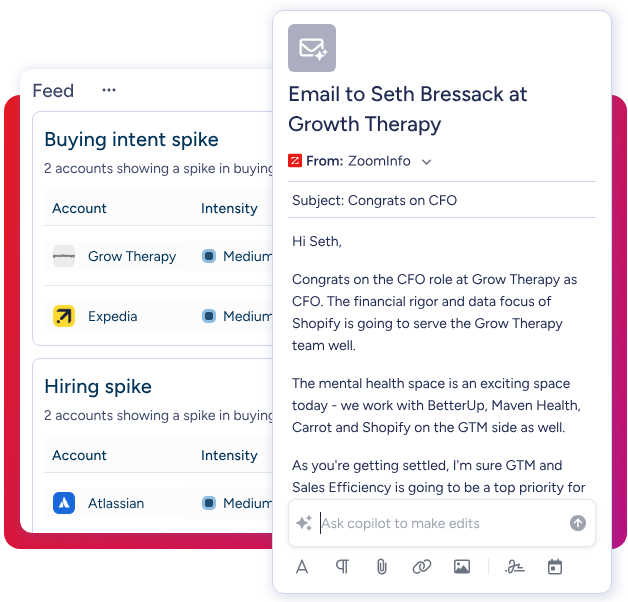
Source: ZoomInfo
ZoomInfo in Action: A marketer in GTM Studio describes an audience in plain language and launches a multi-channel play targeting accounts matching your proven win patterns, no engineering ticket required. Those accounts and recommended actions flow into GTM Workspace, where your seller sees a prioritized feed with AI-drafted outreach addressing the concerns the intelligence engine identified. Meanwhile, a RevOps engineer queries the same GTM Context Graph via API to power a custom scoring model in Snowflake. One intelligence layer, three channels, no lock-in.
The plug-and-play aspect of the API means I can integrate it very easily into any process and get information at a moment's notice. (BDO Canada)
Conversation Intelligence Through Chorus: Connected Intelligence Across the Full GTM Stack
Revenue.io's conversation intelligence operates inside Salesforce, capturing calls and meetings with AI summaries, scorecards, and real-time coaching via Moments.
Chorus by ZoomInfo takes a different approach: it captures every customer call, meeting, and email, then analyzes them in the context of ZoomInfo's full data ecosystem.
Chorus provides automatic recording and transcription, AI-generated call analysis (talk ratios, sentiment, objection detection), deal intelligence and CRM auto-sync, sales coaching with scorecards and clip sharing, and market intelligence extraction.
Its advantage is Connected Intelligence: native integration with ZoomInfo's contact database means a manager reviewing a call sees ZoomInfo's full profile and relationship history for every participant (contact details, company insights, relevant signals) without cross-referencing a separate system.
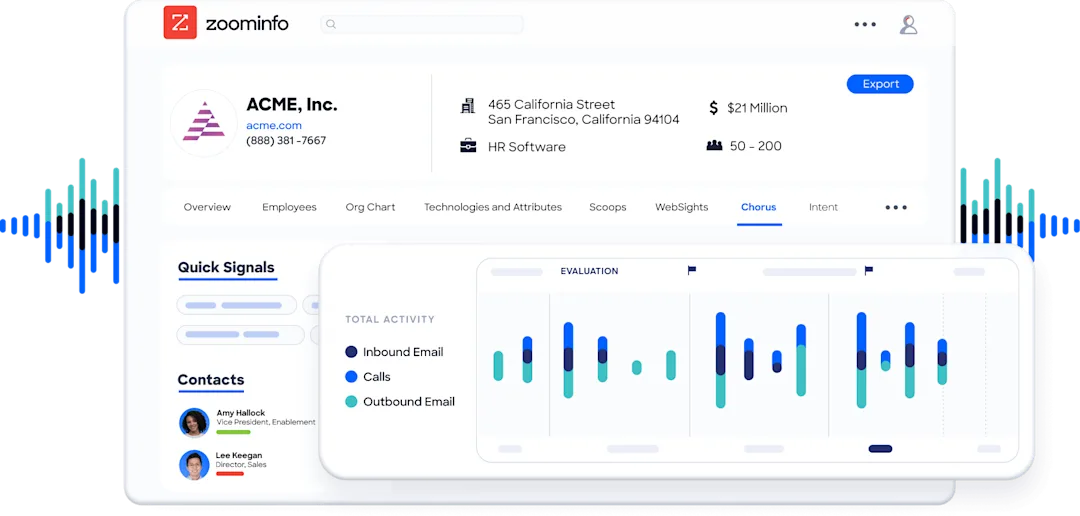
Source: ZoomInfo
ZoomInfo in Action: Your sales manager reviews a Chorus call recording and immediately sees that the VP who raised a budget objection joined the company three months ago, reports to a CTO who championed a similar purchase at their previous company, and works at an account showing buyer intent signals across your product category. That context (which would require cross-referencing three separate tools in Revenue.io's workflow) surfaces automatically through Chorus' Connected Intelligence.
ZoomInfo has always been the most accurate source for decision-maker data. (Levanta)
NOTE: We looked into other B2B data and intelligence platforms and found that while several vendors offer contact databases, ZoomInfo's combination of data scale (500M contacts), verification depth (300+ human researchers, up to 95% accuracy), and the GTM Context Graph is unmatched. In a Fortune 500 competitive RFP analyzing 25 million contacts, the independent consultant concluded that "no other competitor came even close." ZoomInfo has been named a Leader in the Gartner Magic Quadrant for ABM Platforms (2024 and 2025), a Leader in the Forrester Wave for Intent Data Providers B2B (Q1 2025), and earned 133 No. 1 rankings on G2.
ZoomInfo Pricing
ZoomInfo uses a consumption-based pricing model with custom quotes. Pricing scales around seats, data credits (1 credit = 1 export), features, and contract length.
Sales Plans:
Professional includes contact and company data, profiles, advanced search and export, mobile numbers and business email, CRM integrations (HubSpot, Salesforce, and more), Chrome extension, mobile app, and AI-powered email generation.
Advanced adds location and hierarchy data, target account prioritization, Buyer Intent signals, website visitor identification, Champion Tracking, buying group filters, automated outreach workflows, and GTM plays.
Enterprise adds real-time buyer intent signals, sales activity automation, advanced company attributes, competitor alerts, custom Intent signals, advanced workflows and reporting, a dedicated customer service manager, and AI-generated account summaries.
Marketing Plans range from Marketing Demand through ABM Lite to ABM Enterprise, offering audience targeting, cross-channel advertising via ZoomInfo's native DSP, and AI-powered audience creation.
ZoomInfo also offers ZoomInfo Lite, a permanent free tier (no credit card, no time limits) with access to ZoomInfo's B2B database, 10 monthly export credits, individual and company searches, a Chrome extension, and HubSpot integration. A separate 7-day free trial of the full platform is also available.
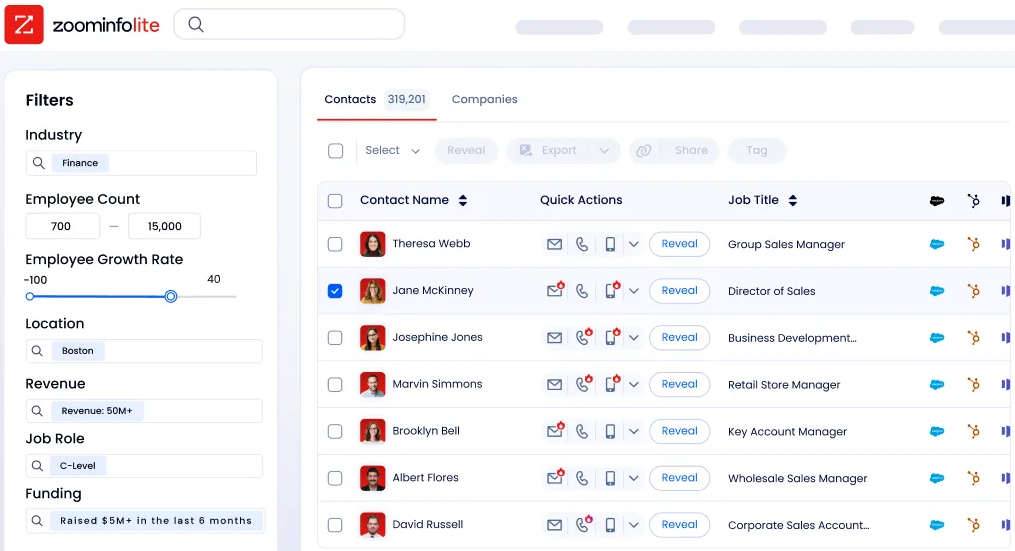
Source: ZoomInfo
Who Should Use ZoomInfo?
Choose ZoomInfo if:
You need verified B2B contact data to fuel your sales engagement platform (whether Revenue.io, Salesloft, Outreach, or another tool) and want a data layer that eliminates disconnected numbers and bouncing emails.
You want an intelligence layer that goes beyond conversation transcripts and CRM field values to capture why deals move or stall, combining third-party signals (intent, technographics, org changes) with your first-party data in the GTM Context Graph.
Your organization spans multiple CRMs, tools, or AI agents, and you need a data and intelligence platform that works everywhere: inside GTM Workspace and GTM Studio, through APIs and MCP in any third-party application, or directly in Salesforce, HubSpot, Dynamics, Snowflake, and 120+ other integrations.
Ready to give your sales team a data and intelligence advantage? Start your free ZoomInfo trial and see why 35,000+ companies trust ZoomInfo to power their go-to-market motion.
2. Salesloft: Best Alternative for Enterprise Revenue Orchestration with Multi-CRM Flexibility
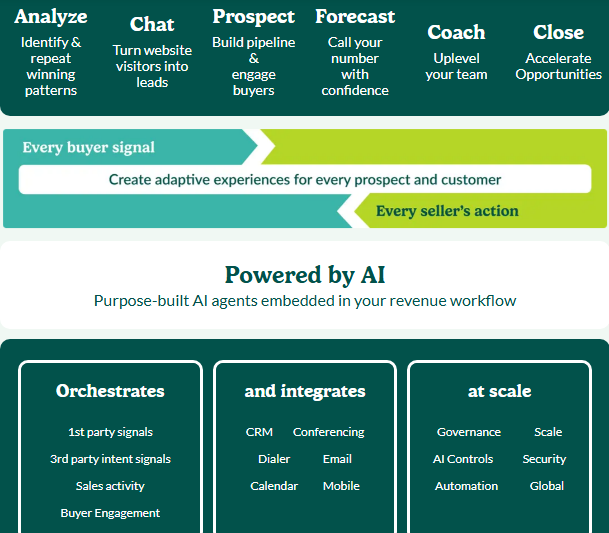
Source: Salesloft
Salesloft is an AI Revenue Orchestration Platform that unifies sales engagement, conversation intelligence, deal management, and revenue forecasting in one enterprise system. Following its merger with Clari in December 2025, Salesloft now delivers what it calls "The Predictive Revenue System", ingesting more than 10 billion revenue interactions and 1 trillion data signals.
Its key capabilities include:
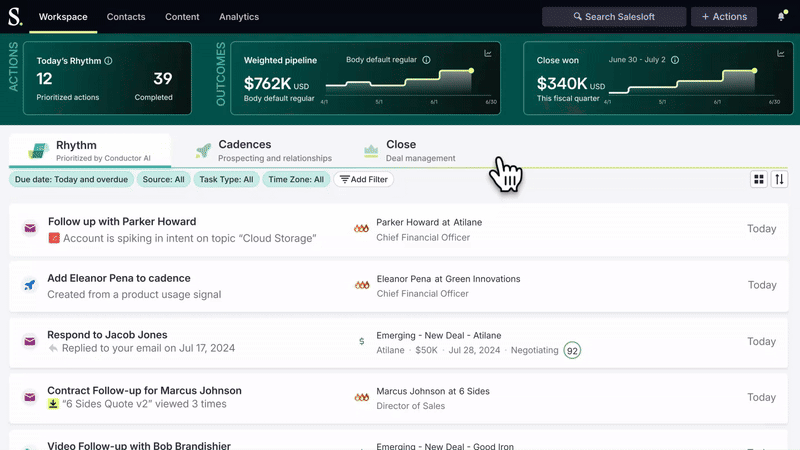
Revenue orchestration spanning Cadence for engagement, Rhythm for AI-powered prioritization, Conversations for call intelligence, Deals for pipeline management, and Forecast for AI-driven prediction
Multi-CRM support with native integrations for Salesforce, HubSpot, Microsoft Dynamics 365, and Zoho
AI-powered forecasting trained on each company's historical data, predicting deal win probability by analyzing size, stage, velocity, and live buyer engagement signals
MCP server for external AI agent integration, launched April 2026
Why Choose Salesloft Over Revenue.io for Enterprise Revenue Orchestration
Salesloft stands out in the following areas:
Full-Lifecycle Revenue Orchestration with Integrated Forecasting
Revenue.io markets itself as a Revenue Orchestration Platform, but its core architecture reflects its telephony heritage: a Salesforce-native dialer with conversation intelligence and engagement layered on top. The December 2025 merger between Salesloft and Clari brought together a proven sales execution platform and a proven forecasting platform in one system.
Salesloft now covers prospecting, prioritized workflows, call coaching, website visitor conversion (via Drift), deal management, and AI-driven forecasting, all sharing one data model. Revenue.io's AI Forecast Analyzer operates only on Salesforce opportunity data; Salesloft's forecasting engine ingests 10 billion revenue interactions and 1 trillion data signals.
Multi-CRM Flexibility vs. Salesforce Lock-In
Revenue.io only works with Salesforce, with no HubSpot, Pipedrive, or Dynamics support. Salesloft offers native bidirectional sync with Salesforce, Microsoft Dynamics 365, HubSpot, and Zoho.
A HubSpot-based company can adopt Salesloft today and migrate to Salesforce later without ripping out its revenue execution stack. For enterprises with CRM complexity or acquisitions involving mixed CRM footprints, Salesloft provides flexibility Revenue.io cannot match.
Multi-Signal Intelligence Beyond Phone-First Selling
Revenue.io's strongest capability is in-call guidance via Moments, which operates on what happens during recorded phone and video conversations. Salesloft's Rhythm AI engine prioritizes seller actions based on a broader set of buyer signals: website visits (via Drift), email engagement, meeting attendance, CRM field changes, and third-party intent data.
For enterprise teams managing multi-stakeholder deals where calls are one touchpoint among many, Salesloft's multi-signal architecture delivers a more complete view of buyer intent.
Source: Salesloft
NOTE: We also evaluated Outreach and Gong for the enterprise revenue orchestration category. Outreach offers mature sales engagement workflows with A/B testing and a broad integration ecosystem. Gong delivers strong conversation intelligence with particularly good deal risk detection. We selected Salesloft because the Clari merger created the broadest enterprise revenue orchestration platform available, combining engagement, intelligence, deal management, and forecasting in ways that neither Outreach nor Gong can match without separate tools.
Salesloft Pricing
Salesloft uses a custom-quoted, per-seat pricing model with two plans: Advanced and Elite. Advanced includes pipeline generation, seller coaching, full customer lifecycle workflows, conversation intelligence, and opportunity management. Elite adds enterprise capabilities such as Sandbox environments, multi-team management, and no-code custom object signals. Additional AI-powered capabilities and platform extensions may be available as add-ons or custom packages.
For a complete breakdown of Salesloft's plans and what each tier includes, see our Salesloft Pricing guide.
Who Should Use Salesloft?
Choose Salesloft if:
You need CRM flexibility or are not Salesforce-exclusive, and you want native integration with Salesforce, HubSpot, Dynamics, or Zoho without lock-in.
You want an all-in-one platform that includes forecasting, consolidating what would otherwise require Outreach + Gong + Clari under one roof.
Your GTM motion extends beyond phone-first selling and requires orchestration across email, website engagement, multi-stakeholder deals, and customer success workflows.
3. Outreach: Best Alternative for AI-Powered Sales Engagement Built for Scaling Pipeline
Source: Outreach
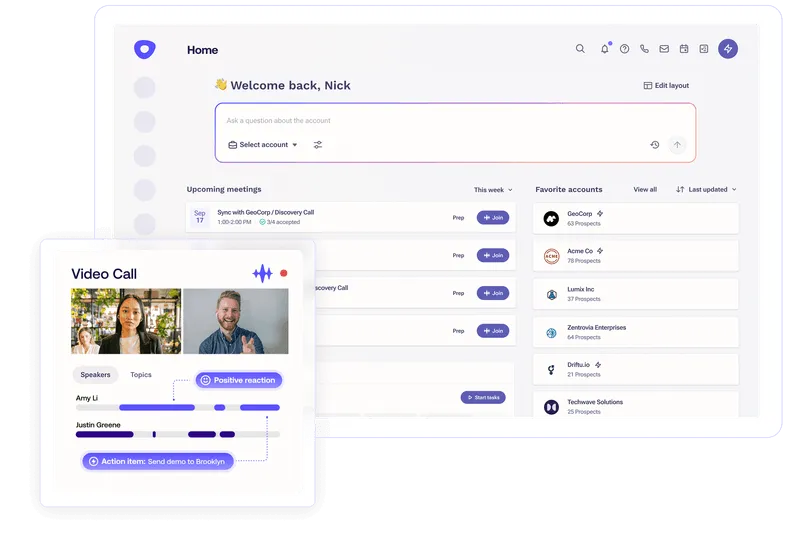
Outreach is an AI Revenue Workflow Platform that unifies prospect engagement, customer retention, and revenue intelligence. Serving 6,000+ customers including Zoom, Snowflake, and Databricks, Outreach is designed for mid-market and growing teams that need strong engagement tools without committing to a single CRM.
Its key capabilities include:
Omni conversational AI agent that lets teams surface deal insights, draft emails, and progress deals using natural language
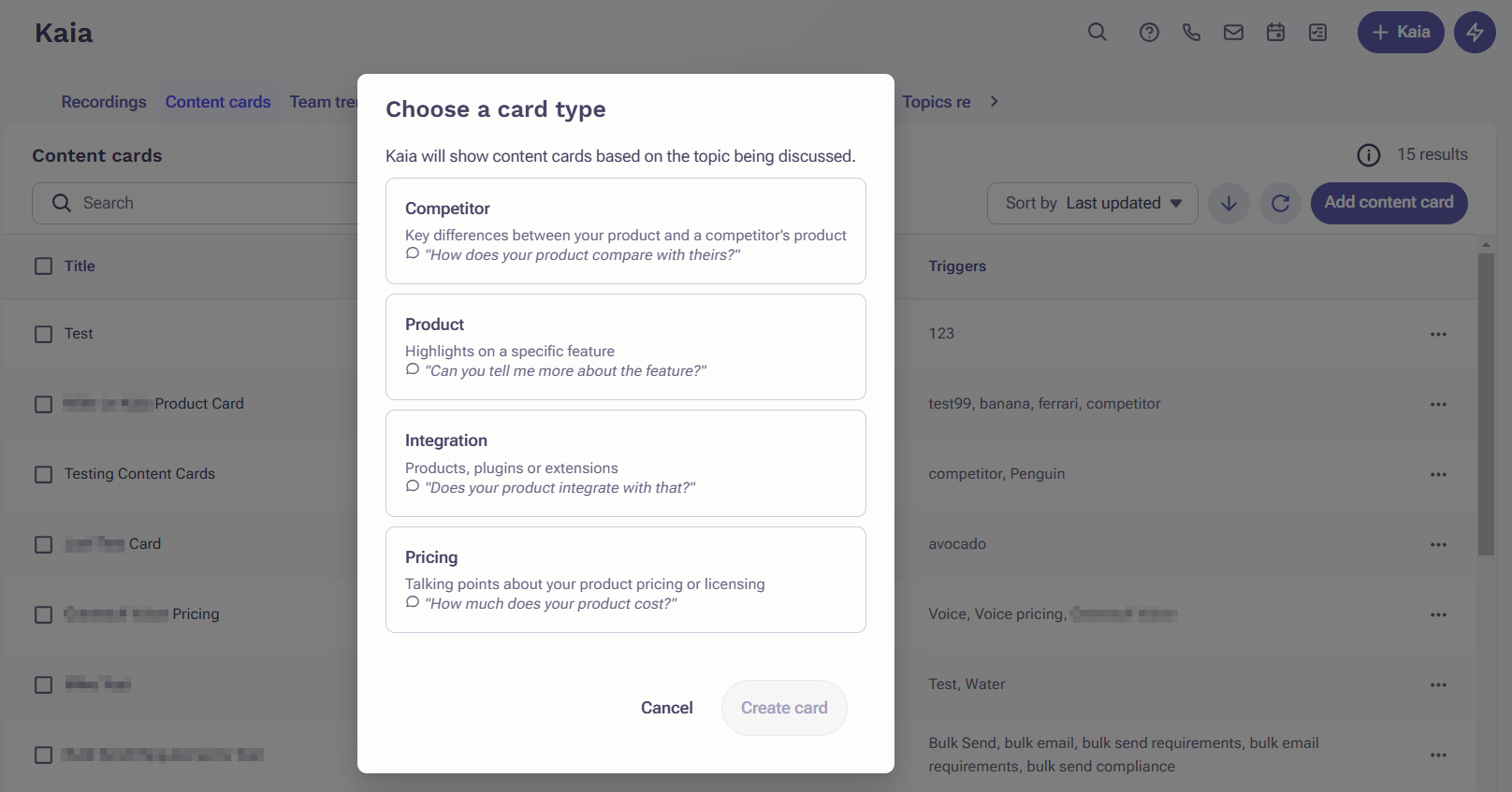
Kaia meeting AI with real-time coaching, transcription, and post-meeting summaries delivered directly in Slack
Sequence engine with A/B testing, dynamic branching, and advanced analytics
Agent Studio for building custom AI agents tailored to unique workflows without code
Multi-CRM integrations with Salesforce, HubSpot, and Microsoft Dynamics
Why Choose Outreach Over Revenue.io for AI-Powered Sales Engagement
Outreach excels in the following areas:
Agent Studio for Custom AI Workflow Automation
Revenue.io offers 16+ pre-built AI agents, but these execute predefined workflows. Outreach's Agent Studio lets RevOps and enablement teams build custom AI agents for their company's specific processes without writing code.
For companies in niche industries or with complex territory assignment rules that generic agents cannot handle, this extensibility is a real differentiator.
Sequence Sophistication with Built-In Experimentation
Outreach's sales engagement engine includes multi-step sequences with A/B testing, dynamic branching, and advanced analytics. Revenue.io's Guided Selling cadences provide structured outreach with dynamic lead prioritization, but the platform does not advertise the same level of A/B testing and experimentation.
For teams still finding product-market fit in messaging, Outreach lets them systematically test subject lines, messaging angles, and cadence lengths at scale.
CRM Flexibility and Multi-Platform Meeting Coverage
Outreach integrates with Salesforce, HubSpot, and Microsoft Dynamics, with a default sync interval of 10 minutes. Kaia meeting AI provides real-time transcription, live content cards, and post-meeting automation across Zoom, Microsoft Teams, and Google Meet. Kaia delivers AI-generated summaries directly in Slack, closing the loop between conversation insights and team coordination.
Source: Outreach
NOTE: We also evaluated Apollo.io and Salesloft for scaling pipeline. Apollo.io excels at providing an integrated prospecting data layer with engagement at an affordable price. Salesloft offers sales engagement with strong multi-CRM integration. We selected Outreach because it offers the best combination of AI features (Omni and Agent Studio), engagement with A/B testing, and flexible CRM integrations for teams scaling pipeline without committing to a single CRM.
Weighing Outreach against Salesloft for your team? See our Outreach vs Salesloft breakdown.
Outreach Pricing
Outreach operates on a per-user pricing model with no platform fees, designed around annual contracts. Per-seat pricing is not publicly disclosed.
Amplify Core includes Research, Revenue, and Personalization Agents, Smart Data Enrichment, Integrated Dialer, Sequences, and Triggers
Amplify Plus adds Smart Meeting and Deal Assist, Real-time Transcription, AI-Assisted Coaching, and Pipeline Management
Amplify Pro adds Scenario Planning, Forecast Rollups, AI Projection, and multi-currency support
Voice calling operates on a separate usage-based model with a Standard Plan (1,000 minutes) and Premium Plan (unlimited calling).
Who Should Use Outreach?
Choose Outreach if:
Your team operates in a multi-CRM environment and you don't want your sales engagement platform to force a Salesforce migration.
You need to systematically optimize outreach through A/B testing, dynamic branching, and data-driven experimentation at scale.
Your RevOps or enablement team wants to build custom AI agents through Agent Studio without writing code or waiting for vendor roadmap prioritization.
4. Gong: Best Alternative for Conversation Intelligence and Data-Driven Coaching
Source: Gong
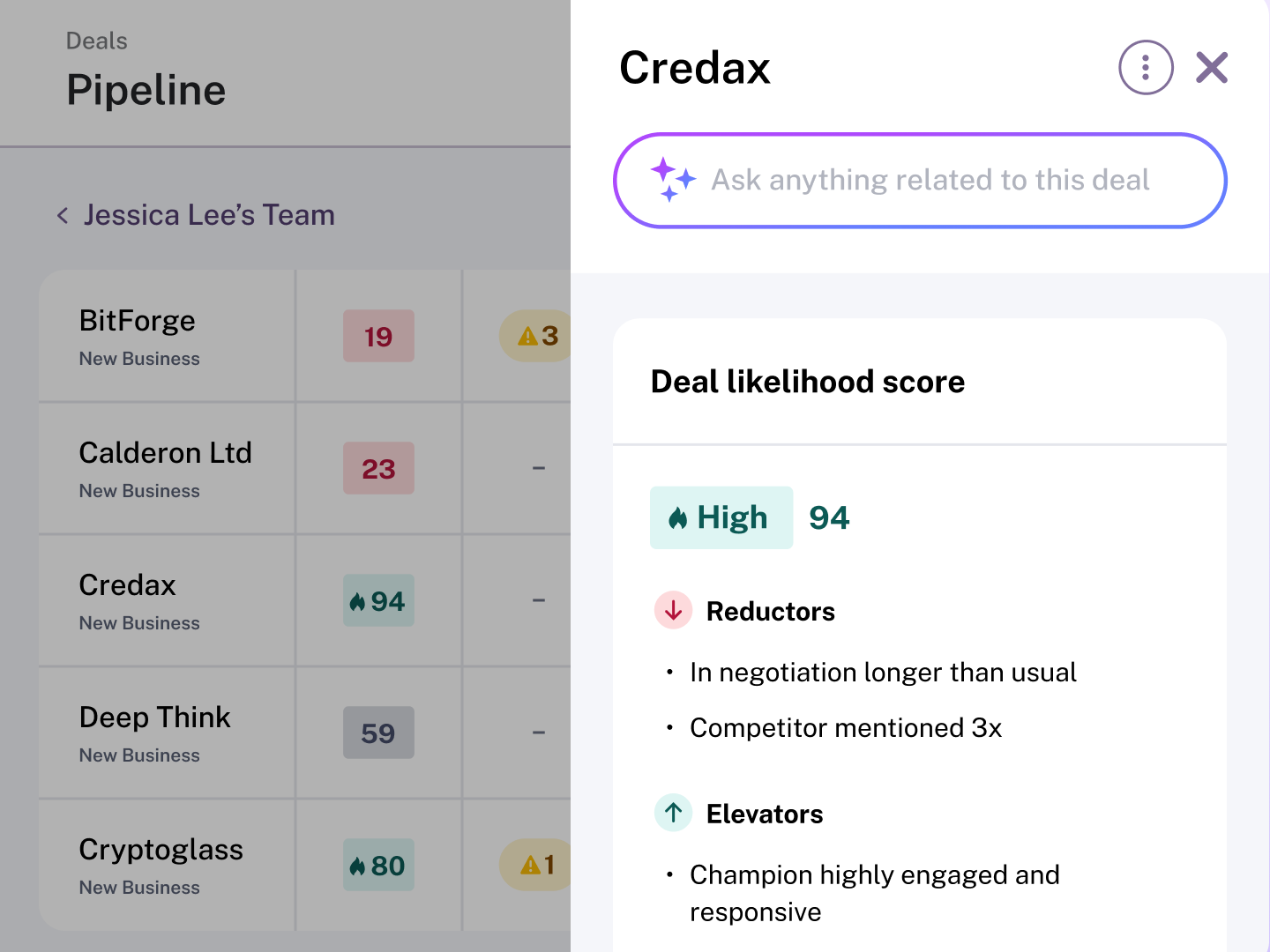
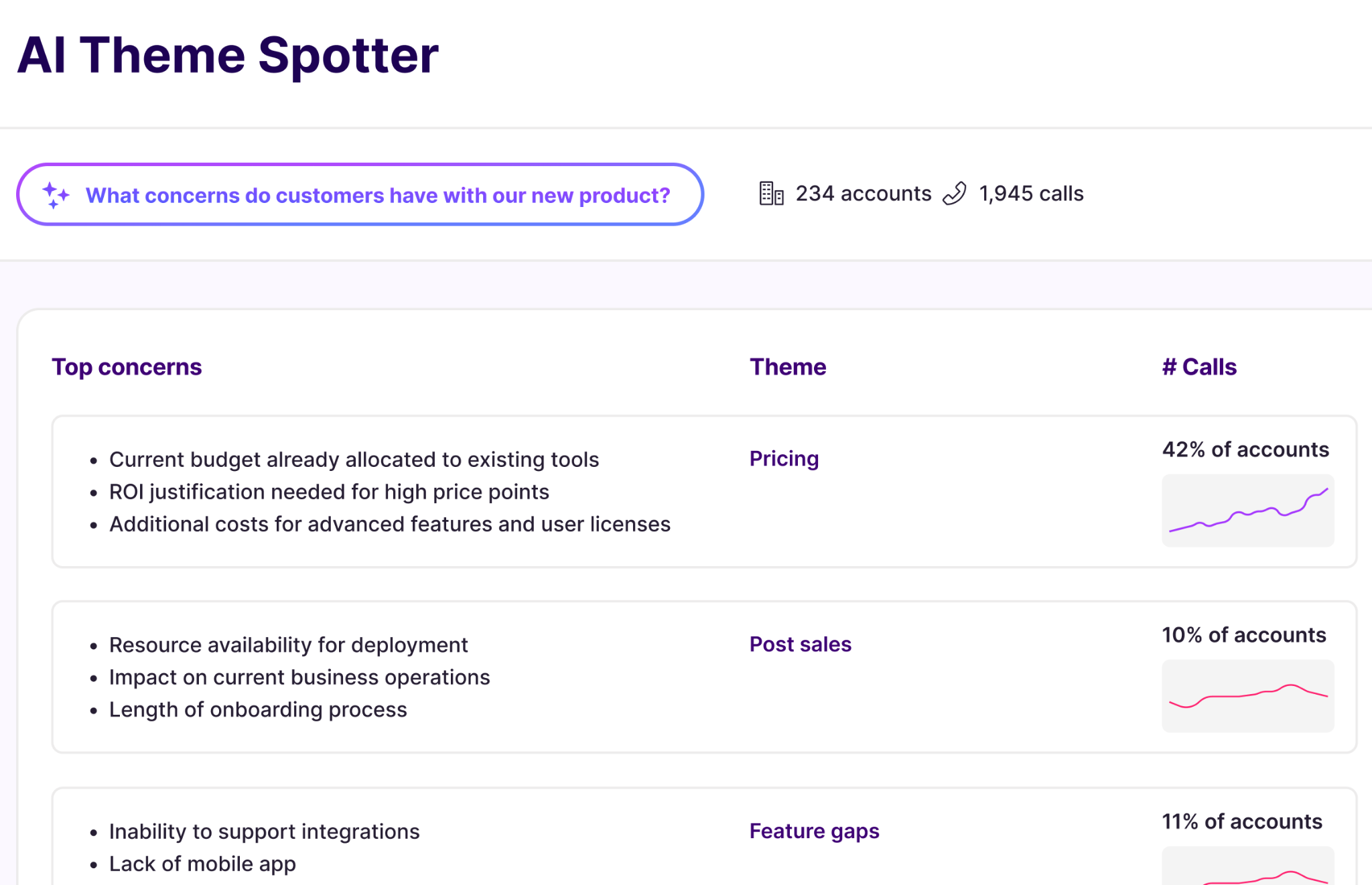
Gong is a Revenue AI Operating System that turns customer conversations into actionable intelligence. Built on a proprietary dataset of over three billion customer interactions, Gong has evolved from a conversation intelligence pioneer into a full revenue platform.
Its key capabilities include:
Conversation analytics with speaker separation, talk-time ratios, sentiment analysis, objection detection, and competitive mention tracking trained on billions of real sales interactions
Deal Likelihood Scores analyzing 300+ data points from engagement patterns, communication cadence, and stakeholder involvement
Methodology-based coaching scorecards that automatically evaluate every call against MEDDIC, SPIN, BANT, Challenger, or custom frameworks
CRM-agnostic deployment across Salesforce, HubSpot, and Microsoft Dynamics
300+ technology integrations via the Gong Collective marketplace, plus MCP support for external AI agents
Why Choose Gong Over Revenue.io for Conversation Intelligence and Coaching
Gong excels in the following areas:
Conversation AI Trained on Billions of Revenue Interactions
Gong's conversation intelligence engine is trained on more than three billion customer interactions accumulated over a decade across 5,000+ customers. This delivers context-aware detection of budget constraints from indirect phrasing, competitor mentions even when brand names aren't spoken, and objection patterns across varied conversational structures.
Revenue.io's Conversation AI entered the conversation intelligence market years after Gong pioneered the category.
Source: Gong
CRM-Agnostic Architecture
Gong integrates bi-directionally with Salesforce, HubSpot, and Microsoft Dynamics 365. Revenue.io only works with Salesforce. For enterprises with multiple CRM instances or companies contemplating a CRM migration, Gong's flexibility eliminates a category of risk that Revenue.io's architecture introduces.
Post-Call Analytical Depth vs. Real-Time Execution Guidance
Revenue.io's Moments provides live in-call coaching via patented technology. Gong optimizes for post-call analysis: surfacing patterns invisible to human managers across thousands of calls, identifying which discovery questions correlate with closed-won outcomes, and detecting sentiment shifts that predict deal trajectory weeks before CRM changes reflect them.
The right choice depends on whether your team's constraint is execution consistency (Revenue.io) or intelligence depth (Gong).
NOTE: We also evaluated Chorus by ZoomInfo and Clari for this category. Chorus excels at tight integration within ZoomInfo's broader GTM intelligence suite. Clari specializes in revenue forecasting and pipeline management. We selected Gong for its mature conversation intelligence base, CRM-agnostic deployment, and analyst validation as a Leader in the 2025 Gartner Magic Quadrant for Revenue Action Orchestration, with the highest score across all four evaluated use cases.
Gong Pricing
Gong uses a fully custom, quote-based pricing model. Three factors govern proposals: per-user licenses, a platform fee based on team size, and tech stack integrations (included at no extra charge).
Gong Foundation (base platform) includes core conversation intelligence, call recording, analytics, and 15+ AI agents
Add-on applications (separately priced) include Enable Essentials, Forecast Essentials, Gong Forecast, Gong Engage, and Data Cloud
Call Intelligence Seat offers a lower-cost entry point for teams needing phone call intelligence only
Collaborator seats for non-selling stakeholders (executives, enablement, RevOps) are free. All fees are non-cancelable per the Terms of Service.
For a full breakdown of Gong's pricing tiers and fees, see our Gong Pricing guide.
Who Should Use Gong?
Choose Gong if:
You want conversation analytics trained on billions of real revenue interactions, with proven accuracy in detecting complex buyer signals from conversational context.
Your managers need to surface coaching insights and deal risks across hundreds of calls without manually reviewing recordings, using scorecards aligned to MEDDIC, SPIN, BANT, or custom frameworks.
You prioritize post-conversation analytical depth over in-call prompting, and you need CRM portability across Salesforce, HubSpot, or Microsoft Dynamics.
5. Kixie: Best Alternative for Small Teams Needing Affordable Multi-CRM Calling
Source: Kixie
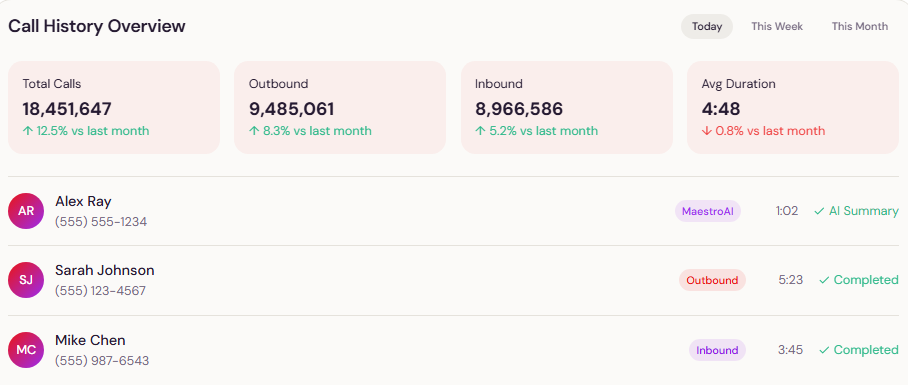
Kixie is a cloud-based sales engagement platform and power dialer that delivers calling capabilities at a price point designed for small to mid-sized teams. Unlike Revenue.io's Salesforce-only architecture and minimum 15-seat commitment, Kixie integrates natively with HubSpot, Salesforce, Pipedrive, Zoho, HighLevel, and dozens of other CRMs with setup that takes seconds.
Its key capabilities include:
Multi-CRM support with native integrations for HubSpot, Salesforce, Pipedrive, Zoho, HighLevel, and 100+ other platforms
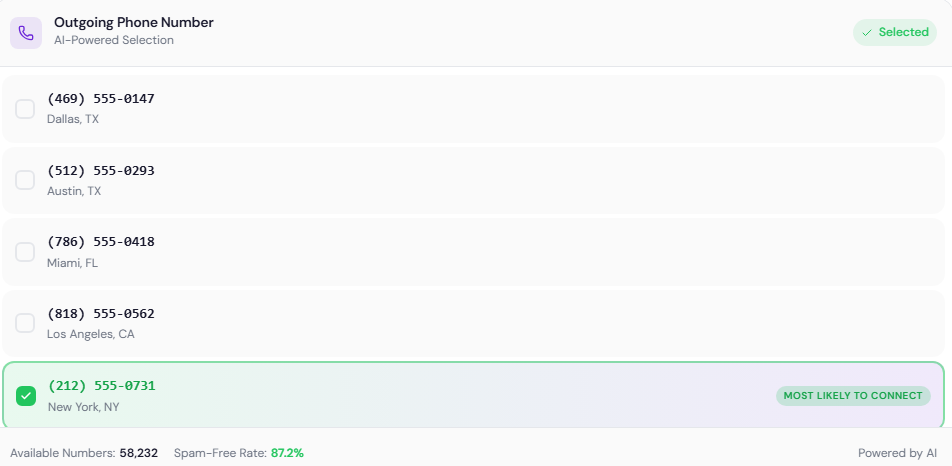
ConnectionBoost with AI-powered local presence dialing that can improve connection rates by up to 500%
Multi-line PowerDialer that dials up to 10 numbers simultaneously
AI conversation intelligence with call transcription, AI call scoring, and coaching features
Built-in compliance automation with DNC list checking and TCPA violation prevention
Why Choose Kixie Over Revenue.io for Small Team Affordability
Kixie stands out in the following areas:
CRM Flexibility Without Platform Lock-In
Revenue.io only works with Salesforce. Many small teams choose their CRM based on affordability, and switching CRMs solely to adopt a calling platform is impractical. Kixie offers native integrations with HubSpot, Salesforce, Zoho, Pipedrive, and HighLevel as a Certified Partner.
Accessible Pricing Without Minimum Seat Commitments
Revenue.io's median contract lands at approximately $59,460/year with a minimum of roughly 15 seats. Kixie starts at approximately $35 per user per month with no minimum seat count.
A five-person team can deploy Kixie for approximately $2,100 annually, compared to Revenue.io's $59,000+ baseline. Kixie also allows teams to mix and match pricing tiers for different roles and offers a 7-day free trial with no credit card required.
ConnectionBoost at SMB Pricing
Revenue.io includes Local Presence dialing with an average +27% connect rate lift, but it's embedded within enterprise pricing. Kixie's ConnectionBoost operates as a $50/month per user add-on combining AI-powered local presence using over 50,000 real phone numbers, progressive caller ID rotation, and automated Number Health Manager with AI-driven detection. Total cost: $85/user/month for calling plus connection rate optimization, accessible to any team size.
Source: Kixie
NOTE: We also evaluated Trellus and Aircall for small teams. Trellus excels at real-time AI coaching for SDRs, and Aircall offers reliable cloud phone infrastructure. Kixie provides the best balance of calling capability, CRM flexibility, and affordability for small teams, with broad CRM integration, ConnectionBoost optimization, and fast setup without the implementation overhead and Salesforce dependency that make Revenue.io impractical for smaller organizations.
Kixie Pricing
Kixie operates on a per-user, per-month subscription with three tiers, all including unlimited minutes for US/Canada calling:
Professional starting at approximately $35/user/month with business phone service, CRM integration, automations, voicemail drop, live call coaching, IVR, call recording, and API access
Single-Line PowerDialer adding single-line power dialing and calling session management
Multi-Line PowerDialer adding parallel dialing of up to 10 lines simultaneously
Premium add-ons include AI Human Detection ($30/month), ConnectionBoost ($50/month per user), Conversation Intelligence (per-agent), and DNC Compliance. A 7-day free trial is available with no credit card required.
Who Should Use Kixie?
Choose Kixie if:
Your team uses HubSpot, Pipedrive, Zoho, or another CRM that is not Salesforce, and you cannot justify switching CRMs solely to adopt a calling platform.
You need strong calling features (multi-line PowerDialer, ConnectionBoost, AI conversation intelligence) but operate with a small team budget, without minimum seat commitments.
Speed to first call is critical, and you need a Chrome extension dialer that installs in seconds rather than a multi-week enterprise implementation.
6. Apollo.io: Best Alternative for Free-to-Start Prospecting with a Built-In Contact Database
Source: Apollo
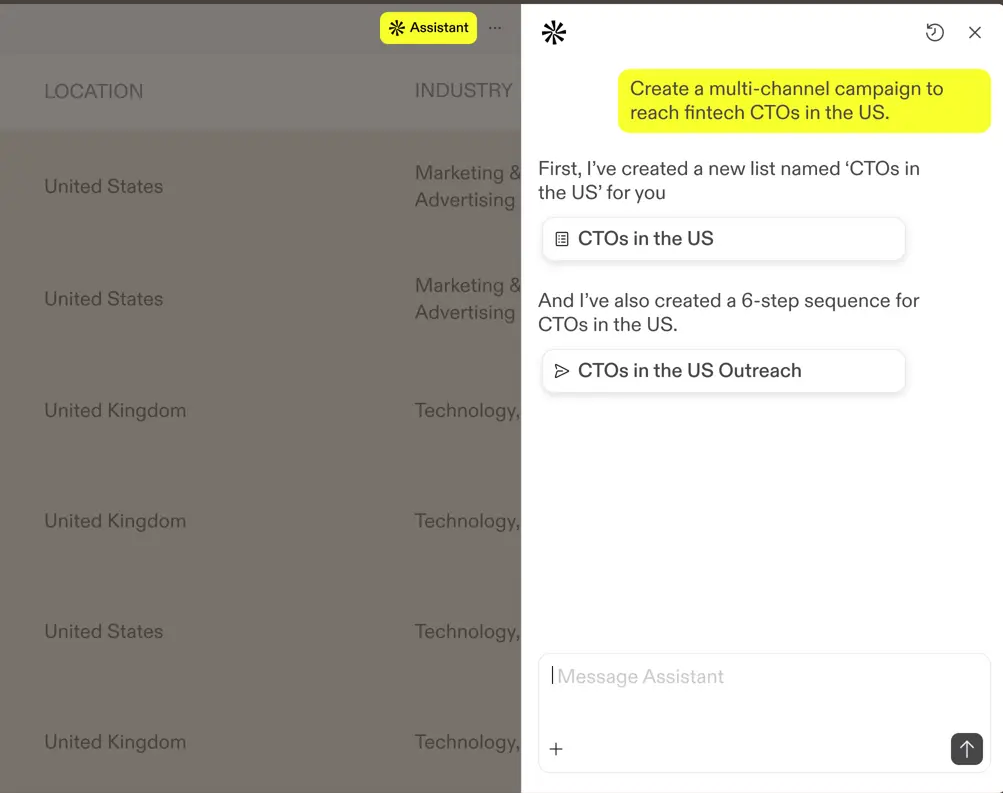
Apollo.io is a B2B AI sales platform that combines a 270M+ contact database with multichannel sales engagement, a built-in dialer, and conversation intelligence in a single product.
Its key capabilities include:
Free-forever Starter plan with database access, 2 active sequences, unlimited email credits, and a Chrome extension
Built-in prospecting data with 270M+ contacts and 70M companies and 91% email accuracy
Transparent, published pricing starting at $49 per user per month
Multi-CRM integrations with Salesforce, HubSpot, and Pipedrive
AI-powered features across email personalization, call summaries, lead scoring, and engagement analytics
Why Choose Apollo.io Over Revenue.io for Free-to-Start Prospecting
Apollo.io excels in the following areas:
Built-In Prospecting Data Eliminates Multi-Vendor Dependency
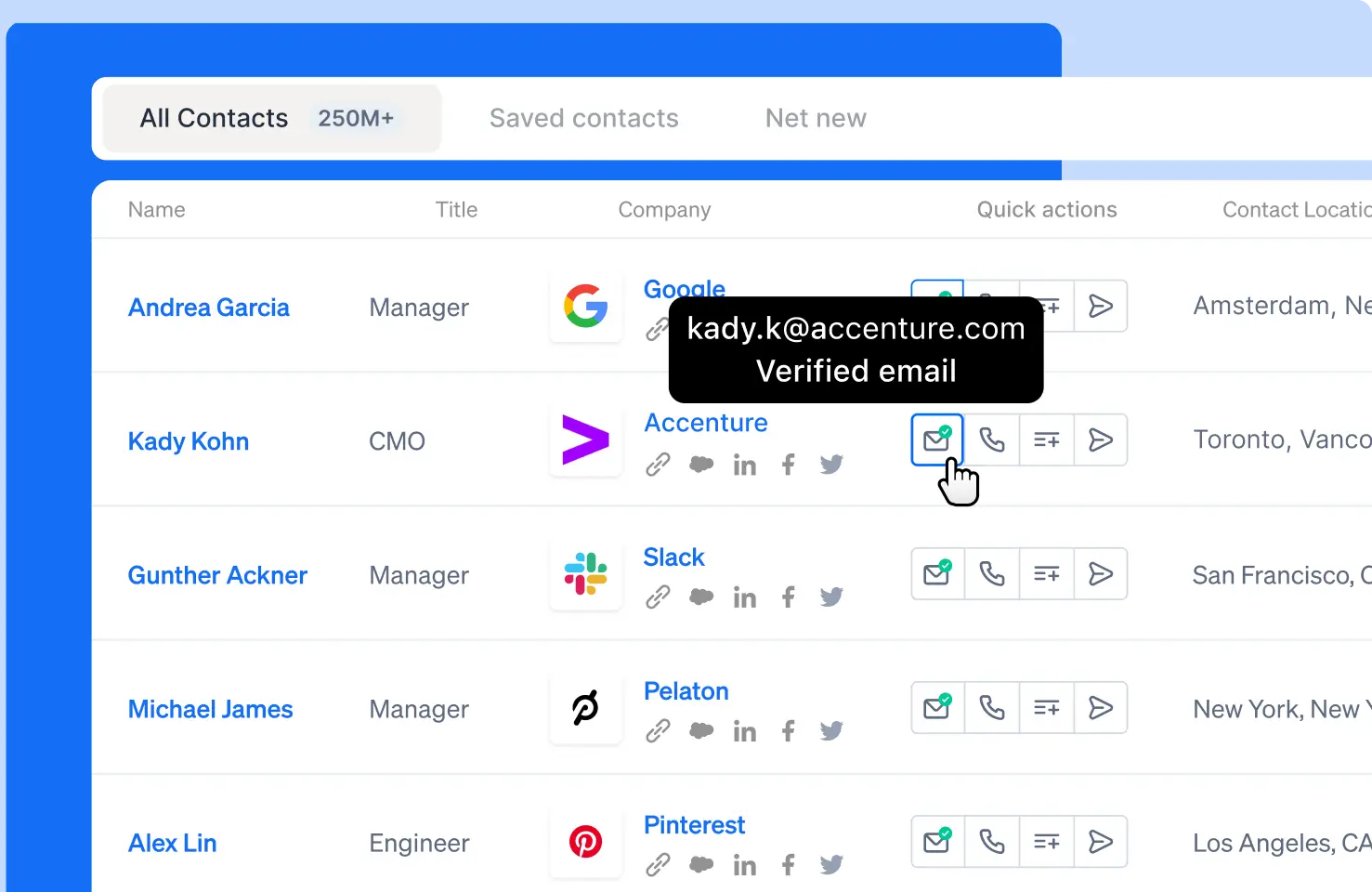
Revenue.io provides no prospecting database. Teams must separately contract with a data vendor to populate Salesforce before Revenue.io adds value. Apollo.io bundles a 270M+ contact database directly into its engagement platform, with 65+ searchable data attributes per record.
A rep can search for prospects by title, company size, tech stack, and funding stage, then immediately enroll contacts into sequences without leaving Apollo.io.
Source: Apollo
Free-Forever Plan with Real Database Access
Apollo.io offers a permanent free Starter plan with access to the full database, 2 active email sequences, unlimited email credits, and 5 mobile credits per month. Revenue.io offers no free plan and no publicly available trial.
A single SDR can sign up with a Gmail address, search the database, build a sequence, and start booking meetings without a corporate credit card, a Salesforce instance, or a conversation with a sales rep.
Transparent Pricing vs. Opaque Enterprise Quotes
Apollo.io publishes its full pricing structure: Free at $0, Basic at $49/user/month, Professional at $79/user/month, and Organization at $119/user/month. Revenue.io does not publish any pricing.
A ten-person team on Apollo.io's Professional plan pays $9,480/year. Revenue.io's median contract is roughly $59,460/year. For teams whose primary bottleneck is top-of-funnel lead generation and outbound prospecting volume, Apollo.io delivers at a fraction of the cost.
NOTE: We also evaluated Outreach and Salesloft for this category. Outreach excels at enterprise engagement workflows, and Salesloft is known for revenue intelligence tightly integrated with engagement. Apollo.io collapses the data plus engagement stack into a single affordable product with zero-barrier entry through its free tier, making it the most accessible alternative for teams that cannot commit to Revenue.io's Salesforce-only requirement and external data vendor dependency.
For a deeper look at Apollo.io's features, integrations, and overall platform, see our Apollo.io review.
Apollo.io Pricing
Apollo.io uses a per-seat subscription model with credit-based consumption:
Free (Starter): $0/user/month with 75 credits/month, 2 active sequences, full database access, Chrome Extension, and unlimited email credits
Basic: $49/user/month (annual) or $59/month (monthly) with 30,000 credits/year and multi-seat support
Professional: $79/user/month (annual) or $99/month (monthly) with 48,000 credits/year, data enrichment, unlimited sequences, A/B testing, and call recording
Organization: $119/user/month (annual, minimum 3 seats) with 72,000 credits/year, SSO, custom reporting, and advanced governance
An Advanced Dialer add-on is available at $149/month ($119/month annual) including Power Dialer, Parallel Dialer, International Dialing, and Local Presence. Apollo.io also offers a 50% discount for one year for qualifying startups.
Who Should Use Apollo.io?
Choose Apollo.io if:
You need a sales engagement platform with built-in prospecting data and cannot justify separate contracts for a data provider and an engagement tool.
Your team uses HubSpot, Pipedrive, or any CRM other than Salesforce, and you need multi-CRM flexibility without migration.
You want transparent, published pricing and the ability to self-serve adoption without engaging a sales team, starting with a permanent free plan.
Your primary bottleneck is top-of-funnel lead generation and outbound volume rather than complex deal execution and in-call coaching.
7. Nooks: Best Alternative for High-Velocity Outbound with Parallel Dialing and Virtual Salesfloor
Source: Nooks
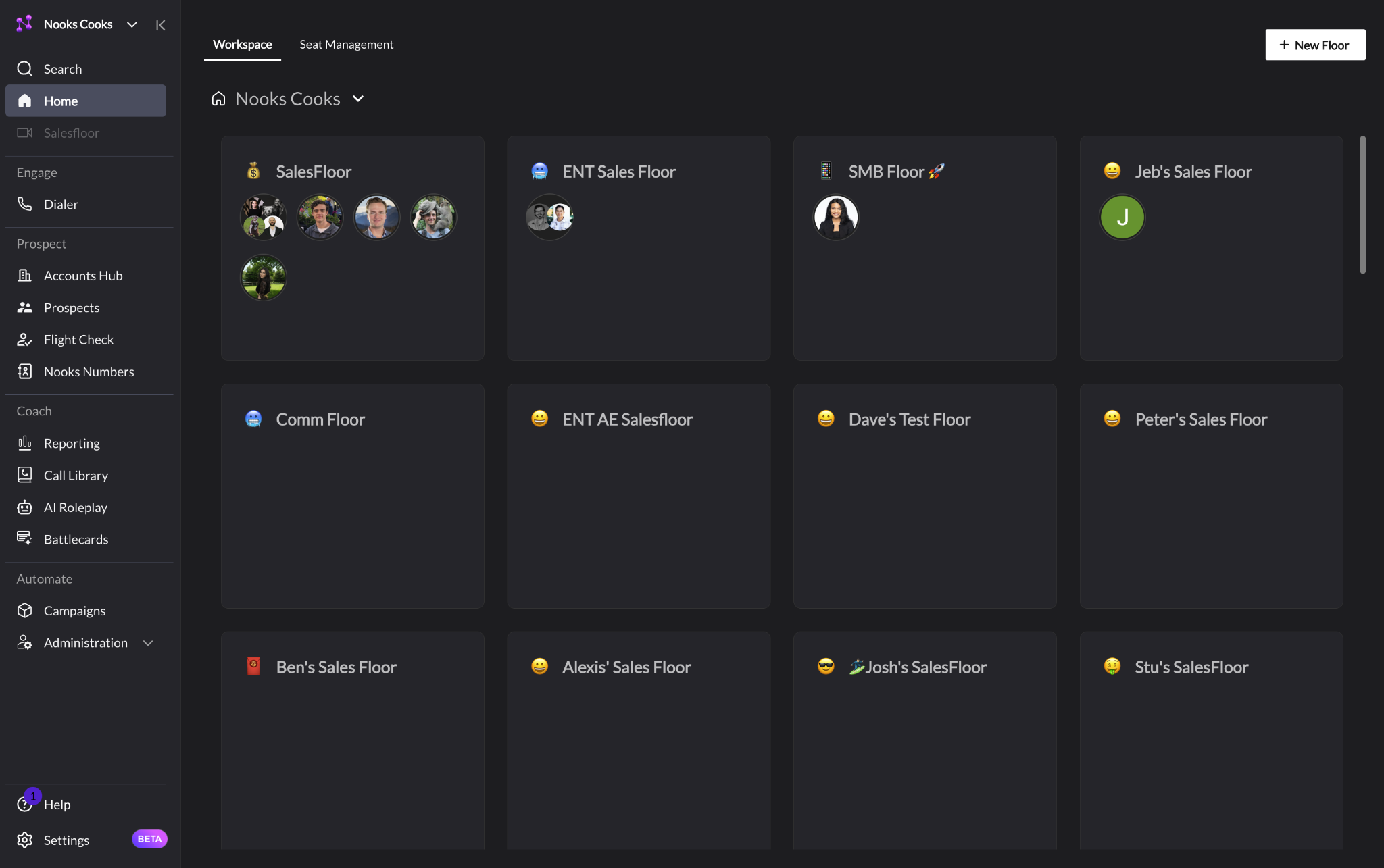
Nooks is an AI-powered outbound sales platform built around a different execution model than Revenue.io: parallel dialing that calls up to five prospects at once, a virtual sales floor that recreates in-person team energy for distributed teams, and AI agents that handle prospecting research before reps pick up the phone.
Its key capabilities include:
Parallel dialing at up to five lines with 5x more dials, 4x more conversations, and 3x more meetings compared to manual dialing
Virtual Salesfloor where distributed teams dial together, shadow live calls, and receive whisper coaching from managers
AI Prospecting Assistant that detects buying signals, researches accounts, and delivers a daily queue of ICP-matched prospects
AI Training Bots for cold call roleplay built from the team's own historical recordings
Multi-CRM integrations with Salesforce, HubSpot, Outreach, Salesloft, Apollo, and Groove
Why Choose Nooks Over Revenue.io for High-Velocity Outbound
Nooks excels in the following areas:
Parallel Dialing Drives 3-5x More Live Conversations Per Hour
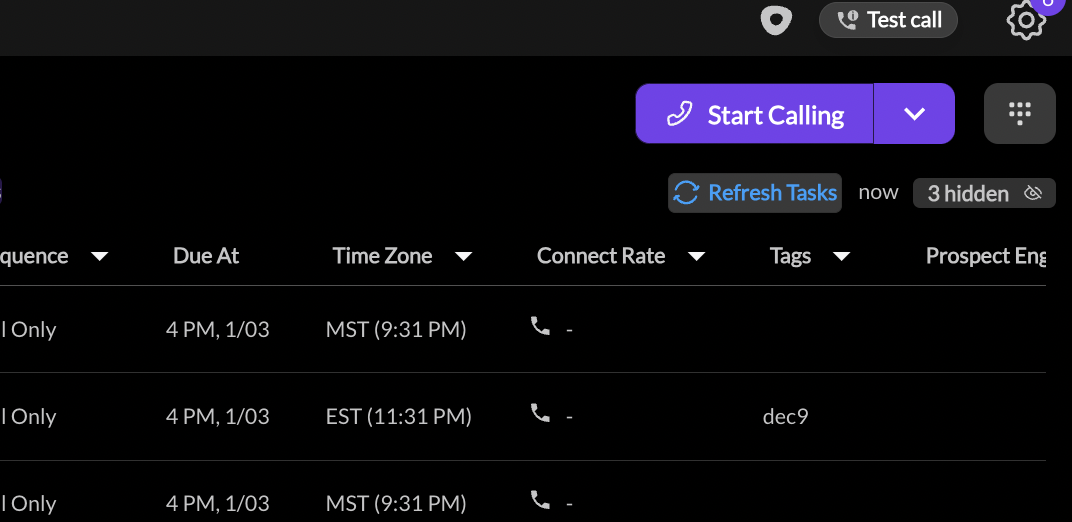
Revenue.io's DialNext is a sequential power dialer that advances one contact at a time. Nooks dials up to five prospects simultaneously, with AI detecting live pickups from voicemails in milliseconds and bridging the rep only when a human answers.
Source: Nooks
Virtual Salesfloor Recreates In-Person Team Energy
Revenue.io is a rep-level productivity tool where each seller works in their own Salesforce instance. Nooks' Virtual Salesfloor is a persistent video co-working environment where distributed SDR teams dial together, shadow live calls, and receive whisper coaching.
The salesfloor creates live call shadowing, in-ear whisper coaching, and shared accountability that Revenue.io's architecture does not replicate.
AI Prospecting and Roleplay Training Before the First Dial
Revenue.io requires contacts to already exist in Salesforce before it adds value. Nooks' AI Prospecting Assistant surfaces ICP-matched prospects with pre-researched context automatically.
AI Training Bots let reps practice objection handling in simulation before dialing real prospects.
NOTE: We also evaluated Trellus (a Chrome extension AI dialer with a free plan) and Orum (a parallel dialer focused on call velocity). We selected Nooks because it combines parallel dialing, the virtual salesfloor model, AI-assisted prospecting, and pre-call roleplay training. With a $43M Series B from Kleiner Perkins and 1,400+ companies powered, Nooks is the most complete rethinking of how distributed SDR teams run outbound.
Nooks Pricing
Nooks does not publish pricing. All pricing is negotiated through custom quotes. The model is per-seat with three access tiers:
Bullpen Only for managers and admins (salesfloor access, no dialing)
Power Dialer + Bullpen adding single-line power dialing
Parallel Dialer + Bullpen adding parallel dialing of up to 5 lines simultaneously
Optional add-ons include AI Coaching (training bots and roleplay) and Nooks Sequencing (multi-channel sequences with AI emails), each assigned on a per-user basis.
Who Should Use Nooks?
Choose Nooks if:
Your team runs high-volume cold outbound and maximizing live conversations per hour is your primary performance metric, with SDRs spending most of their day cold calling.
You're building or scaling a distributed SDR/BDR function and need to recreate in-person salesfloor energy with live call shadowing, whisper coaching, and shared accountability.
Your reps spend significant time on pre-call research, and you want AI to build ICP-matched prospect lists with pre-researched context automatically.
You need to ramp new SDRs faster with AI roleplay training before they dial real prospects.
The Final Verdict
Revenue.io delivers real value as a Salesforce-native sales execution and conversation intelligence platform, but growing sales organizations often need tools that address gaps in data, CRM flexibility, affordability, or calling methodology. Based on our research, here are the best alternatives:
ZoomInfo for B2B data, verified phone numbers, buyer intent signals, and the GTM Context Graph intelligence layer that powers smarter selling across any CRM
Salesloft for enterprise revenue orchestration spanning engagement, conversation intelligence, deal management, and AI-driven forecasting with multi-CRM support
Outreach for AI-powered sales engagement with A/B testing, Agent Studio for custom AI workflows, and multi-CRM flexibility for scaling teams
Gong for conversation intelligence and data-driven coaching powered by three billion analyzed interactions with CRM-agnostic deployment
Kixie for affordable multi-CRM calling with ConnectionBoost, multi-line PowerDialer, and conversation intelligence at a fraction of enterprise pricing
Apollo.io for free-to-start prospecting with a built-in 270M+ contact database, transparent pricing, and multichannel engagement without a separate data provider
Nooks for high-velocity outbound with parallel dialing, virtual salesfloor collaboration, AI prospecting, and roleplay training for distributed SDR teams
You don't have to choose between Revenue.io and these alternatives exclusively. Many organizations layer specialized tools on top of their existing platform. ZoomInfo, for example, powers the data and intelligence layer for thousands of teams using a variety of engagement tools. Consider your CRM environment, team size, budget, and go-to-market priorities when deciding which combination works best.
Ready to power your sales team with B2B data and AI-driven intelligence? Start your free ZoomInfo trial and see which accounts are in-market, who the decision makers are, and what to say to win them over.
Revenue.io Alternatives FAQ
Why do businesses look for Revenue.io alternatives?
Revenue.io's most common limitations are its Salesforce dependency (it only works with Salesforce, excluding HubSpot, Pipedrive, and Dynamics users), its lack of built-in prospecting data (teams must contract separately with a data provider), its custom enterprise pricing with minimum seat requirements that put it out of reach for smaller teams, and limited integrations outside Salesforce.
What is the best overall Revenue.io alternative?
There is no single best alternative because Revenue.io covers multiple functions. ZoomInfo is the top choice for B2B data and GTM intelligence, Salesloft leads for full-lifecycle revenue orchestration with multi-CRM flexibility, and Gong is the strongest option for conversation intelligence and coaching analytics.
Is there a free alternative to Revenue.io?
Apollo.io offers a permanent free Starter plan with access to its 270M+ contact database, 2 active email sequences, unlimited email credits, and a Chrome extension. ZoomInfo offers ZoomInfo Lite as a permanent free tier with 10 monthly export credits and database access. Kixie provides a 7-day free trial with no credit card required. Revenue.io does not offer any free plan or publicly available trial.
Which Revenue.io alternative works with HubSpot?
Salesloft, Outreach, Gong, Kixie, Apollo.io, and Nooks all integrate with HubSpot. ZoomInfo also integrates with HubSpot through its ZoomInfo Lite free tier and paid plans. Revenue.io is the only platform on this list that requires Salesforce exclusively and cannot work with any other CRM.
How does ZoomInfo compare to Revenue.io?
ZoomInfo and Revenue.io serve different layers of the sales stack.
Revenue.io provides Salesforce-native sales execution (dialer, cadences, real-time coaching), while ZoomInfo provides the data and intelligence foundation (500M verified contacts, intent signals, GTM Context Graph) that powers effective selling. Many teams use ZoomInfo to source contacts and account intelligence that then fuel their engagement platform, whether that's Revenue.io, Salesloft, Outreach, or another tool.
Which alternative is best for small sales teams on a budget?
Kixie starts at approximately $35 per user per month with no minimum seat count, multi-CRM support, and a 7-day free trial. Apollo.io offers a permanent free plan and paid plans starting at $49 per user per month with a built-in contact database included. Both are significantly more accessible than Revenue.io's estimated median contract of $59,460 per year.
Which alternative offers the best real-time coaching to compete with Revenue.io's Moments?
Revenue.io's Moments is differentiated with five U.S. patents on real-time conversational guidance. Gong offers real-time coaching through Smart Trackers during calls and post-call methodology scorecards. Kixie includes live call coaching and conversation intelligence as add-ons. Nooks provides whisper coaching through its Virtual Salesfloor.
However, none replicate Moments' Salesforce-triggered, in-call prompting system exactly; the alternatives focus more on broader intelligence and coaching depth rather than in-the-moment script delivery.
Can I use ZoomInfo alongside Revenue.io instead of replacing it?
Yes. ZoomInfo is commonly used as the data and intelligence layer that feeds sales engagement platforms. Revenue.io explicitly acknowledges needing a separate data provider for contacts.
ZoomInfo provides verified phone numbers, email addresses, intent signals, and account intelligence that flow into Salesforce, where Revenue.io's dialer and engagement tools can act on them. This combination gives teams both verified data and Salesforce-native execution.
