

Totango has spent over a decade as a customer success platform, and recent moves suggest it wants to be more. After merging with Catalyst in 2024 and acquiring Parative AI's churn prediction technology, the company now calls itself a "Customer Growth Platform" and sells three products under one umbrella. It earned a Forrester Wave Leader designation in Q4 2025, up from Strong Performer two years earlier.
To write this Totango review, we analyzed it in depth. We believe it's the right choice if:
You manage a large B2B customer book with multi-product portfolios and account hierarchies
You need pre-built customer success programs (SuccessBLOCs) to standardize workflows across a distributed CS team
You want AI-powered churn prediction that goes beyond rule-based health scores
Your CS organization owns expansion revenue, not just retention
You need enterprise-grade security (SOC 2, ISO 27001, GDPR) and configurable data governance
However, Totango might not be the best choice if:
Your primary challenge is finding and reaching the right buyers in the first place
You need verified contact data, direct dials, and business emails for prospecting
Your go-to-market motion depends on intent signals, buyer identification, and outreach automation
You want a single platform covering both pre-sale pipeline generation and post-sale customer management
You need to equip sellers with account intelligence before the deal closes, not just after
In this case, consider pairing your post-sale stack with ZoomInfo: an AI GTM platform that covers the pre-sale journey Totango was never designed for, and connects into the post-sale workflow through shared CRM data and account intelligence.
We've included a detailed look at ZoomInfo later in this review because it fills the gap for teams that need to win customers as well as they retain them. If you're ready to explore how ZoomInfo can strengthen your pipeline, you can start with a free trial here.
What is Totango?
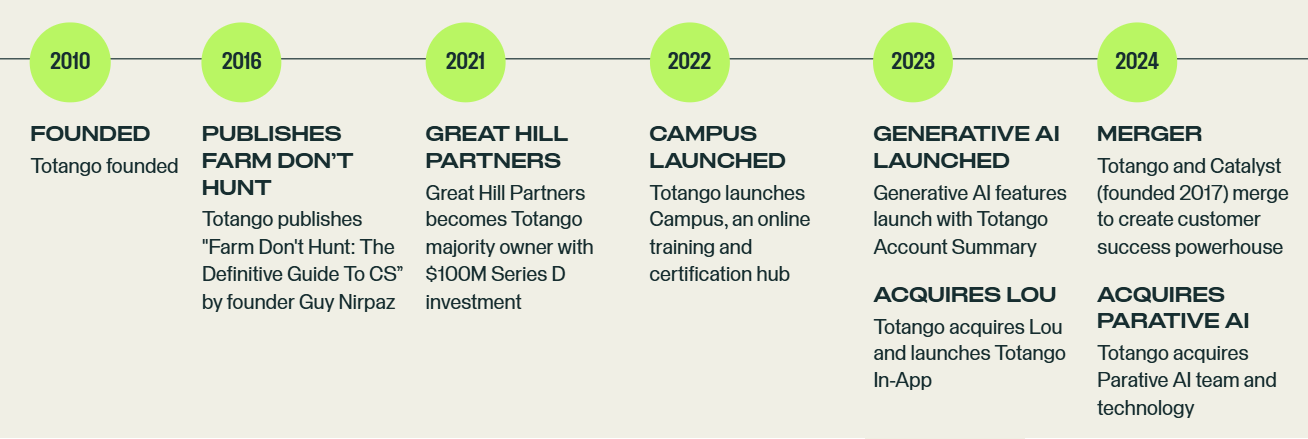
Totango is a customer success platform founded in 2010 by Guy Nirpaz, Omer Gotlieb, and Oren Raboy. Nirpaz, who served as VP of Engineering and Products at GigaSpaces, built Totango to solve a gap he saw in SaaS: companies had no systematic way to monitor whether customers were actually using or getting value from their software.
The company published "Farm Don't Hunt: The Definitive Guide to Customer Success" in 2016, helping establish Customer Success as a formal discipline. In 2021, Great Hill Partners acquired a majority stake via a $100M Series D, moving Totango from VC-backed startup to PE-controlled growth company.
The February 2024 merger with Catalyst combined Totango's enterprise CS infrastructure with Catalyst's workflow capabilities, and the October 2024 acquisition of Parative AI added predictive churn intelligence built over six years of model development.
Source: Totango
Today, Totango positions itself as a Customer Growth Platform organized around "customer-led growth." The company sells three products: Totango (the core CS platform), Catalyst (focused on expansion signals), and Unison AI (a predictive intelligence engine). It serves over 600 organizations globally, including Schneider Electric, HPE, SAP, and GitHub.
Totango Pros & Cons
Pros | Cons |
|---|---|
- Forrester Wave Leader (Q4 2025) with highest Strategy score | - Interface can feel slow under heavy data loads |
- SuccessBLOCs accelerate deployment with pre-built programs | - SuccessBLOC customization is limited for non-standard workflows |
- Enterprise-grade account hierarchies and multi-product health | - Post-merger product consolidation still incomplete (two app surfaces) |
- Unison AI predicts churn months before renewal with NLP | - No public pricing; requires sales engagement for all products |
- Pricing based on contract value under management, not seats | - Search covers only subject lines, not full activity body text |
- G2 Fastest Implementation and Highest User Adoption (Enterprise) | - Support ticket resolution times draw consistent criticism |
- 50+ native integrations spanning CRM, support, and data warehouses | - No free trial or self-serve sign-up available |
Totango Review: How It Works & Key Features
Customer Success Platform: Totango centralizes post-sale customer data and automates lifecycle workflows through a unified customer profile.
The core Totango platform acts as a customer data hub that ingests signals from connected business systems, runs health calculations, and surfaces recommended actions through a workflow layer.
Data flows in through three channels: native one-click connectors (Salesforce, HubSpot, Zendesk, Snowflake, and others), REST APIs, and scheduled file imports. Product usage data streams in real time; CRM and support data syncs on configurable schedules.
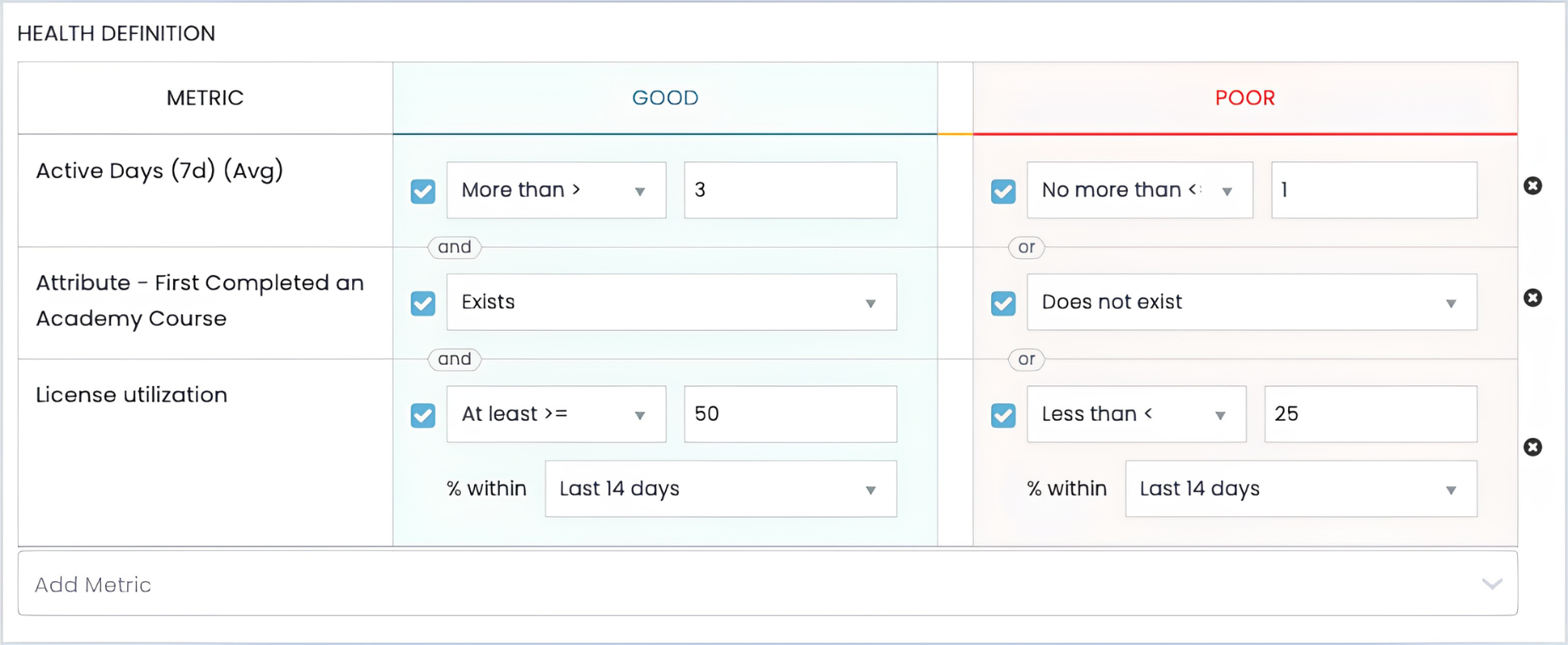
Health scoring is where the platform separates itself from simpler tools. The Health Designer supports both equal-weighted models and multidimensional health models with custom weights per metric. For enterprise accounts with complex structures, Calculated Parent Health rolls sub-account health scores up to a parent-level view, a capability smaller tools lack.
Source: Totango
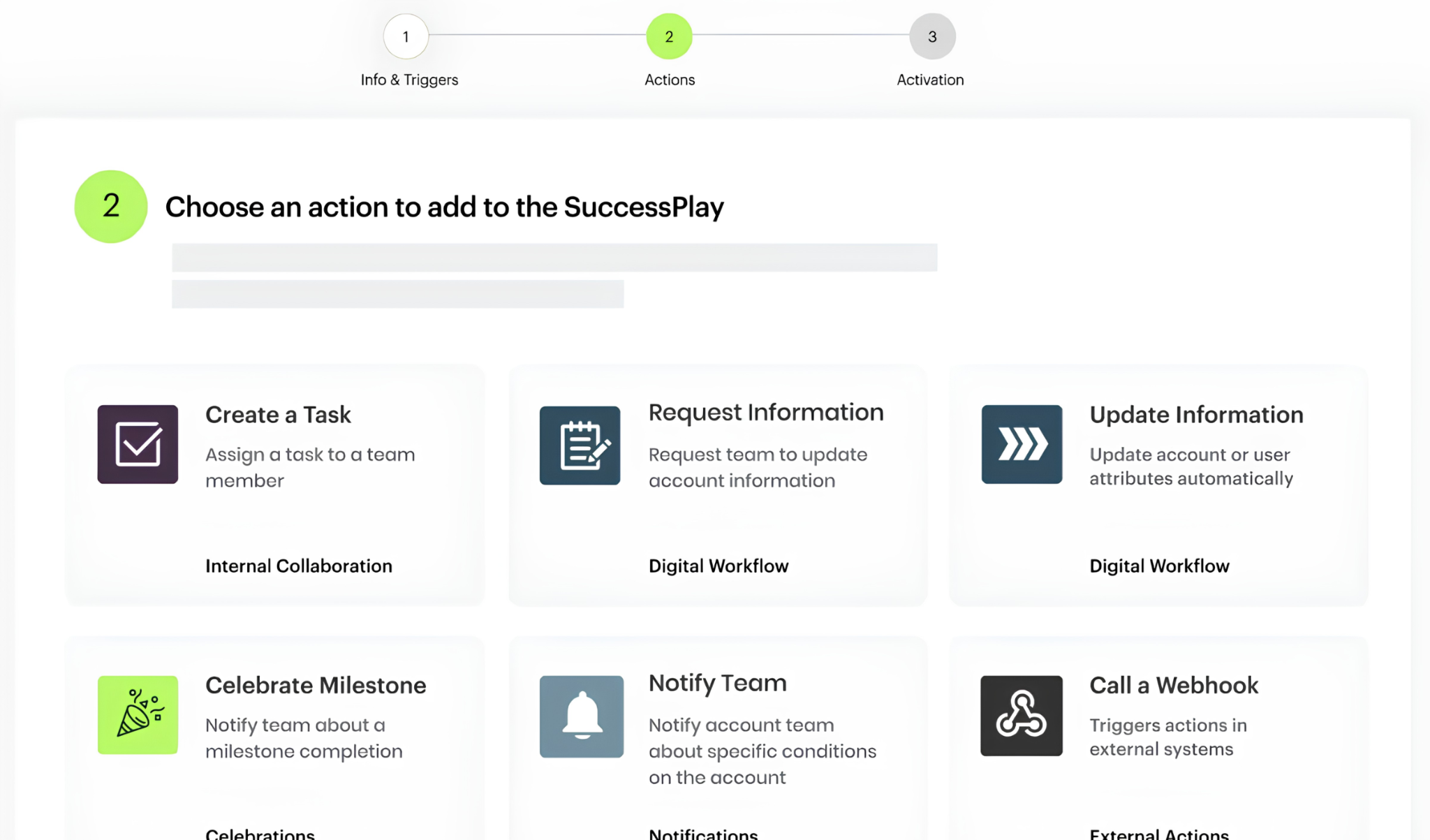
The SuccessPlays workflow engine automates actions based on customer signals. When triggered, a play can create and assign tasks, send email or in-app campaigns, update account attributes, call webhooks to external systems, and send team notifications.
The platform also includes a campaign engine for personalized email and in-app messaging, supporting digital-touch CS programs for lower-tier customer segments.
SuccessBLOCs: Pre-built customer success programs that bundle workflows, scorecards, and campaigns around specific business outcomes.
SuccessBLOCs are template-based modules that package best practices into deployable frameworks. Each SuccessBLOC covers a lifecycle stage (onboarding, adoption, renewal, expansion, escalation) and comes loaded with KPI-driven scorecards, automated SuccessPlay workflows, customer segments, campaign templates, and reference documentation.
Source: Totango
Teams browse the SuccessBLOC Marketplace inside the platform, pick the program that matches their objective, and deploy it. The most popular templates include Manage Onboarding Projects, Manage Contract Renewals, Monitor Customer Health, and Upsell and Expand Customers.
Within each SuccessBLOC, a Customer Experience Canvas provides a no-code visual workspace where CS operations, managers, and CSMs can design and iterate on customer journeys without engineering support.
The approach works well for teams that want a structured starting point. Where it falls short is flexibility: G2 reviewers note that SuccessBLOCs are difficult to customize beyond their templates, and segments must be saved in specific ways to be reused.
Unison AI: A standalone predictive intelligence engine that detects churn risk and expansion opportunities using NLP, not static rules.
Unison is Totango's AI-powered Customer Intelligence Engine, built on technology acquired from Parative AI after six years of model development. It addresses a real limitation of traditional health scores: manual rules decay fast and lag reality by weeks or months.
Source: Totango
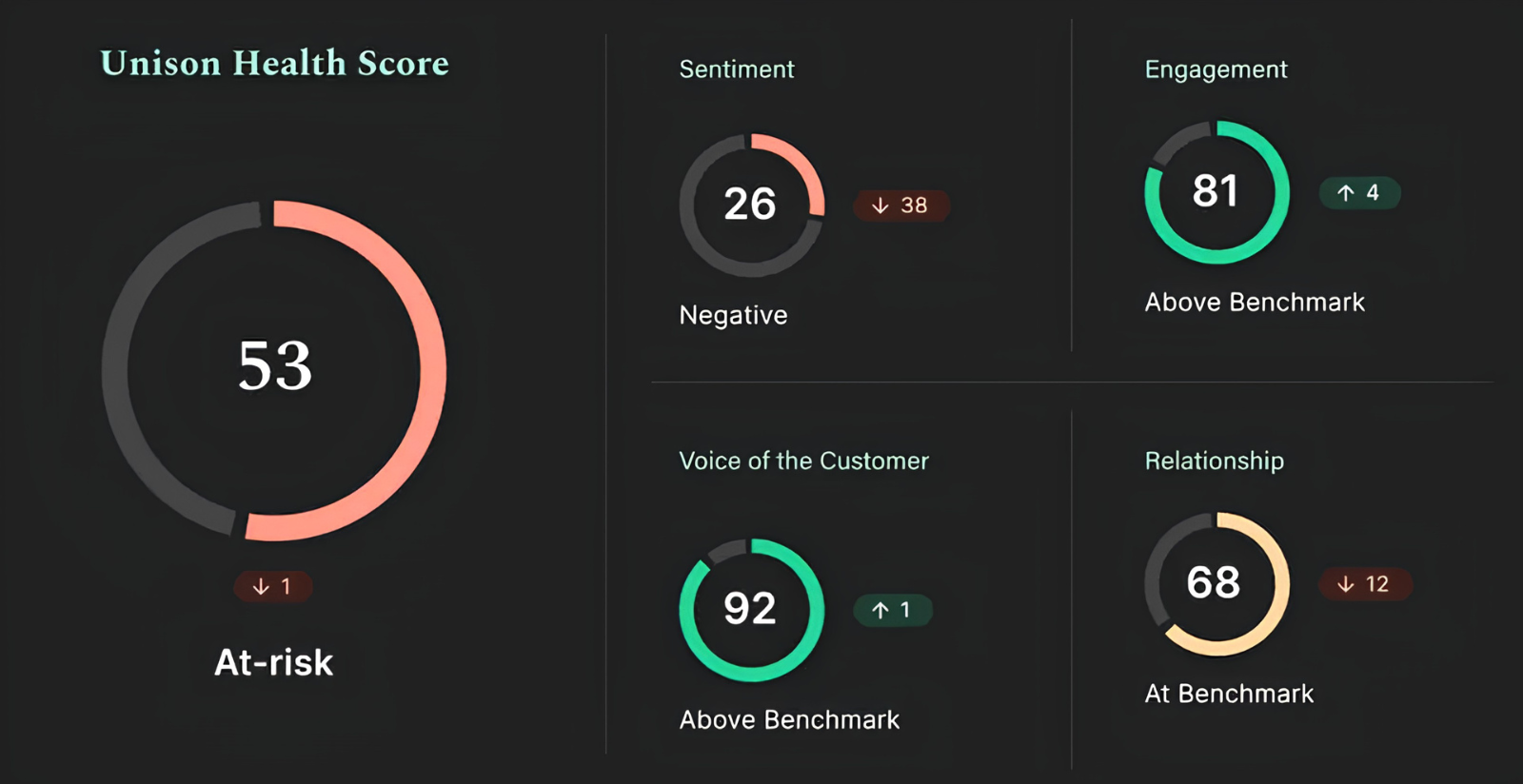
Unison ingests customer engagement signals across calls, emails, meetings, and support tickets and runs them through AI models that produce four composite scores: Sentiment Grade (NLP analysis of communications), Engagement Grade (volume and recency of interactions), Relationship Grade (depth and breadth of stakeholder engagement), and Voice of Customer Grade (customer feedback weighting).
Instead of applying static rule weights, Unison uses NLP to grade data dynamically, with the importance of each signal varying per account and shifting over time.
The platform offers standard AI models deployable in one to two days and custom enterprise models trained on a customer's own historical data. Custom models do not train on other clients' data, which matters for enterprise buyers with strict data governance requirements.
Unison is platform-agnostic. It works independently of Totango's broader CS platform and can run alongside any CSP on the market, creating a second revenue stream for Totango independent of platform displacement.
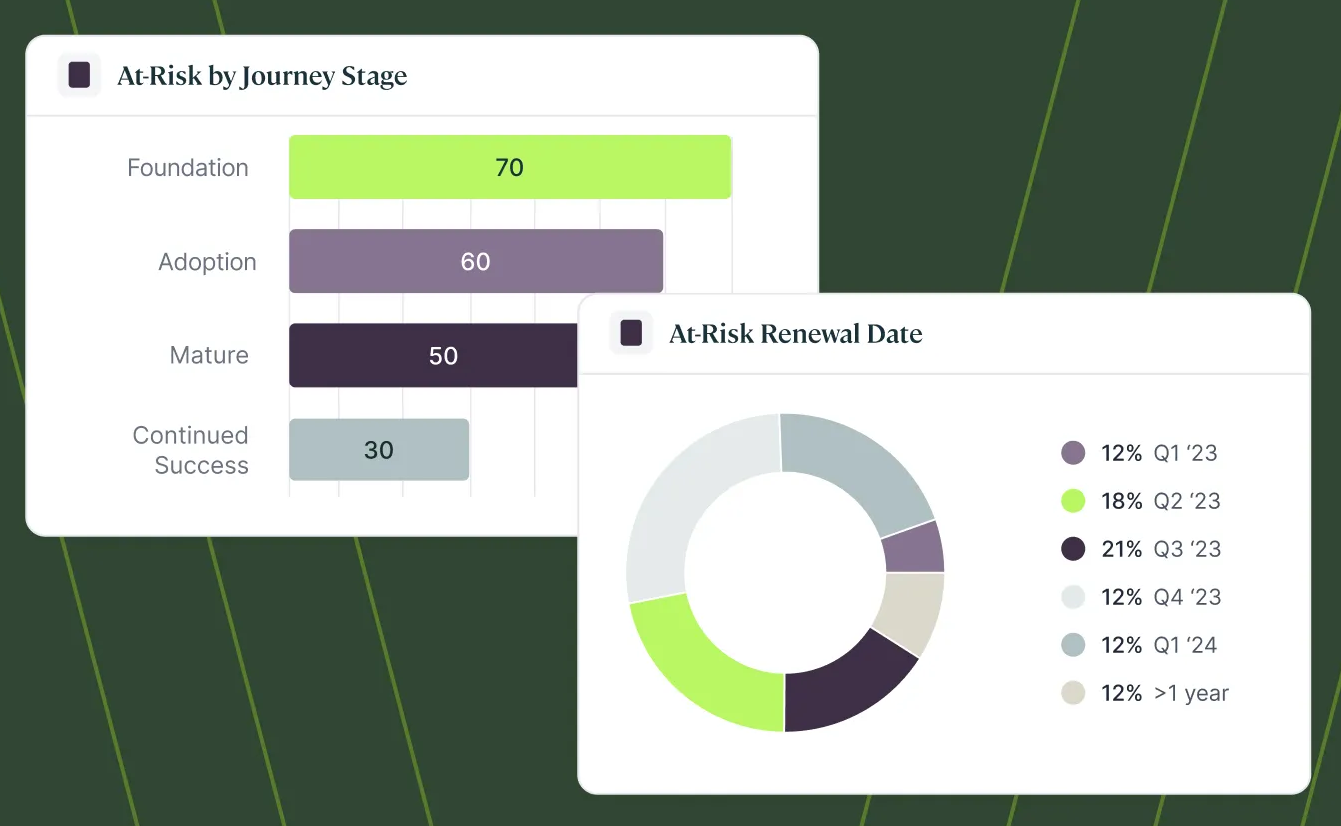
Catalyst Customer Growth Platform: An expansion-focused product that aligns CS and sales teams around customer-defined business goals.
Catalyst is the third product in Totango's suite, brought in through the February 2024 merger. Where the core Totango platform tracks customer health and automates CS workflows, Catalyst organizes around customer-defined business goals as the primary data object.
Source: Totango
CS teams document each customer's business objectives, and the system tracks goal attainment automatically to show whether a customer is achieving the value they bought the product to get. When an account shows readiness for upsell or cross-sell, Expansion Signals alert CS and account management teams, launching Playbooks that guide the qualification-to-close process.
The premise is sound: task-management-only strategies limit growth, and Catalyst provides a structured alternative built around measurable customer outcomes.
The challenge is that the merger left two separate product experiences (app.totango.com and app.catalyst.io) for an extended period, with feature gaps and the complexity of running dual roadmaps. Full UX unification remains the most important outstanding integration work.
Pricing: Totango charges based on contract value under management, not seats, but publishes no prices.
Totango operates on a seat-based subscription model with usage limits on customer accounts, sold as three separately purchasable products. Within the core CS platform, three seat types exist: Practitioner seats (full access), Contributor seats (limited access for cross-functional teams), and Viewer seats (read-only for leadership).
The Enterprise tier includes 10 practitioner seats and 2,000 accounts. The Premier tier includes 20 practitioner seats, 3 viewer seats, 10,000 accounts, and a dedicated account team. Unison and Catalyst have their own tier structures.
Forrester noted that Totango's pricing based on revenue under management rather than seats aligns vendor and customer outcomes. All products require contacting sales; no public prices appear anywhere on the website, and no free trial or self-serve sign-up is offered.
Annual contracts are standard. The Terms of Service specify 12-month initial terms with automatic renewal unless either party provides written notice at least 30 days before term end. SSO is a paid add-on for both Unison tiers. Seats, accounts, and email blocks can be added mid-contract for a fee.
Where Totango Falls Short
Totango has earned its Forrester Wave Leader designation and built real AI capabilities, but several limitations show up with regular use. These reflect a platform built to manage customers you already have, not to find and win them.
UX Friction and Performance Issues. The most common complaint across G2 and Capterra reviewers is an interface that feels slow and, in places, unintuitive. Performance drops when large integration datasets are present. The company launched a UI overhaul in 2025, but migration has not resolved all friction points.
Post-Merger Product Fragmentation. The 2024 Totango-Catalyst merger left two separate application surfaces that remain partially distinct. Teams managing both products navigate between app.totango.com and app.catalyst.io, with feature gaps and dual roadmaps creating complexity that a single-product competitor avoids.
No Pre-Sale Intelligence. Totango is built for post-sale. It has no contact database, no buyer intent signals, no prospecting tools, and no way to identify or reach potential customers before they sign. Teams that need to connect retention efforts with upstream pipeline generation must stitch together separate tools, creating data silos between the teams that win customers and those that keep them.
Search and Retrieval Limitations. G2 reviewers report that search covers only subject lines, not the full body of activity notes or timeline entries. For CSMs managing dozens of accounts, this makes it hard to surface historical context during customer calls.
Opaque Pricing with No Free Entry Point. No public prices, no free trial, and no self-serve sign-up creates a barrier for teams that want to evaluate before committing. The CVUM-based pricing model is attractive in principle, but without published rates, prospects cannot self-qualify or compare costs without engaging sales.
Support Response Times. Capterra reviews include consistent criticisms of slow support ticket resolution, with some tickets reportedly open for months with limited follow-up. For a platform that manages critical customer relationships, delayed support creates operational risk.
These limitations follow naturally from a platform that has grown through acquisition and repositioning. The core CS capabilities remain strong, but the gaps (particularly the absence of pre-sale intelligence) create clear opportunities for complementary tools that cover the full revenue lifecycle.
The Natural Complement to Totango: ZoomInfo
Totango tells you which customers are at risk and which are ready to expand. But it cannot tell you who to sell to next, which accounts are researching solutions, or how to reach the decision-makers behind a buying committee. That is the job ZoomInfo was built for.
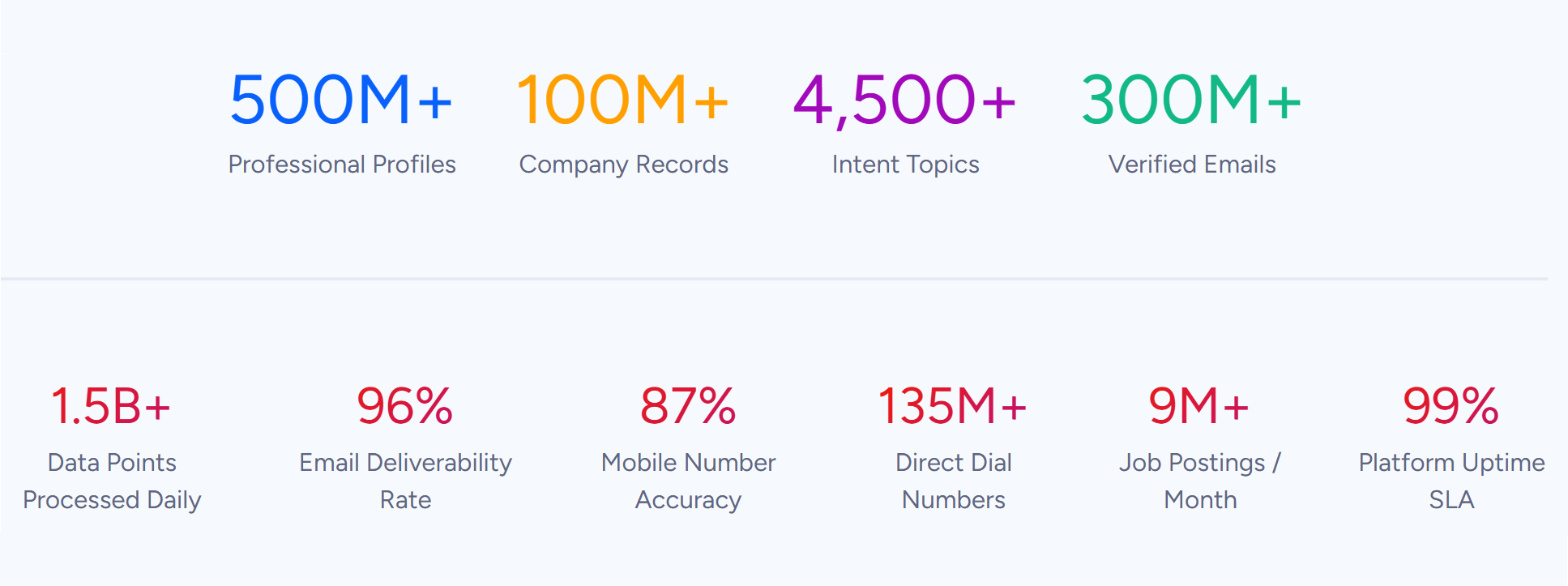
ZoomInfo is an AI GTM platform built on a B2B data foundation of 500M contacts, 100M companies, 135M+ verified phone numbers, and 200M+ verified business email addresses. By fusing this data with your CRM records, conversation transcripts, and behavioral signals, ZoomInfo's GTM Context Graph (processing 1.5B + data points daily) reveals the full context of your accounts.
Source: ZoomInfo
That intelligence flows into every downstream action: the follow-up email that addresses the specific concern a prospect raised, the play that targets accounts matching your actual win patterns, and the forecast that weights deals by buying evidence rather than stage labels.
Where Totango manages the relationship after the sale, ZoomInfo powers everything before it. Together, they cover the full revenue lifecycle: ZoomInfo identifies, reaches, and wins customers; Totango retains and grows them.
Comprehensive B2B Data: ZoomInfo provides the verified contact and company intelligence that Totango's post-sale platform was never designed to offer.
Totango ingests customer data from your CRM, support tools, and product usage systems. It does not generate new contact data, verify existing records, or identify prospects you haven't met.
ZoomInfo's data platform covers three dimensions: identity data (who buyers are and how to reach them), company context (firmographics, org charts, technographics across 100M companies), and dynamic signals that reveal when accounts are in-market. The data is verified through a multi-source pipeline backed by 300+ human researchers and reaches up to 95% accuracy on first-party data.
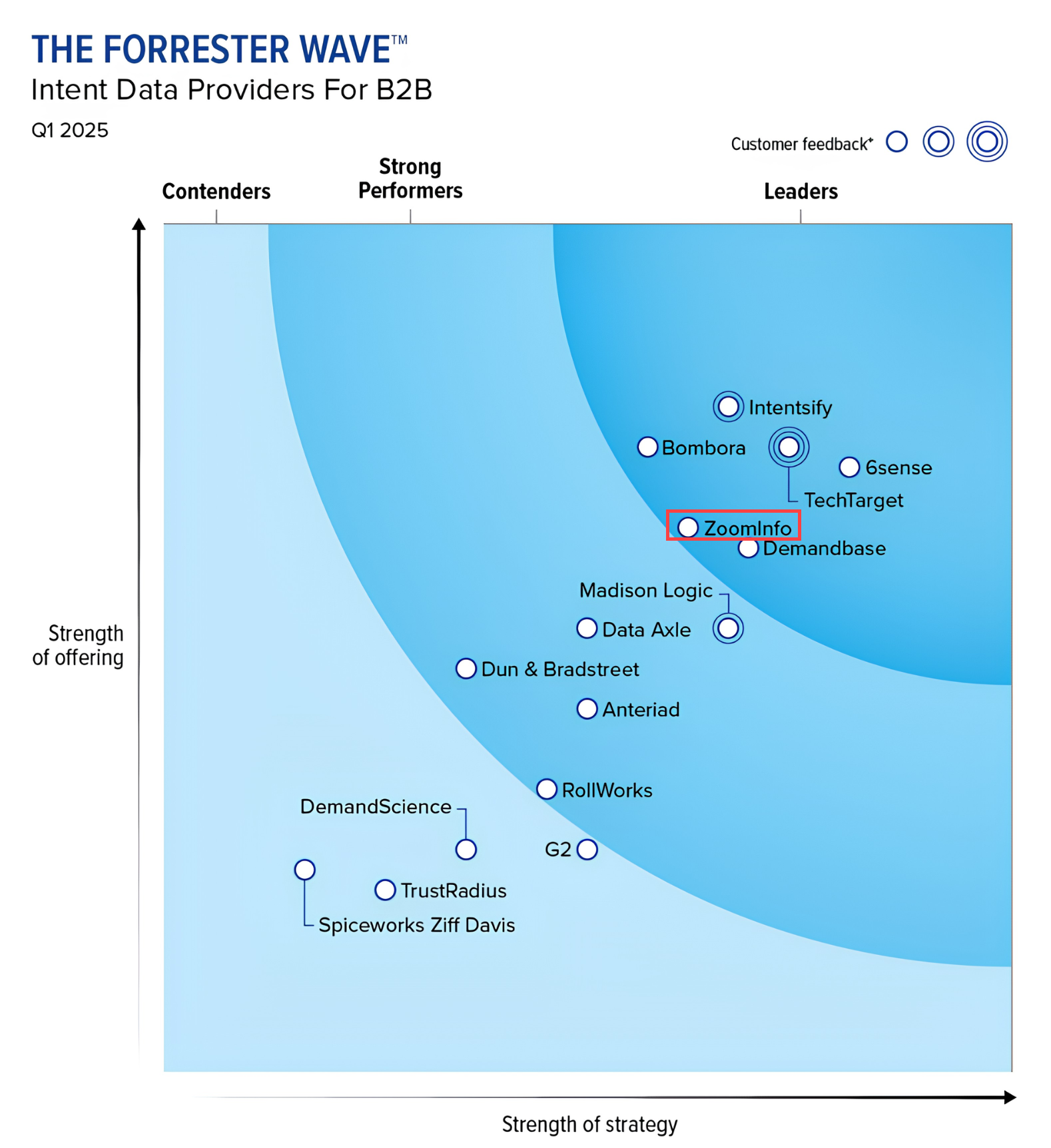
In a Fortune 500 competitive RFP analyzing 25 million contacts across vendors, the independent consultant concluded that "no other competitor came even close." ZoomInfo was named a Forrester Wave Leader for Intent Data Providers (Q1 2025), receiving the highest possible scores across eight criteria.
Source: ZoomInfo
For CS teams using Totango, this data matters because expansion plays require knowing who else in the account to reach. ZoomInfo's org charts, direct dials, and verified emails give CSMs a path to new stakeholders without waiting for introductions.
Vensure scaled prospecting with ZoomInfo's data, with VP of Revenue Operations William Kenimer noting: "ZoomInfo gives us the information we need to execute. We don't have to go through and spend our time digging. It's already there, so we can be three steps ahead." (Vensure)
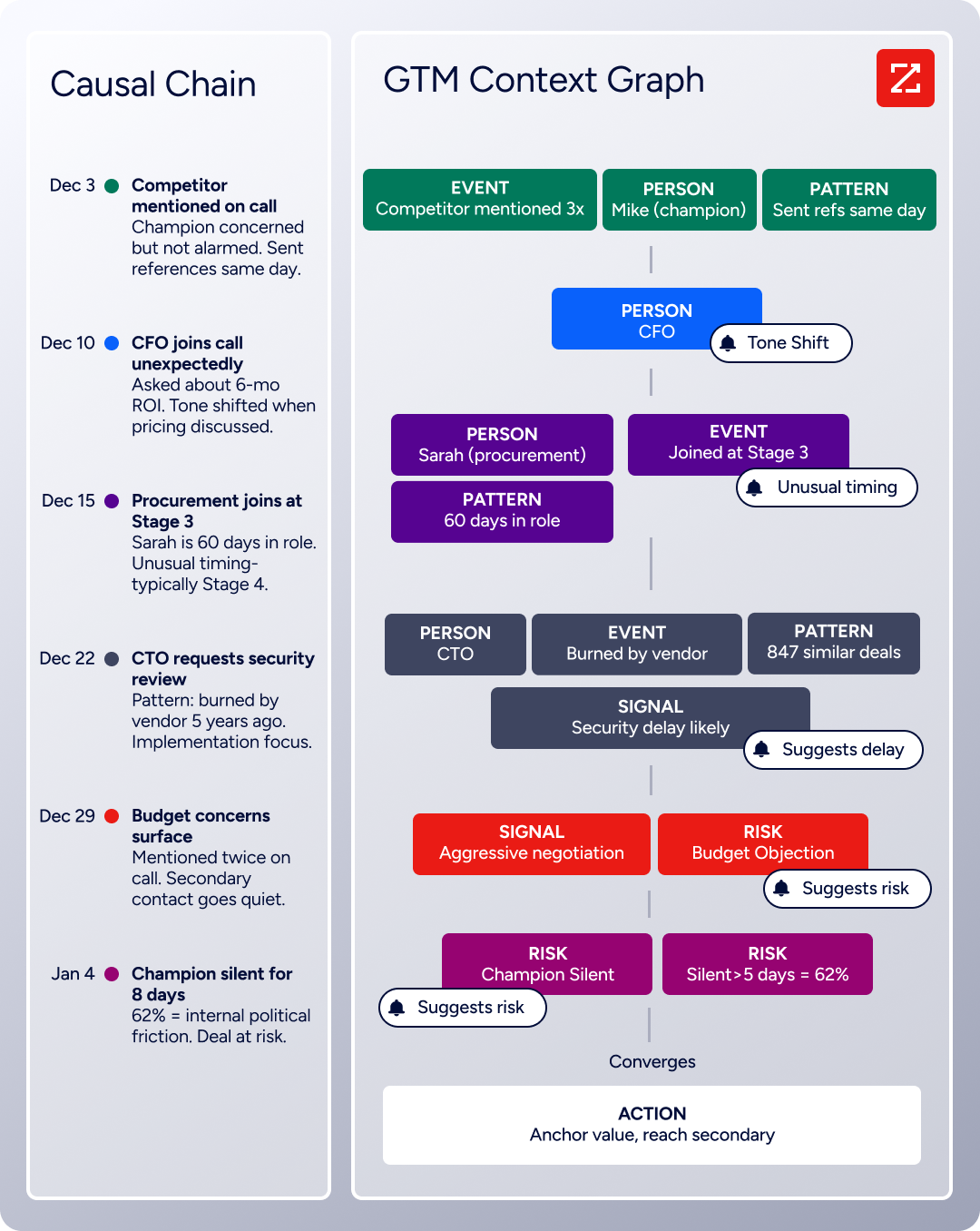
GTM Context Graph: ZoomInfo's intelligence layer captures why deals move or stall, giving upstream teams the context Totango provides downstream.
Totango's health scores tell you a customer's current state. ZoomInfo's GTM Context Graph tells you why the deal that created that customer moved forward, and applies that reasoning to every new opportunity in the pipeline.
Source: ZoomInfo
The GTM Context Graph unifies ZoomInfo's B2B data with a customer's own CRM records, conversation intelligence from calls and meetings, email interactions, and behavioral signals into a single graph.
A CRM records that a deal moved to Stage 4. Conversation intelligence transcribes what the VP of Finance said on the last call. Intent data logs a spike in research activity. The GTM Context Graph reasons across all three to capture the connections between signals and outcomes, not just state changes.
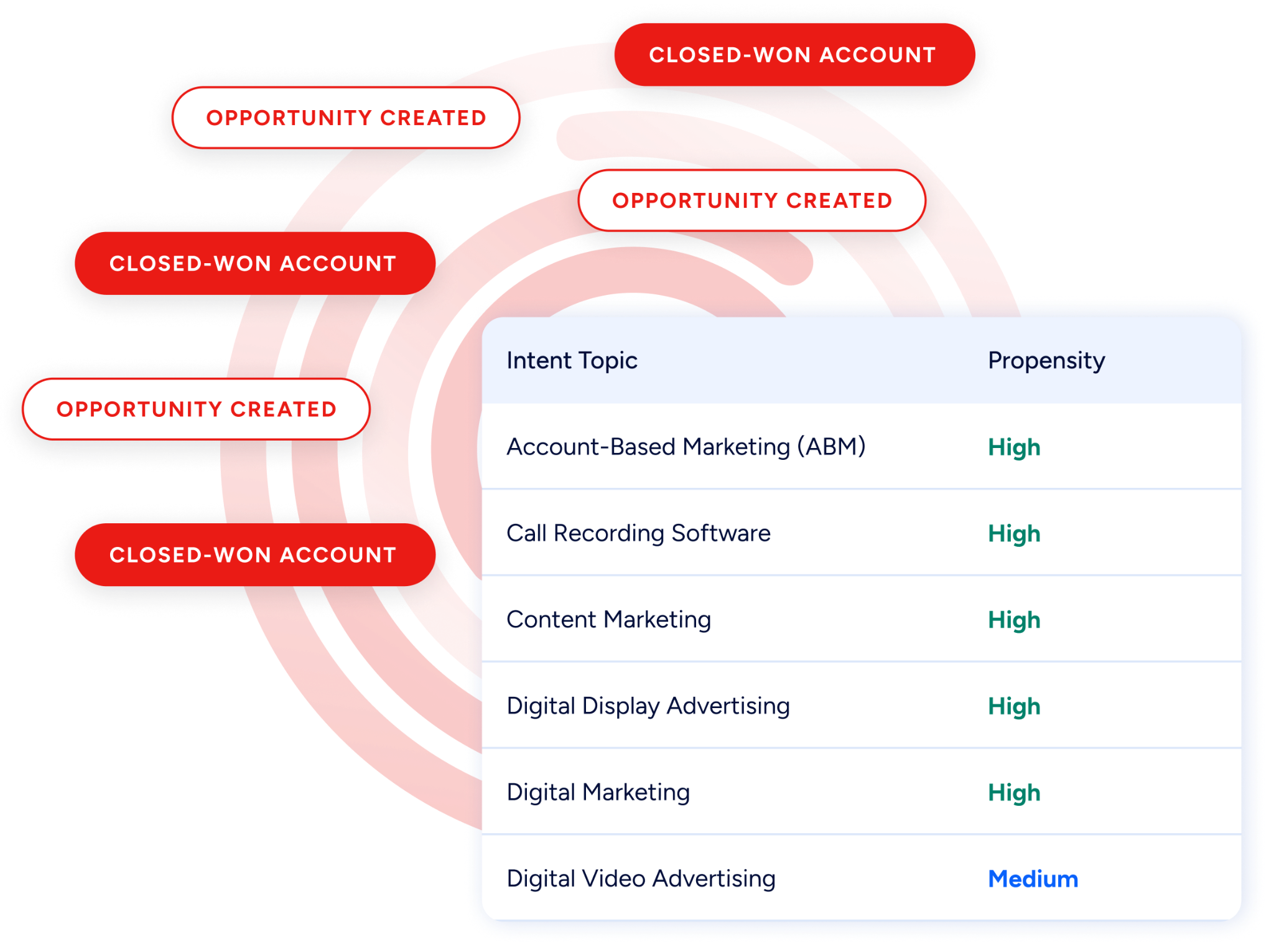
Buyer Intent data tracks signals from 210 million IP-to-Organization pairings and 6 trillion+ new keyword-to-device pairings sourced monthly. Guided Intent, exclusive to ZoomInfo, identifies topics historically correlated with deal success rather than requiring manual topic selection.
Source: ZoomInfo
This intelligence matters to Totango users. When a Totango health score flags an account for expansion, the natural next question is: who in the account should we reach, and what are they already researching? ZoomInfo answers both.
Seismic attributed 39% of active pipeline to opportunities identified or influenced by ZoomInfo signals, with CBO Toby Carrington noting: "That combination of our internal CRM data, external signals, and AI that's given all that context has helped us craft very specific account- and persona-based messages. And people have responded to them right away." (Seismic)
Universal Access: ZoomInfo delivers its intelligence through seller workspaces, marketing tools, and open APIs, meeting teams wherever they work.
Totango is accessed through its own application surfaces (and, post-merger, two of them). ZoomInfo delivers its intelligence through three channels, reaching every team regardless of their preferred tools.
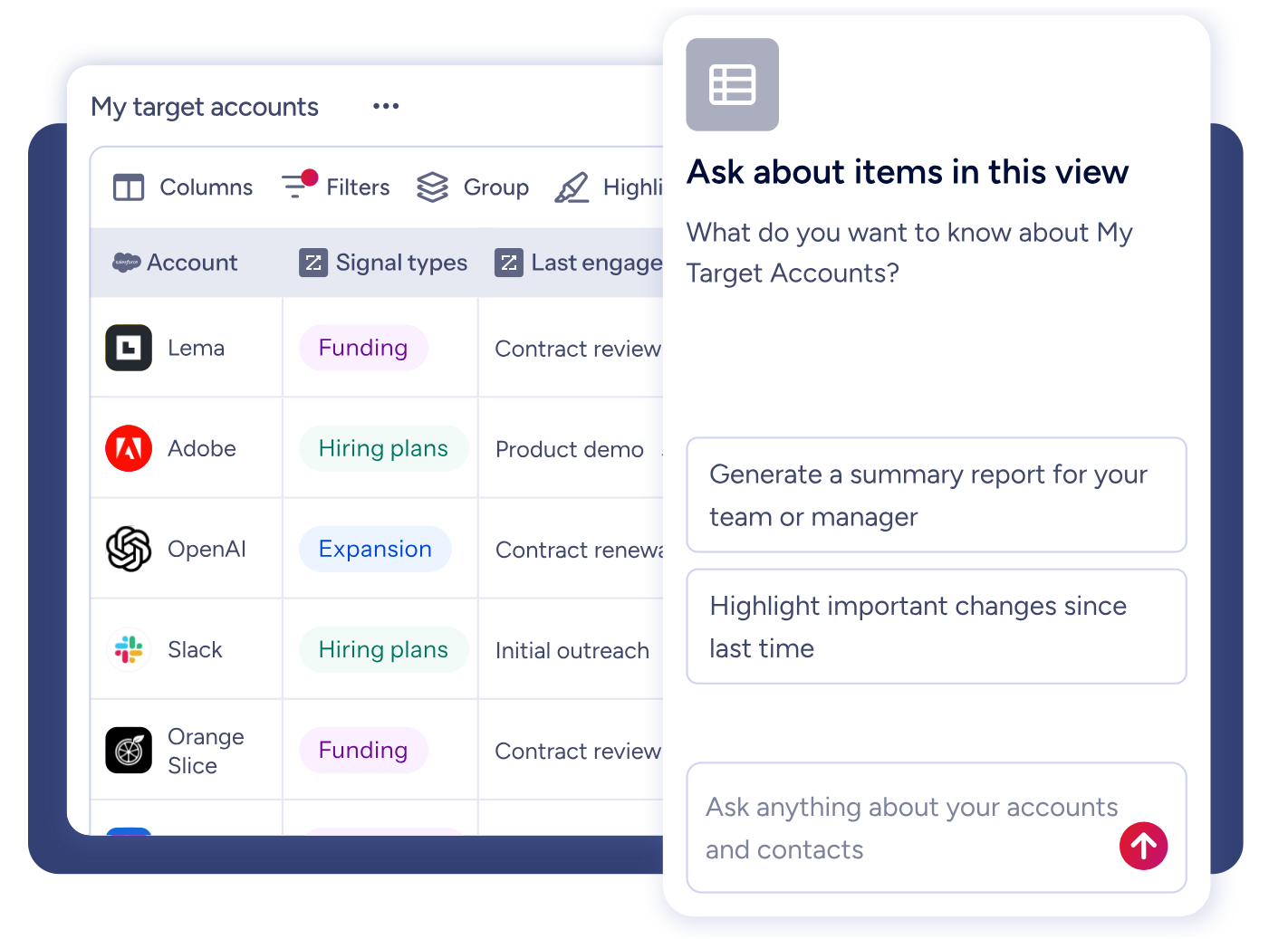
GTM Workspace gives sellers a single surface where prioritized accounts, AI-drafted outreach, and deal execution converge. The AI agents inside Workspace research accounts, generate follow-ups, monitor signals, draft outreach, and update CRM fields, drawing on ZoomInfo's data and the GTM Context Graph. Databricks reached prospects 50% faster. Thomson Reuters increased closed-won deals by 40%.
Source: ZoomInfo
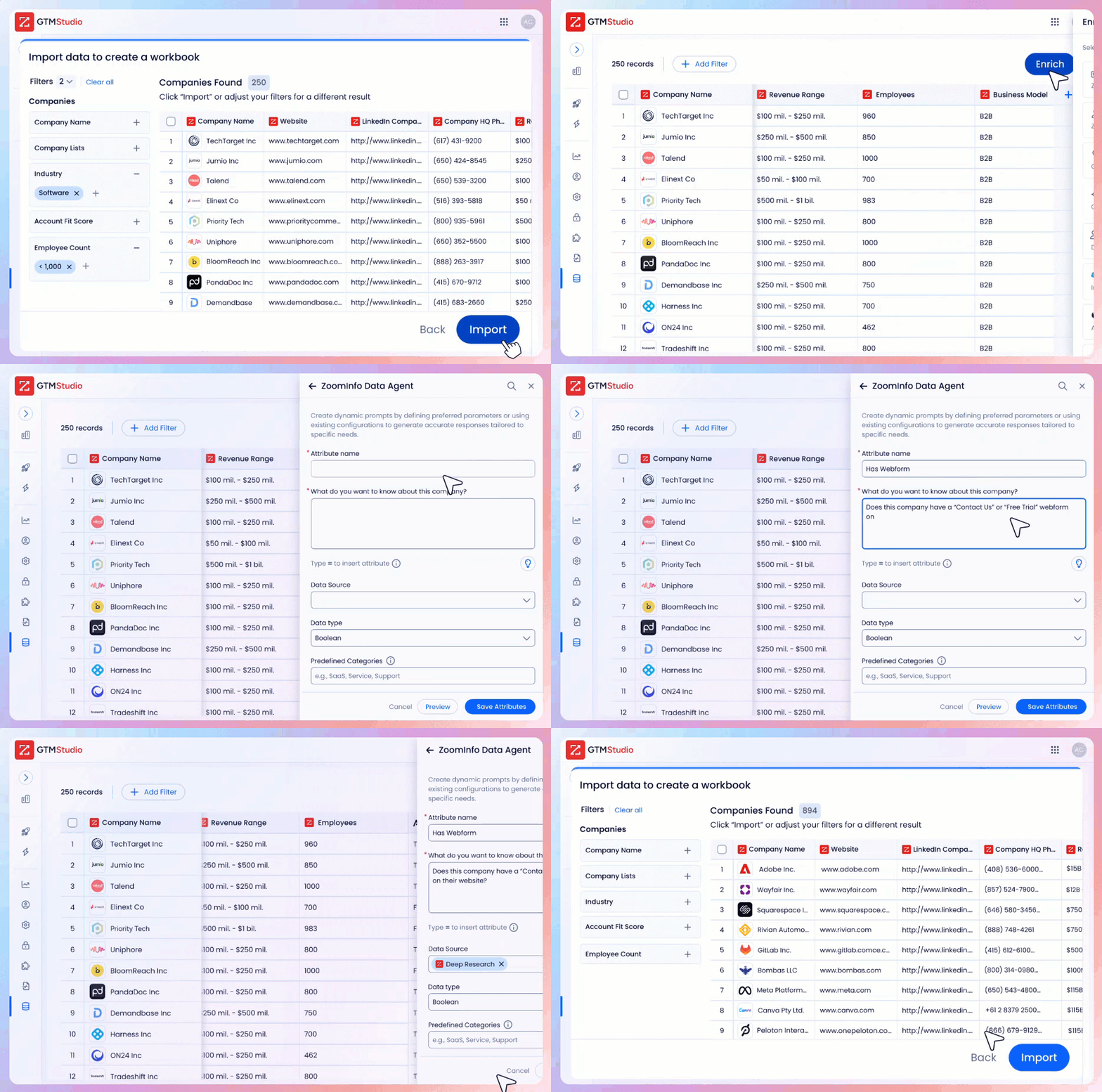
GTM Studio gives marketers, RevOps, and GTM engineers a builder environment where audience definition, campaign orchestration, and pipeline measurement happen in natural language. Expansion plays that used to take three weeks now launch in 30 minutes.
Source: ZoomInfo
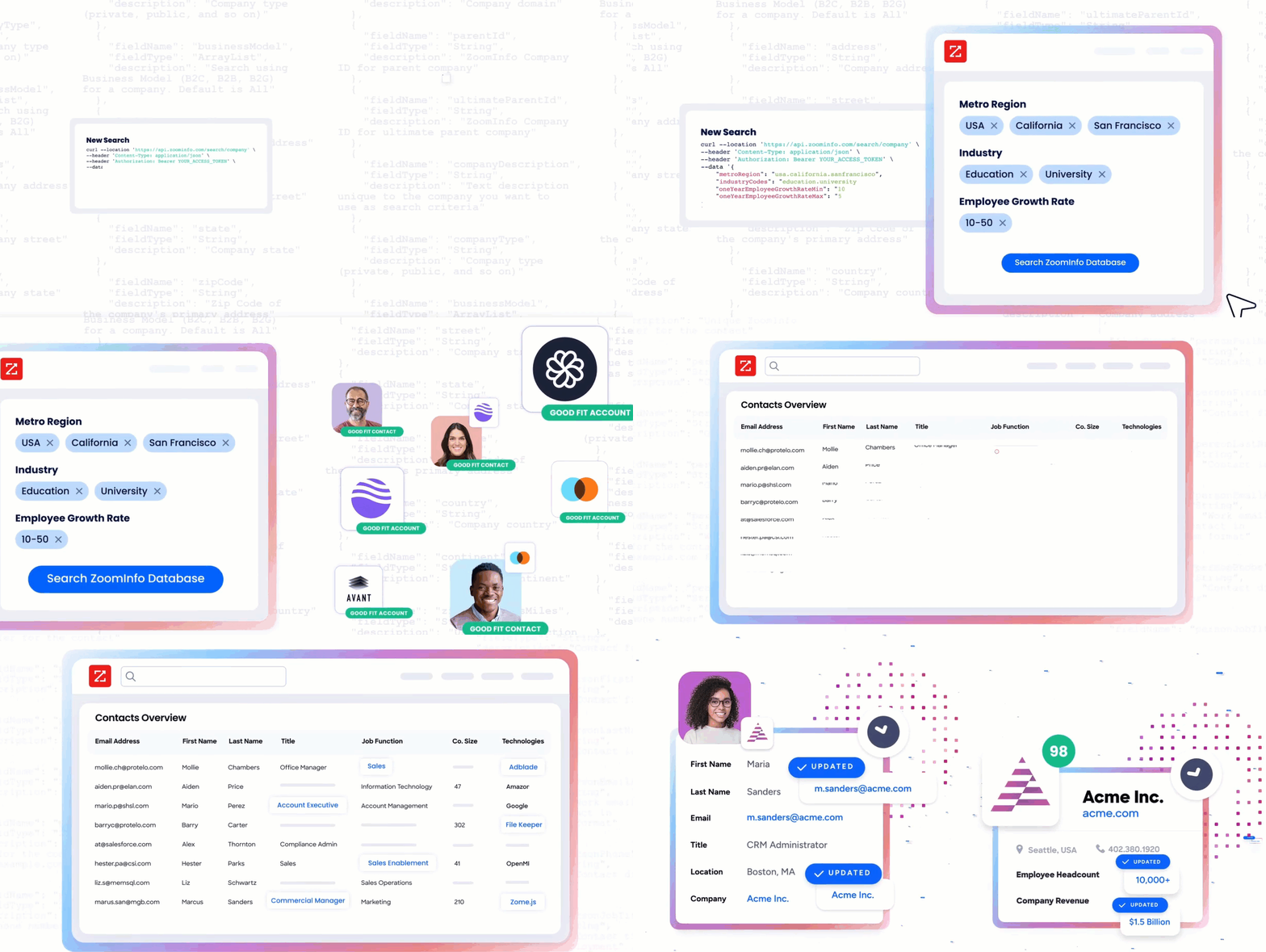
For teams that build beyond ZoomInfo's own products, APIs and MCP expose the same intelligence to any custom agent, internal tool, or partner platform.
Source: ZoomInfo
BDO Canada's Senior Marketing Intelligence Analyst described it: "The plug-and-play aspect of the API means I can integrate it very easily into any process and get information at a moment's notice." (BDO Canada) The API reduced their time on internal data dashboard updates by 87%.
All three channels draw from one GTM Context Graph. Nothing is degraded or siloed by surface.
Smartsheet's Thor Sanderson, Senior Manager of Sales Technology Enablement, stated: "ZoomInfo is our one source of truth for account data, and even more so for contact data. There's no other provider in the market that provides you with that level of detail." (Smartsheet)
Accessible Entry Points: ZoomInfo offers permanent free access and a 7-day trial, where Totango requires a sales conversation.
ZoomInfo provides two ways to try the platform before committing. ZoomInfo Lite is a permanent free tier (no credit card, no time limit) that includes access to ZoomInfo's B2B database, 10 monthly export credits, individual and company searches, the ReachOut Chrome Extension, WebSights Lite (up to 10 website visitor reveals per day), and HubSpot integration.
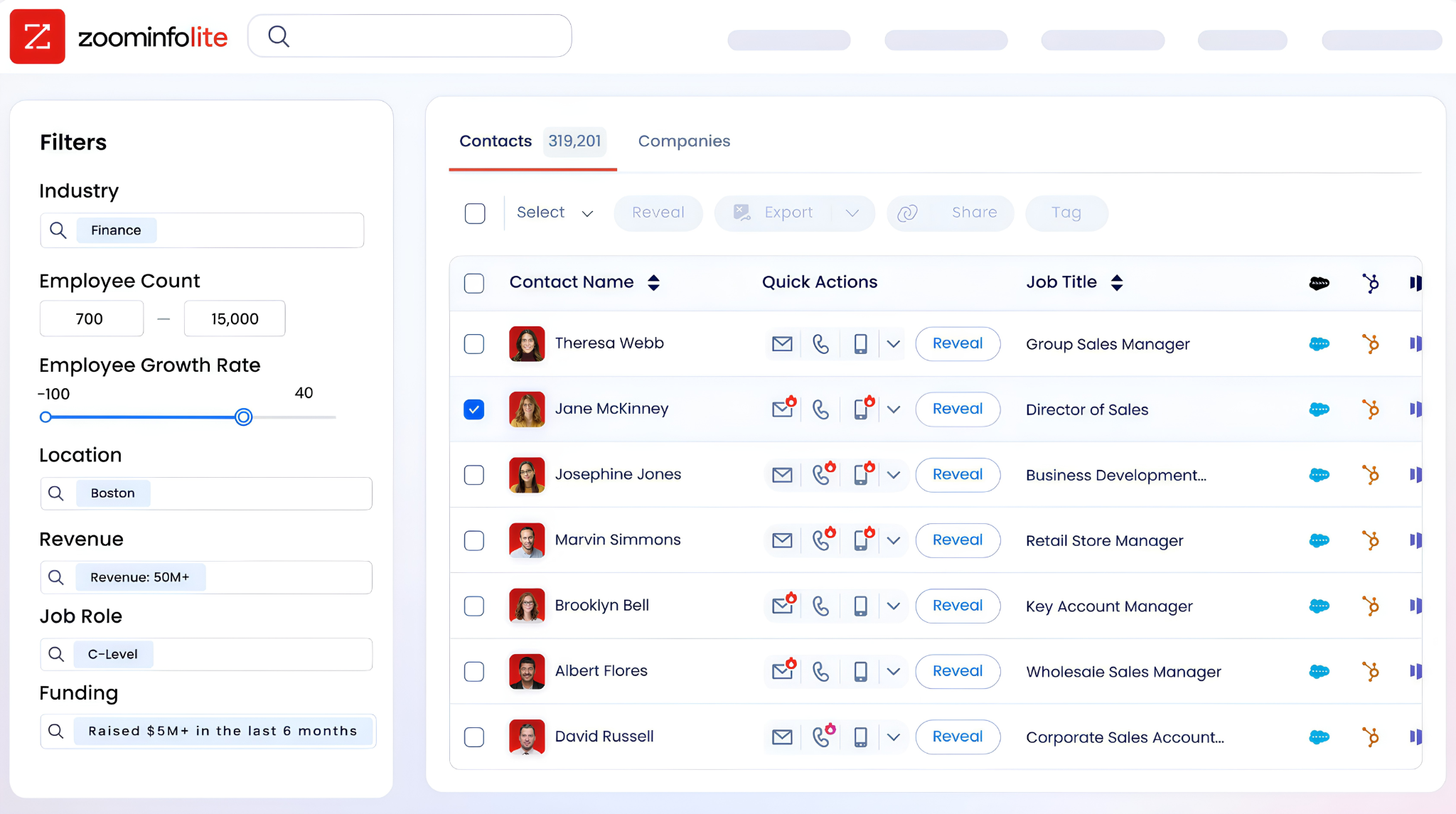
Source: ZoomInfo
A separate 7-day free trial provides access to core platform features including intent signals and email outreach.
Totango publishes no prices and offers no free trial or self-serve sign-up. Every evaluation begins with a demo request form.
Totango and ZoomInfo: Comparison Summary
Aspect | Totango | ZoomInfo |
|---|---|---|
Primary Focus | Post-sale customer success and retention | Pre-sale prospecting, pipeline, and GTM intelligence |
Core Strength | Customer health scoring and lifecycle automation | Verified B2B data, intent signals, and AI-powered outreach |
Target Users | CS leaders, CS ops, post-sale executives | Sales, marketing, RevOps, GTM engineers |
Data Source | Ingests customer data from connected systems | Generates and verifies B2B contact and company data |
AI Capabilities | Churn prediction and expansion signals (Unison) | GTM Context Graph, AI-drafted outreach, account intelligence |
Contact Database | None | 500M contacts, 135M+ verified phone numbers, 200M+ verified business email addresses |
Intent Signals | None | 210M IP-to-Org pairings, 6T+ keyword-to-device pairings monthly |
Free Entry Point | No free trial or self-serve sign-up | Permanent free tier (ZoomInfo Lite) + 7-day free trial |
Pricing Model | Contract value under management (quote-only) | Consumption-based (quote-only for paid tiers) |
Analyst Recognition | Forrester Wave Leader, CS Platforms Q4 2025 | Forrester Wave Leader, Intent Data Q1 2025; Gartner MQ Leader, ABM 2024 & 2025 |
Best For | Retaining and expanding existing customers | Finding, reaching, and winning new customers |
Final Verdict
Totango and ZoomInfo are not competitors. They cover different stages of the revenue lifecycle, and teams that treat both stages seriously will get more from each tool by using them together.
Choose Totango if your challenge is managing and growing an existing customer book. It is built for B2B CS teams at the enterprise or upper mid-market level who need to centralize fragmented customer data, automate lifecycle workflows, and hold CS accountable for retention and expansion revenue.
The SuccessBLOC framework accelerates deployment, the multidimensional health scoring handles complex account structures, and Unison's AI churn prediction gives teams more runway to intervene. Totango is the right tool when the customer is already yours and the question is how to keep them.
Choose ZoomInfo if your challenge starts earlier, at the point where you need to identify who to sell to, understand what they care about, and reach them before a competitor does. ZoomInfo's data foundation, GTM Context Graph, and APIs give sales, marketing, and RevOps teams the intelligence and execution tools to build pipeline and close deals.
For CS teams already using Totango, ZoomInfo fills the pre-sale gap: the verified contacts, org charts, and buyer intent signals that make expansion plays actionable.
Get started with ZoomInfo here.
The strongest revenue organizations don't choose between winning customers and keeping them. They invest in both.
Totango FAQ
What is Totango used for?
Totango is a customer success platform designed for B2B SaaS and enterprise companies to manage post-sale customer relationships.
It centralizes customer data from CRM, support, and product usage systems into health scores, automates lifecycle workflows through SuccessBLOCs and SuccessPlays, and uses AI (via Unison) to predict churn and spot expansion opportunities. It is built for CS teams accountable for retention and revenue growth, not for pre-sale prospecting or pipeline generation.
How much does Totango cost?
Totango does not publish prices for any of its three products. All pricing requires contacting sales. The Enterprise tier of the core CS platform includes 10 practitioner seats and 2,000 accounts. The Premier tier includes 20 practitioner seats, 3 viewer seats, and 10,000 accounts.
Pricing is based on contract value under management rather than per-seat, which Forrester called a customer-first approach. No free trial or self-serve sign-up is available.
Does Totango have a free trial?
No. Totango does not offer a free trial, freemium plan, or self-serve sign-up for any of its products. The only entry point is a demo request form. ZoomInfo, by contrast, offers a permanent free tier (ZoomInfo Lite) with access to its B2B database, 10 monthly export credits, and website visitor identification, plus a separate 7-day free trial of paid features.
What is the difference between Totango, Catalyst, and Unison?
Totango sells three products. Totango is the core customer success platform with health scoring, SuccessBLOCs, and lifecycle automation.
Catalyst tracks customer goal attainment and surfaces expansion signals for CS and sales teams. Unison is a standalone AI intelligence engine that uses NLP to predict churn and expansion opportunities. Unison is platform-agnostic and can work alongside any CSP, not just Totango.
What integrations does Totango support?
Totango offers native connectors to Salesforce, HubSpot, Microsoft Dynamics, Zendesk, Intercom, Slack, Gmail, Microsoft Outlook, Segment, and data warehouses including Snowflake, BigQuery, and Redshift.
It also integrates with financial systems (Stripe, Zuora), product analytics (Mixpanel, Pendo), and conversation intelligence (Gong, Chorus). Zapier, Pipedream, and Tray.ai are supported as iPaaS connectors. Totango does not integrate with B2B data providers like ZoomInfo natively, so pre-sale intelligence must be accessed through separate tools.
Is Totango suitable for small businesses?
Totango is built for enterprise and upper mid-market B2B companies with large customer books. The Enterprise tier starts at 10 practitioner seats and 2,000 accounts, and the CVUM-based pricing carries a cost floor that excludes small CS teams. Teams without dedicated CS headcount, or those seeking a lightweight tool, are better served by simpler alternatives.
How does Totango compare to ZoomInfo?
Totango and ZoomInfo serve different stages of the revenue lifecycle. Totango is a post-sale customer success platform focused on health scoring, churn prevention, and expansion revenue from existing customers.
ZoomInfo is an AI GTM platform focused on finding, reaching, and winning new customers through verified B2B data, intent signals, and AI-powered outreach. They are complementary, not competitive. Totango manages customers after the deal closes; ZoomInfo provides the intelligence and tools to close the deal in the first place.
Does Totango offer AI features?
Yes. Totango's AI capabilities are concentrated in Unison, a standalone intelligence engine that uses NLP to analyze calls, emails, meetings, and support tickets. Unison produces four composite scores (Sentiment, Engagement, Relationship, and Voice of Customer) and offers both standard models deployable in days and custom models trained on a customer's own data.
The core Totango platform also includes AI-written account summaries and AI-driven next-best-action recommendations, though the latter is still being built out as of mid-2026.
