
Choosing between Acquia CDP and Treasure Data for your customer data needs comes down to five questions most comparisons skip:
Are you unifying data for B2C marketing personalization, or do you also need B2B go-to-market intelligence?
Do you want a CDP that works best inside a specific ecosystem (Drupal/DXP), or one that operates independently across your entire stack?
Is your team ready to invest months in implementation and professional services, or do you need faster time-to-value?
Do you need pre-built ML models your marketers can run themselves, or are you willing to bring data engineering resources?
Are you solving a consumer personalization problem, or a revenue team alignment problem?
In short, here's what we recommend:
Acquia CDP is the right choice for B2C retail and consumer brands already invested in Acquia's Digital Experience Platform. Built from the AgilOne acquisition in 2019, it gives marketing teams propensity scoring, churn prediction, and lifetime value modeling without requiring data science expertise. Acquia positions itself as the #1 CDP for retail. The trade-offs: a managed-service model where you can't add new data sources independently, a steep learning curve, and premium pricing that isn't publicly disclosed.
Treasure Data (now rebranded as Treasure AI) serves large global enterprises that need to unify fragmented customer data across dozens of systems and countries. The platform earned Leader status in the Gartner Magic Quadrant for CDPs, the Forrester Wave for B2C CDPs, and the IDC MarketScape for B2C CDPs in 2024. Its hybrid architecture lets you run the CDP on your own data warehouse or as a fully managed solution. The trade-offs: steep learning curve, SQL dependency for advanced work, high total cost of ownership, and no meaningful path for mid-market companies.
Both platforms are built for B2C marketing personalization, unifying consumer profiles and activating campaigns across email, ads, and direct mail. But here's the question neither platform answers: what about the B2B side of your go-to-market?
If your company sells to other businesses, or if the data problem you're trying to solve is finding, reaching, and converting business buyers, a consumer-focused CDP isn't the right foundation. That's a different problem, and it needs a different platform.
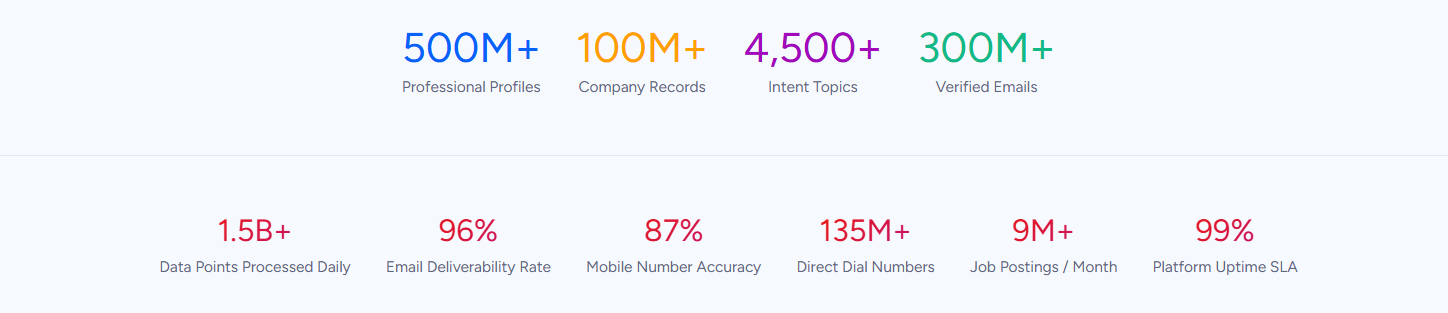
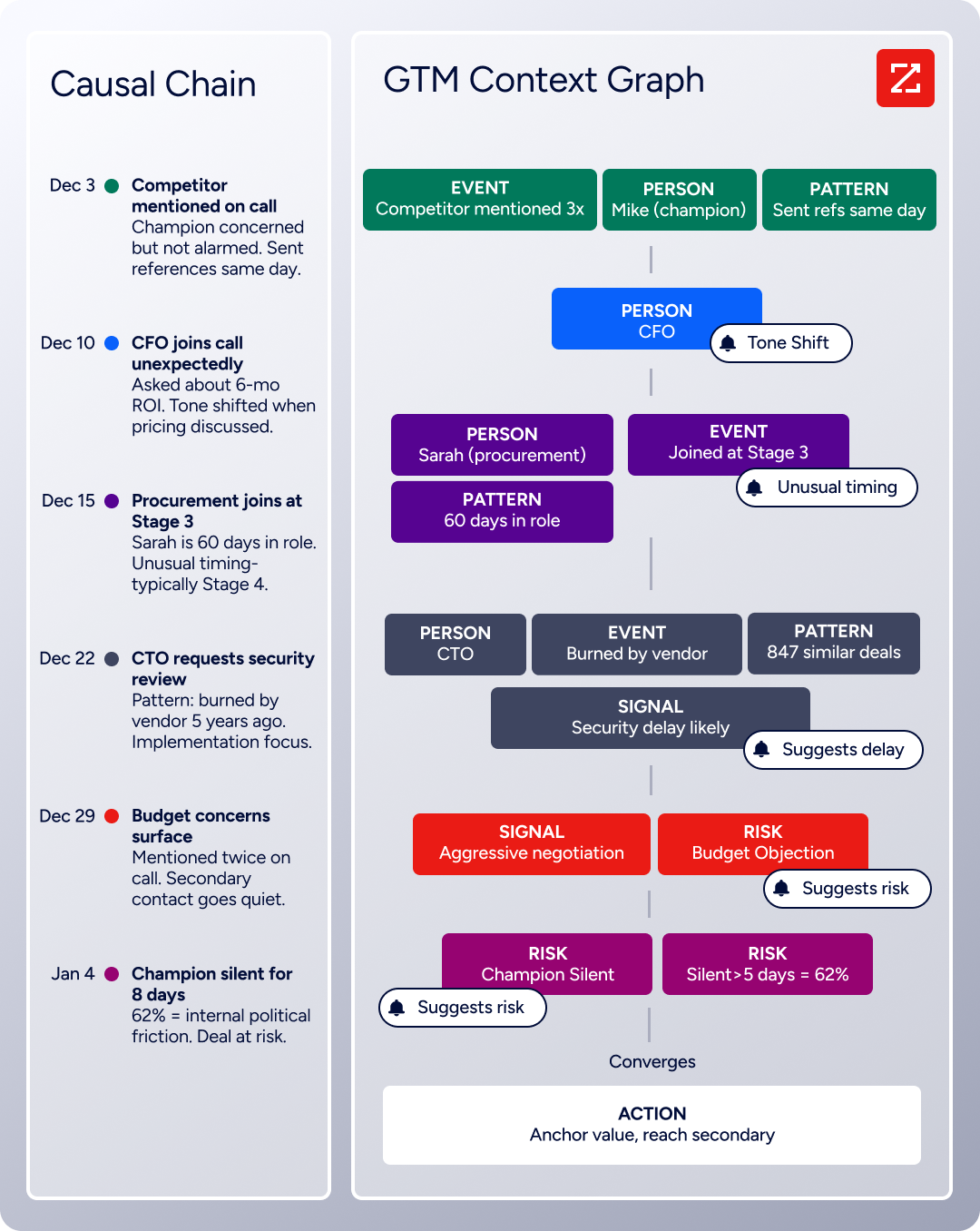
ZoomInfo is a B2B go-to-market platform built on 500M contacts, 100M companies, 135M+ verified phone numbers, and 200M+ verified business email addresses. Where CDPs unify consumer profiles for personalization, ZoomInfo's GTM Context Graph combines this B2B data with your CRM records, conversation transcripts, and behavioral signals to show not just what's happening in your pipeline, but why deals move or stall. Sales teams access this intelligence through GTM Workspace, marketers and RevOps build plays in GTM Studio, and engineering teams connect through APIs and MCP. For B2B revenue teams, ZoomInfo provides the data unification, intelligence, and activation that CDPs were never designed to deliver.
If your go-to-market challenge is B2B, see how ZoomInfo's GTM Context Graph changes the equation.
Acquia CDP vs. Treasure Data vs. ZoomInfo at a glance
Acquia CDP | Treasure Data (Treasure AI) | ZoomInfo | |
|---|---|---|---|
Primary focus | B2C marketing personalization within Acquia DXP | Enterprise B2C data unification and agentic marketing | B2B go-to-market intelligence and activation |
Data foundation | Unified consumer profiles from POS, email, web, CRM | Diamond Record across all digital and physical touchpoints | 500M contacts, 100M companies, GTM Context Graph |
AI/ML capabilities | Pre-built propensity, churn, LTV models for marketers | AI agents, natural-language Studio, predictive models | GTM Context Graph, AI-powered outreach, intent signals |
Identity resolution | RealCDP-certified engine for consumer profiles | Diamond Record with deterministic + probabilistic matching | B2B entity resolution across 500M+ contacts and 100M companies |
Analyst recognition | Gartner Leader for DXP (6 consecutive years) | Gartner, Forrester, and IDC Leader for B2C CDP (2024) | Gartner Leader for ABM Platforms; Forrester Leader for Intent Data |
Pricing transparency | No public pricing; sales-only | No public pricing; enterprise-only | No public pricing; free tier (ZoomInfo Lite) available |
Implementation time | Weeks to months (managed-service model) | 8-12 weeks typical | Deploys in weeks |
Best for | B2C retail and consumer brands on Acquia DXP | Large global B2C enterprises with complex data environments | B2B revenue teams across sales, marketing, and RevOps |
These platforms solve fundamentally different problems
The most important distinction isn't features. It's what kind of data problem you're solving.
Acquia CDP and Treasure Data both answer the same question: "How do I unify consumer data across channels to personalize marketing?" They ingest purchase histories, website behavior, email engagement, and offline interactions, then stitch those signals into unified consumer profiles that marketing teams can segment and activate.
ZoomInfo answers a different question: "How do I find, understand, and engage the right business buyers?"
This matters because the data architectures serve different realities. A consumer CDP tracks millions of anonymous shoppers across e-commerce sessions and in-store purchases, resolving them into profiles tied to email addresses and loyalty IDs.
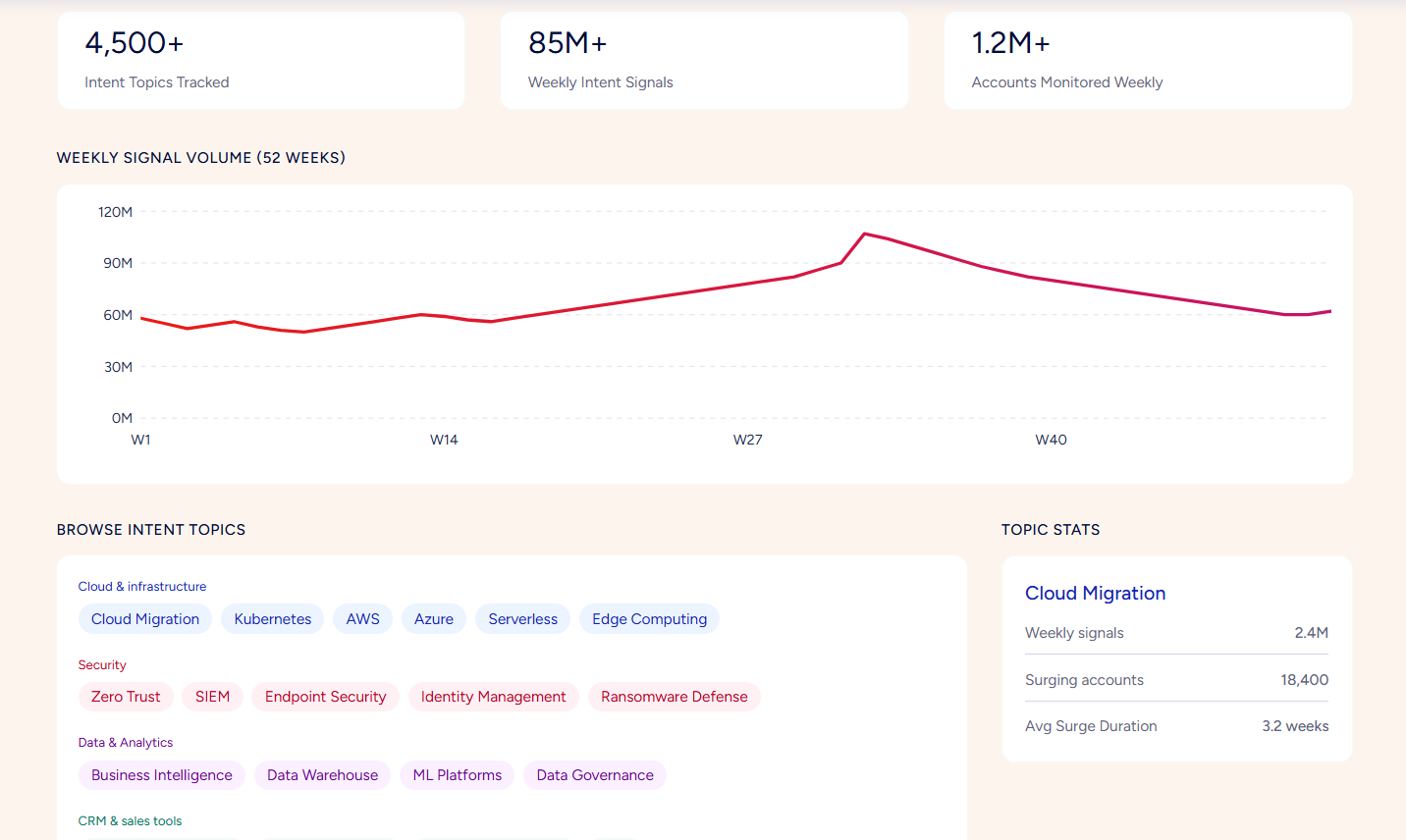
ZoomInfo tracks 500M business contacts across 100M companies, resolving them into organizational structures with verified direct dials, business emails, reporting relationships, and technology stacks.
If you're a B2C retailer personalizing email campaigns based on purchase history, a CDP is the right tool. If you're a B2B company trying to identify in-market accounts, map buying committees, and coordinate outreach across sales and marketing, ZoomInfo is designed for that motion. And if you're an enterprise with both B2C and B2B needs, these platforms complement rather than compete with each other.
Acquia CDP is built for retail marketers, Treasure Data for global data complexity
Within the CDP category, Acquia CDP and Treasure Data target different segments of the market.
Acquia CDP is strongest when paired with Acquia's broader Digital Experience Platform, including its Drupal-based CMS, DAM, and web personalization tools. The CDP feeds personalization data across the rest of the Acquia stack. For retailers and consumer brands already running Acquia, the CDP data directly powers website experiences, email campaigns, and ad targeting without middleware.
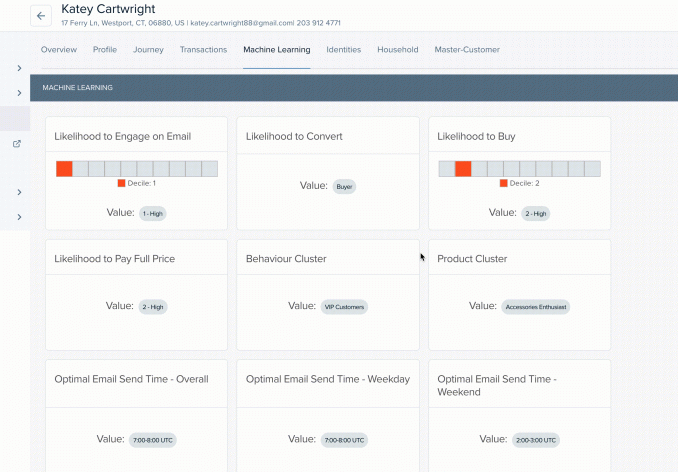
Source: Acquia CDP
The ML capabilities are accessible to non-technical users. Acquia's Machine Learning add-on includes pre-built models for likelihood to buy, likelihood to engage, predictive lifetime value, and product affinity clustering, all outputting High/Medium/Low scores that marketers can use as campaign filters.
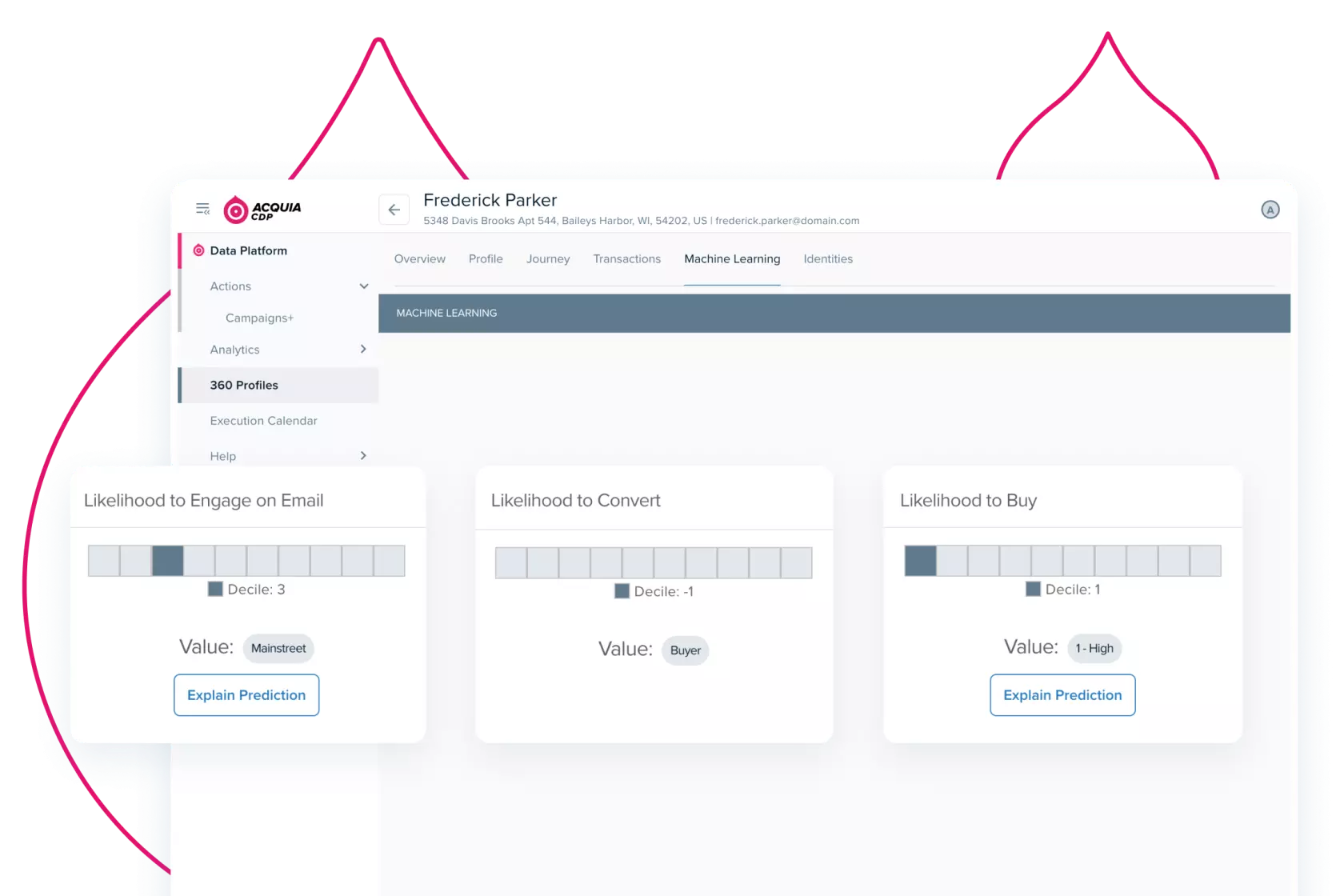
Source: Acquia CDP
The platform reportedly processes a billion predictions a day.
Treasure Data operates at a different scale of complexity. AB InBev unified 2,000+ data sources across 42 countries. The platform's hybrid architecture supports both fully managed deployment and composable mode running on a customer's existing Snowflake, BigQuery, Databricks, or Redshift warehouse, without data duplication.
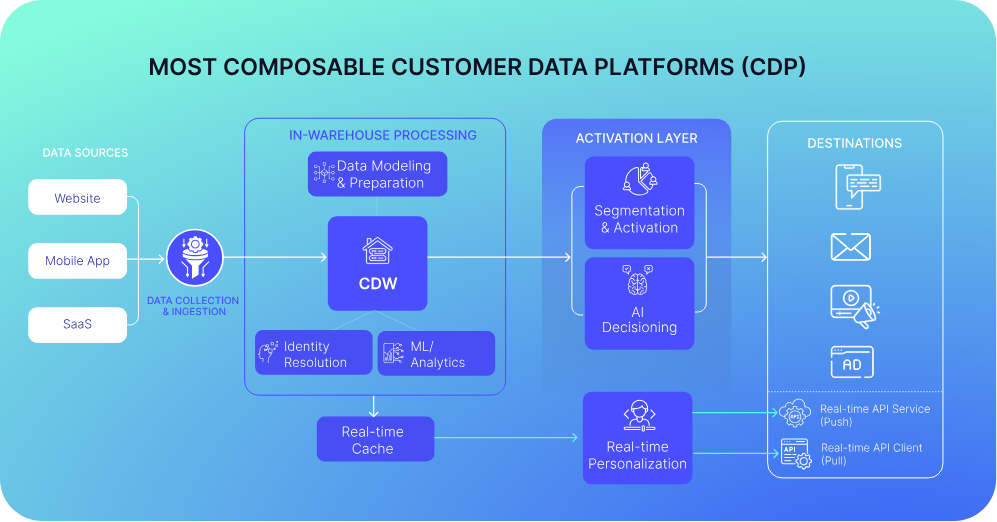
Source: Treasure Data
The Diamond Record identity resolution is Treasure Data's core technical differentiator among CDPs. Unlike traditional batch-stitched golden records, the Diamond Record uses continuous identity resolution combining deterministic, probabilistic, and rule-based matching.
The trade-off between the two CDPs is clear: Acquia CDP gives you faster time-to-value with pre-built ML in a tighter ecosystem. Treasure Data gives you more architectural flexibility and global scale, but demands more technical resources and a longer implementation runway.
Identity resolution approaches reflect different data realities
Identity resolution is the core technical capability that separates a CDP from a data warehouse. Each platform approaches it according to the type of data it handles.
Acquia CDP's Identity Resolution Engine is built for consumer data: merging email addresses, device IDs, and customer IDs across e-commerce, POS, email, and web interactions.
The engine cleans, deduplicates, and stitches records into unified consumer profiles.
Treasure Data's Diamond Record takes identity resolution further by combining three matching methods (deterministic, probabilistic, and rule-based) in a continuous process rather than batch jobs. Anonymous users become addressable as they interact across touchpoints, without waiting for nightly data refreshes.
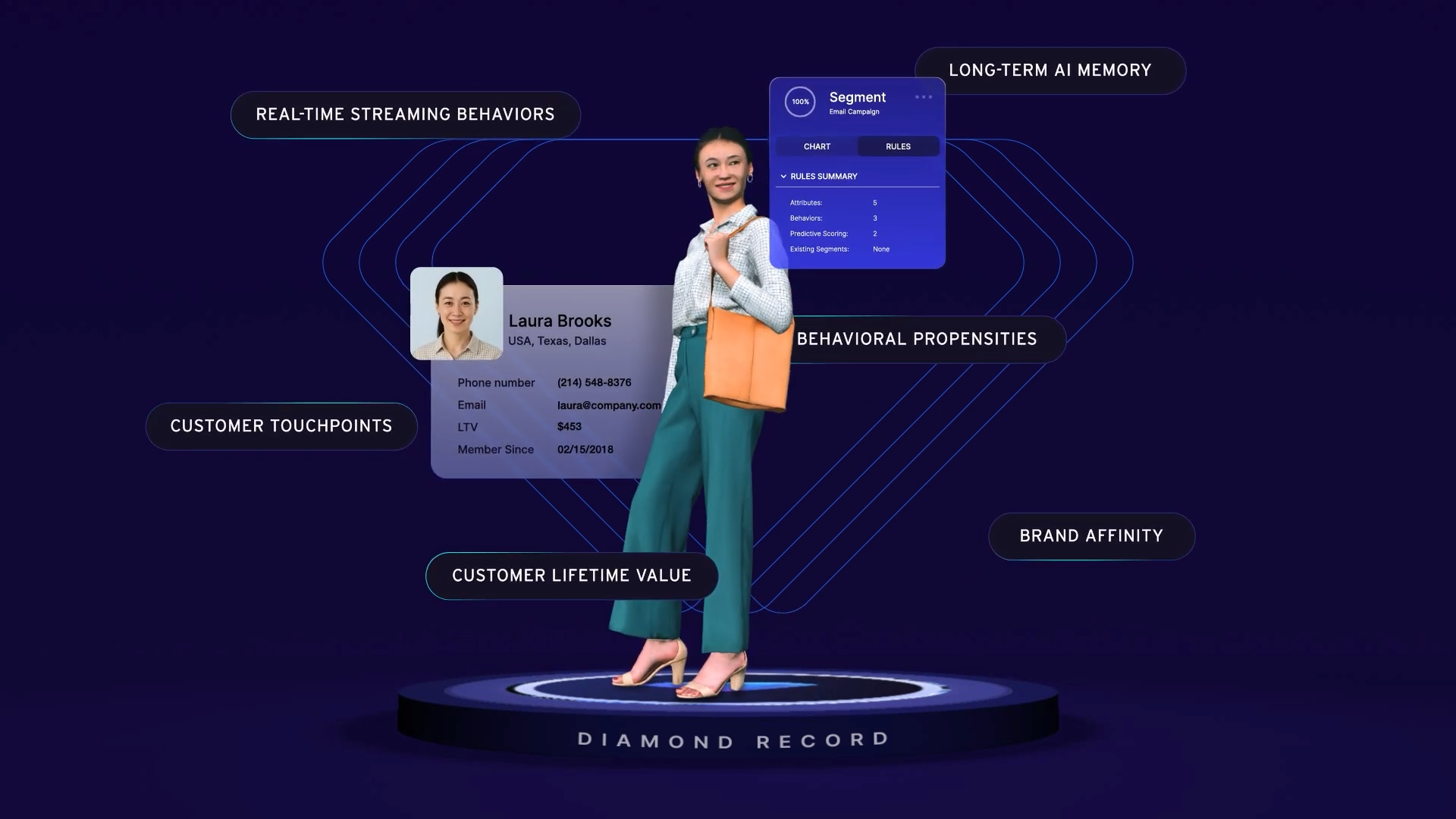
Source: Treasure Data
ZoomInfo's identity resolution operates in the B2B domain, where the challenge is different: resolving business professionals across job changes, company acquisitions, and organizational restructuring.
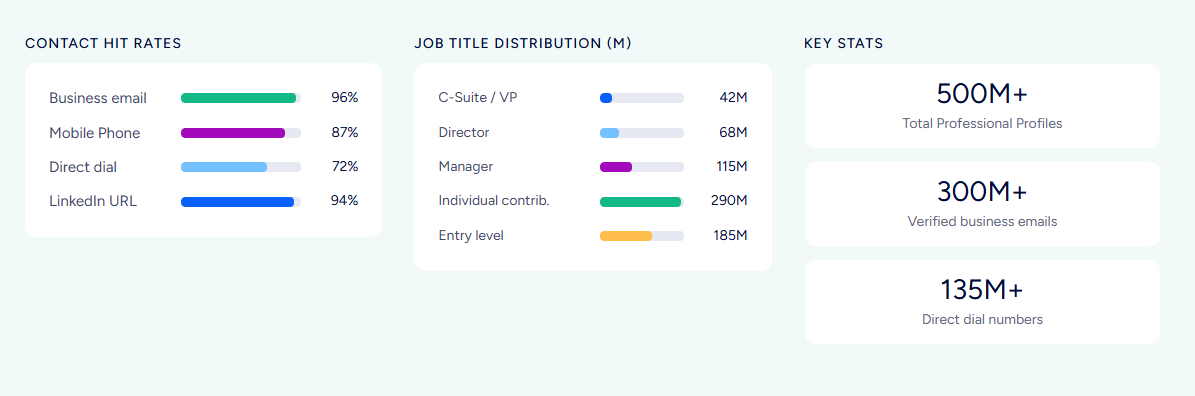
The platform maintains 500M contact profiles through a multi-source verification pipeline backed by 300+ human researchers and automated ML scanning of 28 million site domains daily. When a contact changes jobs, ZoomInfo tracks the move and updates the record.
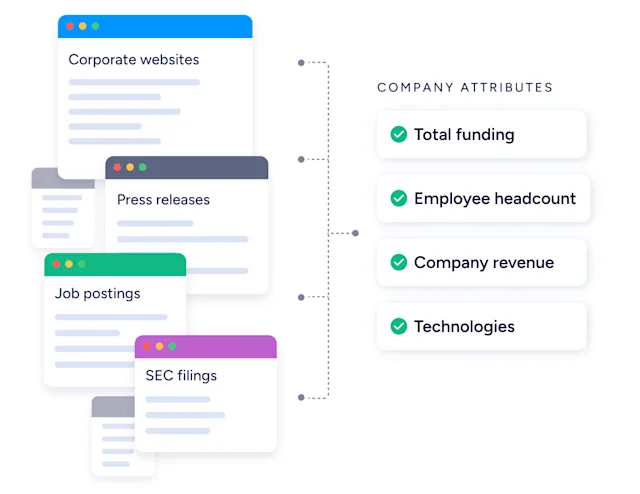
When companies merge or restructure, the corporate hierarchy reflects the change. This isn't about stitching anonymous web sessions to known shoppers. It's about maintaining an accurate, verified map of the business world that sales and marketing teams can act on.
In a Fortune 500 competitive RFP analyzing 25 million contacts across vendors, the independent consultant concluded that "no other competitor came even close" to ZoomInfo's data quality.
Seismic attributed 39% of active pipeline to opportunities identified or influenced by ZoomInfo signals, with a 54% productivity boost and 11.5 hours saved per week per seller. (Seismic Case Study)
AI capabilities range from marketer-friendly models to agentic platforms
All three platforms invest in AI, but the implementations target different users and outcomes.
Acquia CDP focuses on making machine learning accessible to marketers who don't write code.
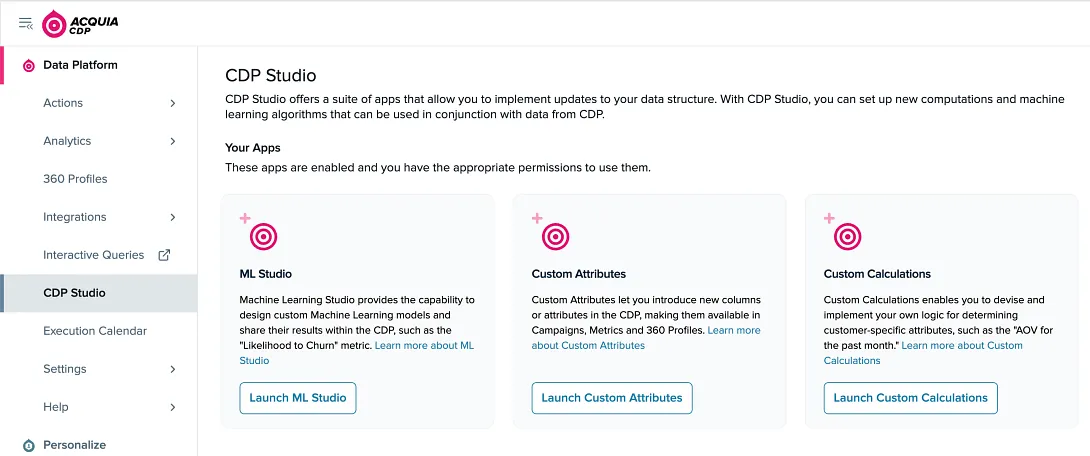
The ML Launchpad offers pre-built supervised models (likelihood to buy, likelihood to convert, predictive LTV, send time optimization) and unsupervised clustering models (behavior clusters, product clusters) that output results directly into the campaign builder. Marketers filter on ML scores the same way they filter on purchase history or email engagement.
For teams with data science resources, ML Studio provides a Python/SQL environment for custom models using Pandas, NumPy, and Scikit-learn.
Source: Acquia CDP
A distinguishing feature is Explainable Machine Learning, which shows marketers which variables drive model results through clustering heatmaps, feature importance charts, and performance metrics. This transparency helps marketers trust and iterate on models rather than treating them as black boxes.
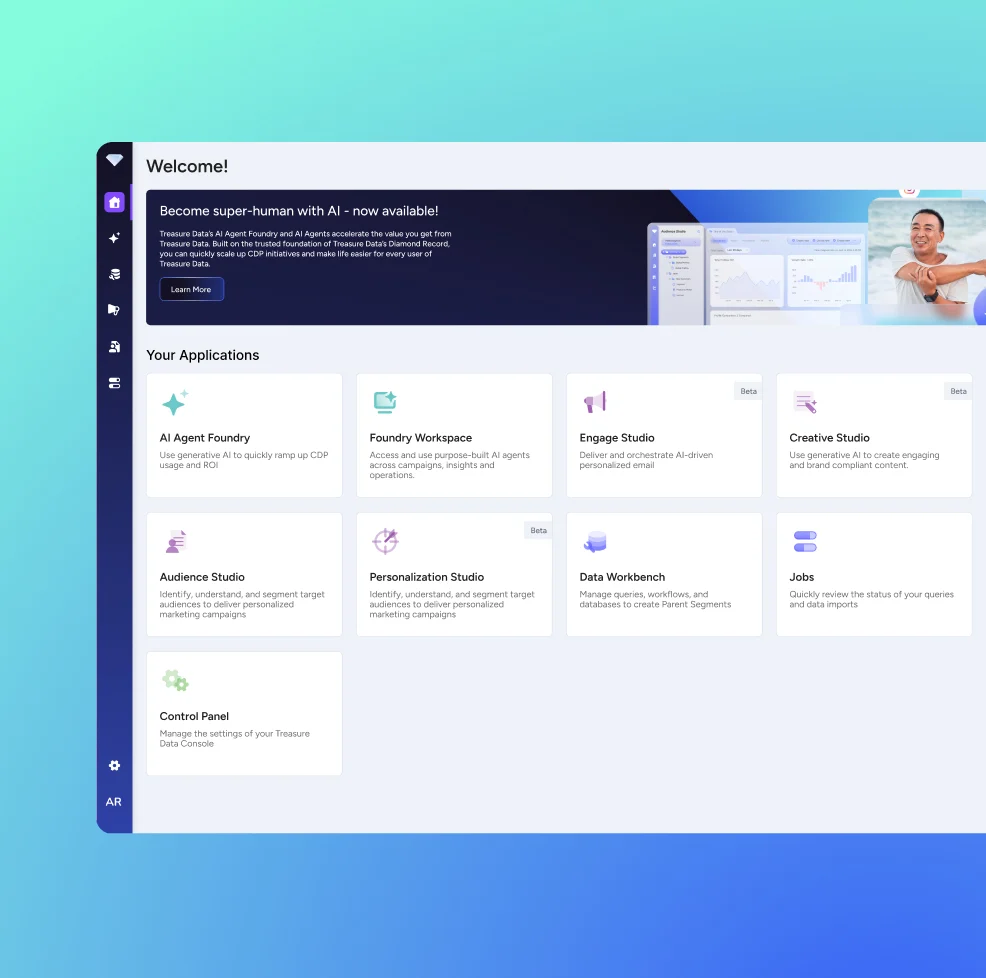
Treasure Data made the boldest bet on AI with its April 2026 rebrand to Treasure AI and the launch of five AI Suites (Engagement, Creative, Personalization, Paid Media, and Service).
Source: Treasure Data
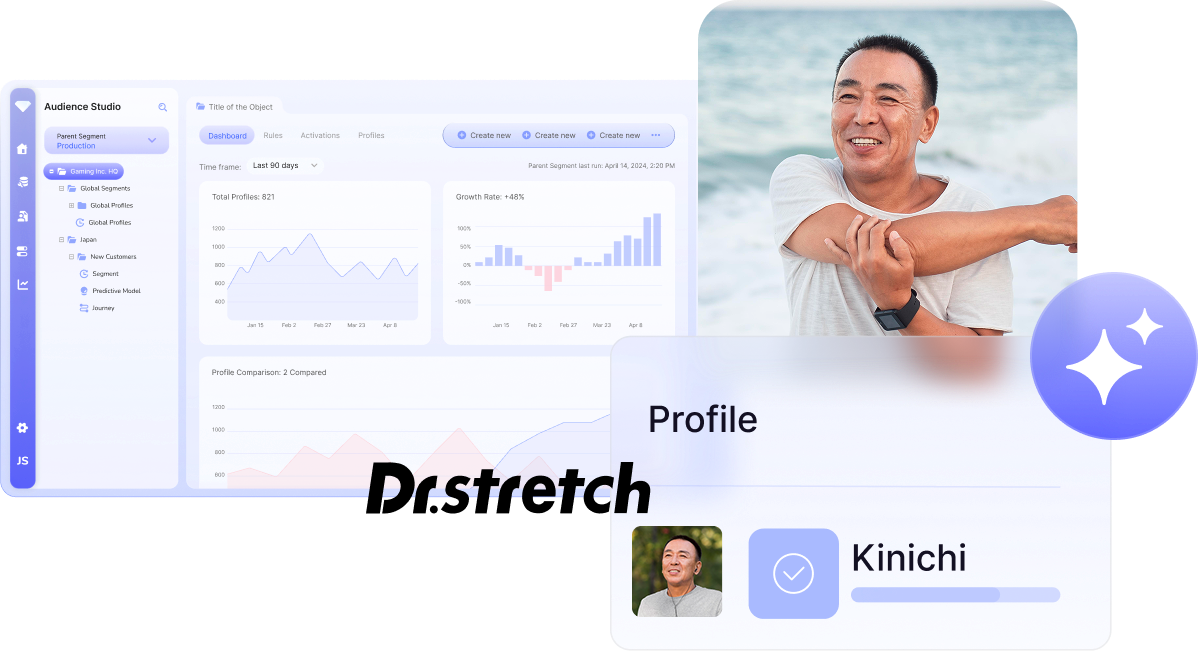
The headline product is Treasure AI Studio, a workspace where marketers describe what they want in plain language and the AI writes queries, builds segments, and creates customer journeys.
Source: Treasure Data
The AI Agent Foundry deploys agents for specific tasks: a Brand Guideline Agent for compliance auditing, an Email Copy Agent for content generation, and an Image Generation Agent with built-in guardrails. These agents operate within human-set approval flows rather than executing autonomously.
ZoomInfo's AI is built on the GTM Context Graph, which processes 1.5B+ data points daily to capture not just what happened in a deal, but why. The AI in GTM Workspace drafts outreach that addresses specific concerns surfaced in prior conversations, recommends accounts whose signal patterns match proven win patterns, and updates CRM fields without manual data entry.
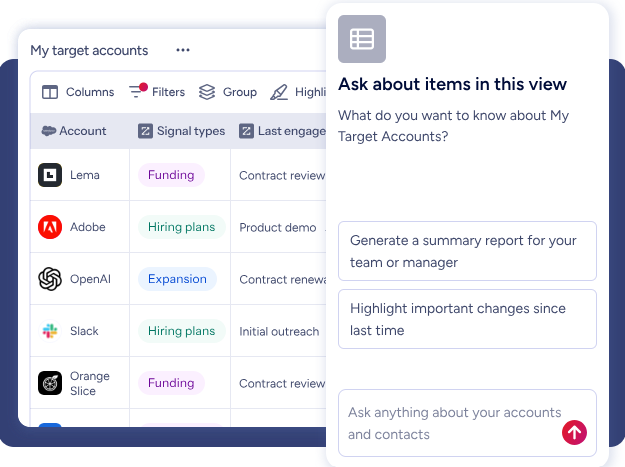
GTM Studio lets marketers and RevOps teams describe audiences in natural language, launch multi-channel plays, and watch pipeline impact in real time. Pre-built GTM plays for inbound acceleration, champion tracking, and competitive displacement can be launched in one click, and expansion plays that previously took three weeks now launch in 30 minutes.
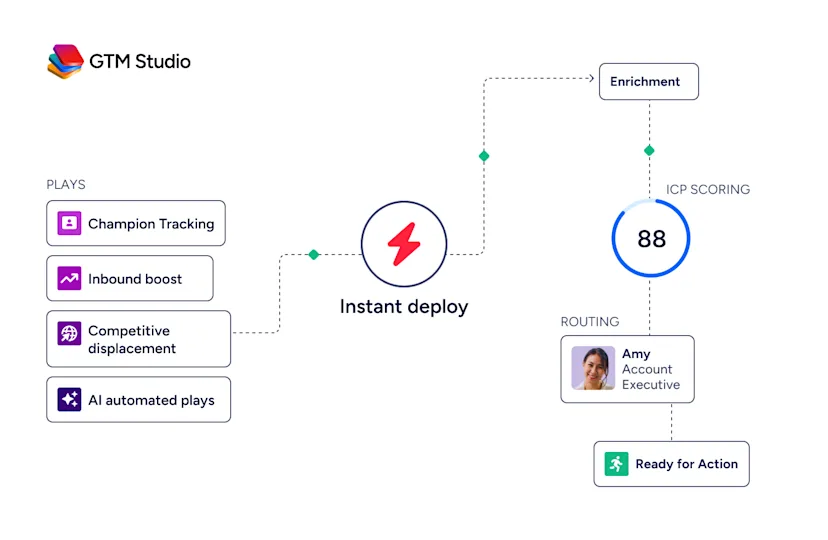
The difference in AI philosophy: Acquia's ML helps marketers predict consumer behavior. Treasure AI's agents automate marketing execution across channels. ZoomInfo's GTM Context Graph captures the context behind B2B deal dynamics and turns intelligence into action across every access point.
Levanta's CEO and Co-Founder Ian Brodie described ZoomInfo as more than contact data: "They've built a full system of execution. GTM Intelligence actually works the list, writes the outreach, triggers the play, and helps drive predictable growth." (Levanta Case Study)
Integration ecosystems reveal each platform's center of gravity
Where a platform integrates tells you who it's built for.
Acquia CDP integrates most tightly within Acquia's own ecosystem. The Campaign Studio connector streams email events in real time via webhook to CDP's Kafka cluster and pushes ML-scored segments back daily. Outside Acquia, named connectors cover Salesforce Marketing Cloud, Oracle Responsys, Criteo, Facebook, Google Ads, and Google Analytics 4, with cloud storage exports to AWS S3, Azure Blob, and Google Cloud Storage.
The limitation users flag most on G2 is that adding new data sources requires submitting a request to Acquia's support team. You can't self-serve custom connectors. For companies with fast-changing data needs, this creates bottlenecks.
Treasure Data claims 400+ data integrations and commits to building custom connectors within 6-8 weeks for gaps. The integration library covers martech, ad platforms, data warehouses, analytics tools, and APAC-specific channels like LINE messaging and Yahoo! Japan.
The hybrid CDP architecture includes zero-copy integration with Snowflake, Databricks, BigQuery, and Amazon Redshift, so companies with existing data warehouse investments don't need to duplicate data.
ZoomInfo takes the broadest approach. The App Marketplace lists 120+ partner integrations across CRM, marketing automation, sales engagement, data warehouses, and communications.
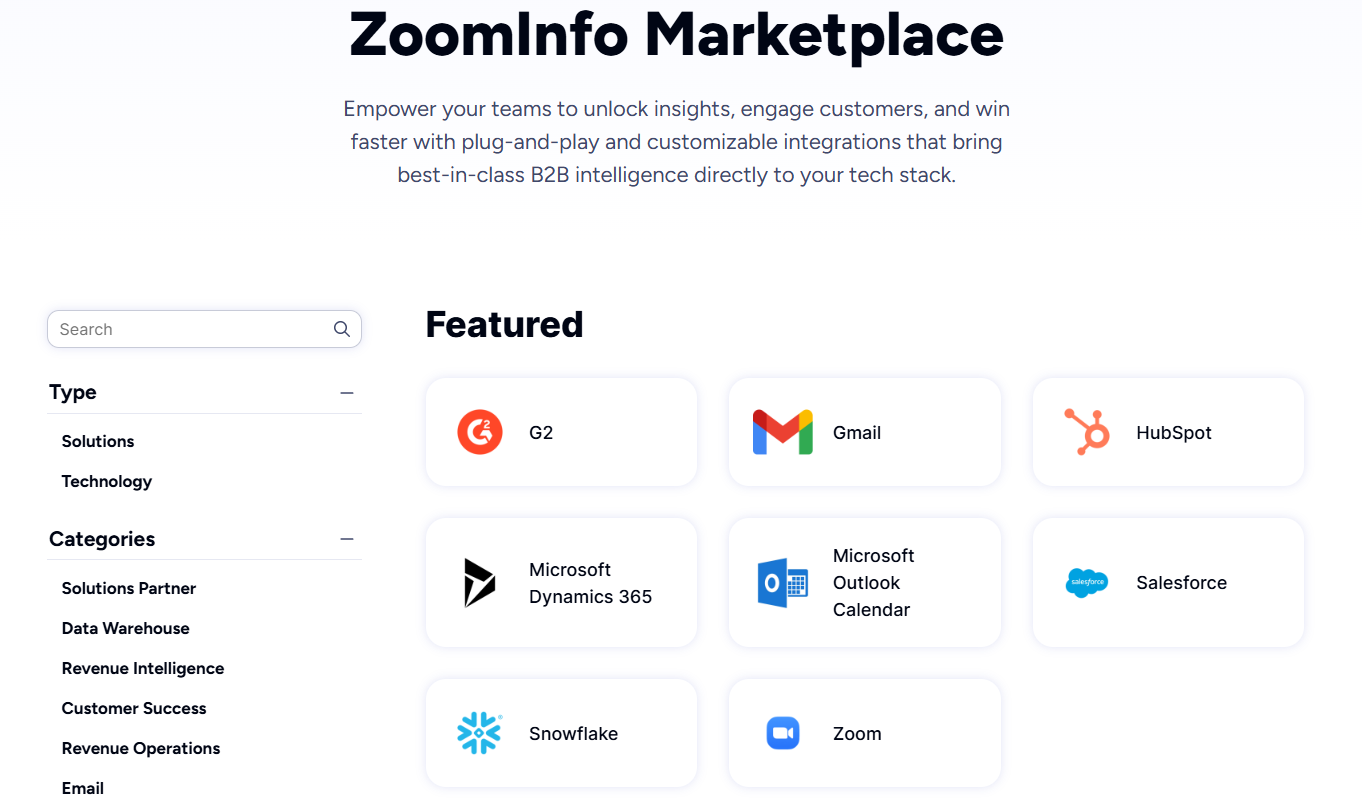
API access is included in all relevant plans, and the MCP server connects AI models directly to ZoomInfo's data with no custom coding. A large financial services firm built an internal app using ZoomInfo's MCP server to power custom workflows. Cloud Partners enables direct data ingestion into AWS, Google Cloud, Snowflake, and Databricks.
The integration philosophy differs by platform: Acquia CDP works best inside Acquia's walls. Treasure Data works best as the central hub for a fragmented B2C martech stack. ZoomInfo works anywhere B2B intelligence needs to flow, whether that's ZoomInfo's own products, a CRM, a custom agent, or a partner platform.
BDO Canada's Senior Marketing Intelligence Analyst Jerry Wilson described the API's value: "The plug-and-play aspect of the API means I can integrate it very easily into any process and get information at a moment's notice," achieving an 87% reduction in time spent on internal data dashboard updates. (BDO Canada Case Study)
Implementation timelines and total cost of ownership
Enterprise data platforms are only as valuable as the speed at which they deliver results.
Acquia CDP operates closer to a managed service than a SaaS product. Implementation, data integration, and ongoing configuration require involvement from Acquia's professional services team. New data sources can't be added independently. Password resets and user management changes reportedly require vendor support per G2 reviews.
Pricing is volume-based, tied to Active Profiles (unique buyers with a transaction in the prior 12 months). Small/Medium/Large tiers introduced in 2023 broadened the platform's accessibility, but no prices are publicly disclosed. Professional services fees are billed separately for standard work (adding data feeds, model retraining) and special projects (onboarding new brands or geographies).
Treasure Data typically takes 8-12 weeks for full CDP deployment, though AI features on an already-configured platform can activate in days. Pricing is based on P+B units (profiles and behavioral events), not seats or query volume. A structured 2-week Proof of Concept is available at no cost for standard use cases, and AI Suites offer a 60-day free trial.
Treasure Data's Trade-Up Program offers companies switching from competing CDPs delayed payments until their incumbent contract expires, and ESP/CEP replacements up to 24 months free on the Engagement AI Suite. But users on G2 flag pricing transparency as a concern, and exceeding monthly data limits triggers automatic tier upgrades billed for the remainder of the subscription term.
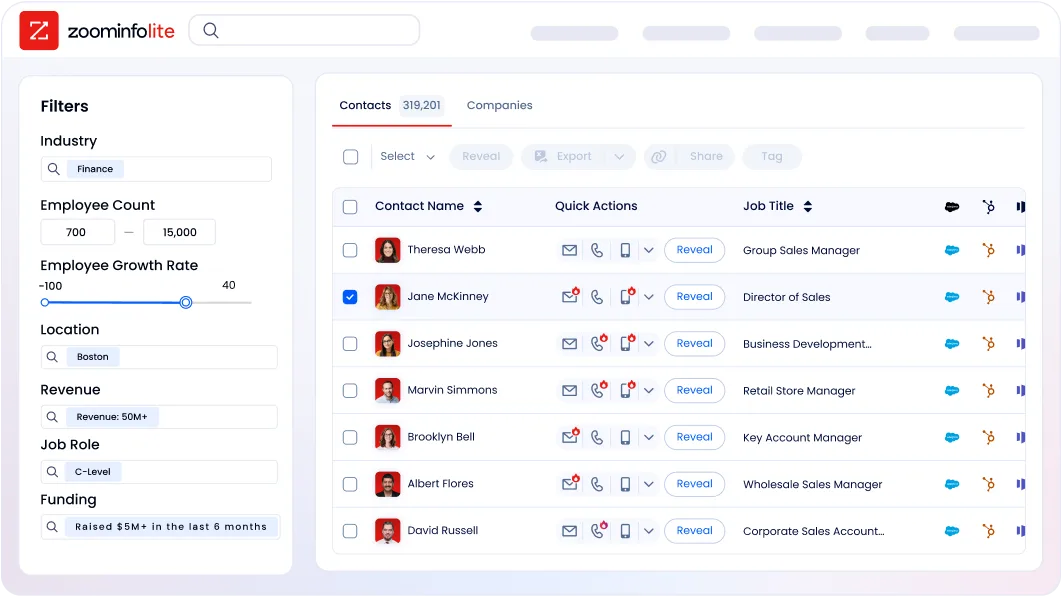
ZoomInfo offers the lowest barrier to entry of the three. ZoomInfo Lite is a permanent free tier with access to the B2B database, 10 monthly export credits, and WebSights Lite. A 7-day free trial provides broader access. Paid plans use consumption-based pricing (seats and credits), with no public dollar amounts. GTM Workspace reportedly "deploys in weeks, not months", and the 90-day structured onboarding program earned a 25% satisfaction improvement.
Security and compliance postures compared
All three platforms maintain enterprise-grade security certifications, but the specific compliance profiles reflect their different buyer bases.
Acquia CDP carries SOC 2 Type II, SOC 1 Type II, ISO 27001, PCI DSS Level 1, CSA STAR Level 2, and FedRAMP authorization. Privacy tooling includes self-service GDPR/CCPA data erasure, consent management, and data residency options. The RealCDP certification from the CDP Institute validates core data handling requirements.
Treasure Data holds one of the broadest certification portfolios among CDPs: SOC 2 Type 2, ISO/IEC 27001, ISO/IEC 27701 (privacy), ISO/IEC 27017 and 27018 (cloud security), HIPAA Type 2, CSA STAR Level 1 including CSA STAR for AI, TRUSTe Responsible AI Certification, PrivacyMark (Japan), and FISC (Japanese financial industry). Data is stored in AWS with customer-selectable regions across the US, Europe, and Asia Pacific.
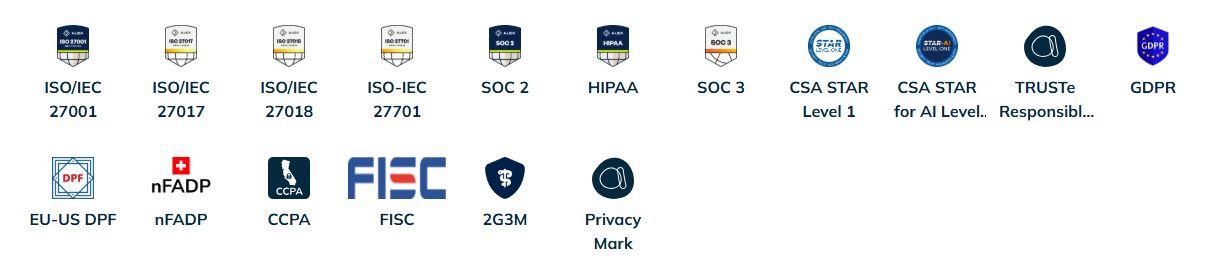
Source: Treasure Data
ZoomInfo maintains ISO 27001, ISO 27701, SOC 2 Type II, TRUSTe GDPR, and TRUSTe CCPA certifications, all renewed annually. ZoomInfo is a registered data broker in California and Vermont, with compliance built into its data collection layer. A dedicated Trust Center provides documentation and reports.
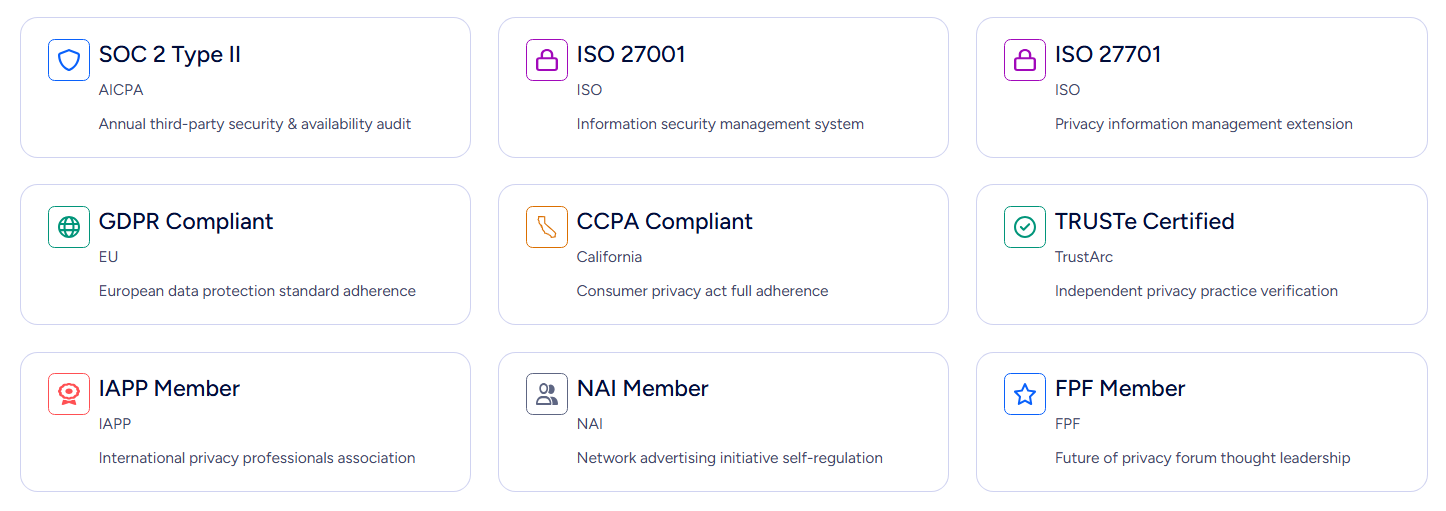
For regulated industries, the differentiator depends on your data type: Treasure Data's HIPAA coverage matters for healthcare consumer data. Acquia's FedRAMP authorization matters for government-adjacent deployments. ZoomInfo's B2B data broker registrations and privacy certifications matter for compliant business intelligence operations.
When a CDP is the wrong tool for the job
CDPs were designed for a specific use case: unifying consumer data to personalize B2C marketing. They excel at this. But companies sometimes evaluate CDPs for problems these platforms weren't built to solve.
If your primary challenge is prospecting for new business accounts, a CDP can't help. CDPs unify data you already have about existing customers. They don't tell you which companies in your market are actively researching solutions, who the decision-makers are, or how to reach them.
ZoomInfo's Buyer Intent data tracks signals from 210 million IP-to-Organization pairings to identify companies researching relevant topics before they visit your website.
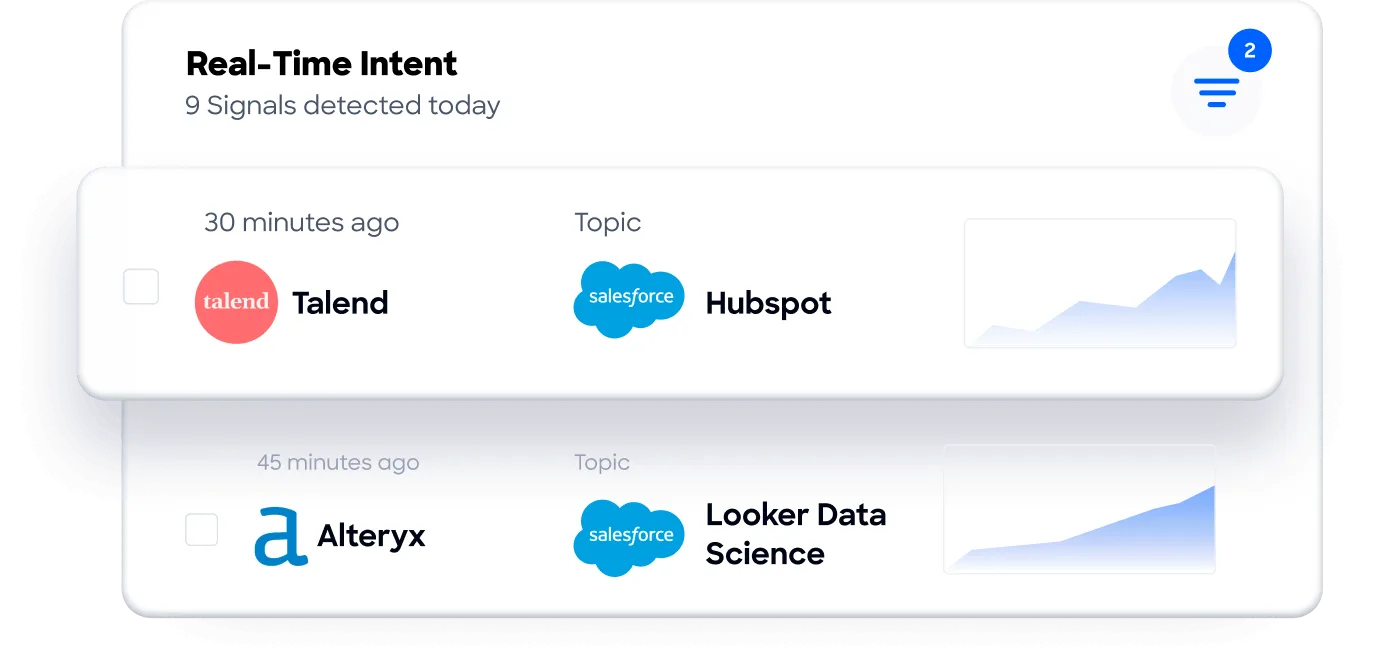
If your challenge is aligning sales and marketing around shared account intelligence, CDPs are designed for marketers, not cross-functional GTM teams. GTM Workspace gives sellers prioritized accounts with AI-drafted outreach, while GTM Studio gives marketers and RevOps the same intelligence in a campaign orchestration canvas. Both draw from one GTM Context Graph, so a buying signal one team detects is immediately actionable by every other team.
If your challenge is CRM data quality, CDPs can enrich consumer profiles but weren't designed to maintain B2B account and contact data. ZoomInfo's Operations product automates deduplication, verification, and multi-vendor enrichment from roughly 60 vendors, with perimeter protection that blocks bad data at entry.
Smartsheet's Senior Manager of Sales Technology Enablement Thor Sanderson described ZoomInfo's role in their stack: "ZoomInfo is our one source of truth for account data, and even more so for contact data. There's no other provider in the market that provides you with that level of detail." (Smartsheet Case Study)
Acquia CDP vs. Treasure Data vs. ZoomInfo: Which should you choose?
The right platform depends on the data problem you're solving and the audience you're trying to reach.
Choose Acquia CDP if:
You're a B2C retail or consumer brand with omnichannel customer data to unify
You're already using Acquia's CMS, DAM, or personalization tools
Your marketing team needs pre-built ML models they can operate without data science support
You want a managed-service model where the vendor handles data integration
Privacy compliance and data governance are critical requirements
Choose Treasure Data (Treasure AI) if:
You're a large global enterprise with thousands of data sources across dozens of countries
You need a hybrid CDP that can run on your existing data warehouse
Your team includes data engineers comfortable with SQL and complex configurations
You want the broadest analyst recognition in the B2C CDP category
APAC-specific channels (LINE, Yahoo! Japan) are part of your marketing mix
Choose ZoomInfo if:
Your primary go-to-market motion is B2B, and you need to find, reach, and convert business buyers
You want verified contact data, intent signals, and account intelligence in one platform
You need sales and marketing aligned around shared account intelligence through the GTM Context Graph
You want AI that drafts outreach based on deal context, not just customer history
You need data accessible everywhere: in ZoomInfo's products, your CRM, or any AI agent via API and MCP
See how ZoomInfo's GTM Context Graph transforms B2B go-to-market.
These three platforms reflect three distinct philosophies about data-driven go-to-market. Acquia CDP brings ML-powered personalization to B2C retailers inside a cohesive DXP ecosystem. Treasure AI brings global-scale data unification and agentic automation to the largest consumer enterprises. ZoomInfo brings B2B intelligence and contextual depth to revenue teams that need to find, win, and grow business customers.
The choice isn't which platform is better. It's which data problem you're solving, and for which audience.
Acquia CDP vs. Treasure Data vs. ZoomInfo FAQ
What is the core difference between Acquia CDP, Treasure Data, and ZoomInfo?
Acquia CDP is a B2C customer data platform built for retail and consumer brands, offering pre-built ML models for marketing personalization within Acquia's Digital Experience Platform ecosystem. Treasure Data (now Treasure AI) is an enterprise B2C CDP designed for large global companies unifying thousands of data sources, with a hybrid architecture that can run on existing data warehouses. ZoomInfo is a B2B go-to-market intelligence platform with 500M contacts and 100M companies, providing verified data, intent signals, and AI-powered activation for sales, marketing, and RevOps teams.
Which platform is best for B2B companies?
ZoomInfo is the clear choice for B2B. Acquia CDP and Treasure Data are both built for B2C consumer data unification and marketing personalization. ZoomInfo's GTM Context Graph is designed for B2B, combining third-party intelligence with CRM records, conversation transcripts, and behavioral signals to help revenue teams find buyers, understand deals, and coordinate outreach. Treasure Data earned a Strong Performer rating (not Leader) in B2B CDP evaluations, and Acquia CDP focuses on individual consumer profiles rather than account-based selling.
How do the pricing models compare?
None of the three publish specific prices. Acquia CDP charges based on Active Profiles (transactionally active customers in the past 12 months) with Small, Medium, and Large tiers. Treasure Data charges based on P+B units (customer profiles plus behavioral events), with annual subscriptions. ZoomInfo uses consumption-based pricing tied to seats and credits, with a permanent free tier (ZoomInfo Lite) offering 10 monthly export credits and access to the B2B database, plus a 7-day free trial for paid features.
Which platform has the strongest AI capabilities?
Each platform's AI serves a different purpose. Acquia CDP offers pre-built ML models (propensity scoring, churn prediction, LTV modeling) that marketers can use without data science expertise, plus explainable ML that shows which variables drive results. Treasure AI has made the largest AI bet with five AI Suites, a natural-language Studio workspace, and an AI Agent Foundry for deploying marketing agents. ZoomInfo's AI is built on the GTM Context Graph, which connects CRM data, conversation intelligence, and market signals to draft personalized outreach, prioritize accounts, and predict deal outcomes for B2B revenue teams.
Can these platforms work together?
Yes. Acquia CDP and Treasure Data serve B2C marketing personalization, while ZoomInfo serves B2B go-to-market intelligence. A company with both B2C and B2B motions could use a CDP for consumer data alongside ZoomInfo for business buyer intelligence. ZoomInfo's API and MCP access make it straightforward to feed B2B intelligence into other systems in the stack.
Which platform is easiest to implement?
ZoomInfo offers the fastest path to value, with GTM Workspace deploying in weeks and a permanent free tier for immediate access. Acquia CDP's implementation depends on Acquia's professional services team, with ML models demonstrated within 3 weeks in one case but broader deployment taking longer. Treasure Data typically requires 8-12 weeks for full CDP deployment, with a free 2-week Proof of Concept available for standard use cases.
Which platform handles global data operations best?
Treasure Data has the strongest global credentials for B2C data, with deployments spanning 42 countries (AB InBev) and native support for APAC channels including LINE and Yahoo! Japan. Acquia CDP supports multi-country identity resolution and data residency options for GDPR compliance. ZoomInfo provides global B2B coverage with 34M+ company profiles outside North America, 200M+ professional profiles outside North America, and 45M+ mobile numbers outside North America, with ISO 27701 and TRUSTe GDPR certifications for international compliance.
What analyst recognition has each platform received?
Acquia has been named a Leader in the Gartner Magic Quadrant for Digital Experience Platforms for six consecutive years, though this covers the full Acquia platform rather than the CDP specifically. Treasure Data earned Leader status in all three major B2C CDP evaluations in 2024: the Gartner Magic Quadrant for CDPs, the Forrester Wave for B2C CDPs, and the IDC MarketScape for B2C CDPs. ZoomInfo was named a Leader in the Gartner Magic Quadrant for ABM Platforms for two consecutive years, a Leader in the Forrester Wave for Intent Data Providers, and the only vendor in the Customers' Choice quadrant in the 2025 Gartner Voice of the Customer report.
Related breakdowns to help you choose:
