
Teams that run Acuity Scheduling for appointment booking and Close as their CRM usually discover the same problems within a quarter:
new appointments generate leads that never reach the CRM, so reps work from incomplete pipelines,
client contact details live in Acuity while deal progress lives in Close, forcing someone to copy data between the two by hand,
and when a high-value prospect books a consultation, the sales team finds out hours later instead of acting on it immediately.
However the two platforms ended up coexisting (a service business adding outbound sales to an appointment-driven model, a team that books demos through Acuity and manages deals in Close, or separate departments choosing tools independently), the longer they operate without a connection, the wider the gap between booking activity and sales execution.
Connecting Acuity Scheduling and Close closes that gap.
New appointments flow into Close as leads or activities so reps can follow up without switching tools. Contact details collected through Acuity's intake forms populate CRM records so the sales team has context before the first call.
Booking confirmations, reschedules, and cancellations update the CRM automatically, so pipeline data reflects what is actually happening on the calendar.
There is no native integration between Acuity Scheduling and Close. Neither platform has built a direct connector to the other.
Teams connecting them choose between third-party automation tools (Zapier, Make, Integrately, Latenode) or custom API development. Each method differs in setup complexity, sync direction, data coverage, and cost.
There is also one problem no connection method solves: the sync moves appointment data into the CRM, but it does not verify or improve the contact records behind those appointments.
That is where ZoomInfo comes in. ZoomInfo integrates with Close through middleware platforms like Zapier and Tray.io, and offers API and MCP access that can feed verified, enriched B2B data into any CRM workflow, so the records flowing from Acuity into Close are accurate and complete.
This article covers the full landscape of the Acuity Scheduling and Close integration: which methods are available, what data each one handles, how to set them up, the use cases that justify connecting both platforms, and the limitations to plan for.
It also covers how ZoomInfo fits into the picture as a data enrichment layer that strengthens the records flowing between Acuity Scheduling and Close.
Let's start with an overview of the integration.
Integration Overview
Does a native integration exist?
No. Acuity Scheduling and Close do not offer a direct connector to each other. Acuity's integrations page does not list Close, and Close's integrations directory does not list Acuity. All connections require a third-party automation tool or custom development.
What data can sync?
Appointment details (client name, email, phone, appointment type, date, time), intake form responses, and booking events (new, rescheduled, cancelled). On the Close side, these can create or update leads, contacts, tasks, notes, and custom activities. The specific data that flows depends on the method and how you map fields.
Is the sync bidirectional?
Not in practice. The natural data flow runs one direction: Acuity Scheduling to Close. Appointment bookings generate CRM records and activities. Pushing Close data back into Acuity (for example, updating a client's record in Acuity when a deal closes) would require a separate automation or custom API work, and few teams do it for this integration pair.
Is it real-time or batch?
Third-party automation tools like Zapier trigger within 1 to 15 minutes of an event, depending on plan tier. Make scenarios can run on triggers or configurable schedules. Custom API integrations using Acuity's webhooks can achieve near real-time sync.
What are the available methods?
Third-party automation (Zapier, Make, Integrately, Latenode) and custom API development.
Method | Setup Difficulty | Data Flow | Real-time? | Approximate Cost |
|---|---|---|---|---|
Zapier | Low | Acuity to Close | Near real-time (1-15 min) | From $19.99/mo |
Make | Medium | Configurable per scenario | Near real-time or scheduled | From $10.59/mo |
Custom API | High | Fully customizable | Near real-time via webhooks | Developer time + hosting |
One distinction worth settling upfront: Zapier and Make sync new events as they occur, making them suited for live workflows rather than historical data migration. A custom API build using Acuity's appointment list endpoint can pull historical records and then switch to webhook-driven sync for ongoing updates, covering both jobs in one solution.
Integration Methods
Zapier (Quickest Starting Point)
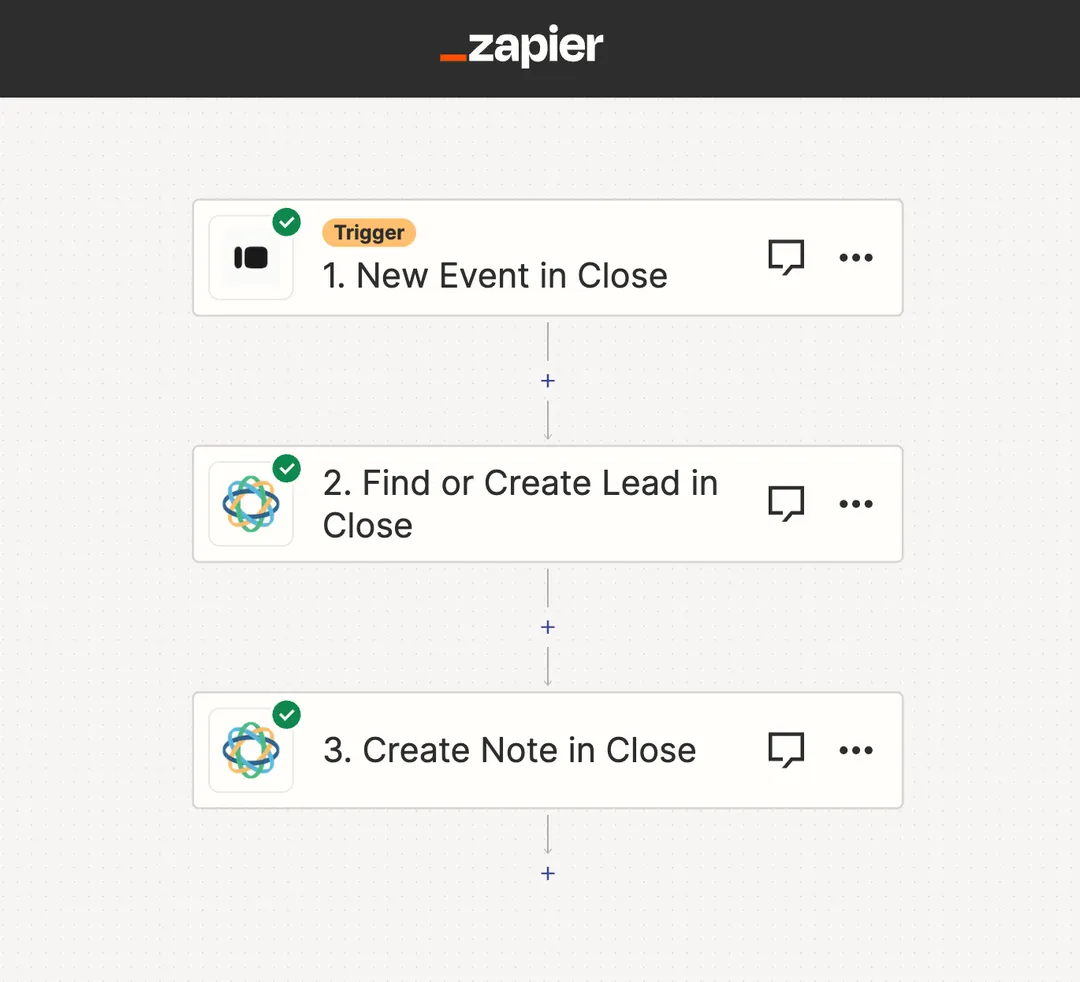
How it works: Zapier connects Acuity Scheduling and Close through event-driven automations called Zaps. Each Zap pairs a trigger (an event in Acuity) with one or more actions (what happens in Close).
Acuity Scheduling is a supported Zapier connector with triggers for new, rescheduled, and cancelled appointments. Close is also among Zapier's supported apps with actions covering leads, contacts, tasks, and notes.
Source: Close
What it syncs: New appointment bookings (client name, email, phone, appointment type, date/time, intake form responses) can create leads, contacts, tasks, or notes in Close. Rescheduled and cancelled appointments can trigger updates or task creation.
Each object type or event requires its own Zap. Custom fields can be mapped in the setup flow.
Fits: ongoing sync of new booking events into the CRM; not a migration tool for historical appointments.
Setup process:
Create a Zapier account and connect both your Acuity Scheduling and Close accounts using their respective authentication methods (Acuity API credentials; Close OAuth or API key).
Choose Acuity Scheduling as the trigger app and select the trigger event (e.g., "New Appointment").
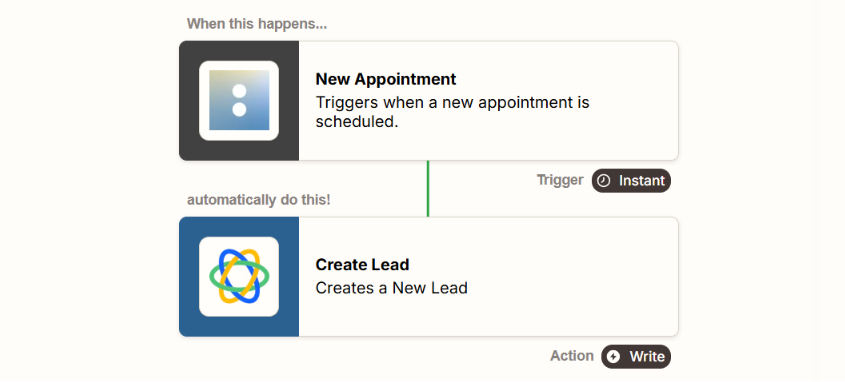
Choose Close as the action app and select the action (e.g., "Create Lead" or "Create Task").
Map fields between the two platforms: pull the client's name, email, phone number, and appointment details from the Acuity trigger into the corresponding Close lead or contact fields.
Test the Zap with a sample appointment to verify the field mapping produces the expected result in Close.
Turn the Zap on. For additional event coverage (reschedules, cancellations), create separate Zaps with the appropriate triggers.
Strengths: Fastest setup, no technical knowledge required. Pre-built Acuity-to-Close Zap templates cover common workflows like creating a Close lead when a new appointment is booked. Reliable for simple, single-event syncs.
Source: Zapier
Limitations: Each Zap handles one trigger-action pair, so syncing new appointments, reschedules, and cancellations requires separate Zaps (each counting against your plan's task allocation). No built-in deduplication: if the same client books multiple appointments, Close may create multiple leads unless you add a search step.
Historical appointments booked before the Zap was activated do not sync. Intake form data from Acuity may require formatting steps to map cleanly into Close's custom fields.
Best for: Small teams that want a quick, low-cost connection between Acuity booking events and Close CRM records. Teams testing whether the integration adds value before investing in a more complex setup.
Make (Formerly Integromat)
How it works: Make uses a visual scenario builder where modules connect in a flowchart. Each module represents a step: watch for a trigger in Acuity, transform data, search for an existing lead in Close, then create or update a record. Scenarios can branch, filter, loop, and handle errors, giving you more control than Zapier's linear structure.
What it syncs: The same data as Zapier (appointment details, client information, intake form responses), with more flexibility in how data transforms between platforms. Make supports iterators for batch processing, routers for conditional paths, and aggregators for combining records before writing.
This enables workflows like: if the client already exists in Close, update the lead; if not, create a new one.
Fits: ongoing sync with conditional logic and deduplication; not a migration tool for historical data.
Setup process:
Create a Make account and add Acuity Scheduling and Close as connections (Acuity via API key; Close via OAuth or API key).
Build a new scenario. Add an Acuity Scheduling trigger module (e.g., "Watch Appointments") as the starting point.
Add a Close search module (e.g., "Search Leads by Email") to check whether the client already exists in the CRM.
Add a router: if the lead exists, route to an "Update Lead" module; if not, route to a "Create Lead" module. Map appointment details and intake form responses into the appropriate Close fields.
Add error-handling modules to catch failures (e.g., log to a spreadsheet or send a Slack notification).
Set the scenario to run on every trigger event or on a time-based schedule.
Strengths: Fine control over data transformation and conditional routing. The visual builder makes branching logic (create vs. update) easier to manage than code. Built-in deduplication through search-before-create patterns. Per-operation pricing is lower than Zapier at higher volumes.
Limitations: Steeper learning curve than Zapier's guided setup. Acuity's API is available only on the Premium plan ($49/month), which may be required depending on how Make connects to Acuity. Both platforms' APIs impose rate limits that high-volume scenarios need to respect.
Best for: Teams with conditional sync requirements (e.g., only sync appointments of a certain type, or update existing leads instead of creating duplicates). Mid-size teams whose appointment volume makes Zapier's per-task pricing expensive.
Custom API Integration
How it works: Both Acuity Scheduling and Close provide REST APIs that you can connect through custom middleware.
Acuity's API (v1.1) covers appointments, availability, calendars, and clients, with webhook support for real-time notifications on appointment events (scheduled, rescheduled, canceled, changed, order.completed). C
lose's REST API covers leads, contacts, opportunities, activities, tasks, and custom objects, with webhook support for event-driven sync. A custom integration connects these APIs directly, with your own middleware handling authentication, field mapping, transformation, and error recovery.
What it syncs: Anything both APIs expose. Acuity's API provides appointment data, client profiles, intake form responses, package and subscription purchases, and calendar availability. Close's API provides full CRUD on leads, contacts, opportunities, tasks, notes, custom activities, and custom objects.
This is the only method that can handle complex scenarios like syncing intake form responses into Close custom fields, creating opportunities from specific appointment types, or pulling historical appointment data into Close.
Fits: either one-time migration of historical appointments or ongoing sync; the only method with no ceiling on either.
Setup process:
Obtain API credentials for both platforms: Acuity requires a User ID and API Key (available on the Premium plan) or OAuth2 for multi-account apps; Close requires an API key or OAuth2 app credentials.
Design the data model mapping between Acuity appointment objects and Close lead/contact/activity objects, including field-level transformations and a cross-reference table for matching record IDs.
Build the sync service: a server-side application that registers Acuity webhooks for appointment events and writes the corresponding records to Close via its API.
Implement deduplication logic: before creating a new lead in Close, search by email to check whether the client already exists. Use Close's lead search or the contacts endpoint to match.
Add logging, error handling, and retry logic. Acuity's webhooks retry failed deliveries with exponential backoff over 24 hours. Close's API returns rate limit headers per endpoint group with a 429 response when limits are exceeded.
Deploy, monitor, and maintain the integration over time.
Strengths: Full control over what syncs, when, and how. Near real-time sync via Acuity webhooks. Can implement any business logic you need (e.g., create a Close opportunity only for premium appointment types, or tag leads based on intake form responses).
Can migrate historical appointment data. No per-record or per-operation fees from a third-party connector.
Limitations: Requires development resources to build and maintain. You own the infrastructure, monitoring, and error recovery. Acuity's API is restricted to the Premium plan ($49/month annual) or Enterprise. API changes on either platform require ongoing maintenance. The initial build takes weeks, not hours.
Best for: Teams with complex sync requirements that no off-the-shelf automation tool satisfies. Organizations with in-house development resources and a need to migrate historical data or enforce custom business logic during sync.
Key Use Cases
1. Auto-Create CRM Leads from New Appointment Bookings
When a prospect books a consultation or demo through Acuity Scheduling, a Zapier Zap or Make scenario creates a new lead in Close with the client's name, email, phone number, and appointment details.
The sales rep sees the new lead in their Close inbox and can prepare for the meeting with full context, without manual data entry.
Best integration method: Zapier or Make (one-directional, event-triggered).
2. Log Appointment Activity on Existing Close Leads
For teams that already have prospects in Close and use Acuity for scheduling follow-up calls or demos, each new booking can be logged as a task or note on the existing lead rather than creating a duplicate.
A Make scenario with a search-before-create pattern matches the client's email to an existing Close lead and appends the appointment as an activity, keeping the lead timeline complete.
Best integration method: Make (conditional logic with search and update).
3. Trigger Outbound Sequences from Appointment Types
A service business that offers free consultations through Acuity can route those bookings into Close as leads tagged by appointment type.
Specific tags or lead statuses can trigger Close Workflows (available on Growth and Scale plans) that enroll the lead in a follow-up email sequence, so every consultation attendee receives structured post-meeting outreach.
Best integration method: Zapier or Make (with field mapping to set lead status or custom fields that trigger Close Workflows).
4. Cancellation and No-Show Tracking in the CRM
When a client cancels or reschedules an Acuity appointment, a separate Zap or Make scenario updates the corresponding task or note in Close.
This gives sales managers visibility into no-show patterns and lets reps follow up with cancelled prospects through a different channel, rather than letting them drop out of the pipeline silently.
Best integration method: Zapier (separate Zaps for rescheduled and cancelled triggers) or Make (single scenario with routing).
5. Intake Form Data as Lead Qualification Context
Acuity's custom intake forms collect information before appointments: company size, budget, pain points, or service needs.
A custom API integration or a Make scenario with formatting steps can map these responses into Close custom fields, giving reps qualification data before the first conversation and feeding Close's lead scoring framework.
Best integration method: Make or custom API (field transformation and custom field mapping).
Limitations and Considerations
Data That Doesn't Sync Easily
Acuity Scheduling and Close model data differently. Acuity organizes around appointments, clients, and calendars. Close organizes around leads, contacts, and opportunities.
Mapping between the two requires decisions: does a new Acuity client become a Close lead, a contact on an existing lead, or both? You must configure these mapping choices explicitly in whatever tool handles the sync.
Acuity's intake form responses are structured as key-value pairs tied to specific appointment types. Mapping these into Close's custom fields requires knowing the field IDs on both sides and may need formatting transformations (for example, converting a multi-select intake response into a Close custom field format).
Attachments, file uploads, and payment transaction details from Acuity do not transfer through standard automation tools.
One-Directional Data Flow
The practical data flow for this integration runs from Acuity to Close. Pushing Close data back into Acuity (for example, updating a client's record in Acuity when a deal closes in Close, or creating an Acuity appointment from a Close workflow) is possible through custom API development but no pre-built automation template supports it. Teams that need bidirectional sync should plan for a custom build.
Pricing Implications
Acuity's API access is restricted to the Premium plan ($49/month annual) and Enterprise. Teams on the Starter ($16/month) or Standard ($27/month) plans cannot use custom API integrations or any connector that requires direct API access.
Zapier and Make connect through their own integrations with Acuity, which may not require Acuity's API plan depending on how the connector authenticates, but confirm this during setup.
Close's API is included in all plans, but Workflows (which can act on leads the integration creates) require the Growth ($99/seat/month) or Scale ($139/seat/month) plan. Third-party tools carry their own costs: Zapier charges by task count, Make charges by operations.
Permissions and Access
Setting up the integration requires admin access on both sides. In Acuity, you need account admin rights to access API credentials or authorize third-party connections. In Close, you need admin access to generate API keys or authorize OAuth connections.
If your Close account uses roles and permissions (available on the Scale plan), the integration user's role must have permission to create leads, contacts, and activities.
Maintenance
No integration runs forever without attention. Acuity may change its appointment type structure, add new intake form fields, or update its API. Close actively develops its API with documented changes. Custom fields added after the initial setup will not sync unless you update the integration configuration.
Third-party tools may change pricing, deprecate connectors, or alter how they authenticate. Plan for periodic reviews of the integration's health and accuracy.
What No Method Fixes: The Data Itself
Every method above moves appointment data from Acuity Scheduling into Close. None of them checks whether the contact information behind those appointments is accurate, complete, or current. A client who books with an outdated email creates a lead in Close with that same outdated email.
A prospect who provides a personal phone number instead of a business direct dial enters the CRM without the verified business contact data a sales rep needs for follow-up. The integration keeps both systems connected; it does not make the data in them right.
Where ZoomInfo Fits In
Every method in this guide moves appointment data from Acuity Scheduling into Close. None of them improves the contact data being moved. When the integration is live but CRM records are still incomplete (personal emails instead of verified business emails, missing job titles, no company context, dead phone numbers), the bottleneck is no longer the connector. That is the gap ZoomInfo closes.
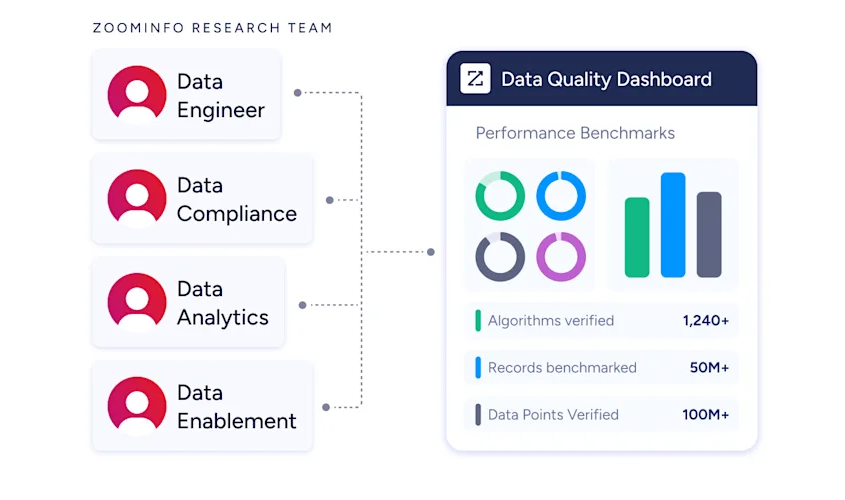
ZoomInfo is a B2B data and go-to-market platform built on 500M contacts, 100M companies, 135M+ verified phone numbers, and 200M+ verified business emails. That data is verified through a multi-source pipeline backed by 300+ human researchers, reaching up to 95% accuracy on first-party data.
Source: ZoomInfo
For teams running an Acuity-to-Close integration, ZoomInfo fills the data quality layer that no appointment sync handles.
ZoomInfo connects with Close through middleware platforms like Zapier and Tray.io, enabling enrichment workflows that append verified business emails, direct dials, company attributes, and technographic profiles to Close lead records.
ZoomInfo's Enterprise API and MCP server provide programmatic access to the same data for custom integrations or AI agent workflows.
The same data feeds ZoomInfo's GTM Context Graph, which processes 1.5B+ data points daily, combining third-party intelligence with CRM records, conversation transcripts, and behavioral signals to surface not just what happened in a deal, but why.
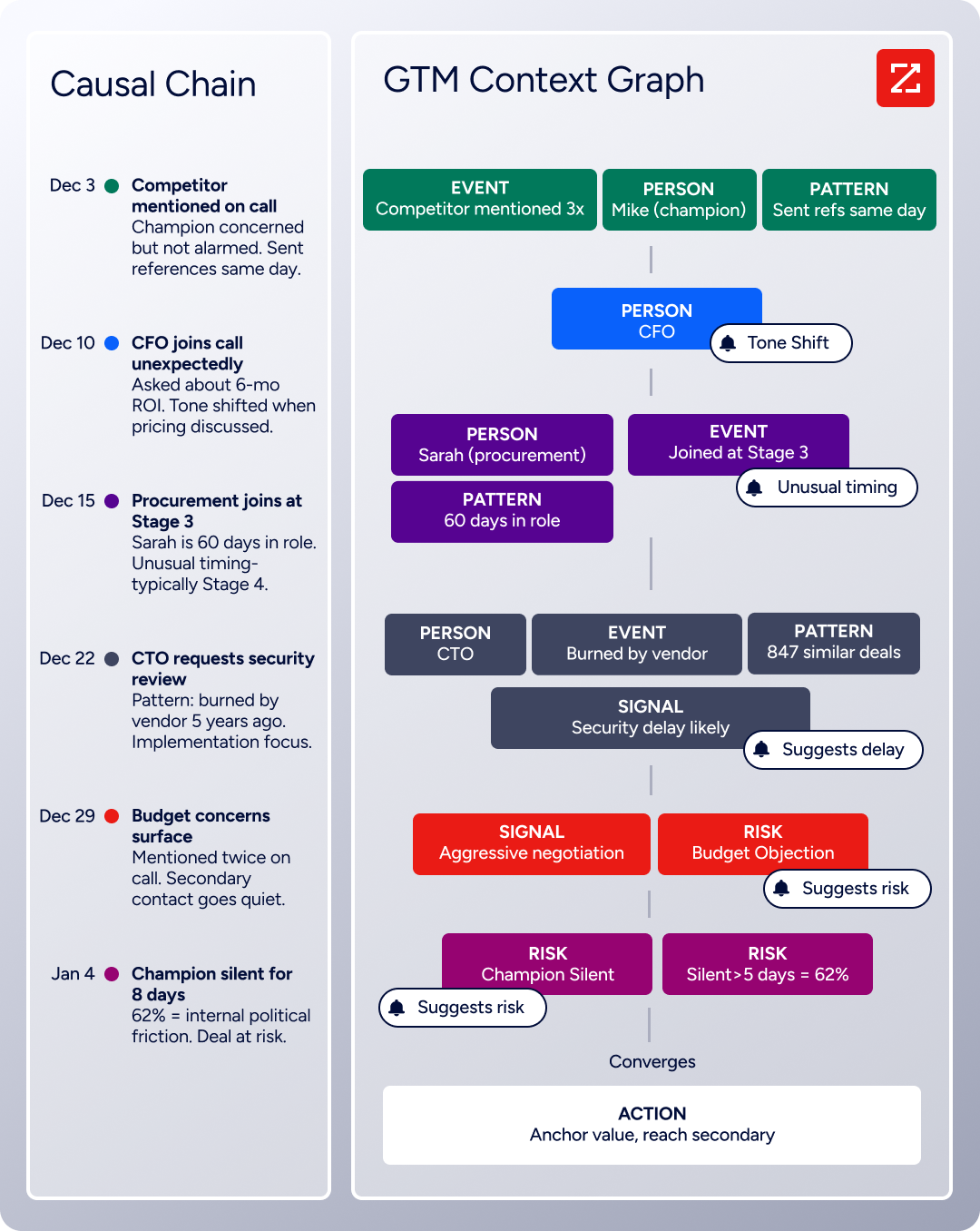
Source: ZoomInfo
In practice, a team using Acuity for appointment booking and Close for sales can use ZoomInfo to enrich the leads the integration creates.
A prospect books a demo through Acuity, the automation creates a lead in Close, and a ZoomInfo enrichment step (via Zapier, Tray.io, or Close's own AI Enrich feature) appends the prospect's verified business email, direct dial, company size, industry, and tech stack to the lead record.
The rep walks into the demo knowing who they are talking to, at which company, and what technology the prospect already uses.
Buyer Intent data from ZoomInfo, tracking signals from 210 million IP-to-Organization pairings, can also route into Close to prioritize which appointment-generated leads deserve immediate follow-up versus nurture sequences.
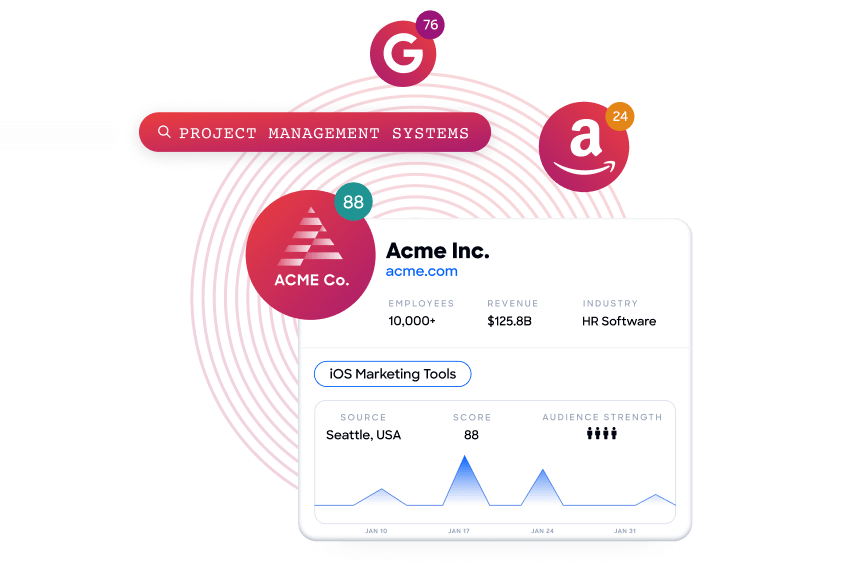
A prospect who books a consultation and is also researching solutions in your category is a higher-priority lead than one who booked out of casual interest, and intent signals surface that distinction.
Seismic's sales team attributed 39% of active pipeline to opportunities identified or influenced by ZoomInfo signals, while boosting productivity by 54% and saving 11.5 hours per week. (Seismic)
Final Verdict
There is no native integration between Acuity Scheduling and Close. Every connection runs through a third-party automation tool or custom development. For most teams, the right choice depends on appointment volume and how much logic the sync needs to handle.
Small teams booking a handful of appointments per week should start with Zapier. A single Zap that creates a Close lead from each new Acuity appointment takes minutes to set up, costs under $20/month, and requires no technical knowledge.
Teams that need deduplication, conditional routing, or field transformation should use Make. The visual scenario builder handles search-before-create patterns and branching logic that Zapier cannot replicate without workarounds.
Organizations with complex data models, historical migration needs, or business logic that must be enforced during sync should invest in a custom API integration using Acuity's webhooks and Close's REST API.
Before committing to a method, clarify why both platforms need to stay connected.
If the answer is operational (appointments feed the top of a sales funnel that Close manages), the integration is structural and worth investing in a method that handles deduplication and field mapping cleanly.
If the answer is experimental (the team is testing whether appointment data improves CRM coverage), start with Zapier and evaluate before scaling.
Either way, the quality of the contact data flowing from Acuity into Close determines whether the integration creates actionable leads or just replicates incomplete records faster.
ZoomInfo, with its Close integration via Zapier and Tray.io and API access for custom workflows, is the data enrichment layer that ensures the records behind every booked appointment are verified, complete, and ready for outreach.
FAQ
Can I connect Acuity Scheduling and Close without writing code?
Yes. Zapier offers pre-built connectors for both Acuity Scheduling and Close. Basic workflows (e.g., new Acuity appointment creates a Close lead) can be configured entirely through Zapier's visual interface.
Make, Integrately, and Latenode also support no-code connections between the two platforms, with varying levels of complexity and feature support.
Does either platform offer a built-in connector to the other?
No. Acuity Scheduling does not include a native Close integration, and Close does not include a native Acuity connector. Both platforms' integration directories list third-party automation tools (Zapier, Make) as the recommended path for connecting to apps outside their native ecosystem.
Do I need Acuity's Premium plan to use the integration?
Not necessarily. Zapier and Make connect to Acuity through their own integrations, which may not require Acuity's API access.
However, if you want to build a custom integration using Acuity's REST API or webhooks, API access is restricted to the Premium plan ($49/month annual) and Enterprise. Confirm with your chosen automation tool whether its Acuity connector requires API-level access or uses a different authentication method.
How do I avoid creating duplicate leads in Close?
Add a search step before the create step in your automation. In Zapier, use a "Find Lead" action in Close before "Create Lead," and add a filter to skip creation if a matching lead already exists. In Make, use a Close search module to look up the client's email, then route to either an update or create path.
For custom API integrations, query Close's lead search endpoint by email before creating a new record.
What appointment data can I send to Close?
Acuity provides client name, email address, phone number, appointment type, date, time, duration, calendar (staff member), intake form responses, and booking status (new, rescheduled, cancelled). All of this can be mapped into Close as lead fields, contact fields, custom fields, tasks, or notes.
Payment data (deposits, packages, subscriptions) and file attachments from Acuity do not transfer through standard automation tools.
Can I push Close data back into Acuity Scheduling?
Not through any pre-built automation template. The practical data flow for this integration is one-directional: Acuity to Close.
If you need to update Acuity client records based on Close deal outcomes, a custom API integration can write to Acuity's appointment or client endpoints, but this requires development resources and is not a standard use case for this integration pair.
How does ZoomInfo improve an Acuity Scheduling and Close integration?
ZoomInfo solves the data quality problem that no sync tool addresses. Appointment booking forms collect whatever information the client provides, which may be a personal email, an incomplete phone number, or no company name at all.
ZoomInfo enriches Close lead records with verified business emails, direct dials, company attributes, technographic profiles, and buyer intent signals. Its integration with Close via Zapier and Tray.io handles enrichment automatically, and its API and MCP access can feed the same verified data into any custom workflow.
The result: leads created from Acuity appointments carry accurate, complete B2B contact data that reps can use for outreach.
What does an Acuity Scheduling and Close integration cost?
Costs depend on the method. Zapier plans start at $19.99/month for 750 tasks (each synced appointment counts as a task). Make starts at $10.59/month for 10,000 operations.
Custom API integrations have no platform fees but require Acuity's Premium plan ($49/month) for API access, plus developer time for the initial build and ongoing hosting and maintenance. Close includes API access on all plans at no additional cost.
Connect Acuity Scheduling elsewhere:
