
Choosing between Attio and HighLevel for your CRM and go-to-market needs often comes down to five questions:
Are you a startup building a flexible CRM around your product data, or an agency managing marketing for dozens of local business clients?
Do you need a developer-friendly data model you can shape to your workflow, or a bundled marketing and sales platform with built-in funnels, SMS, and reputation management?
Is your priority tracking complex B2B relationships and deal intelligence, or automating lead capture, nurture, and conversion for service businesses?
How important is the quality and depth of your contact and company data for prospecting and pipeline generation?
Do you want a CRM that adapts to how your team already works, or a platform that provides the entire playbook out of the box?
In short, here's what we recommend:
Attio is built for startups and scale-ups that want a CRM shaped to their business, not the other way around. Its flexible data model lets teams create custom objects, sync product usage data, and build automated workflows without engineering support. AI runs through the platform via Ask Attio, which gives natural language access to every record, call, and email in the system. For product-led growth companies and VC firms tracking complex relationship networks, Attio delivers a modern, fast experience. The trade-off: limited native integrations, basic outbound capabilities, and a feature set that hasn't matured to enterprise reporting depth.
HighLevel is the bundled marketing and sales platform built for agencies and the local businesses they serve. It combines CRM, funnel building, email and SMS marketing, appointment scheduling, reputation management, course hosting, and a growing suite of AI tools into a single subscription with unlimited contacts and users. Agencies can white-label the entire platform and resell it under their own brand, a model HighLevel calls "SaaSPreneur". For agencies consolidating client delivery and building recurring SaaS revenue, HighLevel is hard to beat. The trade-off: a steep learning curve, an interface that can overwhelm non-technical users, and limited depth for B2B pipeline management or enterprise data needs.
Both platforms solve real problems for their core audiences. But neither answers the question that sits upstream of every CRM workflow: who should you actually be talking to, and why now? That's where the data foundation matters.
ZoomInfo is an AI GTM platform built on deep B2B data: 500M contacts, 100M companies, 135M+ verified phone numbers, and 200M+ verified business emails. That data fuels the GTM Context Graph, an intelligence layer that combines your CRM records, conversation transcripts, and behavioral signals with ZoomInfo's third-party data to reveal not just what happened in a deal, but why. Sellers access this intelligence through GTM Workspace, marketers and RevOps teams build plays in GTM Studio, and engineers plug into it through APIs and MCP from any tool. For B2B teams where prospecting accuracy, buyer intent, and deal intelligence drive revenue, ZoomInfo provides the data layer that makes every downstream tool more effective.
If building your GTM strategy on verified data and AI-powered intelligence sounds right, see how ZoomInfo works.
Attio vs. HighLevel vs. ZoomInfo at a glance
Attio | HighLevel | ZoomInfo | |
|---|---|---|---|
Primary purpose | Flexible CRM for startups and scale-ups | Bundled marketing/sales platform for agencies and SMBs | AI GTM platform with B2B data, intelligence, and execution |
CRM flexibility | Customizable data model with custom objects | Standard pipeline CRM with custom fields | CRM integration (Salesforce, HubSpot, Dynamics) with enrichment |
B2B data | Built-in enrichment from third-party sources | No native B2B prospecting data | 500M contacts, 100M companies, 135M+ verified phone numbers |
AI capabilities | Ask Attio (natural language CRM queries), AI workflows | Voice AI, Conversation AI, Content AI, Workflow AI | GTM Context Graph, AI-powered outreach, buyer intent, deal intelligence |
Marketing tools | Email sequences (warm outreach only) | Full suite: email, SMS, funnels, social, ads, reputation management | ABM, display ads, cross-channel orchestration, FormComplete |
White-label / resale | No | Full white-label with SaaS Mode | No |
Ideal for | Seed-to-Series B startups, PLG companies, VC firms | Marketing agencies, local service businesses, SaaS resellers | B2B sales, marketing, and RevOps teams at mid-market and enterprise |
Starting price | Free (3 seats); Plus at $29/user/mo | $97/mo (flat, unlimited users/contacts) | Custom-quoted; free Lite tier available |
Two different philosophies: Flexibility vs. everything-in-one
Attio and HighLevel share a category label (CRM) but almost nothing else in how they approach it.
Attio starts with the data model.
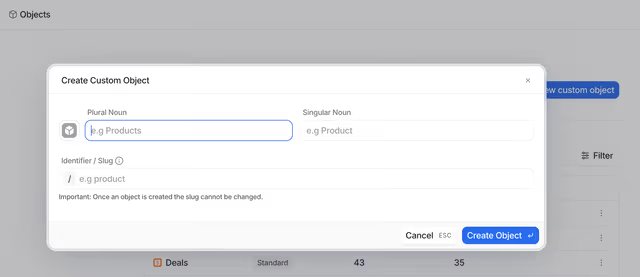
The platform lets you create custom objects that mirror your actual business entities, whether those are partnerships, subscriptions, investors, or marketplace transactions. A company record in Attio carries enriched firmographics, but more importantly, it connects to product usage data synced from Segment, email and calendar history, and any custom relationship you define.
For a product-led growth startup where deal intelligence depends on user activation patterns (not just pipeline stages), this flexibility is the core value.
Source: Attio
HighLevel starts with the workflow.
The platform assumes you need to capture leads (via forms, funnels, and ads), nurture them (via email, SMS, and automated sequences), close them (via pipeline and scheduling), and then manage the relationship (via reputation management and community features). Every tool lives under one roof.
For a dental marketing agency managing 40 local clients, each needing a booking page, Google review automation, and an SMS follow-up sequence, HighLevel's bundled approach eliminates the need to connect five separate tools.
Source: HighLevel
The distinction matters because it determines who thrives on each platform.
Attio users tend to be technical teams that value control over their data architecture.
They want to push product analytics into their CRM, build custom integrations via API, and automate workflows that react to specific business signals. Modal, an AI infrastructure company, synced workspace and usage data into Attio to identify upgrade-ready accounts, something rigid CRMs couldn't support.
HighLevel users tend to be operators who need to launch campaigns fast.
They want to clone a proven client setup via Snapshots, send a bulk SMS campaign in minutes, and generate review requests automatically when a job is marked complete.
Neither approach is wrong. But both leave a gap: the quality of the data that feeds the system.
The data gap both platforms leave open
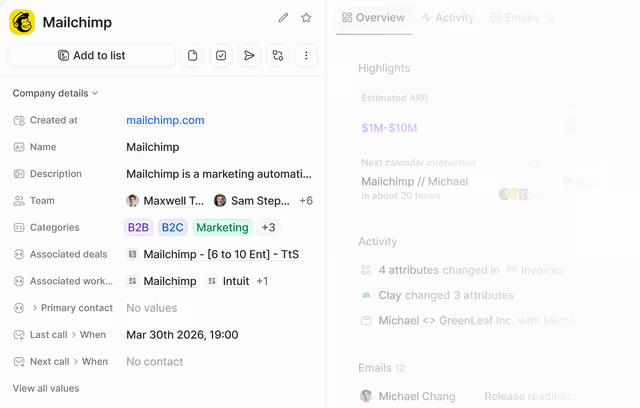
Attio includes built-in enrichment that populates company and person records with firmographics, social profiles, estimated ARR, and employee counts.
For startups managing a few hundred accounts, this enrichment is useful. But it draws from a limited set of sources, cannot be triggered on demand, and provides no buyer intent signals, no technographics, and no direct-dial phone numbers for outbound prospecting.
Source: Attio
HighLevel includes no native B2B data at all. The CRM tracks contacts that enter through forms, calls, and ad campaigns, but it doesn't help you identify who to target in the first place. Agencies using HighLevel typically rely on Google Maps prospecting or imported lists, not verified B2B intelligence.
This is where ZoomInfo fills a role that neither platform was designed to cover.
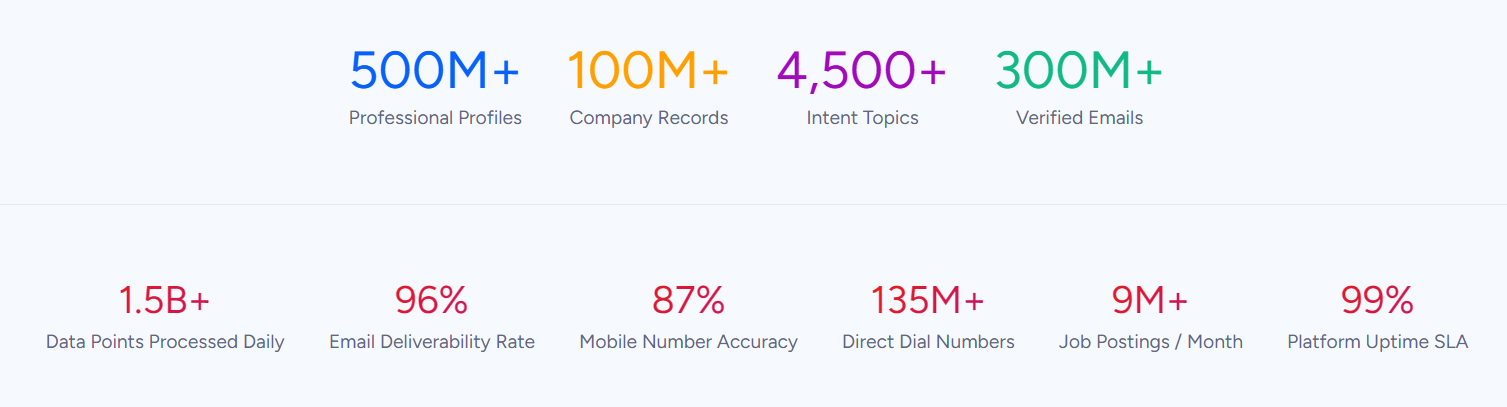
ZoomInfo's data platform spans 500M contacts, 100M companies, 135M+ verified phone numbers, 120M direct-dial phone numbers, and 200M+ verified business emails, maintained through automated ML scanning of 28 million site domains daily and verified by 300+ human researchers. In a Fortune 500 competitive RFP analyzing 25 million contacts across vendors, the independent consultant concluded that "no other competitor came even close."
Source: ZoomInfo
For B2B teams, data quality isn't optional. A direct dial that actually rings, an email that doesn't bounce, a company profile with current technographics and org chart data: these determine whether outbound sequences produce pipeline or damage sender reputation. Attio's enrichment and HighLevel's CRM both improve with better input data, and ZoomInfo provides that input at scale.
Vensure scaled prospecting with ZoomInfo's data. "ZoomInfo gives us the information we need to execute. We don't have to go through and spend our time digging. It's already there, so we can be three steps ahead." (Vensure case study)
CRM and pipeline management compared
Attio treats the CRM as a relational database you design yourself.
Standard objects (People, Companies, Deals) come pre-built, but you can add up to 12 custom objects on the Pro plan to track subscriptions, projects, investments, or any other entity. Relationships between objects run through Attio's graph architecture, and 17 attribute types support everything from currency fields to record references. Pipelines are managed through lists with customizable views.
The result: a CRM that can model complex B2B deal structures, multi-stakeholder relationships, and product-led growth funnels.
HighLevel takes a more conventional approach.
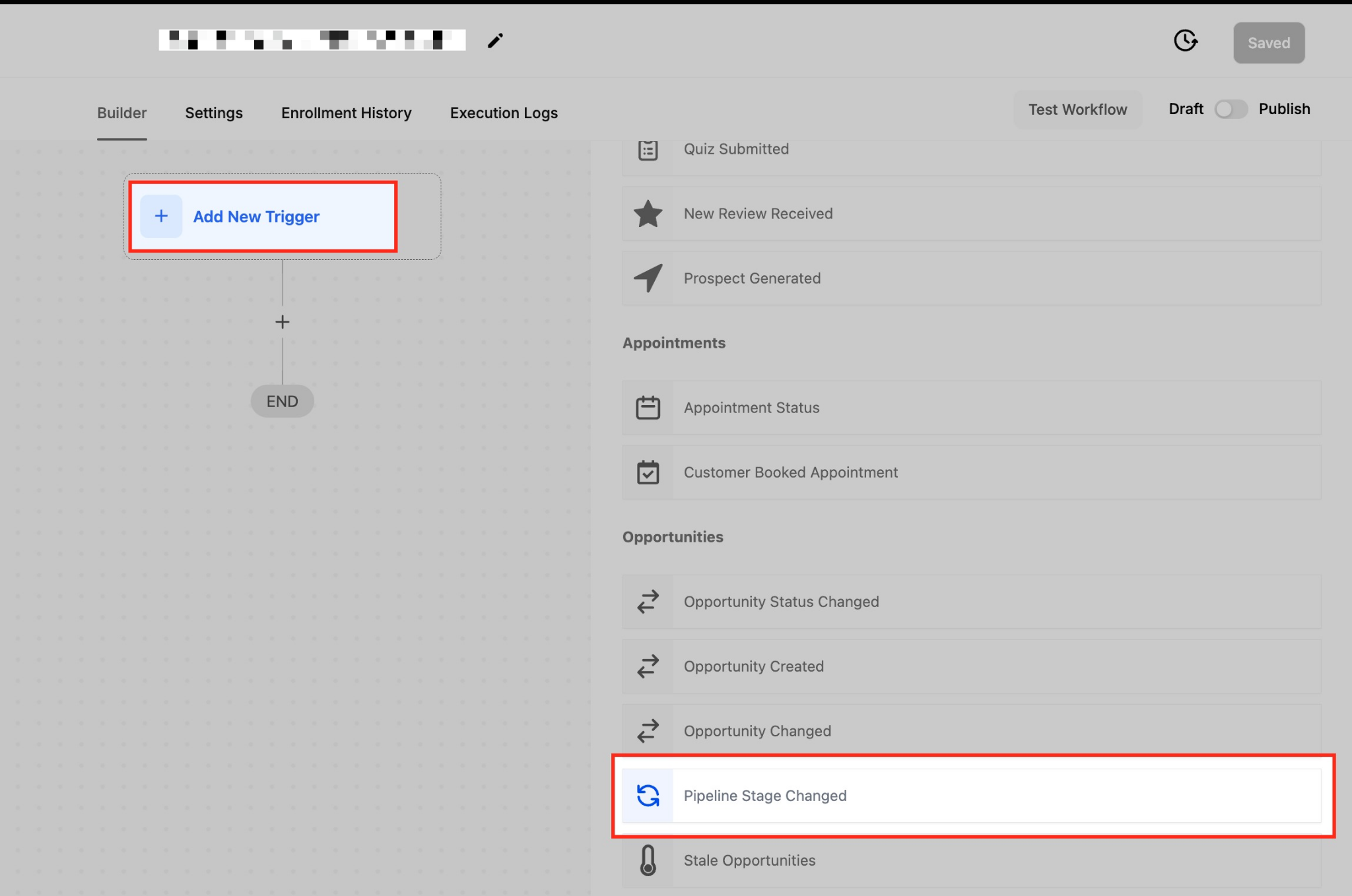
Pipelines are visual Kanban boards where opportunities carry deal values, assigned owners, and custom fields. The system supports multiple pipelines per account, drag-and-drop stage movement, and engagement scoring that assigns points for opens, clicks, bookings, and payments. Pipeline stage changes fire native workflow triggers that can send SMS sequences, update CRM fields, or create tasks, all without third-party automation tools.
Source: HighLevel
For agencies managing local service businesses with straightforward sales processes (lead captured, appointment scheduled, service delivered, review requested), HighLevel's pipeline is more than sufficient. For companies with complex B2B deal cycles involving multiple stakeholders and non-linear progression, Attio's flexible data model is the stronger fit.
ZoomInfo doesn't replace your CRM. It makes your CRM smarter.
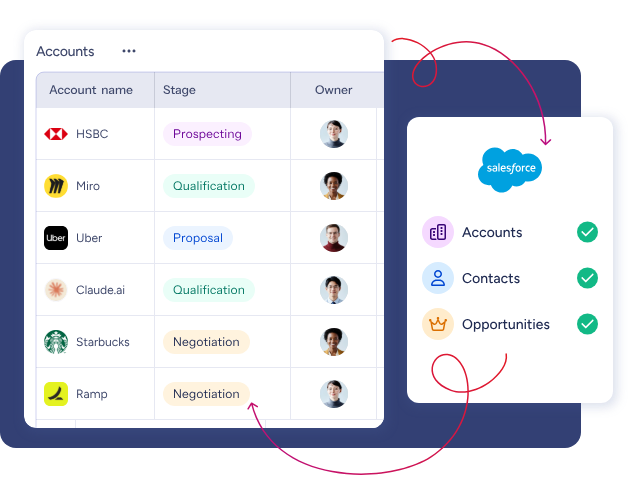
ZoomInfo integrates with Salesforce, HubSpot, and Microsoft Dynamics to enrich every account and contact record with verified data, intent signals, and buying committee intelligence. Through the GTM Context Graph, ZoomInfo reasons across CRM records, conversation transcripts, and third-party signals to surface why deals move or stall, not just that they changed stage.
Seismic attributed 39% of active pipeline to opportunities identified or influenced by ZoomInfo signals, and their sales team became 54% more productive.
Source: ZoomInfo
"That combination of our internal CRM data, external signals, and AI that's given all that context has helped us craft very specific account- and persona-based messages. And people have responded to them right away." (Toby Carrington, CBO, Seismic)
Automation and AI capabilities
All three platforms invest in automation and AI, but they apply these tools to different problems.
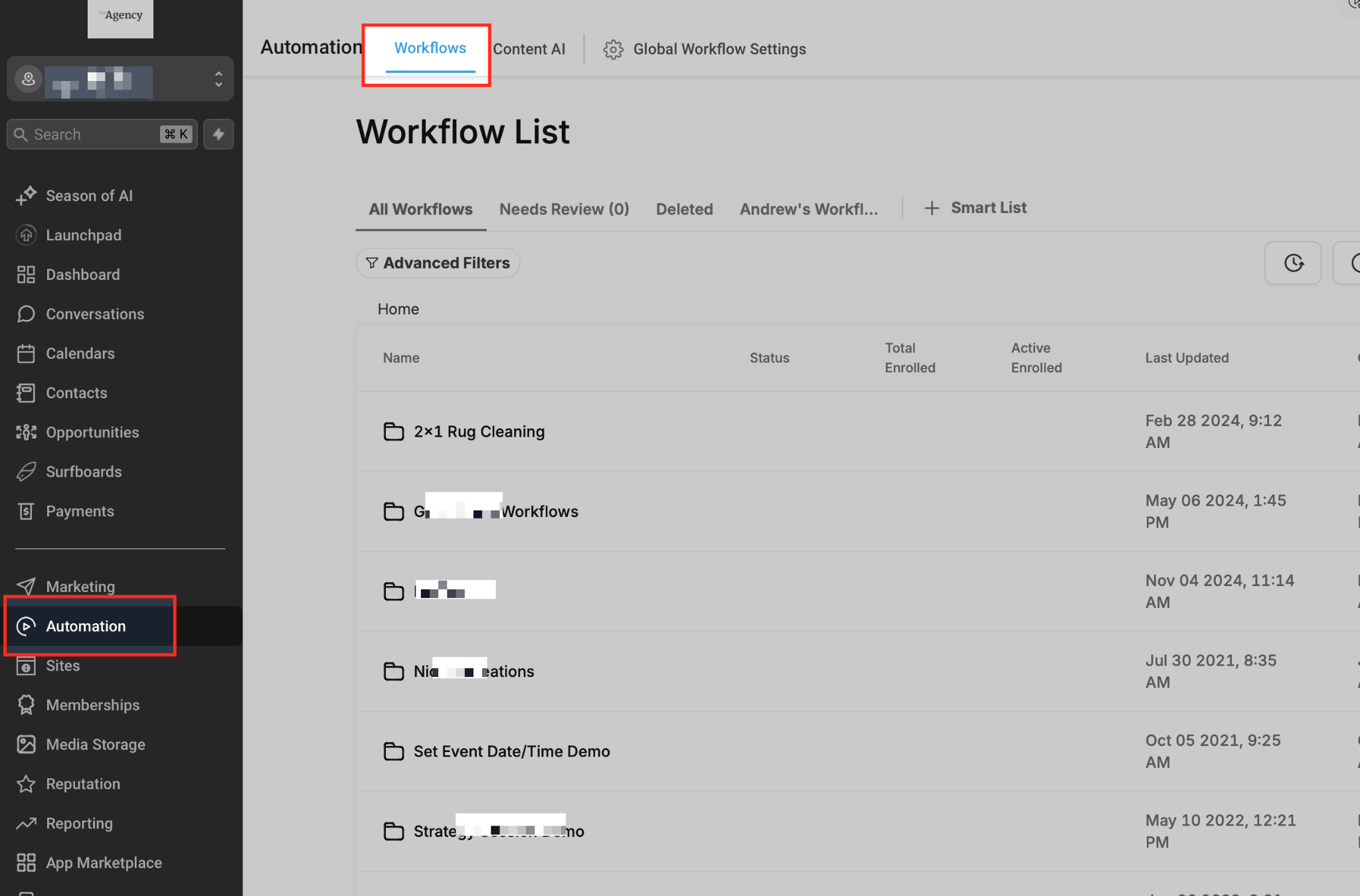
Attio's automation engine is a visual workflow builder available on all plans.
Workflows trigger on record creation, attribute changes, pipeline stage movements, webhooks, and recurring schedules. Action blocks include record creation, sequence enrollment, Slack notifications, HTTP requests, and AI-powered classification and summarization.
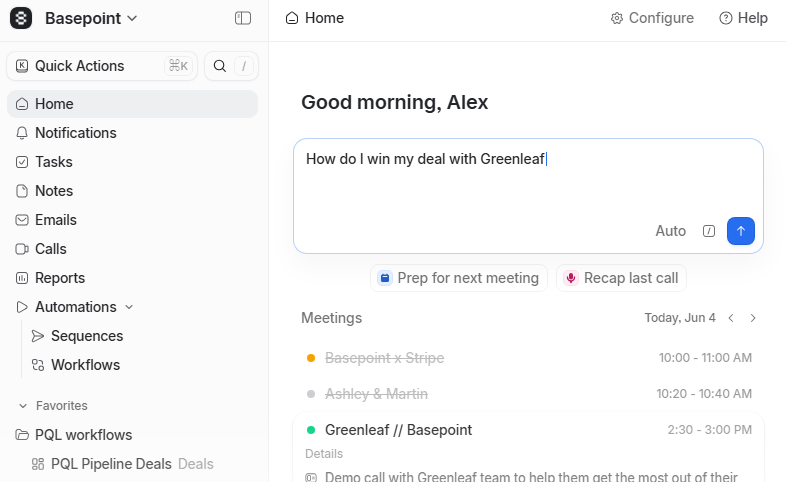
The Research agent block uses AI to answer questions about records through web research, and the platform's Ask Attio feature gives natural language access to the full CRM through a chat interface powered by models from Anthropic, Google, and OpenAI. It can prep for meetings, summarize calls, draft emails, and update records, all grounded in actual CRM data through what Attio calls Universal Context.
Source: Attio
Attio's Call Intelligence records, transcribes, and analyzes meetings inside the CRM, with customizable insight templates for sales, product, and recruiting conversations.
HighLevel's automation covers more channels. Its workflow engine spans 14 trigger categories and 13 action categories, covering everything from appointment status changes and pipeline movements to Facebook post comments and Shopify abandoned carts.
HighLevel's AI layer works at a different level of the stack.
Voice AI handles inbound and outbound phone calls autonomously, booking appointments and triggering workflows mid-call. Conversation AI automates text-based responses across SMS, web chat, and social messaging. Content AI generates social posts, blog articles, and funnel copy with Brand Voice consistency. The Workflow AI Builder generates complete automation workflows from plain-language descriptions.
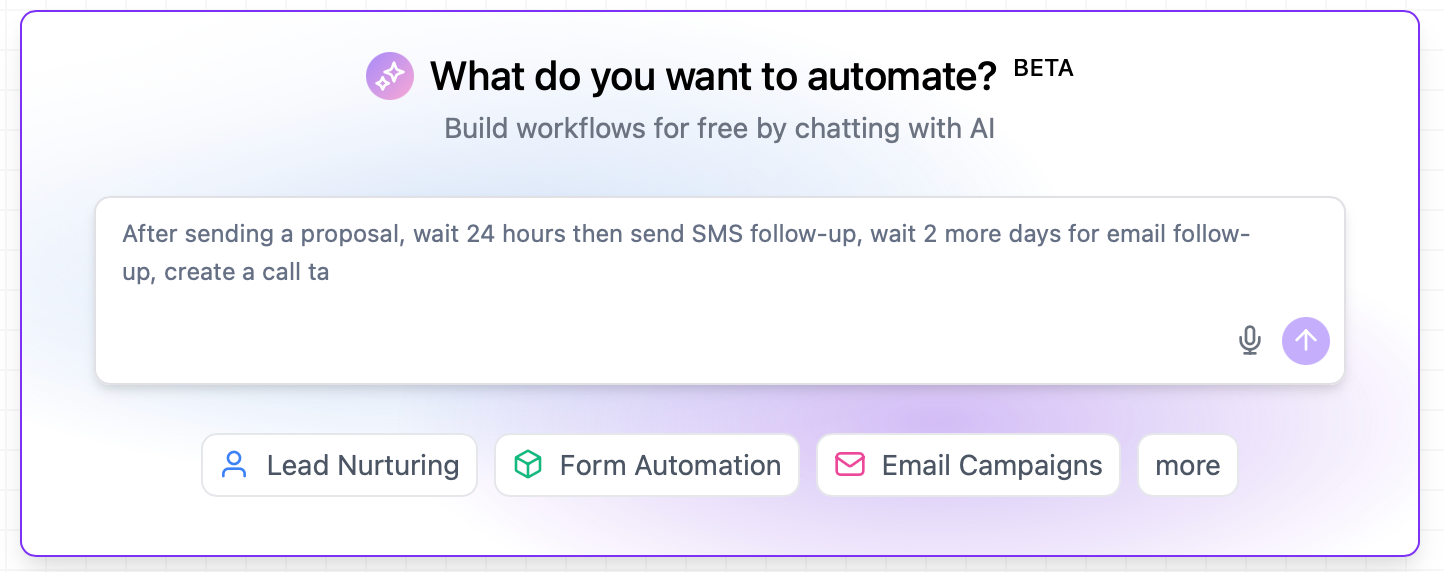
Source: HighLevel
ZoomInfo's AI is built for B2B deal intelligence.
The GTM Context Graph processes 1.5B+ data points daily, combining CRM data, conversation transcripts, and behavioral signals to map connections between signals and outcomes.
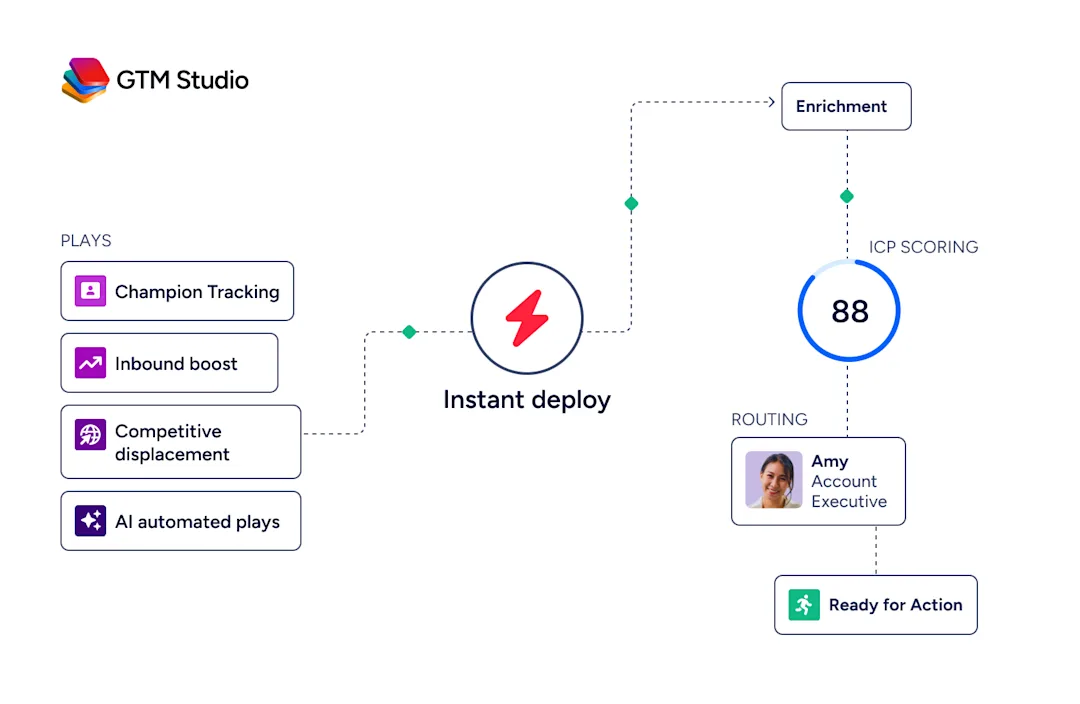
In GTM Workspace, AI agents handle account research, generate contextual outreach, monitor buying signals, and surface next best actions. In GTM Studio, marketers describe audiences in natural language and launch pre-built GTM plays (including inbound acceleration, competitive displacement, and champion tracking) across email, ads, calls, and direct mail. Smartsheet reported a 40%+ increase in form fills, 84% increase in MQLs, and 59% increase in win rate using ZoomInfo Marketing.
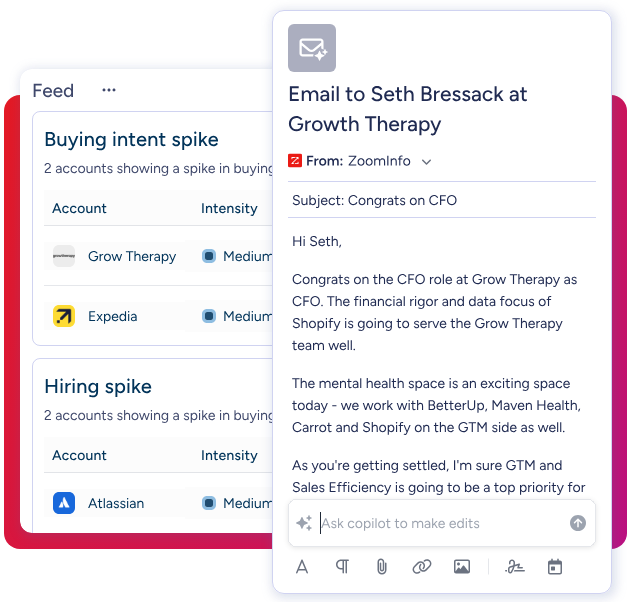
Source: ZoomInfo
ZoomInfo's Buyer Intent tracks signals from 210 million IP-to-Organization pairings, and Guided Intent (exclusive to ZoomInfo) identifies topics historically correlated with deal success rather than requiring manual topic selection.
The key difference: Attio's AI helps you work within your CRM data. HighLevel's AI automates client communication at scale. ZoomInfo's AI reasons across B2B data, CRM records, and conversation signals to tell you who to talk to, when, and why.
Marketing and outreach tools
Attio keeps marketing capabilities focused and narrow.
Sequences are multi-step email campaigns designed for warm leads and existing customers, sent through users' synced Gmail or Outlook accounts. They support AI-generated personalization, delegated sending, and signal-based enrollment through workflows. But Attio positions Sequences for relationship nurturing, not cold outreach, and includes no SMS, no dialer, and no A/B testing. The Plus plan doesn't include sequences at all.
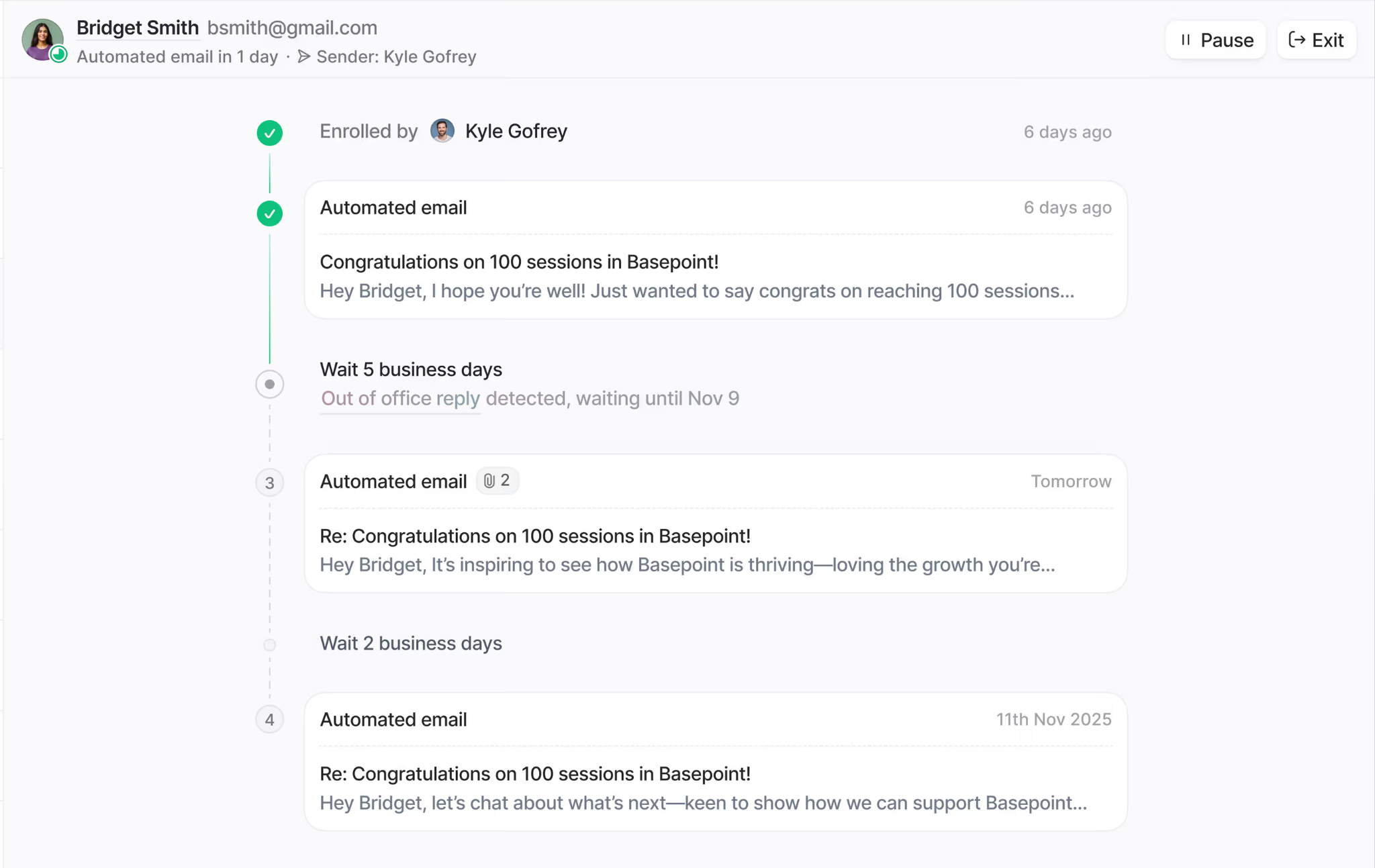
Source: Attio
HighLevel is the opposite extreme.
The platform bundles a full marketing suite: email campaigns, SMS/MMS messaging, funnel and website builder, social media scheduling, Google and Facebook ad management, reputation management with automated review requests, course hosting, and community features.
The unified conversations inbox consolidates SMS, email, WhatsApp, Facebook Messenger, Instagram DMs, Google Business Profile messages, and live chat into a single thread per contact. Agencies using HighLevel can run the entire marketing operation for a local business client without leaving the platform.
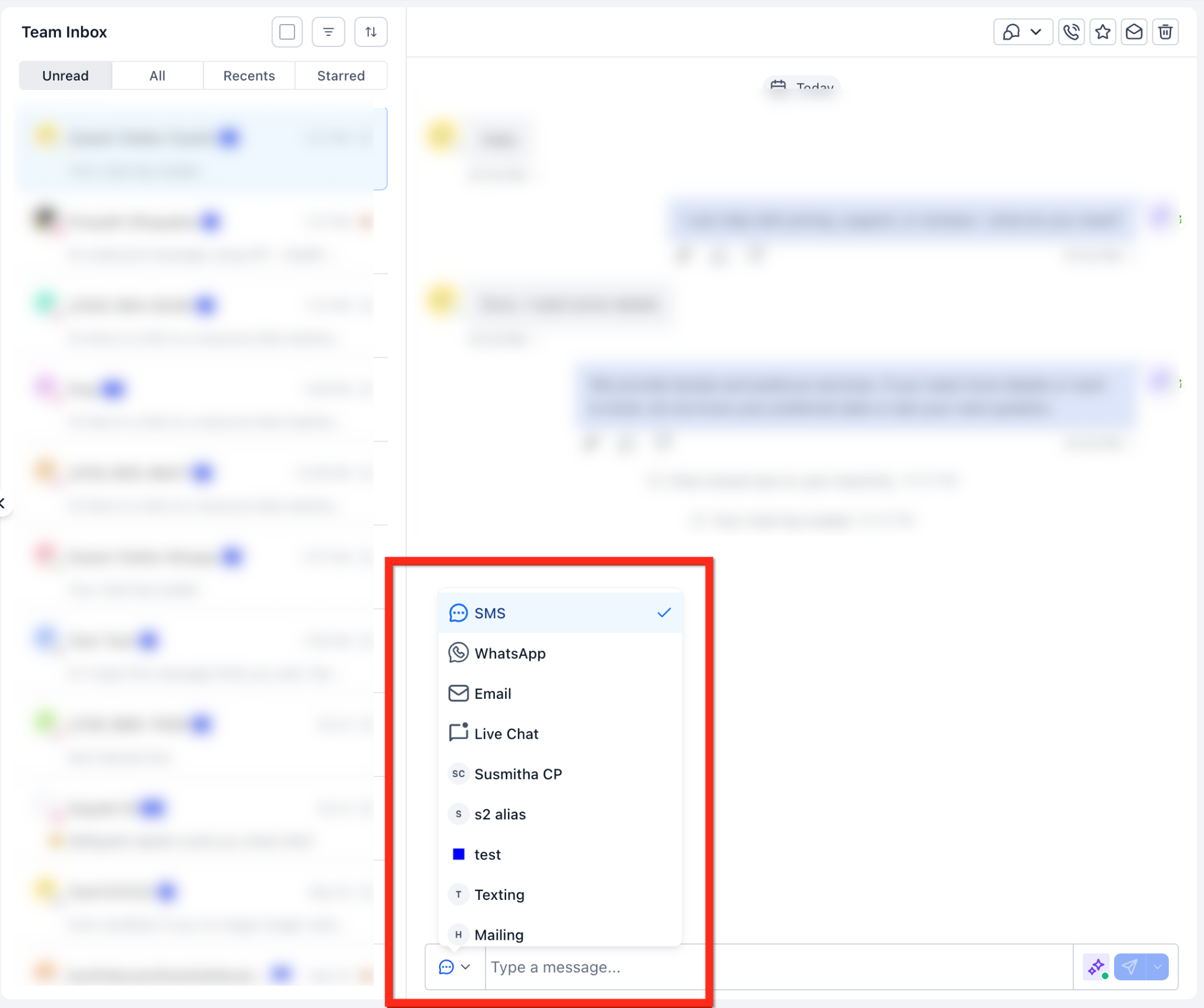
Source: HighLevel
ZoomInfo approaches marketing from the data and targeting layer.
ZoomInfo Marketing includes a native demand-side platform for display advertising based on 300+ company attributes, FormComplete (which reduces web forms to a single field by auto-appending the rest from ZoomInfo data), and contact-level website visitor identification.
GTM Studio lets marketers build audiences in natural language and launch pre-built GTM plays (including inbound acceleration, competitive displacement, and champion tracking) across email, ads, calls, and direct mail. Smartsheet reported a 40%+ increase in form fills, 84% increase in MQLs, and 59% increase in win rate using ZoomInfo Marketing.
Source: ZoomInfo
The choice depends on what marketing means for your business.
If marketing means building and converting local business leads through SMS and funnels, HighLevel covers it. If marketing means identifying and engaging B2B buying committees at the right moment with the right message, ZoomInfo is the platform. If marketing means nurturing warm relationships already in your CRM, Attio handles the basics.
Pricing models reflect different markets
Attio uses per-seat pricing with four tiers.
The Free plan includes 3 seats, 50,000 records, and 3 custom objects. Plus at $29/seat/month (annual) removes seat limits and adds sequences, Call Intelligence, and Ask Attio. Pro at $69/seat/month (annual) expands to 1M records, 12 custom objects, and unlimited emails. Enterprise pricing is custom. A credit system meters AI and workflow usage, with additional credit packages starting at $70/month for 5,000 credits. For startups, Attio offers 80% off the Pro plan through its startup program.
HighLevel uses flat-rate pricing with unlimited users and contacts on every tier.
Starter at $97/month includes 3 sub-accounts and all core features. Unlimited at $297/month adds unlimited sub-accounts and white-label desktop. Agency Pro at $497/month adds SaaS Mode for white-label resale, split testing, and custom objects. Enterprise pricing is custom.
The flat rate is appealing until you factor in usage-based add-ons. Telephony (SMS and calls) is billed per message and per minute. The AI Employee add-on costs $97/month per sub-account. HIPAA compliance is $297/month. Premium support is $500/month. A fully configured setup costs considerably more than the headline suggests.
ZoomInfo uses custom-quoted, consumption-based pricing. No prices are listed publicly.
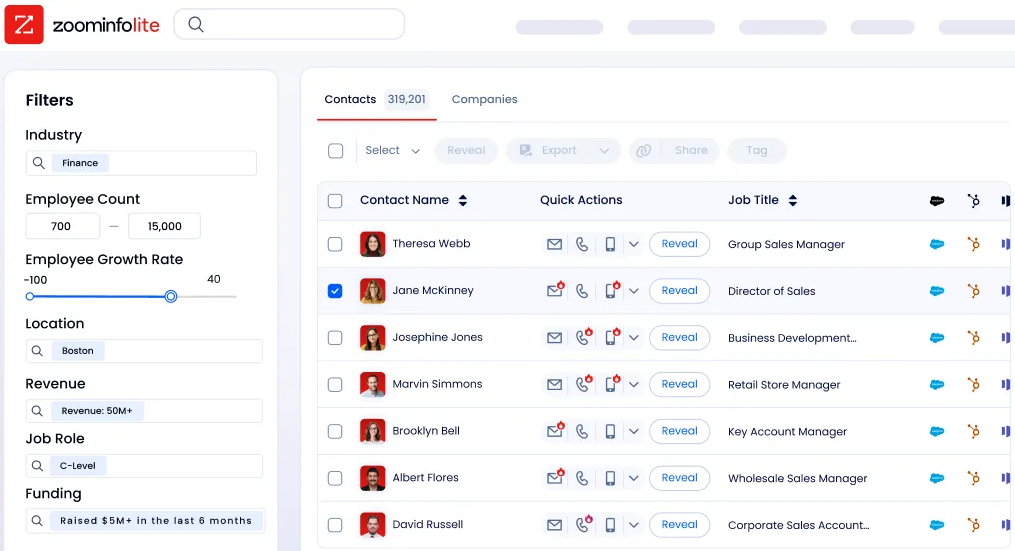
Plans span Sales (Professional, Advanced, Enterprise), Marketing (Marketing Demand, ABM Lite, ABM Enterprise), and standalone products (Chorus, Chat). Pricing scales around seats, credit volume, features, and contract length. ZoomInfo Lite is a permanent free tier with access to the B2B database, 10 monthly export credits, the Chrome extension, and WebSights Lite. A 7-day free trial of the full platform is also available.
Source: ZoomInfo
ZoomInfo is the premium option, priced for B2B teams that measure ROI in pipeline generated and deals closed. Attio is the value play for startups that need CRM flexibility without enterprise overhead. HighLevel is the consolidation play for agencies that want one bill replacing five tools.
Who each platform is built for
The three platforms serve audiences that barely overlap.
Attio fits seed-to-Series B startups with 11-250 employees, particularly product-led growth companies, B2B SaaS, and venture capital firms.
Engineering-driven organizations that value API access, custom data models, and fast iteration. Teams that switched from Salesforce or HubSpot because those platforms couldn't accommodate non-standard GTM motions. Attio is not built for large enterprises with complex compliance needs, high-volume outbound teams, or non-technical organizations.
HighLevel's primary audience is digital marketing agencies serving local service businesses (home services, healthcare, real estate, fitness, dental, restaurants).
The secondary audience is the SMBs those agencies onboard as sub-accounts. The tertiary audience is solo entrepreneurs using HighLevel as a foundation for niche vertical SaaS products. HighLevel is not built for enterprise B2B, complex sales cycles, or companies needing best-in-class point solutions.
ZoomInfo serves enterprise and mid-market B2B companies with 35,000+ customers worldwide, including Adobe, Snowflake, PayPal, and JPMorgan. Sales teams use it for prospecting and pipeline generation. Marketing teams use it for ABM and demand gen. RevOps teams use it for data quality, enrichment, and workflow automation. ZoomInfo is not built for B2C companies or businesses with no outbound motion.
Integration approaches differ fundamentally
Attio's integration ecosystem is growing but limited.
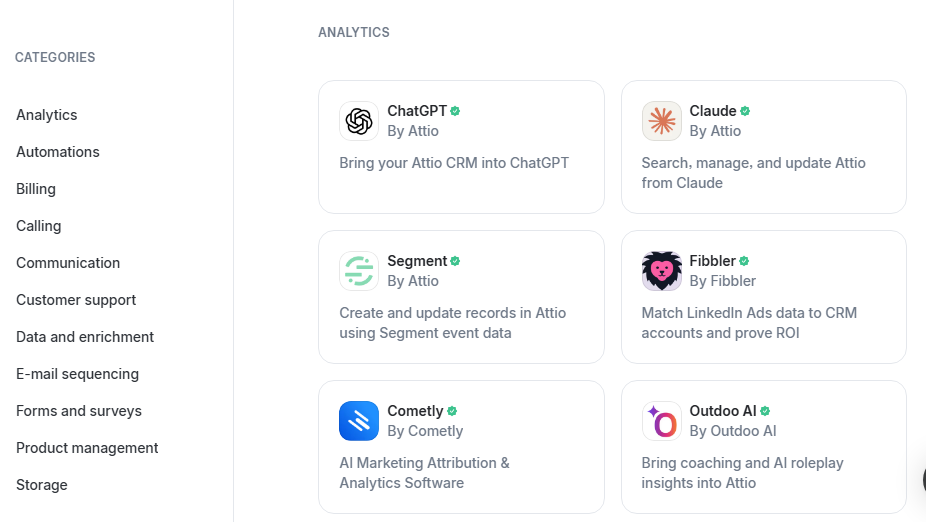
Native connections include Gmail, Outlook, Slack, Segment, Mailchimp, Outreach, Mixmax, Typeform, and Zapier. The developer platform offers REST API, MCP server, and App SDK for building custom integrations, and users describe the API documentation as thorough and intuitive. But the lack of native connectors for LinkedIn Sales Navigator, Apollo, Lemlist, and other popular sales tools remains the most frequently cited complaint.
Source: Attio
HighLevel's App Marketplace connects to 500+ tools including Google Workspace, Calendly, Mailchimp, Zoom, QuickBooks, Facebook, Instagram, Google Ads, TikTok, LinkedIn, Slack, and Shopify.
The platform's real integration strength is internal: because funnels, email, SMS, calendars, payments, reputation management, and CRM all live on the same platform, no integration is needed between them. For agencies, the absence of middleware is the point.
ZoomInfo operates as data infrastructure that plugs into the tools you already use.
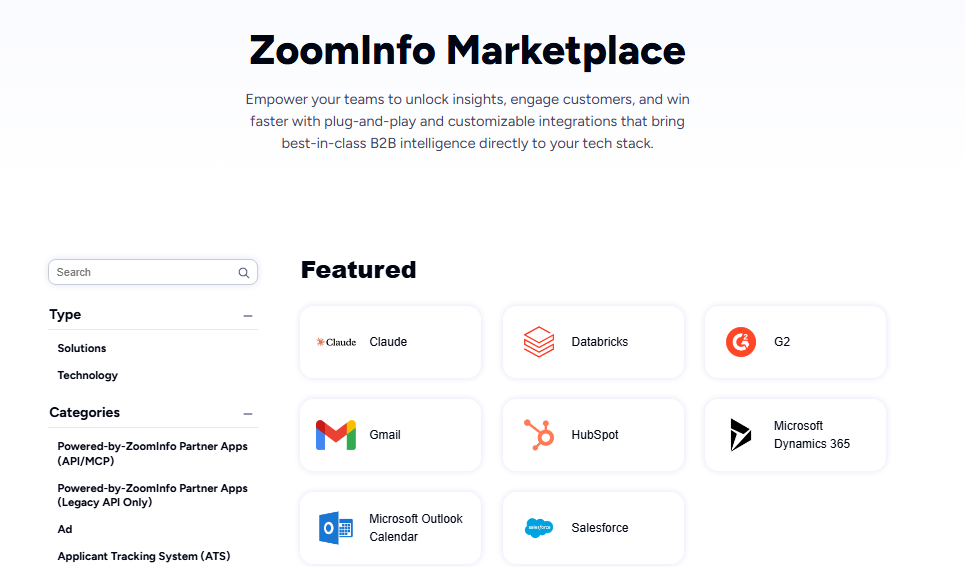
The App Marketplace lists 120+ partner integrations across CRM, marketing automation, sales engagement, and data warehouse categories. Featured integrations include Salesforce, HubSpot, Microsoft Dynamics 365, Snowflake, and Salesloft. Cloud Partners enables direct data ingestion into AWS, Google Cloud, Snowflake, and Databricks.
The Enterprise API and MCP server expose ZoomInfo's data and GTM Context Graph to any custom agent, internal tool, or AI model. API access is included in all relevant plans.
Source: ZoomInfo
BDO Canada activated ZoomInfo data directly within internal systems. "The plug-and-play aspect of the API means I can integrate it very easily into any process and get information at a moment's notice." (Jerry Wilson, Senior Marketing Intelligence Analyst, BDO Canada)
Attio vs. HighLevel vs. ZoomInfo: Which should you choose?
The right platform depends on where you sit in the market and what problem is most urgent.
Choose Attio if:
You're a startup or scale-up that needs a CRM built around your specific data model
Product-led growth signals (user activation, engagement patterns) drive your sales process
You value API access, custom objects, and developer-friendly architecture
Your team is technical enough to navigate the learning curve for advanced workflows
You're migrating from Salesforce or HubSpot and want more flexibility at a lower cost
Choose HighLevel if:
You're a marketing agency delivering services to local business clients
You want to replace 5-10 separate tools with a single flat-rate subscription
White-labeling and reselling the platform as your own SaaS product is part of your business model
Your clients need funnels, SMS automation, appointment scheduling, and reputation management
You have the operational capacity to manage the learning curve and support your sub-account clients
Choose ZoomInfo if:
Your revenue depends on reaching the right B2B buyers with verified contact data
You need buyer intent signals to prioritize accounts that are actively in-market
Your sales, marketing, and RevOps teams need a shared intelligence layer that connects data across tools
You want AI that reasons about deal context, not just automates tasks
You need enterprise-grade data quality, compliance, and global coverage
Try ZoomInfo Lite for free or request a demo.
Attio, HighLevel, and ZoomInfo each excel in their domain. Attio gives startups the CRM flexibility to model any business. HighLevel gives agencies the operational machinery to serve local business clients at scale. ZoomInfo gives B2B teams the data foundation and intelligence layer that makes every GTM motion more precise.
For B2B organizations, the platforms can complement each other. ZoomInfo's data feeds the CRM (whether that's Attio, Salesforce, or HubSpot) with verified contacts and buying signals. The CRM manages the relationship. The marketing platform executes the campaigns. The question isn't always which one to choose, but which combination gives your team the clearest view of who to pursue and the fastest path to revenue.
Attio vs. HighLevel vs. ZoomInfo FAQ
What is the core difference between Attio, HighLevel, and ZoomInfo?
Attio is a flexible CRM built for startups and scale-ups, with customizable data models, AI-powered workflows, and product data integration.
HighLevel is a bundled marketing and sales platform built for agencies, combining CRM, funnels, SMS, email, scheduling, reputation management, and white-label resale into a single subscription.
ZoomInfo is an AI GTM platform with 500M contacts, 100M companies, and a GTM Context Graph that processes 1.5B+ data points daily to power prospecting, intent-driven outreach, and deal intelligence.
Which platform is cheapest to get started with?
Attio offers a permanent free plan with 3 seats, 50,000 records, and core CRM features. ZoomInfo Lite is a permanent free tier with access to the B2B database and 10 monthly export credits. HighLevel has no free plan but offers a 14-day trial; paid plans start at $97/month with unlimited users and contacts.
Per-user costs at Attio's Plus tier ($29/seat/month) are lower than HighLevel's flat rate for small teams, but HighLevel becomes more cost-effective as team size grows.
Can these platforms work together?
Yes. ZoomInfo's data and intelligence layer integrates with Salesforce, HubSpot, and other CRMs via native connectors, APIs, and MCP. Teams using Attio as their CRM can enrich records with ZoomInfo data through API or reverse ETL tools. HighLevel agencies focused on local business marketing operate in a different segment than ZoomInfo's B2B intelligence, so overlap is minimal, though agencies prospecting for new agency clients could use ZoomInfo's data for that purpose.
Which platform has the best AI capabilities?
Each platform applies AI to different problems.
Attio's Ask Attio provides natural language CRM queries, meeting prep, and call analysis grounded in CRM data. HighLevel's AI suite covers autonomous voice calls, chatbot conversations, content generation, and workflow creation from plain language.
ZoomInfo's GTM Context Graph uses AI to reason across CRM data, conversation intelligence, and 1.5B+ daily data points to surface deal insights, buyer intent, and recommended actions. ZoomInfo's AI goes deepest for B2B deal intelligence; HighLevel's covers the most ground for marketing automation; Attio's is the most tightly integrated with CRM data.
Which platform is best for B2B prospecting?
ZoomInfo is built for B2B prospecting, with 500M contacts, 135M+ verified phone numbers, 200M+ verified business emails, buyer intent data from 210 million IP-to-Organization pairings, and AI-powered account prioritization.
Neither Attio nor HighLevel includes native B2B prospecting data at this scale. Attio offers basic enrichment for contacts already in the CRM, and HighLevel includes a prospecting tool using Google Maps data for local businesses, but neither approaches ZoomInfo's coverage or verification depth.
Which platform is best for marketing agencies?
HighLevel is built for agencies. It offers white-label resale through SaaS Mode, unlimited sub-accounts for managing multiple clients, Snapshots for cloning proven setups, and the full marketing stack (funnels, email, SMS, reputation management, scheduling) under one subscription. Agencies on HighLevel have generated over $96M in SaaS revenue through white-labeled resale.
Neither Attio nor ZoomInfo offers white-label capabilities or the local-business marketing toolset that agencies need.
How do the platforms handle data privacy and security?
ZoomInfo holds ISO 27001, ISO 27701, SOC 2 Type II, TRUSTe GDPR, and TRUSTe CCPA certifications (all renewed annually) and is a registered data broker in California and Vermont.
Attio is ISO 27001 certified, GDPR and CCPA compliant, and hosted on Google Cloud Platform with 99.9% uptime. HighLevel holds SOC 2 Type II certification, offers HIPAA compliance as a $297/month add-on, and maintains EU-U.S. Data Privacy Framework certification. All three platforms encrypt data in transit and at rest.
Which platform has the steepest learning curve?
HighLevel is consistently cited in reviews for its steep learning curve due to the sheer breadth of features. Attio's basic CRM is intuitive, but advanced workflows and custom data modeling require trial and error.
ZoomInfo's platform breadth (spanning data, intelligence, Workspace, Studio, and APIs) represents a real onboarding investment, though the company redesigned onboarding from 30 to 90 days and achieved a 25% improvement in satisfaction scores.
More CRM comparisons worth a look:
