

Chili Piper is one of the most effective demand conversion platforms in B2B SaaS. It combines form routing, lead distribution, AI-powered chat, scheduling, and SDR-to-AE handoffs into a single platform, helping revenue teams convert inbound interest into booked meetings faster than traditional workflows.
But as your go-to-market motion evolves, Chili Piper's specialization in demand conversion may leave gaps.
Its Salesforce integration is deeper than its HubSpot one, so HubSpot-native teams hit feature gaps. Its admin dependency for configuration changes frustrates lean teams without dedicated RevOps support. And it doesn't cover proactive, top-of-funnel prospecting, so teams that need intelligence on who to target before the inbound lead arrives still need a separate tool.
That's where this guide comes in. Whether you're looking to:
Power your entire GTM motion with B2B data, buyer intent signals, and AI-driven execution
Run enterprise-level Salesforce-native routing with buying group orchestration
Get Chili Piper-level routing depth on HubSpot without the integration gaps
Replace your multi-tool inbound stack with a single workflow canvas
Deploy self-serve scheduling for small teams without RevOps overhead
Eliminate the cost of a standalone scheduling vendor when HubSpot is already your CRM
Own your scheduling infrastructure at the code level with full API control and compliance certifications
We'll explore Chili Piper alternatives that excel in each of these areas.
This isn't about finding a "better" platform. It's about finding the right fit for where your business is today and where it's headed. Some teams will use these tools alongside Chili Piper to fill specific gaps; others might replace it entirely with a solution better suited to their GTM architecture.
Let's dive in.
The Best Chili Piper Alternatives
Best Alternative for AI-Powered GTM Intelligence and Full-Funnel Execution We chose ZoomInfo because it goes beyond demand conversion to power the entire go-to-market motion, from identifying the right accounts and contacts with the largest B2B dataset to executing AI-driven outreach and orchestrating multi-channel plays. |
|---|
Best Alternative for Enterprise Salesforce-Native GTM Orchestration We chose LeanData because its routing logic runs natively inside Salesforce, eliminating sync delays. Its Buying Groups product tracks multi-stakeholder buying committees, and its BookIt scheduling enforces the same routing rules that determined rep assignment. |
Best Alternative for Growing B2B Teams on HubSpot We chose RevenueHero because its HubSpot integration was built from the ground up, with full CRM field access for routing decisions. Implementation takes hours, not weeks, backed by near-perfect G2 support scores. |
Best Alternative for Replacing Your Entire Inbound GTM Stack We chose Default because it consolidates routing, scheduling, enrichment, and CRM automation into a single no-code workflow canvas, replacing the patchwork of point solutions most B2B teams have stitched together. |
Best Alternative for Self-Serve Scheduling Without RevOps Overhead We chose Calendly because it gets scheduling automation live within hours, with transparent per-seat pricing, no platform fees, and native payment collection at booking. |
Best Alternative for Teams Already on HubSpot That Want Scheduling Without Another Vendor We chose HubSpot Meetings because it eliminates the cost, contract, and integration maintenance of a standalone scheduling tool for teams already running HubSpot as their CRM. |
Best Alternative for Developer-Driven Teams That Want Full Code Control We chose Cal.com because it exposes scheduling as an API with embeddable React components, open-source roots, and compliance certifications (HIPAA, SOC 2, ISO 27001) for regulated industries. |
What is Chili Piper?
Source: Chili Piper
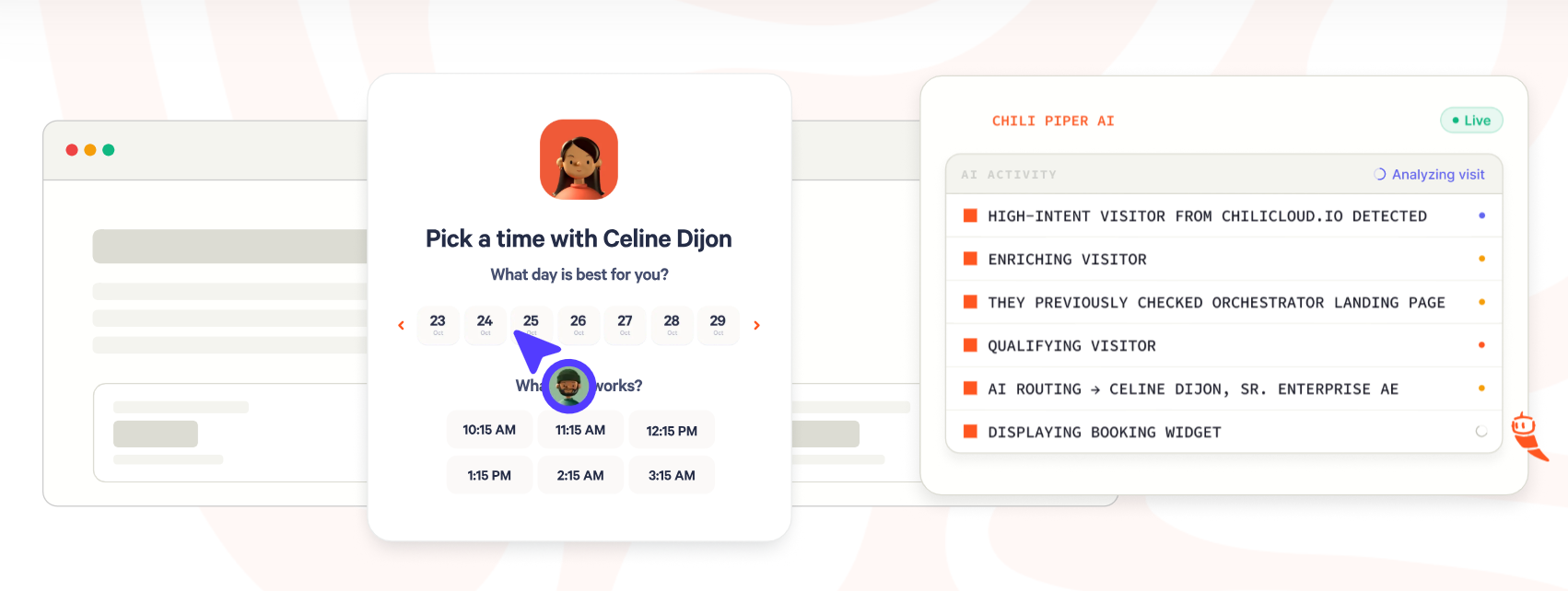
Chili Piper is a Demand Conversion Platform designed for B2B revenue teams. It's built around a simple thesis: the gap between marketing-generated demand and sales-booked meetings is where pipeline dies. It combines form routing, lead distribution, AI-powered website chat, sales handoffs, and scheduling into a single platform with shared routing logic and consolidated reporting.
Its key features include:
Form Concierge: Qualifies, routes, and schedules prospects from web forms with an 8-second lead response time and a 92% average show rate
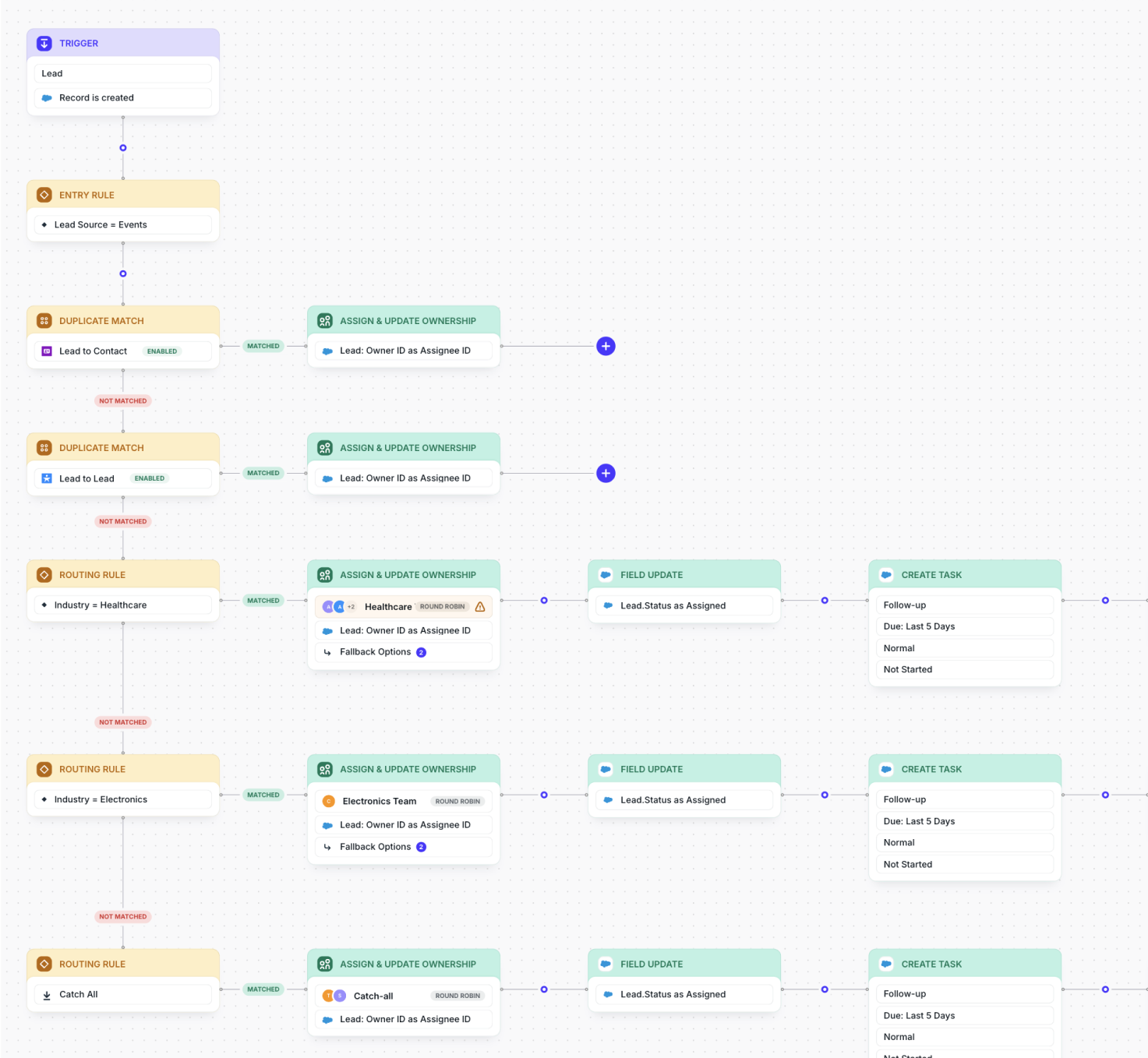
Distro: Routes Salesforce records to the right reps based on customizable triggers and rules, with round-robin fairness, SLA enforcement, and vacation-aware distribution
Source: Chili Piper
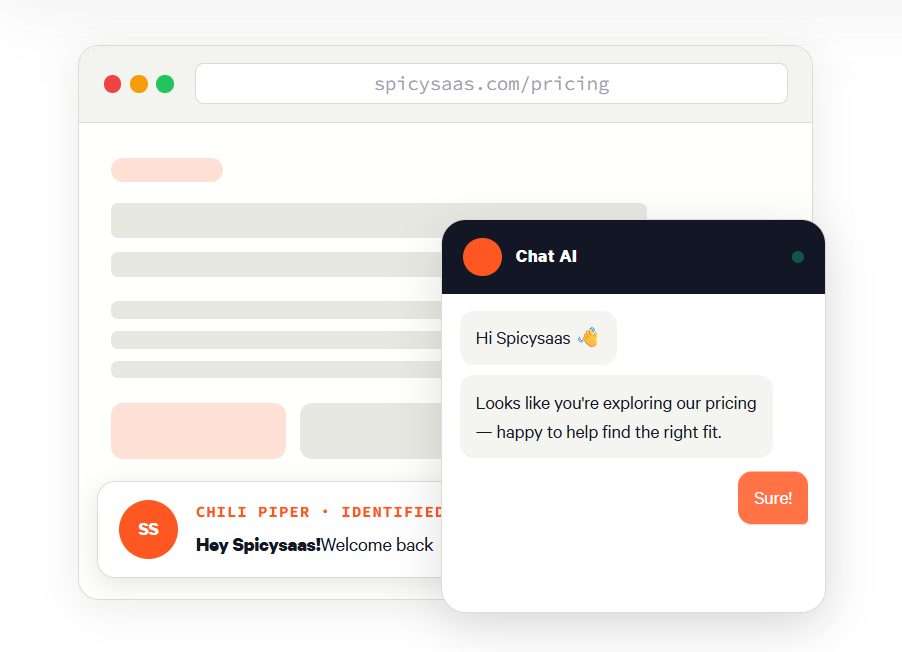
Chat AI: Converts website visitors into pipeline 24/7 by qualifying leads, answering questions, and booking meetings automatically
Source: Chili Piper
Handoff: Automates SDR-to-AE transfers with real-time calendar matching and fair distribution across channels
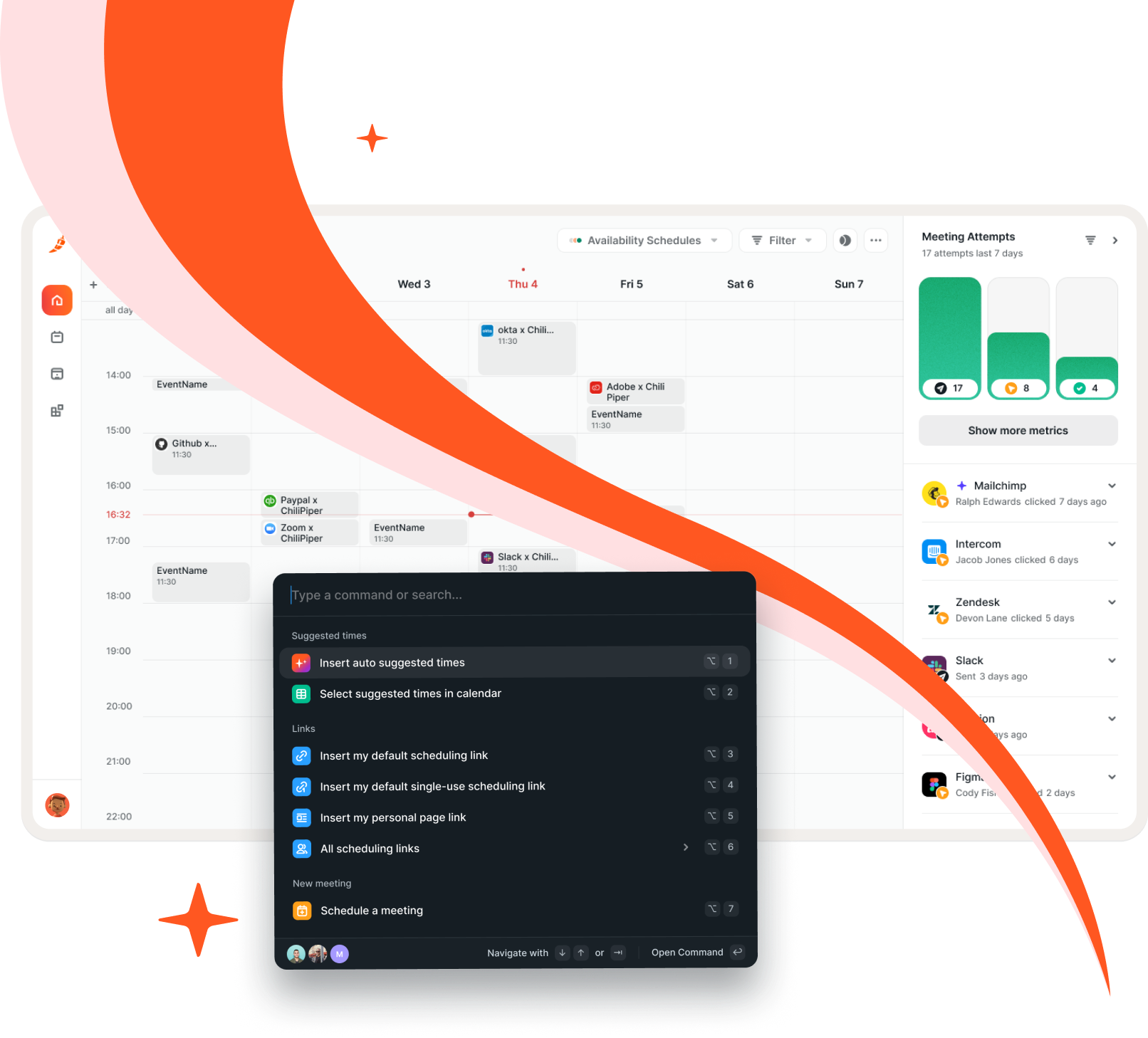
ChiliCal: One-click scheduling that automatically rearranges lower-priority calendar blocks for customer meetings
Source: Chili Piper
When a prospect submits a form, Chili Piper qualifies them against your routing rules, matches them to the correct rep based on territory, CRM ownership, or round-robin logic, and displays a calendar for instant booking. That same routing logic flows through chat interactions, SDR handoffs, and outbound sequences, keeping lead distribution fair and meeting data synced to Salesforce or HubSpot.
But as your GTM needs expand beyond converting inbound demand, the platform's specialization becomes a constraint. Teams that need to identify which accounts to target before the inbound lead arrives, manage multi-stakeholder buying committees, or own their scheduling infrastructure at the code level will want tools designed for those workflows.
Looking for an AI GTM platform that covers everything from identifying the right accounts to executing outreach? Explore ZoomInfo to see how B2B data, buyer intent signals, and AI-driven execution can change your go-to-market motion.
How We Curated Our List of Chili Piper Alternatives
After testing Chili Piper and researching the market, we focused on tools that address specific gaps where B2B revenue teams need capabilities beyond demand conversion. While Chili Piper excels at converting inbound interest into booked meetings, growing businesses often need more:
Identifying the right accounts and contacts before an inbound lead arrives, using B2B data and buyer intent signals
Running enterprise-grade Salesforce-native routing with buying group management for multi-stakeholder deals
Deploying HubSpot-native routing and scheduling with the same depth Chili Piper delivers on Salesforce
Consolidating routing, scheduling, enrichment, and CRM automation into a single workflow layer
Getting self-serve scheduling live in hours without RevOps overhead or platform fees
Eliminating standalone scheduling vendor costs for teams already invested in HubSpot
Owning scheduling infrastructure at the code level with full API access and compliance certifications
Each tool on this list leads in one of these areas. You might use them alongside Chili Piper or as a replacement, depending on which capabilities your business needs most.
DISCLAIMER: We aren't covering every tool in the market! Our focus is on highlighting the best alternatives that address some of Chili Piper's limitations for various use cases. The goal is to provide insights into tools that cater to specific business needs. |
|---|
1. ZoomInfo — Best Alternative for AI-Powered GTM Intelligence and Full-Funnel Execution
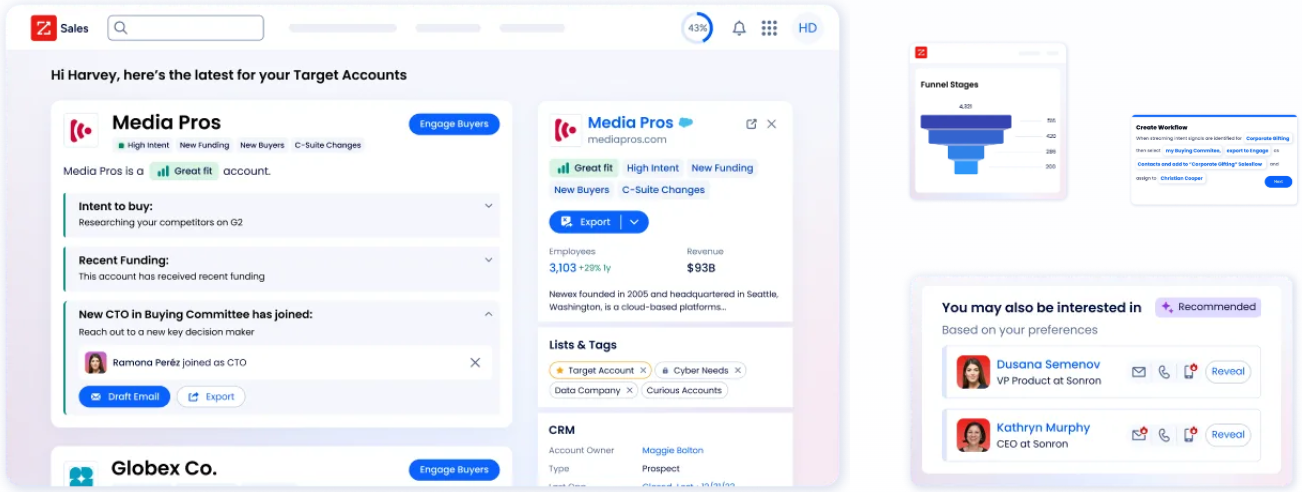
ZoomInfo is an AI GTM platform built on a large data foundation: 500M contacts, 100M companies, 135M+ verified phone numbers, and 200M+ verified business email addresses. It fuses this data with your CRM records, conversation transcripts, and behavioral signals through the GTM Context Graph (which processes 1.5B+ data points daily), revealing the full context of your accounts: not just what happened, but why, and what to do next. Its key capabilities include:
B2B data: 500M contacts, 100M companies, 135M+ verified phone numbers, 120M direct-dial phone numbers, and 200M+ verified business email addresses with up to 95% accuracy on first-party data
Buyer Intent signals: Tracks signals from 210 million IP-to-Organization pairings and 6 trillion+ new keyword-to-device pairings sourced monthly, with Guided Intent that identifies topics correlated with deal success
GTM Context Graph: A single intelligence layer that fuses ZoomInfo's data with your CRM, conversation intelligence, and behavioral signals to capture why deals move or stall
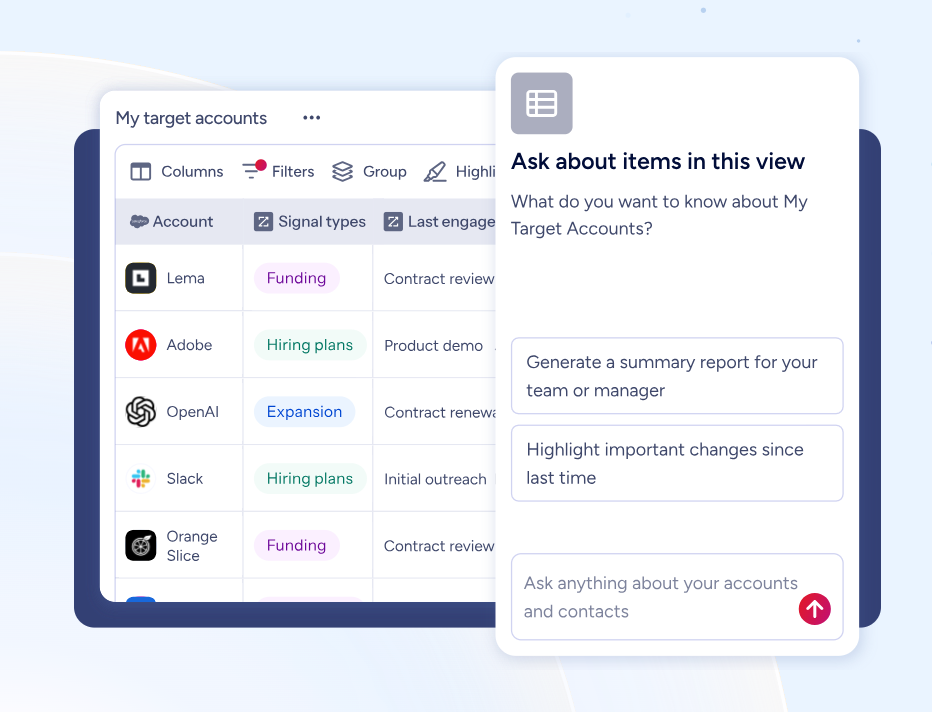
GTM Workspace: An AI execution workspace for sellers with prioritized accounts, AI-drafted outreach, and deal execution in a single view
GTM Studio: An AI orchestration canvas for marketers and RevOps, enabling audience definition, campaign orchestration, and pipeline measurement in natural language
APIs and MCP: Programmatic access to ZoomInfo's intelligence in any custom agent, internal tool, or partner platform
Chili Piper converts the demand your marketing creates. ZoomInfo helps you identify and create that demand in the first place, then powers the intelligence behind every downstream interaction. For teams whose GTM challenges extend beyond converting inbound form fills to understanding who to target, when to engage, and what to say, ZoomInfo provides the intelligence layer that a demand conversion platform cannot.
Why Choose ZoomInfo Over Chili Piper for Full-Funnel GTM Intelligence
Chili Piper excels at routing and scheduling inbound leads. ZoomInfo operates at a different layer of the go-to-market stack: the intelligence and execution engine that powers everything from account identification to deal acceleration. Here's where ZoomInfo steps up.
B2B Data: Know Who to Target Before the Inbound Lead Arrives
Chili Piper activates when a prospect raises their hand: a form fill, a chat message, or a sales handoff. It routes and schedules that existing demand well. But it doesn't help you identify which companies are in your addressable market, which contacts are decision-makers, or which accounts are actively researching solutions like yours. For that, you need a data foundation.
ZoomInfo's data platform spans three dimensions: identity data (who buyers are and how to reach them), company context (firmographics, technographics, org charts), and dynamic signals (buyer intent and behavioral data indicating when a company is in-market). The scope is externally validated: in a Fortune 500 competitive RFP analyzing 25 million contacts across vendors, the independent consultant concluded that "no other competitor came even close."
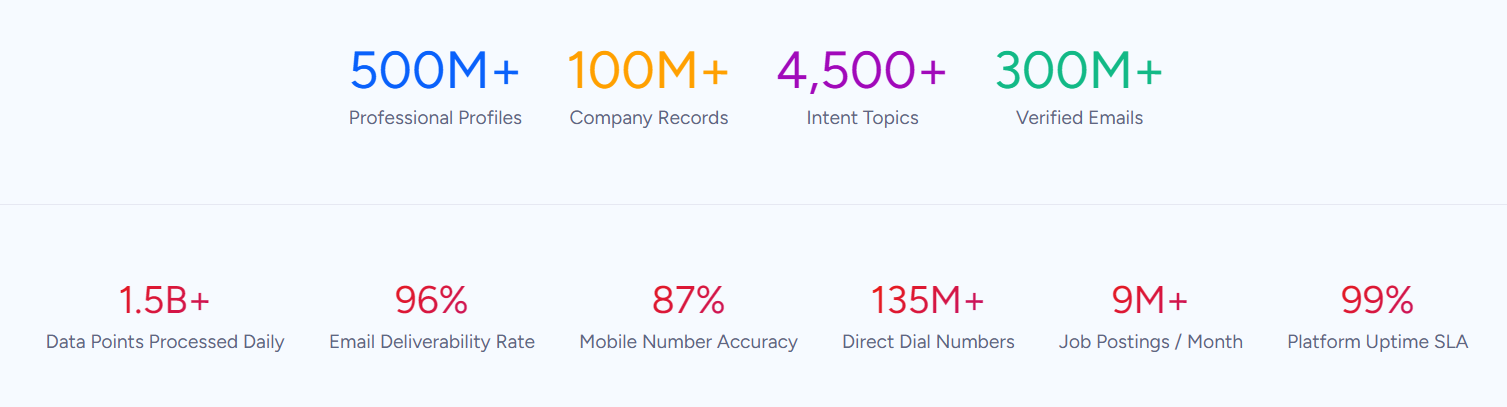
For revenue teams, the difference shows at the point of action: 120M direct-dial phone numbers mean the number your SDR dials actually rings. 200M+ verified business email addresses mean your sequences don't burn sender reputation with bounces. 300+ company attributes for segmentation mean your TAM model rests on continuously verified data, not stale snapshots.
ZoomInfo in Action: Before a single inbound lead arrives, your marketing team uses ZoomInfo to build a targeted account list based on firmographic fit, technographic signals (companies using a competitor's product), and buyer intent data showing which accounts are researching your category. Those accounts flow into multi-channel plays across email, ads, and direct mail, so by the time a prospect fills out your form, they've already been warmed by coordinated outreach driven by the same intelligence.
"ZoomInfo gives us the information we need to execute. We don't have to go through and spend our time digging. It's already there, so we can be three steps ahead." (Vensure)
GTM Context Graph: Understand Why Deals Move, Not Just That They Moved
Chili Piper logs meeting data in your CRM: who booked, when, which rep was assigned. That's valuable operational data for tracking speed-to-lead and meeting conversion rates. But it doesn't capture the context behind deal momentum: why a deal accelerated, what a competitive mention in the last call means for deal risk, or which signal patterns predict closed-won outcomes.
The GTM Context Graph solves this. It unifies ZoomInfo's B2B data with your CRM records, conversation transcripts from Chorus (ZoomInfo's conversation intelligence), email interactions, and behavioral signals into a single intelligence layer. As ZoomInfo's Chief Product Officer Dominik Facher writes: "The CRM recorded the state change. It has no record of why it happened."
The GTM Context Graph captures that "why," reasoning across signals to identify that executive sponsorship entering at a specific stage, combined with ROI-focused questions, matches the pattern behind closed-won deals in your segment.
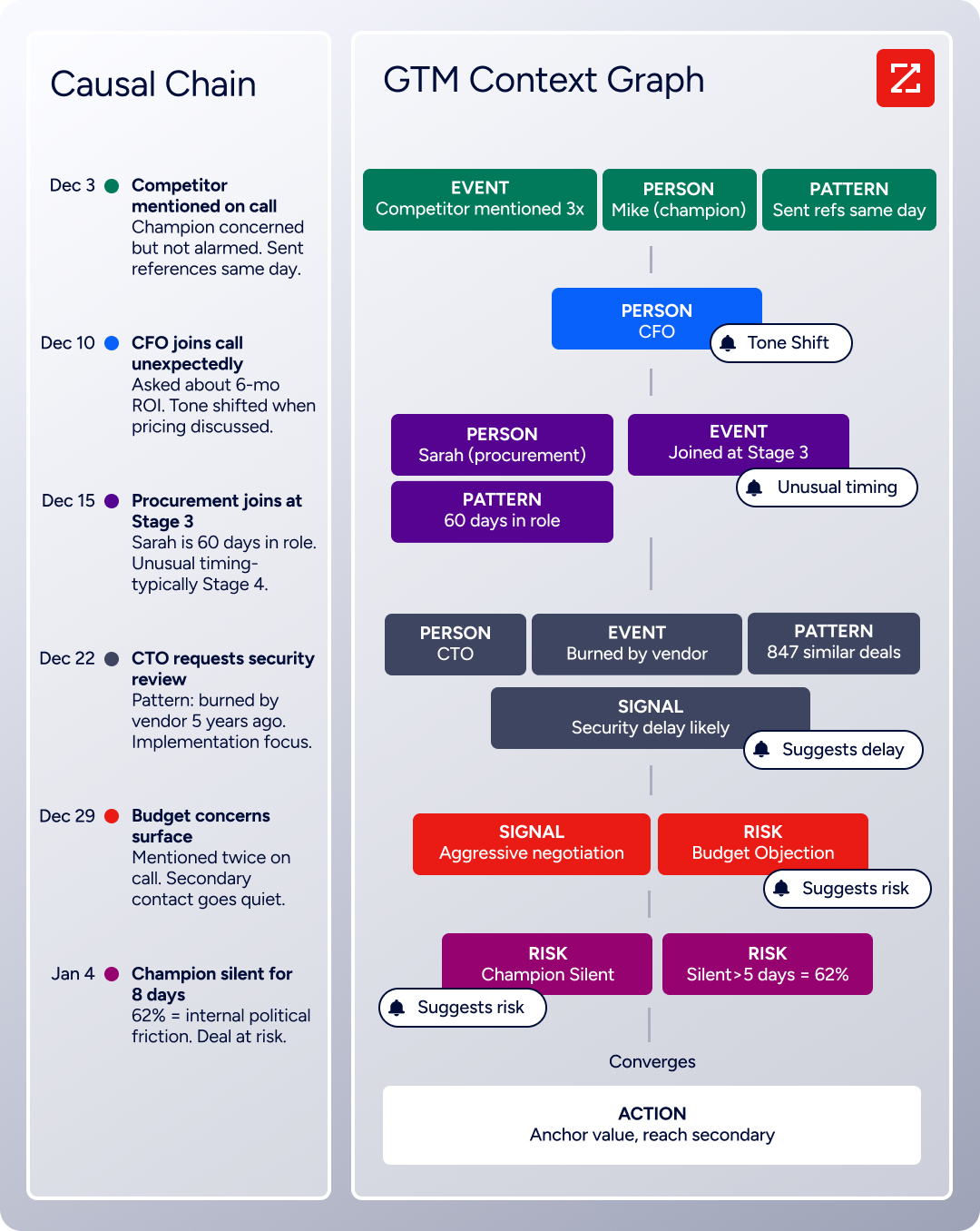
ZoomInfo in Action: A seller opens GTM Workspace and sees that a target account's CFO just joined the evaluation. The AI doesn't note this as a contact change; it connects that signal with third-party intent data showing the company is hiring three new VPs and a competitor mention detected in last week's call.
The AI-drafted follow-up email addresses the specific concern the CFO raised, because the system understands why that concern matters at this stage. The result: Seismic attributed 39% of active pipeline to opportunities identified or influenced by ZoomInfo signals and boosted productivity by 54%.
"That combination of our internal CRM data, external signals, and AI that's given all that context has helped us craft very specific account- and persona-based messages. And people have responded to them right away." (Toby Carrington, Chief Business Officer, Seismic)
Universal Access: Use the Intelligence Everywhere, Not Just in One Tool
Chili Piper's intelligence lives inside Chili Piper. The routing rules, scheduling logic, and meeting data are accessible through its platform UI and CRM integrations. For teams that want to power AI agents, custom internal tools, or partner platforms with the same intelligence, there's no programmatic access path comparable to ZoomInfo's APIs.
ZoomInfo takes the opposite approach. The same data and GTM Context Graph that powers ZoomInfo's own products is accessible through three channels: GTM Workspace for sellers, GTM Studio for marketers and RevOps, and APIs and MCP for any custom agent, internal tool, or partner platform.
API access is included in all relevant plans, and the MCP server connects to AI models including Claude and ChatGPT.
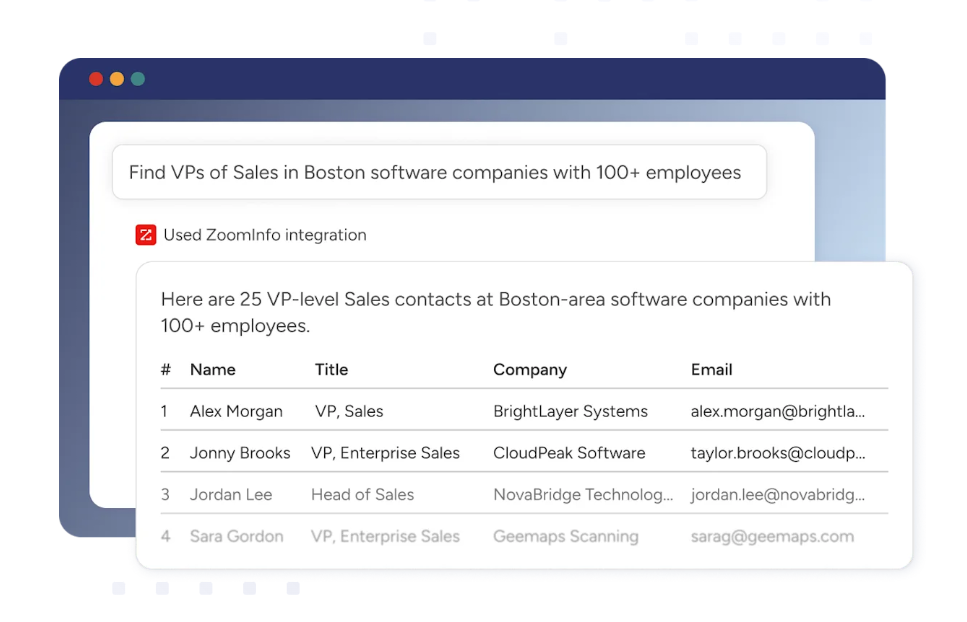
ZoomInfo in Action: Your RevOps team describes an audience in plain language in GTM Studio and launches a multi-channel play targeting accounts that match your proven win patterns. No engineering ticket required.
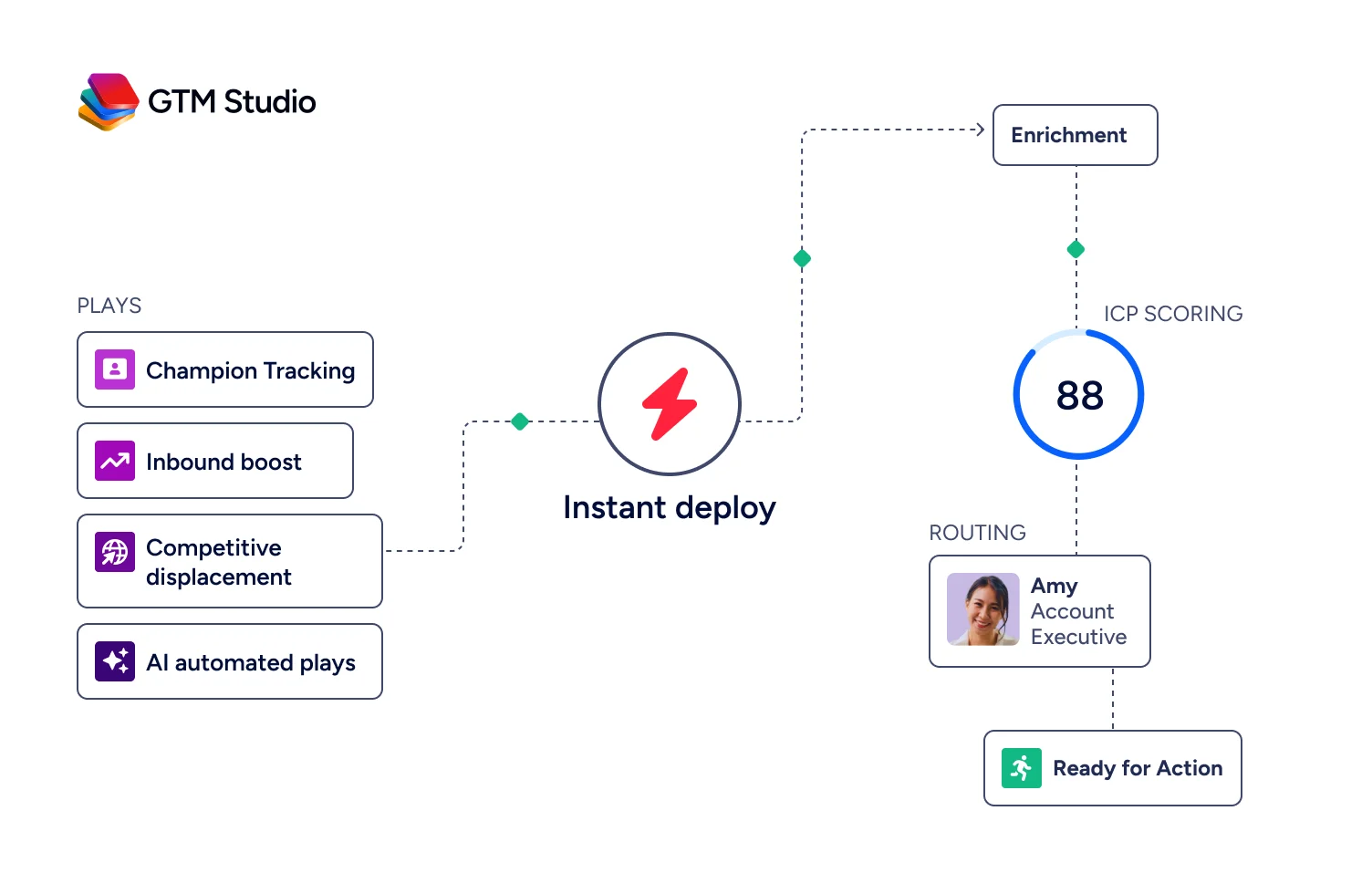
Meanwhile, your engineering team plugs the same GTM Context Graph into a custom internal agent via MCP, and that build inherits the identical contextual reasoning powering ZoomInfo's own products. A buying signal one team detects is immediately actionable by every other team.
"The plug-and-play aspect of the API means I can integrate it very easily into any process and get information at a moment's notice." (Jerry Wilson, Senior Marketing Intelligence Analyst, BDO Canada)
NOTE: We looked at other B2B intelligence platforms and found that while tools like Apollo.io offer contact databases with outreach functionality, and 6sense provides intent data with ABM capabilities, ZoomInfo's combination of data scale (500M contacts, 135M+ verified phones), the GTM Context Graph intelligence layer, and universal access via APIs/MCP/native products stands apart for teams that need a full GTM platform rather than a point solution.
ZoomInfo Pricing
ZoomInfo uses a consumption-based pricing model with custom-quoted plans. Pricing scales around enterprise license agreements, data access, API consumption, and AI activity.
Sales Plans are organized into three tiers:
Professional: Contact and company data, mobile numbers and business email, CRM integrations (HubSpot, Salesforce, and more), Chrome extension, AI-powered email generation
Advanced: Adds buyer intent signals, website visitor tracking, account fit scoring, champion tracking, and automated outreach workflows
Enterprise: Adds real-time buyer intent, advanced company attributes, competitor alerts, custom intent signals, AI-generated account summaries, and a dedicated customer service manager
Marketing Plans include Marketing Demand, ABM Lite, and ABM Enterprise tiers, scaling from B2B data and audience targeting to enterprise-grade ABM with AI-powered insights and full-funnel analytics.
ZoomInfo also offers ZoomInfo Lite, a permanent free tier (no credit card, no time limits) that includes access to 100M+ verified profiles, 10 monthly export credits, individual and company searches, the ReachOut Chrome Extension, and WebSights Lite for website visitor identification.
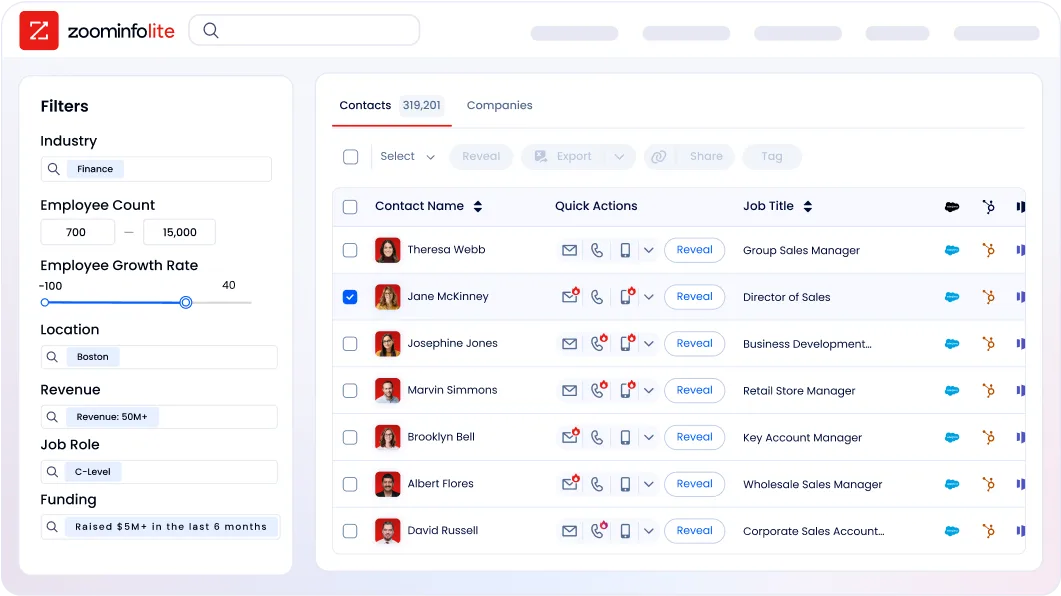
A 7-day free trial is available for paid-tier features with no credit card required.
Who Should Use ZoomInfo?
Choose ZoomInfo if:
Your GTM challenges extend beyond converting inbound leads to identifying which accounts to target, when to engage them, and what to say, and you need the B2B data platform (500M contacts, 135M+ verified phone numbers) as the foundation for every sales and marketing motion.
You want an AI intelligence layer (the GTM Context Graph) that captures why deals move or stall, not just what happened in the CRM, so your outreach, plays, and forecasts are driven by buying evidence rather than stage labels and rep optimism.
Your team needs to access the same intelligence across multiple surfaces: a seller workspace, a marketing orchestration canvas, and programmatic APIs/MCP for custom agents, without the data being degraded or siloed by delivery mechanism.
Ready to power your go-to-market motion with B2B intelligence? Explore ZoomInfo and see the difference between a scheduling tool and a GTM platform.
2. LeanData — Best Alternative for Enterprise Salesforce-Native GTM Orchestration
Source: LeanData
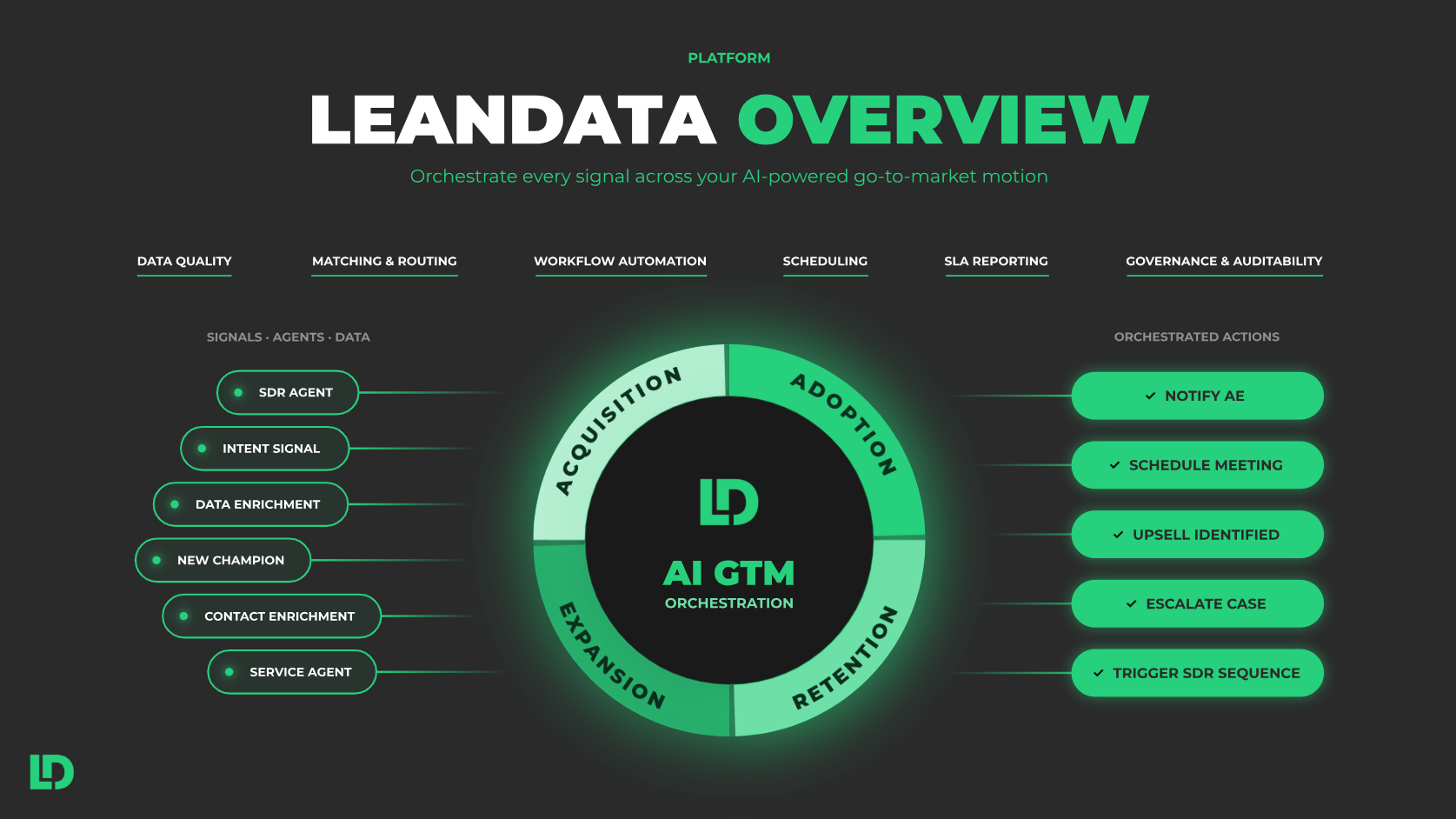
LeanData is a Salesforce-native GTM orchestration platform built for enterprise teams whose routing, scheduling, and buying group complexity has outgrown what a demand conversion tool can handle. Where Chili Piper connects to Salesforce via external connectors, LeanData runs its orchestration logic inside Salesforce. Its key features include:
Salesforce-native routing and lead-to-account matching with 95% accuracy
No-code visual FlowBuilder for complex, multi-condition routing logic
BookIt scheduling integrated into the routing platform
Buying Groups product for tracking multi-stakeholder buying committees in Salesforce
AI Inference Nodes for embedding LLM reasoning into routing graphs
Agentic Scheduling APIs for AI agent-to-sales handoffs
LeanData is built for mid-market and enterprise Salesforce organizations with high lead volumes, multiple territories, and buying committees spanning five to ten decision-makers.
Why Choose LeanData Over Chili Piper for Enterprise Salesforce-Native Orchestration
LeanData stands out in the following areas:
Salesforce-Native Architecture Eliminates Sync Delays
Chili Piper operates as an external connector to Salesforce, so routing logic lives outside the CRM and syncs back on a lag. For enterprise teams processing hundreds of leads daily with frequently updated territory structures, this introduces misroutes and SLA breaches. LeanData's routing logic, matching rules, and workflows live inside Salesforce as a native application. Territory updates propagate instantly, and LeanData's 9.6 Salesforce integration score on G2 is one of the highest in the routing category.
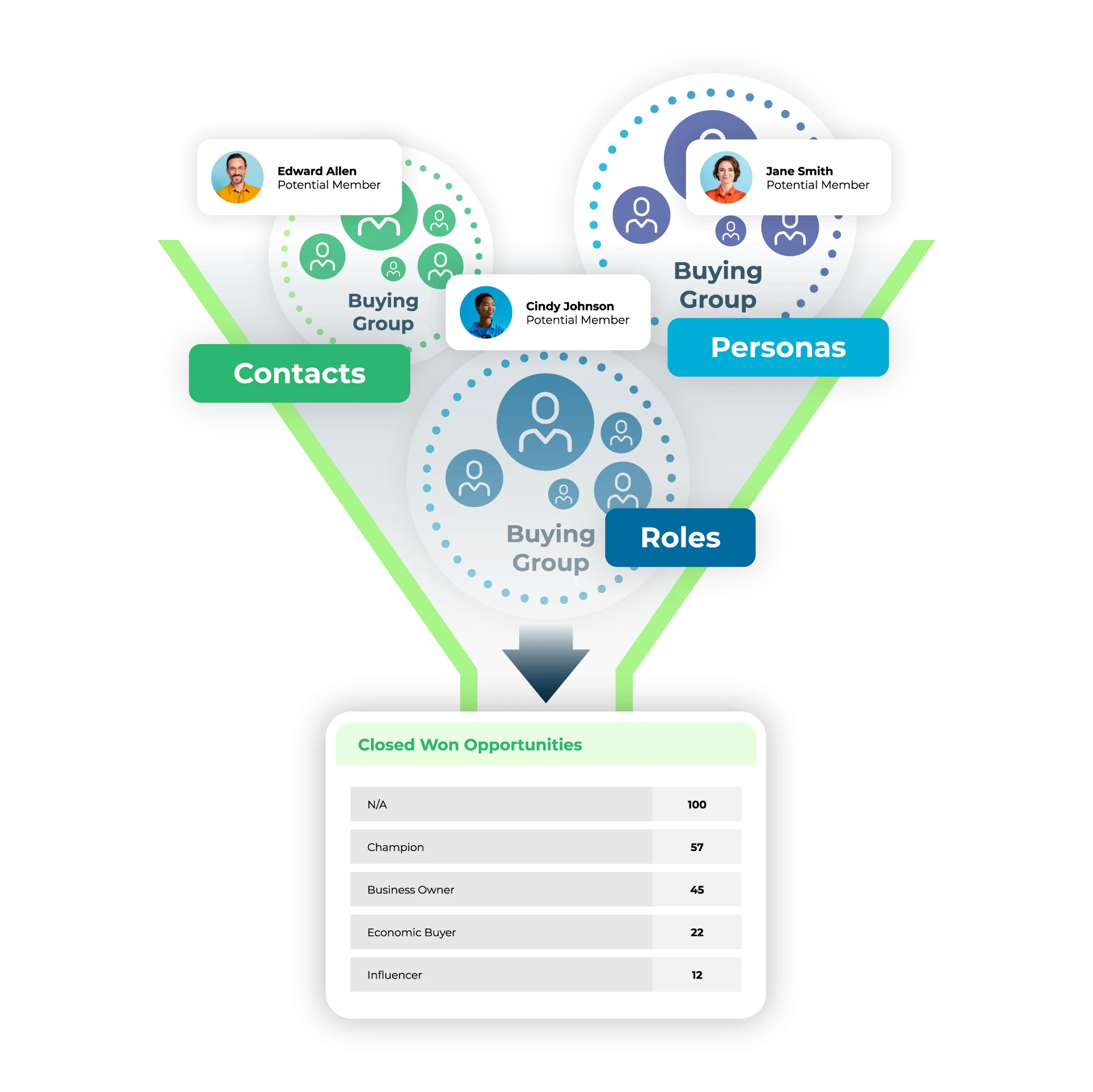
Buying Groups for Multi-Stakeholder Enterprise Deals
Chili Piper's routing model is lead-centric: one prospect routes to one rep. For enterprise deals involving multiple decision-makers across departments, single-threaded routing creates stalled deals when the initial contact goes dark.
Source: LeanData
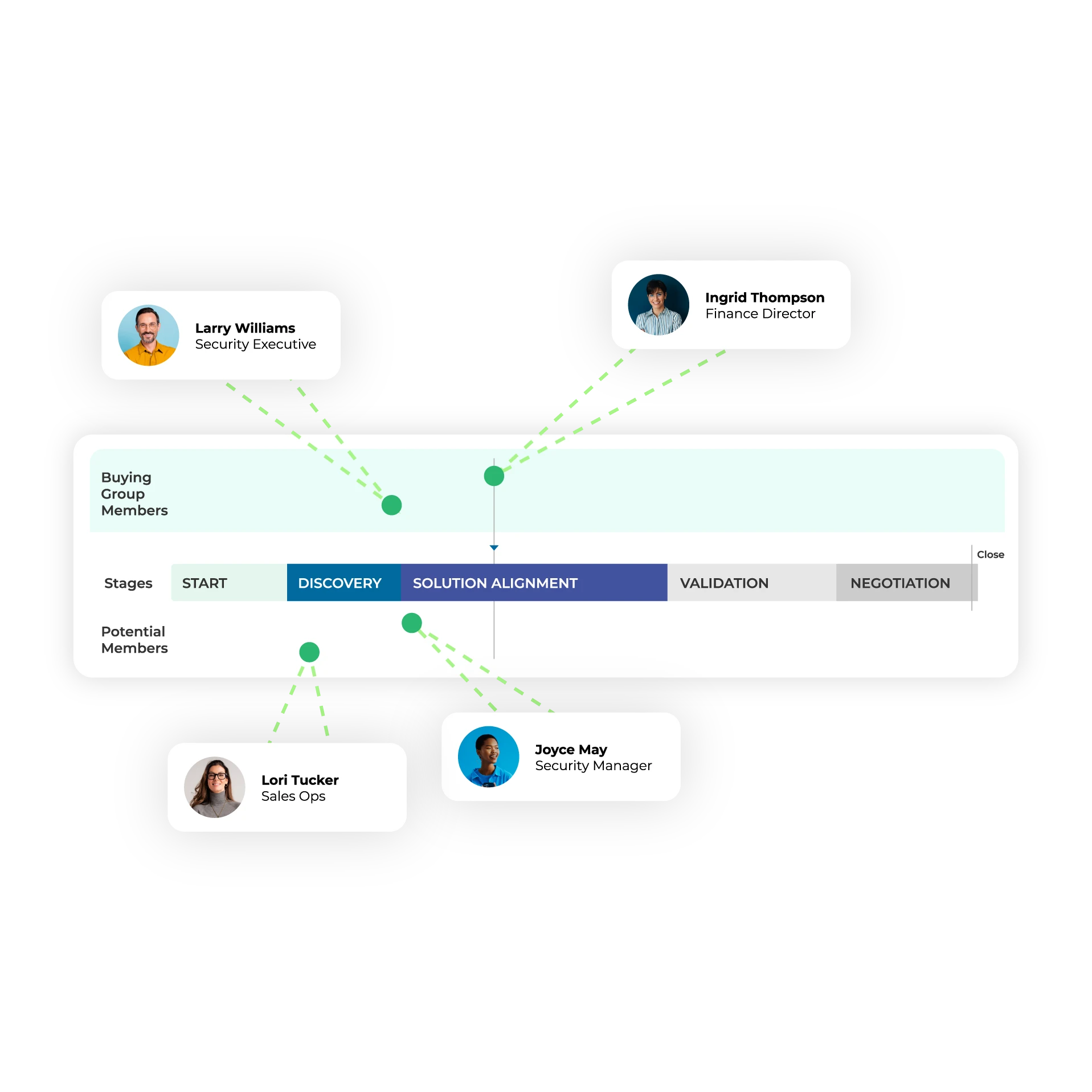
LeanData's Buying Groups product uses AI to uncover stakeholder roles, converts leads to contacts, attaches them to open opportunities, and alerts the account rep about new committee members.
The Journey Tracker shows which personas have engaged and where gaps are developing.
Source: LeanData
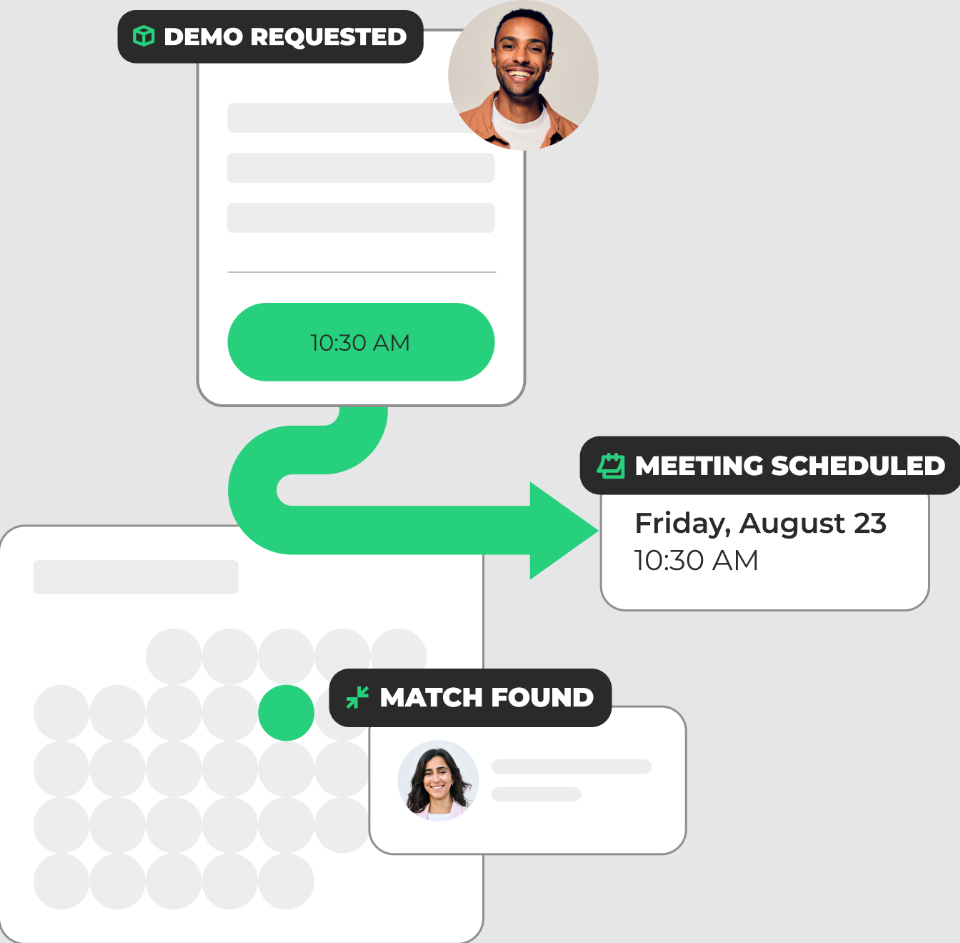
BookIt Scheduling Enforces Routing Logic End-to-End
Chili Piper's routing and scheduling are configured separately, so routing decisions made upstream don't automatically carry through as constraints at the booking step without explicit configuration.
Source: LeanData
LeanData's BookIt scheduling is embedded inside the routing platform, so the same rules that determine assignment also determine calendar availability.
NOTE: We also evaluated Traction Complete and Sweep for this enterprise routing archetype. Traction Complete excels at Salesforce-native territory management and Sweep offers visual Salesforce configuration tooling, but LeanData provides the most complete enterprise orchestration layer with Buying Groups management, routing-native scheduling, and AI-ready APIs in a single Salesforce-native platform.
For a complete look at LeanData's platform capabilities and how it performs across enterprise routing use cases, read our LeanData Review.
LeanData Pricing
LeanData uses a per-user license pricing model organized into four Orchestration tiers. Exact prices are not publicly disclosed and require scheduling a demo.
Standard: Covers Lead object only; includes lead-to-account matching, account-based routing, round robin, territory routing, and duplicate matching
Advanced (marked "Best Value"): Adds Contact and Account object coverage with the same routing and data management capabilities
Premium: Extends routing to any Salesforce object, including custom objects
Enterprise: Any Salesforce object plus dedicated consulting, architecture resources, and multi-instance support
Available add-ons include BookIt (scheduling), Buying Groups Blueprint, Multi-Graph, Engagement, and NotifyPlus. Implementation services are mandatory and billed separately, with three tiers from QuickStart (4 hours, customer-led) to Custom (6+ weeks, scope-dependent).
For a full breakdown of what's included in each tier and how LeanData's add-on pricing works, see our LeanData Pricing Breakdown.
Who Should Use LeanData?
Choose LeanData if:
Your organization runs Salesforce as its primary CRM and needs routing logic to live natively inside the CRM, eliminating connector drift and territory-update lag
You're selling into enterprise accounts with five or more decision-makers per deal and need to track, route, and orchestrate the full buying committee rather than routing single leads to single reps
Your GTM motion involves complex routing conditions (territory hierarchies, multi-product assignment, round-robin with SLA enforcement) that require a visual workflow builder and dedicated RevOps configuration
You want scheduling to enforce the same routing logic that determined rep assignment, rather than managing routing and booking as separate configuration surfaces
3. RevenueHero — Best Alternative for Growing B2B Teams on HubSpot
Source: RevenueHero
RevenueHero is a B2B inbound conversion platform that qualifies, routes, and books inbound leads from web forms in real time. It covers the same functional ground as Chili Piper's Form Concierge, but with faster implementation and a stronger native HubSpot foundation. Its key features include:
Real-time form-to-meeting routing with enrichment-powered qualification
Native HubSpot integration with full CRM field access, contact ownership matching, and deal creation post-booking
SDR-to-AE handoffs via Relays with automatic CRM ownership updates
Balanced and Collective Round Robin distribution with credit-back processing for no-shows and cancellations
Campaign magic links for outbound sequences that route to the assigned rep's calendar
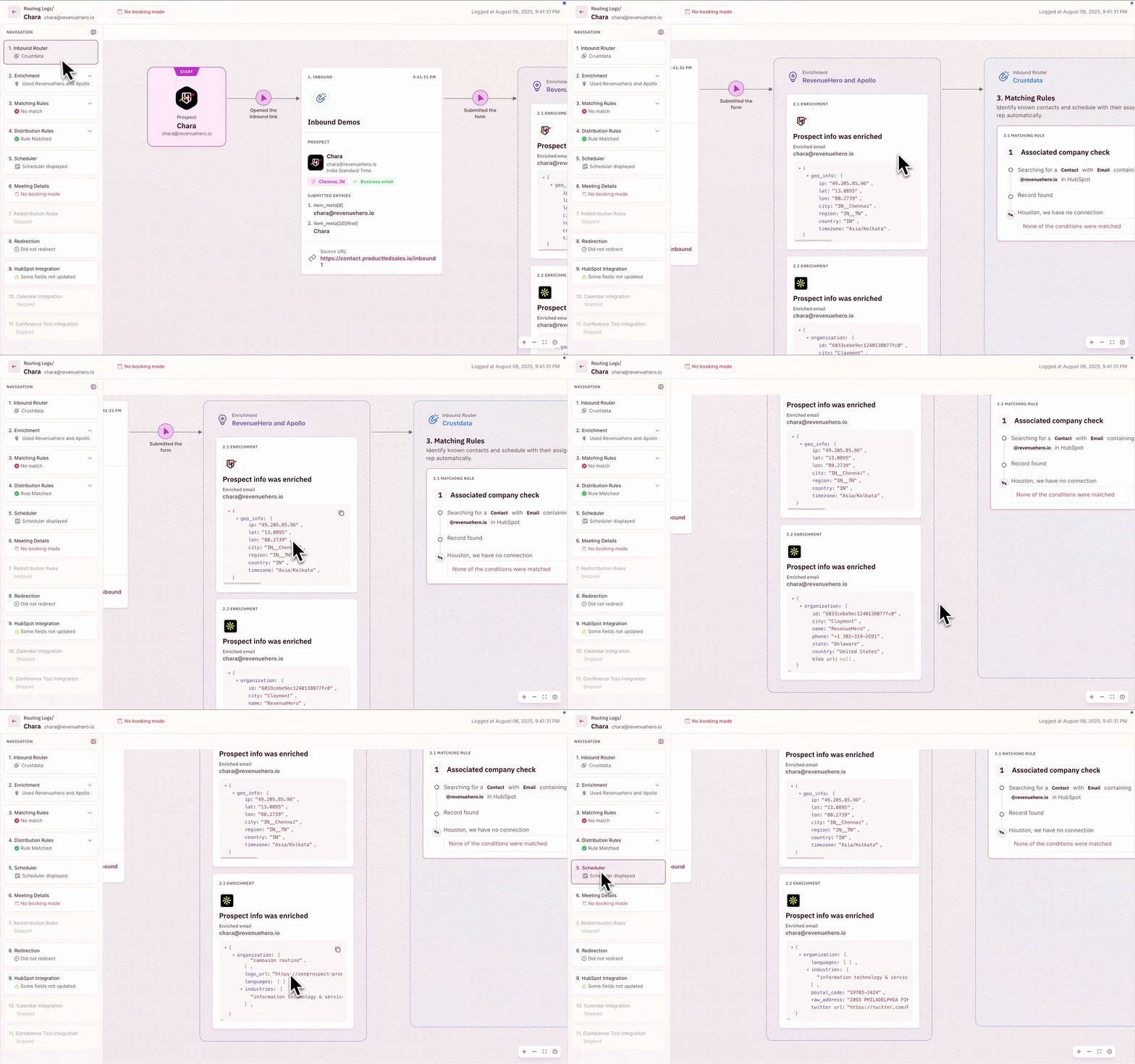
Granular reporting with a step-by-step Routing Log showing exactly which rules fired and why
SOC 2 Type II certification with SSO (Okta) and GDPR compliance
RevenueHero is designed for B2B SaaS companies with 10 to 500 employees and an active inbound motion that needs Chili Piper's routing intelligence without the Salesforce-first design assumptions that frustrate HubSpot-native teams.
Why Choose RevenueHero Over Chili Piper for Inbound Conversion
RevenueHero stands out in the following areas:
HubSpot-Native Integration Without the Gaps
Chili Piper built its routing engine on Salesforce first. The HubSpot integration came later, and G2 reviewers consistently report HubSpot feature gaps, including shallower routing logic and data sync behaviors that require workarounds. RevenueHero's HubSpot integration was built from the ground up as a first-class connection. Contact owner, company owner, lifecycle stage, and custom HubSpot properties all work as routing conditions. Meetings booked through RevenueHero create or update HubSpot contacts, log activities at both contact and company level, create deals, and fire HubSpot workflows without custom code. G2 reviewers call the HubSpot integration "invaluable" for HubSpot-native teams, and several Chili Piper-to-RevenueHero migration stories name HubSpot parity as the primary reason for switching.
Implementation in Hours, Backed by Near-Perfect Support Scores
Chili Piper's onboarding typically spans three structured calls with an implementation specialist over roughly three weeks. RevenueHero positions even complex setups as taking approximately one hour, with CRM integration described as a one-click process. Its primary support channel is shared Slack with customers, providing live access rather than a ticketed queue. G2 reviewers give RevenueHero a 9.9 quality-of-support score, and multiple Chili Piper switchers name support responsiveness as a motivating factor for the move.
Predictable Per-User Pricing Without Per-Form-Fill Charges
Chili Piper's Concierge platform fee scales with inbound lead volume: $150/month for up to 100 leads, $400/month for 101 to 1,000 leads, and $1,000/month for over 1,000 leads, layered on top of per-user licensing. RevenueHero charges a fixed platform fee ($99/month) plus per-user licensing, with no per-form-fill charges and no admin license fees.
NOTE: We also evaluated Kronologic and Bookafy for this team archetype. Kronologic excels at AI-driven outbound meeting booking at scale and Bookafy offers general-purpose scheduling at lower price points, but RevenueHero provides the most complete inbound conversion platform for growing B2B teams, combining routing depth, HubSpot-native integration, and implementation speed that neither alternative matches.
RevenueHero Pricing
RevenueHero uses a hybrid per-seat plus fixed platform fee model with no per-form-fill charges and no admin license fees.
Inbound Essentials: $99/month platform fee + $35/user/month. Includes instant scheduling from web forms, round-robin and custom routing logic, and domain-based matching.
Inbound Enterprise: $99/month platform fee + $45/user/month. Adds advanced routing, SSO (Okta), and enterprise security features.
Outbound Essentials: No platform fee. $25/user/month. Includes personalized booking pages, embedded meeting slots in emails, and CRM activity logging.
Add-ons: Spam Prevention ($30/month), Native Enrichment ($49/month for 0-200 credits)
A 14-day free trial with no credit card required is available.
Who Should Use RevenueHero?
Choose RevenueHero if:
Your team runs its CRM on HubSpot and you've found Chili Piper's HubSpot integration too shallow for your routing logic
You need Chili Piper-level routing sophistication but don't have a dedicated RevOps team to manage a weeks-long implementation
Your inbound lead volume is growing and Chili Piper's volume-based platform fee tiers are creating cost unpredictability
You run a complex SDR-to-AE handoff motion and need the routing logic for that handoff to live in the same system as your inbound form routing, with unified CRM sync
4. Default — Best Alternative for Replacing Your Entire Inbound GTM Stack
Source: Default
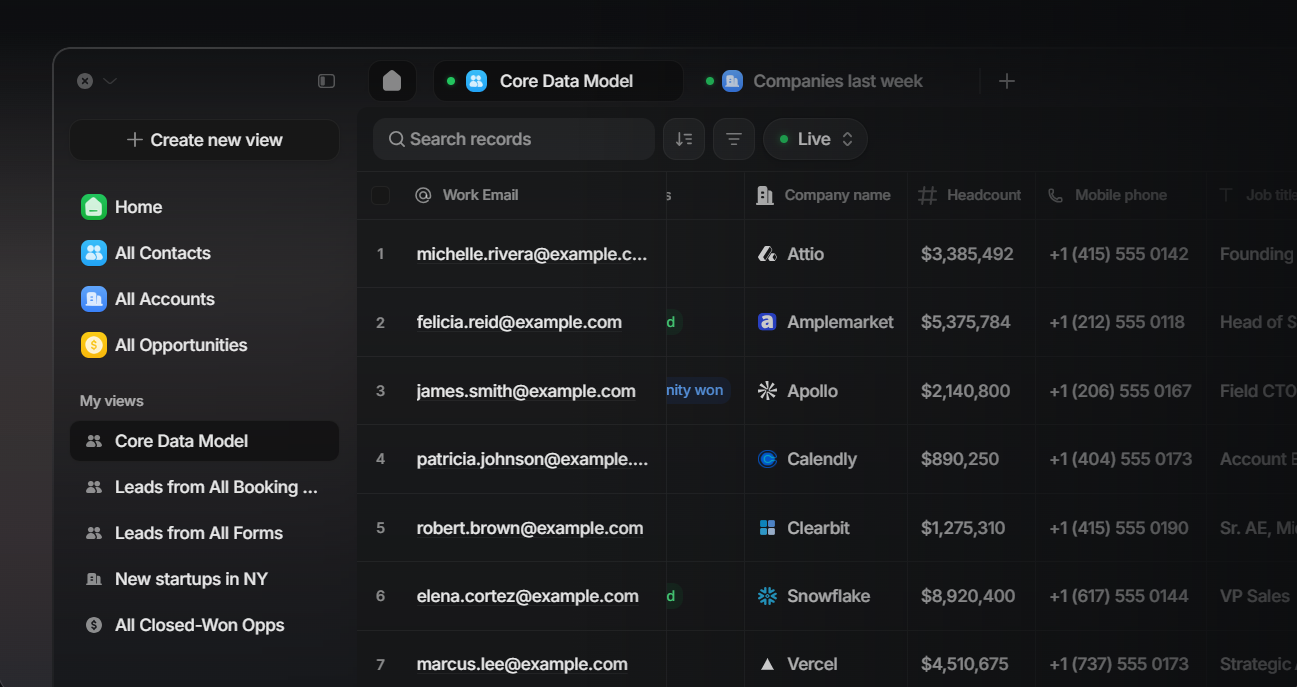
Default is a revenue workflow engine that consolidates inbound routing, scheduling, lead enrichment, form capture, and CRM automation into a single no-code canvas. It replaces the patchwork of Chili Piper, LeanData, Zapier, Calendly, and enrichment vendors that most B2B SaaS teams have stitched together. Its key features include:
GTM workflow canvas combining routing, scheduling, enrichment, and CRM writes in one drag-and-drop builder
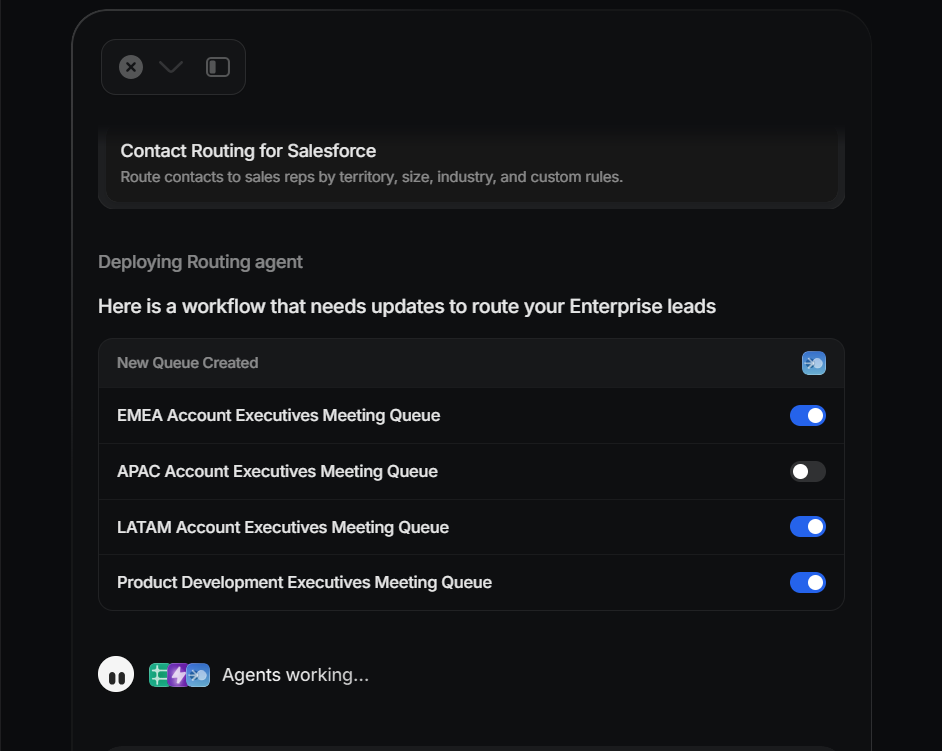
AI-powered lead and account routing that interprets territory and segment definitions written in plain language
Native two-way sync with both Salesforce and HubSpot simultaneously
Waterfall enrichment from multiple providers (Clearbit, Apollo, Wiza, People Data Labs) built into the platform
Website visitor deanonymization that fires workflow triggers when target accounts browse the site
Governance model that surfaces AI-proposed routing changes for human review before they execute
Default fits best for the RevOps or Marketing Ops practitioner at a Series A to C B2B SaaS company who is tired of maintaining a multi-tool inbound stack and wants one auditable control layer for every routing, scheduling, and enrichment decision.
Why Choose Default Over Chili Piper for GTM Stack Consolidation
Default stands out in the following areas:
One Canvas for Everything, Not a Suite of Separate Products
Chili Piper sells discrete products: Concierge for form routing, Distro for lead distribution, Handoff for SDR-to-AE transfers, ChiliCal for scheduling, and Chat AI for website visitors. Users report that small changes often require a knowledgeable admin and that the platform is "not very self-serve for non-technical ops or marketing users." Default puts routing, scheduling, enrichment, CRM writes, Slack notifications, and follow-up sequences as nodes on the same workflow canvas.
AI Routing That Works on Dirty Data Without Admin Tickets
Chili Piper's routing runs on logic-based rule trees that require admin-level knowledge to update. Default's territories and segments are defined in plain English ("US West includes California, Washington, and Oregon"), and the AI routing agent classifies each incoming lead using enrichment data to fill CRM gaps. RevOps managers can write and update routing definitions without building boolean condition trees or filing an admin ticket.
Source: Default
Startup-Accessible Entry Pricing
Chili Piper's Demand Conversion Platform runs $72 to $108 per user per month plus a $1,000 monthly platform fee. Default's entry point is the Startup plan at $750 per month plus $45 per user per month, covering routing, scheduling, enrichment (10,000 credits per year), forms, and CRM integration under one flat platform fee. Note: the Startup tier caps users at one workflow, so teams running multiple routing flows will need the Growth tier.
NOTE: We also evaluated Breakout and Knock AI for this archetype. Breakout focuses on outbound-led meeting automation and Knock AI addresses real-time rep alerting for inbound signals, but Default provides the most complete inbound orchestration replacement for teams that have outgrown their multi-tool stack and need one auditable, no-code control layer.
Default Pricing
Startup: Starts at $750/month (annual), $45/user/month. 1 workflow, basic enrichment (Clearbit and Apollo), 10,000 enrichment credits per year. Email support.
Growth: Custom pricing (annual), $45/user/month. 10 workflows, premium enrichment providers, 20,000 credits per year. Website intent available at $400/month for 10,000 intent credits. Slack support channel.
Enterprise: Custom pricing (annual). Unlimited workflows and enrichment credits. Dedicated Slack access to named success team. Migration services from legacy routing tools (Chili Piper, LeanData).
No self-serve signup or free trial is advertised; all plans require a demo conversation.
Who Should Use Default?
Choose Default if:
You're running Chili Piper for scheduling, LeanData or Salesforce flows for routing, and Zapier for glue, and you spend more time troubleshooting seams between tools than building new workflows
You need routing and scheduling to work against both Salesforce and HubSpot in the same workflow without custom middleware
Your RevOps team needs to update territory definitions and routing rules without filing admin tickets or writing boolean logic
You're at Series A to C and want an entry price ($750/month) that covers the full inbound orchestration stack under one platform fee
5. Calendly — Best Alternative for Self-Serve Scheduling Without RevOps Overhead
Source: Calendly
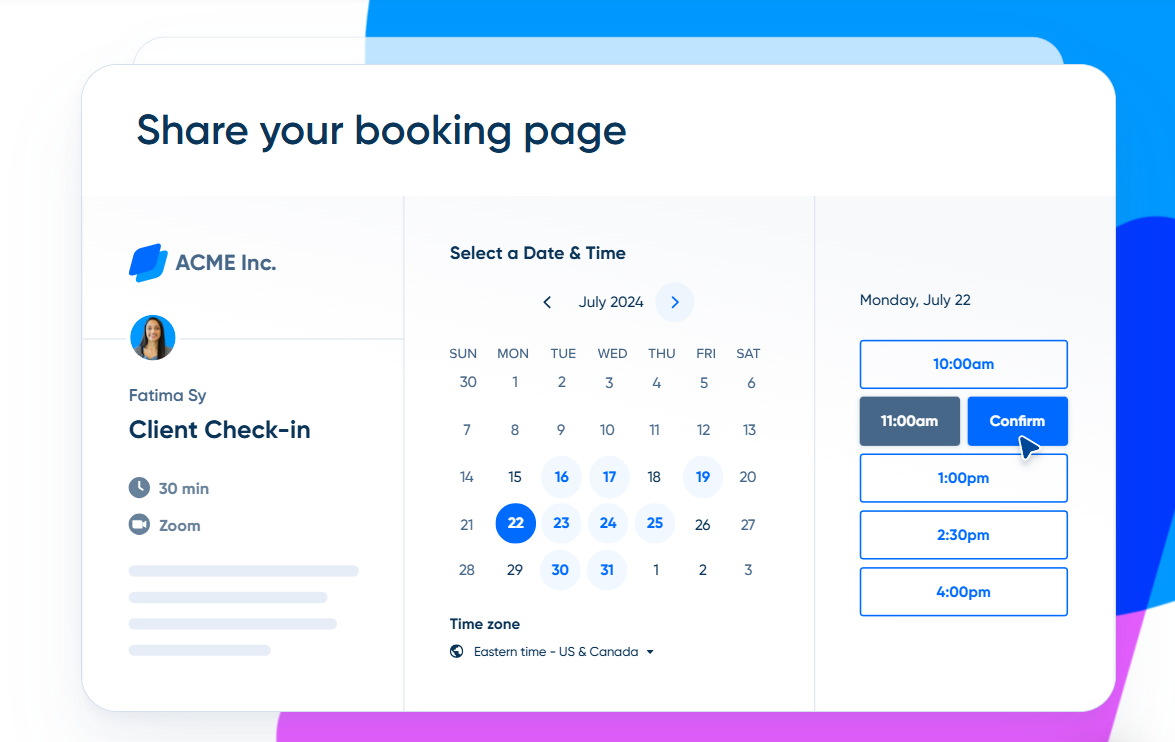
Calendly is a scheduling automation platform that removes the back-and-forth of meeting coordination without requiring RevOps configuration, CRM setup, or a multi-week implementation. Any team member can create a personal booking link, share it via email or website embed, and start receiving meetings the same day. Its key features include:
Shareable scheduling links that go live in minutes with no CRM dependency
Routing Forms with conditional logic for qualifying inbound visitors and redirecting to the right team member
Round-robin meeting distribution with vacation handling and no-show reminders
Native payment collection at booking through Stripe and PayPal
CRM integrations with Salesforce and HubSpot on the Teams plan
Notetaker AI for meeting transcription, summaries, and action items on all paid plans
Calendly is the right Chili Piper alternative for small B2B sales teams, individual reps, consultants, and early-stage companies that need scheduling automation running within hours, not weeks.
Why Choose Calendly Over Chili Piper for Simple, Self-Serve Scheduling
Calendly stands out in the following areas:
Zero-Setup Deployment, No RevOps Team Required
Calendly's onboarding is documented in a 17-minute, four-lesson video course: connect a calendar, configure availability, create an event type, share a link. No admin credentials, no Salesforce package, no routing logic configuration. Chili Piper's own documentation and user reviews acknowledge that small changes often require a knowledgeable admin and that standard onboarding involves roughly three structured calls over about three weeks. For small teams without dedicated RevOps, Calendly's self-serve model removes that overhead entirely.
Transparent Per-Seat Pricing With No Volume-Based Platform Fees
Chili Piper's Concierge platform fee scales from $150/month to $1,000/month based on inbound lead volume, on top of per-user licensing. G2 reviewers flag surprise fees as usage scales. Calendly's pricing is published and fixed per-seat: Free for individuals, $10/seat/month on Standard, $16/seat/month on Teams (annual). Unlimited meetings on all paid tiers. A team of ten reps on Teams pays $160/month flat, regardless of form submission volume.
Native Payment Collection at Booking
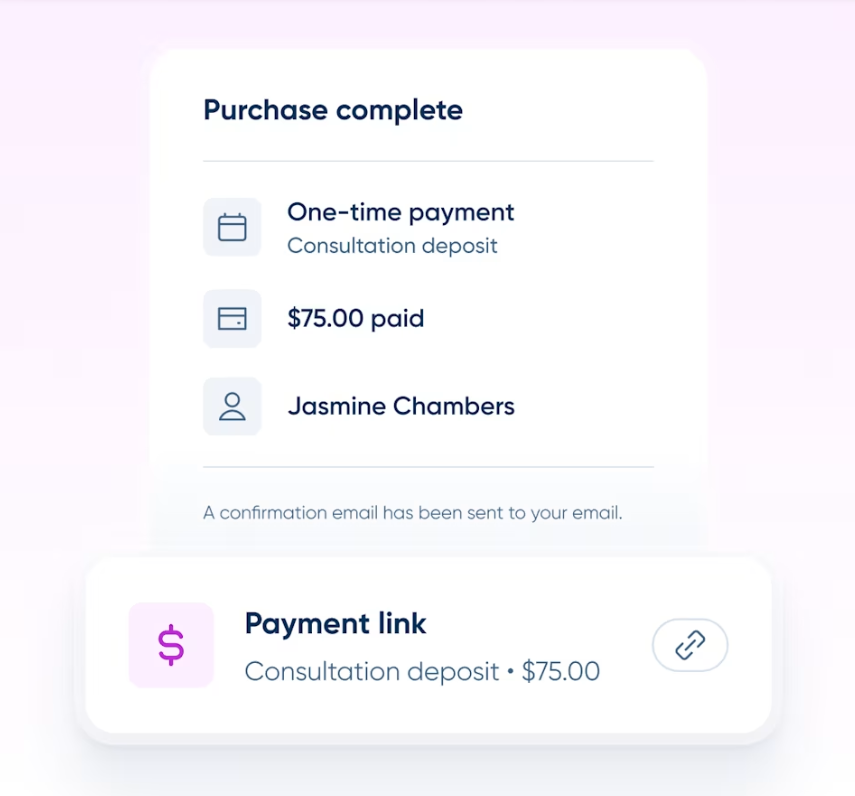
Calendly includes built-in payment collection through Stripe and PayPal, a capability Chili Piper does not offer natively. Through the Payments module, teams can charge for scheduled meetings at booking: upfront payments, multi-session packages, and standalone payment links.
Source: Calendly
Stripe's full checkout ecosystem is available, including Apple Pay, Google Pay, and Klarna. Approximately 25,000 businesses use Calendly Payments monthly, transacting around $26 million per month.
NOTE: We also evaluated Acuity Scheduling and YouCanBook.me for this archetype. Acuity excels at appointment-based service businesses requiring class management and waitlists, and YouCanBook.me is a lightweight option for individual professionals, but Calendly offers the most direct path from zero to scheduled meetings for small B2B sales teams evaluating Chili Piper alternatives.
Calendly Pricing
Free (Always Free): 1 event type, 1 calendar connection, unlimited meetings. Meeting polls, mobile app, browser extension.
Standard: $12/seat/month. Unlimited event types, 6 calendar connections, automated reminders, Stripe and PayPal payments, custom branding.
Teams: $20/seat/month. Round-robin distribution, Salesforce and HubSpot integration, Managed Events, SAML SSO as paid add-on.
Enterprise: Starts at $15,000/year. Salesforce lookup routing, Microsoft Dynamics 365, SAML SSO and SCIM included, audit log, phone support.
Who Should Use Calendly?
Choose Calendly if:
Your team needs scheduling automation live within hours, with no RevOps team, no implementation specialist, and no Salesforce package installation required
You're a small B2B sales team (under 50 seats) evaluating Chili Piper alternatives, and predictable per-seat costs matter more than volume-based routing sophistication
You charge for meetings, consultations, or onboarding sessions and want payment collected at booking without a separate invoicing tool
Your inbound routing needs are territory- or role-based but not complex, and Calendly's Routing Forms cover the core qualification-and-route use case without CRM-side configuration
6. HubSpot Meetings — Best Alternative for Teams Already on HubSpot That Want Scheduling Without Another Vendor

Source: HubSpot Meetings
HubSpot Meetings is a meeting scheduling tool built into HubSpot's Sales Hub. Rather than purchasing a separate scheduling license and connecting it to the CRM via middleware, HubSpot users get scheduling within the same platform they already use for contacts, deals, and email outreach. Its key features include:
Free one-on-one scheduling pages with no credit card required, available on the permanent free plan
Automatic CRM logging of every booked meeting to contact, company, deal, and ticket timelines, with no integration layer
Round-robin scheduling with contact-owner prioritization for known contacts
AI meeting assistant (Professional/Enterprise) with CRM-grounded prep, suggested talking points, and follow-up drafting
Group booking that shows only times when all required attendees are free
UTM/campaign tracking auto-populated to CRM contact properties at the moment of booking
For teams that have already standardized on HubSpot as their system of record, HubSpot Meetings removes the vendor equation from scheduling entirely.
Why Choose HubSpot Meetings Over Chili Piper for HubSpot-Native Scheduling
HubSpot Meetings stands out in the following areas:
Zero Incremental Cost for HubSpot Teams
Chili Piper layers per-user monthly fees ($15 to $45/user/month) on top of mandatory platform fees ($150 to $1,000/month), separate from whatever a team already spends on its CRM.
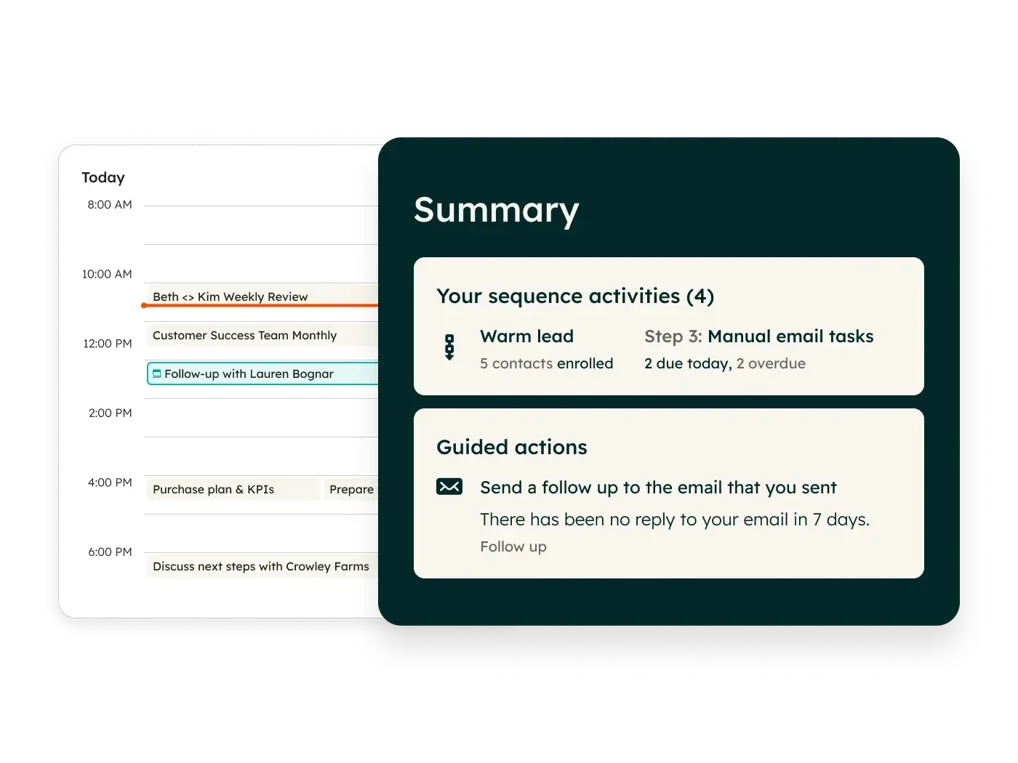
HubSpot Meetings' free plan includes one-on-one scheduling with calendar sync and automatic CRM logging at no cost. Teams needing round-robin and group scheduling unlock those features at $7/seat/month on Starter. For orgs with 10 to 50 seats booking demos, the difference can reach several thousand dollars per month before factoring in implementation overhead.
Source: HubSpot Meetings
Native CRM Sync With No Integration Layer
Chili Piper's HubSpot integration is acknowledged in reviews as less mature than its Salesforce counterpart. HubSpot Meetings has no integration layer at all; it is part of HubSpot's Smart CRM natively. Every booked meeting writes immediately to the contact, company, deal, and ticket timeline as a first-class CRM object. No field mapping to configure, no sync cadence to check, no data discrepancy to troubleshoot. G2 reviewers consistently name this native integration as the tool's defining advantage.
Lower Complexity for Non-Technical Teams
Chili Piper's admin dependency for territory tweaks and routing changes requires ongoing RevOps support. HubSpot Meetings describes setup as: "Simply associate your calendar, and you'll be good to go." A rep with a connected Google or Office 365 calendar can have a working booking page (with CRM logging, reminder emails, and UTM tracking) without any IT involvement. G2's analysis of HubSpot Sales Hub reviews found that over 70% mention ease of use or setup speed as a primary reason they continue using the platform.
NOTE: We also evaluated Cal.com's free tier for this archetype. Cal.com offers a generous open-source plan with strong customization for developer-friendly teams, but HubSpot Meetings provides the most direct CRM-native scheduling for teams already in the HubSpot ecosystem, eliminating the separate vendor relationship and integration maintenance a standalone scheduler requires.
HubSpot Meetings Pricing
HubSpot Meetings is embedded in Sales Hub and is not sold separately.
Free ($0, no credit card required): 1 personal scheduling page, bidirectional calendar sync, automatic CRM logging. HubSpot branding on all pages.
Starter ($10/seat/month monthly): Up to 1,000 meeting links, HubSpot branding removed, group and round-robin scheduling, custom booking windows.
Professional ($100/seat/month monthly): Full AI meeting assistant, meeting rotations with weighted distribution, schedule on behalf of others. Mandatory $1,500 one-time onboarding fee.
Enterprise ($150/seat/month annual; annual commitment only): Custom objects, advanced permissions, conversation intelligence, SAML SSO. Mandatory $3,500 one-time onboarding fee.
Who Should Use HubSpot Meetings?
Choose HubSpot Meetings if:
Your team already runs HubSpot as its CRM and wants to eliminate the vendor cost, contract overhead, and integration maintenance of a standalone scheduling tool
Your scheduling needs are primarily one-on-one outbound booking, inbound demo routing via round-robin, or multi-attendee group calls, without enrichment-based routing or SLA-aware lead assignment
You are a lean team without dedicated RevOps support and need scheduling self-service from day one without admin configuration
You want scheduling analytics and meeting-to-pipeline attribution tied into HubSpot's native reporting environment
7. Cal.com — Best Alternative for Developer-Driven Teams That Want Full Code Control

Source: Cal.com
Cal.com is a scheduling infrastructure platform built for engineering-led organizations that need programmatic control over every layer of their booking stack. Where Chili Piper is built around RevOps configuring routing logic through an admin UI, Cal.com is built around developers owning scheduling as infrastructure: something to embed, extend, and audit at the code level. Its key features include:
Open-source community edition (Cal.diy) under an MIT license for self-hosting
REST API v2 with full CRUD over bookings, event types, schedules, routing forms, and webhooks
Cal Atoms: React components that embed the full booking flow inside third-party applications without Cal.com branding
Attribute-based routing forms with round-robin distribution, Salesforce ownership matching, and Routing Trace audit logs
HIPAA, SOC 2 Type II, ISO 27001, GDPR, and CCPA certifications for regulated industries
Transparent $12/user/month (Teams) pricing with no volume-based platform fees
Cal.com fits best when scheduling is an infrastructure problem, not a GTM workflow problem: the team needs scheduling embedded inside a product they ship to customers, code-level auditability matters, or compliance certifications are binary requirements.
Why Choose Cal.com Over Chili Piper for Developer-Controlled Scheduling
Cal.com stands out in the following areas:
Open Architecture vs. Admin-Controlled Configuration
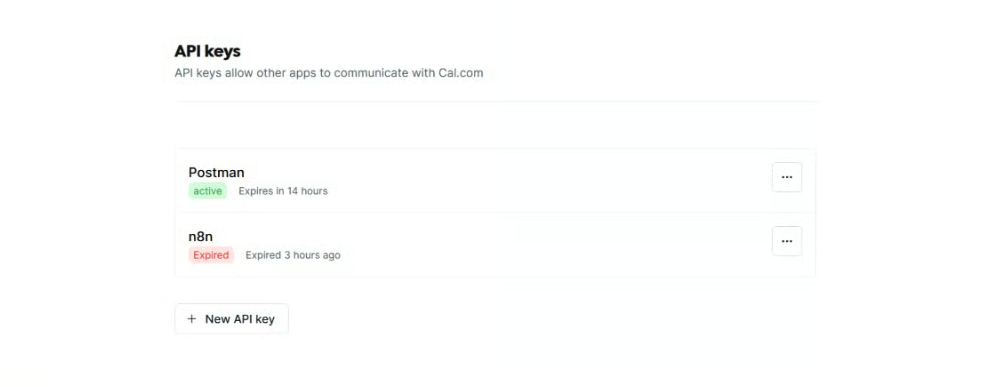
Chili Piper is built for a RevOps admin configuring routing logic through its visual builder, creating admin dependency for most changes. Cal.com inverts this model. Its REST API v2 gives full programmatic control over every scheduling operation, so engineering teams implement and modify scheduling behavior through code rather than navigating an admin UI.
Source: Cal.com
Embeddable Scheduling UI for Product Teams
Chili Piper's scheduling modal integrates with forms and CRM systems for demand conversion workflows on marketing sites. For product teams that need scheduling inside their own application with no third-party UI visible, Chili Piper isn't architecturally suited.
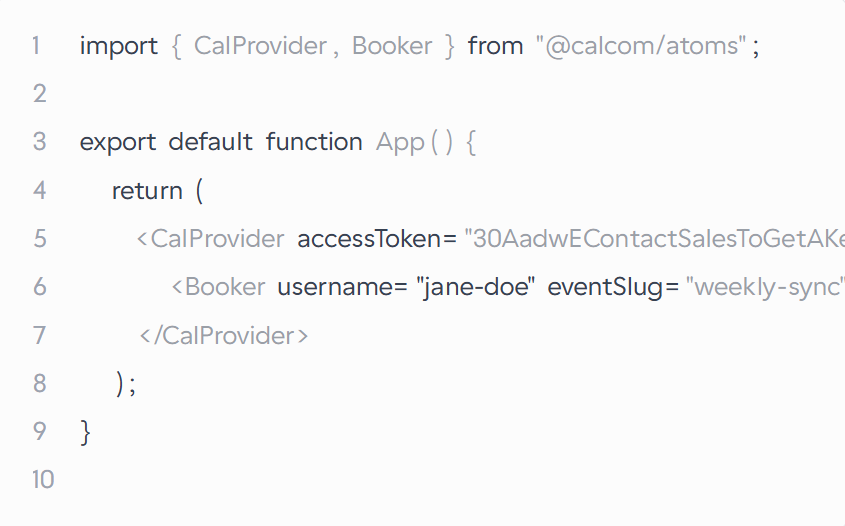
Cal.com's Cal Atoms are React components that render the full booking flow inside the host application's UI shell.
Source: Cal.com
The Booker Atom supports 50+ configuration props, three calendar view layouts, and a handleCreateBooking hook for custom logic (payment gates, CRM writes, eligibility checks) before finalizing any booking. The components inherit Cal.com's HIPAA, SOC 2, and GDPR compliance out of the box, so a telehealth company embedding the booking UI inside their patient portal inherits the compliance stack automatically.
Predictable Per-User Pricing Without Platform Fees Chili Piper's Concierge platform fee tiers from $150/month to $1,000/month based on lead volume, so costs rise as inbound volume grows. Cal.com's pricing is published and per-user only: $12/user/month on Teams, $28/user/month on Organizations. No platform fees, no volume-based tiers. The Organizations plan ($28/user/month) includes SAML SSO, SCIM, and the full compliance stack (SOC 2, HIPAA, ISO 27001) with no separate compliance add-on fees.
NOTE: We also evaluated YouCanBook.me and Cirrus Insight for this scheduling infrastructure archetype. YouCanBook.me is straightforward for simple appointment pages and Cirrus Insight offers deeper Gmail and Salesforce inbox integration, but Cal.com provides the most complete scheduling infrastructure for teams needing developer API control, embeddable booking inside third-party applications, and compliance certifications for regulated industries.
Cal.com Pricing
Free ($0/month, permanent): Single user, unlimited event types and calendar connections, Stripe and PayPal payments, Salesforce and HubSpot sync.
Teams ($16/user/month): Round-robin, managed events, routing forms, booking analytics, custom APIs, Cal.com branding removal. 14-day free trial.
Organizations ($37/user/month): Unlimited sub-teams, SAML SSO and SCIM, SOC 2 Type II, HIPAA, ISO 27001, company subdomain, attribute-based routing. 14-day free trial.
Enterprise (custom pricing): Dedicated onboarding, SLA guarantees (99.9% standard, 99.99% available), HRIS integrations, priority Slack support, dedicated database with configurable data residency.
Who Should Use Cal.com?
Choose Cal.com if:
Your team is building scheduling into a product you ship to customers (a marketplace, telehealth app, HR tool, voice AI agent) and you need a scheduling API and embedded UI components rather than a form routing dashboard
You operate in a regulated industry (healthcare, fintech, legal) where HIPAA, SOC 2 Type II, and ISO 27001 are hard procurement requirements, and you need a scheduling vendor that carries all three without a separate compliance add-on
You want predictable, fixed per-user pricing with no volume-based platform fees that scale against your inbound booking volume
Your engineering team prefers to own, inspect, and modify scheduling logic through code rather than configure it through a no-code admin UI
The Final Verdict
Chili Piper excels as a demand conversion platform for B2B revenue teams, but growing businesses often need capabilities beyond routing inbound form fills to booked meetings. Based on our research, here are the best alternatives:
ZoomInfo for powering your entire GTM motion with B2B data, buyer intent signals, the GTM Context Graph intelligence layer, and AI-driven execution across sales, marketing, and RevOps
LeanData for enterprise Salesforce-native routing, buying group management, and scheduling that enforces routing logic end-to-end
RevenueHero for HubSpot-native inbound conversion with faster implementation and predictable pricing
Default for replacing your multi-tool inbound stack with a single no-code workflow canvas
Calendly for self-serve scheduling that goes live in hours without RevOps overhead or volume-based platform fees
HubSpot Meetings for eliminating standalone scheduling vendor costs when HubSpot is already your CRM
Cal.com for developer-controlled scheduling infrastructure with full API access, embeddable components, and compliance certifications for regulated industries
You don't have to choose between Chili Piper and these alternatives exclusively. Many businesses use Chili Piper alongside tools that fill specific gaps, like pairing it with ZoomInfo for prospecting intelligence or using Cal.com for product-embedded scheduling. Consider your GTM architecture, team size, and growth trajectory when deciding which solution fits best.
Ready to power your go-to-market motion with B2B intelligence? Explore ZoomInfo and discover how AI-driven data, intent signals, and contextual intelligence can strengthen your revenue engine, from identifying the right accounts to closing more deals.
Chili Piper Alternatives FAQ
Why do businesses look for Chili Piper alternatives?
Chili Piper works well as a demand conversion platform, but businesses outgrow it in several areas. Its HubSpot integration is less mature than its Salesforce integration, creating feature gaps for HubSpot-native teams. Configuration changes often require a knowledgeable admin, frustrating lean teams without dedicated RevOps support. Its pricing model includes volume-based platform fees that create cost unpredictability as inbound volume grows. And it does not cover proactive top-of-funnel prospecting, so teams that need intelligence on who to target still need a separate solution.
What is the best overall Chili Piper alternative?
There is no single best alternative because Chili Piper covers several functions. ZoomInfo is the top choice for teams that need B2B data and AI-powered GTM intelligence beyond demand conversion. LeanData leads for enterprise Salesforce-native routing with buying group management. RevenueHero is the strongest option for HubSpot-native teams wanting routing depth without the implementation overhead.
Is there a free alternative to Chili Piper?
Several alternatives offer free plans. HubSpot Meetings includes free one-on-one scheduling with CRM logging for teams already on HubSpot. Cal.com offers a free plan with unlimited event types, calendar connections, and CRM sync. Calendly's free tier supports one event type with unlimited meetings. ZoomInfo Lite provides a permanent free tier with access to B2B data, 10 monthly export credits, and WebSights Lite for website visitor identification.
Which Chili Piper alternative is best for HubSpot teams?
RevenueHero is built for HubSpot-native teams, with full CRM field access for routing decisions, contact ownership matching, deal creation, and HubSpot workflow triggers. HubSpot Meetings is the best choice for teams that want to eliminate standalone scheduling costs entirely by using the scheduling built into their existing HubSpot Sales Hub subscription.
How does ZoomInfo compare to Chili Piper?
ZoomInfo and Chili Piper operate at different layers of the GTM stack. Chili Piper specializes in converting inbound demand into booked meetings through routing and scheduling. ZoomInfo is an AI GTM platform that helps teams identify which accounts to target (500M contacts, buyer intent data), understand why deals move or stall (GTM Context Graph), and execute across sales and marketing (GTM Workspace, GTM Studio, APIs/MCP). Teams often use both together, with ZoomInfo powering the intelligence layer and Chili Piper handling the meeting conversion step.
Which alternative is best for small teams on a budget?
Calendly is the most accessible option for small teams, with transparent pricing starting at $10 per seat per month and no volume-based platform fees. HubSpot Meetings starts at $0 for teams already on HubSpot. Cal.com offers a free plan and a Teams tier at $12 per user per month. These options provide scheduling without the RevOps overhead or enterprise pricing structures that Chili Piper requires.
Can I use Chili Piper alongside these alternatives?
Yes. A common setup pairs Chili Piper for inbound demand conversion with ZoomInfo for prospecting intelligence and buyer intent signals. Teams might also use Chili Piper for primary inbound routing while using Cal.com for product-embedded scheduling or Calendly for simpler internal scheduling needs. The right configuration depends on which capabilities you need to augment.
Which Chili Piper alternative is best for enterprise deals with multiple stakeholders?
LeanData is designed for enterprise multi-stakeholder deals. Its Buying Groups product uses AI to identify stakeholder roles, attaches contacts to open opportunities, and provides a Journey Tracker showing which personas have engaged. For teams needing broader account intelligence beyond routing, ZoomInfo's GTM Context Graph captures buying committee dynamics, conversation signals, and deal patterns across your pipeline.
Looking beyond Chili Piper? Compare the strongest alternatives side by side:
