

Choosing between Dux-Soup vs. Waalaxy for your LinkedIn outreach often comes down to these five questions:
Do you need a tool that runs campaigns 24/7 from the cloud, or are you fine keeping a browser tab open?
Is LinkedIn your only prospecting channel, or do you also need cold email in the same workflow?
Are you an individual rep, a sales team, or an agency managing multiple client accounts?
How much control do you want over campaign sequencing versus how quickly do you want to launch?
Do you need just LinkedIn automation, or do you need the data, signals, and intelligence to know who's actually worth reaching out to?
In short, here's what we recommend:
Dux-Soup is the veteran LinkedIn automation tool for users who want control over every prospecting action. With 300,000+ users since 2015, it offers browser-based and cloud-based campaign execution, CRM integrations with Salesforce, HubSpot, and Pipedrive, and an agency dashboard for managing unlimited client accounts. Dux-Soup lets power users configure drip campaigns with up to 12 sequential actions, but its interface shows its age, and lower-tier plans depend on the browser extension, so campaigns stop when your laptop sleeps.
Waalaxy is the simpler, newer alternative for users who want to launch LinkedIn outreach quickly without technical setup. It combines LinkedIn automation with cold email sequences and a built-in email finder, all from a Chrome extension that 150,000+ users rely on. A library of 99+ pre-built sequences means you can start in minutes. However, Waalaxy caps LinkedIn invitations at 800 per month even on its highest self-serve plan, limits message personalization to basic variables, and runs entirely through a browser extension with no cloud option.
Both tools automate LinkedIn actions well. But they share a limitation: they help you reach people on LinkedIn without telling you which people are worth reaching. They automate the "how" of outreach, not the "who" or "why." For teams that need intelligence underneath their outreach, there's a different approach.
ZoomInfo is a GTM platform built on a large data foundation: 500M contacts, 100M companies, 135M+ verified phone numbers, and 200M+ verified business emails. Its GTM Context Graph processes 1.5B+ data points daily, combining ZoomInfo's data with your CRM records, conversation transcripts, and behavioral signals to identify which accounts are actively in-market, surface the right contacts within buying committees, and generate AI-drafted messages informed by real deal context. Your team accesses this through GTM Workspace for sellers, GTM Studio for marketers and RevOps, or any tool via API and MCP.
If verified data and real-time intent signals sound like the missing layer in your outreach, see how ZoomInfo works.
Dux-Soup vs. Waalaxy vs. ZoomInfo at a glance
Dux-Soup | Waalaxy | ZoomInfo | |
|---|---|---|---|
Core function | LinkedIn automation (browser + cloud) | LinkedIn + email automation (browser only) | GTM platform with data, signals, and multi-channel execution |
Data source | Pulls from your LinkedIn search results | Pulls from your LinkedIn search results | Own database: 500M contacts, 100M companies, verified emails and direct dials |
Intent signals | None | None | Buyer intent from 210M+ IP-to-Organization pairings |
LinkedIn automation | Full drip campaigns with up to 12 actions | Pre-built sequences with LinkedIn + email | Signal-triggered outreach via GTM Workspace and integrations |
Cold email | Via CRM integrations only | Built-in (Business plan) | Native multi-channel orchestration |
Cloud execution | Yes (Cloud plan, $99/mo) | No (browser-only) | Yes (cloud-native platform) |
CRM integrations | Salesforce, HubSpot, Pipedrive, Freshsales, SharpSpring, HighLevel | HubSpot, Pipedrive; 2,000+ via Zapier/Make | 120+ native integrations including Salesforce, HubSpot, Dynamics 365 |
Free plan | Free trial (no permanent free tier) | Permanent free plan (80 invitations/month) | ZoomInfo Lite (permanent free tier, 10 exports/month) |
Starting price | $14.99/month (Pro) | €0/month (Freemium); €19/month (Pro) | Custom-quoted |
Best for | Power users and agencies wanting LinkedIn control | Non-technical users wanting simple LinkedIn + email outreach | Teams needing verified data, buyer intent, and GTM execution |
LinkedIn-only vs. multichannel vs. full GTM platform
The core difference between these three tools isn't features. It's scope.
Dux-Soup is a LinkedIn automation specialist. It automates profile visits, connection requests, messages, InMails, endorsements, and post likes within LinkedIn itself. It does this well, with more control than most competitors. But it stops at LinkedIn's borders. If you need to reach a prospect by email, you'll need a separate tool and a CRM integration to coordinate the two.
Waalaxy extends the automation into email. Its Business plan combines LinkedIn sequences with cold email follow-ups in one workflow, and a built-in Email Finder pulls verified addresses from 20+ data sources.
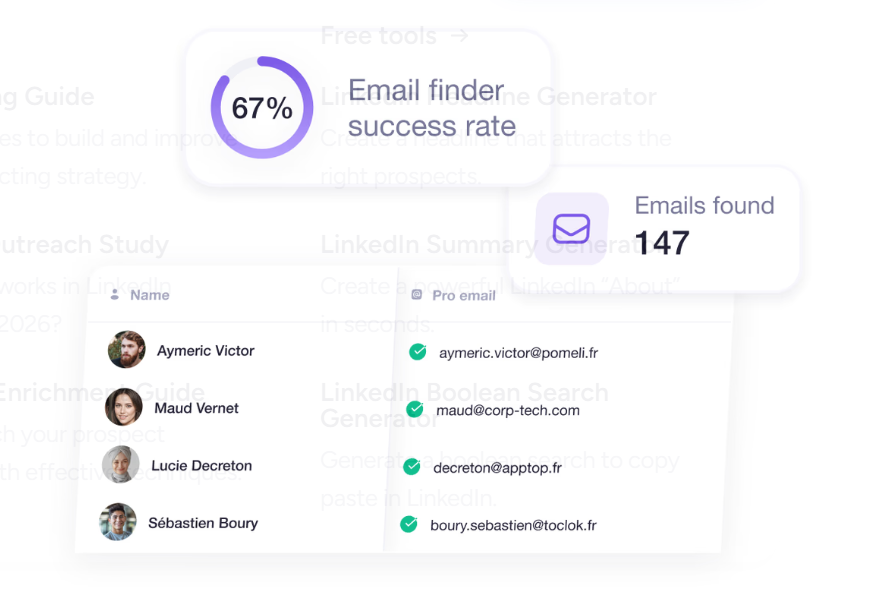
Source: Waalaxy
For users who want LinkedIn and email outreach without managing two tools, this integration is useful. But the data powering everything still comes from LinkedIn search results. Waalaxy doesn't have its own contact database.
ZoomInfo operates at a different level. Instead of automating actions on LinkedIn search results, ZoomInfo provides the data layer: 500M contacts with verified direct dials and business emails, company attributes, technographics, org charts, and real-time buyer intent signals.

Source: ZoomInfo
The GTM Context Graph (processing 1.5B+ data points daily) combines this data with your CRM records and conversation data to surface not just who to contact, but why they're worth contacting now. Outreach then runs through GTM Workspace, native integrations with Salesloft, or any tool connected via API.
The practical difference: Dux-Soup and Waalaxy automate the sending. ZoomInfo answers the question that should come before sending: who should you actually be talking to?
Dux-Soup gives you more control, Waalaxy gets you started faster
If you're choosing strictly between Dux-Soup and Waalaxy for LinkedIn automation, the trade-off is control versus simplicity.
Dux-Soup's drip campaign builder supports up to 12 sequential actions per campaign: connection requests, messages, InMails, profile visits, endorsements, follows, and post likes, each with custom delays. Four campaign types (Preconnect, Postconnect, Connect, and Visit) let you design sequences tailored to the prospect's connection degree.
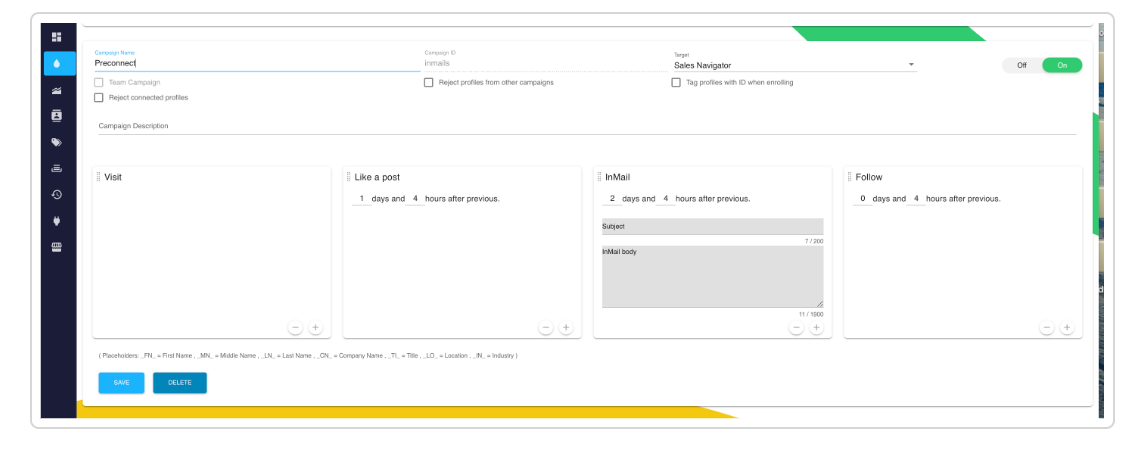
Source: Dux-Soup
The Expert UI exposes throttling controls, and the Funnel Flow dashboard tracks prospects through seven pipeline stages from Enrolled to Qualified.
Waalaxy takes the opposite approach. Instead of building campaigns from scratch, users choose from 99+ pre-built sequences covering LinkedIn-only, email-only, and multichannel combinations.
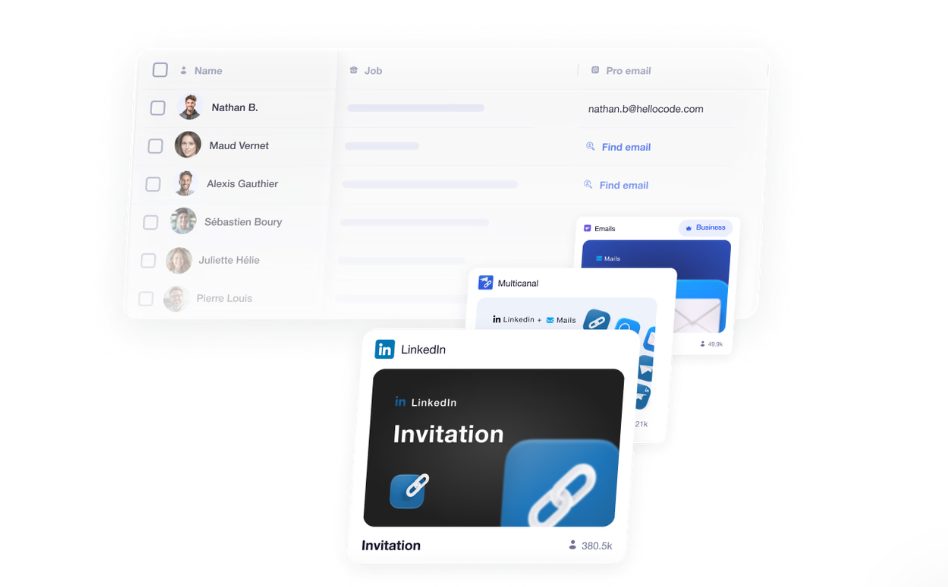
Source: Waalaxy
The Waami AI assistant generates outreach messages from four inputs: target audience, value proposition, differentiator, and call to action. Users can't build custom sequence logic from scratch, and that's intentional. Waalaxy bets that most users would rather pick a proven template than architect their own workflow.
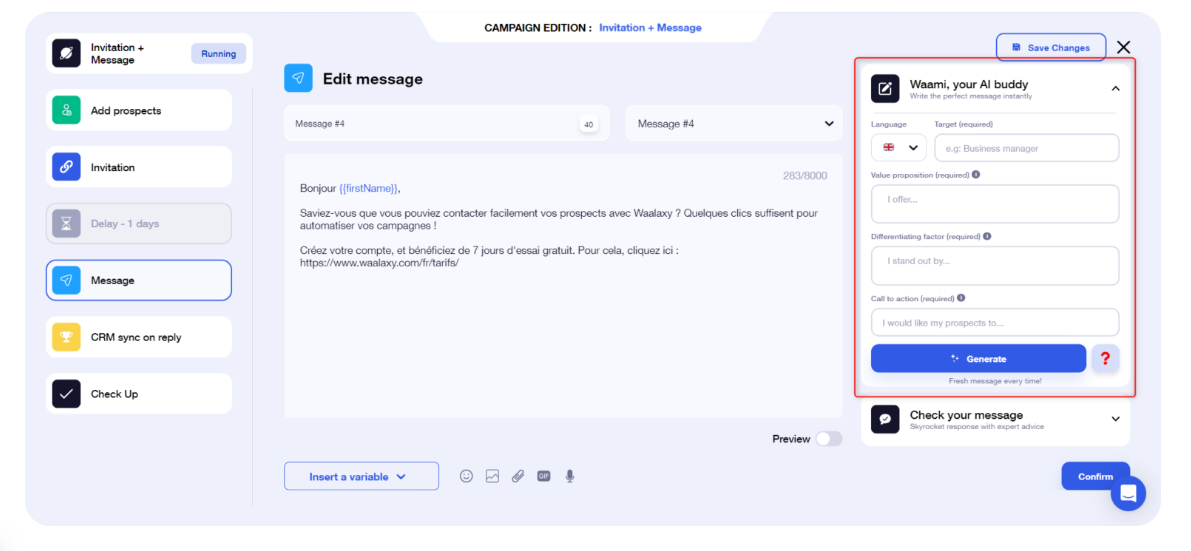
Source: Waalaxy
For individual reps and recruiters who want to launch campaigns quickly, Waalaxy's simplicity is a real advantage. For agencies managing multi-step sequences across dozens of client accounts, Dux-Soup's configurability and agency dashboard are hard to replace.
The data gap neither tool fills
Both Dux-Soup and Waalaxy pull prospect data from LinkedIn search results. This means your outreach quality depends on what LinkedIn's search filters can surface and on the accuracy of self-reported LinkedIn profiles.
Neither tool tells you which of those prospects are actively researching solutions like yours. Neither provides verified direct-dial phone numbers. Neither shows you the full buying committee at an account, their tech stack, their funding history, or their hiring patterns. You're automating outreach to a list, but the list itself is only as good as a LinkedIn search.
ZoomInfo closes this gap. Buyer Intent tracks signals from 210 million IP-to-Organization pairings and 6 trillion+ keyword-to-device pairings monthly, identifying companies actively researching topics relevant to your product. Guided Intent goes further, surfacing the specific topics historically correlated with your closed-won deals rather than requiring you to guess which keywords matter.
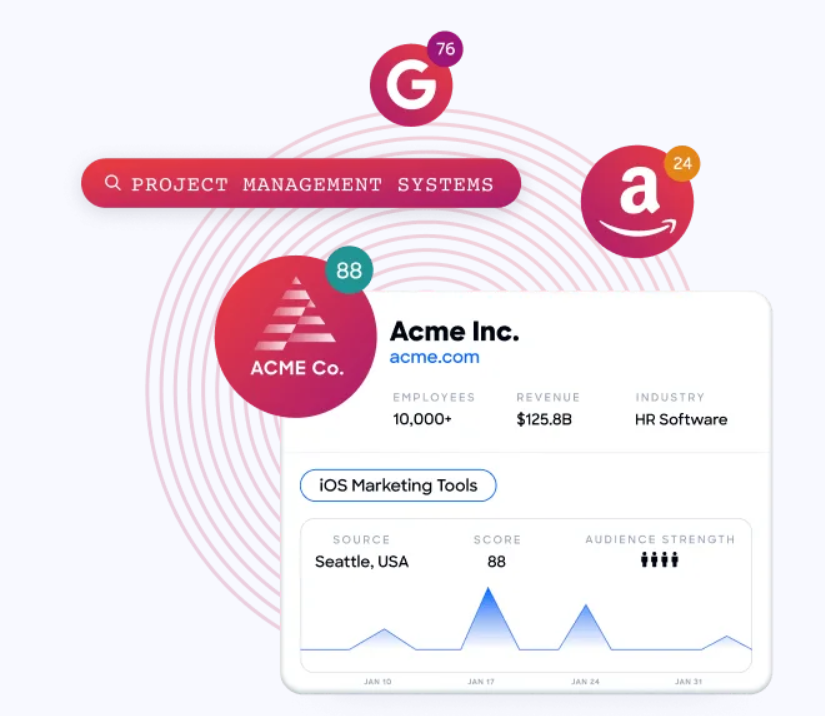
Source: ZoomInfo
The GTM Context Graph layers this intent data with your CRM records, conversation intelligence, and behavioral signals to reveal not just that an account is in-market, but why a deal is moving and which contacts are driving the decision.
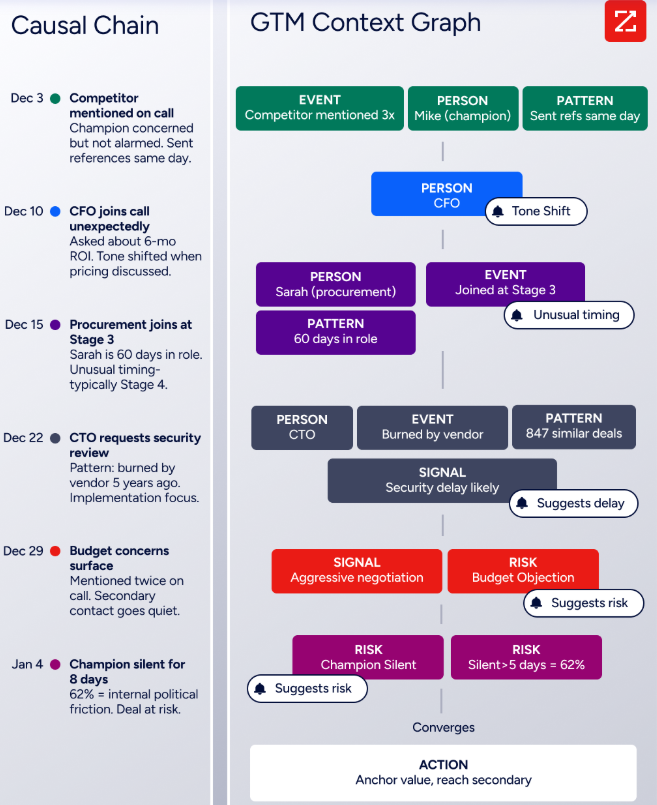
Source: ZoomInfo
"That combination of our internal CRM data, external signals, and AI that's given all that context has helped us craft very specific account- and persona-based messages. And people have responded to them right away." (Toby Carrington, CBO, Seismic)
For a solo consultant running 50 LinkedIn connection requests a day, this level of intelligence may be more than needed. For a B2B sales team where each deal is worth five or six figures, reaching the right person at the right time with the right message is worth far more than sending more messages faster.
Cloud execution comparison
Whether your campaigns run when your laptop is closed matters more than it sounds.
Dux-Soup offers both browser-based and cloud execution. The Pro and Turbo plans ($14.99/month and $55/month) run through a Chrome extension, so campaigns stop when the browser closes.
The Cloud Dux plan ($99/month) moves execution to Dux-Soup's infrastructure, running campaigns 24/7 without the browser open. Dux-Soup reports users seeing twice the results after switching to Cloud because automation no longer pauses during lunch, meetings, or overnight.
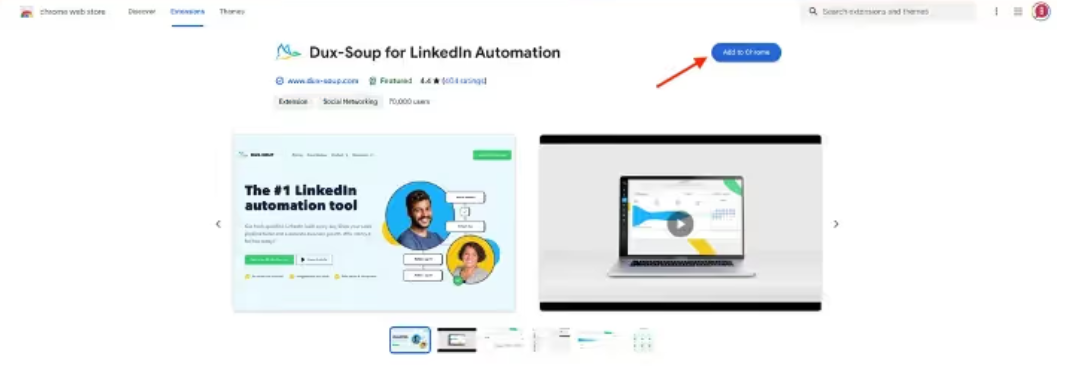
Source: Dux-Soup
Waalaxy has no cloud execution option. All campaigns run through the Chrome extension, meaning the browser must stay open for automation to continue. For teams that need always-on prospecting or operate across time zones, this is a real constraint.
ZoomInfo is cloud-native. GTM Workspace and GTM Studio run in the cloud, with workflows and plays executing continuously based on real-time signals. There's no extension dependency.
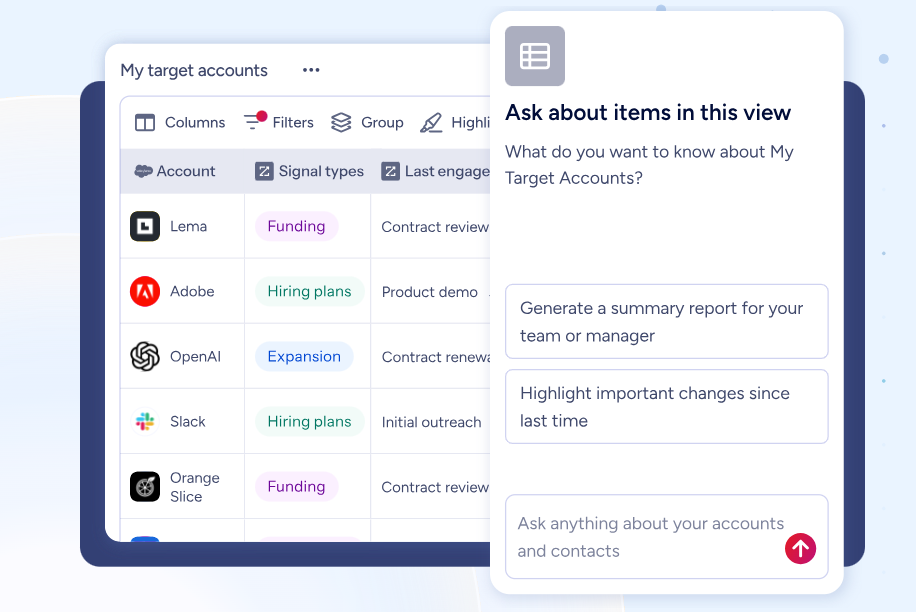
Source: ZoomInfo
For individuals comfortable keeping a browser tab running, Waalaxy's approach works fine. For teams and agencies that need reliability, Dux-Soup's Cloud plan or ZoomInfo's cloud-native architecture removes the single point of failure.
Team and agency features
Dux-Soup has the more developed agency infrastructure of the two LinkedIn tools. The Cloud Agency plan ($371/month) provides a single dashboard managing unlimited client LinkedIn accounts with metered billing by the day, so agencies pay only for active sessions.
Shared Team Campaigns enforce automatic prospect deduplication across team members. The Unified Inbox aggregates replies from all client accounts into one view. And the 2025 Slack and Microsoft Teams integrations let team members monitor LinkedIn conversations without sharing credentials.
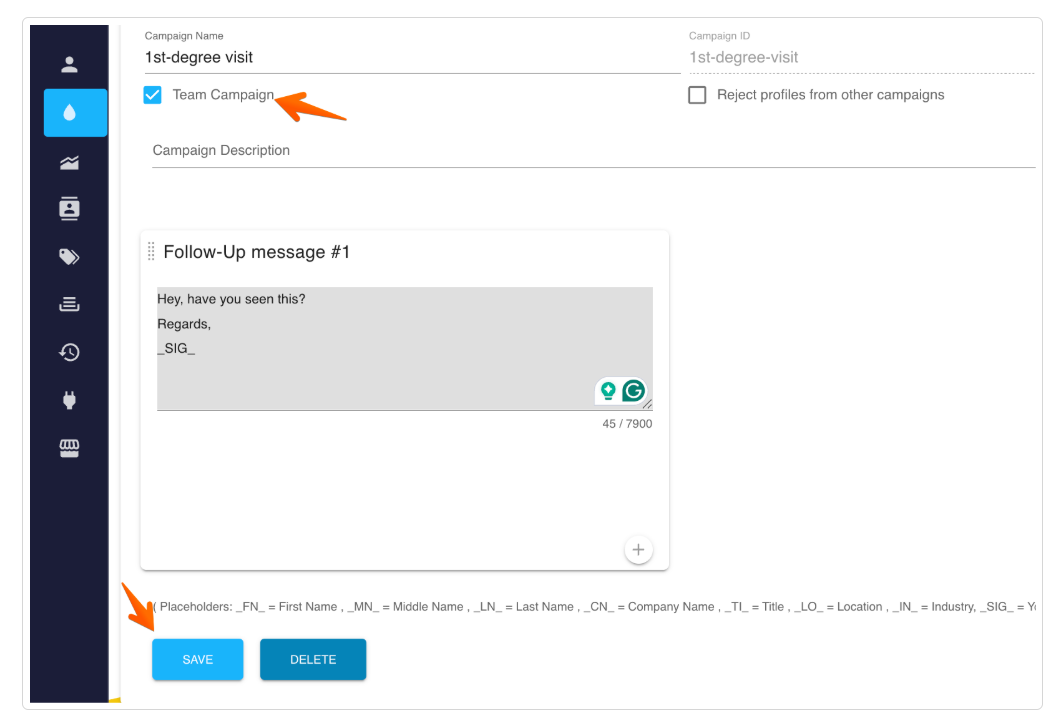
Source: Dux-Soup
Waalaxy added team features including a centralized dashboard with 1-click access to member accounts, anti-duplicate prospect import, and shared lead lists. Teams can share a single Sales Navigator license across members. But the team inbox is not shared (team members cannot view each other's conversations) and agency-specific billing or multi-client management features lag behind Dux-Soup's.
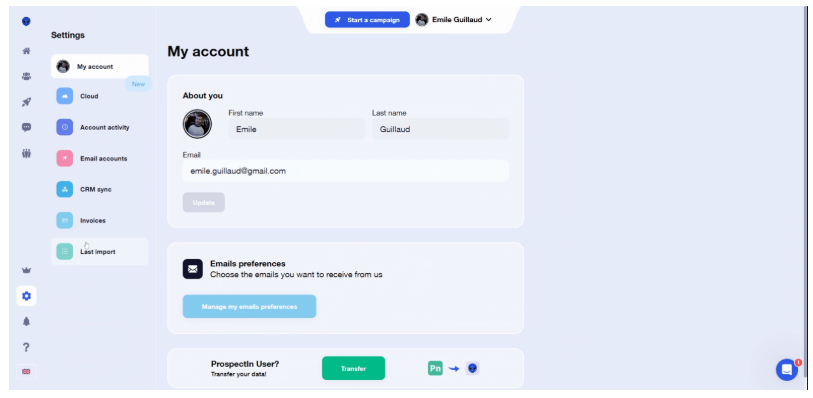
Source: Waalaxy
ZoomInfo approaches team collaboration differently. GTM Studio lets RevOps and marketing teams design plays that feed prioritized accounts and AI-drafted outreach directly into GTM Workspace for sellers. A signal one team detects is immediately actionable by every other team.
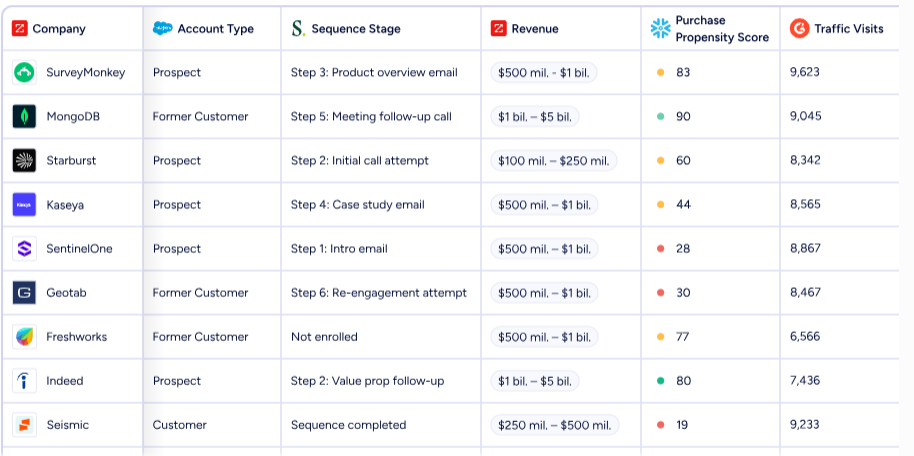
Source: ZoomInfo
For enterprise sales organizations, this coordination across marketing, sales, and RevOps drives pipeline in ways that automating more LinkedIn messages cannot.
LinkedIn account safety
Any LinkedIn automation tool operates in tension with LinkedIn's terms of service. How each tool manages this risk differs.
Dux-Soup leads with safety. The product ships with four safety features on its entry plan: activity limits, on/off scheduling, snooze-on-daily-limits, and robot-speed management. The Cloud plan randomizes execution speed at the server level rather than relying on users to configure safe settings. New users start in a simplified UI with pre-set defaults that detect the LinkedIn account type and apply appropriate caps.
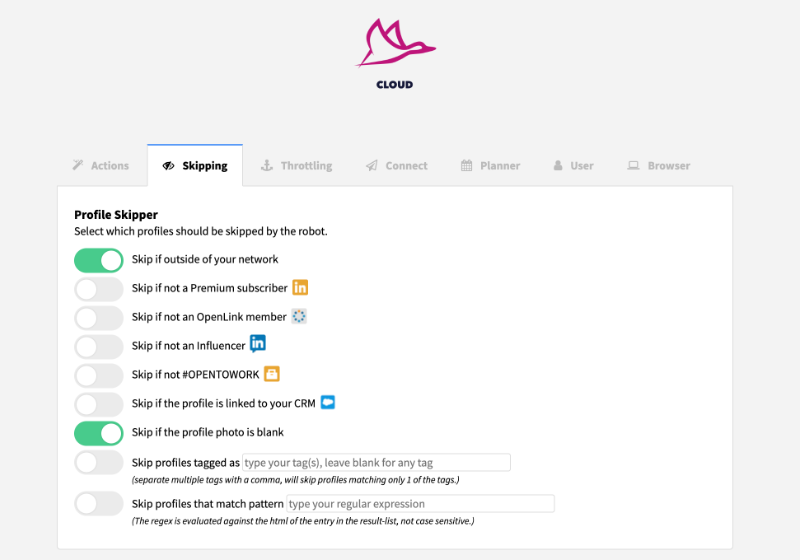
Source: Dux-Soup
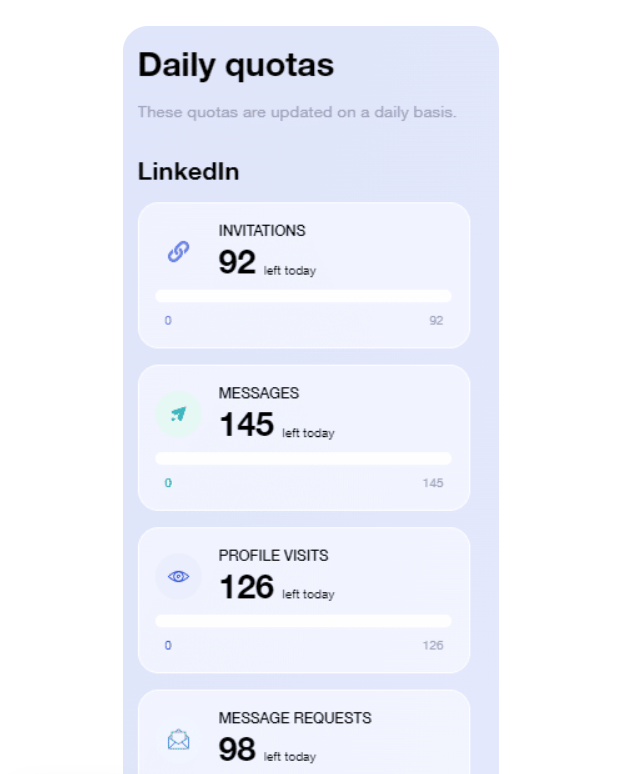
Waalaxy implements similar protections: randomized daily quotas (80-100 connection requests/day, 120-150 messages/day), random 2-3 minute delays between actions, and an abnormal-behavior alert system that pauses campaigns for 48 hours if limits are at risk. Waalaxy also intercepts LinkedIn's extension-detection script to avoid blacklist detection.
Source: Waalaxy
Both tools reduce but don't eliminate the risk of browser-extension-based automation. User feedback on G2 for Dux-Soup notes LinkedIn restriction incidents, particularly for users who push activity volumes. Waalaxy users report similar experiences.
ZoomInfo sidesteps this tension entirely. It doesn't automate actions inside your LinkedIn session. Instead, it provides verified contact data (direct dials and business emails) so your outreach can happen through channels you control: phone, email, or your preferred sales engagement platform.
Pricing comparison
The pricing structures reflect each tool's target market.
Dux-Soup offers three individual tiers: Pro at $14.99/month, Turbo at $55/month, and Cloud at $99/month (annual billing reduces these by roughly 25%). Pro covers basic LinkedIn automation. Turbo adds drip campaigns, CRM integrations, and the Funnel Flow dashboard. Cloud adds always-on execution. The Cloud Agency plan starts at $371/month with a 5-seat minimum, and additional seats cost $74.20/month. Team plans offer volume discounts up to 50%.
Waalaxy starts with a permanent free plan offering 80 LinkedIn invitations per month. Paid plans run from €19/month (Pro, 300 invitations) to €69/month (Business, 800 invitations plus cold email). The Business plan is the only tier with multichannel email capability. The Inbox add-on costs an additional €20/month. Email Finder credits beyond the included monthly allocation are purchased as recurring add-ons (525 credits for +€30/month). Quarterly billing saves 20%, annual saves 50%.
ZoomInfo uses custom-quoted pricing based on seats, credit volume, features, and contract length. There's no published price list.
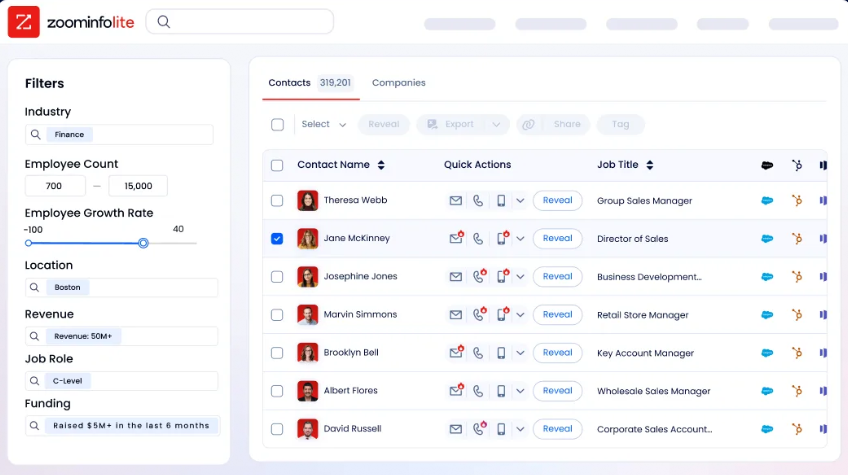
ZoomInfo Lite provides permanent free access with 10 monthly export credits, and a 7-day free trial is available for paid features. ZoomInfo costs more than either LinkedIn tool. It's an enterprise investment, not a per-rep subscription. But the comparison isn't apples-to-apples. Dux-Soup and Waalaxy automate LinkedIn actions. ZoomInfo provides the data, intelligence, and multi-channel execution underneath your entire go-to-market motion.
Source: ZoomInfo
For a solo founder spending $20/month to automate LinkedIn connection requests, ZoomInfo is more than you need. For a sales team spending six figures on outreach tools, data vendors, and intent providers separately, ZoomInfo consolidates those into one platform, and the total cost often compares favorably.
Integration ecosystems
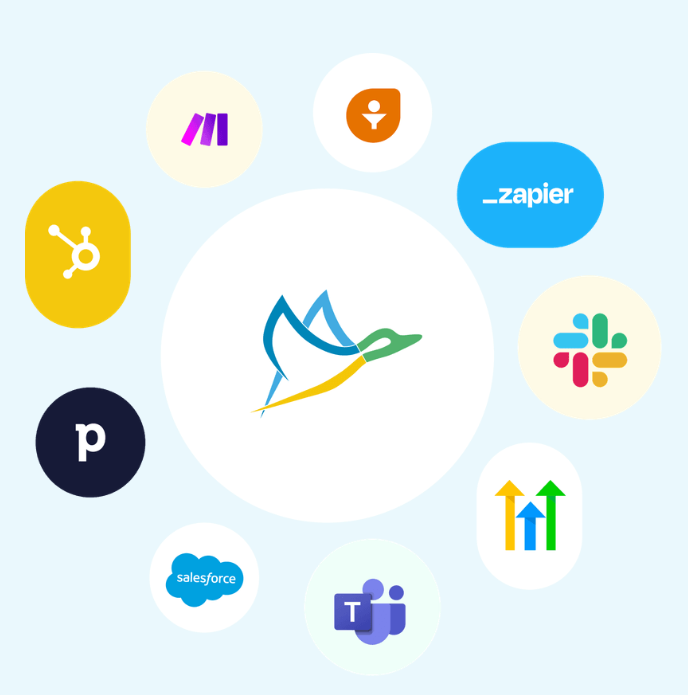
Dux-Soup has the broadest native CRM integration set of the two LinkedIn tools: direct CRM connectors for Salesforce, HubSpot, Pipedrive, Freshsales, SharpSpring, and HighLevel, plus Zapier and Make libraries and a seven-API REST architecture for custom builds.
Source: Dux-Soup
The bidirectional API means CRM events can trigger LinkedIn actions, and LinkedIn activity pushes back into the CRM automatically. The HighLevel integration is notable, supporting two-way sync with bulk campaign enrollment from within the CRM.
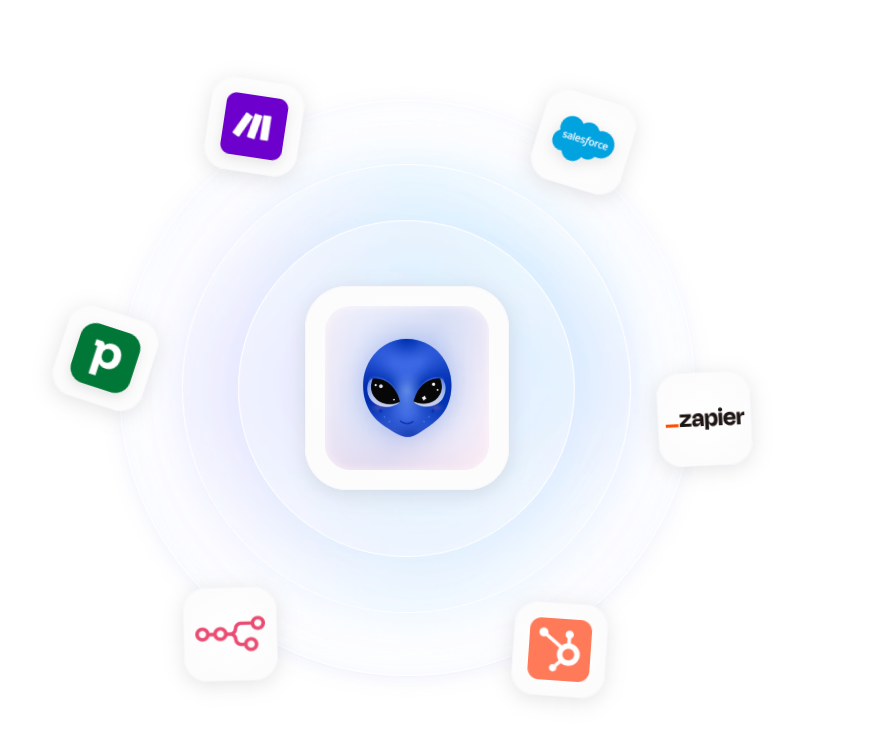
Waalaxy offers HubSpot and Pipedrive integrations natively, with everything else routed through Zapier, Make, or n8n. The CRM sync reaches 2,000+ tools through these middleware platforms, but there's no open public API for custom development. API-based lead import is restricted to Advanced and Business plans.
Source: Waalaxy
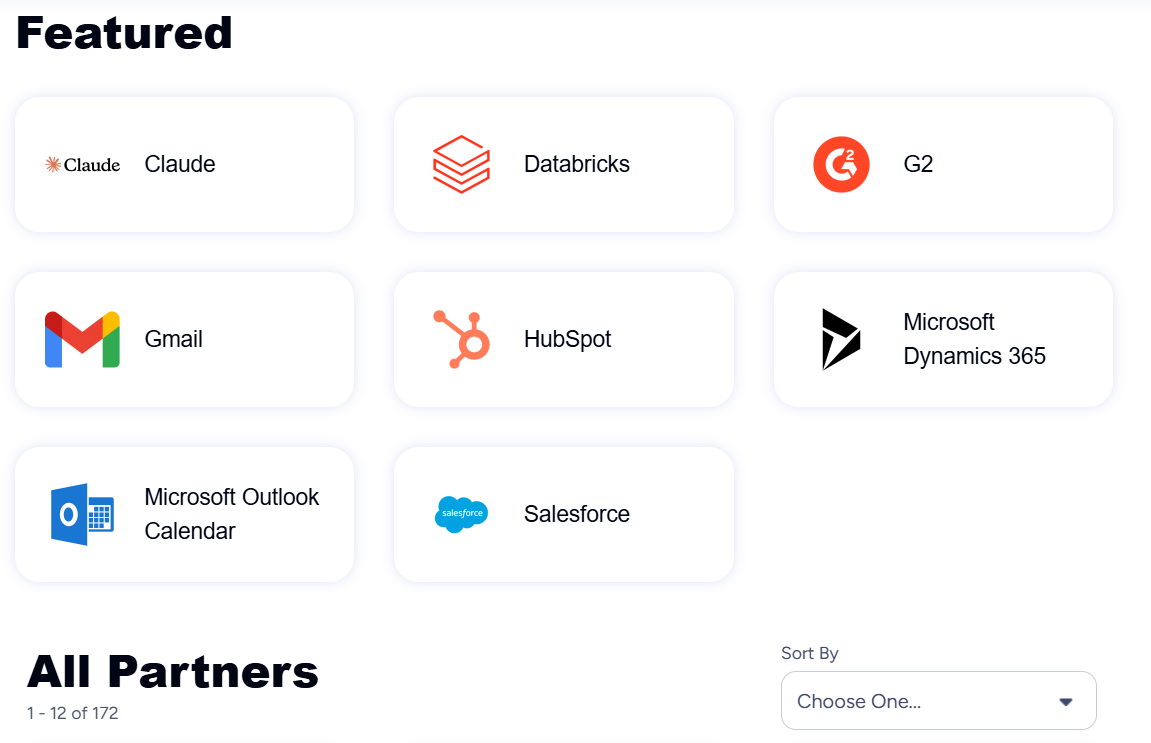
ZoomInfo operates at a larger integration scale. The App Marketplace lists 120+ partner integrations across CRM, marketing automation, sales engagement, data warehouses, and ATS platforms.
Source: ZoomInfo
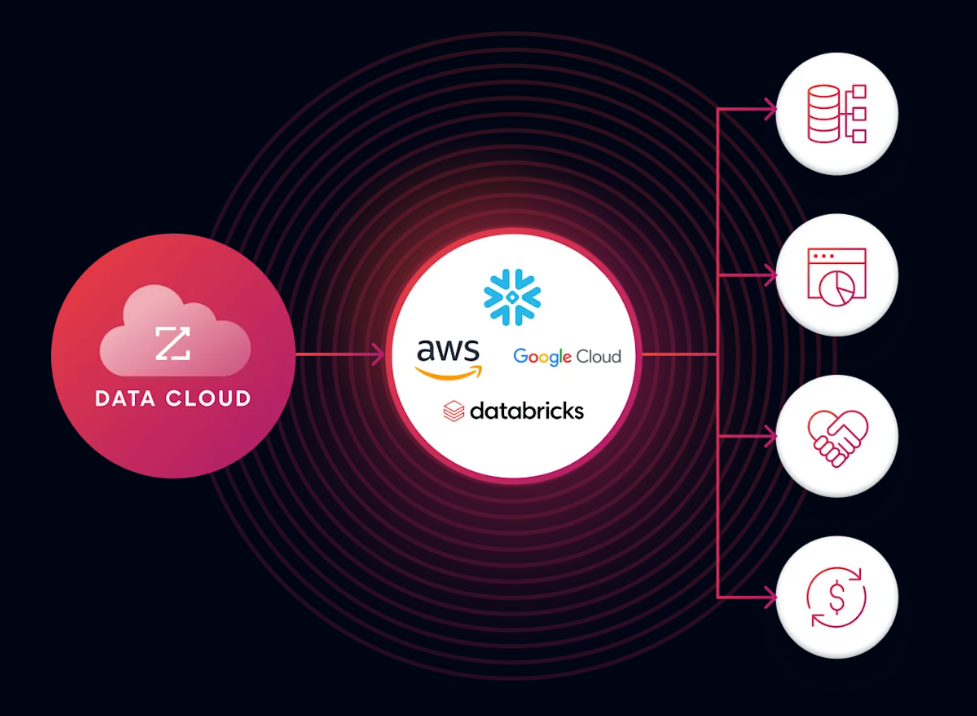
The Enterprise API provides programmatic access across four API areas (Data, Copilot, Marketing, and Platform). The MCP server connects ZoomInfo's data directly to AI models like Claude and ChatGPT, with no custom coding beyond one-time configuration. Cloud Partners enable direct data ingestion into AWS, Snowflake, Google Cloud, and Databricks.
Source: ZoomInfo
"The plug-and-play aspect of the API means I can integrate it very easily into any process and get information at a moment's notice." (Jerry Wilson, Senior Marketing Intelligence Analyst, BDO Canada)
Dux-Soup vs. Waalaxy vs. ZoomInfo: Which should you choose?
The right tool depends on what bottleneck you're actually trying to solve.
Choose Dux-Soup if:
LinkedIn is your primary outreach channel and you want full control over campaign sequences
You're an agency managing outreach for multiple clients from one dashboard
You need always-on cloud execution without keeping a browser open
CRM integration with bidirectional data sync matters to your workflow
You want pipeline tracking through Funnel Flow's seven-stage visualization
Choose Waalaxy if:
You want the fastest path from zero to running LinkedIn outreach campaigns
You need LinkedIn and cold email sequences in one tool without managing separate platforms
You're a solo rep, recruiter, or founder who values simplicity over configurability
A permanent free plan matters for testing before committing budget
Pre-built campaign templates are more useful to you than custom sequence builders
Choose ZoomInfo if:
You need to know which accounts are actively in-market before you reach out
Verified direct dials and business emails are more valuable than LinkedIn messages alone
Your team needs account intelligence, not just outreach automation
You want one platform covering data, intent signals, conversation intelligence, and multi-channel execution
You're building a scalable GTM operation, not just automating one channel
Explore ZoomInfo with a free trial or start with ZoomInfo Lite at no cost.
Dux-Soup and Waalaxy both solve a real problem: LinkedIn prospecting is tedious and manual, and automating it saves hours per day. But automation without intelligence is just sending faster. The teams that outperform aren't the ones sending the most LinkedIn messages. They're the ones reaching the right people, at the right time, with the right message. That's the layer ZoomInfo adds, and it's the difference between high-volume outreach and high-conversion outreach.
Dux-Soup vs. Waalaxy vs. ZoomInfo FAQ
What is the main difference between Dux-Soup, Waalaxy, and ZoomInfo?
Dux-Soup and Waalaxy are both LinkedIn automation tools that automate connection requests, messages, and follow-up sequences from a Chrome extension. Dux-Soup offers more campaign control and cloud execution, while Waalaxy adds built-in cold email and prioritizes simplicity with pre-built templates. ZoomInfo is a different category: a GTM platform that provides its own B2B database of 500M contacts with verified emails and phone numbers, buyer intent signals, and multi-channel execution, addressing the "who to contact and why" question that LinkedIn automation tools leave unanswered.
Which tool is cheapest to get started with?
Waalaxy has the lowest entry point with a permanent free plan offering 80 LinkedIn invitations per month. Dux-Soup starts at $14.99/month for its Pro plan (browser-based LinkedIn automation). ZoomInfo offers ZoomInfo Lite as a permanent free tier with 10 export credits per month and access to its B2B database, plus a 7-day free trial of paid features. Full ZoomInfo pricing is custom-quoted based on team size and needs.
Can Dux-Soup or Waalaxy send cold emails?
Waalaxy includes cold email sequences on its Business plan (€69/month), with a built-in Email Finder that pulls verified emails from 20+ data sources. Dux-Soup handles LinkedIn only. Cold email must be coordinated through CRM integrations like Salesforce or HubSpot, or via Zapier and Make workflows. ZoomInfo provides 200M+ verified business email addresses in its own database and orchestrates multi-channel outreach through GTM Workspace and native sales engagement integrations.
Which tool offers cloud-based campaign execution?
Dux-Soup's Cloud plan ($99/month) runs campaigns on Dux-Soup's infrastructure 24/7 without needing the browser open. Waalaxy has no cloud execution. All campaigns run through the Chrome extension and stop when the browser closes. ZoomInfo is cloud-native, with all workflows and AI-driven plays running continuously from its platform.
How do these tools handle LinkedIn account safety?
Both Dux-Soup and Waalaxy include safety features: randomized delays, daily activity caps, and automatic pausing. Dux-Soup's Cloud plan manages execution speed at the server level, removing user configuration as a risk factor. Waalaxy intercepts LinkedIn's extension-detection script to avoid blacklisting. Neither tool eliminates the risk of browser-extension-based automation. ZoomInfo avoids this risk entirely by providing verified contact data for outreach through channels you control (phone and email) rather than automating actions inside LinkedIn.
Which tool is best for agencies managing multiple client accounts?
Dux-Soup's Cloud Agency plan ($371/month) is designed for agencies, offering a single dashboard for unlimited client LinkedIn accounts, metered daily billing for seats above the 5-seat base, a Unified Inbox for all client replies, and consolidated invoicing. Waalaxy has team features with a centralized dashboard and anti-duplicate protection, but lacks Dux-Soup's agency-specific billing and multi-account management. ZoomInfo serves enterprise teams and agencies at a different level, with GTM Studio for designing plays and GTM Workspace for execution across the full sales organization.
Do any of these tools provide their own contact database?
ZoomInfo is the only platform with its own B2B database: 500M contacts, 100M companies, 135M+ verified phone numbers, and 200M+ verified business email addresses. Dux-Soup and Waalaxy both pull prospect data from LinkedIn search results. They automate actions on LinkedIn but do not maintain an independent contact database. Waalaxy's Email Finder enriches LinkedIn profiles with emails from third-party sources, but this is profile-level enrichment, not a standalone database.
Which tool provides buyer intent data?
Only ZoomInfo provides buyer intent signals, tracking research activity from 210 million IP-to-Organization pairings and 6 trillion+ keyword-to-device pairings monthly. Its Guided Intent feature identifies topics historically correlated with deal success. Neither Dux-Soup nor Waalaxy offers intent data. They automate outreach to lists you build manually from LinkedIn searches, with no visibility into which prospects are actively evaluating solutions.
Comparing Dux-Soup and Waalaxy? These related breakdowns go deeper:
