
Encharge is a B2B SaaS marketing automation tool that sits between two categories most startups know well: customer messaging tools that handle in-app communication but can't automate workflows beyond the product, and marketing platforms that offer automation but struggle with behavior-based emails tied to what users do inside your software.
We've analyzed Encharge and believe it's a good choice if:
You run a B2B SaaS product and need to trigger emails based on in-app user behavior
You want a visual flow builder that non-technical team members can operate
You need native billing integrations with Stripe, Chargebee, Paddle, or Recurly
Your primary use cases are trial conversion, user onboarding, and churn prevention
You're a small team looking for marketing automation priced below HubSpot or Marketo
However, Encharge might not be sufficient if:
You need prospecting data, contact discovery, or buyer intent signals alongside automation
Your go-to-market strategy extends beyond email into multi-channel outreach
You require sales intelligence, org charts, or technographic data on target accounts
You want conversation intelligence and deal tracking in the same platform
You need enterprise compliance certifications and a global data infrastructure
In this case, consider ZoomInfo: a GTM platform that combines B2B data (500M contacts, 100M companies, 200M+ verified business emails), intelligence through its GTM Context Graph, and marketing orchestration through GTM Studio.
We've included a detailed look at ZoomInfo later in this review for B2B teams that need more than email automation. If you want to explore a broader approach to go-to-market, you can start with ZoomInfo Lite for free here.
What is Encharge?
Source: Encharge
Encharge is a marketing automation platform founded in 2018 by Kalo Yankulov and Slav Ivanov in Sofia, Bulgaria. They built it to fill a gap: existing tools were either too generic for SaaS use cases, too expensive to unlock behavioral automation, or poorly suited to event-triggered workflows tied to product activity.
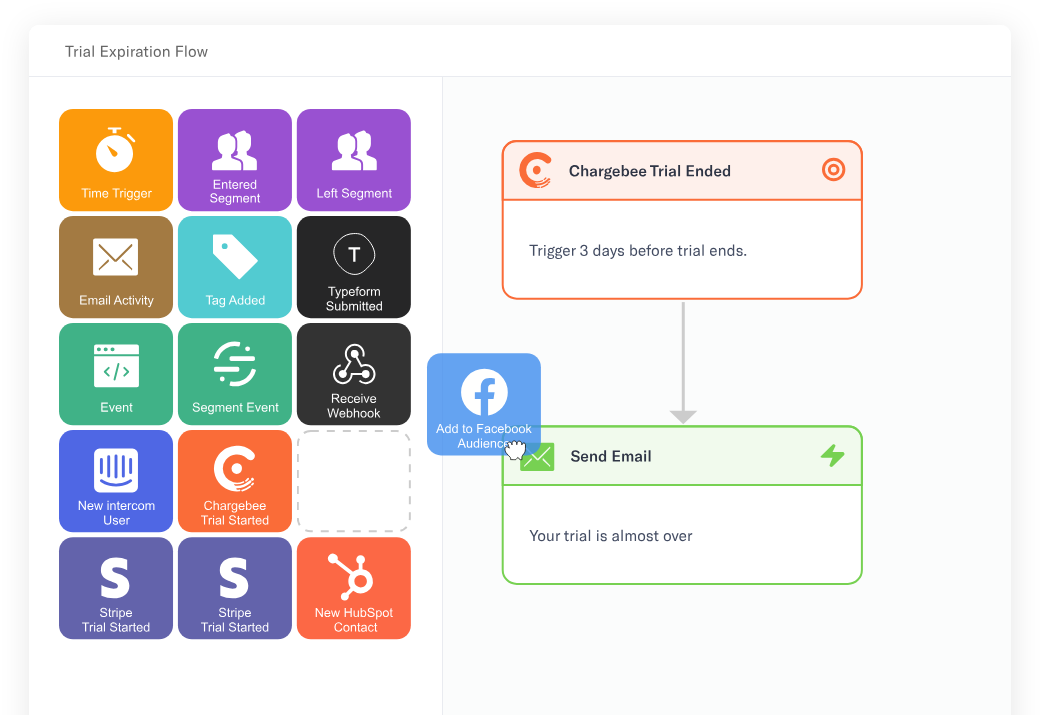
The platform centers on behavior emails, automated messages triggered by what users do (or don't do) inside a SaaS product. A user signs up for a trial but never completes onboarding. A paying customer's subscription is about to expire. Encharge lets marketing and growth teams build visual automation flows around these events without writing code.
Encharge serves 2,000+ companies today and has worked with more than 4,000 over its lifetime. The founders bootstrapped it from the start, with no venture funding on record. In 2024 to 2025, they exited and PXCH Holding I, LLC acquired the company, now headquartered in Miami, Florida. The product has continued to ship updates under the new ownership.
The ideal Encharge user is a B2B SaaS startup or scale-up with a self-serve trial or freemium model, a non-technical marketing team, and a need for behavior-based automation that goes beyond basic email tools but doesn't require enterprise pricing.
Encharge Pros & Cons
Pros | Cons |
|---|---|
- Visual flow builder praised across review platforms | - No permanent free plan (14-day trial only) |
- Native billing integrations (Stripe, Chargebee, Paddle, Recurly, Chargify) | - HubSpot and Salesforce integrations locked to Premium ($159+/month) |
- Behavior-based email triggers tied to in-app product events | - Limited email template library |
- Free email verification included on all plans | - Platform stability challenges reported in 2025 |
- Freeform canvas with multiple sub-flows per automation | - Email-only channel (no native SMS, push, or in-app messaging) |
- Liquid templating for email personalization | - Approximately 48 native integrations (smaller catalog than competitors) |
- Real-time user segmentation with nine condition types | - No native landing page builder |
Encharge Review: How it Works & Key Features
Flow Builder: Encharge's visual automation canvas lets teams design multi-step workflows without code.
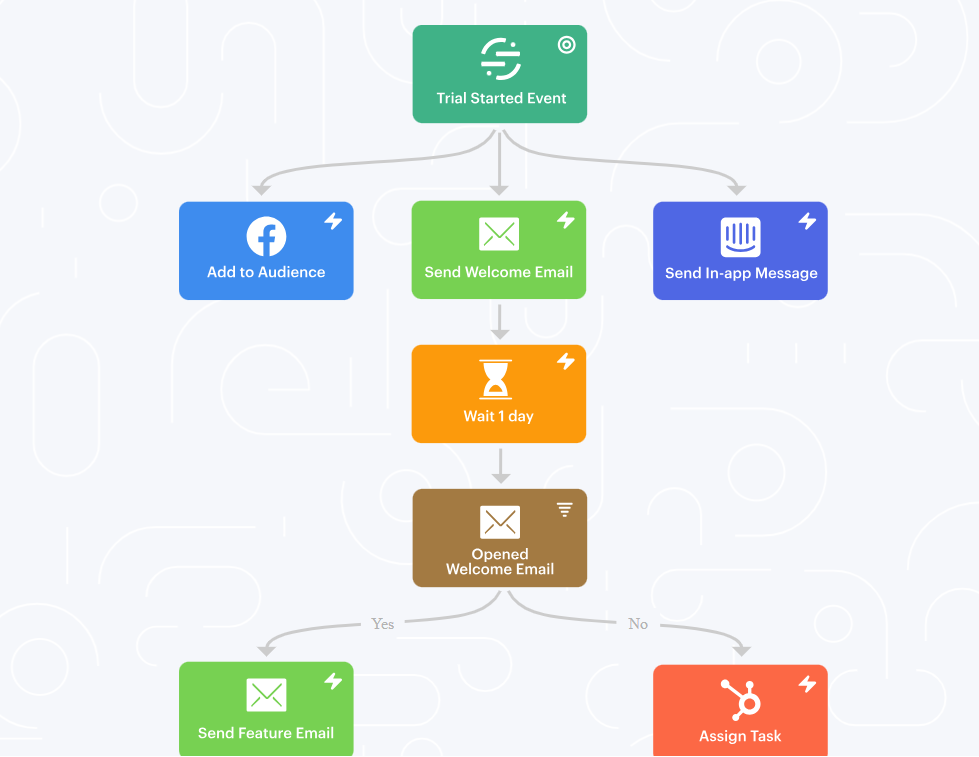
The Flow Builder is Encharge's core feature. It uses a drag-and-drop canvas where users assemble automation workflows by connecting three types of steps: Triggers (how someone enters the flow), Filters (conditions that split people into different paths), and Actions (what happens next, such as sending an email, adding a tag, or posting a Slack notification).
Source: Encharge
What separates it from most competitors is the freeform canvas layout. Tools like ActiveCampaign or Drip use one-directional builders where each step appends below the last. Encharge lets you connect any step to any other step in any direction, and you can include multiple disconnected sub-flows within a single automation, all activating together when you turn the flow on.
Source: Encharge
The trigger library covers over 40 entry points: time-based, segment-based, product event, form submission, and billing triggers from Stripe, Chargebee, Paddle, Recurly, and Chargify. These billing integrations fire on trial starts, trial ends, activations, cancellations, and past-due events without requiring Zapier or custom code.
Actions include sending emails, adding or removing tags, changing fields, adjusting lead scores, running A/B tests, sending Slack notifications, firing webhooks, posting Intercom in-app messages, creating HubSpot deals, and adding users to Facebook ad audiences. Each step on the canvas displays live metrics showing how many contacts are waiting, have passed through, or have failed.
Emails created inside a flow step live as separate objects in a reusable library. You can reference the same email across multiple flows and steps without duplicating content.
Behavior Emails & Event Management: Encharge connects in-app product events to targeted email sequences.
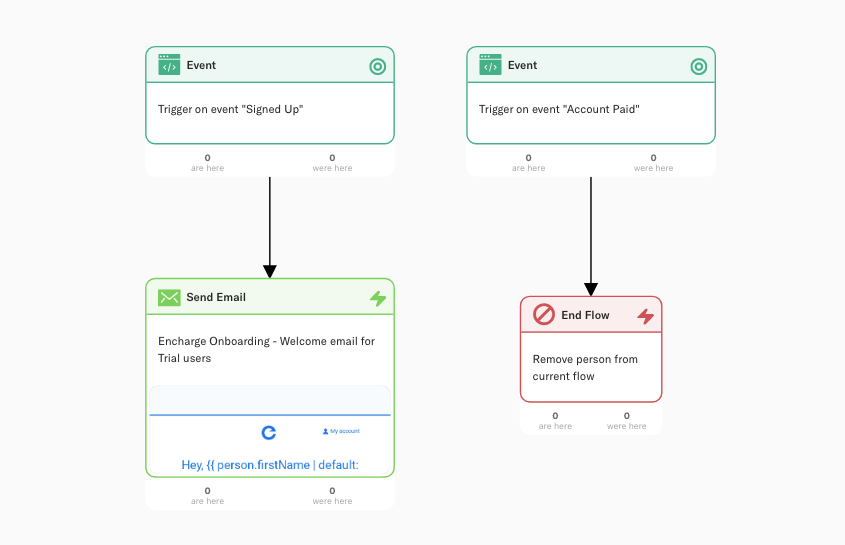
Behavior Emails are Encharge's most SaaS-specific feature. The system works in three stages: marketers define events and their properties in Encharge before writing any code, developers pipe those events into Encharge through the Ingest API, JavaScript tracking, or Segment.com, and then marketers use the Event Trigger flow step to fire email sequences when users perform (or fail to perform) specific actions.
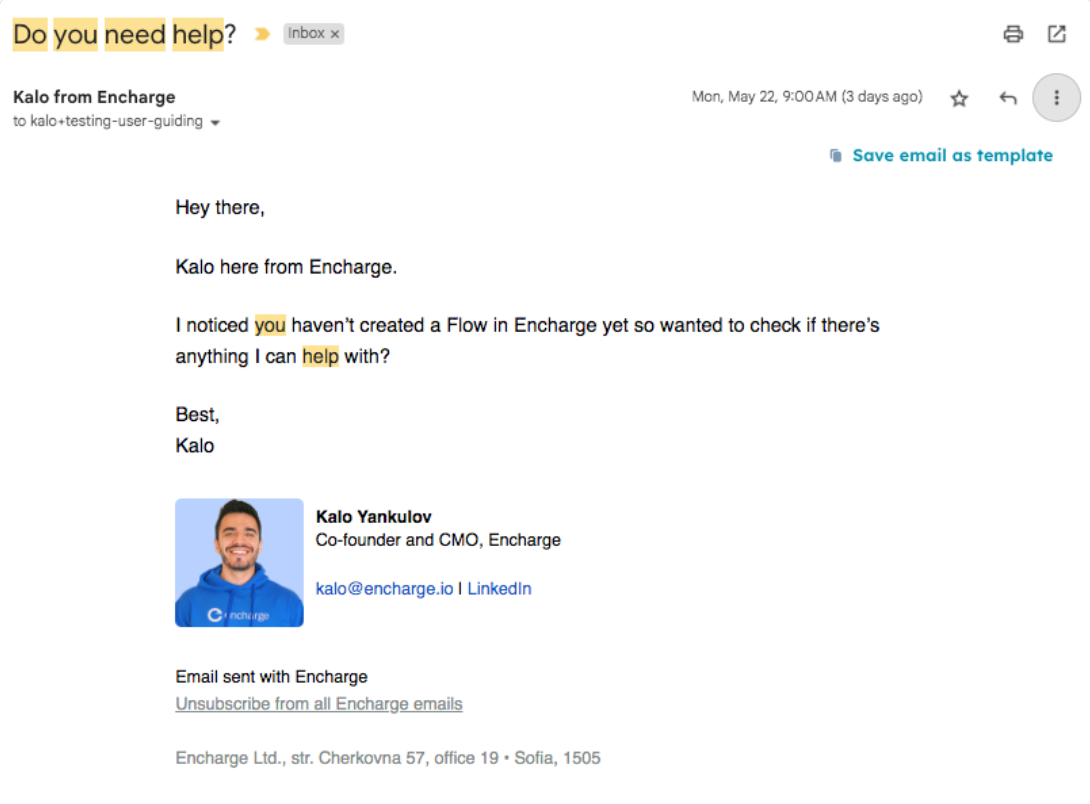
Source: Encharge
Event properties attached to the payload become available as merge tags inside email copy. A built-in merge tag generator produces the correct syntax automatically, so marketers can personalize each email with live product data without writing template code.
The Event Management dashboard consolidates events from all sources (API, JavaScript, Segment, Stripe) into a single view, showing 30-day volume trends, unique users, and cross-references to every flow and segment that uses each event.
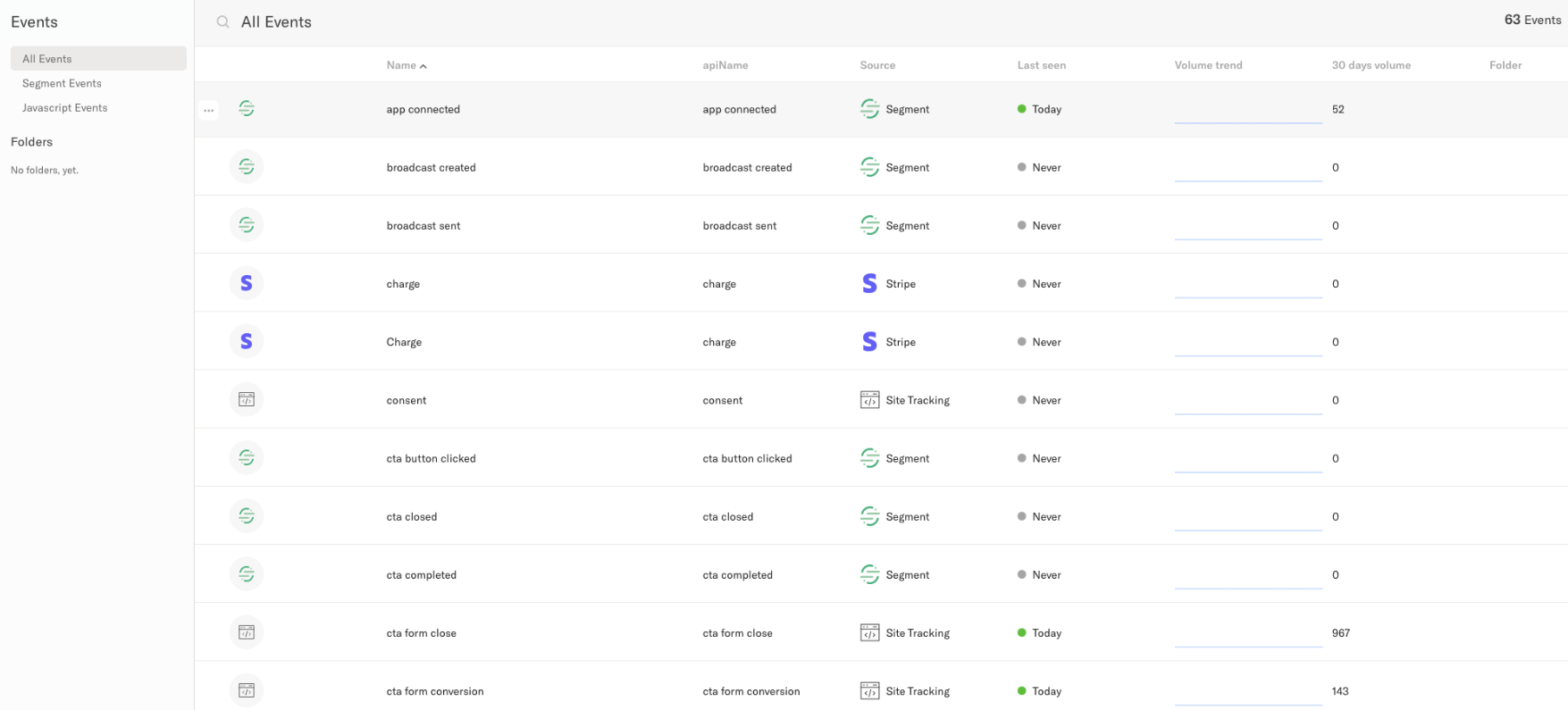
Source: Encharge
Flows can trigger on both positive actions (user completed onboarding step 3) and negative ones (user has not activated a key feature within 7 days).
One notable design decision: marketers define the event schema first, including properties and descriptions, directly in the Encharge UI. This shifts ownership of the tracking plan from engineering to the growth team, which matters in small SaaS companies where developer time is scarce.
Event-based segmentation is available only on the Premium plan ($159+/month).
User Segmentation & Lead Scoring: Encharge builds real-time, rule-based audiences from behavior and CRM data.
User segments in Encharge are dynamic groups that continuously evaluate every contact against defined criteria. Unlike static email lists, these segments automatically add and remove users as their data changes. A user can enter a "Trial Expiring in 7 Days" segment on Monday and leave it on Friday when they upgrade, with automation firing at both transitions.
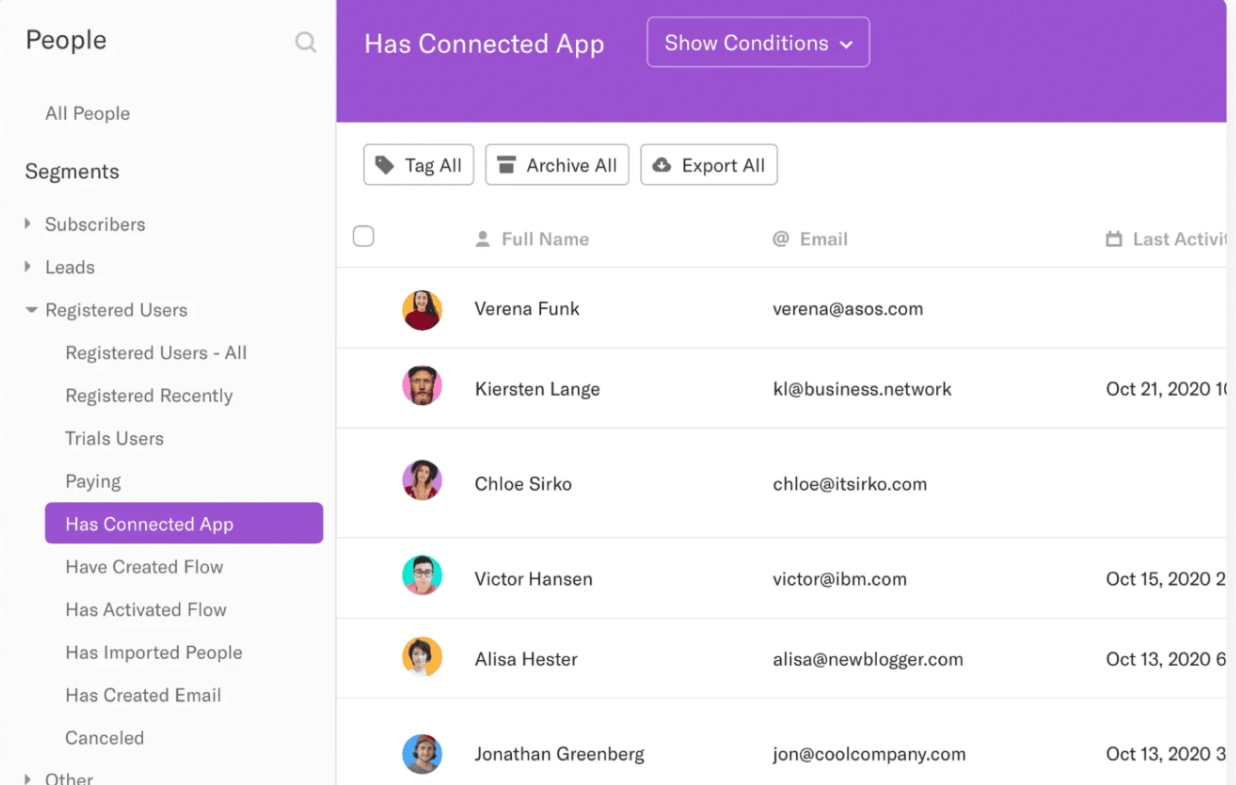
Source: Encharge
Segments draw from nine condition types: Field (any person attribute), Event (product actions, Premium only), Email Activity (opens, clicks, replies), Page Visit (with UTM filtering), Flow Goal, Tag, Segment (nested references), Group (nested AND/OR logic), and Association (company or custom object relationships, Premium only).
These conditions combine with AND/OR logic and nested Group blocks for multi-condition targeting.
Both "Entered Segment" and "Left Segment" events can trigger flows, and a mid-flow "Is in Segment" filter can branch users based on current membership. Segments serve as both audience definitions and automation triggers.
Lead Scoring assigns point values to user actions and attributes. Scores accumulate based on product interactions, email engagement, page visits, and third-party app data. When a user crosses a score threshold and enters a score-based segment, that transition can trigger a sales outreach flow.
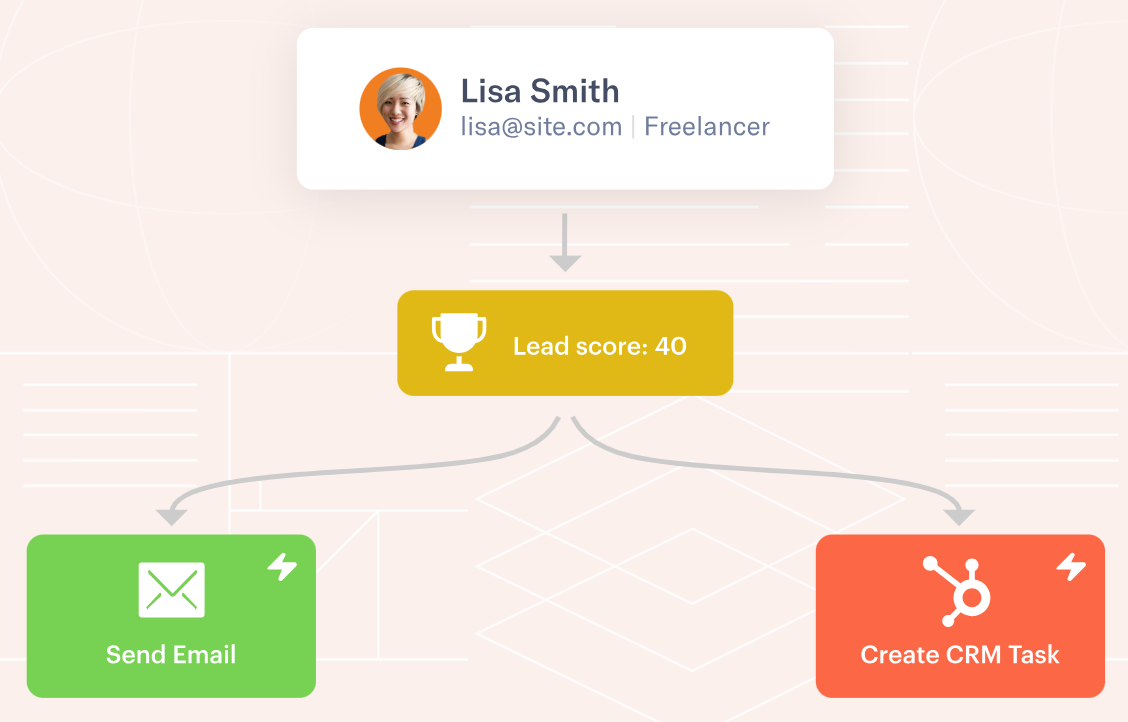
Source: Encharge
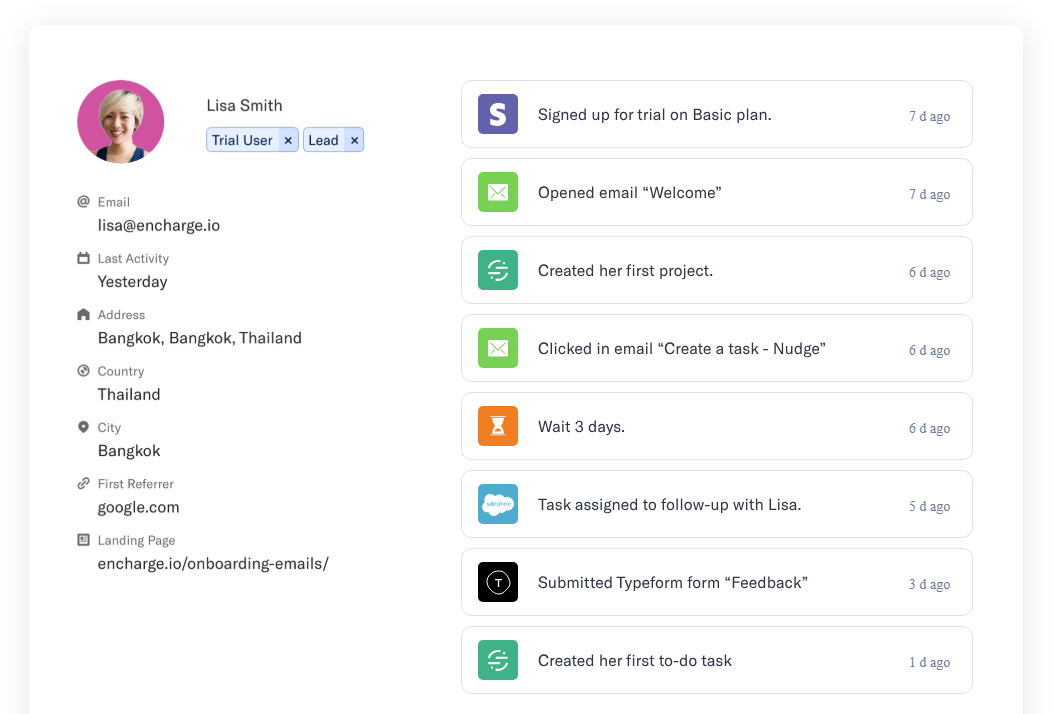
User Profiles consolidate every page visit, product event, email interaction, and flow step into a single activity timeline. The platform also tracks anonymous visitors and can retroactively link pre-identification activity to a named profile once the visitor identifies themselves.
Source: Encharge
Email Editor, Broadcasts & Deliverability: Encharge provides dual editors, one-off campaigns, and managed sending infrastructure.
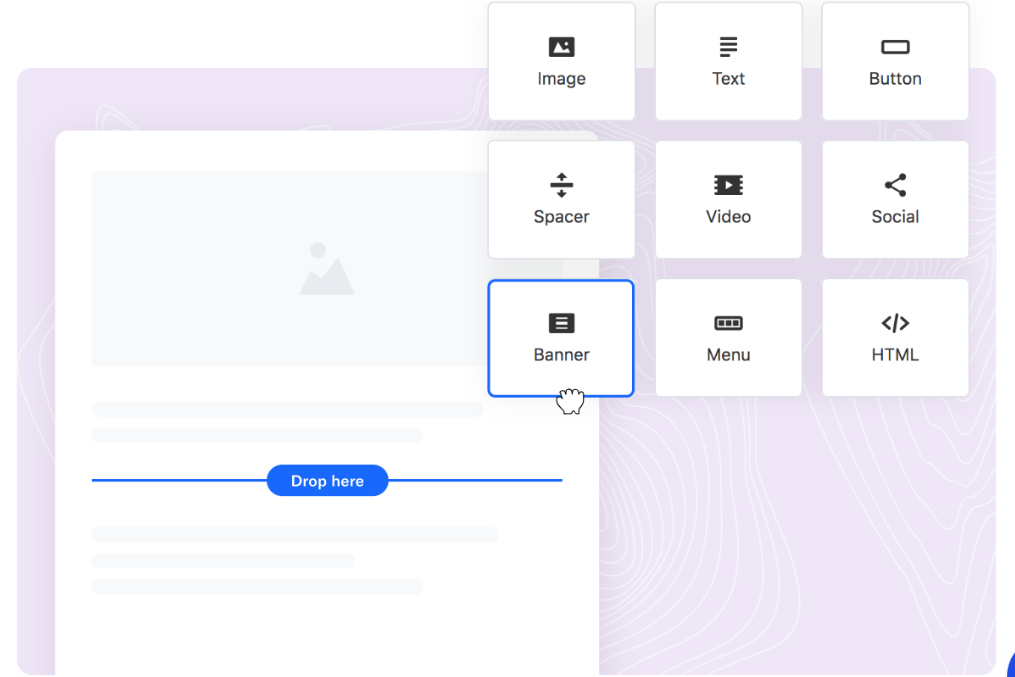
Encharge offers two email editors: a drag-and-drop visual builder for branded HTML emails and a Simple Editor for plain-text messages.
Source: Encharge
Both support Liquid merge tags for dynamic personalization, including conditional content blocks, date formatting, loops, and Encharge-specific extensions like timezone conversion. The editors include AI writing assistance for headline suggestions, copy improvements, and grammar corrections.
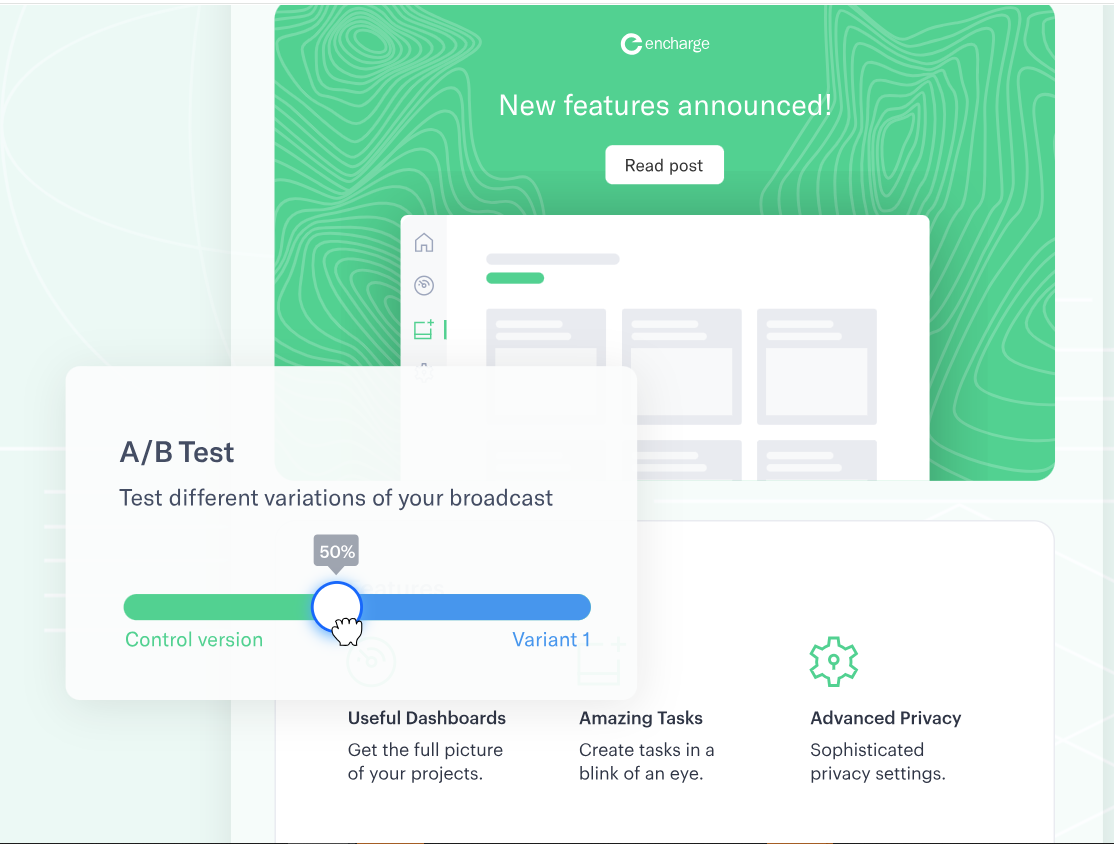
Broadcasts handle one-off campaigns sent to the full list or any defined segment. You can send immediately or schedule delivery in the sender's timezone or each recipient's local timezone. A/B testing supports multiple variations with automatic winner selection based on open rates or click-through rates.
Source: Encharge
For deliverability, Encharge runs on SendGrid and Amazon SES simultaneously for redundancy. The platform uses whitelisted email domains and monitors IPs and domains daily against 86 blacklists. Encharge manually verifies new accounts before their first send and prohibits cold email entirely.
Encharge includes free email verification on every plan. The 5-tier process checks email format, domain existence, disposable email status, MX records, and performs SMTP authentication. Encharge says this covers 98% of all email addresses. Free verification on every tier is uncommon among marketing automation platforms.
Email send volume is capped at 10x the monthly subscriber count on Growth plans and 12x on Premium, with overages billed at $100 per 100,000 emails.
Website Tracking & Forms: Encharge captures page visits and lead data, linking anonymous visitors to known profiles.
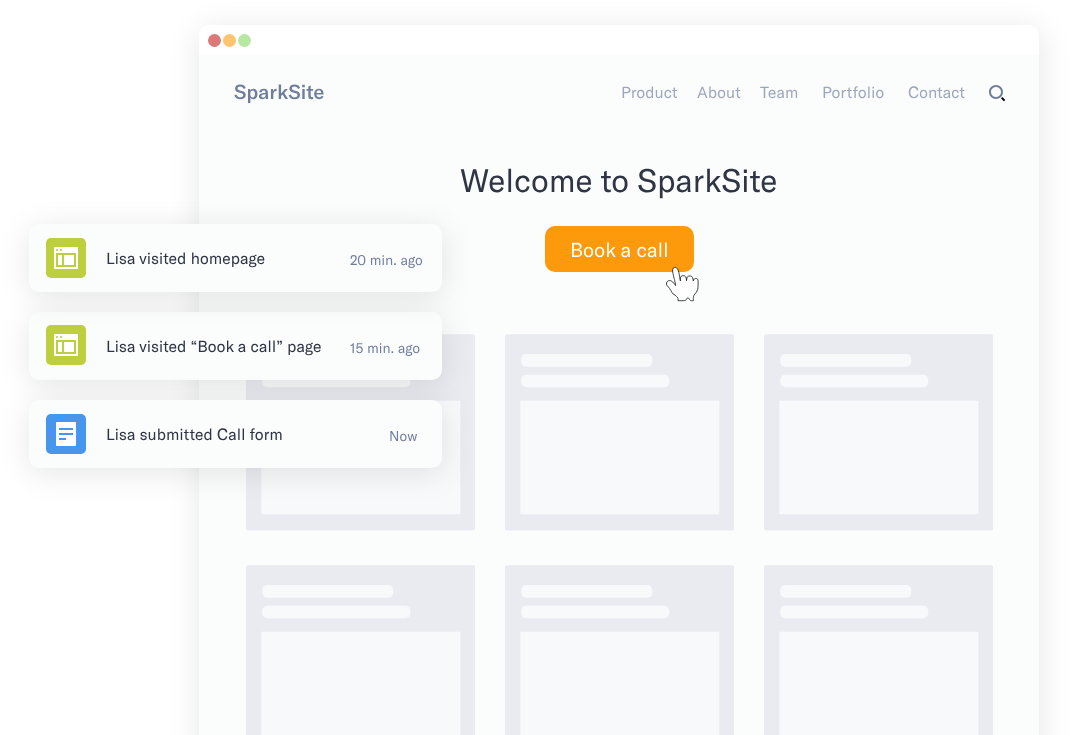
Site Tracking installs via a JavaScript snippet and records page visits in real time, including visits from anonymous users before they identify themselves. The tracking uses first-party cookies, so third-party cookie deprecation doesn't affect it. Once a visitor submits a form, Encharge retroactively links all prior browsing history to their profile.
Source: Encharge
The Page Visited flow trigger fires when someone visits a URL matching defined conditions, with support for UTM parameter filtering and frequency-based rules (for example, sending an email after a prospect visits the pricing page three times in 24 hours).
For lead capture, Encharge supports three approaches: native forms built inside Encharge's form builder, tracked HTML forms already on your website, and submissions from third-party tools like Typeform and Facebook Lead Ads. Native forms include field types (text, email, date, select, checkbox), CSS customization, GDPR consent checkboxes, and per-form analytics showing views, submissions, and conversion rates.
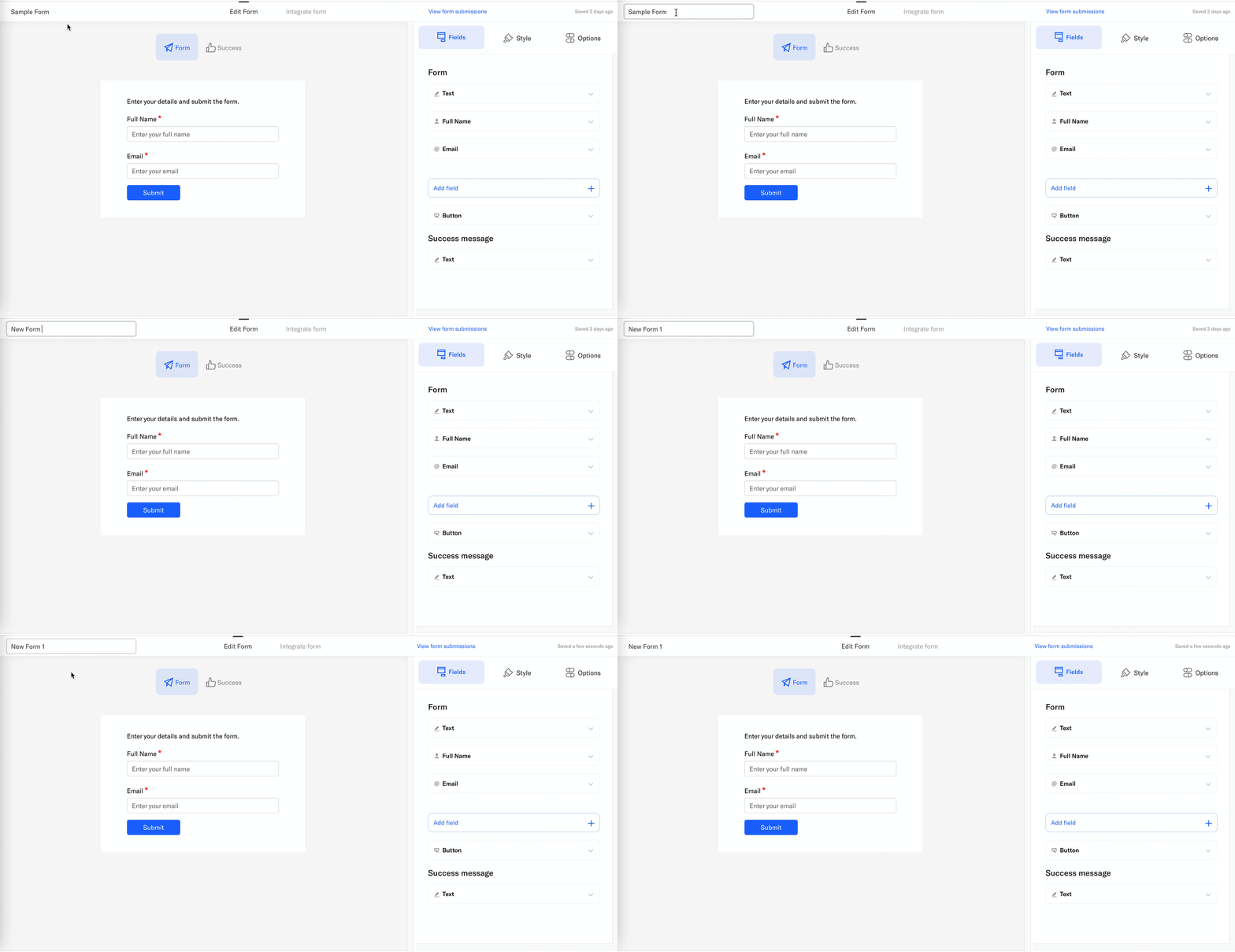
Source: Encharge
The native form builder is lean compared to dedicated form tools. Conditional logic and multi-step form branching are not available.
Company Profiles & Custom Objects: Encharge supports account-level data models for B2B teams.
Most marketing automation platforms are built around individual contacts. For B2B SaaS companies selling to teams, this creates a mismatch: you need to track subscription plans, product usage, and engagement at the company level, not just the person level.
Company Profiles add a company data model above individual contacts. A person can belong to multiple companies, and a company can have multiple people. Company records sync bi-directionally with HubSpot and Salesforce, and company-level segmentation lets you build audiences based on company fields like subscription plan, industry, or MRR.
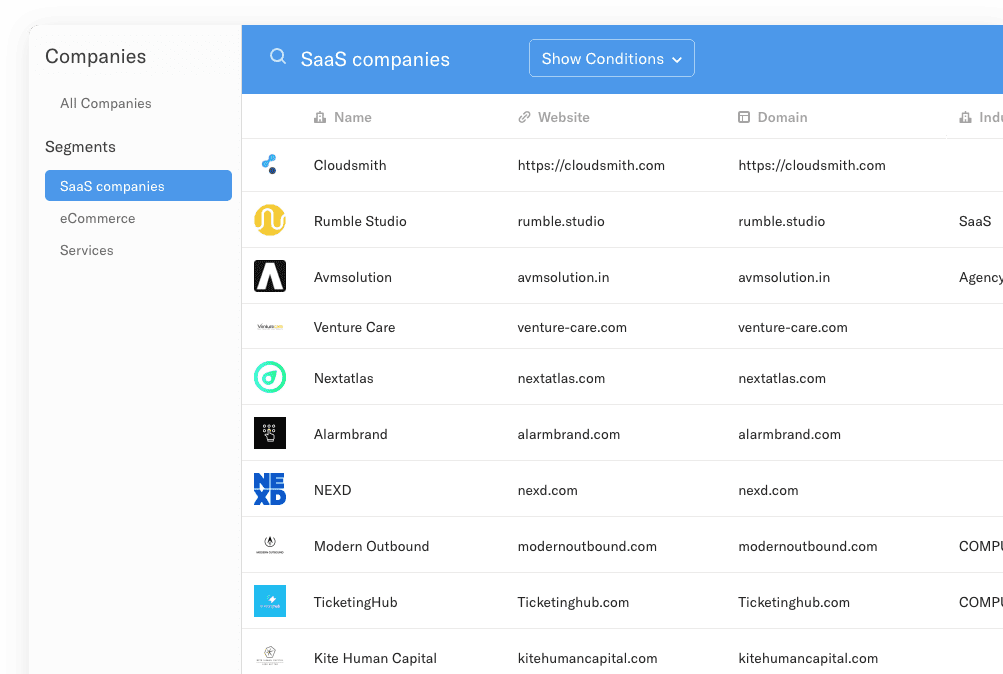
Source: Encharge
Custom Objects extend this by letting you define new record types: deals, invoices, subscriptions, or any structure your business uses. Encharge calls this an enterprise-level feature that competitors typically charge more for, and offers it starting at $159/month on the Premium plan.
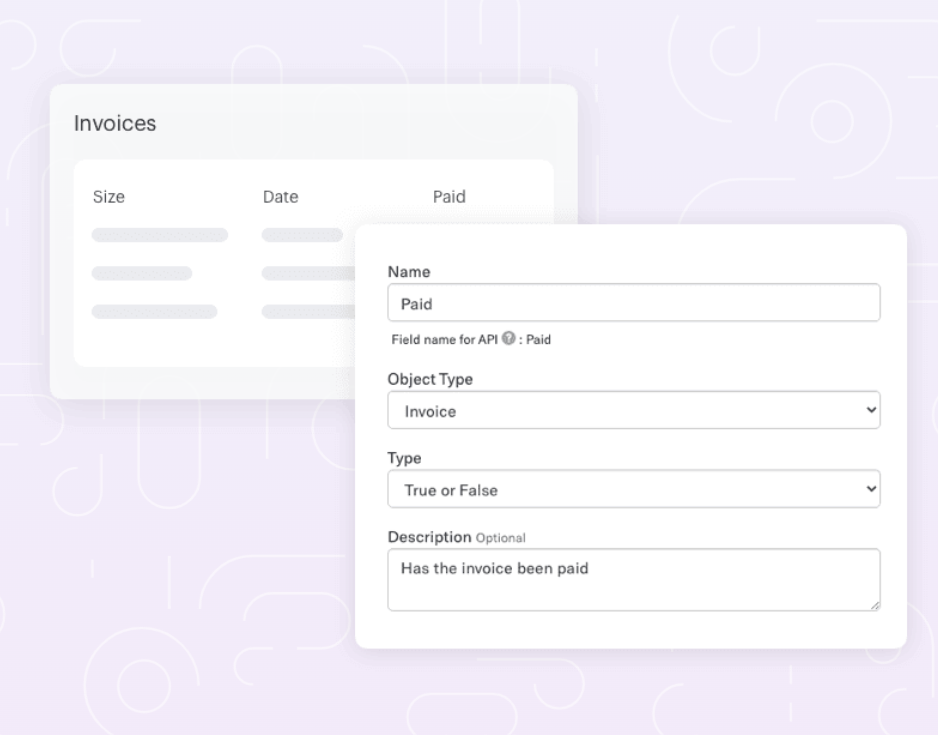
Custom objects use the same segmentation interface, field types, and flow builder integrations as the built-in People and Company objects. However, Company Segments and their automation require the Premium plan.
Where Encharge Falls Short
Encharge serves B2B SaaS teams well within its scope, but several limitations surface as teams grow or their go-to-market needs expand.
Email-Only Channel: Encharge is built for email. It does not natively support SMS (beyond Twilio webhook integrations), push notifications, in-app messages, or social channels as first-class outreach methods. Teams that need to coordinate messaging across multiple channels must wire in external tools for each one, creating fragmented workflows.
No Prospecting or Contact Discovery: Encharge automates what happens after you have contacts, but it offers no tools for finding new ones. There's no contact database, no company search, no buyer intent signals, and no way to identify anonymous website visitors by name (only by company, once they've triggered the JavaScript snippet). Teams still need a separate tool to build their pipeline.
Platform Stability Concerns: The November 2025 changelog acknowledged: "It's been a tough year, not going to lie. We worked tirelessly through the transition, but faced multiple challenges with system stability and bugs." The 2025 update log referenced open-tracking issues, duplicate broadcast bugs, flow metric errors, and UTF-8 import failures.
These appear tied to the ownership transition and are being addressed, but they're worth noting for teams evaluating reliability.
CRM Integration Paywall: HubSpot and Salesforce integrations require the Premium plan at $159/month or more. For teams that need CRM sync alongside marketing automation, this pushes the effective entry price well above the $99/month Growth plan. Segment.com, transactional emails, and event-based segmentation are similarly gated.
Limited Analytics and Reporting: "Better Statistics" is one of the most-voted feature requests on Encharge's public roadmap (103 upvotes), and reviewers on G2 and Capterra note that reporting on flow performance, email attribution, and subscriber growth is basic compared to more mature platforms.
Smaller Integration Catalog: With approximately 48 native integrations, Encharge's ecosystem is modest. Teams with specialized stack requirements (Mixpanel is still under review on the roadmap) may find gaps that require Zapier or webhook workarounds.
No Flow Testing: Users cannot test a flow end-to-end before activating it. Test Flows carries significant vote weight on the roadmap, and its absence means teams must rely on manual checks before going live with automation that touches real contacts.
These limitations reflect Encharge's focus on behavior-based email automation for SaaS. For teams whose go-to-market needs extend beyond email (into prospecting, multi-channel outreach, sales intelligence, or full-funnel orchestration), they point toward platforms with broader scope.
Top Encharge Alternative for Growing B2B Teams: ZoomInfo
ZoomInfo addresses Encharge's scope limitations as a GTM platform that combines prospecting, intelligence, and marketing execution. Where Encharge automates what happens after contacts enter your system, ZoomInfo also finds buyers, identifies when they're ready, and runs campaigns across channels.
B2B Data Platform: ZoomInfo gives teams the contacts, companies, and signals that email automation can't provide.
Encharge requires you to bring your own contacts. ZoomInfo starts with the data.
The platform covers 500M contacts, 100M companies, 135M+ verified phone numbers, 120M direct-dial phone numbers, and 200M+ verified business email addresses. This data runs through a verification process using multiple sources, backed by 300+ human researchers, achieving up to 95% accuracy on first-party data.
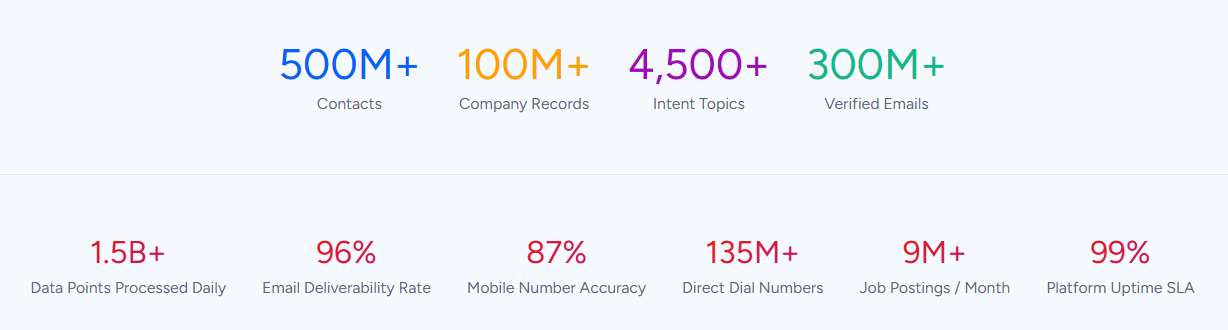
Beyond contact records, ZoomInfo tracks 300+ company attributes including industry, revenue, org charts, and technographic profiles across 30,000+ technologies at 30+ million companies. Buyer Intent signals track research activity from 210 million IP-to-Organization pairings, surfacing which accounts are evaluating solutions like yours.
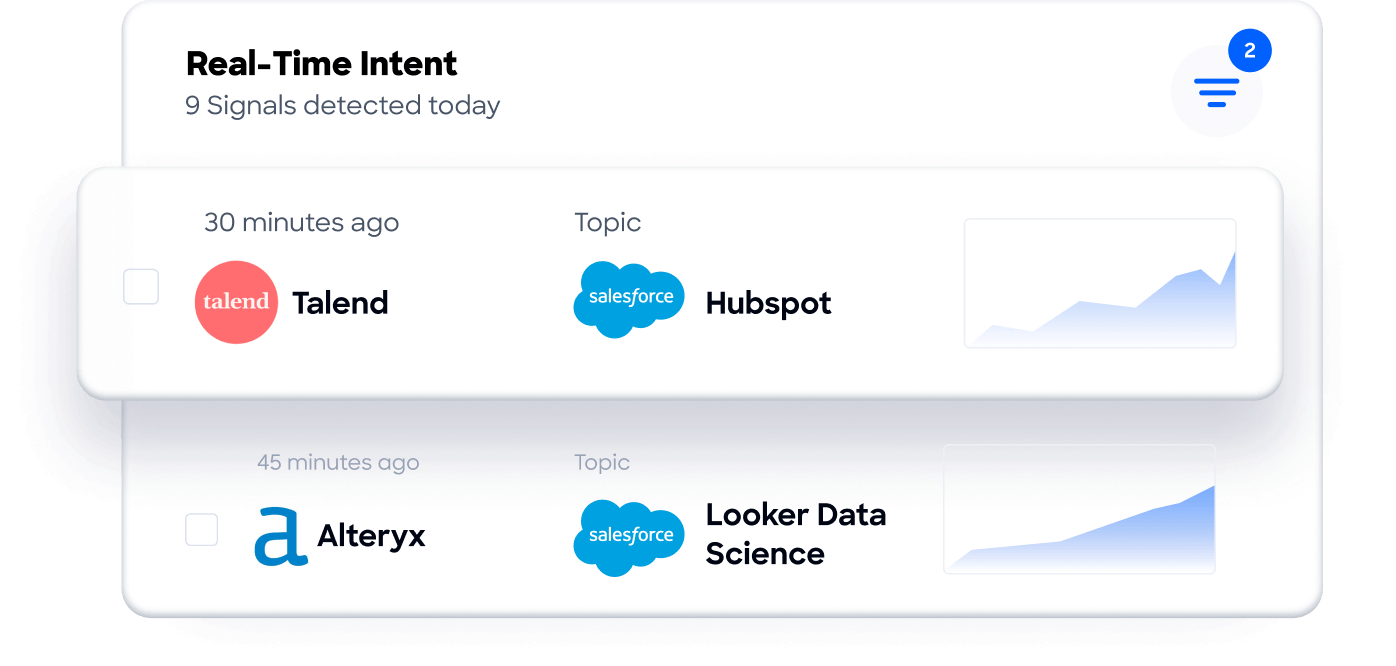
Guided Intent (exclusive to ZoomInfo) identifies the topics historically correlated with your deal success rather than requiring manual topic selection.
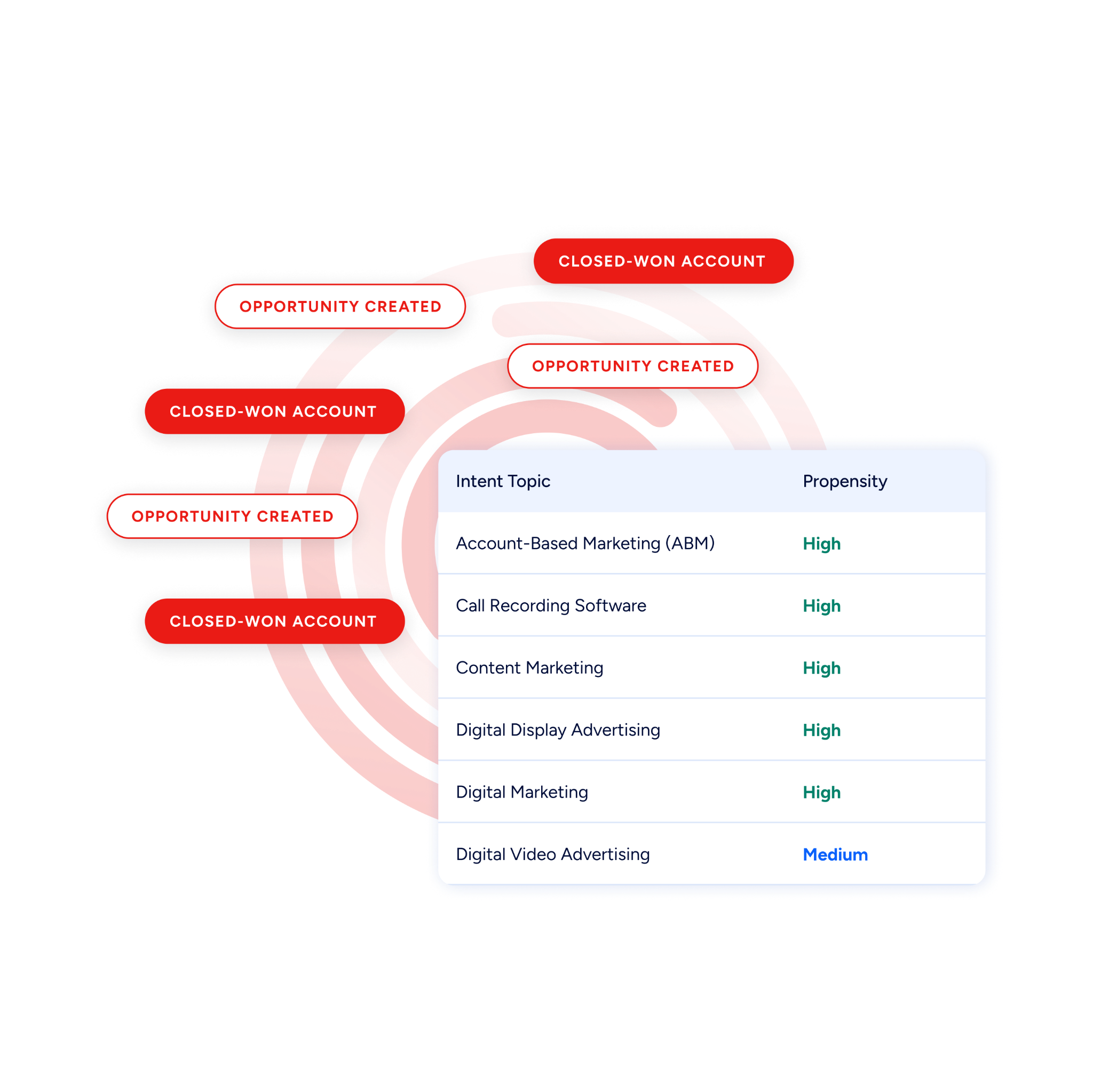
For B2B SaaS teams using Encharge for onboarding and nurture flows, this data fills the gap upstream: identifying who to target, which accounts are in-market, and how to reach decision-makers directly.
The quality of this data is not self-reported. In a Fortune 500 competitive RFP analyzing 25 million contacts across vendors, the independent consultant concluded that "no other competitor came even close."
Vensure Employer Services scaled its prospecting with ZoomInfo's data. VP of Revenue Operations William Kenimer said: "ZoomInfo gives us the information we need to execute. We don't have to spend our time digging. It's already there, so we can be three steps ahead." (Vensure)
GTM Context Graph: ZoomInfo's intelligence layer captures not just what happened in a deal, but why.
Encharge tracks user behavior and triggers emails from it.
ZoomInfo's GTM Context Graph goes further, combining a customer's CRM records, conversation transcripts, email interactions, and product usage data with ZoomInfo's third-party intelligence, processing 1.5B+ data points daily.
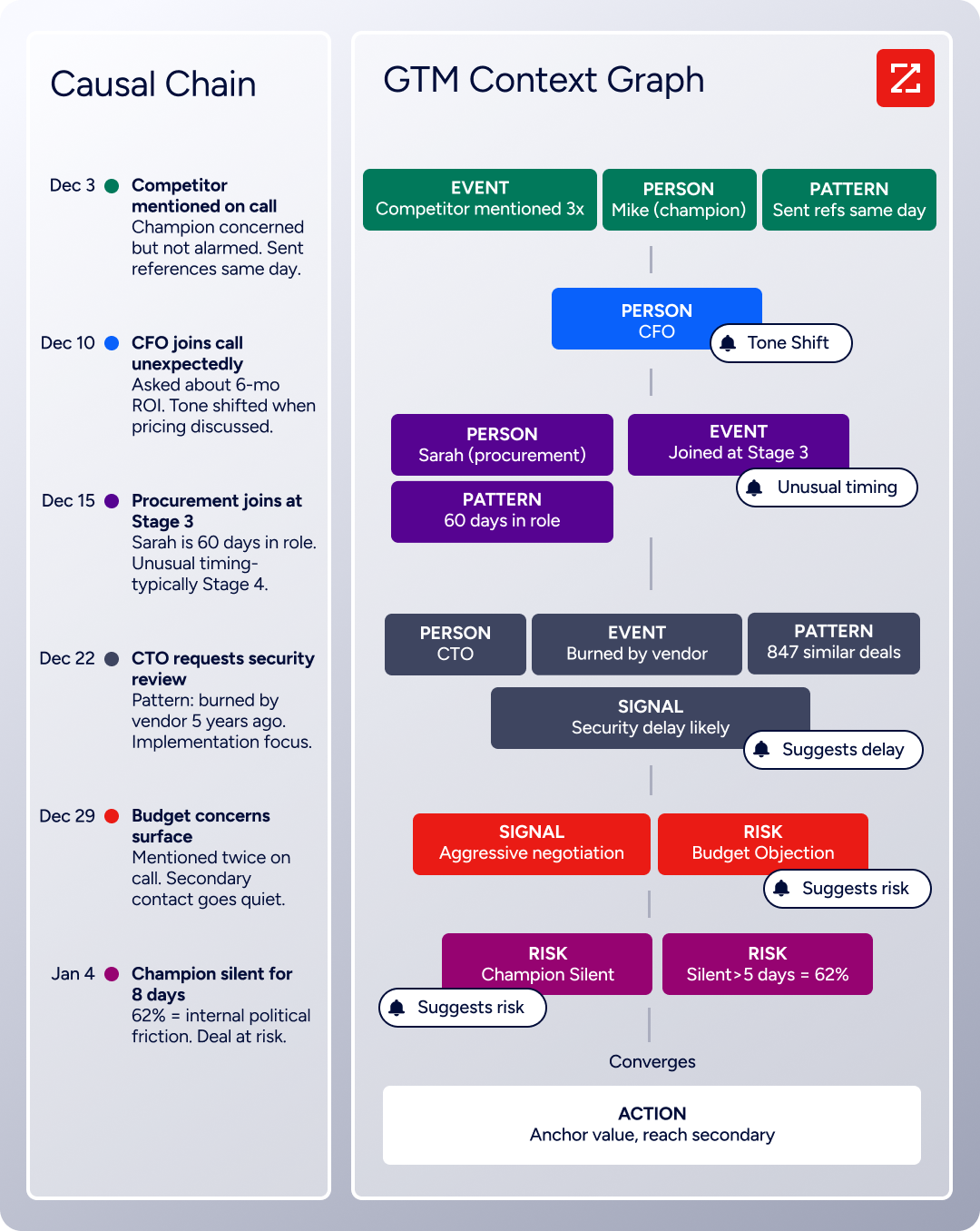
The result is an intelligence layer that finds connections between signals and outcomes. A CRM records that a deal moved to the next stage. Conversation intelligence captures what the VP of Finance said on the last call. Intent data logs a spike in research activity. The GTM Context Graph reasons across all three to understand why the deal moved and what should happen next.
This intelligence drives AI-drafted outreach that addresses concerns raised in conversations, plays that target accounts matching past win patterns, and forecasts weighted by buying evidence rather than stage labels.
Seismic attributed 39% of active pipeline to opportunities identified or influenced by ZoomInfo signals, with their sales team becoming 54% more productive. CBO Toby Carrington noted: "That combination of our internal CRM data, external signals, and AI that's given all that context has helped us craft very specific account- and persona-based messages. And people have responded to them right away." (Seismic)
GTM Studio: ZoomInfo's orchestration canvas lets teams build and launch campaigns without engineering support.
Where Encharge focuses on behavior-triggered email flows, ZoomInfo’s GTM Studio provides a broader orchestration canvas for marketers, RevOps, and GTM engineers. Teams describe audiences using natural language, enrich them with first- and third-party data, define triggers, and activate plays across email, calls, display ads, and direct mail from a single interface.
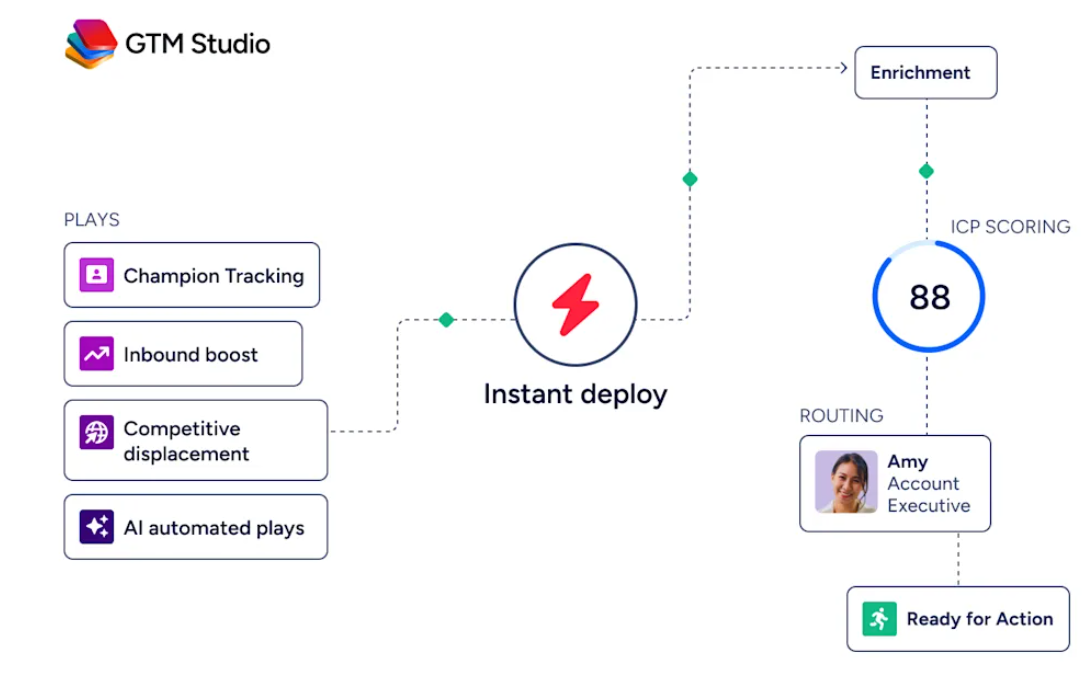
Pre-built GTM plays cover common scenarios (inbound acceleration, champion tracking, competitive displacement, ICP targeting) and launch in one click. Plays run continuously and adjust based on how prospects respond.
Waterfall enrichment evaluates 25+ data sources and returns the best-matched result, included at no additional cost. Where Encharge's free email verification validates addresses already in your list, ZoomInfo's enrichment fills data gaps (phone, email, company attributes, technographics) before campaigns begin.
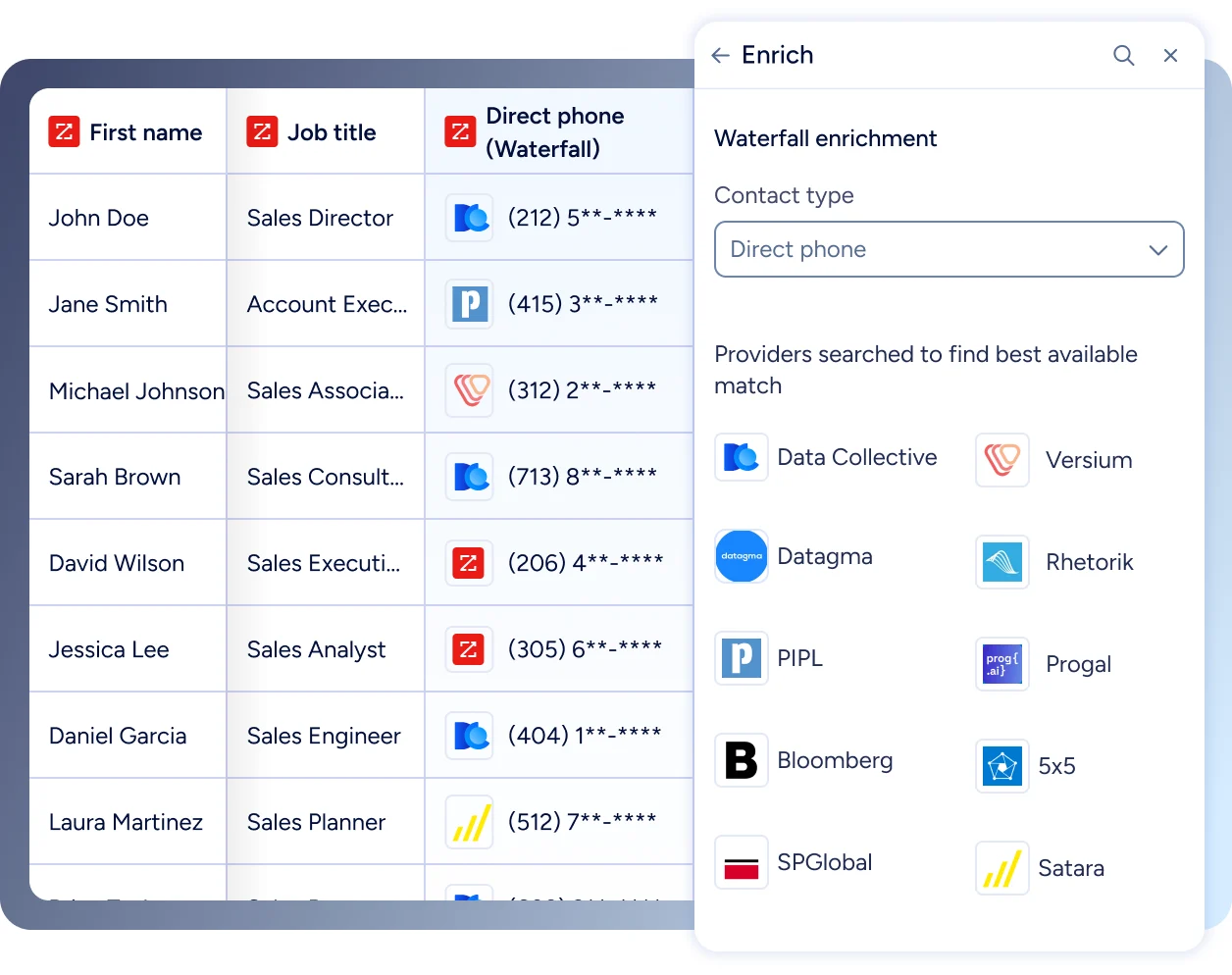
For teams used to Encharge's visual flow builder, GTM Studio provides a comparable visual approach applied to a wider scope: audience definition, multi-channel campaign orchestration, and pipeline measurement rather than email sequences alone. Expansion plays that used to take 3 weeks now launch in 30 minutes.
Impartner saw a 45% increase in website engagement after adopting ZoomInfo's orchestration capabilities. Sr. Director of Marketing Operations Jeremy Melius said: "ZoomInfo has literally changed the way we go to market." (Impartner)
Integrations & APIs: ZoomInfo connects to any tool through its marketplace, APIs, and MCP.
Encharge connects to approximately 48 native integrations plus Zapier. ZoomInfo's App Marketplace lists 172+ integration partners, with native connections to Salesforce, HubSpot, Microsoft Dynamics 365, and cloud data platforms including Snowflake, AWS, Google Cloud, and Databricks.
Beyond pre-built integrations, the Enterprise API provides programmatic access to ZoomInfo's data for custom applications.
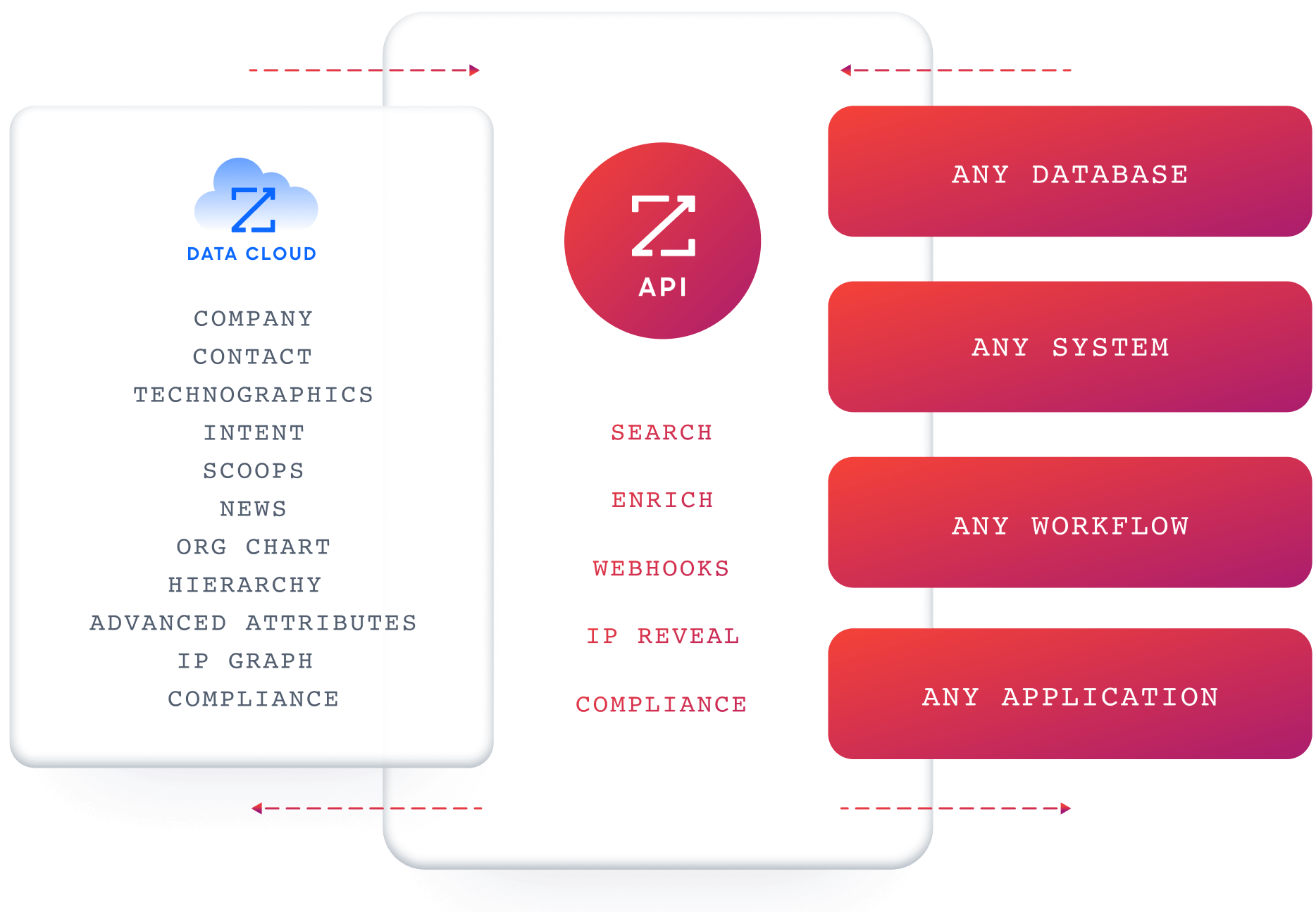
The ZoomInfo MCP server connects AI models directly to ZoomInfo's data, currently supporting Claude and ChatGPT, with additional AI assistants coming soon.
API access is included in all relevant plans, and a dedicated seller workspace (GTM Workspace) gives AEs, SDRs, and account managers one place for research, outreach, and deal execution.
BDO Canada activated ZoomInfo data directly within internal systems. Senior Marketing Intelligence Analyst Jerry Wilson noted: "The plug-and-play aspect of the API means I can integrate it very easily into any process and get information at a moment's notice," with an 87% reduction in time spent on data dashboard updates. (BDO Canada)
Encharge or ZoomInfo: Comparison Summary
Aspect | Encharge | ZoomInfo |
|---|---|---|
Primary focus | Behavior-based email automation for B2B SaaS | GTM platform (data + intelligence + execution) |
Target users | SaaS startups and scale-ups (marketing/growth teams) | Enterprise and mid-market B2B teams (sales, marketing, RevOps) |
Contact data | Bring your own contacts | 500M contacts, 200M+ verified emails, 135M+ verified phones |
Outreach channels | Email only | Email, phone, display ads, direct mail, social |
Buyer intent signals | Not available | 210M IP-to-Org pairings + Guided Intent |
Automation builder | Visual freeform flow canvas | GTM Studio orchestration canvas + GTM plays |
Behavior-based triggers | 40+ triggers including billing platform events | Signal-triggered workflows across intent, website, and CRM data |
CRM integrations | HubSpot, Salesforce (Premium only, $159+/month) | Salesforce, HubSpot, Dynamics 365 (native, included) |
Email verification | Free on all plans (5-tier SMTP verification) | NeverBounce (acquired) + multi-vendor enrichment |
Conversation intelligence | Not available | Chorus (recording, transcription, AI analysis, coaching) |
Integration catalog | ~48 native + Zapier | 172+ Marketplace partners + API + MCP |
Security certifications | AWS-inherited (ISO 27001, SOC); no independent Encharge certifications | |
Free tier | 14-day trial only | ZoomInfo Lite (permanent free plan) |
Starting price | $99/month (Growth, 2K subscribers) | Consumption-based pricing |
Best for | SaaS behavior email automation and trial conversion | Go-to-market execution with data, intelligence, and orchestration |
Final Verdict
The choice between Encharge and ZoomInfo depends on where your go-to-market challenges sit.
Choose Encharge if your primary need is behavior-based email automation for a B2B SaaS product. It does this well: connecting in-app product events to targeted email sequences, automating trial conversion and onboarding flows, and providing a visual builder that non-technical team members can operate independently.
The native billing integrations (Stripe, Chargebee, Paddle, Recurly) and free email verification on all plans make it a practical choice for SaaS startups that have contacts flowing in and need to nurture them through the product lifecycle. At $99/month for 2,000 subscribers, it's accessible for early-stage teams.
Choose ZoomInfo if your go-to-market needs extend beyond email automation into prospecting, sales intelligence, multi-channel orchestration, or pipeline management.
ZoomInfo gives teams what behavior email tools cannot: the ability to find buyers (500M contacts with verified direct dials and emails), understand when they're ready (buyer intent signals and the GTM Context Graph), and execute across channels (GTM Studio for marketers, GTM Workspace for sellers, APIs and MCP for custom workflows).
For B2B teams that have outgrown email-only automation and need a platform connecting data, intelligence, and execution, ZoomInfo provides that infrastructure.
Get started with ZoomInfo for free here.
Encharge solves a well-defined problem for a specific audience: SaaS behavior emails. ZoomInfo solves the broader challenge of finding, reaching, and converting B2B buyers across the entire go-to-market motion. Your choice depends on whether your bottleneck is automating email sequences around product behavior or building the pipeline of data, signals, and execution that feeds those sequences.
Encharge FAQ
Is there a free version of Encharge?
No. Encharge offers a 14-day free trial on both its Growth and Premium plans, but there is no permanent free tier. After the trial, the Growth plan starts at $99/month for up to 2,000 subscribers. ZoomInfo offers ZoomInfo Lite, a permanent free plan with access to its B2B database, 10 monthly export credits, and basic website visitor identification, with no credit card or time limit required.
How much does Encharge cost?
Encharge prices by subscriber count across two plans. The Growth plan starts at $99/month (or $79/month billed annually) for up to 2,000 subscribers and scales to $550/month for 50,000 subscribers.
The Premium plan starts at $159/month (or $129/month annually) for 2,000 subscribers and includes HubSpot and Salesforce integrations, Segment.com, transactional emails, event-based segmentation, and custom objects. Annual billing saves approximately 20%.
What integrations does Encharge support?
Encharge offers approximately 48 native integrations including Stripe, Chargebee, Paddle, Recurly, Chargify, HubSpot (Premium only), Salesforce (Premium only), Segment.com (Premium only), Slack, Intercom, Facebook Ads, Calendly, Typeform, and Google Analytics.
Additional connections are available through Zapier, Pabbly, webhooks, and the Ingest API. Shopify and WooCommerce integrations are available on the Premium plan, with v2 versions under development.
Can Encharge send emails based on in-app user behavior?
Yes, this is Encharge's core capability. The platform accepts product events through its Ingest API, JavaScript tracking, or Segment.com integration. Once events flow in, marketers can use the Event Trigger flow step to fire automated email sequences when users perform or fail to perform specific actions inside the product. Event properties can be inserted directly into email copy as dynamic merge tags.
Does Encharge include email verification?
Yes. Encharge includes free email verification on all plans, running a 5-tier check on every contact added to the account. The process validates email format, domain existence, disposable email status, MX records, and performs SMTP authentication. Invalid addresses are automatically suppressed from sends. Encharge says this is included at no extra cost on every tier, which is uncommon among marketing automation platforms.
What types of businesses is Encharge built for?
Encharge is built for B2B SaaS businesses, particularly startups and scale-ups with self-serve trial or freemium models. The platform is designed around the SaaS customer lifecycle: trial signups, onboarding, feature activation, subscription management, and churn prevention. Its billing integrations and behavior-based triggers are tuned for these use cases.
Documented customers range from 10-person startups to companies with 80,000+ active users.
Does Encharge support multi-channel outreach?
No. Encharge is an email-first platform and does not natively support SMS, push notifications, in-app messaging, or social media outreach as built-in channels. Teams can connect Twilio for SMS via webhooks and Intercom for in-app messages through a native integration, but these are not first-class channels within Encharge's automation builder.
ZoomInfo's GTM Studio supports orchestration across email, phone, display ads, and direct mail from a single canvas.
Has Encharge had stability issues?
The Encharge team acknowledged platform stability challenges in 2025, coinciding with the company's ownership transition. The November 2025 changelog noted "multiple challenges with system stability and bugs," including issues with open tracking, broadcast duplication, flow metrics, and data imports.
Updates through 2026 show continued investment in reliability, including database capacity improvements and monitoring upgrades. Prospective buyers should evaluate the current state of the platform through a trial before committing.
If you're looking beyond Encharge, here are some comparisons and alternatives:
