

Factors.ai is an AI-powered Account-Based Marketing platform for B2B go-to-market teams. It pulls together website visitor data, LinkedIn and Google Ads performance, CRM activity, and third-party intent signals into a single account-level view, then layers AI automation on top to help teams act on what they find.
For growth-stage B2B companies spending on LinkedIn Ads and struggling to prove what that spend produces, Factors.ai offers a focused answer.
To write this Factors.ai review, we've analyzed it extensively. We believe it's the ideal choice if:
You need to identify which companies visit your website without relying on form fills
You run LinkedIn Ads and want account-level impression control and attribution
You need multi-touch attribution that connects ad spend to pipeline and revenue
You want a single platform for account scoring, intent signals, and sales alerts
You're a growth-stage B2B SaaS company looking for ABM capabilities without enterprise pricing
However, Factors.ai might not be the best choice if:
You need verified contact data (direct dials, business emails) alongside account intelligence
You require person-level identification as a core capability, not an add-on
You want conversation intelligence tied directly to your account and deal data
You need a platform that serves sales execution, not just marketing analytics
Your GTM strategy demands a unified data, intelligence, and execution layer
In this case, you should consider ZoomInfo: a GTM platform that pairs a B2B dataset of 500M contacts, 100M companies, 135M+ verified phone numbers, and 200M+ verified business email addresses with the GTM Context Graph, an intelligence layer that captures not just what happened in your deals, but why.
Where Factors.ai identifies accounts and measures campaigns, ZoomInfo provides the contacts within those accounts, the intelligence behind their buying behavior, and the tools to act on both, accessible through GTM Workspace for sellers, GTM Studio for marketers and RevOps, or APIs and MCP in any third-party tool.
We've included a detailed look at ZoomInfo later in this Factors.ai review for teams that need more than account intelligence. If you're ready to explore a full GTM platform, you can start with ZoomInfo's free trial here.
What is Factors.ai?
Factors.ai is a B2B Account-Based Marketing platform founded in 2018 in Bangalore, India, by Srikrishna Swaminathan (CEO), Aravind Murthy (CTO), and Praveen Das (COO).
The founding insight came from a problem Murthy observed at Freshworks: even at $100M+ in revenue and spending 25-30% of that on digital marketing, Freshworks couldn't prove which marketing dollars drove sales. Data was scattered across LinkedIn campaigns, webinar tools, CRMs, and email platforms with no combined view.
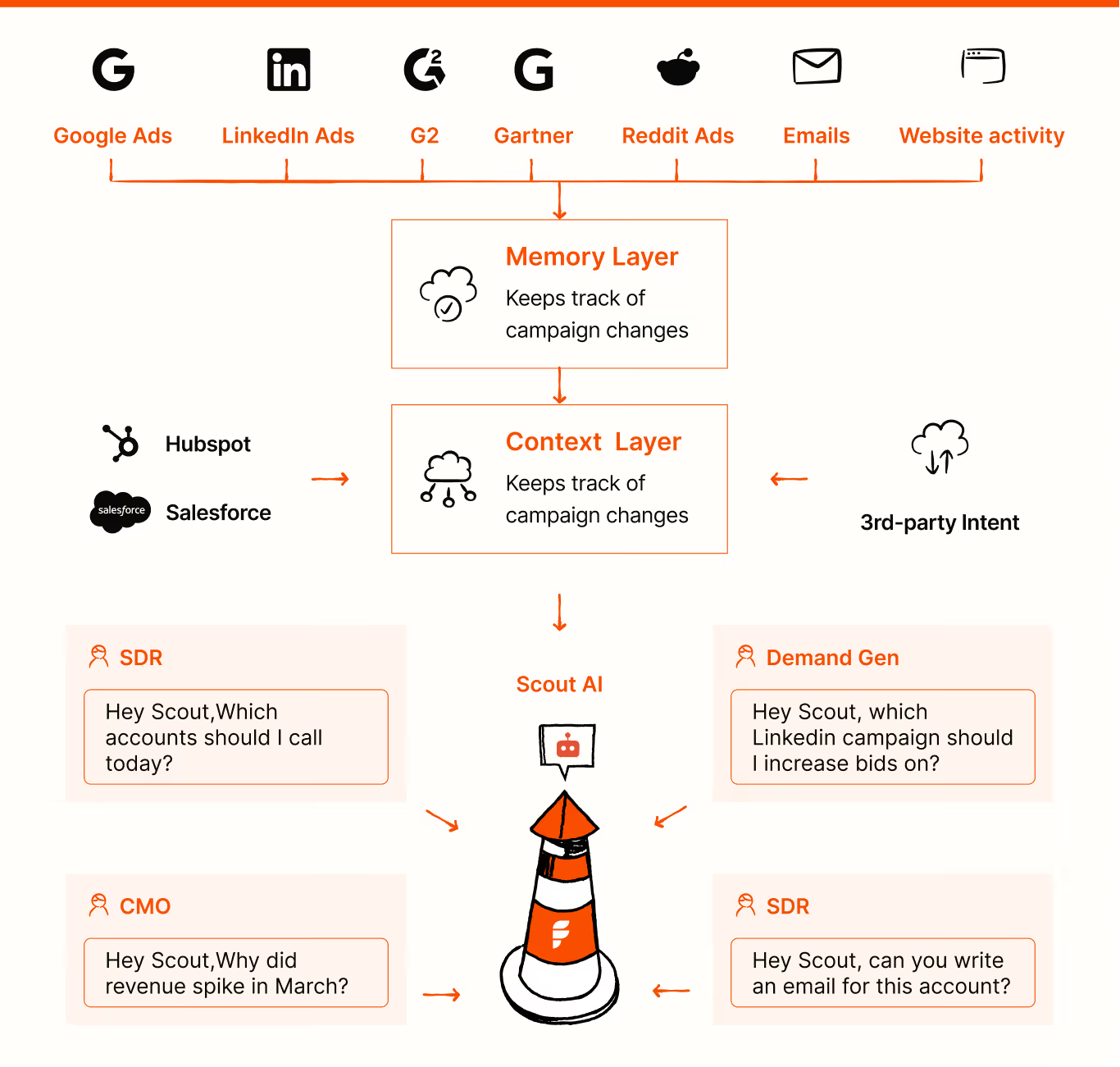
Factors.ai addresses this by combining intent signals, ad performance data, CRM data, and behavioral analytics into one account-level platform. The platform includes six product areas: Account Intelligence, LinkedIn AdPilot, Google AdPilot, Sales Intelligence, Attribution and Analytics, and Scout (AI agents). The company claims trust from 1,000+ GTM teams and holds a 4.5-star rating on G2.
Source: Factors.ai
As a pre-Series A company with $5.6 million in funding, Factors.ai targets growth-stage B2B SaaS companies, with customers including Descope, Sprinklr, Rocketlane, and AudienceView. Demand gen managers and marketing ops practitioners who run campaigns and need to prove ROI are the typical buyers.
Factors.ai Pros & Cons
Pros | Cons |
|---|---|
- Cross-channel intent signals in one account view | - Identifies companies, not individuals, by default |
- LinkedIn Ads impression capping not available natively in LinkedIn | - Steep learning curve for analytics and custom reports |
- Multi-touch attribution with eight model options | - Dashboard and visualization features need polish |
- G2 badges for Easiest Setup and Best Support | - Integration ecosystem still maturing |
- Free tier available with no credit card required | - No historical data before integration setup |
- AI agent layer (Scout) for automated GTM workflows | - Pricing not publicly disclosed for paid tiers |
- Startup-friendly pricing relative to enterprise ABM suites | - Limited to account-level data without paid add-ons for person-level |
Factors.ai Review: How It Works & Key Features
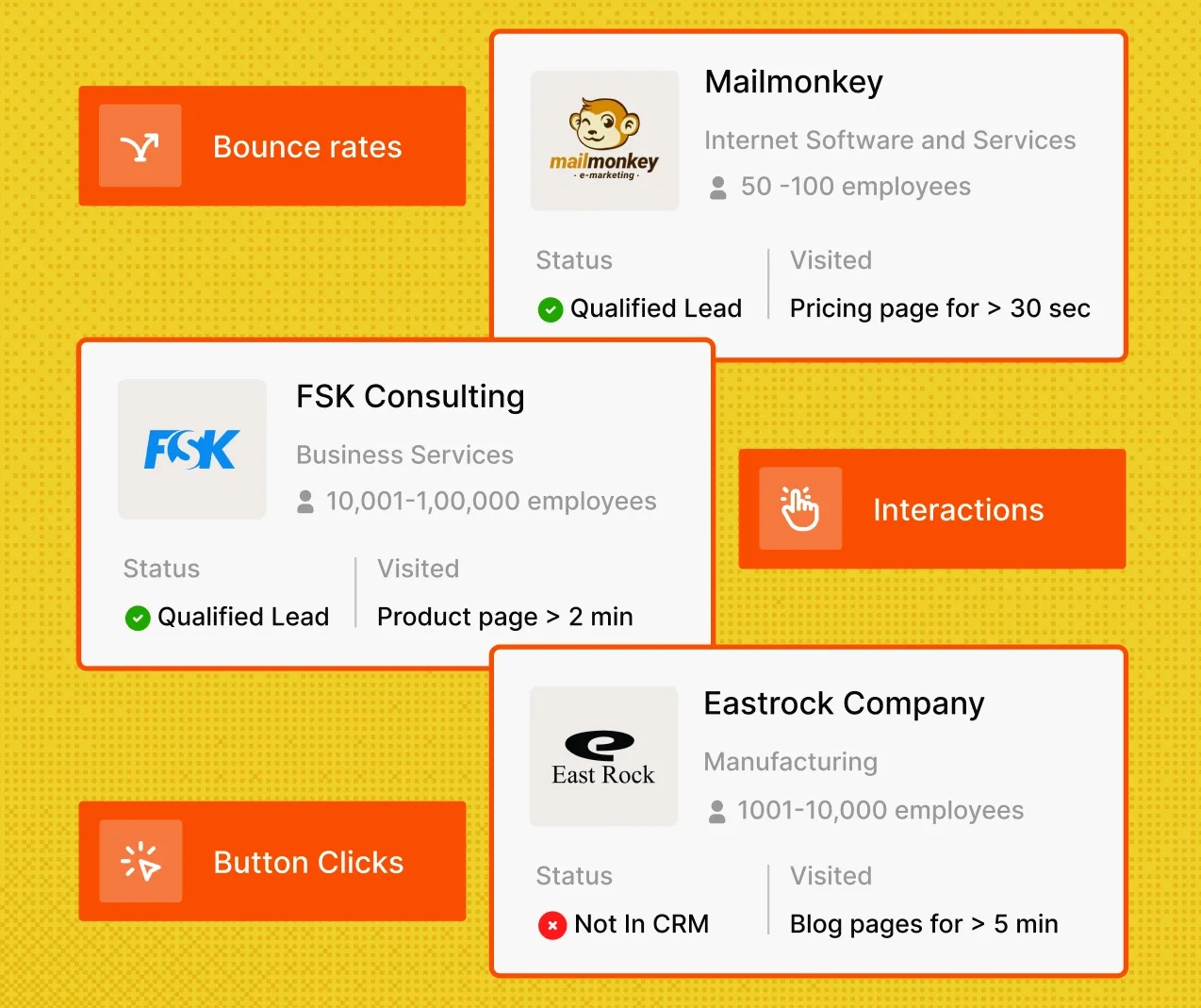
Account Intelligence: Factors.ai identifies which companies visit your website and aggregates their engagement signals across channels.
Account Intelligence is the platform's core data layer. It uses waterfall enrichment across multiple providers to identify the companies behind anonymous website traffic, claiming to unmask over 75% of companies visiting a site.
Source: Factors.ai
The system collects data from three source types: internal data from website visits, form submissions, and connected CRM systems (HubSpot, Salesforce); external data from LinkedIn and G2 partnerships; and third-party data from providers including 6Sense, Clearbit, and Bombora. All of this feeds into an account-level view with engagement scores, firmographic filters, and behavioral segmentation.
Two scoring mechanisms sit on top. Engagement Scoring assigns weighted scores based on interactions across website, ads, CRM, LinkedIn, and G2, with configurable signal weights and a decay factor tied to your sales cycle. Predictive Scoring uses machine learning trained on up to 105 days of historical data to assign each account a percentile-based likelihood score for a defined conversion event.
For teams that also need person-level data, the RB2B Visitor Identity Enrichment integration can surface names, job titles, LinkedIn URLs, and work emails for up to 30% of individual visitors. This is a separately priced add-on, limited to U.S. visitors only.
LinkedIn AdPilot: Factors.ai gives B2B marketers account-level impression controls that LinkedIn's native tools don't offer.
LinkedIn AdPilot solves a specific problem with LinkedIn advertising: the top 10% of accounts in a target list consume roughly 80% of ad impressions, leaving smaller high-potential accounts underexposed.
Source: Factors.ai
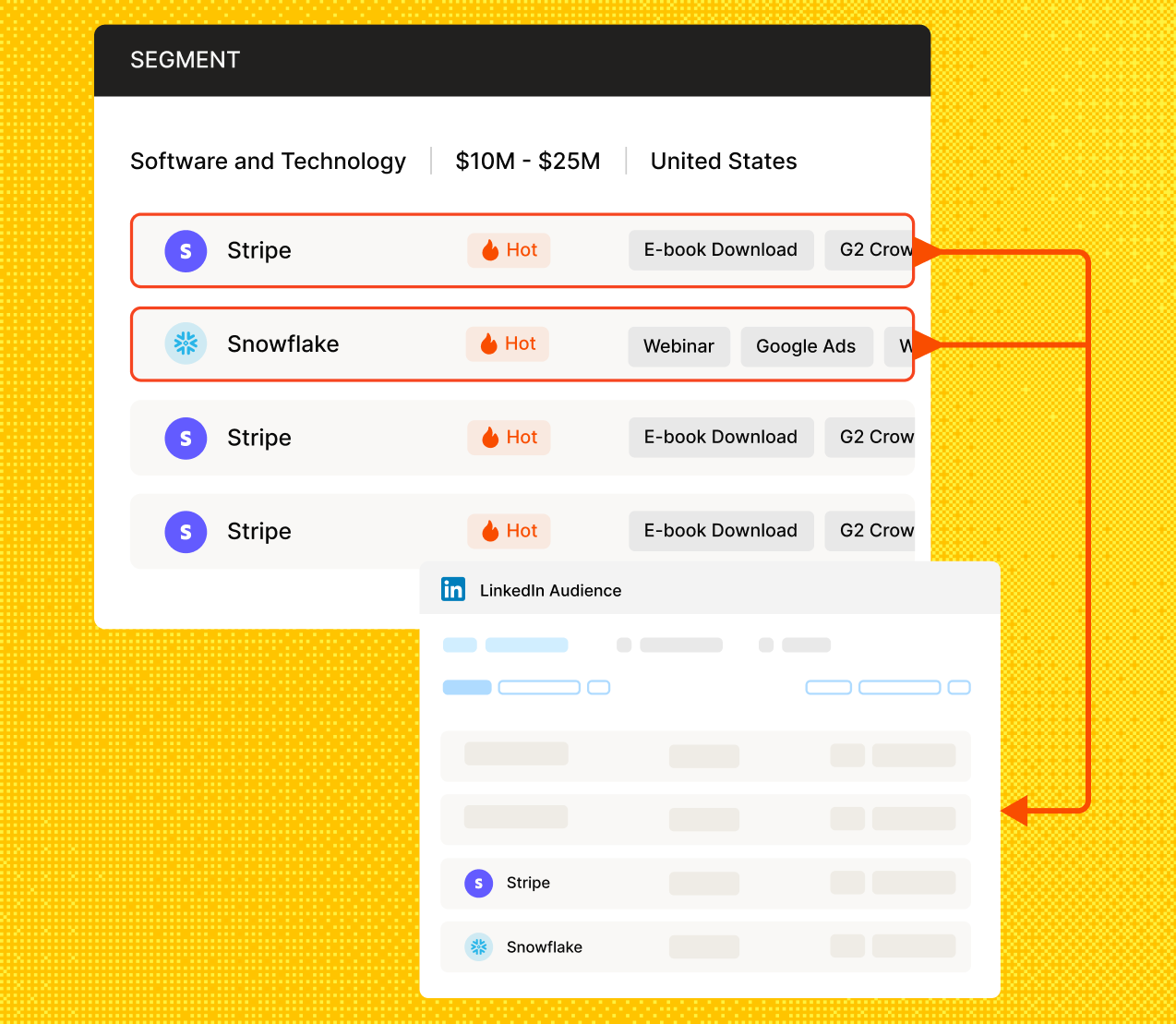
The central feature is Smart Reach, which sets per-account caps on impressions or clicks. When an account hits the threshold, Factors automatically adds it to an exclusion list within the LinkedIn campaign. At the end of the capping interval, excluded accounts are re-included.
The system supports both default rules (same cap for all accounts) and advanced rules (different caps by country, industry, or other account properties).
AdPilot also includes intent-based audience sync, which auto-syncs high-intent lists built from behavioral signals directly to LinkedIn campaigns without manual CSV uploads. Audiences refresh as account behavior changes.
As a LinkedIn Marketing Partner, Factors can send conversion events directly to LinkedIn's Conversions API server-side. This lets marketers tie LinkedIn ad impressions to pipeline events (demo bookings, CRM stage changes, closed deals) using first-party data, bypassing third-party cookie limitations.
Google AdPilot: Factors.ai applies account-based targeting to Google Ads, filtering out non-ICP traffic.
Google AdPilot addresses the gap between how Google Ads works (optimized for lead volume) and how B2B marketers need it to work (optimized for high-value accounts within their ICP). Factors' own Demand Generation Lead noted that "before AdPilot, nearly 50% of our Google Ads spend went to non-ICP accounts."
Source: Factors.ai
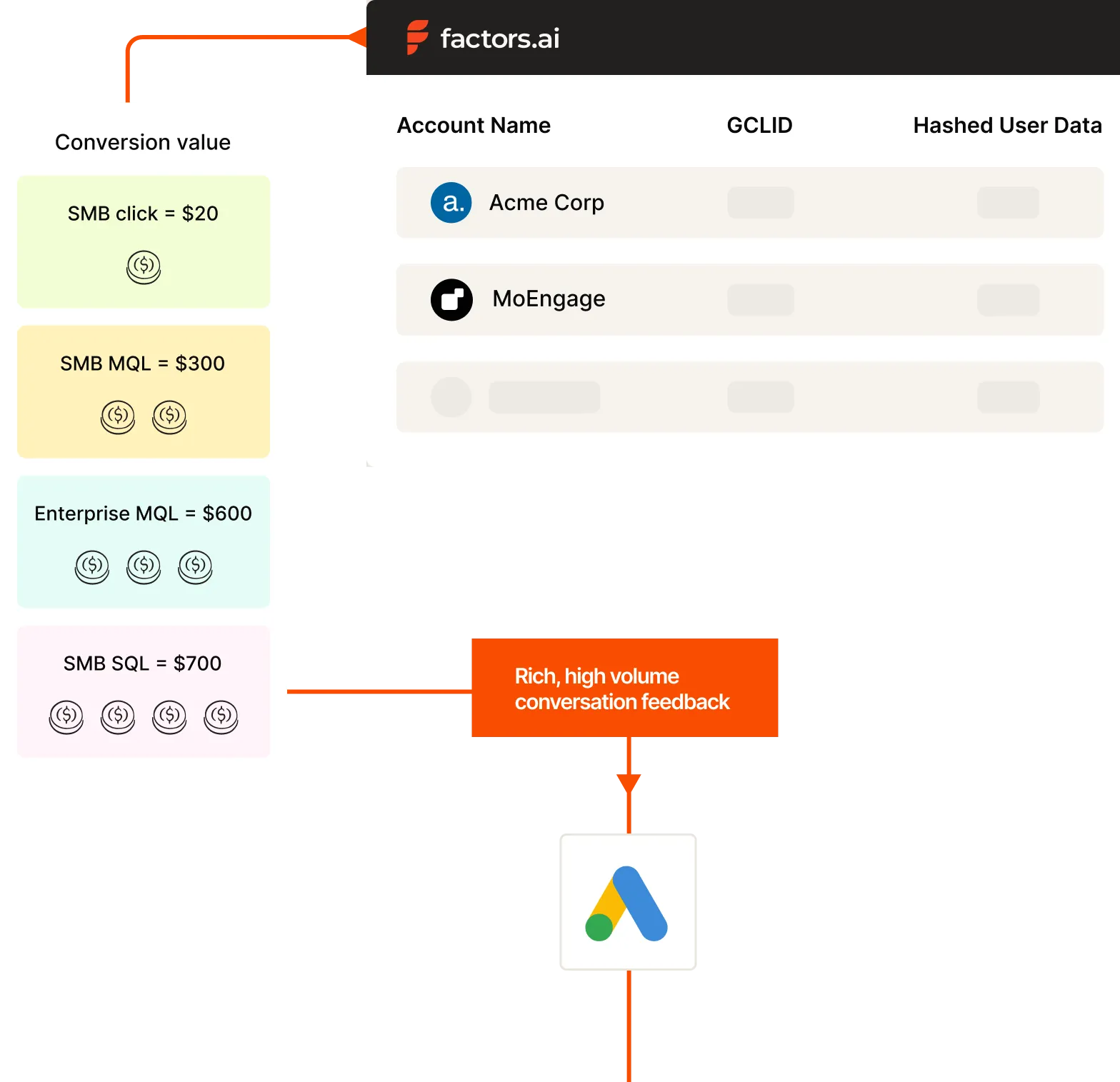
The product syncs ICP-matched audience lists to Google Ads so campaigns across Search, Display, and YouTube target only qualifying accounts.
When a downstream conversion occurs (a demo booking, a deal created), Factors matches the lead back to their Google Click Identifier and sends the conversion event plus a monetary value back to Google Ads via Enhanced Conversions API. This teaches Google's bidding algorithm which account types drive revenue, not just form fills.
The feature also enables broad keyword expansion by restricting ad delivery to ICP-matched accounts, meaning teams can capture more relevant search volume without the budget leakage broad match normally produces.
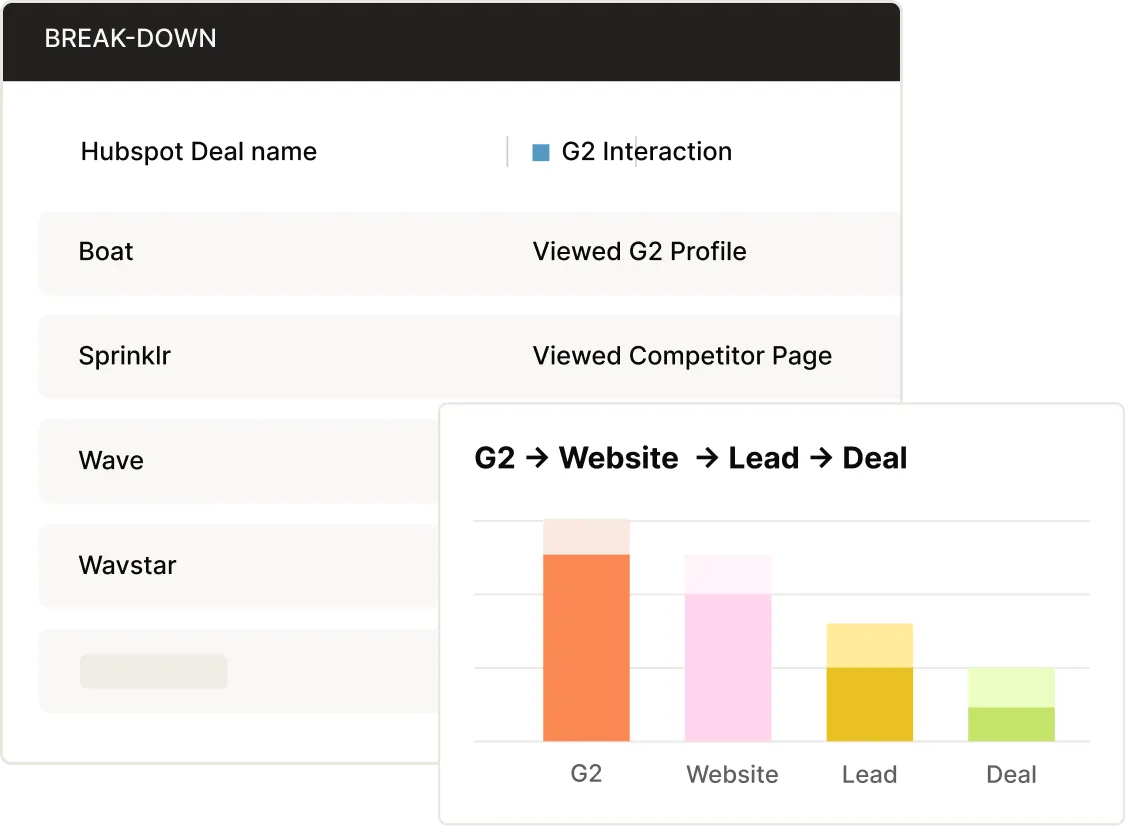
Attribution and Analytics: Factors.ai connects marketing touchpoints to pipeline and revenue through eight attribution models.
Attribution and Analytics is where Factors.ai's founding thesis lives. The system ingests data from website sessions, CRM, ad platforms (Google, Meta, LinkedIn, Bing), G2 intent, and Google Search Console, then runs attribution models against defined conversion goals.
Source: Factors.ai
The platform offers eight attribution models: First Touch, Last Touch, First Touch Non-Direct, Last Touch Non-Direct, Linear, U-Shaped (Position Based), Time Decay, and Influence Touch. The Influence Touch model gives 100% credit to every touchpoint independently while counting only unique conversions, directly addressing the common complaint that marketing influence gets erased in last-touch reporting.
Multiple models can run simultaneously for side-by-side comparison, and two attribution timeline approaches are available: Conversion Time (best for short sales cycles) and Interaction Time (more accurate for longer B2B cycles).
Additional capabilities include view-through attribution for LinkedIn Ads, funnel reporting with conversion rates across custom event sequences, and milestone tracking that analyzes velocity and key actions between buyer stages.
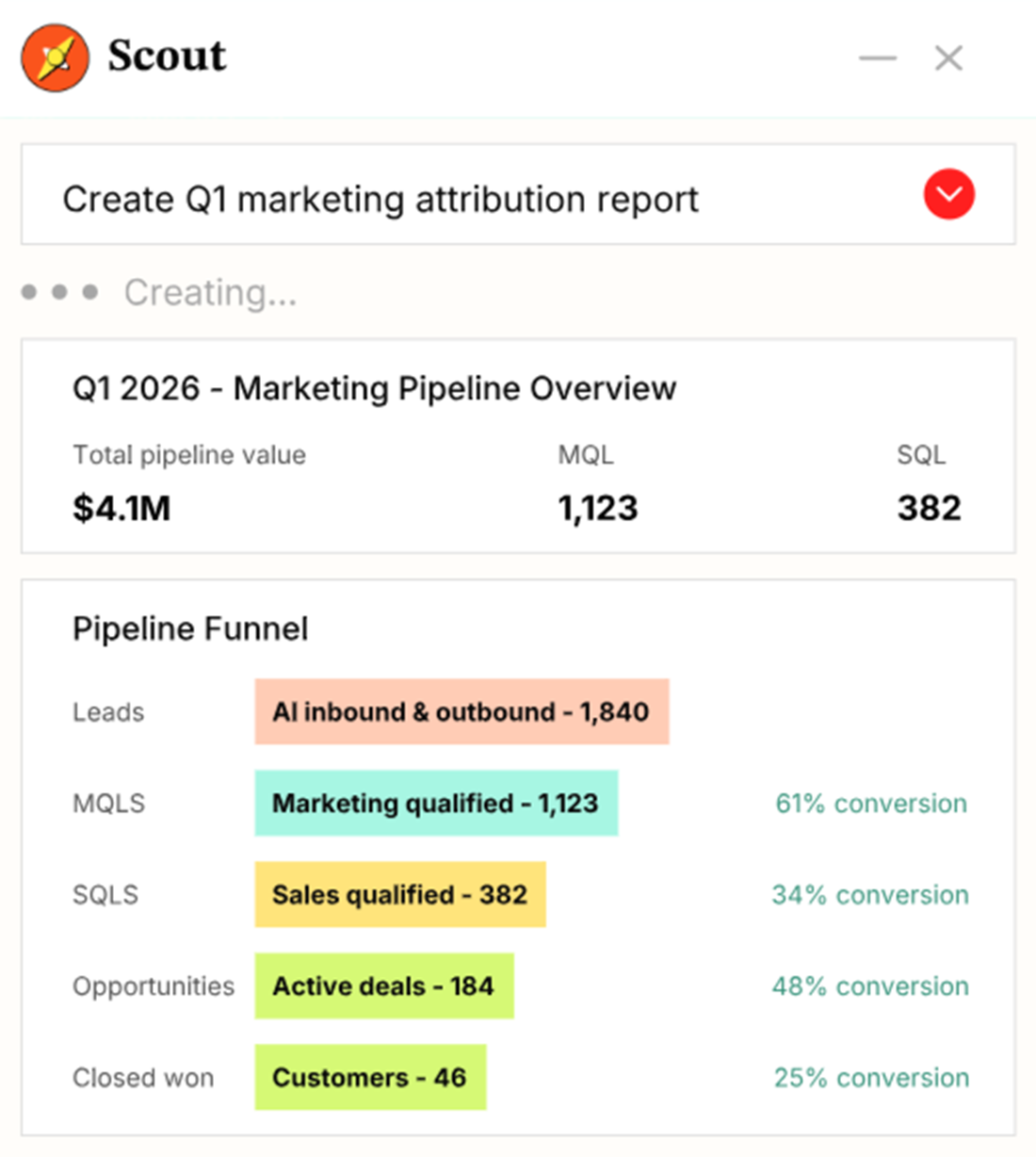
Scout AI Agents: Factors.ai automates GTM workflows through AI agents trained on your own data.
Scout is Factors.ai's AI agent layer, structured around three modes. Scout Watch answers ad-hoc questions about pipeline and campaign performance in natural language. Scout Map generates shareable reports (revenue attribution, pipeline health, campaign performance). Scout Patrol runs persistent background agents that monitor signals and trigger actions on their own.
Source: Factors.ai
Scout trains on each customer's data, not general AI training sets, which reduces the risk of hallucinated answers. Users build agents using plain-language instructions inside Factors' Automation hub, invoking 13 specialized data tools spanning CRM data, behavioral signals, people search, and web research.
Agents can be deployed across Slack alerts, CRM workflows, column properties in account views, and external systems via REST API. A Factors MCP integration extends this further, letting teams query Factors data through ChatGPT, Claude, and other MCP-compatible clients.
Pre-built agent templates in Scout Patrol cover account prioritization, firmographic fit scoring, G2 intent lead tiering, competitive displacement detection, and pre-call intelligence for sales teams.
Where Factors.ai Falls Short
Factors.ai delivers on its core promise of unifying B2B account signals and attribution, but several limitations surface with deeper use. These reflect a platform built for marketing analytics rather than full go-to-market execution.
Company-Level Identification Only (by Default). The platform's most common limitation is that it identifies companies, not individuals, by default. If you need to know that John Smith at Acme Corp visited your pricing page (not just that Acme Corp visited), you'll need the separately priced RB2B add-on, which covers U.S. visitors only.
For teams that need direct dials and verified emails to act on intent signals, Factors.ai requires pairing with a separate contact database.
No Native Contact Data. Factors.ai does not include its own B2B contact database. When Account Intelligence identifies a high-intent account, sales reps still need another tool to find the right people. The AI Contact Relevance Workflow partially addresses this by querying Apollo for contacts, but the data comes from a third party, not from Factors.ai itself.
Dashboard and Visualization Gaps. Multiple Capterra reviewers raised the same issue: "Improvement in visualization and dashboards," "Visual representation of data can be better," and the absence of URL-shareable dashboards. For marketing leaders who need to present attribution data to executives, this creates friction at a critical moment.
Integration Ecosystem Still Maturing. G2 reviews noted the tool is "still at an early stage in terms of integrations with other platforms." CRM support covers Salesforce and HubSpot, but mid-market CRMs like Pipedrive are not confirmed. For companies with less common tech stacks, this narrows the platform's usefulness.
Implementation Complexity. Despite G2 badges for Easiest Setup, the G2 review aggregate also noted that "the implementation process can be complex and resource-intensive, requiring integration with multiple data sources and careful configuration." A Capterra reviewer (CEO, Marketing & Advertising) listed "requires team support for setup" as the primary drawback.
No Historical Data Before Integration. New customers start with a blank slate. A Capterra reviewer flagged that there is "no historical data before integration setup," meaning teams cannot retroactively analyze pre-implementation activity or benchmark current performance against a baseline.
These limitations aren't failures. They're the natural result of building a focused ABM analytics platform rather than a full GTM system. But they create clear gaps for teams that need verified contact data, full-funnel execution tools, and intelligence that spans both marketing and sales.
Top Factors.ai Alternative for Full GTM Execution: ZoomInfo
ZoomInfo addresses Factors.ai's gaps by providing a complete go-to-market layer: not just account identification and attribution, but verified contacts within those accounts, intelligence about their buying behavior, and the execution tools to act on both.
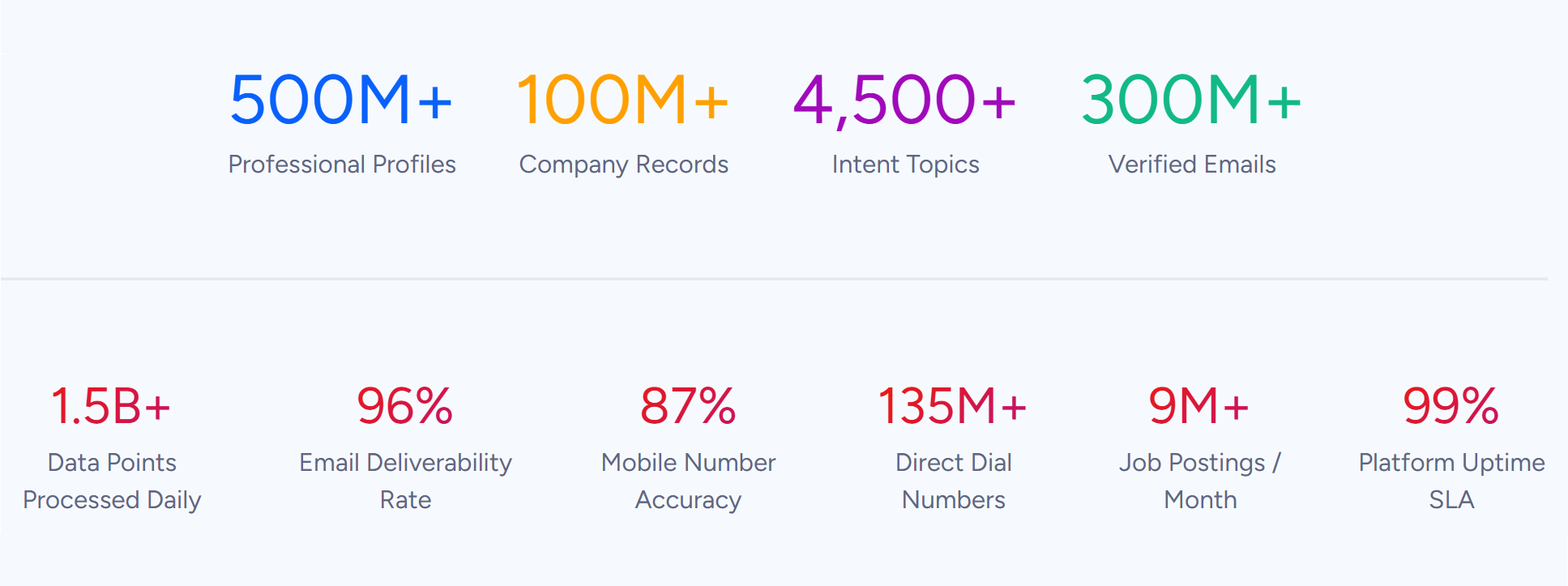
ZoomInfo is a GTM platform built on a B2B data foundation of 500M contacts, 100M companies, 135M+ verified phone numbers, and 200M+ verified business email addresses. That data fuels the GTM Context Graph, which processes 1.5B+ data points daily by fusing ZoomInfo's third-party data with your CRM records, conversation transcripts, and behavioral signals to reveal the full context of your accounts.
Source: ZoomInfo
That context shows AI not just what happened, but why, and which actions to take next. Teams access this intelligence through GTM Workspace for sellers, GTM Studio for marketers and RevOps, or APIs and MCP in any third-party tool.
Where Factors.ai tells you Acme Corp is showing intent, ZoomInfo gives you Acme Corp's intent signals, the direct dial numbers and verified emails for the buying committee, conversation intelligence from past interactions, and AI-drafted outreach to act on it, all from one platform.
Comprehensive B2B Data: ZoomInfo provides the verified contacts that turn account signals into actionable outreach.
The most fundamental difference between the two platforms is data. Factors.ai identifies companies. ZoomInfo identifies companies and provides the people within them.
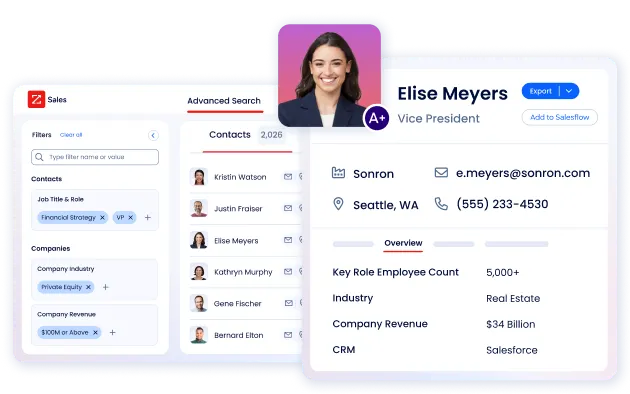
ZoomInfo's database spans 500M contacts with 120M direct-dial phone numbers and 200M+ verified business email addresses, verified through a proprietary collection system backed by 300+ human researchers and achieving up to 95% accuracy on first-party data.
Source: ZoomInfo
The dataset includes company attributes, department org charts with decision-makers' contact information, technographic profiles of 30+ million companies tracking 30,000+ technologies, and buyer intent data from 210 million IP-to-Organization pairings.

Source: ZoomInfo
This data quality is externally validated. In a Fortune 500 competitive RFP analyzing 25 million contacts across vendors, the independent consultant concluded that "no other competitor came even close." ZoomInfo holds the Leader position in both Gartner's Magic Quadrant for ABM Platforms (2024 and 2025) and the Forrester Wave for Intent Data Providers B2B (Q1 2025).
For sales teams, this means when an account shows intent, they already have verified direct dials and emails for the right people, without switching to a separate tool. For marketers, TAM modeling becomes a continuously verified census rather than a theoretical exercise built on stale snapshots.
Snowflake uses ZoomInfo for critical data features in their Account Propensity Scoring model. Accounts monitored using ZoomInfo-powered scores showed 90% higher opportunity open rates and 2x higher customer conversion rates. (Snowflake)
GTM Context Graph: ZoomInfo's intelligence layer captures why deals move, not just that they moved.
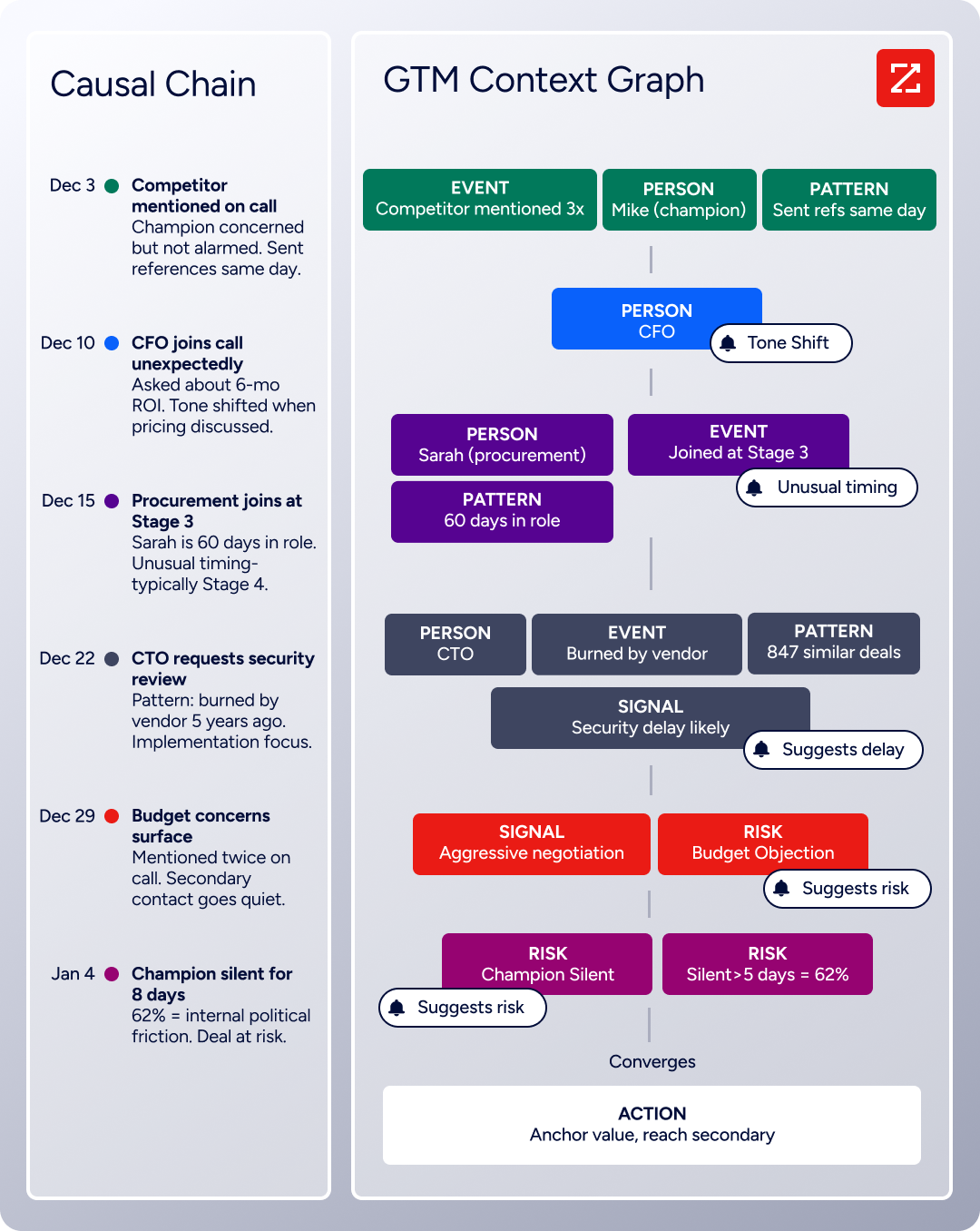
Factors.ai's attribution tells you which campaign touchpoints influenced a conversion. ZoomInfo's GTM Context Graph goes deeper: it fuses ZoomInfo's third-party data with a customer's CRM records, conversation transcripts from Chorus, email interactions, and behavioral signals into a single graph that reasons about deal dynamics.
Source: ZoomInfo
A CRM records that a deal moved from Stage 3 to Stage 4. Factors.ai's attribution can tell you which marketing touchpoints preceded that stage change. But as ZoomInfo's Chief Product Officer Dominik Facher writes: "The CRM recorded the state change. It has no record of why it happened."
The GTM Context Graph captures that the CFO joined the last call and asked about six-month ROI (the event that actually accelerated the deal), and connects that pattern to signals across thousands of similar deals.
This reasoning powers every downstream action: AI-drafted outreach that addresses the specific concern a stakeholder raised, plays that target accounts matching actual win patterns rather than keyword thresholds, and forecasts weighted by buying evidence rather than stage labels.
Seismic attributed 39% of active pipeline to opportunities identified or influenced by ZoomInfo signals, reported 54% productivity gains, and saved 11.5 hours per week per seller. (Seismic)
GTM Workspace and GTM Studio: ZoomInfo delivers execution tools for both sellers and marketers from the same intelligence layer.
Factors.ai serves demand gen managers and marketing ops teams. ZoomInfo serves the entire revenue organization.
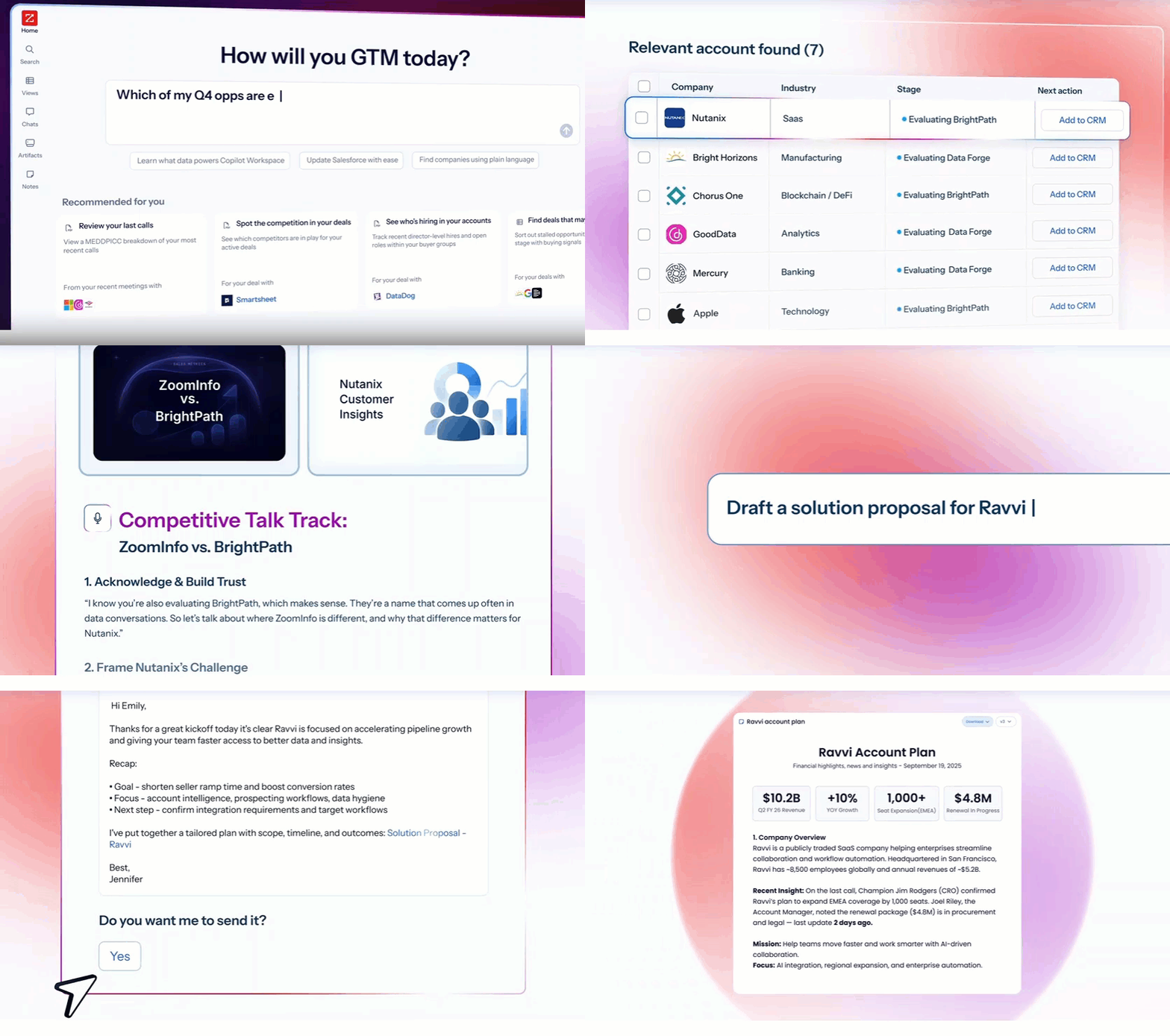
GTM Workspace gives sellers a single surface where prioritized accounts, AI-drafted outreach, and deal execution converge. AI agents (built on Anthropic's Claude) research accounts, generate follow-ups, monitor signals, and update CRM, answering three questions for every rep: who to contact, when to engage, and what to say.
Source: ZoomInfo
Spekit's RevOps Manager Ben Perceval noted: "Anything that minimizes our team's need to switch contexts is beneficial. ZoomInfo offers a unified view, eliminating the need to navigate between systems." (Spekit)
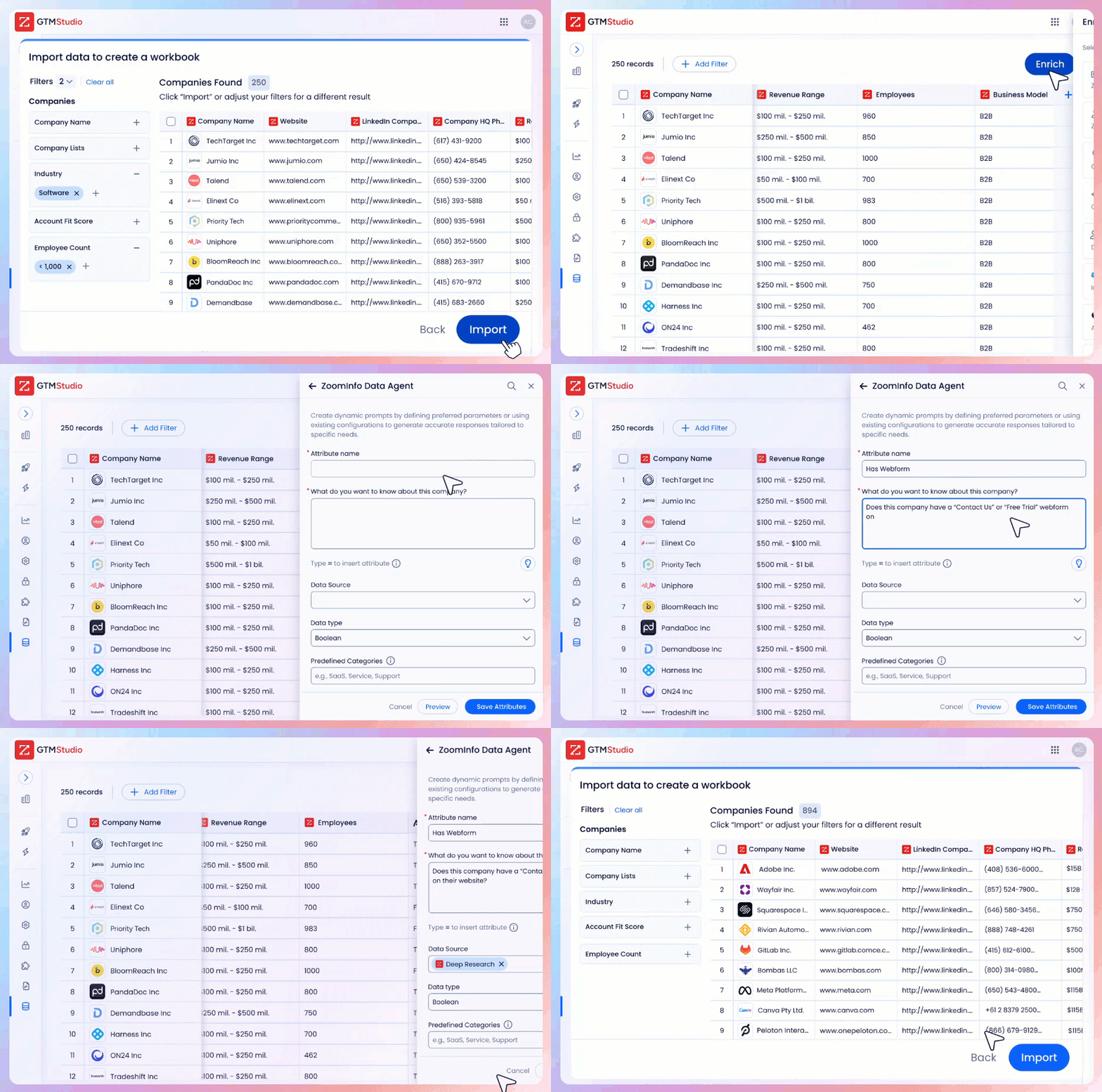
GTM Studio gives marketers, RevOps, and GTM engineers a builder environment where audience definition, campaign orchestration, and pipeline measurement happen in natural language. Pre-built GTM plays (inbound acceleration, champion tracking, competitive displacement) launch in one click, and expansion plays that used to take 3 weeks now launch in 30 minutes.
Source: ZoomInfo
Both draw from the same GTM Context Graph. A buying signal that marketing detects in Studio is immediately actionable by sales in Workspace, and vice versa.
Redwood Logistics achieved a 99% reduction in CPC and a 310% increase in CTR by using ZoomInfo's data-driven targeting. "It's not just the data itself. It's more about the right data at the right time to help us reach out with the right message across that full buyer journey." (Redwood Logistics)
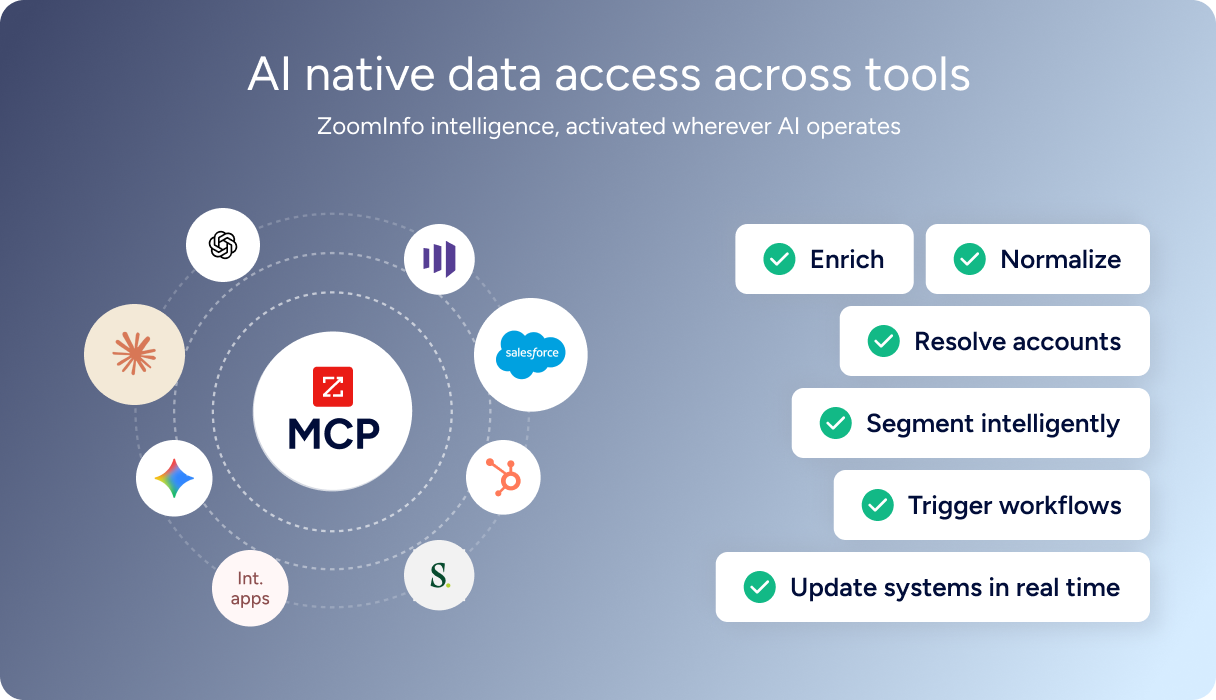
Universal Access: ZoomInfo's intelligence works in any tool, not just its own.
Factors.ai offers webhook support, Zapier and Make.com connections, and a Factors MCP integration. ZoomInfo goes further with programmatic access across its full platform.
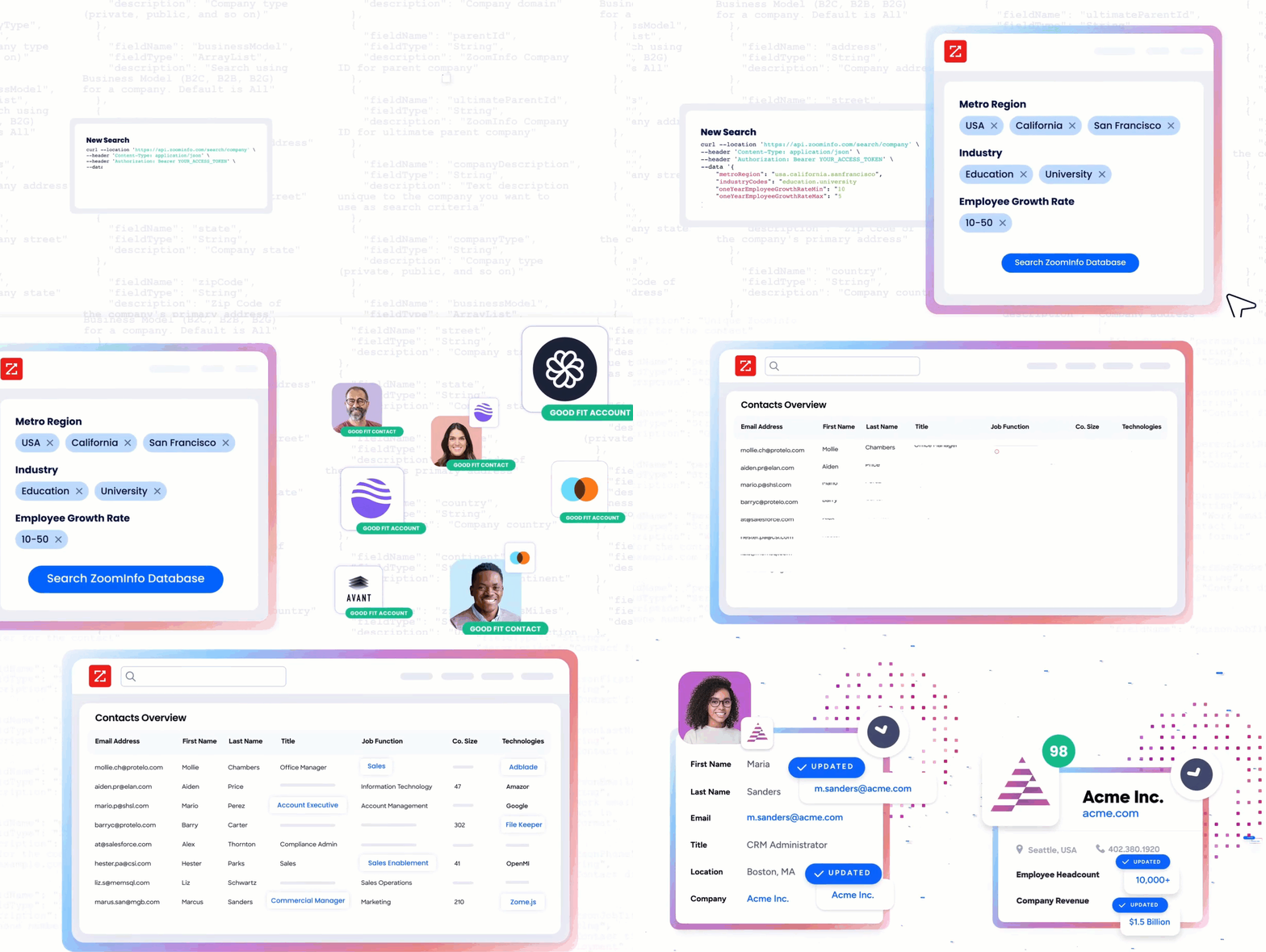
The Enterprise API, organized across four areas (Data, Copilot, Marketing, and Platform APIs), exposes ZoomInfo's data and intelligence for any custom application.
Source: ZoomInfo
The ZoomInfo MCP server connects AI models directly to ZoomInfo's B2B data as a native tool, listed in the Claude directory and currently supporting Claude and ChatGPT. API access is included in all plans, not gated behind enterprise pricing.
Source: ZoomInfo
This means the same data and intelligence that powers ZoomInfo's own products is available inside any third-party tool, custom agent, or internal system. A financial services firm is building an internal app using MCP, a use case that, as CEO Schuck noted, represents a "surface area we would never see before."
BDO Canada's Senior Marketing Intelligence Analyst noted: "The plug-and-play aspect of the API means I can integrate it very easily into any process and get information at a moment's notice," achieving an 87% reduction in time spent on updates to internal data dashboards. (BDO Canada)
Factors.ai or ZoomInfo: Comparison Summary
Factors.ai | ZoomInfo | |
|---|---|---|
Primary focus | ABM analytics, attribution, and ad optimization | Full GTM intelligence, data, and execution |
B2B contact database | None (relies on third-party enrichment) | 500M contacts, 120M direct dials, 200M+ verified emails |
Account identification | 75%+ company identification via waterfall enrichment | Company identification plus contact-level resolution |
Person-level identification | Paid add-on (RB2B), U.S. only | Native across the platform |
Intent signals | Website, LinkedIn, Google, G2, Bombora | 210M IP-to-Org pairings, 6T+ keyword-to-device pairings monthly, Guided Intent |
LinkedIn Ads optimization | Smart Reach impression capping, CAPI, audience sync | Display advertising, audience management via GTM Studio |
Attribution models | 8 models with side-by-side comparison | Revenue attribution via GTM Context Graph |
Conversation intelligence | Not included | Chorus (14 patents, native to GTM Context Graph) |
Sales execution tools | Slack alerts, AI contact workflow | GTM Workspace with AI agents, outreach, CRM management |
Marketing orchestration | LinkedIn and Google AdPilot | GTM Studio with multi-channel plays, native DSP |
AI agents | Scout (Watch, Map, Patrol) | GTM Workspace and Studio AI agents, Copilot API |
CRM integrations | HubSpot, Salesforce | Salesforce, HubSpot, Microsoft Dynamics, 120+ marketplace integrations |
API access | REST API, webhooks, MCP | Enterprise API (4 surface areas), MCP, included in all relevant plans |
Analyst recognition | G2 High Performer (mid-market) | Gartner Leader (ABM), Forrester Leader (Intent Data), 133 G2 No. 1 rankings |
Free tier | Free plan (basic identification, alerts) | ZoomInfo Lite (permanent, 10 monthly credits, WebSights Lite) |
Pricing transparency | Not publicly disclosed | Not publicly disclosed (consumption-based pricing) |
Target user | Demand gen managers, marketing ops | Sales, marketing, RevOps, GTM engineers |
Best for | Growth-stage B2B SaaS needing ABM analytics | Organizations needing unified data, intelligence, and execution |
Final Verdict
The choice between Factors.ai and ZoomInfo depends on where your GTM needs start and stop.
Choose Factors.ai if your primary challenge is proving marketing ROI and optimizing LinkedIn and Google Ads for B2B. It fits growth-stage B2B SaaS companies that already have a contact data source and need a focused platform for account identification, multi-touch attribution, and ad optimization. The LinkedIn AdPilot product in particular addresses a real gap in LinkedIn's native tools.
If your team is marketing-led and your immediate need is attribution and ad efficiency rather than full GTM execution, Factors.ai delivers at a more accessible price point than enterprise ABM suites.
Choose ZoomInfo if you need the full picture: not just which accounts show intent, but who to contact within those accounts, what they care about based on conversation and behavioral intelligence, and the tools to reach them across channels.
ZoomInfo is built for organizations where sales, marketing, and RevOps operate from the same intelligence layer, where verified contact data is essential for outreach, and where the GTM strategy demands more than analytics.
ZoomInfo's data foundation, the GTM Context Graph, and the flexibility to access it all through native products or any third-party tool make it the platform for teams ready to unify their go-to-market.
Get started with ZoomInfo here.
The core difference is scope. Factors.ai measures and optimizes the marketing motion. ZoomInfo powers the entire go-to-market engine, from data through intelligence to execution, giving every team the context they need to act.
Factors.ai FAQ
What is Factors.ai used for?
Factors.ai is an AI-powered Account-Based Marketing platform for B2B go-to-market teams. Its primary uses include identifying companies visiting your website, optimizing LinkedIn and Google Ads for account-based targeting, multi-touch attribution connecting ad spend to pipeline, account scoring and prioritization, and sales alerting when target accounts show buying signals.
It serves demand gen managers, marketing ops, and growth marketers at B2B SaaS companies.
Does Factors.ai have a free plan?
Yes, Factors.ai offers a permanent free plan with no credit card required. The free tier includes basic company-level identification of website visitors, website traffic analysis, and Slack and Microsoft Teams alerts.
Features like advanced account segmentation, LinkedIn Ads influence tracking, CRM sync, custom reporting, and AI-powered workflows require paid plans. Paid plan pricing is not published publicly and requires booking a demo.
Can Factors.ai identify individual website visitors?
By default, Factors.ai identifies companies visiting your website, not individual people. For person-level identification, you need the RB2B Visitor Identity Enrichment integration, a separately priced add-on limited to U.S. visitors.
This surfaces names, job titles, LinkedIn URLs, and work emails for up to 30% of individual visitors. ZoomInfo provides person-level identification natively across its platform, with 500M contacts and 120M direct-dial phone numbers.
What CRM integrations does Factors.ai support?
Factors.ai integrates natively with HubSpot and Salesforce for bidirectional CRM data sync. The platform also connects with Slack, Microsoft Teams, Google Ads, Meta Ads, LinkedIn Ads, Bing Ads, Segment, Rudderstack, G2, and Google Search Console.
For additional connections, it supports webhooks plus Zapier and Make.com. Some user reviews note the integration ecosystem is still maturing, and mid-market CRMs like Pipedrive are not confirmed as supported.
How does Factors.ai's LinkedIn AdPilot compare to LinkedIn's native tools?
LinkedIn's native Campaign Manager does not offer account-level impression or click caps. Factors.ai's Smart Reach feature fills this gap by monitoring cumulative impressions per company and automatically excluding over-served accounts.
AdPilot also adds intent-based audience sync (dynamically updating LinkedIn audiences from behavioral signals), view-through attribution, and LinkedIn Conversions API integration for first-party conversion tracking.
What attribution models does Factors.ai support?
Factors.ai offers eight attribution models: First Touch, Last Touch, First Touch Non-Direct, Last Touch Non-Direct, Linear, U-Shaped (Position Based), Time Decay, and Influence Touch. Multiple models can run simultaneously for side-by-side comparison, and two attribution timeline approaches are available depending on sales cycle length.
The Influence Touch model gives 100% credit to every touchpoint while counting only unique conversions, which is useful for demonstrating marketing's influence across long B2B sales cycles.
Does Factors.ai include a B2B contact database?
No, Factors.ai does not include its own contact database. The platform identifies accounts and surfaces engagement signals, but when sales teams need contact information for outreach, they must use a separate tool. The AI Contact Relevance Workflow queries Apollo for contacts and ranks them using AI, but the underlying data comes from a third party.
ZoomInfo includes 500M contacts with verified direct dials and business emails natively, meaning teams can go from intent signal to outreach without switching tools.
Is Factors.ai suitable for enterprise companies?
Factors.ai targets early-stage startups, growth-stage startups, and enterprises on its website, with an Enterprise tier that adds predictive scoring, LinkedIn impression control, and combined multi-source intent data.
The company is pre-Series A with approximately 103 employees, its customer base is weighted toward growth-stage B2B SaaS companies, and it does not appear in Gartner Magic Quadrant or Forrester Wave reports as a named vendor.
Enterprise buyers in regulated industries should verify that Factors.ai's integration depth, data handling certifications (SOC 2 Type II, ISO 27001, GDPR), and support capacity match their requirements.
Other Factors.ai alternatives and reviews:
