

HG Insights has spent over a decade building a technographic dataset for B2B. The platform uses AI to detect software adoption behind the firewall, where standard web scrapers can't reach. For enterprise tech companies trying to figure out which accounts run a competitor's product, how much they spend on IT, or where the whitespace sits in their territory, HG Insights offers a level of technographic granularity that few platforms match.
To write this HG Insights review, we analyzed the platform extensively. We believe it's the ideal choice if:
You sell technology to other technology companies and need technographic targeting
Your GTM strategy depends on TAM/SAM/SOM analysis, territory design, or competitive displacement
You have dedicated RevOps, strategy, or sales ops teams who can operationalize complex data
You want IT spend estimates and technology adoption data at the account level
You need a data layer for building custom AI agents via MCP
However, HG Insights might not be the best choice if:
You need a large, verified contact database for high-volume outbound prospecting
You want a platform that covers sales execution, marketing automation, and conversation intelligence alongside data
You need a free trial or self-serve evaluation before committing
Your team is small and lacks dedicated RevOps resources to build scoring models
You sell outside the technology vertical, where technographic depth matters less
In this case, you should consider ZoomInfo: an all-in-one AI GTM platform built on a B2B data foundation of 500M contacts, 100M companies, 135M+ verified phone numbers, and 200M+ verified business emails. Its GTM Context Graph processes 1.5B+ data points daily, fusing this data with your CRM records, conversation transcripts, and behavioral signals to reveal not just what's happening in your deals, but why. That intelligence reaches your team through the GTM Workspace for sellers, GTM Studio for marketers and RevOps, or APIs and MCP in any front-end.
We've included a detailed look at ZoomInfo later in this HG Insights review as the strongest alternative for teams that need technographic intelligence as part of a broader GTM platform rather than a standalone specialty tool. If you're ready to explore an all-in-one approach, you can start a free trial of ZoomInfo here.
What is HG Insights?
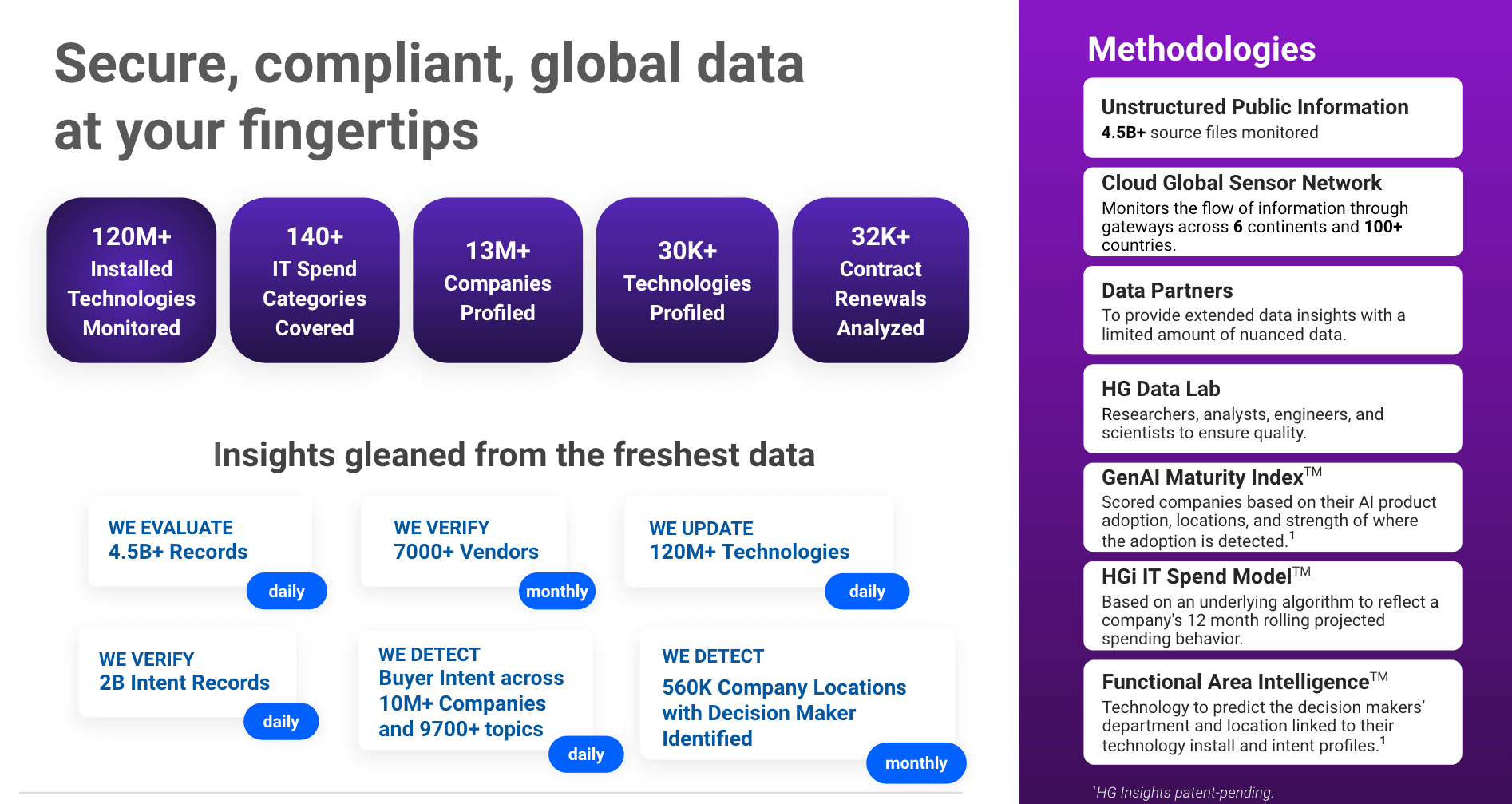
HG Insights (formerly HG Data) is a B2B intelligence platform headquartered in Santa Barbara, California. The company has operated for over a decade, originally focused on technographic data, helping sales teams understand which technologies companies use so they could target accounts with precision.
Source: HG Insights
Today, HG Insights calls itself the "pioneer of Revenue Growth Intelligence", a category it defines as the unification of market, account, technology, intent, and contact intelligence in one AI-driven platform.
Through a series of acquisitions (Intricately for cloud product adoption data in March 2022, TrustRadius for buyer intent and customer reviews in June 2025, and MadKudu for predictive scoring in August 2025), HG has expanded beyond its technographic roots into buyer intent, AI-driven sales copilots, and lead generation.
In March 2026, HG unveiled its unified RGI Platform, which connects technographic, buyer intent, IT spend, buying center, and contact intelligence in a single platform.
HG Insights is led by CEO Rohini Kasturi, previously EVP and Chief Product Officer at SolarWinds. The platform targets B2B technology companies with dedicated GTM functions: RevOps, demand gen, sales ops, and corporate strategy teams at mid-market to large enterprise scale.
HG Insights Pros & Cons
Pros | Cons |
|---|---|
Deep technographic data with behind-the-firewall detection | No free trial or self-serve evaluation |
IT spend estimates across 140+ categories with 12-month forecasts | Two-year default contracts with no published pricing |
Proprietary TrustRadius downstream buyer intent signals | Four separate login portals post-acquisitions |
Trusted by 90% of Fortune 500 tech companies | Contact data completeness lags dedicated providers |
MCP server for building custom AI agents | RGI Agent Builder still in limited beta |
G2 Leader in Sales Intelligence and Marketing Account Intelligence | Complex product packaging across five distinct product lines |
Dedicated Customer Success Managers with quarterly business reviews | Primarily serves tech companies; less relevant for non-tech verticals |
HG Insights Review: How It Works & Key Features
Technographic Intelligence: HG Insights detects technology installations using AI-driven analysis that goes beyond web scraping.
Technographics is HG Insights' foundational capability. It covers a broad catalog of enterprise software, cloud services, and infrastructure products.
What separates HG's approach from many competitors is its detection methodology. Rather than relying solely on scanning website source code for JavaScript tags, HG uses mult]i-source AI analysis of job postings, contracts, community comments, and other behind-the-firewall signals to identify products in use.
Source: HG Insights
This matters because many enterprise technologies (particularly back-office systems, security tools, and infrastructure platforms) leave no detectable footprint on a company's website.
Each install record includes more than a binary yes/no. HG provides an intensity score measuring how extensively a product is deployed across a company, plus location-level granularity mapping installs to specific geographic sites. A company-wide Salesforce deployment looks different from a pilot at one office, and HG's data distinguishes between the two.
The Functional Area Intelligence API endpoint extends this further, returning department-level technology usage by location along with decision-maker and influencer job titles at each site. For sales teams planning competitive displacement campaigns or mapping buying centers, this granularity can mean the difference between a relevant pitch and a cold call that misses the mark.
Cloud Dynamics: Real-time cloud product adoption and spend intelligence from a global sensor network.
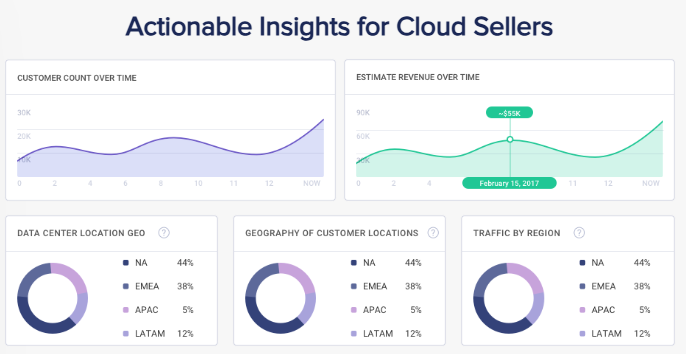
HG Cloud Dynamics (formerly Intricately, acquired March 2022) tracks cloud infrastructure usage in a way that most data providers cannot replicate. The product monitors over 16,000 distinct products across IaaS, PaaS, and SaaS categories including CDN, hosting, DNS, security, and performance monitoring.
Source: Intricately
The methodology relies on a Global Sensor Network: thousands of physical deployments across six continents and 100+ countries, positioned at internet gateways operated by major ISPs like Verizon, Comcast, and AT&T. These sensors monitor actual traffic patterns, detecting cloud products by observing how data flows through infrastructure rather than scanning code on websites.
This distinction matters. Products like AWS, Google Cloud, and Cloudflare operate behind web servers and are invisible to scrape-based detection. Cloud Dynamics also avoids the false-positive problem where deactivated code lingers on websites, flagging technologies no longer in use.
Spend estimation uses a machine learning model combining three inputs: product traffic volume, adoption breadth across a company's applications, and product cost relative to category peers. HG claims directional accuracy for roughly 90% of businesses tracked.
The Data Center Intelligence feature goes further, identifying specific data center locations where companies have purchased storage, the type of service, and traffic volumes.
IT Spend Intelligence: Account-level technology spending estimates across 140+ categories with forward-looking forecasts.
While Cloud Dynamics focuses on cloud infrastructure spend, HG's broader IT Spend Intelligence covers the full range of technology investment at a company. The data spans more than 140 spend categories across hardware, software, services, and communications.
What makes this useful for territory planning and account prioritization is that spend data is modeled at the individual account level based on actual revenue potential, not industry averages. A 200-person fintech startup might outspend a 5,000-person retailer on cloud infrastructure by an order of magnitude, and generic firmographic proxies like employee count or revenue won't reveal that difference.
The spend data includes a 12-month forward-looking forecast per category, projecting anticipated spending over the coming year. For vendors trying to time their outreach around renewal cycles or budget windows, this forecast layer adds a dimension that most market intelligence tools lack.
Through the API, spend data is accessible alongside technographics and firmographics in a single enrichment call, so a sales team can simultaneously see that an account runs Salesforce, spends an estimated $8M on SaaS, and has $1.2M in the marketing technology category, without joining tables from separate data sources.
RGI Platform: AI copilots for market analysis, predictive scoring, and sales execution.
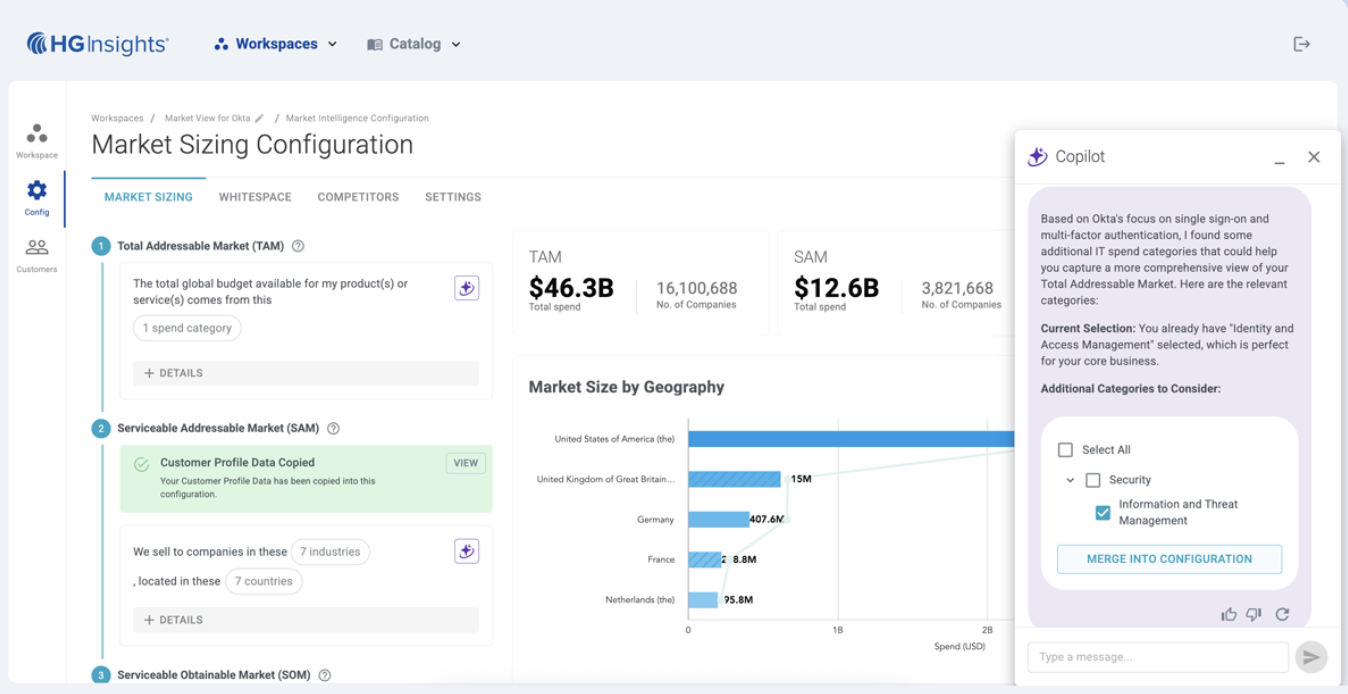
The RGI Platform is HG's unified workspace, housing three AI copilots that sit on top of the data fabric.
Source: HG Insights
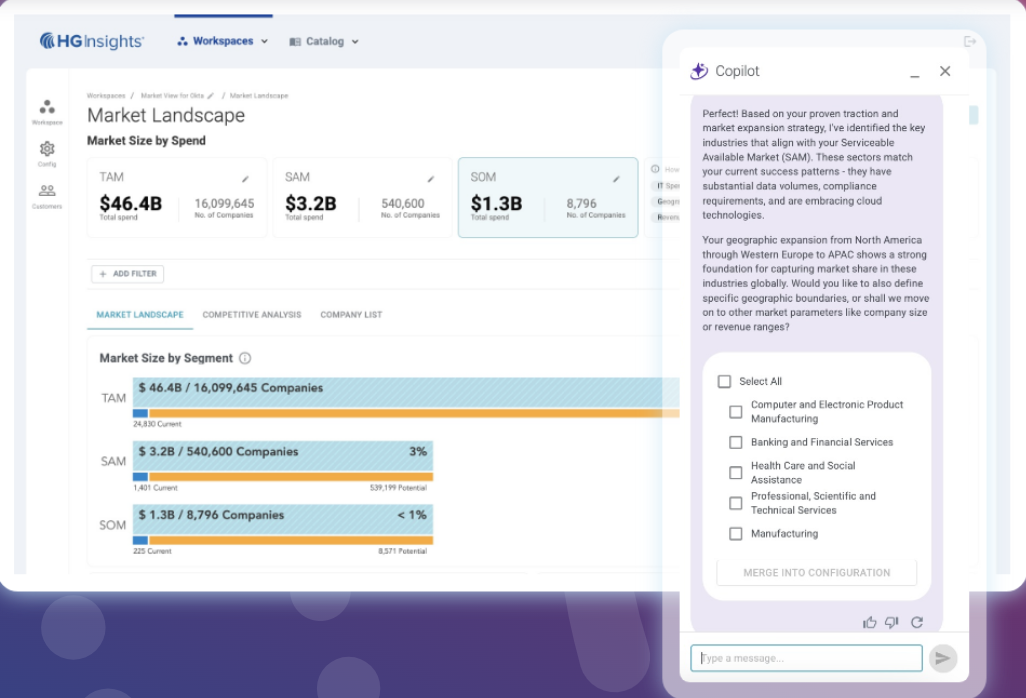
Market Analyzer handles market-level analysis: TAM/SAM/SOM sizing, whitespace identification, and competitive landscape mapping. Users define their market parameters through a guided configuration wizard, then explore patterns using conversational AI.
The copilot ingests both HG's third-party data and a customer's own first-party account and win/loss records, so market estimates reflect the company's actual install base and lost deals rather than third-party data alone.
Data Studio provides a no-code predictive modeling environment where RevOps and marketing teams can build propensity models combining firmographic, technographic, and first-party engagement data.
Source: HG Insights
The models output account-level and buyer-level scores that push directly to Salesforce, HubSpot, Salesloft, and Gong. HG emphasizes that the scores are explainable (not black-box), helping reps understand why an account ranked high rather than blindly trusting a number.
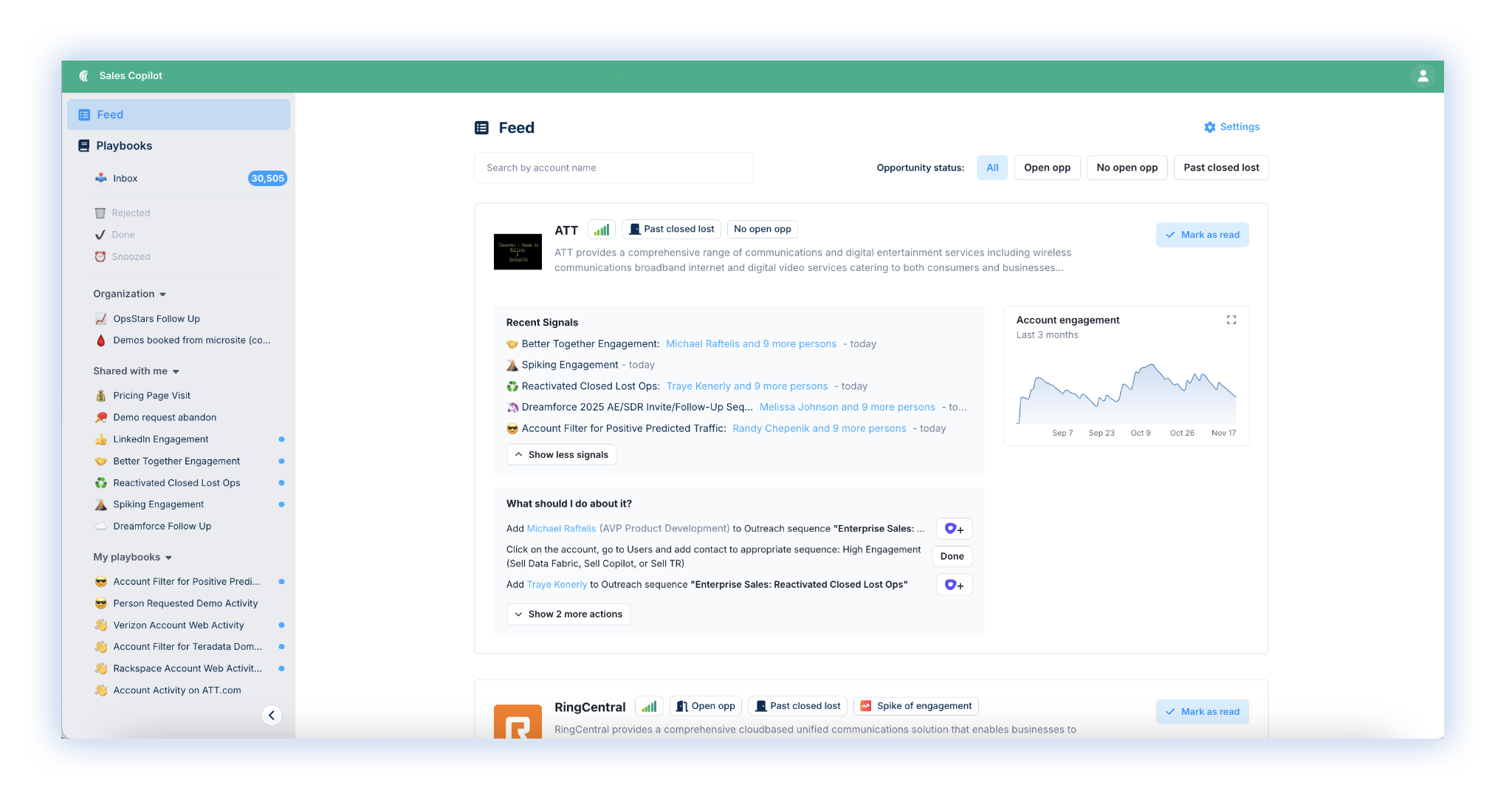
Sales Copilot (built on MadKudu, acquired August 2025) is the seller-facing layer. It tracks changes in tech stacks, news, and engagement signals, surfacing real-time buyer alerts when accounts show increased intent.
The system includes AI-generated account research briefs, message personalization incorporating TrustRadius product insights, and a Chrome Extension that overlays account intelligence on Salesforce, Gong, and Outreach without tab-switching.
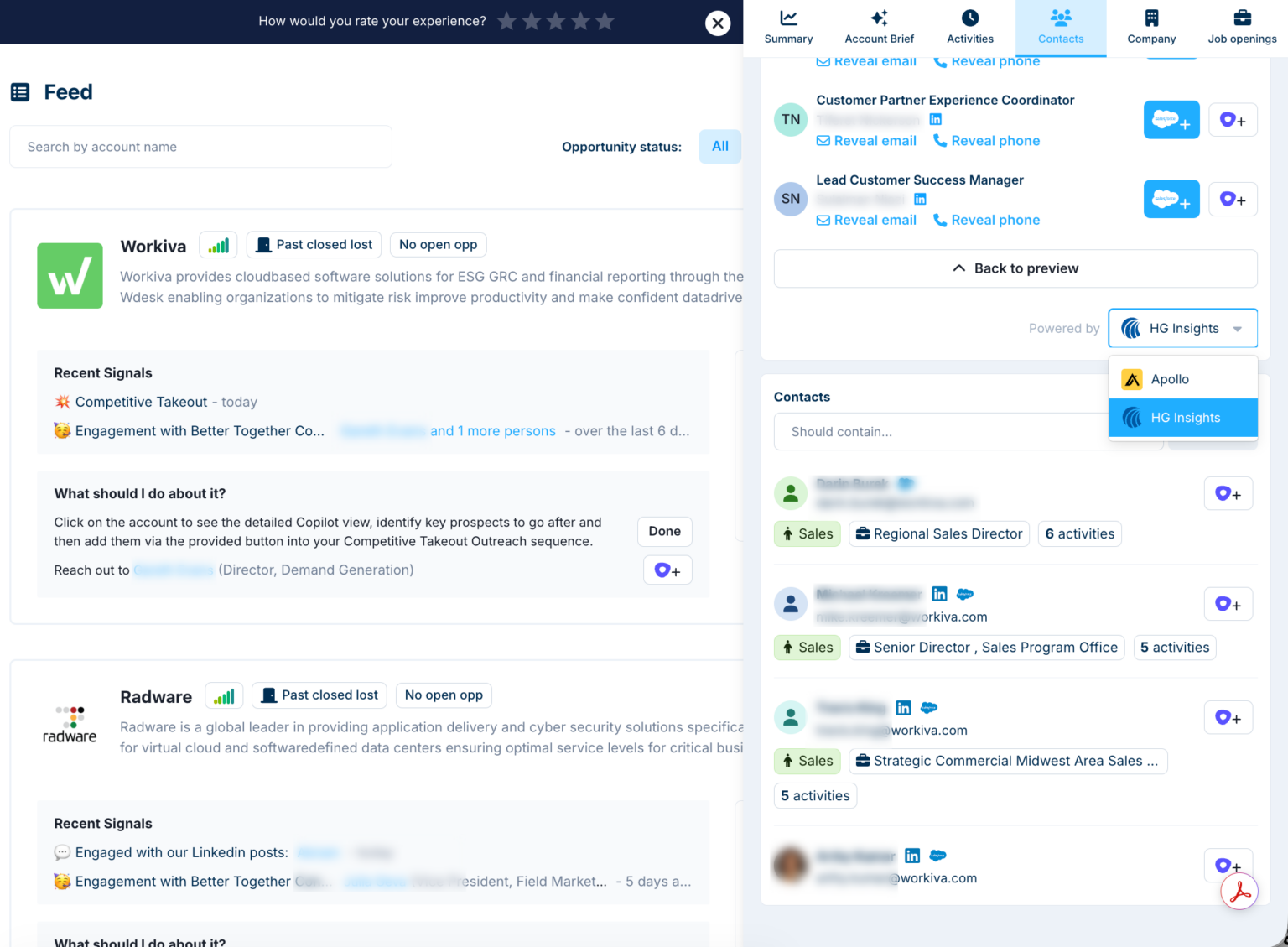
It also includes Smart Contact Enrichment, which recommends contacts using AI analysis of role and use-case fit, then runs waterfall enrichment across multiple data providers and verifies current employment in real time before returning results.
Source: HG Insights
Buyer Intent: Downstream signals from TrustRadius combined with broader research behavior tracking.
HG Insights layers two categories of intent signals through its Buyer Intent capability.
Source: HG Insights
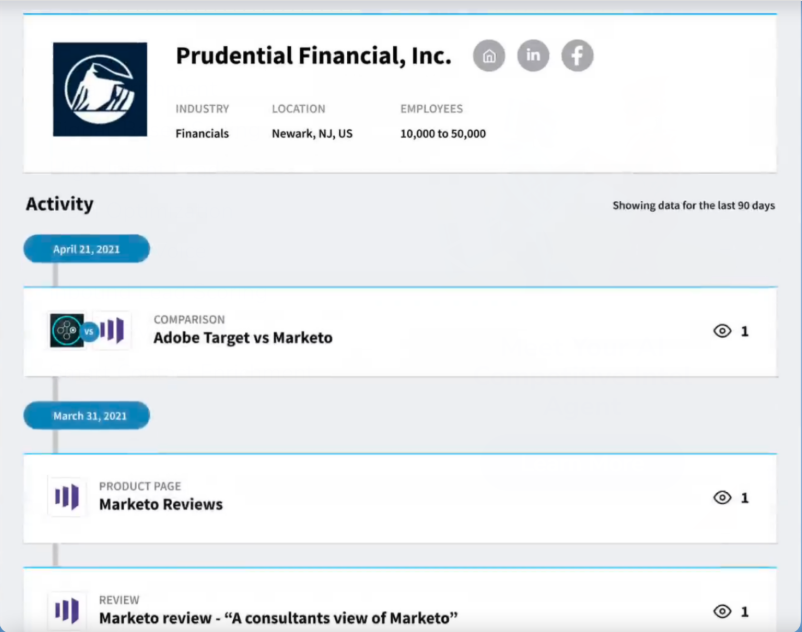
The first, and more distinctive, is downstream intent sourced from TrustRadius (which HG acquired in June 2025). This captures behavioral data from enterprise B2B buyers who are actively researching products on TrustRadius: pricing page views, feature comparisons, competitor product evaluations, and demo engagement. These are signals from buyers already deep in evaluation, not just reading blog posts.
The second layer applies AI to broader intent data sources, identifying accounts exhibiting research and selection behavior through to evaluation and new product installation.
Both layers run against the account's ICP fit, technographic data, and maturity criteria to produce contextualized, scored signals. The platform also includes churn and retention alerting, triggering alerts when existing customers begin researching rival products. Intent signals integrate with CRM and GTM tools so sales teams can act on them immediately.
The TrustRadius-sourced intent is a genuine differentiator. Most intent data providers capture upstream content consumption signals (reading articles, downloading whitepapers). TrustRadius signals come from buyers explicitly comparing vendors and checking pricing, behaviors much closer to an actual purchase decision.
RGI Agent Builder: MCP server for connecting AI agents to HG's data fabric.
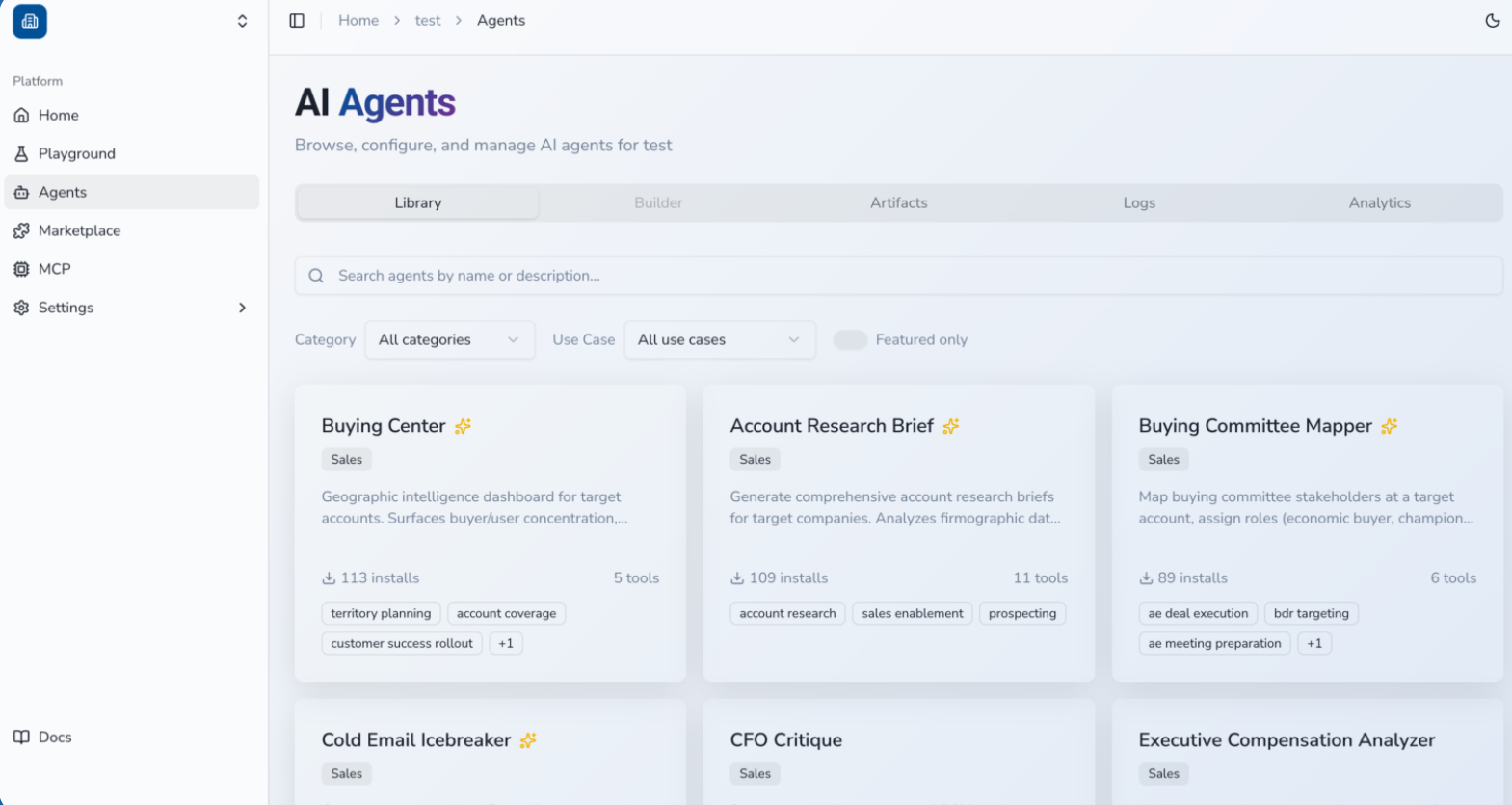
The RGI Agent Builder is HG's developer infrastructure for building custom AI agents that query the RGI Fabric directly. It uses the Model Context Protocol (MCP) standard, connecting to Claude, ChatGPT, Cursor, and other MCP-compatible tools without custom ETL pipelines.
Source: HG Insights
Setup follows four steps: get an MCP key, connect your AI tool to HG's MCP server, define the agent's mission through a prompt, and let the agent call HG Fabric data in real time. The architecture supports multi-agent orchestration, with documented reference implementations using a master agent that routes to specialist sub-agents for account research, email generation, and executive review.
Agents can access the full range of HG data through MCP: firmographics, technographics, IT spend, contract intelligence, competitive signals, TrustRadius intent, SEC filing data, and contact intelligence, all unified by a single HG Company ID.
The significant caveat: this product is currently available only via early access request. Teams wanting to build AI agents today face an access bottleneck. Consumption is metered through AI Credits covering both LLM inference and database lookups.
Where HG Insights Falls Short
While HG Insights excels at technographic depth and market intelligence for B2B tech companies, several limitations emerge depending on how broadly you need your GTM platform to work.
No Free Trial or Self-Serve Evaluation. HG Insights offers no free plan, trial, or pilot program. Standard contracts default to two years, with one-year terms available at a higher price. Prospective buyers must go through a full enterprise sales cycle without hands-on proof of value.
For teams evaluating multiple vendors, this creates real friction compared to platforms that let you test data quality against your own accounts before committing.
Post-Acquisition Platform Fragmentation. Three acquisitions in three years have left HG with four distinct login portals and knowledge bases: the RGI Platform at admin.hginsights.com, the Legacy Platform at platform.hginsights.com, Cloud Dynamics at my.intricately.com, and Sales Copilot at msi.madkudu.com.
HG acknowledges it is "currently on a fast track" to consolidate these, but for now, onboarding spans multiple disconnected experiences.
Contact Data Is a Newer Capability. Contact Intelligence within HG's platform is a recent addition, powered by waterfall enrichment rather than a proprietary database. Buyers running high-volume outbound, where verified emails and direct-dial phone numbers for millions of contacts matter, may find that coverage trails dedicated providers with larger contact databases.
HG's strength is account-level intelligence, not individual contact volume.
Pricing Complexity and Opacity. HG sells five distinct product lines (RGI Platform, RGI Fabric, Agent Builder, Intent-Driven Leads, Customer Voice), each priced separately on a consumption-based model with no published tiers. Two credit types (Intelligence credits and AI action credits) add another layer. The 20% monthly credit rollover cap means unused credits beyond that threshold are forfeited.
Teams who only need one capability, like technographic enrichment, face procurement and onboarding complexity that may be disproportionate to their use case.
Strongest for Tech Companies Selling to Tech Companies. HG's differentiation (technographic depth, IT spend modeling, AI maturity indexing) is most relevant when your buyers are technology decision-makers. Companies selling outside the tech vertical, or targeting SMBs without formal IT budgets, will find less signal value in the data.
The platform assumes dedicated RevOps or sales ops teams who can build scoring models and operationalize the intelligence.
Key AI Feature Not Yet Generally Available. The RGI Agent Builder, arguably HG's most forward-looking product, remains in limited beta. Teams evaluating HG today based on its agentic AI capabilities may find that the feature they're most excited about isn't available yet.
These limitations reflect HG Insights' optimization for depth over breadth: it chose to go deeper on technographic intelligence for enterprise tech companies rather than broader across the full GTM workflow.
That's a reasonable design choice, but it leaves clear gaps for teams that need their intelligence platform to also handle contact discovery, sales execution, marketing automation, and conversation intelligence in one place.
Top HG Insights Alternative: ZoomInfo
ZoomInfo addresses HG Insights' gaps by providing an all-in-one AI GTM platform that spans the full go-to-market workflow, from data discovery through sales execution and marketing orchestration. Where HG Insights goes deep on technographic intelligence for a specific buyer profile, ZoomInfo goes wide, covering the capabilities that revenue teams need to find, win, and grow customers.
The B2B Data Platform: ZoomInfo provides verified contact, company, and signal data at a scale no single-purpose intelligence tool can match.
ZoomInfo's data foundation covers three dimensions simultaneously: identity data (500M contacts, 135M+ verified phone numbers, 120M direct-dial phone numbers, and 200M+ verified business email addresses), company context (100M companies with firmographics, org charts, and technographics tracking 30,000+ technologies across 200+ categories), and dynamic signals revealing when accounts are actively in-market.
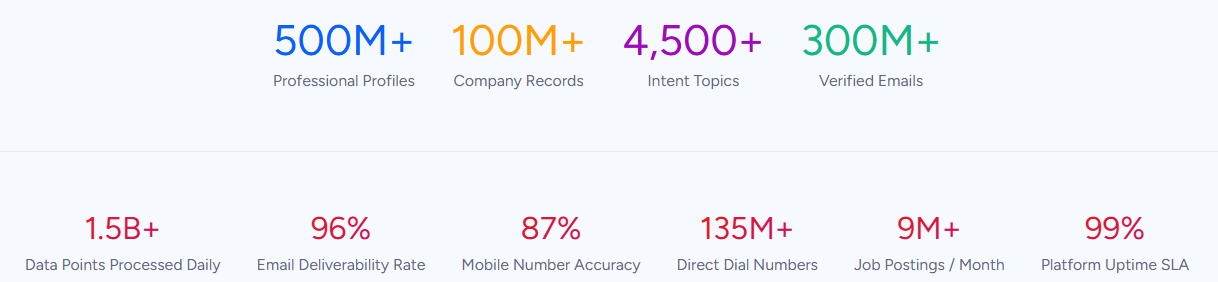
ZoomInfo builds and maintains this data through a multi-source pipeline: automated ML scanning of 28 million site domains daily, third-party partner data covering 95 million businesses, a community of 200,000+ ZoomInfo Lite users who share data back, and an in-house Data Training Lab of 300+ human researchers. First-party data reaches up to 95% accuracy.
The data quality claim has outside validation. In a Fortune 500 competitive RFP analyzing 25 million contacts across vendors, the independent consultant concluded that "no other competitor came even close." Forrester named ZoomInfo a Leader for Intent Data Providers (Q1 2025), giving it the highest possible scores across eight criteria.
And in Gartner's Voice of the Customer (2025), ZoomInfo was the only vendor in the Customers' Choice quadrant.
For teams whose GTM execution depends on actually reaching the right people (not just knowing which technologies their companies run), this contact-level depth fills the gap that a technographic-first platform leaves.
"ZoomInfo gives us the information we need to execute. We don't have to go through and spend our time digging. It's already there, so we can be three steps ahead." (Vensure)
The GTM Context Graph: ZoomInfo's intelligence layer connects your data with its own to reveal why deals move or stall.
Data alone is still just data. What distinguishes ZoomInfo's approach is the GTM Context Graph, an intelligence layer that processes 1.5B+ data points daily. It fuses ZoomInfo's B2B data with a customer's own first-party records (CRM data, conversation transcripts from Chorus, email interactions, behavioral signals) and draws out the connections between signals and outcomes.
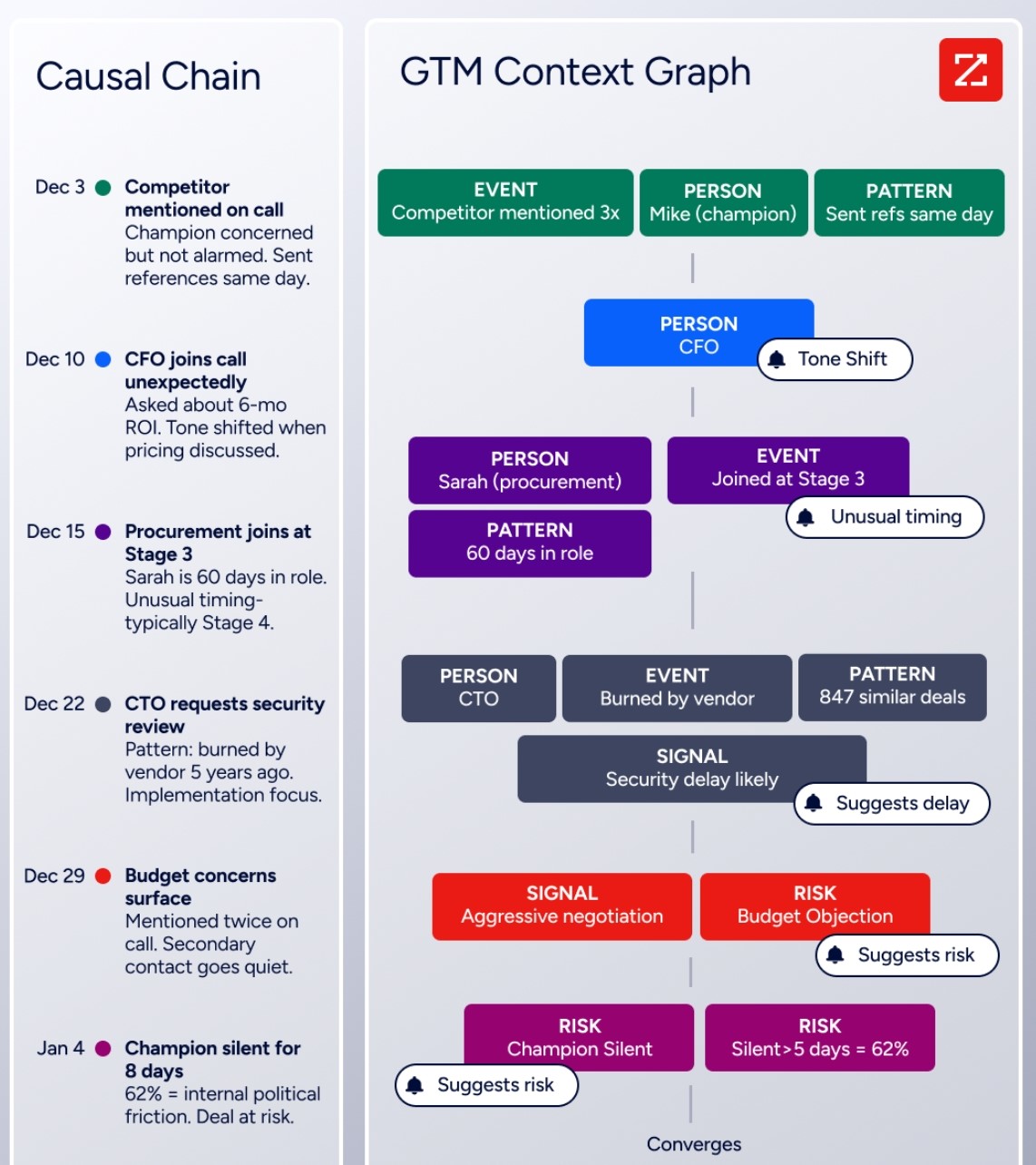
A CRM records that a deal moved to Stage 4. Conversation intelligence transcribes what the VP of Finance said on the last call. Intent data logs a research spike. The GTM Context Graph connects all three to capture why the deal moved, linking executive sponsorship entering at a specific stage, ROI-focused questions, competitor research activity, and hiring patterns into a single actionable picture.
This intelligence flows into every downstream action. Follow-up emails address the specific concern a stakeholder raised because the system understands why it matters now. Account prioritization targets accounts whose signal combinations match actual win patterns rather than accounts that tripped a keyword threshold. Deal forecasting reflects buying evidence rather than stage labels.
ZoomInfo built this capability through nearly 20 years of data unification infrastructure, extended by Chorus's context capture engines.
"That combination of our internal CRM data, external signals, and AI that's given all that context has helped us craft very specific account- and persona-based messages. And people have responded to them right away." The sales team attributed 39% of active pipeline to ZoomInfo signals and reported 54% productivity gains. (Seismic)
Universal Access: Use ZoomInfo's intelligence in any tool, any workflow, any AI agent.
ZoomInfo delivers its intelligence through three channels, so the choice of where your team works never limits the quality of intelligence available.
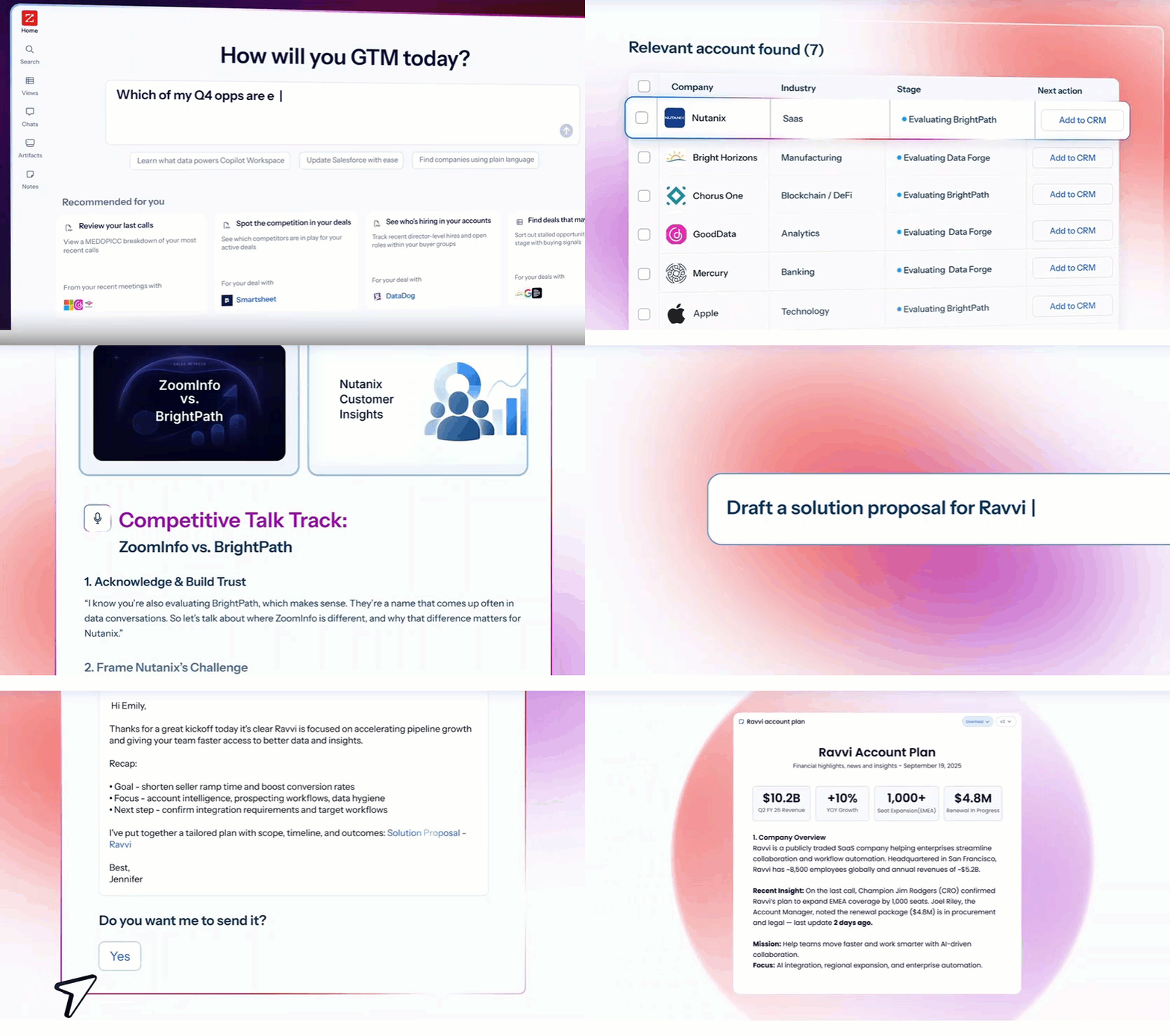
GTM Workspace is the native front-end for sellers: AEs, SDRs, account managers, and CS reps. It gives each seller a complete book-of-business view across CRM, ZoomInfo data, and conversation history, with specialized AI agents that handle account research, outreach drafting, CRM updates, and signal monitoring.
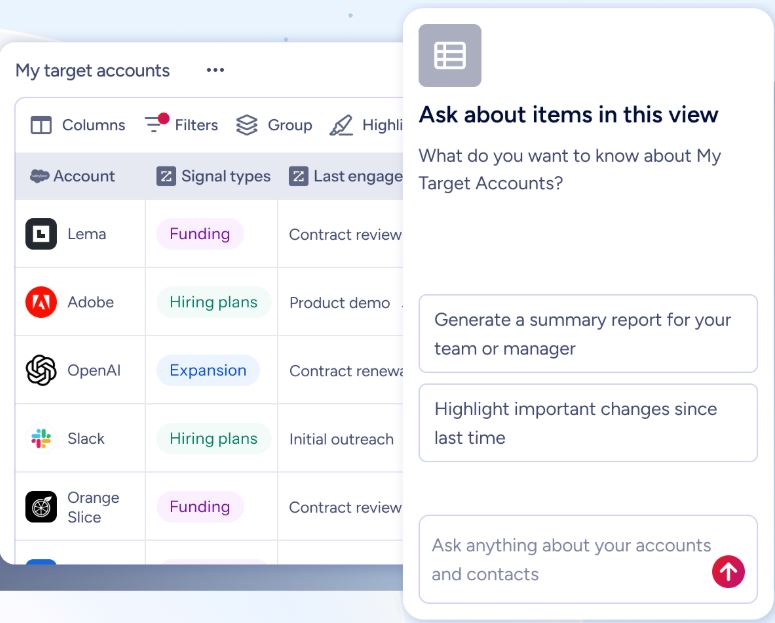
Built on Anthropic's Claude, these agents answer who to contact, when to engage, and what to say. The Action Feed surfaces in-market buyers with pre-drafted actions on every signal.
GTM Studio serves marketers, RevOps, and GTM engineers. It's an AI-powered canvas where audience definition, campaign orchestration, and pipeline measurement happen through natural language rather than engineering tickets.
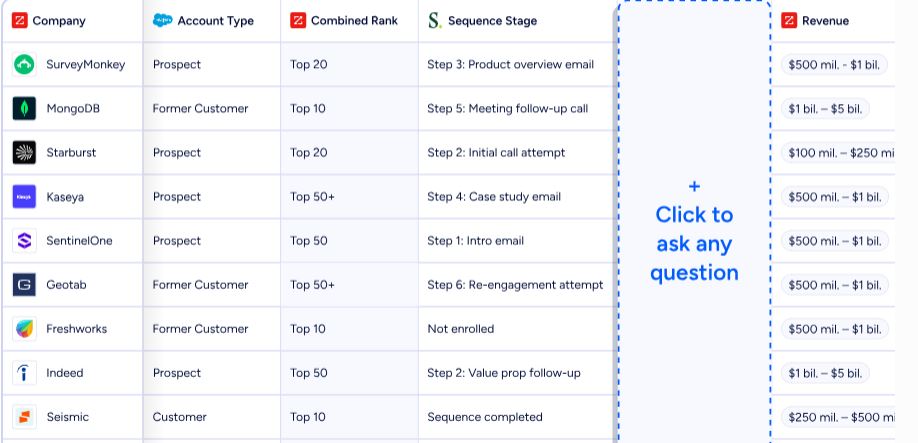
Pre-built GTM plays (inbound acceleration, champion tracking, competitive displacement) launch in one click, with waterfall enrichment across 25+ data sources included at no additional cost. Outputs from GTM Studio flow directly into GTM Workspace for seller execution.
For teams that build beyond ZoomInfo's own products, APIs and MCP expose the same intelligence to any custom agent, internal tool, or partner platform. API access is included in all relevant plans. The MCP server currently supports Claude and ChatGPT, with additional platforms noted as coming soon, and requires no custom coding beyond one-time configuration.
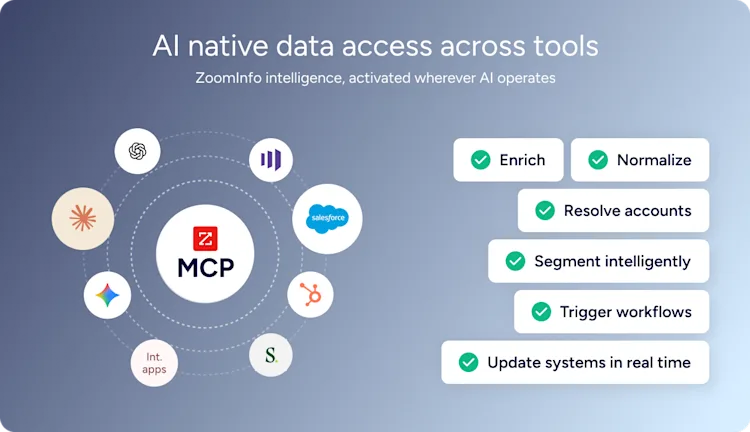
All three channels draw from the same GTM Context Graph. A buying signal one team detects is immediately actionable by every other team.
"The plug-and-play aspect of the API means I can integrate it very easily into any process and get information at a moment's notice," achieving an 87% reduction in time spent on data dashboard updates. (BDO Canada)
Accessible Entry Points: A permanent free tier and free trial lower the evaluation barrier.
Unlike HG Insights' no-trial, two-year-contract model, ZoomInfo offers two ways to evaluate the platform before committing. ZoomInfo Lite is a permanent free tier (no credit card, no time limit) that includes access to ZoomInfo's B2B database, 10 monthly export credits, the ReachOut Chrome Extension, WebSights Lite (up to 10 website visitor reveals per day), and HubSpot integration.
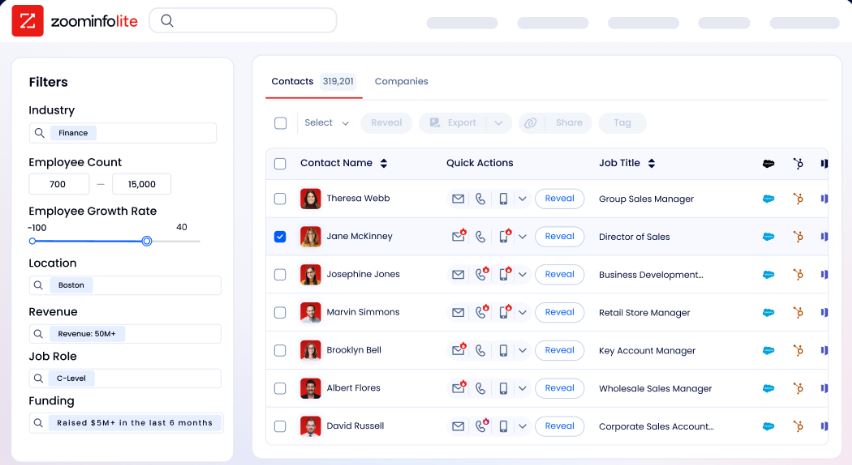
For a deeper look, a 7-day free trial (no credit card required) provides access to core platform features including contact and company search, intent signals, and email outreach.
Paid plans are organized into Sales, Marketing, and standalone products (Chorus, Chat), each with tier-based access to progressively more advanced capabilities. Pricing is custom-quoted based on seats, credit volume, features, and contract length. API access is included in all relevant plans.
HG Insights or ZoomInfo: Comparison Summary
HG Insights | ZoomInfo | |
|---|---|---|
Primary focus | Technographic intelligence and market analysis for B2B tech companies | All-in-one AI GTM platform spanning data, intelligence, and execution |
Contact database | Newer capability via waterfall enrichment; size undisclosed | 500M contacts, 135M+ verified phone numbers, 200M+ verified business emails |
Company profiles | ||
Technographic depth | 240M+ installations, 22K+ products detected via behind-the-firewall AI | 30,000+ technologies across 200+ categories via 20+ source types |
IT spend intelligence | 140+ categories with 12-month forecasts | Firmographic and financial data; no comparable spend category model |
Buyer intent | TrustRadius downstream signals + third-party | Proprietary Guided Intent + 210M IP-to-Org pairings + 6T+ keyword-to-device pairings monthly |
Conversation intelligence | Not available | Chorus (14 technology patents) |
Sales execution | Sales Copilot (AI alerts + outreach personalization) | GTM Workspace (AI agents, action feed, complete book-of-business) |
Marketing automation | Not native (Intent-Driven Leads is managed program) | GTM Studio + native DSP for display ads |
AI agent infrastructure | RGI Agent Builder via MCP (limited beta) | MCP server (GA) + Enterprise API |
CRM integrations | Salesforce, HubSpot | Salesforce, HubSpot, Microsoft Dynamics + 120 marketplace integrations |
Free evaluation | No trial or free plan | Permanent free tier (ZoomInfo Lite) + 7-day trial |
Contract terms | Two-year default | Annual standard; multi-year for pricing advantages |
Target buyer | B2B tech companies with dedicated GTM functions | B2B companies across verticals |
Analyst recognition | G2 Leader (Sales Intelligence, Marketing Account Intelligence) | Gartner MQ Leader (ABM), Forrester Wave Leader (Intent Data), 133 G2 No. 1 rankings |
Security certifications | SOC 2 Type II, GDPR, CCPA | ISO 27001, ISO 27701, SOC 2 Type II, TRUSTe GDPR/CCPA |
Final Verdict
The choice between HG Insights and ZoomInfo depends on what you need your intelligence platform to do and how broadly your GTM workflow extends.
Choose HG Insights if your GTM strategy centers on technographic precision for a technology-selling audience. It's the right tool when your primary jobs are TAM/SAM/SOM sizing at the account level, competitive displacement targeting based on verified technology installations, IT spend analysis for territory design, and market intelligence for board presentations or M&A due diligence.
If you have dedicated RevOps and strategy teams who can build scoring models from technographic and spend data, and you primarily sell technology to other technology companies, HG Insights' depth in these areas is hard to match. The TrustRadius-sourced downstream intent and the Cloud Dynamics sensor network add signal layers that most competitors don't offer.
Choose ZoomInfo if you need technographic intelligence as part of a broader GTM platform that also handles contact discovery, sales execution, marketing orchestration, and conversation intelligence. ZoomInfo covers the full workflow from prospecting through deal execution to customer expansion, backed by a verified contact database of 500M contacts and an intelligence layer that connects your CRM, conversations, and third-party signals.
The permanent free tier and free trial let you test data quality against your own accounts before committing. For teams that need both depth of intelligence and breadth of execution, without stitching together five separate tools, ZoomInfo provides a single platform where every signal informs every action.
Get started with ZoomInfo here.
The difference comes down to scope. HG Insights aims to be the definitive intelligence layer for technology-targeting GTM teams. ZoomInfo aims to be the platform where data, intelligence, and execution converge. Your choice depends on whether your bottleneck is deeper technographic insight or a unified system that takes you from signal to action.
HG Insights FAQ
What is HG Insights used for?
HG Insights is a B2B intelligence platform used for TAM/SAM/SOM analysis, territory design, competitive displacement, account scoring, and ABM targeting. Its core strength is technographic data: tracking which technologies companies use, how extensively they're deployed, and how much companies spend on IT. The platform targets B2B technology companies with dedicated GTM functions like RevOps, demand gen, and corporate strategy.
ZoomInfo serves these same use cases while also providing sales execution, marketing automation, conversation intelligence, and a verified contact database of 500M contacts.
Does HG Insights offer a free trial?
No. HG Insights has no free plan, trial, or pilot program. The standard contract term is two years, with one-year terms available at a higher price. Prospective customers must go through a full sales cycle to evaluate the platform. ZoomInfo offers both a permanent free tier (ZoomInfo Lite, with 10 monthly export credits and no time limit) and a 7-day free trial requiring no credit card.
How much does HG Insights cost?
HG Insights does not publish pricing. The platform uses a consumption-based model with Intelligence credits and AI action credits across three tiers (Starter, Growth, Enterprise). Five distinct product lines are priced separately: RGI Platform, RGI Fabric, Agent Builder, Intent-Driven Leads, and Customer Voice.
Additional costs include seat bundles, extra credit purchases, and a premium for quarterly billing or one-year contracts. Up to 20% of unused monthly credits roll over; the rest are forfeited.
How does HG Insights detect technology installations?
HG Insights uses multi-source AI analysis of job postings, contracts, community comments, and other signals to detect technology usage behind the firewall, going beyond standard web scraping. For cloud infrastructure specifically, HG Cloud Dynamics uses a Global Sensor Network at ISP internet gateways across 100+ countries to monitor actual traffic patterns.
This methodology detects products like AWS and Google Cloud that leave no website footprint and avoids false positives from deactivated code.
Does HG Insights have a contact database?
HG Insights added Contact Intelligence as a newer capability within its Sales Copilot product. It uses AI-driven recommendations tied to account context and waterfall enrichment across multiple data providers, with real-time employer verification. However, HG does not operate a proprietary contact database at the scale of dedicated providers.
ZoomInfo maintains 500M contacts, 135M+ verified phone numbers, and 200M+ verified business emails, with up to 95% accuracy on first-party data.
What integrations does HG Insights support?
HG Insights integrates natively with Salesforce and HubSpot via bi-directional connectors and offers a LinkedIn connector. The RGI Fabric is accessible through REST APIs, cloud data warehouse connectors (including Snowflake), and an MCP server for AI agents. Sales Copilot pushes contacts directly to Salesforce, Gong, Outreach, Salesloft, and HubSpot.
ZoomInfo offers a broader integration ecosystem with 120 marketplace integrations spanning CRM, marketing automation, sales engagement, data warehouses, and communications platforms.
Is HG Insights suitable for non-technology companies?
HG Insights' primary value proposition (technographic intelligence and IT spend modeling) is most relevant when your buyers are technology decision-makers at B2B tech companies.
The platform is trusted by 90% of Fortune 500 tech companies, but independent validation of coverage completeness in non-tech verticals, secondary global markets, or SMB segments is limited. Companies selling outside the technology sector may find less signal value in the data.
ZoomInfo covers a wider range of industries, with nine vertical datasets launched in 2025 covering franchise ownership, restaurant operations, and commercial fleet intelligence.
How does HG Insights compare to ZoomInfo for technographic data?
Both platforms offer technographic intelligence, but with different approaches and scale. HG Insights tracks 22,000+ technology detections with behind-the-firewall AI analysis and reports 240M+ installations. Its Cloud Dynamics product adds infrastructure-level spend data via a physical sensor network.
ZoomInfo tracks 30,000+ technologies across 200+ categories from 20+ source types, covering 30M+ companies. ZoomInfo's technographic data is part of a broader platform that also includes 500M contacts, intent signals, conversation intelligence, and AI-driven execution tools. HG's IT spend intelligence across 140+ categories with 12-month forecasts is a capability ZoomInfo does not directly match.
Researching HG Insights? These comparisons and alternatives help you decide:
