

LeadGenius occupies an unusual corner of the B2B data market. Instead of handing you a database and letting you search, it dispatches human researchers across 37 countries to find the specific contacts your team needs, verified and delivered on demand. For enterprise organizations targeting niche verticals or hard-to-reach global markets, that approach can fill gaps no static database covers.
To write this LeadGenius review, we analyzed the platform in detail. We believe it's the right choice if:
You need custom-sourced contact data for niche industries or hard-to-reach global markets
Your ICP requires non-standard data points that off-the-shelf databases don't carry
You operate in regulated industries where transparent, auditable data sourcing is non-negotiable
You prefer a managed service with dedicated research teams over self-service prospecting
Your priority is precision over volume in building buying committees
However, LeadGenius might not be the best choice if:
You need a self-service platform for day-to-day prospecting and list building
You require buyer intent data, conversation intelligence, or multi-channel campaign execution
You want published pricing before committing to a sales conversation
Your team needs direct-dial phone numbers at scale
You're looking for a single platform that covers prospecting, outreach, marketing, and operations
In this case, you should consider ZoomInfo: a full go-to-market platform built on a verified B2B dataset of 500M contacts, 100M companies, 135M+ verified phone numbers, and 200M+ verified business emails.
That data fuels the GTM Context Graph, an intelligence layer that processes 1.5B + data points daily by combining ZoomInfo's B2B data with your CRM records, conversation transcripts, and behavioral signals to explain why deals move or stall.
Where LeadGenius focuses on custom data sourcing, ZoomInfo covers the full go-to-market workflow: prospecting, intent monitoring, AI-powered outreach, conversation intelligence, and marketing automation, all accessible through its native products or any third-party tool via APIs and MCP.
We've included a detailed look at ZoomInfo later in this review. If you'd like to explore it now, you can start with ZoomInfo's free trial.
What is LeadGenius?
LeadGenius is a B2B contact intelligence platform founded in 2011 by Anand Kulkarni, Prayag Narula, and Dave Rolnitzky as UC Berkeley graduate students. The company joined Y Combinator's Summer 2011 class under the name MobileWorks, initially focused on ethical crowdsourcing. By late 2013, it pivoted to B2B sales intelligence, and the LeadGenius brand stuck.
Today, LeadGenius serves over 400 customers across 42 countries, including Microsoft, Snowflake, Autodesk, and DoorDash. The company has raised $28.7 million in total funding from investors including Sierra Ventures, Andreessen Horowitz, and Lumia Capital.

Source: LeadGenius Data
LeadGenius differentiates itself through its AI + Human-in-the-Loop methodology. Rather than maintaining a static database, LeadGenius deploys native-language research teams who source contacts account by account, verified through professional profiles, speaker rosters, and authored content.
The company says it has delivered over 3 billion data records and positions itself as a partner rather than a vendor, targeting Marketing Operations, Sales Operations, and Revenue Operations professionals who need precise data for account-based marketing.
LeadGenius Pros & Cons
Pros | Cons |
|---|---|
Custom-sourced data for niche ICPs and non-standard data points | No publicly listed pricing (average contracts around $22K/year) |
Human-verified contacts with URL-level sourcing transparency | Limited self-service functionality compared to database platforms |
Strong global coverage, including emerging and non-English markets | Only 14 G2 reviews, suggesting limited market penetration |
GDPR/CCPA/LGPD compliance with auditable data trails | Some users report receiving outdated leads |
Dedicated support teams (researchers, QA, engineers, PMs) | Weaker mobile number coverage than competitors |
Salesforce, HubSpot, Outreach, and Marketo integrations included | No buyer intent data or conversation intelligence |
Free data sample available on request | No free trial of the full platform |
LeadGenius Review: How It Works & Key Features
Contact Coverage & Buying Committees: LeadGenius custom-sources contacts account by account rather than pulling from a pre-built database.
The core of LeadGenius is its Contact Coverage & Buying Committees feature, built around the reality that modern B2B deals involve 5-10 stakeholders. Instead of searching a static database, you submit your target account criteria and LeadGenius's research teams find the specific contacts you need.
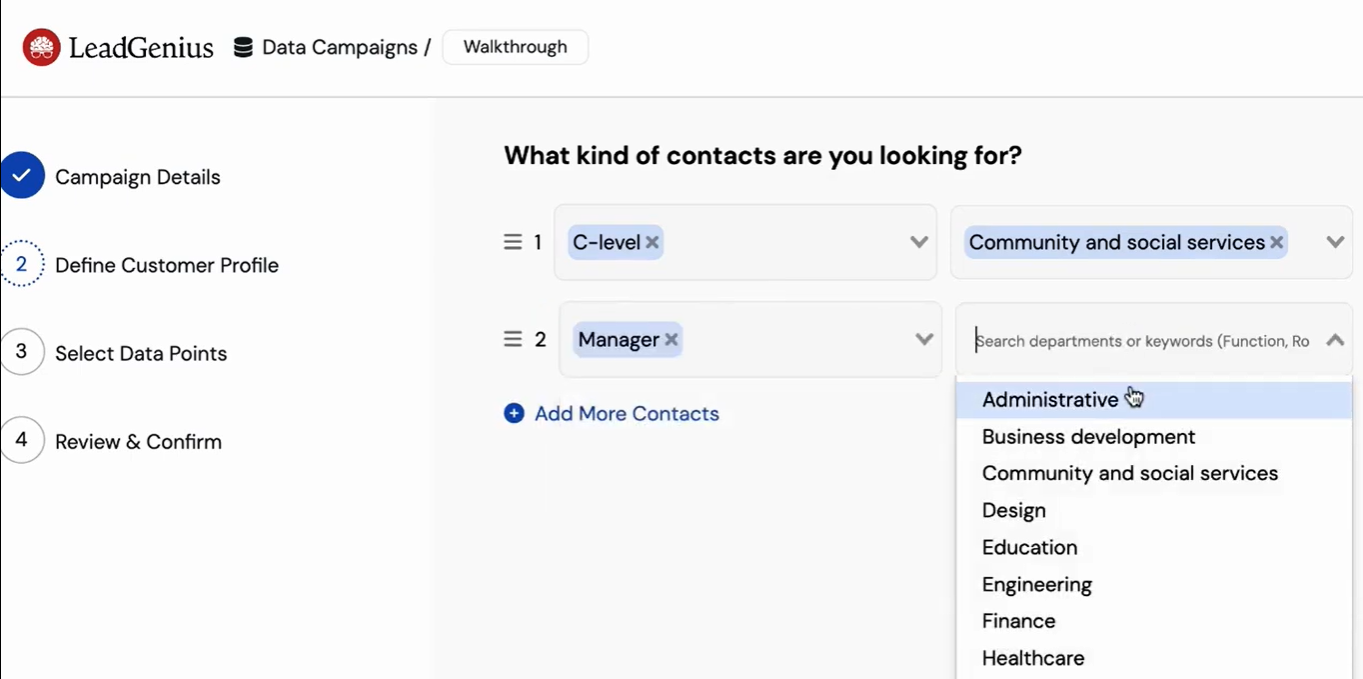
Source: LeadGenius Contact
The platform runs on a campaign-based workflow. You can create Net New campaigns (to acquire leads matching specific criteria) or Enrichment campaigns (to fill gaps in existing records).
Campaigns can be configured through the dashboard or RESTful API, with filters for seniority levels (C-level through Entry level), departments (14 categories from Business Development to Sales), and the number of contacts per company.
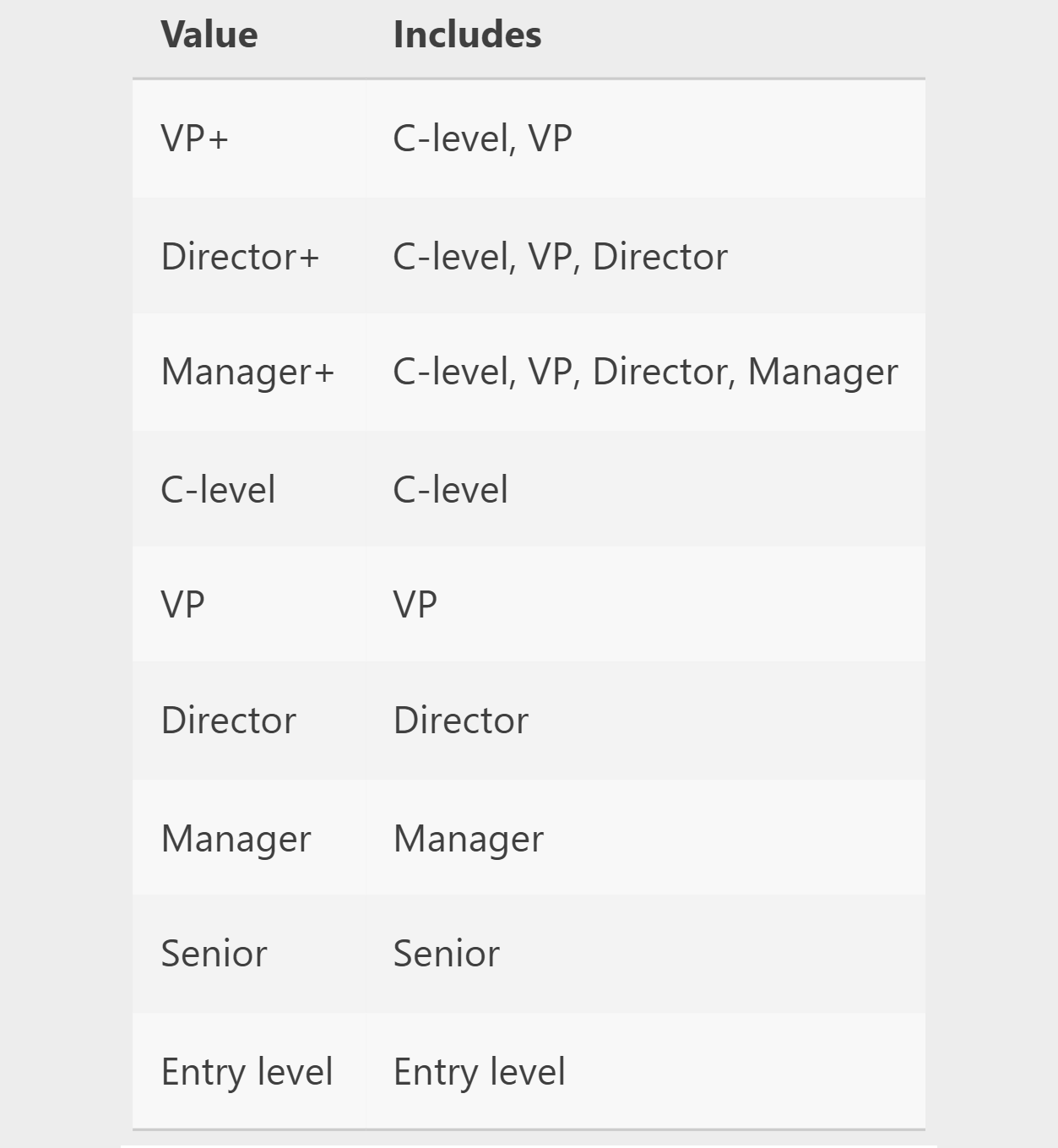
Source: LeadGenius Seniority Values
LeadGenius offers two delivery modes. Automated campaigns return standard data fields immediately for quick enrichment. "Precision" campaigns route through human review before delivery, combining AI with manual verification for higher accuracy on complex or non-standard data points.
Contact data includes standard fields such as email, LinkedIn URL, job title, department, and seniority level. The platform verifies contacts through professional profiles, speaker rosters, authored content, and domain-level validation, with data refreshed on daily, weekly, monthly, or triggered cadences to match your go-to-market cycles.
Data Enrichment & API Platform: Automated and human-verified enrichment for existing CRM records.
LeadGenius's enrichment works through three workflows: Plug Holes in Account Data, Get More Contacts for Target Accounts, and Enrich Inbound Leads. Records can be uploaded from CRM, CSV files, or API.
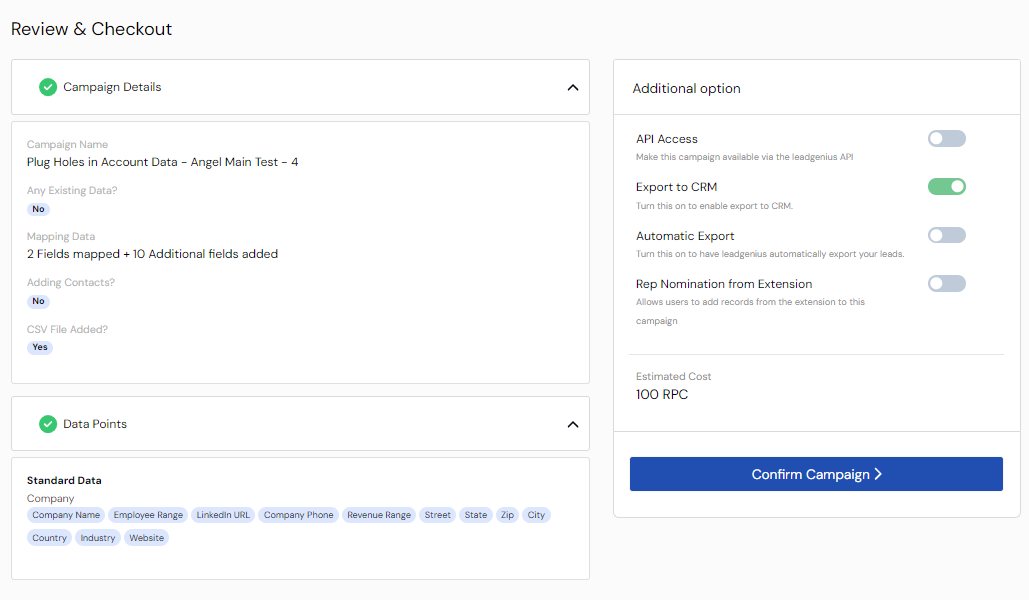
Source: LeadGenius Plug Holes
The Rapid Enrichment API handles real-time lookups with rate limits of 50 requests per minute and up to 200 records per request. For account enrichment, the API returns company name, website, LinkedIn URL, employee range, revenue range, industry, and location data. Contact enrichment covers email, job title, department, seniority, phone numbers, skills, and previous company information.
Precision mode goes beyond standard enrichment. It surfaces data points including technographics, hiring trends, executive moves, product launches, funding events, M&A activity, and social engagement signals (data that requires deeper research than automated lookup can provide).
The Salesforce integration imports data from the CRM every 12 hours and supports configurable overwrite logic (Always, Blank, or Never) to prevent unintended data loss. All integrations with Salesforce, HubSpot, Outreach, Marketo, and Zapier are included at no additional cost.
Global Coverage & Compliance: Native-language research teams across 37 countries with auditable data sourcing.
LeadGenius's global infrastructure is its most distinctive capability. The platform is active in 37 countries with native-language research teams covering emerging markets, niche verticals, and industries where traditional databases have limited reach.
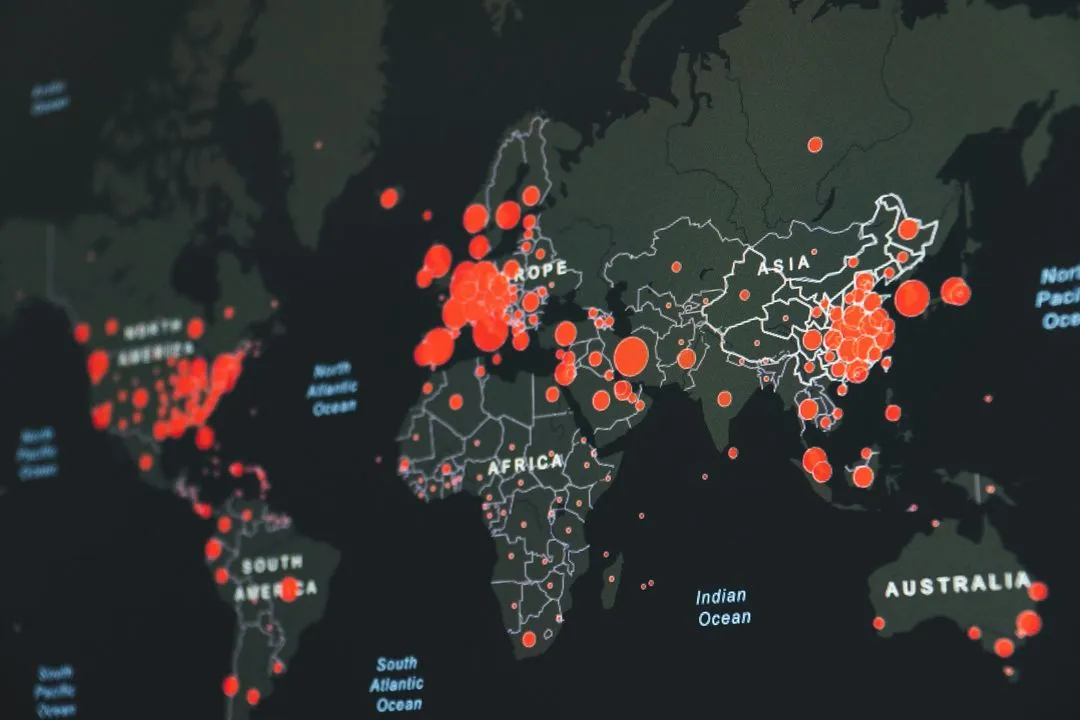
Source: LeadGenius Scale
This includes coverage for SMBs and brick-and-mortar businesses and other segments that standard data providers often miss. For enterprises targeting hospitality, construction, franchises, or other niche sectors, LeadGenius can build custom lead lists tailored to specific ICPs, complex buyer personas, and non-standard data points.
On the compliance side, LeadGenius operates as a data processor rather than a data controller. Data is sourced uniquely for each customer and never resold or reused. The platform offers a configurable compliance matrix for GDPR, LGPD, consent, and suppression with full auditability and URL-level transparency, meaning you can trace exactly where each data point came from.
The company was also the first crowdsourcing company to set a minimum wage for its workers tied to the cost of living in their country, a distinction that matters to enterprise buyers who care about ethical data sourcing.
White-Glove Service Model: Dedicated cross-functional teams that work as an extension of your organization.
Every enterprise engagement comes with a dedicated delivery pod consisting of researchers, QA specialists, engineers, and program managers who work as an extension of the client's team. This embedded model means LeadGenius builds data workflows that align to how teams sell, supporting multi-segment and global territories.
For self-service users, the platform used to offer a freemium option where new users could create an account, explore the platform for 30 days, and enrich up to 1,000 records (500 contacts and 500 companies) or acquire up to 500 new leads. As of May 2026, this option is not available anymore.
LeadGenius also offers a Chrome browser extension that lets users find direct dials, emails, and contact insights from their browser.
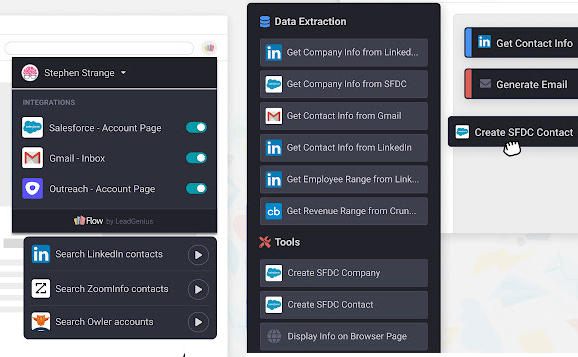
Source: LeadGenius Chrome Extension
Where LeadGenius Falls Short
LeadGenius's design creates clear advantages for its target audience, but it also produces limitations that matter for teams with broader go-to-market needs.
No Intent Data or Buying Signals. LeadGenius focuses on contact data and enrichment. It does not track which companies are researching solutions, monitor website visitors, or surface behavioral signals that indicate buying readiness.
Teams that want to prioritize outreach based on intent must bring their own signal sources or integrate third-party tools. The partnership with Bombora adds some intent capability, but it's an integration, not a native feature.
Limited Self-Service Functionality. LeadGenius operates primarily on a service-based model. While the freemium tier and API exist, the platform is built around managed campaigns and dedicated research teams. For sales reps who need to pull a list of 200 contacts and start outreach the same afternoon, the campaign-based workflow introduces friction that self-service platforms avoid.
Mobile Number Gaps. Multiple sources indicate that LeadGenius's mobile number coverage lags behind competitors, particularly in North America and EMEA. For sales teams that rely on phone outreach, this gap matters.
No Outreach or Campaign Execution. LeadGenius finds and enriches contacts but does not help you engage them. There are no built-in email sequences, no phone dialer, no multi-channel campaign tools. It is a data platform. Teams need separate tools for every execution step after data delivery.
Narrow Review Coverage. With only 14 G2 reviews and a 2.8-star rating on TrustRadius, independent user feedback is thin compared to larger platforms. This makes it harder for prospective buyers to validate claims through peer experience.
These limitations reflect LeadGenius's focus on precision data sourcing rather than broad go-to-market functionality. But for teams that need prospecting, intent signals, outreach, and analytics in one place, these gaps add up to a fragmented workflow requiring multiple vendors.
Top LeadGenius Alternative: ZoomInfo
ZoomInfo addresses LeadGenius's gaps by providing a full go-to-market platform rather than a data-sourcing service. Where LeadGenius delivers custom contact data and stops, ZoomInfo covers the entire workflow: find the right accounts, understand when they're ready to buy, reach them through the right channel, and measure what works, all from one platform.
The Most Comprehensive B2B Data: ZoomInfo operates the largest verified B2B database in the industry.
ZoomInfo's data spans three dimensions: identity data (500M contacts, 135M+ verified phone numbers, 120M direct dials, and 200M+ verified business email addresses), company context (100M companies with firmographics, org charts, and technographics), and signals that reveal when accounts are actively in-market.
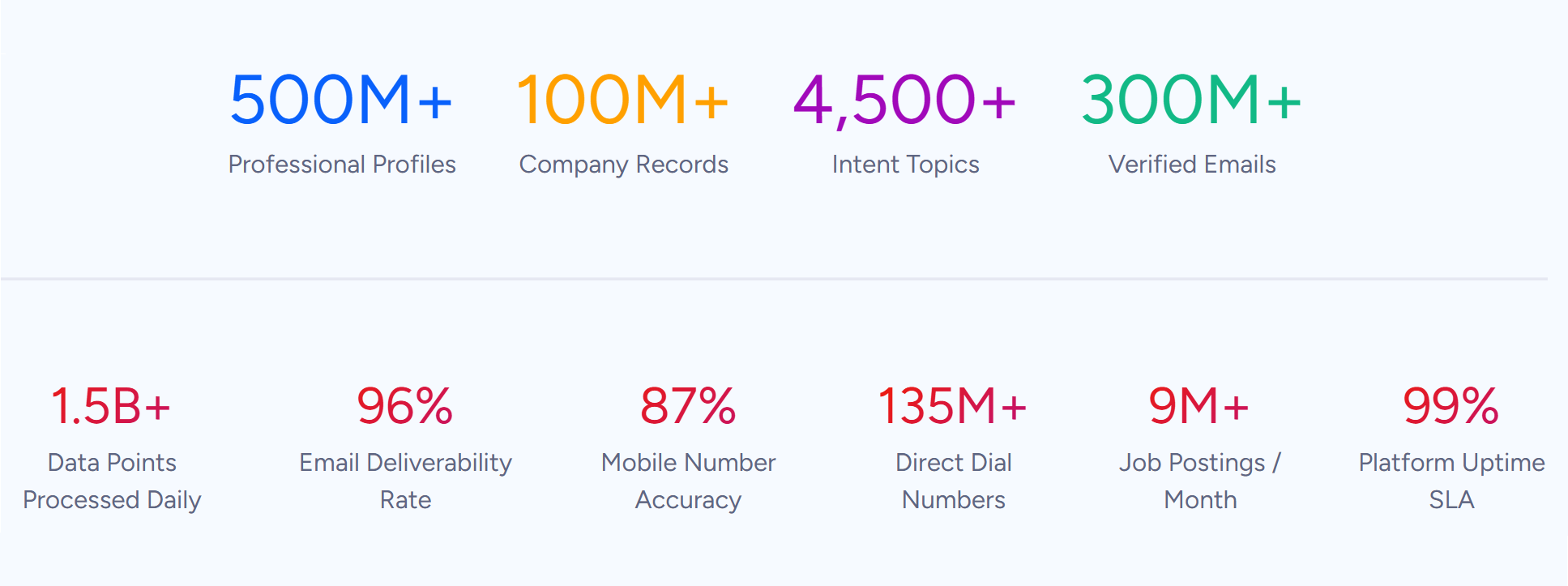
Source: ZoomInfo Data
That scale is verified through a multi-source pipeline. Automated ML scanning processes 28 million site domains daily. Third-party partner data covers 95 million businesses. A network of 200,000+ ZoomInfo Lite users shares business contact information from email signatures. An in-house Data Training Lab of 300+ human researchers validates the output. First-party data reaches up to 95% accuracy.
Independent evaluations back this up. In a Fortune 500 competitive RFP analyzing 25 million contacts across vendors, the independent consultant concluded that "no other competitor came even close."
ZoomInfo has been named a Leader in Forrester's Wave for Intent Data Providers (Q1 2025), a Leader in Gartner's Magic Quadrant for ABM Platforms for the second consecutive year, and earned 133 No. 1 rankings on G2 across Sales Intelligence, Buyer Intent, Data Quality, and related categories.

Source: ZoomInfo Intent Data
In 2025 alone, ZoomInfo added 10.2 million contacts through enhanced title classification, expanded international mobile coverage by 1.8 million numbers across six European markets, and verified location data for 160 million contacts. Nine vertical datasets launched covering franchise ownership, restaurant operations, and commercial fleet intelligence.
"ZoomInfo gives us the information we need to execute. It's already there, so we can be three steps ahead." (Vensure Case Study)
The GTM Context Graph: An intelligence layer that captures not just what happened in a deal, but why.
Data is the foundation. The GTM Context Graph makes it actionable. Processing 1.5B + data points daily, it combines ZoomInfo's B2B data with a customer's CRM records, conversation transcripts, email threads, and behavioral signals into a single intelligence layer.
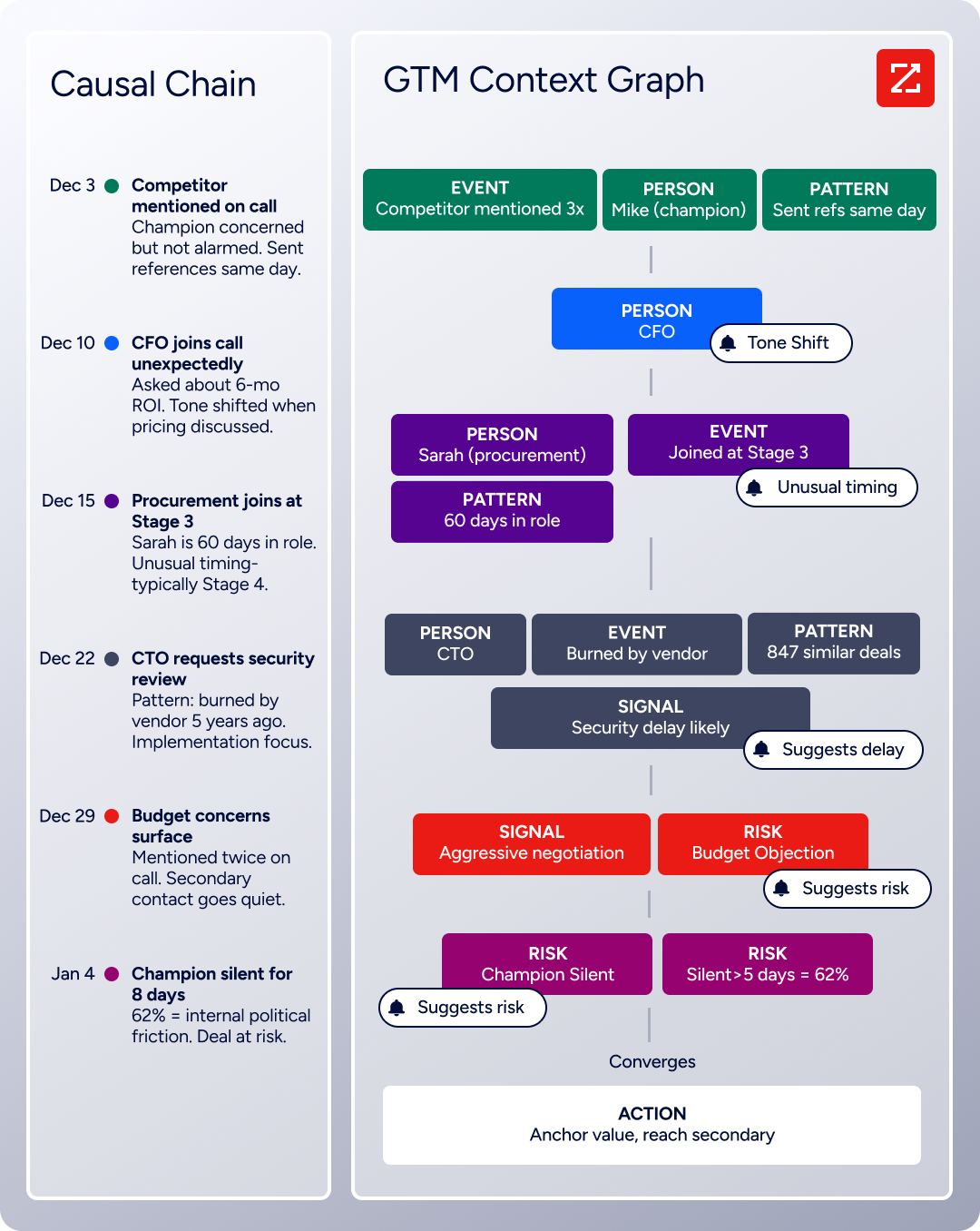
Source: ZoomInfo Context Graph
The practical difference: a CRM records that a deal moved from Stage 3 to Stage 4. Conversation intelligence transcribes what the VP of Finance said on the last call. Intent data logs a spike in research activity. The GTM Context Graph reasons across all three to explain why the deal moved.
That reasoning flows into every downstream action, from AI-drafted outreach that addresses specific concerns raised in calls to plays that target accounts matching proven win patterns rather than generic keyword thresholds.
This layer exists because of twenty years of infrastructure investment. ZoomInfo built the entity resolution, semantic normalization, and identity matching systems that power its third-party data, then extended that infrastructure to first-party data. The acquisitions of Chorus and Workbounce added the engines that extract signals from conversations and behavioral data.
LeadGenius delivers contacts. ZoomInfo delivers context: who's involved, what signals they're showing, why those signals matter based on patterns across thousands of similar deals, and what to do next.
"That combination of our internal CRM data, external signals, and AI has helped us craft very specific account- and persona-based messages," with Seismic attributing 39% of active pipeline to ZoomInfo signals. (Seismic Case Study)
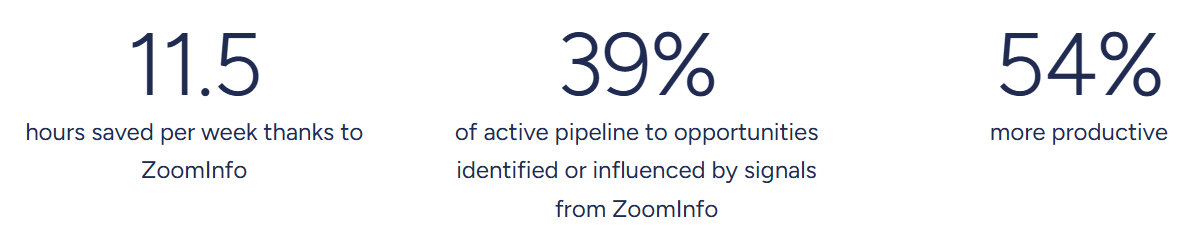
Source: ZoomInfo Seismic
Universal Access: Use ZoomInfo's intelligence in any tool, any workflow, any AI agent.
ZoomInfo delivers its intelligence through three channels. GTM Workspace gives sellers a single place where prioritized accounts, AI-drafted outreach, and deal execution converge. Features include an AI Assistant that generates account briefs in seconds, an Action Feed that streams in-market buyer signals with pre-drafted actions, and Views that combine CRM data with real-time buying signals.
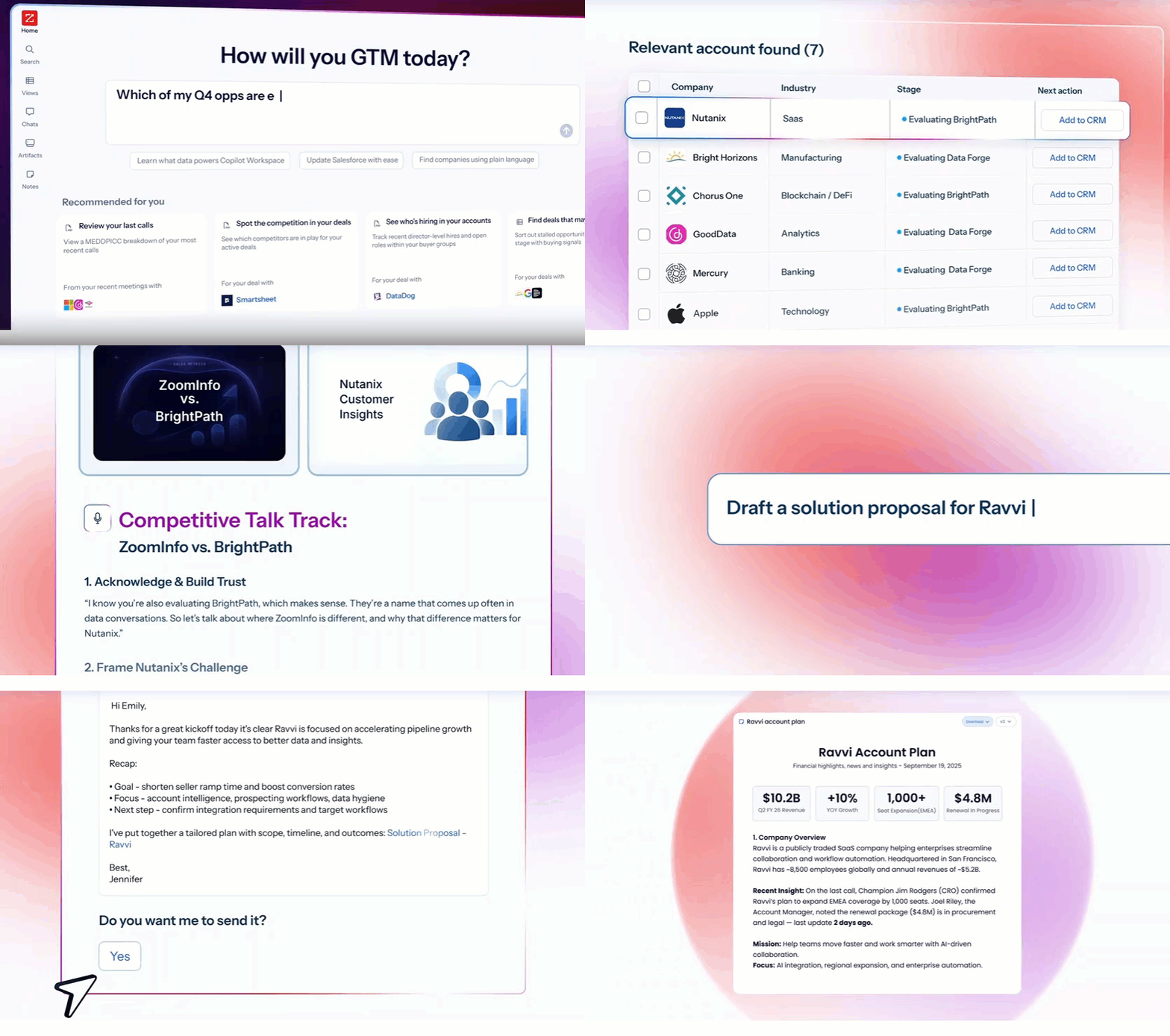
Source: ZoomInfo GTM Workspace
GTM Studio gives marketers, RevOps, and GTM engineers a builder where audience definition, campaign orchestration, and pipeline measurement happen in natural language. Expansion plays that used to take 3 weeks now launch in 30 minutes, without engineering support. Pre-built plays cover inbound acceleration, champion tracking, competitive displacement, and ICP targeting.
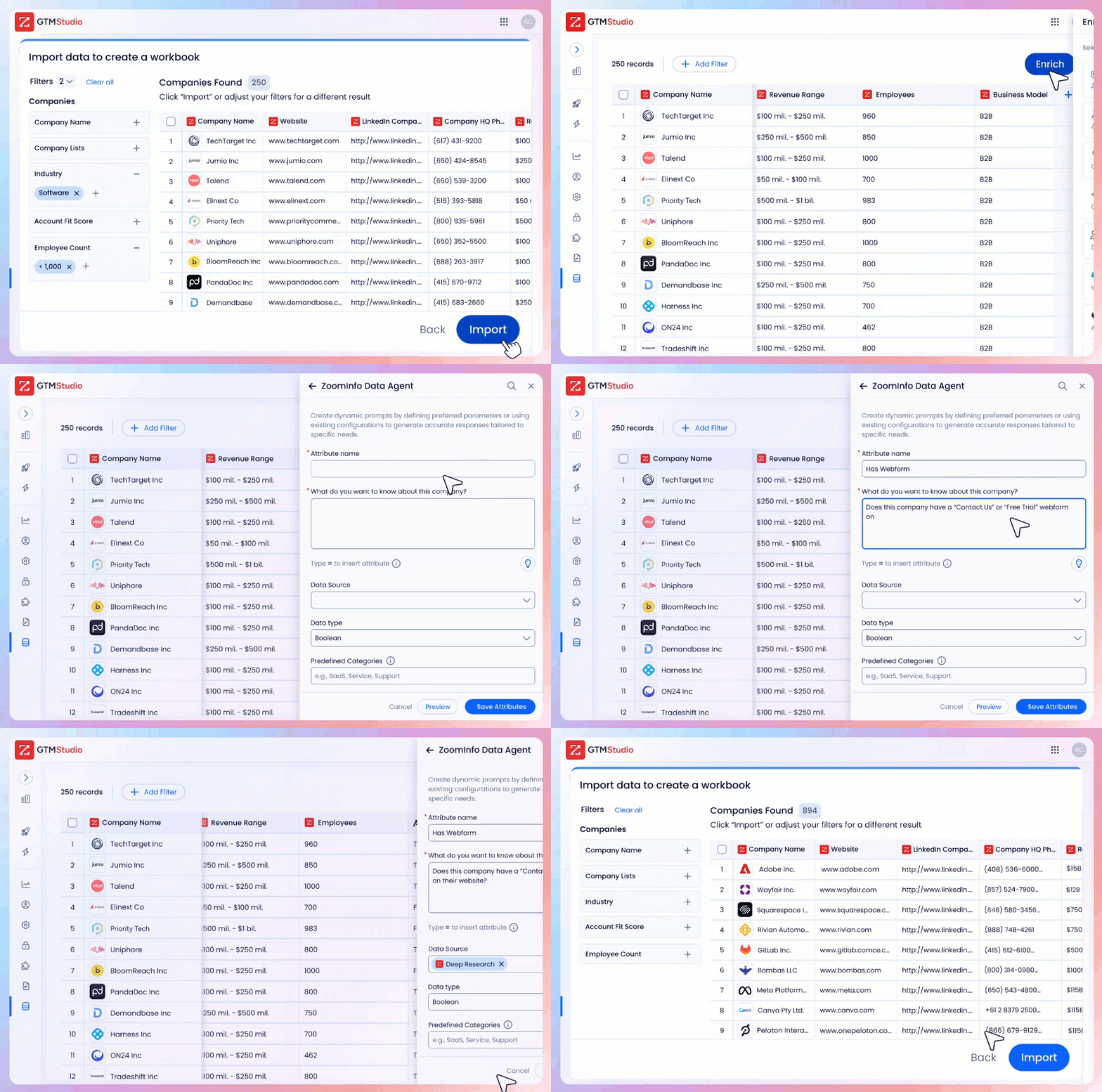
Source: ZoomInfo GTM Studio
For teams that build beyond ZoomInfo's own products, APIs and MCP expose the same intelligence to any custom agent, internal tool, or partner platform. ZoomInfo's MCP server is listed in the Claude directory and supports Claude and ChatGPT, with additional tools noted as coming soon. API access is included in all relevant plans.
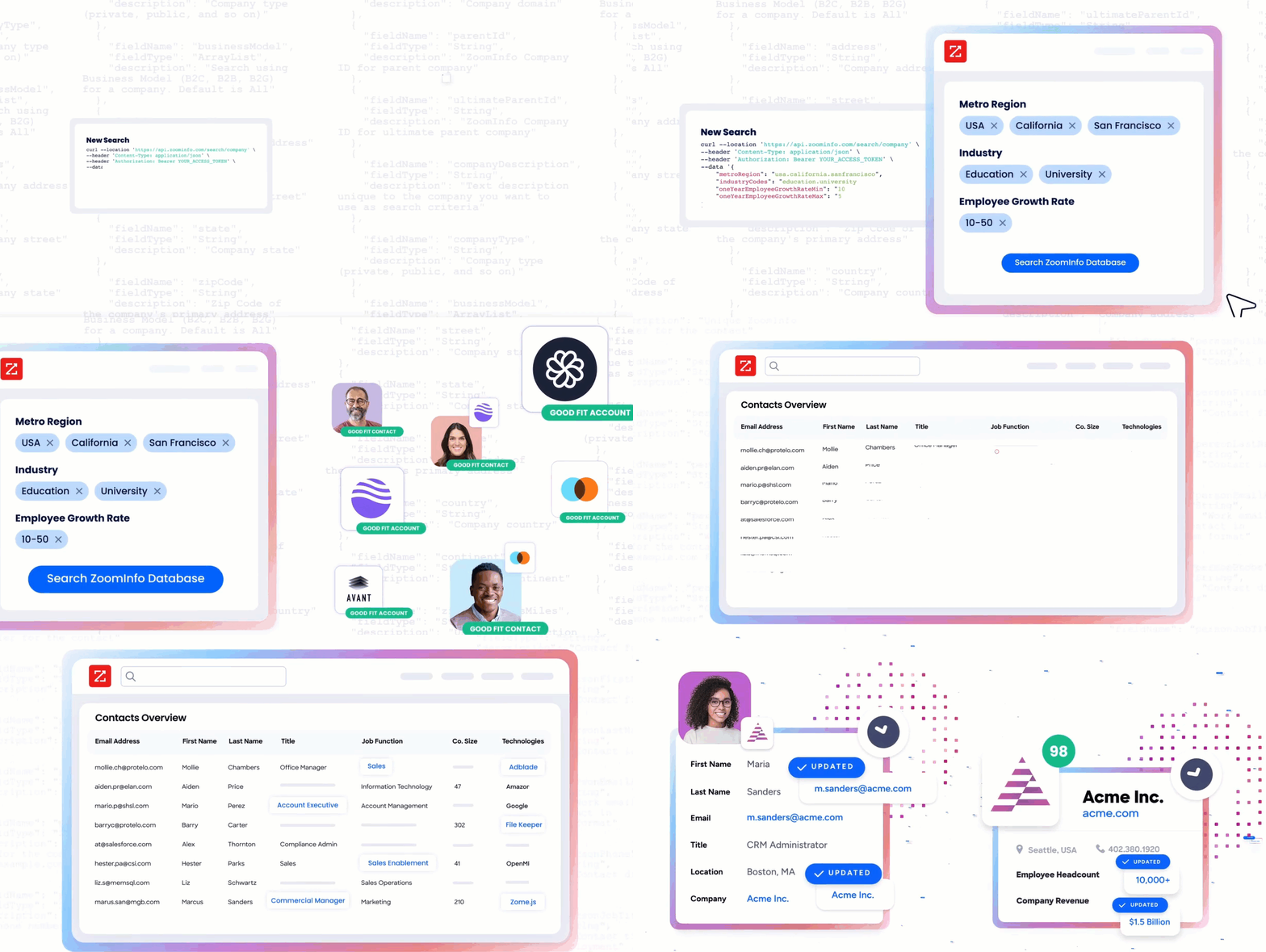
Source: ZoomInfo API
All three channels draw from the same GTM Context Graph. Where you choose to work does not limit the intelligence available to you.
"The plug-and-play aspect of the API means I can integrate it very easily into any process and get information at a moment's notice," with BDO Canada achieving an 87% reduction in time spent on internal data dashboard updates. (BDO Canada Case Study)
Pricing and Access: A permanent free tier plus a 7-day trial, with custom-quoted paid plans.
ZoomInfo offers two free entry points. ZoomInfo Lite is a permanent free tier (no credit card, no time limit) that includes access to ZoomInfo's B2B database, 10 monthly export credits, individual and company searches, the ReachOut Chrome Extension, WebSights Lite (up to 10 website visitor reveals per day), and HubSpot integration. A separate 7-day free trial provides broader access to paid features.
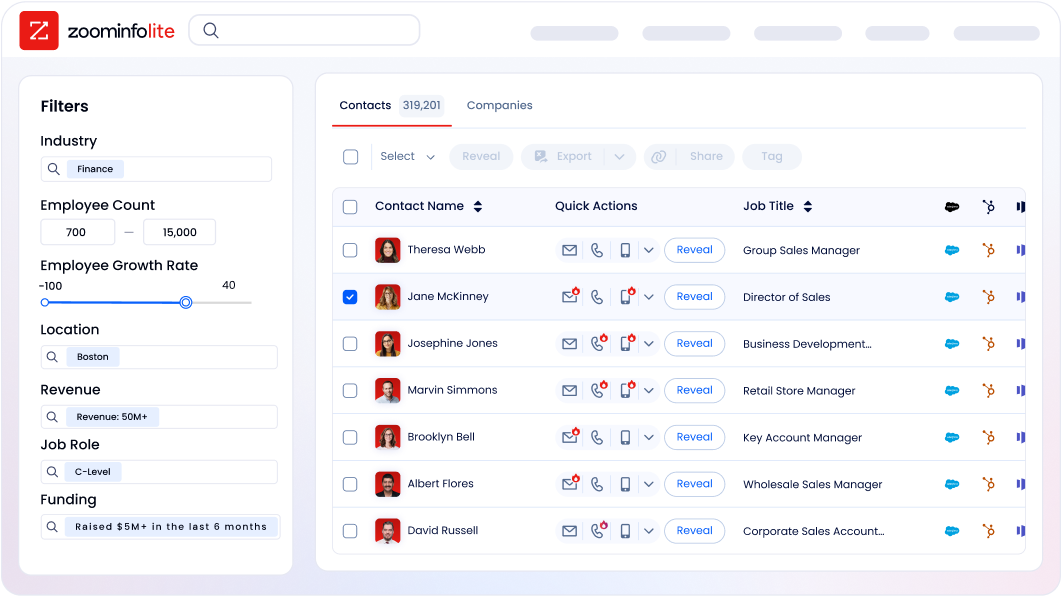
Source: ZoomInfo Lite
Paid plans are organized into Sales, Marketing, and standalone products (Chorus, Chat), each with tiered feature sets. Like LeadGenius, ZoomInfo uses custom-quoted pricing. The credit system works on a 1-credit-per-export model: searching and viewing data within ZoomInfo is free; credits are consumed only when exporting to CSV, CRM, or via API.
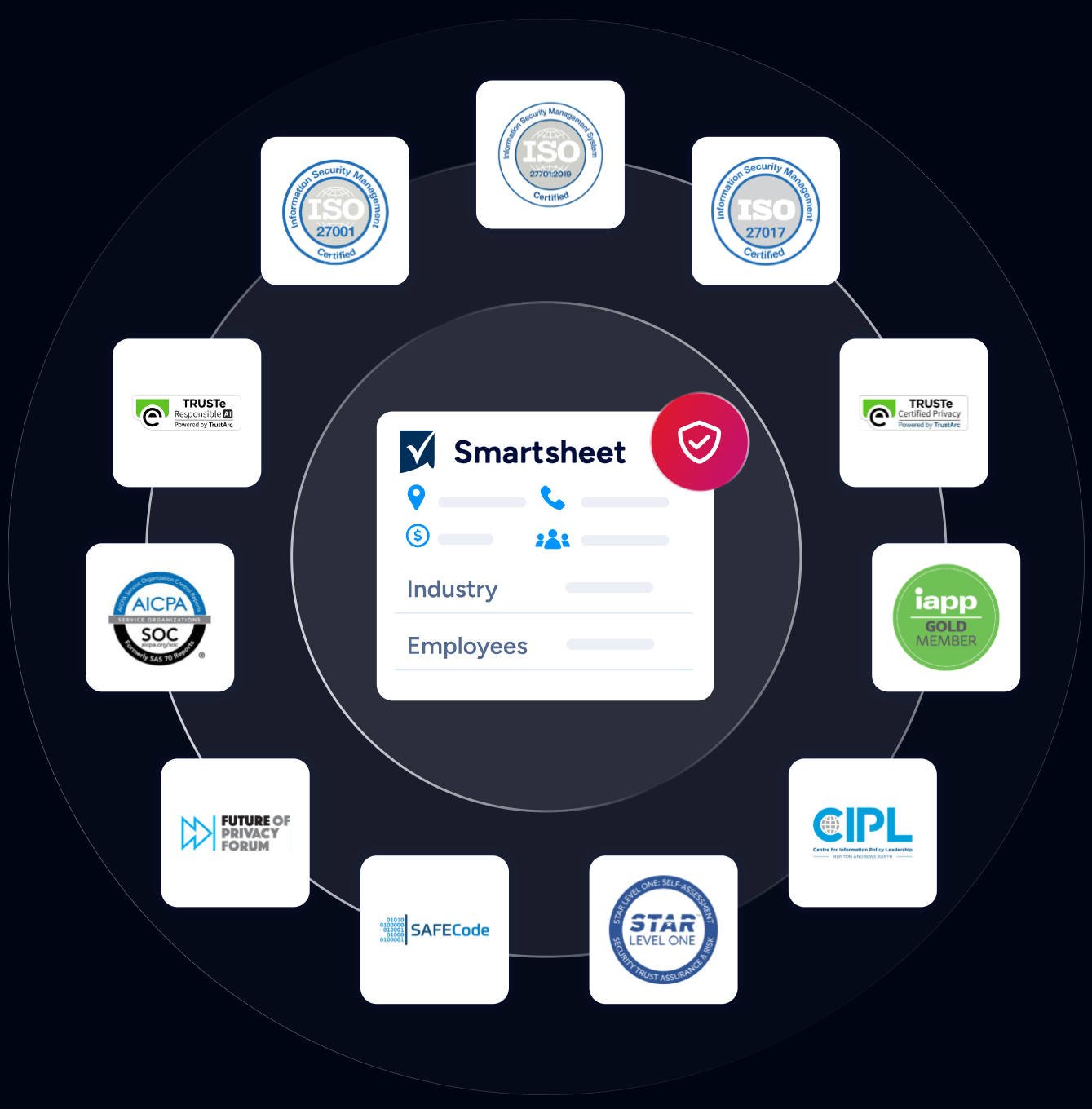
ZoomInfo holds ISO 27001, ISO 27701, SOC 2 Type II, TRUSTe GDPR, and TRUSTe CCPA certifications, all renewed annually, and is a registered data broker in California and Vermont.
Source: ZoomInfo Data Sources
LeadGenius or ZoomInfo: Comparison Summary
LeadGenius | ZoomInfo | |
|---|---|---|
Primary focus | Custom contact data sourcing | Full go-to-market platform |
Data approach | On-demand, human-verified per customer | Continuously verified database at scale |
Database scale | 3B+ records delivered to date (custom per client) | 500M contacts, 100M companies |
Direct-dial phone numbers | Available but limited coverage | 120M direct dials, 135M+ verified phone numbers |
Buyer intent data | Not native (Bombora partnership) | Native intent from 210M IP-to-Org pairings |
Conversation intelligence | Not available | Chorus (included) |
Global coverage | 37 countries with native-language researchers | 34M+ company profiles outside NA, 200M+ intl. profiles |
Outreach & execution | Not available | GTM Workspace, GTM Studio, multi-channel plays |
Self-service prospecting | Limited (campaign-based workflow) | Full self-service search and export |
API access | RESTful API (may require separate subscription) | Included in all relevant plans, plus MCP |
CRM integrations | Salesforce, HubSpot, Outreach, Marketo, Zapier | 120+ integrations via App Marketplace |
Compliance certifications | GDPR, CCPA, LGPD (configurable) | ISO 27001, ISO 27701, SOC 2 Type II, TRUSTe GDPR/CCPA |
Free tier | Freemium (1,000 records, 30 days) | ZoomInfo Lite (permanent, no time limit) + 7-day trial |
Pricing transparency | Custom quotes only (~$22K/year average) | Consumption-based pricing |
Best for | Enterprise teams needing precision data in niche/global markets | Teams needing a complete go-to-market platform with data, intelligence, and execution |
Final Verdict
The choice between LeadGenius and ZoomInfo depends on whether you need precision data sourcing or a complete go-to-market platform.
Choose LeadGenius if your team's biggest challenge is finding contacts that standard databases miss. If you target niche verticals, non-English-speaking markets, or industries where pre-built databases have gaps, LeadGenius's human research teams can source the specific contacts you need with full compliance transparency.
Its managed service model works well for enterprise organizations that treat data sourcing as a dedicated function and already have separate tools for intent monitoring, outreach, and campaign execution.
Choose ZoomInfo if you need more than data. ZoomInfo covers prospecting, intent monitoring, conversation intelligence, outreach automation, marketing orchestration, and analytics in one platform, powered by the largest verified B2B database in the industry and an intelligence layer that explains why deals move or stall.
For teams that want self-service access to contacts, real-time buying signals, AI-drafted outreach, and the ability to act on intelligence immediately (rather than waiting for managed research deliveries), ZoomInfo eliminates the need to stitch together multiple vendors. The permanent free tier and 7-day trial let you evaluate the platform before committing.
Get started with ZoomInfo here.
LeadGenius does one thing well: it finds contacts that are hard to find. ZoomInfo does many things well and connects them through a single intelligence layer. Your decision comes down to whether you need a specialized data partner or a platform that handles the full go-to-market workflow.
LeadGenius FAQ
What is LeadGenius used for?
LeadGenius is a B2B contact intelligence platform that sources contact data using a combination of AI and human researchers across 37 countries.
Companies use it to build buying committees for target accounts, enrich existing CRM records, and find contacts in niche industries or hard-to-reach global markets where standard databases have limited coverage. It focuses on data sourcing and enrichment, not outreach or campaign execution.
How much does LeadGenius cost?
LeadGenius does not publish pricing on its website. According to G2 data, average contracts run about $22,000 per year, with observed ranges from roughly $18,000 to over $81,000 depending on data volume and customization requirements. Pricing is custom-quoted based on business size and needs.
ZoomInfo also uses custom pricing but offers a permanent free tier (ZoomInfo Lite) and a 7-day free trial, giving teams a way to evaluate the platform before entering a sales conversation.
Does LeadGenius offer a free trial?
LeadGenius does not offer a traditional free trial. It provides a freemium self-serve option where new users can create an account and enrich up to 1,000 records or acquire up to 500 new leads within 30 days. The company also offers a free data sample on request. ZoomInfo provides both a permanent free tier (ZoomInfo Lite with 10 monthly export credits) and a 7-day free trial with broader access to paid features.
Does LeadGenius provide buyer intent data?
LeadGenius does not offer native buyer intent data. The company has a partnership with Bombora to integrate intent signals, but this is an integration rather than a built-in capability. ZoomInfo includes native intent data from 210 million IP-to-Organization pairings and 6 trillion+ new keyword-to-device pairings sourced monthly, along with Guided Intent, which identifies topics historically correlated with deal success.
What integrations does LeadGenius support?
LeadGenius integrates natively with Salesforce, HubSpot, Outreach, Marketo, and Zapier, all included at no additional cost. The platform also provides a RESTful API for custom integrations, though API access may require a separate subscription. ZoomInfo's App Marketplace lists over 120 partner integrations, and API access is included in all relevant plans, along with an MCP server for connecting to AI agents.
How does LeadGenius compare to ZoomInfo for data quality?
LeadGenius focuses on custom-sourced, human-verified data for specific accounts and niches, which can produce high precision for narrow use cases. Its AI + Human-in-the-Loop approach verifies contacts through professional profiles and authored content.
ZoomInfo provides broader coverage with 500M contacts and up to 95% accuracy on first-party data, verified through automated ML scanning of 28 million domains daily, 300+ human researchers, and a network of 200,000+ users who share data back. In a Fortune 500 competitive RFP, an independent consultant analyzing 25 million contacts concluded that no other competitor came close to ZoomInfo's data quality.
Is LeadGenius GDPR compliant?
Yes. LeadGenius treats compliance as a core differentiator, acting as a data processor rather than a data controller. Data is sourced uniquely for each customer and never resold. The platform offers a configurable compliance matrix supporting GDPR, LGPD, CCPA, and other regulations, with URL-level transparency for full auditability.
ZoomInfo holds formal certifications including ISO 27701, TRUSTe GDPR, and TRUSTe CCPA validations, renewed annually, and is a registered data broker in California and Vermont.
Who are LeadGenius's typical customers?
LeadGenius serves over 400 customers, primarily enterprise organizations with specific targeting needs. Notable clients include Microsoft, Snowflake, Autodesk, DoorDash, and Intercom. The platform is designed for Marketing Operations, Sales Operations, and Revenue Operations professionals who need precise contact data for account-based marketing, particularly those targeting global or niche markets.
ZoomInfo serves over 35,000 companies worldwide, including Adobe, PayPal, Deloitte, Snowflake, and JPMorgan, spanning sales, marketing, and RevOps teams.
Researching LeadGenius? These comparisons and alternatives help you decide:
