
mParticle is a capable customer data platform. It offers real-time event streaming, configurable identity resolution through IDSync, and a hybrid CDP architecture that bridges streaming and warehouse-native activation. For multi-channel consumer brands in media, retail, QSR, and fintech, it delivers a solid data backbone with 300+ integrations, AI predictions via Cortex, and governance controls.
But as your data strategy evolves, you may find that mParticle's enterprise-only pricing, cloud-only SaaS architecture, user-and-events data model limitations, and the need to pair it with a separate messaging platform for campaign execution create more friction than they're worth. Some teams need broader integration coverage. Others need a free tier to evaluate before committing six figures. Others need a platform that both unifies data and sends messages natively.
That's where this guide comes in. Whether you're looking to:
Enrich your go-to-market motion with comprehensive B2B data and AI-powered intelligence
Scale to enterprise governance with the broadest integration ecosystem in the CDP market
Deploy a CDP quickly and affordably as a startup or growing team
Own your data infrastructure with open-source, warehouse-native tooling
Activate warehouse data without building a parallel proprietary data store
Consolidate your analytics, feature flags, and CDP into one developer platform for free
Execute omnichannel campaigns without bolting on a separate messaging vendor
We'll explore mParticle alternatives that excel in these areas.
Some teams might use one of these tools to complement their existing mParticle setup with capabilities it doesn't cover. Others might replace mParticle entirely with a solution designed for their specific problem. This isn't about finding a "better" platform; it's about finding the right fit for your data, team, and growth requirements.
The Best mParticle Alternatives
Best Alternative for AI-Powered B2B Go-to-Market Intelligence We chose ZoomInfo because it delivers the largest B2B data platform (500M contacts, 100M companies) combined with a GTM Context Graph that reveals why deals move or stall, giving go-to-market teams intelligence mParticle's B2C-focused CDP was never designed to provide. |
|---|
Best Alternative for Enterprise Data Governance and Integration Breadth We chose Tealium because its 1,300+ pre-built integrations, HIPAA BAA certification, and back-to-back Gartner Magic Quadrant Leader placements make it a strong enterprise CDP for teams that have outgrown mParticle's 300+ integration catalog and Niche Player analyst positioning. |
Best Alternative for Fast, Affordable CDP Deployment We chose Twilio Segment because its permanent free tier, $120/month self-serve plan, and 450+ integrations give growing teams an accessible on-ramp that mParticle's enterprise-only, quote-only pricing model cannot match. |
Best Alternative for Open-Source, Warehouse-Native Data Ownership We chose RudderStack because its open-source, self-hostable data plane and warehouse-native identity resolution directly address mParticle's cloud-only architecture and proprietary data storage constraints for regulated and engineering-led teams. |
Best Alternative for Warehouse-Native Activation Without a New Data Store We chose Hightouch because its zero-copy architecture activates data directly from your existing warehouse without duplicating it, and its flexible data model handles any object type, not just the users-and-events schema that limits mParticle. |
Best Free Alternative for Developer-Led Product Teams We chose PostHog because its 1 million free monthly events, MIT-licensed self-hostable codebase, and all-in-one product analytics suite give developer teams a complete platform where mParticle offers only data plumbing at enterprise-only pricing. |
Best Alternative for AI-Native Omnichannel Execution We chose Insider because it combines a native CDP with built-in omnichannel message delivery across 12+ channels, eliminating the two-vendor dependency (CDP + messaging platform) that mParticle's architecture requires. |
What is mParticle?

Source: mParticle
mParticle is a hybrid customer data platform built for multi-channel enterprise brands, combining real-time event streaming with warehouse-native composable activation in a single governed platform. Founded in 2013 as mobile data infrastructure, it has evolved into a full CDP that collects, unifies, and activates first-party customer data across touchpoints.
Its key features include:
Hybrid CDP architecture that supports both real-time streaming and zero-copy warehouse-native activation across Snowflake, BigQuery, Databricks, and Redshift
IDSync identity resolution with five configurable identity strategies for deterministic cross-device unification
Cortex AI engine for predictive audiences, predictive attributes, next best action, and lookalike modeling without requiring a separate ML platform
300+ native server-side integrations covering ad platforms, CRMs, engagement tools, analytics, and data warehouses
Data governance suite with Data Plans for schema enforcement, consent management for GDPR/CCPA/LGPD, and DSR forwarding across connected tools
No-code audience builder that frees marketing teams from engineering dependency for segmentation and activation
When customer events arrive from mobile apps, websites, or server-side APIs, mParticle validates them against schema definitions, resolves identities in real time through IDSync, and fans them out to downstream destinations simultaneously. The Cortex AI layer adds predictive scoring and next-best-action decisioning on top of this unified data. Customers include HBO Max, Klarna, Marks & Spencer, and RBI (Burger King/Tim Hortons/Popeyes).
As a hybrid CDP, mParticle brings real architectural strength to data-intensive consumer brands. But its enterprise-only pricing (no published rates, upfront credit commitment required), cloud-only SaaS architecture (no on-premise option), users-and-events data model constraints, and the structural gap of not natively sending messages or managing campaigns mean some teams need more specialized or accessible solutions.
That's why we've focused on platforms that excel where mParticle falls short.
Looking for AI-powered B2B intelligence that goes beyond customer data unification? ZoomInfo's GTM Context Graph fuses its B2B dataset with your CRM, conversations, and behavioral signals to reveal why deals move. Learn more about ZoomInfo.
How We Curated Our List of mParticle Alternatives
After testing mParticle and researching the customer data platform market, we focused on finding tools that do specific jobs well. While mParticle is strong at real-time customer data unification for B2C enterprises, some businesses need more specialized tools for:
Powering B2B go-to-market motions with comprehensive contact, company, and intent data
Managing enterprise data governance with broader integration ecosystems and stronger compliance certifications
Deploying a CDP quickly and affordably without an enterprise sales cycle
Maintaining full data ownership through open-source, self-hostable infrastructure
Activating warehouse data without building a duplicate proprietary data store
Consolidating analytics, experimentation, and data routing into one developer platform
Executing omnichannel campaigns natively without bolting on a separate messaging vendor
Each tool on this list leads in one of these areas. You might use them alongside mParticle or switch entirely; it depends on what your team needs most.
DISCLAIMER: We aren't covering every single tool in the market! Our focus is on highlighting the best alternatives that address some of mParticle's limitations for various use cases. The goal is to provide insights into tools that cater to specific business needs. |
|---|
1. ZoomInfo — Best Alternative for AI-Powered B2B Go-to-Market Intelligence

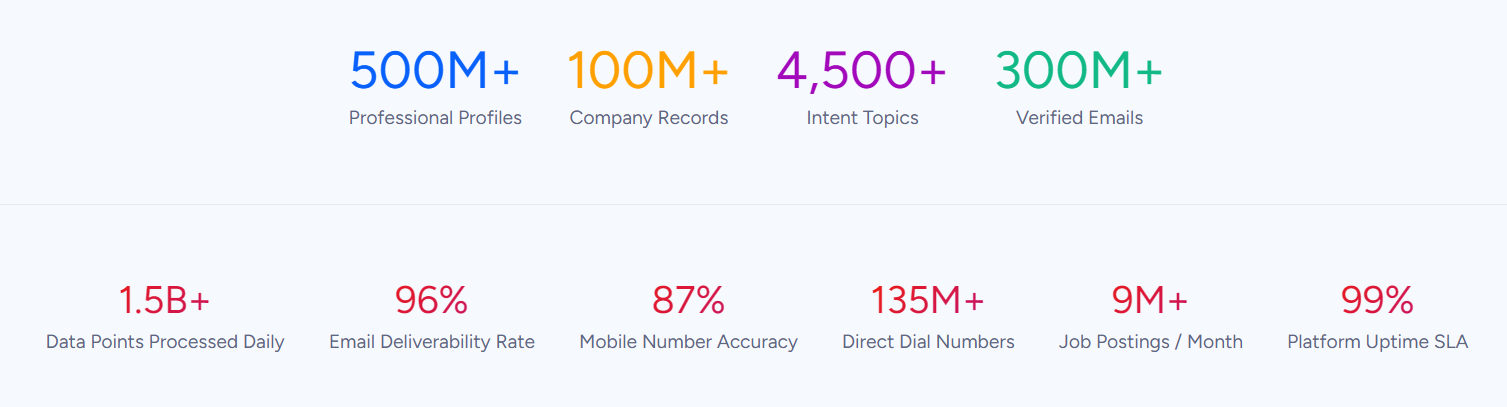
ZoomInfo is an all-in-one AI GTM platform built on the industry's largest B2B data foundation. While mParticle excels at unifying first-party consumer behavioral data for B2C brands, ZoomInfo operates in a different category: it provides third-party B2B intelligence covering 500M contacts, 100M companies, 135M+ verified phone numbers, and 200M+ verified business email addresses.
Its key features include:
The largest B2B data platform spanning identity data, company context, and buying signals, verified at scale by 300+ human researchers and achieving up to 95% accuracy on first-party data
GTM Context Graph that fuses ZoomInfo's B2B data with your CRM records, conversation transcripts, and behavioral signals into a single intelligence layer that processes 1.5B+ data points daily and captures why deals move or stall
Buyer Intent data tracking signals from 210 million IP-to-Organization pairings and 6 trillion+ new keyword-to-device pairings monthly, with Guided Intent that identifies topics historically correlated with deal success
Multiple access paths through GTM Workspace for sellers, GTM Studio for marketers and RevOps, and APIs and MCP for any third-party tool or AI agent
Conversation intelligence via Chorus that captures and analyzes customer interactions, extracting context and signals that feed the GTM Context Graph
The relationship between ZoomInfo and mParticle is fundamentally a broader tool dynamic.
mParticle is a B2C-focused customer data platform designed for unifying first-party behavioral data from consumer touchpoints. ZoomInfo covers the entire B2B go-to-market lifecycle (prospecting, pipeline generation, deal intelligence, account-based marketing, and revenue operations), all powered by the largest B2B dataset in the industry and an intelligence layer that no CDP was designed to replicate.
Why Choose ZoomInfo Over mParticle for B2B Go-to-Market Intelligence
While mParticle excels at unifying consumer behavioral data, ZoomInfo delivers the intelligence infrastructure that B2B go-to-market teams need. The following sections show where ZoomInfo provides capabilities that mParticle's B2C-oriented CDP was never built to address.
Comprehensive B2B Data: The Foundation mParticle Doesn't Cover
mParticle's data model is built around users and events from first-party digital touchpoints. It collects what your customers do on your properties.
It does not provide the third-party intelligence that B2B teams depend on: who the decision-makers are at target accounts, how to reach them directly, what technologies they use, and whether they're actively researching solutions like yours.
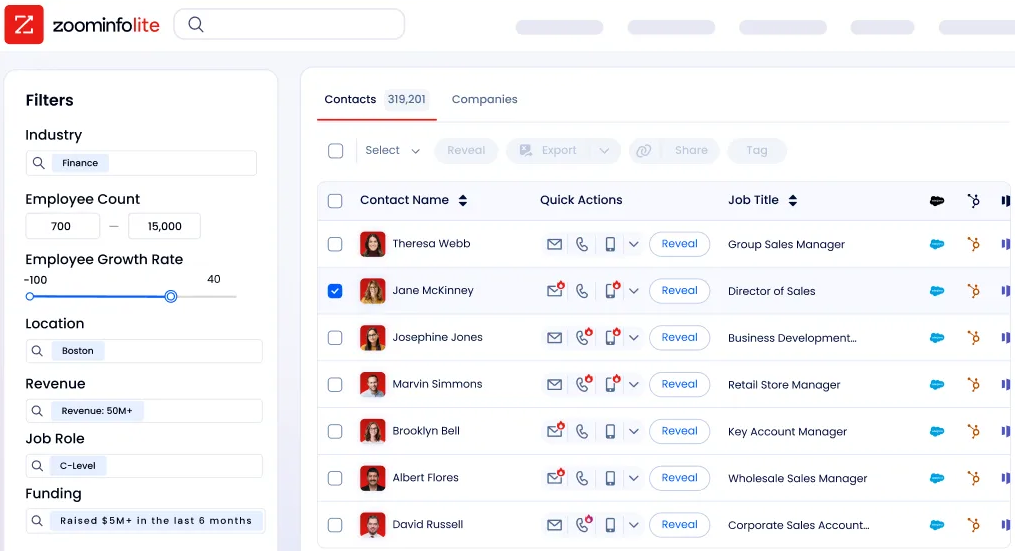
ZoomInfo's data platform covers three dimensions simultaneously: identity data (500M contacts, 120M direct-dial phone numbers, 200M+ verified business emails), company context (100M companies with org charts and technographics), and dynamic signals revealing when accounts are in-market.
This data is verified through a multi-source pipeline backed by 300+ human researchers, and the quality is externally validated: in a Fortune 500 competitive RFP analyzing 25 million contacts across vendors, the independent consultant concluded that "no other competitor came even close."
Source: ZoomInfo
ZoomInfo in Action: Your sales team needs to penetrate a target account but has only one contact in CRM. ZoomInfo surfaces the full buying committee: the VP of Engineering who just joined (a job-change signal), the CFO who's been researching your competitor's pricing page (an intent signal), and the direct-dial numbers and verified emails for each. Instead of waiting for inbound signals from a CDP, your team reaches the right people at the right time with context that explains why this deal is moving now.
The GTM Context Graph: Intelligence That Understands Why, Not Just What
mParticle's Cortex AI engine provides predictive audiences and next-best-action scoring for B2C marketing campaigns. But it operates on first-party behavioral data: what users did on your app or website. For B2B go-to-market teams, the question isn't "which consumers are likely to churn?" but "why did this enterprise deal stall, and what should my rep do next?"
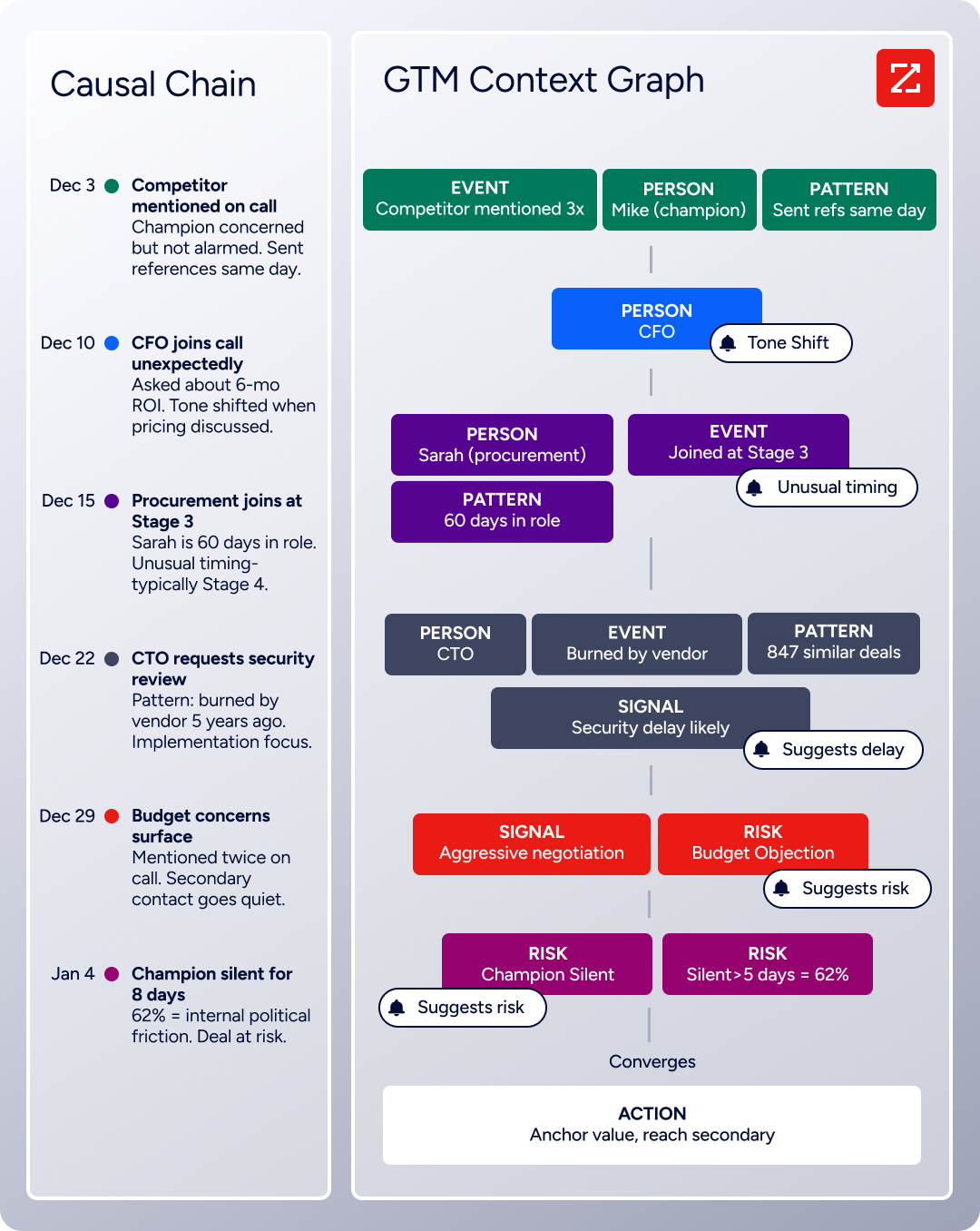
The GTM Context Graph answers that question by fusing ZoomInfo's B2B data with your CRM records, conversation intelligence from Chorus, email interactions, and behavioral signals into a single intelligence layer.
As ZoomInfo's CPO Dominik Facher explains: "The CRM recorded the state change. It has no record of why it happened." The GTM Context Graph captures the decision context: people and their relationships, actions and their outcomes, patterns and predictions, and exceptions and explanations.
This intelligence exists because of two decades of infrastructure investment: the same data unification platform that resolves and verifies hundreds of millions of companies and contacts now applies to a customer's calls, emails, CRM, and product usage data. The result is an intelligence layer that carries the logic of thousands of deals into every conversation, recommendation, and decision.
Source: ZoomInfo
ZoomInfo in Action: Your CRM shows a deal moved from Stage 3 to Stage 4 and the close date slipped two weeks. The GTM Context Graph identifies that the CFO joined the last call and asked about six-month ROI (captured by Chorus), while third-party signals show the company just hired three new VPs and is actively researching your competitor. The AI drafts a follow-up email addressing the specific ROI concern the CFO raised, because it understands why it matters now, not just that it happened.
ZoomInfo isn't just a contact database. Vensure's VP of Revenue Operations described the impact: "ZoomInfo gives us the information we need to execute. We don't have to go through and spend our time digging. It's already there, so we can be three steps ahead." (Vensure)
Universal Access: Intelligence in Any Tool, Any Workflow
mParticle activates audiences to its 300+ downstream integrations. ZoomInfo goes further by making its intelligence accessible through purpose-built native products for specific personas and an open infrastructure layer for everything else.
GTM Workspace gives sellers an AI-powered workspace with prioritized account feeds, AI-drafted outreach, and deal intelligence. GTM Studio gives marketers, RevOps, and GTM engineers a builder environment where audience definition and campaign orchestration happen in natural language.
For teams building beyond ZoomInfo's own products, APIs and MCP expose the same intelligence to any custom agent, internal tool, or partner platform, including Anthropic Claude and ChatGPT.
All three paths draw from one GTM Context Graph: the same data, the same reasoning, the same continuously learning model. Nothing is degraded by surface. CEO Henry Schuck described a large financial services firm building an internal app using ZoomInfo's MCP server: "That's a surface area we would never see before."
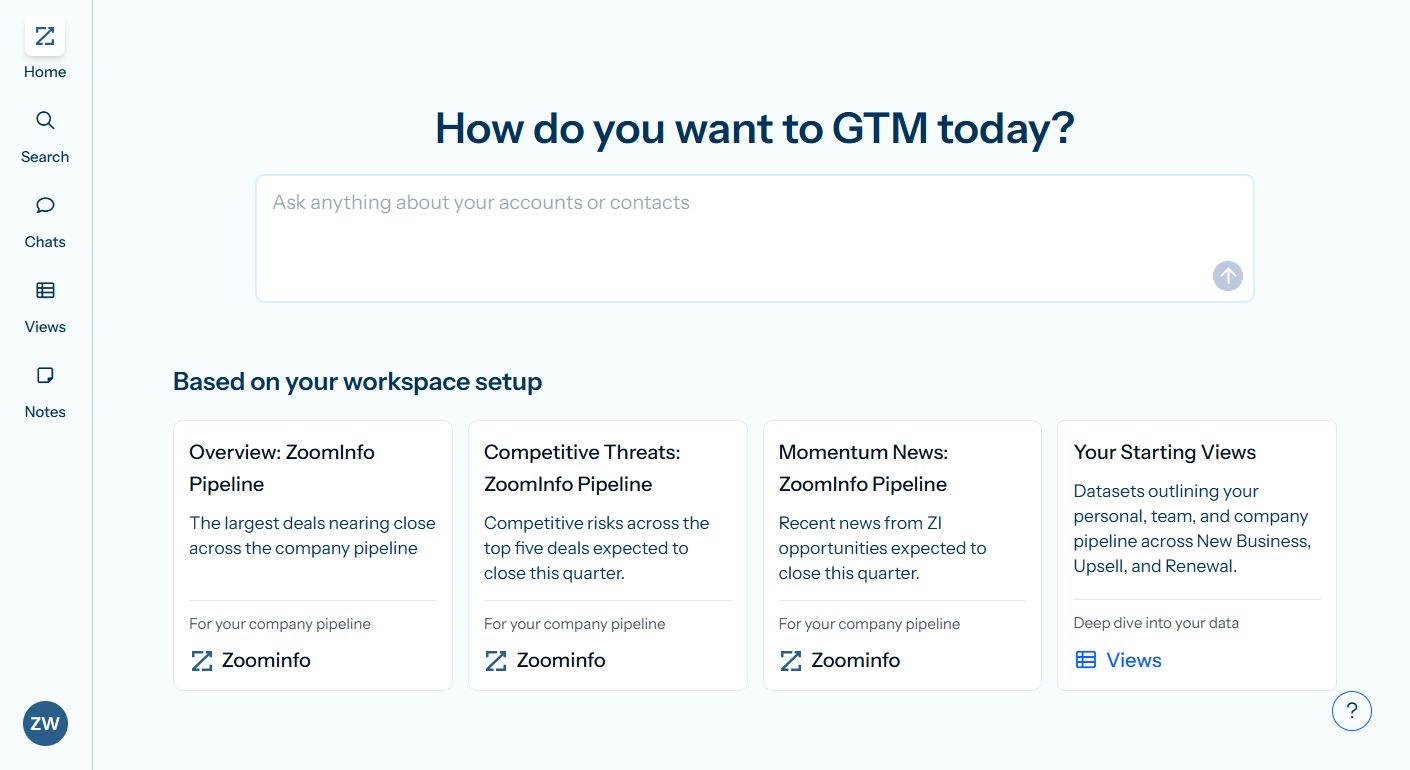
ZoomInfo in Action: A marketer in GTM Studio describes an audience in plain language ("mid-market SaaS companies in the northeast with 200-500 employees that recently raised Series B and are researching CRM solutions"), launches a multi-channel play, and watches pipeline impact in real time. No engineering ticket required. The hot accounts that emerge flow directly into GTM Workspace for seller execution, where AI agents have already drafted personalized outreach based on each account's full context.
Seismic attributed 39% of active pipeline to opportunities identified or influenced by ZoomInfo signals, with their Chief Business Officer noting: "That combination of our internal CRM data, external signals, and AI that's given all that context has helped us craft very specific account- and persona-based messages." (Seismic)
NOTE: We also evaluated other B2B intelligence platforms including Apollo.io and Lusha. While Apollo.io provides a strong engagement platform with a generous free tier and Lusha offers accessible contact data with a user-friendly interface, ZoomInfo delivers the largest data foundation (externally validated by Forrester, Gartner, and independent Fortune 500 evaluations), the deepest intelligence layer through the GTM Context Graph, and the broadest access model through APIs, MCP, and native products. For B2B go-to-market teams, no other platform matches ZoomInfo's breadth and depth.
ZoomInfo Pricing
ZoomInfo uses a consumption-based pricing model with custom quotes tailored to each organization's needs. Pricing scales around usage patterns, number of users, monthly credit volume, features, and contract length.
Sales Plans span three tiers: Professional (contact and company data, CRM integrations, Chrome extension, AI-powered email generation), Advanced (adds AI-driven account prioritization, Buyer Intent signals, website visitor tracking, Champion Tracking, and automated workflows), and Enterprise (adds real-time intent signals, advanced company attributes, custom integrations, and AI-generated account summaries).
Marketing Plans include Marketing Demand, ABM Lite, and ABM Enterprise tiers with progressively deeper audience targeting, display advertising, and AI-powered insights.
ZoomInfo Lite is a permanent free tier (not a trial) offering access to ZoomInfo's B2B database with 10 monthly export credits, individual and company searches, a Chrome extension, and WebSights Lite. ZoomInfo also offers a 7-day free trial with broader feature access.
Source: ZoomInfo
Who Should Use ZoomInfo?
Choose ZoomInfo if:
Your go-to-market motion is B2B and you need third-party intelligence (verified contacts, direct dials, company attributes, org charts, technographics, and intent signals) that mParticle's first-party B2C data model was never designed to provide.
You want AI that understands your deals, not just your website visitors. ZoomInfo's GTM Context Graph reasons across CRM data, conversation intelligence, and market signals to surface why deals move or stall, then powers AI-drafted outreach and play recommendations from that reasoning.
You need intelligence accessible across your entire stack: in a dedicated seller workspace (GTM Workspace), a marketer orchestration canvas (GTM Studio), or any custom tool or AI agent via APIs and MCP, all drawing from the same intelligence layer.
Ready to power your go-to-market motion with B2B intelligence? Start with ZoomInfo Lite for free or request a demo to see the full platform in action.
2. Tealium — Best Alternative for Enterprise Data Governance and Integration Breadth
Source: Tealium
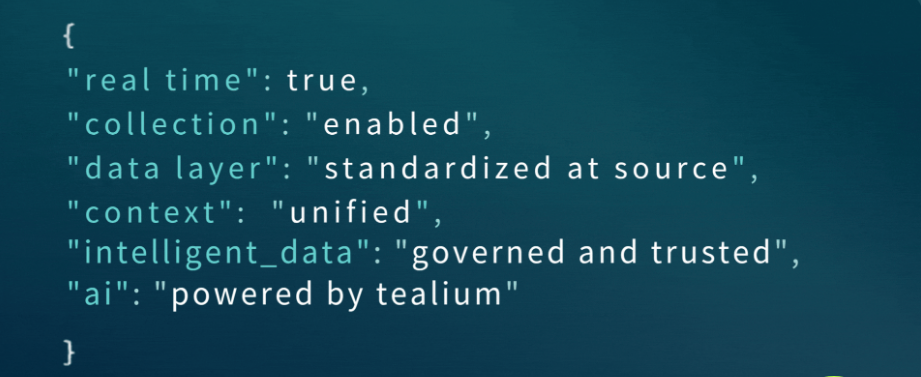
Tealium is a Customer Data Orchestration Platform that delivers enterprise customer data collection, identity resolution, and real-time audience activation across 1,300+ pre-built integrations, the widest connector library in the CDP category.
Its key features include:
1,300+ pre-built integrations covering every major ad platform, CRM, analytics tool, data warehouse, and AI service
Server-side data collection through iQ Tag Management and EventStream, eliminating client-side performance overhead and circumventing ad blockers
AudienceStream real-time segmentation that updates profiles and recomputes audience memberships as events arrive at sub-300ms trigger-to-activation latency
Embedded consent management with GDPR, CCPA, and LGPD enforcement built into the data collection pipeline
Hybrid CDP architecture supporting real-time streaming and warehouse-native zero-copy patterns across Snowflake, Databricks, BigQuery, and Redshift
For enterprise brands in financial services, retail, telecommunications, and healthcare, Tealium delivers integration breadth, compliance certifications, and governance depth that go beyond mParticle's 300+ integration catalog and Niche Player Gartner positioning.
Why Choose Tealium Over mParticle for Enterprise Integration and Governance
Tealium stands out in the following areas:
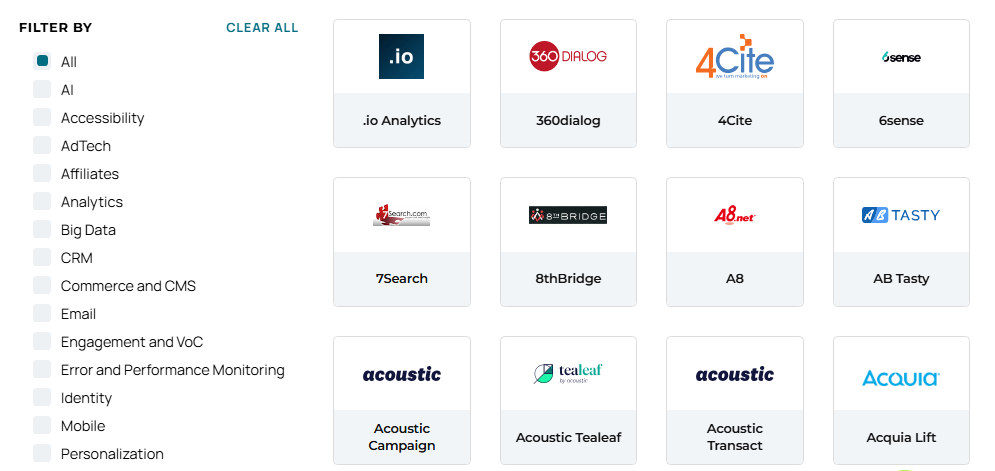
1,300+ Integrations vs. mParticle's 300+
The integration gap is fourfold, and it carries real operational consequences. mParticle connects to over 300 downstream destinations, but organizations regularly hit that ceiling when they operate specialized loyalty tools, regional ad networks, emerging AI services, or legacy enterprise systems.
Tealium's 1,300+ pre-built connectors reduce the need for custom connector development. With mParticle, teams frequently write Firehose SDK connectors for tools outside the catalog, shifting work from operations to engineering. G2 reviewers consistently cite the ability to operate across any technology stack without platform lock-in as a standout benefit.
Source: Tealium
Server-Side Collection with Structural Consent Enforcement
While mParticle supports both client-side SDKs and a server-side Events API, its primary collection path for mobile and web is client-side, where ad blockers and Apple's ITP can suppress events before they fire.
Tealium's EventStream server-side architecture processes events entirely server-side, sidestepping these data completeness risks by design. Consent is enforced as a structural pipeline gate: tags that require consent do not load if consent is absent, enforced through native integrations with OneTrust, Didomi, and Usercentrics. Privacy changes do not require engineering intervention.
Back-to-Back Gartner Magic Quadrant Leader vs. mParticle's Niche Player Placement
mParticle was positioned as a Niche Player in Gartner's inaugural Magic Quadrant for Customer Data Platforms (February 2024). Tealium received Leader placement in both the 2024 and 2025 Gartner Magic Quadrant for CDPs.
Tealium also holds HIPAA BAA, SOC 2 Type II, ISO 27001, ISO 27701, and ISO 27018 certifications, a compliance stack that healthcare, financial services, and pharma procurement teams require. mParticle holds SOC 2 and ISO 27001 but does not offer a HIPAA BAA, making it a structural disqualifier for covered healthcare entities.
NOTE: We also evaluated Salesforce Data Cloud and Adobe Experience Platform for this enterprise CDP archetype. While Salesforce Data Cloud benefits from CRM ecosystem integration and Adobe Experience Platform enables cross-cloud activation within the Adobe marketing suite, Tealium offers a CDP architecture designed for stack-agnostic governance: it is not a bolt-on module to a larger marketing cloud, carries more pre-built integrations than any other platform in the CDP market, and holds back-to-back Gartner Magic Quadrant Leader recognition as a standalone enterprise CDP.
Tealium Pricing
Tealium does not publish pricing.
All engagements are custom enterprise contracts negotiated directly through Tealium's sales team. There are no self-serve tiers, no published rate cards, and no free trial. Custom pricing is based on modules licensed (Data Collection, AudienceStream CDP, Enrichment & Orchestration, Data Cloud Activation, and Tealium for AI), with pricing scaling based on event volume.
Three Customer Support Packages are available: Basic (included), Enhanced (2-hour critical response SLA), and Premium (1-hour critical response SLA with a dedicated Technical Account Manager).
Who Should Use Tealium?
Choose Tealium if:
Your stack exceeds mParticle's 300+ integration catalog. When your team operates regional ad networks, specialized loyalty platforms, AI services, or legacy enterprise systems, Tealium's 1,300+ connectors reduce custom connector development substantially.
You operate in healthcare, financial services, insurance, or pharma where HIPAA BAA or ISO 27701 certification is a procurement requirement that mParticle's certification stack does not cover.
Your procurement process weighs analyst validation. Tealium's back-to-back Gartner Magic Quadrant Leader status is a concrete risk-reduction signal compared to mParticle's Niche Player position in the same evaluation.
3. Twilio Segment — Best Alternative for Fast, Affordable CDP Deployment
Source: Twilio
Source: Twilio
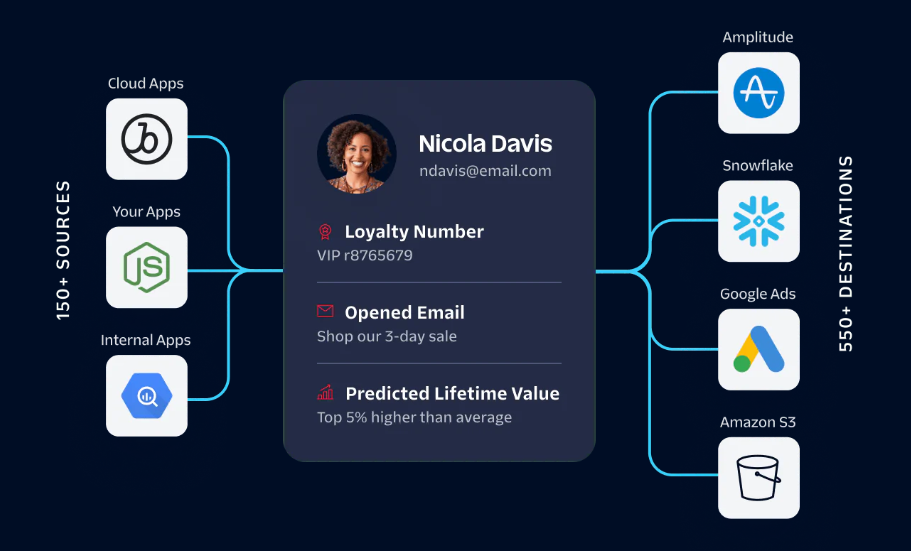
Twilio Segment is a Customer Data Platform that gives growing companies a single instrumentation layer to collect behavioral data from every touchpoint and route it to downstream tools, without the months-long implementation and six-figure contracts that characterize mParticle's enterprise go-to-market.
Its key features include:
A permanently free plan and a self-serve Team plan starting at $120/month, accessible without a sales cycle
450+ pre-built destination integrations covering analytics, CRM, advertising, and engagement tools
SDK-based event tracking deployable in hours across web, mobile, and server-side from a single instrumentation pass
Reverse ETL that activates warehouse data from Snowflake, BigQuery, or Redshift back into operational tools
Unify identity resolution that stitches anonymous and known events across devices into persistent customer profiles
Segment is the default first CDP for engineering-led growth teams who need analytical infrastructure without a capital expenditure decision. Its free tier is deployable: up to 1,000 monthly tracked users, two sources, and one warehouse destination.
Why Choose Twilio Segment Over mParticle for Growing Teams
Twilio Segment stands out in the following areas:
Transparent Pricing vs. mParticle's Enterprise-Only Model
mParticle operates on a consumption-based model with no published rates and no self-serve tiers. Every prospective customer is directed to a "Talk with our team" contact form. The contract requires an upfront credit commitment with auto-renewal terms.
Twilio Segment publishes every number: a permanent free tier at $0/month (no credit card required), and a Team plan starting at $120/month with a 14-day free trial. MTU overages are clearly tiered: $12 per additional 1,000 MTUs up to 25,000, $11 from 25,001 to 100,000, and $10 above that. A company scaling from launch to meaningful growth can understand and forecast its CDP costs without a procurement cycle.
Implementation in Hours, Not Months
mParticle's implementation requires configuring identity resolution strategies, Data Plans, SDK instrumentation across every surface, and per-integration connection setup. G2 and TrustRadius reviewers note that setup requires significant technical expertise.
Segment's Analytics.js library is a single JavaScript snippet deployable in under an hour. Six semantic call types (identify, track, page, screen, group, alias) follow the Segment Spec, which Segment automatically translates into each destination's format. A team can have live event data flowing to Google Analytics, a CRM, a data warehouse, and an email platform the same day they create a workspace.
The Broadest Self-Serve Integration Ecosystem
mParticle's 300+ integrations are gated behind an enterprise contract. Segment's Connections catalog spans 450+ destinations across advertising, analytics, marketing automation, CRM, experimentation, and data infrastructure, all accessible on the free tier.
The Destination Actions framework makes each integration's behavior explicit: triggers, field mappings, and transformation logic are all visible and configurable. TrustRadius reviewers consistently cite third-party integrations and data warehouse connectivity as top-ranked strengths.
Source: Twilio
NOTE: We also evaluated Customer.io for this archetype. While Customer.io excels at event-driven email and messaging automation for product teams, Twilio Segment offers a more complete data infrastructure play: the largest integration ecosystem at the SMB price point, a usable free tier, and a developer mindshare advantage that makes hiring, onboarding, and documentation easier for teams building their first CDP.
For a deeper head-to-head look at how mParticle and Twilio Segment compare on pricing, implementation, and integrations, see our mParticle vs Segment breakdown.
Twilio Segment Pricing
Twilio Segment offers transparent, tiered pricing:
Free — $0/month (permanent): 1,000 MTUs, 2 sources, 1 warehouse destination, 500,000 Reverse ETL records/month, access to 550+ destination integrations. No credit card required.
Team — starts at $120/month: 10,000 MTUs included, unlimited sources, 1 warehouse destination, 1,000,000 Reverse ETL records/month, public API access, 14-day free trial. Annual billing saves up to 20%.
Business — custom pricing (contact sales): Unlimited MTUs and warehouse destinations, data governance via Protocols, advanced RBAC, SSO, HIPAA eligibility with signed BAA, and EU data residency. Unify (identity resolution) and Engage (audiences/journeys) are add-ons at this tier.
Who Should Use Twilio Segment?
Choose Twilio Segment if:
Your team is at the startup or mid-market stage and needs a CDP instrumented by one developer in a day rather than a data engineering team over months. The free tier and self-serve Team plan remove the financial and operational barriers that make mParticle inaccessible at this stage.
You're building on a modern data stack with Snowflake, BigQuery, or Redshift and want a composable pipeline layer that feeds your warehouse rather than competing with it.
Your marketing and engineering stack spans 5+ tools and the current solution is per-tool tracking code. Segment's "instrument once, route everywhere" model and 450+ destination catalog eliminate that maintenance overhead.
4. RudderStack — Best Alternative for Open-Source, Warehouse-Native Data Ownership
Source: RudderStack
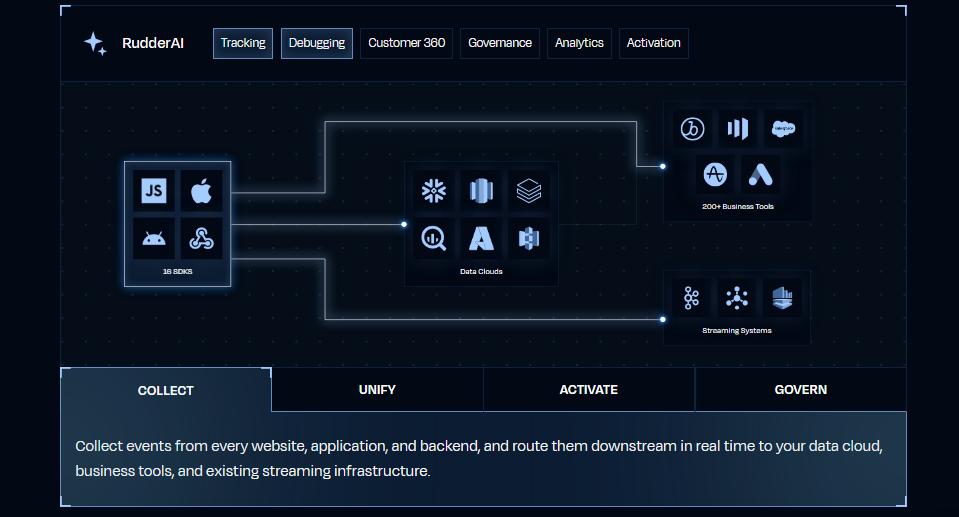
RudderStack is customer data infrastructure built as a direct mParticle alternative for engineering-led teams who need data pipeline control without cloud-only lock-in or enterprise-only pricing.
Its key features include:
Open-source, self-hostable data plane available under AGPL on GitHub, deployable on your own Docker or Kubernetes infrastructure
Warehouse-native Customer 360 via Profiles that builds unified identity graphs directly inside Snowflake, BigQuery, Databricks, or Redshift using declarative YAML
Free tier plus transparent pricing with a permanently free plan at 250,000 events/month and a $220/month Starter plan at 1 million events
200+ pre-built destinations with real-time JavaScript and Python transformations for in-pipeline data processing
Developer-first tooling including 16+ SDK sources, Rudder CLI, dbt Cloud integration, and YAML-based infrastructure-as-code pipeline management
RudderStack is the strongest mParticle replacement for teams whose primary objections are cost, cloud-only architecture, and data ownership.
Why Choose RudderStack Over mParticle for Data Ownership
RudderStack stands out in the following areas:
Self-Hosting Resolves mParticle's Cloud-Only Constraint
mParticle is cloud-only SaaS with no on-premise option. For regulated industries (healthcare, financial services, government, EU-regulated companies with strict data residency requirements), this is a disqualifying constraint.
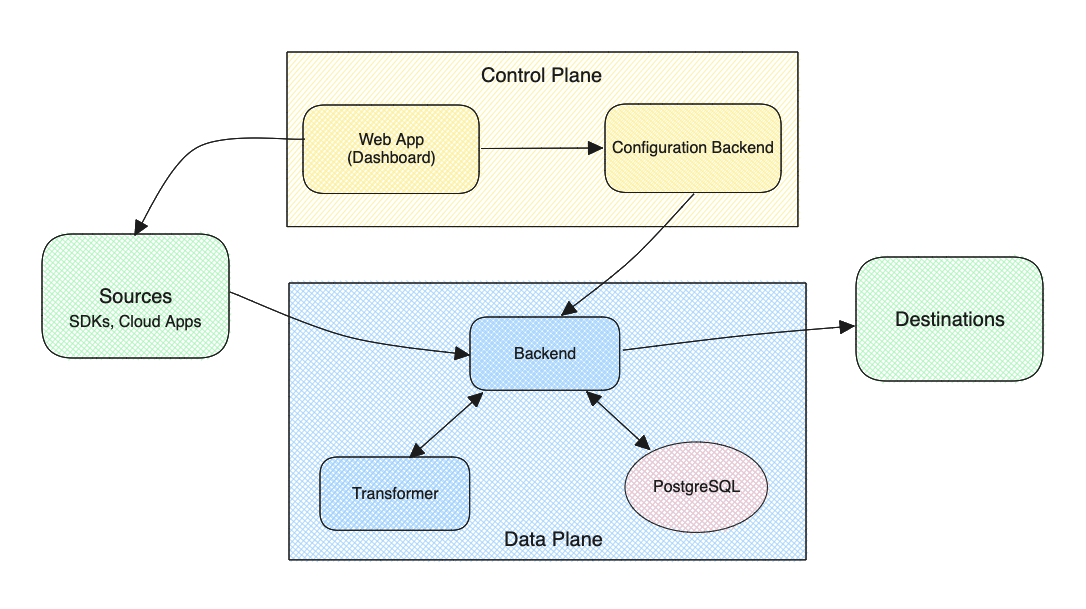
RudderStack's open-source data plane can be self-hosted on Docker or Kubernetes within your own infrastructure. In fully self-hosted deployments, RudderStack never touches your data: events pass through to your own warehouse or destination without the vendor retaining them.
Source: RudderStack
Warehouse-Native Profiles Eliminate the Proprietary Silo
mParticle's hybrid CDP, including its Snowflake integration, still routes data through mParticle's own processing layer and stores profiles within its infrastructure. RudderStack Profiles builds the identity graph, feature computation, and Customer 360 output tables directly as SQL inside your own warehouse. There is no proprietary storage layer.
Transparent Pricing vs. Enterprise-Only Quotes
mParticle has no published prices, no self-serve signup, and no free tier. RudderStack publishes its full pricing: a permanently free plan at 250,000 monthly events, a $220/month Starter plan (self-serve, no sales required), and Growth plans with custom pricing.
NOTE: We also evaluated Segment and Hightouch for this archetype. While Segment's $120/month Team plan makes it accessible for early teams and Hightouch excels specifically at the Reverse ETL activation layer, RudderStack offers the most complete solution for teams whose objections to mParticle are data ownership and pricing: it is the only option with true self-hosting capability, warehouse-native identity resolution, and a pricing model that scales legibly without requiring a sales conversation.
RudderStack Pricing
RudderStack uses event-volume-based pricing with four tiers:
Free — $0/month (permanent): 250,000 monthly events, full access to 16+ SDK sources, 200+ destinations, warehouse destinations, and Reverse ETL. Community support only.
Starter — $220/month: 1 million monthly events, unlimited Tracking Plans, email support, 99.95% uptime SLA, 1-hour warehouse sync intervals. Self-serve signup.
Growth — custom pricing: Custom event volume, unlimited team members, unlimited JavaScript Transformations, dedicated support, 30-minute warehouse sync intervals.
Enterprise — custom pricing: Everything in Growth plus Python Transformations, Profiles and Data Apps, HIPAA compliance with BAA, SSO, 5-minute warehouse sync intervals.
Who Should Use RudderStack?
Choose RudderStack if:
Your industry requires on-premise or private cloud data processing that mParticle's cloud-only architecture cannot support. RudderStack is the only CDP in this category with a production-validated self-hosting path.
Your data engineering team already runs Snowflake, BigQuery, Databricks, or Redshift and wants customer profiles built directly inside that warehouse rather than in a vendor silo.
You need to evaluate a CDP before committing budget. RudderStack's free plan and self-serve Starter tier allow technical validation without a sales contract, which mParticle cannot offer.
5. Hightouch — Best Alternative for Warehouse-Native Activation Without a New Data Store
Source: Hightouch
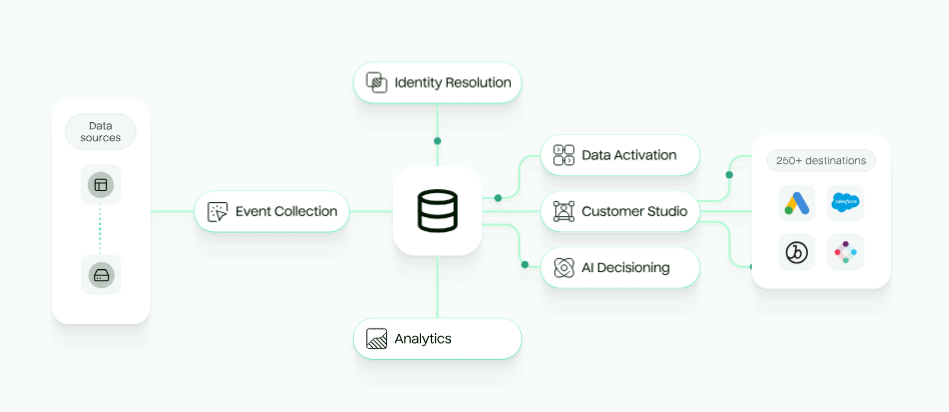
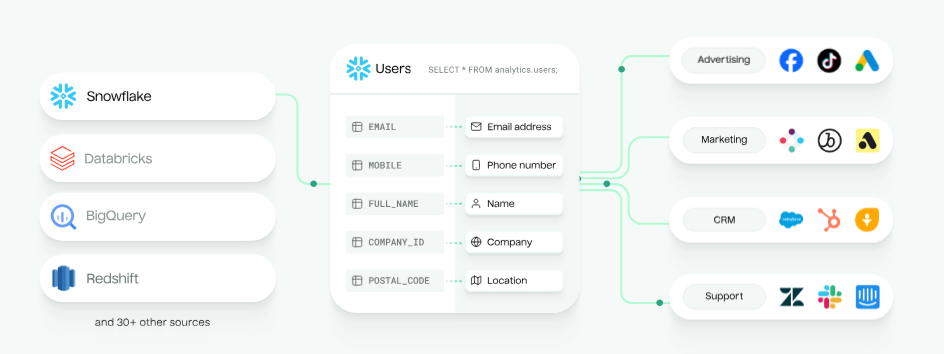
Hightouch is a warehouse-native composable CDP that activates customer data you already have without re-piping it into a new vendor's proprietary store. Where mParticle ingests and owns a copy of your data, Hightouch reads directly from your existing Snowflake, BigQuery, Databricks, or Redshift instance at query time.
Its key features include:
Zero-copy warehouse activation that queries your data warehouse directly without duplicating it into a proprietary CDP store
AI Audiences that let marketers describe segments in plain English and automatically generate the underlying logic
300+ fully-managed destination integrations syncing profiles and audiences to every major ad platform, CRM, and engagement tool
Customer Studio for self-serve audience building, journey design, and A/B experimentation directly from warehouse data
AI Decisioning using reinforcement learning to optimize 1:1 experiences across channels
Why Choose Hightouch Over mParticle for Warehouse-Native Activation
Hightouch stands out in the following areas:
Your Warehouse Stays the System of Record
mParticle's hybrid CDP architecture still requires data to be ingested into and partly processed through mParticle's own infrastructure, maintaining its own identity store and profile storage separate from your warehouse.
Hightouch's architecture is structurally different: the platform never stores a single byte of your customer data. Syncs are processed by ephemeral workers in your cloud, and nothing persists in Hightouch's infrastructure.
Source: Hightouch
Flexible Data Model Handles Any Object
mParticle's data model is built around users and events. Gartner reviewers have flagged its limited native support for custom objects as a known limitation. Hightouch treats any data object in your warehouse as activatable: custom objects, product subscriptions, household groups, or ML model outputs. If you can write SQL against it, you can activate it.
Usage-Based Pricing Without MTU Caps
mParticle's credits-based model meters every event tier across every user, with costs compounding as data volume and user base grow.
Hightouch's model is anchored to active syncs, not user count. There are no MTU caps on paid plans, no per-seat fees, and unlimited user seats at the enterprise tier. A company doubling its user base doesn't automatically double its Hightouch bill if sync volume stays proportional.
NOTE: We also evaluated Census as a warehouse-native alternative. While Census is a credible Reverse ETL and composable CDP with strong dbt integration, Hightouch earns the top placement as the 2026 Gartner Magic Quadrant Leader for composable CDPs, with the most mature AI Audiences and AI Decisioning products of any warehouse-native CDP.
Hightouch Pricing
Hightouch uses a modular, hybrid pricing model:
Basic Reverse ETL (Free) — $0/month (permanent): Up to 2 active syncs per month, unlimited destinations, unlimited user seats, access to all 250+ integrations. Sync frequency capped at hourly.
Basic Reverse ETL (Paid): Up to 10 active syncs per month. Self-serve signup at app.hightouch.com.
Composable CDP (Business) — custom pricing: Modular purchase of Reverse ETL, Hightouch Events, Customer Studio, Real-time Personalization, Identity Resolution, and Match Booster. Unlimited user seats, enterprise security (SOC 2 Type 2, ISO 27001, HIPAA, GDPR), no MTU limits.
AI Decisioning — custom pricing: Usage-based on monthly personalized actions. Can be purchased standalone.
Who Should Use Hightouch?
Choose Hightouch if:
Your data already lives in a cloud data warehouse and you want to activate it without building a parallel pipeline into a new CDP vendor's infrastructure.
You're hitting mParticle's schema wall with non-standard data objects (pet profiles, product subscriptions, household groups, ML model outputs) that don't fit into a users-and-events model.
Predictable, usage-based pricing matters. Hightouch's no-MTU-cap model avoids the compounding cost escalation that makes mParticle budgets difficult to forecast during growth periods.
6. PostHog — Best Free Alternative for Developer-Led Product Teams
Source: GitHub
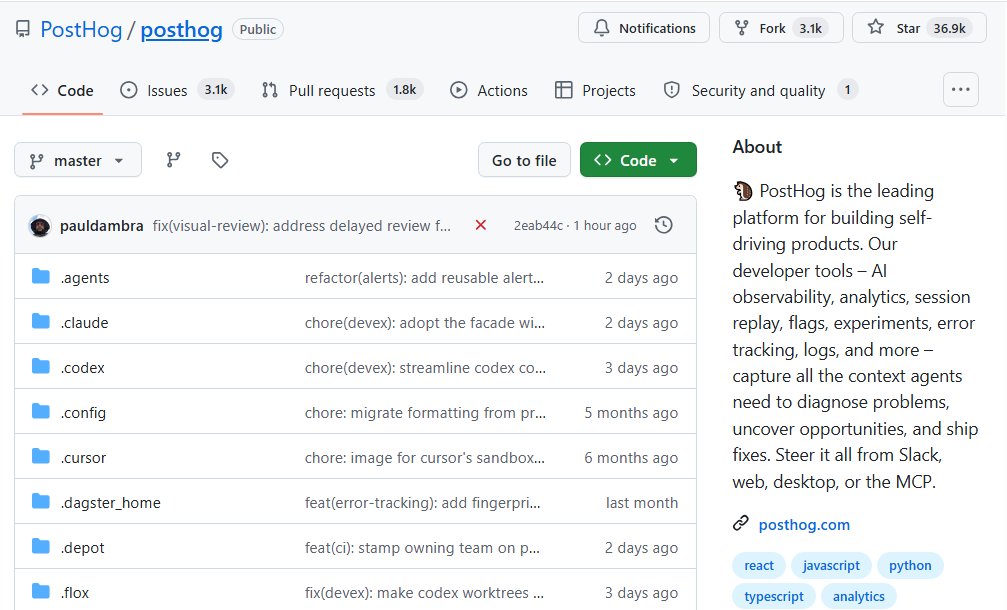
PostHog is an open-source, all-in-one developer platform that combines CDP event collection and routing with product analytics, session replay, feature flags, A/B experimentation, error tracking, and a built-in data warehouse in a single tool. As an mParticle alternative, it directly addresses two common objections: mParticle's complete absence of a free tier and its cloud-only architecture.
PostHog's key features include:
1 million free events per month with no time limit and no credit card required
MIT-licensed open-source core that is fully self-hostable on any infrastructure
Product analytics, session replay, feature flags, experiments, error tracking, web analytics, surveys, and LLM analytics sharing a single identity graph
120+ data sources and destinations with transformation and real-time routing
Transparent usage-based pricing that decreases with scale, with no mandatory annual commitments
98% of PostHog's 190,000+ teams use the platform entirely for free, and 54% of the YC spring 2024 batch adopted PostHog.
Why Choose PostHog Over mParticle for Developer Teams
PostHog stands out in the following areas:
A Permanent Free Tier vs. No Free Access
mParticle has no free tier of any kind. Getting access requires a sales conversation and an upfront contractual credit commitment.
PostHog's free plan includes 1 million product analytics events, 5,000 session recordings, 1 million feature flag requests, and 100,000 error tracking exceptions per month, all resetting monthly with no time limit. PostHog also cut prices by up to 80% in July 2024, including for existing customers.
Open Source and Self-Hostable vs. Cloud-Only
mParticle is cloud-only SaaS with no on-premise option. PostHog's entire codebase is MIT-licensed and deployable via Docker Compose on any infrastructure. The self-hosted version runs identical code to the cloud version. G2 reviewers cite self-hosting as a meaningful differentiator for data sovereignty.
All-in-One Toolchain vs. Data Plumbing That Requires a Full Downstream Stack
mParticle collects events, resolves identities, and forwards data to downstream tools. It does not natively offer product analytics, session replay, feature flags, or A/B testing. Teams using mParticle must add Amplitude or Mixpanel for analytics, LaunchDarkly for feature management, FullStory for session replay, and Sentry for error tracking. PostHog consolidates all of this on a shared event stream and identity graph.
NOTE: We also evaluated Mixpanel and Amplitude as free-tier alternatives. While Mixpanel offers a free tier with up to 20 million monthly events and Amplitude's free tier covers 10 million events, neither is open-source or self-hostable. PostHog offers the most complete free option for teams needing both data routing and product analytics in a single tool, with open-source self-hosting that neither competitor provides.
PostHog Pricing
PostHog operates on fully usage-based pricing with no per-seat fees and no mandatory annual commitments. Every product has a permanent free monthly allowance.
Free (no credit card required): 1,000,000 product analytics events, 5,000 session recordings (web), 1,000,000 feature flag requests, 100,000 error tracking exceptions, 1,500 survey responses, 1,000,000 data warehouse rows, 100,000 LLM analytics events. Unlimited team members, 1-year data retention.
Pay-as-you-go (after free limits): Product analytics at $0.00005/event for the first 1-2M beyond free, dropping to $0.000009 at 250M+. Session replay at $0.005/recording with volume discounts.
Platform add-ons: Boost ($250/mo) adds unlimited projects, HIPAA BAA, and SSO. Scale ($750/mo) adds SAML SSO and priority support. Enterprise ($2,000/mo) adds custom RBAC, SCIM, and a dedicated account manager.
Who Should Use PostHog?
Choose PostHog if:
You're at the startup or growth stage and mParticle's enterprise-only sales process is incompatible with your procurement reality. PostHog's free tier handles production event volumes for the majority of teams without ever requiring a contract.
You need data sovereignty through self-hosting, or operate in a regulated environment where cloud-only SaaS architecture disqualifies mParticle from evaluation.
You're running a fragmented analytics stack (separate tools for product analytics, session replay, feature management, error tracking, A/B testing) and want to consolidate to a single platform rather than maintaining CDP plumbing between point solutions.
7. Insider — Best Alternative for AI-Native Omnichannel Execution
Source: Insider
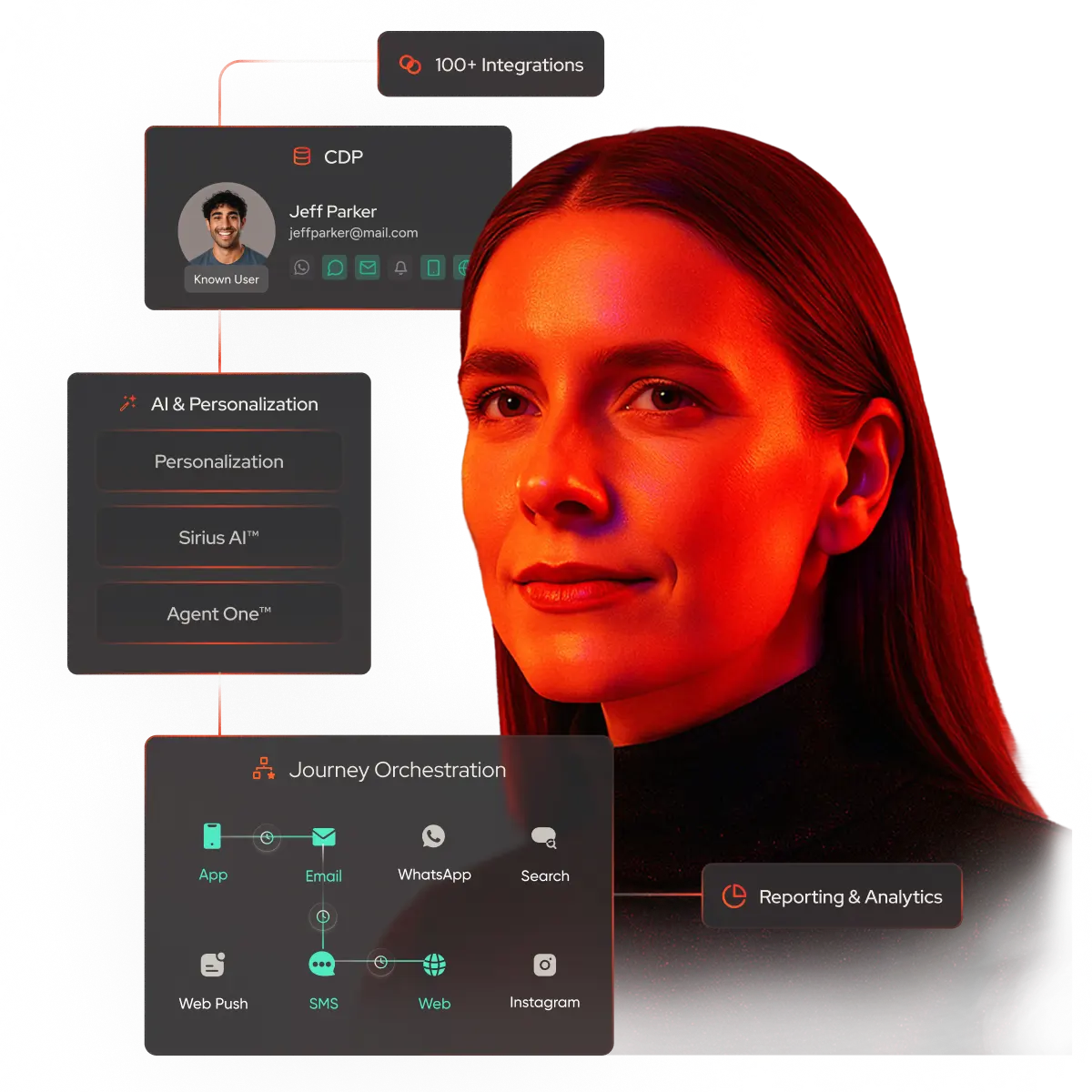
Insider (now branded as Insider One) is a customer engagement platform that combines a native CDP, AI-powered personalization engine, and built-in omnichannel message delivery covering email, SMS, push, WhatsApp, in-app messaging, and web personalization.
It addresses the architectural gap mParticle leaves open: mParticle unifies and activates data but does not send messages or orchestrate journeys natively. Insider collapses that two-vendor dependency into one platform.
Its key features include:
Insider One AI including Agent One with autonomous agents for shopping guidance, support, and campaign analytics
Native omnichannel delivery across 12+ channels from a single Architect journey canvas
Real-time website and app personalization with dynamic layouts, recommendation carousels, and Eureka AI-powered site search
Marketer self-serve with 100+ no-code templates and AI-assisted segment building
$0 Migration Movement covering switching costs from Braze, Bloomreach, and Salesforce Marketing Cloud
Why Choose Insider Over mParticle for Omnichannel Execution
Insider stands out in the following areas:
Native Campaign Execution vs. Requiring a Separate Messaging Platform
mParticle does not natively send email, SMS, push, or WhatsApp messages. Teams using mParticle need a customer engagement platform like Braze or Airship to close the execution loop, adding vendor negotiation, implementation complexity, and cross-platform identity matching.
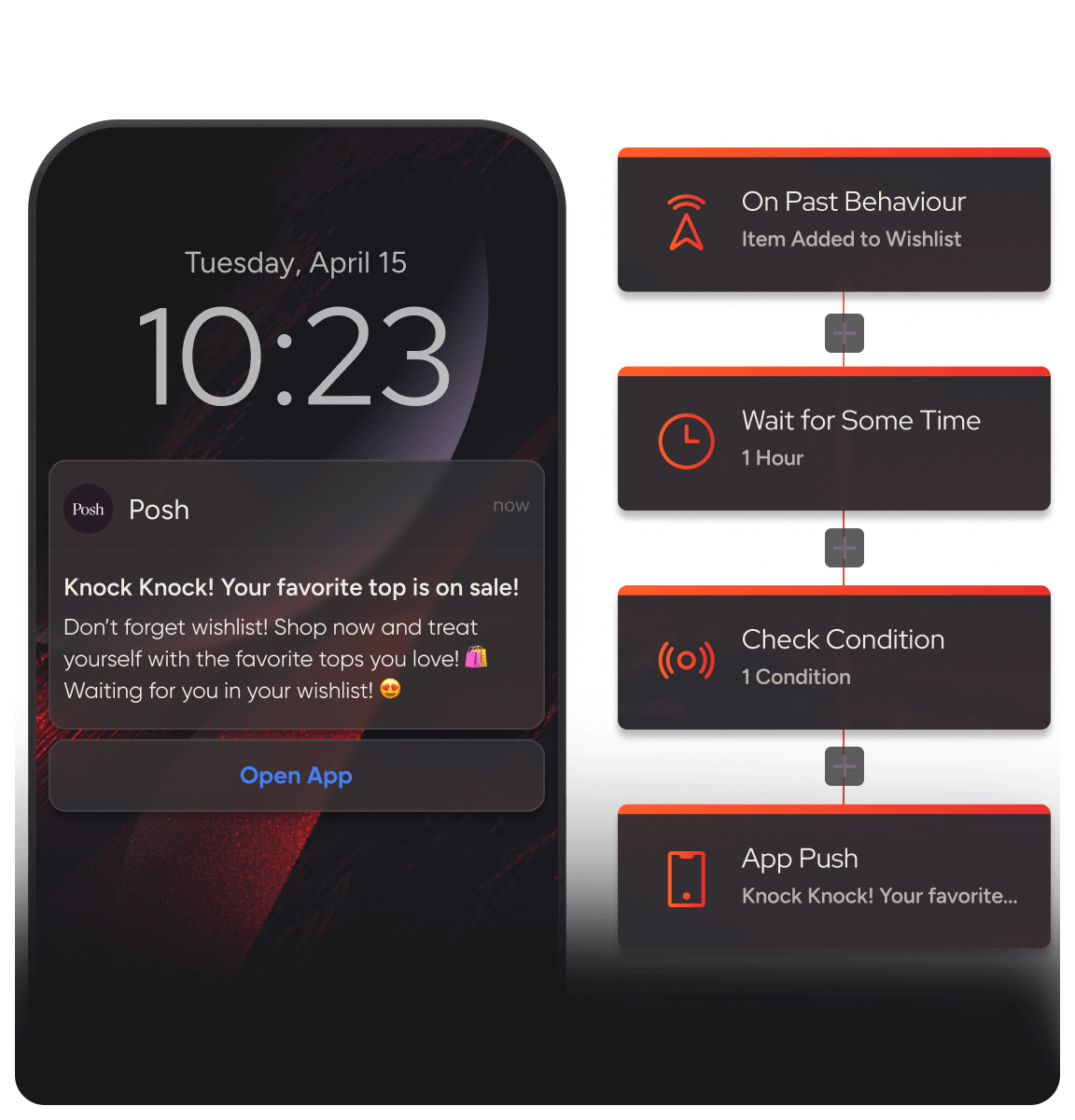
Insider's Architect journey canvas orchestrates and delivers messages across all 12+ channels natively. A cart abandonment flow that would require mParticle + Braze + a WhatsApp provider runs entirely within Insider. All behavioral outcomes feed back into the same unified profile in real time.
Source: Insider
Real-Time On-Site Personalization as a Core Product
mParticle's personalization is an audience activation story: it builds segments and syncs them to downstream tools. The on-site experience itself is not managed by mParticle.
Insider's web personalization includes 140+ customizable templates deployed directly on the site, with the Smart Recommender supporting 20+ recommendation algorithms configured without developer involvement. InStory embeds shoppable story units directly on the brand's website or app.
AI That Executes, Not Just Informs
mParticle's Cortex AI determines what to send; a separate platform sends it. Insider's Insider One AI is the execution layer itself. Predictive AI runs churn scores, affinity models, and next-best-channel routing.
Agent One deploys autonomous agents (Shopping Agent for in-chat product guidance, Support Agent for 24/7 resolution, Insights Agent for campaign analytics) that act independently without waiting for human approval. Next Best Channel ML routing trains on 6 months of behavioral signals and retrains daily.
NOTE: We also evaluated Amperity and CustomerLabs for this archetype. While Amperity excels at identity resolution for retail and financial services, and CustomerLabs offers first-party data orchestration for performance marketers, Insider offers the most complete combination of CDP capabilities and native channel execution, solving mParticle's execution gap with the broadest channel footprint and strongest mobile-first personalization suite.
Insider Pricing
Insider does not publish pricing. All commercial engagements are negotiated via custom quote based on channel footprint, contact volume, and feature scope. There is no freemium option or self-serve trial for the core platform.
The Product Demo Hub provides 80+ interactive, no-form demos for self-service evaluation. The $0 Migration Movement absorbs migration costs for teams switching from Braze, Bloomreach, Salesforce Marketing Cloud, or MoEngage.
Who Should Use Insider?
Choose Insider if:
You're running mParticle today and also paying for Braze, Airship, or another customer engagement platform, and you want to consolidate both contracts into a single vendor that handles data unification and message execution natively.
Your brand is mobile-first (retail, QSR, beauty, travel, fintech) and you need in-app personalization, mobile push, and WhatsApp commerce capabilities designed for high-frequency consumer touchpoints.
Your marketing team needs to build and launch cross-channel campaigns without opening an engineering ticket. Insider's 100+ no-code journey templates and AI-assisted segment building are designed for non-technical users, in contrast to mParticle's steeper learning curve.
The Final Verdict
mParticle excels as a hybrid CDP for real-time data unification and behavioral streaming at enterprise scale, but different teams have different requirements. Based on our research, here are the best alternatives:
ZoomInfo for B2B go-to-market intelligence powered by the largest B2B data platform, the GTM Context Graph, and access through APIs, MCP, and native products
Tealium for enterprise data governance with 1,300+ integrations, HIPAA BAA certification, and back-to-back Gartner Leader recognition
Twilio Segment for fast, affordable CDP deployment with a permanent free tier, transparent pricing, and 450+ integrations
RudderStack for open-source, self-hostable data infrastructure with warehouse-native identity resolution and transparent pricing
Hightouch for zero-copy warehouse activation that treats your existing data warehouse as the system of record, with flexible data model support
PostHog for developer-led teams who want product analytics, session replay, feature flags, and CDP capabilities in one free, open-source platform
Insider for omnichannel execution that combines CDP data unification with native message delivery across 12+ channels
You don't have to choose between mParticle and these alternatives exclusively. Many teams pair a CDP with complementary tools to build the right stack for their needs. Consider your data architecture, team capabilities, and growth plans when deciding which solution fits.
Ready to power your go-to-market motion with B2B intelligence? ZoomInfo's GTM Context Graph fuses 500M contacts and 100M companies with your CRM, conversations, and behavioral signals to reveal why deals move. Start with ZoomInfo Lite for free or request a demo to experience the full platform.
mParticle Alternatives FAQ
Why do businesses look for mParticle alternatives?
mParticle is a capable hybrid CDP, but businesses commonly look elsewhere because of its enterprise-only pricing with no published rates or free tier, its cloud-only SaaS architecture that disqualifies it for regulated industries needing on-premise deployment, its users-and-events data model that limits support for complex custom objects, and the requirement to pair it with a separate customer engagement platform for message delivery.
What is the best overall mParticle alternative?
There is no single best alternative because mParticle covers multiple functions. ZoomInfo is the top choice for B2B go-to-market intelligence, Tealium leads for enterprise data governance and integration breadth, and Twilio Segment is the strongest option for growing teams that need an affordable, quick-to-deploy CDP.
Is there a free alternative to mParticle?
Yes, several alternatives offer permanent free plans.
PostHog provides 1 million free events per month with a full product analytics suite. Twilio Segment's free tier covers 1,000 monthly tracked users with access to 550+ integrations. RudderStack offers 250,000 free monthly events. Hightouch provides 2 free active syncs per month. ZoomInfo Lite offers permanent free access to its B2B database.
Which mParticle alternative is best for B2B companies?
ZoomInfo is built for B2B go-to-market teams, providing 500M contacts, 100M companies, buyer intent data, and the GTM Context Graph that captures why deals move. mParticle's B2C-focused data model around users and events is not designed for B2B account hierarchies, prospecting workflows, or sales intelligence.
How does Tealium compare to mParticle for enterprise CDP needs?
Tealium offers four times the integration count (1,300+ vs. 300+), holds HIPAA BAA certification that mParticle does not, and earned back-to-back Gartner Magic Quadrant Leader placements compared to mParticle's Niche Player position.
Both platforms offer hybrid real-time and warehouse-native architectures, but Tealium's compliance posture and integration breadth make it the stronger option for regulated enterprise environments.
Which alternative works best for teams already invested in a data warehouse?
Hightouch and RudderStack are the strongest options for warehouse-native teams.
Hightouch activates data directly from your warehouse using zero-copy architecture, handling any data object you can write SQL against. RudderStack builds its Customer 360 identity graphs as SQL inside your warehouse with no proprietary storage layer. Both approaches avoid duplicating data into a separate CDP store.
Can I use mParticle alongside one of these alternatives?
Yes. Many teams use mParticle for real-time behavioral data streaming while complementing it with tools like ZoomInfo for B2B intelligence, PostHog for product analytics, or Hightouch for warehouse-native audience activation. The choice depends on whether you need to augment mParticle's capabilities or replace it entirely with a more specialized or cost-effective solution.
Which mParticle alternative is easiest to set up?
Twilio Segment is the fastest to deploy, with a single JavaScript snippet that can be instrumented in under an hour and a permanent free tier that requires no sales conversation. PostHog offers similarly quick deployment with an MIT-licensed self-hosted option. Both stand in contrast to mParticle's multi-phase enterprise onboarding process that typically requires dedicated data engineering resources over several months.
Looking beyond mParticle? Compare the strongest alternatives side by side:
