

Reply.io has spent over a decade evolving from a simple email automation tool into an AI-powered sales engagement platform. It combines multichannel outreach across email, LinkedIn, WhatsApp, SMS, and calls with an AI assistant called Jason AI that handles prospecting, personalization, and reply management. With a built-in B2B database and conditional sequence builder, it gives sales teams what they need to run outbound campaigns from a single platform.
To write this Reply.io review, we analyzed it closely. We believe it's a good fit if:
You need multichannel outreach combining email, LinkedIn, calls, SMS, and WhatsApp in one sequence
You want an AI SDR agent that can prospect, write messages, and handle replies on its own
You're a small to mid-sized sales team looking for affordable outreach automation
You prefer a single platform for both prospecting data and campaign execution
You value conditional sequences that adapt based on prospect behavior
However, Reply.io might not be the best choice if:
You need the most accurate B2B contact data available
You need intent signals and buying committee data to prioritize accounts
You want AI that understands deal context, not just outreach automation
Your organization needs shared intelligence across sales, marketing, and RevOps
You need conversation intelligence and deal analytics alongside your outreach tools
In this case, you should consider ZoomInfo: a go-to-market intelligence platform that does more than automate outreach. Where Reply.io automates the sending, ZoomInfo provides the intelligence that makes outreach effective.
Its GTM Context Graph combines its B2B dataset with your CRM records, conversation transcripts, and behavioral signals to reveal not just which accounts to contact, but why they're ready to buy and how to win them. Your team can access that intelligence through GTM Workspace for sellers, GTM Studio for marketers and RevOps, or APIs and MCP in any other front-end.
We've included a detailed look at ZoomInfo later in this Reply.io review as the stronger option for teams that need full go-to-market intelligence. If you want a data-driven approach to your go-to-market strategy, you can start with ZoomInfo's free plan here.
What is Reply.io?
Reply.io is an AI-powered sales engagement platform founded in 2014 when Oleg Bilozor wrote the first line of code on August 1st.
The idea came from personal frustration: Bilozor had worked a commission-only sales job for six months without making a single sale, but recognized that many sales tasks were done manually and took too long.
Source: Reply.io
What started as a lightweight email automation tool has expanded to support LinkedIn touches, calls, and task management, becoming a full Sales Engagement Platform in 2019. The company is headquartered in San Jose, United States, with an R&D department based in Ukraine where the product was born.
Reply.io now serves over 3,000 companies including Adobe, Strava, and TNW. It was named a G2 Top 50 Sales Product of 2024 and reached $14.7M in revenue by 2024. Its core pitch: automate multichannel outreach across email, LinkedIn, WhatsApp, SMS, and calls while using AI to personalize messages and handle replies.
Reply.io is built for outbound-driven B2B teams, SDRs, startups, agencies, and solo professionals who want to generate more leads without hiring, coordinating multiple outreach channels from one dashboard.
Reply.io Pros & Cons
Pros | Cons |
|---|---|
Multichannel sequences across email, LinkedIn, WhatsApp, SMS, and calls | Steep learning curve with a complex interface for newcomers |
Jason AI SDR handles prospecting, messaging, and reply management | LinkedIn automation risks account blocks (violates LinkedIn ToS) |
Built-in B2B database with 1B+ contacts | Bugs and reliability issues reported by multiple users |
Conditional sequences that adapt to prospect behavior | Customer support limited to chat only, not 24/7 |
Unlimited email warm-up included with purchased mailboxes | Mandatory 3-month minimum not clearly disclosed |
CRM integrations with Salesforce, HubSpot, and Pipedrive | Channel add-ons significantly increase the base price |
A/B testing with single-click setup | Analytics dashboard described as basic with limited flexibility |
Reply.io Review: How It Works & Key Features
Multichannel Sequences: Reply.io combines email, LinkedIn, calls, SMS, and WhatsApp into unified outreach workflows.
Multichannel Sequences are Reply.io's core automation engine.
They let teams combine emails (automated or manual), voice calls, social touches, meetings, and tasks into a single workflow.
Users build sequences through a visual builder, with each step configured as either automatic or manual. Inside the builder, teams can combine email steps for initial outreach and follow-ups, LinkedIn actions like profile visits, connection requests, and DMs, calls via the integrated dialer, plus tasks for manual touchpoints.
Source: Reply.io
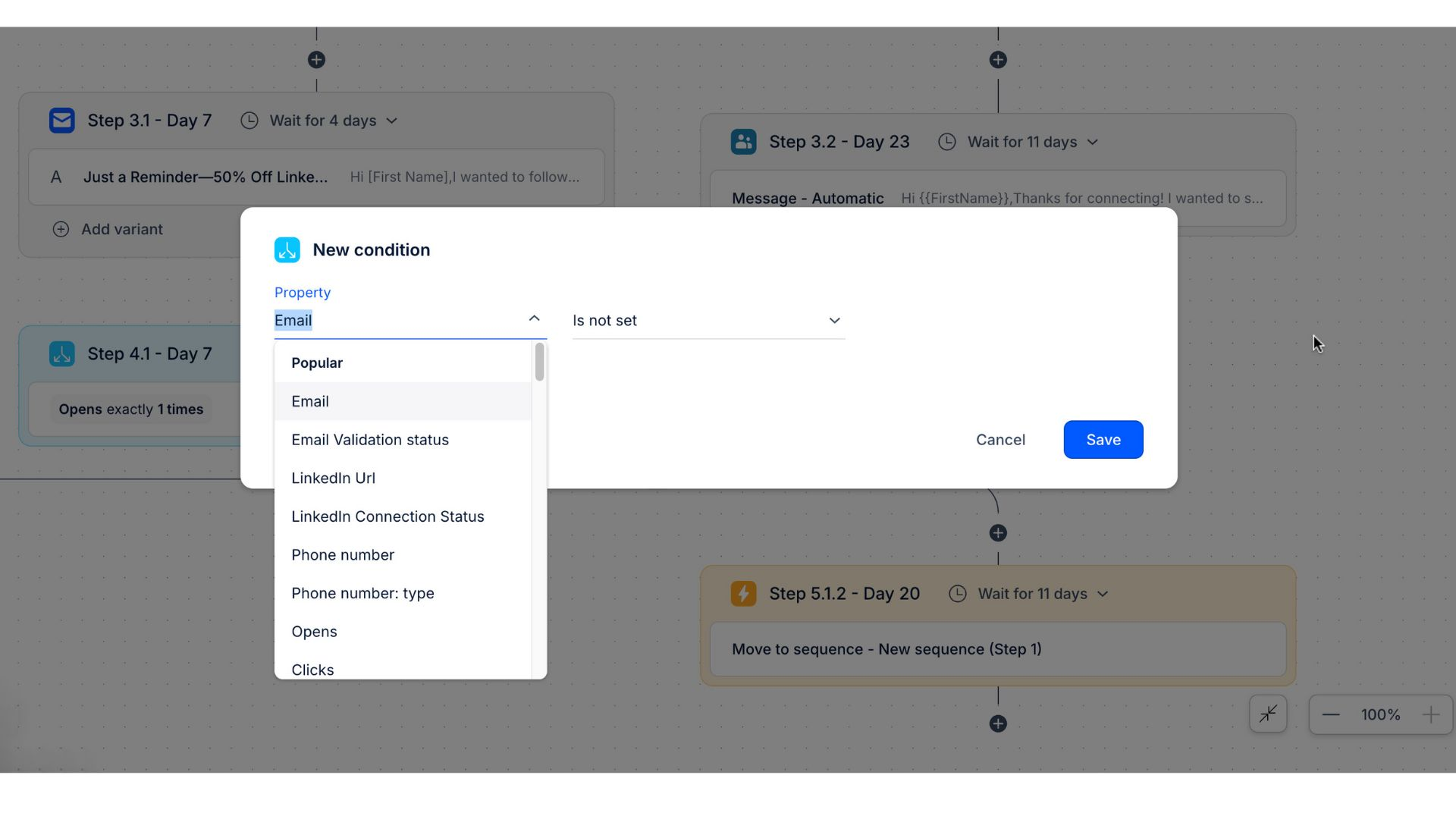
The standout feature is Conditional Sequences. These create branching paths based on prospects' actions and data, with different routes for different behaviors. The system checks every 10 minutes whether prospects have acted and moves them to the next step if conditions are met. If not, prospects follow an alternate branch automatically.
For personalization, sequences use dynamic variables that insert prospect-specific information when the email sends, and AI variables that generate content from prompts. A/B testing takes a single click, and inbox rotation lets teams connect unlimited mailboxes to increase sending volume.
Sequences can run in manual, mixed, or fully automated modes, so teams can choose how much control to keep.
Jason AI: An AI SDR agent that prospects, writes messages, handles replies, and books meetings around the clock.
Jason AI is Reply.io's AI sales assistant that works as a virtual SDR around the clock. It finds buyers, researches them, builds sequences, personalizes messages, and handles replies.
Source: Reply.io
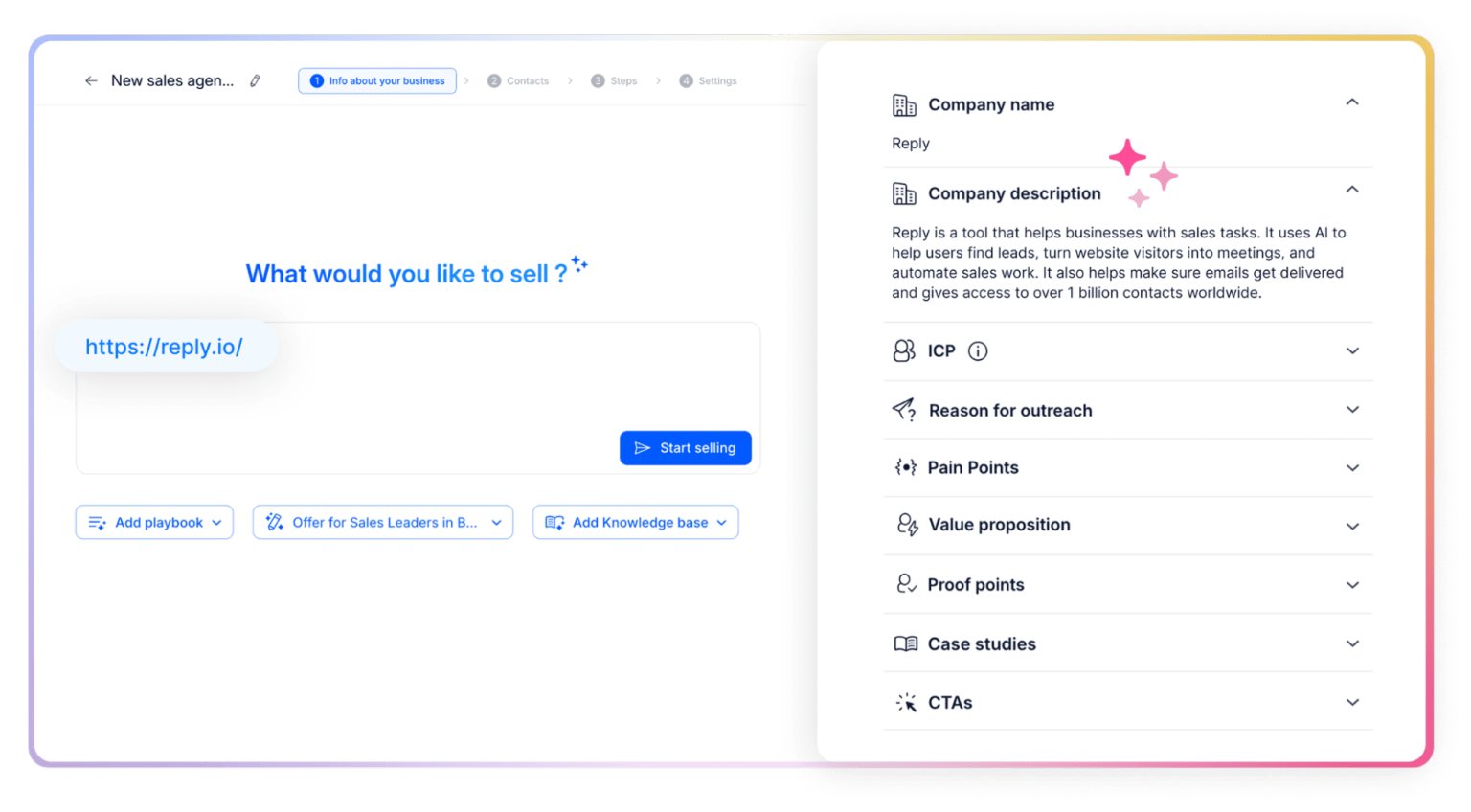
Setup works like onboarding a new hire. You provide your ideal customer profile, product details, and tone preferences. You can upload PDFs, documents, sales scripts, or writing samples for Jason to learn your style and approach.
Once configured, Jason finds qualified leads from its B2B database and researches each prospect across LinkedIn and company websites. It then builds multichannel sequences combining email, LinkedIn, WhatsApp, and SMS with personalized messages. When prospects respond, Jason answers questions, addresses objections, and proposes next steps.
A three-level validation system handles quality control: Level 1 validates brand voice using two AI models, Level 2 checks compliance with playbook rules, and Level 3 validates personalization accuracy with source transparency.
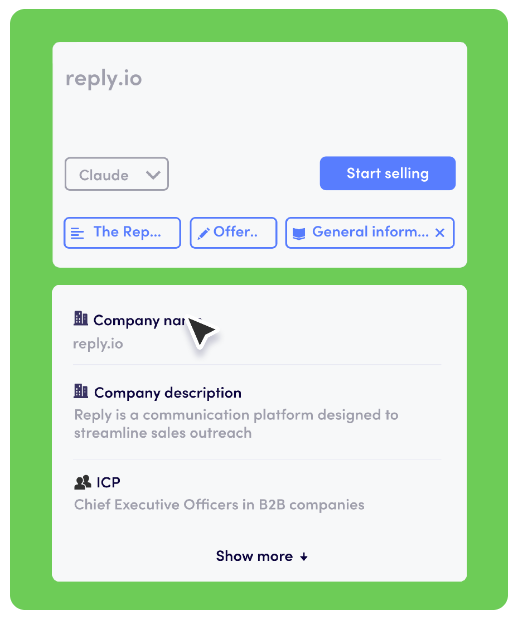
Users can operate Jason in two modes: Approval Mode (review every draft before sending) or Automatic Mode (Jason handles routine replies independently). You can also choose your AI engine from Claude, Gemini, Mistral, or OpenAI.
The latest version, Jason AI SDR 2.5, added Playbooks for learning your sales approach, a CTA Library with tested calls-to-action, and Template Locking to keep proven templates unchanged. Jason AI SDR 2.7 expanded to outreach in 50+ languages.
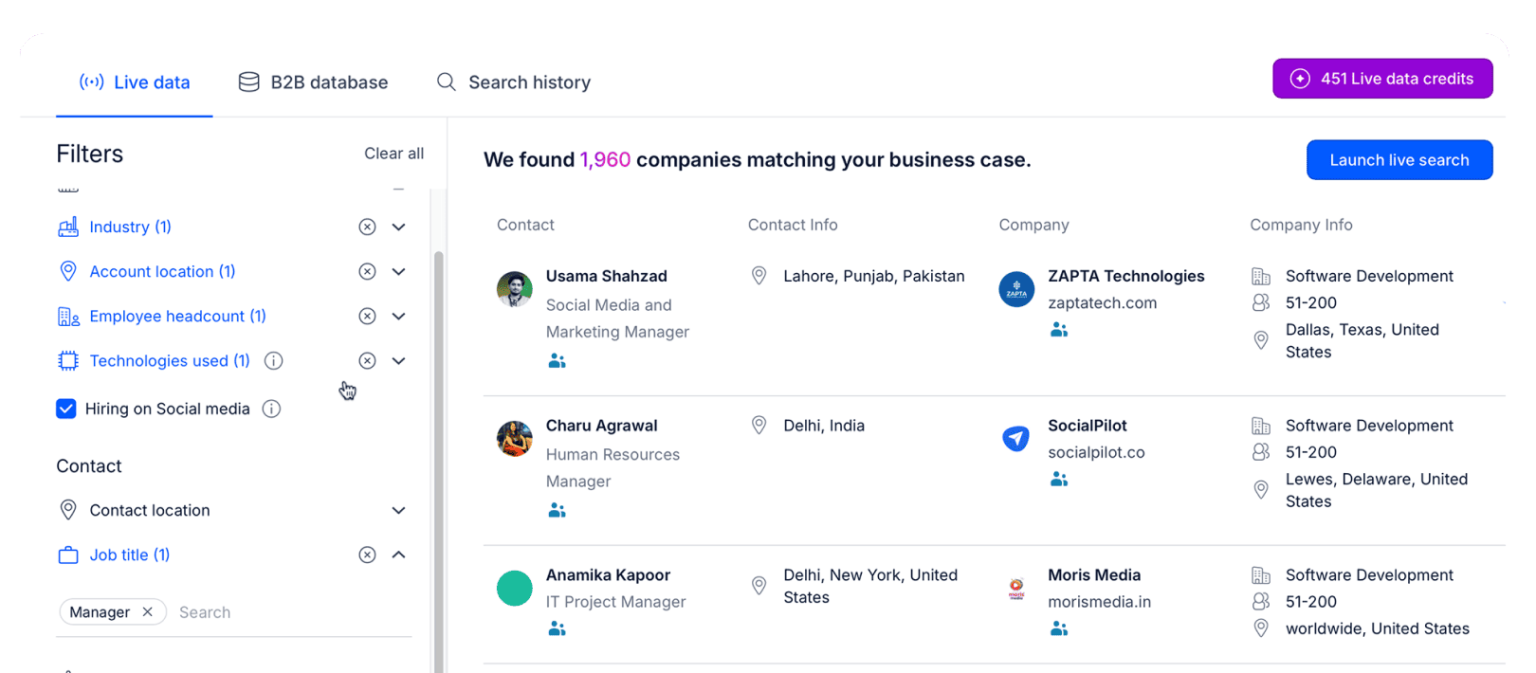
B2B Data & Prospecting: A built-in contact database with over 1 billion contacts and real-time verification.
Reply Data provides access to over 1 billion contacts and approximately 60 million accounts across 150+ countries, including more than 220 million U.S.-based contacts. The database eliminates the need for a separate data provider by integrating prospecting directly into the outreach platform.
Source: Reply.io
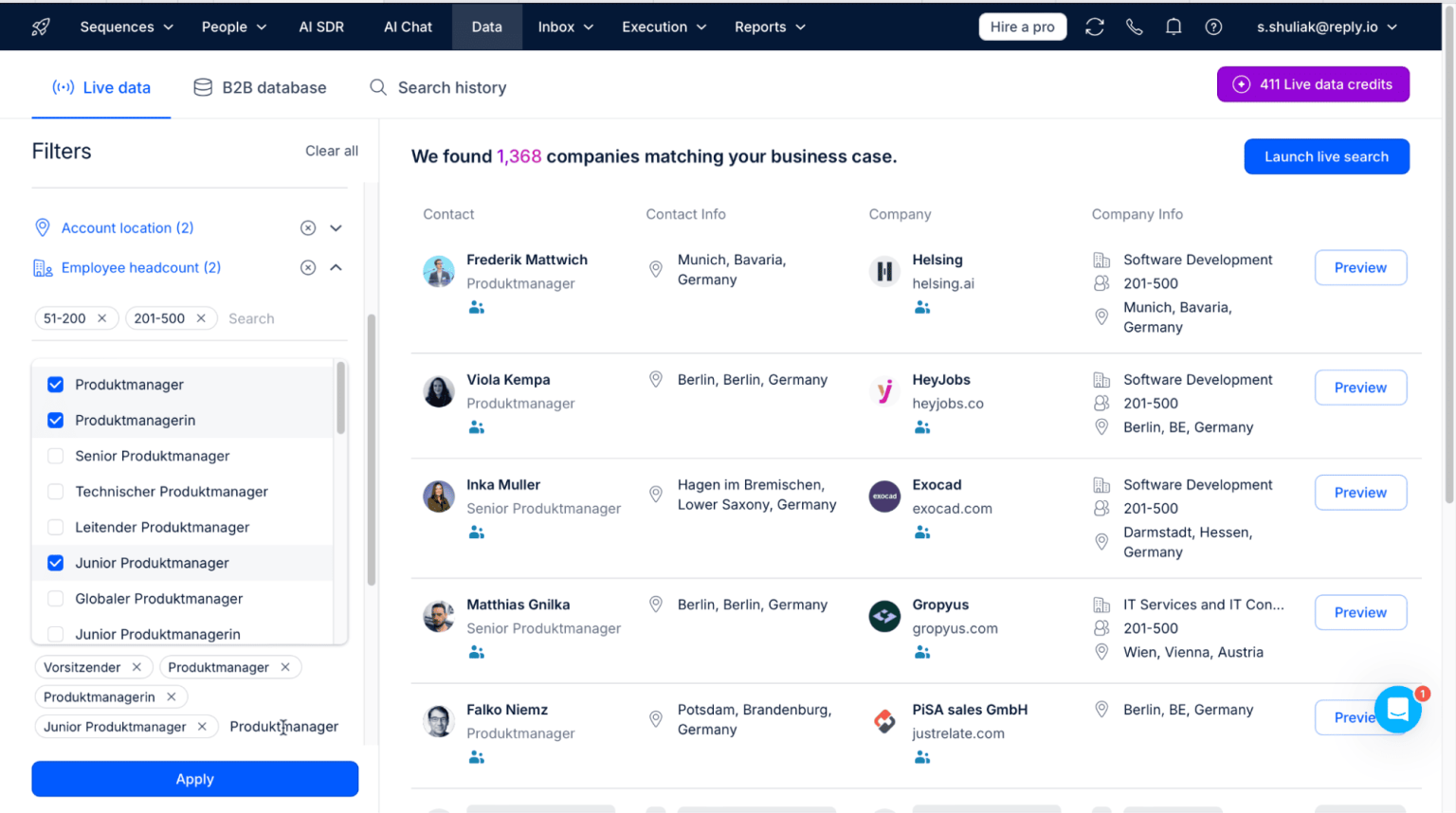
The database uses 16 filters including industry, location, employee headcount, technologies used, department, and seniority. Reply Data claims to search the web in real-time rather than relying on static snapshots, and provides verified emails with bounce rates below 3%.
The Findy Chrome extension lets users prospect directly from LinkedIn, gathering contact information while browsing profiles. Once found, contacts transfer directly into a sequence for automated follow-up without exporting and importing data.
Credits work on a tiered system: contacts without emails cost 1 credit, contacts with emails cost 2 credits, and intent data contacts cost 4 credits. 1,000 free data credits are included in Sales Engagement and Agency plans, with 200 free credits on trial and Free plans.
Pricing: Tiered plans starting at $49/month with channel-specific add-ons.
Reply.io's pricing starts with a Free Plan that includes the AI sequence generator, Chrome extension, 200 data credits per month, and basic prospecting tools.
The Free Plan cannot send automated emails and has no multichannel features.
The Email Volume Plan starts at $49 per user/month billed annually and includes 1,000 active contacts monthly, unlimited email sends, and email tracking. This plan excludes multichannel capabilities entirely.
The Multichannel Plan starts at $89 per user/month billed annually and adds LinkedIn, WhatsApp, SMS, and call automation.
However, the advertised price understates the real cost: LinkedIn automation adds $69/account and Calls/SMS adds $29/account as separate charges. A solo rep on the $49/month Email Volume plan who needs LinkedIn and SMS would pay $147/month total, more than triple the base price.
The AI SDR Plan (Jason AI) starts at $500/month billed annually for 1,000 active contacts, scaling to $3,000/month for 10,000 contacts. These plans include unlimited users, multichannel automation, and all features.
Source: Reply.io
Agency Plans start at $210/month with unlimited clients and users, multichannel sequences, and dedicated support.
Reply.io offers a 14-day free trial with no credit card required. All plans offer annual billing discounts of 17-40% compared to monthly billing. Contract terms include a mandatory 3-month minimum commitment that multiple reviewers note is not clearly disclosed during signup.
Where Reply.io Falls Short
Reply.io handles multichannel outreach well for small to mid-sized sales teams, but several limitations surface with regular use.
These point to a platform built for outreach execution, not go-to-market intelligence.
Platform Reliability Issues: Multiple users report bugs that disrupt campaigns, including email sequences sending incorrectly or skipping steps, Gmail sync issues requiring frequent reconnections, and contacts disappearing from sequences. For a platform that manages active sales pipelines, these disruptions carry real cost.
LinkedIn Compliance Risks: LinkedIn automation violates LinkedIn's Terms of Service and can result in account blocks. Users report accounts being blocked, restricted, or not working as expected. This is a structural risk for any team relying on LinkedIn as an outreach channel.
Customer Support Limitations: Support is limited to chat only, not 24/7, with slow response times for urgent issues. Some users describe support as unhelpful. When campaigns malfunction or sender reputation is at risk, chat-only support during business hours isn't enough.
Pricing Transparency: The base price doesn't make obvious that it's per-user, email-only, and requires annual billing. Hidden costs surface quickly with data credits, email validation ($5 per 1,000 validations), and channel add-ons. Users have reported auto-renewal settings causing unexpected charges and difficulty with cancellation.
Analytics and Intelligence Gap: Reply.io's analytics tools offer little useful insight. The dashboard is basic and inflexible. Teams that need to understand why accounts convert, or to prioritize outreach by buying signals rather than engagement metrics, won't find answers here.
Data Breadth vs. Dedicated Providers: Reply Data's 1 billion contacts provide a convenient built-in option, but the database lacks verified direct-dial phone numbers, intent signals, technographics, org charts, and multi-source verification that dedicated data platforms offer. Teams with strict accuracy needs may find themselves supplementing Reply's data with external providers anyway.
These gaps follow from Reply.io's focus on outreach automation over go-to-market intelligence. For teams that need better data, account-level intelligence, and AI that reasons about deals, a broader platform is the better investment.
Top Reply.io Alternative for Full GTM Intelligence: ZoomInfo
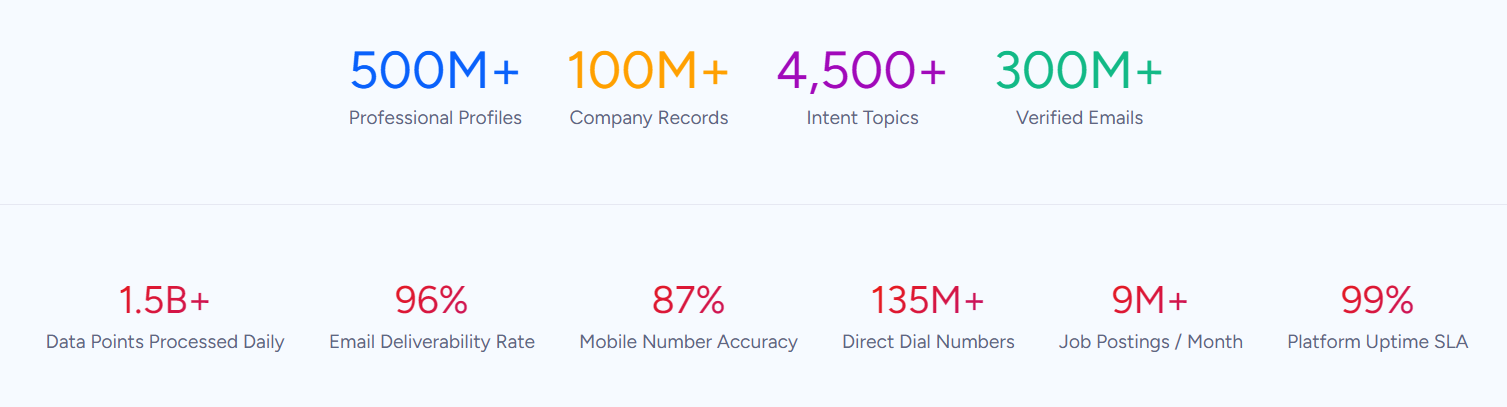
ZoomInfo is an AI go-to-market platform built on 500M contacts, 100M companies, 135M+ verified phone numbers, and 200M+ verified business emails.
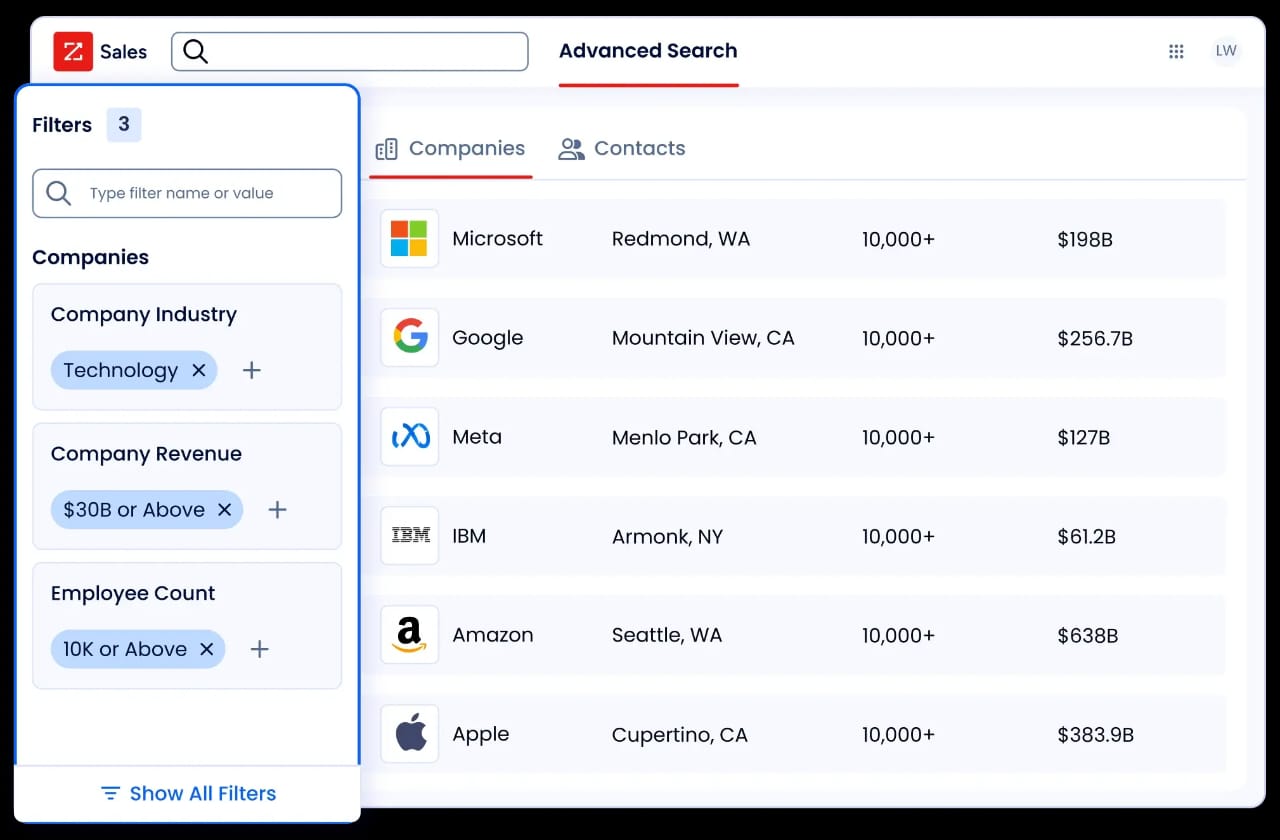
Where Reply.io automates the outreach step, ZoomInfo covers the full go-to-market cycle: identifying which accounts to target, understanding why they're in-market, executing outreach with buyer context, and measuring results.
Comprehensive B2B Data: A large B2B dataset, verified at scale.
ZoomInfo's data spans three dimensions: identity data (who buyers are and how to reach them), company context (firmographics, org charts, technographics), and dynamic signals (intent data showing when accounts are in-market).
The numbers: 120M direct-dial phone numbers, 200M+ verified business email addresses, and company intelligence covering 100M companies with attributes including revenue, headcount, technology usage, and organizational hierarchy. Global coverage extends to 34M+ company profiles outside North America and 45M+ mobile numbers outside NA.
This data comes from multiple sources: automated ML scanning of 28 million site domains daily, third-party partner data covering 95 million businesses, 200,000+ ZoomInfo Lite users who share data back, and an in-house Data Training Lab of 300+ human researchers. First-party data reaches up to 95% accuracy.
The advantage is externally validated. In a Fortune 500 competitive RFP analyzing 25 million contacts across vendors, the independent consultant concluded that "no other competitor came even close." ZoomInfo is a Leader in Forrester's Wave for Intent Data Providers (Q1 2025) and earned 133 No. 1 rankings on G2 in Summer 2025.
For sales teams, the difference is practical: direct dials that connect and emails that land, instead of bounced messages that damage sender reputation and bury sequences in spam.
SpringDB saw 2x-3x increases in campaign conversions, a 300% increase in database usability, and 30-50% uplift in average deal size after using ZoomInfo's enriched data for precise targeting. (SpringDB)
GTM Context Graph: An intelligence layer that captures not just what happened in your deals, but why.
ZoomInfo's GTM Context Graph processes 1.5B+ data points daily, combining ZoomInfo's B2B data with a customer's own CRM records, conversation transcripts, email interactions, and behavioral signals into a single intelligence layer.
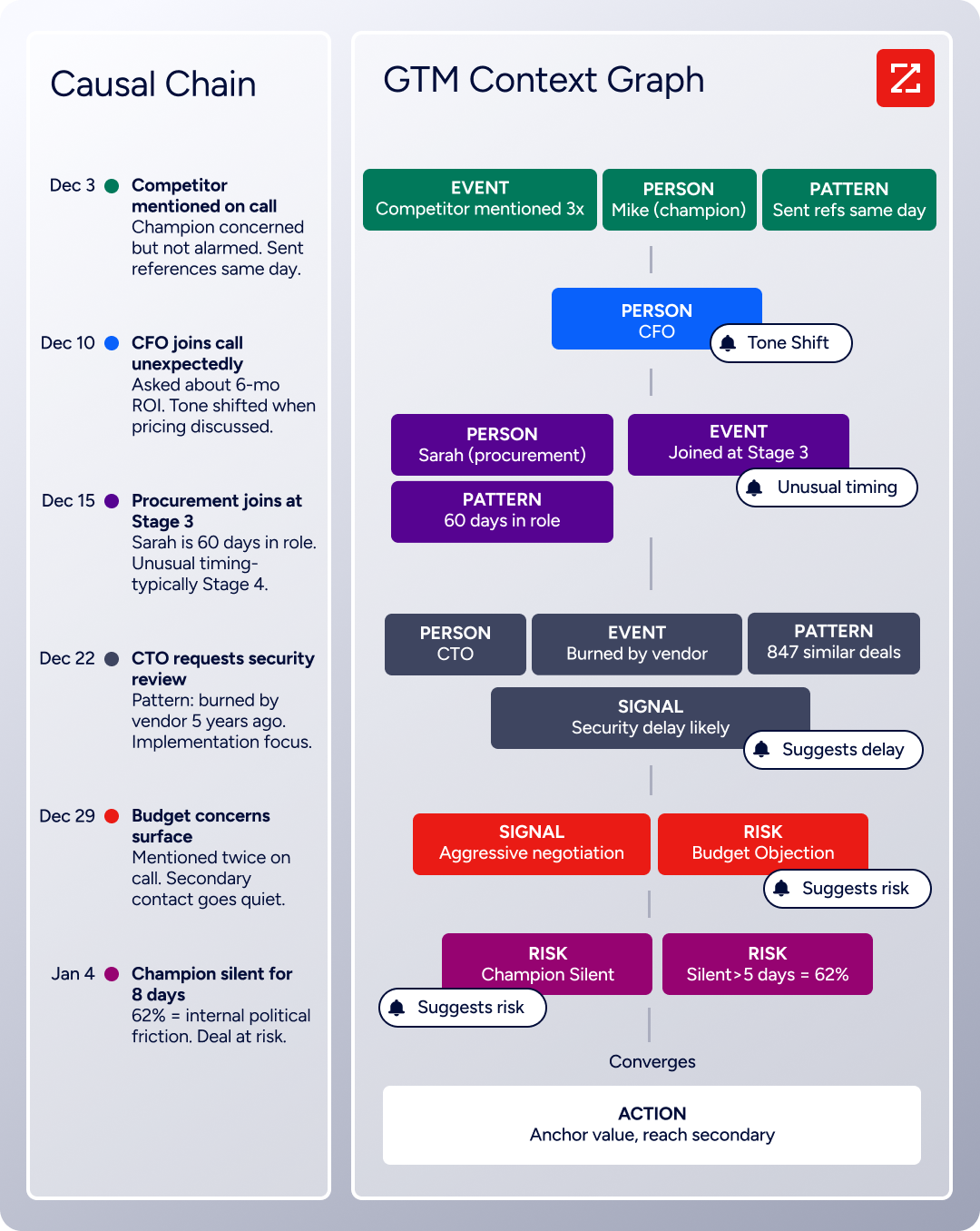
The difference from standard sales data is fundamental. A CRM records that a deal moved from Stage 3 to Stage 4. But as ZoomInfo's Chief Product Officer Dominik Facher writes: "The CRM recorded the state change. It has no record of why it happened." Perhaps the CFO joined the last call and asked about six-month ROI, or the VP went quiet for eight days during an internal budget battle.
The GTM Context Graph makes this decision context machine-readable, capturing people and their relationships, actions and their outcomes, patterns across deals, and the exceptions that reveal real blockers.
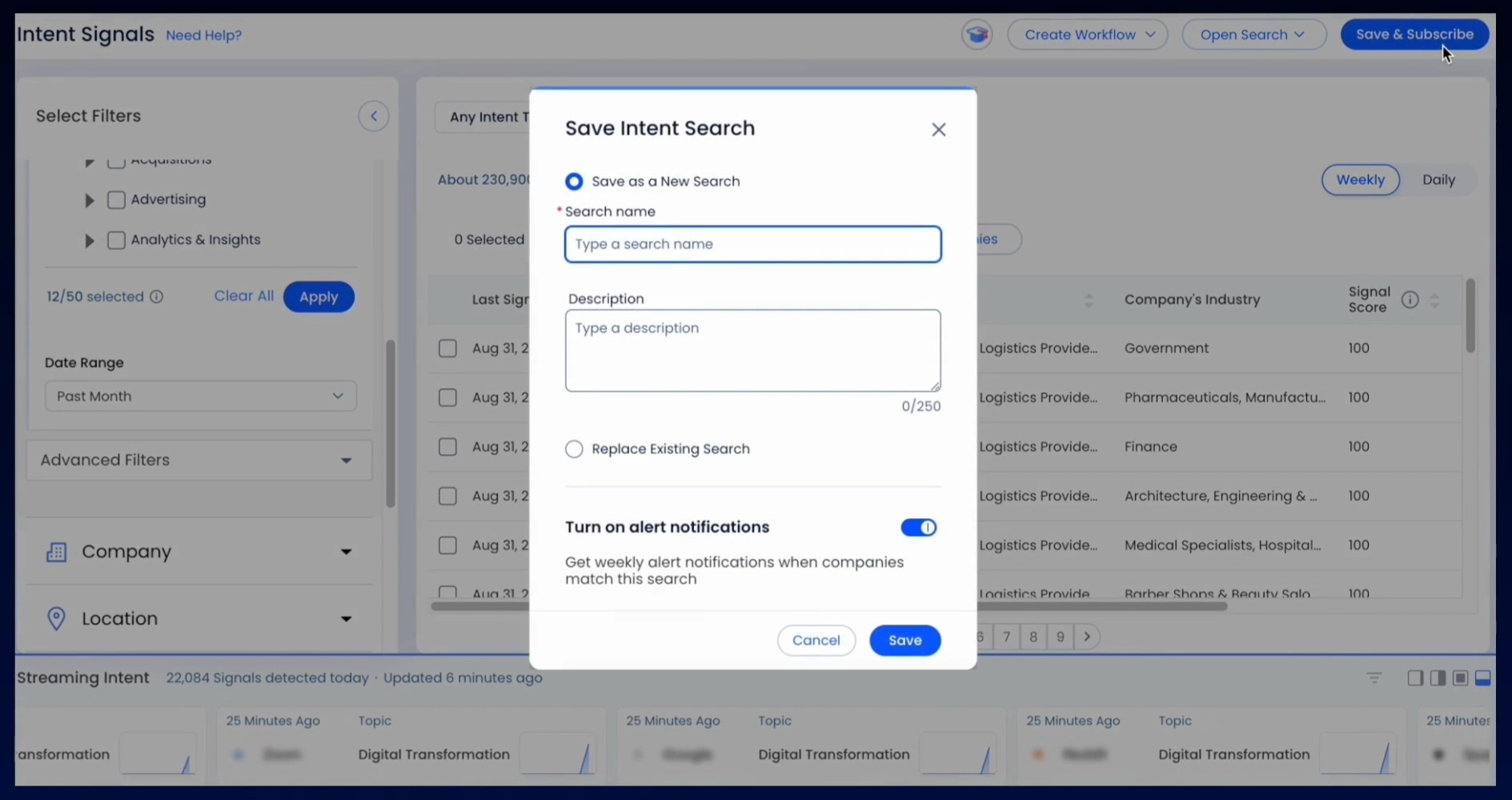
This intelligence powers features like Guided Intent (which identifies topics historically correlated with deal success rather than requiring manual topic selection), Buyer Intent (tracking signals from 210 million IP-to-Organization pairings and 6 trillion+ new keyword-to-device pairings sourced monthly), and WebSights (resolving anonymous website traffic to companies and buying team members).
Source: ZoomInfo
Reply.io's analytics tell you which emails got opened and which prospects replied. ZoomInfo's GTM Context Graph tells you which accounts are researching solutions, who on the buying committee is engaged, and what patterns across thousands of deals suggest will happen next.
Seismic attributed 39% of active pipeline to opportunities identified or influenced by ZoomInfo signals, reported 54% productivity gains, and saved 11.5 hours per week per seller. (Seismic)
GTM Workspace: An AI workspace where sellers act on intelligence, not just send sequences.
GTM Workspace is the seller's front-end to the GTM Context Graph. It solves a fragmentation problem (the average enterprise uses 23 GTM technologies) by giving sellers one place where prioritized accounts, AI-drafted outreach, and deal execution come together.
Built on Anthropic's Claude, the AI agents inside Workspace answer three questions for every rep: who to contact, when to engage, and what to say. The AI Assistant generates one-click account briefs pulling CRM history, company news, ZoomInfo signals, and stakeholder context into a 10-second summary.
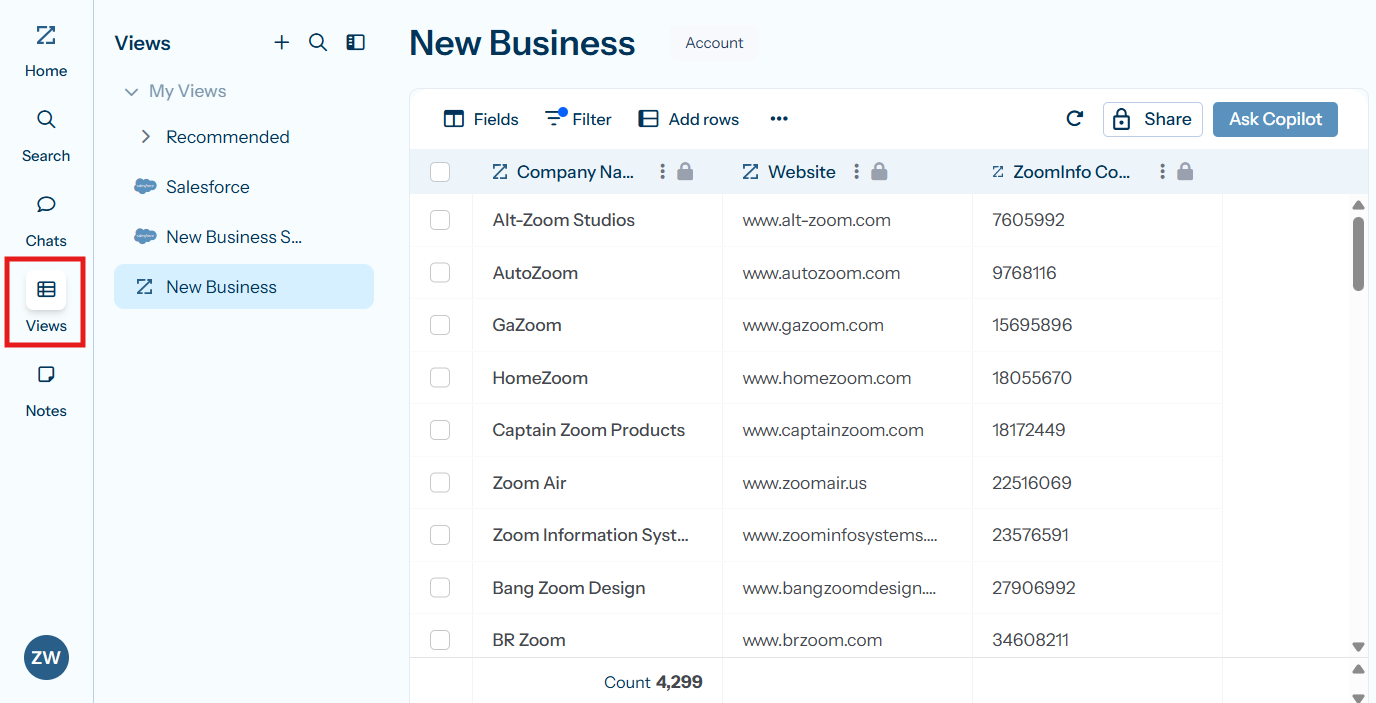
The Action Feed delivers a live stream of in-market buyers matched to target criteria, with pre-drafted actions on every signal. Views provide dynamic, spreadsheet-style interfaces combining CRM data with real-time buying signals, letting reps filter for intent spikes, technology changes, funding events, or personnel movements.
Source: ZoomInfo
Where Reply.io's Jason AI automates outreach sequences, GTM Workspace's AI understands deal context. It knows which stakeholders matter, what concerns they raised on the last call (via Chorus conversation intelligence), and what signals show the deal is accelerating or stalling.
Spekit found that opportunities at higher-scoring accounts were 43% more likely to become qualified pipeline and moved 58% faster through qualification using GTM Workspace. (Spekit)
GTM Studio: AI orchestration for marketers, RevOps, and GTM engineers.
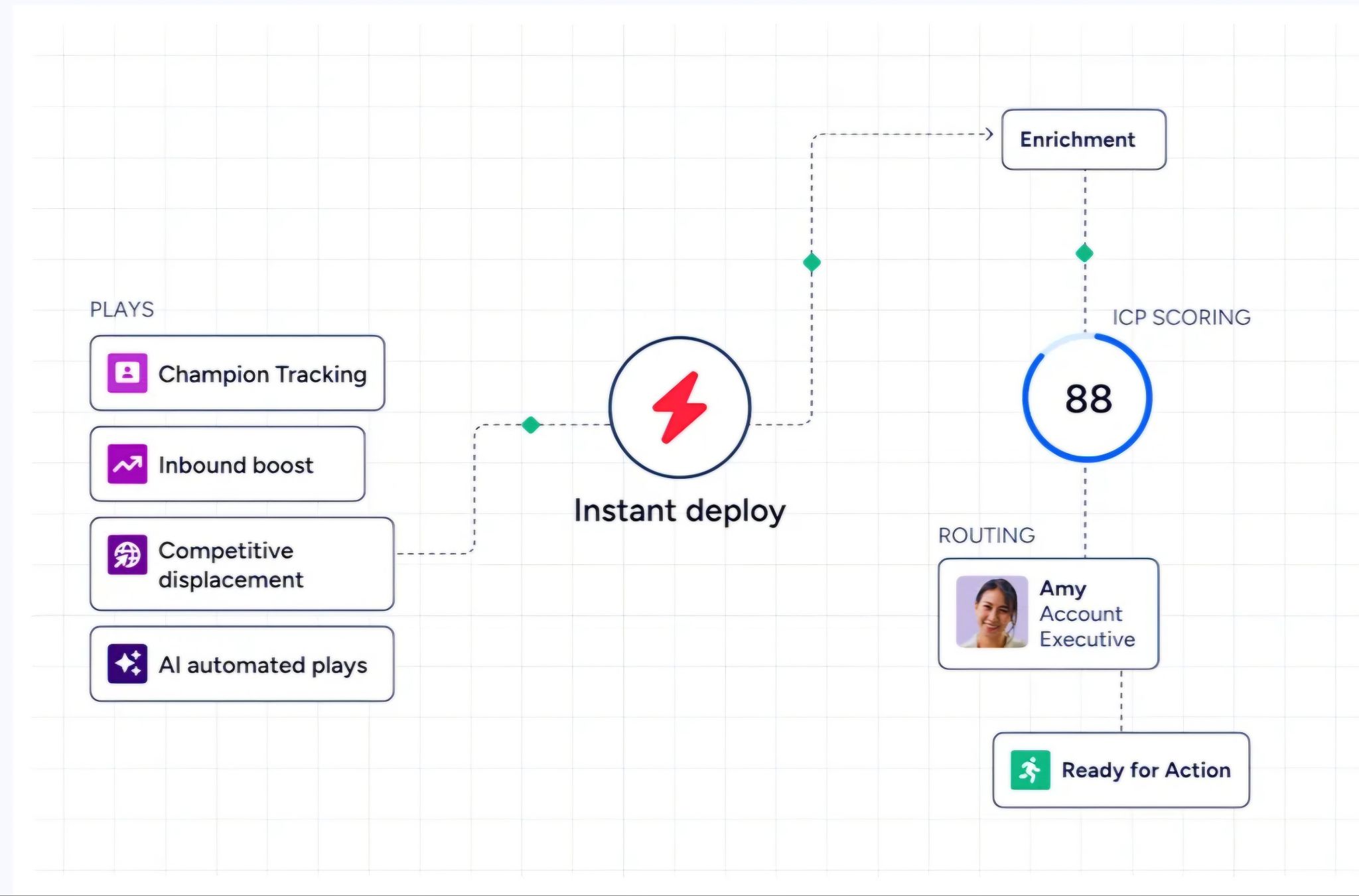
GTM Studio is the front-end for teams that design go-to-market plays. RevOps teams and marketers use it to build audiences with natural language, define triggers, and activate plays across channels, all without engineering support.
Source: ZoomInfo
Key capabilities include natural language audience creation, pre-built GTM plays for inbound acceleration, champion tracking, and competitive displacement, multi-channel orchestration across email, calls, ads, and direct mail, and waterfall enrichment from 25+ alternative data sources included at no additional cost.
For teams using Reply.io, marketing and RevOps typically need separate tools for audience building, data enrichment, and campaign orchestration. GTM Studio handles all three in one canvas, with outputs delivered directly into GTM Workspace for sellers to act on. Expansion plays that used to take 3 weeks now launch in 30 minutes, and top-performing teams run 50+ plays per quarter.
Redwood Logistics achieved a 99% reduction in cost-per-click and a 310% increase in clickthrough rate using ZoomInfo's audience insights. (Redwood Logistics)
Reply.io or ZoomInfo: Comparison Summary
Reply.io | ZoomInfo | |
|---|---|---|
Primary focus | Multichannel outreach automation | Full go-to-market intelligence and execution |
Target users | SDRs, small sales teams, agencies | Sales, marketing, RevOps, enterprise teams |
B2B database | 1B+ contacts, 16 search filters | 500M contacts, 100M companies, 300+ attributes |
Verified phone numbers | Not specified | 135M+ verified, 120M direct-dial |
Verified emails | <3% bounce rate claimed | 200M+ verified, up to 95% accuracy |
Intent signals | Basic hiring and technographic signals | Guided Intent, 210M IP-to-Org pairings, 6T+ keyword signals monthly |
AI capabilities | Jason AI for outreach and reply handling | GTM Context Graph powering account intelligence, deal reasoning, and AI agents |
Outreach channels | Email, LinkedIn, WhatsApp, SMS, calls (native) | Via Salesloft partnership (email, phone, multi-touch) |
Conversation intelligence | Not available | Chorus (recording, transcription, deal analytics) |
Marketing/ABM | Not available | GTM Studio, native DSP, FormComplete, audience orchestration |
CRM integrations | Salesforce, HubSpot, Pipedrive | 120+ marketplace integrations, including Salesforce, HubSpot, Dynamics 365 |
API/MCP access | API with 15,000 calls/month/user | Enterprise API, MCP for AI agents, included in all relevant plans |
Free tier | Free plan (200 data credits, no sending) | ZoomInfo Lite (permanent, 10 export credits, no time limit) |
Pricing transparency | Published prices ($49-$89/user/month base) | Custom-quoted, no published prices |
Analyst recognition | G2 Top 50 Sales Product 2024 | Gartner MQ Leader (ABM), Forrester Wave Leader (Intent Data), 133 G2 No. 1 rankings |
Best for | Scaling outbound outreach on a budget | Full GTM intelligence across the entire revenue team |
Final Verdict
The choice between Reply.io and ZoomInfo depends on what your team needs most: outreach execution or go-to-market intelligence.
Choose Reply.io if your primary need is automating multichannel outreach on a budget. It fits small sales teams, SDRs, and agencies that have a clear target list and need to run email, LinkedIn, and phone outreach from one platform.
Jason AI helps solo operators and lean teams send more without hiring, and the built-in B2B database means you can prospect and send without switching tools. If outbound sequencing is the core of your sales process and you need to move quickly with limited resources, Reply.io delivers.
Choose ZoomInfo if you need more than an outreach tool. ZoomInfo is the stronger choice when your team needs to understand which accounts are in-market, who sits on the buying committee, and what signals predict deal success.
Its GTM Context Graph provides the intelligence that makes outreach effective: the right message to the right person at the right time, informed by verified data, intent signals, conversation intelligence, and CRM context.
For organizations where sales, marketing, and RevOps need to work from shared intelligence, and where the quality of your data directly determines the quality of your pipeline, ZoomInfo provides a foundation that outreach tools alone can't.
Get started with ZoomInfo here.
Reply.io automates the sending. ZoomInfo powers the thinking behind what to send, to whom, and when. For teams ready to move past volume-based outreach toward intelligence-driven selling, that difference compounds with every deal.
Reply.io FAQ
What is Reply.io used for?
Reply.io is an AI-powered sales engagement platform that automates multichannel outreach across email, LinkedIn, WhatsApp, SMS, and calls. Sales teams use it to build automated sequences that contact prospects through multiple channels, with AI handling personalization, reply management, and meeting scheduling.
It serves outbound-driven B2B teams, SDRs, startups, and lead generation agencies who want to send more personalized outreach without hiring.
How much does Reply.io cost?
Reply.io's Email Volume plan starts at $49 per user/month billed annually, and the Multichannel plan starts at $89 per user/month.
However, channel add-ons increase costs significantly: LinkedIn automation adds $69 per account and Calls/SMS adds $29 per account. The AI SDR plan (Jason AI) starts at $500/month for 1,000 active contacts. Additional costs include email validation at $5 per 1,000 and data credits beyond the included amount.
ZoomInfo does not publish prices but offers a permanent free tier (ZoomInfo Lite) with access to its B2B database and 10 monthly export credits.
Does Reply.io have a free plan?
Yes, Reply.io offers a Free Plan that includes the AI sequence generator, Chrome extension, 200 data credits per month, and basic prospecting tools. However, the Free Plan cannot send automated emails and has no multichannel features, making it useful mainly for exploring the interface and basic contact searching.
ZoomInfo Lite is also permanently free, providing access to over 100 million verified profiles with 10 monthly export credits, website visitor reveals, a Chrome extension, and HubSpot integration.
Is Reply.io's LinkedIn automation safe to use?
LinkedIn automation carries risk on any platform. Reply.io's LinkedIn automation violates LinkedIn's Terms of Service, and users have reported accounts being blocked, restricted, or not working as expected. Teams relying on LinkedIn outreach should weigh whether the convenience of automated LinkedIn touches justifies the potential for account restrictions.
What is Jason AI and how does it work?
Jason AI is Reply.io's AI SDR agent that automates prospecting, message writing, reply handling, and meeting scheduling. You provide your ideal customer profile, product details, and sales materials, and Jason finds qualified leads, researches them, builds multichannel sequences with personalized messages, and handles incoming replies.
It operates in two modes: Approval Mode (you review every draft) or Automatic Mode (Jason handles routine interactions independently). Jason supports 50+ languages and lets you choose between Claude, Gemini, Mistral, or OpenAI as the underlying AI engine.
How does Reply.io's B2B database compare to ZoomInfo's?
Reply.io's database includes over 1 billion contacts across 150+ countries with 16 search filters. ZoomInfo's database covers 500 million contacts and 100 million companies with 300+ attributes, 135 million verified phone numbers, 120 million direct-dial numbers, and 200 million verified business emails.
ZoomInfo's data is verified through a multi-source pipeline including 300+ human researchers and reaches up to 95% accuracy on first-party data. ZoomInfo also includes intent signals, technographics, org charts, and buying committee intelligence that Reply.io's database does not provide.
Does Reply.io integrate with CRM systems?
Yes, Reply.io offers native two-way integrations with Salesforce, HubSpot, and Pipedrive, with auto-sync running every 2 hours. The platform also supports Zapier, Make, and n8n for additional workflow automation.
ZoomInfo offers a broader integration ecosystem with 120+ marketplace integrations, Enterprise APIs, and MCP access that lets its data and intelligence be consumed inside any third-party tool or AI agent.
Can Reply.io replace a dedicated B2B data provider?
For teams with basic prospecting needs, Reply.io's built-in database may be sufficient. However, it lacks verified direct-dial phone numbers at scale, intent signals, technographics, org charts, conversation intelligence, and multi-source verification that dedicated platforms like ZoomInfo maintain.
Teams with strict accuracy needs, or those that need to understand buying committee dynamics and in-market timing, will likely need a dedicated data provider alongside or instead of Reply.io's built-in data.
Researching Reply.io? These comparisons and alternatives help you decide:
