
Sales coaching software helps revenue teams improve rep performance through conversation analysis, structured feedback, and performance tracking.
The case for doing it consistently is well documented. MySalesCoach's 2026 research across 3,700+ sales professionals found that teams coached weekly hit quota 76% of the time, versus 47% for teams coached quarterly or less. Yet most teams still rely on periodic training, and reps forget 84 to 90% of it within months without reinforcement.
This guide breaks down the 11 best sales coaching platforms, how they compare across coaching depth, CRM integration, and pricing, and how to pick the right one for your team. The list includes conversation intelligence platforms, sales readiness systems, and performance management tools that address different coaching priorities.
How we evaluated these sales coaching platforms
Selecting the right sales coaching tool requires more than reading feature lists. We assessed each platform against six criteria drawn from real inside sales team requirements:
Coaching depth: Does the platform surface coachable moments automatically, or does it require managers to manually review recordings to find them?
CRM integration quality: Does the platform sync bidirectionally with Salesforce, HubSpot, and Pipedrive, with accurate contact matching and reliable data fidelity?
AI specificity: Does the platform name specific AI capabilities (conversation analysis, adaptive role-play, real-time prompts) or rely on generic claims without naming the mechanism?
Onboarding and ramp-time support: Does the platform include call libraries, role-play simulations, and certification workflows that reduce time-to-productivity for new hires?
Sales methodology compatibility: Does the platform support structured frameworks like MEDDIC, SPIN, or BANT, or does it only track generic talk-time metrics?
Pricing transparency: Does the vendor publish pricing, or is everything custom enterprise only?
Tools were assessed based on how well they serve real inside sales teams, not just product demos.
What is sales coaching software?
Sales coaching software is a platform that captures customer interactions, analyzes conversation patterns, and surfaces coachable moments to help managers improve rep performance at scale. Unlike training platforms that deliver curriculum during onboarding, coaching software works continuously, recording calls and meetings to provide feedback based on actual customer conversations rather than theoretical scenarios.
Modern sales coaching platforms deliver conversation intelligence software capabilities, performance analytics, and structured feedback workflows that help managers coach more effectively without listening to every call. Core capabilities include:
Conversation intelligence: Call recording, transcription, and analysis to identify talk patterns, objection handling, and competitive mentions
Coaching scorecards: Standardized evaluation frameworks that track rep performance against defined criteria
Performance analytics: Dashboards showing win rates, deal velocity, and rep-level metrics tied to coaching activities
CRM integration: Automatic sync of call data, contacts, and activities to maintain data hygiene and forecast accuracy
GTM Context Graph reasoning: For Chorus by ZoomInfo specifically, this surfaces why deals accelerate or stall, enabling targeted coaching on the moments that matter
When implemented with a defined coaching cadence and manager buy-in, coaching software can accelerate rep ramp time, build rep confidence, and extend manager capacity beyond what manual call review allows.
The best platforms embed coaching into daily workflow rather than isolating it to periodic training events. A rep who receives feedback inside the tools they already use is far more likely to apply it than one who attends a quarterly training session.
Two distinct categories of sales coaching tools serve different needs. Post-call analysis tools (Chorus, Gong, Jiminny) record and analyze conversations after they end, giving managers and reps a structured way to review what happened and identify patterns over time. Real-time coaching tools (Clari Copilot, Balto) deliver in-call guidance during live conversations, surfacing battlecards and alerts while the rep is still on the call. Understanding which modality fits your team's workflow is the first decision to make before evaluating specific platforms.
1. Chorus by ZoomInfo

Chorus by ZoomInfo is the conversation intelligence layer of ZoomInfo's all-in-one AI GTM Platform, capturing and analyzing customer calls, meetings, and emails through 14 proprietary ML patents to surface coachable moments and feed deal context into the GTM Context Graph.
The intelligence layer that makes Chorus distinct is the GTM Context Graph, which processes 1.5B+ data points daily by fusing Chorus call transcripts with CRM records and behavioral signals into a unified reasoning layer. This means Chorus does not just transcribe what was said on a call; it connects that conversation to account history, contact activity, and deal stage to reveal why a deal is moving or stalling. That context is what separates targeted coaching from generic feedback.
The data foundation behind that reasoning includes 500M contacts, 120M direct-dial numbers, and 200M+ verified business emails, giving Chorus call analysis a B2B context that standalone conversation intelligence tools cannot replicate. Those verified signals mean that when Chorus surfaces a coaching moment, it is grounded in accurate account and contact data, not stale CRM records.
Insights flow to every part of the revenue team through universal access: GTM Workspace for sellers who need deal context in their daily workflow, GTM Studio for RevOps and sales ops teams building coaching programs and reporting, and APIs and MCP for teams that want to pipe Chorus data into any tool or agent.
Chorus supports MEDDIC, SPIN, and BANT scoring through its call analysis framework, making it one of the few conversation intelligence platforms that can reinforce specific sales methodology adherence rather than just tracking generic talk-time ratios.
Here's how that plays out for an enterprise team using Chorus to coach reps without sitting in on every call.

“The call recordings in Chorus would also allow our sales leaders to provide robust coaching to reps without the need to be present on every call.”
Key features
Real-time transcription and analysis of calls and meetings
GTM Context Graph reasoning that surfaces why deals accelerate or stall, enabling targeted coaching on the moments that matter
Multi-channel conversation capture (calls, video, email)
Extensive language support for global teams
Deal intelligence and pipeline inspection tools
CRM syncing to improve data hygiene and forecasting
Meeting briefs and smart summaries to streamline preparation
Snippet sharing for cross-functional collaboration
MEDDIC, SPIN, and BANT methodology scoring through call analysis
Pros
B2B data context from 500M contacts and 120M direct dials gives call analysis a grounding that standalone tools lack
GTM Context Graph integration connects conversation intelligence to deal-level reasoning, not just transcription
Multilingual support enables consistent coaching for global sales teams regardless of language or geography
Cons
Enterprise-focused pricing model means smaller teams may find the full platform more than they need
Implementation requires CRM configuration to unlock the full bidirectional sync and context-matching capabilities
Pricing
Free to start with consumption credits based on usage.
2. Gong
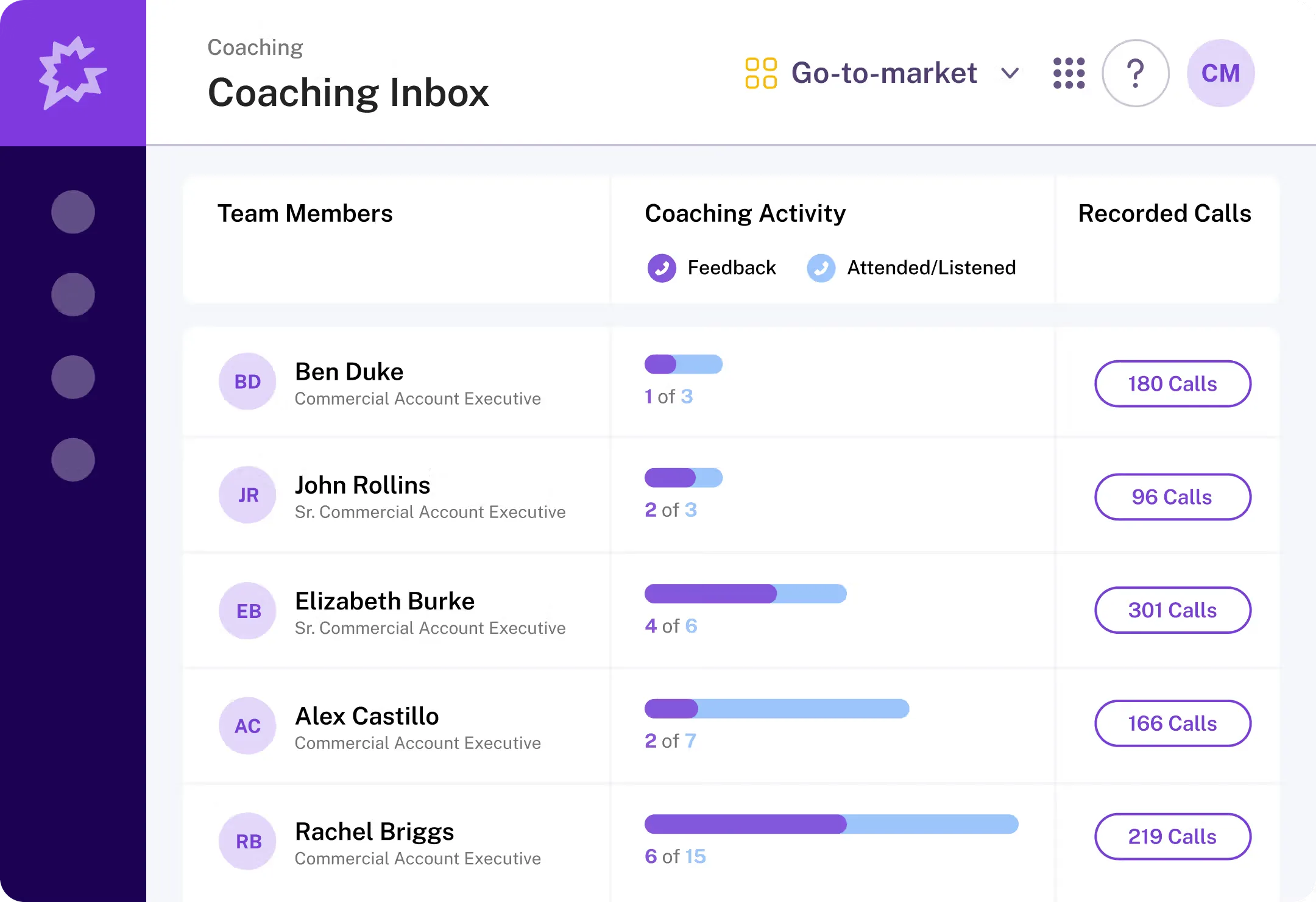
Gong is a revenue intelligence platform that captures and analyzes customer interactions across various communication channels. The platform uses conversation analytics and deal-risk modeling to interpret data from recorded calls, meetings, and messages.
Gong is particularly strong for organizations that want to tie conversation data directly to pipeline forecasting. Its deal-risk identification and revenue intelligence capabilities are well-regarded by sales operations teams managing complex pipelines.
Key features
Revenue intelligence platform that uses conversation analytics and deal-risk modeling to capture and analyze customer interactions across calls, meetings, and messages
Natural language processing for accurate transcription and analysis of customer communications across calls and meetings
Coachable moment identification based on talk patterns and objection handling
Integration with CRM systems for data synchronization
Team performance dashboards and manager coaching tools
Competitive intelligence tracking through automated mention detection
Pros
Strong deal-risk identification and pipeline forecasting integration
Well-regarded by sales operations teams managing complex pipelines
Broad enterprise adoption with deep Salesforce integration
Cons
Custom enterprise pricing with no published rates
Primarily post-call analysis with limited real-time in-call guidance
Pricing
Custom enterprise pricing, contact Gong for a quote.
Weighing Gong against the field? See the full Gong vs. ZoomInfo breakdown.
3. Mindtickle
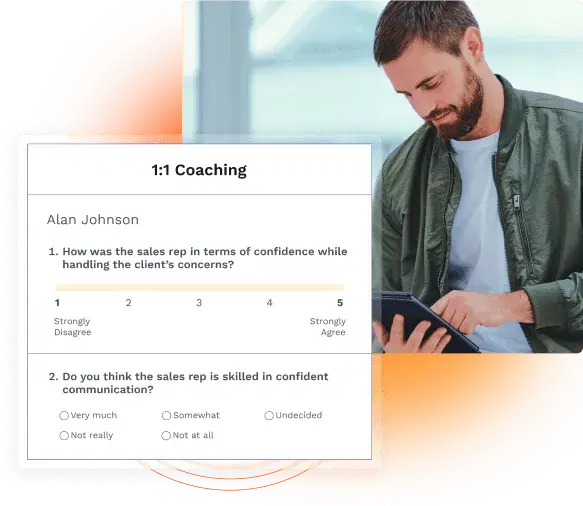
Mindtickle is a revenue enablement platform used to support sales training, performance management, and deal execution. It provides tools for skill development, coaching, and content delivery.
The platform includes features such as personalized training modules, AI-driven role-play simulations, and analytics for sales activity and manager coaching. It is designed to support sales onboarding, ongoing training, and performance tracking within a single system.
Mindtickle offers capabilities for assessing rep readiness through competency tracking, certification programs, and knowledge gap identification. The platform provides content authoring tools and readiness index scoring to measure team preparedness.
Key features
AI-driven role-play simulations that adapt to rep responses for skill development
Personalized training and coaching modules
Data-driven insights for frontline managers
Tailored buying experiences to improve deal outcomes
Integrated platform for sales training and performance management
Pros
Strong onboarding and ramp-time support with certification workflows that structure the path to productivity
Readiness index scoring gives managers visibility into team preparedness before reps go live
Integrated platform covering training and performance management in one system reduces tool switching
Cons
Heavier implementation lift than standalone conversation intelligence tools
Custom pricing with no published rates
Pricing
Custom enterprise pricing.
Comparing sales readiness platforms? See how Mindtickle stacks up against Showpad.
4. Salesloft
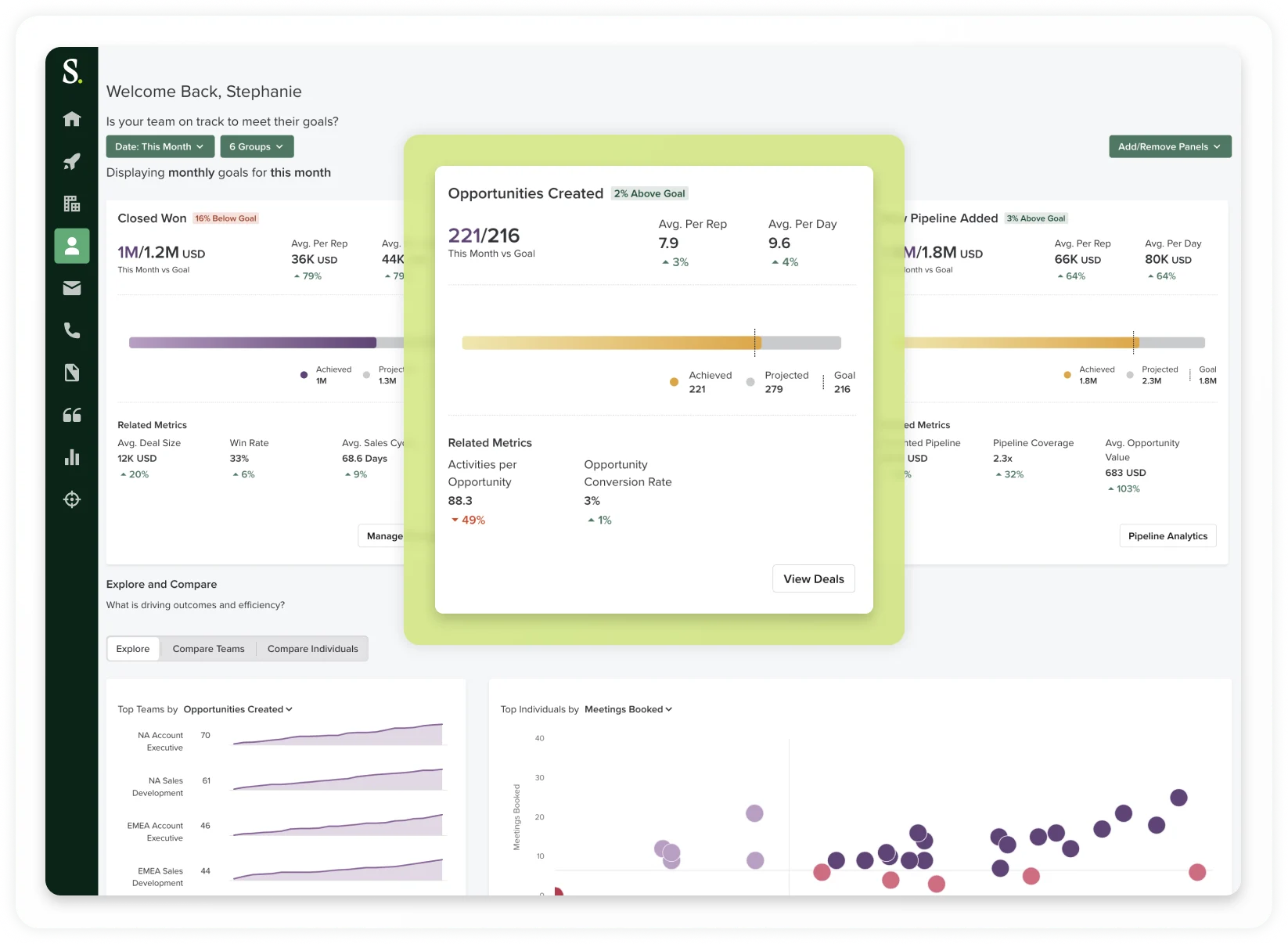
Salesloft is a Revenue Orchestration Platform designed to help market-facing revenue teams prioritize actions and coordinate engagement across the full customer lifecycle. The platform provides tools for managing sales processes, communication, and forecasting.
The platform serves as a centralized workspace for sales teams to organize activities, interact with prospects, and follow structured workflows. Key capabilities include cadence management, conversation intelligence, and AI task recommendations. Salesloft is used to support sales execution and improve process consistency.
Salesloft offers coaching functionality integrated within its sales engagement workflows, allowing managers to review calls, provide feedback, and track rep performance without leaving the platform.
Key features
Cadence-driven workflows with AI task recommendations for prioritizing daily sales activities and buyer communications
Cadence management tools for organizing and automating outreach campaigns
Conversation intelligence capabilities for analyzing and improving sales interactions
Sales analytics and forecasting features for data-driven decision making
Coaching and insights functionality to enhance sales team performance
Pros
Coaching integrated within the sales engagement platform reps already use daily reduces adoption friction
Cadence management and conversation intelligence in one system reduces tool switching
Strong for teams that want coaching tied directly to outreach execution
Cons
Conversation intelligence is a secondary capability, not the core product focus
Custom enterprise pricing
Pricing
Custom enterprise pricing.
Exploring engagement platforms with coaching built in? See the top Salesloft alternatives.
5. Outdoo
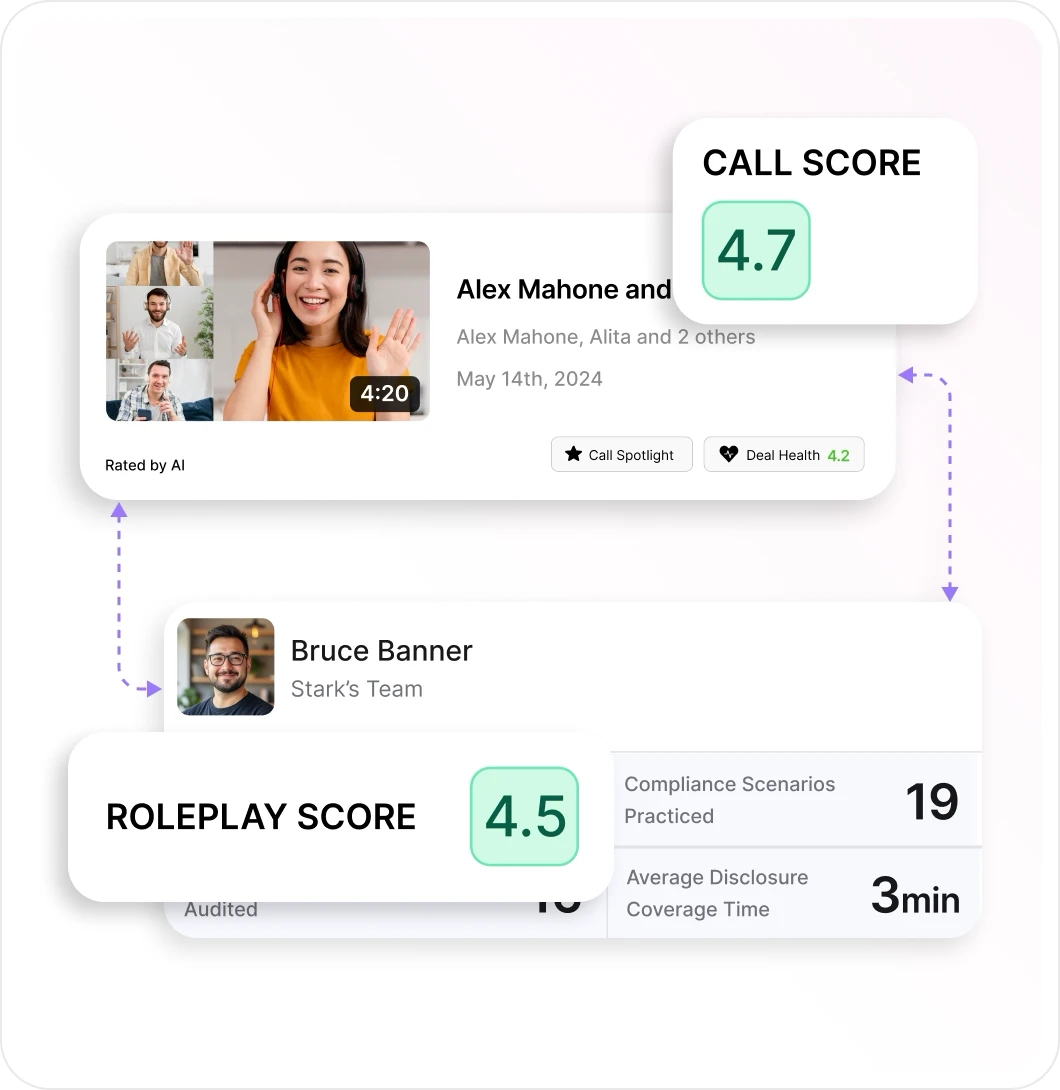
Outdoo is an AI roleplay and coaching platform built for customer-facing teams looking to improve real-world execution through structured practice. The platform enables teams to create realistic sales simulations based on CRM data, existing contacts, deal stages, and past customer conversations.
Using historical transcripts and interaction data, Outdoo generates dynamic buyer personas that reflect real objections and deal context. Reps can practice pipeline-specific scenarios in a safe environment while receiving AI-driven feedback on messaging, objection handling, and missed opportunities.
The platform also provides unified scoring across roleplays and live conversations, giving managers visibility into rep readiness, coaching effectiveness, and revenue-impacting behaviors. By connecting practice, conversation intelligence, and performance tracking, Outdoo helps teams reinforce skills and drive consistent execution.
Key features
CRM-based persona and scenario creation
AI-driven conversation analysis and feedback
Unified scoring across practice and live calls
Revenue and readiness visibility for managers
Non-judgmental, realistic roleplay simulations
Enterprise integrations across CRM and LMS systems
6. Allego
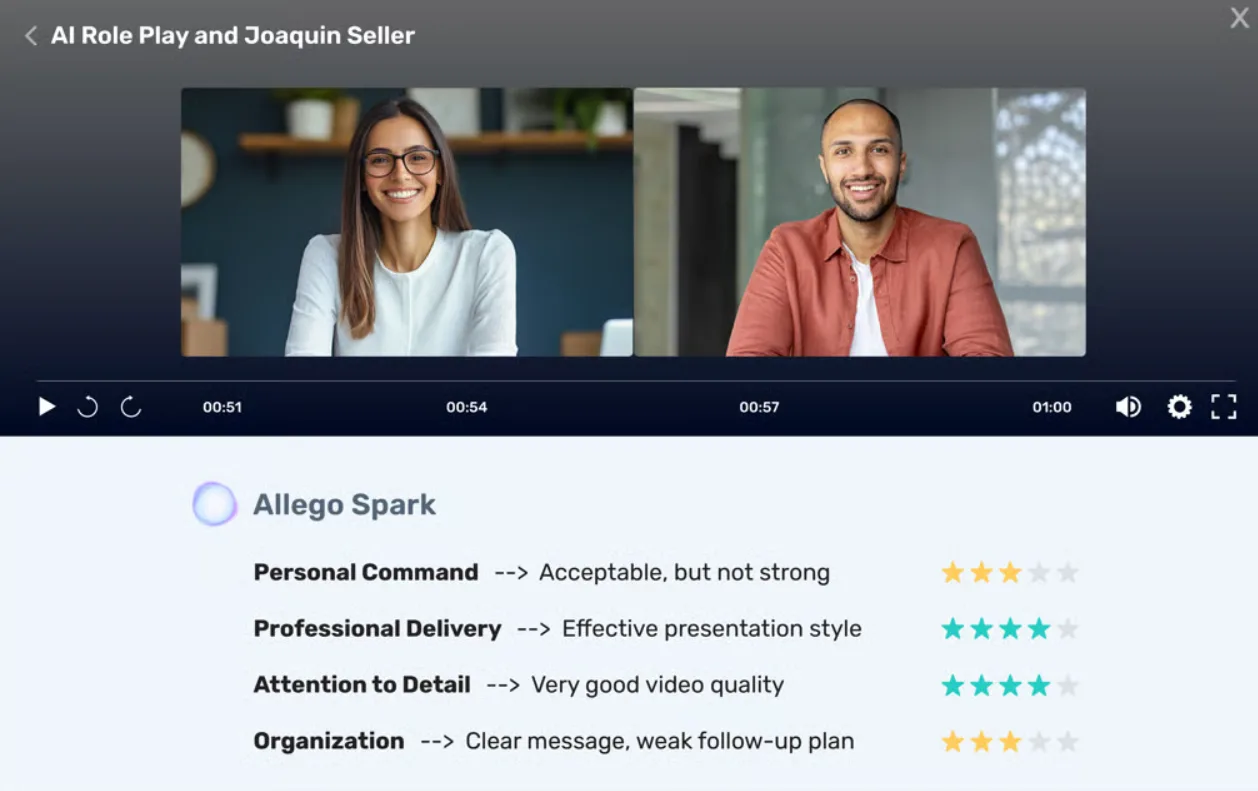
Allego is a revenue enablement platform that supports sales, enablement, and marketing teams. The platform provides tools for content management, training, and buyer engagement.
Features include asynchronous video feedback, AI-assisted coaching, and peer-to-peer collaboration. Allego is used by organizations in industries such as banking, insurance, medical devices, and asset management. The platform is designed to support onboarding, training, and sales execution processes.
Allego offers video-based coaching capabilities that allow reps to record pitches, receive feedback from managers and peers, and access a library of best-practice examples. The platform includes mobile accessibility for distributed teams and digital sales room functionality for buyer engagement.
Key features
Combines learning, content, and collaboration
AI-assisted coaching that analyzes video submissions and surfaces personalized learning recommendations based on rep performance patterns
Asynchronous video feedback for enhanced team communication
Integration of sales, enablement, and marketing functions
Support for multiple languages including English, Spanish, French, and Chinese
Pros
Asynchronous video feedback is well-suited for distributed and field sales teams who cannot participate in synchronous coaching sessions
Peer-to-peer learning library builds institutional knowledge from top-performer recordings
Mobile accessibility supports reps who are not desk-bound
Cons
Video-first approach may not suit teams that primarily coach on phone or email outreach
Limited real-time in-call guidance
Pricing
Custom enterprise pricing.
Want the full picture on video-based coaching? Read our hands-on Allego review.
7. Jiminny
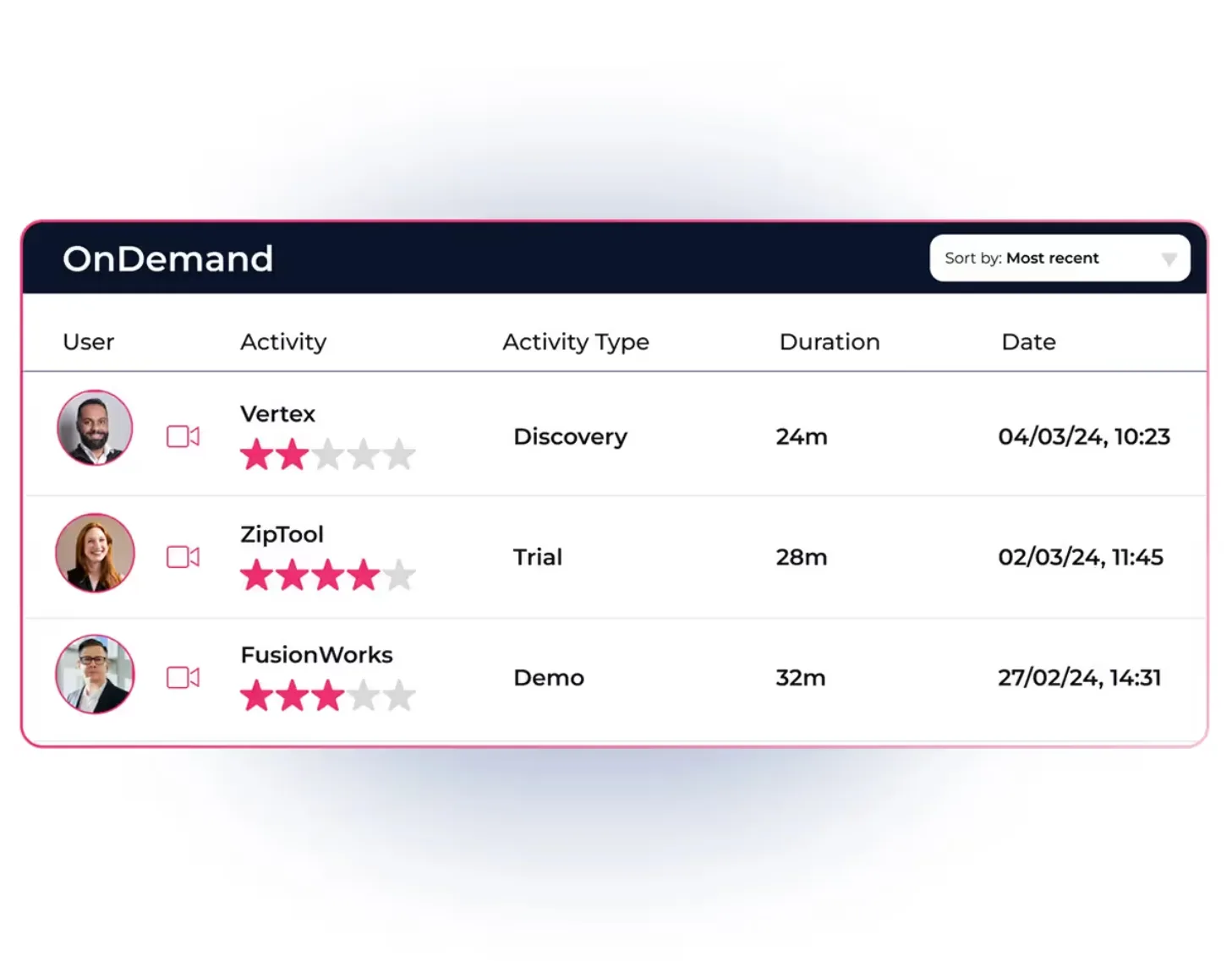
Jiminny is a conversation intelligence platform that provides call recording, transcription, and analysis capabilities for sales teams. The platform captures customer interactions and uses AI to surface insights related to deal progression and rep performance.
The platform offers flexible AI query capabilities that allow managers to search across recorded conversations for specific topics, objections, or competitive mentions. Jiminny integrates with CRM systems including HubSpot, Salesforce, and Pipedrive to sync call data and maintain activity records. The platform includes coaching workflow features that enable managers to leave timestamped comments and share call snippets with reps.
Jiminny provides multi-language support for global teams and includes analytics dashboards that track talk-to-listen ratios, question frequency, and other conversation metrics.
Key features
Call recording and transcription with AI analysis of talk patterns, objection handling, and competitive mentions
Flexible search and query capabilities across conversation library
CRM integration with HubSpot, Salesforce, and Pipedrive
Coaching workflows with timestamped feedback and snippet sharing
Multi-language support for international teams
Conversation analytics tracking talk patterns and engagement metrics
Automated activity logging to CRM systems
Pros
Flexible AI query capabilities let managers search conversations for specific topics without manual review
Strong CRM integration with HubSpot, Salesforce, and Pipedrive
Seat-based pricing with a trial option provides more budget transparency than most competitors
Cons
Smaller brand recognition than Gong or Chorus may raise procurement questions at large enterprises
Analytics depth is lighter than enterprise-grade conversation intelligence platforms
Pricing
Seat-based pricing with trial available, contact Jiminny for current rates.
Deciding between conversation intelligence tools? Here's Gong vs. Jiminny, side by side.
8. Second Nature
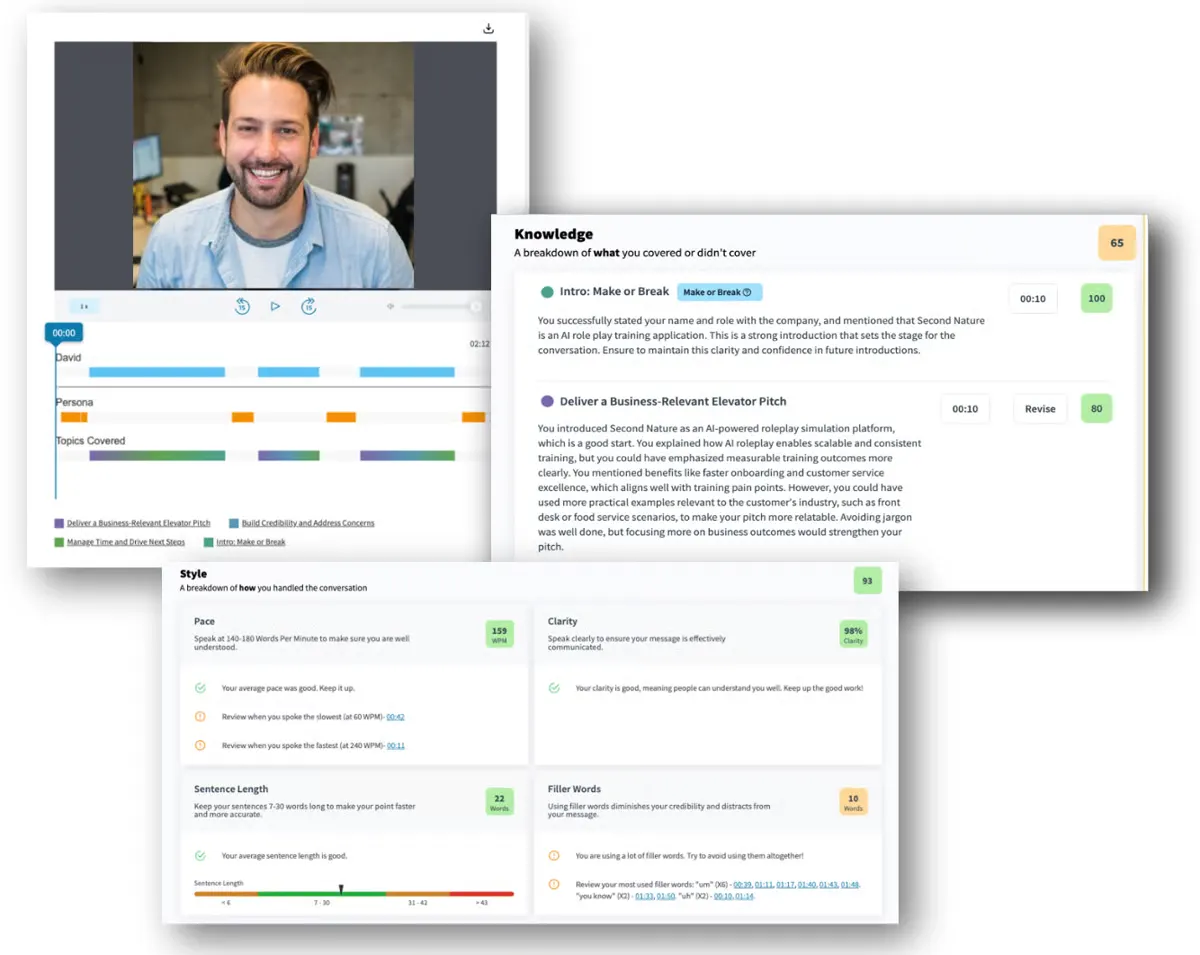
Second Nature is a role-play and practice simulation platform designed to help sales reps develop conversational skills through realistic scenarios. The platform uses virtual personas that respond dynamically to rep inputs, creating practice environments that mirror real customer interactions.
The platform includes objection handling scenarios, pitch practice modules, and adaptive learning paths that adjust difficulty based on rep performance. Second Nature provides automated feedback on talk patterns, filler word usage, and response quality. Managers can create custom scenarios aligned to their specific sales methodology and product positioning.
Second Nature is used for both new hire onboarding and continuous skill development. The platform tracks practice frequency, improvement trends, and readiness scores to help managers identify reps who need additional coaching.
Key features
Role-play simulations powered by dynamic virtual personas that respond adaptively to rep inputs, mirroring real customer objection patterns
Objection handling practice scenarios
Pitch practice modules with automated feedback
Adaptive learning paths that adjust to rep skill level
Custom scenario creation aligned to sales methodology
Practice tracking and readiness scoring
Manager dashboards showing rep improvement trends
Pros
Adaptive learning paths reduce ramp time by letting new hires practice before live calls
Custom scenario creation aligns practice to specific sales methodology and product positioning
Readiness scoring gives managers objective data on rep preparedness
Cons
Practice-focused platform does not analyze live customer calls, so it complements rather than replaces conversation intelligence tools
Custom enterprise pricing
Pricing
Custom enterprise pricing.
9. Spekit
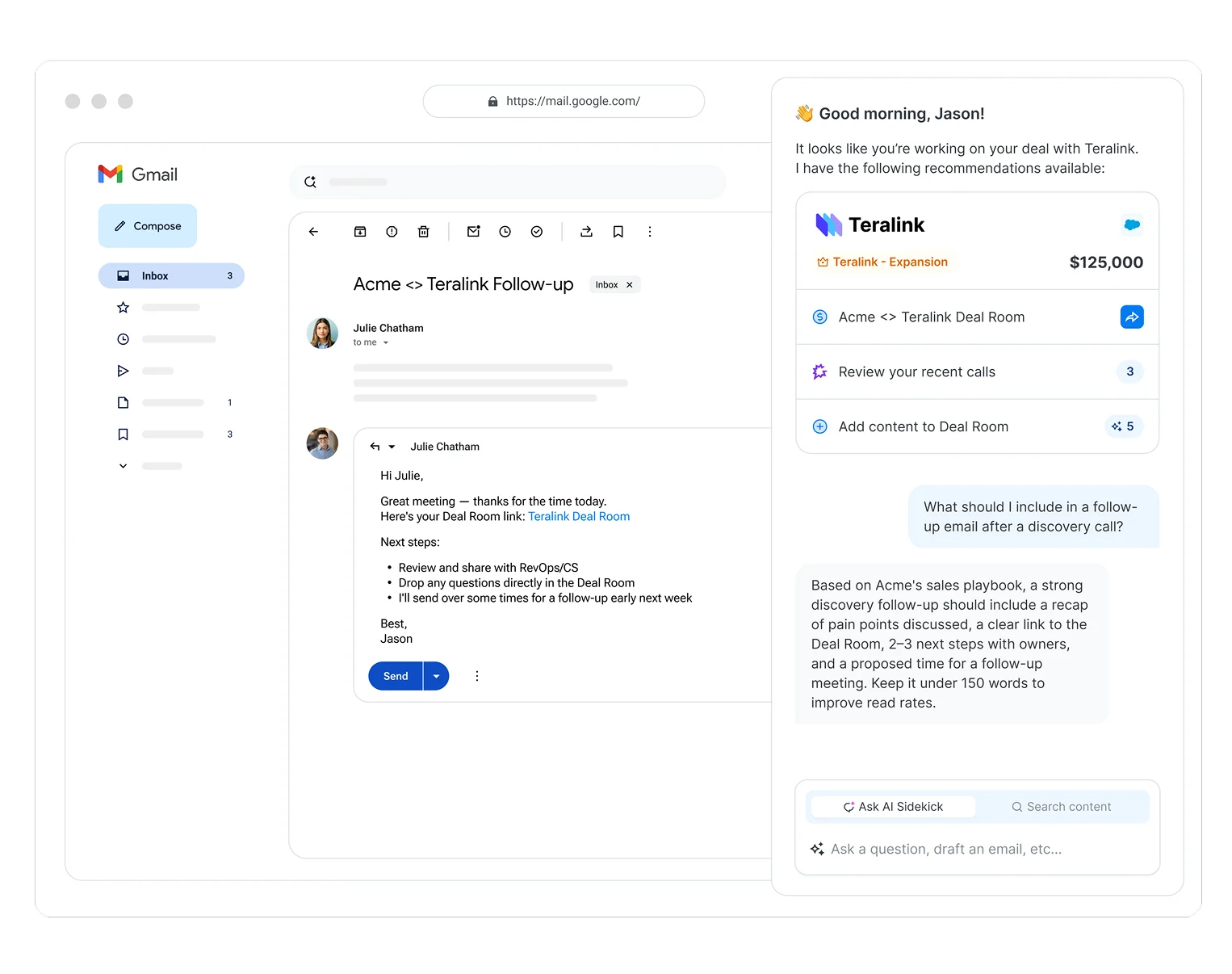
Spekit is a just-in-time enablement platform that delivers contextual guidance and coaching directly within the tools reps already use. The platform provides in-workflow support through a Chrome extension that surfaces relevant information, playbooks, and process documentation without requiring reps to leave their CRM or sales engagement platform.
Teams using ZoomInfo alongside Spekit have seen Spekit's pipeline qualification improved 43% with 58% faster qualification. The platform includes a content management system for creating contextual "Speks" that appear based on the page, field, or workflow a rep is viewing. Spekit offers change management support by providing real-time guidance during system updates or process changes.
Spekit is used to reduce context switching and provide coaching at the moment of need rather than requiring reps to search for information or wait for manager feedback. The platform supports onboarding, ongoing enablement, and process adoption without disrupting existing workflows.
Key features
Chrome extension for in-workflow guidance delivery
Contextual Speks that surface based on user activity
Content management system for playbooks and process documentation
Change management support during system updates
Usage analytics showing content access patterns
Knowledge gap identification across teams
Integration with CRM and sales engagement platforms
Pros
In-workflow guidance eliminates context switching by surfacing playbooks inside the CRM reps already use
Change management support reduces adoption friction during system updates
Usage analytics show which content reps actually access vs. ignore
Cons
Just-in-time enablement addresses knowledge gaps in the moment but does not analyze call performance or surface coachable moments from recorded conversations
Chrome extension dependency means it works best for desktop-based inside sales workflows
Pricing
Custom pricing, contact Spekit for current rates.
Curious whether just-in-time enablement fits your team? Read our full Spekit review.
10. Clari Copilot
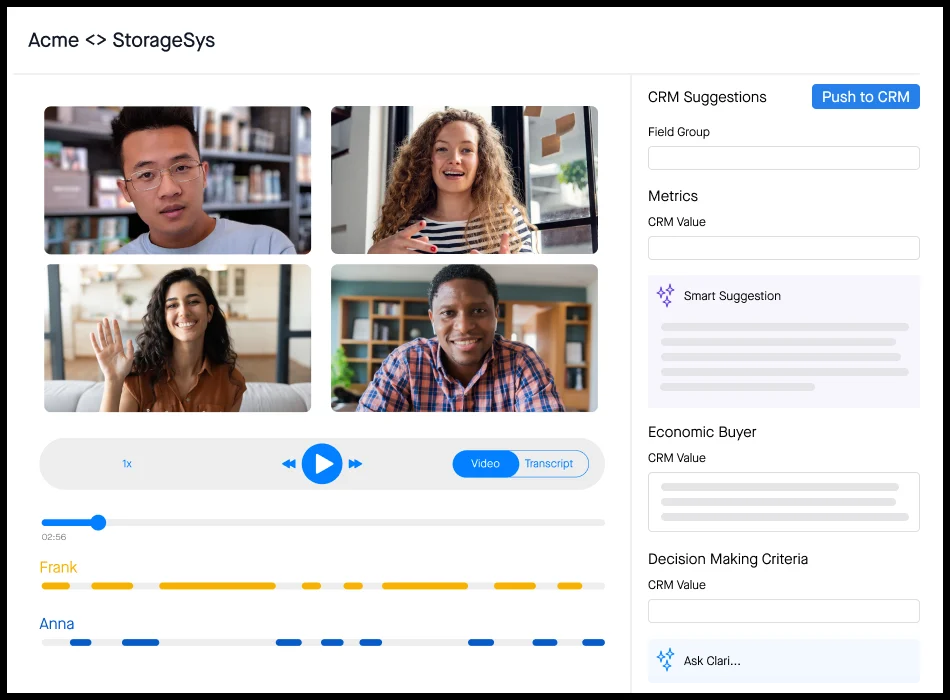
Clari Copilot is a conversation intelligence platform used by revenue teams to support sales conversations and deal execution. It provides features such as real-time battlecards and generative AI tools to assist sales representatives during customer interactions.
The platform integrates with the broader Clari Revenue Platform, allowing conversation data to be incorporated into sales workflows, including deal inspection and forecasting processes.
Clari Copilot includes monologue alerts that notify reps when they've been talking too long, competitor mention tracking, and proactive insights on potential deal blockers. The system provides real-time guidance during calls to help reps navigate objections and identify next steps.
Key features
Real-time battlecards and monologue alerts for navigating objections
Proactive insights on potential blockers, competitor mentions, and next steps
Integration with dialers, video conferencing tools, and CRMs
Deal inspection capabilities tied to conversation data
Forecasting integration with the Clari Revenue Platform
Automated conversation capture and transcription
Manager coaching tools with call review and feedback workflows
Pros
Real-time battlecards and monologue alerts provide in-call guidance that post-call tools cannot replicate
Tight integration with the Clari Revenue Platform connects conversation data to forecasting workflows
Proactive deal-blocker identification helps reps navigate objections before they derail deals
Cons
Value is highest for teams already using the broader Clari platform; standalone adoption without Clari's forecasting layer limits the ROI
Custom enterprise pricing
Pricing
Custom enterprise pricing, part of the Clari Revenue Platform.
Want a closer look at real-time coaching? Read our Clari review.
11. Ambition
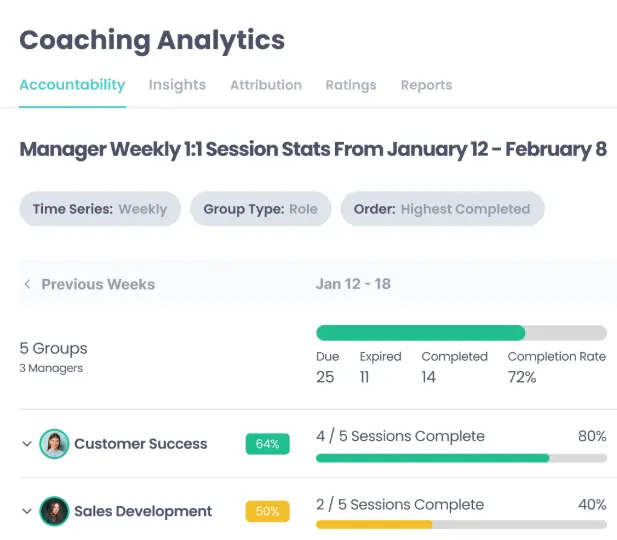
Ambition is a performance management and coaching platform that combines scorecards, gamification, and manager-led coaching workflows. The platform provides tools for tracking rep performance against KPIs, running sales contests, and delivering structured coaching programs.
The platform includes coaching scorecard functionality that allows managers to evaluate reps against standardized criteria and track improvement over time. Ambition offers gamification features such as leaderboards, achievement badges, and team competitions to drive engagement and performance. The system integrates with Salesforce and other CRM platforms to pull activity data and automate performance tracking.
Ambition fits the sales performance management software category for teams whose primary need is KPI tracking and coaching consistency rather than call analysis. If your team already has a conversation intelligence platform and needs a layer to drive accountability and rep engagement, Ambition addresses that gap directly.
Key features
Coaching scorecards with standardized evaluation criteria
Gamification features including leaderboards and contests
KPI tracking tied to coaching programs
Salesforce integration for automated data sync
Manager coaching workflows and activity tracking
Performance dashboards showing coaching impact on quota attainment
Team competition tools to drive engagement
Pros
Gamification features (leaderboards, contests, badges) drive rep engagement in ways that pure analytics platforms do not
Coaching scorecards create standardized evaluation criteria that reduce manager subjectivity
Direct Salesforce integration automates performance tracking without manual data entry
Cons
Performance management and gamification focus means limited conversation intelligence, Ambition does not analyze call recordings or surface coachable moments from transcripts
Custom enterprise pricing
Pricing
Custom enterprise pricing.
Sales coaching software at a glance
Here's how the top sales coaching platforms compare:
Platform | Primary Focus | Key Strength | Best For | Pricing | Coaching modality |
|---|---|---|---|---|---|
Chorus by ZoomInfo | Conversation Intelligence | GTM Context Graph + conversation intelligence | Enterprise revenue teams | Free to start with consumption credits based on usage | Post-call analysis |
Gong | Revenue Intelligence | Deal coaching + pipeline visibility | Sales orgs focused on forecasting | Custom enterprise | Post-call analysis |
Mindtickle | Sales Readiness | Onboarding + skill development | Teams scaling rep training | Custom enterprise | Practice simulation |
Salesloft | Sales Engagement | Coaching within cadence workflows | Teams using engagement platforms | Custom enterprise | Post-call analysis |
Outdoo | AI Role-Play + Coaching | CRM-driven simulations + unified scoring | Enterprise customer-facing teams | Free to start, custom quote | Practice simulation + post-call analysis |
Allego | Video Coaching | Peer learning + async feedback | Distributed sales teams | Custom enterprise | Practice simulation |
Jiminny | Conversation Intelligence | Flexible AI queries + CRM sync | Mid-market sales teams | Seat-based, trial available | Post-call analysis |
Second Nature | AI Role-Play | Practice simulations | Teams prioritizing rep practice | Custom enterprise | Practice simulation |
Spekit | Just-in-Time Enablement | In-workflow guidance | Teams needing contextual coaching | Custom | Performance management |
Clari Copilot | Real-Time Assistance | Live battlecards + monologue alerts | Reps needing in-call support | Custom enterprise | Real-time + post-call |
Ambition | Performance Management | Gamification + coaching scorecards | Teams tracking rep metrics | Custom enterprise | Performance management |
Inside sales vs. field sales: which coaching tools work for which team?
The coaching platform that works for an inside sales team running 40 calls a week from a laptop may not serve a field rep who spends three days a week in face-to-face meetings. Four axes separate these two motions.
Recording method. Inside sales teams record calls through VoIP and video conferencing platforms, which integrate directly with conversation intelligence tools. Field reps often rely on a phone in their pocket or in-person meetings, where recording requires different tooling and consent workflows.
Connectivity requirements. Inside sales platforms assume always-online operation. Field reps frequently work in low-connectivity environments, which means any coaching tool that requires a live internet connection for recording or sync will create gaps in coverage.
Coaching delivery timing. Real-time in-call guidance (Clari Copilot) is built for reps on a headset at a desk. Post-call analysis (Chorus, Gong, Jiminny) works for either motion, as long as the call was recorded. Field reps who meet in person cannot use either modality without a recording solution in place.
Manager review modality. Inside sales managers review recorded calls at their desk. Field sales managers historically relied on ride-alongs, which are expensive and infrequent. Async video platforms like Allego close this gap by letting field reps submit recorded pitches and receive feedback without requiring the manager to be present.
Chorus, Gong, and Salesloft were architecturally built for inside sales (always-online, VoIP and video recording) and are best suited for that motion. Allego's mobile-first and async video approach makes it more adaptable for distributed or field teams.
Before selecting any platform, run a readiness check: teams without a defined coaching cadence, manager buy-in, or minimum call volume will not get meaningful ROI from any platform. Address those foundations first, then evaluate tools.
Which sales coaching platform is right for your team?
Not every team needs the same type of coaching tool. Use this framework to route your evaluation based on your primary use case:
Post-call conversation analysis for enterprise B2B inside sales: Chorus by ZoomInfo or Gong
Onboarding and rep readiness before live calls: Mindtickle or Second Nature
Coaching embedded within your existing sales engagement platform: Salesloft
Real-time in-call guidance during live conversations: Clari Copilot
KPI tracking, gamification, and coaching scorecards for rep accountability: Ambition
Distributed or field-based teams that need async video coaching: Allego
Just-in-time enablement inside your CRM without leaving the workflow: Spekit
Most enterprise teams end up combining a conversation intelligence platform (for post-call analysis and deal coaching) with a readiness tool (for practice and onboarding) rather than relying on a single platform to cover both needs. The two categories solve different problems, and the teams that see the strongest coaching outcomes typically have both in place.
How to choose sales coaching software for your team
The right sales coaching software depends on your team's specific needs, existing tech stack, and coaching priorities. Start by defining what you're trying to solve: are you focused on accelerating onboarding, improving call quality, scaling manager capacity, or all three? Different platforms excel at different motions, and understanding your primary use case will narrow your options quickly.
Match coaching software to your team's use cases
Different coaching tools serve different purposes:
Conversation intelligence: Platforms like Chorus by ZoomInfo and Gong focus on post-call analysis and deal coaching
Sales readiness: Platforms like Mindtickle prioritize onboarding and skill development
Practice simulation: Tools like Second Nature emphasize role-play and objection handling before reps talk to customers
Sales performance management: Platforms like Ambition prioritize KPI tracking, gamification, and coaching scorecards for teams whose primary need is rep accountability rather than call analysis
Key considerations:
Are you coaching on live calls, reviewing recordings, or building skills through practice?
Do you need real-time guidance during conversations or post-call feedback?
Is your priority reducing ramp time or improving win rates for existing reps?
Does your team need video coaching capabilities for distributed sellers?
Evaluate CRM integration and data quality
Sales coaching software is only as valuable as the data it captures and syncs. Look for platforms that integrate natively with your CRM (Salesforce, HubSpot, Pipedrive) and automatically log activities, contacts, and call outcomes. Poor integration creates data silos, forces manual entry, and undermines coaching effectiveness.
Key considerations:
Does the platform sync bidirectionally with your CRM?
Can it capture multi-channel interactions (calls, video, email)?
How does it handle contact and account matching?
Does it enrich CRM records with conversation insights?
What's the data refresh frequency?
Assess conversation intelligence capabilities
If your coaching strategy centers on improving call quality, prioritize platforms with strong analysis capabilities. Look for tools that go beyond transcription to surface coachable moments, track talk-to-listen ratios, identify objection patterns, and flag competitive mentions. The best platforms make it easy for managers to find high-value coaching opportunities without listening to every call.
Key considerations:
How accurate is the transcription across accents and industries?
Can you search conversations for specific topics or keywords?
Does it identify coachable moments automatically?
Can reps self-coach using call libraries and playlists?
Does it track improvement trends over time?
Consider security and compliance requirements
Enterprise buyers need platforms that meet rigorous security and compliance standards. Look for SOC 2 certification, GDPR and CCPA compliance, and robust admin controls for data governance. If you operate in regulated industries (financial services, healthcare), verify that the platform supports call recording consent workflows and data retention policies.
Key considerations:
Is the platform SOC 2 certified?
Does it support GDPR and CCPA compliance?
What admin controls exist for data access and retention?
Can you configure call recording consent workflows?
How is data encrypted in transit and at rest?
Check sales methodology compatibility
Teams running structured sales methodologies need to verify that their coaching platform can reinforce those frameworks in real conversations, not just track generic talk-time metrics. If your team uses MEDDIC, SPIN, BANT, or MEDDPICC, look for platforms that can score calls against those criteria automatically. Chorus supports methodology scoring through its call analysis framework, making it possible to identify which reps are consistently applying the methodology and which need targeted coaching on specific stages. A platform that cannot map to your methodology forces managers to do that translation manually, which defeats the purpose of automated coaching.
Choosing your sales coaching platform
Chorus by ZoomInfo combines conversation intelligence with the B2B data context revenue teams need to coach effectively and close deals faster.
Teams like Seismic (11.5 hours per week saved per seller, 39% of pipeline from ZoomInfo signals) have used Chorus to scale coaching without scaling headcount. With GTM Context Graph reasoning that surfaces why deals move, automatic CRM synchronization, and multilingual support, Chorus delivers the same coaching consistency and deal visibility regardless of language or geography.
Request a demo to see how Chorus can improve your coaching outcomes.
Frequently asked questions
What is sales coaching software?
Sales coaching software is a platform that records, transcribes, and analyzes sales conversations to surface actionable insights for reps and managers, enabling personalized feedback, performance tracking, and skill development at scale. It is distinct from sales training platforms, which deliver structured curriculum for onboarding, and from CRMs, which manage contact and deal data. The best platforms embed coaching into daily workflow rather than isolating it to periodic training events.
What is the difference between sales coaching and sales training software?
Sales training software delivers structured courses and certifications for onboarding, a periodic, event-based knowledge transfer that gives reps a foundation before they go live. Sales coaching software analyzes live customer interactions to provide ongoing, personalized feedback on actual performance in the flow of real sales work. The distinction matters operationally because reps forget 84 to 90% of training content within months without continuous reinforcement, and coaching tools close that gap by embedding feedback into daily workflow. The two categories work best together: training gets reps ready, coaching keeps them improving.
How does AI improve sales coaching?
AI analyzes calls at scale to identify coachable moments and surface performance patterns, eliminating the feedback-delay gap of traditional coaching where managers review recordings days after a deal has already moved. Specific capabilities include automated scoring against sales methodology frameworks (MEDDIC, SPIN, BANT), real-time prompts during live calls, and personalized feedback based on individual rep performance trends. Chorus by ZoomInfo specifically uses GTM Context Graph reasoning, which fuses call transcripts with CRM records and behavioral signals to reveal not just what happened in a deal, but why it moved or stalled.
What integrations should sales coaching software have?
Critical integrations include CRM systems (Salesforce, HubSpot, Pipedrive), video conferencing platforms (Zoom, Microsoft Teams), sales engagement tools (Salesloft, Outreach), and communication channels. Integration quality determines data accuracy and workflow efficiency, poor integration creates data silos and forces manual entry that undermines the coaching data. Bidirectional CRM sync (not just one-way logging) is the key differentiator between platforms that improve data hygiene and those that create additional cleanup work.
Can sales coaching software help with remote and distributed team management?
Yes, conversation intelligence and async video coaching features enable managers to coach distributed reps consistently without being on every call. Platforms like Allego support peer feedback across time zones through async video submissions. For fully remote teams, post-call analysis tools (Chorus, Gong, Jiminny) provide the same coaching consistency as in-person review without requiring managers to shadow calls. Seismic saved 11.5 hours per week per seller, which illustrates the productivity case for distributed coaching at scale. Note the field sales caveat: tools built for inside sales (always-online, VoIP) may not serve field reps who work offline or face-to-face.
How long does it take to see results from sales coaching software?
Implementation timelines vary based on team size, call volume, and coaching cadence. Teams that adopt conversation intelligence platforms with a defined coaching workflow typically see early gains in coaching consistency within the first 90 days. Measurable impact on win rates and quota attainment requires two full quarters of data, enough for coaching patterns to show up in pipeline outcomes. Teams without manager buy-in or minimum call volume will see slower results regardless of platform.