
Choosing between Sendspark and Loom for sales video outreach comes down to five questions:
Do you need to send personalized videos to hundreds of prospects at once, or are you recording individual messages one at a time?
Is your primary goal sales outreach and pipeline generation, or do you also need async team communication?
How important is it that each prospect feels like you made a video just for them, without actually recording one for each?
Do you need integration with your sales sequencer and CRM, or are you looking for broader workplace collaboration tools?
Are you confident you're targeting the right people in the first place, or is your prospect data holding back your outreach?
In short, here's what we recommend:
Sendspark is the choice for sales teams who need personalized video at volume. Its core mechanic (record one video and let AI generate thousands of individually tailored versions with voice cloning and dynamic backgrounds) changes the economics of video prospecting.
But Sendspark is built for outbound sales workflows only. It lacks transcription, has limited editing tools, and offers no mobile app yet.
Loom is the standard for async video communication across organizations. With 25M+ users across 400,000+ companies, Loom makes it easy to record your screen, share a link, and let anyone watch without logging in. AI-generated summaries, chapters, and Jira bug reports add real productivity value, especially for teams inside the Atlassian ecosystem.
But for sales outreach specifically, Loom requires recording a separate video for every prospect, which doesn't scale.
Both platforms solve the "how do I create and deliver video" problem. But neither answers a more fundamental question: how do you know you're reaching the right person, at the right time, with the right message? A personalized video sent to the wrong prospect is wasted effort. That's where targeting intelligence matters.
ZoomInfo is a B2B data and go-to-market platform built on a large-scale data foundation: 500M contacts, 100M companies, 135M+ verified phone numbers, and 200M+ verified business emails.
Its GTM Context Graph, processing 1.5B+ data points daily, unifies this data with your CRM records, conversation transcripts, and behavioral signals to reveal which accounts are actively in-market and why.
Instead of blanketing your total addressable market with personalized videos and hoping something sticks, ZoomInfo tells you which 50 accounts to prioritize this week, what pain points they're researching, and who on the buying committee to reach. That intelligence flows into your video tool of choice through APIs and MCP, the seller-focused GTM Workspace, or GTM Studio for marketers and RevOps.
If you're ready to power your video outreach with the intelligence it needs to convert, see how ZoomInfo works.
Sendspark vs. Loom vs. ZoomInfo at a glance
Sendspark | Loom | ZoomInfo | |
|---|---|---|---|
Primary function | AI video personalization for sales | Async video messaging for teams | B2B data and go-to-market intelligence |
Core value for sales | Record once, personalize at scale | Record and share individual videos | Know who to reach, when, and why |
AI capabilities | Voice cloning, dynamic backgrounds, lip sync | Auto titles, summaries, chapters, filler removal | GTM Context Graph, buyer intent, AI-drafted outreach |
Sales integrations | 50+ (Outreach, Salesloft, Apollo, HubSpot, Salesforce) | Slack, Jira, Confluence; Salesforce on Enterprise only | 120+ (Salesforce, HubSpot, Salesloft, and all major GTM tools) |
Personalization at scale | Thousands of unique videos from one recording | One recording per recipient | Enriched prospect data powering personalization in any tool |
Free plan | 7-day trial only | 25 videos, 5-min cap | ZoomInfo Lite (permanent free tier) |
Starting price | $49/month | $0 (Starter) / $18/user/month (Business) | Custom-quoted |
Best for | SDRs and AEs running scaled outbound | Distributed teams needing async communication | Revenue teams needing prospect intelligence and targeting |
Two different problems: delivering video vs. targeting the right prospects
Sendspark and Loom both help you create and share video. But they solve that problem for different audiences in different ways.
Sendspark is built for one workflow: sales outreach at scale.
Every product decision reflects this. The AI voice cloning speaks each prospect's name in the sender's voice. The dynamic background screenshots the prospect's website and places it behind the sender's face. The landing page displays the prospect's name and company. A rep records one 30-second intro, imports a list, and Sendspark generates hundreds of tailored versions. That's the entire product thesis.
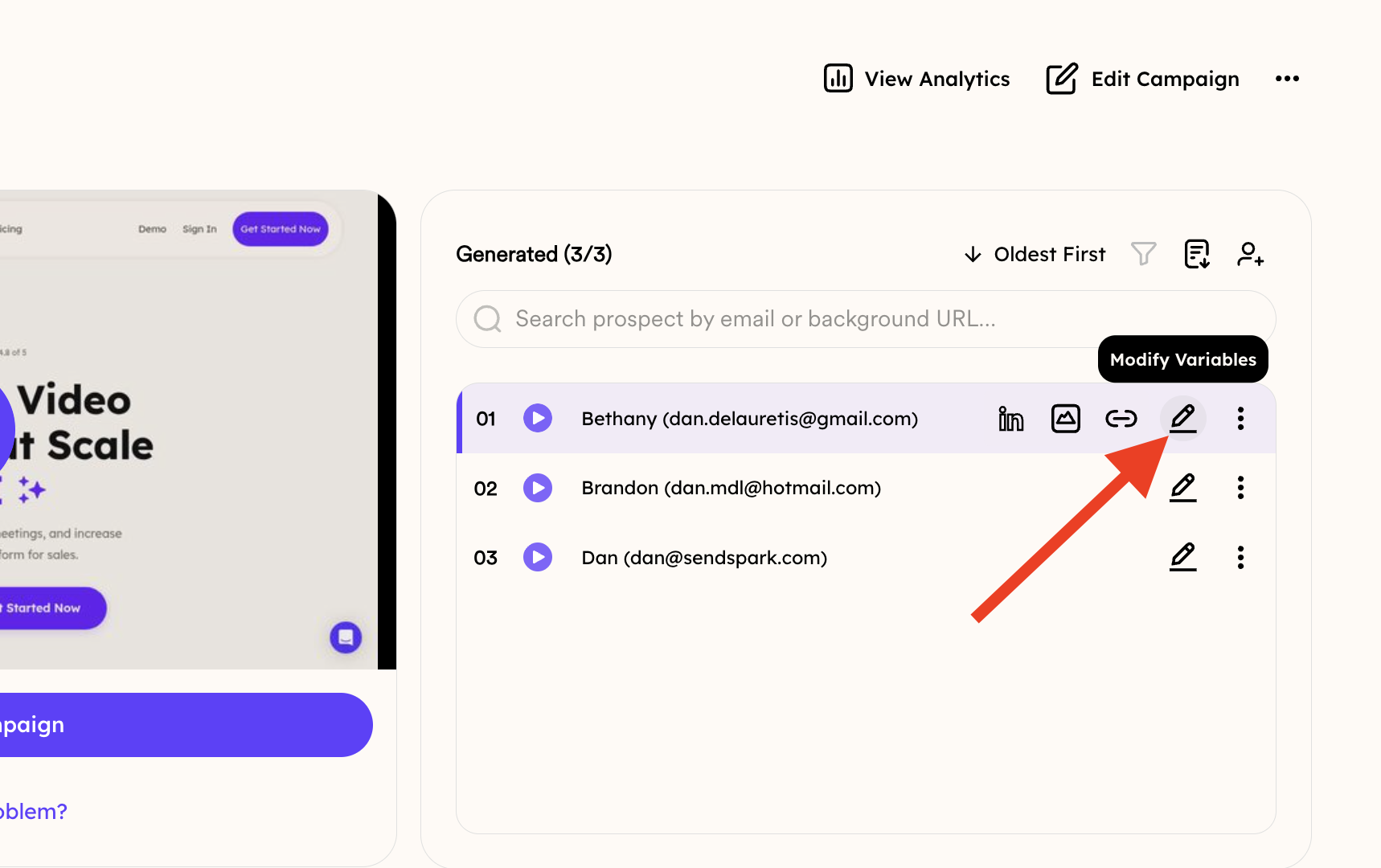
Source: Sendspark
Loom was built for something broader: async workplace communication.
It replaces meetings with short, shareable screen recordings. The Chrome extension or desktop app lets you record your screen with a camera bubble, share an instant link, and let recipients watch and comment without logging in. AI handles the cleanup (auto-titles, summaries, chapters, filler word removal).
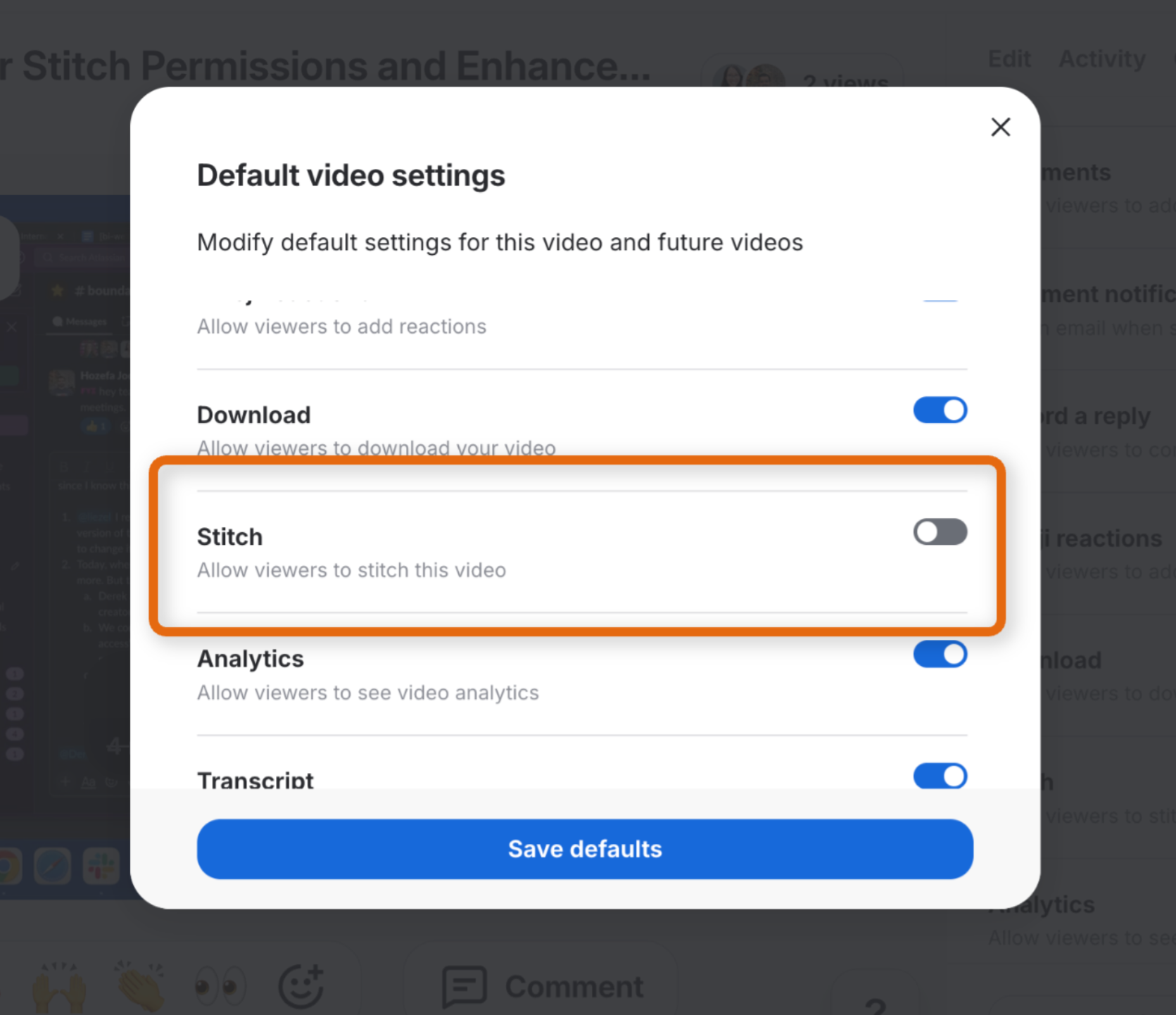
Source: Loom
For engineering, product, design, and support teams, Loom reduces meeting load.
Loom also works for sales. But every Loom sales video requires a separate recording session. Record, share, repeat. For a rep sending 20 outreach videos a day, that's manageable. For a team sending 500, it's not.
Neither tool answers the question that determines whether those videos generate pipeline: are you reaching the right people? ZoomInfo solves the targeting problem that sits upstream of both.
Sendspark's AI personalization changes the math on video outreach
The fundamental limitation of video prospecting has always been time. Recording a unique video for every prospect works but doesn't scale. Sendspark's Dynamic Videos remove that constraint.
The workflow is straightforward. A rep records one video, saying "Hi Watermelon" as a voice-cloning anchor. Sendspark's AI clones their voice, learns how they speak, and generates a version for each prospect where their name is spoken naturally. The lip cloning beta synchronizes mouth movements to match the AI speech, closing the gap between audio-only and visually convincing personalization.
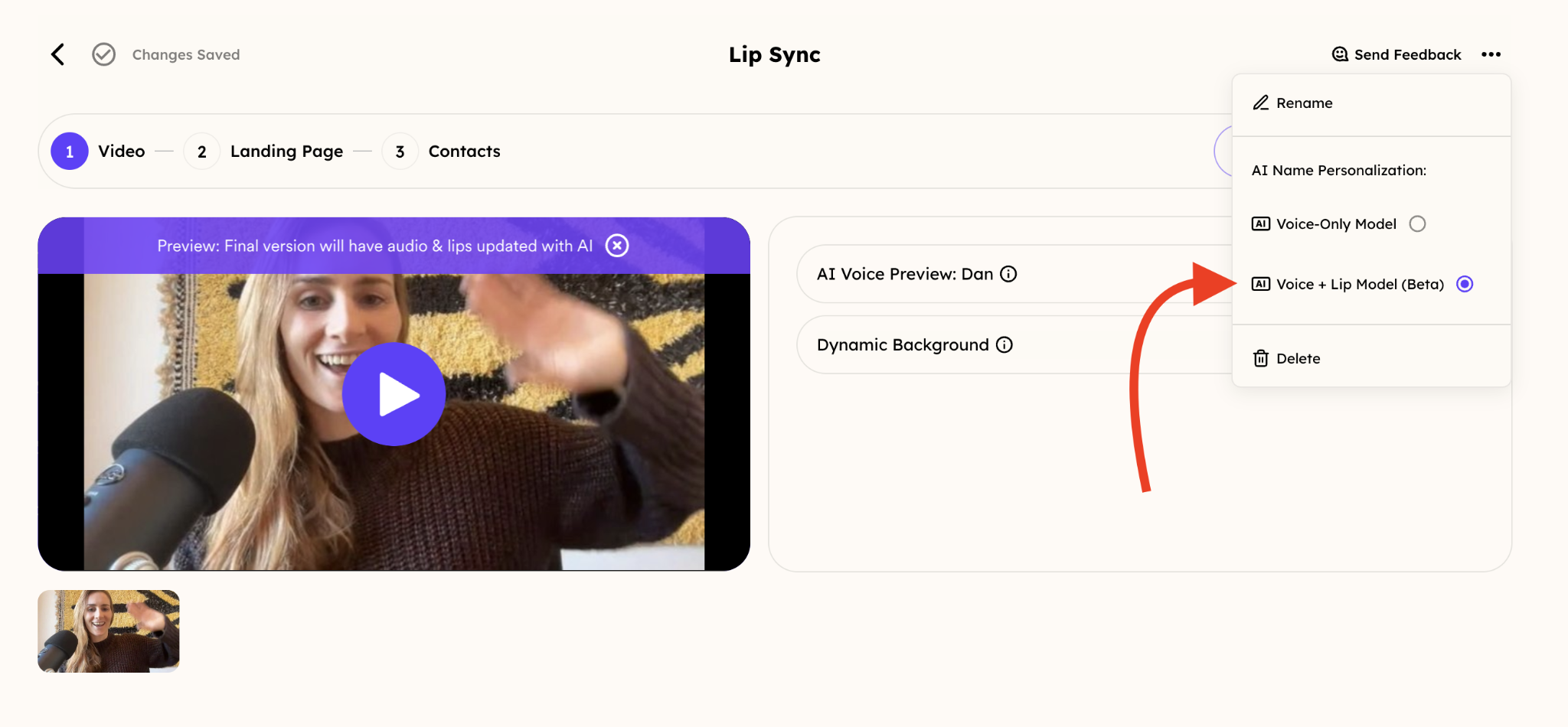
Source: Sendspark
Combined with dynamic backgrounds (each prospect sees their own company website behind the sender) and personalized landing pages, the result is a video that feels individually crafted.
Automated Workflows take this further. Trigger-based automations generate and send personalized videos when a prospect books a meeting, fills a form, or visits a webpage. The system can extract a prospect's domain from their email address and use it as the video background, requiring nothing more than an email to produce a branded, personalized video.
There are limits. The Solo plan includes only 100 Dynamic Video Minutes per month, and the first video in any campaign consumes double minutes because the system generates a fallback version.
Voice cloning quality depends on recording conditions (Sendspark recommends a quiet environment with at least 15 seconds of speech). And editing is limited to trim-and-stitch; cutting from the middle of a recording is a top-voted feature request, not a shipped capability.
Loom leads in async communication and the Atlassian ecosystem
Where Sendspark is optimized for sales, Loom is a general-purpose async video tool that happens to work for sales too.
Loom's recording experience is polished.
Three capture modes (screen and camera, screen only, camera only), switchable mid-recording. HD and 4K recording on paid plans. Drawing tools and mouse click highlighting during recording. System audio capture for recording calls. A blur tool for sensitive information.
These features reflect Loom's wider audience: an engineer recording a bug walkthrough needs different tools than an SDR recording a cold outreach video.
The AI layer adds real value. 67% of users accept the auto-generated title without editing, meaning the AI output is production-ready for most recordings. 73% rate AI features as extremely or very valuable.
The AI bug report workflow captures console logs, network requests, and device details during a screen recording, then populates a Jira work item. Atlassian claims this resolves bugs 40-60% faster. For teams inside the Atlassian stack (Jira, Confluence, Rovo), this integration depth is a real advantage.
Video editing goes beyond Sendspark's capabilities. Edit by Transcript lets users highlight and delete words from the transcript to cut the corresponding video segment. Live Rewind lets creators trim mistakes during recording without starting over. Annotation overlays (text, arrows, and boxes) add post-production markup.
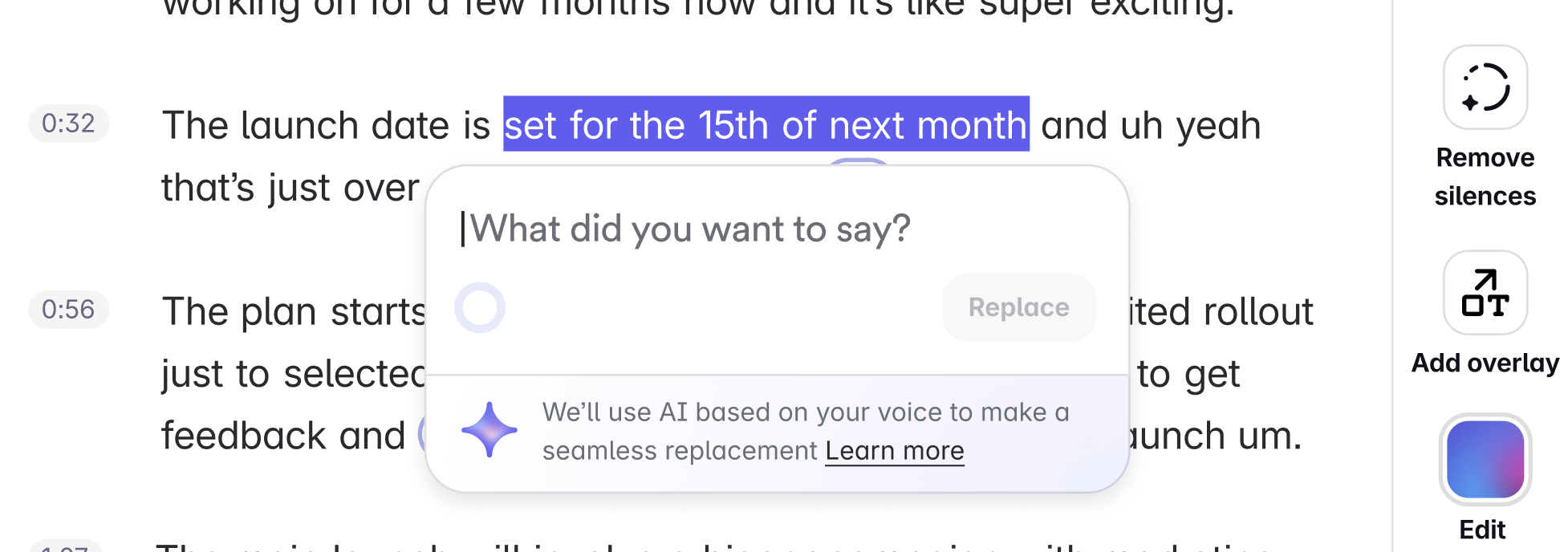
Source: Loom
For sales specifically, Loom offers viewer analytics showing who watched and for how long, GIF thumbnails for email embedding, and the Variables feature on Business + AI plans for some personalization. But Salesforce integration is Enterprise-only, and there's no AI voice cloning, no dynamic backgrounds, and no way to generate multiple personalized versions from a single recording.
The intelligence gap both video tools leave open
Here's what neither Sendspark nor Loom tells you: who should receive your video in the first place.
Sendspark can personalize a video for every contact in a CSV.
Loom can make recording and sharing easy.
But both tools assume you've already answered the hard questions: Which companies are actively evaluating solutions like yours? Who on the buying committee should you reach? What do they care about right now? Is the timing right?
Get those answers wrong and personalization becomes a more expensive way to miss. A personalized video sent to a company already under contract with a competitor, or to a contact who left three months ago, or to someone with no buying authority, generates the same result as a cold email that goes straight to trash.
This is the problem ZoomInfo was built to solve.
ZoomInfo's Buyer Intent data tracks signals from 210 million IP-to-Organization pairings and 6 trillion+ new keyword-to-device pairings monthly, identifying companies actively researching topics related to your product before they raise their hand.
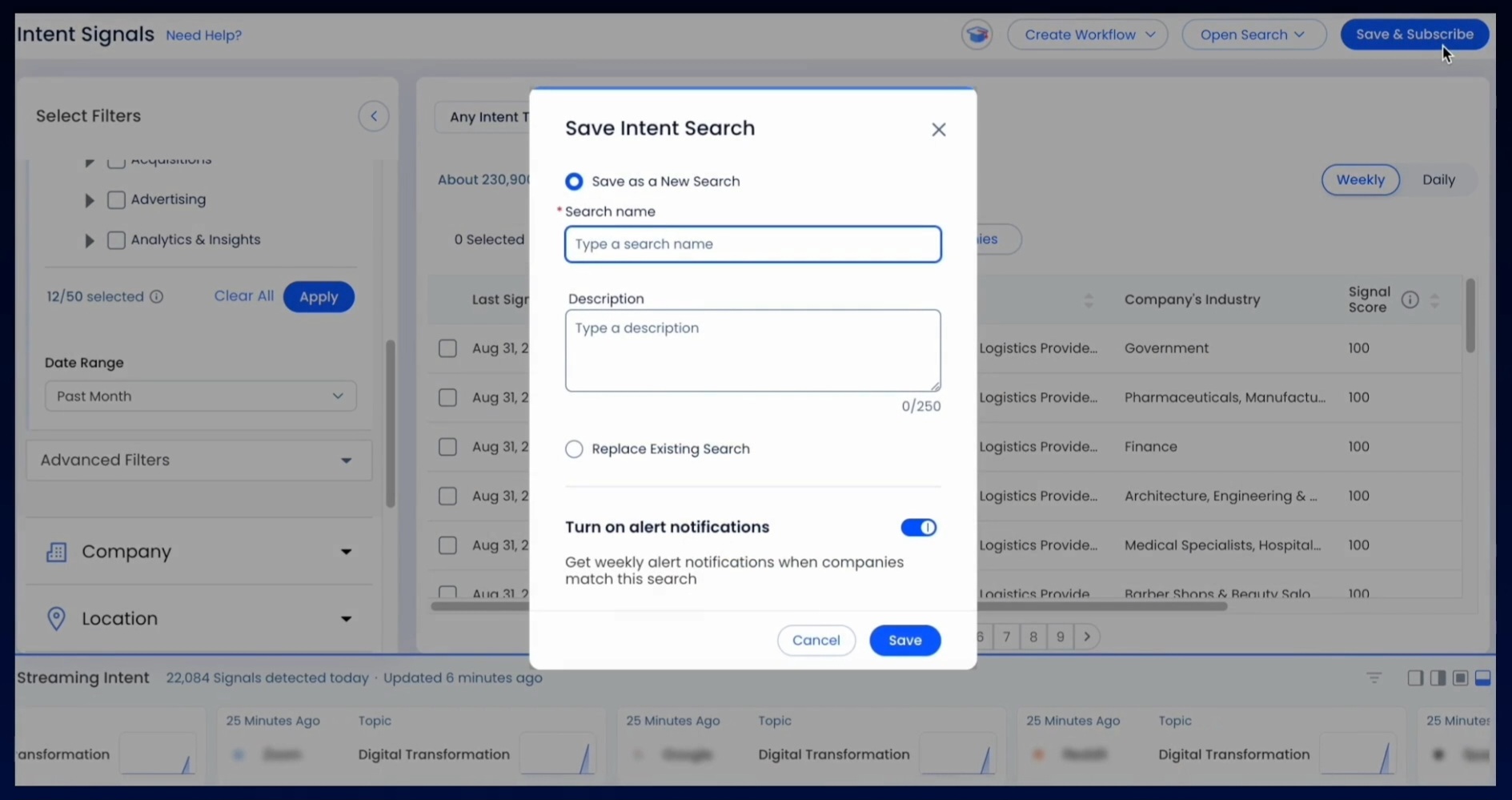
Source: ZoomInfo
Guided Intent, exclusive to ZoomInfo, identifies which topics historically correlate with closed-won deals in your segment rather than requiring you to guess which keywords matter.
The GTM Context Graph, processing 1.5B+ data points daily, goes further. It fuses your CRM records, conversation transcripts, and behavioral signals with ZoomInfo's third-party intelligence to reveal why deals move or stall.
A rep preparing to send a Sendspark video doesn't just know the prospect's name and company. They know the prospect's org is researching their competitor, the CFO joined the last evaluation call, and the company just hired three new VPs in the target department. That context transforms a personalized greeting into a relevant conversation.
"That combination of our internal CRM data, external signals, and AI that's given all that context has helped us craft very specific account- and persona-based messages. And people have responded to them right away." (Toby Carrington, CBO, Seismic)
How ZoomInfo powers video outreach through any tool
ZoomInfo doesn't compete with Sendspark or Loom. It feeds them.
The practical workflow looks like this: ZoomInfo identifies your highest-priority accounts based on intent signals and buying patterns. GTM Workspace surfaces these accounts in a prioritized feed with AI-drafted outreach that addresses the specific concerns the GTM Context Graph identified.
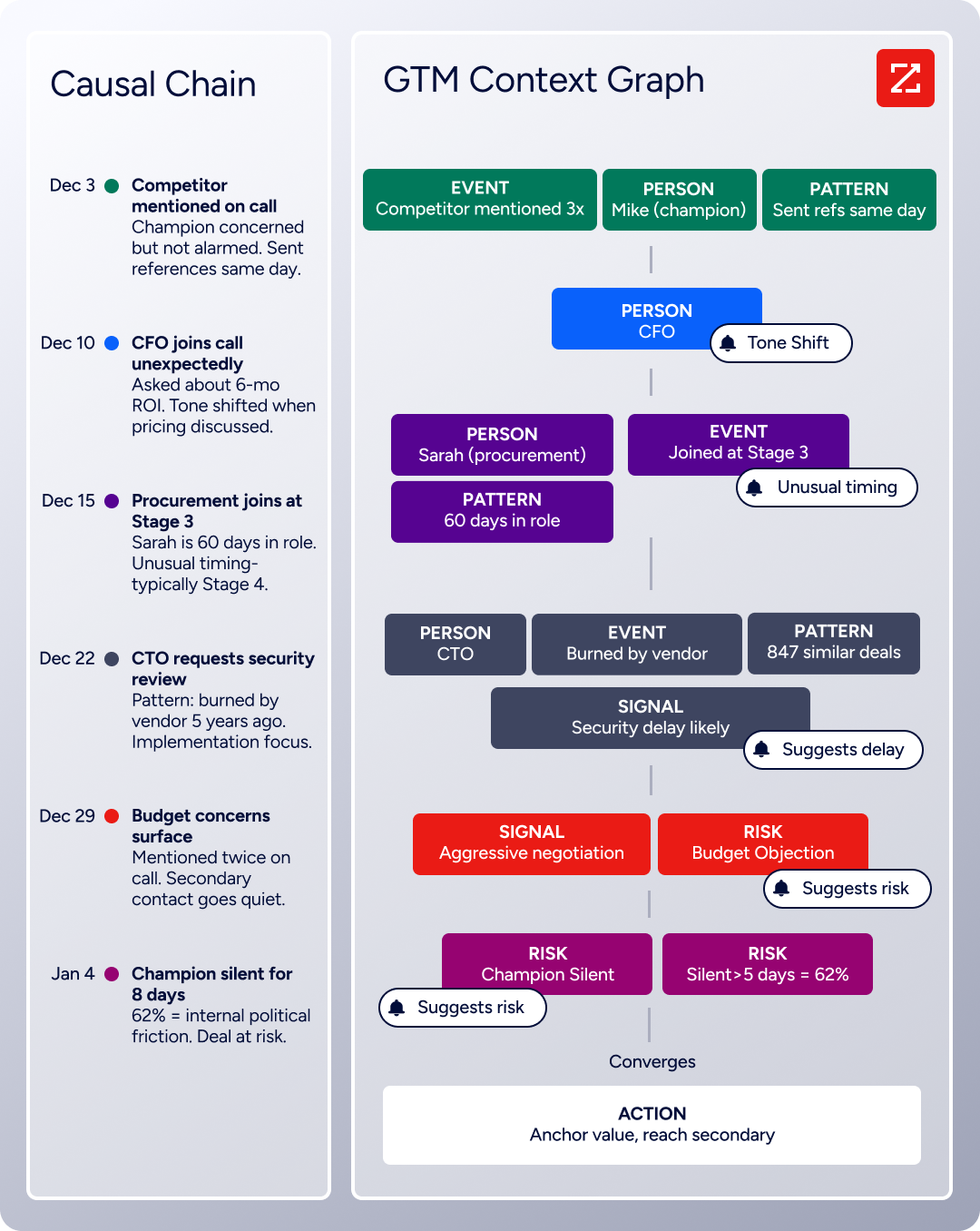
The seller takes that intelligence, records a Sendspark video with the right talking points, and lets AI personalize it across the accounts that matter.
Or a rep uses Loom to record a walkthrough tailored to a prospect's specific use case, because ZoomInfo's data revealed what technology the prospect uses and what pain points their team likely faces.
ZoomInfo's data reaches these video tools through multiple channels. The Enterprise API and MCP server deliver ZoomInfo intelligence into any application or AI agent. Sendspark's 50+ integrations include the CRMs and sequencers that ZoomInfo natively feeds (Salesforce, HubSpot, Outreach, Salesloft, Apollo).
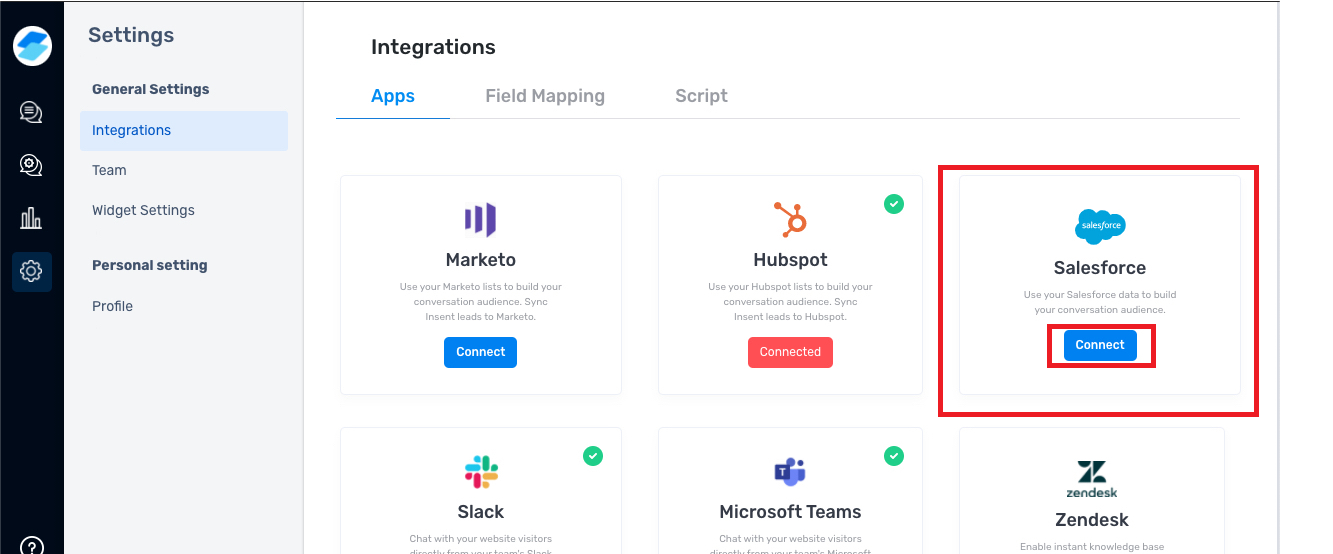
Source: ZoomInfo
The intelligence flows from ZoomInfo into your CRM, into your sequencer, and into your video outreach tool without manual data entry.
The data quality difference is measurable. ZoomInfo's up to 95% accuracy on first-party data, verified by 300+ human researchers, means the email addresses you're sending video links to actually belong to real people. In a Fortune 500 competitive RFP analyzing 25 million contacts across vendors, an independent consultant concluded that "no other competitor came even close."
"ZoomInfo gives us the information we need to execute. We don't have to go through and spend our time digging. It's already there, so we can be three steps ahead." (William Kenimer, VP of Revenue Operations, Vensure)
Pricing reflects what each platform is selling
The pricing structures reveal what each company considers its core value.
Sendspark charges by plan tier with a usage-based overlay.
The Solo plan starts at $49/month for one seat with 100 Dynamic Video Minutes. The Growth plan at $99/month adds 3 seats, 250 Dynamic Video Minutes, and unlocks advanced integrations (Salesforce, Outreach, API access).
The Team plan at $299/month includes 10 seats and 1,000 Dynamic Video Minutes. Overage rates decrease at higher tiers ($0.39/minute on Solo down to $0.19/minute on Business). Annual billing saves up to 40%. There is no free plan, only a 7-day trial.
Loom uses per-seat pricing with a permanent free tier.
The Starter plan ($0) is limited to 25 videos and 5-minute recordings at 720p. The Business plan at $18/user/month unlocks unlimited videos, 4K recording, editing tools, and branding removal, but no AI features.
The Business + AI plan at $24/user/month adds auto titles, summaries, chapters, filler word removal, transcript editing, and meeting notes. Enterprise pricing is custom and adds SSO/SCIM, Salesforce integration, and a 99.95% uptime SLA. Annual plans save 17%.
ZoomInfo uses custom-quoted pricing with seat-and-credit-based packaging and no publicly listed prices.
The cost is higher than either video tool, reflecting the breadth of the platform (data, intelligence, automation, conversation intelligence).
But the comparison isn't apples to apples. ZoomInfo replaces multiple point solutions (data providers, intent platforms, enrichment tools, prospecting software) and provides the prospect intelligence that makes every downstream tool, including video outreach, more effective. ZoomInfo Lite offers a permanent free tier with access to the B2B database, 10 monthly export credits, and WebSights Lite.
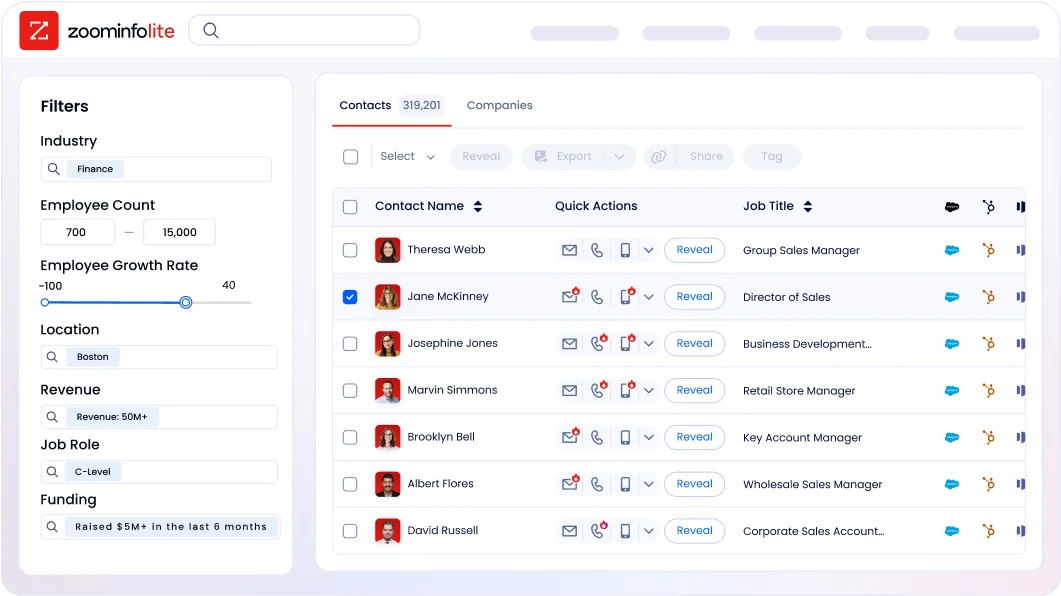
For sales teams evaluating the full stack, the relevant calculation isn't what each tool costs individually. It's what pipeline each dollar generates. Sendspark at $99/month sending personalized videos to the wrong 500 prospects produces less pipeline than Sendspark at $99/month powered by ZoomInfo data that identifies the right 50.
Integration ecosystems show where each tool fits in the GTM stack
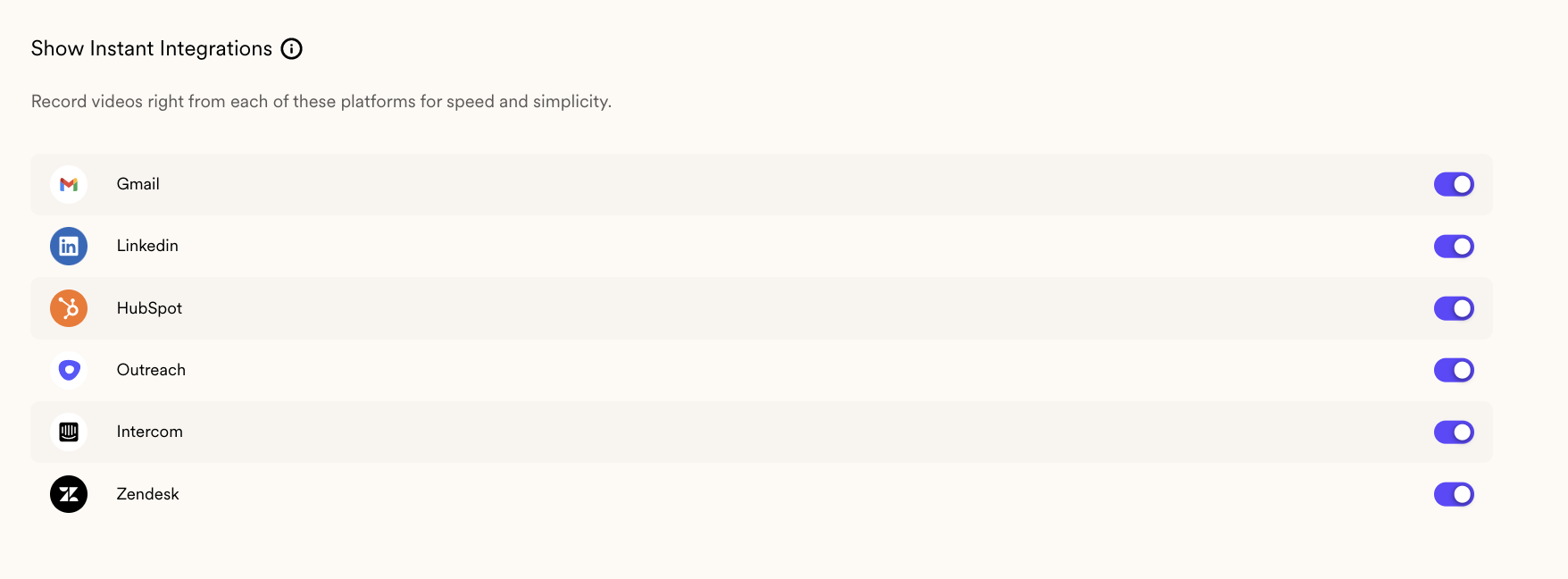
Sendspark's integration list reads like a sales team's toolkit. 50+ integrations covering sales sequencers (Outreach, Salesloft, Apollo, Smartlead, Instantly, Lemlist), CRMs (Salesforce, HubSpot, Zoho, Pipedrive), automation platforms (Zapier, Clay, Make), and calendar tools (Calendly, Chili Piper).
The Chrome extension embeds into Gmail, LinkedIn, HubSpot, and Outreach compose windows, letting reps record and send without context-switching. A public API enables programmatic video generation. All integrations sync engagement data back to the CRM automatically.
Source: Sendspark
Loom's integrations skew toward workplace collaboration.
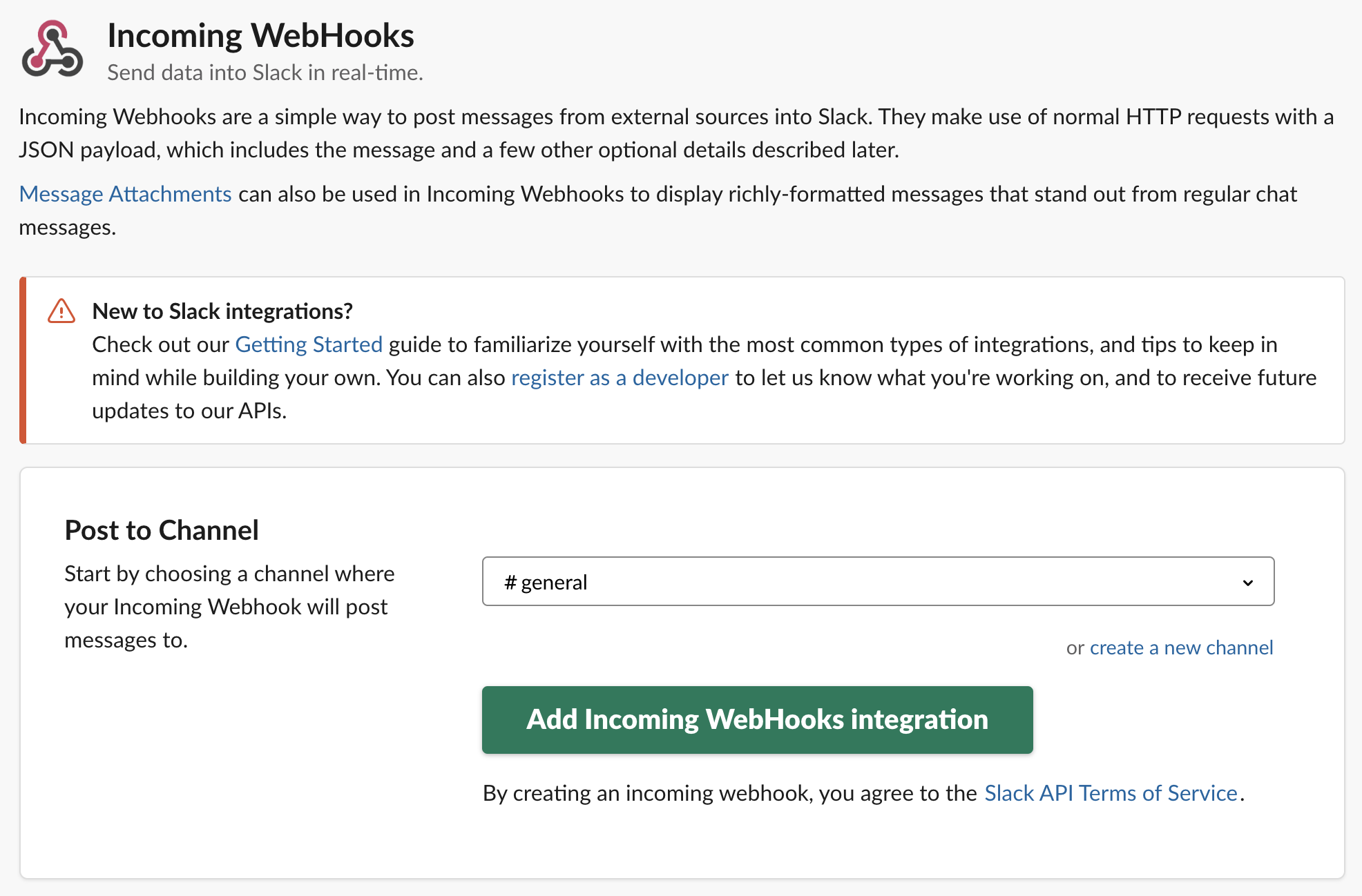
Native connections to Slack, Jira, Confluence, GitHub, Gmail, Notion, Zendesk, Intercom, and GitLab are available on all plans. The Atlassian integrations go deep: Loom can convert videos to Confluence documents and auto-generate Jira issues from bug walkthrough recordings. But Salesforce integration is Enterprise-only, and Loom does not publish a general-purpose open API.
Source: Loom
ZoomInfo's App Marketplace lists 120+ integrations spanning CRM, marketing automation, sales engagement, revenue intelligence, data warehouses, and communications.
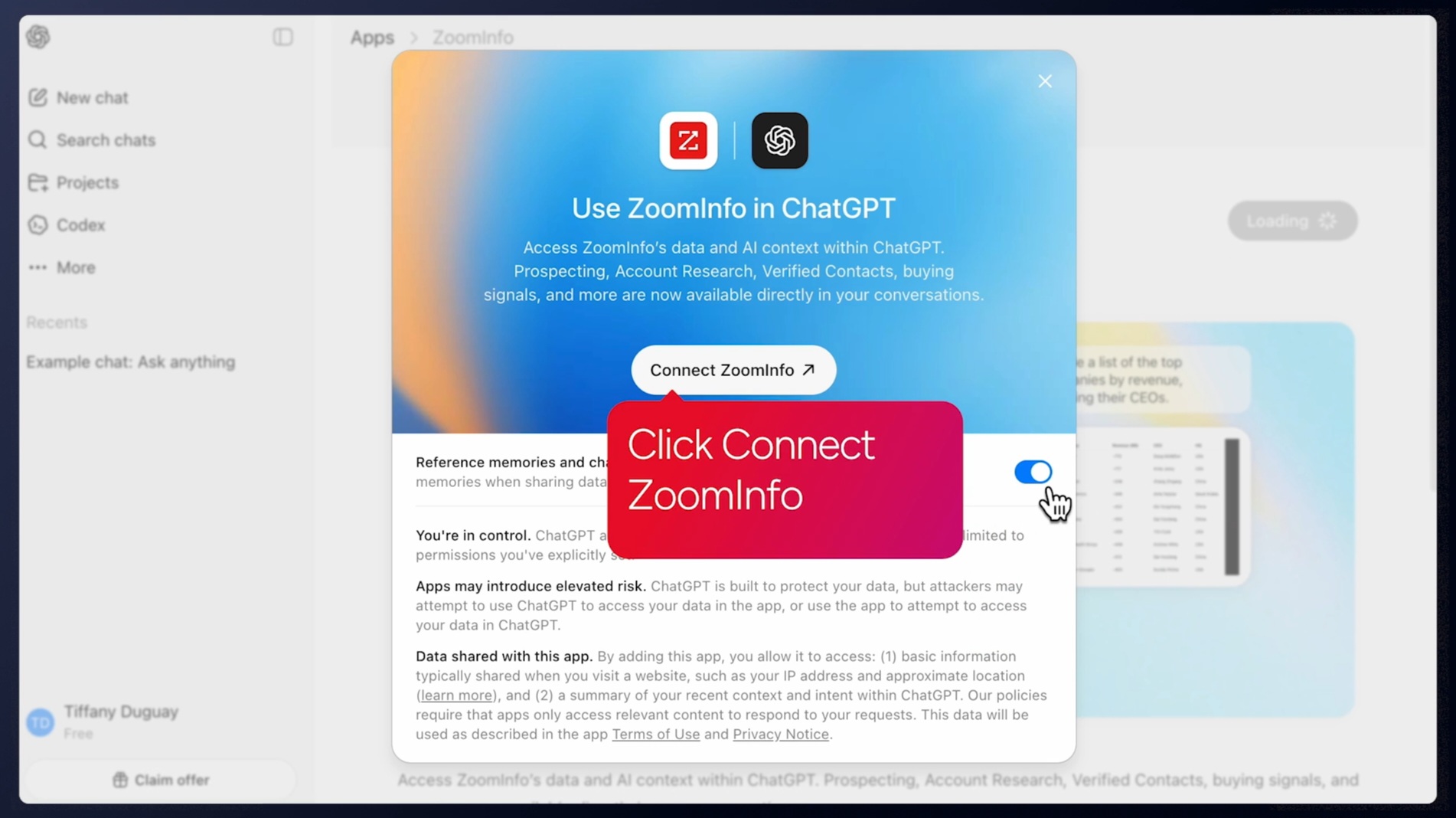
The Enterprise API provides programmatic access to the full data layer, and the MCP server connects ZoomInfo's intelligence to AI assistants including Claude and ChatGPT. API access is included in all relevant plans, not gated to enterprise tiers. For teams building custom outreach workflows, ZoomInfo functions as infrastructure: the same data powering its own products is available in any third-party tool.
Source: ZoomInfo
Recording and editing capabilities compared
For teams that need polished videos, the recording and editing tools matter.
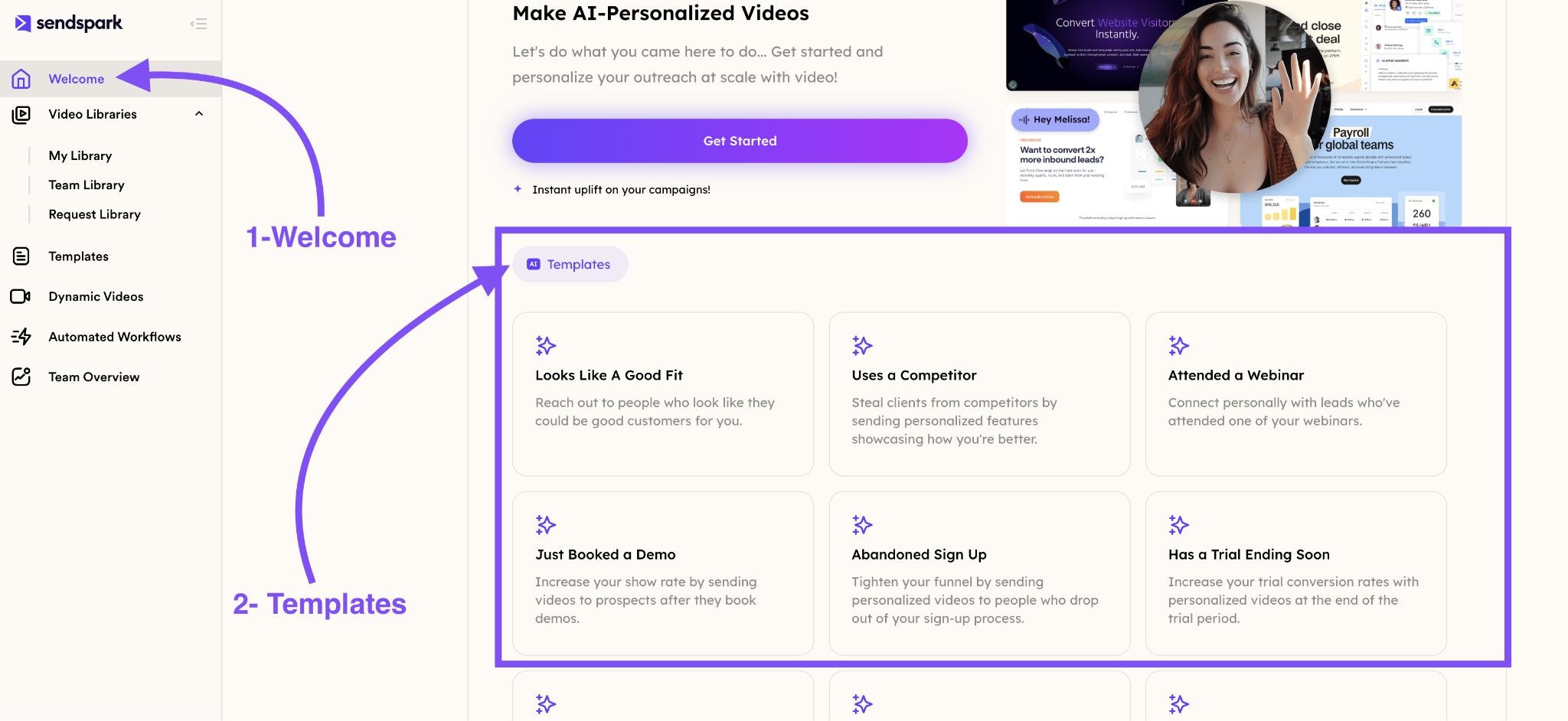
Sendspark offers a Chrome extension and a desktop app for Mac and Windows.
Three recording modes (face, screen, or both), resolution up to 1080p, virtual backgrounds and AI appearance touch-up, and a Scripts & Teleprompter that generates and displays AI scripts during recording. Editing is basic: trim and stitch, but no mid-video cutting. The desktop app supports concurrent uploads, so reps can record back-to-back without waiting. There is no mobile app currently.
Source: Sendspark
Loom covers more surfaces with its recording platforms: Chrome extension, desktop app (Mac and Windows), iOS, and Android. Recording goes up to 4K on paid plans.
The editing suite is richer, with trim and stitch, Edit by Transcript, Live Rewind for mid-recording corrections, overlays, backgrounds, and stylized captions. Loom also provides transcription in 50+ languages on all plans, a capability Sendspark is still building (transcription is their top-voted feature request).
For recording and editing alone, Loom is the more capable tool. For sales teams who need to produce and distribute personalized video at scale, the recording quality matters less than the personalization pipeline that follows it.
Viewer experience and engagement tracking
Both Sendspark and Loom generate shareable links. The viewer experience is where sales-specific features diverge.
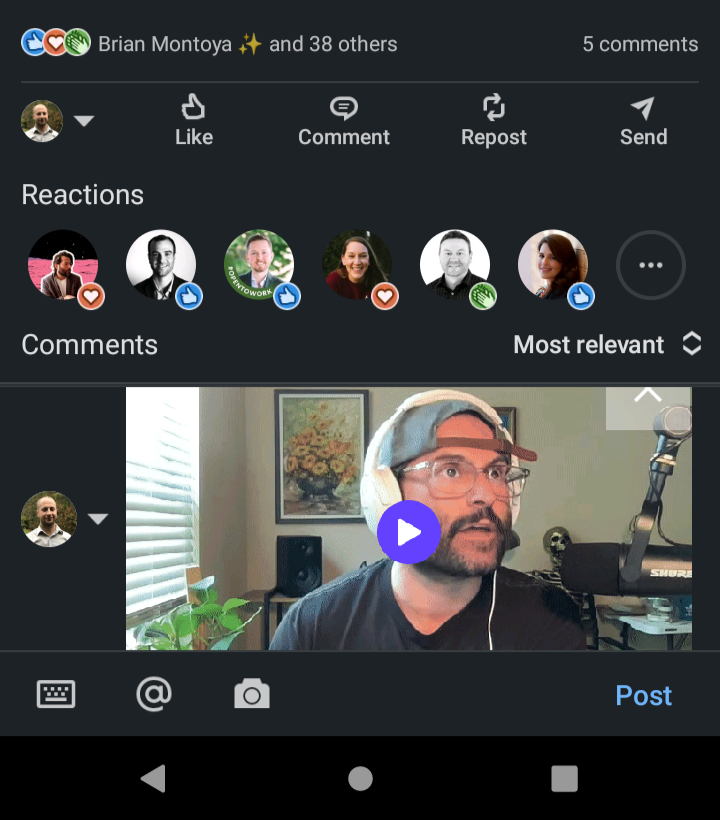
Sendspark delivers each prospect to a personalized landing page displaying their name, company, and an embedded calendar for booking meetings from the video page.
Animated GIF thumbnails show the prospect's name in the preview, increasing click rates in email. Engagement data (who watched, for how long, CTA clicks) syncs back to the CRM automatically. Webhooks fire on video watch events, enabling follow-up automations.
Source: Sendspark
Loom lets recipients watch in any browser without logging in, which reduces friction.
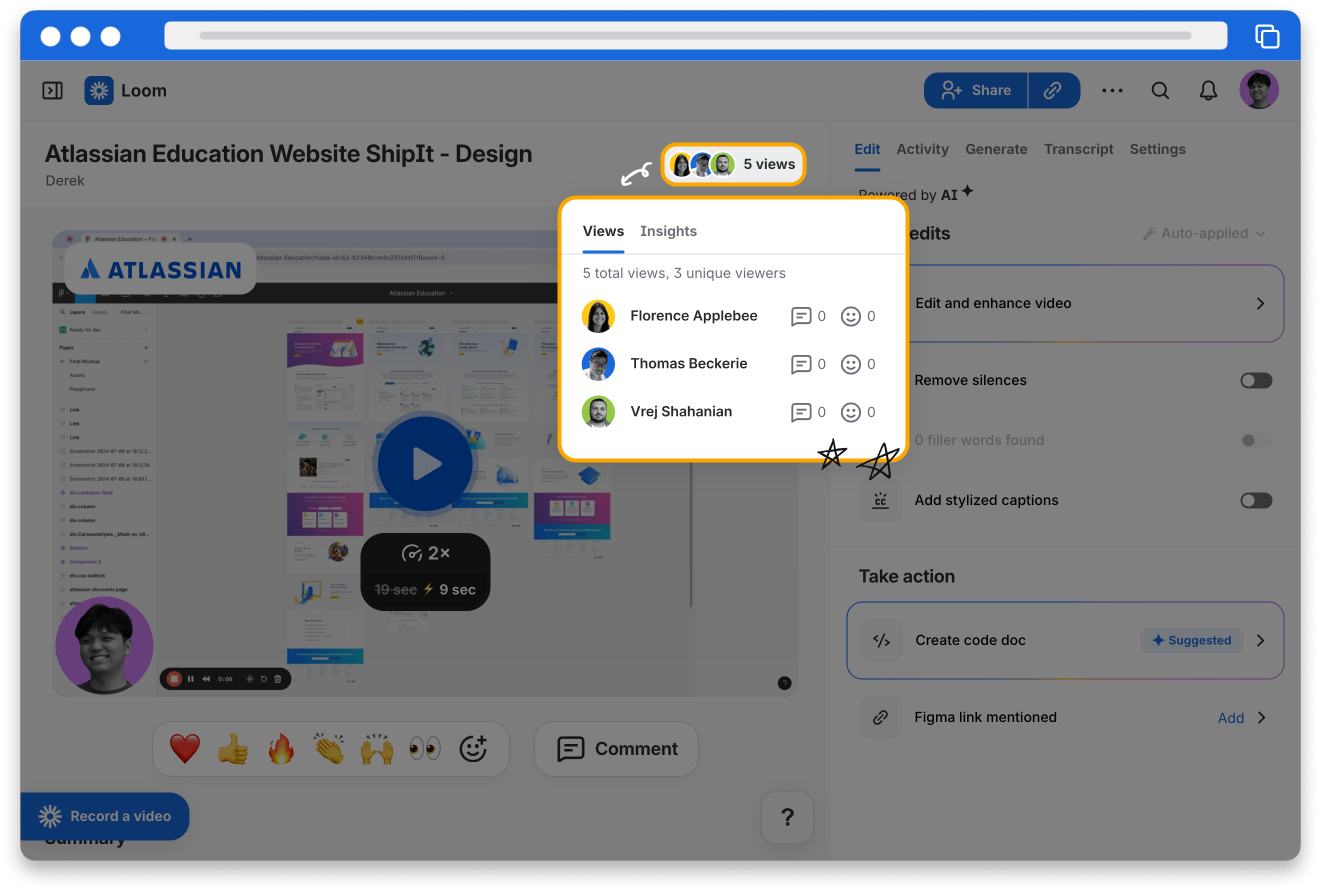
Timestamped comments and emoji reactions appear on the timeline. Viewers can respond to a Loom with another Loom, keeping the exchange in video. Viewer analytics show who watched, with engagement insights and exportable data on Business plans and above. Loom generates GIF thumbnails for email embeds on all tiers.
Source: Loom
The critical difference for sales: Sendspark's engagement data feeds into CRM-triggered workflows. When a prospect watches a video, the system can automatically add them to a follow-up sequence, notify the rep, or trigger a new personalized video. Loom's analytics are informative but largely manual in how they connect to sales actions.
Sendspark vs. Loom vs. ZoomInfo: Which should you choose?
These three tools aren't competing for the same slot in your stack. They solve different parts of the same problem: reaching prospects with messages that convert.
Choose Sendspark if:
Your primary use case is scaled outbound sales prospecting
You need AI-personalized video at volume (hundreds or thousands of prospects)
Your team runs sequences through Outreach, Salesloft, Apollo, or similar tools
Reply rates and meeting bookings are the metrics that matter most
You're willing to trade editing depth for personalization scale
Choose Loom if:
You need async video for both internal communication and external outreach
Your team is inside the Atlassian ecosystem (Jira, Confluence)
Video editing quality and polish matter for your use case
You're recording individual, unique videos for prospects or customers
You want a free tier that covers basic recording and sharing
Add ZoomInfo to power either if:
You want to target accounts showing active buying intent, not just everyone on a list
You need verified contact data so your videos reach real decision-makers
Your outreach needs context (what the prospect cares about, what competitors they're evaluating, who else is on the buying committee)
You want AI that tells your reps who to contact, when, and what to say before they press record
You're building a GTM engine where data, intelligence, and execution work as one system
See how ZoomInfo's intelligence powers your GTM stack.
The choice between Sendspark and Loom depends on whether you need personalized video at scale or polished async communication. Both tools perform better when the intelligence feeding them is accurate, timely, and contextual.
ZoomInfo provides that intelligence, connecting verified prospect data and real-time buying signals to whatever outreach tool your team prefers. The best video in the world only works if it reaches the right person at the right moment. That's the problem worth solving first.
"It's not just the data itself. It's more about the right data at the right time to help us reach out with the right message across that full buyer journey." (Chelsea Kenyon, Senior Director of Digital Strategy, Redwood Logistics)
Sendspark vs. Loom vs. ZoomInfo FAQ
What is the core difference between Sendspark, Loom, and ZoomInfo?
Sendspark is an AI video personalization platform that lets sales teams record one video and generate thousands of individually tailored versions using voice cloning and dynamic backgrounds.
Loom is an async video messaging platform for workplace communication, offering screen recording, sharing, and AI-powered productivity features across engineering, product, sales, and support teams.
ZoomInfo is a B2B data and go-to-market platform that provides verified contact data, buyer intent signals, and account context so sales teams can target the right prospects before recording any video.
Which platform is better for cold outbound sales prospecting?
Sendspark is the stronger choice for cold outbound at scale. Its AI generates personalized video versions for each prospect from a single recording, and it integrates natively with sales sequencers like Outreach, Salesloft, and Apollo.
Loom can be used for individual personalized outreach but requires recording a separate video for each prospect, which limits volume.
ZoomInfo complements either tool by identifying which prospects to target based on buying intent and verified contact data.
Can I use Sendspark and Loom together with ZoomInfo?
Yes. ZoomInfo, Sendspark, and Loom serve different functions in the sales workflow. ZoomInfo identifies high-priority accounts and provides verified contact data and buying signals. Sendspark or Loom then handles the video creation and delivery.
ZoomInfo's data flows into your CRM and sequencers, which Sendspark integrates with natively. This creates a workflow where intelligence informs who to reach, and video provides the medium.
How does video personalization in Sendspark compare to Loom's Variables feature?
Sendspark's personalization goes deeper. It clones the sender's voice to speak each prospect's name, screenshots each prospect's website as a dynamic background, personalizes the landing page, and generates unique thumbnails.
Loom's Variables feature, available on Business + AI and Enterprise plans, allows personalization tokens within Loom content but does not include voice cloning, dynamic backgrounds, or automated mass generation from a single recording.
Which platform has better analytics for tracking prospect engagement?
Sendspark offers sales-specific analytics: who watched, for how long, CTA clicks, and automatic sync of engagement data back to CRMs like Salesforce and HubSpot. Webhook support enables follow-up automations triggered by viewer behavior.
Loom provides viewer analytics on paid plans showing who watched and engagement completion rates, but CRM sync is limited to Salesforce on the Enterprise plan only.
ZoomInfo adds a different layer of analytics through buyer intent data and account-level engagement signals, tracking which companies are researching relevant topics before any video is sent.
What does ZoomInfo add that a video platform alone does not provide?
ZoomInfo provides the intelligence layer upstream of video outreach. It identifies which accounts are in-market using intent signals, provides verified email addresses and direct dials for decision-makers, maps organizational structures and buying committees, and reveals what topics prospects are researching.
Without this intelligence, sales teams choose video recipients based on incomplete data, outdated contact lists, or guesswork. ZoomInfo's GTM Context Graph processes 1.5B+ data points daily to surface which accounts to prioritize and why.
Is there a free option for any of these platforms?
Loom offers a permanent free Starter plan with up to 25 videos and 5-minute recordings at 720p. ZoomInfo Lite is a permanent free tier with access to the B2B database, 10 monthly export credits, and basic website visitor identification. Sendspark does not offer a free plan but provides a 7-day free trial across all paid tiers with no credit card required to start.
Which platform is best for a team that does both internal communication and sales outreach?
Loom is the most versatile for teams that need both. Its Atlassian integrations (Jira, Confluence) make it strong for internal async communication, while its recording and sharing tools work for sales outreach at lower volumes.
Sendspark is too focused on sales to serve internal communication needs.
For the sales outreach portion specifically, pairing either video tool with ZoomInfo's prospect intelligence improves targeting and conversion.
More Sendspark comparisons and breakdowns:
