
Choosing between Vidyard and Sendspark for your video outreach often comes down to five questions:
Do you need AI avatars that generate video from a script, or AI voice cloning that personalizes a single real recording across thousands of prospects?
Is video your primary outreach channel, or one tactic within a broader go-to-market strategy?
Do you need a permanent free plan to test with individual reps, or are you buying for a team from day one?
How important are enterprise video hosting and team analytics beyond sales messaging?
Are you spending more time creating videos, or figuring out who should receive them and when?
In short, here's what we recommend:
Vidyard is the established video selling platform for B2B sales teams that need the full video lifecycle in one place. With 12 million users across 160,000 companies, Vidyard offers AI Avatars built on NeRF technology, an autonomous Video Agent that creates and sends personalized video on its own, enterprise video hosting with 4K streaming, and 51 native integrations spanning Salesforce, HubSpot, Salesloft, and Gong.
It handles use cases from cold outreach to internal communications. Pricing starts at $59/seat/month with the Video Agent add-on at $24/seat/month extra, in-app video editing remains limited, and advanced features require custom contracts.
Sendspark takes a different path to the same goal. Instead of building an AI avatar, you record one real video, and Sendspark's AI clones your voice to say each prospect's name while displaying their website as a dynamic background.
The result looks and sounds like you personally recorded a video for each recipient. At $49/month for the entry plan and with integrations across Clay, Apollo, Outreach, and the modern outbound stack, Sendspark is the more accessible starting point for teams focused on AI-personalized prospecting.
The trade-off: a younger company (founded 2019, ~27 employees), no permanent free plan, and narrower capabilities outside sales outreach.
Both platforms have made personalized video practical at scale. But here's the question most video tool comparisons skip: even a good video fails if it reaches the wrong person or arrives after the buying window has closed. Your outreach depends as much on targeting and timing as on the video itself.
ZoomInfo is a B2B intelligence and go-to-market platform built on B2B data: 500 million contacts, 100 million companies, 135 million verified phone numbers, and 200 million verified business emails.
Its GTM Context Graph (a system that processes 1.5B+ data points daily) combines this data with your CRM records, conversation transcripts, and behavioral signals to show the full context of your accounts. That intelligence reaches your team through GTM Workspace for sellers, GTM Studio for marketers and RevOps, or the API and MCP in any front-end.
For teams evaluating video tools as part of a broader go-to-market strategy, ZoomInfo determines who receives your outreach, when they receive it, and what context should inform your message, whether that message is a video, an email, or a phone call.
If you want to see how go-to-market intelligence strengthens every outreach channel, explore ZoomInfo with a free trial.
Vidyard vs. Sendspark vs. ZoomInfo at a glance
Vidyard | Sendspark | ZoomInfo | |
|---|---|---|---|
Core approach | AI avatars + full video selling platform | AI voice cloning + dynamic video personalization | B2B intelligence + multi-channel execution |
AI personalization | NeRF-based avatars from 90-second training video | Voice cloning + dynamic website backgrounds from one recording | Account prioritization, buyer signals, outreach drafting |
Free plan | Yes (15 AI videos, limited features) | 7-day trial only, no permanent free plan | ZoomInfo Lite (permanent, 10 credits/month) |
Starting price | $59/seat/month (annual) | $49/month (1 seat) | Custom pricing |
Integrations | 51 native | 50+ | 120+ marketplace + API + MCP |
G2 recognition | 4.5/5 (800+ reviews) | 4.8/5 (450+ reviews) | 133 No. 1 rankings (G2 Summer 2025) |
Compliance | SOC 2 Type 2, GDPR, NIST | SOC 2 Type 2, GDPR | ISO 27001, ISO 27701, SOC 2 Type II, GDPR, CCPA |
Best for | Sales teams needing full video lifecycle | Teams focused on AI video outreach at scale | Teams needing intelligence to power all outreach channels |
Two different approaches to AI video personalization
Vidyard and Sendspark both use AI to personalize video at scale, but the underlying technology creates distinct experiences for senders and recipients.
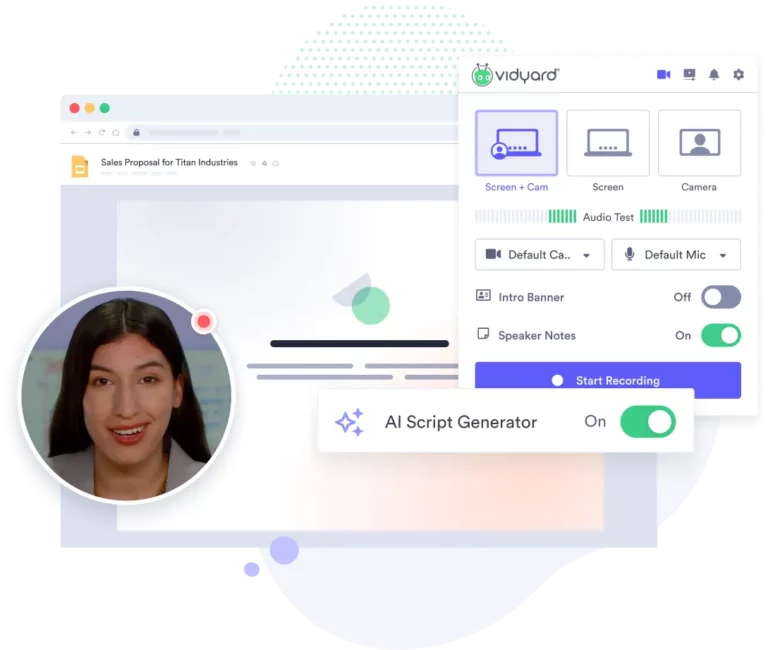
Vidyard's approach centers on AI Avatars. A rep records a 90-second training video, and Vidyard builds a digital likeness using neural radiance field (NeRF) technology that replicates facial movements and expressions. From that point forward, the avatar generates videos from written scripts alone. No camera needed.
The AI Script Generator drafts personalized scripts using CRM data, and keyword replacement tokens (prospect name, company, pain points) customize each message. The avatar speaks in over 28 languages, making global outreach possible from a single training clip.
Source: Vidyard
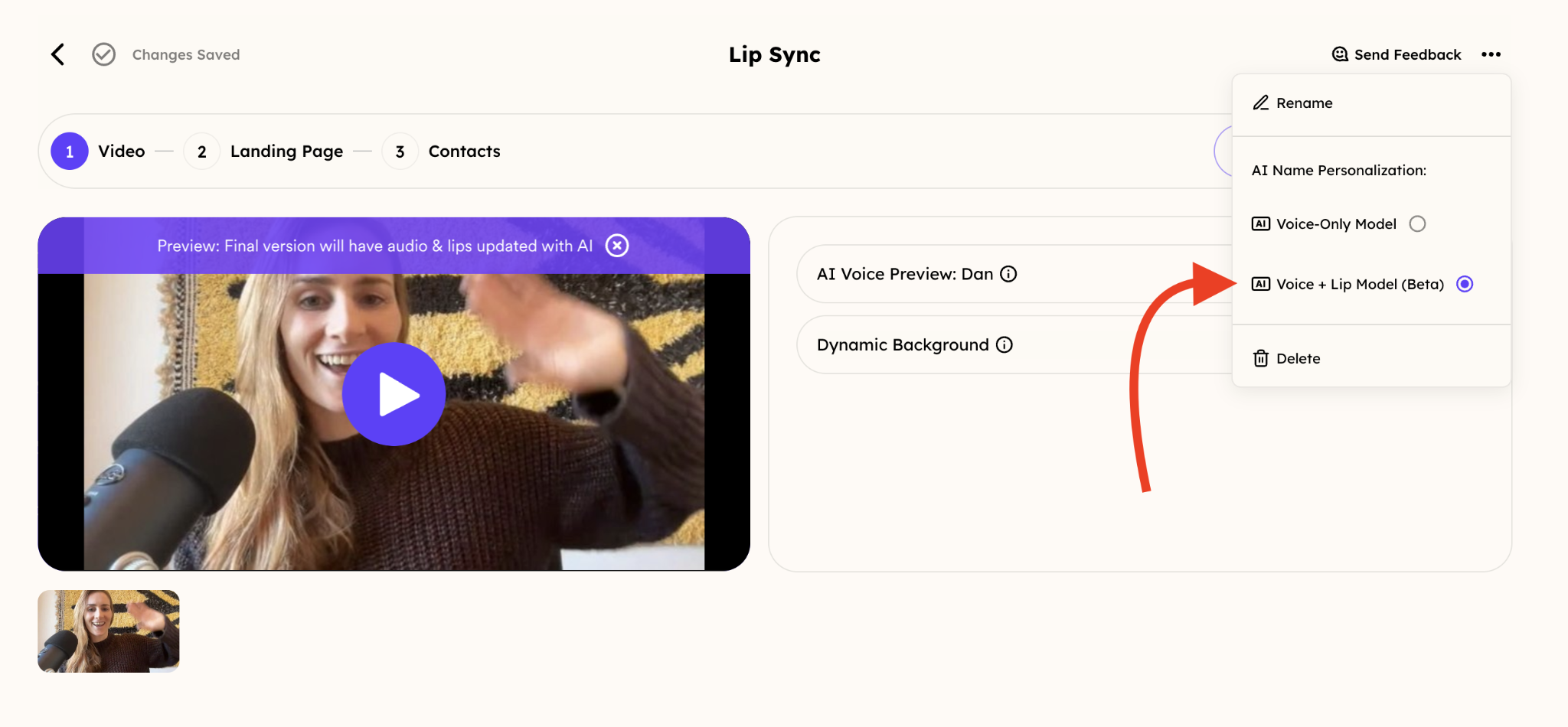
Sendspark keeps the real person on camera. A rep records one actual video, saying "Hi Watermelon" as a placeholder. Sendspark's AI clones the sender's voice from that recording to pronounce each prospect's name naturally.
A lip cloning feature (in beta) synchronizes mouth movements to match the AI-generated speech. Each prospect's company website appears as a dynamic background behind the sender's face, making it look like the rep researched the prospect individually.
Source: Sendspark
The philosophical split matters. Vidyard creates fully synthetic video from text, so a rep can produce hundreds of personalized messages without recording anything after the initial 90-second training clip. Sendspark requires a fresh recording for each campaign but produces output rooted in a real human performance.
Reps who value authenticity may lean toward Sendspark. Teams that want to automate video creation entirely, with no ongoing recording effort, will find Vidyard's avatar model more scalable.
Vidyard has the deeper platform
Vidyard has spent over 15 years building beyond sales messaging. The platform includes enterprise video hosting with 4K streaming, custom folders, password protection, and access controls for marketing, training, and internal communications.
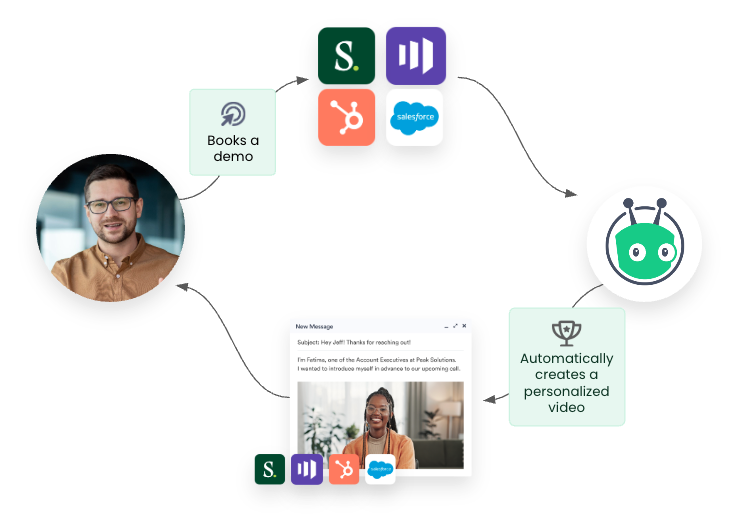
The Video Agent, launched in February 2025, operates autonomously: set up a trigger-based workflow once, and it creates and sends personalized avatar videos whenever a buyer takes a defined action (downloads content, books a demo, misses a follow-up).
Source: Vidyard
The trade-off is complexity and cost. Starter plans at $59/seat/month lack CRM integrations, which require the custom-priced Teams tier. The Video Agent add-on costs another $24/seat/month.
For a 10-person sales team, the core platform plus Video Agent runs over $10,000 per year before Teams pricing. In-app editing is limited to quick trimming; G2 reviewers note that producing polished clips requires a separate tool.
Sendspark makes AI personalization more accessible
Sendspark's "record once, personalize thousands" workflow cuts the steps between idea and execution. A rep records a single video, imports a contact list (from CSV, CRM, or Clay), and clicks generate.
The AI processes every contact at once: voice-cloned name, dynamic website background, personalized landing page, personalized thumbnail. An entire campaign ships from one recording session.
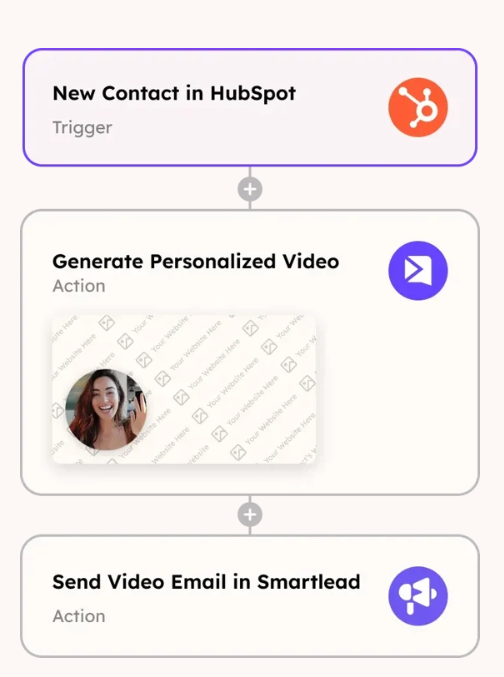
Sendspark's Automated Workflows add trigger-based automation. When a prospect books a meeting via Calendly, visits your website (detected by RB2B or Warmly), or enters a sales sequence, the system generates and sends a personalized video without rep involvement.
Source: Sendspark
A pipeline that extracts domains from email addresses and uses them as video backgrounds means a prospect at john@nike.com automatically sees nike.com behind the sender's face, with no manual lookup.
The pricing reinforces that accessibility. Solo at $49/month includes 100 Dynamic Video Minutes and one seat. Growth at $99/month adds three seats, 250 Dynamic Video Minutes, 50+ integrations, and API access. Team at $299/month brings 10 seats and 1,000 Dynamic Video Minutes. Annual billing saves up to 40%.
The constraints are real, though. Video editing is limited to trimming and stitching; cutting from the middle of a recording remains a top feature request. There is no mobile app yet.
In-email video playback only works in Apple Mail; Gmail and Outlook recipients see a thumbnail that links out. And the Dynamic Video Minute metering can surprise entry-tier users: the first video in any new campaign consumes double minutes because the system generates a fallback version alongside the personalized one.
Targeting and timing determine whether video works
Here is the problem neither Vidyard nor Sendspark addresses: knowing who should receive your video and when.
Both platforms assume you already have a list of the right prospects. They help you create personalized video at scale. But where does that prospect list come from? How do you know which accounts are actively evaluating solutions? Which contacts within those accounts have decision-making authority? Whether the timing is right, or whether you're personalizing video for prospects who won't be in-market for six more months?
This is the upstream problem, and it is where ZoomInfo operates.
ZoomInfo's B2B data platform provides the targeting foundation: 500 million contacts, 135 million verified phone numbers, and 200 million verified business emails; company attributes across 100 million companies; technographics tracking 30,000+ technologies across 30 million companies; and buyer intent signals derived from 210 million IP-to-Organization pairings.
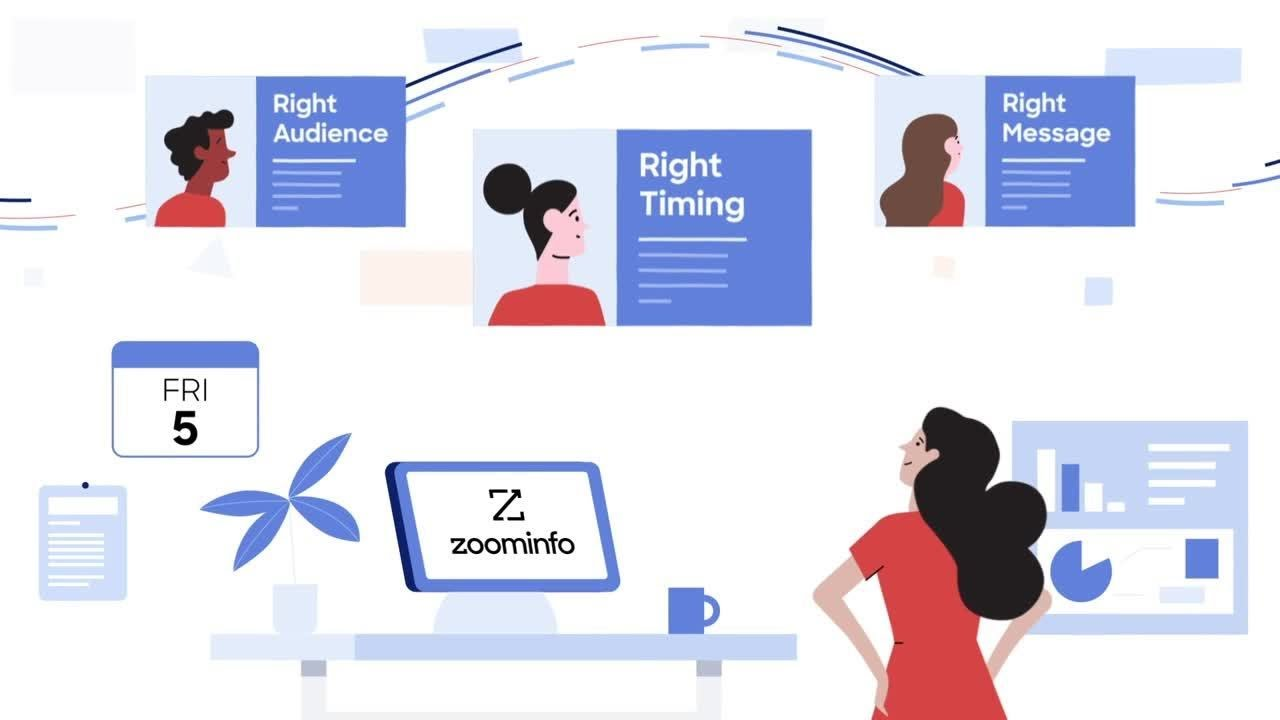
A multi-source verification pipeline backed by 300+ human researchers delivers up to 95% accuracy on first-party data.
In a Fortune 500 competitive RFP analyzing 25 million contacts across vendors, the independent consultant concluded that "no other competitor came even close."
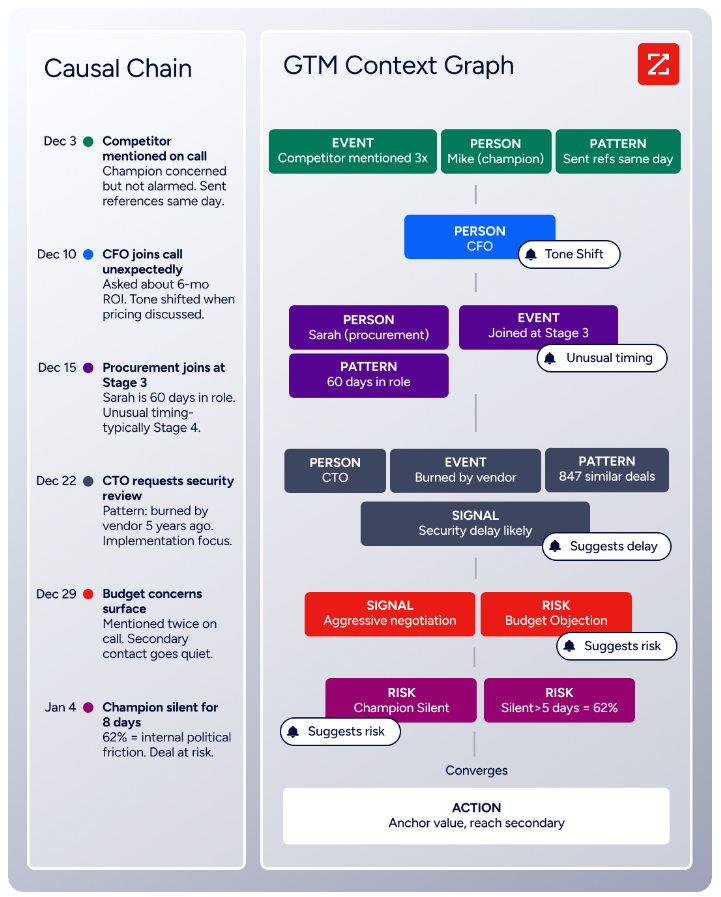
The GTM Context Graph takes this further. This system unifies ZoomInfo's third-party data with your CRM records, conversation intelligence, and behavioral signals to show not just what is happening in a deal, but why.
Source: ZoomInfo
When a CFO joins a call and asks about ROI timelines, the Context Graph recognizes that as a buying signal. When a champion goes quiet, it flags friction.
That analysis powers GTM Workspace for sellers (where AI agents draft outreach informed by full account context) and GTM Studio for marketers and RevOps (where campaigns target accounts that match proven win patterns).
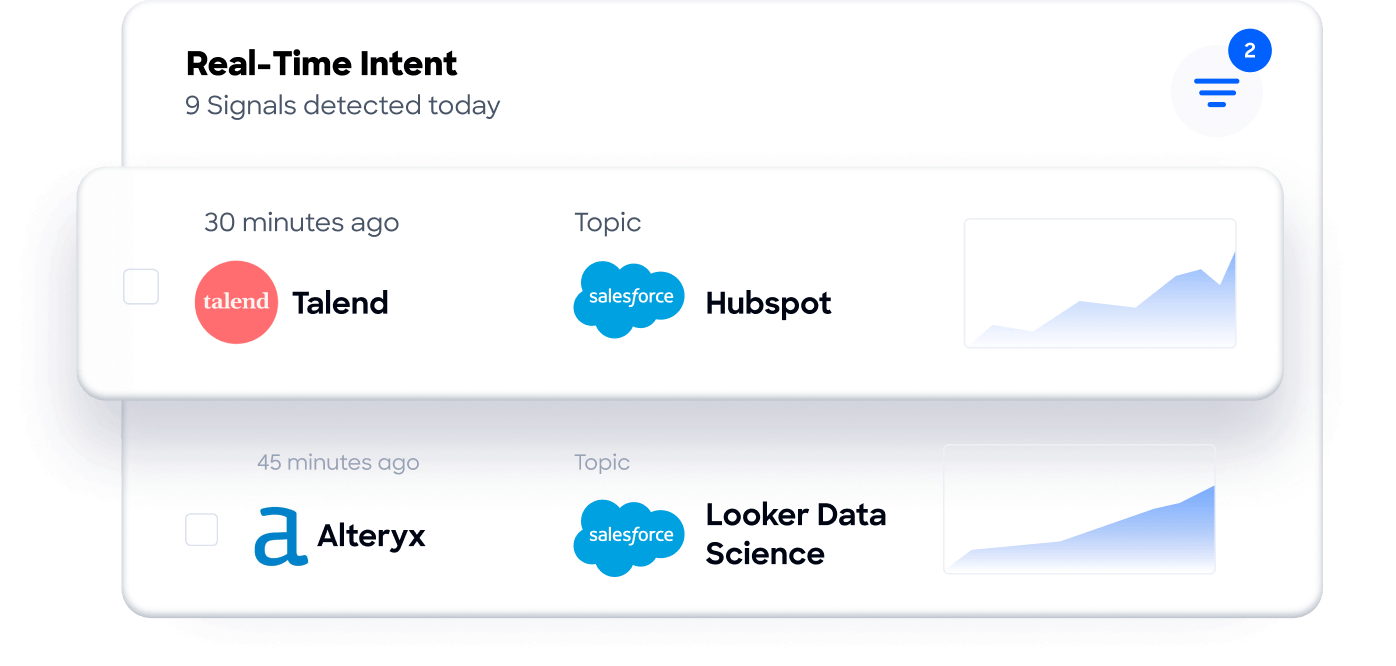
The practical impact: instead of sending personalized video to 1,000 prospects and hoping 50 are in-market, ZoomInfo's intent signals and account intelligence help you identify those 50 directly.
Source: ZoomInfo
Your video outreach targets companies showing active buying behavior, reaches the contacts with actual authority, and arrives when the account is ready to engage.
Seismic's sales team attributed 39% of active pipeline to opportunities identified or influenced by ZoomInfo signals, while boosting productivity by 54% and saving 11.5 hours per week per seller. (Seismic)
Integration ecosystems reflect different priorities
How each platform connects to the sales stack reveals what it considers its core job.
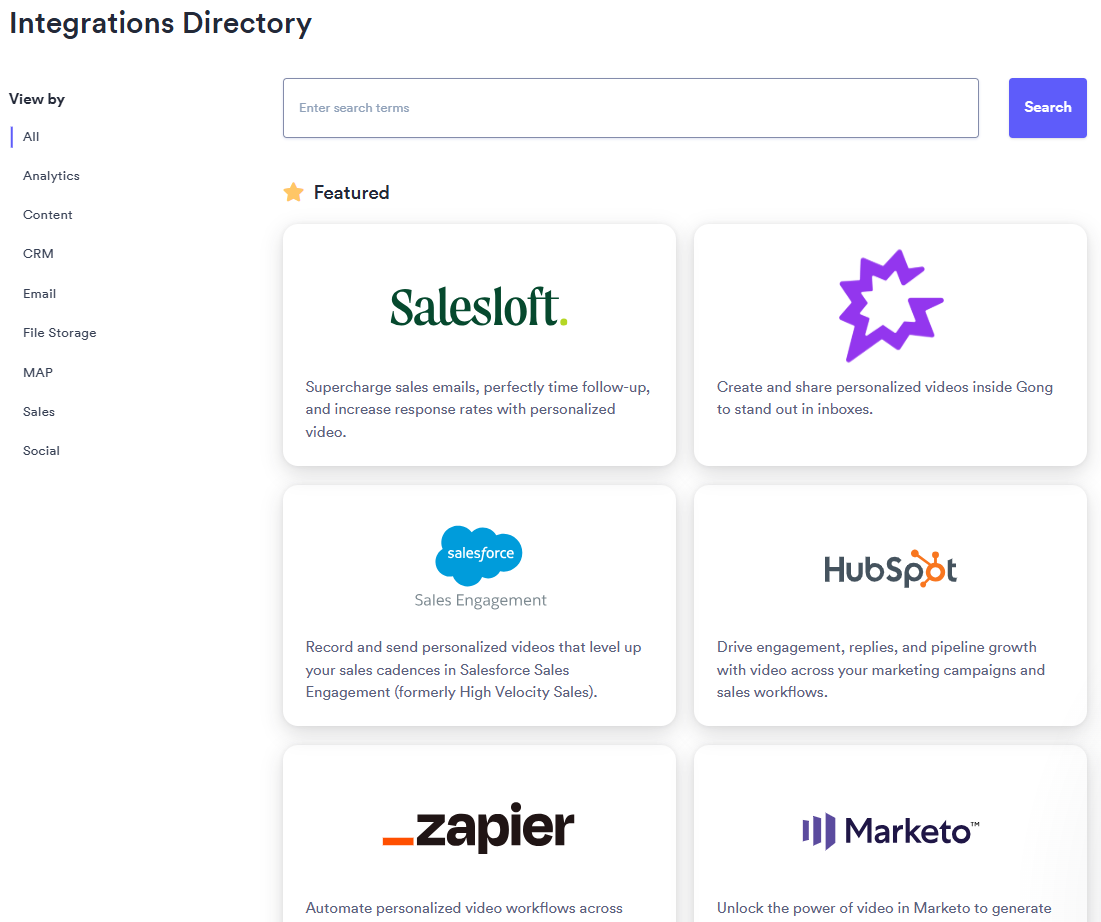
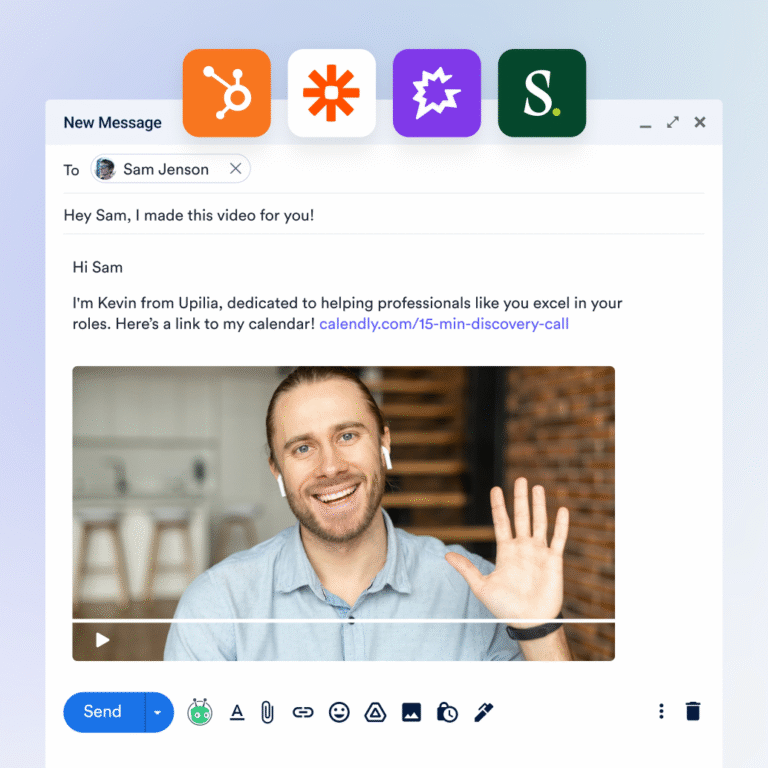
Vidyard integrates with the tools sales teams already use: Salesforce, HubSpot, Salesloft, Gong, Outreach, Gmail, Outlook, and more.
The Theta Lake integration adds compliance coverage for regulated industries. A Zapier integration extends reach to 6,000+ apps.
Source: Vidyard
The Video Agent API (launched December 2025) lets enterprises trigger personalized video from any internal system. Every integration serves one purpose: putting video into existing sales workflows.
Source: Vidyard
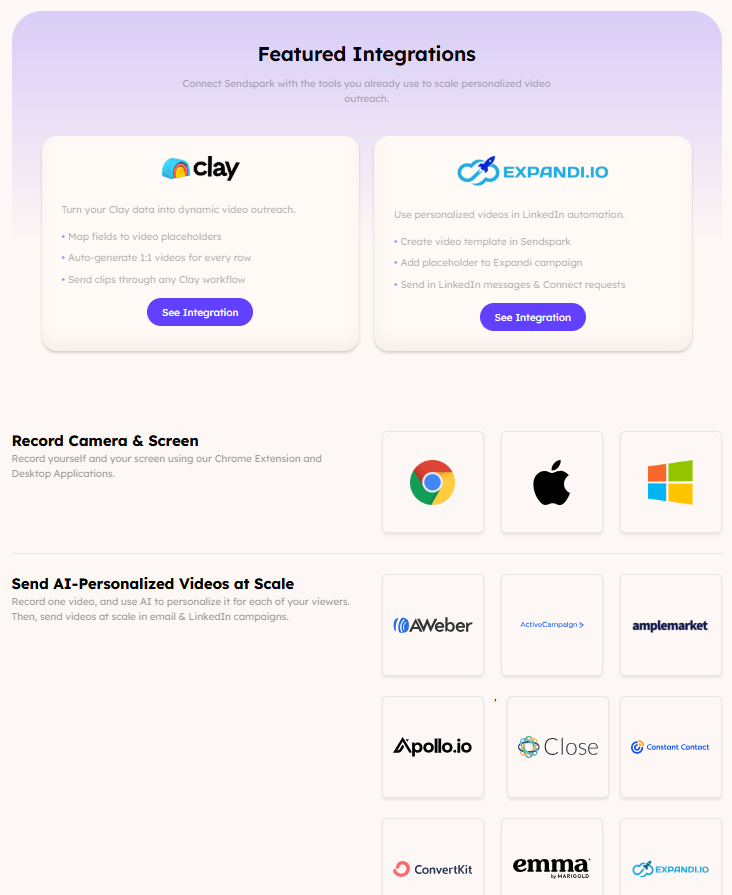
Sendspark leans into the modern outbound stack. 50+ integrations cover Outreach, SalesLoft, Apollo, Smartlead, Instantly, Lemlist, Clay, Expandi, HubSpot, and Salesforce.
Source: Sendspark
The Chrome extension embeds directly into the compose windows of Gmail, LinkedIn, HubSpot, Outreach, Zendesk, and Intercom. All integrations sync video engagement data back to the CRM automatically.
The Clay integration stands out: map Clay enrichment fields directly to video placeholders, and auto-generate a personalized video for every row in a Clay table.
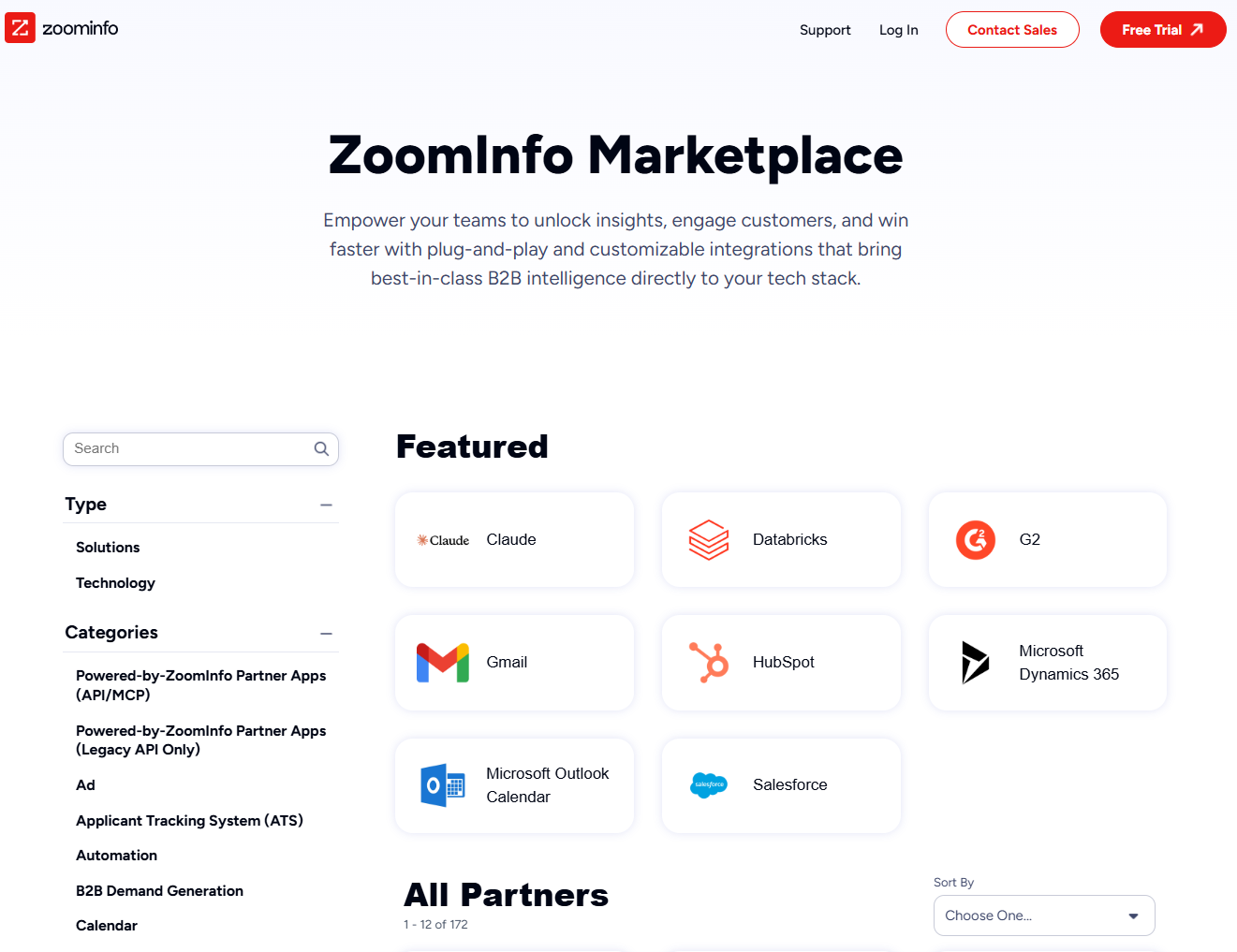
ZoomInfo operates at a different layer. The App Marketplace lists 120+ integrations.
Source: ZoomInfo
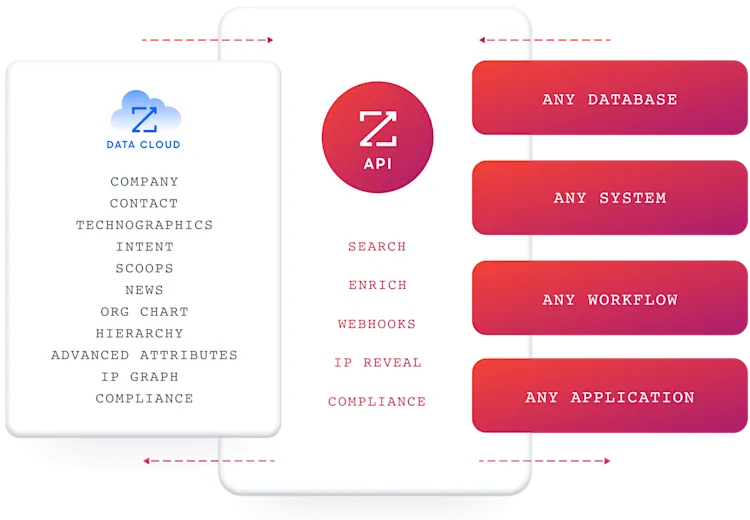
But the defining feature is how teams access the data: Enterprise APIs expose ZoomInfo's data programmatically, while MCP connects AI agents directly to ZoomInfo's B2B data. API access is included in all relevant plans.
Source: ZoomInfo
The same data that powers account prioritization and signal detection works inside any front-end, custom agent, or workflow a team builds.
"The plug-and-play aspect of the API means I can integrate it very easily into any process and get information at a moment's notice." (BDO Canada)
Pricing reflects different market positions
The three pricing models address different buying decisions.
Vidyard prices per seat. The free plan includes 15 AI videos, stock avatars, and basic features with no time limit. Starter at $59/seat/month (annual) adds unlimited recording, full analytics, branded sharing pages, and password-protected videos. CRM and MAP integrations require the custom-priced Teams tier.
The Video Agent add-on costs $24/seat/month (annual) and includes unlimited AI videos and automated delivery. Contracts auto-renew annually, cancellation requires 60 days' written notice, and all fees are non-refundable. A 3% surcharge applies to credit card payments.
Sendspark prices by plan tier with seats included. Solo at $49/month covers one seat and 100 Dynamic Video Minutes. Growth at $99/month includes three seats and 250 Dynamic Video Minutes.
Team at $299/month includes 10 seats and 1,000 Dynamic Video Minutes. Business at $699/month includes 25 seats and 3,000 Dynamic Video Minutes. Annual billing saves up to 40%. Every plan starts with a 7-day free trial. Overages are metered per extra Dynamic Video Minute: $0.39 on Solo down to $0.19 on Business.
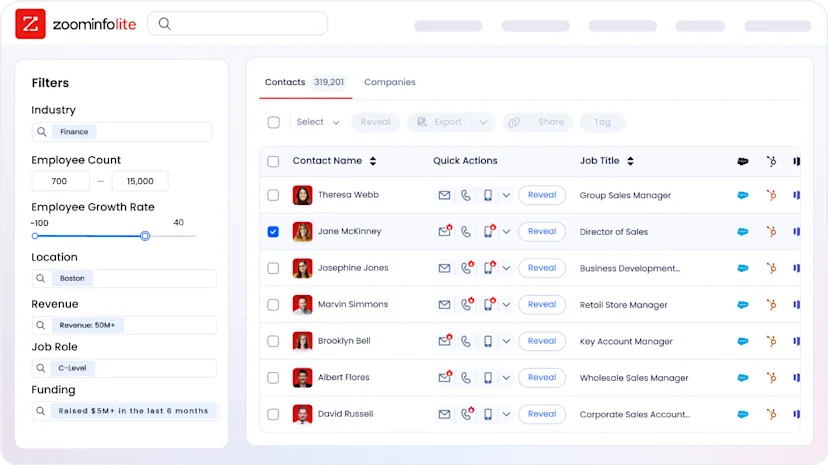
ZoomInfo uses custom-quoted pricing based on seats, credit volume, features, and contract terms. ZoomInfo Lite is a permanent free tier with access to the B2B database, 10 monthly export credits, basic search, a Chrome extension, and website visitor identification.
Source: ZoomInfo
A separate 7-day free trial of paid features is also available. Paid plans span three product lines (Sales, Marketing, Operations), each with Professional, Advanced, and Enterprise tiers. The credit system charges one credit per exported contact; searching and viewing data within ZoomInfo does not consume credits.
Direct cost comparison requires context. A 5-person sales team on Vidyard Starter plus Video Agent pays roughly $4,980/year on annual billing. The same team on Sendspark Growth (annual) pays roughly $828/year plus any Dynamic Video Minute overages.
ZoomInfo's pricing covers a different scope: not one outreach channel, but the data and intelligence layer under your entire go-to-market strategy. Many teams use ZoomInfo alongside a video platform rather than choosing between them.
Analytics serve different stages of the pipeline
What each platform measures after outreach reveals its position in the stack.
Vidyard provides detailed video analytics: who watched, what percentage they viewed, when they watched, and CRM-synced engagement data that triggers rep notifications in real time.
Managers get team performance dashboards showing which reps use video effectively and which videos drive engagement. The hosting analytics track content performance across the full video library, not just sales messaging.
Sendspark tracks views and CTA clicks, with engagement data synced back to the CRM automatically. The Automated Workflow triggers ("New Video Watched" and "New Video CTA Clicked") fire follow-up sequences the moment a prospect engages, closing the loop between video send and next action.
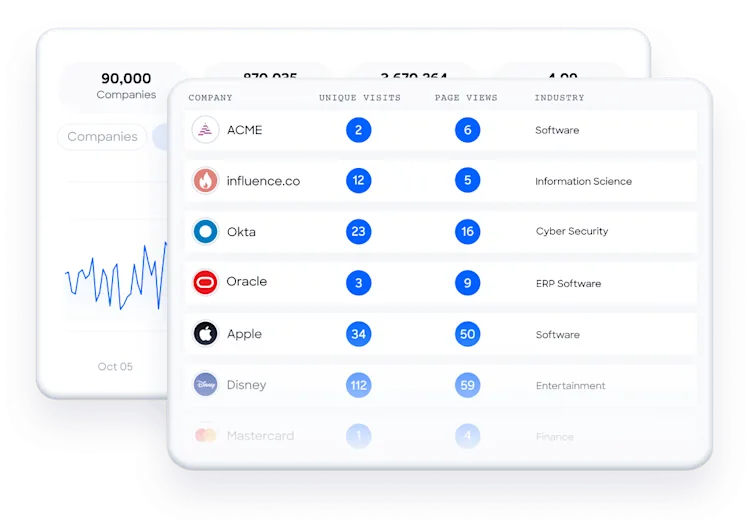
ZoomInfo measures signals before and after video is sent. Before: buyer intent data identifies which companies are actively researching, and WebSights reveals which companies visit your website.
Source: ZoomInfo
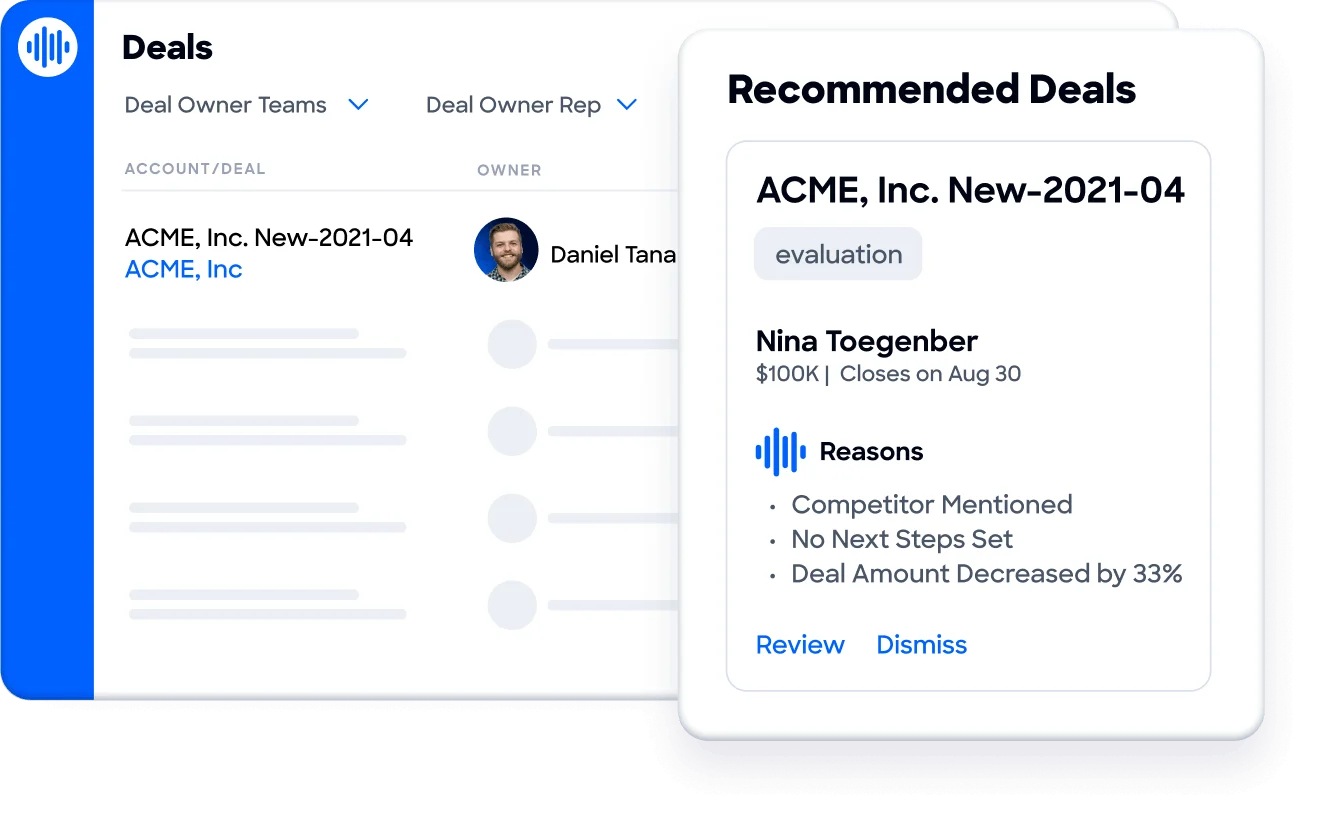
After: Chorus captures and analyzes the calls and meetings that follow outreach, extracting signals that indicate whether a deal is advancing or stalling.
Source: ZoomInfo
The GTM Context Graph connects these signals across all touchpoints, giving teams visibility into the buyer journey rather than a single channel's engagement metrics.
"It's not just the data itself. It's more about the right data at the right time to help us reach out with the right message across that full buyer journey." (Redwood Logistics)
Vidyard vs. Sendspark vs. ZoomInfo: Which should you choose?
The right choice depends on what problem you are solving.
Choose Vidyard if:
You need the full video selling lifecycle: recording, AI avatars, autonomous agents, and enterprise hosting
Your team wants to automate video creation and delivery without ongoing recording effort
CRM and SEP integrations (Salesforce, HubSpot, Salesloft, Gong) are required
Video serves multiple use cases beyond sales: marketing, internal communications, training
A permanent free plan matters for bottom-up adoption across individual reps
Choose Sendspark if:
AI-personalized video at scale is your primary use case
You want the authenticity of real recordings combined with AI voice cloning and dynamic backgrounds
Your outbound stack runs on Clay, Apollo, Outreach, Instantly, or similar modern tools
Budget matters, and you need AI personalization at a lower price point
Trigger-based automated workflows that generate and send video are a priority
Choose ZoomInfo if:
Your outreach effectiveness is limited by targeting and timing, not by the video tool itself
You need the data layer that tells you who to contact, when, and why
Multi-channel execution matters more than optimizing a single channel
Your team wants account intelligence, buyer intent signals, and go-to-market orchestration
You are building a go-to-market strategy where video is one component of a broader motion
Explore ZoomInfo with a free trial or start with ZoomInfo Lite at no cost.
Vidyard and Sendspark have each made personalized video practical at scale, approaching the problem from different technical directions.
But for teams where the bigger challenge is knowing which prospects deserve that personalized attention, ZoomInfo provides the intelligence foundation that makes every outreach method more effective. The best video in your library does its job only when it reaches the right person at the right time.
Vidyard vs. Sendspark vs. ZoomInfo FAQ
What is the core difference between Vidyard, Sendspark, and ZoomInfo?
Vidyard is a video selling platform with AI avatars, an autonomous Video Agent, enterprise hosting, and 51 native integrations for sales teams that need the complete video lifecycle.
Sendspark is a video personalization platform that clones your voice and generates thousands of individually personalized videos from a single recording, focused on sales outreach.
ZoomInfo is a B2B intelligence and go-to-market platform that provides the data, buyer intent signals, and account intelligence that determine who should receive outreach, when, and why.
Which platform is best for AI-personalized video outreach?
Vidyard and Sendspark both deliver AI-personalized video, but through different methods. Vidyard creates fully synthetic avatar videos from written scripts using NeRF technology, requiring no recording after the initial 90-second training clip.
Sendspark personalizes a real recording using voice cloning and dynamic website backgrounds, keeping the actual person on camera. Sendspark's approach tends to feel more authentic; Vidyard's approach removes the recording step entirely.
Can I use ZoomInfo together with Vidyard or Sendspark?
Yes. ZoomInfo operates at a different layer of the sales stack. It provides the data and intelligence (who to contact, when, and what context to reference) while Vidyard or Sendspark handle video creation and delivery.
Many sales teams use ZoomInfo for targeting, account intelligence, and buyer intent signals alongside a dedicated video platform for personalized outreach.
How does pricing compare across the three platforms?
Sendspark is the most affordable starting point at $49/month for one seat with 100 Dynamic Video Minutes.
Vidyard starts at $59/seat/month (annual) for Starter, with CRM integrations and the Video Agent add-on ($24/seat/month) requiring higher tiers.
ZoomInfo uses custom pricing based on seats and credits, with a permanent free tier (ZoomInfo Lite) and a 7-day free trial also available.
Which platform has the best integrations with sales tools?
All three integrate broadly, but at different levels. Vidyard has 51 native integrations with Salesforce, HubSpot, Salesloft, and Gong connections.
Sendspark has 50+ integrations focused on the modern outbound stack, with a standout Clay integration for enrichment-driven video personalization.
ZoomInfo has 120+ marketplace integrations plus API and MCP access, operating as the data and intelligence layer that feeds into CRMs, sales engagement platforms, and AI agents.
Do any of these platforms offer a permanent free plan?
Vidyard offers a free plan with 15 AI videos, stock avatars, and basic features, with no time limit.
ZoomInfo offers ZoomInfo Lite, a permanent free tier with 10 monthly export credits and access to the B2B database.
Sendspark does not offer a permanent free plan, only a 7-day free trial.
Which platform is best for a team that needs more than video?
ZoomInfo covers the broadest scope: B2B contact and company data, buyer intent signals, conversation intelligence through Chorus, account-based marketing, and go-to-market execution through GTM Workspace and GTM Studio.
Vidyard also extends beyond sales messaging into enterprise video hosting, marketing video management, and internal communications.
Sendspark focuses on the sales video personalization use case.
How do Vidyard and Sendspark handle video analytics?
Vidyard tracks individual viewer identity, watch percentage, and engagement timing, pushing this data into CRM records and triggering real-time rep notifications. Managers can see team-level performance dashboards.
Sendspark tracks views and CTA clicks, syncs engagement data to the CRM, and offers automated workflow triggers that fire follow-up sequences when a prospect watches a video or clicks a CTA.
More Sendspark comparisons and breakdowns:
