

Vivun has bet on the live selling moment. Its flagship product, Hero, is an AI teammate that sits alongside sellers during calls, surfacing answers, handling objections, and drafting follow-ups the instant a conversation ends.
The idea is simple: most AI sales tools analyze what happened after the call. Hero tries to change what happens during it.
To write this Vivun review, we analyzed the platform in detail. We believe it's the right choice if:
You run complex enterprise deals with long sales cycles and multiple stakeholders
You need real-time AI assistance during live sales calls
You want to cut the 30+ minutes of pre-call prep that eats into selling time
You need to scale technical sales knowledge across your team without adding headcount
You want automated CRM updates and follow-up emails generated from actual conversations
However, Vivun might not be the best choice if:
You need B2B contact data for prospecting and pipeline building
You want intent signals to identify in-market accounts before they engage your team
You need a GTM platform spanning sales, marketing, and operations
You require conversation intelligence for team coaching and performance analysis
You want AI-powered seller execution backed by the industry's largest B2B dataset
In this case, you should consider ZoomInfo: an AI GTM platform built on 500M contacts, 100M companies, and a GTM Context Graph that fuses your CRM data, conversation transcripts, and behavioral signals into a single intelligence layer.
Where Hero focuses on the live call, ZoomInfo covers the full go-to-market motion (finding the right prospects, understanding why deals move) delivered through GTM Workspace for sellers, GTM Studio for marketers and RevOps, or APIs and MCP in any third-party tool.
We've included a detailed look at ZoomInfo later in this Vivun review, as the stronger option for teams that need more than call-time AI. If you're ready to explore a full GTM platform, you can start a free trial here.
What is Vivun?
Vivun was founded in 2018 by Matt Darrow, a former sales engineering leader at Zuora and Big Machines (acquired by Oracle).
After fifteen years watching sales engineers work without dedicated software, Darrow conceived the idea during a trip to New Zealand and returned to Oakland to build the company with co-founders John Bruce (CTO, one of the first five engineers at Pandora), Dominique Darrow (CCO, formerly at Google), Claire Bruce (COO), and Joseph Miller (Chief Data Scientist).
The company originally built a PreSales management platform, serving enterprise customers including Autodesk, Dell, Okta, and Snowflake.
By 2023, growth had stalled at $10M ARR. Rather than sell, Vivun pivoted toward AI-native sales execution, laying off more than half its staff and rebuilding around what would become Hero.
Hero launched commercially on May 5, 2026, branded as "the AI Teammate built to help sellers win." The product runs on Vivun's proprietary Sales Reasoning Model, a domain-specific AI system that understands deal stages, stakeholder dynamics, and sales methodology rather than just retrieving similar-sounding text.
Vivun has raised $131 million total across four rounds from Unusual Ventures, Accel, Menlo Ventures, Salesforce Ventures, and Tiger Global Management.
Named Hero customers include DocuSign, Dayforce, Paylocity, Cloudera, and ServiceTitan. The company holds SOC 2 Type I and II, ISO 27001, ISO 42001 (a rare AI management certification), and GDPR and CCPA compliance.
Vivun Pros & Cons
Pros | Cons |
|---|---|
Real-time answer surfacing during live calls | Voice and avatar features locked to Enterprise tier |
Automated pre-call briefs from CRM, email, and call history | No prospecting or B2B contact database |
Automatic CRM write-back and follow-up drafting after calls | Thin public review corpus (product launched May 2026) |
Sales Reasoning Model with patented structured reasoning | Individual plan lacks CRM, calendar, and Slack integrations |
No client data used for third-party model training | Credit-based pricing with undisclosed per-action costs |
28-day free trial with no credit card required | Limited to eight native integrations (Clari still "coming soon") |
Fast deployment without IT overhead | Annual contracts with 60-day non-renewal notice required |
Vivun Review: How It Works & Key Features
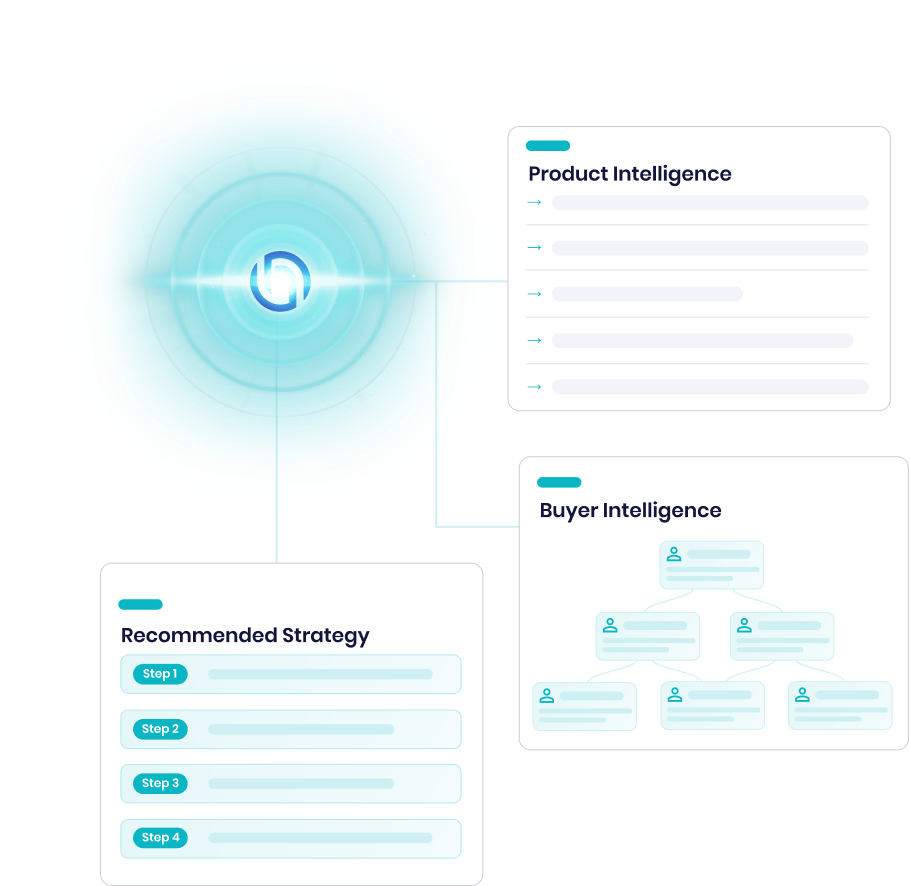
Pre-Call Preparation: Hero assembles a complete deal brief before the rep opens their laptop.
Before a sales call, reps scramble across CRM records, email threads, and old call notes to reconstruct deal context. Hero eliminates that by building a structured pre-call brief the moment a meeting lands on a rep's calendar.
Source: Vivun
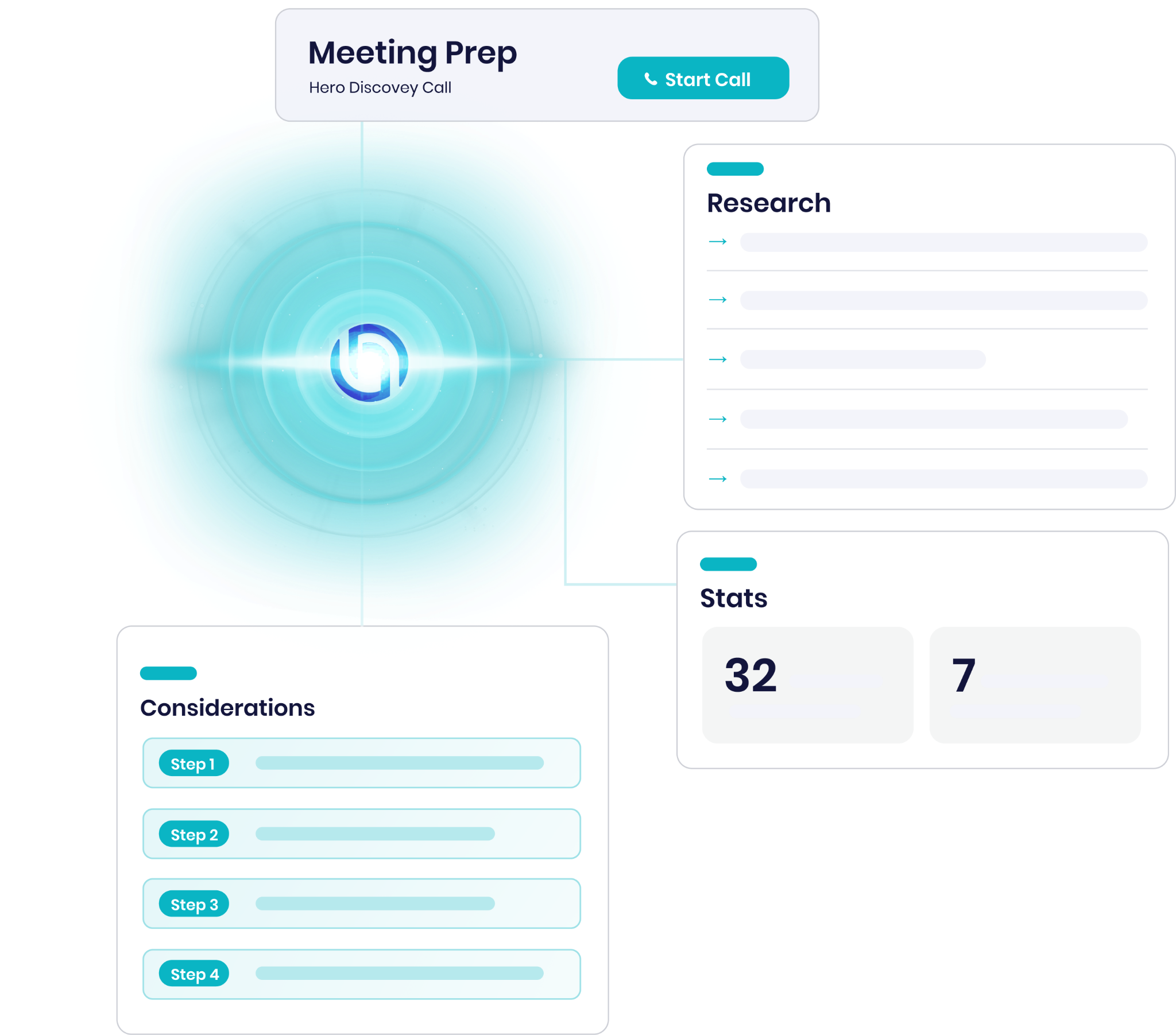
The brief pulls from the rep's CRM, past call recordings, emails, and account history. It then adds third-party buyer intelligence: company news, funding rounds, hiring patterns, tech stack signals, and competitive landscape.
The system generates a talk track tailored to the current deal stage and the attending stakeholders, flags unresolved objections and missing stakeholders, and aligns everything to the rep's sales methodology (MEDDIC, SPICED, or a custom framework).
Source: Vivun
Reps can also rehearse against real deal context before the meeting, running discovery and objection role-play using actual account data rather than generic scenarios.
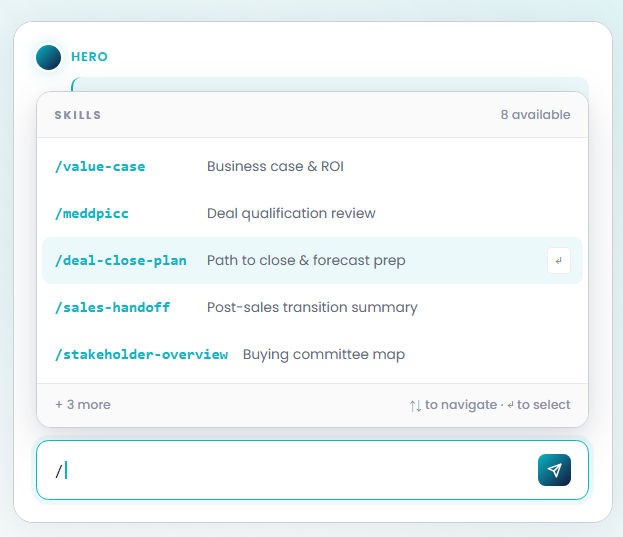
Structured pre-call outputs are available through slash commands including /stakeholder-overview, /executive-briefing, and /discovery-prep via Hero's Skills framework.
Source: Vivun
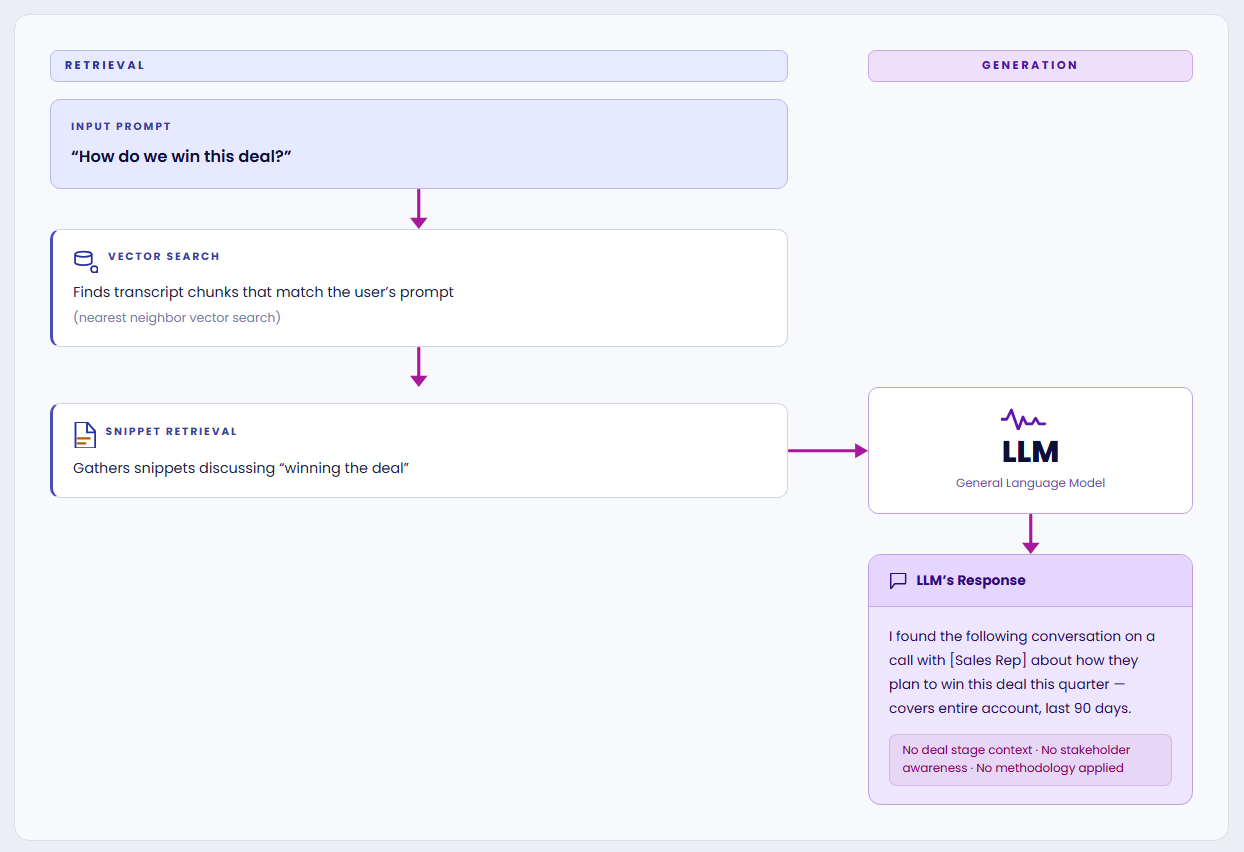
What sets this apart from generic AI prep tools: the brief assembles itself from the rep's connected systems (no copy-pasting context into a chat window), and the Sales Reasoning Model identifies deal stage and stakeholder roles before retrieving information, surfacing what's relevant to where the deal actually stands.
Source: Vivun
Real-Time Call Assist: Hero surfaces answers during live conversations without interrupting the buyer.
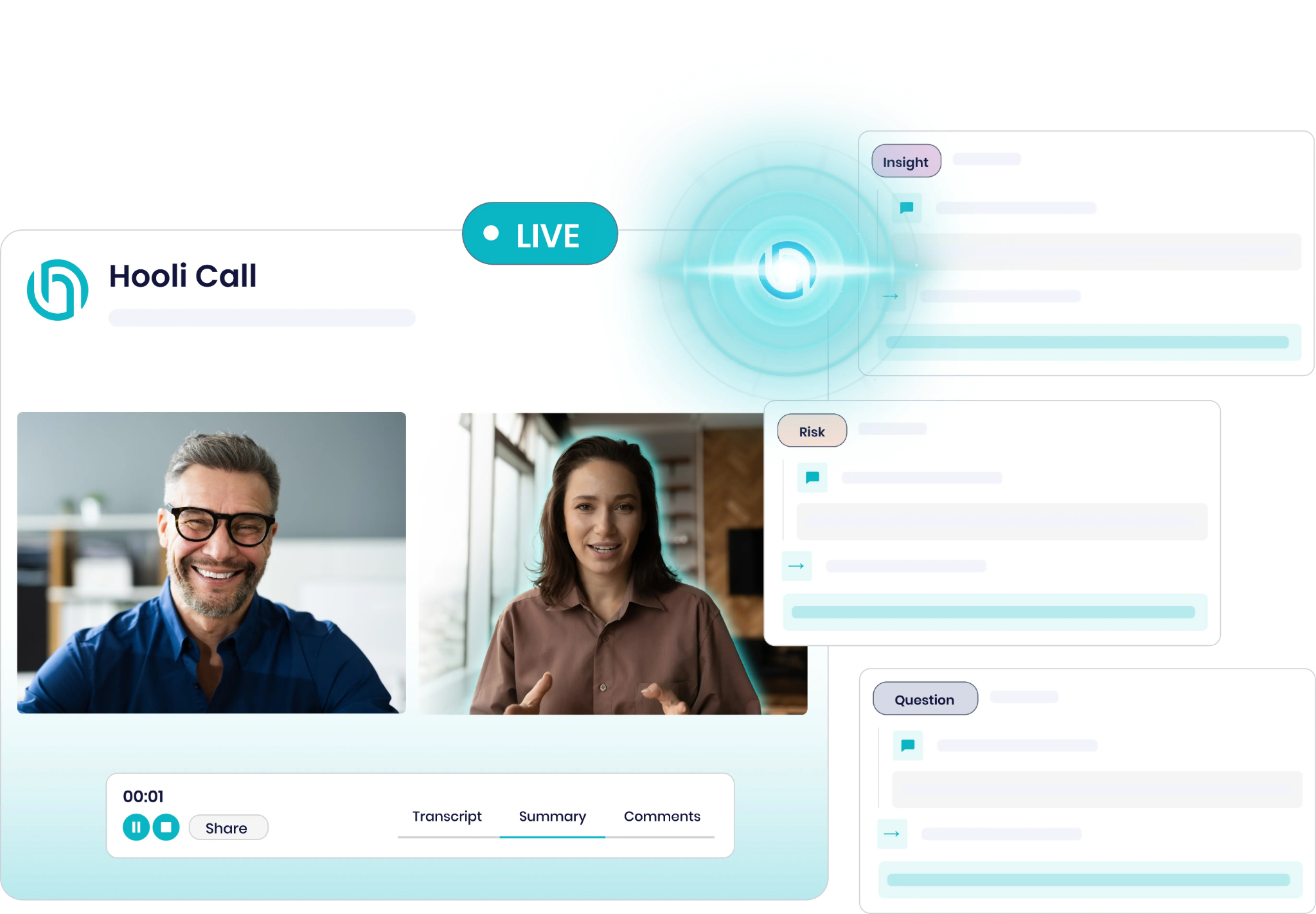
This is Hero's defining capability. During a live sales call, Hero listens to the conversation and surfaces relevant information on the rep's screen as the moment demands it.
The rep doesn't need to type queries or navigate menus. Hero detects trigger events (a competitor mention, a pricing question, a risk signal) and responds with grounded answers visible only to the seller.
Key capabilities during calls include:
Objection handling: surfaces specific language and proof points from actual positioning and customer wins, not generic rebuttals
Competitive intelligence: detects competitor mentions mid-call and surfaces relevant battle cards automatically
Source: Vivun
Discovery coaching: suggests the next question based on what's been said and what hasn't, keeping discovery focused
Risk detection: flags deal risks in real time, including single-threaded deals, absent success criteria, and emerging objections
Proof points: matches the right case study and metric to the buyer's scenario as it comes up in conversation
Every surfaced fact includes source attribution so reps can verify before using it. When the system isn't confident in an answer, it says so.
Hero is available via voice, chat, Slack, and avatar, though voice whisper mode, voice on call, and avatar on call are restricted to the Enterprise tier. Individual and Team plan users interact through chat and screen-based assists only.
Post-Call Intelligence: Hero captures follow-ups, CRM updates, and action items the moment the call ends.
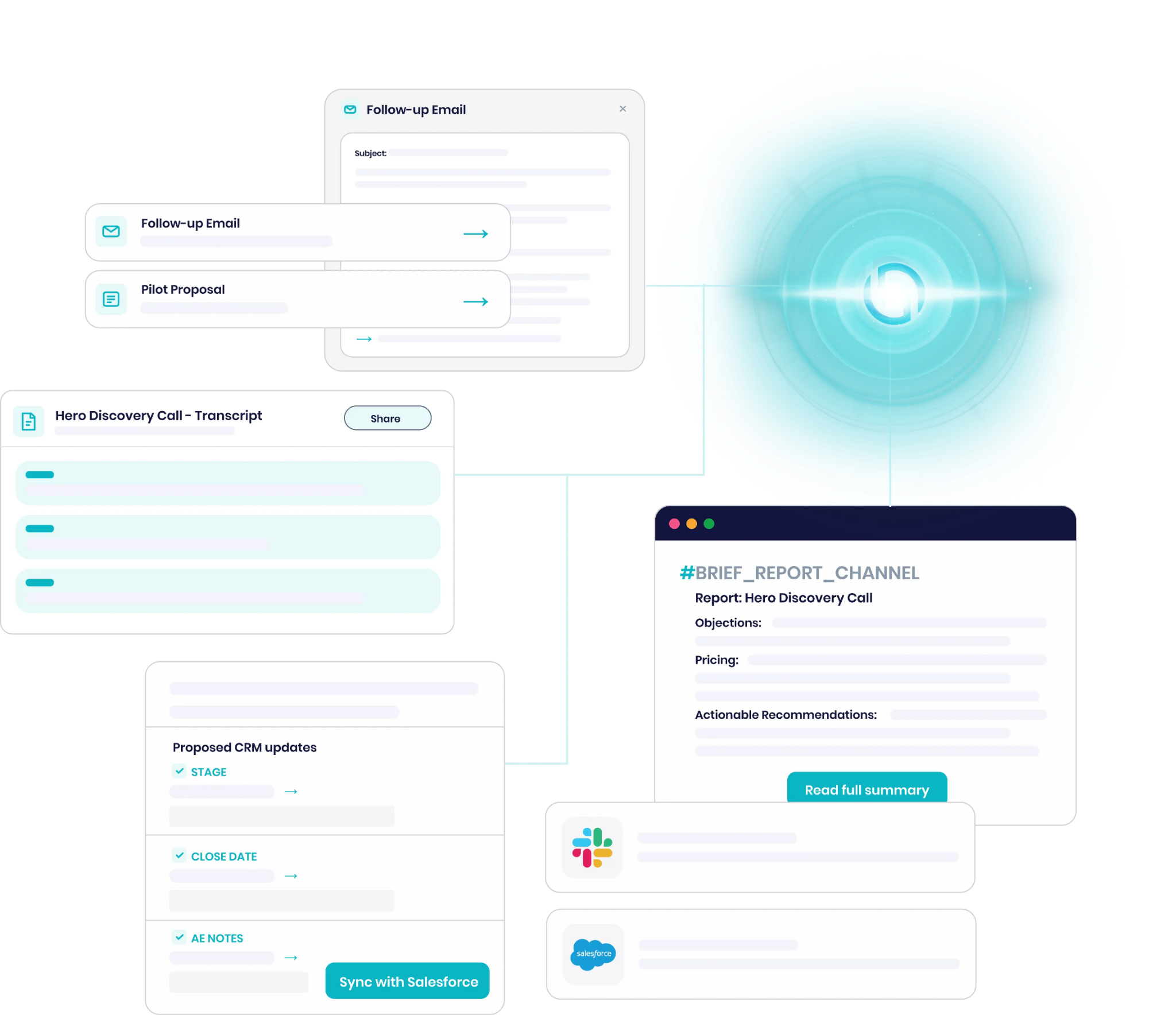
After a sales call, reps typically spend hours reconstructing what was said, drafting follow-ups, and updating CRM fields. Hero processes the call immediately, generating:
A structured call summary covering decisions, flagged risks, and next steps (not a raw transcript)
A draft follow-up email written from the actual conversation, referencing specific commitments and next steps
Automatic CRM updates to stage, next steps, stakeholders, and notes, with no manual entry required
An action item log tracking every commitment made on the call with assigned ownership
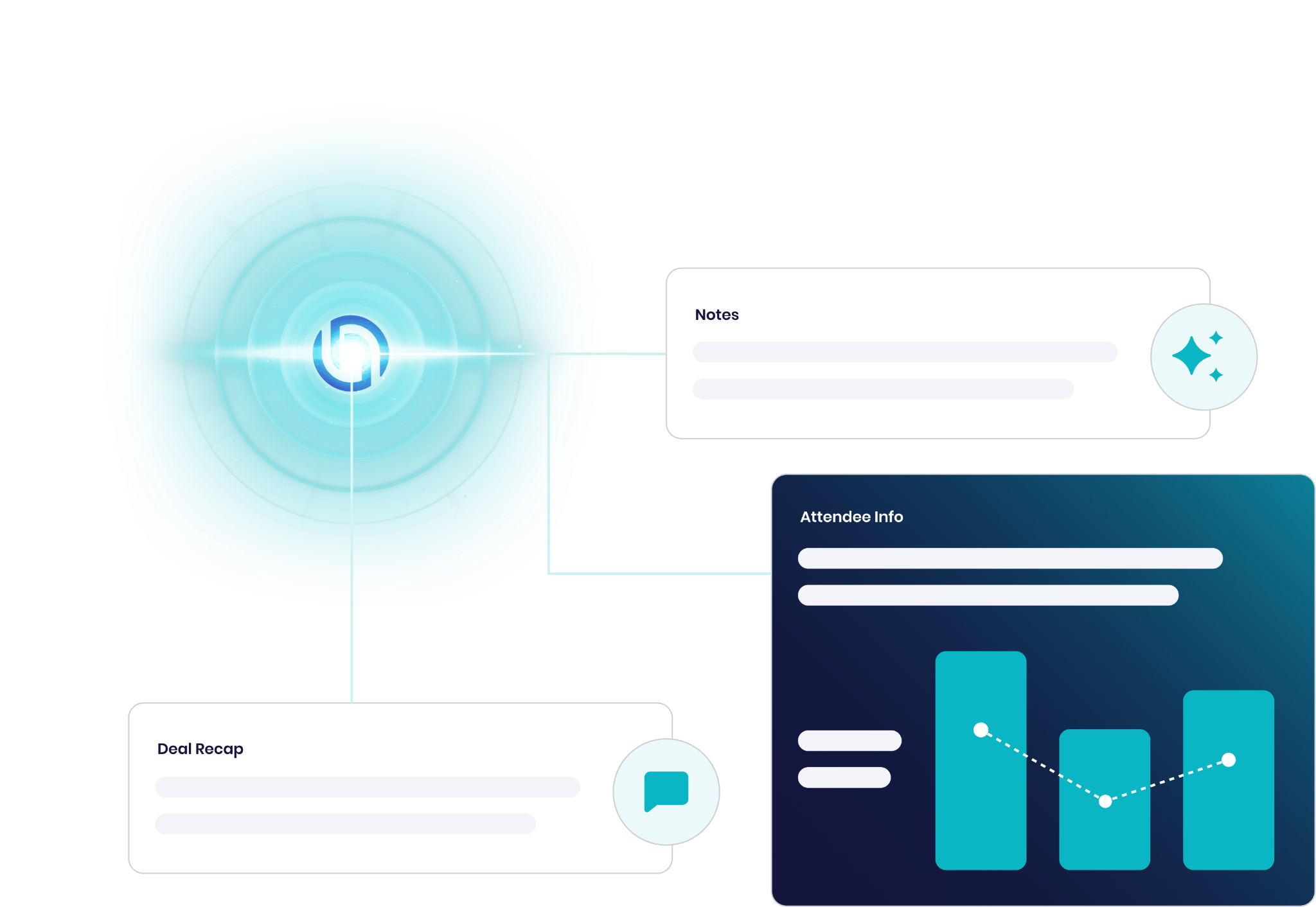
Context from each call carries forward into the next meeting's pre-call brief, creating continuity across the full arc of a deal. A stakeholder position expressed in the first discovery call stays accessible in the final negotiation.
Source: Vivun
Post-call Skills include /call-recap, /sales-handoff, /meddpicc, and /deal-close-plan for structured outputs.
Pricing: Hero uses a hybrid per-seat and credit-based model across three tiers.
Hero's pricing page lists three tiers:
Tier | Price | Who It's For |
|---|---|---|
Individual | $20/month | Solo sellers |
Team | $40/month per user | Sales orgs wanting shared workspaces |
Enterprise | Custom pricing | Organizations needing voice/avatar on call, full integrations, advanced security |
All tiers include unlimited deal workspaces and web research. However, the Individual plan excludes CRM integration, calendar sync, Slack, email access, and all voice features.
The Team plan adds CRM read/write-back and calendar integration but still excludes voice whisper, voice on call, avatar on call, historical backfill from conversation intelligence tools, and priority support. Only Enterprise unlocks the full real-time voice stack and all integrations.
Beyond the seat price, Hero operates on a credit-based consumption model where "higher-value capabilities use more credits." Vivun publishes a formal Credit Consumption Rate Card, but specific per-action credit costs are not publicly disclosed.
Hero offers a 28-day free trial on the Individual plan with no credit card required. There is no permanently free tier. Paid subscriptions run on 12-month terms with automatic annual renewal, and either party must provide 60 days' written notice to prevent auto-renewal.
Where Vivun Falls Short
Hero addresses a real gap in live selling assistance, but several limitations emerge when you evaluate it as part of a broader sales technology stack. These reflect a product focused on the call moment rather than the full go-to-market motion.
No Prospecting or Data Capabilities. Hero assumes the meeting is already booked. It has no B2B contact database, no company search, no intent signals, and no way to help sellers find or reach new prospects.
Teams using Hero still need separate tools for pipeline generation, which means additional subscriptions and context-switching.
Integration Coverage Is Still Early. Hero's integrations page lists eight native connectors: Salesforce, HubSpot, Gong, Chorus, Slack, Google Workspace, Microsoft Office, and Zoom. Clari is listed as "coming soon," notable given its role in enterprise forecasting workflows.
The integration ecosystem is thin compared to established GTM platforms, and there is no documented public API or webhook framework for custom integrations.
Core Features Gated Behind Enterprise Pricing. The capabilities that most differentiate Hero (voice whisper during calls, voice on call, and avatar on call) are locked to the Enterprise tier at custom pricing.
Individual and Team plan users get Hero through text-based assists only, which limits the hands-free, real-time help that makes the product compelling.
Limited Public Validation. Hero launched commercially in May 2026. The proof library rests on a single named Dayforce case study, with additional testimonials from anonymous personas.
For enterprise buyers running evaluations, the absence of multiple named customer stories with quantified outcomes is a gap.
Credit-Based Pricing Lacks Transparency. The per-seat prices are published, but the credit consumption layer adds an unpublished variable cost.
Without knowing what each action costs in credits, buyers cannot forecast total spend. Whether credits expire on a set schedule is also undisclosed.
No Conversation Intelligence for Coaching. Hero participates in calls but does not provide the post-call analytics sales managers need: talk ratios, sentiment tracking, coaching scorecards, or team performance benchmarking.
Vivun positions Hero as different from Gong, which is accurate, but it means organizations still need a separate conversation intelligence tool for manager-facing capabilities.
These limitations aren't failures. They're the natural result of building a product focused on the live selling moment. But they leave a clear gap for teams that need data, prospecting, intent signals, and AI-powered execution across the full go-to-market motion.
Top Vivun Alternative for Full GTM Execution: ZoomInfo
ZoomInfo, an AI GTM platform, addresses Vivun's scope limitations by providing the go-to-market infrastructure that surrounds and extends well beyond the live selling moment.
Where Hero helps during the call, ZoomInfo helps sellers find the right accounts, understand when they're in-market, execute multi-channel outreach, and manage the full deal lifecycle, powered by the largest B2B dataset in the industry and a GTM Context Graph that captures not just what happened in a deal, but why.
B2B Data: ZoomInfo operates the largest B2B data platform in the industry.
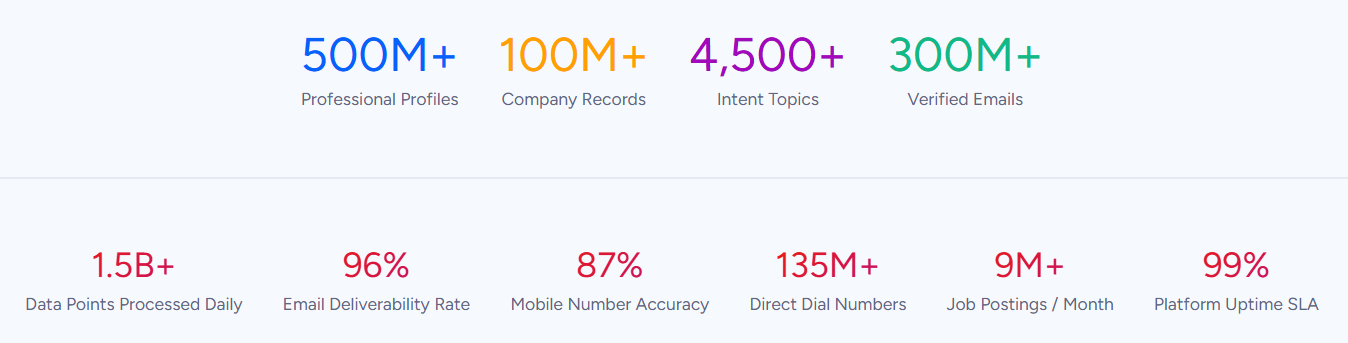
The foundation of ZoomInfo's platform is data: 500M contacts, 100M companies, 135M+ verified phone numbers, 120M direct-dial phone numbers, and 200M+ verified business email addresses.
Source: ZoomInfo
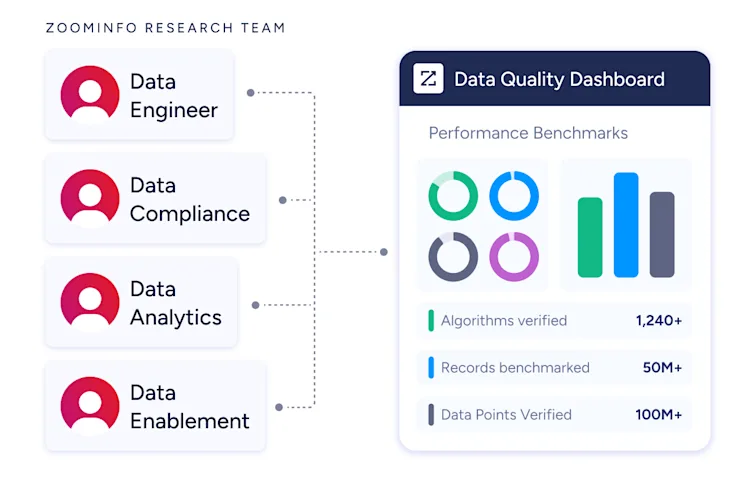
ZoomInfo verifies this data through a multi-source pipeline backed by 300+ human researchers and automated ML scanning of 28 million site domains daily, reaching up to 95% accuracy on first-party data.
Source: ZoomInfo
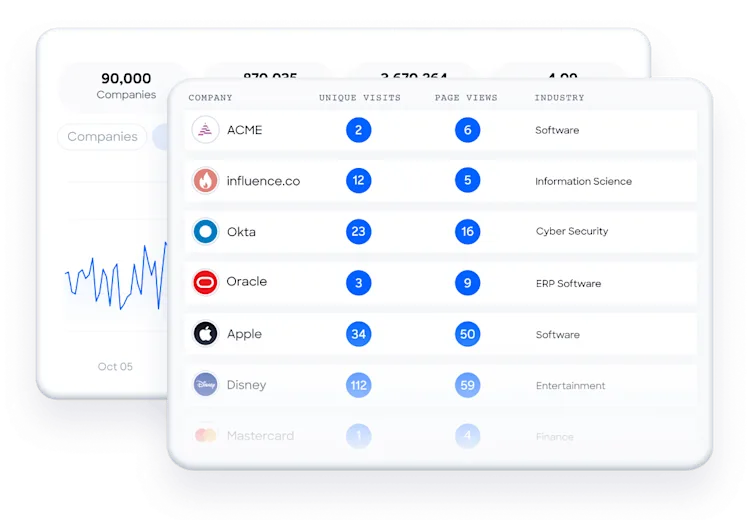
Beyond contact data, ZoomInfo provides buyer intent signals tracked from 210 million IP-to-Organization pairings, technographics covering 30,000+ technologies across 30+ million companies, company attributes with parent-child hierarchies, and website visitor identification that resolves anonymous traffic to companies.
Source: ZoomInfo
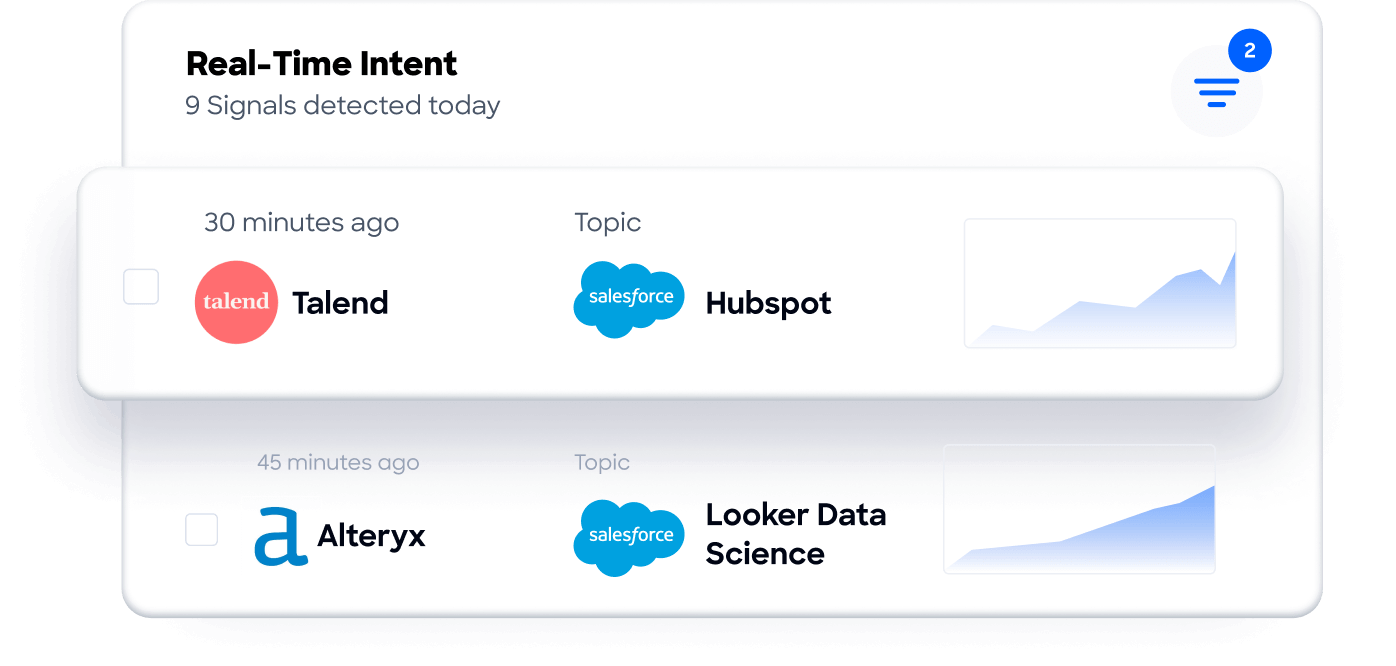
Guided Intent, exclusive to ZoomInfo, identifies topics historically correlated with deal success rather than requiring manual topic selection.
Source: ZoomInfo
This data advantage has external validation. In a Fortune 500 competitive RFP analyzing 25 million contacts across vendors, the independent consultant concluded that "no other competitor came even close."
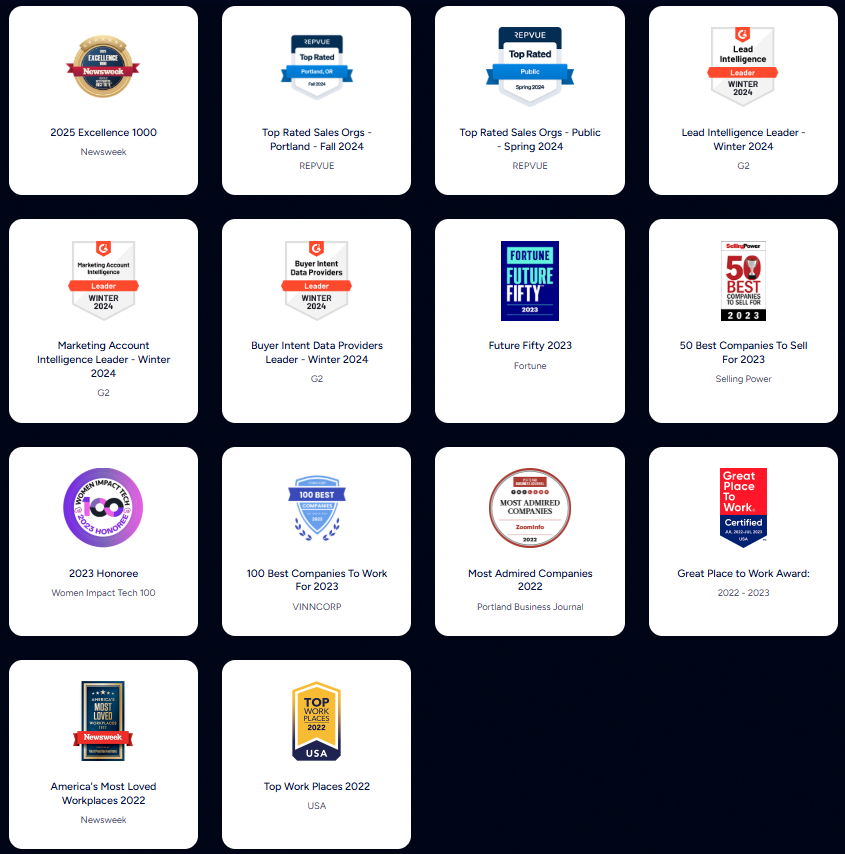
ZoomInfo is a Gartner MQ Leader for ABM Platforms, a Forrester Wave Leader for Intent Data Providers, and holds 133 No. 1 rankings on G2.
For teams evaluating Hero, this matters because Hero has no prospecting data. Its pre-call brief relies on whatever data is already in the rep's CRM and connected tools. ZoomInfo provides the upstream intelligence that fills those systems with verified contacts, org charts, and buying signals.
"ZoomInfo gives us the information we need to execute. We don't have to spend our time digging. It's already there, so we can be three steps ahead." (Vensure)
GTM Context Graph: ZoomInfo's intelligence layer captures why deals move, not just that they moved.
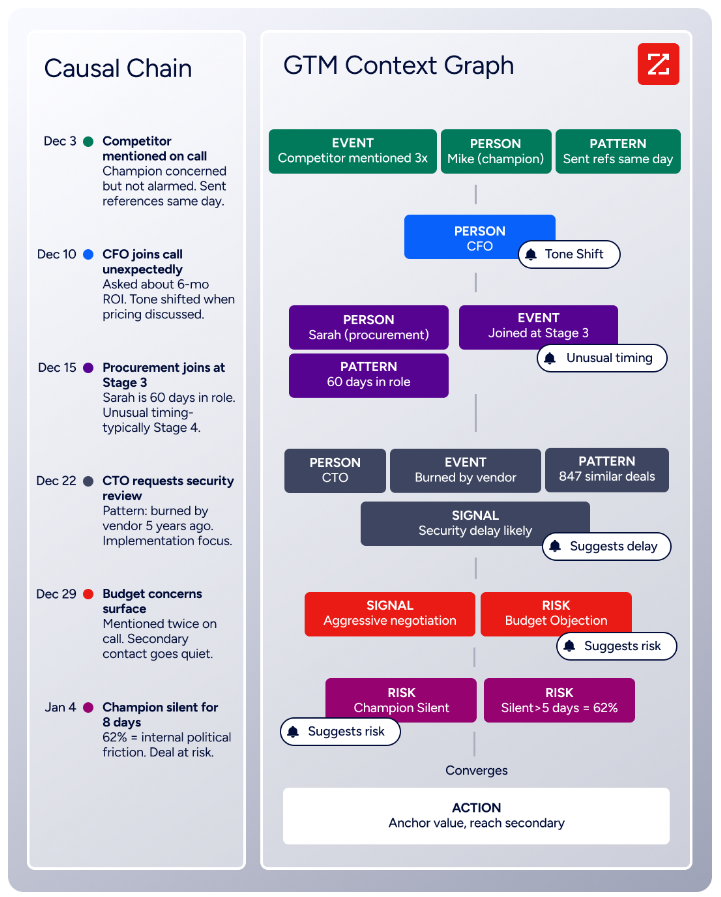
The GTM Context Graph transforms ZoomInfo's data from a static database into an intelligence layer. Processing 1.5B+ data points daily, it fuses ZoomInfo's third-party intelligence with a customer's own CRM records, conversation transcripts (captured by Chorus, ZoomInfo's conversation intelligence platform), email interactions, and behavioral signals into a single graph.
Source: ZoomInfo
A CRM records that a deal moved from Stage 3 to Stage 4. Conversation intelligence transcribes what the VP of Finance said on the last call. Intent data logs a spike in research activity.
The GTM Context Graph connects all three to capture why the deal moved, what pattern it matches against closed-won deals in your segment, and what actions will most likely accelerate it further.
This intelligence exists because ZoomInfo spent twenty years building data unification infrastructure (entity resolution, semantic normalization, identity matching at scale) and then acquired Chorus for its conversation intelligence and context capture capabilities.
Combining the industry's largest B2B dataset with first-party conversation and behavioral data creates an intelligence layer that no single point solution can replicate.
Hero's Sales Reasoning Model operates within a single deal and the rep's connected systems. ZoomInfo's GTM Context Graph operates across an organization's entire pipeline, correlating signals and outcomes across thousands of deals to find patterns that improve every subsequent interaction.
"That combination of our internal CRM data, external signals, and AI that's given all that context has helped us craft very specific account- and persona-based messages. And people have responded to them right away." (Seismic)
GTM Workspace: ZoomInfo gives sellers an AI-powered execution workspace, not just call-time assistance.
GTM Workspace is ZoomInfo's front-end for sellers: AEs, SDRs, account managers, and customer success reps.
Source: ZoomInfo
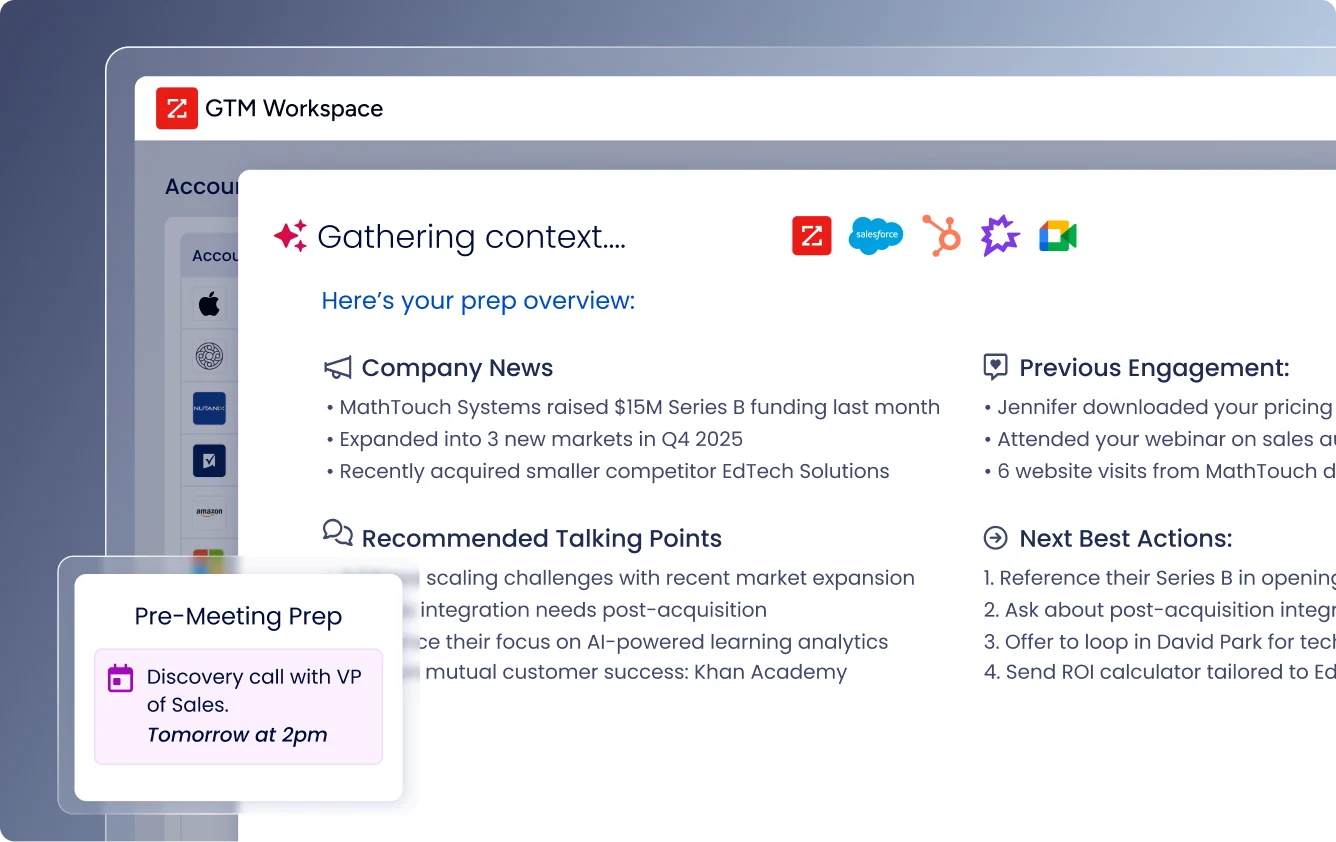
It consolidates CRM data, ZoomInfo intelligence, conversation history, and market signals into a single workspace where AI agents handle account research, outreach generation, CRM updates, and signal monitoring.
Key capabilities include:
AI Assistant: one-click account briefs pulling CRM history, company news, ZoomInfo signals, and stakeholder context into a summary (covering some of the same ground as Hero's pre-call prep, but backed by ZoomInfo's data layer)
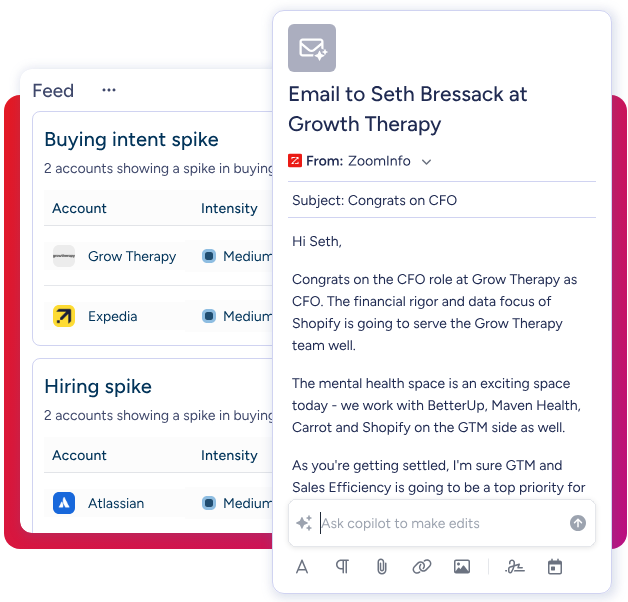
Action Feed: a live stream of in-market buyers matched to target criteria, with pre-drafted actions on every signal (G2 comparisons, funding events, executive hires.
Source: ZoomInfo
Views: dynamic, spreadsheet-style interfaces combining CRM data with real-time buying signals, filterable by intent spikes, technology changes, or personnel movements
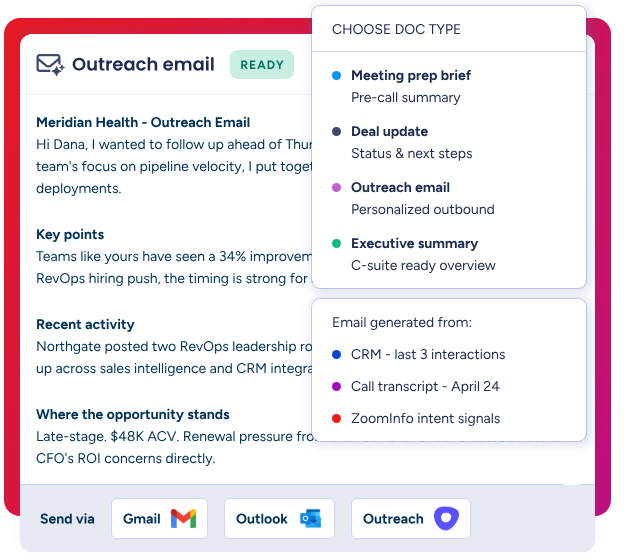
AI-generated outreach: personalized emails and messaging created from account context in seconds
Source: ZoomInfo
Buying group intelligence: surfaces hidden stakeholders and whitespace across accounts
GTM Workspace's AI agents are built on Anthropic's Claude and learn from user interactions, customer responses, and market changes. The workspace deploys in weeks, not months.
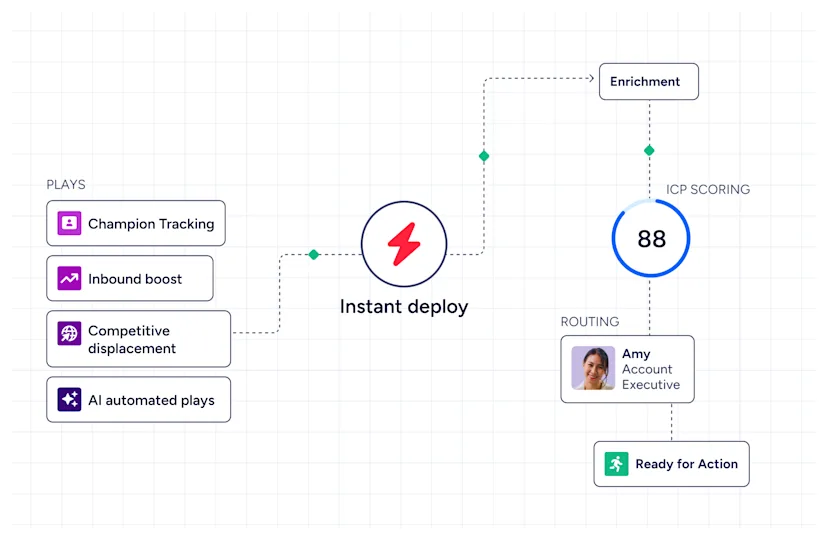
For marketers and RevOps, GTM Studio provides a separate canvas for audience definition, campaign orchestration, and pipeline measurement in natural language.
Source: ZoomInfo
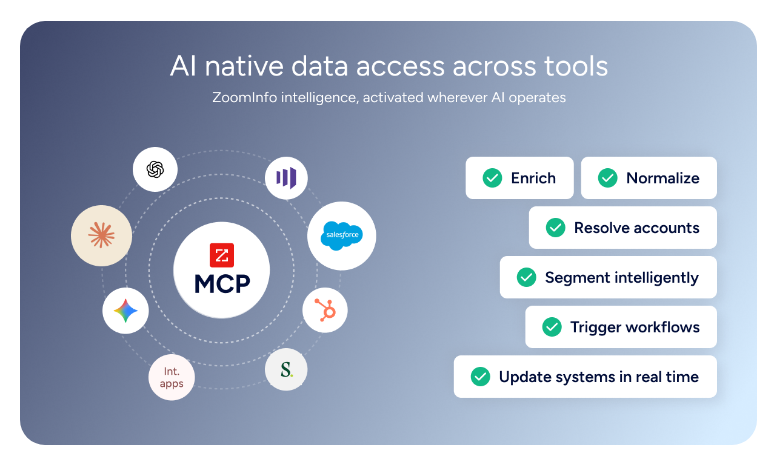
For teams building custom tools, APIs and MCP expose the same intelligence to any third-party application or AI agent.
Source: ZoomInfo
"Anything that minimizes our team's need to switch contexts is beneficial. ZoomInfo offers a unified view, eliminating the need to navigate between systems." (Spekit)
Pricing: ZoomInfo offers custom-quoted plans with a permanent free tier.
ZoomInfo uses consumption-based pricing with no publicly listed prices. Plans are organized into Sales and Marketing product lines, each with Professional, Advanced, and Enterprise tiers.
Pricing scales based on usage patterns, seat count, monthly credit volume, features, company size, and contract length. 1 credit equals 1 export of a professional or company profile; searching and viewing data within ZoomInfo does not consume credits.
Unlike Hero, ZoomInfo offers two free entry points:
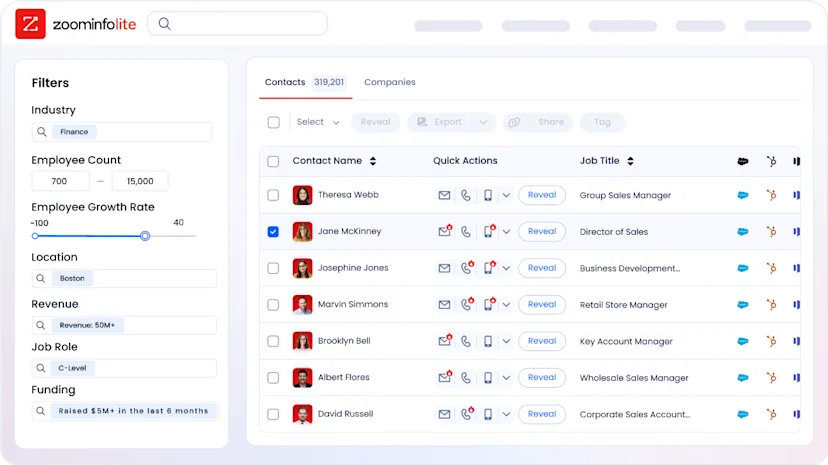
ZoomInfo Lite: a permanent free tier (not a trial) with access to 100M+ verified profiles, 10 monthly export credits, individual and company searches, the ReachOut Chrome Extension, WebSights Lite, built-in email sending, and HubSpot integration
Source: ZoomInfo
7-day free trial: no credit card required, with access to core platform features including contact and company search, intent signals, and email outreach
Annual contracts are standard, with multi-year commitments offering pricing advantages. API access is included in all relevant plans.
Vivun or ZoomInfo: Comparison Summary
Vivun (Hero) | ZoomInfo | |
|---|---|---|
Primary focus | AI sales teammate for live calls | AI GTM platform |
B2B data | None | 500M contacts, 100M companies, 135M+ verified phones |
Intent signals | None | Buyer intent from 210M IP-to-Org pairings, Guided Intent |
Pre-call prep | Automated deal briefs from CRM and call history | AI Assistant with account briefs from CRM + ZoomInfo data + signals |
Real-time call assist | Live answer surfacing, objection handling, discovery coaching | Not a live call participant |
Post-call automation | CRM write-back, follow-up drafts, action items | Chorus for call analysis; GTM Workspace for CRM updates and outreach |
Conversation intelligence | Not included (participates, doesn't analyze) | Chorus (recording, transcription, coaching, deal intelligence) |
Marketing & ABM | Not included | GTM Studio, native DSP, FormComplete, audience orchestration |
Integrations | 8 native (Clari coming soon) | 120+ in App Marketplace, plus API and MCP access |
Free tier | 28-day trial only | ZoomInfo Lite (permanent) + 7-day trial |
Pricing transparency | $20–$40/month per seat + undisclosed credits | Custom-quoted, consumption-based |
Analyst recognition | Gartner AI Vendor Race mention (2026) | Gartner MQ Leader (ABM), Forrester Wave Leader (Intent Data), 133 G2 No. 1 rankings |
Best for | Enterprise teams needing in-call AI assistance | Teams needing full GTM execution: data, signals, outreach, and intelligence |
Final Verdict
The choice between Vivun and ZoomInfo depends on whether you need help during the call or across the entire go-to-market motion.
Choose Vivun (Hero) if your team's bottleneck is the live selling moment. Hero is built for sellers who know their accounts and have meetings booked, but need real-time backup when a prospect asks about pricing edge cases, mentions a competitor, or raises a technical objection that would normally require an SE on the line.
For organizations running complex enterprise deals with long cycles, the combination of automated pre-call briefs, live answer surfacing, and instant post-call CRM updates fills a gap that call recording and post-call analytics tools don't.
If your prospecting, data, and pipeline generation needs are already covered, Hero adds a focused layer of in-call intelligence.
Choose ZoomInfo if you need the infrastructure behind effective selling, not just assistance during calls.
ZoomInfo covers everything upstream and downstream of the conversation: finding the right prospects with verified contact data, identifying when accounts are in-market through intent signals, executing AI-powered outreach through GTM Workspace, orchestrating multi-channel plays through GTM Studio, and feeding that intelligence into any tool through APIs and MCP.
The GTM Context Graph connects signals across your entire pipeline, linking outcomes across thousands of deals to surface patterns that predict closed-won business.
For teams that need both the data foundation and the execution layer, ZoomInfo provides the complete platform.
Get started with ZoomInfo here.
Hero solves a real problem at a specific point in the sales process. ZoomInfo solves the broader challenge of knowing who to sell to, when to engage, and why deals succeed or fail. The scope of your need determines the right choice.
Vivun FAQ
What is Vivun Hero?
Hero is Vivun's AI Sales Teammate, launched commercially in May 2026. It provides real-time assistance during live sales calls by listening to conversations and surfacing relevant answers, competitive intelligence, and objection-handling language on the rep's screen.
It also automates pre-call preparation (assembling deal briefs from CRM and call history) and post-call tasks (CRM updates, follow-up emails, and action item tracking). Hero runs on Vivun's proprietary Sales Reasoning Model, which applies deal stage and stakeholder awareness before retrieving information.
How much does Vivun Hero cost?
Hero's Individual plan costs $20/month and the Team plan costs $40/month per user. Enterprise pricing is custom. Beyond the seat price, Hero uses a credit-based consumption model where higher-value capabilities use more credits, but specific per-action credit costs are not publicly disclosed.
All paid subscriptions run on 12-month terms with automatic renewal, requiring 60 days' written notice to cancel. A 28-day free trial is available on the Individual plan with no credit card required.
What integrations does Vivun Hero support?
Hero integrates natively with Salesforce, HubSpot, Gong, Chorus, Slack, Google Workspace, Microsoft Office, and Zoom. Clari integration is listed as "coming soon." CRM write-back is available on Team and Enterprise plans only. Individual plan users at $20/month do not get CRM, calendar, Slack, or email integrations.
ZoomInfo offers 120+ integrations through its App Marketplace, plus API and MCP access for custom tool connections.
Does Vivun Hero work during live calls?
Yes, real-time call assistance is Hero's primary differentiator. The product listens to live conversations and surfaces relevant information, competitive intelligence, and objection-handling responses on the rep's screen without the buyer seeing or hearing it.
However, the most advanced modes (voice whisper, voice on call, and avatar on call) are restricted to the Enterprise tier. Individual and Team plan users interact with Hero through chat and screen-based assists only.
How does Vivun compare to Gong?
Vivun positions Hero as different from Gong. Gong records, transcribes, and analyzes calls after they end, providing insights for managers and coaching. Hero operates during the live call, surfacing answers for the rep in real time. The two are complementary rather than competitive. Hero integrates with Gong, pulling historical call data into its pre-call briefs.
ZoomInfo's Chorus provides conversation intelligence similar to Gong (recording, transcription, coaching scorecards, deal intelligence) as part of the broader ZoomInfo platform.
Is Vivun Hero suitable for small sales teams?
Hero's Individual plan at $20/month is accessible for solo sellers, but it excludes CRM integration, calendar sync, Slack, and all voice features.
Without CRM connectivity, the product cannot automate post-call write-back or pull deal history into pre-call briefs, which limits much of its core value. Small teams would need the Team plan at $40/month per user to get these integrations.
ZoomInfo offers ZoomInfo Lite as a permanent free tier with access to B2B data, search, Chrome Extension, and HubSpot integration, providing a lower barrier to entry for small teams focused on prospecting.
What security certifications does Vivun hold?
Vivun holds SOC 2 Type I and Type II, ISO 27001, ISO 42001 (an AI management standard covering bias management, transparency, and accountability), and is GDPR and CCPA compliant.
The company states that customer data is never used to train third-party AI models, and each deployment operates as an isolated instance. Vivun's security page discloses its full third-party AI subprocessor list, including OpenAI, LiveKit, Deepgram, and Recall.ai.
ZoomInfo maintains ISO 27001, ISO 27701, SOC 2 Type II, and TRUSTe GDPR/CCPA certifications, all renewed annually.
More Vivun comparisons and alternatives:
