
WalkMe pioneered the Digital Adoption Platform (DAP) category, giving enterprise organizations a way to guide employees through complex software like SAP, Salesforce, and Workday with in-app walkthroughs, workflow automation, and analytics.
But since SAP acquired WalkMe in September 2024, the platform's direction has centered on the SAP ecosystem. As your organization's needs evolve, a horizontal DAP built to serve every department may not solve your most pressing challenges.
That's where this guide comes in. Whether you're looking to:
Deploy enterprise-grade digital adoption without SAP ecosystem dependency
Understand product usage and drive customer-facing feature adoption with analytics-first guidance
Accelerate customer onboarding and activation for your own SaaS product
Get AI-powered sales intelligence and GTM execution that replaces multi-tool complexity
Enable revenue teams with in-workflow coaching grounded in live deal context
Launch interactive onboarding without enterprise contracts or developer involvement
Implement transparent, all-inclusive DAP pricing with a built-in learning management system
We'll explore solutions that excel in each area.
Some organizations will use these tools alongside WalkMe for specialized capabilities; others will replace it entirely with a solution built for their core use case. This isn't about finding a "better" platform. It's about finding the right fit as your requirements sharpen.
Here are the WalkMe alternatives.
The Best WalkMe Alternatives | |
|---|---|
Best Alternative for AI-Powered Sales Intelligence & GTM Execution We chose ZoomInfo because it tackles the multi-tool complexity that creates adoption problems in the first place, giving sales teams one AI GTM platform for intelligence, outreach, and CRM updates. | |
Best Alternative for Enterprise DAP Without SAP Dependency We chose Whatfix because it delivers the full enterprise DAP feature set (including application simulation training via Mirror) while remaining independent from SAP's ecosystem. | |
Best Alternative for Product-Led SaaS Teams Needing Analytics-First Guidance We chose Pendo because it pairs retroactive behavioral analytics with in-app guides, letting product teams understand why users disengage before deciding how to guide them. | |
Best Alternative for Customer-Facing SaaS Adoption at Mid-Market Scale We chose Appcues because it lets product teams ship cross-channel onboarding (in-app, email, and push) within hours, without developer involvement or enterprise procurement timelines. | |
Best Alternative for In-Workflow Sales Enablement We chose Spekit because its AI Sidekick delivers competitive intel and coaching inside Salesforce and Gmail based on live deal signals, rather than requiring reps to search a portal. | |
Best Alternative for Small Teams Needing In-App Onboarding Without Enterprise Contracts We chose UserGuiding because it offers a free starting tier and transparent pricing from $174/month, making interactive product tours and onboarding accessible without multi-year commitments. | |
Best Alternative for AI-First DAP With Transparent Pricing We chose Apty because it offers all-inclusive enterprise DAP with a published starting price, a built-in LMS, and a 2x ROI guarantee, all without SAP ecosystem dependency. |
What is WalkMe?
Source: WalkMe
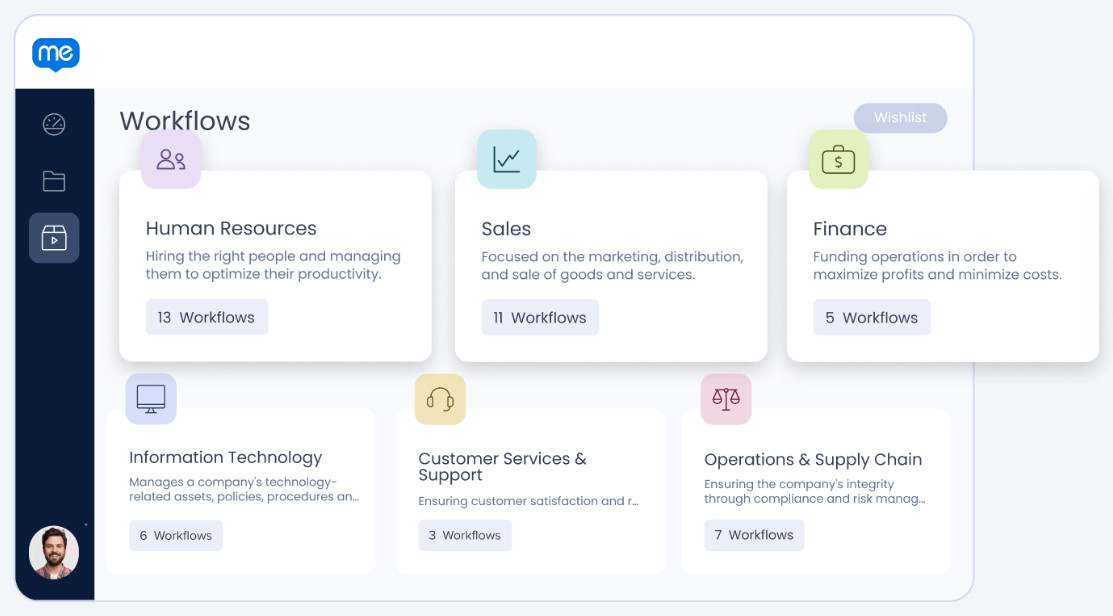
WalkMe is a Digital Adoption Platform (DAP) built to reduce digital friction in enterprise workflows. Now a wholly owned SAP subsidiary following a $1.5 billion acquisition completed in September 2024, WalkMe serves roughly 1,600 enterprises and 35 million users across 42+ countries, with 27% Fortune 500 penetration.
Its key features include:
In-app guidance (Walk-Thrus, SmartTips, ShoutOuts) with conditional branching and error-handling logic
Workflow automation that clicks buttons, fills forms, and advances screens across enterprise applications
App Discovery and Analytics tracking software usage across the tech stack
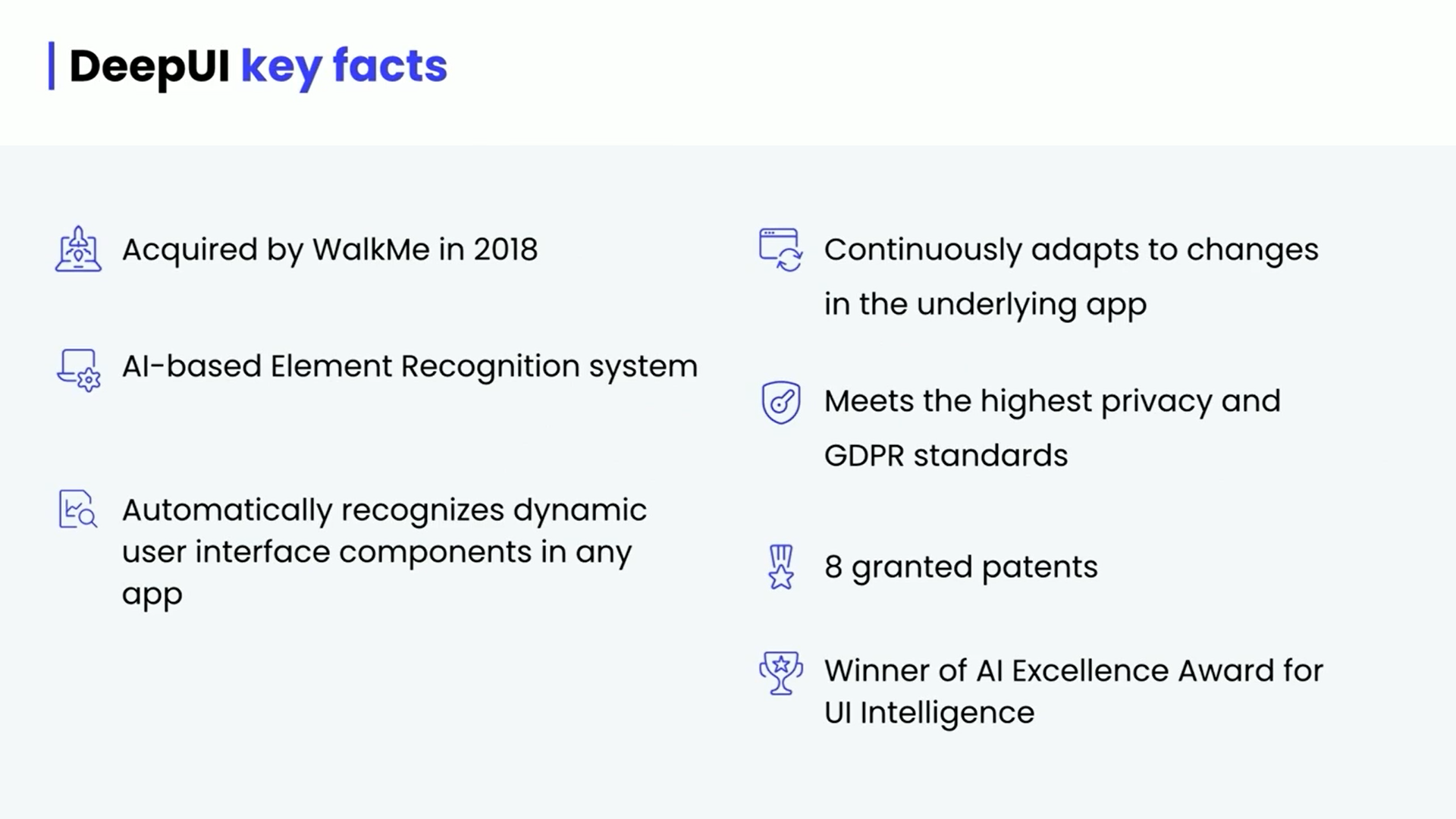
DeepUI technology that adapts guidance automatically when application UIs change
WalkMe AI providing contextual, screen-aware assistance across any application
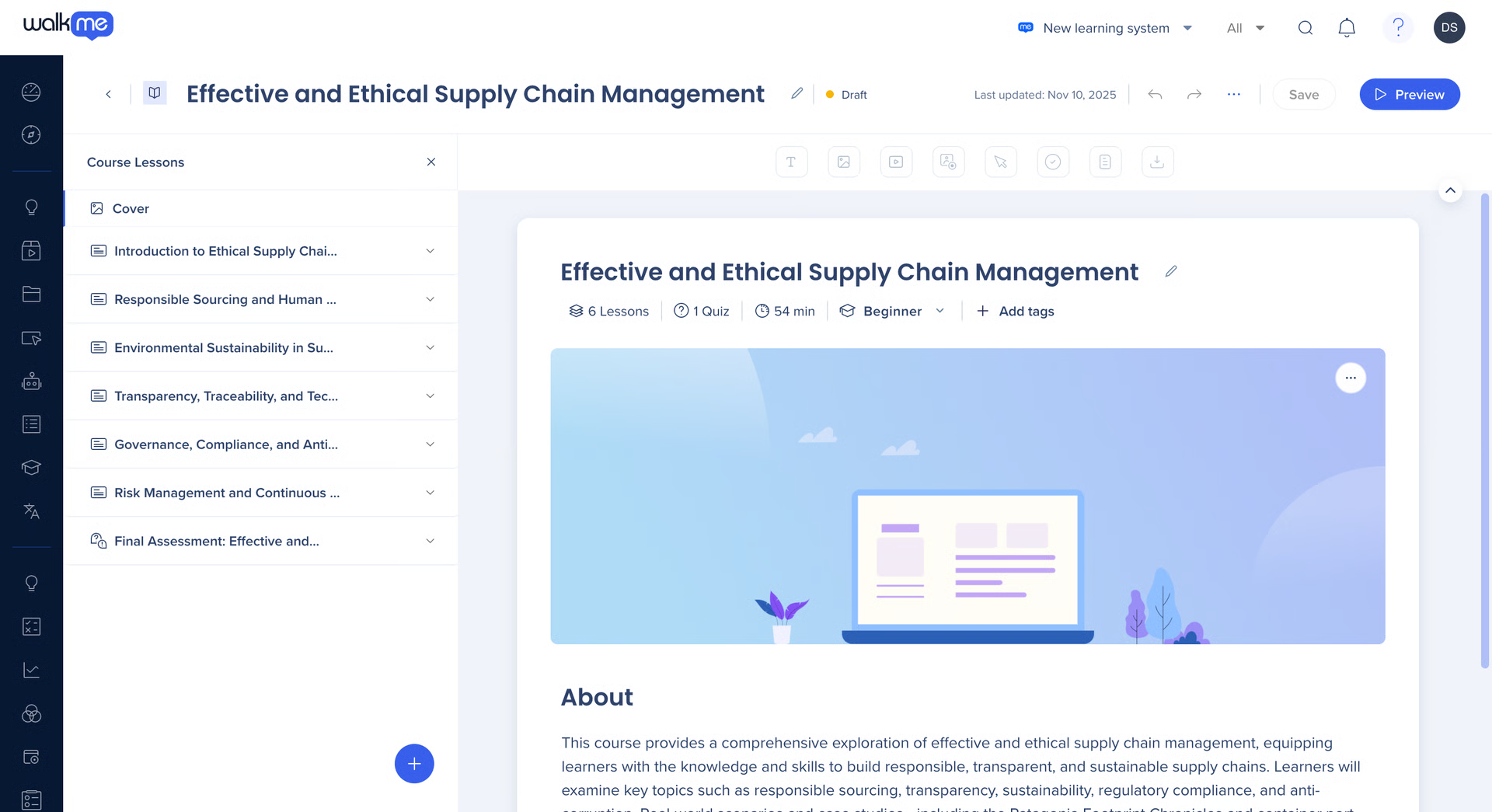
WalkMe Learning Arc for digital learning and course creation
Enterprise security certifications including FedRAMP Ready, SOC 2 Type II, and ISO 27001
WalkMe's DeepUI technology understands applications contextually and adapts guidance when software updates change the interface, eliminating the manual rework competitors require after each release. An IDC study puts the return at a 3-year 494% ROI with a 5-month payback period.
Source: YouTube
Since the SAP acquisition, however, WalkMe's product roadmap has centered on the SAP ecosystem, with WalkMe Learning Arc positioned as the successor to SAP Enable Now and the platform embedded natively into SAP applications.
Source: WalkMe
For enterprises running primarily non-SAP stacks, or organizations whose needs go beyond horizontal digital adoption (sales intelligence, product analytics, or customer-facing onboarding), more specialized alternatives may deliver better results.
How We Curated Our List of WalkMe Alternatives
After researching WalkMe and the broader digital adoption market, we found that organizations searching for alternatives typically have specific needs that extend beyond WalkMe's horizontal DAP approach. While WalkMe works well as an enterprise-wide adoption layer, businesses often need specialized tools for:
Deploying enterprise DAP without tying their adoption infrastructure to SAP's product ecosystem
Understanding customer behavior with analytical depth before deciding where to add guidance
Driving customer-facing product activation and onboarding without multi-month enterprise implementation timelines
Replacing sales tool complexity with AI-powered GTM intelligence in one workspace
Delivering proactive sales coaching based on live deal context, not generic process walkthroughs
Launching interactive onboarding at startup scale with transparent pricing and no developer involvement
Implementing full-stack DAP with published pricing, a built-in LMS, and no SAP dependency
Each tool on this list excels at one of these areas. You might use them alongside WalkMe or replace it entirely; it depends on what your organization needs most.
DISCLAIMER: We aren't covering every single digital adoption tool on the market! Our focus is on highlighting the best alternatives that address specific limitations or scope gaps in WalkMe's approach for various use cases and organization types. |
|---|
1. ZoomInfo: Best Alternative for AI-Powered Sales Intelligence & GTM Execution
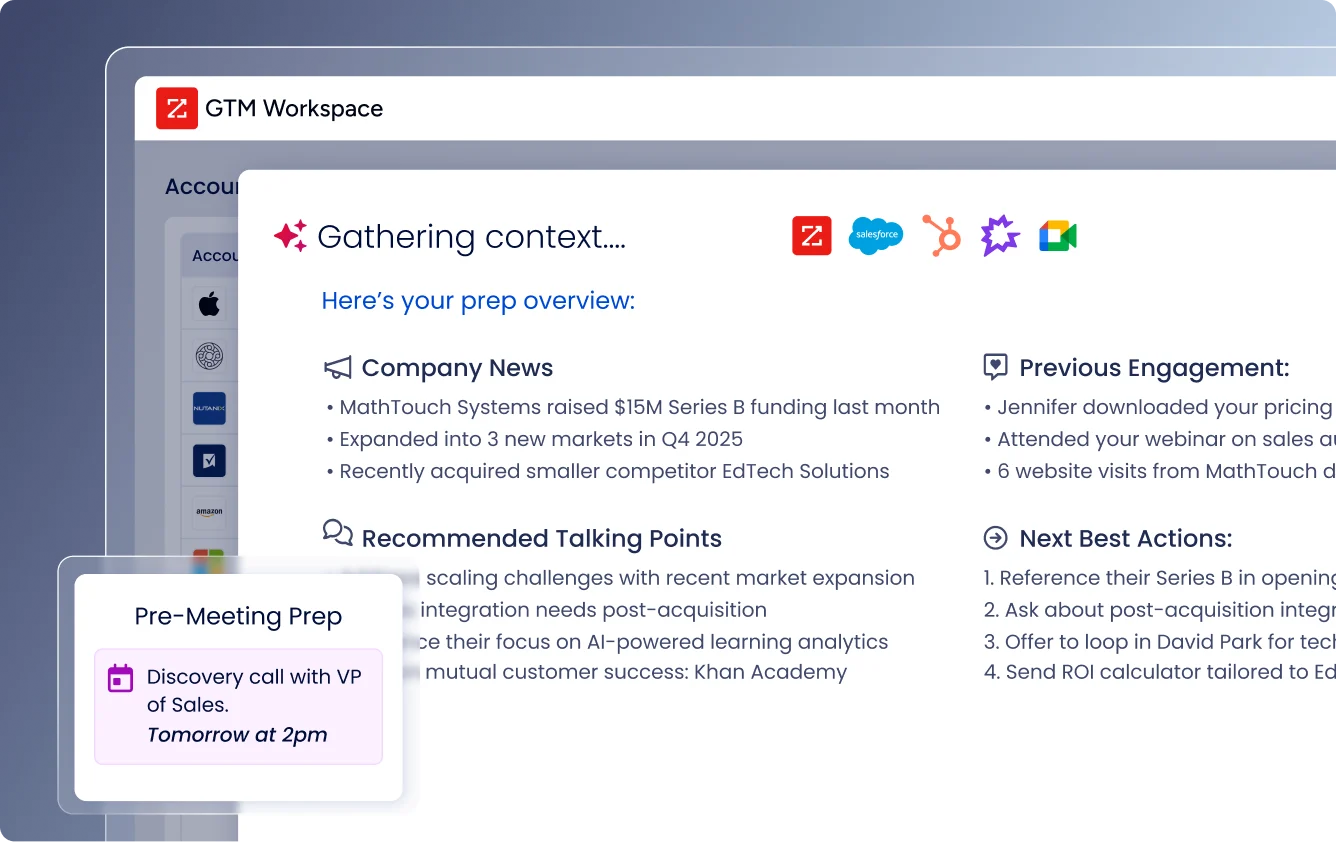
ZoomInfo is an AI GTM platform that takes a different approach to the sales productivity problem WalkMe addresses with in-app guidance.
Built on a large B2B data foundation and powered by the GTM Context Graph intelligence layer, ZoomInfo replaces multi-tool complexity, giving sales teams intelligence, AI-drafted outreach, and automated CRM updates in one workspace rather than overlaying walkthroughs on complex CRM interfaces. Its key features include:
B2B data: 500M contacts, 100M companies, 135M+ verified phone numbers, and 200M+ verified business email addresses with up to 95% accuracy on first-party data
GTM Context Graph: An intelligence layer that processes 1.5B+ data points daily, fusing B2B data with CRM records, conversation intelligence, and behavioral signals to capture why deals move or stall
GTM Workspace: An AI-powered workspace where sellers access prioritized accounts, AI-drafted outreach, and deal execution without toggling between tools
GTM Studio: An AI orchestration canvas for marketers, RevOps, and GTM engineers to design, enrich, and activate GTM plays in natural language
Universal API & MCP access: ZoomInfo's intelligence available in any tool, any AI agent, any workflow through programmatic access
One of WalkMe's documented jobs is "Sales Organization Enablement," where the platform guides reps through CRM workflows, enforces deal hygiene, and automates repetitive data entry. ZoomInfo addresses the same pain point from the opposite direction: instead of teaching reps how to navigate complex sales tools, it gives them a workspace that makes multi-tool navigation unnecessary.
Why Choose ZoomInfo Over WalkMe for Sales Intelligence & GTM Execution
WalkMe helps sales teams use their existing CRM tools more effectively. ZoomInfo provides the intelligence and execution layer that makes complex multi-tool workflows obsolete for revenue teams. Here's where ZoomInfo excels:
Unified Sales Workspace: Replace Multi-Tool Complexity With One AI-Powered Surface
WalkMe's value for sales teams lies in guiding reps through Salesforce workflows, enforcing field completion, and providing contextual tips when reps navigate complex CRM interfaces.
That approach addresses a real problem: enterprises average 23 GTM technologies, forcing sellers to context-switch constantly. But WalkMe treats the symptom (reps struggle to navigate tools) rather than the cause (too many tools in the first place).
ZoomInfo’s GTM Workspace eliminates that complexity by giving sellers one surface where prioritized accounts, AI-drafted outreach, deal intelligence, and CRM updates converge.
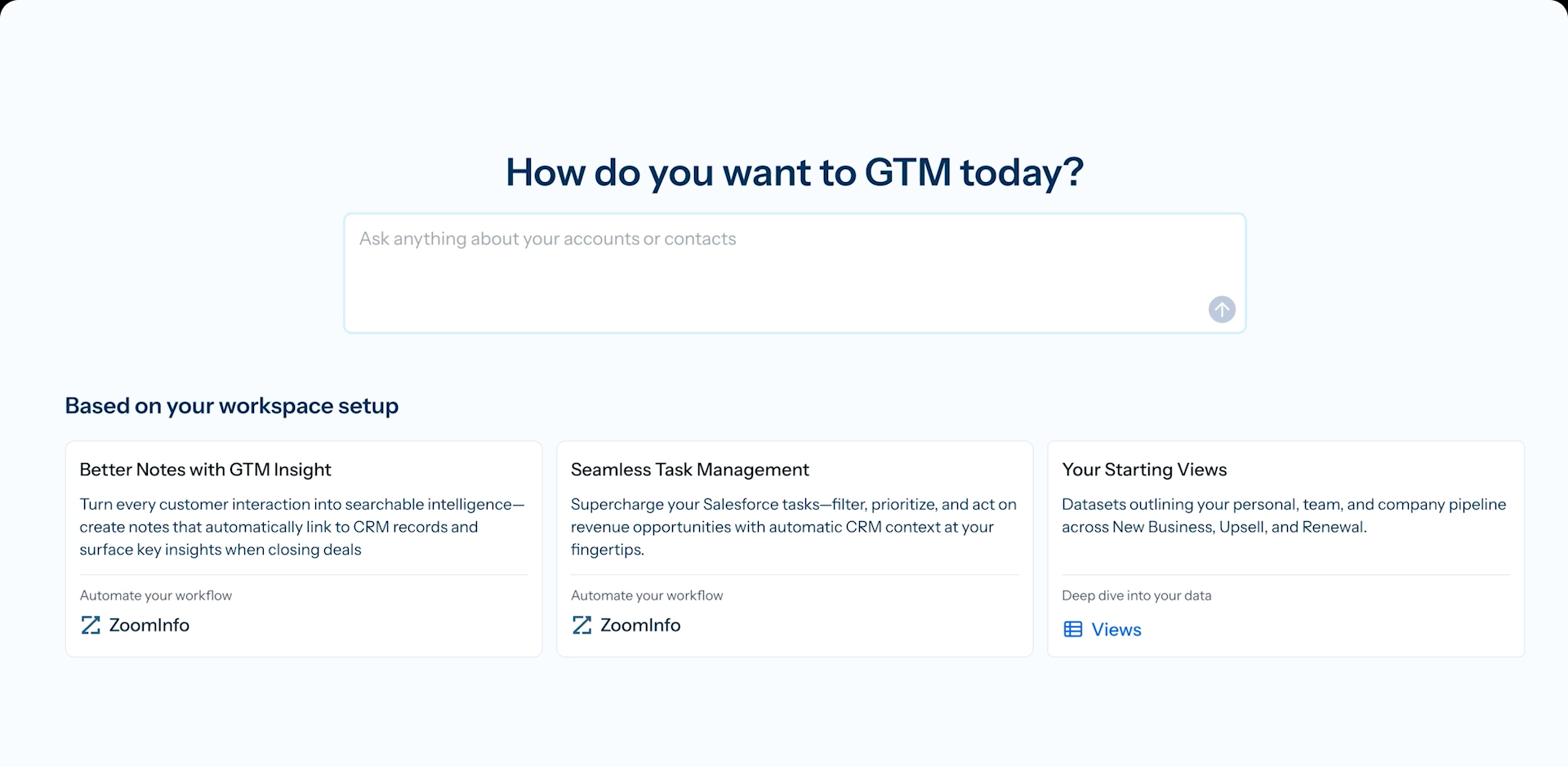
The AI agents inside Workspace research accounts, generate follow-ups, monitor signals, draft outreach, and update CRM fields automatically. Sales reps don't need a Walk-Thru to fill out a Salesforce field correctly when the system fills it in for them.
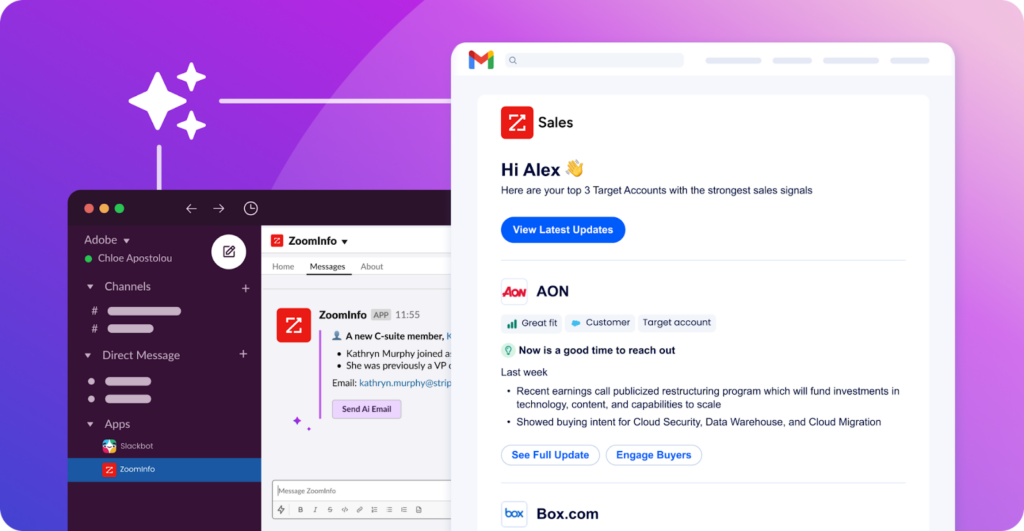
ZoomInfo in Action: A seller opens GTM Workspace to find accounts prioritized by buying intent, with an AI-generated brief summarizing the latest call insights, recent funding news, and stakeholder changes.
Instead of navigating between Salesforce, a conversation intelligence tool, and a contact database, the rep reviews the brief, approves the AI-drafted follow-up email that addresses the specific concern raised on the last call, and updates the deal stage without leaving the page.
No guidance overlays needed because there's no complex navigation to guide through.
AI-Powered Intelligence: Know Why Deals Move, Not Just How to Navigate Software
WalkMe's analytics layer tells you where employees drop out of software workflows and whether they consume guidance content. That's useful for measuring DAP program ROI. But it doesn't tell a sales leader why a deal is stalling, which stakeholders are blocking progress, or what signal pattern predicts a closed-won outcome.
ZoomInfo's GTM Context Graph captures exactly that. As CPO Dominik Facher writes: "The CRM recorded the state change. It has no record of why it happened." The GTM Context Graph fuses your CRM records, conversation transcripts, email threads, and product usage data with ZoomInfo's third-party intelligence to extract the connections between signals and outcomes across all of it.
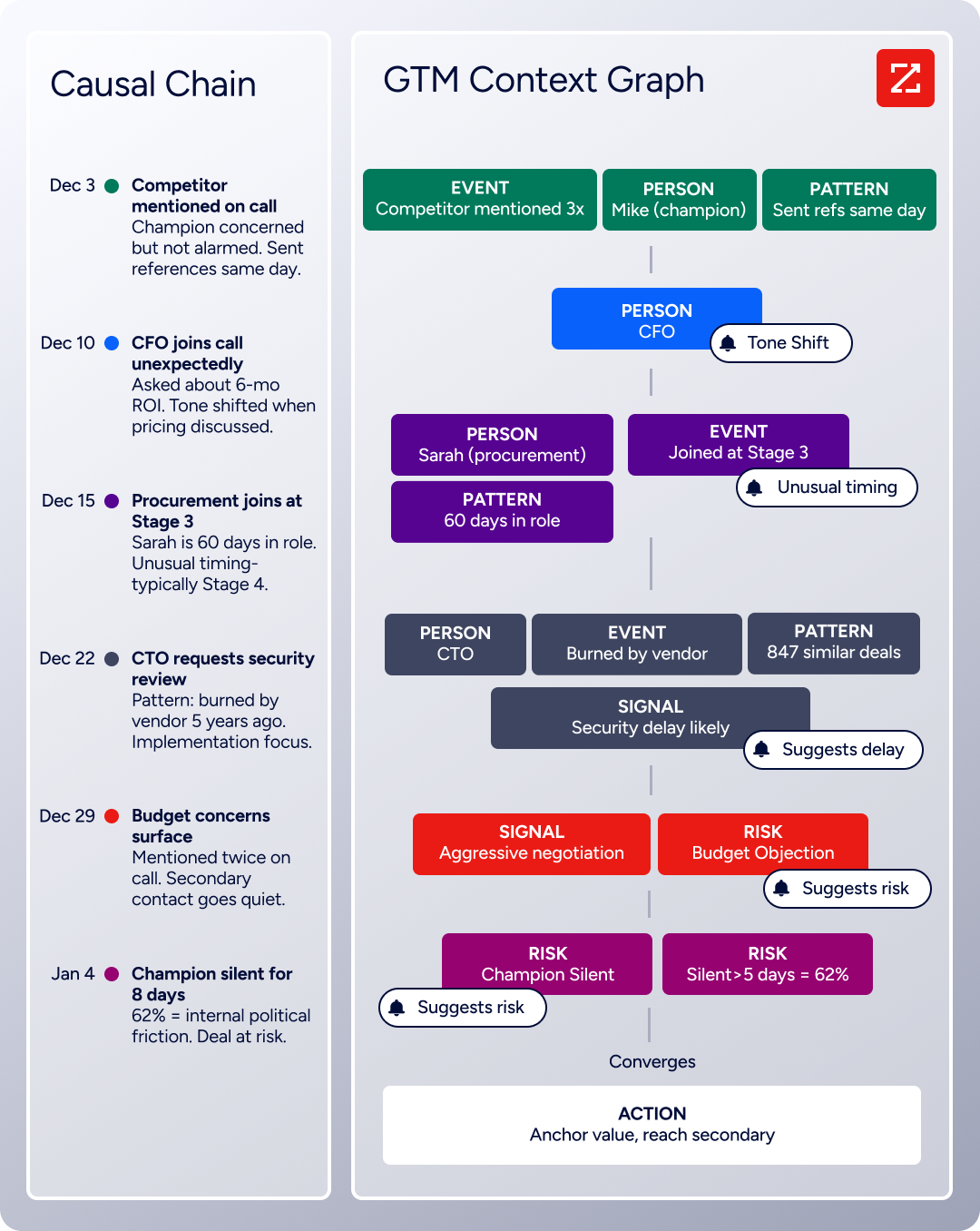
ZoomInfo in Action: A deal moved from Stage 3 to Stage 4, but the CRM just shows a field change. ZoomInfo's intelligence layer captured that the CFO joined the last call and asked about six-month ROI, executive sponsorship entering at this stage matches the pattern behind closed-won deals in your segment, and third-party signals show the company just raised Series C funding. That reasoning flows into the follow-up email, the account prioritization score, and the forecast. No manual CRM field navigation required.
B2B Data: The Foundation AI Needs to Actually Work
WalkMe ensures your sales team enters data correctly into Salesforce.
ZoomInfo ensures they have the right data to begin with. The platform operates a B2B dataset of 500M contacts and 100M companies, backed by 300+ human researchers and a multi-source verification pipeline. In a Fortune 500 competitive RFP analyzing 25 million contacts across vendors, the independent consultant concluded that "no other competitor came even close."
Key data capabilities include Buyer Intent Data tracking signals from 210 million IP-to-Organization pairings, WebSights resolving anonymous website traffic to companies, and technographics profiling the tech stack of 30+ million companies.
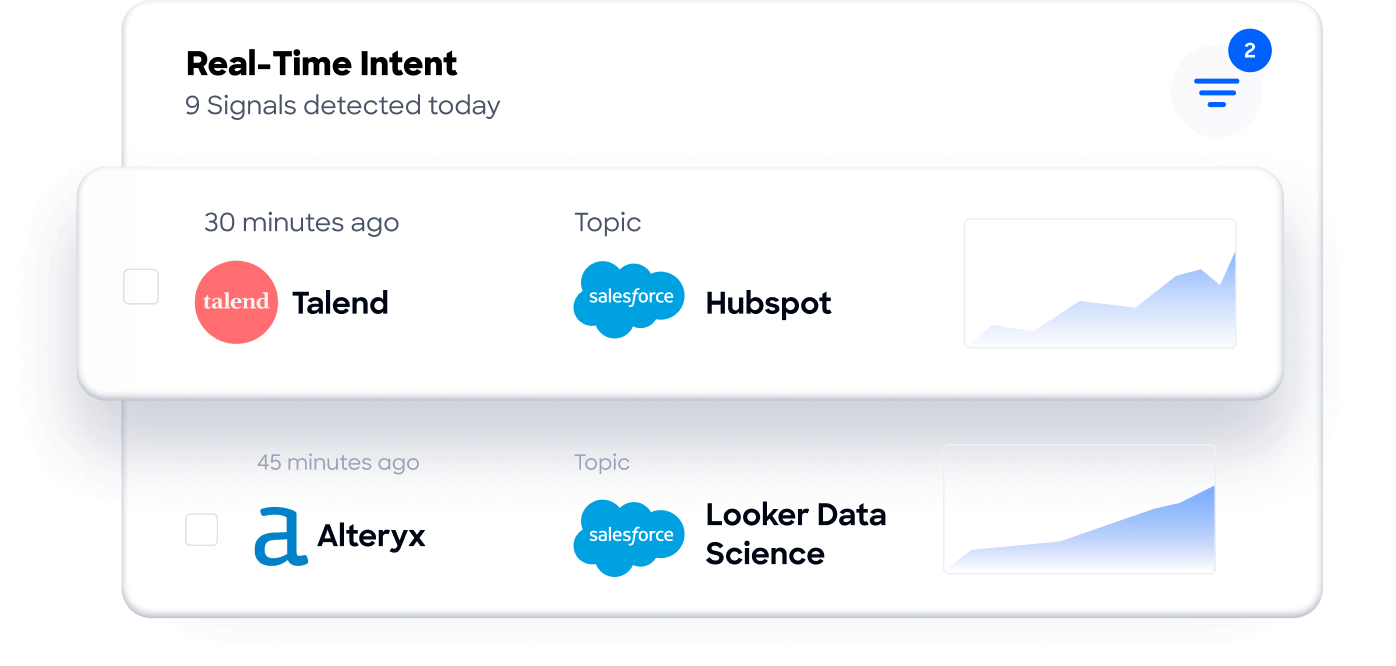
ZoomInfo in Action: Instead of a sales rep spending 20 minutes searching LinkedIn, navigating between Salesforce records, and manually researching an account before a call (the exact multi-tool workflow WalkMe would overlay guidance on), ZoomInfo's AI Assistant generates a 10-second account brief pulling CRM history, company news, intent signals, and stakeholder context into one view.
The research that took 20 minutes across four tools takes 10 seconds in one workspace.
Access Anywhere: Use the Intelligence in Any Tool Via API & MCP
Unlike WalkMe's deployment model (which requires the WalkMe snippet on every application you want to guide users through), ZoomInfo's intelligence works anywhere. APIs and MCP deliver the same data and GTM Context Graph into any custom agent, internal tool, or partner platform, including Anthropic Claude and Google.
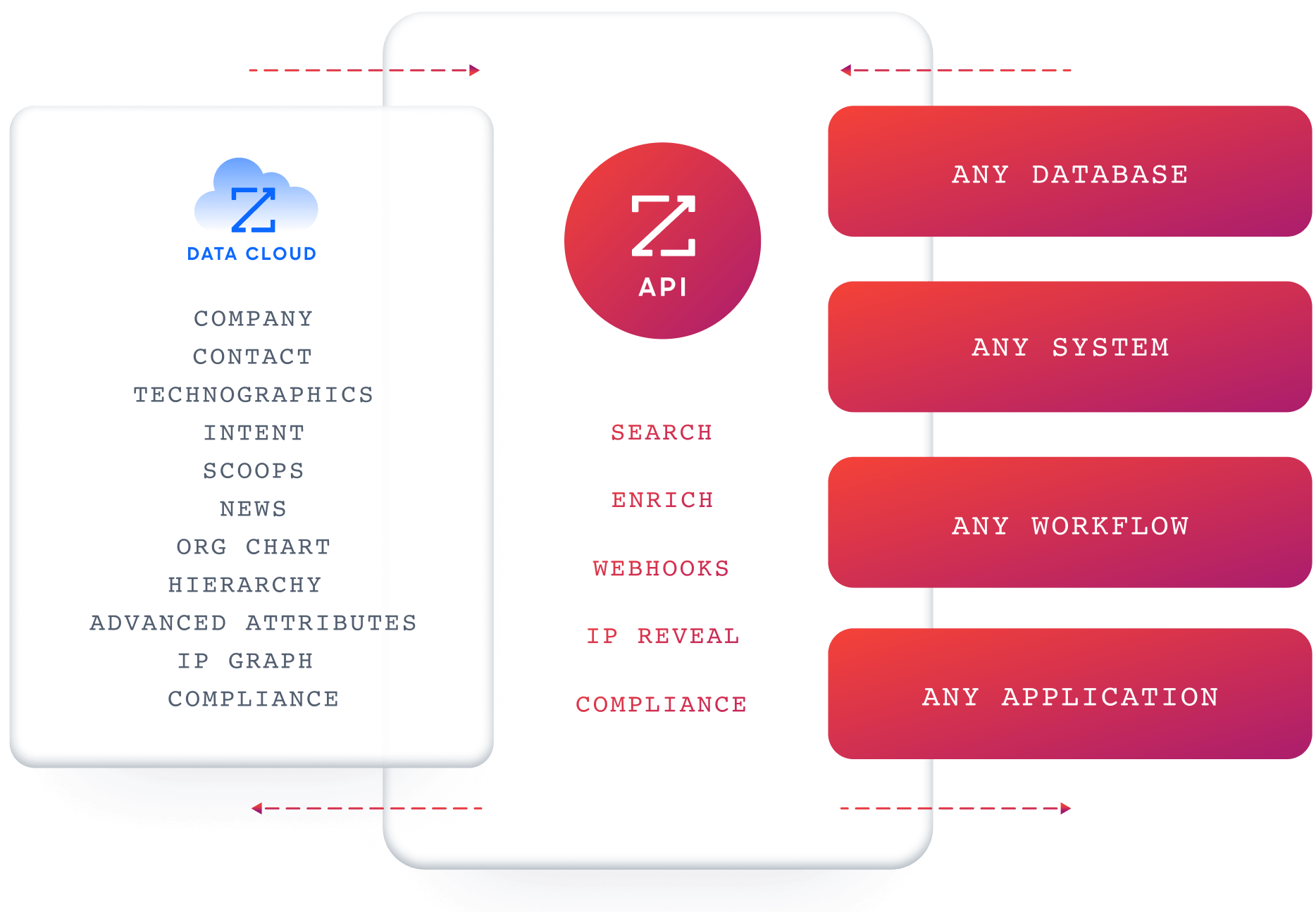
CEO Henry Schuck described a financial services firm building an internal app using ZoomInfo's MCP server: "That's a surface area we would never see before."
Seismic's sales team boosted productivity by 54%, saved 11.5 hours per week, and attributed 39% of active pipeline to ZoomInfo signals. (Seismic)
NOTE: We also evaluated other sales intelligence platforms and found that while tools like Apollo and Lusha offer contact data at lower price points, they lack the GTM Context Graph's intelligence layer and the execution workspace that positions ZoomInfo to replace multi-tool complexity rather than merely provide contact data for import into other systems.
ZoomInfo Pricing
ZoomInfo uses a consumption-based pricing model scaled around enterprise license agreements, data access, API consumption, and AI activity. No public prices are available; all pricing is tailored to usage patterns, number of users, credit volume, features, company size, and contract length.
The platform is organized into three product lines:
Sales plans (Professional, Advanced, Enterprise): From contact and company data through to AI-driven account prioritization, real-time buyer intent signals, and advanced workflows
Marketing plans (Marketing Demand, ABM Lite, ABM Enterprise): From B2B data and audience targeting through to enterprise-grade ABM with AI-powered insights and full-funnel analytics
Additional products: Chorus (conversation intelligence), Chat (data-powered website chat), and Enterprise API are priced separately
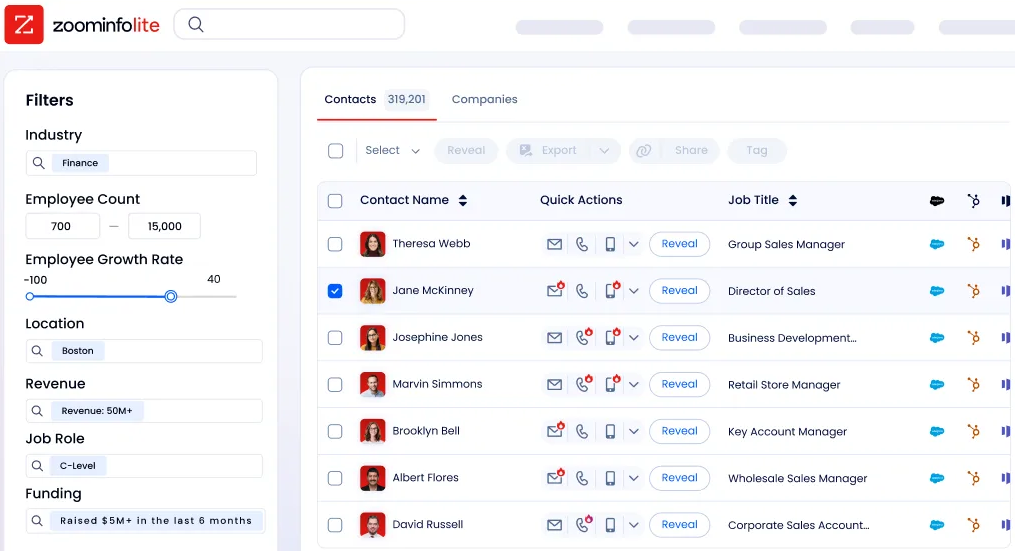
ZoomInfo Lite provides a permanent free tier (not a trial) with access to 100M+ verified profiles, 10 monthly export credits, individual and company searches, a Chrome extension, and HubSpot integration. A 7-day free trial of paid features is also available with no credit card required.
Who Should Use ZoomInfo?
Choose ZoomInfo if:
Your sales team juggles too many tools (CRM, contact databases, conversation intelligence, engagement platforms) and you want to consolidate that stack rather than overlay guidance on top of it.
You need an intelligence layer that understands why deals move or stall, not just whether reps completed software steps correctly, so your team can prioritize accounts by actual buying signals rather than CRM stage labels.
Your organization's biggest sales productivity challenge is data quality and account intelligence (not software navigation), and you need verified B2B data, intent signals, and AI-drafted outreach in one workspace.
Looking to consolidate the tools slowing your sales team down? Start your ZoomInfo free trial and see how AI-powered GTM intelligence turns research and outreach into a one-step process.
2. Whatfix: Best Alternative for Enterprise DAP Without SAP Dependency
Source: Whatfix
Whatfix is an AI-powered Digital Adoption Platform that matches WalkMe's core enterprise feature set while operating entirely outside the SAP ecosystem. With $138.8M ARR and 31% year-over-year growth, 700+ enterprise customers across 30+ countries (including 80+ Fortune 500 clients), and a $125M Series E raised in September 2024, Whatfix is built for large enterprises that want DAP capability without tying their adoption infrastructure to SAP's product priorities. Its key features include:
Interactive Flows and Smart Tips for step-by-step walkthroughs triggered contextually
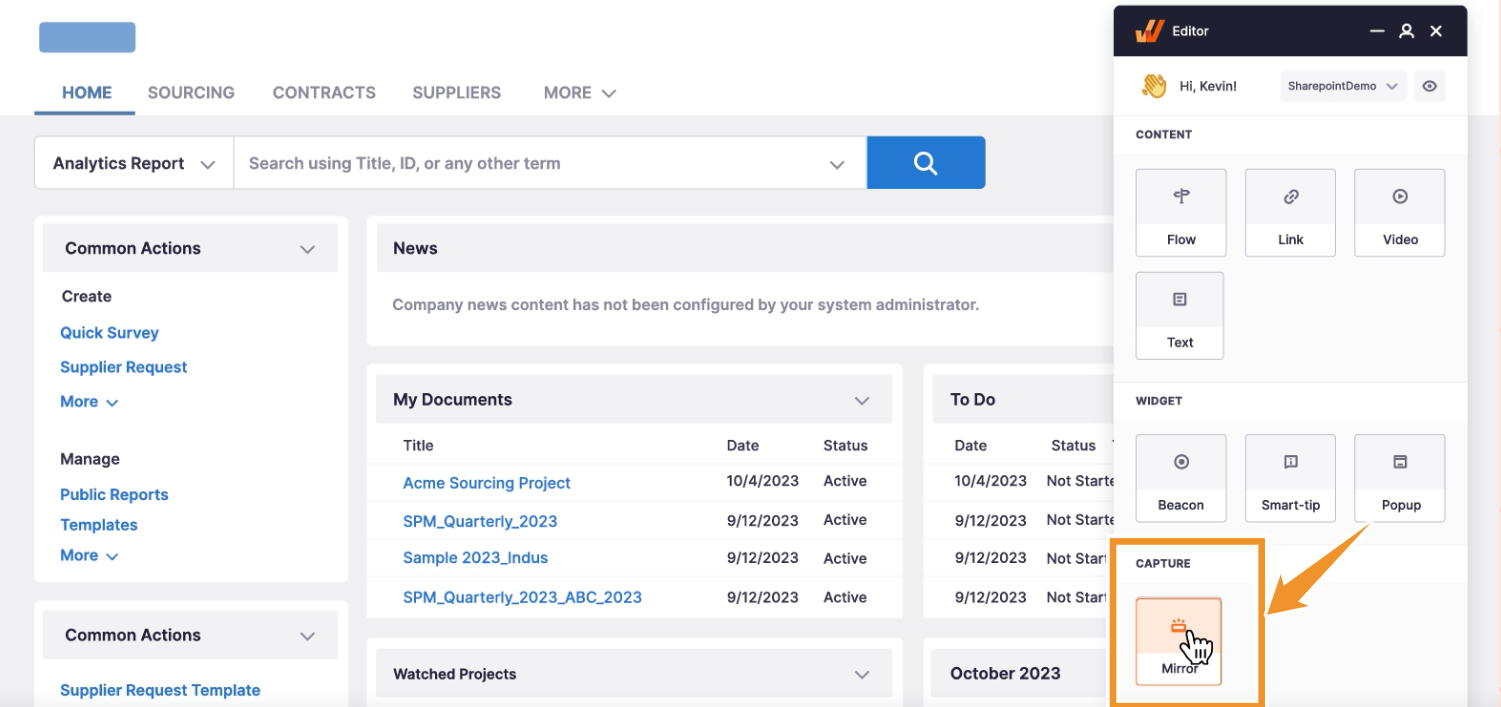
Mirror simulation environment replicating enterprise applications for safe training without live system access
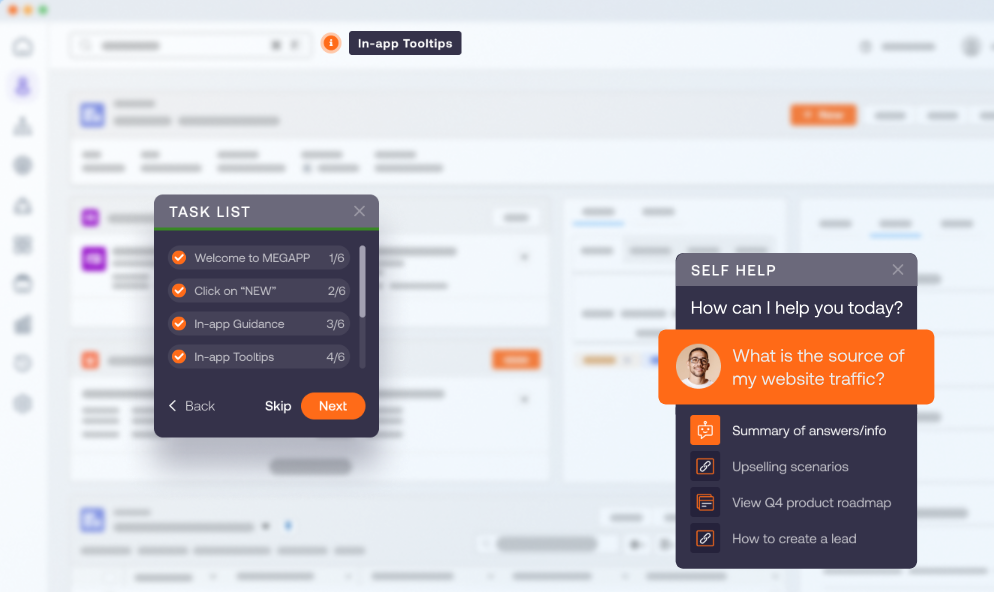
Self-Help Widget with AI-powered search aggregating internal documentation into an in-app resource
No-code Product Analytics tracking workflow drop-off and guidance engagement
AI content authoring that detects UI changes and flags affected guidance for review
Broad environmental coverage across web, desktop, mobile, and VDI/Citrix
Why Choose Whatfix Over WalkMe for Enterprise DAP?
Vendor Independence From SAP
SAP's acquisition of WalkMe reoriented the platform's roadmap toward the SAP ecosystem, with WalkMe Standard embedded into SAP subscriptions and Learning Arc positioned as the successor to SAP Enable Now. For enterprises running primarily Salesforce, Workday, ServiceNow, or Microsoft Dynamics stacks, Whatfix's Series E funding at a 50% valuation increase over its 2021 round signals a commitment to remaining neutral across the full application landscape.
Mirror: Application Simulation Training Without Separate Test Environments
Mirror replicates any web application from screen captures alone, eliminating the need to provision sandbox environments with additional licenses, permissions, and sanitized data. Enterprises rolling out SAP S/4HANA, Salesforce, or Workday can build interactive simulation training, overlay DAP guidance content, and deploy it via LMS before go-live, with no risk of employees creating bad data in live systems. Assessments within Mirror track task accuracy, completion rates, and time taken to evaluate procedural competency.
Source: Whatfix
Analyst Validation and Implementation Track Record
In the Forrester Wave for Digital Adoption Platforms, Q4 2024, Whatfix earned the highest possible score (5/5) across 15 of 21 criteria and the top strategy score (4.80/5) among all seven vendors evaluated. Gartner named it Customers' Choice for DAP for three consecutive years.
NOTE: We also evaluated Apty and Pendo. While Apty covers enterprise DAP at a competitive transparent price point, and Pendo excels at product analytics for customer-facing SaaS products, Whatfix covers the full scope of enterprise adoption infrastructure for internal workforce deployments, combining in-app guidance, application simulation training, and behavioral analytics in a single vendor-neutral platform.
Whatfix Pricing
Whatfix uses a hybrid flat-fee plus per-user license model with no published pricing figures. All plans require a demo or sales conversation. Pricing is structured separately across three products: DAP, Product Analytics, and Mirror.
DAP (Web & Desktop): Three tiers (Standard, Premium, Enterprise) covering single-app through unlimited deployments. Standard Product Analytics is bundled free with any DAP plan.
Mirror: Separately priced simulation training product with Standard, Premium, and Enterprise tiers.
Add-ons: White-labeling, enterprise project management for multi-app implementations.
Who Should Use Whatfix?
Choose Whatfix if:
Your organization runs primarily non-SAP enterprise applications and you want a DAP vendor whose roadmap remains neutral across your full stack.
You need a safe, structured way to train employees on complex enterprise software before go-live without provisioning separate sandbox environments.
You operate across 1,000-100,000+ employees in a regulated industry where compliance, data residency, and audit trail requirements matter alongside adoption infrastructure.
3. Pendo: Best Alternative for Product-Led SaaS Teams Needing Analytics-First Guidance
Source: Pendo
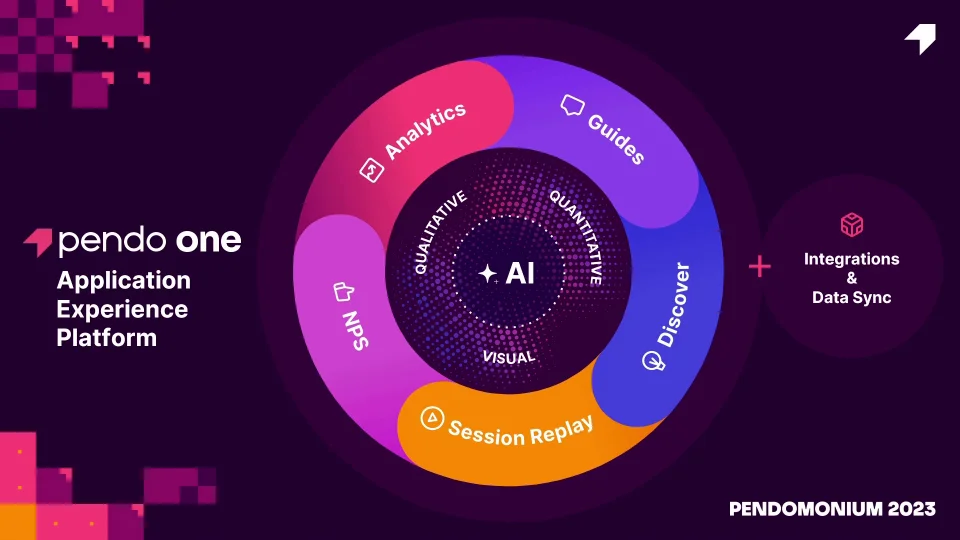
Pendo is a product analytics and digital adoption platform built for SaaS companies that need to understand why users behave the way they do before deciding how to guide them. Where WalkMe deploys guidance on purchased enterprise software for employees, Pendo serves product teams measuring whether their own customers are actually adopting what they've built. Its key features include:
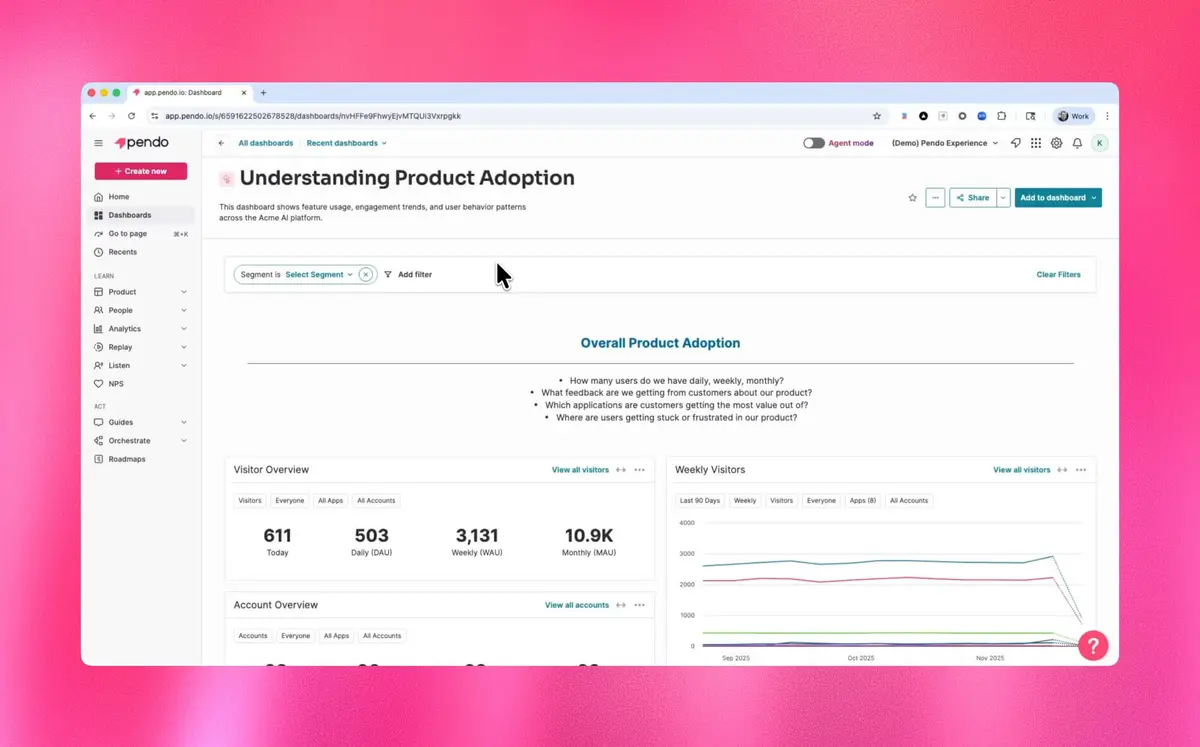
No-code behavioral analytics (Funnels, Paths, Cohorts) with retroactive data from day of installation
In-app Guides with a visual builder triggered by user behavior and audience segments
Pendo Predict for AI-powered churn risk scoring and expansion opportunity identification
Listen feedback module pairing user sentiment directly with behavioral usage data
Agent Analytics tracking how users interact with AI copilots embedded in your product
Why Choose Pendo Over WalkMe for Product Analytics and Customer Adoption?
Analytics-Driven Guidance Built for Customer-Facing Products
WalkMe's architecture serves enterprise IT deploying guidance on purchased software. Pendo was built for the inverse: you built the software, and you need to understand whether customers are using it. Pendo captures retroactive behavioral data from the day of installation, and the Product Benchmarks tool lets teams compare feature adoption rates against 6,800+ anonymous applications across 2,500 customers.
Integrated Churn Prediction Connecting Behavior to Revenue Risk
Pendo Predict builds predictive churn models from the behavioral data Pendo already collects, scores accounts by risk tier, and pushes those scores into Salesforce and Slack with explanations of why a score changed. Built on Pendo's 2025 acquisition of Forwrd.ai, it eliminates the data science team requirement.
Agent Analytics: Measuring AI Feature Adoption
Pendo's Agent Analytics, recognized on Fast Company's 2026 Most Innovative Companies list, tracks prompt success rates, rage prompting, and retention impact for AI agents embedded in your product.
Source: Pendo
NOTE: We also evaluated Appcues and UserGuiding. While Appcues excels at lightweight cross-channel onboarding for growth-stage SaaS, and UserGuiding is a budget-accessible entry point for basic tooltip-and-checklist needs, Pendo brings together the strongest combination of analytics depth, churn prediction, and in-app guidance for teams with mature product-led motions.
For an in-depth look at Pendo's capabilities and how it performs in practice, see our Pendo review.
Pendo Pricing
Pendo's pricing is based on Monthly Active Users (MAUs) with no per-seat charges for internal admin users.
Free: $0 for up to 500 MAUs; includes Product Analytics, In-app Guides, Retroactive Analytics, and Agent Mode
Base: Custom pricing; adds ability to remove Pendo branding
Core: Custom pricing; adds Session Replay with unlimited recordings
Ultimate: Custom pricing; adds Sentiment (NPS, CSAT), Orchestrate, Listen (Feedback, Validate, Roadmaps), and Data Sync
AI Add-ons: Predict and Agent Analytics available on any paid plan at custom pricing
For a full breakdown of Pendo's plan structure and what's included at each tier, see our Pendo pricing guide.
Who Should Use Pendo?
Choose Pendo if:
Your team ships software to external customers and needs to understand feature adoption and churn signals from the same platform delivering onboarding walkthroughs.
You run or are building toward a product-led growth motion where the product itself drives conversion, expansion, and retention.
You're deploying AI features in your product and need to measure whether users are actually adopting them.
4. Appcues: Best Alternative for Customer-Facing SaaS Adoption at Mid-Market Scale
Source: Appcues
Appcues is a customer engagement platform that lets SaaS product teams ship onboarding flows, feature announcements, and cross-channel activation sequences without developer involvement. Serving 4,000+ customers reaching 200M+ end users, it targets product managers and customer success leads at mid-market and growth-stage companies. Its key features include:
No-code Chrome extension builder for product tours, tooltips, checklists, and modals
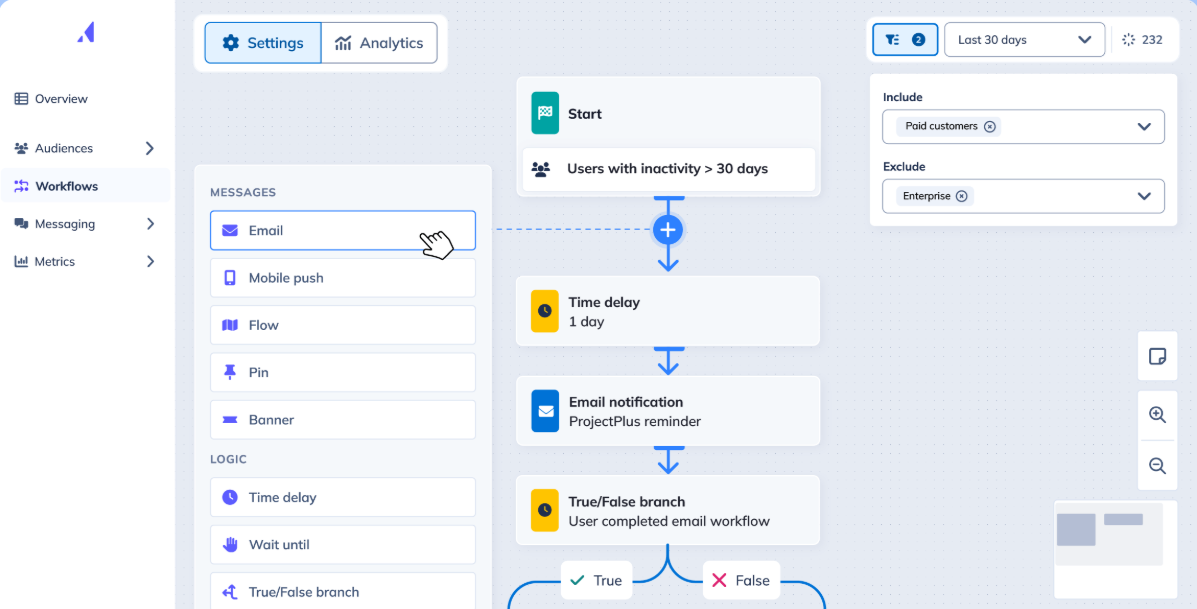
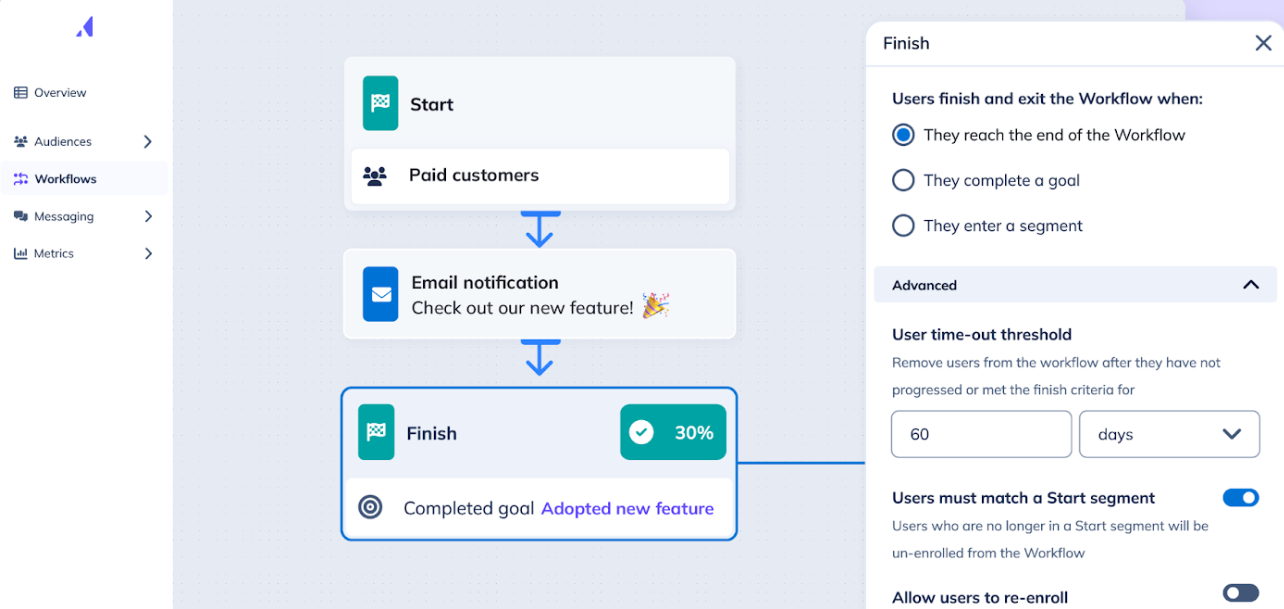
Cross-channel Workflows combining in-app experiences with behavioral email and push notifications
Event Explorer and Goals tracking tying flows to activation metrics
Resource Center (Launchpad) as a persistent self-serve hub
Appcues AI generating content, diagnosing broken flows, and suggesting improvements
Native mobile SDKs for iOS and Android
Why Choose Appcues Over WalkMe for Customer-Facing Product Adoption?
Designed for Customer-Facing Product Teams, Not Internal IT
WalkMe was built for enterprise IT deploying guidance on internal tools for employees with no choice but to use the software. Appcues helps SaaS product teams drive voluntary customer adoption of their own product, moving the metrics product growth teams actually own: user activation, feature adoption, and time-to-value.
Hours-to-Launch Setup, Not Multi-Month Implementation
WalkMe recommends a Center of Excellence approach with multi-month deployment timelines. Appcues' Chrome Extension-based Builder lets teams build and publish flows within hours, enabling rapid iteration on onboarding sequences without engineering dependencies.
Multi-Channel Activation at an Accessible Price Point
In February 2025, Appcues expanded to email and push notifications, combining in-app flows, behavioral email, push notifications, delays, and branching logic into unified user journeys. This cross-channel approach lets product teams re-engage users outside the app and guide them back to key activation moments.
Source: Appcues
NOTE: We also evaluated UserGuiding and Chameleon. While UserGuiding is a cost-effective no-code option for teams with simpler onboarding needs, and Chameleon offers deep UI customization for fine-grained experience styling, Appcues covers cross-channel activation more fully for mid-market SaaS teams focused on measurable customer product adoption.
Appcues Pricing
Appcues uses a MAU-based subscription model with no per-seat charges. Every plan includes the full feature set from day one. Dollar figures require a demo booking.
Start: Up to 3,000 MAUs; 10 published experiences; up to 1,000 emails/month; dedicated CSM
Grow: Up to 50,000 MAUs; 25 published experiences; up to 5,000 emails/month; implementation services
Enterprise: Custom MAU volume; 100 published experiences; custom email volume; priority support and SSO
Who Should Use Appcues?
Choose Appcues if:
Your team owns customer-facing product adoption metrics and needs to ship in-app experiences without waiting on engineering.
You want a single platform for in-app guidance, behavioral email, and mobile push rather than managing three separate tools.
Speed of iteration matters: you need to build, publish, and adjust flows in the same week, not the same quarter.
5. Spekit: Best Alternative for In-Workflow Sales Enablement
Source: Spekit
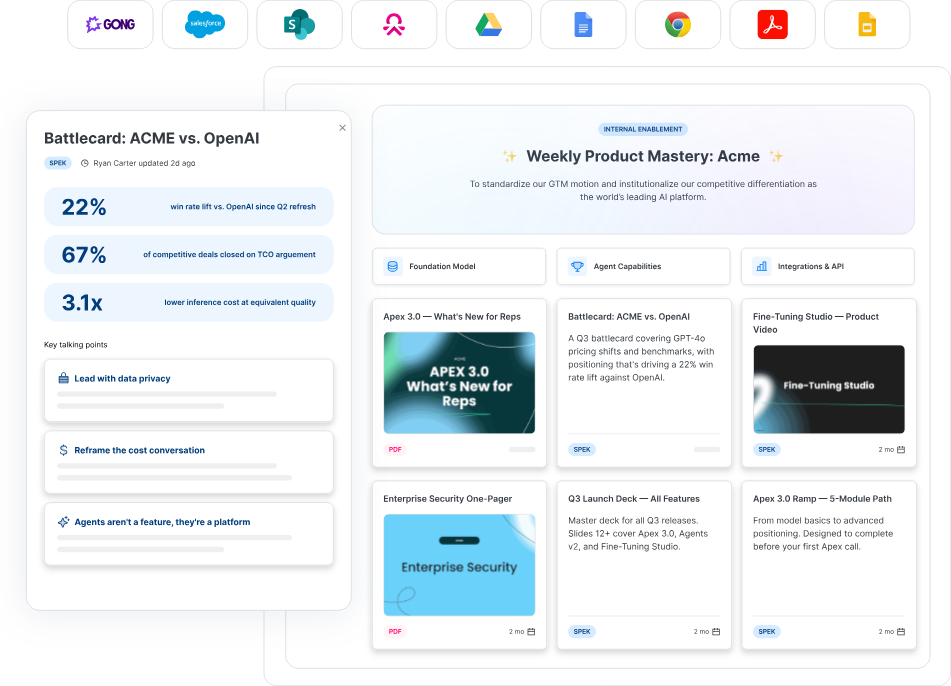
Spekit is an AI-powered revenue enablement platform that delivers sales knowledge, coaching, and content directly inside the tools revenue teams already work in. Gartner named it a Visionary in the 2025 Magic Quadrant for Revenue Enablement Platforms, and it serves organizations like Southwest Airlines, iHeartRadio, and Scholastic. Its key features include:
AI Sidekick surfacing battlecards and coaching based on Salesforce and Gong signals
In-app knowledge delivery via Chrome extension inside Salesforce, Gmail, Gong, Slack, and LinkedIn
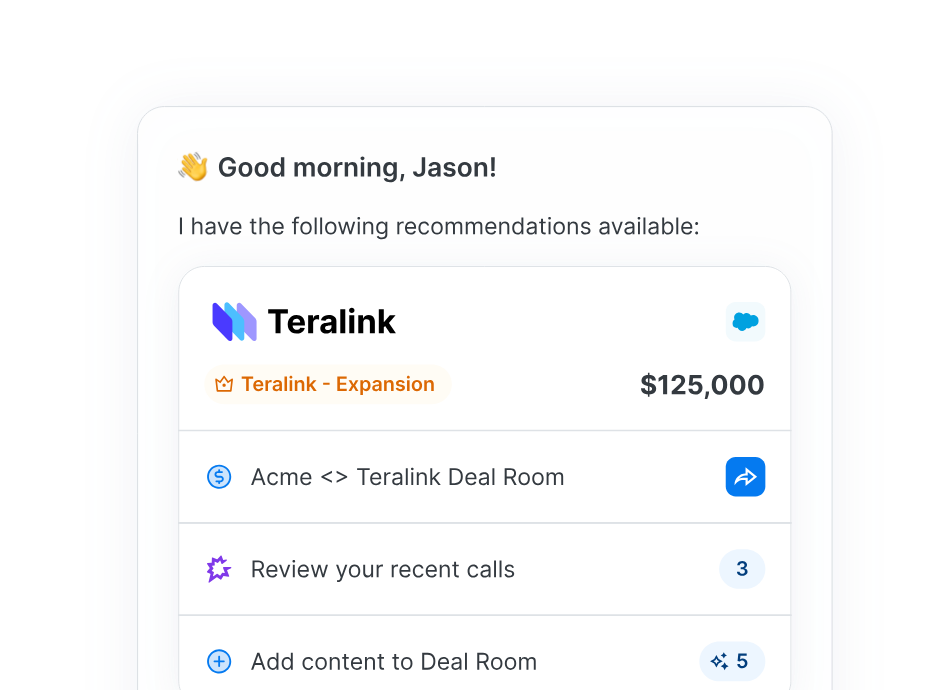
Deal Rooms for buyer-facing collaborative workspaces
Content governance with AI-powered editing, version control, and automated staleness alerts
Embedded Enablement attaching guidance directly to Salesforce fields and stage transitions
Why Choose Spekit Over WalkMe for Sales Enablement?
Built for Revenue Teams, Not a Generalist DAP
WalkMe serves every department simultaneously across the enterprise stack. Spekit was built exclusively for revenue teams, with enablement tools that accelerate SDR ramp time, reduce onboarding duration, and surface answers faster within daily workflows.
Faster Time to Value
Spekit is 30% faster to implement than competing solutions per G2 data. WalkMe's enterprise implementation model involves dedicated internal champions and multi-month timelines.
Proactive AI Coaching Grounded in Live Deal Context
WalkMe's guidance surfaces when predefined UI conditions are met. Spekit's AI Sidekick monitors deal stage, buyer behavior, and conversation context to push relevant content before the rep asks. It reviews Gong call transcripts to identify key moments and recommend relevant playbooks, reporting up to 90% reduction in search time.
Source: Spekit
NOTE: We also evaluated Guru and Highspot. While Guru excels at team-wide knowledge management and wiki-style organization, and Highspot is a strong enterprise sales content management platform for content-to-revenue attribution, Spekit offers the tightest integration for in-workflow enablement for revenue teams running Salesforce and Gong who need proactive AI coaching.
Spekit Pricing
Spekit does not publish pricing. The pricing page is a demo request form. The platform uses a per-seat subscription model with terms set per signed Order Form. Contracts auto-renew for consecutive 12-month periods. Professional services (implementation, content migration) are scoped separately.
Who Should Use Spekit?
Choose Spekit if:
Your revenue team runs Salesforce as its CRM and Gong as its call intelligence layer, and you need enablement that connects these systems at the opportunity level.
You've tried a static content portal and reps aren't adopting it; Spekit's in-workflow delivery surfaces content inside tools reps already use.
You want AI coaching that is proactive rather than reactive, based on live deal context and call signals.
6. UserGuiding: Best Alternative for Small Teams Needing In-App Onboarding Without Enterprise Contracts
Source: UserGuiding
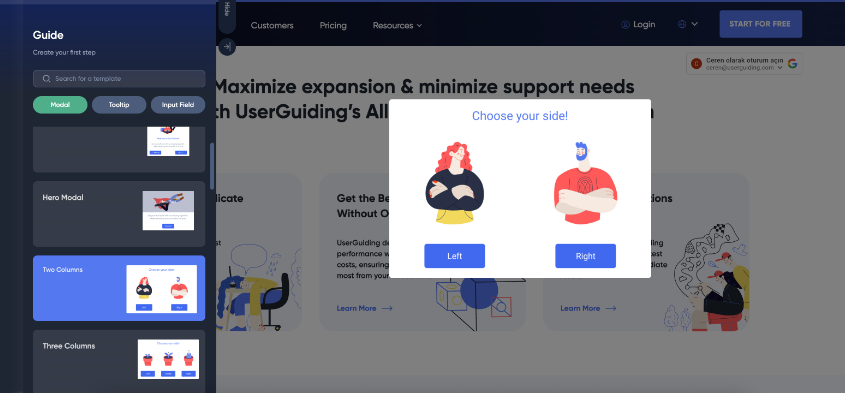
UserGuiding is a product adoption platform built for non-technical teams that need interactive in-app guidance without involving developers or committing to multi-year enterprise contracts. It sits at the accessible end of the digital adoption spectrum, targeting B2B SaaS teams in the 50-500 employee range. Its key features include:
No-code guide builder via Chrome Extension with point-and-click interface
Onboarding checklists with event-based auto-completion
User segmentation and behavioral targeting
In-app NPS and multi-question surveys with conditional branching
Resource Center widget aggregating guides, knowledge base, product updates, and AI assistant
A forever-free Support Essentials plan
Why Choose UserGuiding Over WalkMe for Small Teams and Startups?
Transparent, Accessible Pricing With a Free Starting Point
WalkMe publishes no pricing and operates on non-cancelable multi-year contracts with overage charges. UserGuiding's Support Essentials plan is free forever with no credit card required, including a knowledge base, changelog, and AI assistant. When teams graduate to interactive onboarding, the Starter plan begins at $174/month. If MAU limits are exceeded, UserGuiding stops displaying content rather than billing overages.
15-Minute Setup With No Developer Involvement
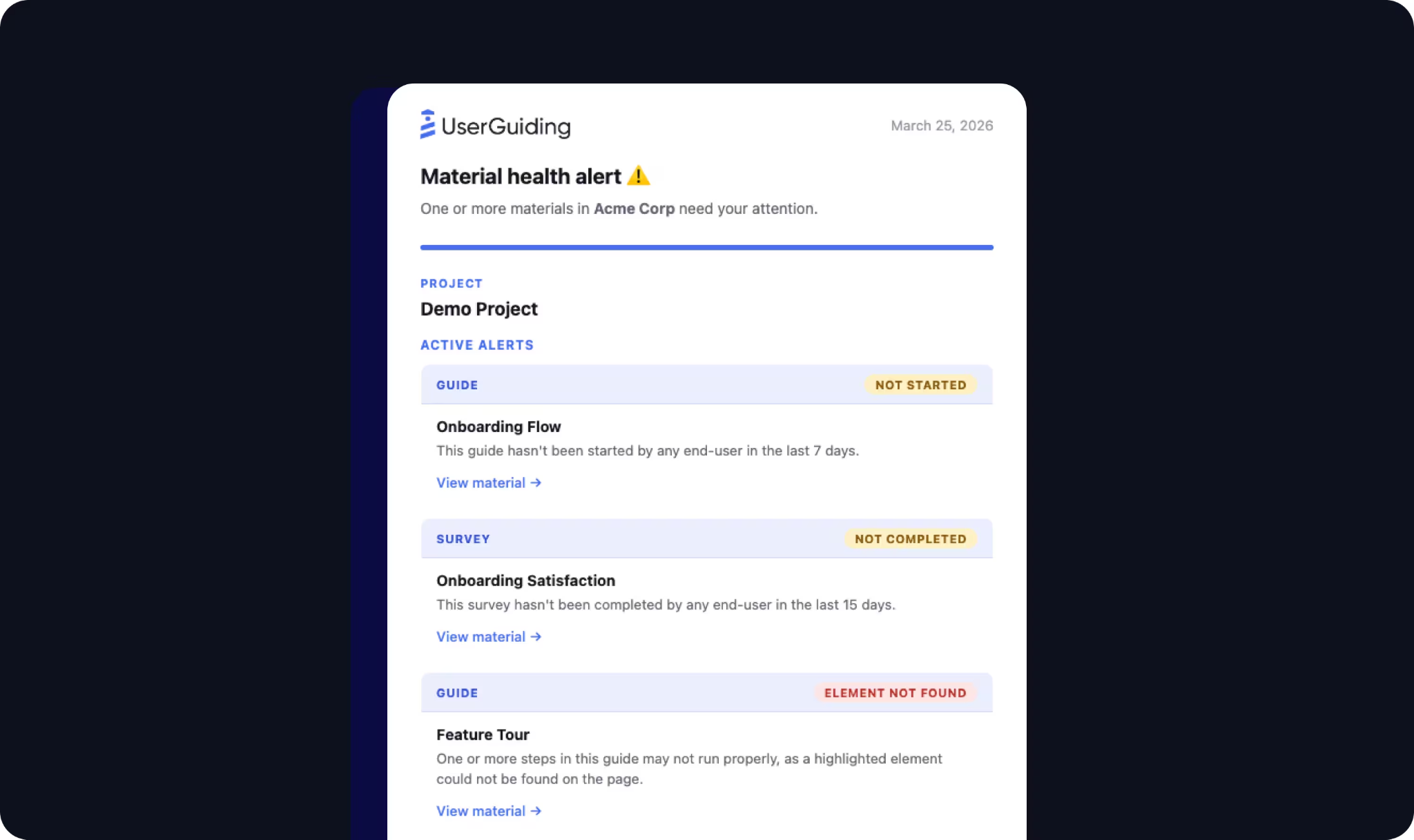
WalkMe implementations involve multi-month timelines and dedicated internal champions. UserGuiding's Chrome Extension-based builder goes from account creation to published product tour in under 15 minutes. When UI changes break a guide, Custom Alerts notify the team via Slack or email before users encounter broken flows.
Source: UserGuiding
All-in-One Platform Replacing Separate Point Solutions
The same subscription covers product tours, NPS surveys, a hosted knowledge base, product updates changelog, and an AI assistant, consolidating what would otherwise require multiple separate tools.
NOTE: We also evaluated Scribe and Appcues. While Scribe excels at documentation-based step-by-step guides, it doesn't offer interactive onboarding. Appcues offers a comparable feature set at a higher price point without the built-in knowledge base and AI assistant UserGuiding bundles at the Starter level.
UserGuiding Pricing
Support Essentials (Free Forever): Knowledge Base, Product Updates, AI Assistant (50 credits/month), 1 Resource Center widget
Starter ($174/month, billed annually): 25 active Guides, 20 Hotspots, 2 Checklists, 5 Surveys; segmentation; Segment/Mixpanel/Amplitude integrations; 5 seats
Growth ($349/month, billed annually): A/B Testing, Custom CSS, Salesforce/HubSpot integrations, Session Replay, NPS, dedicated CSM; 15 seats
Enterprise (Custom pricing): SOC 2, HIPAA compliance; SAML SSO; unlimited everything; migration support
Who Should Use UserGuiding?
Choose UserGuiding if:
You're building a B2B SaaS product and need to onboard external customers without enterprise contract overhead.
You want to test in-app guidance on the free tier before committing to a paid tool.
Your product team lacks engineering bandwidth and needs a non-technical team member to own the entire guidance program.
7. Apty: Best Alternative for AI-First DAP With Transparent Pricing
Source: Apty
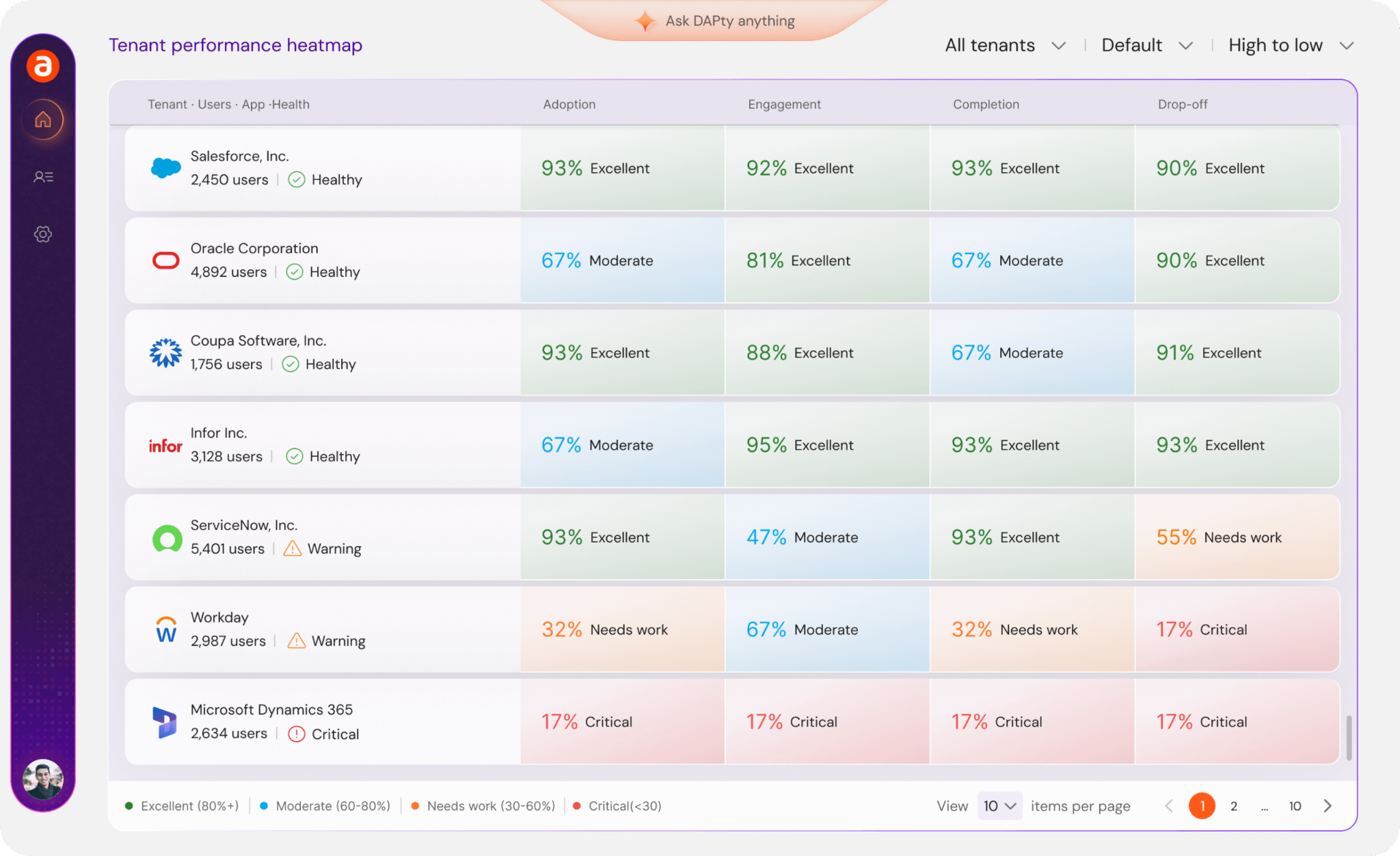
Apty is an AI-powered Digital Adoption Platform that combines real-time behavioral guidance, cross-application workflow analytics, and a native learning management system into a single all-inclusive subscription. It serves Fortune 1000 enterprises running multi-application stacks outside the SAP ecosystem. Its key features include:
AI-adaptive guidance engine adjusting intervention intensity per user automatically
Apty PULSE measuring process engagement and surfacing adoption gaps against KPIs in real time
Data validation at point of entry preventing bad data before submission
Built-in LMS with course authoring, learning paths, certifications, and progress reporting
All-inclusive pricing starting at $9,500/app/year with no feature gating
Enterprise compliance: SOC 2 Type II, ISO 27001, ITAR, FIPS 140-2, PCI DSS Level 1, FISMA
Why Choose Apty Over WalkMe for Transparent Pricing and SAP-Independent Adoption?
All-Inclusive Pricing vs. Custom-Quoted Multi-Year Contracts
WalkMe's pricing page is a contact-sales gateway with no published rates. Apty's public pricing states a clear floor of $9,500 per application per year, names the four variables that determine final price, and specifies that every feature ships from day one. Apty also backs this with a 2x ROI guarantee in year one, a guarantee WalkMe does not offer.
SAP-Independent Architecture
While WalkMe's roadmap centers on SAP Joule integration and embedded SAP distribution, Apty's application coverage spans 1,000+ enterprise applications across Salesforce, Workday, ServiceNow, Microsoft Dynamics, and Coupa.
Native LMS Included at No Additional Cost
WalkMe's Learning Arc requires a separate license and is positioned as the successor to SAP Enable Now. Apty's built-in LMS ships with course creation tools, structured learning paths, and certification tracking in the base subscription, eliminating the need for a separate L&D vendor relationship.
NOTE: We also evaluated Whatfix and Pendo. While Whatfix offers strong enterprise DAP with Mirror simulation training, and Pendo suits product analytics teams, Apty combines transparent pricing, SAP-independent architecture, and native LMS capability most clearly for teams seeking a full-stack WalkMe replacement without ecosystem lock-in.
Apty Pricing
Base Plan (All-Inclusive): Starts at $9,500 per app, billed annually. Every feature included from day one: walkthroughs, validations, tooltips, multi-language support (30+ languages), analytics, role-based access, integrations, APIs, and built-in LMS. Final price varies based on employee count, implementation complexity, compliance requirements, and integration scope.
Optional Add-Ons: On-Premise Authoring, White-Label, Professional Services (separately priced).
A proof-of-concept period is available for pre-purchase validation.
Who Should Use Apty?
Choose Apty if:
Your organization runs a multi-application enterprise stack outside SAP and you want a DAP vendor whose roadmap is not tied to SAP's product priorities.
You need pricing you can present to a CFO without a multi-month negotiation, with a published floor price and an ROI guarantee.
Your digital adoption program requires both in-app guidance and structured learning paths, and you don't want to manage a separate LMS vendor relationship.
The Final Verdict
WalkMe remains the category pioneer in digital adoption, but the SAP acquisition has shifted its direction, and organizations often need specialized tools that fit their specific challenges. Based on our research, here are the best alternatives:
ZoomInfo for replacing sales tool sprawl with AI-powered GTM intelligence, a single execution workspace, and B2B data
Whatfix for enterprise-grade DAP with Mirror simulation training and full SAP independence
Pendo for product-led SaaS teams needing retroactive analytics, churn prediction, and in-app guidance from one platform
Appcues for mid-market product teams driving customer-facing activation across in-app, email, and push channels
Spekit for revenue teams needing proactive AI coaching delivered inside Salesforce, Gmail, and Gong based on live deal context
UserGuiding for small teams and startups wanting interactive onboarding with a free starting tier and transparent pricing
Apty for enterprises needing all-inclusive DAP with published pricing, a built-in LMS, and a 2x ROI guarantee
You don't have to choose between WalkMe and these alternatives exclusively. Many organizations run WalkMe alongside specialized tools. Consider your specific needs, team size, and strategic priorities when deciding which solution fits.
Want to consolidate the tools slowing your sales team down? Start your ZoomInfo free trial and see how AI-powered GTM intelligence turns multi-step research and outreach into a one-workspace experience.
WalkMe Alternatives FAQ
Why do organizations look for WalkMe alternatives?
The most common reasons: the SAP acquisition shifting WalkMe's direction toward the SAP ecosystem, opaque enterprise pricing with non-cancelable multi-year contracts, a steep learning curve for advanced configurations requiring dedicated internal champions, and organizations needing more specialized tools for specific use cases (sales enablement, customer-facing product adoption, or analytics-first guidance) rather than a horizontal enterprise DAP.
What is the best WalkMe alternative for non-SAP enterprises?
Whatfix is the strongest enterprise DAP alternative for organizations running primarily non-SAP stacks. It earned the highest strategy score in the Forrester Wave for DAP (Q4 2024), Gartner named it Customers' Choice for three consecutive years, and its $125M Series E funding reinforces its commitment to remaining neutral across Salesforce, Workday, ServiceNow, and Microsoft Dynamics environments.
Is there a free alternative to WalkMe?
Yes. UserGuiding offers a forever-free Support Essentials plan that includes a knowledge base, product updates changelog, and AI assistant. Pendo offers a permanently free tier for up to 500 monthly active users that includes product analytics, in-app guides, and retroactive analytics.
ZoomInfo Lite provides a permanent free tier with access to B2B data and 10 monthly export credits. None of these require credit cards or expire.
Which WalkMe alternative is best for sales teams?
For sales intelligence and consolidating tool sprawl, ZoomInfo's GTM Workspace provides an AI-powered workspace replacing the need to navigate multiple sales tools. For in-workflow sales enablement and coaching, Spekit delivers proactive AI-driven content inside Salesforce and Gmail based on live deal signals.
The right choice depends on whether your sales team's primary challenge is data and intelligence (ZoomInfo) or knowledge and coaching delivery (Spekit).
How does WalkMe's pricing compare to alternatives?
WalkMe does not publish pricing and uses custom-negotiated, non-cancelable enterprise contracts. Among alternatives, Apty publishes a starting price of $9,500 per application per year with all features included. UserGuiding starts at $174 per month with a free tier available. Pendo offers a free plan for up to 500 MAUs.
Most other enterprise alternatives (Whatfix, Spekit, Appcues) also use custom pricing but generally offer more flexible contract terms than WalkMe's non-refundable, non-cancelable structure.
Can WalkMe alternatives work alongside WalkMe?
Yes. Many of these tools serve different functions than WalkMe. ZoomInfo provides sales intelligence and execution (not in-app guidance). Pendo serves customer-facing product analytics (not internal employee adoption). Spekit handles sales enablement (not enterprise-wide DAP).
An organization could run WalkMe for enterprise-wide software adoption while using ZoomInfo for sales intelligence or Spekit for revenue team enablement without overlap.
Which alternative offers the fastest implementation?
For customer-facing SaaS onboarding, Appcues and UserGuiding both deploy in hours through Chrome Extension-based builders. For sales enablement, Spekit is 30% faster to implement than competing solutions per G2 data.
For enterprise DAP, Apty claims 1-2 day deployment validated by G2's Fastest Implementation badge. WalkMe's enterprise implementations typically require months with dedicated internal teams.
What's the best WalkMe alternative for product-led growth companies?
Pendo is built for product-led SaaS companies that need to understand feature adoption, user journey drop-off, and churn signals from the same platform delivering onboarding walkthroughs. Its retroactive analytics, Product Engagement Score, and Predict churn scoring are all calibrated for the product-led growth motion.
Appcues is the better fit for mid-market PLG companies that prioritize cross-channel activation speed over analytics depth.
Looking beyond WalkMe? Compare the strongest alternatives side by side:
