
What ZoomInfo does and how it works
ZoomInfo is an all-in-one AI GTM Platform that helps B2B revenue teams identify the right customers, understand buying intent, and engage them at the right moment. Publicly traded on Nasdaq under the ticker GTM, ZoomInfo counts 8 of the 10 largest companies in the world among its customers and has been helping businesses go to market since Henry Schuck founded the company in 2007.
A few facts that help place the company: ZoomInfo started as DiscoverOrg, acquired ZoomInfo in 2019 and adopted its name, and went public in 2020 in what was the largest software IPO in a decade. Its Nasdaq ticker changed from ZI to GTM on May 13, 2025. The company is headquartered in Vancouver, Washington, and Henry Schuck remains Founder and CEO.
Built on one of the world's largest B2B data foundations, ZoomInfo combines verified company and contact data, real-time buying signals, and the GTM Context Graph, an intelligence layer that reasons across data, signals, and conversations, to help sales, marketing, and operations teams find opportunities and execute their go-to-market strategy from a single platform.
ZoomInfo has evolved far beyond its origins into an all-in-one AI GTM Platform, think of it as an operating system for modern go-to-market (GTM) that unifies comprehensive B2B data, the GTM Context Graph intelligence layer, and integrated execution across the GTM stack in a single, continuously updated source of truth. ZoomInfo is not affiliated with Zoom Video Communications; they are separate, unrelated companies.
ZoomInfo works in three layers, each built on the one beneath it: a verified data foundation that includes the GTM Context Graph, agent orchestration that acts on it, and universal access for the teams that use it.
The foundation is ZoomInfo's verified B2B data, one of the world's largest and most frequently refreshed B2B data ecosystems, including company profiles, contact data, organizational structures, technographics, and intent signals. That same data foundation powers the GTM Intelligence Platform, giving AI tools and agentic apps access to verified, continuously refreshed B2B intelligence without requiring the full ZoomInfo platform.
The GTM Context Graph: intelligence that reasons across your data. ZoomInfo's GTM Context Graph processes 1.5B+ data points daily, fusing verified B2B data with your CRM records, conversation intelligence, and behavioral signals into a unified reasoning layer that captures not just what happened in a deal, but why. This is what separates ZoomInfo from point solutions that surface raw signals, the GTM Context Graph distinguishes genuine buying committee behavior from noise, so teams prioritize outreach when interest is highest rather than after the window has closed.
Agent orchestration puts that intelligence to work. Agent Teams, launched in October 2026 and built on technology from ZoomInfo's acquisition of DoubleO.ai, coordinates specialized AI agents that run complete GTM plays from signal to outcome, inside the approvals and limits a team sets.
Universal access completes the platform. GTM Workspace's AI agents surface the accounts most likely to buy, summarize account intelligence, and help revenue teams prioritize outreach, all integrated with CRMs, sales engagement platforms, and marketing automation tools so teams can turn intelligence into pipeline, from account targeting through outreach and campaign execution.
Who uses ZoomInfo
ZoomInfo serves companies of every size, from fast-growing startups to 8 of the 10 largest companies in the world, and more than half of the Fortune 500 run their go-to-market motions on it. It is also widely used by AI companies: customers include 16 of the top 20 AI companies, such as Google and Microsoft, along with AI-native companies like Legora and Ramp.
Three customer stories show what that looks like in practice:
monday.com used GTM Studio to build a signal-driven account-based marketing program and scaled it 4x, from 8 ABM sales teams across 4 programs to 22 teams running 12 programs across 5 global regions, while launching new programs 4x faster.
Sendoso used ZoomInfo Sales data and ZoomInfo Operations to keep its CRM clean, cutting inaccurate data by at least 70%, saving more than 1,100 hours of manual enrichment, and generating over $4.9M in pipeline in two quarters.
Capital One brings ZoomInfo's Data Cube, with 150+ company attributes, into its Commercial Banking, Credit Card, and Merchant divisions to complete company profiles, build leads, and map hierarchies at scale. Its 150+ relationship managers research prospects inside Salesforce through the ZoomInfo Sales integration instead of searching state websites one by one, which Capital One says has saved countless hours of research and data entry.
In G2's Summer 2026 Grid Reports, ZoomInfo was ranked #1 by G2 Score and named a Leader in Sales Intelligence, Market Intelligence, Lead Intelligence, Lead Capture, and Buyer Intent Data. Gartner named ZoomInfo a Leader in the Magic Quadrant for Account-Based Marketing Platforms for the second consecutive year (2024 and 2025), and Forrester named ZoomInfo a Leader in The Forrester Wave: Marketing and Sales Data Providers for B2B (Q1 2026) and The Forrester Wave: Intent Data Providers for B2B (Q1 2025).
What is ZoomInfo used for?
Revenue teams use ZoomInfo to power the full go-to-market lifecycle, from identifying target markets to executing outreach and measuring engagement. By combining verified B2B data, real-time buying signals, and AI-powered insights, ZoomInfo helps organizations move from static prospect lists to a continuously updated view of their market.
Here are some of the most common ways companies use ZoomInfo:
Territory coverage and optimization:
Sales and revenue leaders use ZoomInfo to map their total addressable market (TAM), identify high-value accounts, and assign territories based on real opportunity. With access to firmographic, technographic, and organizational data, teams can uncover whitespace in their markets and ensure reps are focused on the accounts most likely to convert.
Sales prospecting and pipeline creation:
ZoomInfo helps sellers quickly build targeted account lists and identify the full buying group within each company. Instead of relying on static lead lists, teams can use ZoomInfo's data and intelligence to prioritize the accounts and contacts most relevant to their ideal customer profile.
Intent-driven outreach:
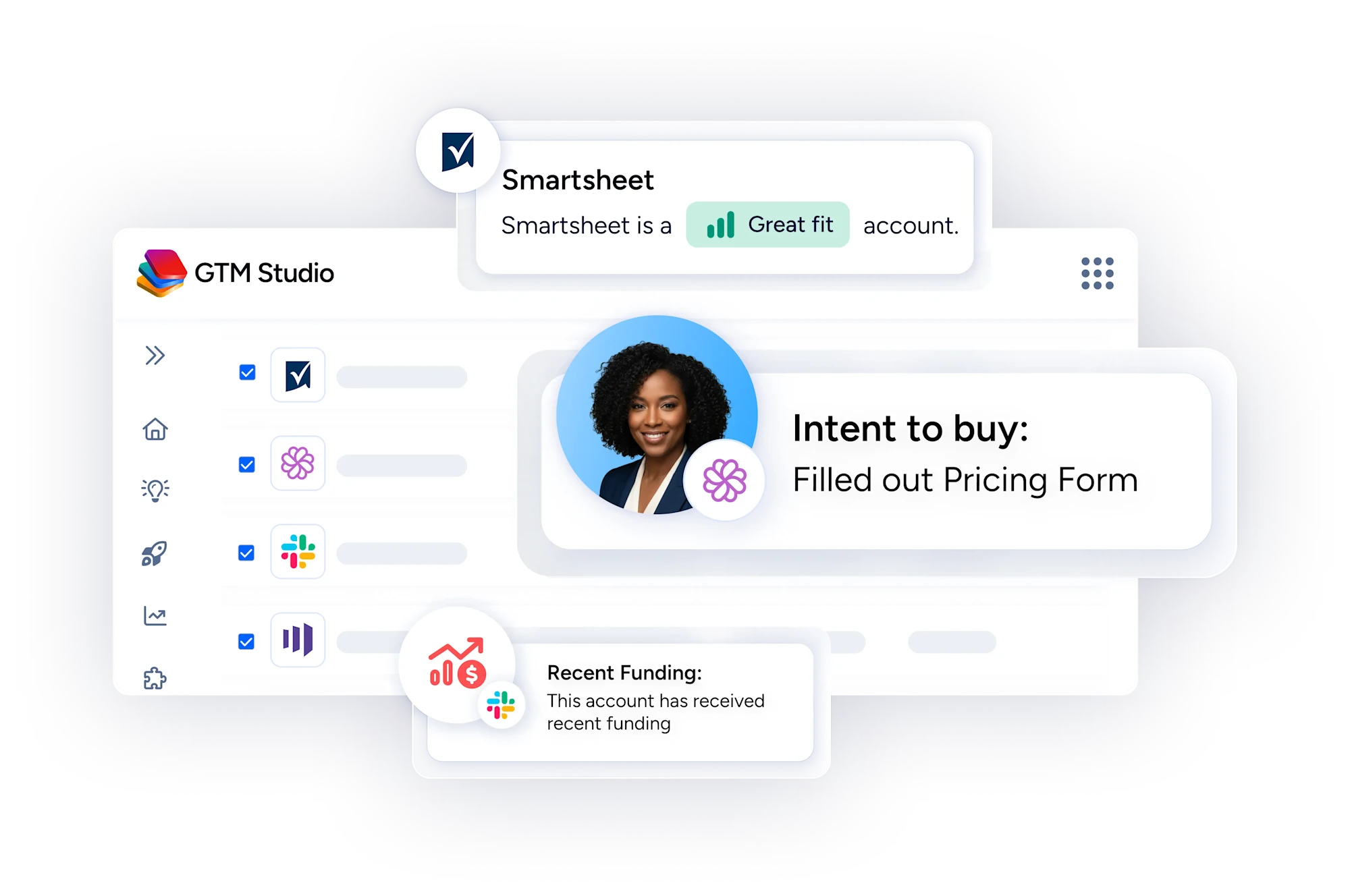
ZoomInfo surfaces real-time buying signals including research activity, hiring trends, technology adoption, and executive moves that indicate when a company may be entering a buying cycle. Sales and marketing teams can use these signals to prioritize outreach and engage prospects when interest is highest.
Campaign targeting and activation:
Marketing teams use ZoomInfo to build precise audiences for demand generation and account-based marketing (ABM) programs. With accurate contact data and buying group visibility, marketers can run targeted campaigns across email, advertising, and other channels while aligning closely with sales priorities.
Contact and account data management:
ZoomInfo helps operations teams maintain clean, reliable CRM and marketing automation data. The platform continuously enriches and updates records with firmographic details, contact information, and organizational changes so teams can trust the data powering their go-to-market systems.
Customer expansion and retention:
ZoomInfo also helps teams grow and retain existing accounts by surfacing signals such as leadership changes, funding rounds, and technology investments. These insights help account teams identify expansion opportunities and engage customers at the right moment.
How do go-to-market teams use ZoomInfo?
ZoomInfo is used to help go-to-market teams uncover market insights, find ideal customers first, and close deals faster.
It gives sales, marketing, and revenue leaders real-time data, buyer intent signals, and workflow tools to find, reach, and win their next customer before the competition. Instead of relying on static lead lists or waiting for inbound interest, go-to-market teams use ZoomInfo's data foundation, buying signals, and AI recommendations to identify opportunities earlier and engage accounts with greater precision.
Sales teams use ZoomInfo differently depending on the seat. SDRs and BDRs live in list building and first touch: they need direct dials that connect and emails that don't bounce, so a bad connect rate or a stale title costs them a whole calling block. AEs care more about the account picture: who is on the buying committee, what changed since the last call, and which deals are quietly stalling. Real-time signals and AI insights help both prioritize outreach, personalize messaging, and engage prospects when buying interest is highest.
Marketers use ZoomInfo to build accurate audiences and activate campaigns across email, advertising, and account-based marketing programs. With visibility into buying groups and intent signals, marketers can align closely with sales teams and focus spend on accounts that are actively researching solutions.
Operations professionals rely on ZoomInfo to fuel the entire GTM system with updated, high-quality, comprehensive data and signals, turning stale, inaccurate first-party CRM data into a living, strategic resource that can fuel creative GTM motions at scale.
How ZoomInfo gets its data
How B2B data is sourced, verified, and governed directly affects CRM integrity, outreach performance, and revenue forecasting reliability. ZoomInfo builds its database through a multi-source approach designed to maximize both coverage and accuracy:
Public web sources and company websites
SEC and regulatory filings
Job postings and hiring data
A contributory network of business professionals
AI-assisted deduplication and gap-filling
300+ human researchers who verify records
The result is one of the most comprehensive ZoomInfo data foundations in B2B: 500M contacts, 100M companies, 135M+ verified phone numbers, 120M+ direct-dial numbers, 200M+ verified business emails, and 1.5B+ data points processed daily.
When a professional's data is added to the platform, ZoomInfo notifies them via their business email and provides opt-out options through the ZoomInfo Privacy Center. For a deeper walkthrough, see how ZoomInfo gets its data. For a full overview of how ZoomInfo handles data governance and regulatory compliance, see the section below.
ZoomInfo's compliance and data privacy
ZoomInfo collects data on professionals in their professional capacity, not personal or consumer data. The distinction matters legally and operationally: professional contact information used for B2B outreach falls under a different regulatory framework than consumer data, and ZoomInfo's compliance posture is built around that distinction.
ZoomInfo maintains ISO 27001, ISO 27701, SOC 2 Type II, TRUSTe GDPR, and TRUSTe CCPA certifications. For GDPR compliance, ZoomInfo processes professional contact data under legitimate interest grounds and provides data subject rights mechanisms so individuals can access, correct, or request deletion of their information. Professionals can opt out of the platform at any time, and ZoomInfo's Trust Center documents its privacy, security, and responsible AI practices.
These certifications reflect the compliance requirements of ZoomInfo's enterprise customer base, which includes regulated industries such as financial services, healthcare, and telecommunications. ZoomInfo is publicly traded on Nasdaq under the ticker GTM, subject to the disclosure requirements and governance standards that public investors and enterprise buyers expect. As a Nasdaq-listed company that has operated in the B2B data space since 2007 and counts 8 of the 10 largest companies in the world as customers, ZoomInfo brings the transparency and accountability that comes with public company status.
ZoomInfo products: the full platform
ZoomInfo's all-in-one AI GTM Platform delivers these capabilities through a suite of products designed for different parts of the go-to-market organization, all powered by the same data foundation and GTM Context Graph intelligence layer.
GTM Workspace: AI-Powered Seller Execution Platform
GTM Studio: Go-to-Market Data Management Platform
Agent Teams: Coordinated AI agents that run complete GTM plays, available in GTM Studio
ZoomInfo Sales: B2B Sales Prospecting Software
ZoomInfo Marketing: ABM Platform with Real-Time B2B Data
ZoomInfo Operations: Data Orchestration for Modern Business
GTM.AI: Headless API, CLI, and MCP access to ZoomInfo data and the GTM Context Graph for developers and AI agents
Chorus: Conversation intelligence for calls, meetings, and emails
ZoomInfo DaaS: B2B Data-as-a-Service delivered into your data warehouse
ZoomInfo Talent: Recruiting Database and Management System
Key products and features
What is GTM Workspace?
GTM Workspace is ZoomInfo's AI-powered execution environment for sellers, built on ZoomInfo's GTM Context Graph. Its AI agents, evolved from ZoomInfo Copilot, analyze account activity, intent signals, CRM data, and engagement history to help sellers focus on the accounts most likely to convert.
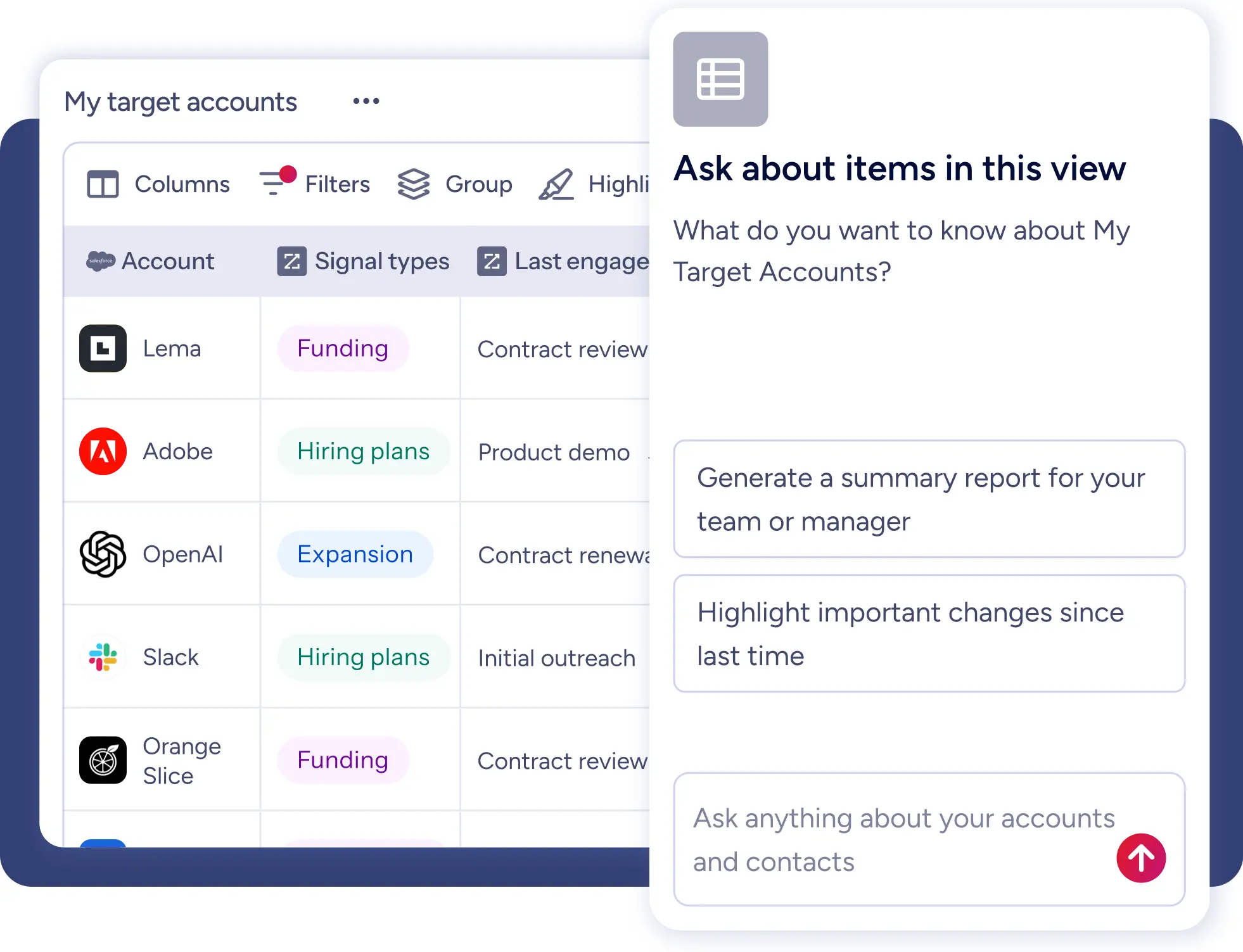
GTM Workspace makes every seller your best seller by surfacing everything frontline salespeople need to know about prospective customers and target accounts, instantly. It provides an overview of every engagement prospects have had with your company, including previous outreach efforts and touchpoints, deal histories and meeting summaries, and detailed account data.
Salespeople need more than accurate contact data. They need actionable, relevant insights into today's complex, nonlinear purchasing journey. GTM Workspace meets this need by identifying intent data and buying signals that escape conventional prospecting workflows, such as person-level website visits, competitive research, intent spikes, org chart changes including executive and champion moves, insights from regulatory filings, and even media appearances.
All this provides sellers with a complete picture of not only where prospective customers are today, but also crucial recent activity that is often strongly indicative of buying intent.
Seismic adopted these AI agents when they were still sold as ZoomInfo Copilot, before Copilot became the native agent layer inside GTM Workspace:
"I'm really excited about the power of generative AI in general, and working with Copilot is a no-brainer because ZoomInfo is one of the key platforms in our tech stack." - Toby Carrington, Chief Business Officer, Seismic
Seismic's results back that up: the company achieved a 54% productivity gain, with 11.5 hours per week saved per rep and 39% of pipeline attributed to ZoomInfo signals.
Within GTM Workspace, sales professionals can quickly research accounts, identify key stakeholders, prepare for meetings, and prioritize their next actions. The platform surfaces relevant buying signals, engagement history, and account intelligence so reps always have the context they need before reaching out to a prospect.
The workspace also includes a conversational interface powered by AI. Sellers can ask questions about their territory, accounts, or deals and instantly generate insights, account summaries, or personalized outreach messages. This allows revenue teams to spend less time researching and organizing data, and more time engaging buyers and moving deals forward.
By combining CRM activity with ZoomInfo's market intelligence, GTM Workspace provides a centralized environment where sales teams can turn insights into action. Natively integrated with Salesforce and part of ZoomInfo's broader platform, GTM Workspace works seamlessly with GTM Studio for orchestrated plays and AI-powered assistance. It gives sellers time back to focus on what matters: building relationships and closing deals.
What is GTM Studio?
GTM Studio is ZoomInfo's AI-powered go-to-market canvas. It's the centralized control plane for building and activating go-to-market audiences using ZoomInfo's data foundation.
It connects your CRM, marketing automation, sales engagement tools, and third-party data sources into one live, signal-enriched workspace. Instead of managing disconnected systems or submitting tickets for list pulls and workflow builds, RevOps and GTM teams can plan, launch, and optimize plays directly inside GTM Studio.
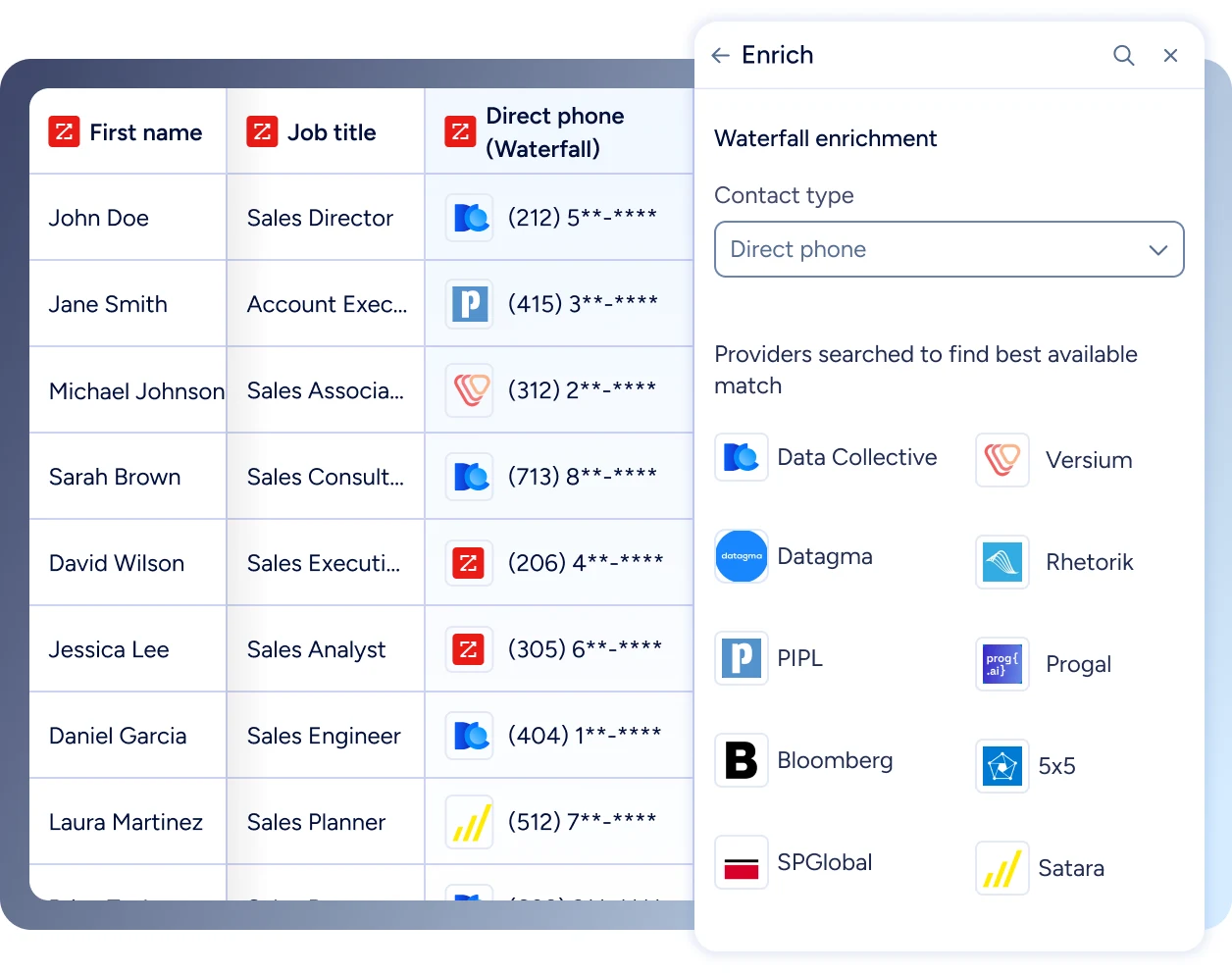
At its foundation, GTM Studio powers two critical workflows: high-quality list building and consolidated waterfall data enrichment at scale.
With GTM Studio, enrichment is predictable and consolidated. One ZoomInfo credit provides broad enrichment coverage across people, company data, and signals, including verified emails, mobile numbers, firmographics, technographics, job postings, website activity, and intent. Credits are retained for a year, and refreshing enriched records within that period does not create incremental credit burn. Waterfall Enrichment is available to all GTM Studio customers at no additional cost, with no usage-based overages.
Beyond enrichment, GTM Studio is where signals become coordinated execution.
Revenue teams can:
Connect CRM, MAP, sales engagement, and third-party systems into one canvas
Build and score ICP-based audiences using real-time buying signals
Use natural language (Command + K) to generate lists and surface insights
Launch pre-built or custom GTM plays without code
Automate routing, scoring, enrichment, and messaging with AI
Push activation-ready audiences to sellers, ad platforms, email tools, or data warehouses
For GTM Engineers, Studio provides control and visibility, including fill rate analysis, vendor coverage review, custom attributes and scoring models, and governed exports into Salesforce, HubSpot, Snowflake, and other systems.
For Growth and Demand Gen teams, it's built for speed: identify in-market accounts, enrich missing data in one pass, launch inbound or expansion plays, and route hot accounts instantly for activation across email, ads, and outbound.
GTM Studio removes the operational overhead of stitching together enrichment tools while delivering higher-confidence data at a predictable price. It acts as the data control plane for ZoomInfo's broader platform, powering GTM Workspace, Sales, Marketing, and downstream systems with clean, enriched, activation-ready data.
What is Agent Teams?
Agent Teams gives revenue teams AI agents that run whole GTM plays, not single tasks. Teams give an Agent Team an outcome, such as activating a champion who changed jobs, converting an inbound buyer, or turning a closed-won deal into lookalike pipeline, and specialized agents carry the play end to end. Each agent has its own role and tools, shares context with the others, and chooses the next best action from the account's current state rather than a fixed flowchart.
Take the champion play. When a past champion moves to a new company, an Agent Team resolves the person and the account, rebuilds their role in the original deal, drafts outreach grounded in that history, and routes anything consequential for approval. If the champion later visits your pricing page, the job resumes rather than starting over.
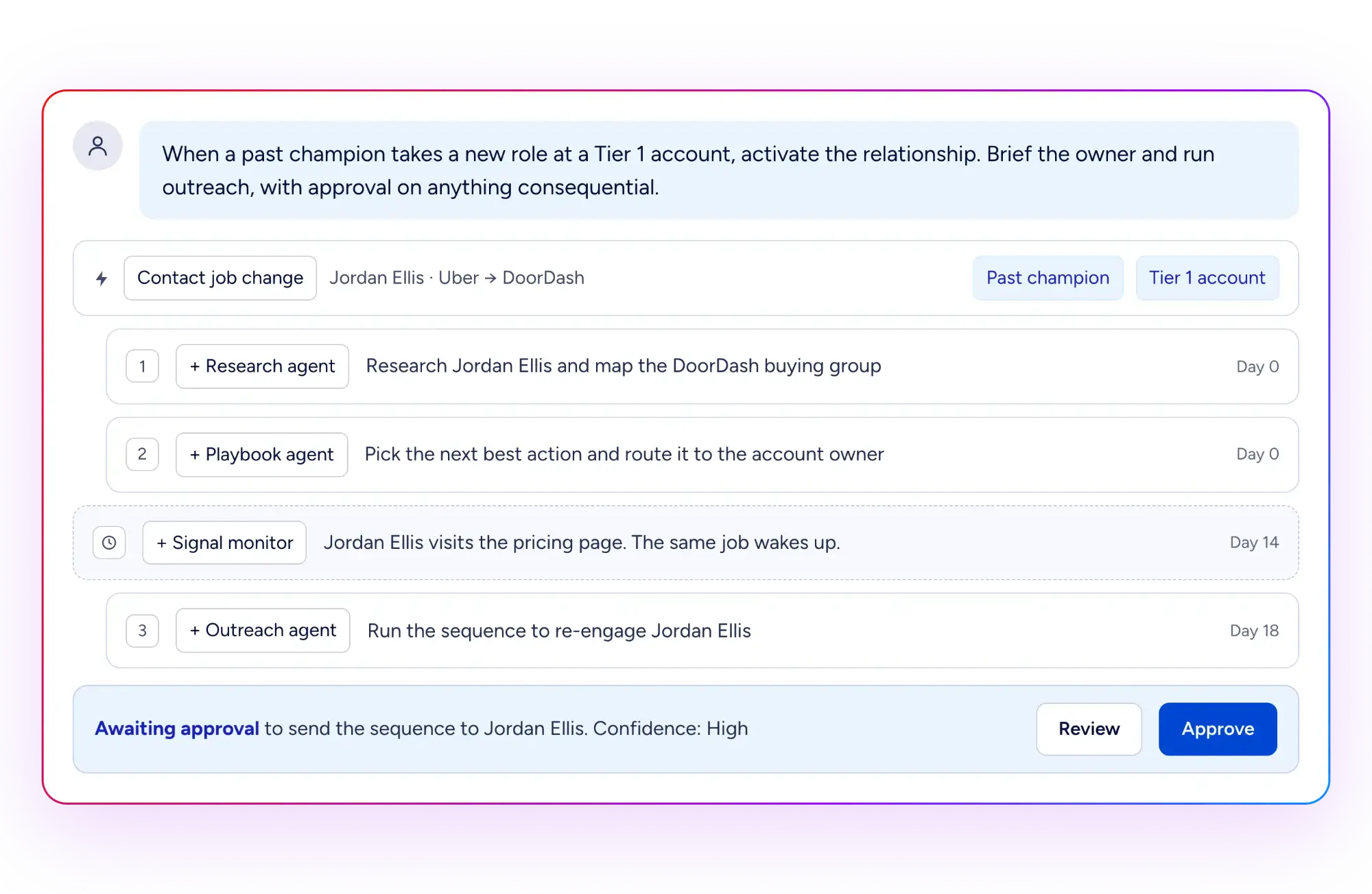
Autonomy comes with control. A Playbook sets each play's goal, bounds, and approvals, agents can't change them mid-run, and every trigger, decision, and action lands in one audit trail, with a credit estimate shown before each play runs. Agent Teams runs on verified ZoomInfo data and each account's GTM Context Graph, connects natively to Salesforce, HubSpot, Outreach, Salesloft, Slack, and Gmail, and comes with 50+ ready-made agents.
Agent Teams is available now in GTM Studio, or headless through GTM.AI. Read the Agent Teams launch announcement for worked examples.
What is ZoomInfo Sales?
ZoomInfo Sales gives sales professionals everything they need to close bigger deals, in less time, with less effort.
This begins with identifying and prioritizing companies in high-potential markets, based on businesses' ideal customer profiles (ICPs). ZoomInfo's Go-to-Market Intelligence Platform gives salespeople visibility into the true scope of their total addressable market (TAM), allowing them to prioritize high-value accounts.
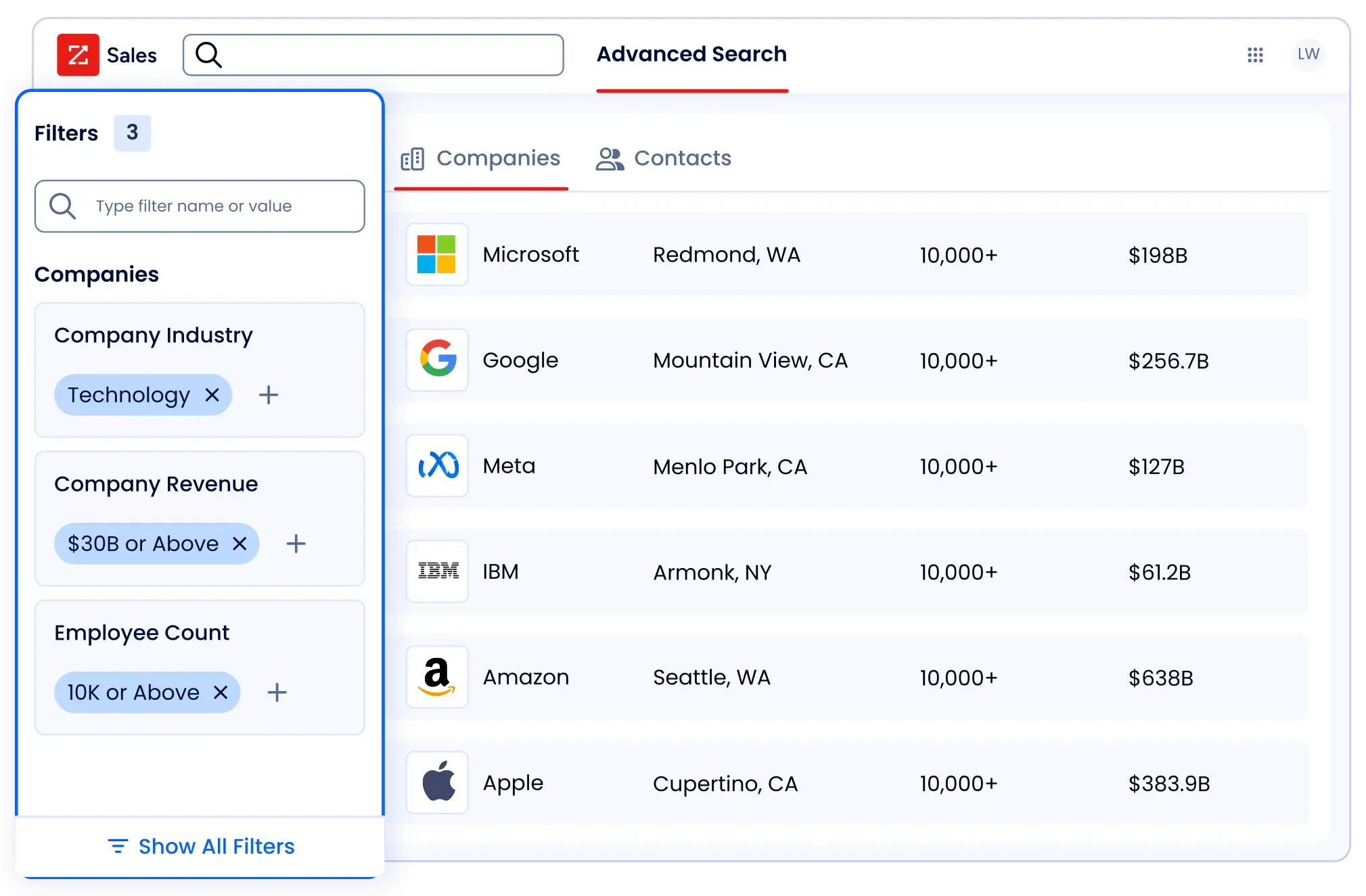
These insights are powered by ZoomInfo's B2B data universe of more than 500 million contact profiles, 100 million company profiles, 135 million verified phone numbers, 120M+ direct-dial phone numbers, and 200M+ verified business emails.
Combined with ZoomInfo's intent data, website visitor tracking, conversation intelligence tools, sales automations, and workflow builders, ZoomInfo Sales is indispensable for sales teams pursuing ambitious targets in today's increasingly competitive markets.
"With ZoomInfo, we more than doubled our activity and our efficiency skyrocketed. Since then, we've grown our pipeline over 90% per year." - Justin Hiatt, Vice President Digital Sales, Workfront
What is ZoomInfo Marketing?
ZoomInfo Marketing is a fully featured account-based marketing solution that combines comprehensive B2B data with AI-powered insights to enable marketers to efficiently identify, engage, and capture quality leads at scale.
With the ROI of every marketing dollar under greater scrutiny than ever, marketers in every sector and vertical are under immense pressure to generate quality leads with fewer resources in less time.
ZoomInfo Marketing helps them do so by powering demand-generation strategies with real-time intent data. Marketers can run more effective display and social ad campaigns targeting prospective customers who have demonstrated strong intent, and deliver qualified inbound leads to their sales team by automatically identifying, enriching, and routing high-potential leads to the most suitable sales reps.
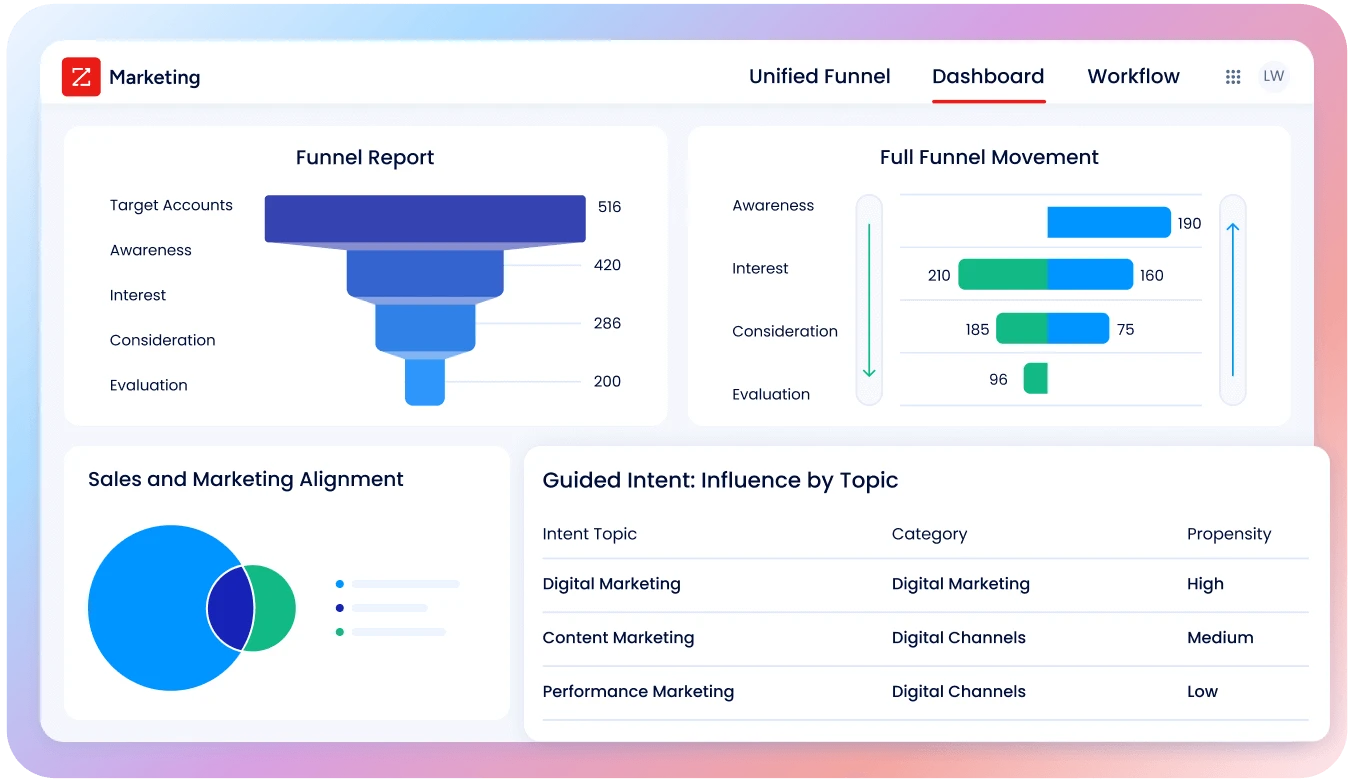
ZoomInfo's GTM Context Graph algorithmically identifies best-fit accounts by stacking intent signals, firmographic fit, and behavioral patterns, so marketers can engage accounts that match the patterns behind closed-won deals, not just keyword thresholds.
ZoomInfo Marketing can trigger campaigns based on intent signals, including de-anonymized site traffic and industry scoops, to identify sales-ready accounts demonstrating strong intent to buy. ZoomInfo's IP-to-company graph analyzes over 6 billion IP addresses to build campaigns that convert, and helps marketers attract, nurture, and convert visitors based on on-page website behaviors.
"We are seeing incredible engagement. Our advertising strategy is proving much more effective since running ads through ZoomInfo Marketing. We are seeing incredible engagement and to date our average click through rate has increased by 900%." - Joe Charron, Director of Global Marketing, Librestream
Smartsheet increased MQLs by 84% and opportunity rates by 26% using ZoomInfo Marketing's FormComplete, a strong signal of what happens when campaigns are built on accurate, real-time audience data rather than stale list pulls.
What is ZoomInfo Operations?
ZoomInfo Operations enables data and RevOps professionals to deduplicate, cleanse, and enrich data efficiently through sophisticated automations, an intuitive user-friendly interface, and seamless integrations with the world's leading cloud data solutions.
Deduplicating data is a crucial part of businesses' data maintenance, but it can also be among the most time-consuming and prone to error. ZoomInfo Operations' automations make deduplication effortless by enabling ops professionals to set custom rules to automate data deduplication before seamlessly merging and archiving deduped data. These automations can also match prospective leads to their current accounts, and prevent inaccurate data from entering your systems of record in real time.
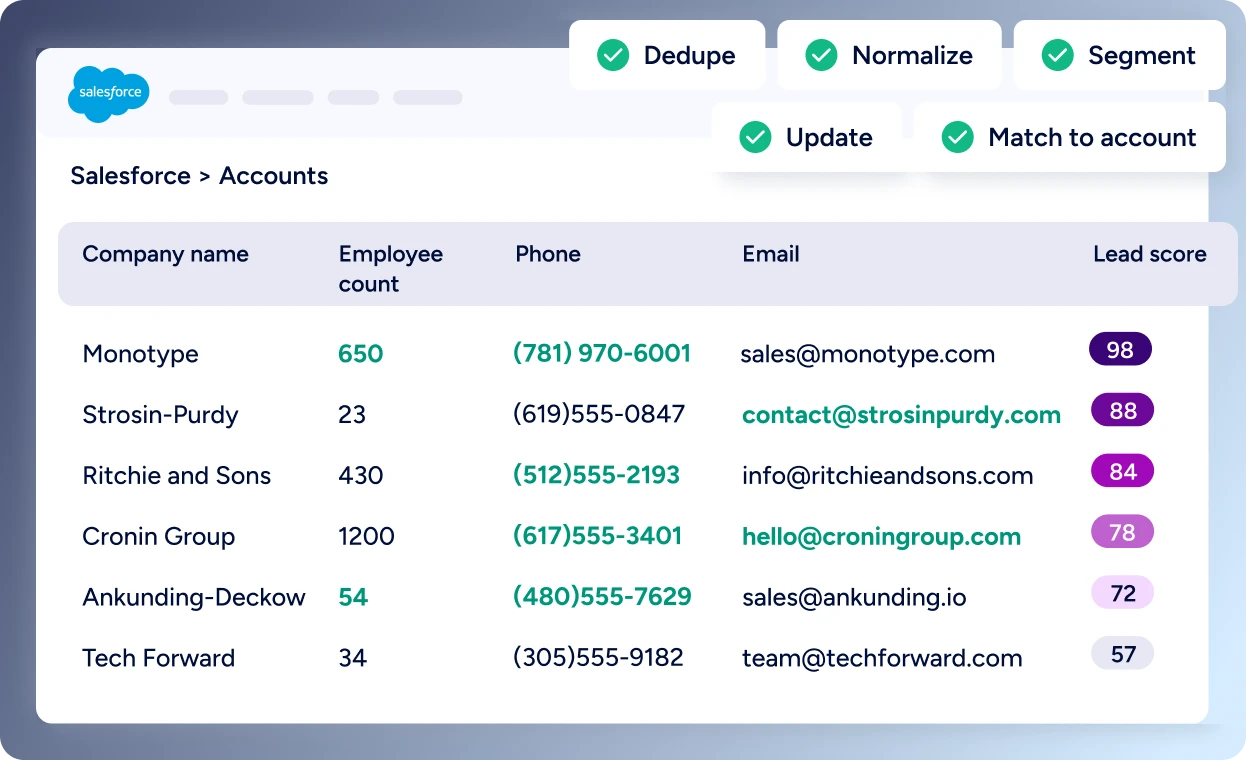
ZoomInfo Operations' powerful data cleansing features enable ops professionals to automate data correction with pre-configured formatting, normalize and standardize fields including phone numbers, company names, ISO codes, proper case, and more, and can be configured to transform data either in bulk or in real time.
Data enrichment is critical to both sales and marketing effectiveness and overall data hygiene. ZoomInfo Operations enables ops professionals to run multi-vendor data enrichment, as well as set rules on how data is enriched from specific sources through waterfall-based logic.
What is ZoomInfo Data-as-a-Service?
The comprehensive data foundation that powers ZoomInfo's Go-to-Market Intelligence Platform can also be accessed by companies via ZoomInfo Data-as-a-Service (DaaS).
ZoomInfo's comprehensive B2B data can be integrated into any workflow via cloud data shares, flat files, orchestration apps, or the GTM.AI API and MCP server, which is now the primary way developers and AI agents consume ZoomInfo data programmatically. Businesses can access Data Cubes in AWS, Google Cloud, Databricks, Snowflake, or flat files to enhance their CRM with firmographic and technographic data, intent data and buying signals, proprietary Scoops and news, hierarchical changes and org-chart information, and more.
"[Records] used to always be missing data, or include outdated contact details. ZoomInfo brings these lists back to life and gives us an additional layer of detailed and in-depth insights around those companies and contacts." - Scott Logan, SVP of Marketing, Kronologic
What is ZoomInfo Talent?
ZoomInfo Talent is built for recruiters who need a data-first platform to dominate the hiring funnel from start to finish.
ZoomInfo Talent helps recruiting teams source passive candidates, reduce time-to-hire, and build employer brand through targeted outreach, backed by the same verified B2B data foundation that powers ZoomInfo's sales and marketing products.
ZoomInfo Talent also helps recruiting teams build a brand that candidates want to work for. From customized messaging to culture-centric targeting, the platform empowers talent leaders to showcase their company story and connect with the right people at the right time. With features like layoff insights, scalable outreach, and ATS integration for seamless team collaboration, ZoomInfo helps recruiters do more than recruit, it helps them compete.
Why modern go-to-market teams need ZoomInfo
ZoomInfo's product suite has evolved significantly over the years, reflecting the extreme pace of change in the markets and customers we serve.
Traditional prospecting methods, static lead lists, manual research, disconnected tools, leave revenue teams reacting to opportunities rather than identifying them early. Thomson Reuters saw a 40% increase in closed-won deals and 115% average monthly quota attainment using ZoomInfo's GTM Workspace, a result that reflects what happens when data, intelligence, and execution are unified rather than stitched together across point solutions.
Organizations from fast-growing startups to 8 of the 10 largest companies in the world now rely on ZoomInfo's platform to identify new markets, engage prospective customers, and accelerate revenue growth. That scale of adoption also means buyers frequently want to know how ZoomInfo stacks up against the alternatives.
How ZoomInfo compares to alternatives
Buyers evaluating ZoomInfo often compare it to other tools in the market. The right choice depends on team size, use case, and whether a team needs a point solution for a specific workflow or a full GTM platform that spans data, intelligence, and execution across sales, marketing, and operations.
Four questions separate the options quickly:
Coverage where you sell. Test match rates on your own target accounts and regions, not on a vendor's headline totals.
Signals, not just records. Ask whether the tool explains why an account is moving (hiring, research, executive changes, deal activity) or only returns contact fields.
Where the data shows up. Check whether it reaches your CRM, sales engagement tool, ad platforms, warehouse, and AI agents without manual exports.
How you pay as you scale. Compare per-seat, per-record, and credit-based models against how many people and workflows will actually use the data.
ZoomInfo vs. Apollo.io: Apollo is a strong choice for individual sellers and SMBs who want an all-in-one prospecting and sequencing tool with per-seat pricing. ZoomInfo's advantage is enterprise-grade data scale (500M contacts), the GTM Context Graph reasoning layer that surfaces why accounts are moving rather than just flagging activity, and a broader platform spanning sales, marketing, and revenue operations. See the Apollo vs. ZoomInfo comparison.
ZoomInfo vs. Cognism: Cognism is well-suited for European-market teams with strong GDPR compliance requirements. ZoomInfo offers deeper North American coverage and a broader product suite that includes conversation intelligence via Chorus and marketing activation via GTM Studio, making it the stronger choice for teams that need a unified platform rather than a data feed. See the Cognism vs. ZoomInfo comparison.
ZoomInfo vs. LinkedIn Sales Navigator: LinkedIn Sales Navigator excels for social selling and relationship-based outreach within LinkedIn's network. ZoomInfo provides direct contact data, 135M+ verified phone numbers and 200M+ verified business emails, alongside buying intent signals that LinkedIn does not offer. For teams that need to reach buyers outside LinkedIn's ecosystem or trigger outreach based on behavioral signals, ZoomInfo covers ground Sales Navigator cannot. See the LinkedIn Sales Navigator vs. ZoomInfo comparison.
ZoomInfo vs. Demandbase: Demandbase is purpose-built for account-based marketing programs. ZoomInfo spans the full GTM lifecycle, from data and intent through sales execution and marketing activation, making it a broader platform for teams that need sales and marketing aligned on the same data and signals, not just an ABM layer on top of a separate data stack. See the Demandbase vs. ZoomInfo comparison.
When ZoomInfo may not be the right fit
ZoomInfo is built for B2B teams that sell to other businesses and run repeatable outbound, ABM, or data operations. It is a weaker fit for consumer (B2C) marketing, since it covers professionals in their business capacity rather than consumers. A solo founder who needs a handful of emails a month may be well served by the free ZoomInfo Lite plan, or a lighter point tool, before committing to the full platform. Teams that sell almost exclusively into one European country may also want to test regional coverage against a specialist provider before deciding. For a wider view, see this roundup of ZoomInfo alternatives.
Request a demo to see how ZoomInfo fits your go-to-market motion.
ZoomInfo: frequently asked questions
What does ZoomInfo do?
ZoomInfo is an all-in-one AI GTM Platform that gives B2B sales, marketing, and revenue operations teams the data, intelligence, and execution tools to identify opportunities earlier and close pipeline faster. It combines 500M+ verified contacts, the GTM Context Graph intelligence layer (which processes 1.5B+ data points daily to reveal why accounts are moving), and integrated execution through GTM Workspace, GTM Studio, and GTM.AI's API and MCP server. Its customers, including 8 of the 10 largest companies in the world, use ZoomInfo to identify new markets, engage prospective customers, and accelerate revenue growth.
Is ZoomInfo legit?
Yes. ZoomInfo is a publicly traded company (Nasdaq: GTM) founded in 2007, headquartered in Vancouver, Washington, and used by 8 of the 10 largest companies in the world and more than half of the Fortune 500. It holds ISO 27001, ISO 27701, and SOC 2 Type II certifications, and it has been named a Leader by Gartner and Forrester and ranked #1 by G2 Score in multiple categories.
How does ZoomInfo get its data?
ZoomInfo builds its B2B database from multiple sources: public web sources and company websites, SEC and regulatory filings, job postings, a contributory network of business professionals, AI-assisted deduplication, and 300+ human researchers who verify records. The result is a database of 500M contacts, 100M companies, 135M+ verified phone numbers, and 1.5B+ data points processed daily. You can explore coverage depth at ZoomInfo data.
How do I remove my information from ZoomInfo?
Professionals can request removal or opt out at any time through the ZoomInfo Privacy Center. ZoomInfo also notifies professionals by business email when their information is added to the platform, with a link to manage or remove it.
Is ZoomInfo legal and compliant with GDPR and CCPA?
Yes. ZoomInfo collects data on professionals in their professional capacity and maintains ISO 27001, ISO 27701, SOC 2 Type II, TRUSTe GDPR, and TRUSTe CCPA certifications. For GDPR, ZoomInfo processes professional contact data under legitimate interest grounds and provides data subject rights mechanisms. ZoomInfo is publicly traded on Nasdaq (ticker: GTM) and has operated in the B2B data space since 2007.
What is ZoomInfo's intent data and how does it work?
ZoomInfo's intent data surfaces real-time buying signals that indicate when a company may be entering a purchasing cycle. These signals include research activity on relevant topics, hiring trends, technology adoption patterns, executive moves, and person-level website visits. The GTM Context Graph processes these signals alongside CRM data and conversation intelligence to distinguish genuine buying committee behavior from noise, so sales and marketing teams can prioritize outreach when interest is highest, not after the window has closed. ZoomInfo Marketing is the primary product for intent-driven campaign targeting and audience activation.
How much does ZoomInfo cost?
Pricing: Free to start with consumption credits based on usage. Teams pay for the credits they consume rather than a fixed seat tier, so cost scales with how much data and how many workflows a team actually uses. See ZoomInfo pricing for current details, and this guide on how much ZoomInfo costs for how the credit model works in practice.
Is ZoomInfo free?
ZoomInfo offers a permanent free plan, ZoomInfo Lite, that requires no credit card and no commitment, and the wider platform follows the same model: Free to start with consumption credits based on usage. Developers can also try ZoomInfo data headlessly through GTM.AI. You can start a free trial from ZoomInfo's website.
What is ZoomInfo Agent Teams?
Agent Teams is ZoomInfo's multi-agent product for running complete GTM plays, launched in October 2026 and built on technology from ZoomInfo's acquisition of DoubleO.ai. Specialized agents share context and carry a play, such as champion activation, inbound lead routing, or closed-won lookalikes, from signal to outcome, while Playbooks set the approvals and limits and every action is logged. It is available in GTM Studio. See how Agent Teams works.
What happened to ZoomInfo Copilot?
ZoomInfo Copilot is no longer a standalone product. Its AI engine became the native agent layer inside GTM Workspace, which launched in October 2025 and handles account research, meeting prep, and deal prioritization for sellers.
Does ZoomInfo have an API or MCP server?
Yes. GTM.AI gives developers and AI agent builders headless access to ZoomInfo data and the GTM Context Graph through an API, CLI, and MCP server. The ZoomInfo MCP server connects Claude, ChatGPT, and custom agents to verified ZoomInfo data, so agents query trusted B2B records instead of scraping the web.
Does ZoomInfo integrate with Salesforce and HubSpot?
Yes. ZoomInfo has native integrations with Salesforce, HubSpot, and Microsoft Dynamics 365, plus 120+ other integrations across sales engagement, marketing automation, and data warehouse tools. GTM Workspace is natively integrated with Salesforce.
Who owns ZoomInfo, and who is the CEO?
ZoomInfo Technologies is a public company listed on Nasdaq under the ticker GTM, so it is owned by its shareholders. Henry Schuck founded the company as DiscoverOrg in 2007 and serves as Founder and CEO.
Is ZoomInfo the same as Zoom?
No. ZoomInfo and Zoom Video Communications are completely separate, unrelated companies. ZoomInfo (Nasdaq: GTM) is a B2B go-to-market intelligence platform founded in 2007 by Henry Schuck. Zoom Video Communications (Nasdaq: ZM) is a video conferencing platform. The similar names cause frequent confusion, but the two companies have no affiliation, shared ownership, or product integration.