
What is an ABM platform?
An ABM platform, or account-based marketing platform, is software that helps B2B teams pick the companies they want to win, spot which of them are in market, and reach the people on each buying committee with coordinated campaigns. Instead of scoring individual leads, it treats each target account as a market of one and measures engagement at the account level.
Most ABM platforms do five jobs:
Build the target account list from firmographic, technographic and fit data.
Show which accounts are researching your category, through intent data and website visits.
Reach the buying committee with ads, email, social and direct mail.
Personalize the website or content for each account or segment.
Measure engagement, pipeline and revenue by account, and pass the hottest accounts to sales.
ABM software, ABM tools and ABM platforms mean much the same thing. "Platform" usually signals a suite that covers several of those jobs, while a "tool" often does one of them well. ZoomInfo's guide to account-based marketing covers the strategy itself, and the guide to the ABM tech stack covers how the pieces fit.
The platforms on this list fall into six groups:
Type | What it does | Platforms on this list |
|---|---|---|
All-in-one ABM suites | Account selection, intent, advertising, orchestration and reporting in one product | Demandbase, 6sense |
Contact-level data and activation | Audiences built from contact and company data, intent and website visitors, run through the platform's own display network, paid social and automated plays | ZoomInfo |
Advertising, media and managed programs | Account-based and person-based ads, content syndication and programs run by the vendor | AdRoll ABM, Influ2, Madison Logic, DemandScience |
Orchestration and personalization | Multi-channel plays, personalized web pages and sales activation | Foundry ABM |
Buyer intelligence | Person-level buying signals, scoring and audiences shared by marketing and sales | Common Room |
CRM-native ABM | ABM features inside a CRM and marketing automation suite | HubSpot Marketing Hub |
Best ABM platforms: the short answer
There's no single best ABM platform. The right one depends on where your program breaks: the account list, the signals, reaching the buying committee, or getting sales to act on what marketing finds.
Here's who each platform fits:
ZoomInfo for teams that want contact-level data, intent and audiences driving ads, email and rep alerts from one account list
Demandbase for enterprise teams that want one suite with its own B2B DSP and campaign agents
6sense for teams that want AI-identified in-market accounts and buying-group advertising
DemandScience for teams that want ABM run for them as a managed program
AdRoll ABM for teams that want to start with free retargeting and contact-list ads, then move to a paid package for account-based advertising
Madison Logic for demand gen teams whose ABM runs on content syndication and paid media
Foundry ABM for teams that want orchestration tied to intent from a tech publishing audience
Common Room for teams that want person-level buying signals and scoring that marketing and sales can both read
Influ2 for teams that want ads in front of named people on the buying committee
HubSpot Marketing Hub for teams that already run marketing and sales in HubSpot
ZoomInfo publishes this guide, and ZoomInfo is on the list. Every platform is judged against the same six criteria, set out below, and every competitor fact comes from the vendor's own site, a company press release or G2, checked on October 23, 2026.
ABM platforms at a glance
Platform | Best for | Starting price | Free plan or trial | G2 rating |
|---|---|---|---|---|
ZoomInfo | Contact-level ABM on verified B2B data | Free with ZoomInfo Lite; paid plans custom-quoted on consumption credits | ZoomInfo Lite free plan (contact and company data; ABM advertising in paid packages) | 4.5 (3,513 reviews, GTM Studio) |
Demandbase | One suite with its own B2B DSP | Quote-based: a platform fee plus a flat fee per user | Not listed | 4.4 (2,018 reviews) |
6sense | AI-identified in-market accounts | Quote-based | Not listed | 4.2 (1,571 reviews) |
DemandScience | ABM as a managed program | Quote-based, scoped through a pipeline audit | Not listed | 4.4 (763 reviews) |
AdRoll ABM | Account-based ads, with a free retargeting tier | ABM packages quote-based; free tier with no monthly fee, pay for media | Free tier (retargeting, contact targeting and Facebook/Instagram campaigns) | 4.3 (660 reviews) |
Madison Logic | Content syndication and multi-channel media | Quote-based | Not listed | 4.3 (275 reviews) |
Foundry ABM | Orchestration with publisher intent | Quote-based | Not listed | 4.2 (206 reviews) |
Common Room | Person-level buying signals | Essential, $2,500/month billed annually (5 seats) | Not listed | 4.5 (138 reviews) |
Influ2 | Person-based ads to named buyers | Quote-based | Not listed | 4.6 (161 reviews) |
HubSpot Marketing Hub | ABM inside the HubSpot CRM | ABM from Professional, $800/month billed annually (3 core seats), plus $3,000 one-time onboarding | Free plan for up to 2 users (no ABM tools) | 4.4 (15,990 reviews) |
How we evaluated ABM platforms
Every platform on this list is judged against the same six criteria:
Account and contact data. Where the account list and the buying committee contacts come from, and how current they stay.
Intent and in-market signals. First-party website activity, third-party intent and how the platform scores accounts and people.
Buying-group reach and advertising. Whether the platform runs its own DSP, syncs audiences to LinkedIn and other ad networks, or targets named people.
Orchestration, personalization and AI. Multi-channel plays, personalized pages, AI agents and whether the vendor publishes an MCP server.
Measurement. Account-level engagement, pipeline and campaign reporting.
Integrations and pricing. CRM and marketing automation fit, plus the published price on a stated billing basis, minimums, onboarding fees and free access.
Weight them by team. A five-person marketing team on HubSpot should weight CRM fit and price. An enterprise program with a media budget should weight data, signals and advertising.
The 10 best account-based marketing platforms
1. ZoomInfo
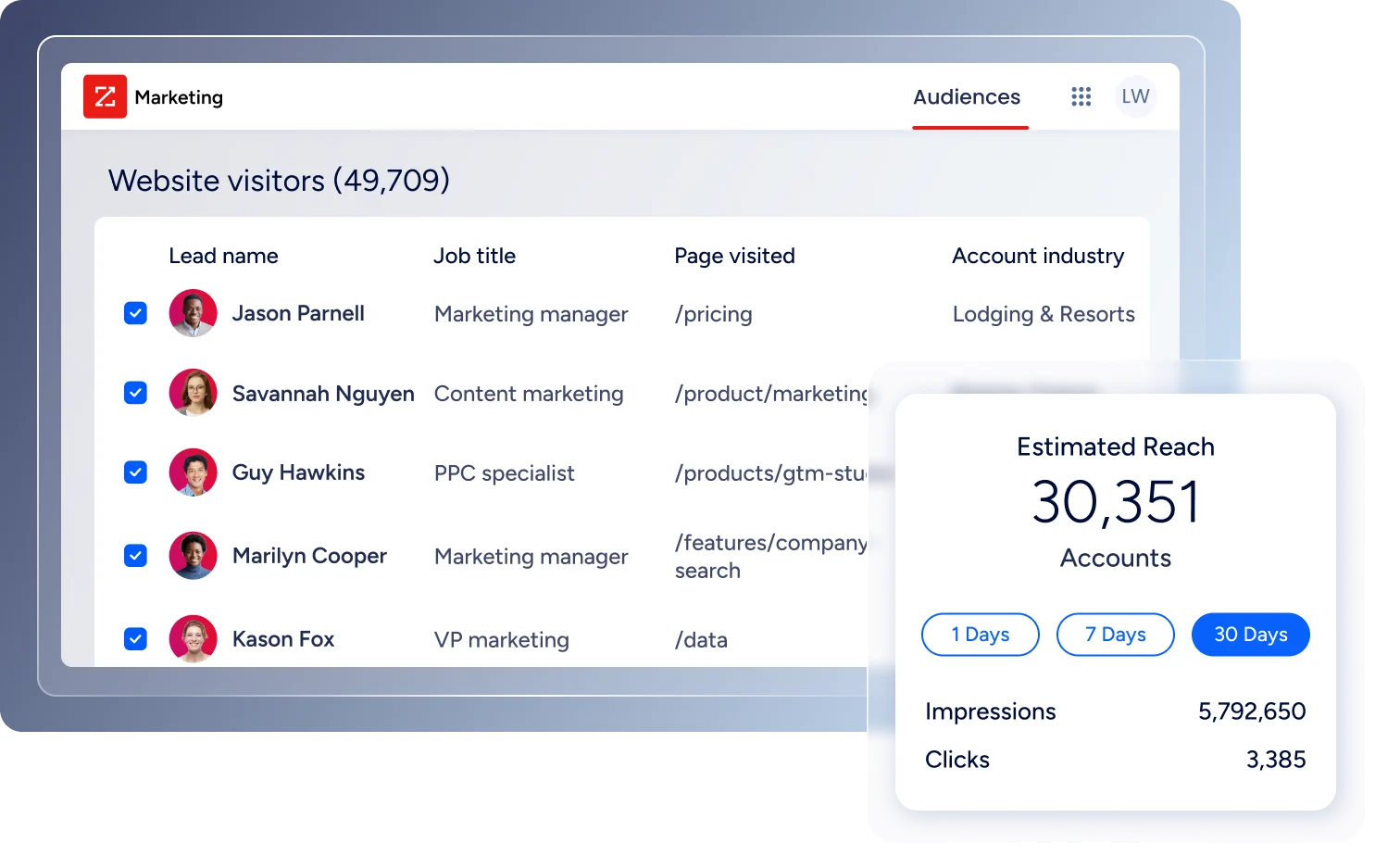
ZoomInfo is an all-in-one AI GTM platform, and its ABM product is ZoomInfo Marketing, which ZoomInfo describes as a contact-level ABM platform. Audiences and automated plays are built in GTM Studio, the workspace marketers and RevOps teams use to segment, enrich and activate accounts. Underneath sits ZoomInfo's B2B data: 500M contacts and more than 100M companies, maintained by 300+ human researchers, AI verification and a contributor network, with first-party data at up to 95% accuracy.
An audience in ZoomInfo is a saved definition built from firmographic, technographic, intent and engagement data, so it updates as accounts change. Four signals feed it:
Intent data on 4,500+ topics, with person-level intent that shows the specific contacts behind an account's research.
WebSights, which identifies the companies and the people from them visiting your site.
An Account Fit Score and an In-Market Score that rank accounts by fit and by engagement.
15 to 20 million job changes tracked a month, so you see it when a buyer joins or leaves a target account.
The same account list drives ads, email and rep alerts. Display ads run through the ZoomInfo Display Network, ZoomInfo's own DSP, which serves 31 countries. Audiences export to LinkedIn and Meta ad accounts, with match rates tracked in GTM Studio. FormComplete shortens inbound forms to a single enriched field. In GTM Studio, Agent Teams can act when an account in an audience hits a trigger, such as a website visit from your ICP, within the approvals and run limits your team sets. ZoomInfo says its reporting shows "which channels drive pipeline, which creative converts, and which plays deliver ROI."
Audiences can also be exported to your CRM and sales engagement platform on a daily, weekly or monthly schedule, synced in from Adobe Real-Time CDP, and built by AI agents through ZoomInfo MCP.
Customer results, as each case study credits them:
Redwood Logistics ran its display campaigns on ZoomInfo Marketing and saw a 310% increase in clickthrough rate, with cost per click as low as $1.20, down nearly 99%.
monday.com used GTM Studio to cut ABM program launch from nearly four months to one month.
At Alchemy Cloud, which runs its campaigns on ZoomInfo Marketing, clickthrough rates across all segments and audiences quintupled on average, and cost per click fell 24% across all campaigns.
ZoomInfo holds ISO 27001 and ISO 27701 certification, a SOC 2 Type II report, and TRUSTe GDPR and CCPA validations.
Pricing. Free to start with ZoomInfo Lite (10 monthly credits, no credit card); paid plans are custom-quoted on consumption credits. The ZoomInfo Display Network, LinkedIn and Facebook advertising, and Google retargeting sit in the paid ABM packages.
G2 rating. 4.5 out of 5 from 3,513 reviews for GTM Studio, which G2 describes as the upgraded version of ZoomInfo Marketing and ZoomInfo Operations.
Where it's the harder buy. The paid ABM packages are quote-based, so you won't see a price before a demo, and the number of intent topics you can track depends on the package. Teams that want publisher content syndication or a fully managed program will pair ZoomInfo with a media partner. Madison Logic and DemandScience have both announced partnerships with ZoomInfo.
Request a demo to see ZoomInfo Marketing on your own account list.

"We can see everything in one place. We can see that the data is correct, understand the signals, and finally optimize our campaigns."
2. Demandbase
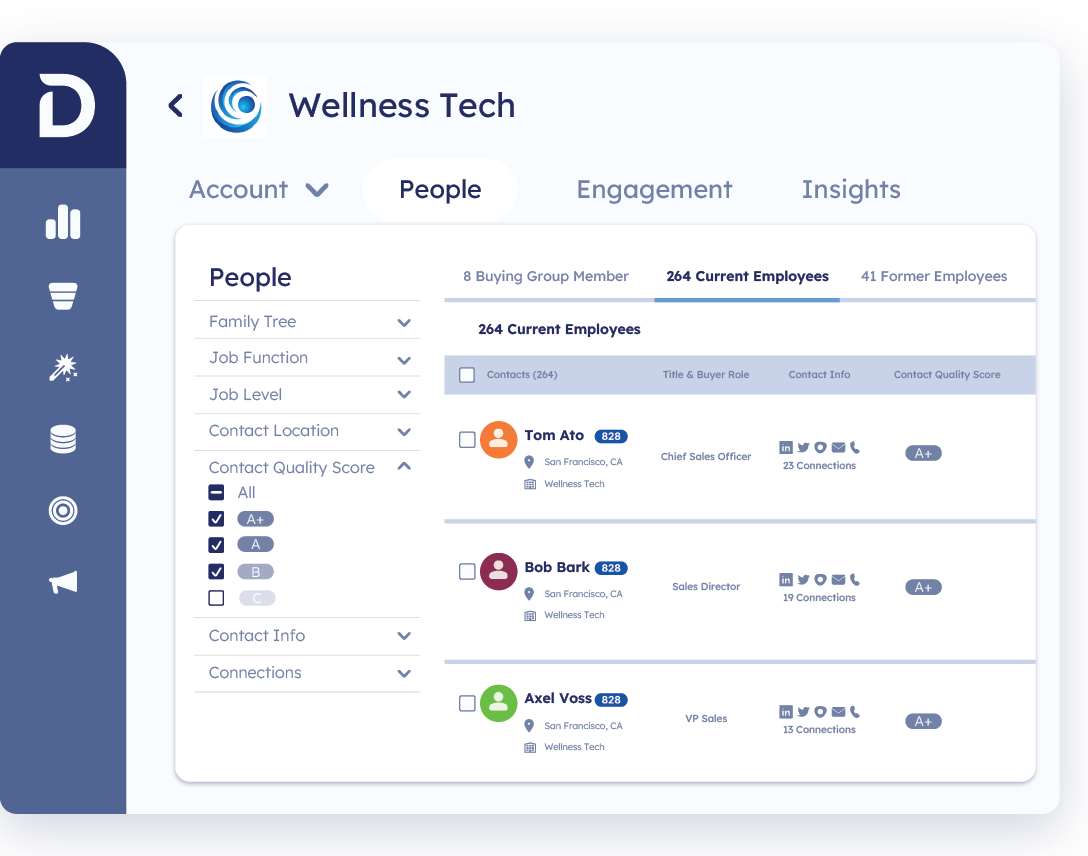
Demandbase is an account-based GTM suite. G2 and Demandbase's help center still call it Demandbase One, while the website now presents it as Demandbase AI, Demandbase Marketing, Demandbase Ads and Demandbase Data. Demandbase Marketing is built to "engage the right buying groups, activate coordinated programs across channels, and turn marketing activity into measurable pipeline growth."
Demandbase collects its own intent data from the bidstream, included for all users at no extra charge, and connects to Bombora, G2 and TrustRadius. Bombora and G2 need separate paid licenses. Advertising runs through Demandbase's own B2B DSP across display, video, CTV, social and web, and audiences sync to LinkedIn.
On the AI side, Demandbase lists agents for account engagement, intent, email personalization and buying-group setup. In September 2026 it launched Mojo, a B2B marketing agent that turns briefs into live campaigns across connected tools including Google Ads, LinkedIn Ads, Meta, Marketo and Salesforce, and in October 2026 it added more agents, including an AEO Agent and a Campaign Agent. Its read-only MCP server brings account intelligence, buying groups and intent into AI assistants such as ChatGPT, Claude and Gemini. Demandbase integrates with Salesforce, HubSpot and Microsoft Dynamics, and with Marketo and Marketing Cloud Account Engagement (Pardot).
Pricing. Quote-based. Demandbase charges a platform fee that covers software and services, plus a flat fee per user. It also offers a guided Ads pilot before you commit to a larger ad budget.
G2 rating. 4.4 out of 5 from 2,018 reviews for Demandbase One.
How Demandbase compares against ZoomInfo
Demandbase covers the whole ABM cycle in one suite, from bidstream intent to its own B2B DSP, and Mojo can now launch campaigns across connected ad and marketing tools.
ZoomInfo's edge is the size of the contact base under the account list: 500M contacts, feeding the audiences behind ZoomInfo's ads, email and rep alerts. The Demandbase alternatives guide covers other options.
3. 6sense Revenue Marketing
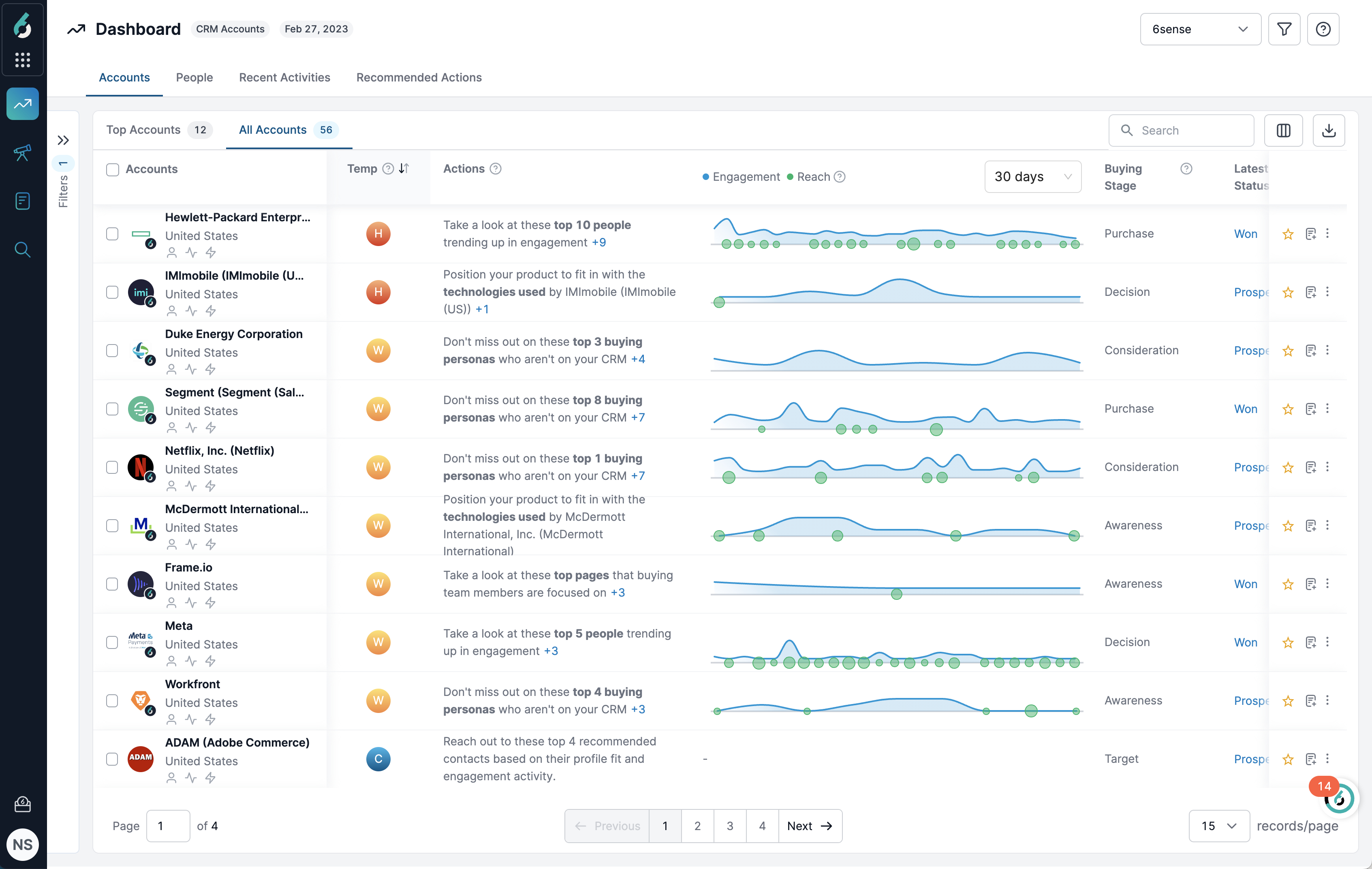
6sense calls itself "Intelligence for Agentic GTM," and Revenue Marketing is its ABM product. It uses AI to find accounts showing high intent and to engage their buying groups, and 6sense says it resolves anonymous activity "to the buying group level" and maps each buying committee member to the right account. Revenue Marketing also shows who's visiting your website without relying on form fills.
6sense's intent model combines your CRM, marketing automation and website activity with its own B2B network keyword data and intent from Bombora, G2 and TrustRadius, and a Bombora Company Surge package with up to 12 topics is included in the platform subscription. Ads run on what 6sense calls a "custom-built B2B DSP," across display, native, video, paid search, social and CTV, and audiences sync to LinkedIn, Meta and Google Ads. 6sense's AI Email Agents write, send and reply to emails grounded in buyer signals. 6sense launched a read-only MCP server in July 2026, first as an open beta for Revenue Marketing customers; it now requires an eligible 6sense license.
One change to ask about: 6sense is sunsetting Orchestrations in 2026 and moving customers to Intelligent Workflows. 6sense integrates with Salesforce, Microsoft Dynamics 365 and HubSpot, and with Marketo, Marketing Cloud Account Engagement and Eloqua.
Pricing. Quote-based. 6sense doesn't publish Revenue Marketing prices, and its pricing page lists Sales Intelligence packages only.
G2 rating. 4.2 out of 5 from 1,571 reviews for 6sense Revenue Marketing.
How 6sense compares against ZoomInfo
6sense pairs AI-identified in-market accounts with its own DSP, with buying-group resolution built into the same product. 6sense also describes its contact data as verified, and its help center says verified contacts are revalidated at least every 60 days.
ZoomInfo's edge is the human research behind its contact data: 300+ human researchers work alongside AI verification and a contributor network to maintain 500M contacts, with first-party data at up to 95% accuracy. If you already run 6sense, ZoomInfo's 6sense integration lets mutual customers enrich GTM Studio audiences with their 6sense license. The 6sense alternatives guide covers other options.
4. DemandScience (Terminus merged in)
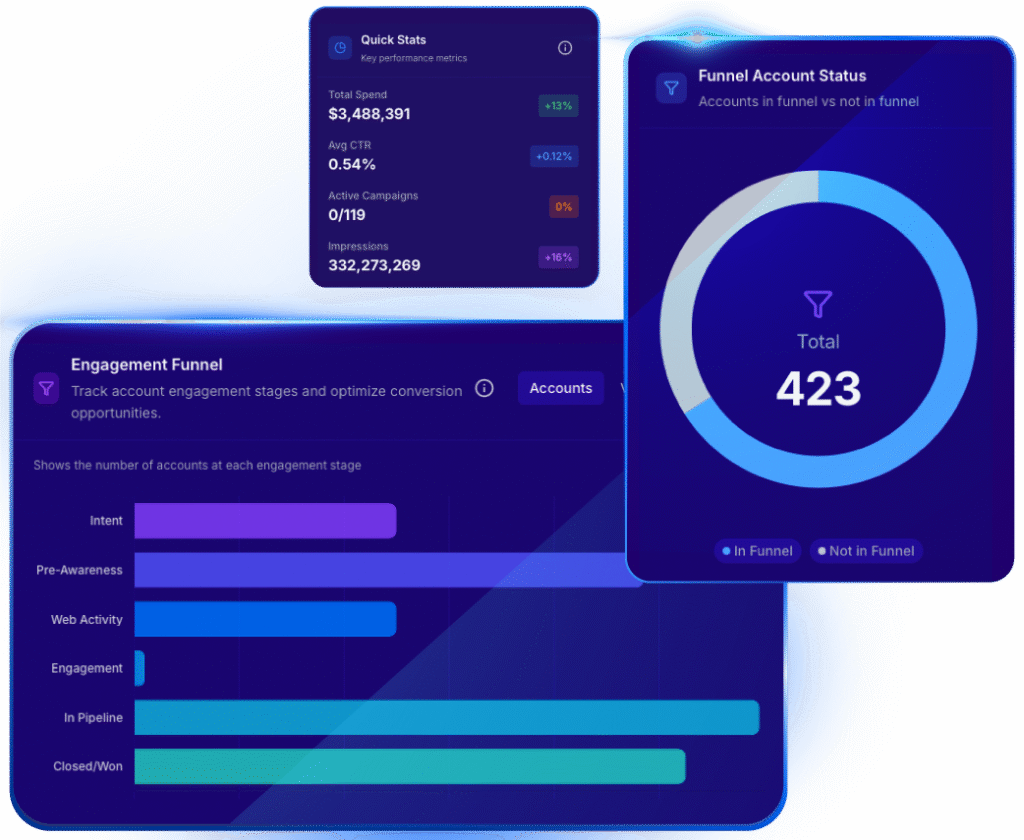
Terminus merged into DemandScience in November 2024, and terminus.com now redirects to DemandScience. Today DemandScience sells ABM as a managed program. Its ABM page promises "Account-Based Marketing Without the Platform Tax," and its programs run on Ionic, an intelligence layer that DemandScience says "isn't a platform you buy and run yourself," with execution handled by its Labs team. The former Terminus platform lives on in the help center as the DemandScience Platform, with modules for Data Studio, Ad Experiences, Signature Ads (formerly Email Experiences) and Measurement Studio.
DemandScience's Identity Graph links 26M+ companies with 247M+ buyers, adding intent, technographic, funding, hiring, job change and engagement data, and its DS-IQ model turns intent and advertising engagement into one urgency score from 0 to 100. Media placement covers display, social, CTV, video and audio, and LinkedIn audiences can be built from the CRM accounts in Data Studio. Integrations include Salesforce, Microsoft Dynamics, HubSpot, Marketo, Pardot and Eloqua. In July 2026 DemandScience and ZoomInfo announced a strategic partnership that combines ZoomInfo's data with DemandScience's Ionic layer.
Pricing. Quote-based. DemandScience scopes each program and its cost through a pipeline audit.
G2 rating. 4.4 out of 5 from 763 reviews.
How DemandScience compares against ZoomInfo
DemandScience fits teams that want ABM delivered for them, with data, media and execution run by its Labs team.
For teams that want to run ABM in-house, ZoomInfo's edge is that your team builds audiences in GTM Studio, runs the ZoomInfo Display Network and paid social, and sets the plays. Under the July 2026 partnership, ZoomInfo customers can add DemandScience's demand generation services on top.
5. AdRoll ABM (formerly RollWorks)
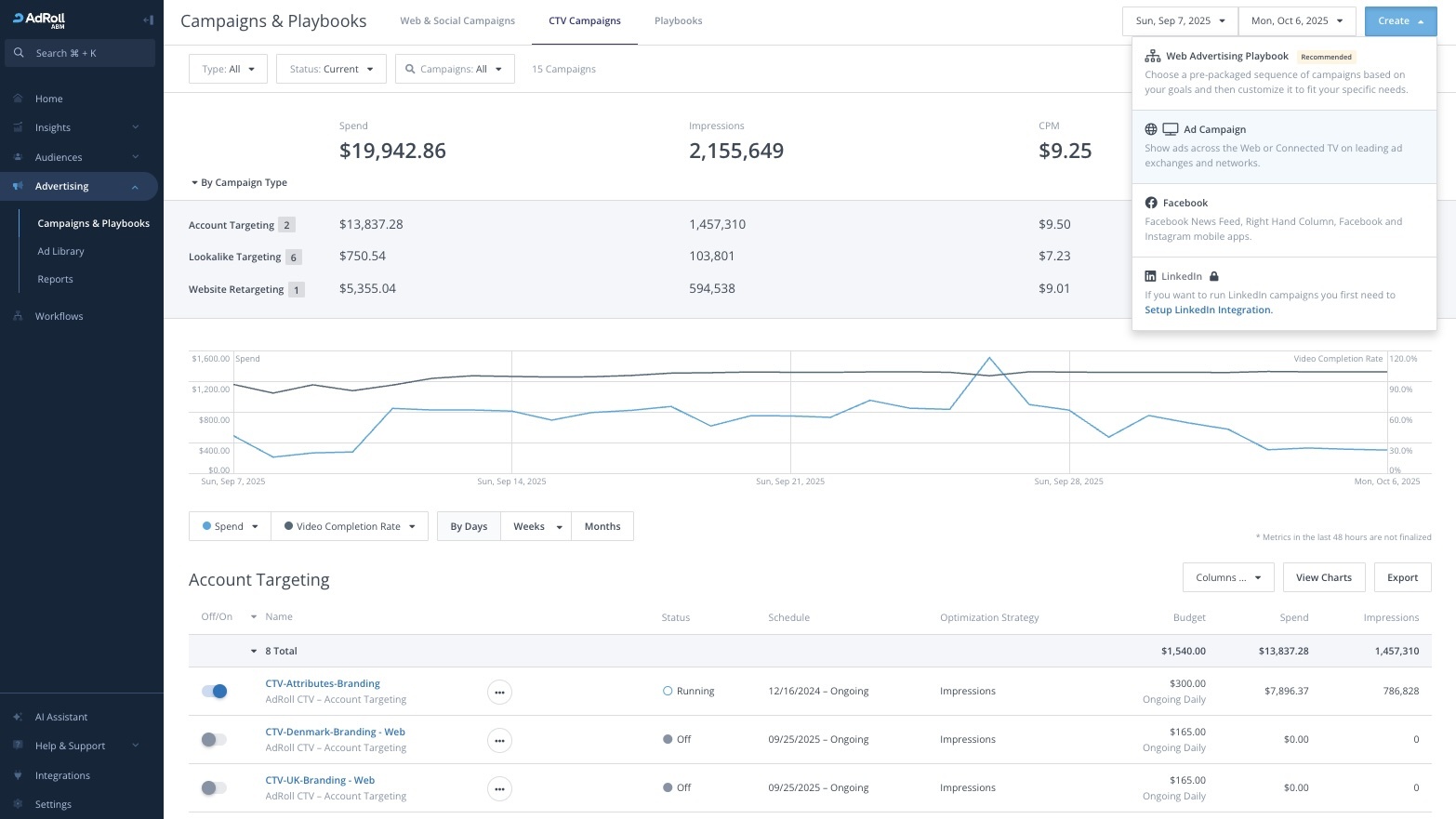
RollWorks became AdRoll ABM in August 2025, when NextRoll brought its businesses under the AdRoll brand. AdRoll describes AdRoll ABM as combining "a precise B2B audience segmentation and targeting solution with a cross-channel demand-side platform into a single application."
Depending on the package, intent comes from AdRoll's own keyword intent, Bombora Company Surge topics, and G2 buyer intent if you have a G2 subscription. AdRoll ABM's first-party DSP reaches ABM audiences across display, social and connected TV, and account lists can be pushed to LinkedIn. The Command Center gathers key account data in one place, and Workflows act on it. AdRoll's AI engines handle bidding (BidIQ) and audience insight (InIQ), every user gets the AdRoll AI Assistant, and AdRoll launched an MCP server for AdRoll and AdRoll ABM in open beta in May 2026.
The Salesforce and HubSpot integrations are bi-directional. Marketo is supported, and the Pardot integration imports lists only.
Pricing. Three ABM packages are quote-based. A free tier has no monthly subscription fee, and you pay only for media; it covers retargeting, contact targeting and lookalike campaigns on the web, retargeting and contact targeting on CTV, plus Facebook and Instagram campaigns.
G2 rating. 4.3 out of 5 from 660 reviews.
How AdRoll ABM compares against ZoomInfo
AdRoll ABM lets a team start with retargeting and contact-list ads on a free tier, paying only for media, then move to a paid ABM package for account targeting, intent and LinkedIn campaigns.
ZoomInfo's edge is contact coverage: 500M contacts behind the audience, against the 92 million contacts AdRoll publishes for AdRoll ABM.
6. Madison Logic
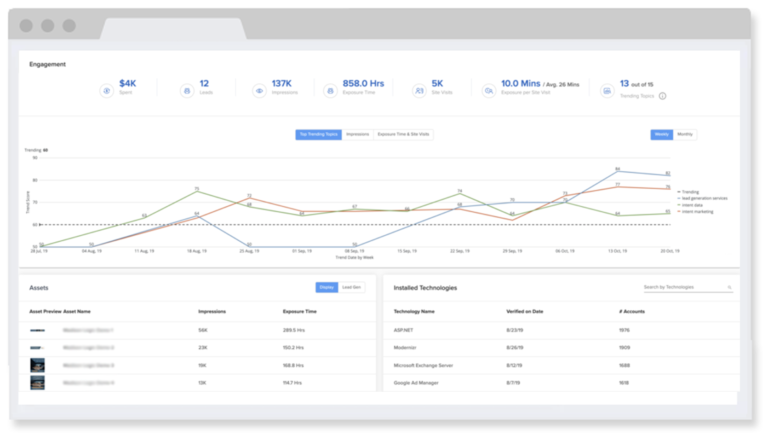
Madison Logic sells ABM media: content syndication, display, connected TV, audio and LinkedIn advertising, planned and measured in one platform. Its ML Insights layer aggregates first- and third-party data and scores accounts and buying groups on engagement, content interactions and intent signals, and the product page cites 500M+ monthly proprietary engagement signals. Content syndication runs across a publisher network with what Madison Logic calls a "multi-stage, AI-validated process" for data accuracy and GDPR compliance. In 2025 Madison Logic added features for buying group intelligence and AI-powered sales engagement (June) and an ML Intent Dashboard (November).
Integrations include Salesforce, HubSpot, Marketo, Adobe Experience Platform, Adobe Journey Optimizer, Gong and LinkedIn. In August 2025 Madison Logic and ZoomInfo announced a strategic partnership.
Pricing. Quote-based. Madison Logic doesn't publish prices.
G2 rating. 4.3 out of 5 from 275 reviews for the Madison Logic Platform.
How Madison Logic compares against ZoomInfo
Madison Logic suits demand gen teams whose ABM runs on content syndication and paid media, with intent and engagement scoring to decide where the budget goes.
ZoomInfo's edge is the contact record behind each engaged account, including job changes and person-level intent, so sales knows who to contact. Madison Logic's own announcement of the partnership says ZoomInfo adds "precise contact data and AI-driven outreach intelligence."
7. Foundry ABM (Triblio)
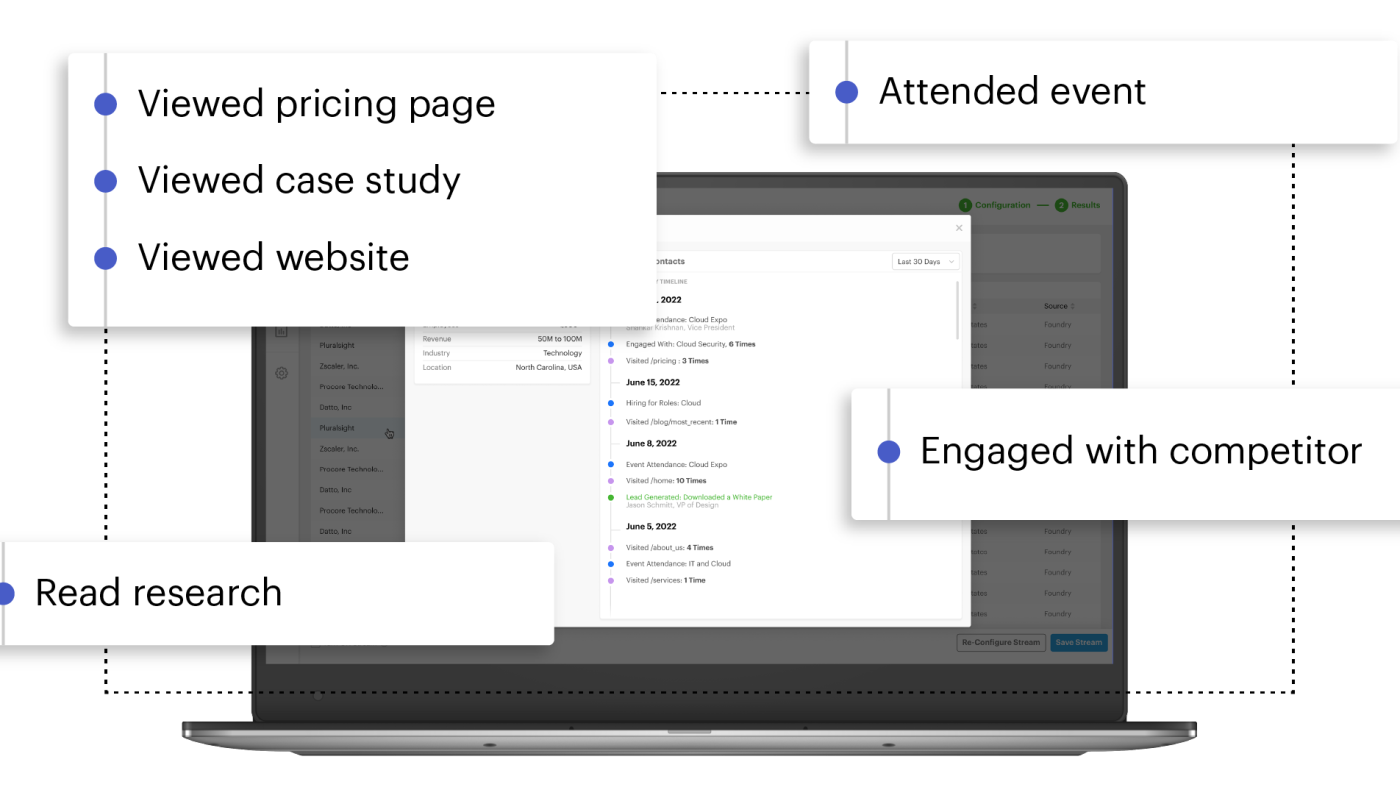
Foundry, the B2B marketing business behind publications such as CIO, CSO and Computerworld, acquired Triblio in 2020, and Triblio became Foundry ABM. Foundry was sold to the private equity firm Regent in March 2025. Foundry markets the product as "the account-based orchestration platform": it triggers display and social ads, sales activation, actions in your CRM, website personalization and one-to-one Smart Pages.
Intent comes from Foundry Intent, which captures 80M+ signals a week across your website, the public web, research on global content and Foundry's opted-in publishing audience. Foundry describes it as "proprietary, human verified intent data and AI scoring." Foundry ABM integrates with Salesforce, HubSpot, SugarCRM and Marketo, and its help center also covers Microsoft Dynamics.
Check the product's status before you buy. Foundry's main solutions menu no longer lists ABM, and the Foundry ABM tile on its solutions page now leads to a page about software-buyer audiences. The product page for "the Foundry ABM platform, powered by Triblio" is still live, so ask Foundry how the product is sold today and what's on its roadmap.
Pricing. Quote-based. Foundry says "Pricing and packaging is dependent on your use case."
G2 rating. 4.2 out of 5 from 206 reviews. G2 notes that many of them were written for Triblio.
How Foundry ABM compares against ZoomInfo
Foundry ABM ties account orchestration and one-to-one pages to intent from Foundry's own publishing audience.
ZoomInfo's edge is the breadth of its data: 500M contacts and more than 100M companies, intent on 4,500+ topics, and 1.5B+ data points processed daily to keep it current.
8. Common Room
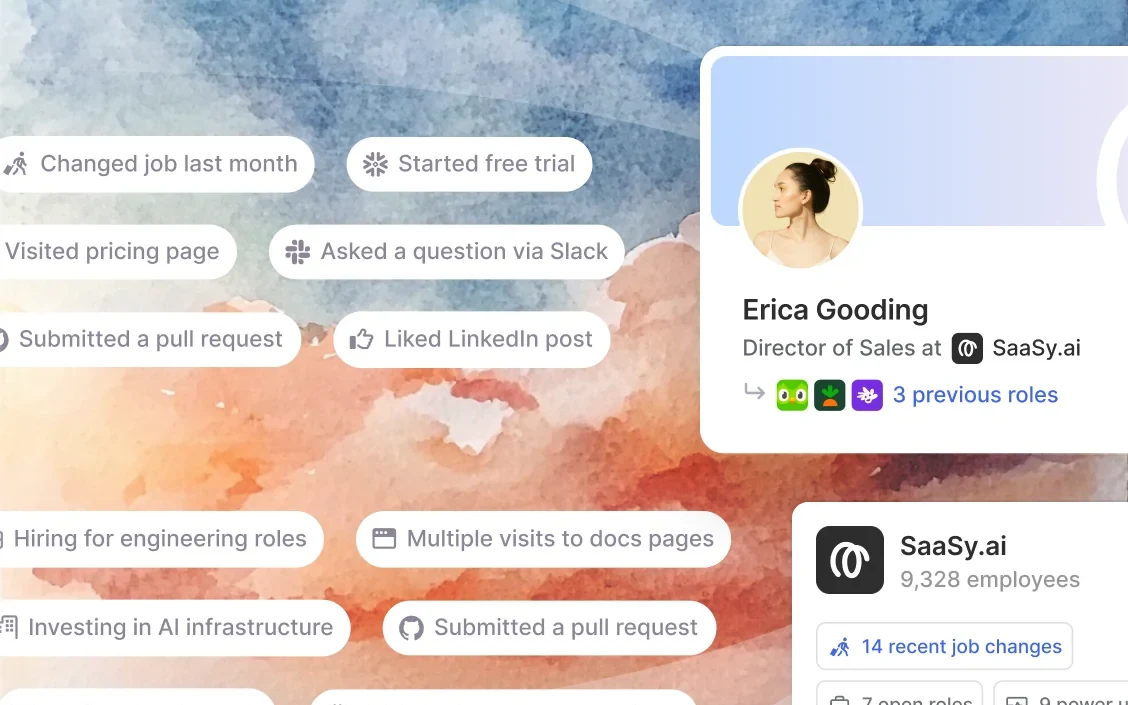
Common Room sells buyer intelligence, and its ABM page is built around the person behind each buying signal. Zoom has acquired Common Room, and Common Room's site now pairs it with Zoom's revenue products such as Zoom Revenue Accelerator.
It uses AI-powered identity resolution and captures 50+ native signal types, such as job changes, pricing page visits, Slack questions, GitHub activity, LinkedIn signals and hiring patterns, plus third-party intent from Bombora. Scores combine demographic, firmographic and buying signals, and you can hover over any score to see the signals and weights behind it. Common Room says it works across a 400M+ contact directory, and Person360, its identity resolution engine, unifies each person's signals into one profile. Cohorts sync to ad platforms or your marketing automation tool, and the native LinkedIn Ads connection keeps matched audiences in sync and brings ad engagement back into Common Room. Common Room is clear that Ads is "not a media-buying, bidding, campaign-management, or creative tool."
Every plan includes Common Room's MCP server, and integrations cover Salesforce, HubSpot, Outreach, Gong, Slack, Marketo and Snowflake.
Pricing. Essential costs $2,500 a month billed annually, with 5 seats, up to 100k contacts, 5k RoomieAI research credits and 2.5k Prospector credits. Advanced and Enterprise are custom-priced. Bombora topics run from 6 on Essential to 12 on Advanced and 25 on Enterprise.
G2 rating. 4.5 out of 5 from 138 reviews.
How Common Room compares against ZoomInfo
Common Room is built around person-level buying signals and scores that marketing and sales can both read, and it publishes an entry price.
ZoomInfo's edge is paid media in the same platform: the ZoomInfo Display Network serves display ads in 31 countries from the same audiences that export to LinkedIn and Meta.
9. Influ2
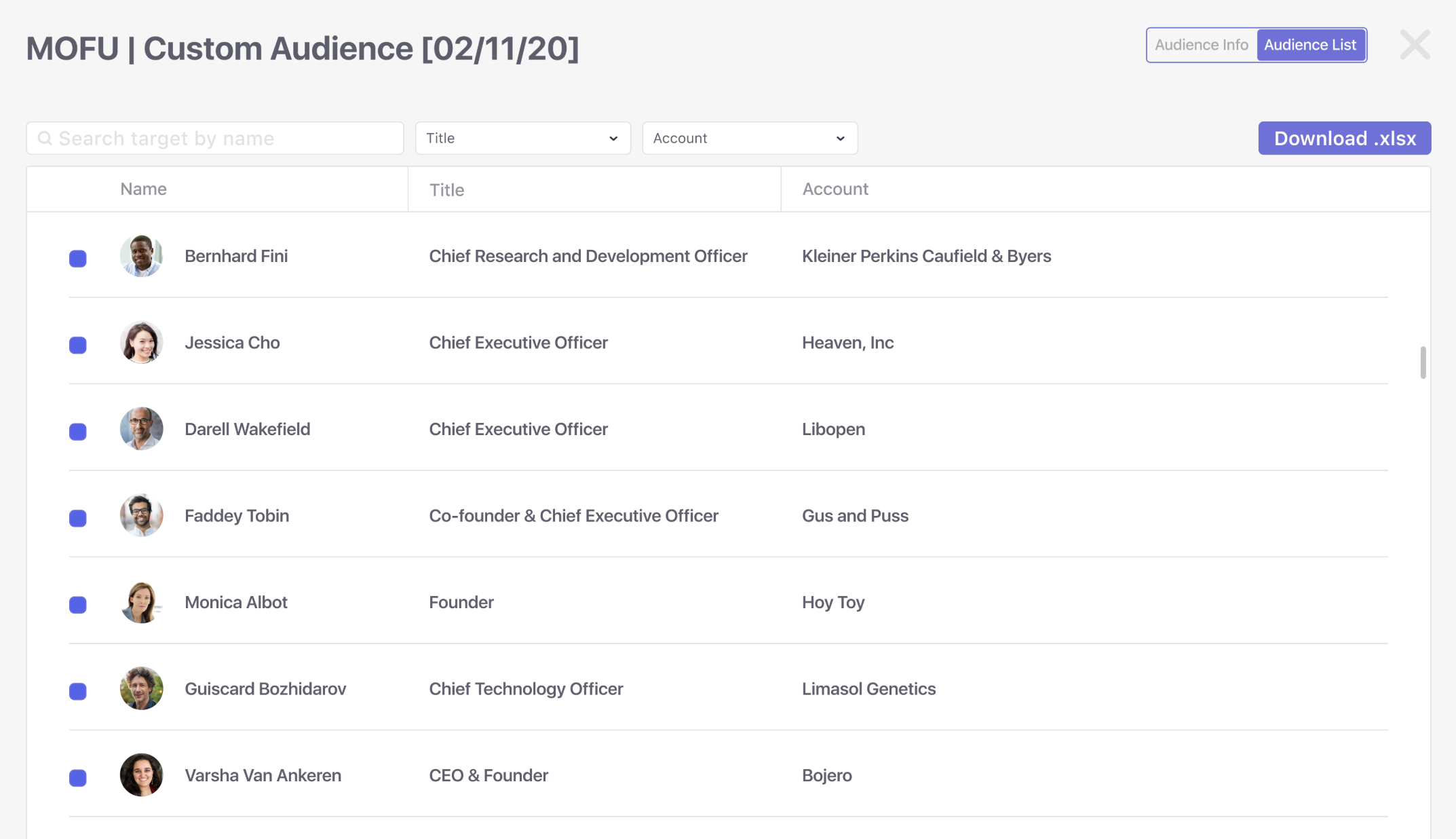
Influ2 calls itself contact-level ABM, built on the idea of "ABM that starts with people." It runs person-based ads to named buyers synced from your CRM, distributed across LinkedIn, Facebook, Instagram, Google, Bing and Amazon, and reports engagement by contact. Contact-level intent shows which target buyers are researching your topics across social, search, ads, third-party content and your website.
In May 2026 Influ2 launched contact-level GTM orchestration, which can "trigger next-best actions across ads, sales cadences, and CRM and MAP campaigns," and it opened a beta for website visitor identification. Influ2 has also announced account discovery, with a live release webinar on November 5, 2026 giving a first look at how it finds named people showing intent across your market, surfaces their accounts and fills out the rest of the buying group. Its MCP server brings contact-level buyer signals into AI applications such as Claude, ChatGPT and Agentforce. Integrations cover Salesforce, HubSpot, Microsoft Dynamics, Zoho, Marketo, Eloqua, Salesloft, Outreach, Slack and Microsoft Teams.
Pricing. Quote-based. Influ2 doesn't publish prices.
G2 rating. 4.6 out of 5 from 161 reviews.
How Influ2 compares against ZoomInfo
Influ2 suits teams that want to put ads in front of named people on a buying committee and see which of them engaged.
ZoomInfo's edge is the size of its contact database: 500M contacts and more than 100M companies, maintained by 300+ human researchers, AI verification and a contributor network.
10. HubSpot Marketing Hub
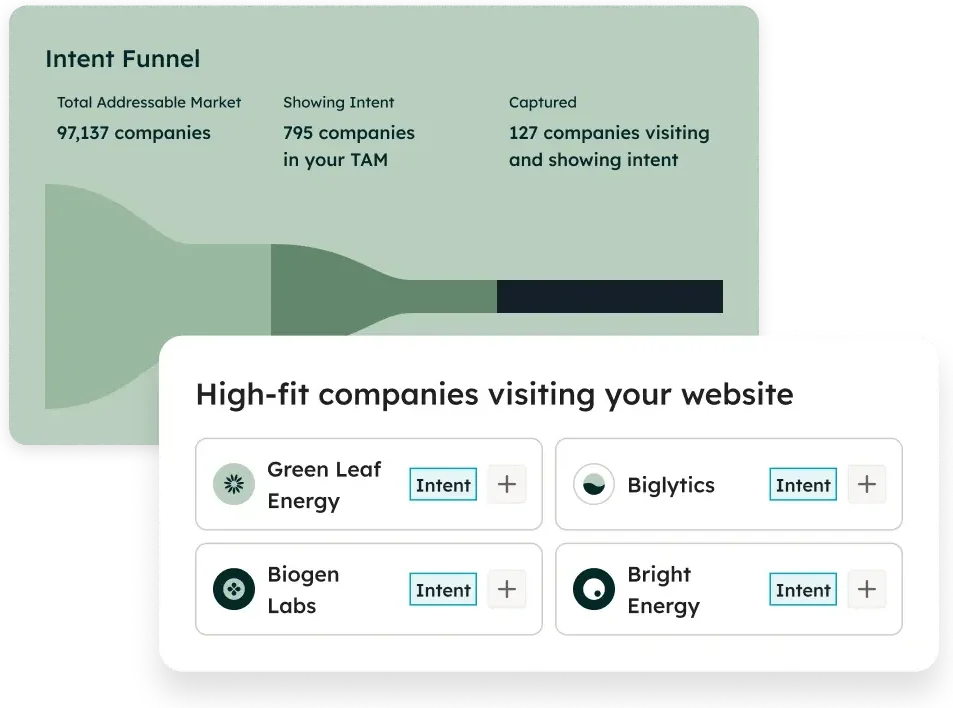
HubSpot's ABM tools come with Marketing Hub Professional and Enterprise, and with Sales Hub Professional and Enterprise. You flag target accounts, sort them into ICP tiers 1 to 3, work them from a target accounts home, and tag contacts with buying roles such as Decision Maker, Budget Holder and Blocker. Viewing the Account overview needs an assigned Sales Hub Professional or Enterprise seat.
Company segment audiences sync target accounts or an ICP tier to LinkedIn. Buyer intent shows website visits plus broader signals such as funding rounds, executive hires and companies researching topics across the web. Research intent, which uses HubSpot Credits, draws on 200,000+ websites. HubSpot's Prospecting agent sources the full buying committee from data providers including ZoomInfo, Apollo, Surfe and Seamless, and HubSpot runs a remote MCP server with read and write access to CRM data. HubSpot also owns Clearbit, the data provider.
Pricing. ABM starts on Marketing Hub Professional at $800 a month billed annually, with 3 core seats (additional core seats from $45 a month each, billed annually) and a required $3,000 one-time onboarding fee. Enterprise starts at $3,600 a month billed annually with 5 core seats, plus a required $7,000 one-time onboarding fee. The free plan covers up to 2 users but doesn't include the ABM tools.
G2 rating. 4.4 out of 5 from 15,990 reviews.
How HubSpot Marketing Hub compares against ZoomInfo
For teams already on HubSpot, ABM is part of the CRM and marketing tools they use every day, with no second platform to keep in sync.
ZoomInfo's edge is that it plugs into HubSpot: ZoomInfo's HubSpot integration imports and exports records and connects to HubSpot's Breeze Prospecting Agent, and HubSpot lists ZoomInfo among the providers its Prospecting agent uses to source buying committees. The HubSpot alternatives guide covers other options.
How to choose an ABM platform
Name the gap. If you don't know which accounts to target, start with data and fit scoring. If you know the accounts but not when they're in market, you need intent data and website visitor identification. If you can't reach the buying committee, look at advertising. If sales never acts on the buying signals, look at orchestration and rep alerts.
Test the data on your own accounts. Upload your target account list and your best customers, then compare match rates, contact coverage for each buying committee role, and how current those contacts are against your CRM.
Decide who runs the media. ZoomInfo, Demandbase, 6sense and AdRoll ABM run their own DSPs, so your team runs the ads. DemandScience runs programs through its Labs team, Madison Logic sells content syndication and media, and Influ2 targets named people. Foundry ABM triggers display and social ads from its orchestration plays, and Common Room and HubSpot sync audiences to LinkedIn. For the channel options, see the guide to account-based advertising.
Check CRM and marketing automation fit. Ask whether the sync is bi-directional and which objects it covers. If you run Microsoft Dynamics, check each vendor's integration docs: ZoomInfo, Demandbase, 6sense, DemandScience, Foundry ABM, Influ2 and HubSpot document Dynamics integrations, and AdRoll's documented Dynamics integration covers email-list sync from Dynamics Customer Insights.
Ask what's changed. Terminus is now DemandScience, RollWorks is now AdRoll ABM, Zoom has acquired Common Room, 6sense is moving Orchestrations to Intelligent Workflows, and Foundry no longer lists ABM in its main menu. Ask each vendor which product you'd be buying and what's on its roadmap.
Price on one basis. Add up platform fees, per-user or per-seat fees, credits, intent topic limits, media spend and one-time onboarding. HubSpot Marketing Hub Professional, for example, is $800 a month billed annually with 3 core seats, plus $3,000 one-time onboarding, while AdRoll ABM's free tier costs only the media you buy.
Pilot on a set of accounts. Agree target accounts, a holdout group and the metrics before launch, then judge the pilot on engagement and pipeline from those accounts. The guide to measuring ABM success lists the metrics to use.
ABM platform or ABM agency?
An agency runs strategy, creative and media for you. A platform gives your own team the data, audiences and controls. Some vendors on this list sit in between: DemandScience runs programs through its Labs team, and Madison Logic sells content syndication and media across its publisher network.
If you don't yet have people to run ABM, an agency or a managed program gets you live sooner. If you plan to run ABM for years, a platform keeps the data, the audiences and what you learn inside your team. Many programs use both, with an agency running creative and media on a platform the company owns. ZoomInfo's guide to account-based marketing services covers the difference between ABM platforms, agencies and consultants.
Frequently asked questions
What is an ABM platform?
An ABM platform is software that helps B2B teams choose target accounts, see which of them are in market, and reach each buying committee with coordinated ads, email and sales plays. It measures engagement and pipeline by account instead of by individual lead.
What is the best ABM platform?
It depends on where your program breaks. Demandbase and 6sense are all-in-one suites with their own DSPs. ZoomInfo runs ABM on contact-level data, intent and its own display network. AdRoll ABM, Influ2, Madison Logic and DemandScience focus on advertising, media and managed programs, Common Room on person-level buying signals, Foundry ABM on orchestration tied to publisher intent, and HubSpot Marketing Hub on ABM inside the CRM.
How much do ABM platforms cost?
Most ABM platforms are quote-based. Of the published prices, HubSpot Marketing Hub Professional, where ABM starts in Marketing Hub, is $800 a month billed annually with 3 core seats, plus $3,000 one-time onboarding, and Common Room Essential is $2,500 a month billed annually with 5 seats. Demandbase charges a platform fee plus a flat fee per user. AdRoll ABM has a free retargeting and contact-targeting tier where you pay only for media, and ZoomInfo is free to start with ZoomInfo Lite, with paid plans custom-quoted on consumption credits.
What's the difference between an ABM platform and marketing automation?
Marketing automation runs lead-level email, forms and nurture programs. An ABM platform works at the account level: it picks target accounts, tracks intent and engagement across the buying committee, runs account-based ads and reports pipeline by account. Most teams run both, with the ABM platform feeding audiences and scores into marketing automation.
Do I need an ABM platform if I have a CRM?
A CRM stores your accounts, contacts and deals. An ABM platform adds account selection, intent, account-based advertising and buying-committee coverage, then syncs its scores and engagement back to the CRM. HubSpot is the exception on this list: its ABM tools come with Marketing Hub and Sales Hub Professional and Enterprise.
Is ABM software the same as an ABM platform?
Mostly, yes. People use ABM software, ABM tools and ABM platforms for the same category. Platform usually means a suite that covers account selection, intent, advertising, orchestration and reporting, while a tool may do one of those jobs, such as account-based advertising or website personalization.
What is the difference between 6sense and Demandbase?
Both are all-in-one ABM suites with their own B2B DSPs, AI agents and read-only MCP servers. 6sense's intent model combines first-party CRM, marketing automation and website activity with its own B2B network data and Bombora, G2 and TrustRadius, and is moving Orchestrations to Intelligent Workflows in 2026. Demandbase collects its own bidstream intent for all users and launched Mojo, a B2B marketing agent, in September 2026. Neither publishes prices.
Which ABM platforms work for small or mid-market teams?
Look for published prices and free entry points. AdRoll ABM has a free tier for retargeting and contact targeting where you pay only for media, HubSpot adds ABM tools from Marketing Hub Professional, and Common Room publishes an Essential plan. ZoomInfo is free to start with ZoomInfo Lite for contact and company data, and its ABM advertising sits in the paid ABM packages. Demandbase and 6sense are quote-based.