
Choosing between Amperity and Tealium for your customer data needs often comes down to five questions:
Do you need to unify fragmented consumer data across dozens of systems, or do you need a real-time event pipeline that feeds marketing, analytics, and AI at once?
Is your primary challenge identity resolution (figuring out that "J. Smith" and "jane.smith@gmail.com" are the same person), or is it orchestrating data collection and activation across hundreds of vendor tools?
Are you a B2C brand with millions of consumer records, or do you also need B2B intelligence to drive go-to-market motions?
Do you want a platform that processes data in batch cycles for analysis, or one that fires activations in under 300 milliseconds during a live session?
Is your data team ready for an enterprise implementation that takes months, or do you need faster results?
In short, here's what we recommend:
Amperity is the identity resolution specialist, built for large consumer brands drowning in fragmented customer data. Its patented Stitch engine uses up to 45 AI models to merge records that rules-based systems miss, running probabilistic and deterministic matching simultaneously across a data lakehouse architecture. For retail, travel, and hospitality brands with millions of customer records scattered across POS, loyalty, e-commerce, and CRM systems, Amperity turns that mess into unified profiles you can act on. The tradeoff: it's enterprise-only with no self-serve tier, implementation complexity scales with data maturity, and its strength is B2C.
Tealium is the real-time data orchestration platform, built for enterprises that need to collect, govern, and route customer events across their tech stack. Processing 9 billion+ events per day with 1,300+ pre-built integrations, Tealium combines tag management, CDP, and AI data infrastructure. Its AudienceStream CDP resolves identity and activates audiences in real time, and its vendor-neutral architecture prevents lock-in to any single cloud or marketing platform. Tealium earned back-to-back Gartner Leader placements in the CDP category. The tradeoff: a steep learning curve, enterprise-only pricing with no public rates, and implementation that can take one to four months for complex deployments.
Both platforms solve customer data challenges for B2C enterprises. But if your business also runs B2B go-to-market motions, neither Amperity nor Tealium was built for that world. That's where ZoomInfo fills the gap.
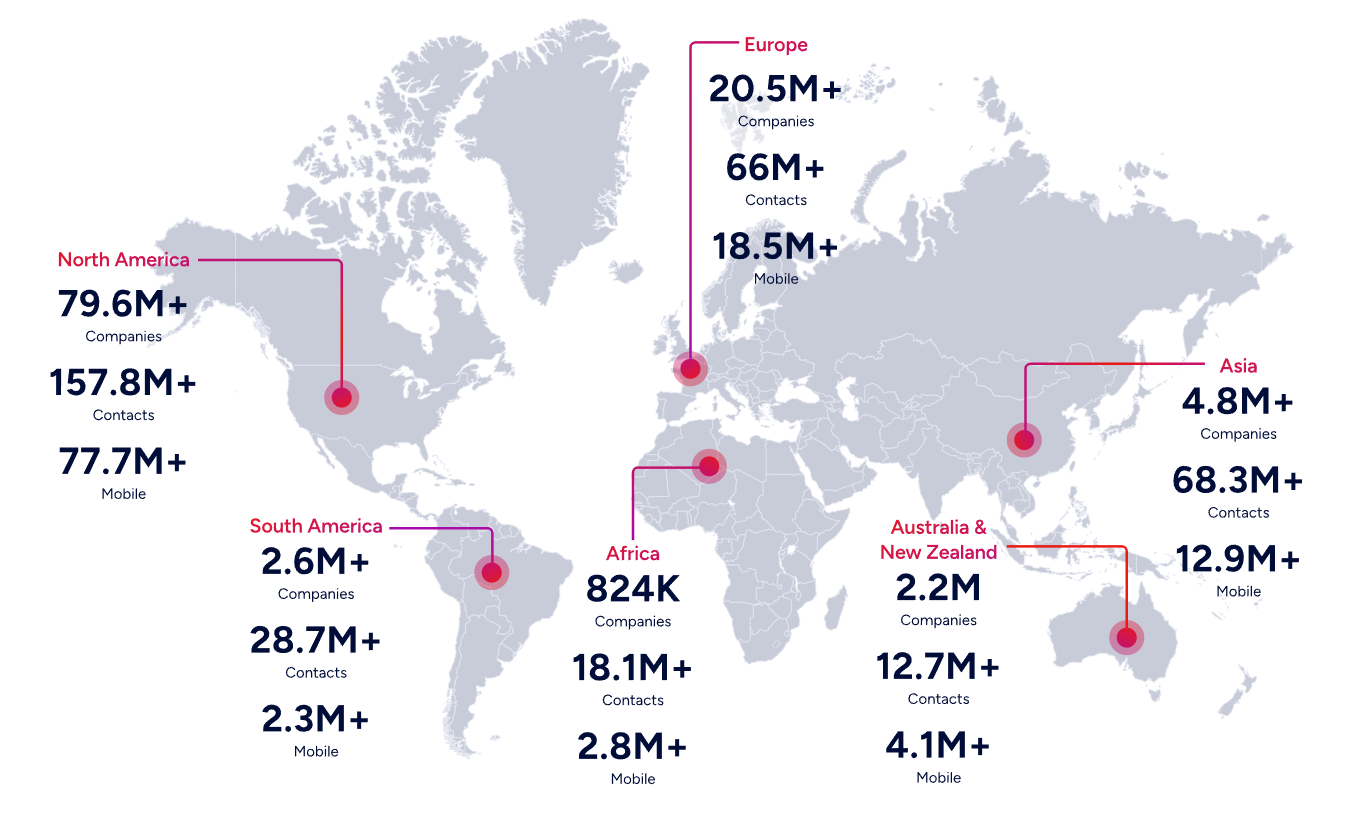
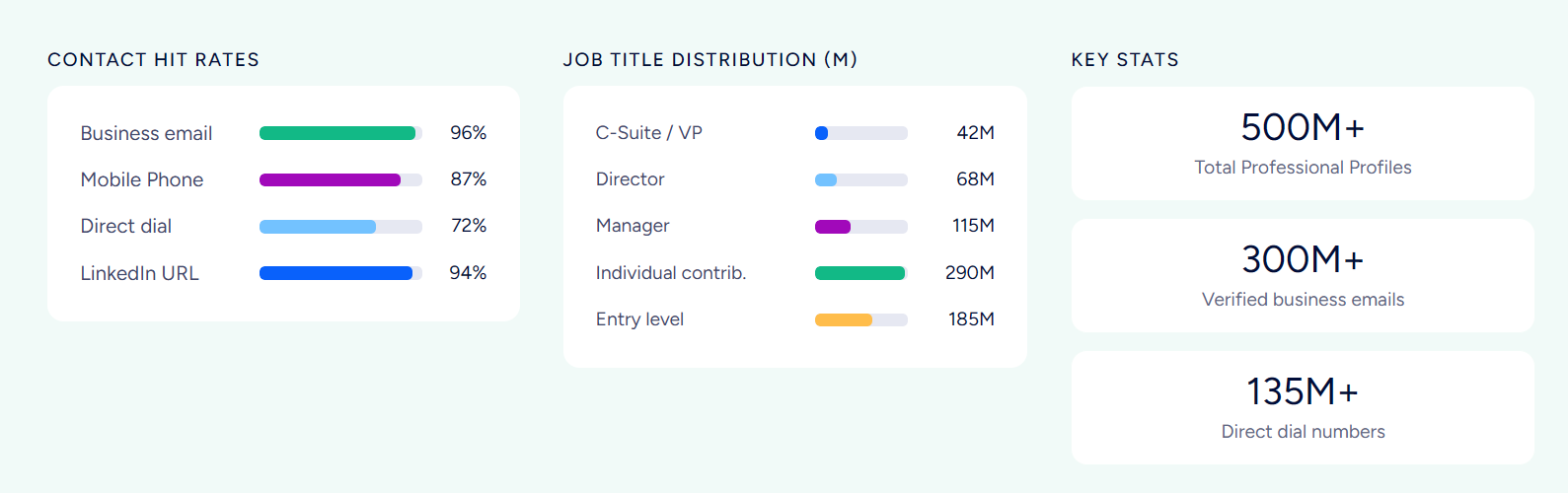
ZoomInfo is a B2B intelligence and GTM platform built on 500M contacts, 100M companies, 135M+ verified phone numbers, and 200M+ verified business emails. Where Amperity and Tealium unify your existing first-party consumer data, ZoomInfo provides the third-party B2B intelligence you don't already have: verified decision-maker contacts, company profiles, org charts, technographics, and real-time buyer intent signals. Its GTM Context Graph processes 1.5B+ data points daily, combining this data with your CRM records, conversation transcripts, and behavioral signals to reveal not just what happened in a deal, but why. For companies that sell to other businesses (or B2C brands with a B2B sales channel), ZoomInfo delivers intelligence no CDP can replicate, accessible through GTM Workspace for sellers, GTM Studio for marketers and RevOps, or APIs and MCP in any tool.
If B2B intelligence and go-to-market execution are part of your data strategy, see how ZoomInfo works.
Amperity vs. Tealium vs. ZoomInfo at a glance
Amperity | Tealium | ZoomInfo | |
|---|---|---|---|
Primary strength | AI-powered identity resolution for B2C | Real-time data collection and orchestration | B2B data and GTM intelligence |
Core data type | First-party consumer data (POS, loyalty, CRM, e-commerce) | First-party behavioral events (web, mobile, server-side) | Third-party B2B data (contacts, companies, intent signals) |
Identity resolution | Patented probabilistic + deterministic ML (up to 45 models) | Deterministic visitor stitching on first-party IDs | Entity resolution across 500M contacts and 100M companies |
Real-time capability | Batch-first with newly announced real-time activation | Sub-300ms event processing and activation | Real-time intent signals and buyer alerts |
Integrations | 200+ pre-built connectors | 1,300+ pre-built connectors | 172+ marketplace integrations, APIs, and MCP |
Data warehouse support | Zero-copy with Databricks, Snowflake, BigQuery | Zero-copy with Snowflake, Databricks, BigQuery, Redshift | Data Cubes for AWS, Snowflake, Databricks, Google Cloud |
AI capabilities | AmpAI assistants, predictive CLV, churn, product affinity | Behavioral Insight Agent, AI connectors to Bedrock/Vertex/OpenAI | GTM Context Graph, AI agents in Workspace and Studio |
Pricing model | Consumption-based ("Amps"), no public pricing | Custom enterprise contracts, no public pricing | Consumption-based, custom-quoted; free Lite tier available |
Free tier | No (Chuck free tier for Databricks only) | No | ZoomInfo Lite (permanent free tier) |
Best for | Enterprise B2C brands with fragmented customer data | Enterprises needing governed real-time data pipelines | B2B teams needing verified contacts, intent data, and GTM execution |
They solve different data problems
Amperity, Tealium, and ZoomInfo address three distinct layers of the enterprise data challenge.
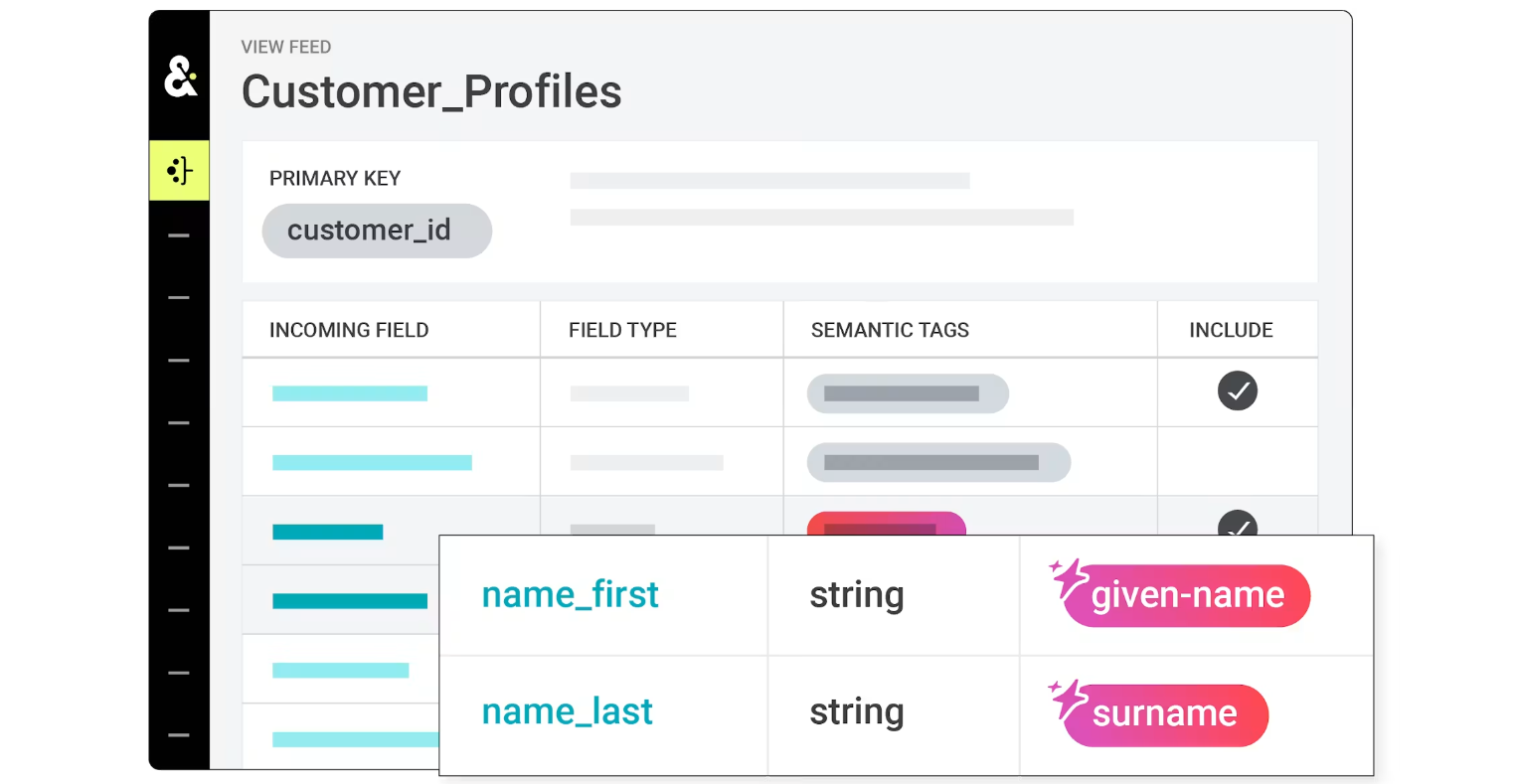
Amperity solves the identity puzzle. You have a customer named Jane who bought shoes in-store with her loyalty card, browsed your website on her phone, opened a promotional email on a different address, and returned an item using a third email she barely uses. Amperity's job is to figure out that all four records belong to the same person and merge them into one profile.
Source: Amperity
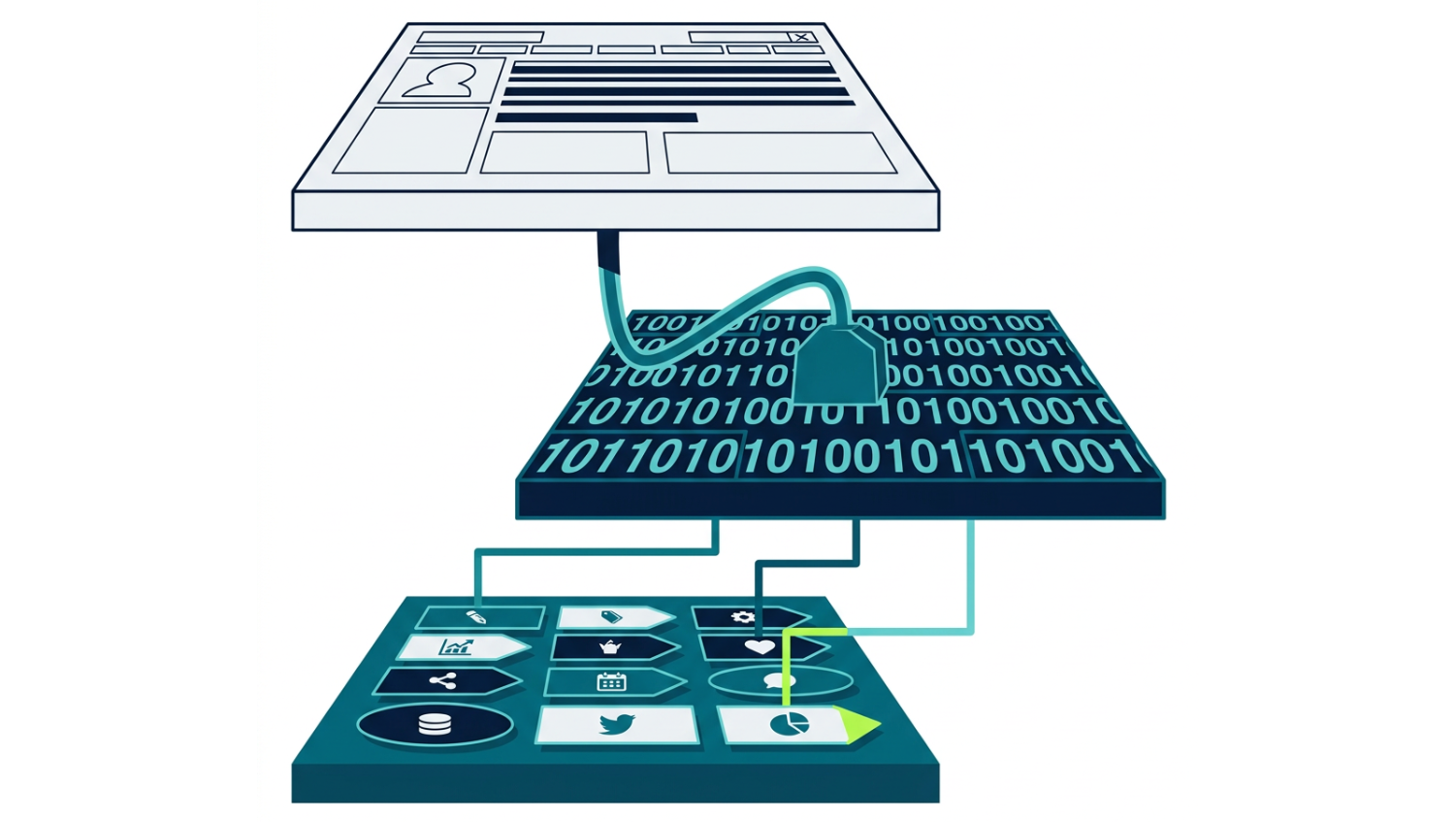
Tealium solves the data routing problem. You have events streaming from your website, mobile app, server-side APIs, and IoT devices. Those events need to reach your analytics tool, your ad platforms, your email service, your data warehouse, and your AI models, all governed by consent rules, all in real time. Tealium handles this orchestration across 1,300+ integrations.
Source: Tealium
ZoomInfo solves the B2B intelligence problem. You need to know who to sell to, when they're ready to buy, and how to reach them. Your CRM doesn't have this information because nobody told it. ZoomInfo's 500M contacts and 100M company profiles, verified by 300+ researchers and achieving up to 95% accuracy on first-party data, fill the gap. Snowflake feeds ZoomInfo data into over 70 firmographic and technographic fields in their Account Propensity Scoring model. Accounts monitored using those scores showed 90% higher opportunity open rates and 2x higher customer conversion rates.
Identity resolution: Amperity leads, Tealium adapts, ZoomInfo operates differently
Identity resolution is where Amperity concentrates its investment, and it shows.
Amperity's Stitch engine runs probabilistic and deterministic matching simultaneously using a machine learning classifier that scores record pairs across names (with nickname lookup tables and popularity distribution weighting), email addresses, physical addresses, phone numbers, and birthdates. The system doesn't just merge records; it maintains three concurrent identity graphs. The Growth Graph casts a wider net for marketing reach, the Trust Graph applies stricter deterministic rules for compliance-sensitive use cases, and the Opportunity Graph measures the gap between the two. A hierarchical conflict detection step splits over-merged clusters (like married couples with overlapping PII), and the resulting Amperity ID is engineered for stability so downstream systems don't break when new data arrives.
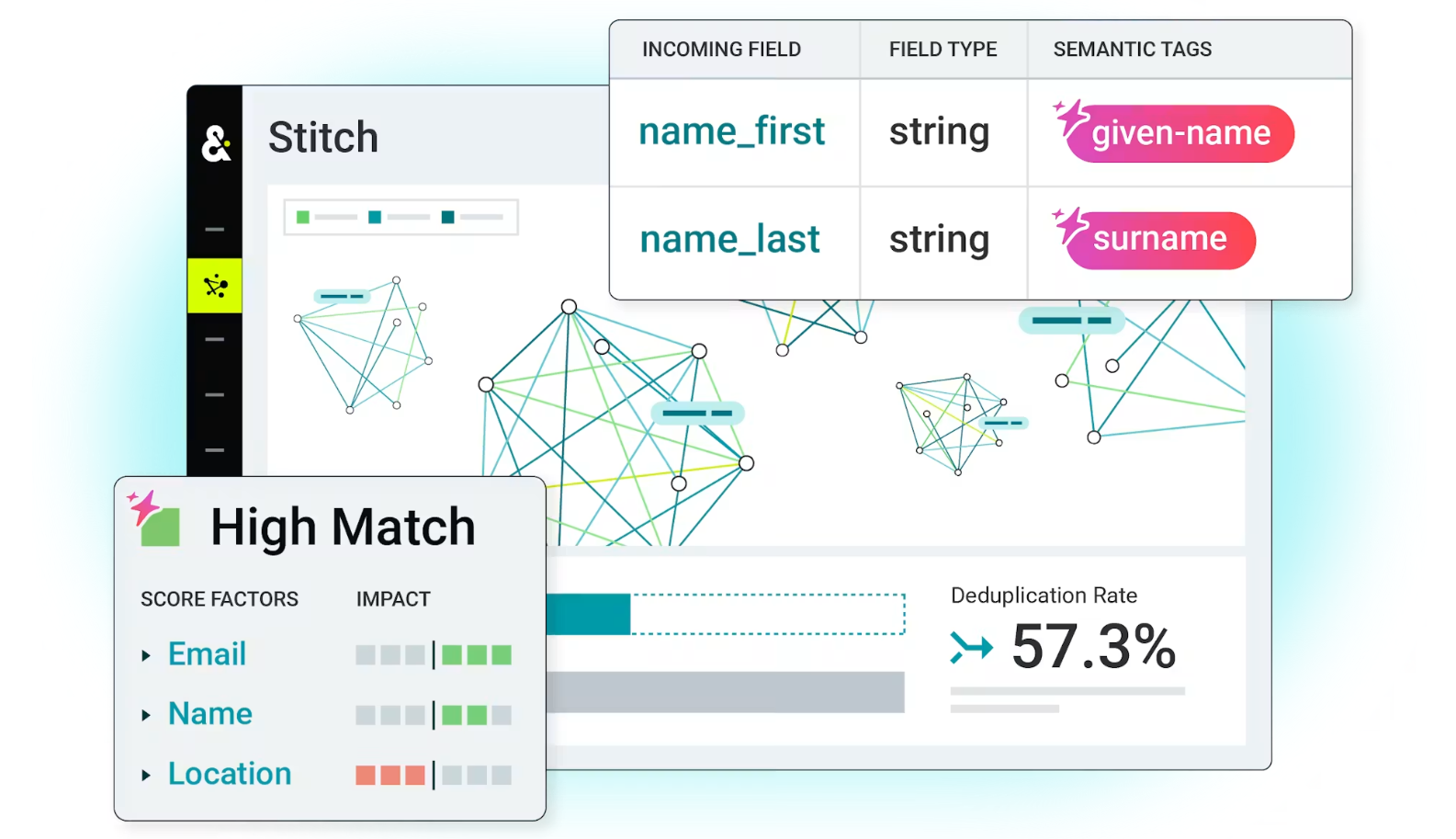
Source: Amperity
Five patents and peer-reviewed research published at SIGMOD 2020 back this up. For brands where the difference between 70% and 95% match rates translates directly into millions in addressable revenue, Amperity is ahead of rule-based alternatives.
Tealium's visitor stitching takes a different approach. It operates on first-party identifiers only (email, login ID, loyalty number) and uses deterministic matching: when a visitor provides a known identifier, the system merges their anonymous browsing history with their known profile by replaying all historical events chronologically. This works well for connecting a visitor's pre-login and post-login sessions across devices, but it won't discover that two separate email addresses belong to the same person the way Amperity's probabilistic models will.

Source: Tealium
ZoomInfo handles identity resolution at the B2B entity level rather than the consumer level. Its entity resolution works across 500M contacts and 100M companies, matching business professionals to companies, resolving org chart relationships, and tracking job changes across roles. This is a different identity problem: not "is jane.smith@gmail.com the same person as J. Smith at checkout?" but "has the VP of Engineering at your target account moved to a new company, and what's her direct dial?"
Real-time activation: Tealium's defining advantage
If your business depends on acting within a customer's active session, Tealium has a structural advantage over Amperity.
Tealium's EventStream processes events entirely in memory, never writing to disk during routing. The Moments API returns visitor profile context at a benchmarked average of 60ms for payloads under 1 kB. Audiences recompute as events arrive, so a visitor can enter a segment mid-session and receive a personalized offer before their next click.
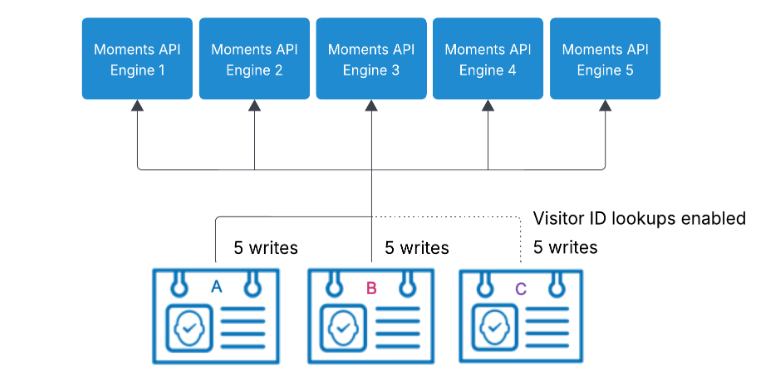
Source: Tealium
Amperity's heritage is batch processing. The platform was designed to ingest data from dozens of systems, run identity resolution across billions of records, and produce unified profiles that feed downstream campaigns. The May 2026 announcement of real-time site personalization and journey abandonment recovery signals a shift toward real-time activation, but this capability is new. Organizations evaluating Amperity for sub-second, in-session personalization should test it against Tealium's proven real-time infrastructure.
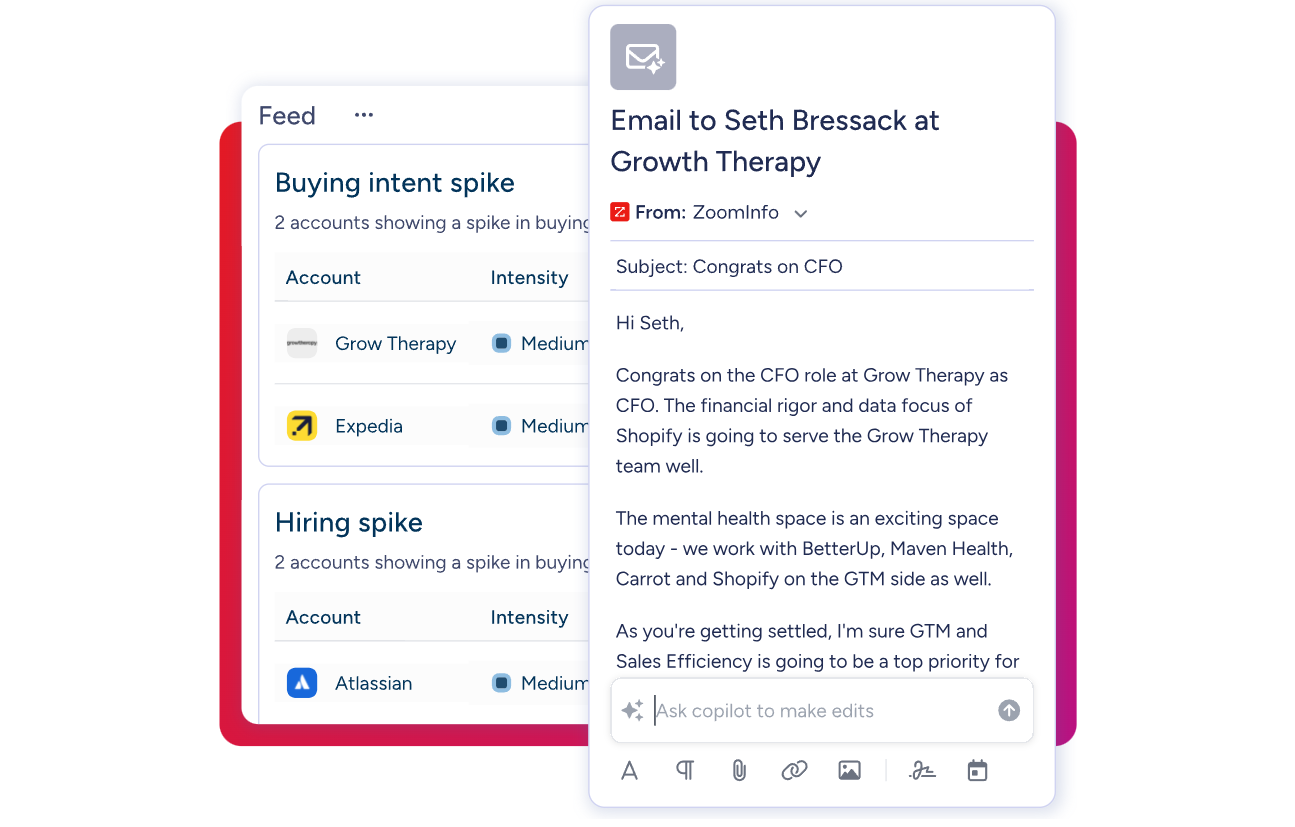
ZoomInfo operates on a different timescale. Its real-time capabilities center on detecting buyer intent signals (when a company starts researching your product category) and surfacing alerts through GTM Workspace's Action Feed, where pre-drafted outreach is ready the moment a signal fires. This is real-time in the B2B sense: days or hours matter, not milliseconds.
Data warehouse and lakehouse integration
All three platforms recognize that enterprises don't want to copy their data into another silo.
Amperity's Bridge enables zero-copy data sharing with Databricks (via Delta Sharing), Snowflake (via Secure Data Sharing), and Google BigQuery. Data stays in the customer's own lakehouse; Amperity reads from and writes to the shared catalog directly. For organizations already invested in Databricks, Amperity's Chuck free tier lets data engineers run identity resolution inside their existing Databricks environment using natural language commands, without requiring a full platform purchase.
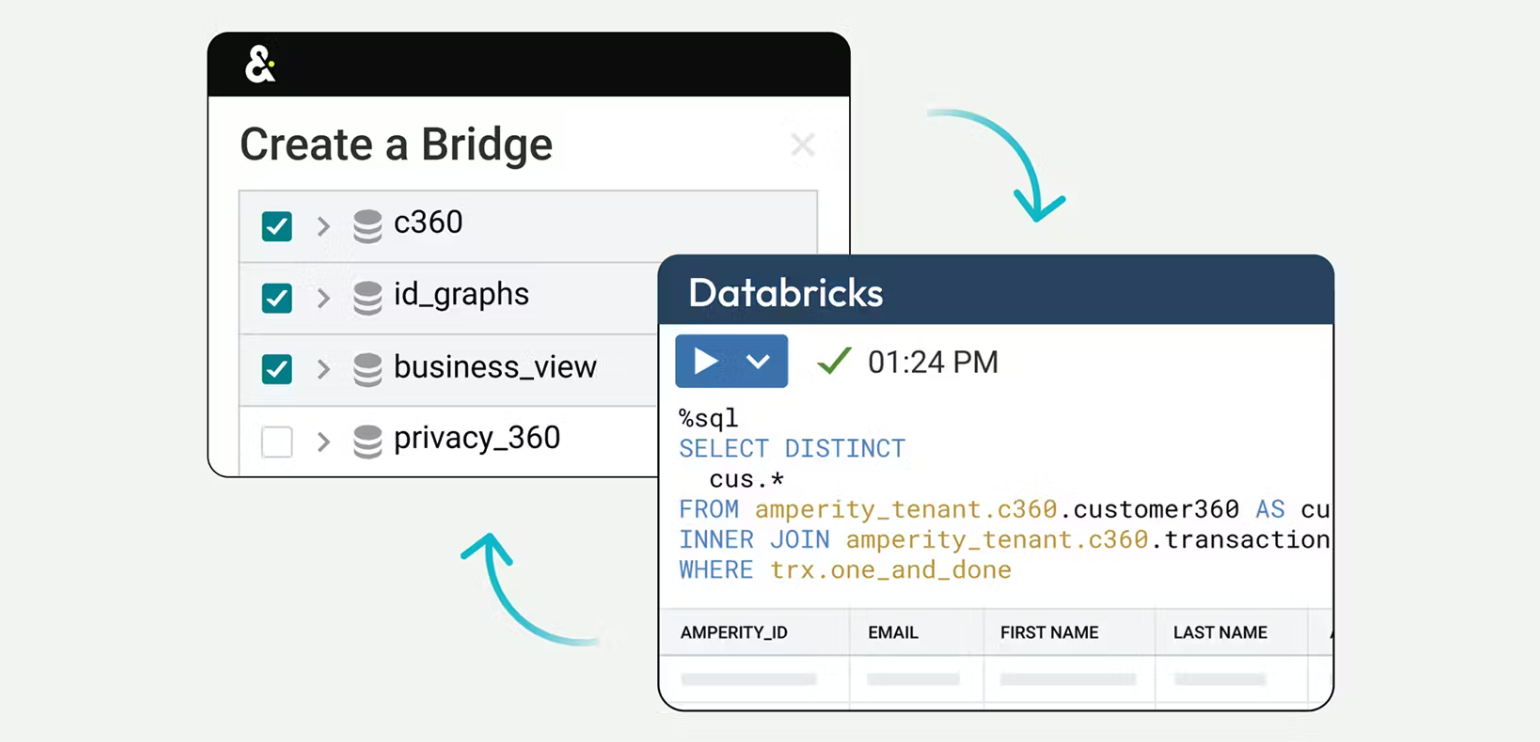
Source: Amperity
Tealium's Data Cloud Activation connects to Snowflake, Databricks, BigQuery, and Amazon Redshift. Its CloudStream zero-copy orchestration routes data without replication, and the Snowflake Audience Discovery App runs as a Native App inside the customer's own Snowflake account, so source data never leaves. The bidirectional flow also works in reverse: Tealium streams consented events into Snowflake tables in under 10 seconds.
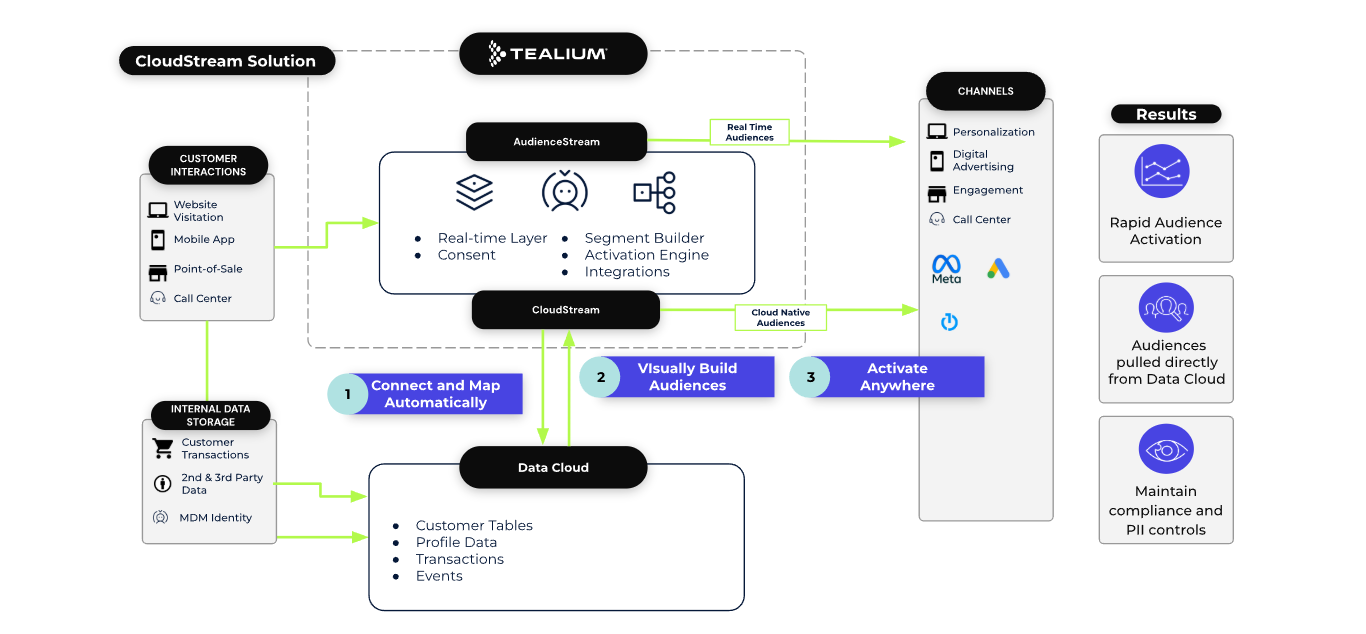
Source: Tealium
ZoomInfo's Cloud Partners program delivers Data Cubes directly into AWS, Google Cloud, Snowflake, and Databricks. The use case differs: instead of activating your own customer data in your warehouse, ZoomInfo pushes its B2B intelligence into your data environment so your propensity models and enrichment workflows can access verified company and contact data alongside your first-party records.
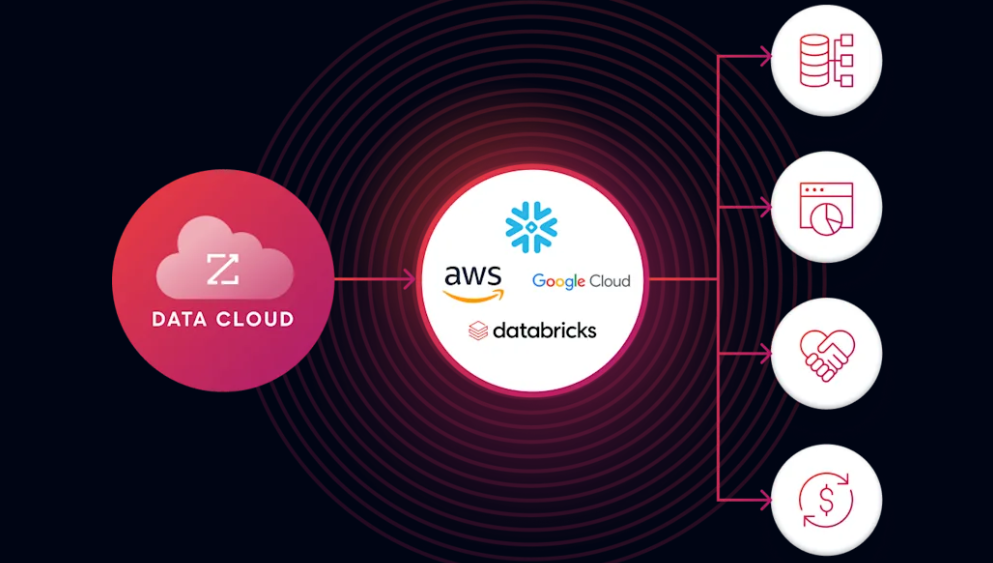
Integration ecosystems reflect different architectures
Tealium's 1,300+ integrations are the broadest in the CDP market, covering ad platforms, CRMs, data warehouses, analytics tools, AI services, and legacy systems. This breadth exists because Tealium started as a tag management company in 2008 and spent nearly two decades building connections to every vendor in the marketing and analytics stack. Its vendor-neutral philosophy means Tealium works with any cloud, any model, and any activation channel without forcing lock-in.
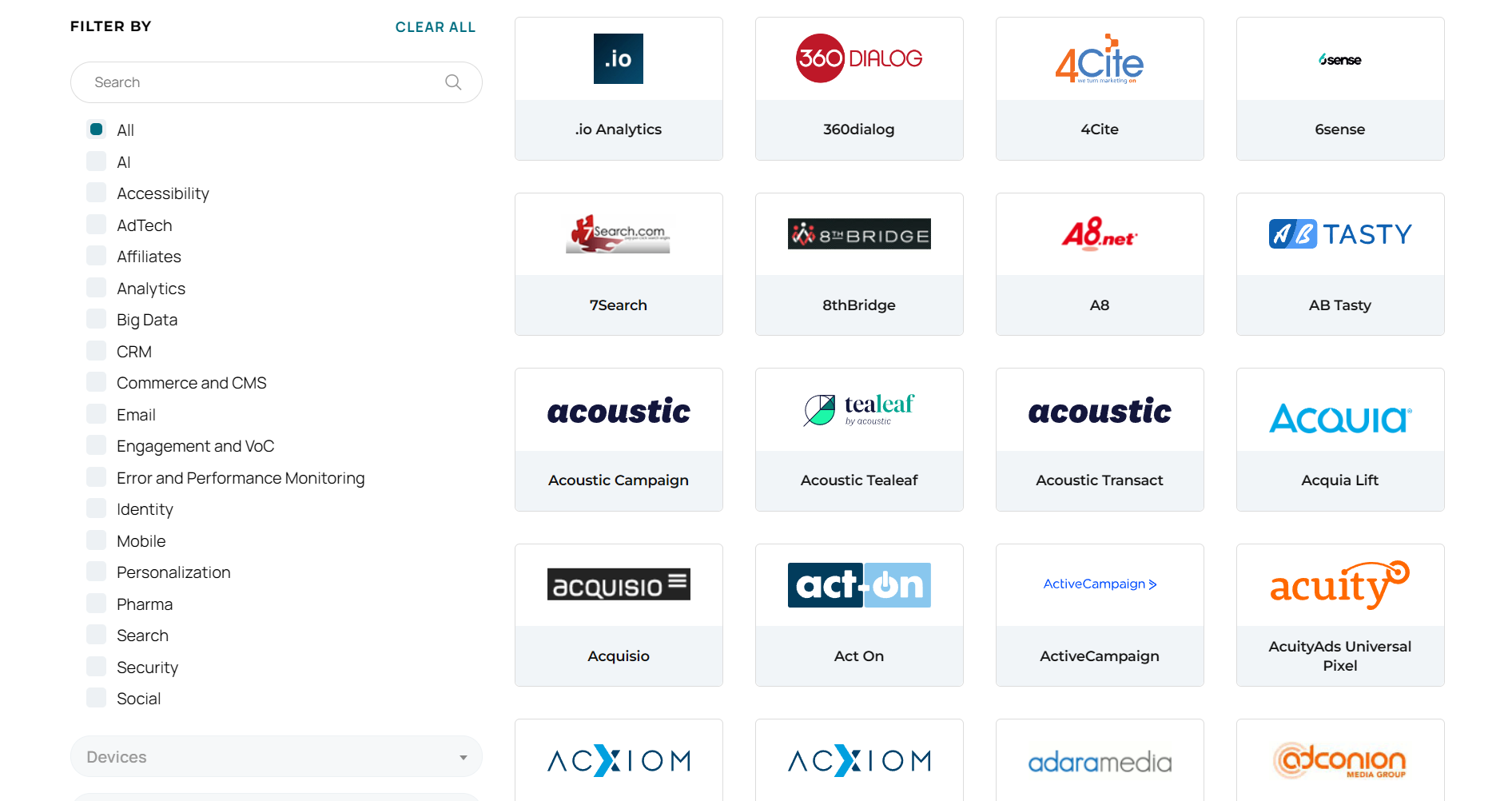
Source: Tealium
Amperity offers 200+ pre-built connectors covering major sources (Salesforce, HubSpot, Klaviyo, Braze, Google Analytics, Adobe Analytics) and destinations (Meta Ads, Google Ads, TikTok Ads, The Trade Desk, Snowflake, Databricks). The integration count is smaller because Amperity sits deeper in the stack: it doesn't need to connect to every analytics pixel the way a tag manager does. Its connectors focus on systems that contain or consume customer profile data. Note that 20 advertising connectors carry an additional 25,000 Amps surcharge per month, easy to overlook during evaluation.

Source: Amperity
ZoomInfo's App Marketplace lists 172+ integration partners spanning CRM, marketing automation, sales engagement, data warehouses, communications, and AI platforms. What sets it apart is the MCP server and Enterprise API, which let any AI agent or custom application access ZoomInfo's B2B intelligence programmatically. A large financial services firm is already building an internal app using ZoomInfo's MCP server, accessing data from surfaces the company would never have reached through a traditional UI.
Seismic's sales team attributed 39% of active pipeline to opportunities identified or influenced by ZoomInfo signals, saved 11.5 hours per week, and saw 54% productivity gains by connecting ZoomInfo's intelligence into their workflows. (Seismic case study)
AI capabilities take different forms
All three platforms have invested in AI, but the applications differ.
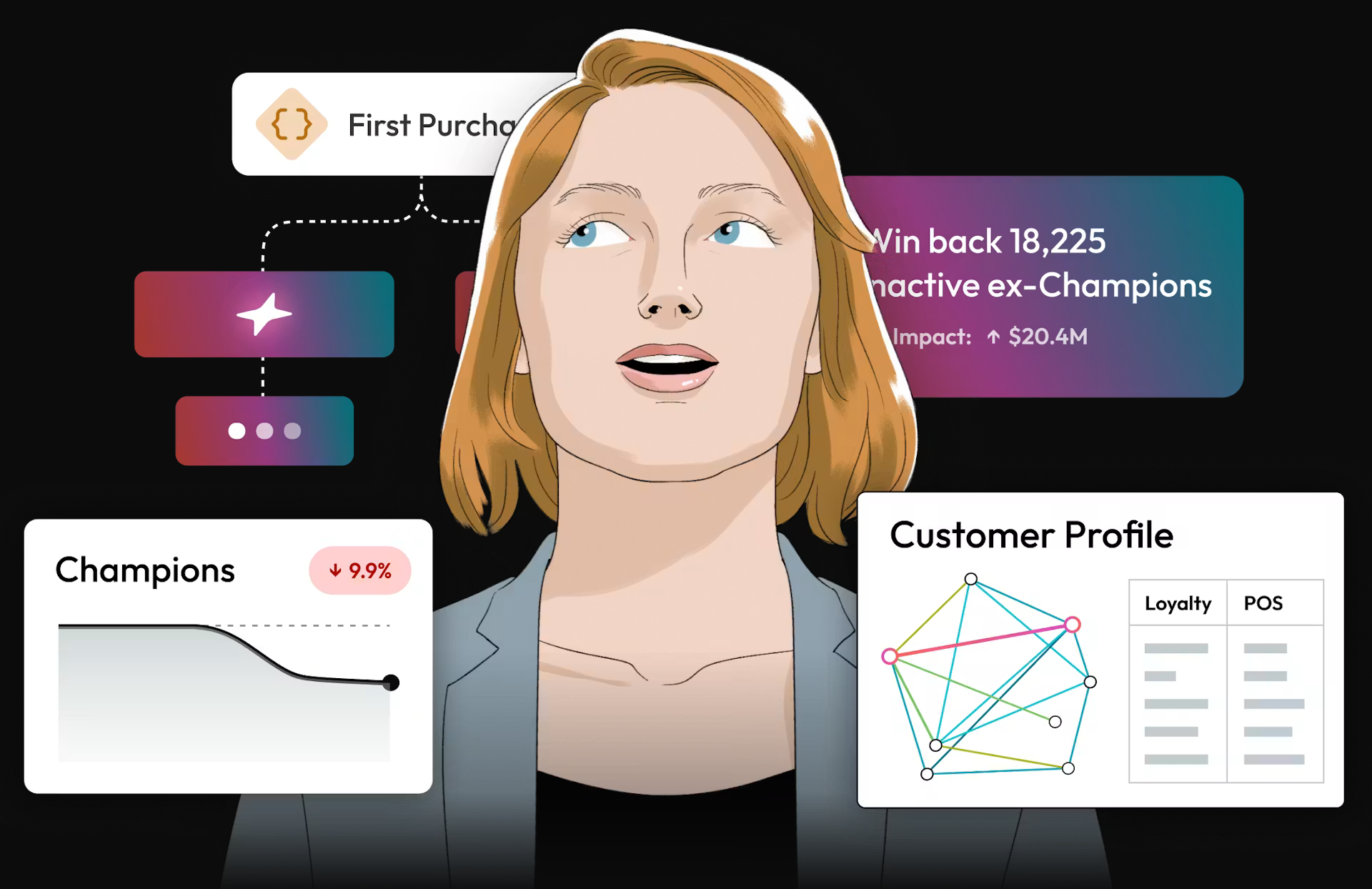
Amperity's AmpAI is embedded across the platform as five assistants: a Customer Data Assistant for conversational exploration, a Segments AI Assistant for building audiences in natural language, a Journeys AI Assistant for multi-touch journey creation, a Queries AI Assistant for SQL generation, and a Consumption AI Assistant for usage monitoring.
Amperity also runs four predictive models: predicted CLV, churn propensity, product affinity, and event propensity. The May 2026 announcement of autonomous AI agents that monitor campaign performance is in private beta, so buyers evaluating Amperity for agentic capabilities are buying a roadmap promise.
Source: Amperity
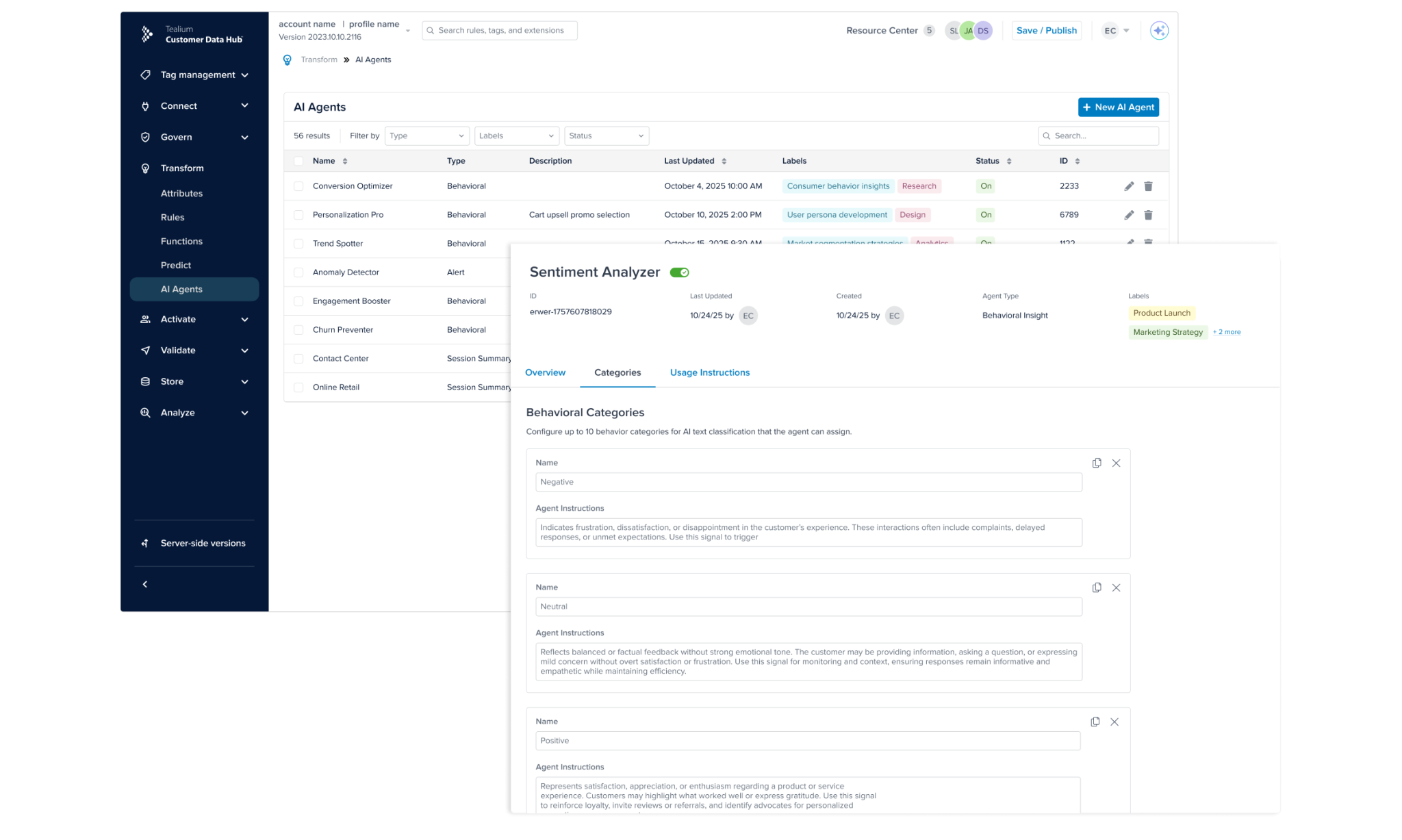
Tealium for AI positions the platform as infrastructure that feeds other AI systems rather than providing its own models. The Behavioral Insight Agent classifies intent, sentiment, and buying signals directly in the event stream. Bidirectional connectors to AWS Bedrock, Vertex AI, OpenAI, and SageMaker route live data to foundation models and return structured results to Tealium in real time. The Invoke Your Own Model capability lets organizations run proprietary models in their own data cloud and activate results immediately. This model-agnostic approach appeals to organizations that want to control their AI stack rather than depend on a CDP vendor's built-in models.
Source: Tealium
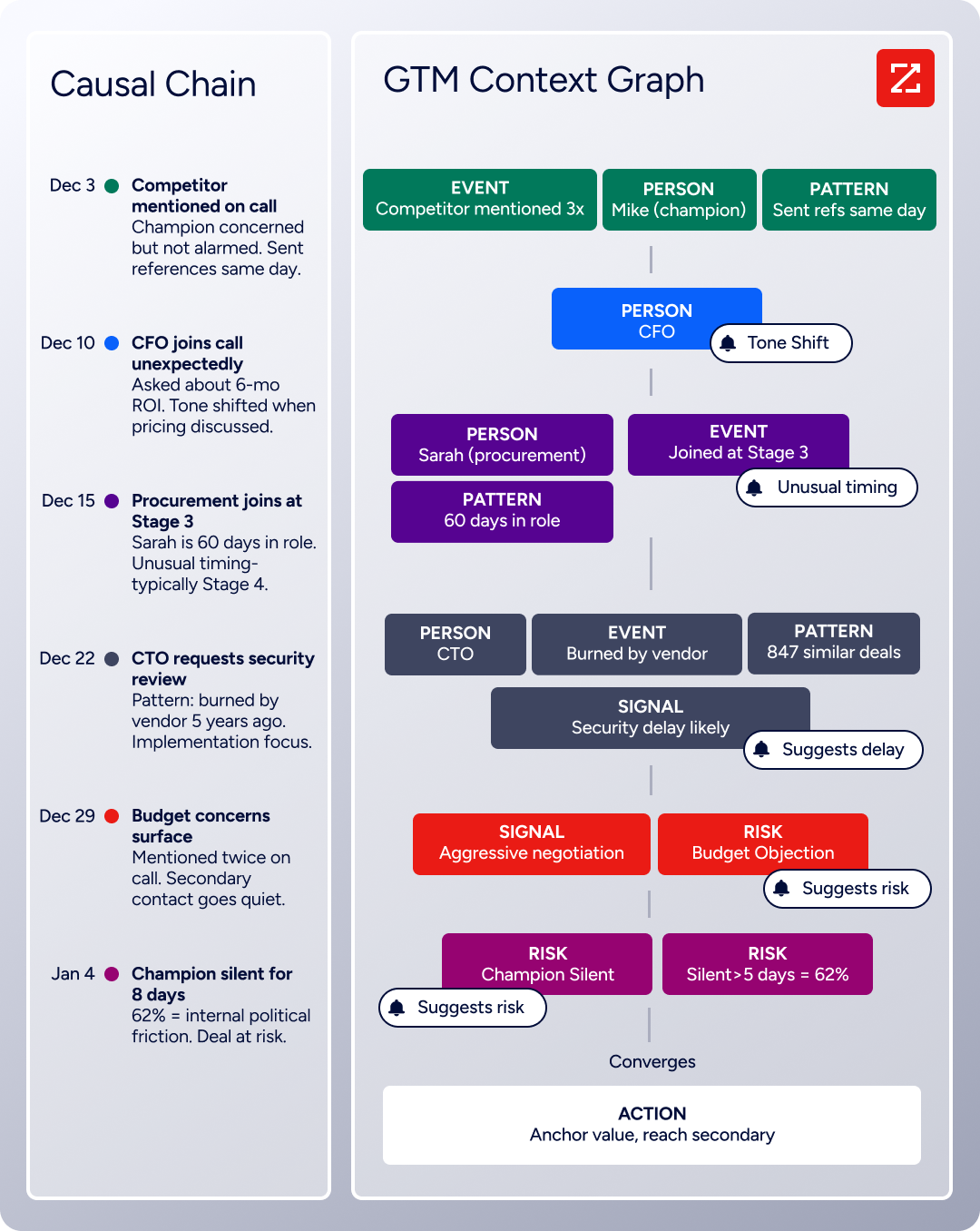
ZoomInfo's GTM Context Graph combines ZoomInfo's B2B data with a customer's CRM records, conversation transcripts, and behavioral signals to capture not just what happened in a deal, but why. Built on Anthropic's Claude, the AI agents inside GTM Workspace handle account research, outreach generation, signal monitoring, and CRM updates. GTM Studio lets marketers and RevOps describe audiences in natural language and launch multi-channel plays without engineering tickets. The difference from Amperity and Tealium: ZoomInfo's AI reasons across both first-party and third-party data (org chart movements, funding rounds, competitor mentions on calls) to surface insights neither platform can produce.
Privacy and compliance: Tealium leads in regulated industries
For organizations in healthcare, financial services, insurance, and pharma, compliance certifications are procurement requirements, not differentiators.
Tealium holds certifications including HIPAA BAA, SOC 2, ISO 27001, ISO 27701, and ISO 27018, plus TISAX (automotive) and TX-RAMP (Texas state agencies). Its consent management is architectural: consent state travels with every event and is enforced independently of business logic, so privacy teams can change consent settings without touching audience definitions or connector configurations. Regional data residency options include EU and APAC (AWS Singapore). This compliance depth, combined with named customers in healthcare (Providence Health Services) and banking (BBVA Technology, Legal & General), makes Tealium the strongest choice for regulated environments.
Amperity holds certifications including SOC 2, ISO 27001, HIPAA, GDPR, CCPA, and Australian Privacy Principles. Its privacy rights workflow engine handles DSAR requests, record deletion, and selective PII nullification with built-in configuration for GDPR, CCPA, PIPEDA, and APP. BECU cited Amperity's role-based governance that protects PII as a prerequisite for adoption. However, Amperity's compliance portfolio is narrower than Tealium's (no ISO 27701 or HIPAA BAA equivalent is prominently documented), and its customer evidence in regulated verticals is thinner.
ZoomInfo maintains certifications including ISO 27001, ISO 27701, SOC 2 Type II, TRUSTe GDPR, and TRUSTe CCPA, all renewed annually. It is a registered data broker in California and Vermont, with a dedicated Trust Center. ZoomInfo's compliance focus is B2B data governance and the ethical sourcing of business contact information rather than healthcare-specific frameworks.
Pricing: Enterprise contracts across the board
None of these platforms publish pricing, which tells you something about their target market.
Amperity uses a consumption-based model built around "Amps", a proprietary unit measuring platform activity across data ingestion, identity resolution, segmentation, and activation. Both its Standard and Enterprise editions include full platform access; the difference is support coverage (business hours vs. 24/7) and training. Up to 10% of unused Amps roll over to the next contract term. Hidden cost drivers include premium connector surcharges (25,000 Amps per month for major ad platforms), compute resource sizing, and predictive modeling compute, which can spike on training days. There is no self-serve tier; the only free entry point is the Chuck free tier for Databricks identity resolution.
Tealium sells through custom enterprise contracts with modular pricing. The platform consists of five modules (Data Collection, CDP, Enrichment & Orchestration, Data Cloud Activation, Tealium for AI) that can be licensed separately or together. Support is tiered: Basic (included, no SLAs), Enhanced (paid, 2-hour critical response), and Premium (paid, 1-hour critical response with dedicated Technical Account Manager). Professional services, implementation, and training carry additional costs. There is no free trial or free plan.
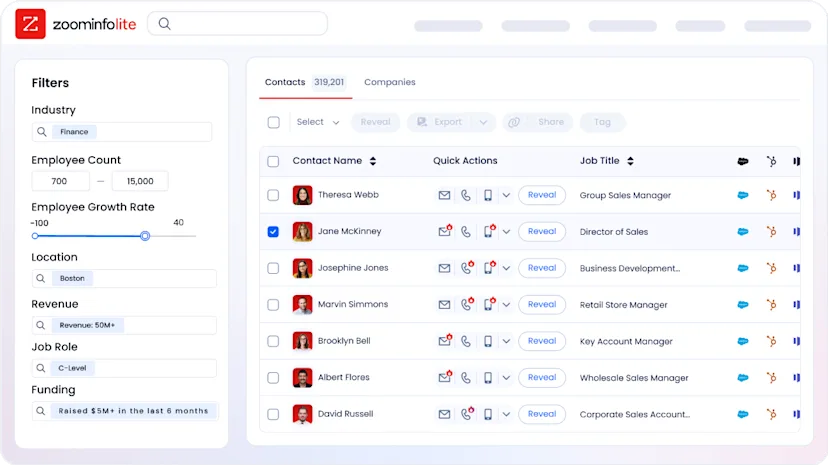
ZoomInfo uses consumption-based pricing with seats determining user access and credits determining export volume. Unlike Amperity and Tealium, ZoomInfo offers two free entry points: ZoomInfo Lite (permanent free tier with 10 monthly export credits, no time limit) and a 7-day free trial of the full platform. Paid plans are organized into Sales, Marketing, and standalone products (Chorus, Chat), each with tiered feature access. The credit system means searching and viewing data is free; you pay only when exporting records to CRM or CSV.
Implementation and learning curves
All three platforms carry onboarding complexity, but the nature of that complexity differs.
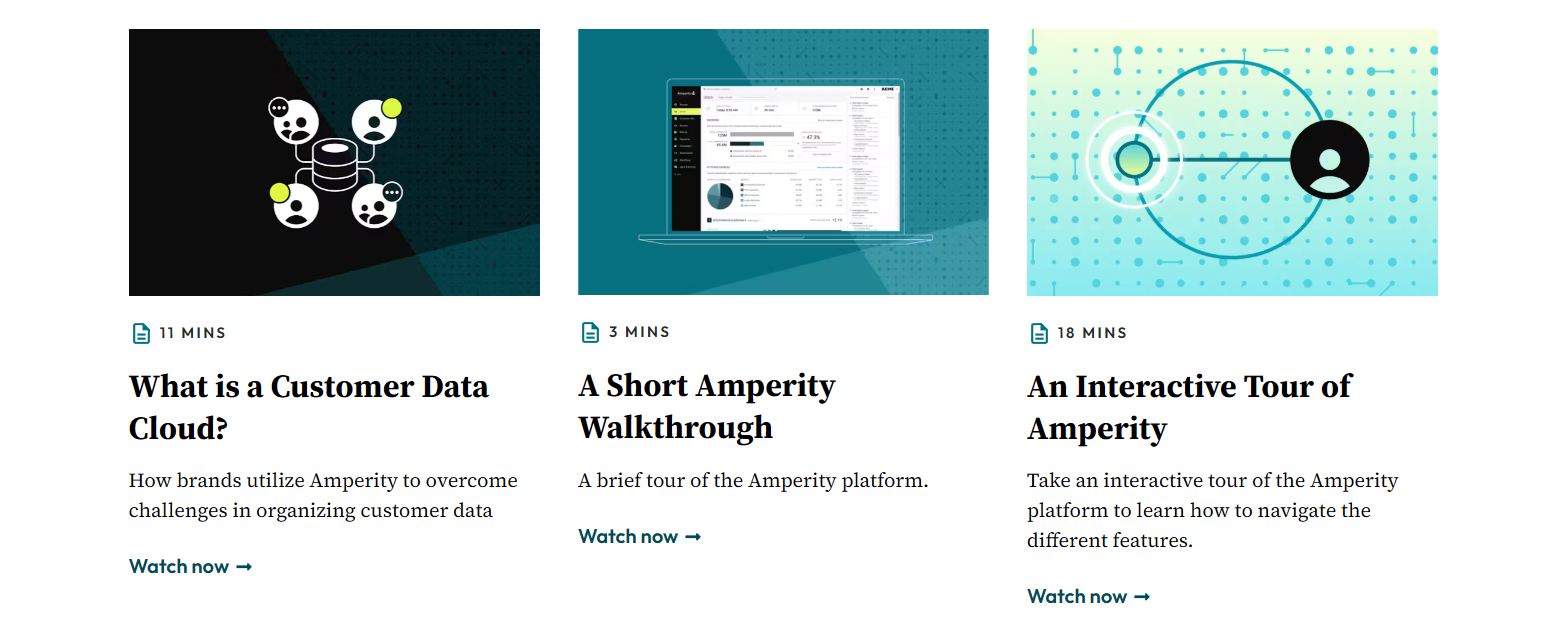
Amperity requires thorough data preparation. The platform's value is proportional to the breadth and quality of data fed into it. Amperity's Learning Lab provides role-based training for technical users, marketers, and analysts. Organizations without dedicated data engineering capacity will struggle.
Source: Amperity
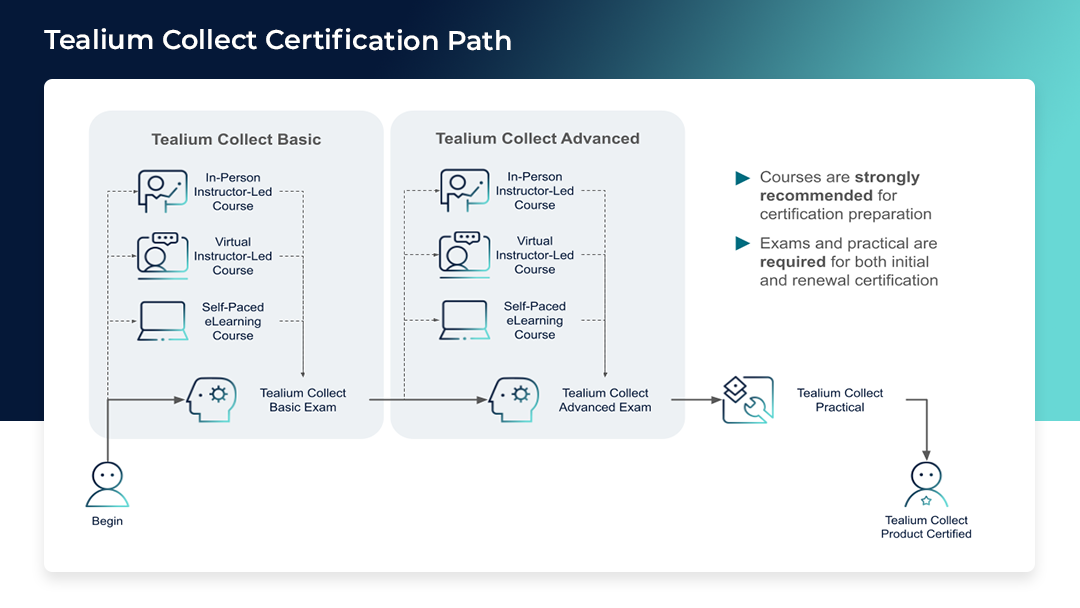
Tealium requires technical expertise for initial setup. G2 reviewers report that enterprise deployments can take one to four months and that the platform overwhelms new users. A notable gap: reviewers flag the absence of a staging or QA environment, meaning configuration changes push toward production without isolated testing. Tealium's Education portal and University offer structured training paths, and the new MCP-powered Configuration Agent aims to lower the barrier by letting teams configure Tealium from AI tools using natural language.
Source: Tealium
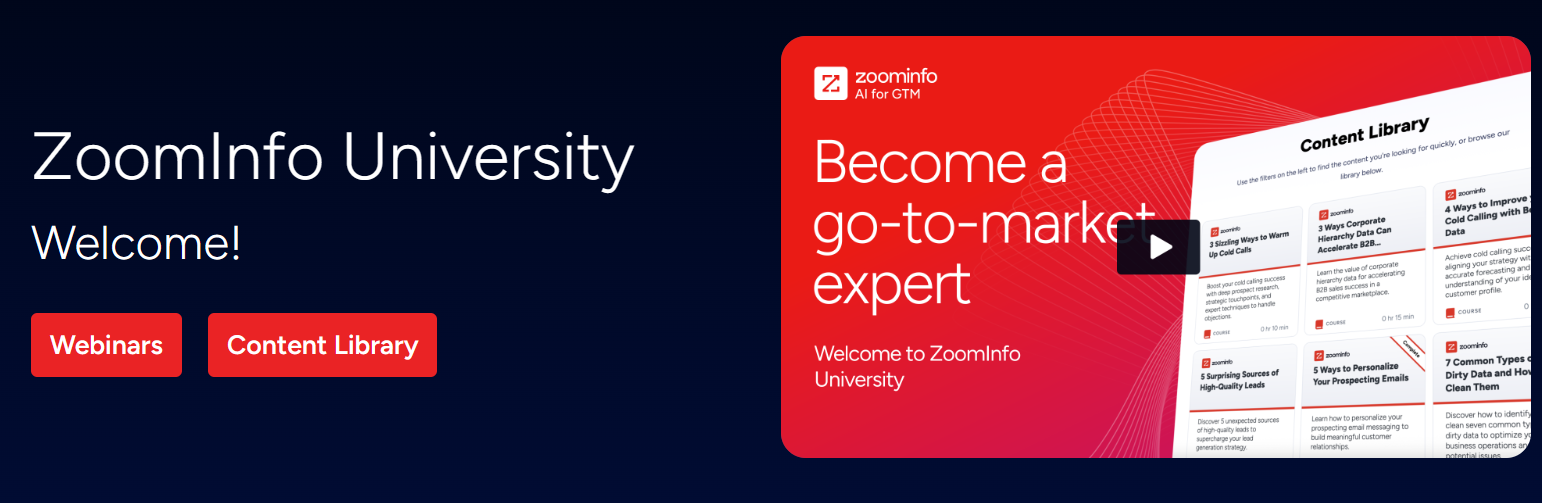
ZoomInfo has invested in reducing time-to-value. GTM Workspace deploys in weeks, not months, and the company redesigned its onboarding from 30 to 90 days with a structured planning-to-adoption framework that produced a 25% improvement in customer satisfaction scores. ZoomInfo University provides role-specific learning paths. The Lite tier and free trial mean individual users can start exploring the platform before any organizational commitment.
SpringDB saw 2-3x increases in campaign conversions, a 300% increase in database usability, and a 30-50% uplift in average deal size after deploying ZoomInfo as a full platform. Their founder noted: "You'll get 10x the value if you think of ZoomInfo as a full platform and not just a tool for one team." (SpringDB case study)
Who each platform is built for
The ideal customer profiles barely overlap.
Amperity fits mid-to-large consumer enterprises ($500M+ revenue, 500K+ customer records) with dedicated data engineering teams. The strongest verticals are omnichannel retail, travel and hospitality, and financial services. If you're a B2B company, an SMB, or an organization with simple single-channel data, Amperity is not designed for you.
Tealium fits mid-market to large enterprises with high digital transaction volumes and dedicated data, analytics, and marketing operations teams. The strongest verticals are financial services and insurance, retail, telecommunications, and healthcare. If you're a small business without technical resources or a company with simple, single-channel data needs, Tealium is not designed for you.
ZoomInfo fits enterprise and upper mid-market B2B companies. Named customers include Adobe, Microsoft, Snowflake, PayPal, Deloitte, and JPMorgan. The platform serves sales, marketing, RevOps, and GTM engineering teams who need to find, reach, and convert business buyers. If you're a purely B2C company with no B2B sales motion, ZoomInfo isn't what you need.
Amperity vs. Tealium vs. ZoomInfo: Which should you choose?
The right platform depends on which data problem costs you the most.
Choose Amperity if:
Your primary challenge is unifying fragmented consumer data across dozens of systems into accurate customer profiles
You're a large B2C brand in retail, travel, hospitality, or financial services with millions of customer records
Identity resolution quality directly impacts your marketing ROI and you need probabilistic matching that goes beyond rules
You have a data engineering team capable of a multi-month implementation
You're invested in Databricks or Snowflake and want a lakehouse-native CDP
Choose Tealium if:
You need to collect, govern, and route real-time behavioral events across hundreds of vendor tools
In-session activation (sub-300ms) is critical to your personalization and conversion strategy
You operate in a regulated industry requiring HIPAA BAA, ISO 27701, or strict consent enforcement
Vendor neutrality matters because you refuse to be locked into a single cloud or marketing ecosystem
You need a platform that feeds AI models with real-time, consented customer context
Choose ZoomInfo if:
You need verified B2B contact data, company intelligence, and buyer intent signals to drive go-to-market execution
Your sales and marketing teams spend too much time researching accounts and not enough time selling
You want AI that reasons across both your internal data and third-party signals to surface the next best action
You need a platform accessible through native experiences for sellers and marketers, plus APIs and MCP for any custom tool
You want to start fast, with a free tier for initial exploration and deployment measured in weeks
Start with ZoomInfo Lite for free, or request a demo of the full platform.
These platforms occupy different layers of the enterprise data stack more than they compete with each other. Amperity owns the identity resolution layer for B2C. Tealium owns the real-time data orchestration layer. ZoomInfo owns the B2B intelligence layer. The question isn't which one is best. It's which data problem is holding your business back today.
Amperity vs. Tealium vs. ZoomInfo FAQ
What is the fundamental difference between Amperity, Tealium, and ZoomInfo?
Amperity is a customer data platform specializing in AI-powered identity resolution for B2C enterprises, using patented probabilistic and deterministic matching to unify fragmented consumer records across dozens of systems. Tealium is a customer data orchestration platform that collects, governs, and routes real-time behavioral events across 1,300+ integrations, with a CDP that builds unified profiles and activates audiences in milliseconds. ZoomInfo is a B2B go-to-market intelligence platform providing verified contact data, company profiles, buyer intent signals, and AI-powered execution tools for sales, marketing, and RevOps teams.
Which platform handles identity resolution best?
Amperity has the most advanced identity resolution, using up to 45 AI models with five patents covering probabilistic matching, transitive stitching, and stable ID maintenance. It runs three concurrent identity graphs (Growth, Trust, and Opportunity) for different accuracy-versus-reach tradeoffs. Tealium uses deterministic visitor stitching based on first-party identifiers like email or login ID, which works for connecting anonymous and known sessions but does not perform probabilistic matching across disparate records. ZoomInfo resolves B2B entity identity across 500M contacts and 100M companies, a different problem domain focused on business professional identity rather than consumer record deduplication.
Which platform is best for real-time personalization?
Tealium is the strongest choice for real-time, in-session personalization. Its EventStream processes events entirely in memory, and the Moments API returns visitor profile context at a benchmarked 60ms average latency. Audience membership recomputes as events arrive. Amperity has historically been batch-oriented and only announced real-time site personalization capabilities in May 2026. ZoomInfo provides real-time buyer intent signals and account alerts but operates in a B2B context where response times are measured in hours or days rather than milliseconds.
Can these platforms work together?
Yes. They occupy different layers of the data stack and complement each other. Amperity can unify consumer identity and feed resolved profiles to Tealium for real-time activation. Tealium can route enriched behavioral events to Amperity for deeper identity resolution. ZoomInfo can provide B2B intelligence that enriches account data in either platform. A company with both B2C and B2B sales motions might use Amperity or Tealium for consumer data and ZoomInfo for business buyer intelligence.
Which platform is easiest to get started with?
ZoomInfo is the most accessible, offering a permanent free tier (ZoomInfo Lite with 10 monthly export credits) and a 7-day free trial of the full platform. GTM Workspace deploys in weeks. Amperity has no self-serve tier (only a free Chuck tier for Databricks users), and implementation timelines range from days to months depending on data complexity. Tealium has no free trial or free plan, and enterprise implementations typically take one to four months.
How does pricing compare across the three platforms?
None of the three publish prices. Amperity charges by consumption units called "Amps" that measure platform activity, with additional surcharges for premium ad platform connectors. Tealium uses custom enterprise contracts with modular pricing per product and tiered support plans. ZoomInfo uses consumption-based pricing with seats and credits, where searching is free and only data exports consume credits. ZoomInfo is the only one offering a permanent free tier.
Which platform is best for regulated industries like healthcare or financial services?
Tealium has the strongest compliance posture for regulated industries, holding HIPAA BAA, SOC 2, ISO 27001, ISO 27701, and ISO 27018 certifications. Its consent management is architectural, meaning consent enforcement is built into the event pipeline rather than applied as a post-processing layer. Amperity holds SOC 2, ISO 27001, HIPAA, GDPR, and CCPA certifications and serves financial services customers like BECU. ZoomInfo holds ISO 27001, ISO 27701, SOC 2 Type II, and TRUSTe validations for GDPR and CCPA, focused on B2B data governance.
Which platform has the broadest integration ecosystem?
Tealium leads with 1,300+ pre-built integrations spanning nearly every category in the marketing and analytics stack. Amperity offers 200+ connectors focused on systems that produce or consume customer profile data. ZoomInfo's App Marketplace lists 172+ partners, with APIs and an MCP server that let any AI agent or custom application access ZoomInfo intelligence programmatically.
More Amperity comparisons:
