
If you're comparing Amperity vs. Hightouch, you're looking at two different philosophies for the same problem: unifying fragmented customer data and activating it across channels.
But before choosing between them, answer these five questions:
Is your primary challenge stitching together messy, duplicated customer records across dozens of systems, or activating clean data that's already modeled in your warehouse?
Do you need a platform that stores and processes your data, or one that operates directly on your existing data warehouse without copying anything?
Are you a consumer brand with millions of individual customer profiles, or a B2B organization that needs intelligence about companies and decision-makers?
How important is it that your marketing team can build audiences without writing SQL or filing engineering tickets?
Is your data problem unifying what you already have, or accessing buyer data you don't have yet?
In short, here's what we recommend:
Amperity is the choice for large consumer brands drowning in fragmented customer data. Its patented Stitch identity resolution engine uses up to 45 AI models to find hidden connections across offline and online data, producing unified customer profiles that manual matching and rules-based tools miss. The trade-offs: enterprise-grade budgets with no self-serve option, a significant implementation investment, and dedicated data engineering capacity to get the most from it.
Hightouch is built for data-mature organizations that already have a cloud data warehouse and want to activate that data without duplicating it. Founded by former Segment engineers who saw the limitations of traditional CDPs from the inside, Hightouch sits directly on Snowflake, Databricks, or BigQuery and syncs data to 250+ destinations. The trade-off: your data needs to be well-modeled in the warehouse before Hightouch can work with it, and complex use cases still require SQL.
Both platforms excel at unifying and activating customer data for consumer brands. But here's what neither solves: if you're a B2B organization, your core challenge isn't unifying data you already have. It's accessing intelligence about the companies and buyers you're trying to reach. That's a different problem, one requiring a different kind of platform.
ZoomInfo is an AI-powered go-to-market platform built on a B2B dataset of 500M contacts, 100M companies, 135M+ verified phone numbers, and 200M+ verified business email addresses. Rather than unifying your existing customer data, ZoomInfo provides the buyer intelligence itself, then layers on the GTM Context Graph, an intelligence layer that fuses this data with your CRM records, conversation transcripts, and behavioral signals to reveal not just what happened in your pipeline, but why. Your team can access this intelligence through the GTM Workspace for sellers, GTM Studio for marketers and RevOps, or APIs and MCP in any front-end.
If B2B buyer intelligence sounds like what your go-to-market team needs, see how ZoomInfo works with a free trial.
Amperity vs. Hightouch vs. ZoomInfo at a glance
Amperity | Hightouch | ZoomInfo | |
|---|---|---|---|
Core focus | Identity resolution and customer data unification | Warehouse-native data activation and composable CDP | B2B buyer intelligence and go-to-market execution |
Data architecture | Proprietary data cloud with lakehouse integration | Operates directly on customer's data warehouse | Proprietary B2B dataset (500M contacts, 100M companies) |
Primary buyer | Enterprise consumer brands (retail, travel, hospitality) | Data-mature orgs with existing warehouses | B2B sales, marketing, and RevOps teams |
Identity resolution | Patented AI engine (45 models, 5+ patents) | Deterministic and probabilistic, warehouse-native | B2B entity resolution across 100M+ companies |
Integrations | 200+ pre-built connectors | 250+ managed connectors | 120+ marketplace integrations plus APIs and MCP |
AI capabilities | AmpAI (natural language queries, predictive models) | AI Decisioning (reinforcement learning for 1:1 optimization) | GTM Context Graph + AI agents for sales and marketing |
Free tier | No | Yes (2 active syncs, permanently free) | Yes (ZoomInfo Lite, permanent; plus 7-day trial) |
Pricing model | Consumption-based ("Amps"), no public pricing | Usage-based (active syncs + platform fee), no public pricing for CDP | Custom-quoted, consumption-based, no public pricing |
Gartner recognition | Niche Player, CDP MQ (2026) | Leader, CDP MQ (2026) | Leader, ABM Platforms MQ (2024 & 2025) |
The architecture divide: proprietary data cloud vs. warehouse-native
The biggest difference between Amperity and Hightouch isn't a feature. It's where your data lives.
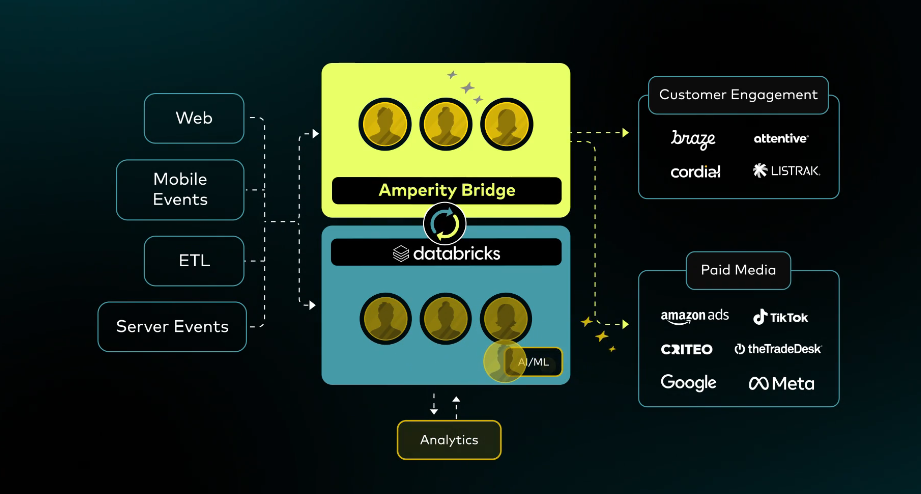
Amperity ingests raw data from every source, transforms it using semantic tagging, runs identity resolution, and produces unified customer profiles inside its own platform. It then connects to your data warehouse through Amperity Bridge, which enables zero-copy data sharing with Databricks, Snowflake, and BigQuery. The data can live in both places, but Amperity does the heavy processing.
Source: Amperity
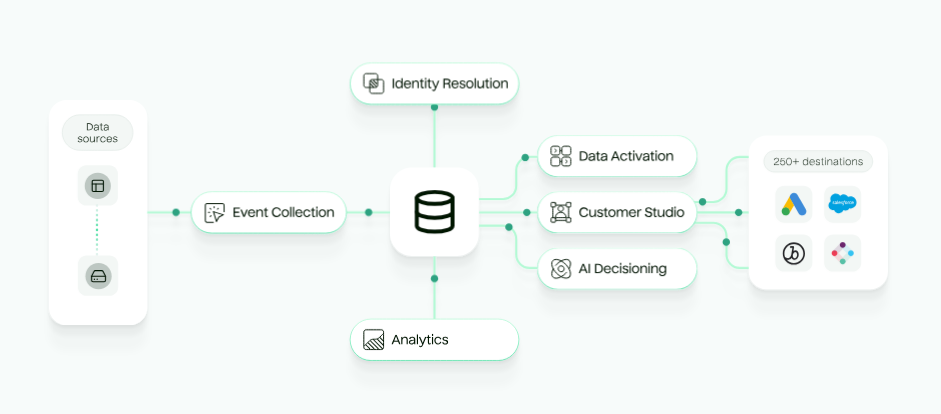
Hightouch never copies your data. It operates directly on top of your existing warehouse, reading from it at query time and syncing results to operational tools. Your warehouse stays the single source of truth. There is no second data store to manage, no sync to maintain between Hightouch's system and yours.
Source: Hightouch
For enterprise brands with messy data spread across dozens of legacy systems, Amperity's approach makes sense. The platform accepts data in any format, with no schema normalization required before ingestion. Raw feeds from POS systems, loyalty platforms, email tools, and booking engines flow in as they are. Amperity handles the cleanup.
For organizations that have already invested in building clean, well-modeled data in a modern warehouse, Hightouch avoids duplication. If your data team spent months building dbt models in Snowflake, why copy that work into a CDP's proprietary store? Hightouch lets marketing teams access those models directly.
The trade-off is clear: Amperity does more work for you but introduces another data store. Hightouch does less work but requires that your warehouse is already in good shape.
Identity resolution is where Amperity pulls ahead
If your biggest pain is duplicated, fragmented customer records, Amperity was built for that problem.
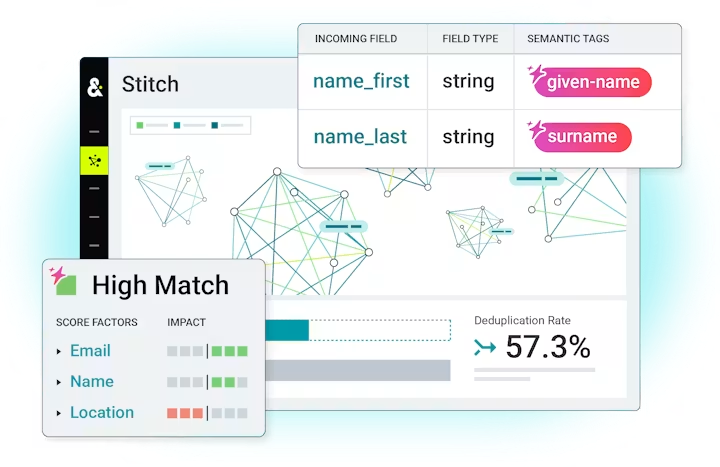
Amperity's Stitch engine combines deterministic and probabilistic matching simultaneously across a seven-stage pipeline. It doesn't just match on email addresses and phone numbers. It evaluates name popularity distributions, Jaro-Winkler and Levenshtein string distances, nickname lookup tables, address similarity, and birthdate conflict detection to find connections that rules-based systems miss.
Source: Amperity
Amperity also offers three concurrent identity graphs (Growth Graph, Trust Graph, and Opportunity Graph) so teams can choose the right accuracy-vs.-reach balance for each use case. A loyalty email campaign might use the high-confidence Trust Graph, while a paid media campaign might use the broader Growth Graph to expand its addressable audience.
Hightouch has its own identity resolution capability supporting both deterministic and probabilistic matching.
It processes and stores the identity graph inside the customer's warehouse, consistent with its zero-copy philosophy. Teams can build multiple identity graphs in parallel, configure match rules through a visual builder, and create Golden Records with survivorship rules.
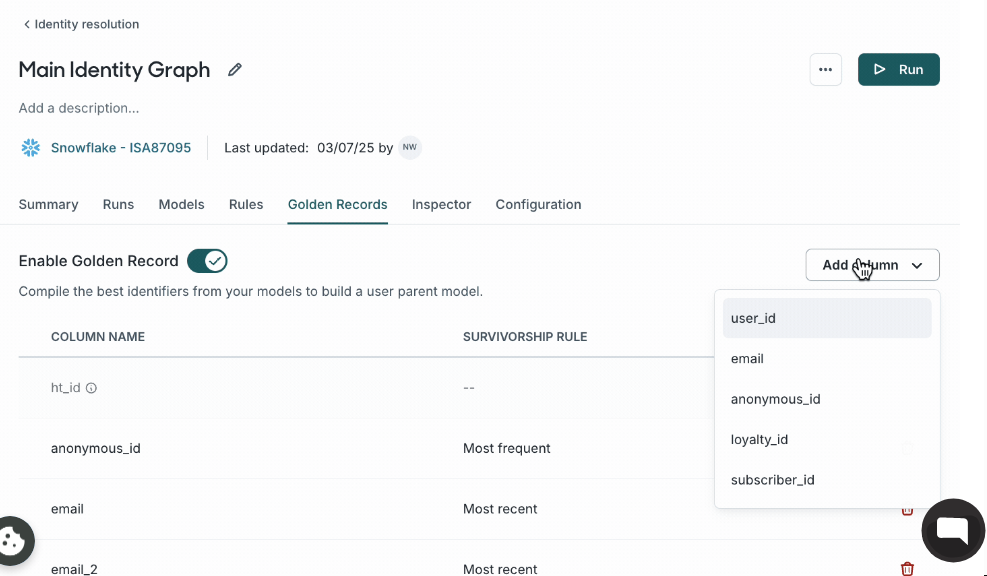
Source: Hightouch
But Hightouch's identity resolution is newer and less tested at the scale of Amperity's Stitch, which is backed by peer-reviewed research published at SIGMOD 2020, 5+ patents, and training data from 400+ enterprise brands and billions of records. For consumer brands with messy data across many offline and online touchpoints, Amperity's identity resolution is hard to match.
Hightouch wins on speed and flexibility
Where Amperity asks you to invest months in implementation, Hightouch delivers value fast.
Hightouch claims 90% of customers fully onboard in days or weeks, compared to the months typical of traditional CDPs.
This speed comes from a deliberate design choice: Hightouch doesn't try to ingest, transform, and store your data. It trusts your warehouse as-is and focuses on getting that data into the tools your teams use. Connect a source, write a SQL model (or import one from dbt), map fields to a destination, and the sync runs.
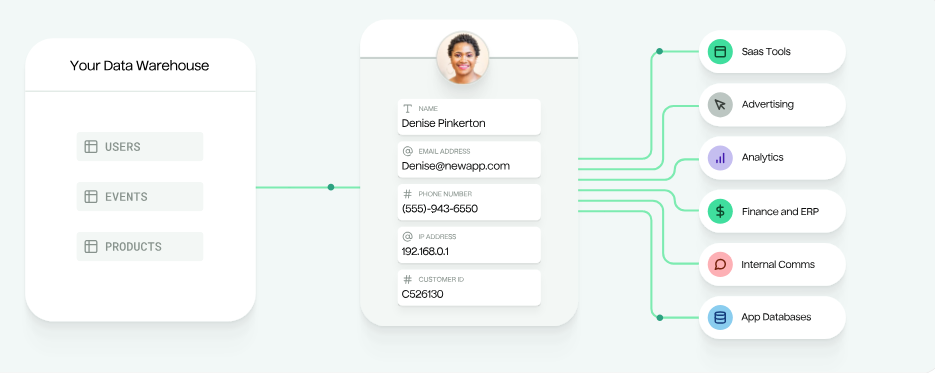
Source: Hightouch
The flexibility extends to what you can activate.
Traditional CDPs force data into rigid schemas of users and events. Hightouch can sync any data object from your warehouse: pets, products, reservations, households, inventory, data science model outputs.
At scale, Hightouch has processed over 7.3 trillion records synced and runs 1 million+ daily sync jobs at 99.99% global uptime.
Hightouch also offers a permanent free tier with 2 active syncs per month, unlimited destinations, and unlimited user seats. For teams evaluating the platform, this removes the procurement barrier entirely. Amperity has no self-serve trial; all paths go through a sales engagement.
B2B teams face a different data problem entirely
Both Amperity and Hightouch assume you already have customer data worth unifying. For consumer brands running loyalty programs, e-commerce stores, and omnichannel campaigns, that's a safe assumption. Your customers interact with you across many touchpoints, generating data you need to stitch together.
For B2B organizations, the data challenge is inverted. You don't have data on your buyers. You need it.
A B2B sales team doesn't need to deduplicate 3.4 million loyalty member records. They need to know who the VP of Engineering is at their target accounts, whether that company is actively researching their product category, and what the buying committee looks like.
A B2B marketing team doesn't need to personalize emails for millions of existing customers. They need to identify which companies fit their ideal customer profile and reach the right decision-makers with the right message.
This is the problem ZoomInfo solves.
Built on the largest B2B dataset in the industry, ZoomInfo provides the buyer intelligence that B2B teams need to find, engage, and win customers.
The platform covers three data dimensions simultaneously: identity data (who buyers are and how to reach them), company context (industry, size, org charts, technographics covering 30,000+ technologies across 30+ million companies), and dynamic signals (buying activity and intent data from 210 million IP-to-Organization pairings and 6 trillion+ new keyword-to-device pairings sourced monthly).
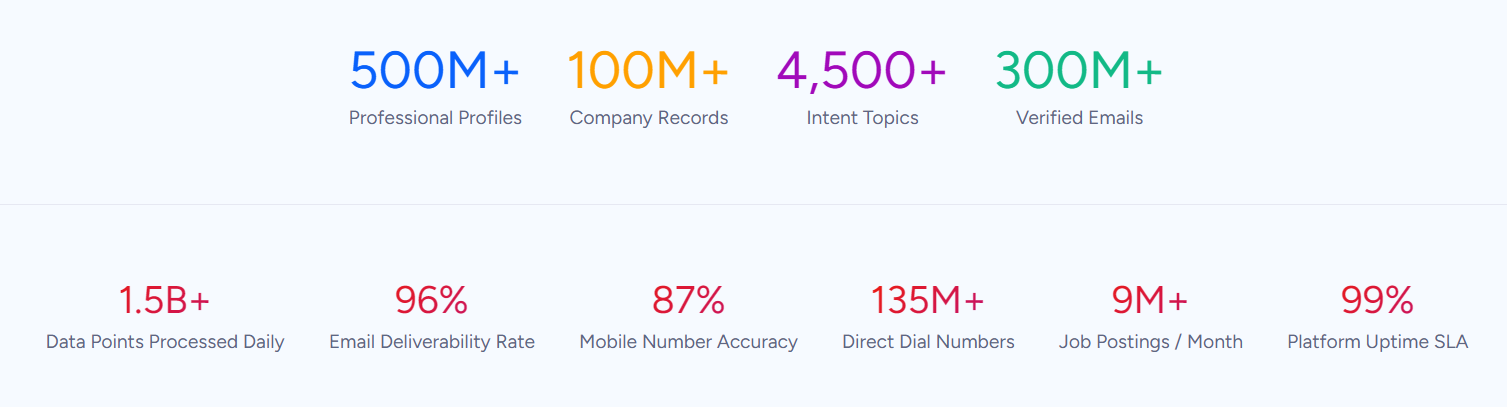
Source: ZoomInfo
A multi-source pipeline backed by 300+ human researchers verifies that data, reaching up to 95% accuracy on first-party data. In a Fortune 500 competitive RFP analyzing 25 million contacts across vendors, the independent consultant concluded that "no other competitor came even close."
What makes ZoomInfo more than a data provider is the GTM Context Graph, an intelligence layer that processes 1.5B+ data points daily by fusing ZoomInfo's B2B data with your CRM records, conversation intelligence, and behavioral signals.
The result: AI that understands not just what happened in a deal, but why. Your follow-up email addresses the specific concern a prospect raised because the system understands why it matters. Your next go-to-market play targets accounts matching your actual win patterns, not just those that tripped a keyword threshold.
Seismic's sales team attributed 39% of active pipeline to opportunities identified or influenced by ZoomInfo signals, while boosting productivity by 54%. Their Chief Business Officer noted: "That combination of our internal CRM data, external signals, and AI that's given all that context has helped us craft very specific account- and persona-based messages. And people have responded to them right away." (Seismic)
AI capabilities take three different directions
Each platform has invested in AI, but toward different goals.
Amperity's AmpAI makes customer data accessible to non-technical users.
The Customer Data Assistant lets marketers build segments, create journeys, and write SQL queries using natural language. Four built-in predictive models (predicted CLV, churn propensity, product affinity, and event propensity) run against the unified customer profile, letting marketing teams target high-value or at-risk segments without data science intervention. Amperity's AI is primarily analytical: it helps you understand your customers and build audiences faster.
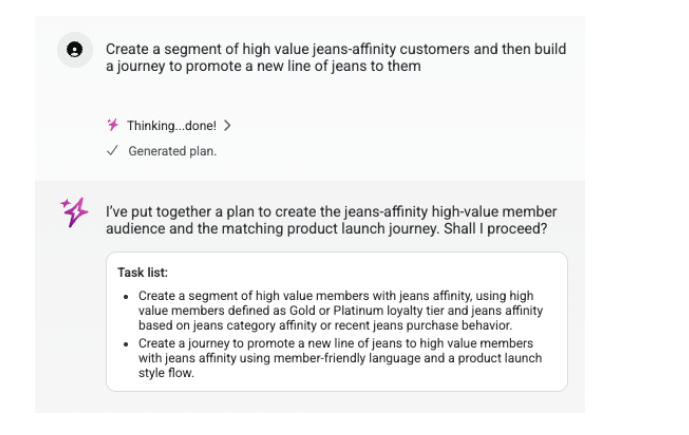
Source: Amperity
Chuck, Amperity's Databricks-native AI agent, addresses the technical side. Data engineers can use natural language to profile data, apply semantic tagging, and run identity resolution inside Databricks, replacing days of manual coding. Chuck includes a free tier and uses Amperity's identity resolution models (trained on billions of records) as its knowledge layer.
Hightouch's AI Decisioning takes a different path.
Instead of helping marketers build better campaigns, it replaces manual campaign decisions using reinforcement learning. Marketers set a goal and provide content variants, and AI agents autonomously optimize which message to send, through which channel, at what time, to which customer. Hightouch argues that reinforcement learning fits this task better than LLMs because it builds a tight feedback loop where every decision improves future decisions.
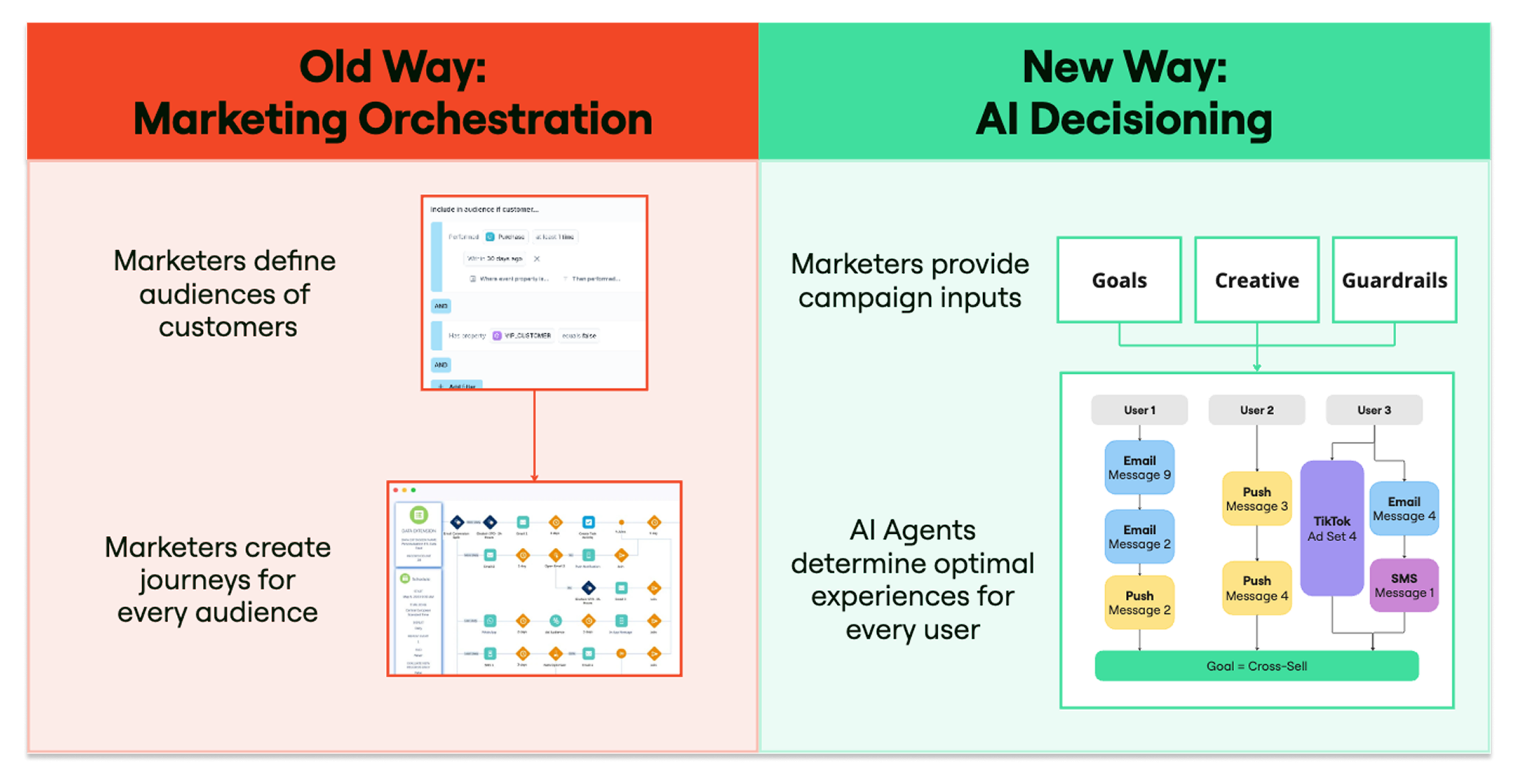
Source: Hightouch
Hightouch also recently launched Content Assembly, which uses AI agents to generate personalized campaign content from existing brand assets, with custom brand and legal compliance agents trained on each company's guidelines.
ZoomInfo's GTM Context Graph applies AI to a different job: understanding B2B buyer behavior and driving go-to-market execution.
The GTM Context Graph captures why deals move or stall, so the AI drafting your next outreach understands the concern behind the conversation, and your next go-to-market play targets accounts matching your actual win patterns. Specialized AI agents in GTM Workspace handle account research, outreach generation, CRM updates, and signal monitoring. GTM Studio lets marketers describe audiences in natural language and launch multi-channel plays without engineering tickets.
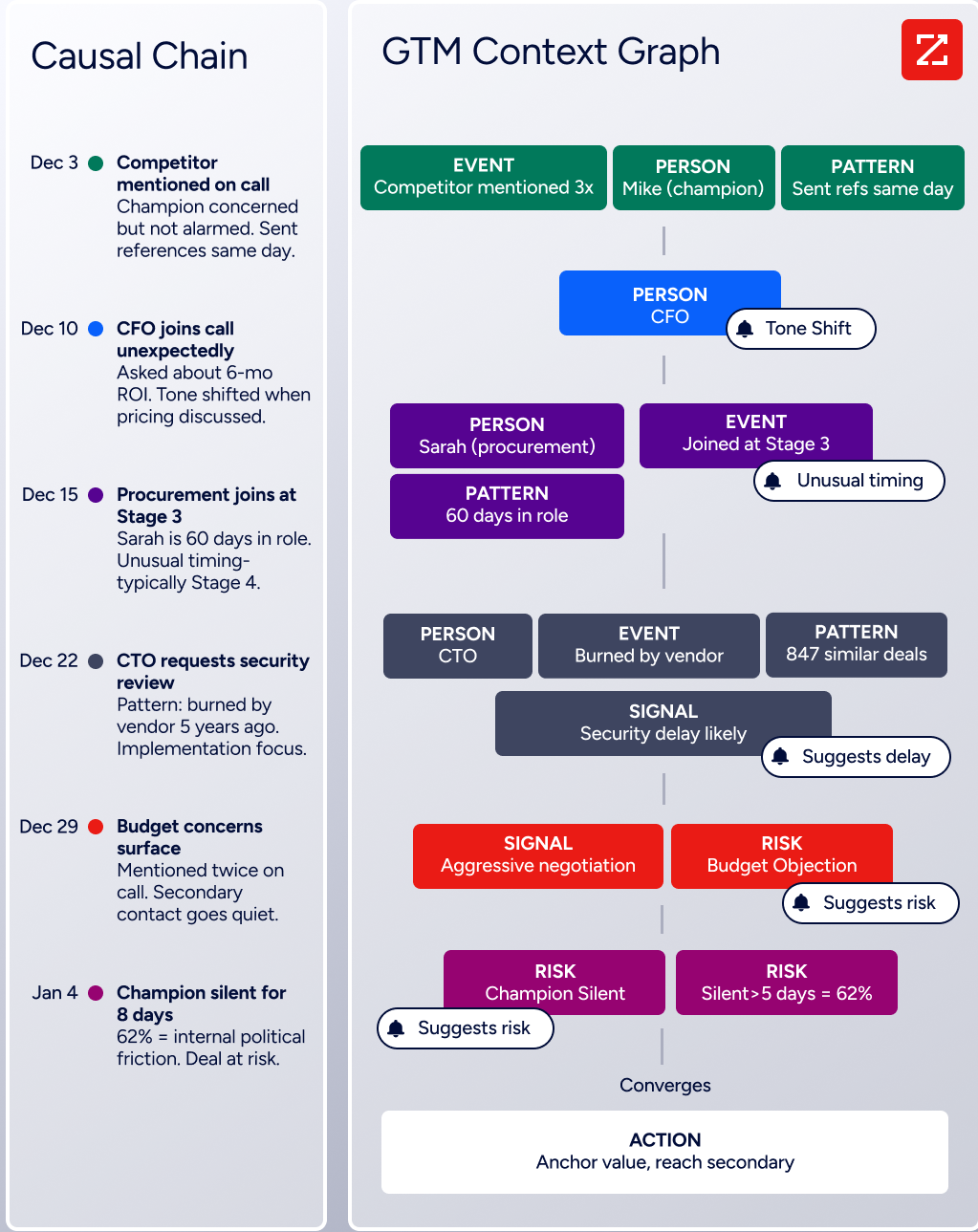
Source: ZoomInfo
Where Amperity's AI helps you understand existing customers and Hightouch's AI optimizes messaging to them, ZoomInfo's AI helps you find and engage the right buyers in the first place.
Redwood Logistics cut their cost-per-click by 99% and increased clickthrough rates by 310% using ZoomInfo's data-driven audience targeting. Their Senior Director of Digital Strategy noted: "It's not just the data itself. It's more about the right data at the right time to help us reach out with the right message across that full buyer journey." (Redwood Logistics)
Pricing models reflect different business models
None of these platforms publish prices. All require a sales conversation for their core products. But the pricing structures reveal how each vendor thinks about value.
Amperity uses a consumption-based model built around a proprietary unit called "Amps", which measures platform usage across data processing, segmentation, campaigns, and activation.
Both the Standard and Enterprise editions provide identical platform capabilities; the difference is support coverage. Standard gets business-hours support, while Enterprise gets 24/7 coverage with priority SLAs.
Amperity states "no add-ons and no hidden fees", though premium connectors for major ad platforms carry a flat surcharge of 25,000 Amps per connector per month, and compute resource sizing directly affects consumption rates. Up to 10% of unused Amps roll over to the next contract term.
Hightouch uses a hybrid pricing model.
Basic Reverse ETL has a permanent free tier (2 active syncs) and a paid tier gated by number of active syncs. The Composable CDP is quote-based with a platform fee plus usage-based pricing, and optional add-ons for Customer Studio, Real-time Personalization, Identity Resolution, and Match Booster. AI Decisioning is priced per monthly personalized action.
Hightouch charges no per-seat fees and no MTU caps on paid plans, which removes a cost barrier for broad adoption across an organization.
ZoomInfo uses custom-quoted, consumption-based pricing with seat-and-credit mechanics.
Credits are consumed when exporting data; searching and viewing within the platform is free. Plans are organized by persona (Sales and Marketing) with three tiers each (Professional, Advanced, Enterprise) that gate access to progressively more advanced capabilities like intent signals, AI features, and dedicated support.
ZoomInfo Lite provides a permanent free tier with access to the B2B database, 10 monthly export credits, and basic features. A 7-day free trial of the full platform is also available.
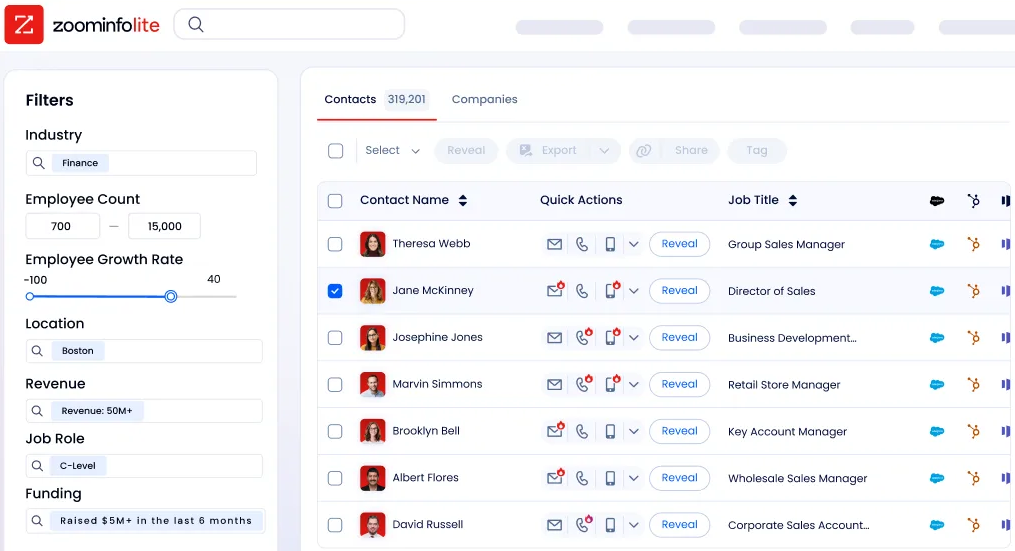
Source: ZoomInfo
The practical takeaway: Hightouch and ZoomInfo both let you test before you buy. Amperity requires a sales commitment upfront.
Implementation complexity varies significantly
Amperity's implementation complexity matches its power.
The platform ingests raw data from any source in any format, so initial setup involves connecting sources, applying semantic tags, configuring Stitch rules, and validating identity resolution output.
Organizations without dedicated data engineering capacity may find the learning curve steep. Amperity offers role-based training through its Learning Lab and assigns dedicated customer success resources.
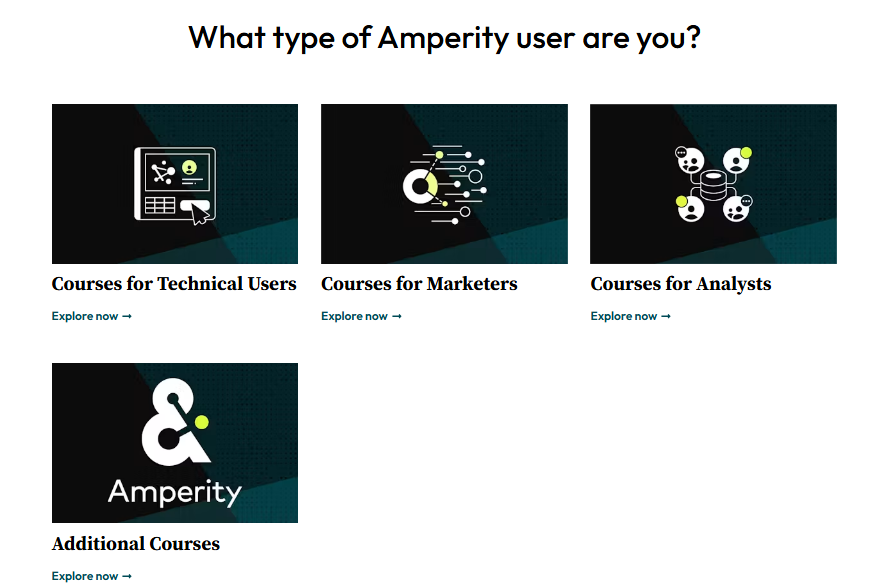
Source: Amperity
Hightouch is designed for fast deployment.
The prerequisites are clear: you need a data warehouse with clean, modeled data. If you have that, connecting sources and configuring syncs is straightforward. The platform's documentation is thorough and well-linked, with separate onboarding paths for IT admins, data teams, and marketers. Enterprise customers get a dedicated CSM, shared Slack channel, and solutions architect.
ZoomInfo deploys in weeks, not months for GTM Workspace.
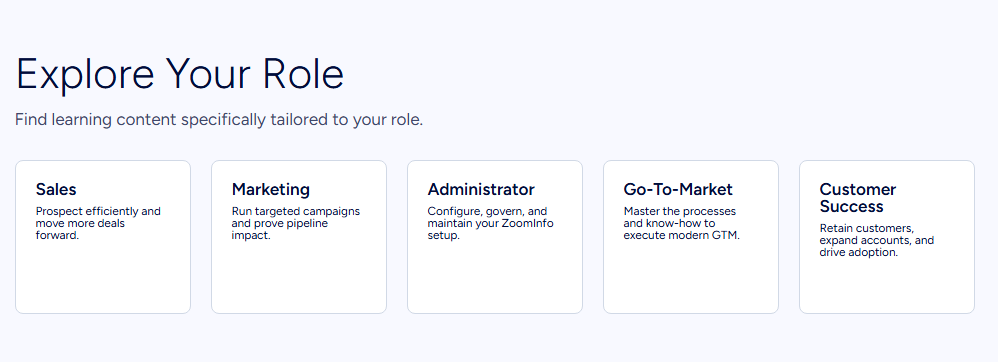
The platform integrates natively with Salesforce, HubSpot, and Microsoft Dynamics, with the ZoomInfo App Marketplace listing 120+ additional integrations. ZoomInfo redesigned its onboarding program with structured planning, technical implementation, and adoption phases, producing a 25% improvement in customer satisfaction scores. ZoomInfo University provides role-specific learning paths and certifications.
Source: ZoomInfo
SpringDB achieved 2x-3x increases in campaign conversions and a 300% increase in database usability using ZoomInfo's enriched data. Their CEO noted: "You'll get 10x the value if you think of ZoomInfo as a full platform and not just a tool for one team." (SpringDB)
Amperity vs. Hightouch vs. ZoomInfo: Which should you choose?
The right platform depends on the data problem you're actually solving.
Choose Amperity if:
You're a large consumer brand with fragmented customer data across many offline and online systems
Identity resolution is your primary technical challenge, and you need to deduplicate millions of records with messy, inconsistent data
You have dedicated data engineering resources and the budget for an enterprise CDP implementation
You need deep customer data unification for marketing personalization, loyalty programs, and omnichannel activation
You operate in retail, travel, hospitality, or financial services with complex multi-brand or multi-channel data
Choose Hightouch if:
You already have a cloud data warehouse (Snowflake, Databricks, BigQuery) with well-modeled customer data
You want to activate warehouse data across marketing tools without copying it into a separate platform
Speed matters, and you need your first use case live in days or weeks, not months
Your data team uses dbt and wants a CDP that integrates into their existing workflow
You want to start free and scale incrementally as you prove value
Choose ZoomInfo if:
You're a B2B organization that needs buyer intelligence (contact data, company insights, and intent signals) rather than unification of existing records
Your go-to-market teams need to find the right accounts, understand buying committees, and engage decision-makers with contextual outreach
You want an AI-powered intelligence layer that fuses your CRM data with third-party signals to reveal why deals move or stall
You need data accessible through native front-ends for sellers and marketers, or via APIs and MCP in any third-party tool
You want a free entry point to test the platform before committing
See what ZoomInfo can do for your go-to-market team with a free trial.
Amperity and Hightouch both answer the customer data unification question well. Amperity excels at identity resolution for messy enterprise data; Hightouch excels at fast, flexible activation for warehouse-native organizations.
But if your core challenge is B2B buyer intelligence rather than B2C data unification, ZoomInfo addresses a problem neither CDP was designed to solve, and does it with the largest B2B dataset and the intelligence layer to turn that data into action.
Amperity vs. Hightouch vs. ZoomInfo FAQ
What is the fundamental difference between Amperity, Hightouch, and ZoomInfo?
Amperity is an enterprise Customer Data Platform focused on AI-powered identity resolution, unifying fragmented customer data from dozens of systems into a single profile.
Hightouch is a warehouse-native CDP that operates directly on your existing data warehouse without copying data, syncing audiences and attributes to 250+ marketing and sales tools.
ZoomInfo is a B2B go-to-market intelligence platform that provides buyer data (500M contacts, 100M companies) alongside intent signals and an AI-powered GTM Context Graph for finding, engaging, and converting B2B buyers.
Which platform is best for identity resolution?
Amperity leads in identity resolution. Its patented Stitch engine uses up to 45 AI models with probabilistic and deterministic matching simultaneously, backed by peer-reviewed academic research and trained on data from 400+ enterprise brands. Dick's Sporting Goods reported that Amperity deduplicated 3x more records than their internal process.
Hightouch offers both deterministic and probabilistic identity resolution within the customer's warehouse, but the capability is newer and less proven at Amperity's scale.
Do I need a data warehouse to use any of these platforms?
Hightouch requires a cloud data warehouse (Snowflake, Databricks, BigQuery, Redshift, or Azure Synapse) as a hard prerequisite. The entire platform operates on top of it. Amperity ingests raw data into its own platform and does not require a pre-existing warehouse, though it integrates with Databricks, Snowflake, and BigQuery via zero-copy data sharing.
ZoomInfo provides its own B2B dataset and does not require the customer to have a warehouse, though it can deliver data into Snowflake, Databricks, and AWS via Cloud Partners.
Which platform offers the most accessible entry point?
Hightouch offers the lowest barrier with a permanent free tier (2 active syncs per month, unlimited destinations and user seats). ZoomInfo offers ZoomInfo Lite (permanent free access with 10 monthly export credits) and a 7-day free trial of the full platform. Amperity has no self-serve trial or free tier; all access requires a sales engagement.
Can these platforms work together, or are they mutually exclusive?
They can complement each other.
Amperity and Hightouch serve primarily consumer customer data needs, while ZoomInfo is B2B-focused. An organization with both B2C and B2B operations could use Amperity or Hightouch for consumer data unification and ZoomInfo for B2B sales intelligence.
Amperity and Hightouch also share integration points: Amperity can write data to Snowflake via Bridge, and Hightouch can read from Snowflake to activate it downstream, though using both for the same data would introduce redundancy.
Which platform has the strongest analyst recognition?
Hightouch was named a Leader in the Gartner Magic Quadrant for Customer Data Platforms in January 2026, the strongest placement among the three in the CDP category. Amperity was placed as a Niche Player in the same evaluation for the second consecutive year.
ZoomInfo holds Leader positions in the Gartner Magic Quadrant for ABM Platforms (2024 and 2025) and the Forrester Wave for Intent Data Providers B2B (Q1 2025), and was the only vendor positioned in the Gartner Customers' Choice quadrant with a 4.7/5.0 average rating.
Which platform is best for a B2B sales and marketing team?
ZoomInfo is the clear choice for B2B. It provides the contact and company data, intent signals, technographics, and org chart intelligence that B2B teams need, plus AI-powered execution through GTM Workspace and GTM Studio. Amperity and Hightouch are designed primarily for consumer customer data activation and do not provide B2B prospecting data, buyer intent signals, or sales execution workflows.
How do the AI capabilities compare?
Each platform's AI solves a different problem.
Amperity's AmpAI helps marketers query customer data and build audiences using natural language, with built-in predictive models for CLV, churn, and product affinity. Hightouch's AI Decisioning uses reinforcement learning to optimize which message, channel, timing, and offer each customer receives.
ZoomInfo's GTM Context Graph fuses B2B data with CRM and conversation intelligence to provide AI-powered account research, outreach generation, and deal intelligence through specialized agents.
More Amperity comparisons:
