
BlueConic has spent over a decade building toward one idea: every customer interaction should update a single, live profile, and that profile should drive every channel at once. Now rebranded as a "Customer Growth Engine," the platform combines a real-time CDP, interactive experiences (from its Jebbit acquisition), and an AI layer that acts on customer behavior without waiting on nightly syncs or engineering tickets.
To write this BlueConic review, we analyzed the platform in detail. It's a good fit if:
You're a mid-market or enterprise B2C brand in retail, eCommerce, CPG, or travel
You need real-time customer profiles that update in sub-seconds across every channel
You want built-in data capture through quizzes, product finders, and preference centers
You need cross-channel suppression that fires immediately when a customer converts
Your marketing team wants to build segments and run campaigns without engineering support
However, BlueConic might not be the best choice if:
You need a platform that sends emails, SMS, or push notifications itself
You're a small business or early-stage company on a tight budget
You operate in B2B, where the buying process involves multi-stakeholder committees and company-level targeting
You want transparent, publicly listed pricing before entering a sales conversation
Your primary need is a data warehouse rather than a marketing activation tool
BlueConic is built for B2C customer engagement. But many of its customers, particularly CPG and retail brands, also sell B2B: to distributors, retail partners, and wholesale accounts. For companies that need B2B sales intelligence alongside their B2C data, ZoomInfo fills that gap as a go-to-market platform with comprehensive B2B data, the GTM Context Graph, and access across any tool or workflow.
We've included a brief ZoomInfo overview at the end for B2C brands that also need B2B sales capabilities.
What is BlueConic?
BlueConic is a customer data platform founded in 2010 by Bart Heilbron and Martijn van Berkum in the Netherlands. Both founders previously co-founded GX Software, a web content management company, where they observed that websites collected rich behavioral data but couldn't act on it at the individual level. That observation became BlueConic's founding thesis: every customer profile should be unified, real-time, and actionable without waiting on a data engineering backlog.
BlueConic built its product around unified customer profiles before the term "Customer Data Platform" was coined in 2013. The company initially served media publishers and European enterprises before establishing US headquarters in Boston around 2014. In January 2022, Vista Equity Partners invested through its Endeavor Fund, marking a shift toward PE-backed growth.
Two recent moves reshaped the platform. In July 2024, BlueConic acquired Jebbit, a platform for building interactive quizzes and product finders that capture first-party data. Then in April 2025, the company launched its "Customer Growth Engine" positioning, introducing Agent Studio and pre-built Growth Plays. The rebrand signaled a departure from the CDP label toward an AI-driven system where agents decide and act, not just profiles that store and serve.
BlueConic now serves over 500 brands including Express, L'Oreal, Heineken, ASICS, Marmot, Free People, Forbes, Mattel, Michelin, Telia Company, and Unilever. Its target buyers are mid-market to enterprise B2C brands in retail and eCommerce, consumer packaged goods, and travel and hospitality.
BlueConic Pros & Cons
Pros | Cons |
|---|---|
- Real-time profile updates in sub-seconds, no batch syncs | - No built-in email, SMS, or push notification delivery |
- Built-in data capture via Jebbit quizzes and product finders | - No publicly listed pricing; enterprise-focused costs |
- 150+ pre-built integrations across ESPs, ad platforms, and data warehouses | - Steep learning curve for advanced configurations |
- Marketer-friendly segmentation without SQL or engineering support | - Identity resolution relies heavily on email addresses |
- Pre-built Growth Plays with 90-day outcome commitment | - Some integrations require custom development work |
- Strong customer support with 98.6% satisfaction rating | - Not suitable for B2B use cases |
- SOC 2 Type 2 certified with GDPR-ready consent management | - Feature density can overwhelm smaller teams |
BlueConic Review: How It Works & Key Features
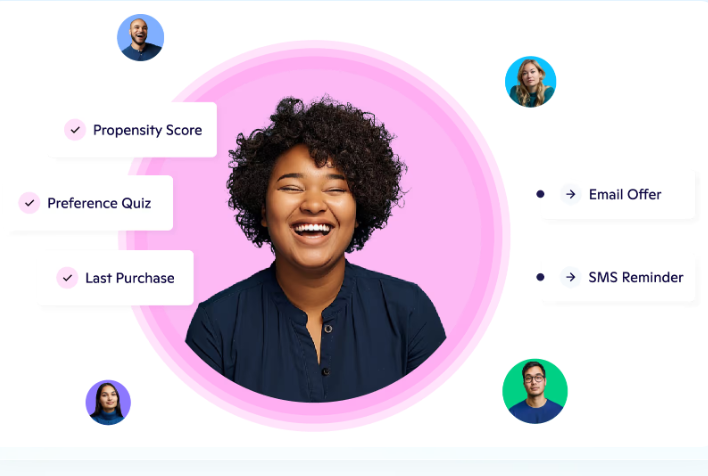
Customer Data Platform: BlueConic builds and updates unified customer profiles in real time as behavior happens across channels.
BlueConic's Customer Data Platform is the foundation of the system. It collects customer data through a JavaScript tag on website pages, supplemented by Listeners (data collectors on individual channels) and Connections (integrations with external systems that run in real time or batch mode).
Source: Blueconic
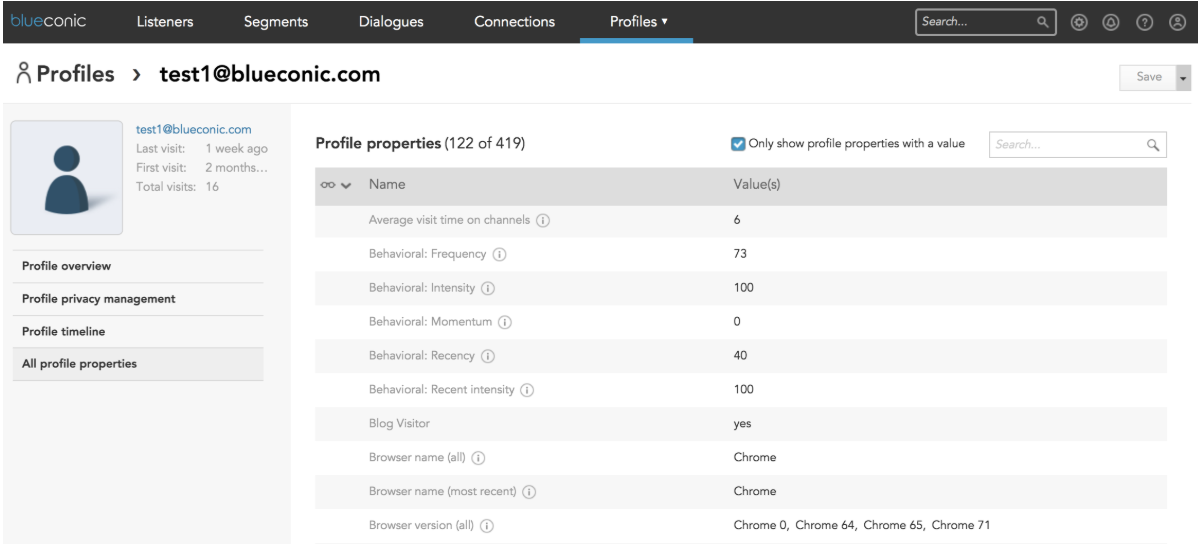
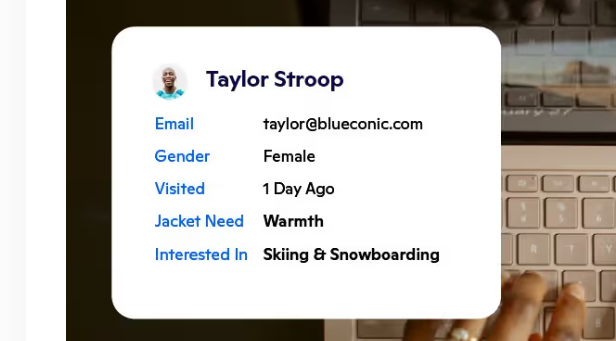
Every incoming signal writes to an individual customer profile assigned a unique ID, capable of holding any number of profile properties (text, number, datetime, currency, email, decimal). Profiles start anonymous and become known as the system collects identifiers. Once a profile gains an identifier, anonymous behaviors merge into the known profile automatically.
Source: Blueconic
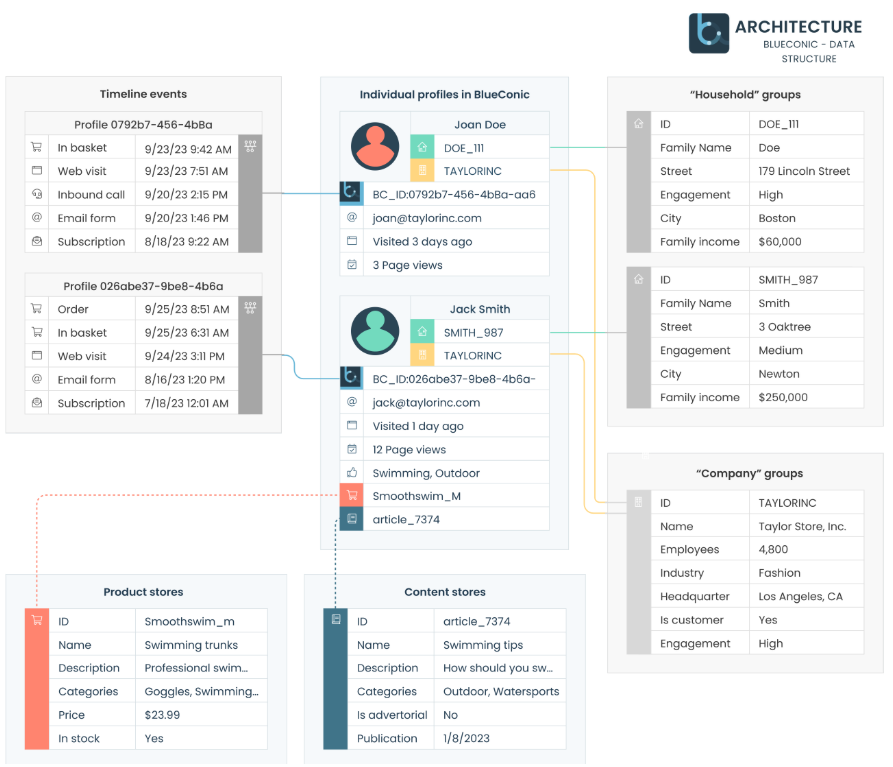
The platform maintains five data storage types: profiles (individual customers), groups (sets of profiles such as households), events (a time-ordered Timeline of up to 250 per profile), a content store (metadata for content recommendations), and a product store (metadata for product recommendations).
Source: Blueconic
What makes this technically distinct is the speed. Profile updates happen in under one second. When a customer converts on one channel, suppression logic fires across all connected channels simultaneously because every channel reads from the same live profile. BlueConic's identity resolution runs continuously, matching signals across sources and merging duplicate profiles through configurable rules.
Source: Blueconic
For marketing teams, the practical result is that segments update dynamically as profiles change. Segment membership is always current, not a point-in-time export. G2 reviewers note that marketing teams can build segments and create personalization flows without engineering support or SQL queries.
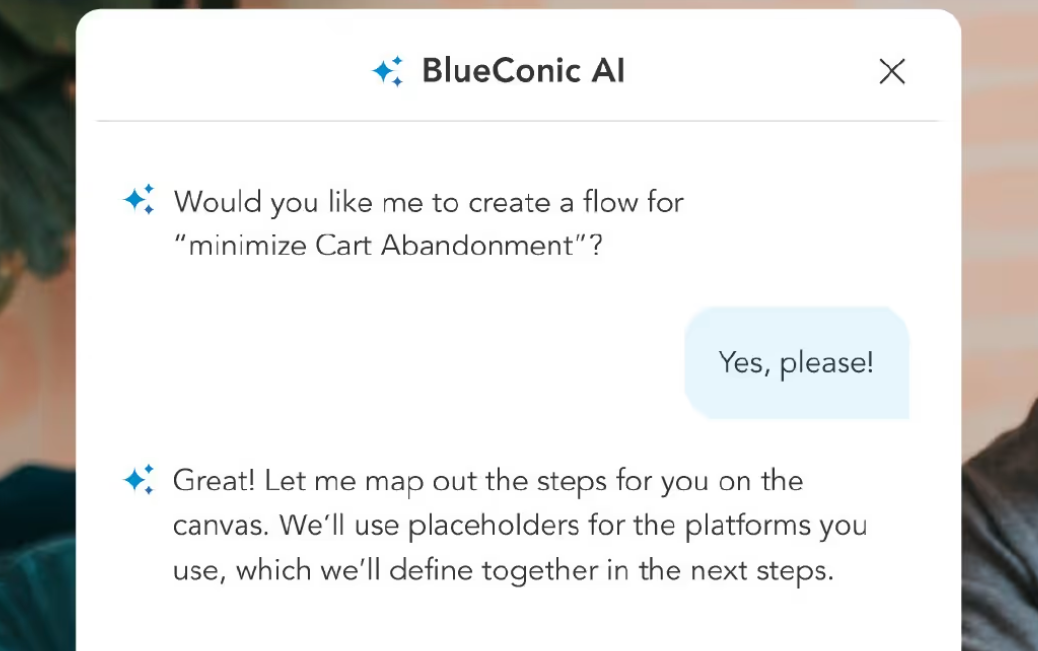
The CDP also includes an AI Workbench where teams write and schedule Python notebooks to run propensity-to-churn models, calculate CLV, and power recommendation algorithms. And its AI Canvas lets marketers describe a business goal in natural language while AI agents handle setup, connections, and configuration.
Source: Blueconic
Interactive Experiences: BlueConic's Jebbit-powered module turns passive browsing into declared customer data.
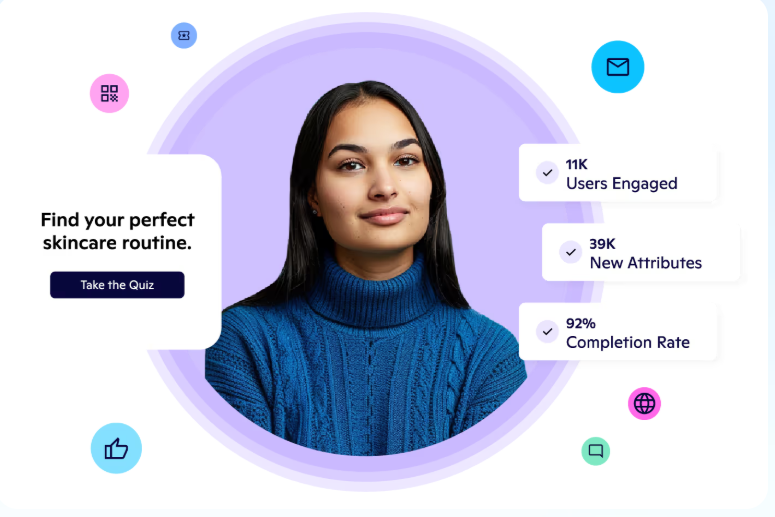
Interactive Experiences (Experiences by Jebbit) is BlueConic's module for building quizzes, product finders, preference centers, guided selling flows, and trivia experiences. Acquired in July 2024 and fully integrated in April 2025, it addresses a gap in most CDPs: behavioral data tells you what someone did, not what they prefer or what would make them buy.
Source: Blueconic
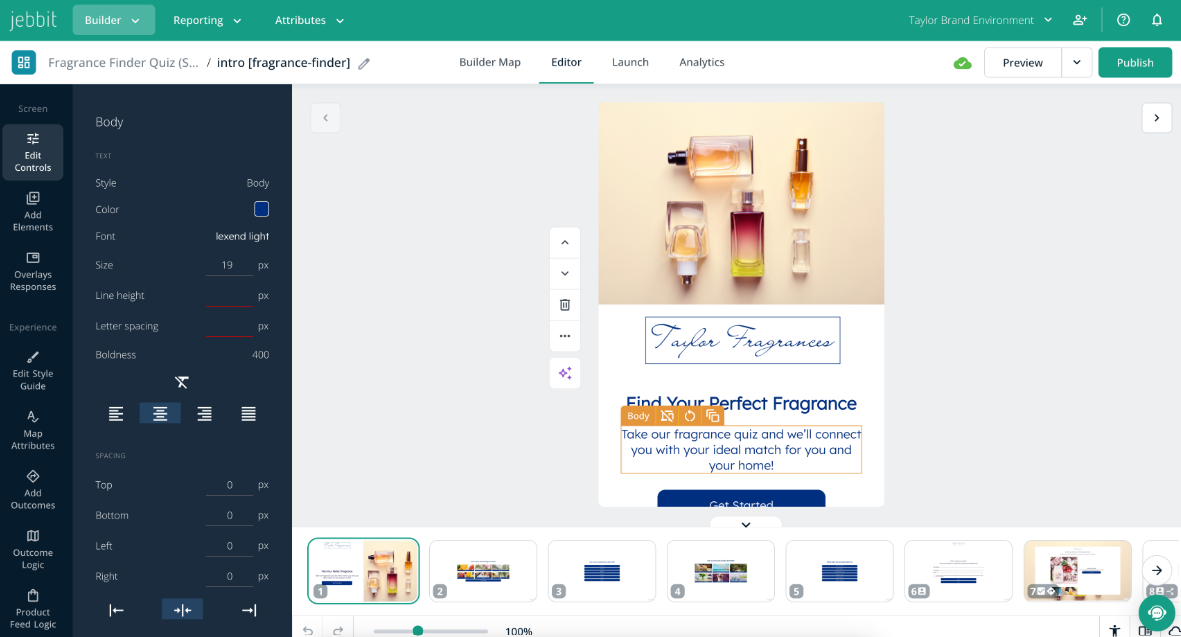
Experiences are built inside the Jebbit Builder, a no-code visual editor. Marketers create multi-screen flows using screen types for layouts, questions (single/multiple choice, sliders, image selectors), forms (lead capture), gamification elements, and outcomes with product recommendations. Branching logic adapts the experience path based on each user's responses.
Source: Blueconic
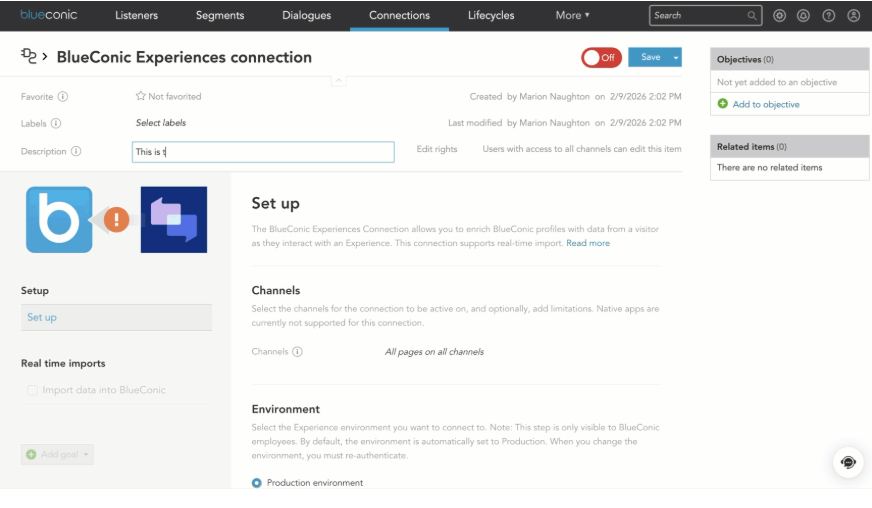
When a user completes an experience, every response maps to an attribute that syncs in real time to BlueConic CDP profiles via the Experiences by BlueConic connection. Teams deploy experiences two ways: website embed (iFrame, where the experience and CDP share the same page context) and custom domain hosting (for distribution through email, ads, or social via CNAME).
Source: Blueconic
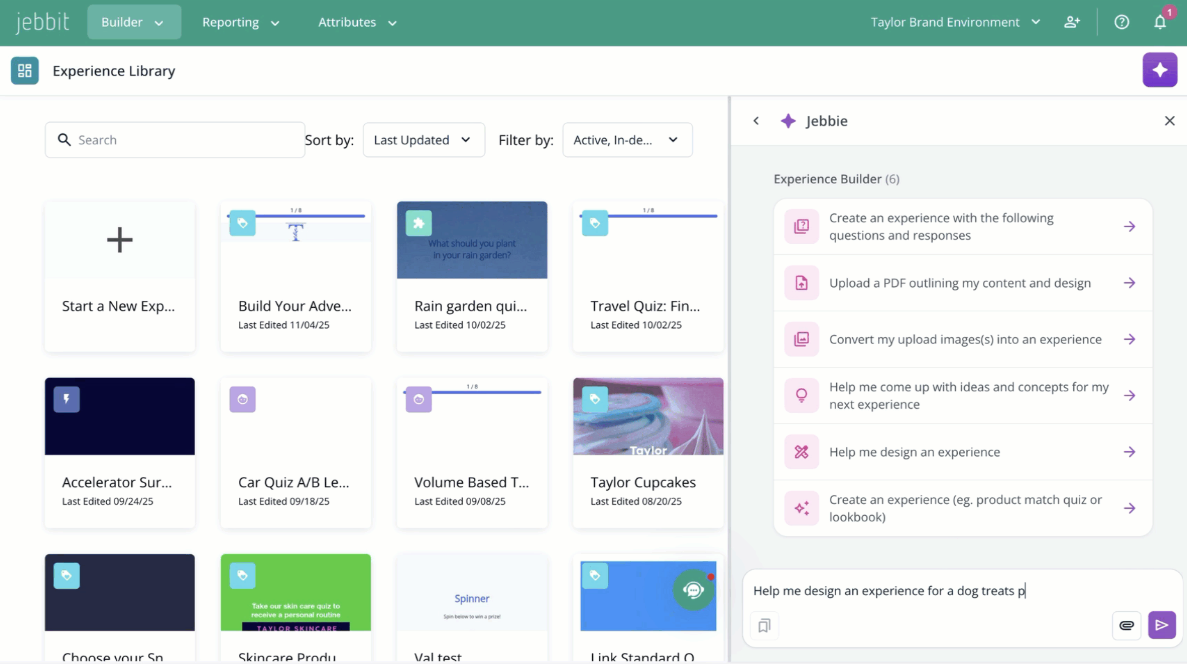
The module also includes an AI Builder Agent that generates branded experiences from a text prompt, a PDF, or a website URL, handling screen creation, copy generation, image generation, and branching logic. A separate AI Insights Agent answers performance questions in plain language, surfacing data not available through standard exports.
Source: Blueconic
Agent Studio: AI agents that coordinate and adjust campaigns across channels in real time.
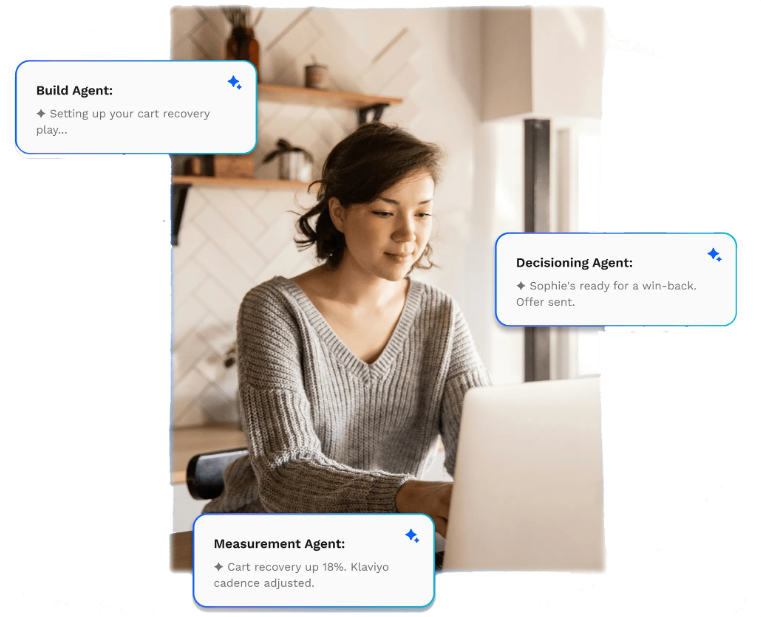
Agent Studio is BlueConic's AI decision layer, between data collection and channel action. It operates through three agent types:
Build Agents handle pre-launch setup. Before a Growth Play goes live, they shape audiences, validate data connections, and confirm the inputs the decision layer needs, replacing work that would otherwise wait in an engineering queue.
Decisioning Agents run the play in real time. They evaluate each customer and determine whether to intervene or hold, which channels to prioritize, and which offer to send, drawing on the live customer profile and declared preferences from quizzes and preference centers.
Measurement Agents close the feedback loop. Results feed back into how the next decision gets made, so the system running your campaigns in month six makes better decisions than the one you started with.
Source: Blueconic
The guardrails are worth noting. Marketing teams define business priorities (margin protection, acquisition prioritization, spend caps), and every automated decision reflects them even as customer behavior shifts. This prevents competing programs (winback, acquisition, loyalty) from quietly working against each other.
Agent Studio comes with 14+ pre-built Growth Plays organized across identity and audience building, commerce growth, and retention and loyalty. These include cart abandonment recovery, churn prediction and winback, loyalty tier progression, high-value lookalike targeting, and replenishment upselling. The stated commitment is measurable revenue results within 90 days of kickoff.
On the infrastructure side, AI runs on Amazon Bedrock with LLMs including Anthropic Claude, Amazon Nova Pro, and Amazon Titan. BlueConic enforces tenant isolation: the system never shares prompts or outputs across tenants, and doesn't use customer data to train LLMs.
Connections and Integrations: 150+ connectors linking real-time profiles with the rest of the martech stack.
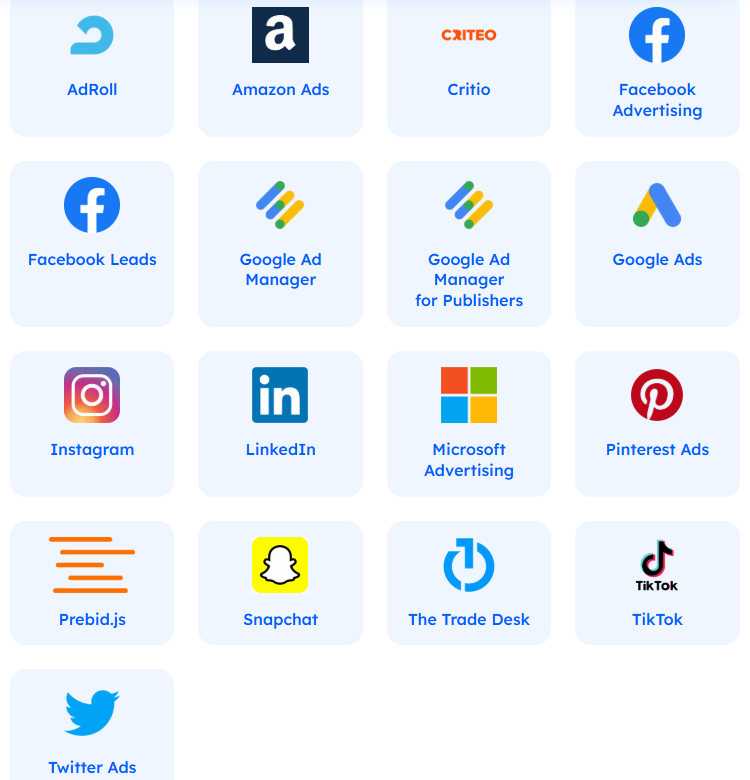
BlueConic's Connections module provides 150+ pre-built connectors covering major martech categories:
Email and Marketing Automation: Klaviyo, Braze, Salesforce Marketing Cloud, HubSpot, Mailchimp, ActiveCampaign, Iterable, and others
Advertising: Meta, Google Ads, LinkedIn, TikTok, The Trade Desk, Criteo, Pinterest Ads, Snapchat
CRM: Salesforce, Microsoft Dynamics, Zendesk
E-commerce: Shopify, Magento
Data Warehouses: Snowflake, Google BigQuery, Amazon S3, Azure Blob Storage
Analytics: Google Analytics 4, Adobe Analytics, Mixpanel, Power BI
Source: Blueconic
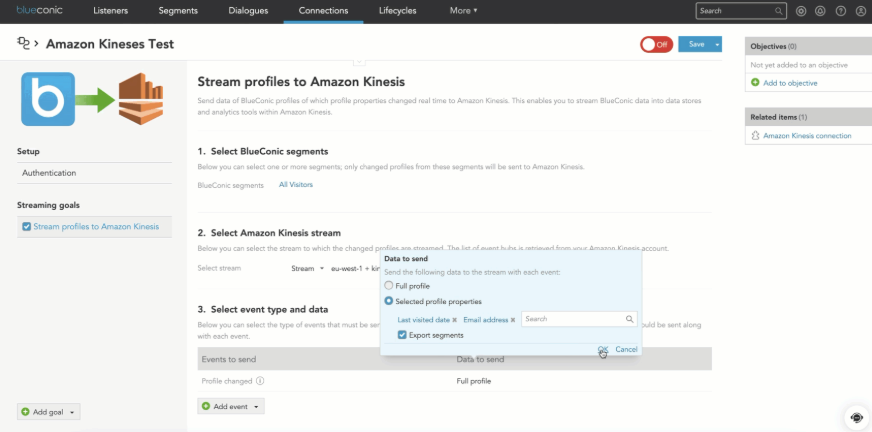
Connections operate as bidirectional data pipelines. Teams configure each with import or export goals, authentication credentials, and a run schedule. Execution modes include manual, scheduled, and instant/real-time.
For streaming use cases, firehose connections push profile changes, dialogue clicks, conversions, and page views to cloud data stores (Amazon Kinesis, Google Cloud Pub/Sub, Microsoft Azure Event Hubs) in near real time.
Source: Blueconic
Where prebuilt connectors don't exist, Universal Connections support CSV, SFTP, webhook, Data Layer, Kafka, Amazon S3, and Snowflake. All communication uses HTTPS or SFTP, with user-supplied credentials encrypted with a 256-bit key.
BlueConic also launched real-time Snowflake sync in October 2024 and expanded Snowflake secure data sharing in May 2025, moving toward a model where the platform activates data stored in existing warehouses.
Where BlueConic Falls Short
BlueConic is a good platform for its target audience, but several limitations won't suit every buyer.
No Built-in Message Delivery. The most common complaint in G2 and Capterra reviews: BlueConic does not send emails, SMS, or push notifications. Every campaign runs through an external tool like Klaviyo, Braze, or Salesforce Marketing Cloud. For teams trying to shrink their martech stack rather than add another coordination layer, this is a real drawback. You'll need to maintain and pay for a separate ESP or marketing automation platform.
Enterprise Pricing Without Transparency. BlueConic does not publish pricing. The /pricing URL redirects to a contact form. Capterra reviewers state that "the pricing is very expensive and is focused basically on larger organizations." Auto-billing for overage charges adds friction. Without a self-serve tier or published price points, mid-market buyers face a longer evaluation cycle just to determine whether the platform fits their budget.
Complexity at Scale. G2 reviewers observe that the breadth of features makes it hard to keep track of all possibilities, particularly for smaller teams or companies earlier in their data maturity. One Capterra reviewer described the "dialogue build process" as "very clunky and not very user friendly." The AI Canvas and AI-assisted configuration tools aim to address this, but they're new additions.
Email-Dependent Identity Resolution. Capterra reviewers note that cross-channel data unification relies heavily on email address as the unifying identifier. Customers who interact across channels without providing an email create fragmented profiles that the platform can't easily resolve.
No B2B Capabilities. BlueConic is built for B2C consumer engagement. The platform has no tools for B2B account-based marketing, company data enrichment, contact discovery, or multi-stakeholder purchase journeys. For companies that also run B2B sales (selling to retailers, distributors, or enterprise partners), BlueConic leaves that side of the business unaddressed.
Custom Development for Non-Standard Stacks. Capterra reviews flag that some integrations require custom development work rather than plug-and-play connectors. Brands with martech stacks that include tools without prebuilt connectors should factor in additional implementation complexity and cost.
These limitations reflect BlueConic's focus on being a B2C data platform built for activation rather than an all-in-one marketing suite. They're design choices, not failures. But they're worth weighing against the best BlueConic alternatives before committing to an annual contract.
For B2B Go-to-Market Alongside B2C: ZoomInfo
BlueConic serves the B2C side of a brand's business well. But many of its customers, particularly CPG brands and retailers, also operate B2B channels. A consumer goods company selling directly to consumers through its website (BlueConic's territory) also sells to retail buyers, distributors, and wholesale partners through a sales team.
A travel brand engaging individual travelers also pursues corporate accounts and travel agency partnerships. BlueConic has no tools for these B2B motions.
ZoomInfo is a B2B go-to-market platform with comprehensive verified data: 500M contacts, 100M companies, and 135M+ verified phone numbers, plus 200M+ verified business email addresses.

Source: ZoomInfo
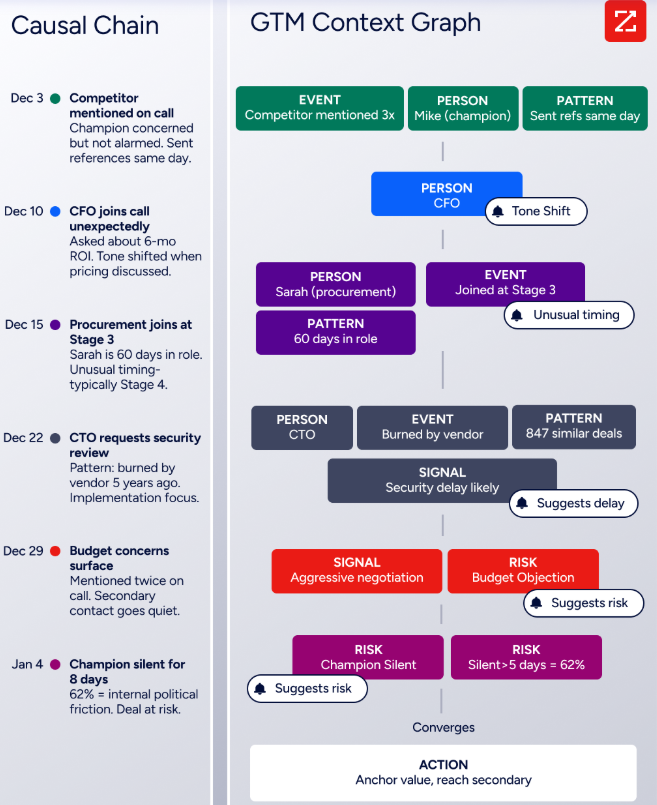
Its GTM Context Graph combines this data with first-party records to show the context behind accounts and deals, and teams access it through dedicated workspaces, APIs, and MCP. Where BlueConic helps brands understand and activate their consumer audience, ZoomInfo helps sales teams identify, reach, and convert business buyers.
Comprehensive B2B Data: ZoomInfo maintains a large, verified B2B contact and company database.
ZoomInfo's data covers three dimensions: identity data (who buyers are and how to reach them), company context (revenue, headcount, industry, org charts, and technographics across 100M companies), and signals that reveal when accounts are actively in-market. The data pipeline relies on 300+ human researchers and achieves up to 95% accuracy on first-party data.
For a CPG brand whose sales team is prospecting new retail partners, ZoomInfo provides verified direct dials and emails for buying decision-makers, company attributes to qualify accounts by size and revenue, and technographic profiles covering 30,000+ technologies across 200+ categories to identify retailers using compatible systems.
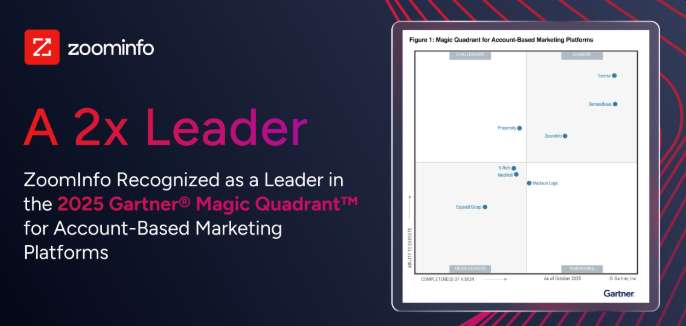
External evaluations confirm the data quality. In a Fortune 500 competitive RFP analyzing 25 million contacts across vendors, the independent consultant concluded that "no other competitor came even close." ZoomInfo is a Leader in Gartner's Magic Quadrant for ABM Platforms and was named a Leader in the Forrester Wave for Intent Data Providers.
Source: ZoomInfo
"ZoomInfo gives us the information we need to execute. We don't have to go through and spend our time digging. It's already there, so we can be three steps ahead." (Vensure)
GTM Context Graph: A system that captures why deals move, not just that they moved.
The GTM Context Graph combines ZoomInfo's B2B data with a customer's CRM records, conversation transcripts, email interactions, and behavioral signals into a single system that processes 1.5B+ data points daily. The result is AI that understands deal context: which stakeholders champion a deal, what objections stall progress, and which patterns predict wins.
Source: ZoomInfo
Where BlueConic tracks individual consumer behavior to personalize marketing, the GTM Context Graph maps multi-stakeholder B2B buying committees, correlates intent signals with deal outcomes, and surfaces patterns behind successful deals.
Seismic attributed 39% of active pipeline to opportunities identified or influenced by ZoomInfo signals, with their sales team reporting 54% productivity gains. (Seismic)
Universal Access: Use ZoomInfo's data in any tool, any workflow.
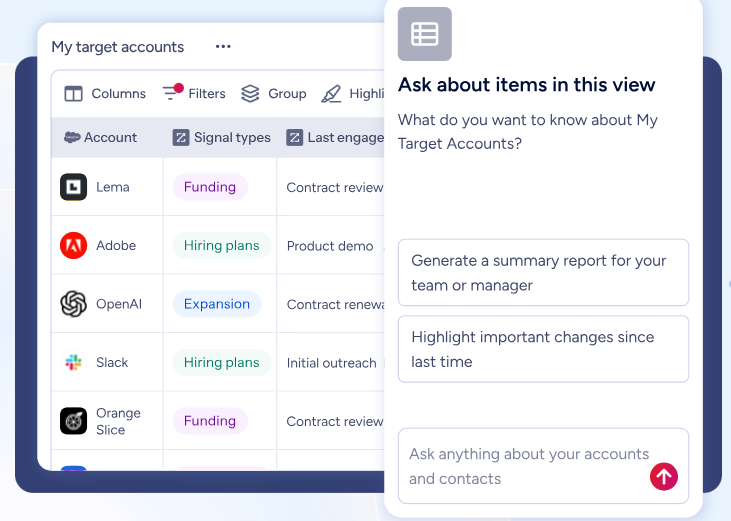
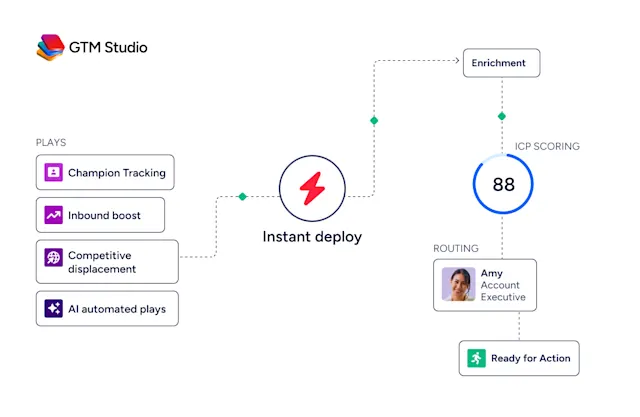
ZoomInfo delivers data three ways: GTM Workspace for sellers (account prioritization, outreach drafting, and deal execution).
Source: ZoomInfo
GTM Studio for marketers and RevOps (audience building, campaign management, and pipeline measurement in natural language), and APIs and MCP for teams that build their own tools or use third-party platforms.
Source: ZoomInfo
For companies already using BlueConic for B2C customer engagement, ZoomInfo's architecture means the B2B data doesn't need to compete with or replace the existing stack. Sales and marketing operations can run on ZoomInfo while consumer engagement continues on BlueConic, with each platform serving the purpose it was built for.
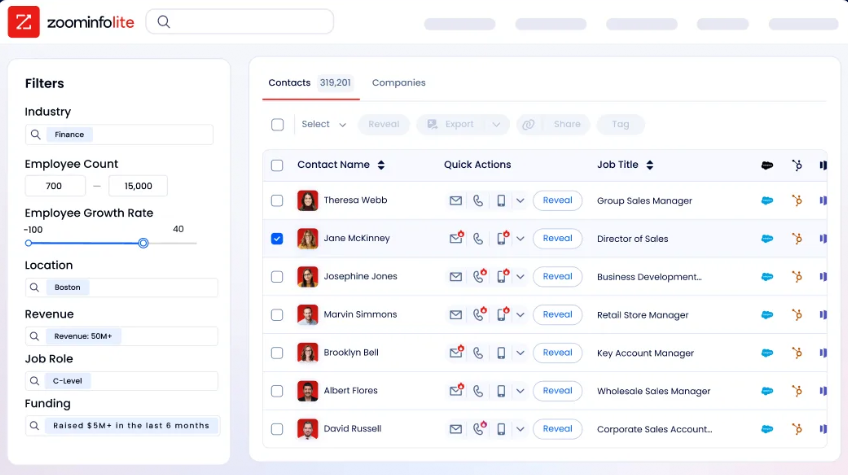
ZoomInfo also offers ZoomInfo Lite, a permanent free tier with access to the B2B database, 10 monthly export credits, and website visitor identification, providing a low-risk way to evaluate the platform.
Source: ZoomInfo
BlueConic and ZoomInfo: Comparison Summary
Aspect | BlueConic | ZoomInfo |
|---|---|---|
Primary focus | B2C customer data unification and activation | B2B go-to-market data and execution |
Target audience | Mid-market to enterprise B2C brands | B2B sales, marketing, and RevOps teams |
Data type | Consumer behavioral and declared first-party data | B2B contact, company, intent, and technographic data |
Data scale | Customer profiles built from brand's own audience | 500M contacts, 100M companies, 135M+ verified phone numbers, 200M+ verified business emails |
AI capabilities | Agent Studio with Growth Plays for B2C conversion | GTM Context Graph with AI agents for B2B deal analysis |
Native messaging | No (requires external ESP) | Email, multi-channel sequences via Salesloft partnership |
Pricing | No public pricing | Consumption-based pricing; permanent free tier available |
Key industries | Retail, eCommerce, CPG, travel | B2B SaaS, financial services, healthcare, manufacturing |
Best for | Personalizing consumer journeys across channels | Finding, reaching, and converting business buyers |
Final Verdict
BlueConic and ZoomInfo serve different purposes, and the choice between them isn't an either/or decision. They address different sides of a business.
Choose BlueConic if you're a mid-market or enterprise B2C brand that needs a real-time customer data foundation to power personalization, cross-channel activation, and first-party data collection. The platform's sub-second profile updates, Jebbit-powered interactive experiences, and AI-driven Growth Plays make it a good fit for retail, eCommerce, CPG, and travel companies that want to coordinate action across their martech stack based on customer behavior. The 90-day outcome commitment and marketer-friendly segmentation reduce the time and technical dependency that slow down CDP deployments. Expect to pair it with a separate ESP or marketing automation platform for message delivery, and prepare for enterprise-level pricing.
Consider adding ZoomInfo if your business also runs B2B sales, whether selling to retailers, managing wholesale partnerships, or pursuing enterprise accounts. BlueConic handles the consumer engagement side, but it has no tools for identifying business buyers, mapping buying committees, or executing B2B outreach. ZoomInfo fills that gap with comprehensive B2B data, deal analysis through the GTM Context Graph, and access through GTM Workspace, GTM Studio, or APIs and MCP in any third-party tool.
Get started with ZoomInfo here.
BlueConic FAQ
What is BlueConic used for?
BlueConic is a customer data platform designed for B2C brands in retail, eCommerce, CPG, and travel. It unifies customer data from multiple channels into a single real-time profile, enabling personalized marketing, cross-channel campaign coordination, and first-party data collection through interactive quizzes and product finders. The platform coordinates activation across connected tools like Klaviyo, Braze, and Meta rather than sending messages itself.
How much does BlueConic cost?
BlueConic does not publish pricing. The platform is sold through custom contracts negotiated with a sales team, and Capterra reviewers describe the pricing as focused on larger organizations. Costs include the base SaaS subscription, with optional add-ons for premium support, strategic services, managed services, and implementation. Overage fees can apply if usage exceeds thresholds defined in the contract.
Does BlueConic send emails or SMS?
No. BlueConic does not include built-in email, SMS, or push notification delivery. It serves as the data and decision layer, coordinating when and what to send, while routing execution through external tools like Klaviyo, Braze, Salesforce Marketing Cloud, or other connected ESPs and marketing automation platforms.
Does BlueConic offer a free plan or free trial?
BlueConic's terms and conditions reference a "Free Access Subscription" tier, but no public sign-up page or free trial option exists on the website. The only available options are "Book a Demo" and contact sales. The free access tier appears to be either inactive or restricted to evaluation arrangements managed by the sales team.
What integrations does BlueConic support?
BlueConic offers 150+ pre-built connectors across ESPs, ad platforms, CRMs, eCommerce platforms, data warehouses, and analytics tools. Key integrations include Klaviyo, Braze, Salesforce Marketing Cloud, Meta, Google Ads, Shopify, Snowflake, and Google BigQuery. For systems without a named connector, Universal Connections support CSV, SFTP, webhook, Kafka, and Amazon S3. A REST API and mobile SDKs for Android and iOS are also available.
Is BlueConic suitable for B2B companies?
No. BlueConic is built for B2C consumer engagement. The platform has no tools for B2B account-based marketing, company data enrichment, contact discovery, or multi-stakeholder purchase journeys. Companies that need B2B capabilities alongside their B2C infrastructure should consider a dedicated B2B platform like ZoomInfo, which provides verified B2B contact data, buyer intent signals, and sales and marketing tools.
How does BlueConic compare to enterprise CDPs like Salesforce and Adobe?
In the inaugural 2024 Gartner Magic Quadrant for Customer Data Platforms, BlueConic was named the sole Challenger, positioned below Leaders such as Salesforce and Adobe. Gartner recognized BlueConic's predictive models, GenAI capabilities, and website personalization, while noting the platform may not be suitable for organizations with complex data infrastructure needs. BlueConic's advantage over larger enterprise CDPs is its faster time-to-value (90 days to measurable outcomes) and marketer-accessible interface that doesn't require engineering support for everyday use.
What security certifications does BlueConic hold?
BlueConic has completed a SOC 2 Type 2 audit covering Security, Availability, and Confidentiality Trust Services Criteria. The platform holds TRUSTe Verified Privacy and International Privacy Seals. It is hosted on AWS with TLS 1.2/1.3 encryption in transit and AES-256 encryption at rest. The platform supports SSO via SAML, multi-factor authentication, and role-based access controls with PII visibility settings per user role.
Looking beyond BlueConic? Compare the strongest alternatives side by side:
