
Choosing between Dolibarr and SugarCRM comes down to what kind of platform your business needs.
Dolibarr is an open-source ERP and CRM that covers invoicing, inventory, and more in a single free package. SugarCRM is a commercial sales platform built for B2B companies that need AI-driven pipeline intelligence. They solve different problems for different businesses.
Before deciding, ask yourself:
Do you need a full business suite (CRM, invoicing, accounting, inventory, HR) or a dedicated sales platform?
Is zero licensing cost essential, or will you invest in commercial software for deeper sales capabilities?
Do you want full control over your data on your own servers?
Is your sales team large enough to justify a 15-user minimum commitment at $885/month?
Do you need AI that surfaces which accounts to prioritize and why, or is basic contact management enough?
In short, here's what we recommend:
Dolibarr is the right choice for small businesses, freelancers, and associations that need a complete business suite without licensing fees. This open-source ERP and CRM covers CRM, invoicing, double-entry accounting, inventory, manufacturing, HR, and project management, all activated module by module as your needs grow. With roughly 200,000 active organizations worldwide and 600+ contributing developers, Dolibarr delivers breadth at zero software cost. The trade-off: its CRM is functional but basic, its interface looks dated, and you'll rely on community support rather than a vendor help desk.
SugarCRM (now rebranding as SugarAI) is built for mid-market B2B companies in manufacturing, wholesale, and distribution that need more than a contact database. Its flagship Sugar Sell platform shows reps which accounts to prioritize and why. Sugar sales-i connects to your ERP data and surfaces cross-sell opportunities and churn risks from actual purchase patterns. However, the 15-user minimum creates a $10,620/year floor, the learning curve is steep, and the mobile app lags behind desktop.
Both platforms manage your existing customer relationships. But neither generates the external B2B data and buying signals that tell you which companies to pursue next, who the decision-makers are, and when they're researching solutions like yours. That intelligence has to come from somewhere.
ZoomInfo is a B2B intelligence platform built on 500M contacts, 100M companies, 135M+ verified phone numbers, and 200M+ verified business emails. That data feeds the GTM Context Graph, which fuses ZoomInfo's third-party data with your CRM records, conversation transcripts, and behavioral signals to reveal not just what's happening in your accounts, but why. Your team accesses this intelligence through GTM Workspace (for sellers), GTM Studio (for marketers and RevOps), or APIs and MCP in any third-party tool, including your CRM.
If adding verified B2B data and prospecting intelligence to your CRM sounds like the missing piece, see ZoomInfo in action.
Dolibarr vs. SugarCRM vs. ZoomInfo at a glance
Dolibarr | SugarCRM | ZoomInfo | |
|---|---|---|---|
Core focus | Open-source ERP & CRM | B2B sales CRM with ERP intelligence | B2B intelligence platform |
CRM capabilities | Basic contact & pipeline management | Sales automation + AI guidance | Data-powered prospecting & deal intelligence |
ERP features | Full (invoicing, accounting, inventory, HR, MRP) | None (integrates with 180+ ERPs) | None (complements your CRM/ERP) |
B2B data | Your own data only | Your own data + connected ERP data | 500M contacts, 100M companies, intent signals |
AI capabilities | Experimental MCP server (v24) | Embedded sales guidance + sentiment analysis | GTM Context Graph processing 1.5B+ data points daily |
Deployment | Self-hosted or third-party SaaS | Cloud (SugarCloud) or on-premises | Cloud (SaaS) |
Pricing | Free (self-hosted); SaaS from ~€14/month/user | $59-$135/user/month (15-user minimum) | Custom-quoted; free Lite tier available |
Free option | Full software, permanently free | 7-day trial only | ZoomInfo Lite (permanent free tier) |
Best for | Small businesses, freelancers, associations | Mid-market manufacturers & distributors | B2B teams needing prospecting intelligence |
Open-source breadth vs. commercial sales depth
Dolibarr and SugarCRM take two different approaches to business software.
Dolibarr tries to be your entire business platform.
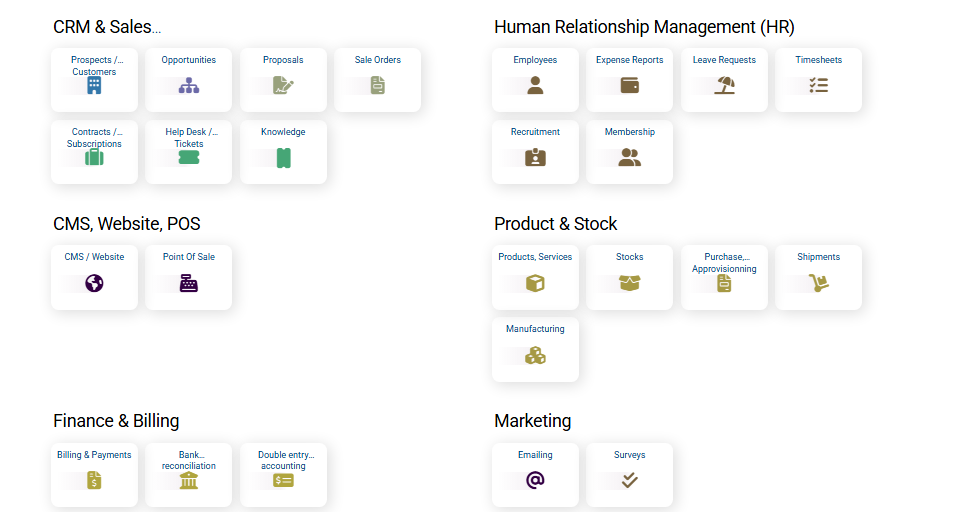
Enable the Invoicing module and you're billing clients. Turn on Accounting and you have double-entry bookkeeping. Activate Stock Management and your inventory tracks against orders. Add HR modules for leave requests and expense reports. Add Projects for task tracking and timesheets.
Each module is independent, so a freelancer who only needs invoicing never sees inventory features, and a manufacturer who needs stock management and MRP can activate those without touching HR.
This modular design is Dolibarr's core philosophy. As its creator Laurent Destailleur puts it, the lowest learning curve possible is "the main difference with most ERP and CRM solutions." Capterra reviewers praise the flexibility and report sending invoices in under two minutes after setup.
Source: Dolibarr
SugarCRM makes no attempt to be your ERP.
It focuses on one problem: helping B2B sales teams sell more effectively. The platform treats CRM not as a contact database but as what the company calls a "precision selling platform" that guides reps toward the highest-value actions each day.
Where Dolibarr gives you a contact record and a proposal generator, SugarCRM gives you AI-driven account prioritization, guided workflows that assign tasks automatically based on deal size and timelines, and the sales-i engine that analyzes ERP order data to surface cross-sell and churn signals without requiring separate BI tools.
The trade-off is clear. Dolibarr covers more ground but handles each area with less depth. SugarCRM covers less ground but handles sales with more sophistication.
CRM and sales capabilities: functional vs. intelligent
The gap between these platforms' CRM capabilities is wide.
Dolibarr's CRM follows a document-driven sales pipeline.
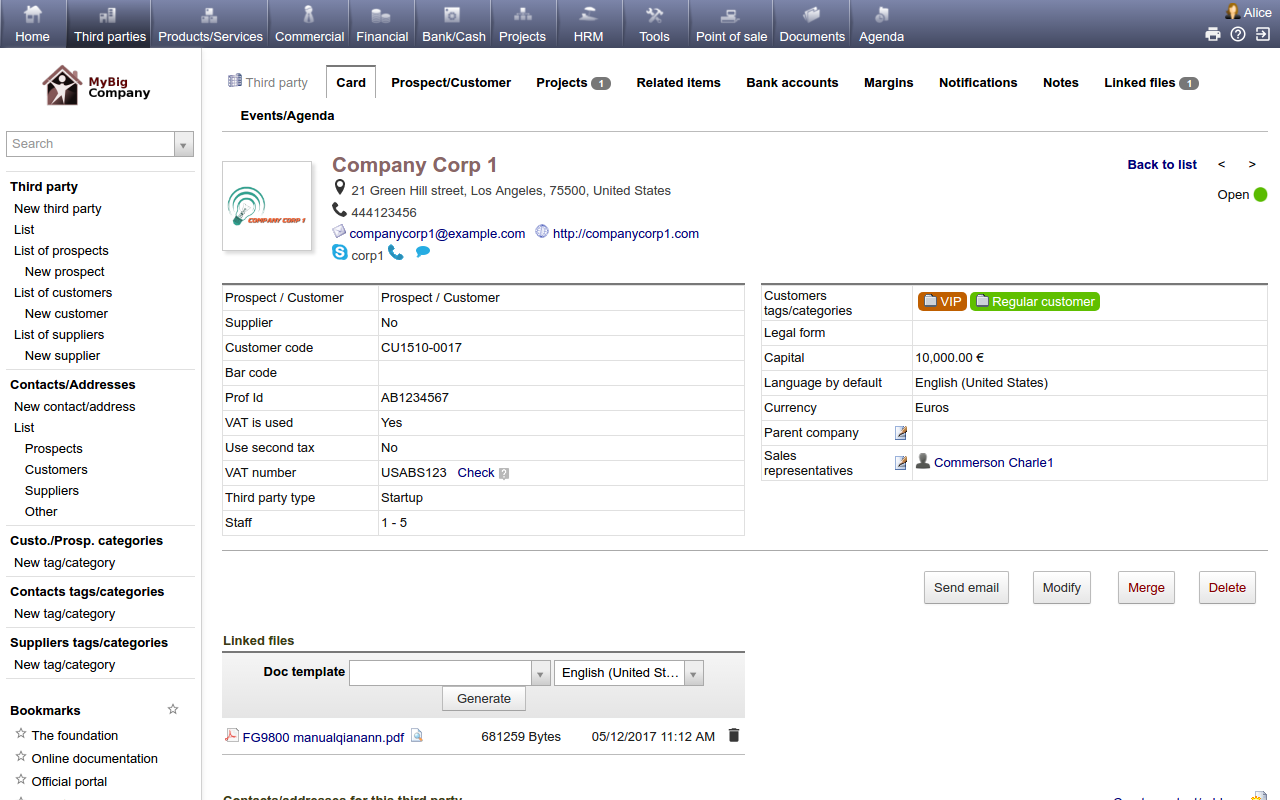
You create a Third Party record (customer, prospect, or supplier), track leads with probability-weighted expected turnover, generate proposals that auto-convert to orders when signed, and manage contracts with recurring template invoices. A built-in help desk with public ticket portal handles post-sale support, and a mass emailing module runs campaigns from your existing contact database.
It works. But no AI tells you which leads to prioritize, no behavioral analysis shows which accounts are going cold, and no automation suggests what to do next. The CRM records data. You interpret it.
Source: Dolibarr
SugarCRM operates at a different level.
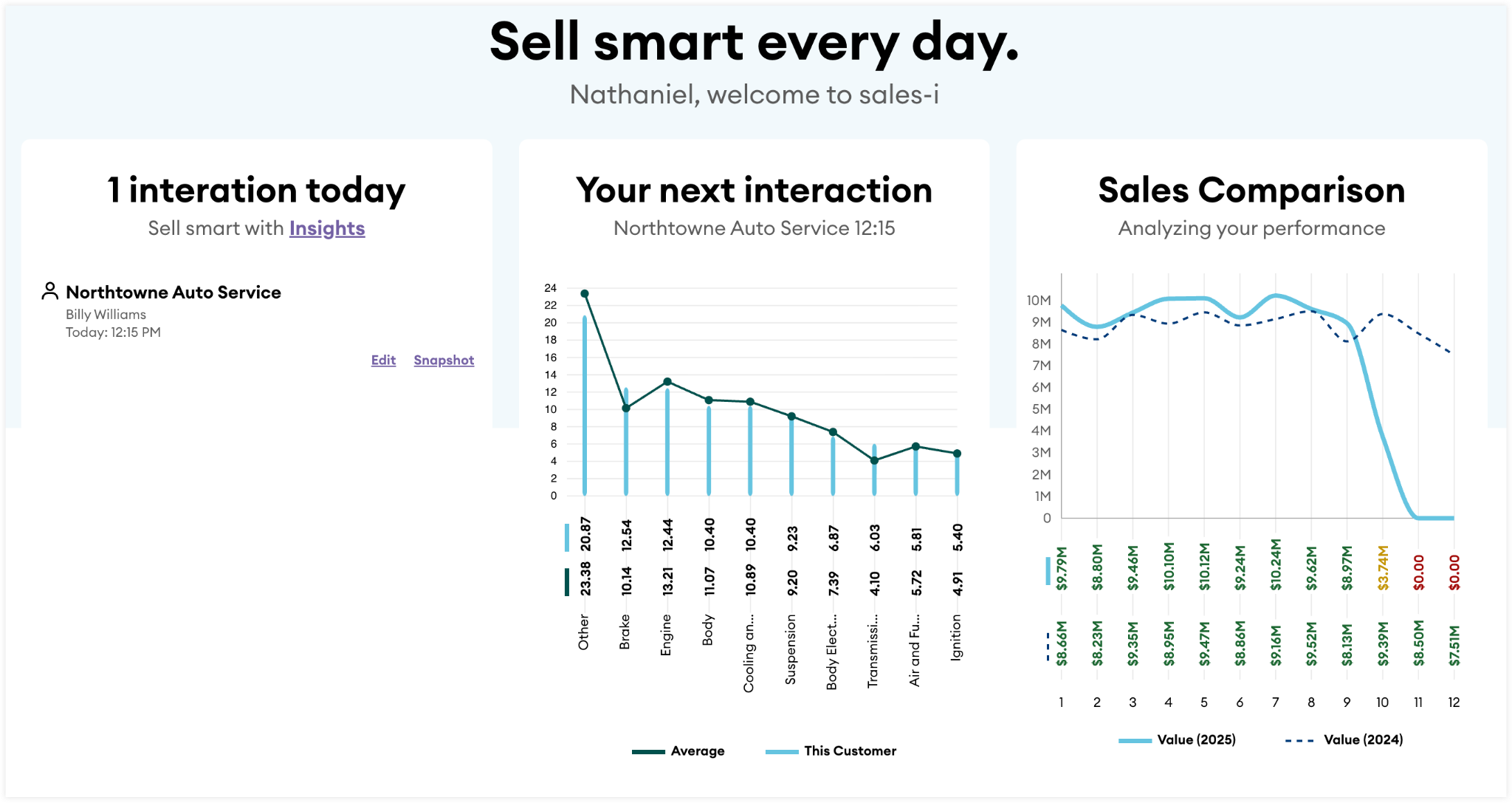
When a rep logs in, Sugar Sell shows which accounts and opportunities matter most right now, ranked by impact. Before a meeting, the platform assembles a context view with company summaries, recent news, social insights, past interactions, and contact history. After meetings, AI helps keep CRM records updated to reduce manual data entry.
The sales-i module adds another dimension.
For companies running an ERP, sales-i ingests transaction data and analyzes buying patterns to flag accounts where a customer bought one product category but not a related one, or where reorder cycles have broken. This turns order history into usable intelligence without requiring reps to dig through reports.
Source: SugarCRM
For small businesses that need CRM alongside invoicing and inventory, Dolibarr works well. For B2B sales teams managing hundreds of accounts across complex buying cycles, SugarCRM's intelligence makes a real difference.
The intelligence gap both platforms share
Both Dolibarr and SugarCRM manage your internal data well within their target markets. Dolibarr tracks your customers, orders, and projects. SugarCRM goes further by connecting CRM with ERP transaction data to surface buying patterns.
But neither platform answers a more basic question: who should you be selling to next?
Dolibarr has no external data source. Your CRM only contains the contacts you've entered by hand. SugarCRM's sales-i analyzes existing customer behavior well, but it works only with accounts already in your ERP. Neither platform tells you which companies outside your database are researching solutions like yours right now, who the decision-makers are, or how to reach them.
This is the gap ZoomInfo fills.
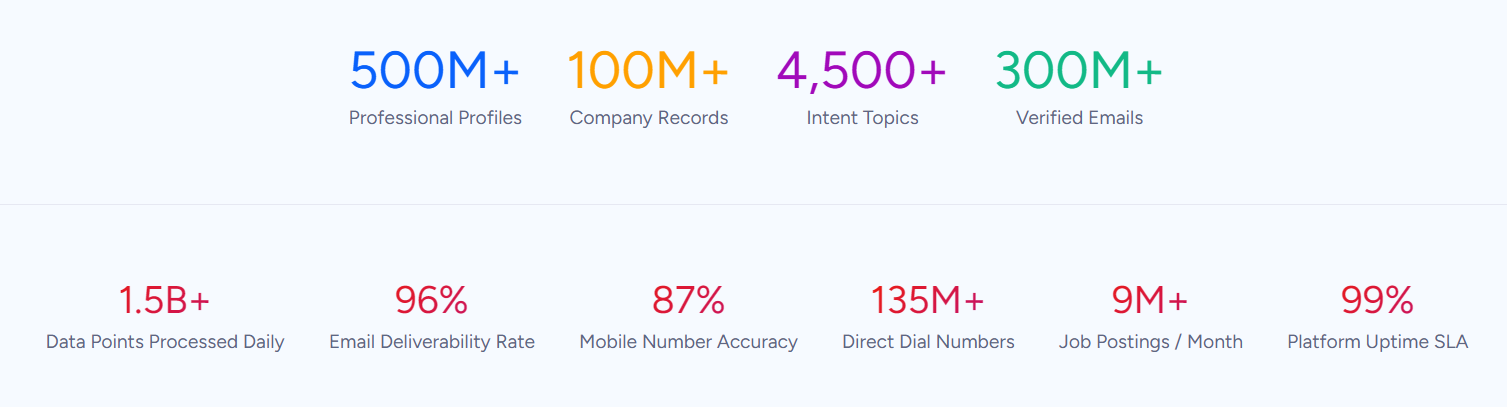
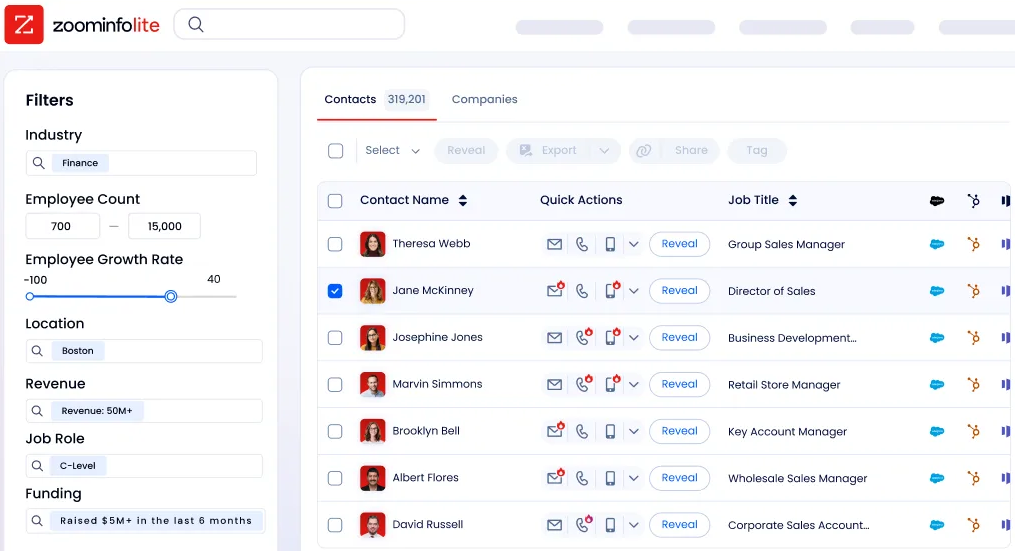
With 500M contacts, 100M companies, 135M+ verified phone numbers, and 200M+ verified business emails, ZoomInfo provides the external intelligence that CRMs cannot generate on their own. The GTM Context Graph goes further, fusing this third-party data with your CRM records, conversation transcripts, and behavioral signals to capture not just what happened in a deal, but why it happened.
Source: ZoomInfo
For a Dolibarr user, ZoomInfo means your CRM stops being limited to contacts you've manually tracked. For a SugarCRM user, it means your sales-i intelligence extends beyond existing customers to companies you haven't spoken to yet.
The data isn't self-reported.
The GTM Context Graph processes 1.5B+ data points daily, backed by a multi-source verification pipeline with 300+ human researchers, reaching up to 95% accuracy on first-party data. In a Fortune 500 competitive RFP analyzing 25 million contacts across vendors, the independent consultant concluded that "no other competitor came even close."
"ZoomInfo gives us the information we need to execute. We don't have to go through and spend our time digging. It's already there, so we can be three steps ahead." (Vensure)
AI capabilities: three different starting points
Each platform is at a different stage of AI maturity.
Dolibarr is just entering the AI conversation.
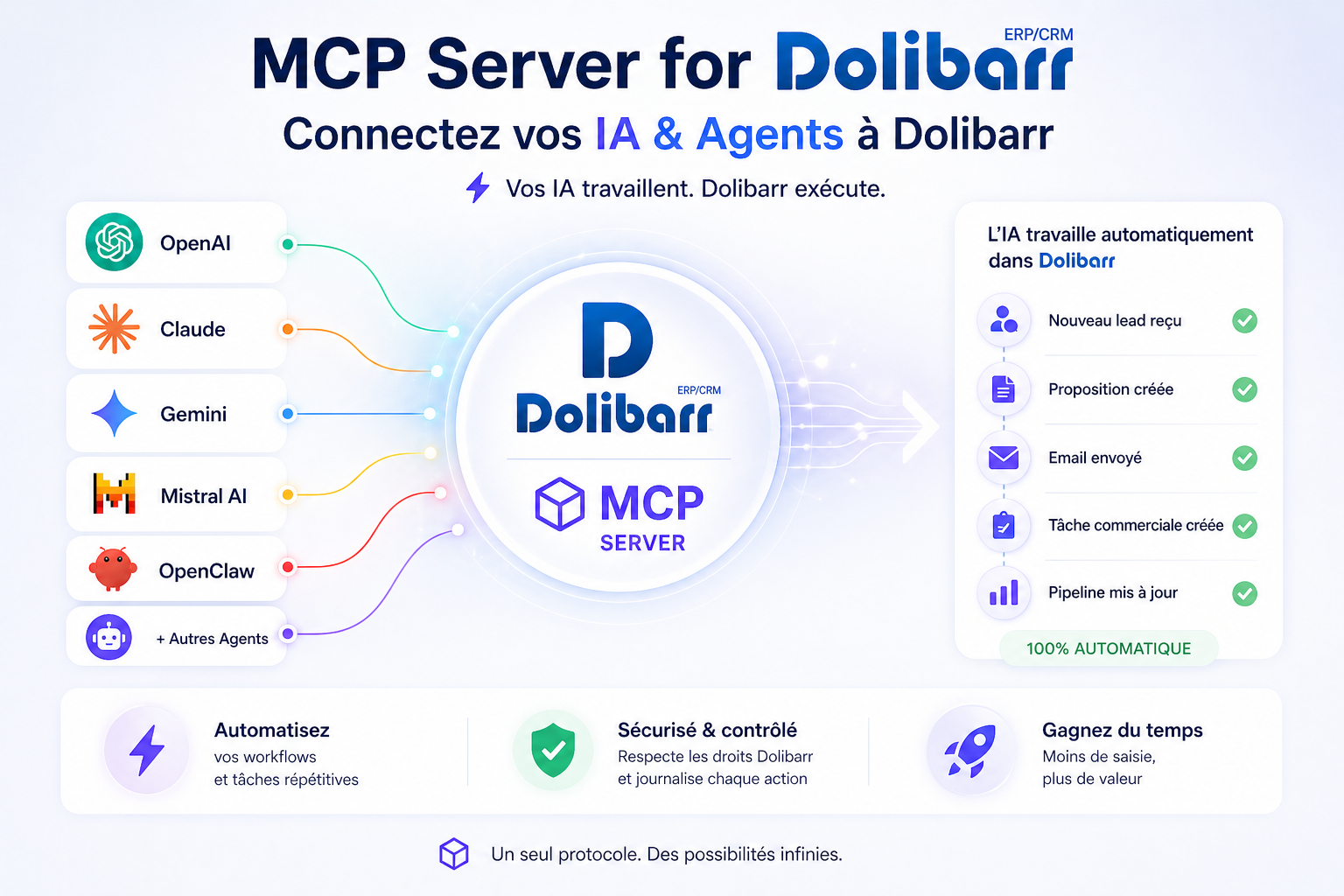
Version 24 introduces an experimental MCP Server that lets AI agents (Claude, ChatGPT, Gemini, Mistral) read, analyze, and act inside Dolibarr through natural language. The DoliStore already offers an MCP module supporting invoice creation, CRM pipeline management, and sales analysis via AI. It's early, but the direction is clear: Dolibarr is making its data accessible to external AI rather than building its own.
Source: Dolibarr
SugarCRM has made AI a core differentiator.
Sugar Sell surfaces AI-driven account prioritization, and sales-i uses machine learning to analyze ERP buying patterns and detect anomalies. The April 2026 rebrand to SugarAI signals the company is staking its identity on AI.
However, key AI features are gated above the entry tier: intelligent lead prioritization, Revenue Intelligence, generative AI, and sentiment analysis all require the Premier plan ($135/user/month) or separate purchase.
ZoomInfo operates AI at a structural level.
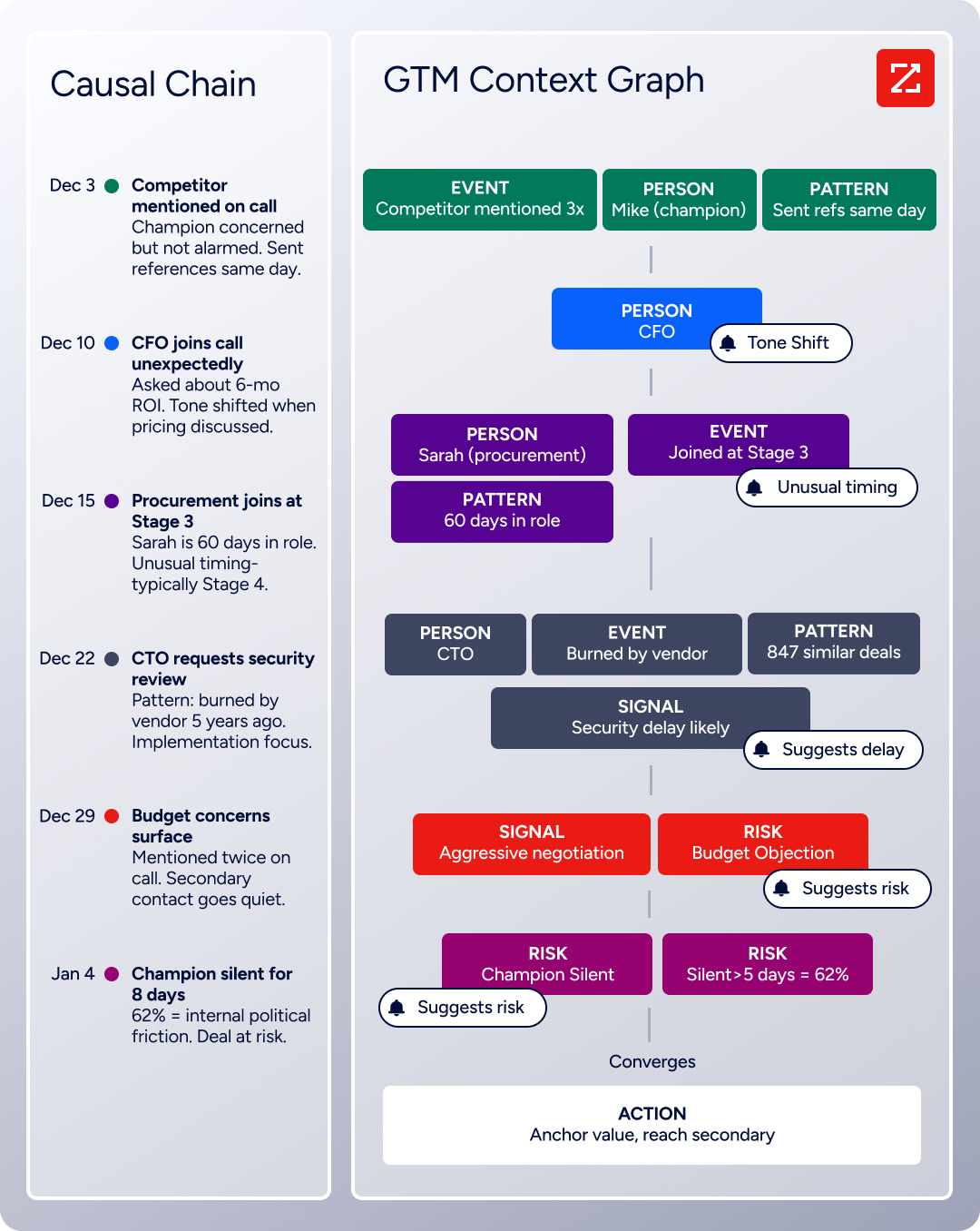
The GTM Context Graph doesn't just detect patterns. It captures why deals move or stall by reasoning across CRM data, conversation transcripts, intent signals, and behavioral data at once. As ZoomInfo CPO Dominik Facher writes: "The CRM recorded the state change. It has no record of why it happened." ZoomInfo's intelligence layer fills that gap.
Source: ZoomInfo
In GTM Workspace, AI agents handle account research, outreach drafting, signal monitoring, and CRM updates. In GTM Studio, marketers describe audiences in plain language and launch multi-channel campaigns without engineering support. Through APIs and MCP, the same intelligence powers custom agents and third-party tools.
"That combination of our internal CRM data, external signals, and AI that's given all that context has helped us craft very specific account- and persona-based messages. And people have responded to them right away." (Toby Carrington, Chief Business Officer, Seismic)
Deployment and data sovereignty
Where your data lives matters, especially for regulated industries or organizations with strict governance requirements.
Dolibarr offers the strongest data sovereignty case.
The software runs on standard PHP and MySQL infrastructure that you own and control. Your business data never leaves your premises unless you choose a third-party host. The project's sovereignty protection policy is a deliberate design choice and the primary reason many organizations pick Dolibarr over cloud alternatives.
For security, Dolibarr includes built-in protections against SQL injection, XSS, and CSRF, an OpenSSF Best Practices Passing badge, and funded bug bounty campaigns through Yogosha and Huntr.
SugarCRM supports both deployment modes.
SugarCloud runs on AWS with data stored in the customer's chosen region (Australia, Germany, United Kingdom, or United States), backed by 99.5% uptime. Sugar Enterprise allows on-premises deployment for organizations that need full infrastructure control. SugarCRM holds SOC 2 Type II and ISO/IEC 27001:2022 certifications, plus GDPR and CCPA compliance.
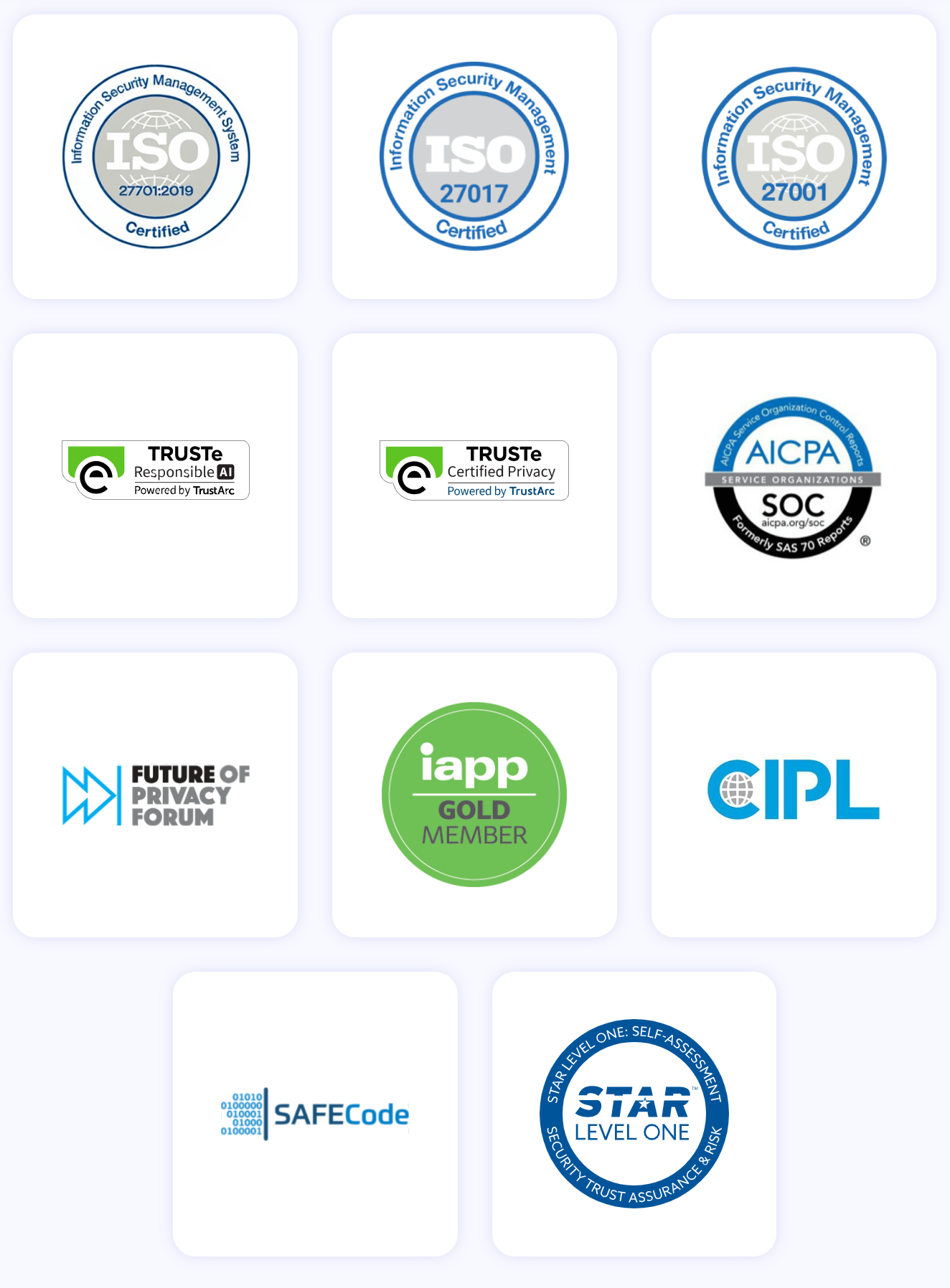
ZoomInfo operates as a cloud SaaS platform with ISO 27001, ISO 27701, SOC 2 Type II, TRUSTe GDPR and CCPA certifications, all renewed annually. ZoomInfo is a registered data broker in California and Vermont, with a dedicated Trust Center.
For organizations where on-premises deployment is a hard requirement, Dolibarr (always) and SugarCRM (via Enterprise edition) satisfy that need. ZoomInfo's data is cloud-delivered but integrates into on-premises CRMs through its API.
Pricing models serve different buyers
The pricing structures tell you who each platform is designed for.
Dolibarr is permanently free to download and self-host under GNU GPL 3.0. No per-user fees, no feature gates, no enterprise edition. If you have a server (or a shared hosting account), you can run the full suite at zero software cost.
For teams that prefer managed hosting, certified SaaS partners like DoliCloud offer plans starting at €14/month per user, and Ma Gestion Cloud starts at €14/month flat with unlimited users. DoliStore marketplace modules range from free to about €700 for specialized add-ons, but these are one-time purchases, not subscriptions.
SugarCRM costs more.
Sugar Sell starts at $59/user/month with a 15-user minimum, meaning the floor is $10,620/year. The Advanced tier ($85/user/month) adds mail and calendar integration, while AI features like intelligent lead prioritization, Revenue Intelligence, and generative AI require the Premier tier at $135/user/month or separate purchase. Sugar Market and Sugar Serve pricing is not publicly listed.
According to Nucleus Research cited by SugarCRM, SugarAI users can lower total cost of ownership by up to 32% compared to Salesforce, but compared to Dolibarr the gap is structural: a 15-person team on Sugar Sell Advanced pays $15,300/year for CRM alone.
ZoomInfo uses consumption-based pricing with custom quotes and no publicly listed prices. The cost reflects the data and intelligence you're accessing, not basic CRM functionality.
For teams not ready to commit, ZoomInfo Lite provides permanent free access with 10 monthly export credits, individual and company searches, the ReachOut Chrome Extension, and WebSights Lite for website visitor identification. A separate 7-day free trial offers broader access to paid features.
Source: ZoomInfo
Integration ecosystems and extensibility
How well each platform connects to the rest of your stack determines its practical value.
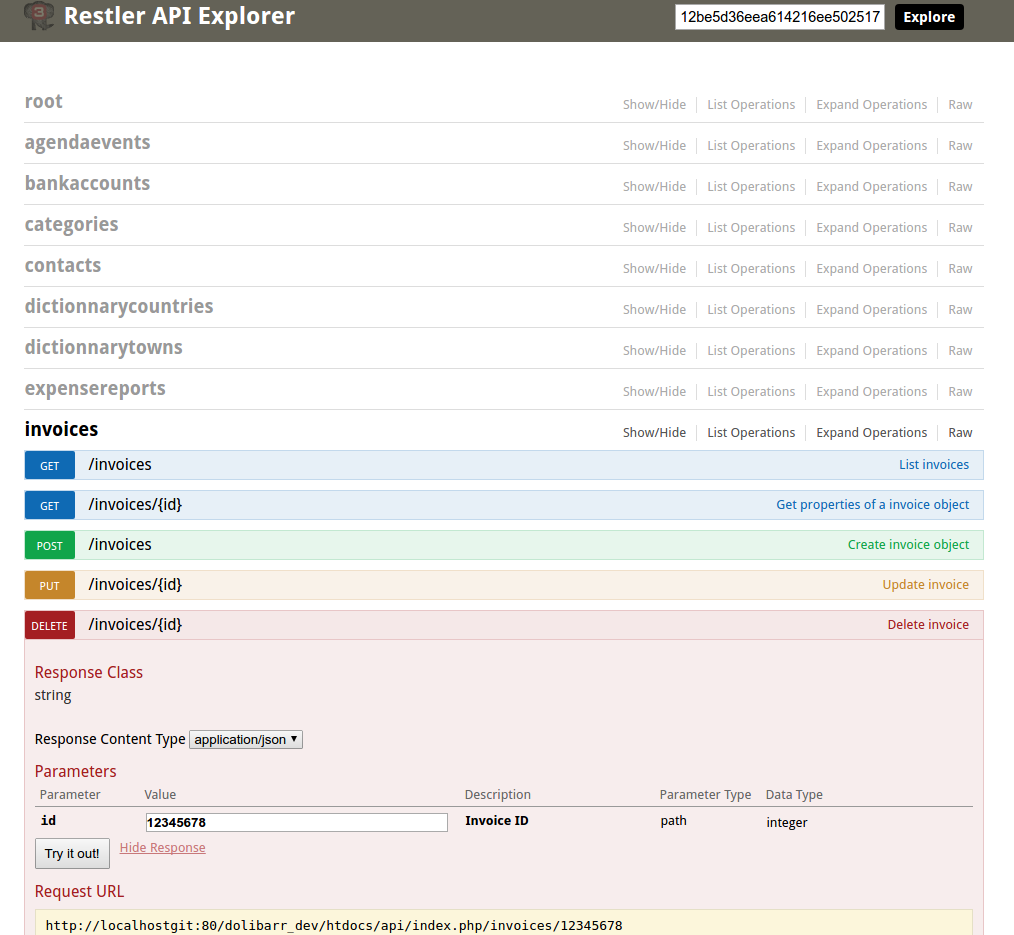
Dolibarr provides a REST API that exposes all ERP and CRM data for external read and write operations, with a built-in API Explorer on every instance. A webhook module sends JSON payloads on business events, and the triggers/hooks architecture allows deeper custom integrations. Integration tutorials exist for Zapier and Make.
Native connections include LDAP, PayPal, Stripe, and SMTP, with eCommerce sync for PrestaShop, Magento, and WooCommerce available through external modules. The DoliStore marketplace extends functionality further with community-built add-ons.
Source: Dolibarr
SugarCRM leads on ERP connectivity, listing 180+ ERP integrations as a defining feature.
The SugarAI Marketplace offers connectors for SAP, Oracle, NetSuite, Epicor, Sage, Syspro, and more, alongside integrations with Zendesk, Microsoft Teams, PhoneBurner, LinkedIn Sales Navigator, and Jira. The platform exposes a versioned REST API (v10-v11.25) with OAuth 2.0 authentication and Web Logic Hooks for outbound event notifications.
ZoomInfo focuses on access from anywhere.
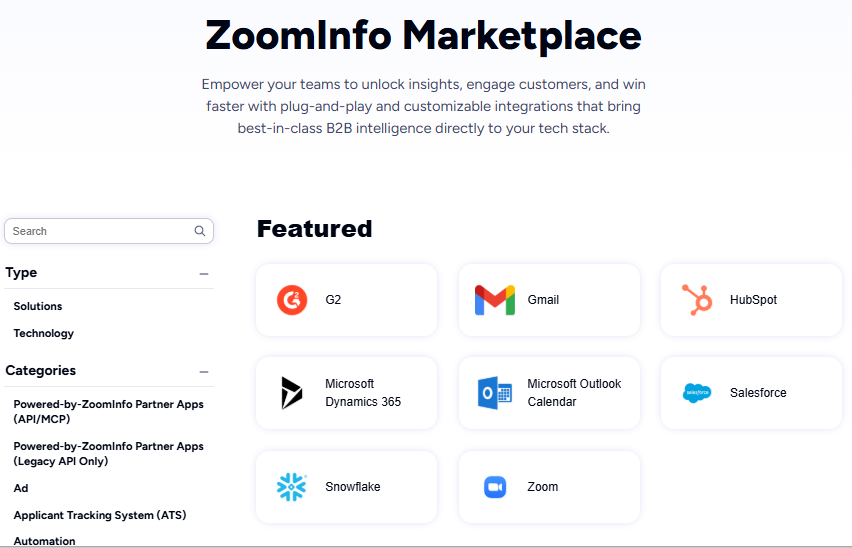
The ZoomInfo Marketplace lists 172+ integration partners spanning CRM, marketing automation, sales engagement, data warehouses, and AI platforms. Native integrations cover Salesforce, HubSpot, and Microsoft Dynamics 365, plus Snowflake, Databricks, AWS, and Google Cloud for data delivery.
The Enterprise API covers search, enrich, copilot, marketing, and engagement endpoints. The MCP server connects AI agents to ZoomInfo's data, compatible with Claude and ChatGPT, with more MCP-compatible clients coming soon.
Source: ZoomInfo
"The plug-and-play aspect of the API means I can integrate it very easily into any process and get information at a moment's notice." (Jerry Wilson, Senior Marketing Intelligence Analyst, BDO Canada)
Dolibarr vs. SugarCRM vs. ZoomInfo: Which should you choose?
The right choice depends on what problem you're solving.
Choose Dolibarr if:
You need a complete business suite (CRM, invoicing, accounting, inventory, HR) in one platform
Zero licensing cost is a priority
You want full data sovereignty with self-hosted deployment
Your team is small (under 50 people) and comfortable with community support
You need basic CRM alongside operational tools, not sales intelligence
You operate in France or a French-speaking market where Dolibarr's compliance features and partner network are strongest
Choose SugarCRM if:
You're a mid-market B2B company (50+ employees) in manufacturing, wholesale, or distribution
You need AI-driven sales guidance that tells reps where to focus
Connecting CRM to your ERP to surface cross-sell and churn signals is a priority
You have the budget for a $10,620+/year commitment
On-premises deployment for a commercial CRM matters to your organization
Your sales team manages large account bases with complex, relationship-driven buying cycles
Add ZoomInfo if:
You need verified B2B contact data and direct-dial phone numbers to fuel prospecting
Knowing which companies are researching your solution category matters to your pipeline
You want AI that surfaces account insights, buying committee intelligence, and recommended actions
Your team needs an intelligence layer that works across CRM, marketing, and sales tools
You want to complement your CRM (whether Dolibarr, SugarCRM, or another) with external data it cannot generate
Try ZoomInfo Lite for free or request a demo of the full platform.
Dolibarr gives you the operational backbone of your business at no cost. SugarCRM gives your sales team the intelligence to sell more effectively within existing accounts. ZoomInfo gives you the external data and signals to find new accounts, understand buying committees, and engage prospects before they come to you.
For B2B companies serious about growth, the question isn't which one to use. It's which combination.
"It's not just the data itself. It's more about the right data at the right time to help us reach out with the right message across that full buyer journey." (Chelsea Kenyon, Senior Director of Digital Strategy, Redwood Logistics)
Dolibarr vs. SugarCRM vs. ZoomInfo FAQ
What is the core difference between Dolibarr, SugarCRM, and ZoomInfo?
Dolibarr is a free, open-source ERP and CRM that bundles invoicing, accounting, inventory, HR, and project management into a single modular platform for small businesses and associations.
SugarCRM is a commercial B2B sales CRM focused on manufacturing, wholesale, and distribution, with AI-driven pipeline guidance and ERP-connected intelligence.
ZoomInfo is an intelligence platform that provides verified B2B contact and company data, buyer intent signals, and AI-powered prospecting.
Dolibarr and SugarCRM manage your customer relationships; ZoomInfo provides the external data and signals to find new ones.
Which platform is cheapest?
Dolibarr is free to download and self-host, with no per-user fees or feature restrictions on the core software. Managed hosting starts at about €14/month per user through certified providers. SugarCRM starts at $59/user/month with a 15-user minimum, creating a floor of $10,620/year. ZoomInfo uses custom-quoted, consumption-based pricing but offers a permanent free tier called ZoomInfo Lite with 10 monthly export credits and basic search.
Can I use Dolibarr or SugarCRM as my only business platform?
Dolibarr is designed for this. It covers CRM, invoicing, accounting, inventory, HR, project management, manufacturing, and a built-in website CMS. For small businesses, it can replace multiple tools. SugarCRM is a dedicated CRM and does not include ERP features like accounting or inventory. It's designed to integrate with an existing ERP, not replace one.
Which platform has the best AI capabilities?
ZoomInfo leads with its GTM Context Graph, which processes 1.5B+ data points daily and reasons across CRM data, conversation intelligence, intent signals, and behavioral data.
SugarCRM has embedded AI in its sales platform with account prioritization, guided workflows, and ERP-based pattern detection, though advanced AI features require the Premier tier at $135/user/month. Dolibarr is introducing AI through an experimental MCP Server in version 24 that connects external AI agents to its data.
Does ZoomInfo replace a CRM?
No. ZoomInfo complements your CRM by providing the external B2B data and intelligence that CRMs cannot generate on their own.
It integrates natively with Salesforce, HubSpot, and Microsoft Dynamics, and its data is accessible through APIs and MCP for any CRM or tool. ZoomInfo's GTM Workspace provides seller-facing execution capabilities, but it works alongside your CRM rather than replacing it.
Which platform is best for small businesses with limited budgets?
Dolibarr. The full software is permanently free with no user limits. SugarCRM's 15-user minimum at $59/user/month makes it impractical for teams smaller than 15. ZoomInfo's paid plans are custom-quoted for larger teams, but ZoomInfo Lite provides permanent free access to basic search and export.
How do Dolibarr and SugarCRM handle self-hosted deployment?
Dolibarr can be self-hosted on any server running PHP and MySQL, including Windows, Mac, Linux, and Docker. It ships auto-installer packages that require no technical expertise. SugarCRM offers on-premises deployment through its Sugar Enterprise product, starting at $85/user/month with a 10-user minimum. ZoomInfo is cloud-only, but its API lets data flow into on-premises systems.
Which platform is best for B2B manufacturers or distributors?
SugarCRM is built for this market. Its Sugar sales-i module connects to ERP systems to analyze order history, surface cross-sell and reorder opportunities, and detect churn signals from actual purchasing behavior. SugarCRM has been named a Leader in the Nucleus Research SFA Technology Value Matrix for six consecutive years and recognized as Most Innovative Solution in the Manufacturing Supplier Innovation Awards.
Dolibarr includes basic manufacturing (MRP) and inventory modules but lacks AI-driven sales intelligence for large account bases. ZoomInfo adds a complementary layer with external B2B data and intent signals to help manufacturers find new prospects and expansion opportunities beyond their existing customer base.
More SugarCRM comparisons:
