
Choosing between eWay-CRM and SugarCRM for your B2B sales operations comes down to five questions:
Does your team live in Microsoft Outlook, or do they need a standalone platform?
Are you a small team looking for a low-cost CRM, or a mid-market organization with 15+ sellers managing complex pipelines?
Do you need your CRM to connect with an ERP system, or is email-centric relationship management the priority?
Is project delivery after the sale as important as the sale itself?
How critical is it that your sellers have accurate, verified contact data and buying signals before they pick up the phone?
In short, here's what we recommend:
eWay-CRM is built for small and mid-sized teams that run their day in Microsoft Outlook and want a CRM that doesn't force them into a new tool. It installs as an Outlook add-in, turning familiar email, calendar, and contacts into a shared sales and project management platform. The learning curve is near zero, and adoption is strong among teams that have failed with standalone CRMs before. However, eWay-CRM is tightly coupled to the Microsoft ecosystem, has limited native reporting without Power BI, and lacks the ERP intelligence and AI sales guidance that larger B2B operations need.
SugarCRM (now rebranding as SugarAI) targets mid-market B2B manufacturers, wholesalers, and distributors who need a CRM that speaks their language. Its standout capability is Sugar sales-i, which pulls transactional data from 180+ ERP systems and surfaces cross-sell opportunities, churn risks, and buying pattern changes inside the CRM. That ERP-native intelligence is rare at the mid-market price point. The trade-off: a 15-user minimum starting at $885/month, a steeper learning curve, and a mobile experience that reviewers consistently describe as lagging behind the desktop.
Both platforms solve real CRM problems for their audiences. But neither addresses the upstream challenge that determines whether your sales team's outreach lands: the quality and accuracy of the data fueling every call, email, and deal.
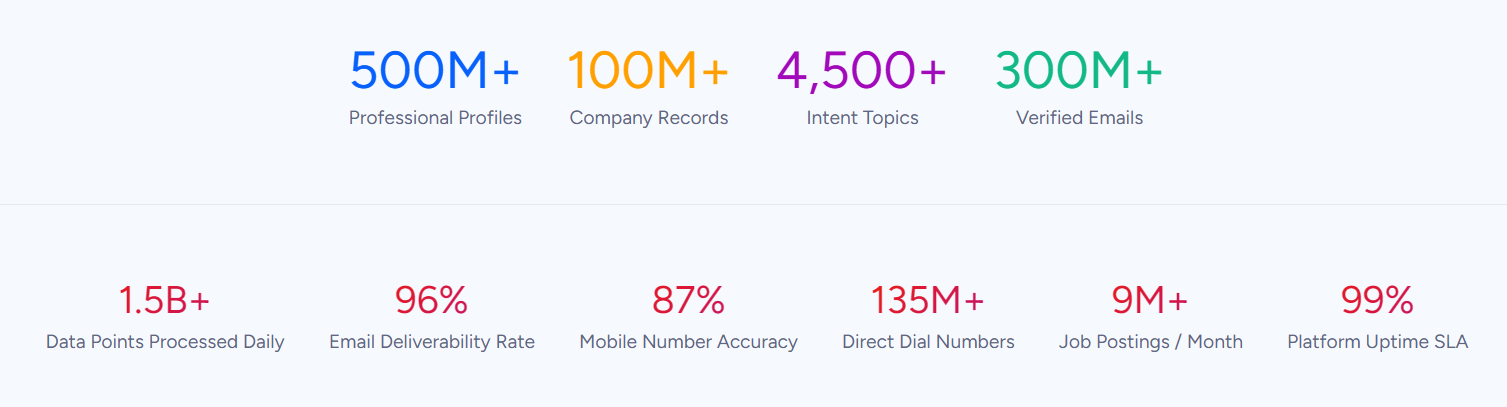
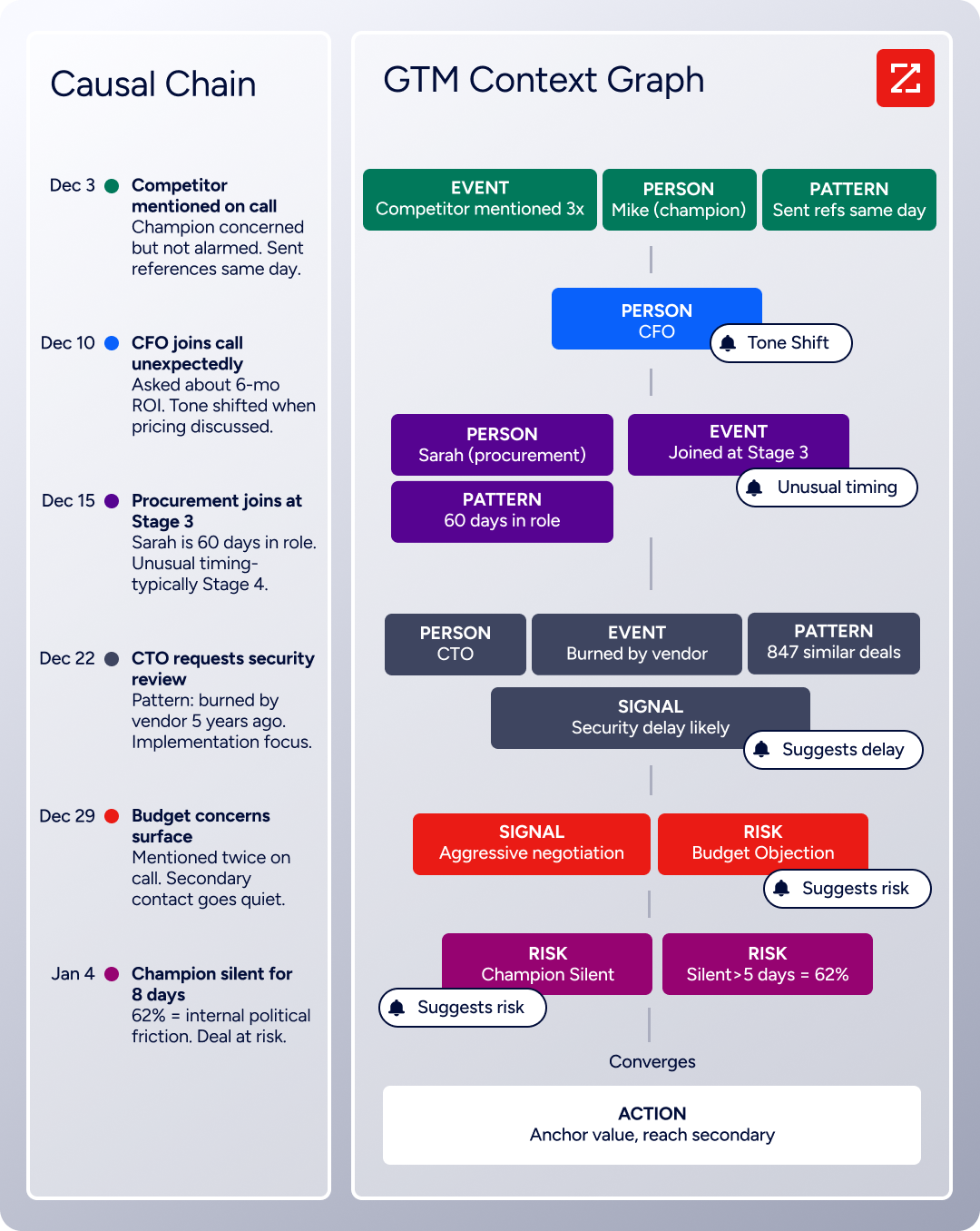
ZoomInfo is an AI GTM platform that lets your sales reps walk into every call knowing why the deal is moving, who's championing it, and what's likely to happen next. Your marketers can describe audiences in plain language and launch plays against accounts that match your proven win patterns. No engineering ticket required. Your leaders can see deal risk before it shows up in CRM stage fields. That depth comes from the GTM Context Graph, an intelligence layer built on 500M contacts, 100M companies, 135M+ verified phone numbers, and 200M+ verified business emails, unified with your CRM records, conversation transcripts, and behavioral signals. Your team accesses it through GTM Workspace for sellers, GTM Studio for marketers and RevOps, or APIs and MCP in any other front-end. Whether you use eWay-CRM, SugarCRM, or another CRM entirely, ZoomInfo ensures your team works with verified contacts and actionable intelligence rather than stale records and guesswork.
If accurate data and AI account intelligence sounds like the missing piece, see how ZoomInfo works.
eWay-CRM vs. SugarCRM vs. ZoomInfo at a glance
eWay-CRM | SugarCRM | ZoomInfo | |
|---|---|---|---|
Primary function | Outlook-native CRM for sales + projects | B2B sales CRM with ERP intelligence | AI GTM platform (data, intelligence, execution) |
AI capabilities | Email tone analysis, contact extraction, task suggestions | AI deal prioritization, ERP pattern analysis (higher tiers) | GTM Context Graph, AI-drafted outreach, account intelligence |
CRM integration | Lives inside Outlook | Standalone platform with Outlook/Gmail sync | Integrates with Salesforce, HubSpot, Dynamics, and 120+ tools |
ERP integration | QuickBooks (add-on) | N/A (data platform, not ERP connector) | |
Project management | Full module with timesheets, resource planning | Not a core capability | N/A |
Data coverage | Your own contact database | Your own contact database | 500M contacts, 100M companies, verified |
Deployment | Cloud + on-premises | Cloud + on-premises | Cloud |
Starting price | Free (unlimited users); paid from $20/user/mo | Free tier (ZoomInfo Lite); paid plans custom-quoted | |
Best for | SMBs living in Microsoft Outlook | Mid-market manufacturers, wholesalers, distributors | B2B teams needing verified data and buying signals |
Two different philosophies of CRM adoption
eWay-CRM and SugarCRM start from opposite assumptions about how teams should interact with their CRM.
eWay-CRM bets that the best CRM is one your team doesn't notice.
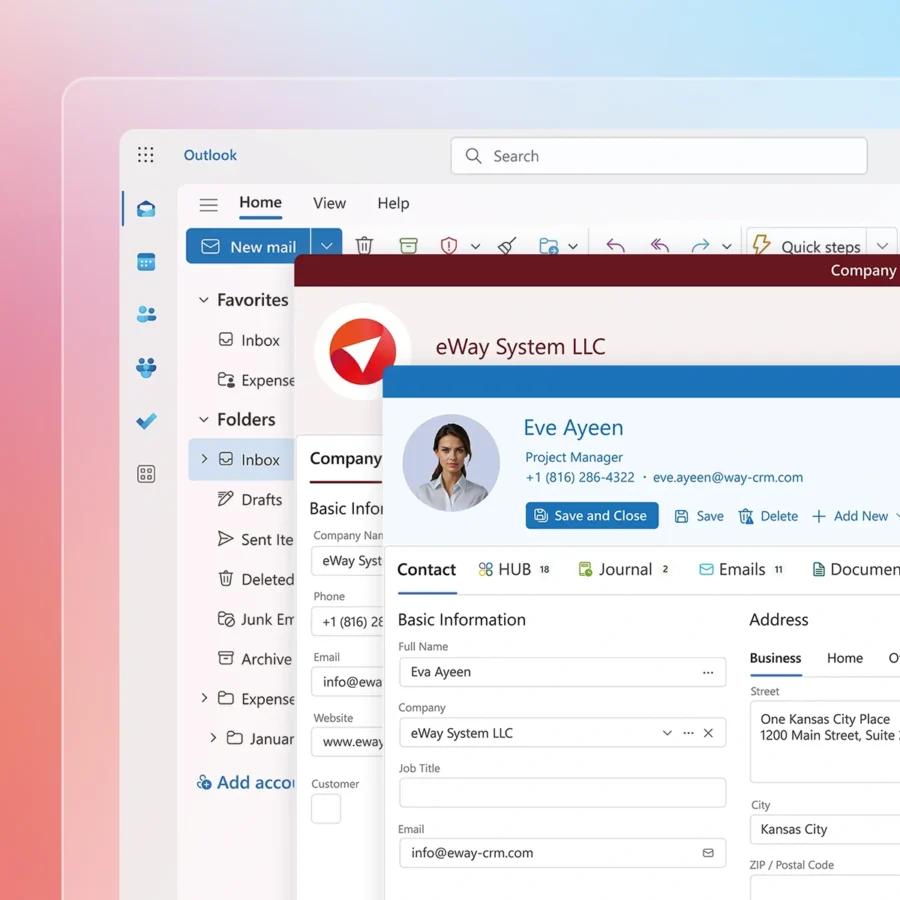
By embedding inside Microsoft Outlook as a plugin, it turns the email client into a shared database of contacts, deals, projects, and tasks. The interface looks and behaves like Outlook itself. Right-click an email to create a deal. AI extracts the sender's contact details from their signature. Calendar events link to projects.
For teams that have tried and abandoned standalone CRMs because nobody logged in, this approach solves the adoption problem at the source.
Source: eWay-CRM
SugarCRM takes the opposite position: your CRM should be the command center, not a sidebar.
Sugar Sell is a standalone platform that surfaces prioritized accounts, deal risks, and cross-sell opportunities the moment a rep logs in. The system guides sellers toward their highest-value actions rather than waiting for them to search for information. This works well for organizations with dedicated sales processes and the discipline to use a specialized tool, but it demands more adoption effort up front.
The right choice depends on your team's habits. If your sellers resist anything that isn't Outlook, eWay-CRM meets them where they already are. If they need pipeline intelligence and will invest in learning a separate platform, SugarCRM delivers more analytical depth.
eWay-CRM excels at combining sales and project delivery
Most CRMs treat the sales close as the finish line. eWay-CRM treats it as a handoff.
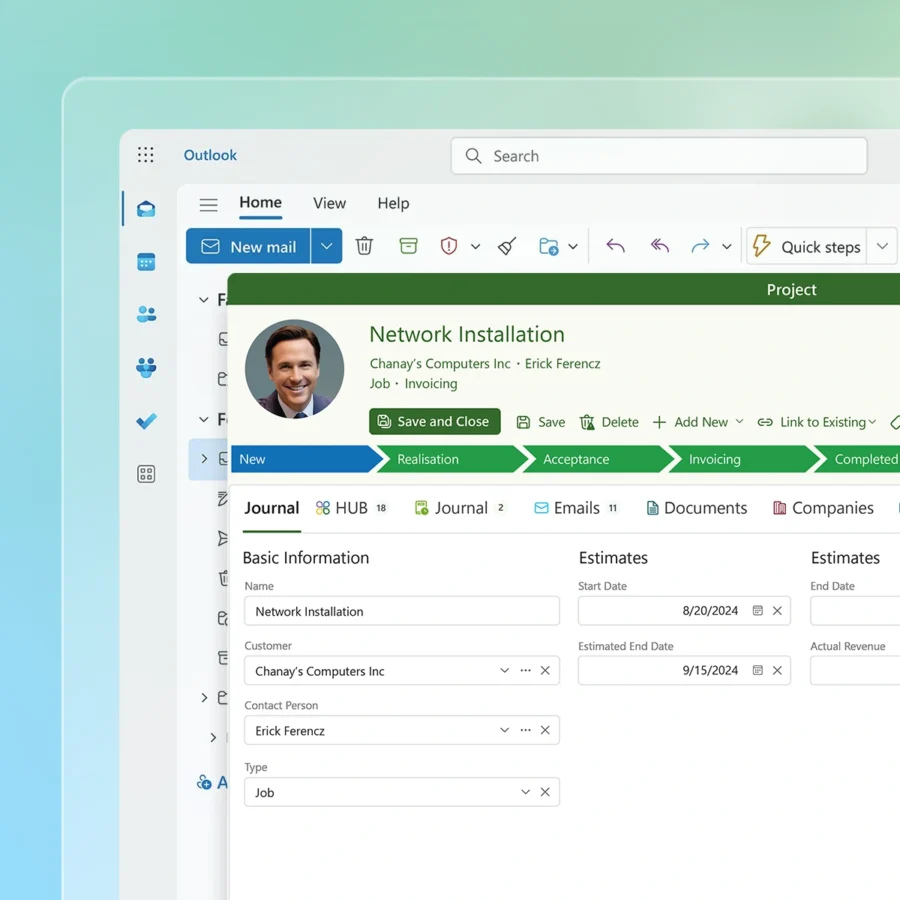
The Projects module lets teams convert a won deal into a tracked project, carrying over all linked emails, notes, documents, and contact history. From there, project managers assign tasks, log timesheets, track budgets, and monitor resource allocation, all without leaving Outlook.
The Resource Plan view flags overallocated team members in red, and on the Plus plan, the system calculates project profitability by pulling revenue from invoices and costs from timesheets and salary records.
For professional services firms, consultants, and project-based manufacturers, this CRM-to-project continuity is a real differentiator.
Source: eWay-CRM
SugarCRM offers a Projects add-on, but it is not a core focus. Sugar's strength lies upstream in the sales process, not downstream in delivery. Teams that need both deal tracking and project execution in one tool will find eWay-CRM's approach more complete.
SugarCRM turns ERP data into sales intelligence
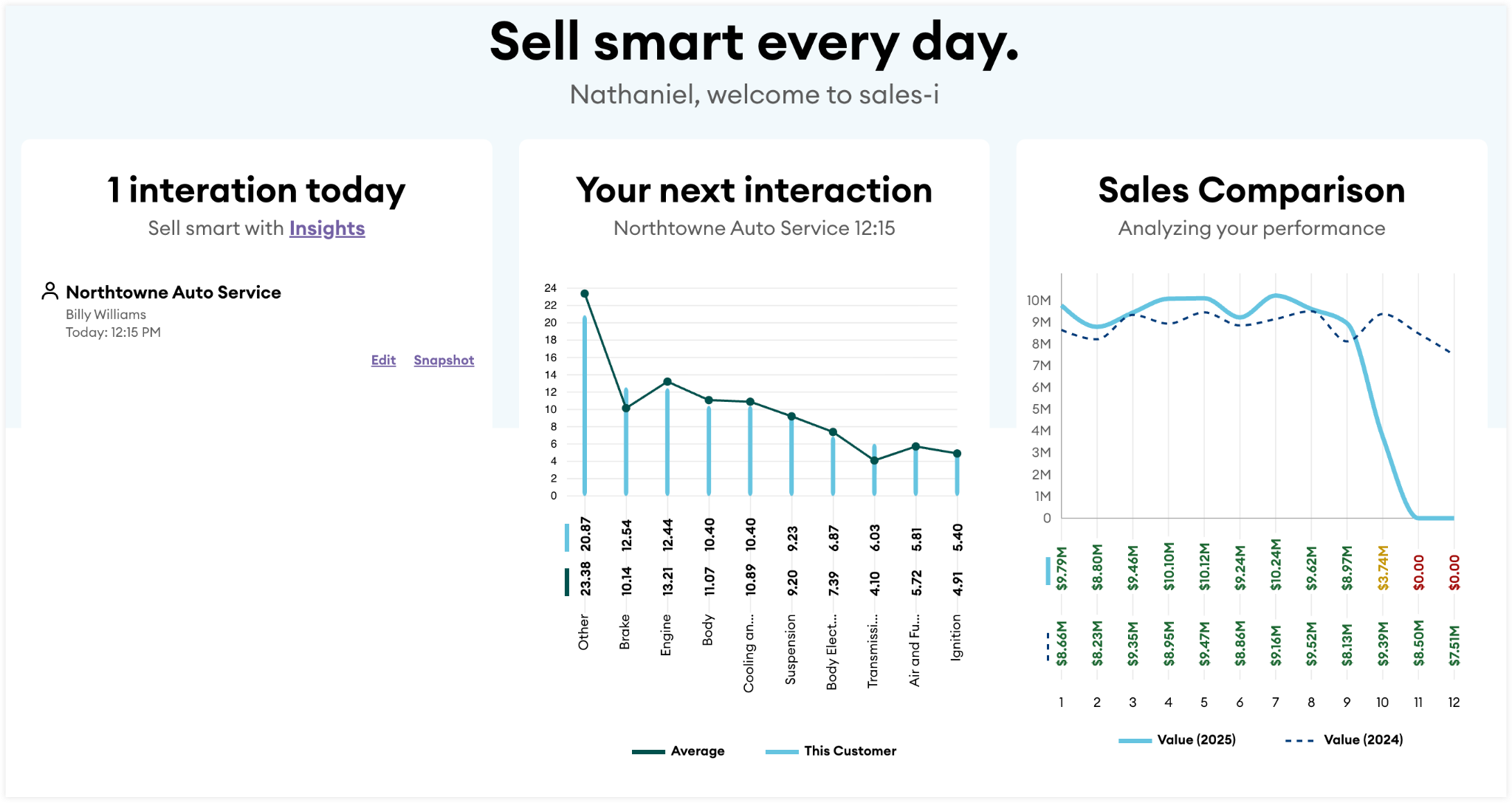
SugarCRM's most distinctive capability has nothing to do with traditional CRM features. It's Sugar sales-i, a revenue intelligence layer that connects to your ERP system and analyzes purchase history to surface signals your reps would never find manually.
For a wholesale distributor managing thousands of accounts, sales-i answers questions like: Which customers stopped ordering a product line they used to buy regularly? Which accounts are spending less this quarter than last? Where are the cross-sell gaps between what a customer buys and what similar customers buy?
Source: SugarCRM
These signals appear inside Sugar Sell as prioritized alerts, so reps walk into calls with specific, data-backed talking points instead of generic check-ins.
This ERP-native intelligence is rare. Most mid-market CRMs treat ERP integration as a connector problem (moving data between systems). SugarCRM treats it as an intelligence problem (extracting meaning from transaction patterns that no amount of CRM activity data can reveal).
For manufacturers, wholesalers, and distributors running SAP, Oracle, Epicor, Syspro, or any of 180+ supported ERP systems, this is the primary reason to choose Sugar over alternatives.
eWay-CRM integrates with QuickBooks for invoicing but offers nothing comparable to sales-i's analytical capabilities. If your sales intelligence depends on ERP transaction data, SugarCRM is the clear choice between the two.
ZoomInfo solves the data problem neither CRM addresses
Both eWay-CRM and SugarCRM manage relationships you already have. Neither helps you find the right people to talk to in the first place, verify that the contact information in your database is still accurate, or detect when a target account starts researching solutions like yours.
ZoomInfo fills that gap.
The platform maintains 500M contacts and 100M companies, verified through a multi-source pipeline backed by 300+ human researchers and delivering up to 95% accuracy on first-party data. In a Fortune 500 competitive RFP analyzing 25 million contacts across vendors, the independent consultant concluded that "no other competitor came even close."
Source: ZoomInfo
For eWay-CRM users, ZoomInfo's data means the contacts flowing into their Outlook-based CRM are accurate and complete before the first email goes out. For SugarCRM users managing large account bases, ZoomInfo's Buyer Intent signals reveal which accounts are actively researching relevant topics, so reps prioritize outreach based on buying behavior rather than gut instinct.
The GTM Context Graph takes this further by fusing ZoomInfo's third-party data with your CRM records, conversation transcripts, and behavioral signals into a single intelligence layer. The result: AI that understands why deals move or stall, not just that they did.
Seismic's sales team attributed 39% of active pipeline to opportunities identified or influenced by ZoomInfo signals, boosted productivity by 54%, and saved 11.5 hours per week. (Seismic case study)
Customization and configuration comparison
Both eWay-CRM and SugarCRM emphasize no-code customization, but the scope differs.
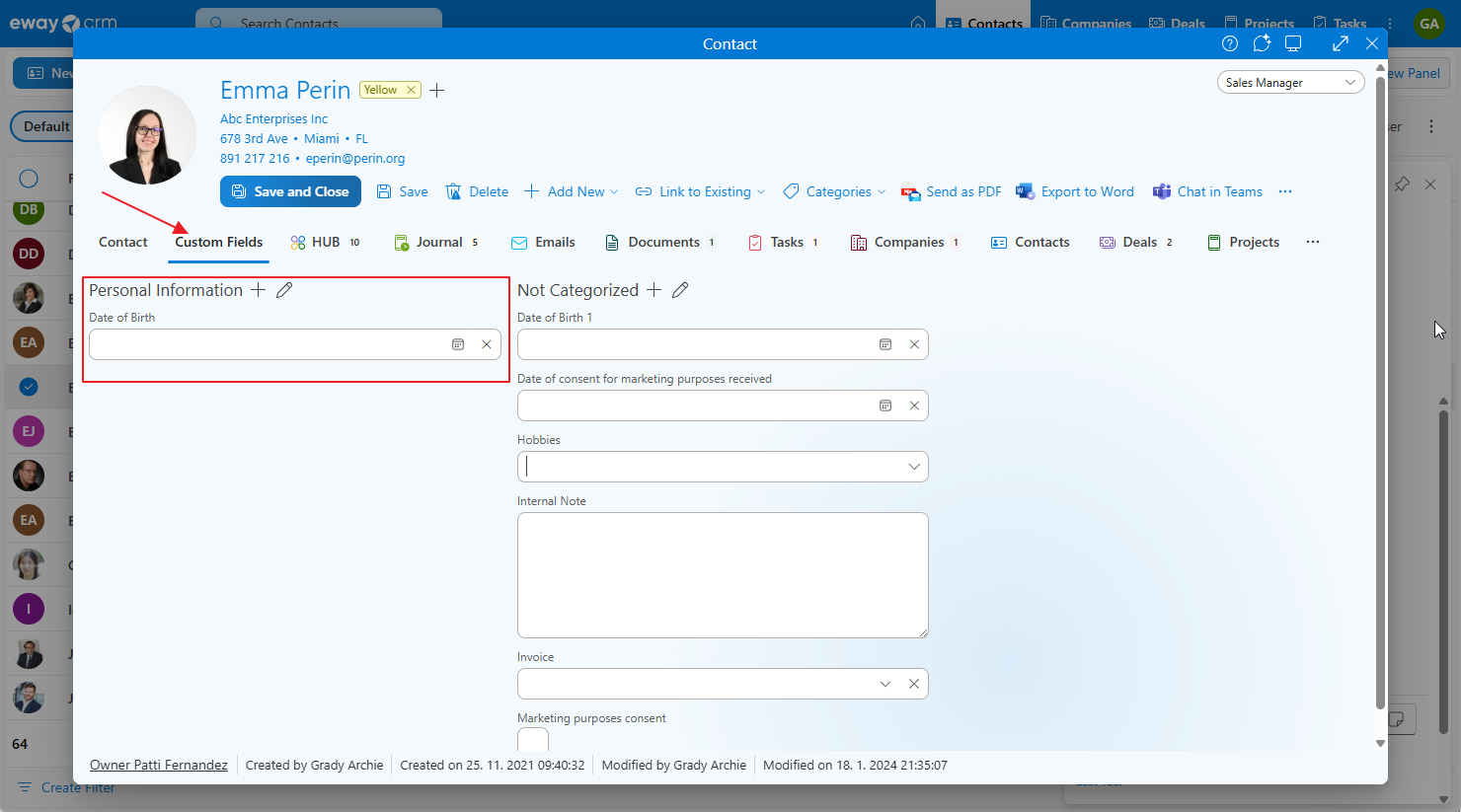
eWay-CRM lets administrators create custom fields, design custom forms, build workflows with automated tasks and email notifications, and set user permissions down to individual fields (Plus plan). Workflow rules can enforce required fields on status changes and block invalid transitions.
The customization is practical and accessible, though Capterra reviewers note that some settings are hidden or unintuitive, and restoring accidentally deleted custom fields can require paid support.
Source: eWay-CRM
SugarCRM offers deeper structural customization under its "Do it your way" positioning. Administrators can tailor modules, layouts, and business processes without code, and the platform supports workflow automation through SugarBPM.
However, G2 reviewers note that the backend PHP-based customization language is difficult for non-programmers, and setting up complex automations often requires technical expertise.
ZoomInfo approaches configuration differently.
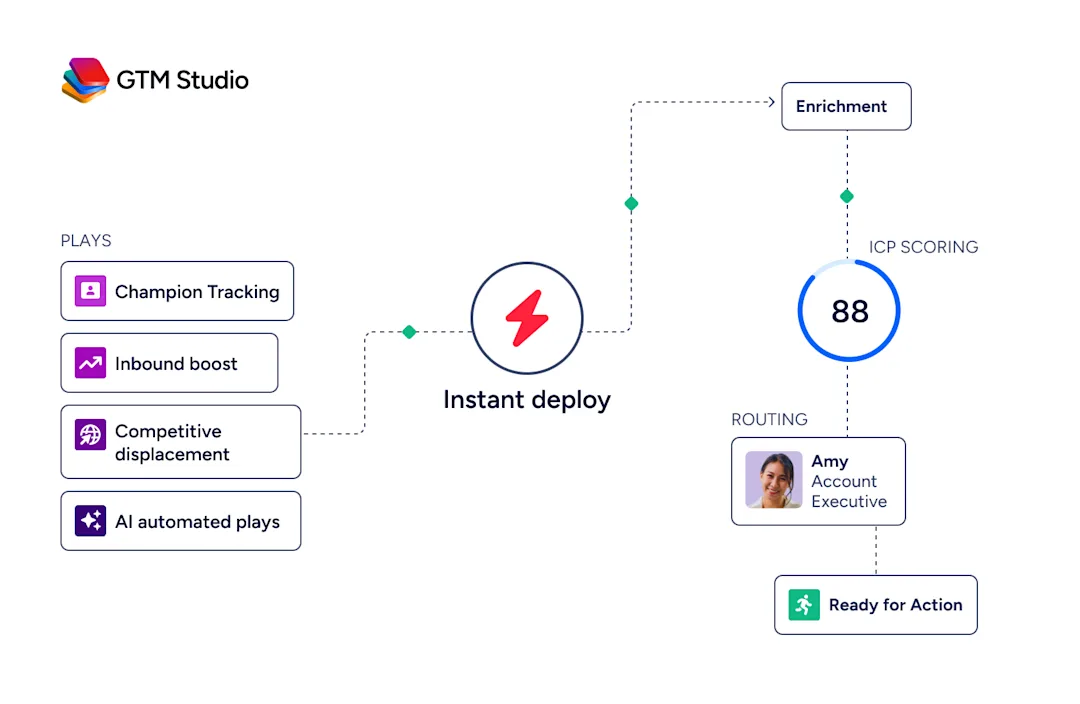
Rather than customizing a CRM, ZoomInfo integrates with your existing CRM through native connectors for Salesforce, HubSpot, and Microsoft Dynamics, and through APIs and MCP for custom integrations. GTM Studio lets RevOps teams build audiences and launch plays using natural language rather than configuration screens, and pre-built GTM plays launch in one click.
Source: ZoomInfo
AI capabilities at different stages of maturity
All three platforms have AI, but the depth and application vary.
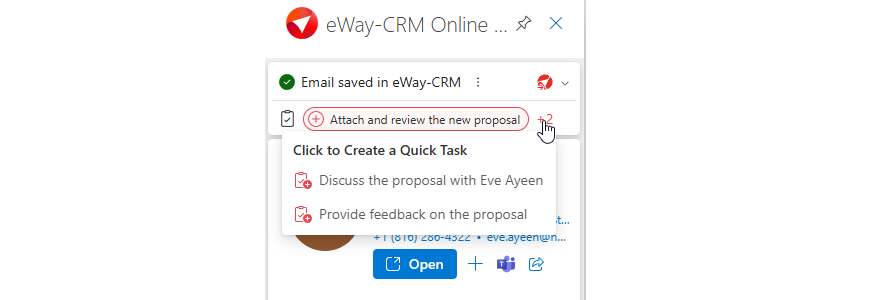
eWay-CRM's AI focuses on reducing manual data entry within Outlook.
It analyzes email tone and urgency, summarizes messages, extracts contact details from email signatures, and suggests follow-up tasks based on email content. These features save time for email-heavy workflows, but they don't extend to deal intelligence, lead scoring, or predictive analytics.
Source: eWay-CRM
SugarCRM's AI ambitions are larger.
The company has rebranded to SugarAI and positions the platform as a "precision selling" system that guides reps toward their highest-value actions. Sugar sales-i uses AI to analyze ERP buying patterns and surface cross-sell and churn signals.
However, many AI capabilities (intelligent lead prioritization, Revenue Intelligence, generative AI, sentiment analysis) are gated behind the entry-level tier, requiring the Premier plan at $135/user/month or a separate purchase. The gap between Sugar's AI marketing and what's included at the Standard tier is worth noting during evaluation.
ZoomInfo's AI operates at a different scale.
The GTM Context Graph processes 1.5B+ data points daily, analyzing CRM data, conversation transcripts, intent signals, and behavioral patterns to identify why deals move or stall. GTM Workspace delivers AI-drafted outreach that addresses specific objections from prior conversations, account briefs generated in seconds, and an action feed of in-market buyers with pre-drafted next steps. These capabilities are powered by Anthropic's Claude and trained on ZoomInfo's proprietary data, not generic models.
Source: ZoomInfo
"They've built a full system of execution. GTM Intelligence works the list, writes the outreach, triggers the play, and helps drive predictable growth." — Ian Brodie, CEO & Co-Founder, Levanta (Levanta case study)
Integration ecosystems reflect different strategic bets
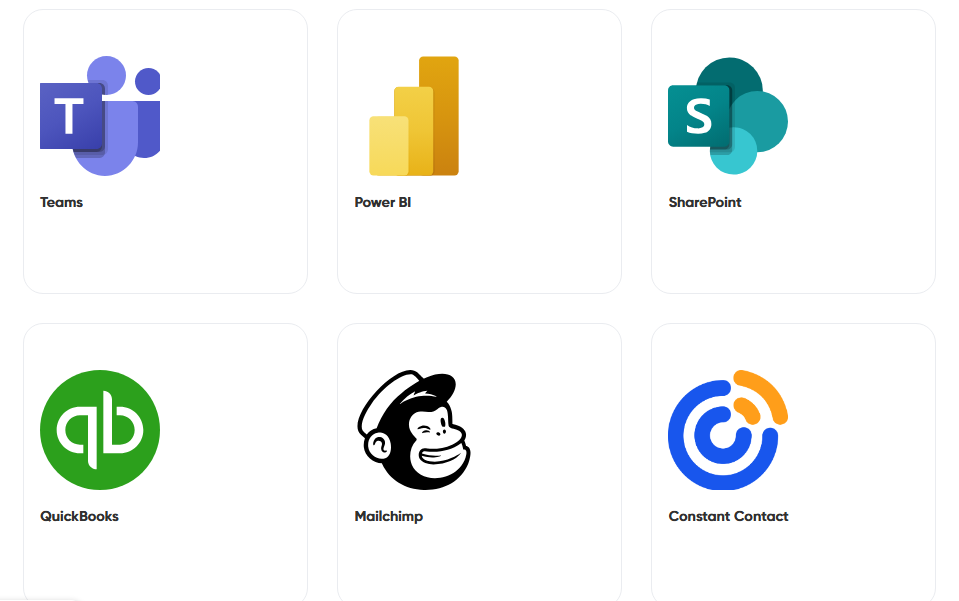
eWay-CRM has gone deep on Microsoft. Beyond the core Outlook plugin, it integrates with Teams, Power BI, SharePoint, and Power Automate.
Marketing integrations cover Mailchimp and Constant Contact. Additional connectors include QuickBooks (paid add-on), Zapier, Adobe Sign, and 3CX for telephony. For Microsoft-first teams, this is a well-rounded ecosystem. For teams outside the Microsoft world, options are limited.
Source: eWay-CRM
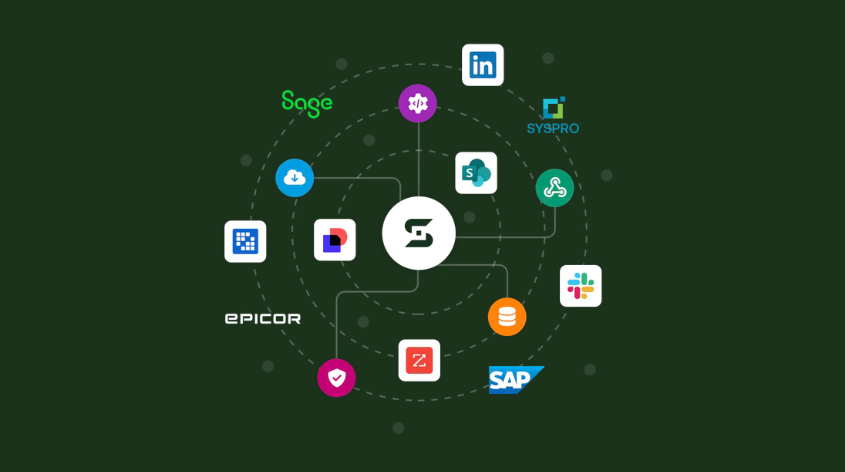
SugarCRM has built its integration identity around ERP connectivity. The 180+ ERP integrations (SAP, Oracle, Epicor, Syspro, Sage, and more) form the backbone.
The SugarAI Marketplace extends into telephony (PhoneBurner, Microsoft Teams), marketing (SugarChimp for Mailchimp), customer support (Zendesk), AI meeting intelligence (Fireflies), and project management (Jira). The marketplace includes a 100% satisfaction guarantee with a 30-day refund policy. However, some Capterra reviewers note that SugarCRM's coverage of modern SaaS tools beyond ERP connectors is less mature than competing platforms.
Source: Sugar AI
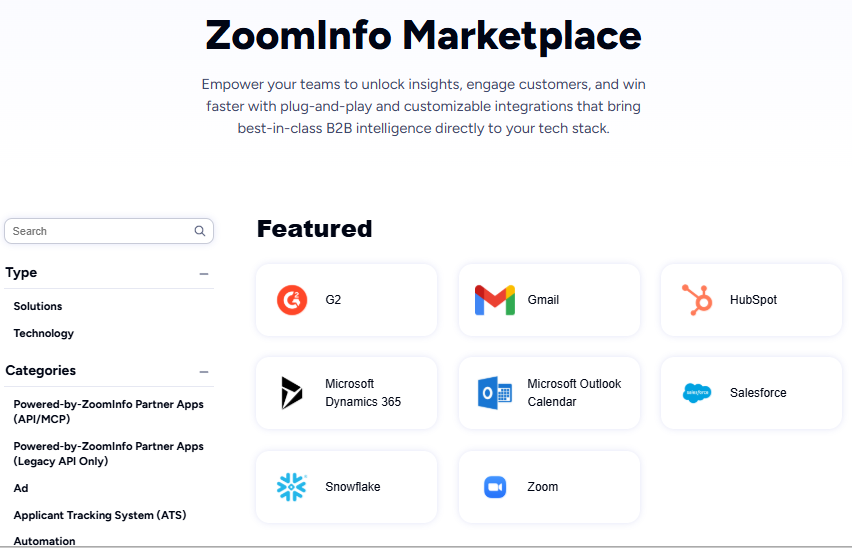
ZoomInfo operates a Marketplace with 172+ integration partners spanning CRM, marketing automation, sales engagement, data warehouses, and AI platforms.
Featured native integrations include Salesforce, HubSpot, Microsoft Dynamics 365, Snowflake, and Claude. The Cloud Partners program delivers data into AWS, Google Cloud, Snowflake, and Databricks. That breadth makes ZoomInfo the most versatile of the three for fitting into an existing tech stack.
Source: ZoomInfo
Pricing structures reveal different target markets
The pricing models tell you exactly who each platform is built for.
eWay-CRM is the most accessible entry point.
The free plan supports unlimited users with core CRM basics: manual email saving, deal tracking, basic workflows, and 200 MB of cloud storage. Paid plans start at $20/user/month (Lite), adding AI features, task reminders, and expanded storage. The recommended Standard plan at $27/user/month unlocks automatic email saving, advanced workflows, and module-level permissions. The Plus plan at $40/user/month adds timesheets, resource planning, and field-level permissions.
Annual billing saves roughly 10%, and three-year commitments save about 25%. A 14-day free trial at the Plus tier requires no credit card.
SugarCRM starts at a higher floor.
Sugar Sell Standard costs $59/user/month with a 15-user minimum, meaning the minimum annual commitment is $10,620. The Advanced tier at $85/user/month adds mail and calendar integration, case management, and standard support. AI features like intelligent lead prioritization, Revenue Intelligence, and generative AI require the Premier tier at $135/user/month or a separate purchase. Sugar offers a 7-day free trial but no permanent free tier.
ZoomInfo uses consumption-based pricing with no publicly listed prices.
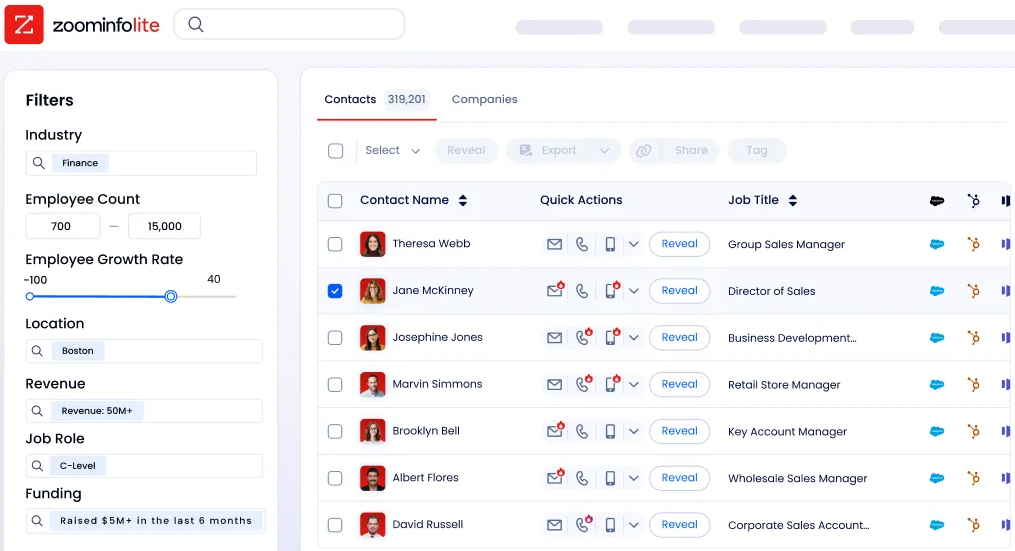
ZoomInfo Lite is a permanent free tier offering access to the B2B database with 10 monthly export credits, website visitor identification, and HubSpot integration. Paid plans are custom-quoted based on seats, credit volume, and features. A 7-day free trial with expanded access is also available.
Source: ZoomInfo
For a 10-person team, eWay-CRM Standard costs $3,240/year. SugarCRM still requires paying for 15 seats: $10,620/year at minimum. That gap reflects a real difference in target customer. eWay-CRM prices for the small business owner who needs shared contact management. SugarCRM prices for the VP of Sales at a manufacturer who needs pipeline intelligence across a sales floor.
Security and deployment options
All three platforms offer cloud and on-premises deployment, a meaningful capability for regulated industries.
eWay-CRM holds ISO/IEC 27001 certification and uses SSL encryption with Cloudflare protection. Cloud hosting uses OVH US (Virginia) for North American clients and Cloud4com (Czech Republic) for EU clients. GDPR compliance tools are built into the admin center. On-premises deployment gives teams full control over data residency.
SugarCRM carries a broader certification stack: SOC 2 Type II, ISO/IEC 27001:2022, CSA STAR Registry, GDPR, CCPA, and EcoVadis. SugarCloud runs on AWS with data residency options in Australia, Germany, the UK, and the US. All data is encrypted in transit and at rest. Multi-factor authentication is required on all systems. On-premises deployment is available through Sugar Enterprise.
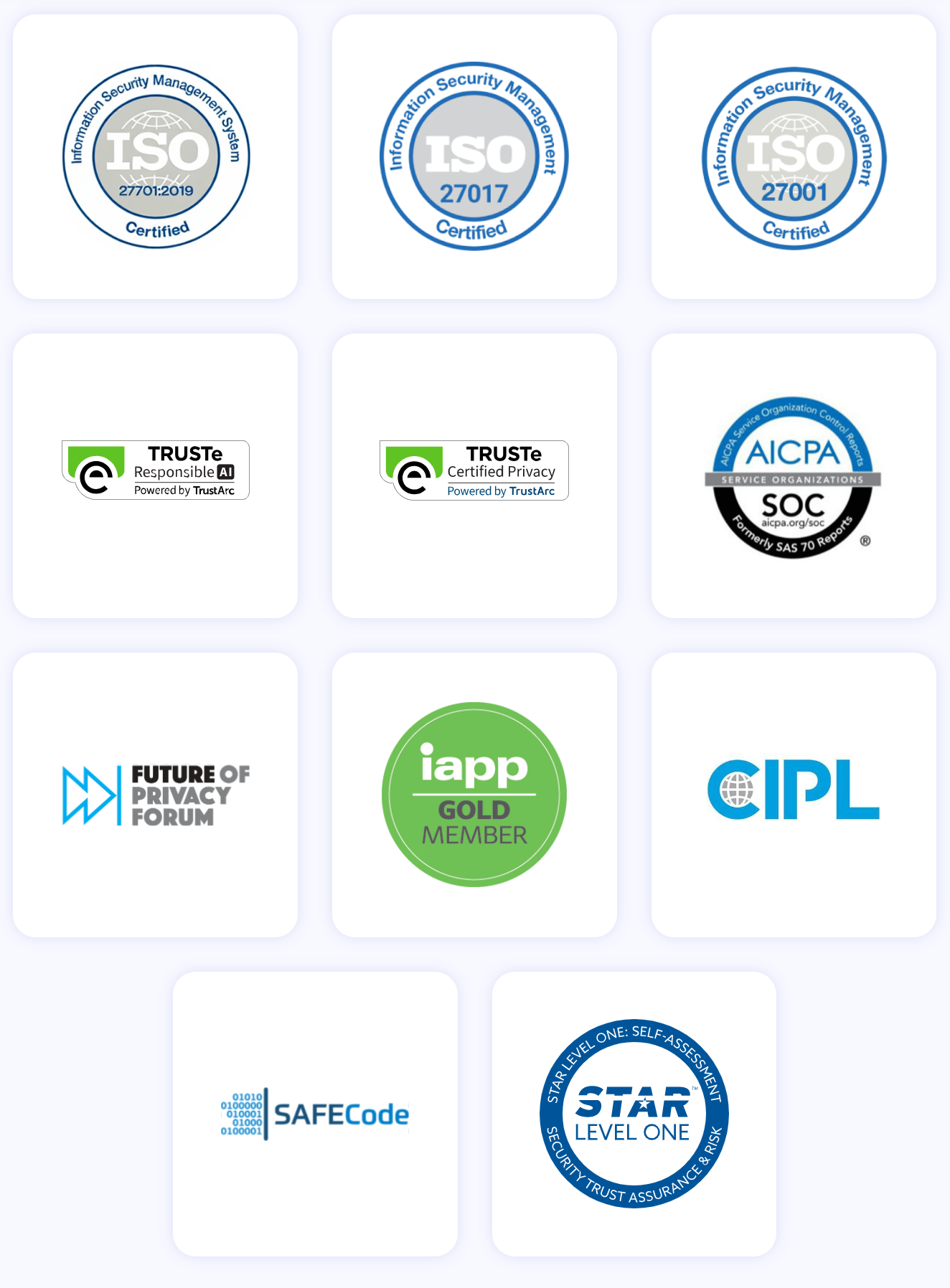
ZoomInfo maintains ISO 27001, ISO 27701, SOC 2 Type II, TRUSTe GDPR, and TRUSTe CCPA certifications, all renewed annually. ZoomInfo is a registered data broker in California and Vermont, with a dedicated Trust Center at trust.zoominfo.com.
Support models reflect company scale
eWay-CRM earns a 4.6/5 customer service rating on Capterra, with 96% of relevant reviews calling support "prompt, knowledgeable, and helpful." Support covers US and European time zones. The company offers remote assistance via TeamViewer, a formal Adoption Framework, live masterclasses, and professional services at $960/day.
The catch: support is tiered. The free plan gets community support only. Email support starts at Lite. Phone support requires Plus ($40/user/month).
SugarCRM structures support across three tiers: Basic (Standard plan), Standard (Advanced plan), and Enhanced (Premier plan, which adds live chat and priority phone). Support operates across US, EMEA, and APAC regions.
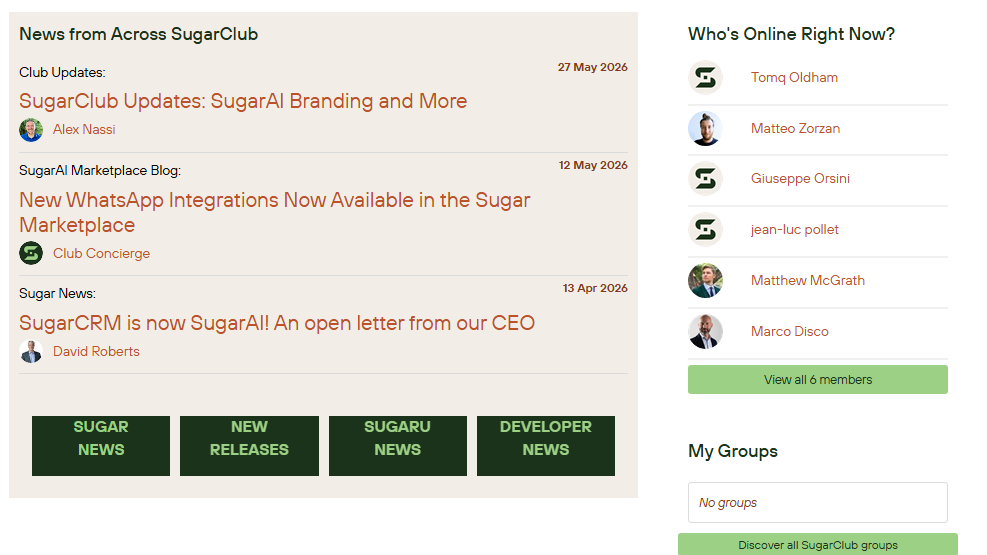
The SugarClub community provides peer forums, product-specific help, and developer resources. Sugar University offers certifications and structured training. Support explicitly excludes third-party integrations and code-level customizations, directing heavily customized deployments to the partner network.
Source: SugarCRM
ZoomInfo provides five support resources through its Help Center: Knowledge Center, ZoomInfo University, Release Notes Hub, Resource Center, and the Modern GTM Community. Direct support is available via phone at +1 866-904-9666.
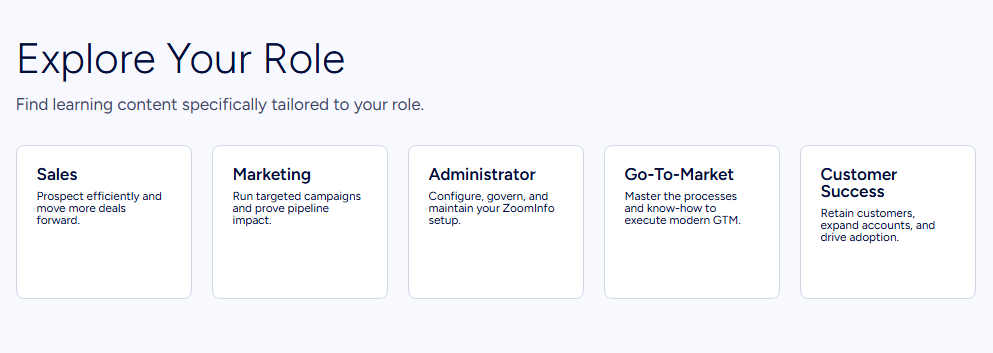
ZoomInfo University offers role-specific learning paths and product certifications. The company's redesigned onboarding program (expanded from 30 to 90 days) produced a 25% improvement in customer satisfaction scores.
Source: ZoomInfo
eWay-CRM vs. SugarCRM vs. ZoomInfo: Which should you choose?
The right choice depends on what problem you're solving and how your team works today.
Choose eWay-CRM if:
Your team lives in Microsoft Outlook and resists adopting separate tools
You need both sales pipeline tracking and project delivery management in one place
You're a small or mid-sized team with fewer than 15 salespeople
Budget is a constraint and you want to start free
Your CRM needs center on email management, contact sharing, and workflow automation
Choose SugarCRM if:
You're a mid-market manufacturer, wholesaler, or distributor with 15+ sellers
Your sales intelligence depends on ERP transaction data (order history, buying patterns, reorder cycles)
You need AI deal prioritization and cross-sell alerts embedded in the sales workflow
Both cloud and on-premises deployment options matter for compliance
You have the budget and organizational discipline for a dedicated CRM platform
Choose ZoomInfo if:
Accurate, verified contact data is the foundation your sales team needs
You want buying signals and intent data to tell you which accounts to prioritize and when
Your sellers need AI-generated account intelligence and outreach, not just a database to log activities in
You want a platform that powers any CRM rather than replacing it
You're building an AI GTM motion that connects data, intelligence, and execution
Start with ZoomInfo Lite for free, or request a demo to see the full platform.
The distinction between these three tools comes down to scope. eWay-CRM manages your existing relationships inside the tool your team already uses. SugarCRM adds intelligence from your ERP to reveal what your existing customers should be buying. ZoomInfo provides the data layer that ensures you're reaching the right people with the right message at the right time, whether you use eWay-CRM, SugarCRM, or any other CRM as your system of record.
For many B2B teams, the most effective stack combines a CRM that fits their workflow with a data platform that feeds it verified intelligence. The CRM manages the relationship. ZoomInfo makes sure the relationship starts on solid ground.
"ZoomInfo gives us the information we need to execute. It's already there, so we can be three steps ahead." — William Kenimer, VP of Revenue Operations, Vensure (Vensure case study)
eWay-CRM vs. SugarCRM vs. ZoomInfo FAQ
What is the core difference between eWay-CRM, SugarCRM, and ZoomInfo?
eWay-CRM is an Outlook-native CRM that turns Microsoft Outlook into a shared platform for managing contacts, deals, and projects.
SugarCRM is a standalone B2B sales platform that connects to ERP systems to surface buying patterns and cross-sell opportunities for mid-market manufacturers, wholesalers, and distributors.
ZoomInfo is an AI GTM platform that provides verified B2B contact data, buying signals, and account intelligence to power prospecting and outreach across any CRM.
Which platform is cheapest for a small sales team?
eWay-CRM is the most affordable, with a permanently free plan for unlimited users and paid plans starting at $20/user/month. SugarCRM's 15-user minimum means the entry cost is $10,620/year even for teams with fewer than 15 people. ZoomInfo Lite is a free permanent tier with 10 monthly export credits; paid plans are custom-quoted.
Can I use ZoomInfo with eWay-CRM or SugarCRM?
ZoomInfo integrates natively with Salesforce, HubSpot, and Microsoft Dynamics. For eWay-CRM and SugarCRM, ZoomInfo's data can flow through its API, MCP server, or via intermediary tools like Zapier and Power Automate. ZoomInfo works as a data and intelligence platform that complements your CRM rather than replacing it.
Which platform is best for manufacturers and distributors?
SugarCRM is built for this audience. Its Sugar sales-i product connects to 180+ ERP systems and analyzes transactional data to surface cross-sell gaps, churn risks, and reorder opportunities. eWay-CRM serves manufacturing teams through its project management capabilities but lacks ERP intelligence.
Which platform has the best AI capabilities?
ZoomInfo's AI operates at a different scale, with a GTM Context Graph processing 1.5B+ data points daily to provide account intelligence, AI-drafted outreach, and buying signal detection. SugarCRM's AI focuses on ERP-pattern analysis and deal prioritization, though many AI features require the Premier tier at $135/user/month. eWay-CRM's AI handles email tone analysis, contact extraction, and task suggestions within Outlook.
Does eWay-CRM work outside of Microsoft Outlook?
eWay-CRM offers an online version for Microsoft 365 (accessible via browser on Mac and PC), a Microsoft Teams add-in, and mobile apps for iOS and Android. However, the product is architecturally designed around Outlook. Teams using Gmail, Apple Mail, or other email clients have no meaningful path to adoption.
What are the main weaknesses of each platform?
eWay-CRM's most common complaint is that the Outlook plugin can slow down Outlook load times and occasionally crash, especially on older hardware.
SugarCRM's 15-user minimum prices out smaller teams, its mobile app is consistently described as slow and buggy by reviewers, and its learning curve is steep for non-technical users.
ZoomInfo does not publish pricing, requiring a sales conversation to evaluate cost, and its full capabilities require enterprise-level investment.
Which platform offers on-premises deployment?
Both eWay-CRM and SugarCRM support on-premises deployment, giving organizations full control over data residency. eWay-CRM's on-premises option is available across all plan tiers. SugarCRM's on-premises version is sold as Sugar Enterprise (starting at $85/user/month with a 10-user minimum). ZoomInfo is cloud-only.
Want more eWay-CRM and SugarCRM comparisons? These breakdowns go deeper:
