

Choosing between GoHighLevel and Salesforce often comes down to five questions:
Are you a marketing agency managing multiple clients, or an enterprise scaling a sales organization?
Do you want one flat monthly fee, or per-user pricing that grows with your team?
Do you need a white-label platform you can resell, or CRM customization with thousands of integrations?
Is your priority consolidating marketing tools, or building complex sales processes with enterprise governance?
Does your team have CRM administrators, or do you need something you can configure without a consultant?
In short, here's what we recommend:
GoHighLevel is the all-in-one marketing and sales platform built for agencies and small businesses. It replaces five to ten separate tools (CRM, email marketing, SMS, funnel builder, scheduling, reputation management) with a single subscription starting at $97/month, with unlimited contacts and users on every plan. Agencies can white-label the platform and resell it under their own brand, creating a recurring SaaS revenue stream. Where GoHighLevel falls short is enterprise depth: its CRM lacks the customization, reporting granularity, and ecosystem breadth that larger sales organizations require, and the learning curve is steep despite the "all-in-one" promise.
Salesforce is the world's #1 CRM by market share, serving over 150,000 companies with clouds for sales, service, marketing, commerce, and 17 industry verticals. Its Agentforce AI platform, AppExchange ecosystem (9,000+ apps, 14+ million installs), and enterprise customization make it the standard for mid-market and enterprise organizations. The trade-off is cost and complexity: per-user pricing starts at $25/month but realistic configurations land at $175+/user/month, and over 70% of implementations are partner-led, adding real expense on top of license fees.
Both platforms handle different parts of the sales and marketing stack well. But neither solves a more basic problem: knowing who to target, when they're ready to buy, and how to reach them with verified contact information. That data layer is where the entire stack succeeds or fails.
ZoomInfo is a B2B data and GTM platform built on a database of 500M contacts, 100M companies, 135M+ verified phone numbers, and 200M+ verified business emails. Its GTM Context Graph processes 1.5B+ data points daily, fusing this data with your CRM records, conversation transcripts, and behavioral signals to reveal not just what's happening in your pipeline, but why deals move or stall. ZoomInfo integrates with Salesforce and works alongside platforms like GoHighLevel through its APIs and MCP, so your team gets the same intelligence regardless of which platform they use.
If the quality of your B2B prospecting data is holding your pipeline back, see how ZoomInfo works with your existing stack.
GoHighLevel vs. Salesforce at a glance
GoHighLevel | Salesforce | ZoomInfo | |
|---|---|---|---|
Primary audience | Marketing agencies, SMBs | Mid-market to enterprise | B2B sales, marketing, and RevOps teams |
Core function | All-in-one marketing/sales platform | Enterprise CRM + application platform | B2B data intelligence + GTM execution |
Contacts/users | Unlimited on all plans | Per-seat, per-contact limits | 500M+ contact database |
White-label/resell | Yes (SaaS Mode) | No | No |
CRM depth | Basic pipelines, contact management | Deep customization, enterprise workflows | CRM enrichment + deal intelligence |
AI capabilities | Voice AI, Conversation AI, Content AI | Agentforce autonomous agents | GTM Context Graph, AI account research |
Marketing tools | Email, SMS, funnels, social, reputation | Marketing Cloud (separate product) | ABM, intent signals, audience targeting |
App ecosystem | 500+ marketplace integrations | 9,000+ AppExchange apps | 172+ marketplace integrations |
B2B contact data | None | None | 500M contacts, 135M+ verified phones |
Pricing model | Flat monthly fee ($97–$497/mo) | Per-user ($25–$550/user/mo) | Custom/consumption-based |
Free option | 14-day trial | Free CRM (2 users) | ZoomInfo Lite (permanent free tier) |
Two platforms solving different problems
GoHighLevel and Salesforce aren't competitors. Comparing them is like comparing a Swiss Army knife built for camping with an industrial toolbox built for a factory floor. Both are tools. They were built for different people doing different work.
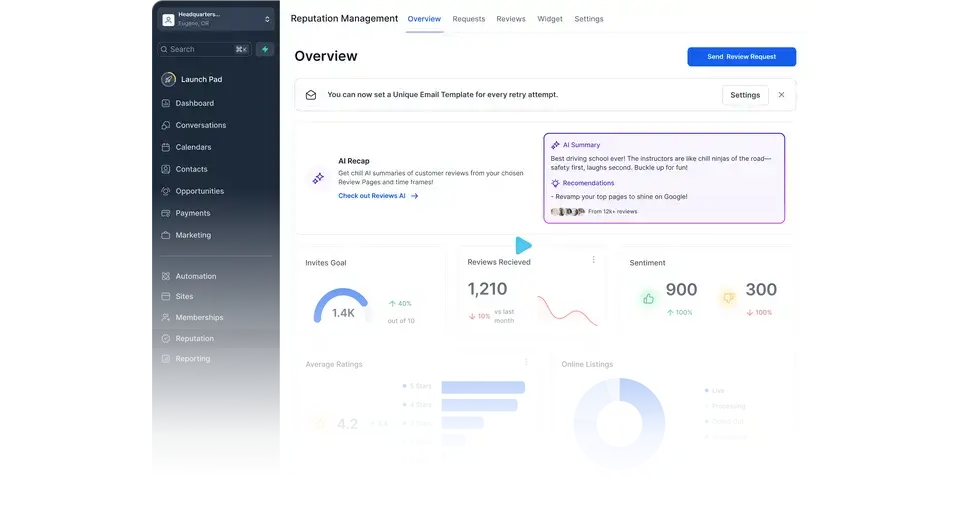
GoHighLevel started in 2018 as a platform for marketing agencies tired of managing a dozen separate subscriptions for every client. The solution: bundle CRM, landing pages, email, SMS, scheduling, reputation management, and course hosting into one platform, then let agencies white-label it and sell it as their own software. That white-label model, which GoHighLevel calls SaaS Mode, is the defining feature no competitor at this price point matches.
Source: GoHighLevel
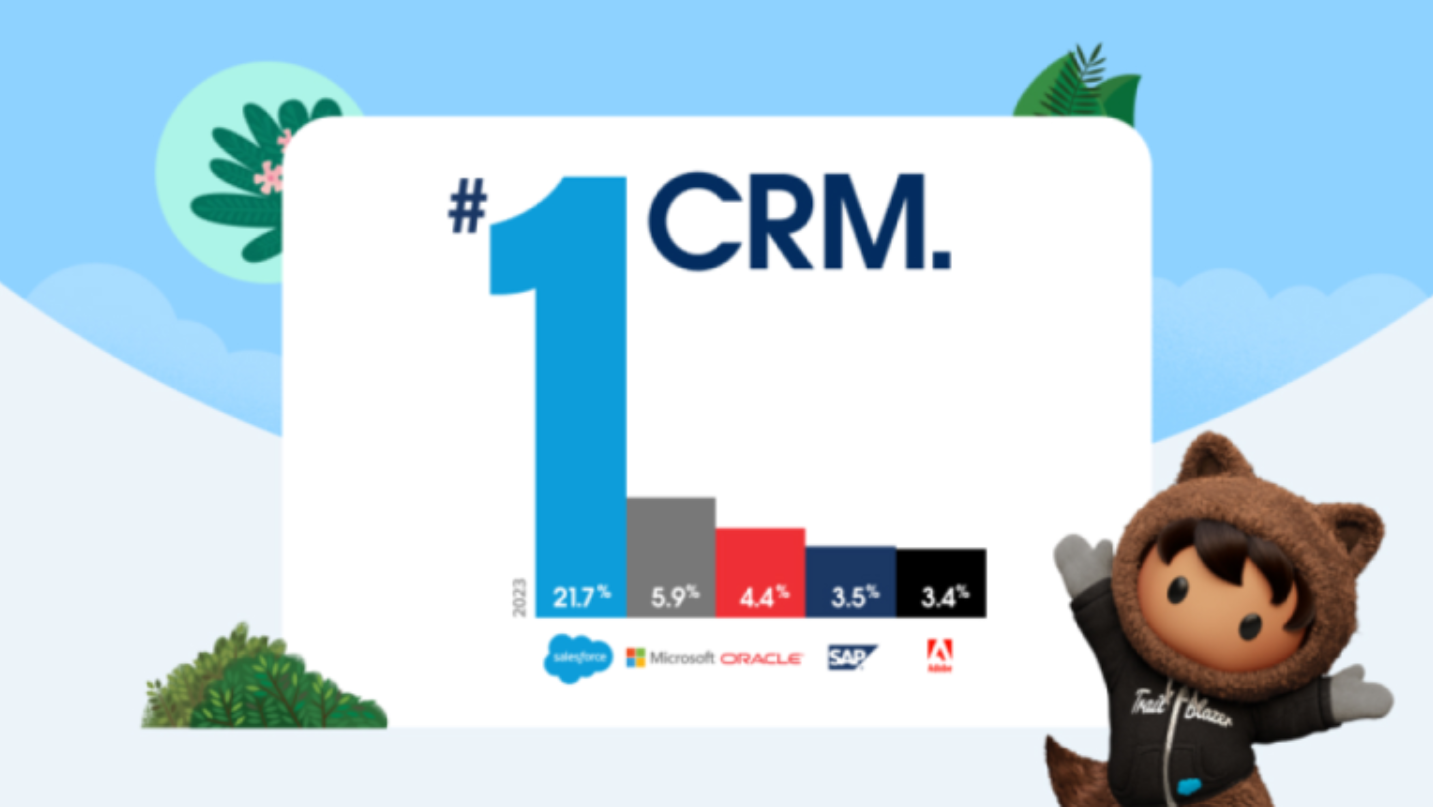
Salesforce started in 1999 as the company that ended installed enterprise software, delivering CRM through the cloud when that was a radical idea. Twenty-six years and $41.5 billion in annual revenue later, it has become the operating system for enterprise sales, service, and marketing. It has held the #1 CRM market share position for over a decade and holds Gartner Magic Quadrant Leader positions across six product categories.
Source: Salesforce
The question isn't which is "better." It's which fits your organization's needs.
GoHighLevel wins on marketing breadth, Salesforce on CRM depth
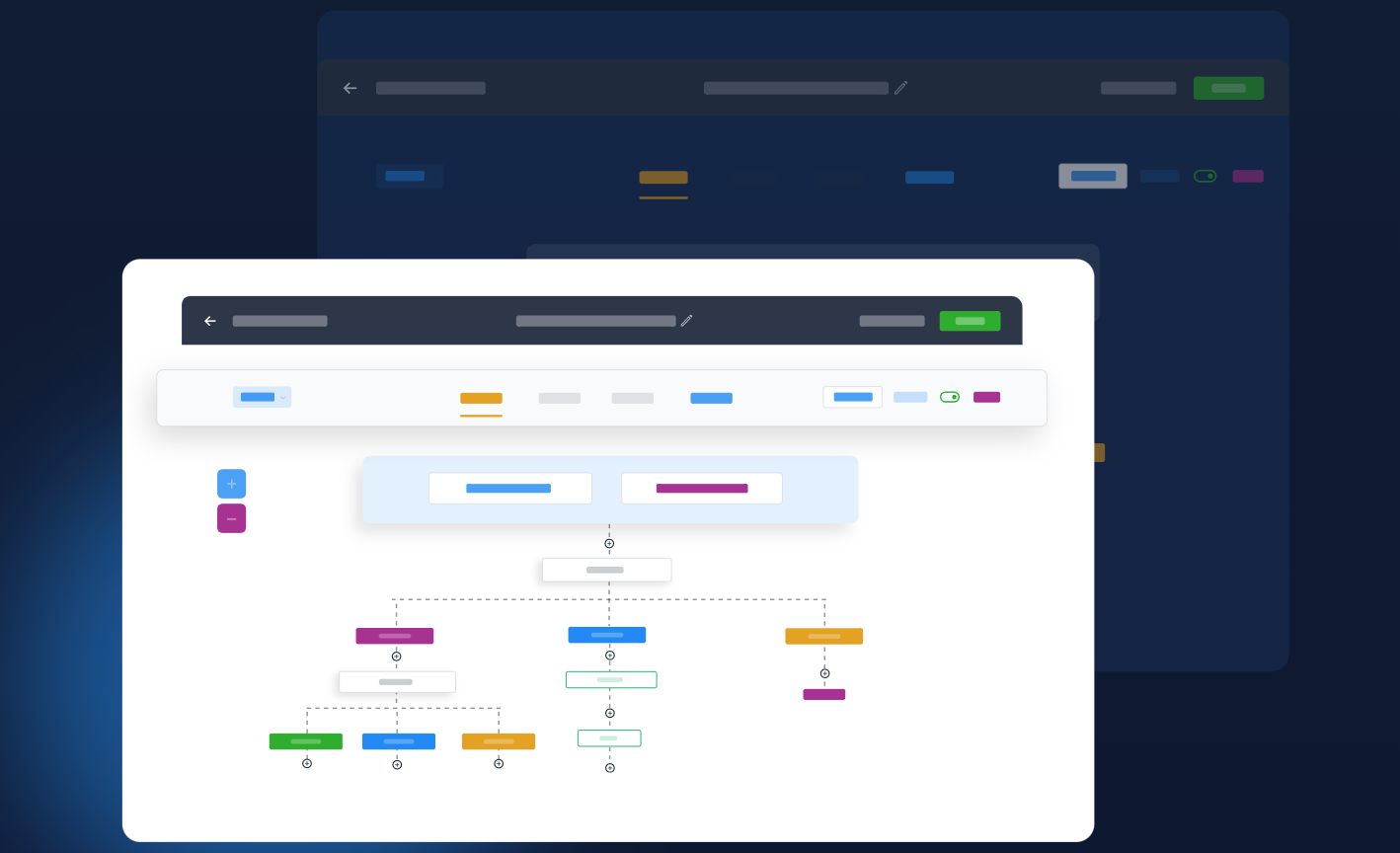
GoHighLevel packs a lot of tools into one platform. A single subscription includes a no-code website and funnel builder with 1,000+ templates, email and SMS marketing, a visual workflow automation engine (125 billion executions across nearly a million locations in 2025), appointment scheduling (179M appointments booked to date), reputation management with automated review requests, course hosting, community management, and payments with six processors.
Source: GoHighLevel
For agencies, this breadth is the point. One platform, one login, one bill for everything a local business client needs. The Snapshot system lets agencies clone entire client setups (workflows, funnels, email templates, custom fields) from one account to another, so onboarding a new client doesn't mean rebuilding from scratch.
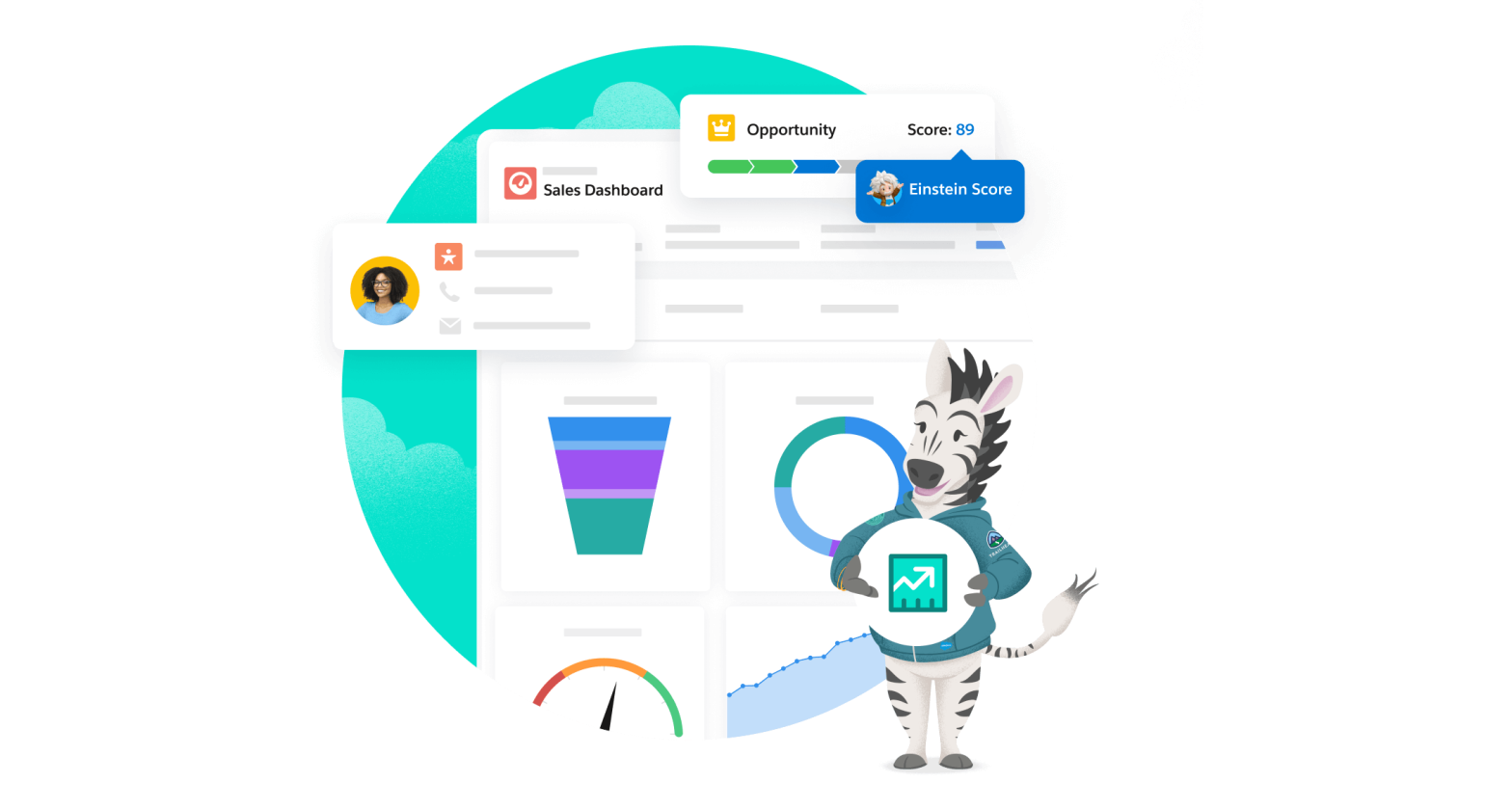
Salesforce's CRM goes deeper, but narrower. Sales Cloud offers Einstein Lead Scoring, AI-generated account plans with SWOT analysis, pipeline health signals, consumption forecasting, and Revenue Lifecycle Management covering CPQ, contract lifecycle, and subscription management. The pipeline management alone offers capabilities GoHighLevel's Kanban board can't match: multi-dimensional forecasting, territory optimization, and partner relationship management with shared pipelines.
Source: Salesforce
Salesforce also offers Service Cloud for customer support (omnichannel case management, knowledge bases, field service), Commerce Cloud for storefronts, and 17 industry clouds for verticals from financial services to healthcare. These are entire product lines, not features bolted onto a CRM.
The trade-off is focus. GoHighLevel gives agencies everything they need to deliver marketing services to SMB clients. Salesforce gives enterprises the CRM depth to manage complex, multi-stage sales cycles with large teams. Using GoHighLevel for enterprise pipeline management will frustrate you. Using Salesforce to build funnels and manage online reviews for a local dentist will bankrupt you.
Data quality determines results on either platform
Here's what GoHighLevel and Salesforce share: they're execution platforms, not intelligence platforms. GoHighLevel can send a thousand SMS messages in minutes. Salesforce can manage a pipeline worth millions. But neither can tell you whether those messages are reaching real decision-makers with accurate phone numbers, or whether your pipeline reflects actual buying intent rather than stale leads.
This gap matters because the cost of bad data compounds. An email sequence to unverified addresses tanks your sender reputation, and future emails from the same domain get filtered to spam. A pipeline full of contacts who changed jobs six months ago gives leadership false confidence in forecasts. A sales rep spending hours researching accounts manually is doing work that AI should handle.
ZoomInfo exists to close this gap. The platform's multi-source verification pipeline, backed by 300+ human researchers, achieves up to 95% accuracy on first-party data. In a Fortune 500 competitive RFP analyzing 25 million contacts across vendors, an independent consultant concluded that "no other competitor came even close."
Beyond contact data, ZoomInfo's Buyer Intent tracks signals from 210 million IP-to-Organization pairings, identifying companies actively researching relevant products. Guided Intent, exclusive to ZoomInfo, identifies topics historically correlated with deal success rather than requiring manual topic selection. And WebSights resolves anonymous website visitors to companies, including buying team identification and direct contact information.
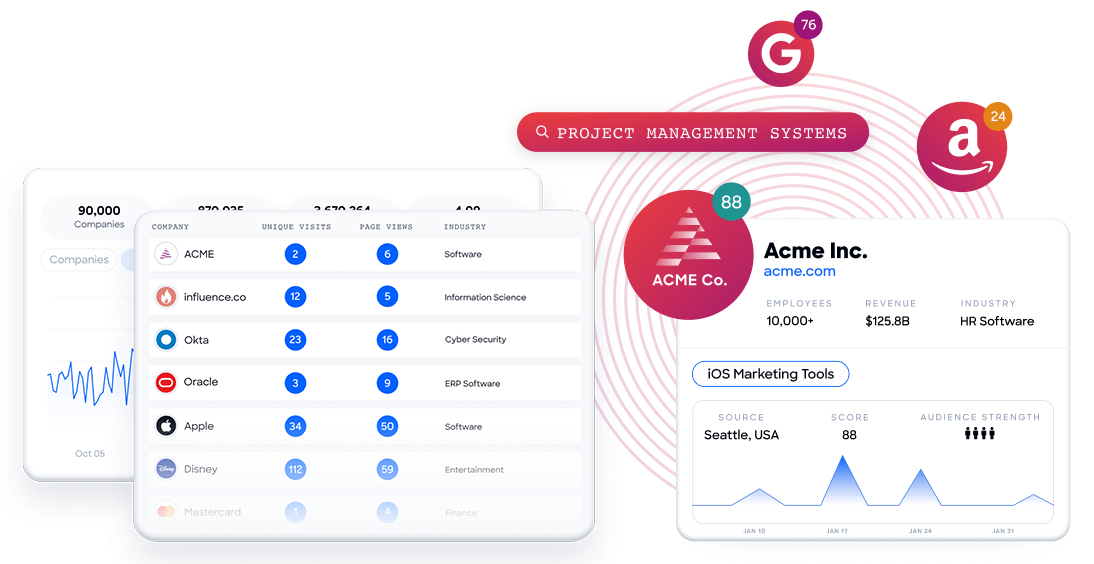
This intelligence works regardless of which execution platform a team uses. Salesforce teams access it through a native integration. GoHighLevel teams access it through API connections and workflow triggers. The data is the same.
"ZoomInfo has literally changed the way we go to market." (Impartner)
AI capabilities take different paths
Both platforms have invested in AI, but the implementations reflect their audiences.
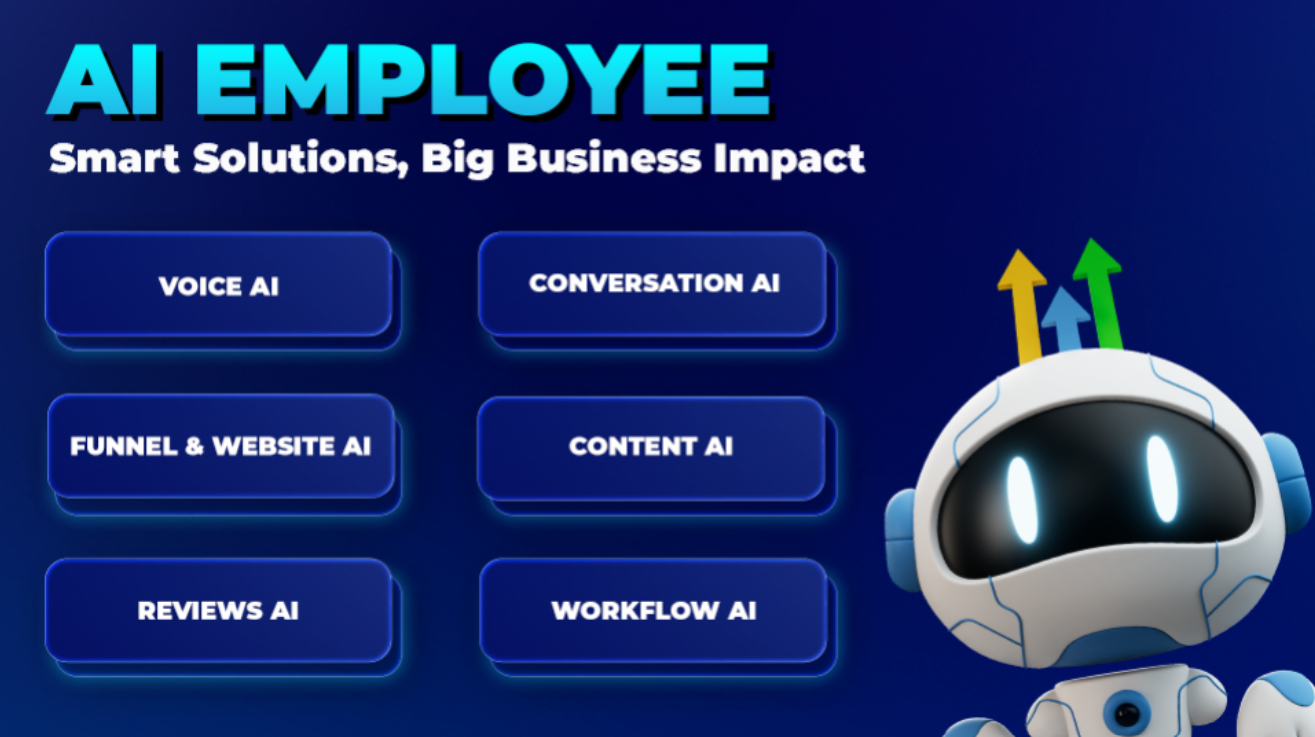
GoHighLevel's AI suite spans Voice AI (handling inbound and outbound calls around the clock, with over 7 million AI voice calls processed in 2025), Conversation AI (automating SMS, web chat, and social messaging), and Content AI (generating social posts, email sequences, and blog content). The $97/month AI Employee add-on bundles these into an unmetered plan per sub-account. The Workflow AI Builder accepts plain-language descriptions and generates complete automation workflows in under 30 seconds.
Source: GoHighLevel
This is practical AI for agency operations: a voice agent that answers calls and books appointments for a local business, a chatbot that qualifies leads on a website, a content generator that drafts social posts in a client's brand voice. It handles the volume work that agencies need to scale without adding headcount.
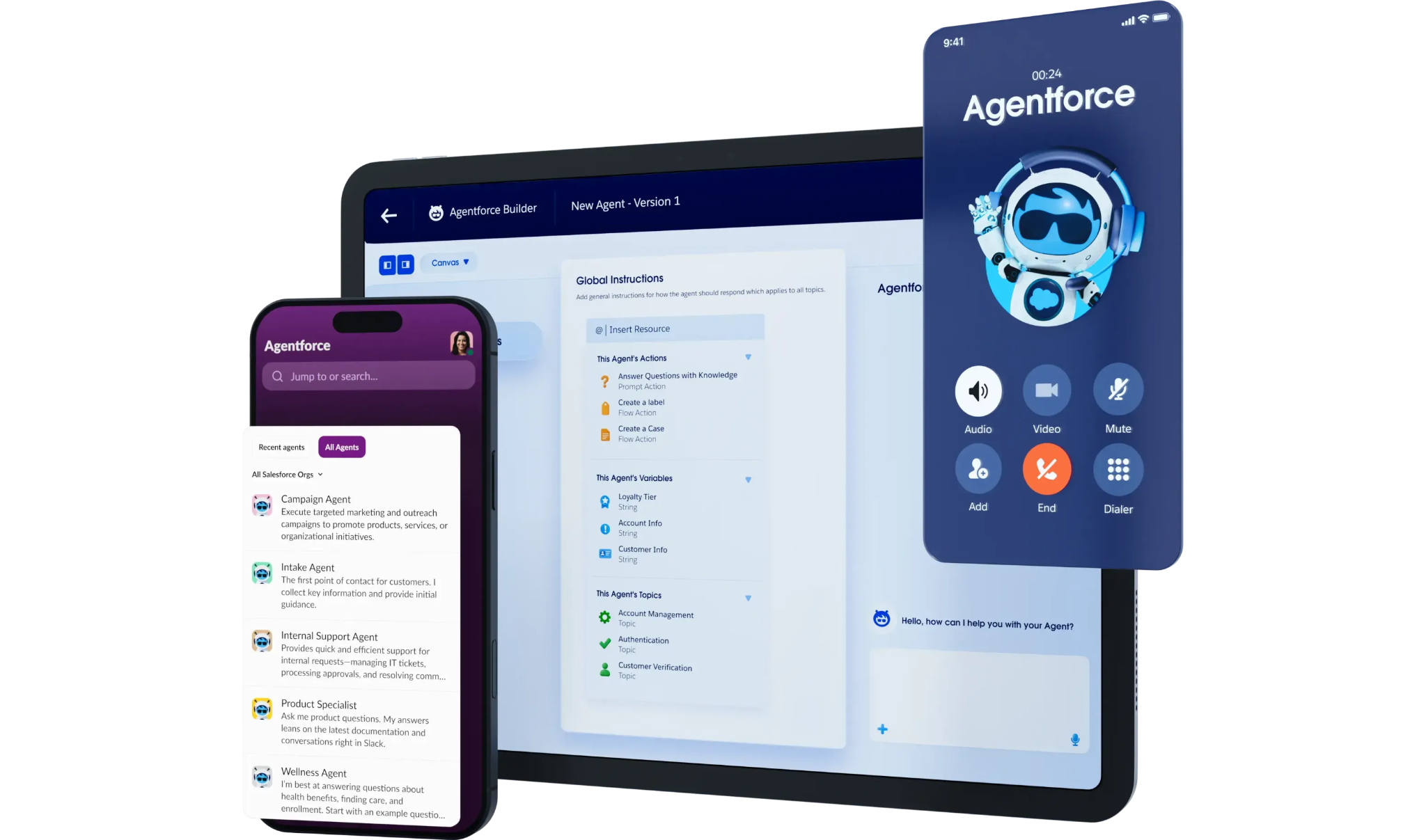
Salesforce's Agentforce operates at a different scale. Powered by the Atlas Reasoning Engine, Agentforce deploys autonomous AI agents that don't just assist but execute tasks: prospecting, lead engagement, sales coaching, account research, and customer service resolution.
The Einstein Trust Layer adds enterprise governance: zero data retention with LLM partners, PII masking, toxicity detection, and full audit trails. For regulated industries, this infrastructure is non-negotiable.
Source: Salesforce
But both platforms share a limitation: their AI is only as good as the data it can access. GoHighLevel's Voice AI can answer calls, but it can't tell you which prospects to call. Salesforce's Agentforce can research accounts, but only accounts already in your CRM. Neither provides external B2B intelligence (verified contact data, intent signals, market context) that determines whether AI-powered outreach reaches real buyers or disappears into dead inboxes.
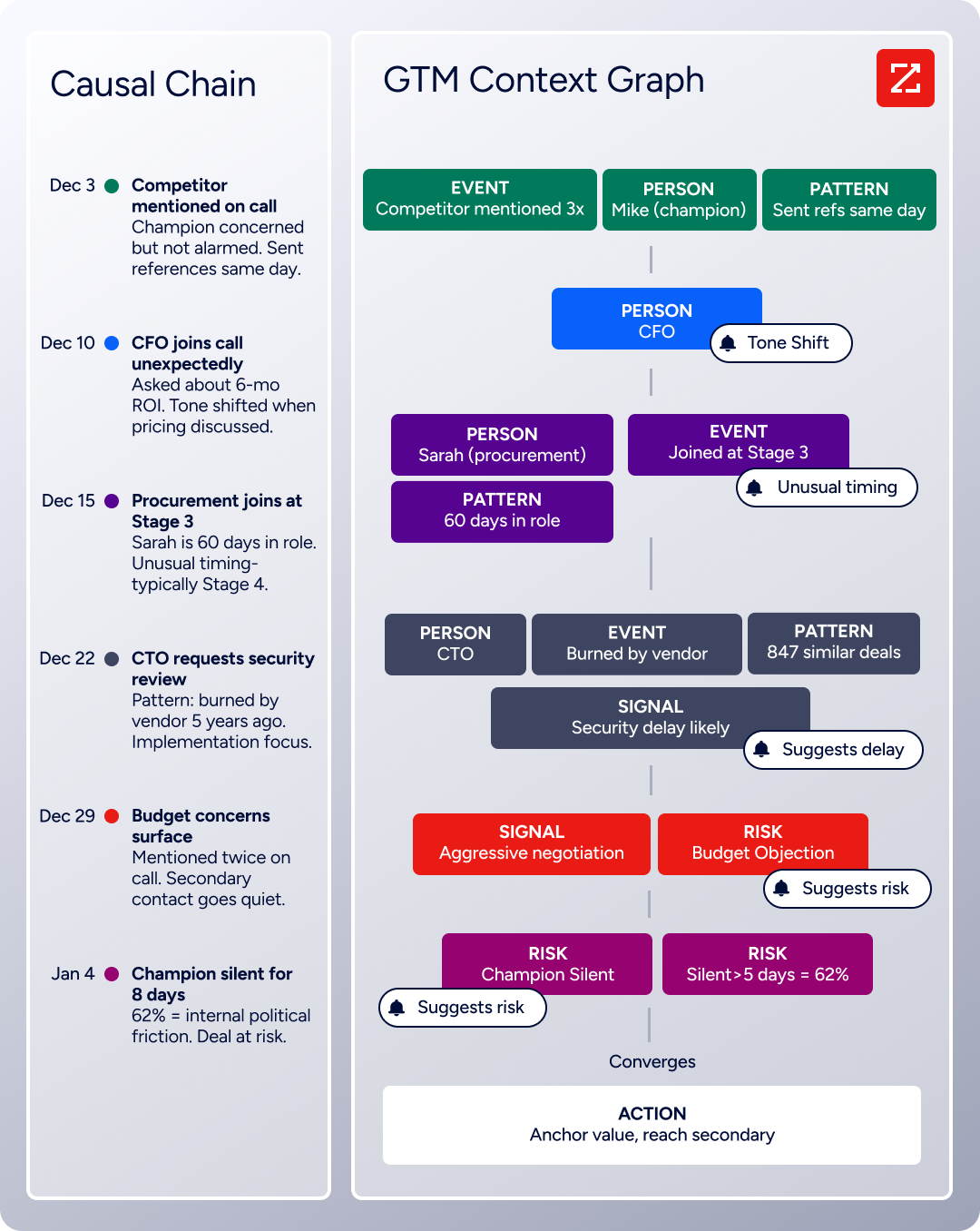
ZoomInfo's GTM Context Graph exists to solve this. It processes 1.5B+ data points daily, fusing ZoomInfo's B2B data with a customer's CRM records, conversation transcripts, and behavioral signals to understand not just what's happening in a deal, but why. A CRM records that a deal moved stages. Conversation intelligence captures what the VP of Finance said on the last call. Intent data shows the company researching your competitor. The GTM Context Graph connects all three to surface which accounts to prioritize, which stakeholders to engage, and what message will resonate, then delivers that intelligence into GTM Workspace for sellers or any third-party tool via APIs and MCP.
"That combination of our internal CRM data, external signals, and AI that's given all that context has helped us craft very specific account- and persona-based messages. And people have responded to them right away." (Seismic)
The integration question separates agencies from enterprises
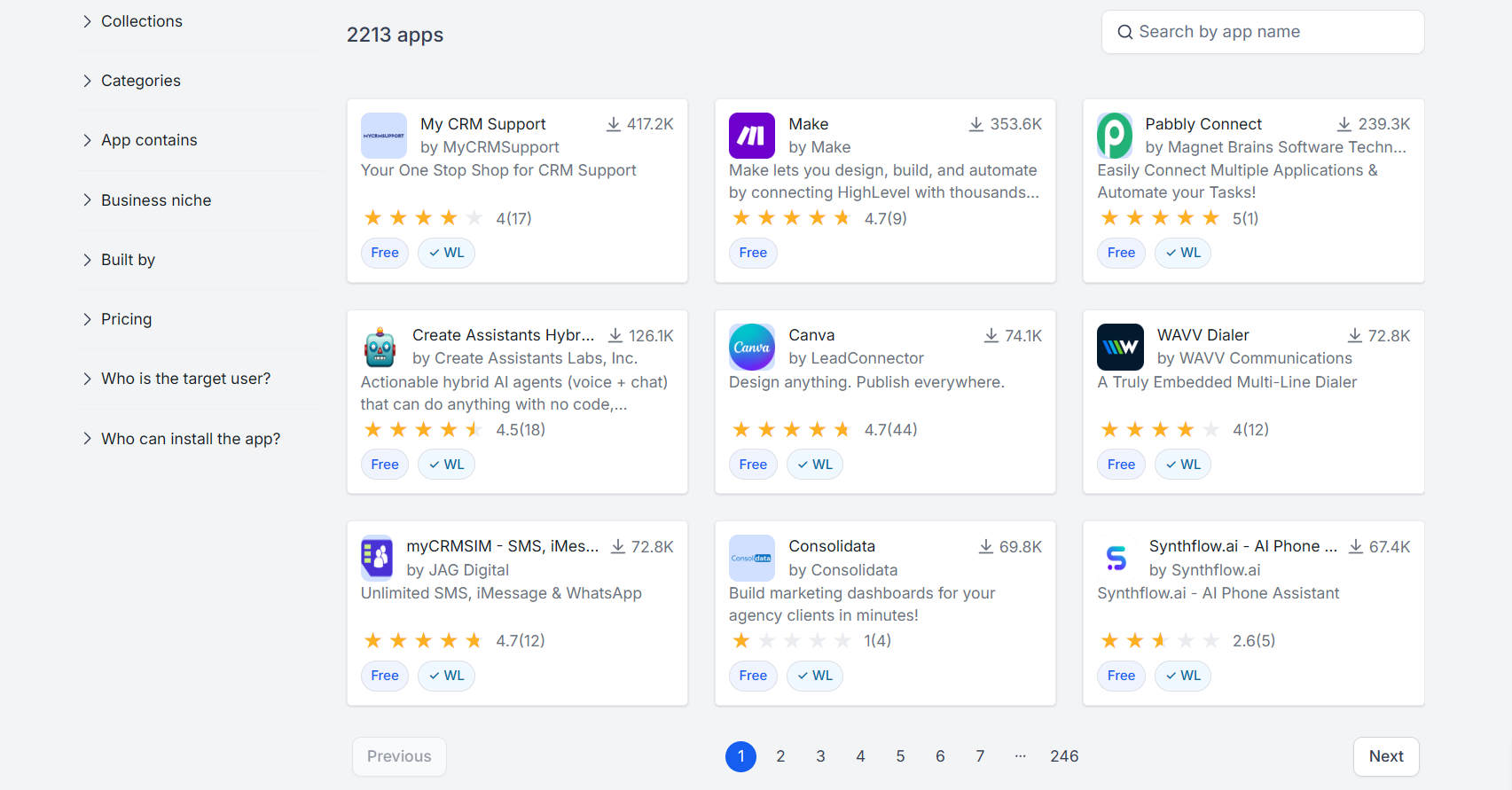
GoHighLevel's App Marketplace connects to 500+ tools with click-to-install workflows, including Google Workspace, Calendly, Zoom, QuickBooks, Shopify, and Slack. It has official integrations with Zapier and Make.com, plus a REST API (v3, in development as of April 2026) with OAuth 2.0 authentication and 40+ documented resource areas. API access requires the Unlimited plan ($297/month) at minimum.
Source: GoHighLevel
For agencies managing small business clients, this coverage works. Most clients need Google, Facebook, Stripe, and a handful of other tools. GoHighLevel's native breadth means many integrations are unnecessary because the platform already includes the functionality.
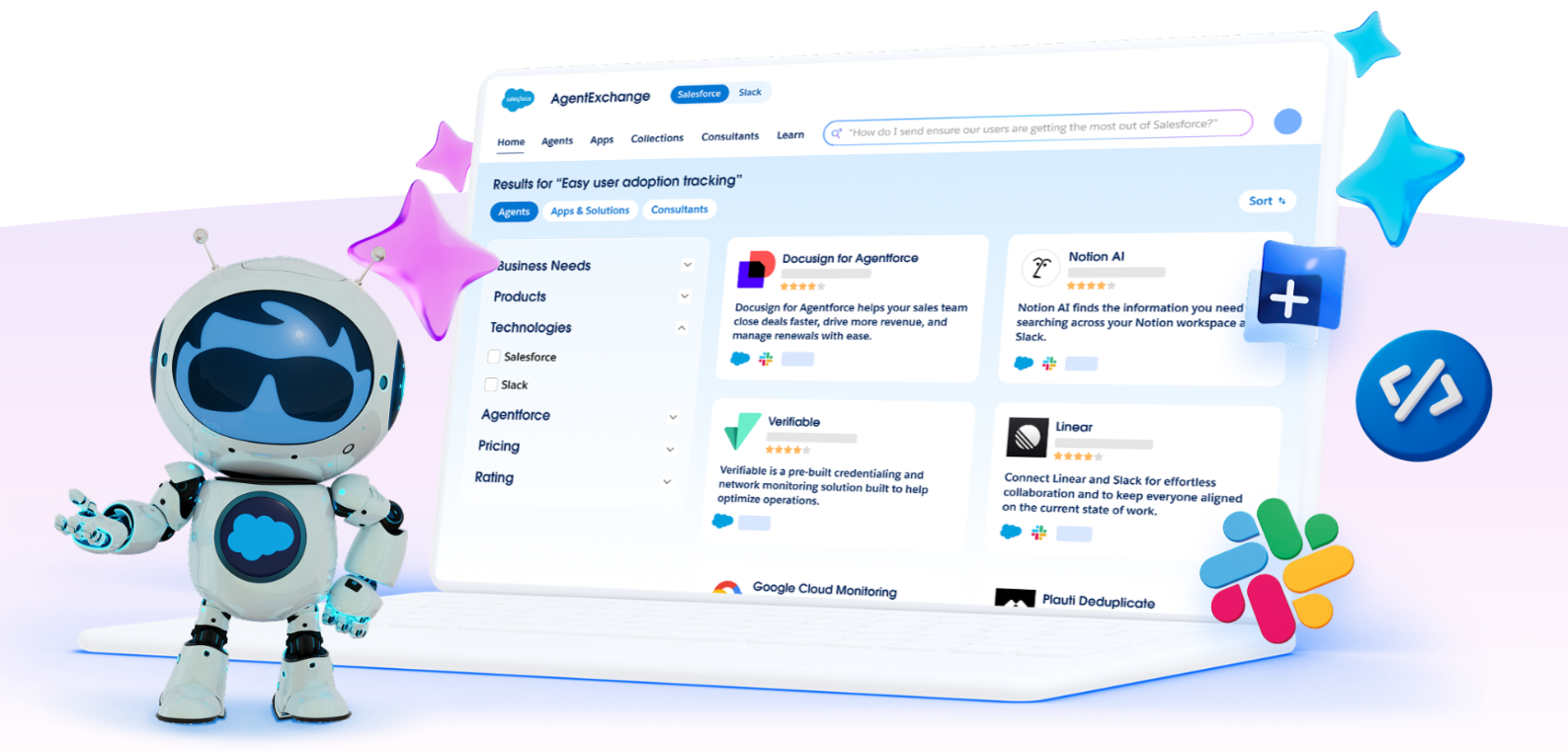
Salesforce's integration depth is in a different category. AppExchange hosts 9,000+ partner apps with 14+ million installs. MuleSoft, Salesforce's integration platform (acquired for $6.5B), provides hundreds of pre-built connectors for enterprise systems like SAP, Oracle, Workday, and ServiceNow. The Salesforce Platform enables custom app development with low-code (Flow, App Builder) and pro-code (Apex, Lightning Web Components) tools. For enterprises with complex system landscapes, this extensibility is a requirement, not a luxury.
Source: Salesforce
ZoomInfo connects to both ecosystems. Its native Salesforce integration enriches CRM records with verified contact data, intent signals, and company intelligence within Salesforce. For GoHighLevel users, ZoomInfo data flows through API integrations and Zapier/Make workflows. The ZoomInfo MCP server also enables any MCP-compatible AI agent (including Claude and ChatGPT) to access ZoomInfo's B2B data natively, regardless of which CRM or marketing platform a team uses.
"The plug-and-play aspect of the API means I can integrate it very easily into any process and get information at a moment's notice." (BDO Canada)
Learning curve and implementation realities
GoHighLevel's learning curve is well-documented. The platform's breadth is both its biggest selling point and its biggest onboarding barrier. G2 and Capterra reviewers flag the same issue: "There is a large learning curve. Implementation takes quite a while." The platform ships features faster than it documents them (2,300+ releases in 2025), so help docs frequently lag behind the product.
GoHighLevel addresses this with 24/7 live support through chat, Zoom, email, and phone, plus HighLevel Academy for on-demand courses and certifications. The Agency LaunchPad onboarding experience walks new agency admins through setup with tutorial videos. For a technically comfortable agency owner, the ramp-up is weeks. For a non-technical SMB client using a white-labeled version, it can be months without agency hand-holding.

Source: GoHighLevel
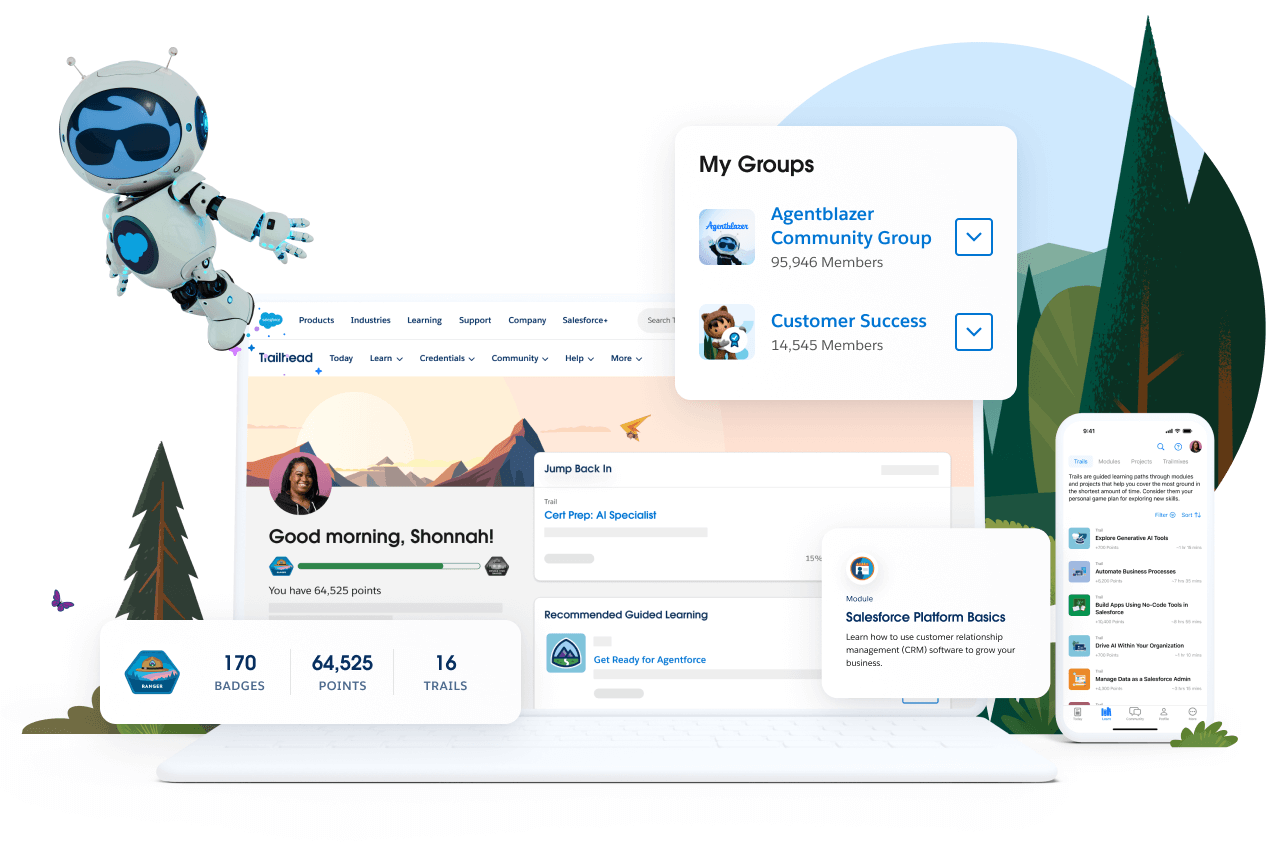
Salesforce's learning curve is steeper but better resourced. The platform requires trained administrators for anything beyond basic configuration. Trailhead, Salesforce's free learning platform, has 6+ million learners and 1,500+ badges, and it's widely regarded as one of the best enterprise training programs in software. The Trailblazer Community spans 20 million members across 1,300+ local groups in 90 countries.
Source: Salesforce
Implementation timelines vary widely. A simple Sales Cloud deployment can take weeks. An enterprise multi-cloud rollout (Sales + Service + Marketing + Commerce) can take 3 to 12 months and typically requires a consulting partner. Implementation costs routinely run 100 to 150% of annual license fees. This is the cost of depth: Salesforce can do almost anything, but configuring it to do what you need takes real investment.
Reputation management and client-facing features favor GoHighLevel
For agencies serving local businesses, GoHighLevel includes capabilities that Salesforce doesn't offer at any price.
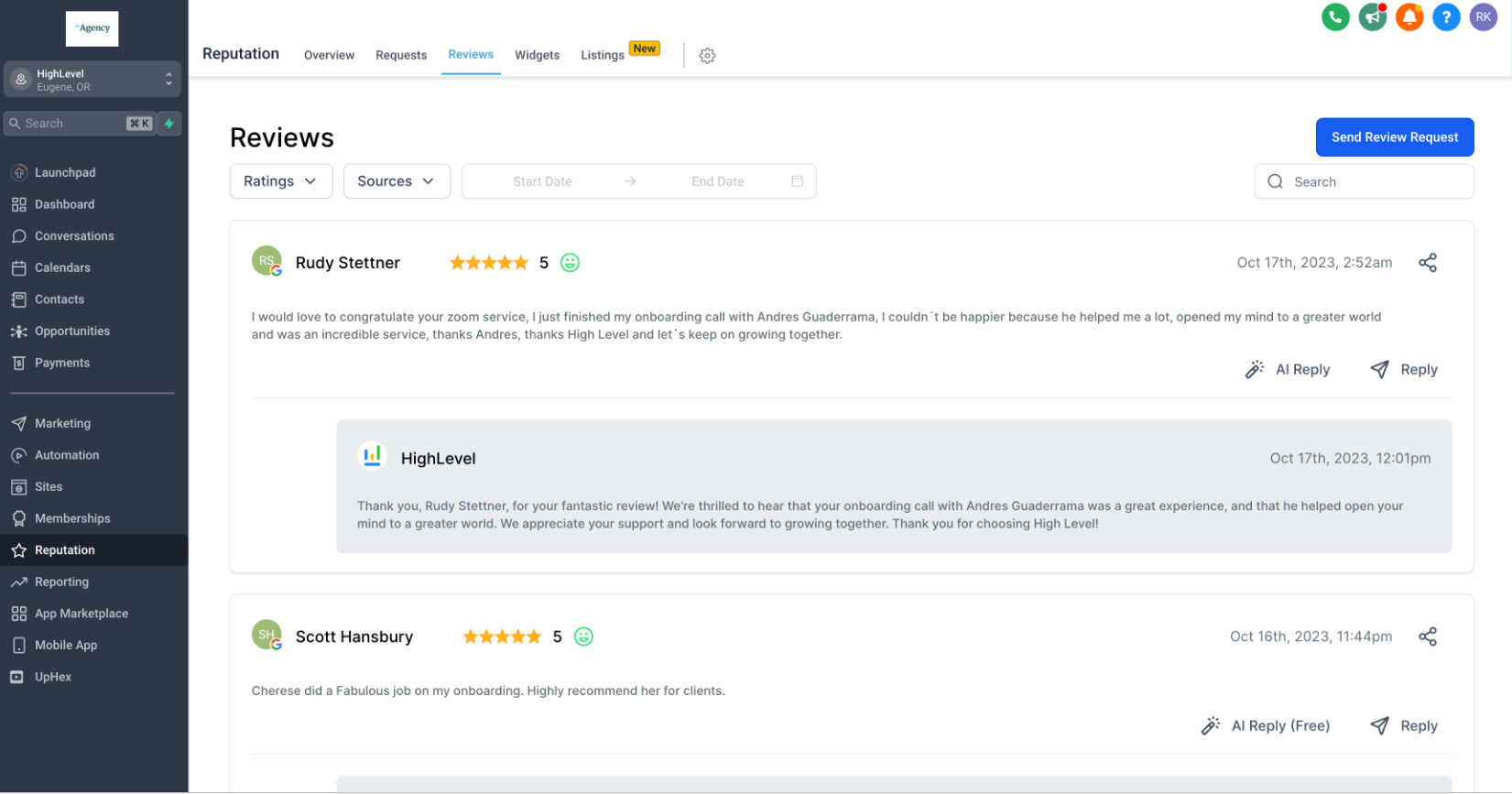
GoHighLevel's Reputation Management suite automates the entire review lifecycle: pipeline-triggered review requests via SMS, email, or WhatsApp; a feedback funnel that routes satisfied customers to public review platforms and unhappy ones to private forms; Reviews AI for auto-generated review responses; competitor benchmarking against up to three local competitors; and video testimonial collection. For a dentist, plumber, or real estate agent, this is table-stakes functionality. Salesforce has no equivalent.
Source: GoHighLevel
GoHighLevel also includes Courses and Communities for hosting online education and membership groups, with four unlock models (open, engagement-gated, payment-gated, and drip). Coaches, consultants, and trainers can build and monetize courses inside the same platform that manages their CRM and marketing. On Salesforce, you'd integrate a third-party course platform and manage the connection yourself.
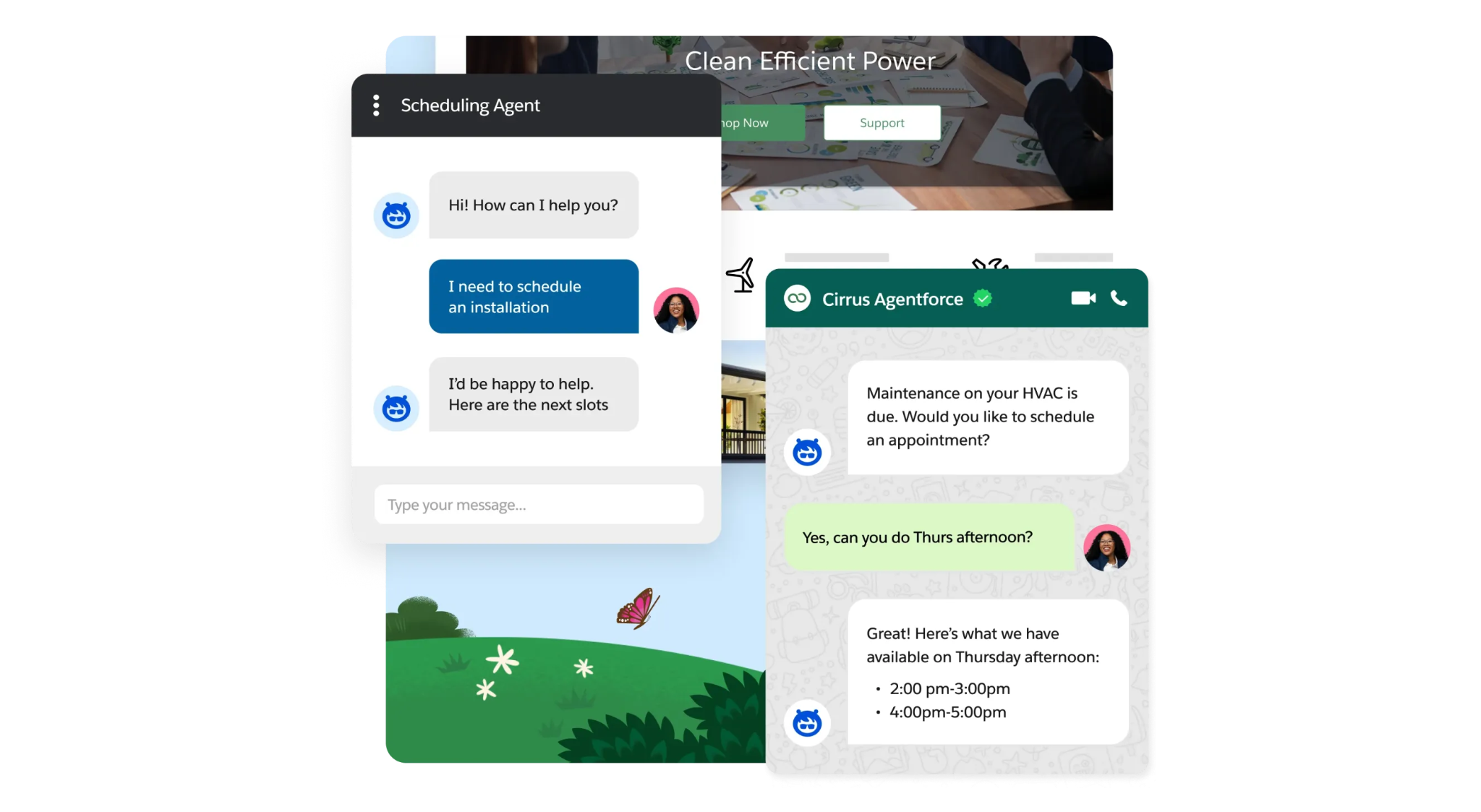
Salesforce excels in areas GoHighLevel doesn't touch: Field Service Management with AI scheduling and offline mobile apps, Commerce Cloud for enterprise storefronts serving over two billion shoppers globally, Tableau for enterprise analytics, and Slack as a collaboration layer with 5.2 billion messages sent weekly.
Source: Salesforce
These aren't comparable features. They're different categories of capability serving different business models.
Pricing structures reveal who each platform is for
This is where the difference between GoHighLevel and Salesforce becomes concrete.
GoHighLevel charges a flat monthly fee: $97/month for the Starter plan (3 sub-accounts), $297/month for Unlimited (unlimited sub-accounts), and $497/month for Agency Pro (SaaS Mode white-labeling). Every plan includes unlimited contacts and users. An agency running 50 client accounts on the Unlimited plan pays the same $297/month as an agency running 5.
Salesforce charges per user, per month. The Starter Suite runs $25/user/month, but most teams need at least the Enterprise edition at $175/user/month for AI features and workflow automation. The Unlimited edition runs $350/user/month. A 20-person sales team on Enterprise pays $3,500/month for CRM alone, before adding Marketing Cloud, Service Cloud, or any premium add-ons.
The math is straightforward. A five-person agency managing 30 clients pays GoHighLevel $297/month total. That same agency on Salesforce Enterprise pays $875/month for user seats alone, without marketing automation, funnel building, or reputation management (all separate products or additional licenses).
But Salesforce's pricing reflects a different value proposition. At enterprise scale, the per-user model comes with customization, industry-specific data models, and an ecosystem where 91% of customers use at least one AppExchange app. The premium pays for depth that GoHighLevel doesn't attempt.
What neither platform includes is the B2B data that makes sales outreach work. GoHighLevel can send unlimited emails and SMS. Salesforce can manage a pipeline. But both start empty. Your team still needs to find the right prospects, verify their contact information, and identify when they're ready to buy.
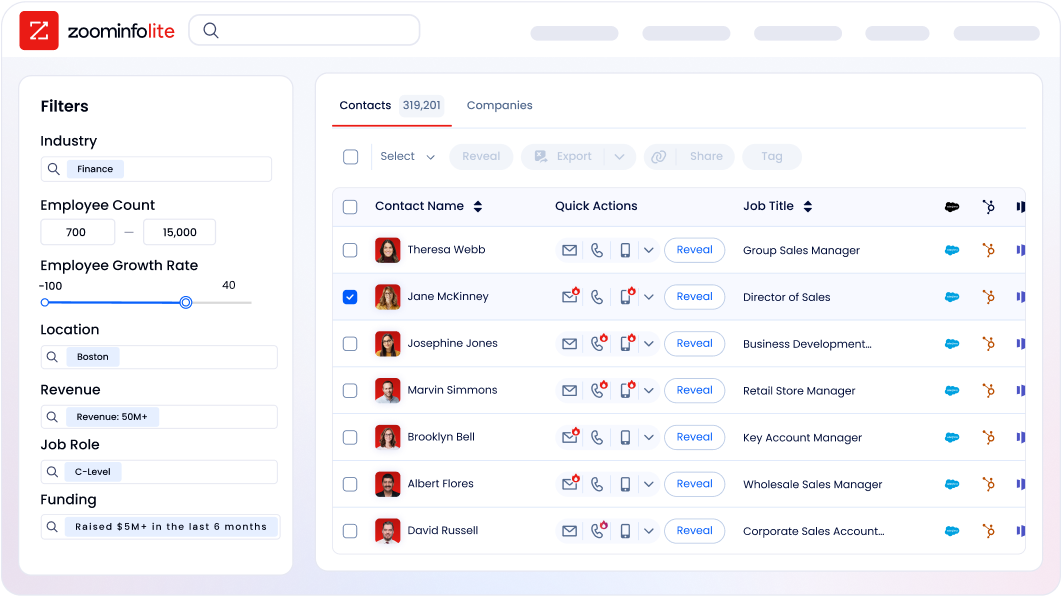
ZoomInfo fills that gap. Its database of 500M contacts with 135M+ verified phone numbers and 200M+ verified business emails provides the raw material both platforms need. Instead of paying three separate vendors and stitching data together, one platform covers contacts, company attributes, org charts, technographics, and buying intent signals. ZoomInfo offers a permanent free tier (ZoomInfo Lite) with database access and 10 monthly export credits, so teams can evaluate the data before committing to a paid plan.
"ZoomInfo gives us the information we need to execute. We don't have to go through and spend our time digging. It's already there, so we can be three steps ahead." (Vensure)
Security and compliance for different segments
GoHighLevel's security infrastructure runs on Google Cloud Platform, with TLS 1.2+ encryption in transit, AES-256 at rest, and SOC 2 Type II annual assessments. HIPAA compliance is available as a $297/month add-on, and the platform holds EU-U.S. Data Privacy Framework certification. For agencies serving healthcare, legal, or financial clients, the HIPAA add-on matters, though the cost adds up across multiple sub-accounts.
Salesforce operates at enterprise compliance scale. Certifications span ISO 27001/27017/27018, SOC 1/2/3, FedRAMP (Government Cloud), and HITRUST. Salesforce Shield provides event monitoring, platform encryption with bring-your-own-key, and field audit trails with indefinite retention. Hyperforce enables deployment on public cloud infrastructure with regional data residency across multiple countries. For organizations in regulated industries (financial services, government, healthcare), Salesforce's compliance portfolio is a checklist item that GoHighLevel cannot match.
ZoomInfo maintains its own certification stack, all renewed annually: ISO 27001, ISO 27701, SOC 2 Type II, and TRUSTe GDPR and CCPA validations. As a B2B data platform handling hundreds of millions of contact records, ZoomInfo is a registered data broker in California and Vermont, with a dedicated Trust Center for transparency.
GoHighLevel vs. Salesforce vs. ZoomInfo: Which should you choose?
The right choice depends on what your business needs, not which platform has the longest feature list.
Choose GoHighLevel if:
You're a marketing agency managing multiple SMB clients
You want to consolidate 5 to 10 separate tools into one platform
White-labeling and reselling software is part of your business model
You need reputation management, funnel building, and course hosting alongside CRM
Flat pricing with unlimited contacts matters more than CRM customization
Your clients are local service businesses, not enterprise accounts
Choose Salesforce if:
You're a mid-market or enterprise organization with a dedicated sales team
You need CRM customization, industry-specific data models, and enterprise compliance
Your sales process requires advanced forecasting, territory management, and CPQ
You want autonomous AI agents that execute tasks across sales, service, and marketing
Integration with enterprise systems (SAP, Oracle, ServiceNow) is a requirement
You have the budget and resources for implementation and ongoing administration
Add ZoomInfo to either platform if:
Your team spends too much time manually researching prospects and finding contact information
You need verified direct-dial phone numbers and business emails that reach decision-makers
Identifying which accounts are in-market would change how you prioritize outreach
You want AI-powered account intelligence and deal context, not just a static contact database
You need B2B data that works inside your existing CRM and execution tools, not locked in a separate silo
See how ZoomInfo's data and intelligence layer powers your existing stack with a free trial.
GoHighLevel and Salesforce each excel at what they were built to do: agency-scale marketing delivery and enterprise CRM, respectively. But execution is only half the equation. The teams that consistently outperform aren't just running better campaigns or managing cleaner pipelines. They're working from better data, reaching verified buyers at the right moment, with the right context. That's what ZoomInfo provides, and it works regardless of which platform sits underneath it.
GoHighLevel vs. Salesforce vs. ZoomInfo FAQ
What is the fundamental difference between GoHighLevel and Salesforce?
GoHighLevel is an all-in-one marketing and sales platform built for agencies and small businesses, bundling CRM, funnels, email/SMS marketing, reputation management, and course hosting into a flat monthly fee starting at $97/month with unlimited contacts and users. Salesforce is an enterprise CRM platform with clouds for sales, service, marketing, and commerce, priced per user starting at $25/month but typically running $175+/user/month for useful features, designed for mid-market and enterprise organizations with complex sales processes.
Which platform is cheaper for a small team?
GoHighLevel costs less at small scale. A five-person team pays $297/month total on the Unlimited plan with unlimited contacts and sub-accounts. The same team on Salesforce Enterprise pays $875/month for user seats alone, before adding marketing automation or other clouds. That said, Salesforce offers a free CRM tier for up to two users, and the Starter Suite at $25/user/month covers basic needs for small teams not ready for GoHighLevel's breadth.
Can GoHighLevel replace Salesforce for enterprise organizations?
No. GoHighLevel lacks the CRM customization, industry-specific data models, advanced forecasting, territory management, CPQ, and compliance certifications that enterprise organizations require. It also lacks the AppExchange ecosystem of 9,000+ apps and the partner network that supports complex Salesforce implementations. GoHighLevel was designed for agencies and SMBs, not enterprise sales operations.
How does ZoomInfo work with GoHighLevel and Salesforce?
ZoomInfo integrates with Salesforce through a native integration, enriching CRM records with verified contacts, company data, and intent signals. For GoHighLevel, ZoomInfo data flows through API connections, Zapier, and Make.com workflows. ZoomInfo also offers an MCP server that enables AI agents to access its B2B intelligence from any compatible tool. The same data foundation powers all access methods, so the choice of CRM or marketing platform doesn't limit the intelligence available.
Which platform has better AI capabilities?
Both have strong AI, tuned to different use cases. GoHighLevel's AI includes Voice AI for call handling, Conversation AI for automated messaging, and Content AI for generating marketing copy, all practical for agency workflows. Salesforce's Agentforce provides autonomous AI agents that execute complex, multi-step tasks across sales, service, and marketing, backed by enterprise governance through the Einstein Trust Layer. ZoomInfo's AI works differently: its GTM Context Graph analyzes B2B data, CRM records, and conversation intelligence to surface which accounts to prioritize and why deals move or stall, providing the intelligence layer that makes either platform's AI more effective.
Does GoHighLevel offer a white-label option like Salesforce doesn't?
Yes. GoHighLevel's SaaS Mode on the Agency Pro plan ($497/month) lets agencies white-label the entire platform, set their own pricing, and resell it to clients as their own software. Agencies have generated over $96M in revenue through this model. Salesforce does not offer white-label reselling. This makes GoHighLevel attractive for agencies that want to create a recurring SaaS revenue stream alongside their service business.
What kind of B2B contact data does each platform provide?
Neither GoHighLevel nor Salesforce provides B2B contact databases. Both are execution platforms that require you to bring your own data. ZoomInfo is a B2B data intelligence platform with 500M contacts, 100M companies, 135M+ verified phone numbers, and 200M+ verified business emails. It also provides buyer intent signals, technographic data, and org charts (the kind of prospecting intelligence that neither CRM nor marketing platform includes).
For a deeper look at how Salesforce and ZoomInfo stack up across data, features, and integrations, see our Salesforce vs. ZoomInfo comparison.
Which platform is best for a B2B company doing outbound sales?
For outbound sales, the most effective approach often combines platforms. Salesforce provides the CRM depth for managing complex B2B pipelines, forecasting, and team coordination. ZoomInfo provides the verified contact data, intent signals, and account intelligence that fuel outbound prospecting. GoHighLevel can handle outbound execution (SMS, email, voice) for smaller B2B operations, but lacks the enterprise pipeline management and B2B data coverage that dedicated outbound teams need.
More CRM comparisons:
