

Choosing between Redtail vs. Salesforce for your advisory practice often comes down to five questions:
Do you need a CRM that understands financial advisory workflows out of the box, or are you willing to customize a general-purpose platform?
Is SEC and FINRA compliance a daily concern, or more of an occasional checkbox?
Do you have dedicated IT staff to configure and maintain your CRM, or does everything fall on the advisors themselves?
Are you primarily managing existing client relationships, or actively prospecting for new business?
Is your firm a boutique RIA, a growing multi-advisor practice, or a large enterprise operation?
In short, here's what we recommend:
Redtail is the #1 CRM for financial advisors by market share, trusted by over 100,000 financial professionals.
It was built for advisory practices, which means compliance archiving, custodian integrations with Schwab and Fidelity, and workflows for client reviews and account openings work without custom configuration.
Redtail's per-database pricing (starting at $39/user/month) keeps costs predictable as you add support staff.
However, portions of the interface feel dated, the data model can struggle with complex household structures, and there's no native prospecting or marketing automation to help you find new clients.
Salesforce is the world's #1 CRM by market share, serving over 150,000 companies across every industry. Its Financial Services Cloud provides wealth management data models, and the broader platform offers marketing automation, AI analytics, and a marketplace of 9,000+ apps.
For large advisory firms with dedicated admins, Salesforce can do almost anything. But that power comes at a price: Enterprise edition runs $175/user/month, implementation typically requires partners, and the learning curve is steep for firms without technical staff.
Both platforms excel at managing the clients you already have. But for financial advisors looking to grow, the harder challenge isn't organizing existing relationships. It's finding the right prospects, understanding which companies are seeking advisory services, and reaching decision-makers with verified contact information. That's where ZoomInfo comes in.
ZoomInfo is a B2B go-to-market platform built on 500M contacts, 100M companies, 135M+ verified phone numbers, and 200M+ verified business email addresses.
Its GTM Context Graph processes 1.5B+ data points daily, combining this data with your CRM records and behavioral signals to show the full context behind buying activity.
For advisory firms pursuing business clients, plan sponsors, or institutional relationships, ZoomInfo identifies which companies are in-market, surfaces the right decision-makers with direct contact information, and provides context on buying signals so your outreach arrives at the right moment.
ZoomInfo integrates with both Salesforce and other CRMs, enriching your existing records while powering prospecting workflows that neither Redtail nor Salesforce can match alone.
If data-driven prospecting sounds like the missing piece for your advisory practice, see how ZoomInfo works with your CRM.
Redtail vs. Salesforce vs. ZoomInfo at a glance
Redtail | Salesforce | ZoomInfo | |
|---|---|---|---|
Built for | Financial advisors exclusively | Any industry, with Financial Services Cloud | B2B prospecting and go-to-market intelligence |
Compliance tooling | Native SEC/FINRA archiving, compliant texting | Available through Financial Services Cloud | N/A (complements compliance CRMs) |
Prospecting data | None | Basic with add-ons | |
Integrations | |||
Learning curve | Low for advisors | Steep; requires dedicated admin | Moderate; |
AI capabilities | AI reply suggestions in Speak | Agentforce autonomous agents | GTM Context Graph with AI-driven prospecting |
Starting price | $25/user/month (Starter); $175 for Enterprise | Custom-quoted; | |
Best for | Independent RIAs and small advisory teams | Large firms with IT resources | Advisory firms actively growing their client base |
Purpose-built simplicity vs. enterprise power
Redtail and Salesforce represent two different philosophies about what a CRM should do.
Redtail was founded in 2003 with one audience: financial advisors who needed web-based access to client and calendar data. That narrow focus produced a platform where compliance-aware note logging, custodian data feeds, and advisory workflow templates work without configuration.
An advisor can open a client record and see the complete communication history, linked accounts, upcoming review dates, and compliance notes in one place. Reviewers on G2 (4.4/5 from 265 reviews) consistently cite ease of use as its defining strength.
Salesforce started as a cloud CRM in 1999 and has grown into a $41.5 billion revenue platform covering sales, service, marketing, commerce, and AI. Its Financial Services Cloud adds wealth management data models on top of this foundation, powering $3.2 billion financial accounts.
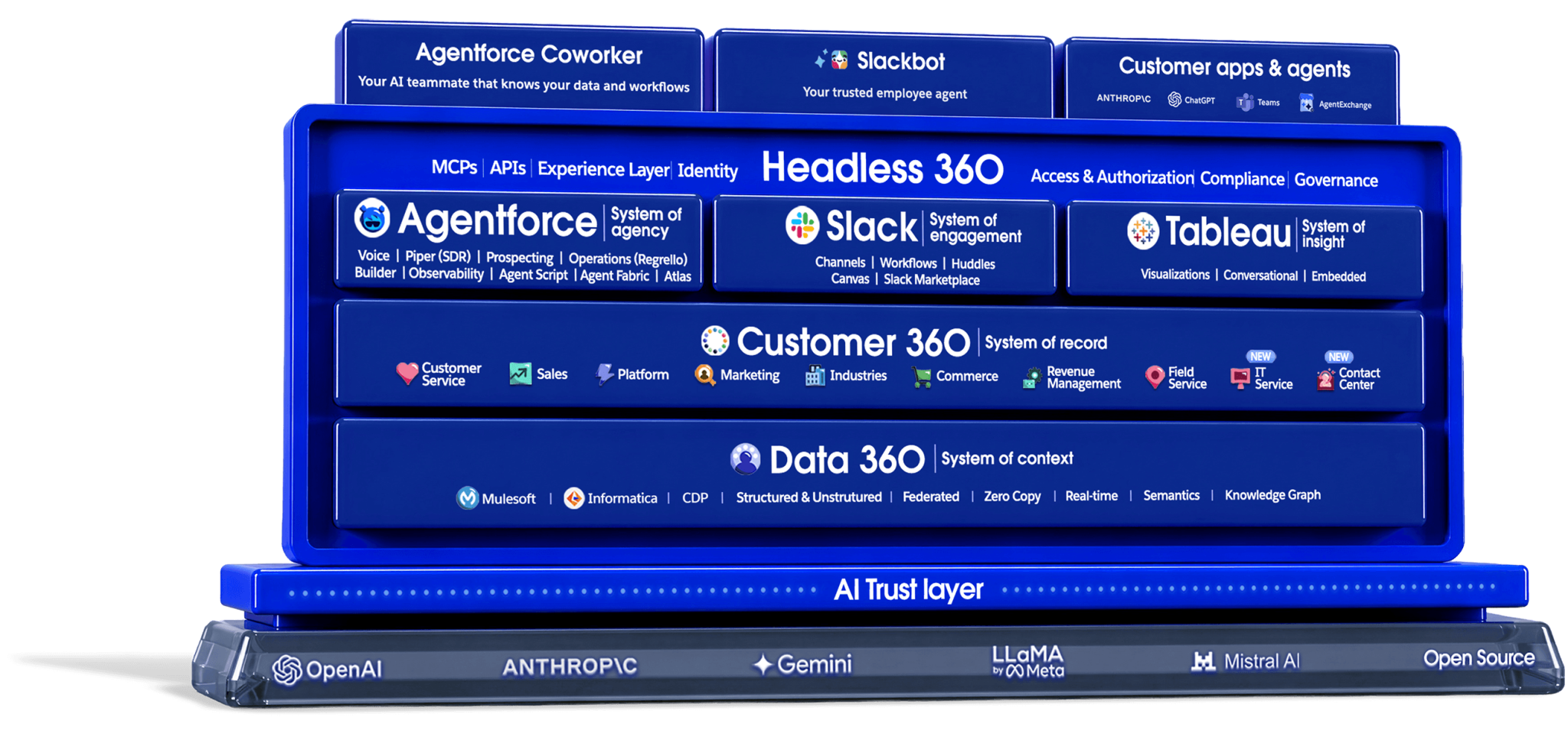
For large advisory firms, Salesforce offers capabilities Redtail doesn't: marketing automation, analytics via Tableau, custom app development, and an ecosystem of thousands of third-party solutions.
The trade-off is predictable. Redtail sacrifices breadth for immediate usability in one vertical. Salesforce sacrifices simplicity for flexibility across every use case. The question is which sacrifice your firm can afford.
Compliance sets the floor for financial advisors
For SEC and FINRA-regulated firms, compliance isn't a feature. It's the baseline.
Redtail treats compliance as a core product concern, not an add-on. Redtail Speak provides compliant texting where every message is automatically captured and archived and linked to the contact record without advisor intervention.
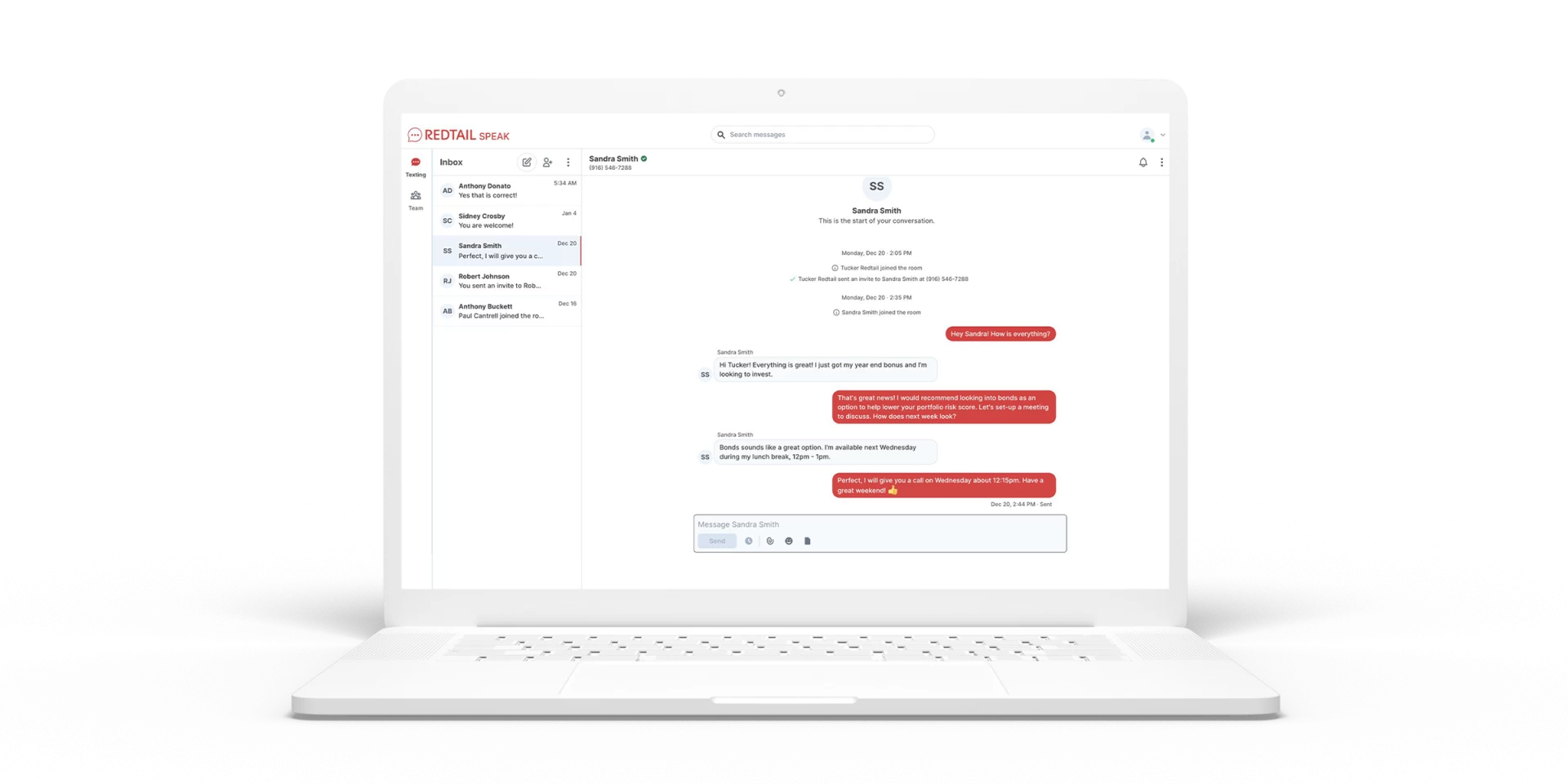
Source: Redtail
Redtail Email archives all inbound and outbound messages with no storage limits at $10/month per user.
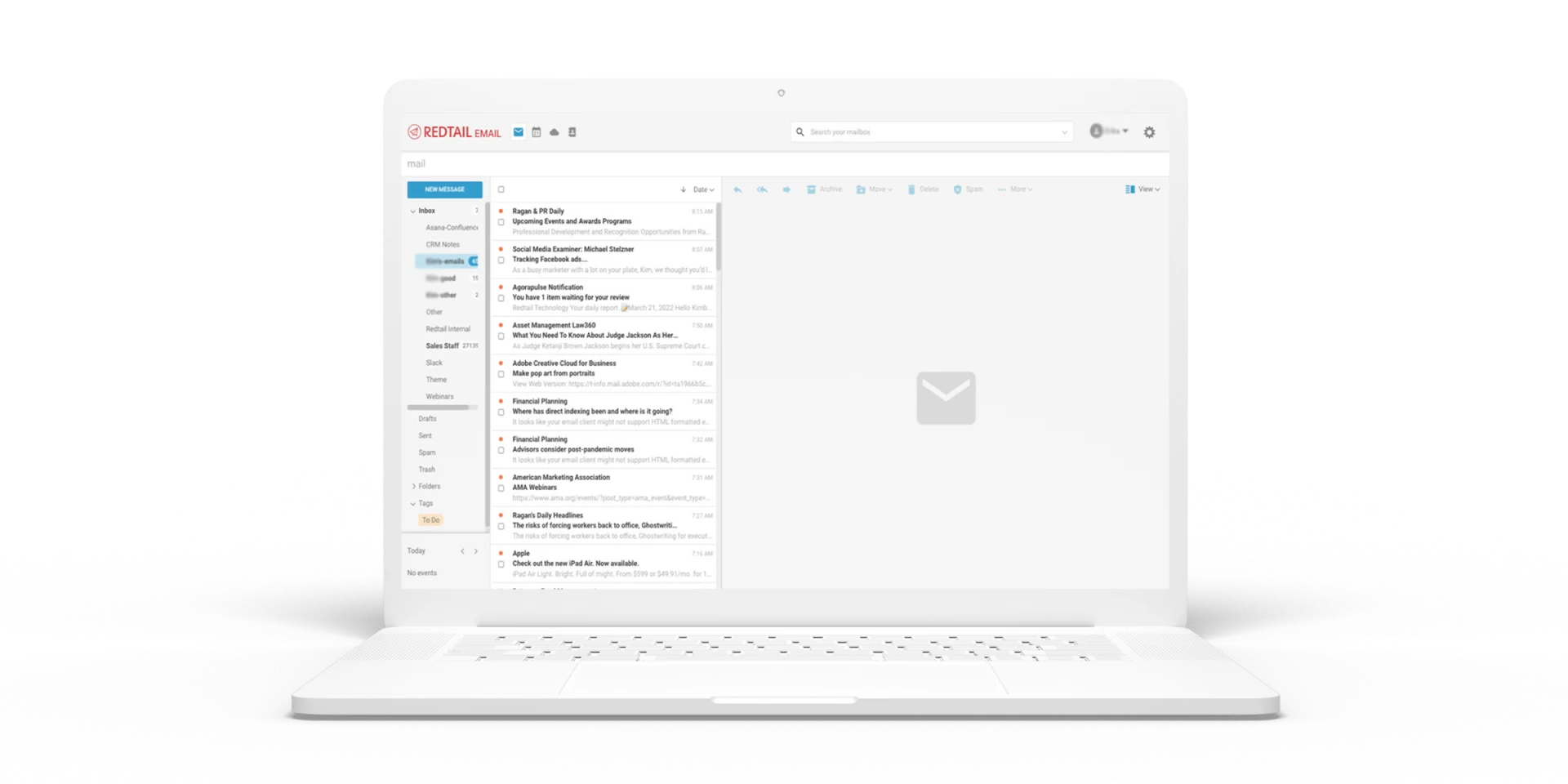
Source: Redtail
Redtail Imaging handles document storage with audit trails and SEC Rule 17a-4 compliance.
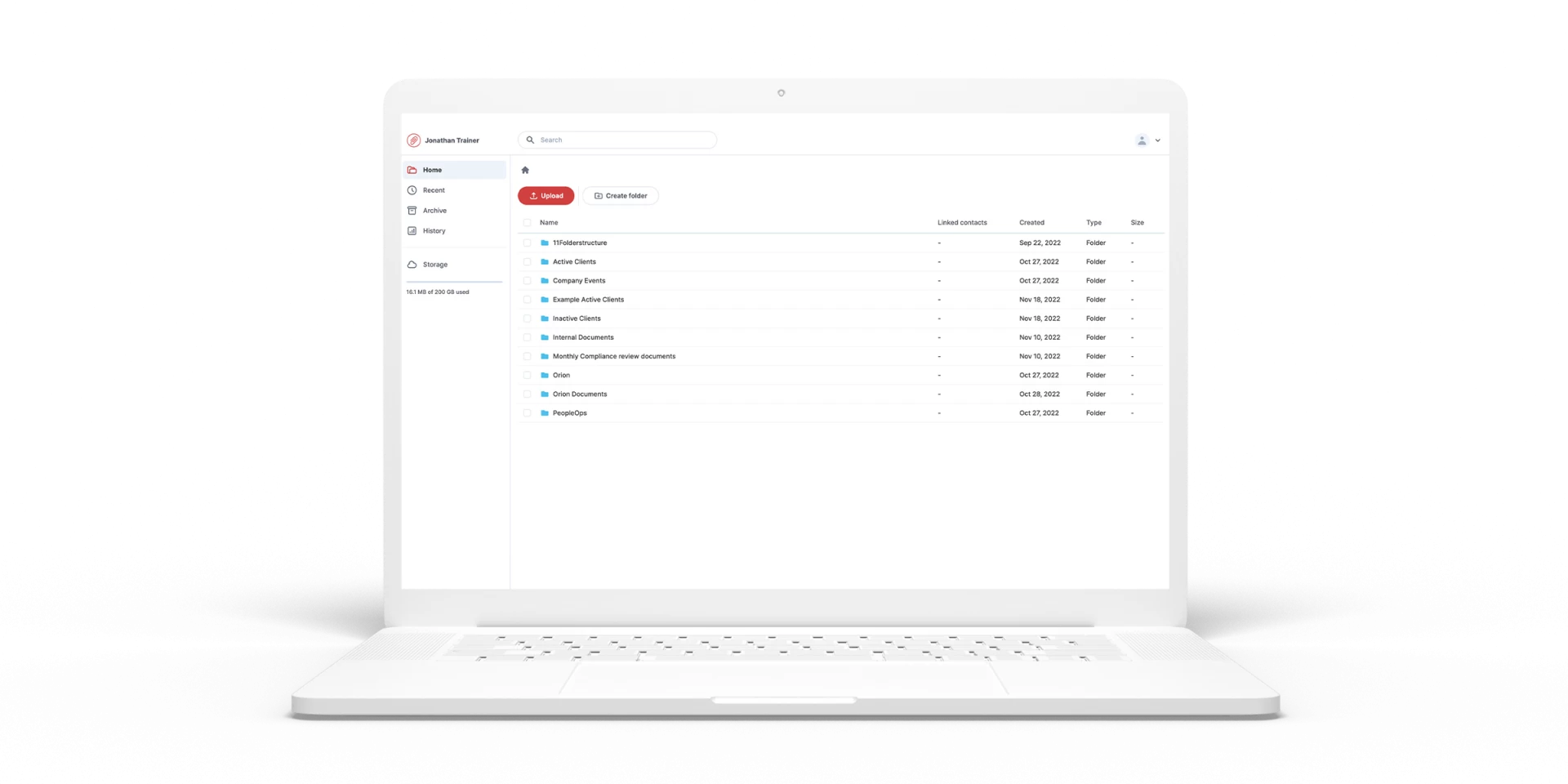
Source: Redtail
These tools are either bundled into the Growth plan or available as affordable add-ons, and they connect to the CRM by design rather than through integration.
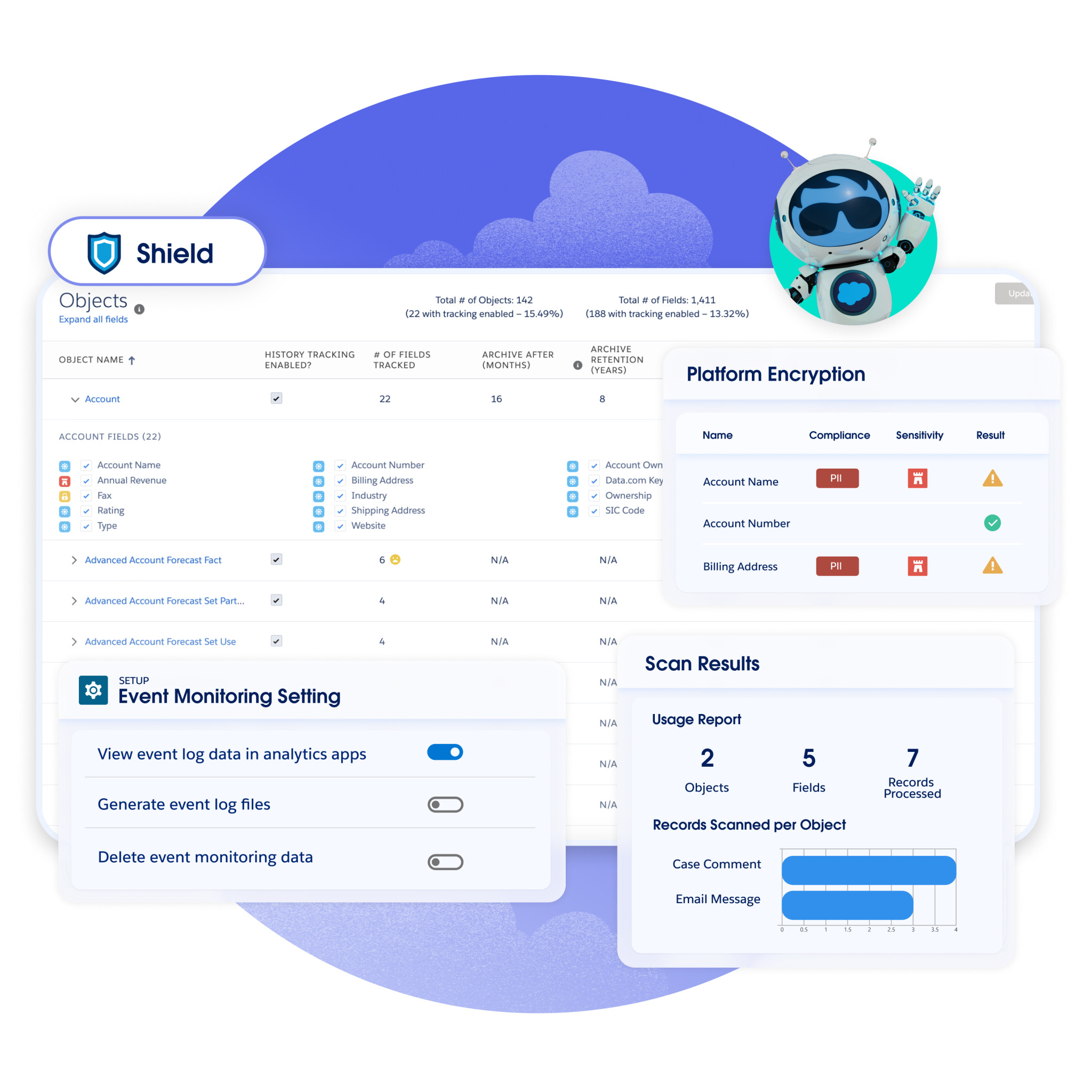
Salesforce addresses compliance through its Financial Services Cloud and add-on products. The platform offers detailed audit logs, field-level security, and encryption via Salesforce Shield.
Source: Salesforce
For communication archiving, advisory firms typically integrate third-party solutions from the AppExchange.
This approach gives large firms more flexibility (choose your preferred archiving vendor, build custom compliance workflows) but demands more setup, more vendor management, and more ongoing maintenance.
For a solo advisor or small team, Redtail's built-in compliance tooling removes a real operational burden. For an enterprise firm with a compliance department that already manages multiple vendor relationships, Salesforce's customizable approach may fit better.
Workflow engines reflect different levels of complexity
Both platforms offer workflow automation, but for different audiences.
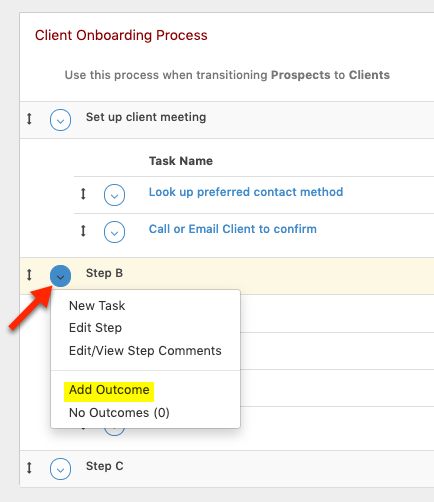
Redtail's workflow engine is the most used tool among its subscribers. Advisors build reusable templates for repeating processes: new client onboarding, annual reviews, account transfers, money movement. Each workflow step can be assigned to a team member, due-dated, and tracked.
Source: Redtail
The Growth plan adds automation triggers that fire workflows when conditions in a contact record are met.
Salesforce's workflow capabilities operate on a different scale. Flow provides visual automation that can span departments, trigger API calls, update records across objects, and orchestrate multi-system processes.
Agentforce goes further with autonomous AI agents that can resolve 85% of support requests without human escalation and handle sales coaching, quoting, and prospecting. But building these workflows requires Salesforce administration skills most advisory firms don't have in-house.

Source: Salesforce
The distinction matters practically. A three-person RIA needs a workflow that reminds the operations manager to send paperwork on day two of onboarding. An enterprise advisory network needs a workflow that routes leads across 50 offices based on geography, AUM thresholds, and advisor specialization while logging every step for compliance. Redtail handles the first scenario. Salesforce handles the second.
Neither CRM solves the prospecting problem
Here's what most CRM comparisons for financial advisors miss: both Redtail and Salesforce manage relationships that already exist. Neither platform answers the question that drives firm growth: who should I be talking to next?
Redtail has no native prospecting database. It tracks referrals and centers of influence within your existing contacts, but it doesn't help you identify companies that need advisory services, find the decision-makers at those companies, or understand when they're evaluating providers.
Salesforce has more built-in lead management and, through its AppExchange ecosystem, can connect to various data providers. But assembling a prospecting stack on Salesforce means layering multiple vendors on top of your CRM, each with its own contract, data quality issues, and integration maintenance.
ZoomInfo approaches this gap directly. Its GTM Context Graph processes 1.5B+ data points daily, combining company intelligence, verified contact data, and buying signals into a single intelligence layer.

For an advisory firm pursuing plan sponsor relationships, corporate retirement plan business, or institutional clients, ZoomInfo identifies which organizations are researching advisory services, surfaces the specific decision-makers involved, and provides direct-dial phone numbers and verified business emails so outreach reaches the right person.
The GTM Workspace gives sellers a single view of prioritized accounts with AI-drafted outreach that addresses specific buying signals. And because ZoomInfo integrates natively with Salesforce and other CRMs, the intelligence flows into whatever system your firm already uses.
"ZoomInfo gives us the information we need to execute. We don't have to spend our time digging. It's already there, so we can be three steps ahead." (Vensure)
The integration ecosystem tells you who each platform serves
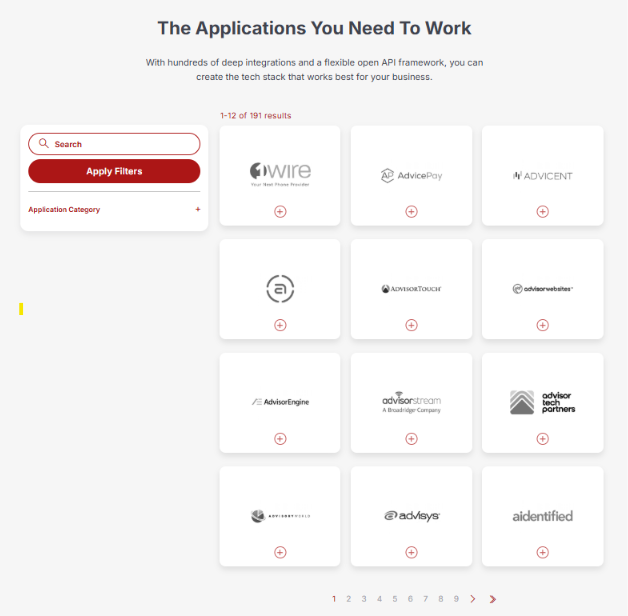
Redtail's 191 integrations are almost entirely financial services tools: custodians like Schwab and Fidelity, financial planning platforms like eMoney and RightCapital, portfolio management systems, and compliance tools.
Source: Redtail
This is what advisors need, and the integrations tend to be deep (daily account data syncs, not just basic API connections).
Since Orion acquired Redtail in 2022, the deepest integration is with Orion's own portfolio accounting, trading, and planning tools. T3 Technology Hub reported that 12 of the top 15 Barron's 2023 RIA firms use the combined Orion/Redtail suite.
Salesforce's AppExchange dwarfs every competitor with 9,000+ apps and 14+ million installs. For financial advisory firms, this means virtually any tool you can imagine has a Salesforce connector.

Source: Salesforce
The flip side: choosing, configuring, and maintaining integrations across a sprawling ecosystem requires time, expertise, and often budget for implementation partners.
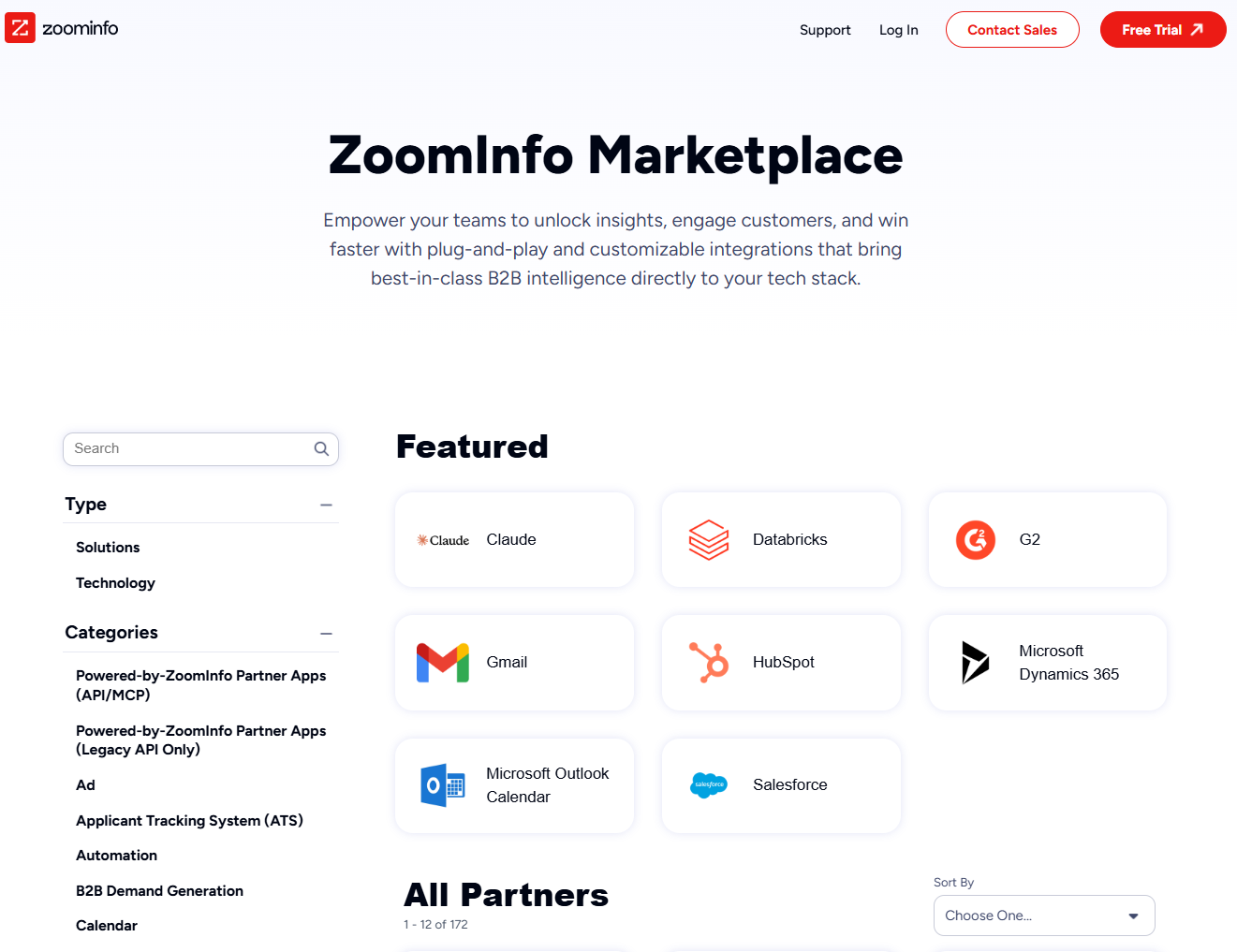
ZoomInfo's App Marketplace provides 120+ integrations spanning CRMs, marketing automation, sales engagement, and data warehouses.
Source: ZoomInfo
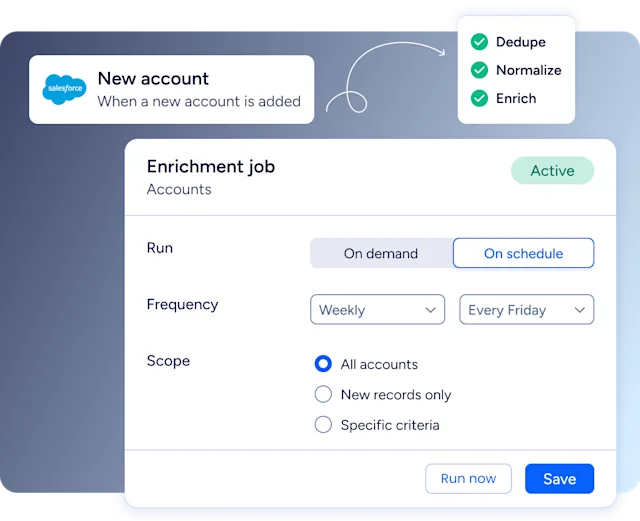
The Salesforce integration is particularly deep, enriching CRM records with verified contact data, company attributes, and intent signals without manual data entry.
Source: ZoomInfo
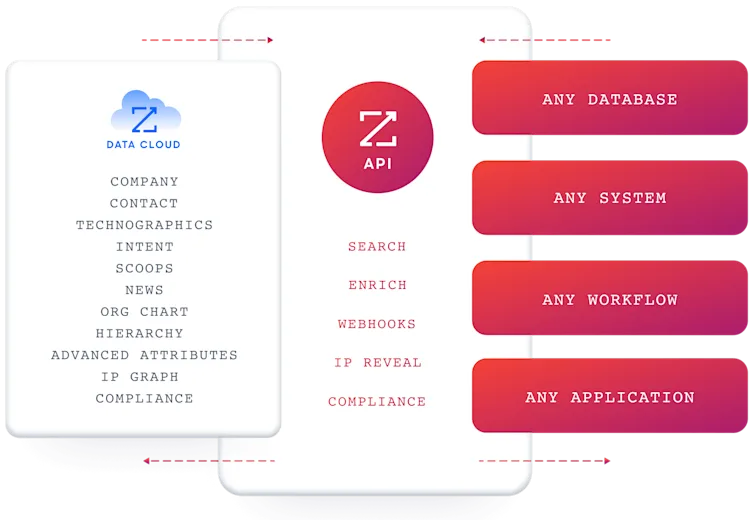
For firms using Redtail or another CRM, ZoomInfo's Enterprise API and MCP server provide programmatic access to the same data in any tool.
Source: ZoomInfo
"ZoomInfo is our single source of truth for account data, and even more so for contact data. No other provider gives you that level of detail." (Smartsheet)
Pricing models reflect different markets
Redtail's pricing is designed for advisory firms where adding a paraplanner or operations assistant shouldn't double the CRM bill.
The Launch plan at $39/user/month covers up to 5 users with core CRM functionality. The Growth plan at $59/user/month adds Imaging, Speak, workflow automation, and supports unlimited users.
Redtail Email adds $10/user/month for compliance archiving. A five-person advisory team on the Growth plan with Email pays roughly $345/month. A 30-day free trial requires no credit card.
Salesforce's pricing tiers start low but escalate once you need the features that matter. Starter Suite at $25/user/month provides basic CRM.
Pro Suite at $100/user/month adds customization and forecasting. Enterprise at $175/user/month unlocks AI and advanced automation. Unlimited at $350/user/month includes the full AI suite and Premier Success support. Financial Services Cloud adds further cost.
That same five-person team on Enterprise pays $875/month before add-ons, and most firms need the Premier Success Plan at 30% of net license fees plus implementation partner costs. Over 70% of Salesforce deployments are partner-led.
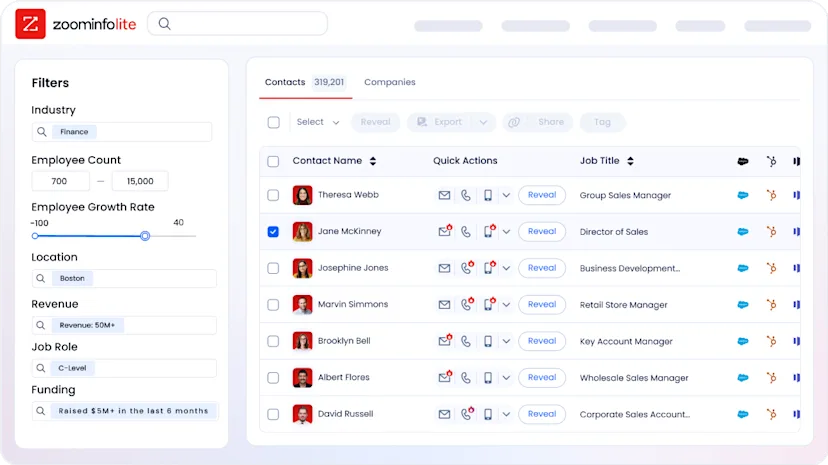
ZoomInfo uses custom-quoted, consumption-based pricing with no published prices, though ZoomInfo Lite provides a permanent free tier with access to the B2B database, 10 monthly export credits, and basic search.
Source: ZoomInfo
Paid plans scale based on seats, credit volume, and features. For firms already spending on separate data providers, list vendors, or research tools, consolidating into ZoomInfo often reduces total cost while improving data quality.
Learning curve comparison
Redtail was designed to be learned by financial advisors, not IT professionals. G2 and Capterra reviewers call it "by far the easiest to learn and use" among advisor CRMs.
New subscribers receive a call from a dedicated Welcome Team within one business day, and free data migration from over 40 CRMs is included. Training resources include Redtail University classroom training, free virtual webinars, and a 24/7 on-demand library.
Where Redtail falls short is its interface. Despite a 2024-2025 performance overhaul that cut Contact Timeline load times from 20-30 seconds to under 0.5 seconds, Capterra and G2 reviewers still describe portions of the interface as outdated.
Advanced features like workflow configuration require extensive menu navigation that discourages exploration.
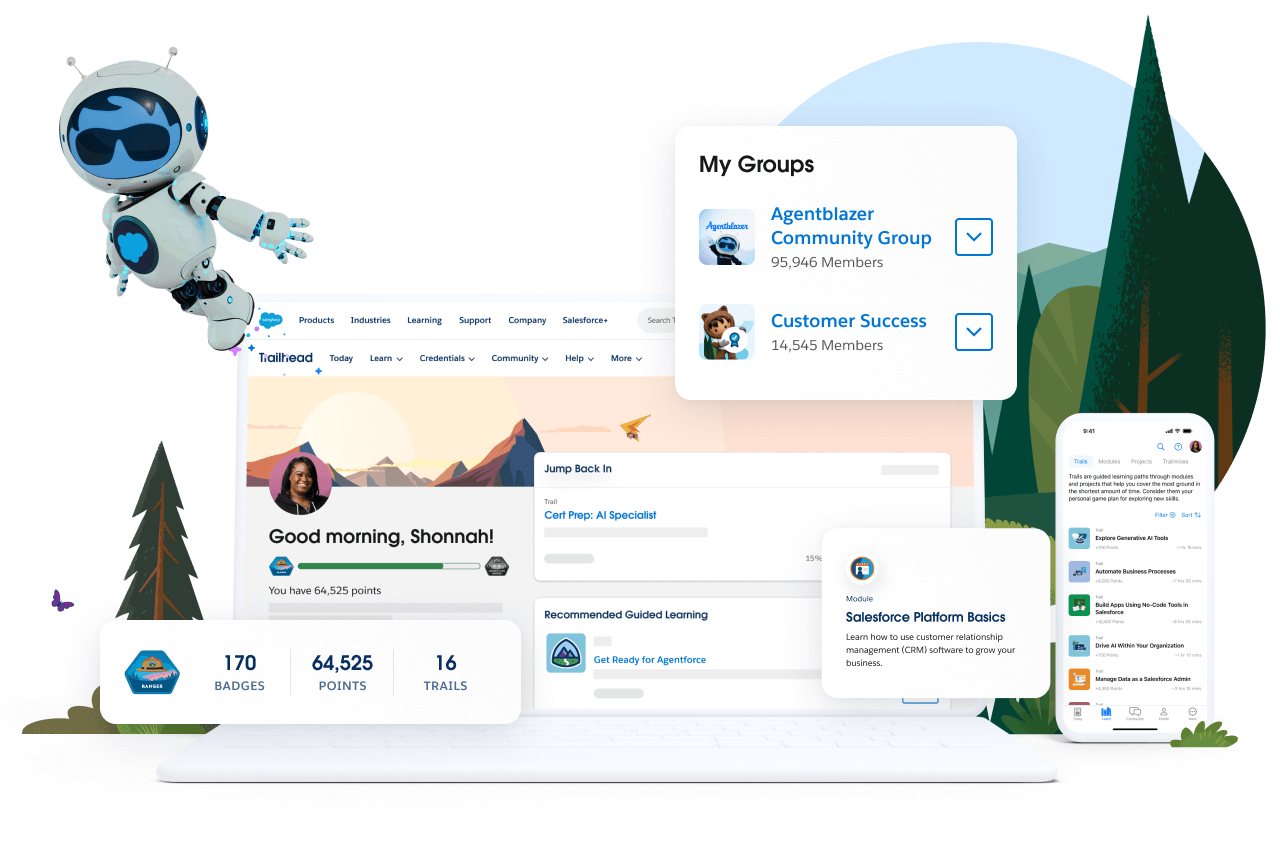
Salesforce requires more investment in training. Trailhead offers 1,500+ badges and 6+ million learners, but the platform's complexity means most advisory firms need a trained administrator.
Source: Salesforce
Implementation timelines range from weeks for simple Sales Cloud setups to 3-12 months for enterprise multi-cloud deployments.
The payoff is proportional: firms that invest in proper Salesforce configuration get a system that does what they need. Firms that don't end up with an expensive tool their team avoids.
ZoomInfo's learning curve falls between the two. The platform's breadth requires onboarding investment, which is why ZoomInfo redesigned its program to 90 days with structured phases for planning, implementation, education, and adoption, producing a 25% improvement in customer satisfaction. ZoomInfo University provides role-specific learning paths.
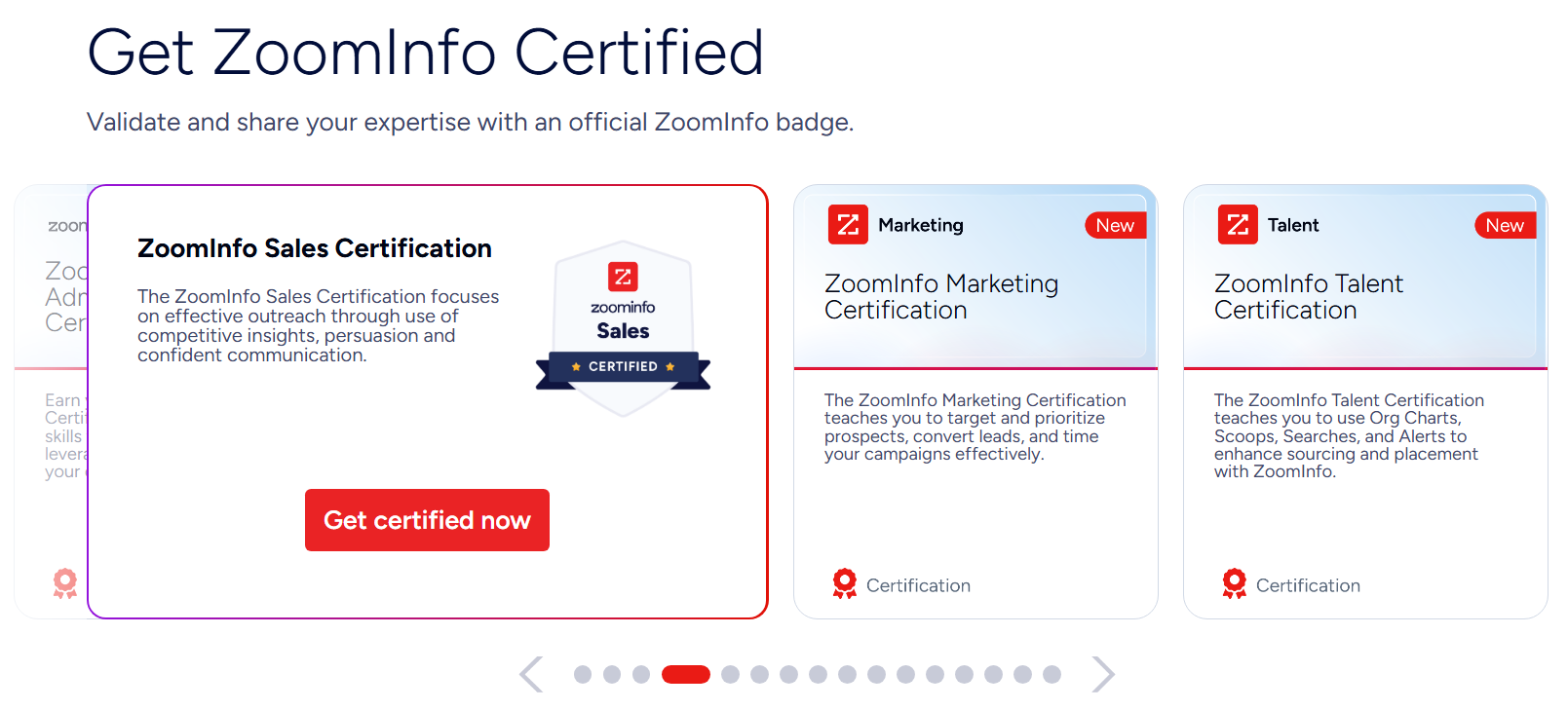
Source: ZoomInfo
For sellers, GTM Workspace simplifies the daily experience by surfacing prioritized accounts and AI-drafted outreach in a single view.
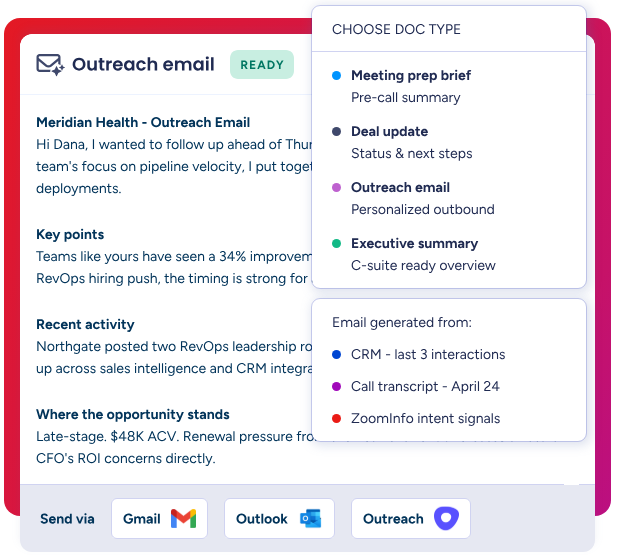
Source: ZoomInfo
Support quality varies with scale
Redtail claims a 96.7% customer satisfaction rate and a 90% live call rate on inbound calls. Phone and email support is free for all subscribers, available Monday through Friday, 7 a.m. to 7 p.m. CT.
However, TrustRadius reviewers note that support quality has declined since the Orion acquisition, with slower response times and less responsiveness to feature requests.
Salesforce ties support quality to spending. The free Standard plan provides self-service resources. Premier support at 30% of net license fees adds 1:1 coaching and one-hour response times.
Signature support (custom pricing) provides a dedicated Customer Success Manager and 15-minute response for critical issues.
The Trailblazer Community of 20 million members is a strong peer-support network, though it requires time to search and apply solutions.
ZoomInfo provides support through its Help Center with a knowledge base, university training, and direct phone support.
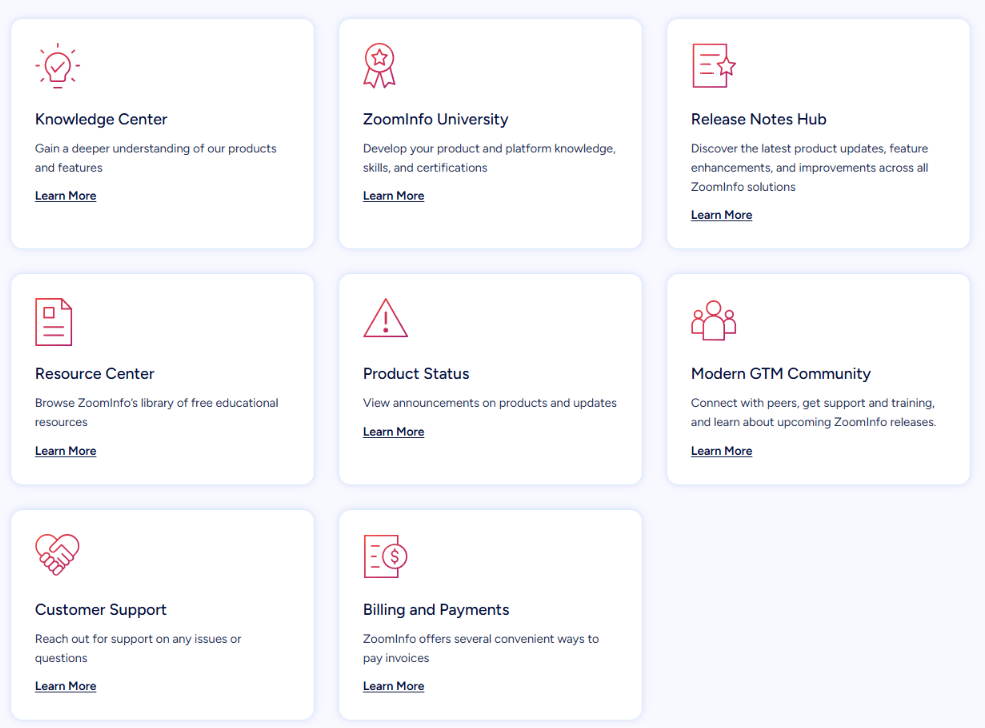
Source: ZoomInfo
Enterprise customers receive dedicated account management. Professional services are available through ZoomInfo Labs for firms with complex implementation needs.
Data and intelligence: the growth layer both CRMs lack
The fundamental gap in any CRM, whether Redtail or Salesforce, is the same: a CRM manages the data you put into it. It doesn't tell you what data you're missing.
A financial advisor's Redtail instance might hold 500 client records with detailed notes and compliance history. That's excellent for servicing those clients.
But it can't tell the advisor that three companies in their territory just changed CFOs, that a local manufacturer is researching 401(k) plan providers, or that the VP of HR at a target account has a verified direct-dial number.
Salesforce's data enrichment capabilities are stronger, especially with Data Cloud ingesting data from external sources. But Salesforce is a platform, not a data company.
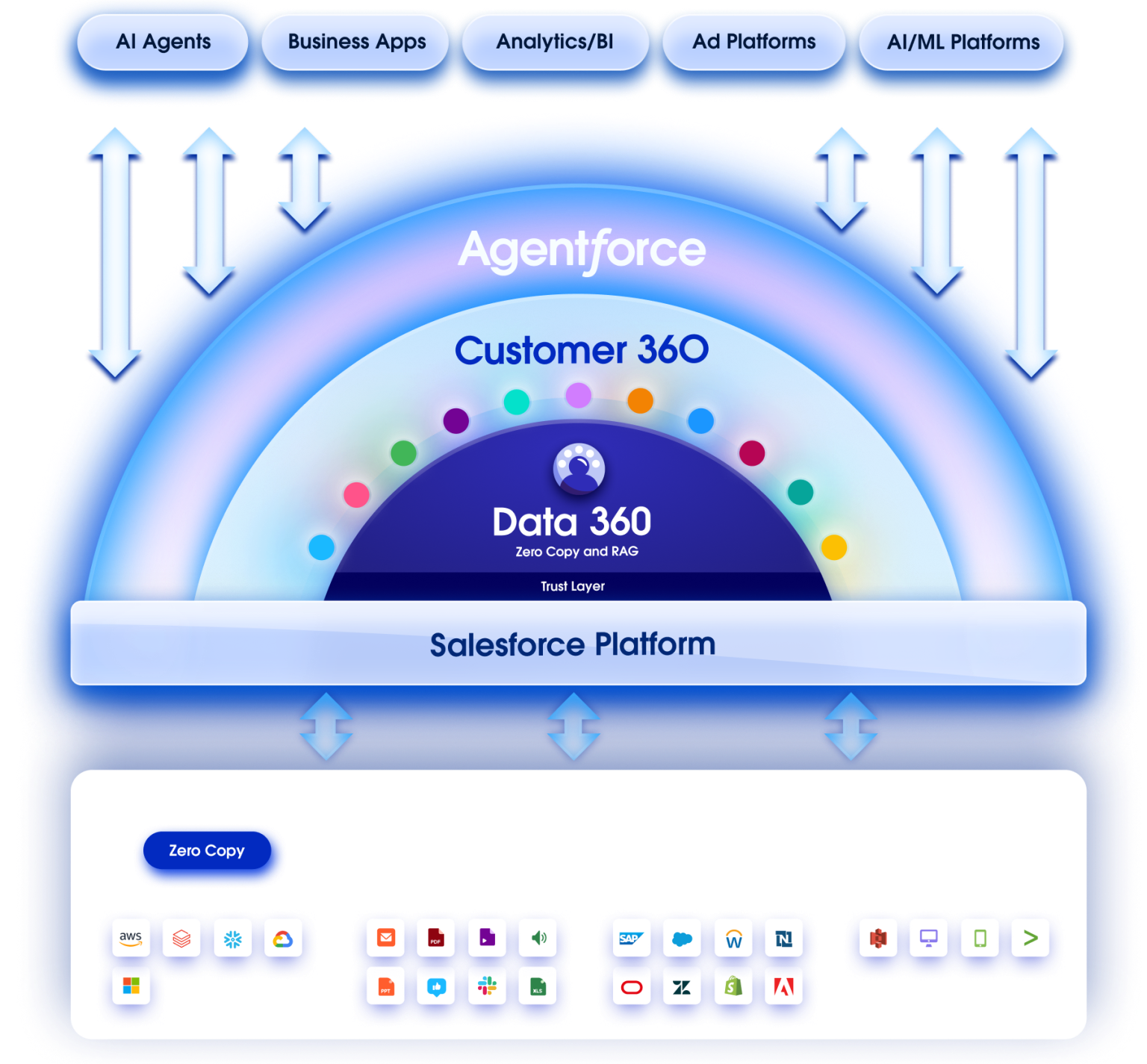
Source: Salesforce
The quality of intelligence depends on which data providers you connect and how well you maintain those integrations.
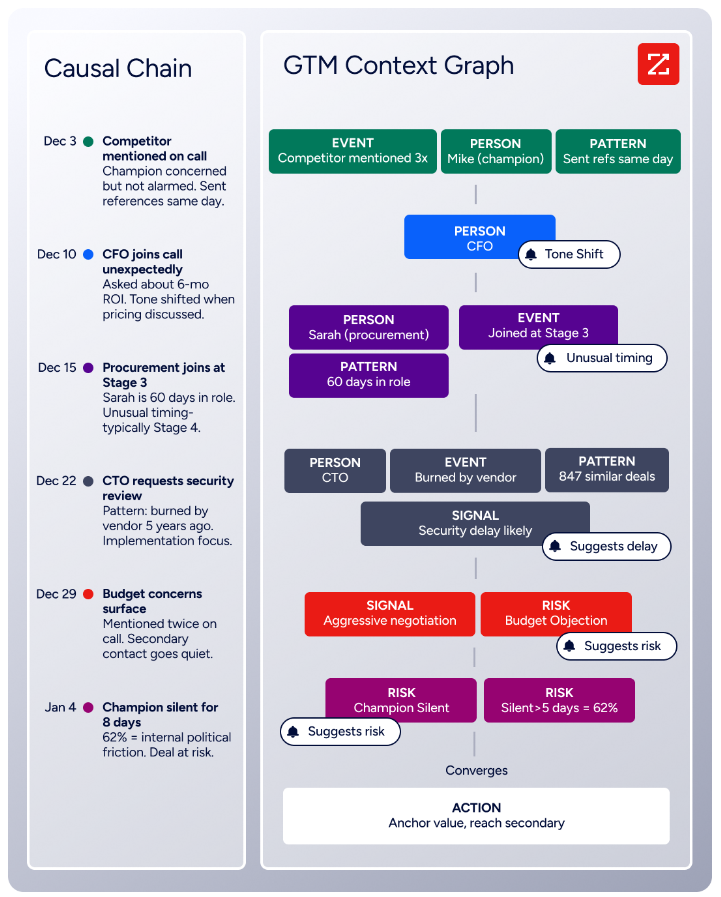
ZoomInfo is the data company. Its GTM Context Graph captures not just contact information but the context behind buying signals, connecting CRM data, conversation intelligence, and third-party signals to surface why an account is worth pursuing now.
Source: ZoomInfo
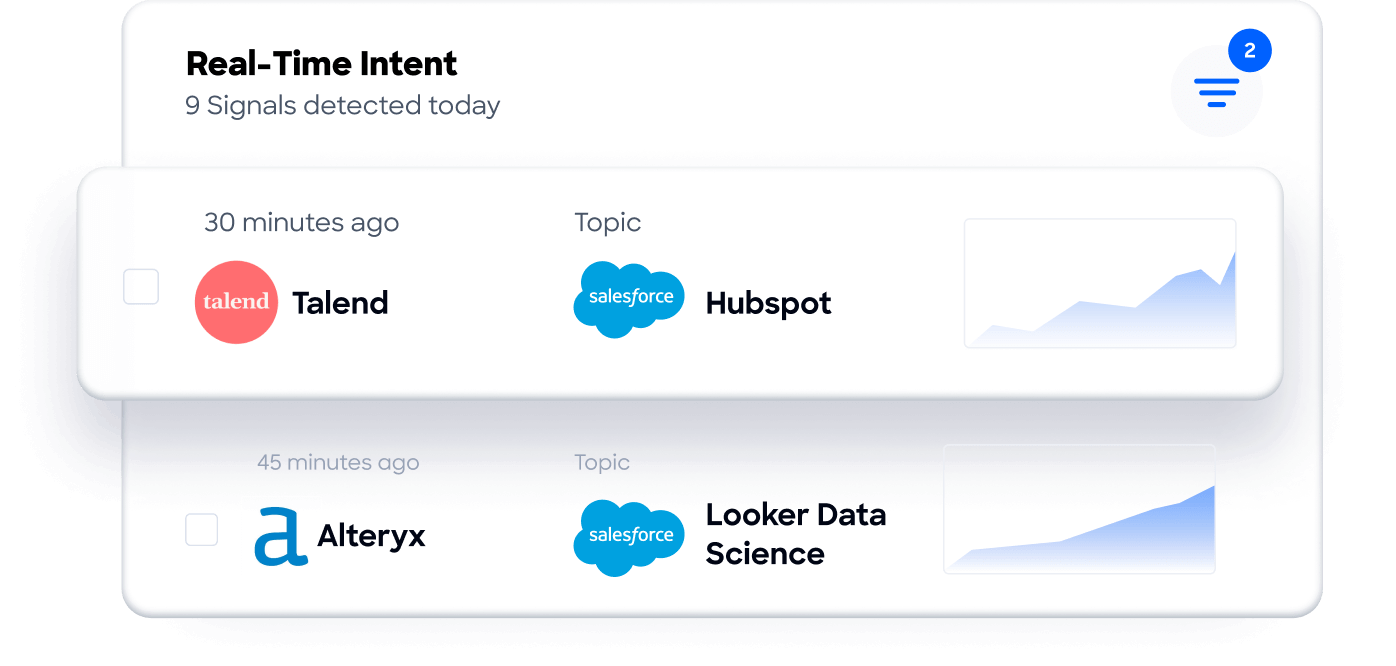
Buyer Intent data tracks signals from 210 million IP-to-Organization pairings, revealing which companies are researching topics related to your services.
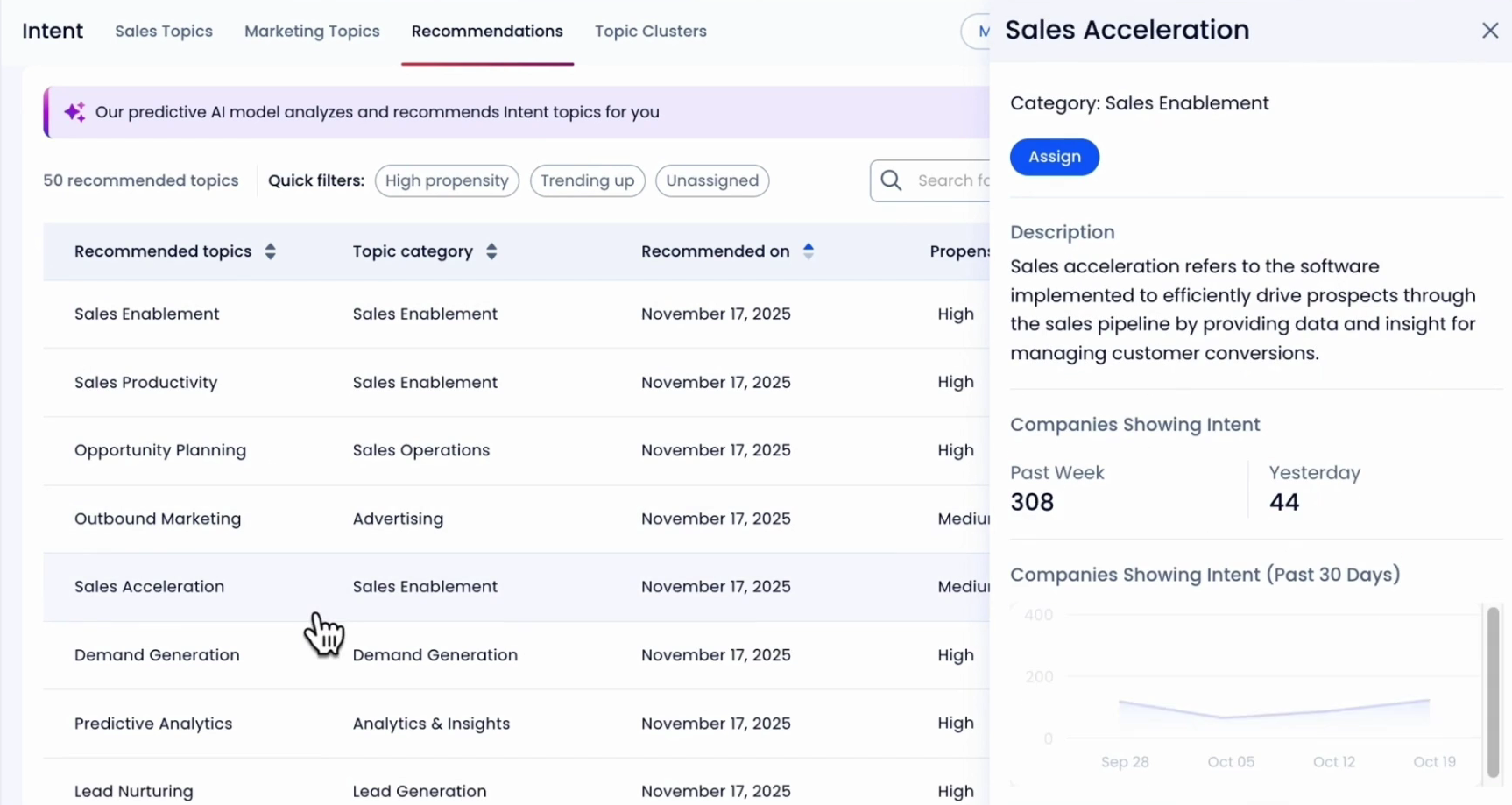
Guided Intent, exclusive to ZoomInfo, identifies topics historically correlated with deal success rather than requiring manual topic selection.
Source: ZoomInfo
For advisory firms with a business development function, this intelligence layer turns prospecting from guesswork into a data-driven process. Instead of cold-calling from a purchased list, advisors reach verified contacts at companies showing active buying signals.
"That combination of our internal CRM data, external signals, and AI that's given all that context has helped us craft very specific account- and persona-based messages. And people have responded to them right away." (Seismic)
For a deeper look at how Salesforce and ZoomInfo compare on data and intelligence capabilities, see our Salesforce vs. ZoomInfo comparison.
Redtail vs. Salesforce vs. ZoomInfo: Which should you choose?
The right answer depends on your firm's size, growth ambitions, and operational capacity.
Choose Redtail if:
You're an independent RIA or small advisory team (1-15 advisors)
SEC/FINRA compliance tooling needs to work out of the box
You want a CRM your team can learn in days, not months
Your tech stack is primarily financial services tools (custodians, planning, portfolio management)
Budget predictability matters more than platform flexibility
Choose Salesforce if:
You're a large advisory network, broker-dealer, or enterprise firm
You have (or can hire) dedicated Salesforce administrators
You need marketing automation, custom apps, and cross-department workflows
Your firm operates across multiple lines of business beyond advisory
You want access to the largest app ecosystem in enterprise software
Choose ZoomInfo if:
Growing your client base through outbound prospecting is a priority
You need verified contact data for B2B decision-makers your CRM doesn't have
You want to know which companies are researching advisory services
You're investing in business development alongside relationship management
You want one intelligence layer that works inside your existing CRM
See how ZoomInfo's data and intelligence can power your firm's growth with a free trial.
For many growing advisory firms, the answer isn't choosing one platform. Redtail or Salesforce handles relationship management and compliance. ZoomInfo provides the prospecting intelligence and verified data that feeds new opportunities into that CRM. Together, they cover the full lifecycle from finding prospects to managing clients to staying compliant.
Redtail vs. Salesforce vs. ZoomInfo FAQ
What is the core difference between Redtail, Salesforce, and ZoomInfo?
Redtail is a CRM built for financial advisors, with compliance archiving, custodian integrations, and advisory workflows included out of the box.
Salesforce is a general-purpose CRM platform that serves every industry, with a Financial Services Cloud add-on for advisory firms.
ZoomInfo is a B2B data and intelligence platform that provides verified contact data, company intelligence, and buying signals to power prospecting. It complements either CRM rather than replacing it.
Which platform is more affordable for a small advisory firm?
Redtail is cheaper for small teams. A five-person firm on Redtail's Growth plan with Email archiving pays roughly $345/month. The same team on Salesforce Enterprise pays $875/month before add-ons and implementation costs.
ZoomInfo's pricing is custom-quoted, though the permanent free tier (ZoomInfo Lite) provides access to the B2B database with 10 monthly export credits at no cost.
Does Salesforce have financial advisor-specific features?
Yes. Salesforce Financial Services Cloud provides data models for wealth management, including client financial accounts, financial goals, and household groupings.
However, these features require the Financial Services Cloud edition at additional cost, and compliance-specific tooling like text message archiving and email retention typically requires third-party AppExchange integrations rather than being built in.
Can ZoomInfo integrate with Redtail?
ZoomInfo has a native integration with Salesforce and other major CRMs. For Redtail, ZoomInfo's Enterprise API and MCP server provide programmatic access to the same B2B intelligence, allowing firms to enrich their Redtail contacts with verified data or export prospect lists. Redtail also has an open API that can facilitate data connections.
Which platform handles SEC and FINRA compliance best?
Redtail leads on compliance for financial advisors. Its Speak product for compliant texting, Email product for communication archiving, and Imaging product for document management with Rule 17a-4 support are built for advisory regulatory requirements.
Salesforce offers compliance capabilities through its Financial Services Cloud and Shield add-on, but typically requires additional third-party tools for full communication archiving and supervisory review.
Is Salesforce overkill for a small RIA?
For firms with fewer than 10 advisors and no dedicated IT staff, Salesforce's complexity and cost often exceed what's needed. The platform's value compounds with organizational size and technical resources. A small RIA may spend more time configuring Salesforce than using it.
Redtail's narrower scope is an advantage here: fewer decisions to make, faster time to productivity.
How does ZoomInfo help financial advisors specifically?
ZoomInfo helps advisory firms that pursue business clients, plan sponsors, or institutional relationships by providing verified decision-maker contact data, company attributes, and buying intent signals.
An advisor targeting mid-market companies for retirement plan services can use ZoomInfo to identify which companies are researching providers, find the HR or finance decision-makers, and access direct phone numbers and verified emails. Neither Redtail nor Salesforce generates this intelligence natively.
Can I use all three platforms together?
Yes, and many growing firms do. Redtail or Salesforce serves as the system of record for client relationships and compliance. ZoomInfo provides the prospecting intelligence and verified data that feeds new opportunities into the CRM. ZoomInfo integrates natively with Salesforce and provides API access for other CRMs, so data flows between systems without manual re-entry.
More Salesforce comparisons:
