
Choosing between Meet Alfred and Waalaxy for LinkedIn outreach comes down to five questions:
Do you need a cloud-based platform that runs without your browser open, or are you comfortable with a Chrome extension that requires an active tab?
Is multi-channel outreach across LinkedIn, email, and Twitter/X critical, or is LinkedIn your only channel?
Do you need white-label capabilities to resell outreach services to clients?
How important is the quality and depth of the prospect data feeding your campaigns?
Are you automating outreach mechanics, or do you need intelligence that tells you who to contact, when to engage, and what to say?
Here's what we recommend:
Meet Alfred is the multi-channel option for sales teams and agencies that want LinkedIn, email, and Twitter/X outreach coordinated in a single campaign sequence. Its cloud-based infrastructure assigns a dedicated IP address per account, so campaigns run 24/7 without keeping your computer on. Its white-label solution makes it one of the few tools in this category built for agencies reselling outreach services. At $99/user/month for the Pro plan, it includes a Lead Finder, LinkedIn CRM, InMail automation, and Smart Inbox. The trade-off: per-seat pricing gets expensive at team scale, and its data is limited to what LinkedIn profiles and basic enrichment provide.
Waalaxy is the easiest starting point for individuals and small teams who want LinkedIn automation running in minutes. A Chrome extension used by 150,000+ people, it offers 99+ pre-built campaign sequences, an AI message writer called Waami, and a permanent free plan with 80 invitations per month. Install the extension, import prospects from a LinkedIn search, pick a sequence, and launch. The Chrome extension requires your browser to stay open, cold email is locked to the Business plan at €69/month, and message personalization is limited to basic variables like first name and company.
Both platforms automate the mechanics of LinkedIn outreach. They help you send connection requests and follow-up messages faster. But automation without intelligence is volume without direction. You can send hundreds of personalized messages per week and still waste most of them on prospects who aren't in-market, don't match your buyer profile, or left their role six months ago. That's the gap a data-first platform fills.
ZoomInfo is a GTM platform that starts where outreach tools stop: with the data. Its B2B dataset covers 500M contacts, 100M companies, 135M+ verified phone numbers, and 200M+ verified business emails. ZoomInfo doesn't just automate sending. Its GTM Context Graph combines this data with your CRM records, conversation transcripts, and behavioral signals to show which accounts are actively in-market and why deals move or stall.
Sellers work from the GTM Workspace, where AI agents prioritize accounts, draft outreach based on buying signals, and handle CRM updates. Marketers and RevOps teams use GTM Studio to build and launch GTM plays in natural language. For teams that build their own tools, APIs and MCP expose the same intelligence to any application or AI agent. For teams that have outgrown LinkedIn-only automation and need verified data, buyer intent, and AI-driven execution in one platform, ZoomInfo makes outreach intelligent, not just automated.
If building outreach on verified data and buying signals sounds like the upgrade your pipeline needs, see how ZoomInfo works.
Meet Alfred vs. Waalaxy vs. ZoomInfo at a glance
Meet Alfred | Waalaxy | ZoomInfo | |
|---|---|---|---|
Core approach | Multi-channel outreach automation (LinkedIn + email + Twitter/X) | LinkedIn-first automation via Chrome extension | GTM platform: data, intelligence, and execution |
Architecture | Cloud-based with dedicated IPs | Chrome extension (browser must stay open) | Cloud platform with API, MCP, and native workspaces |
Contact database | LinkedIn CRM with profile scraping | LinkedIn profiles via live search | 500M contacts, 200M+ verified emails, 135M+ verified phones |
Buyer intent signals | None | None | Intent data: 210M IP-to-Org pairings, 6T+ keyword-to-device signals monthly |
AI capabilities | AI message personalization | Waami AI message writer | GTM Context Graph + AI agents for account research, outreach, and CRM updates |
Multi-channel outreach | LinkedIn + email + Twitter/X in one sequence | LinkedIn primary; email on Business plan only | Multi-channel via GTM Workspace and Salesloft partnership |
White label | Yes (5+ seats) | No | No |
Free plan | Free trial (no credit card) | Permanent free plan (80 invitations/month) | ZoomInfo Lite (permanent, 10 credits/month) |
Starting price | $59/user/month | €0/month (free) | Custom-quoted |
Best for | Agencies and multi-channel sales teams | Solo reps and small teams starting LinkedIn outreach | Teams needing verified data, intent signals, and AI-driven GTM execution |
Cloud-based vs. browser extension: Architecture shapes everything
The way each platform runs its automation determines reliability, safety, and your daily workflow.
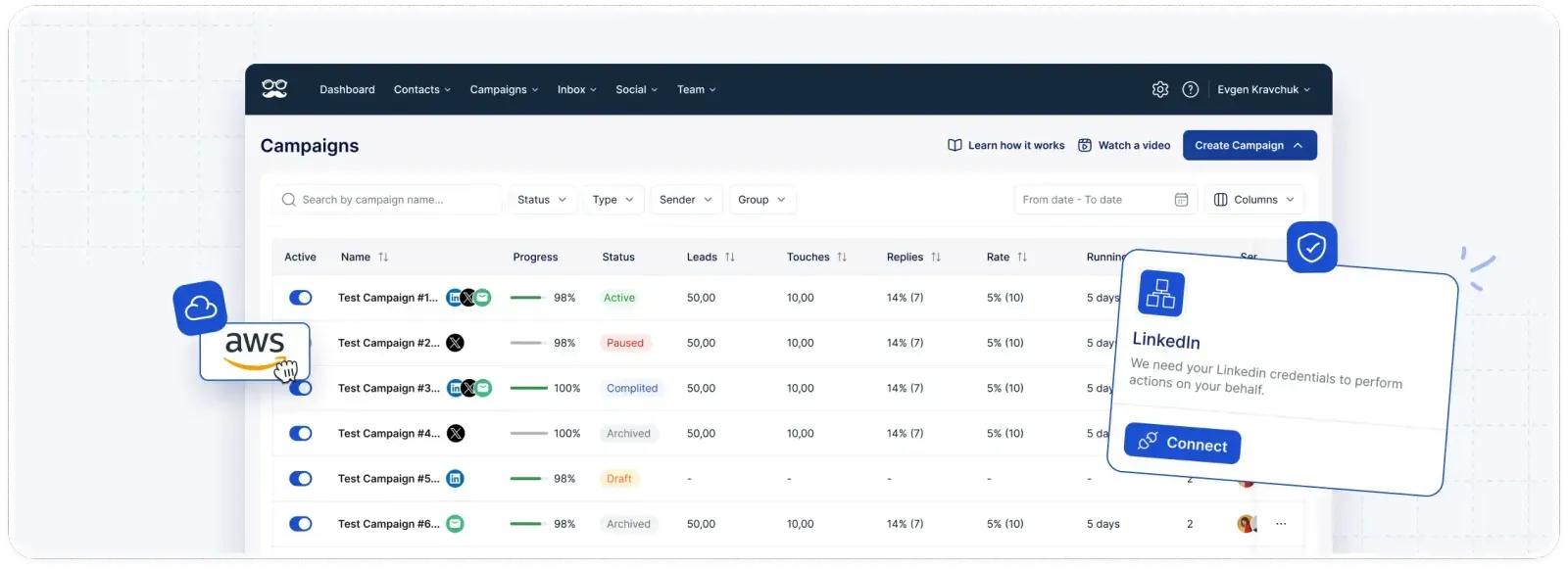
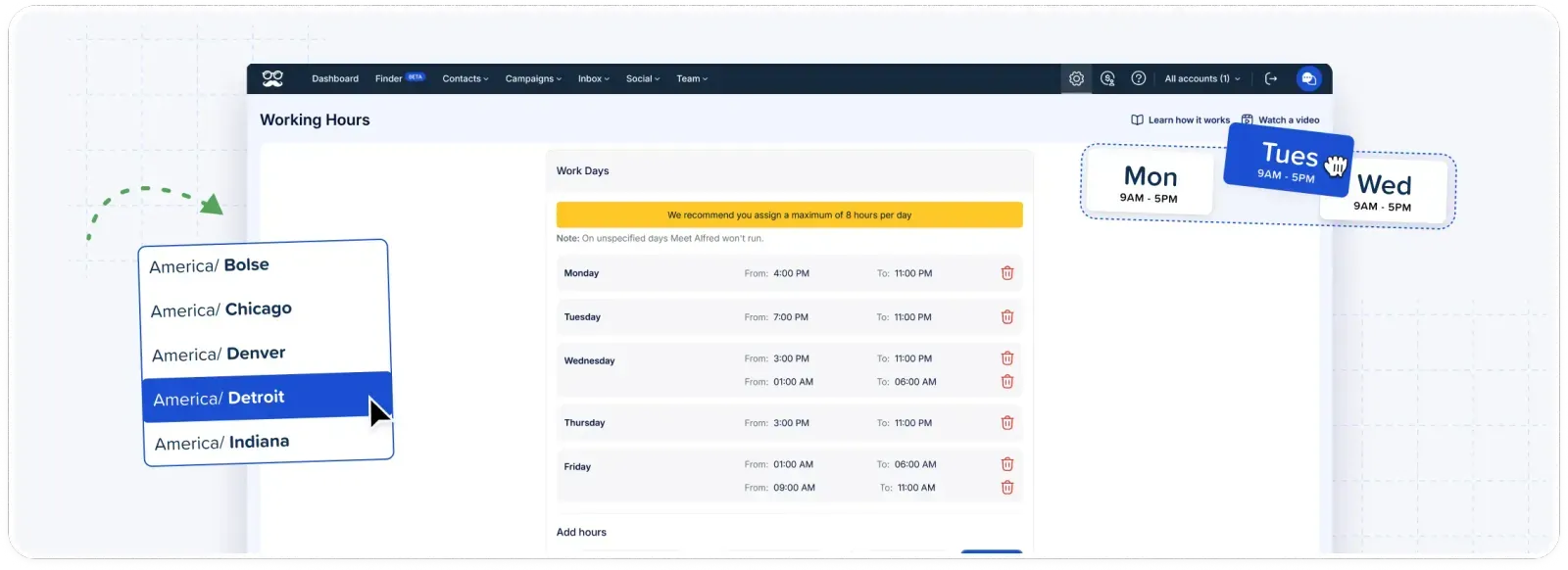
Meet Alfred operates from AWS cloud infrastructure. Once you connect your LinkedIn account and launch a campaign, actions execute from Meet Alfred's servers on a dedicated IP address assigned to your account. Your laptop can be off. Your browser can be closed. Campaigns run continuously, with actions spaced by an AI layer that mimics human behavior patterns during your configured working hours.
Source: Meet Alfred
Waalaxy runs as a Chrome extension. The practical consequence: a LinkedIn tab must remain open for campaigns to execute and conversations to sync. Close the browser, and outreach pauses. Waalaxy compensates with its own safety measures: randomized daily action quotas, 2-3 minute delays between actions, and an alert system that pauses campaigns for 48 hours if limits are at risk.
Source: Waalaxy
The extension also intercepts extension-detection scripts from LinkedIn to avoid blacklist detection.
ZoomInfo sidesteps this question. It doesn't automate LinkedIn connection requests through your browser or a cloud proxy. Instead, it provides verified contact data (direct dials, business emails) and multi-channel execution through GTM Workspace and integrated sales engagement tools.
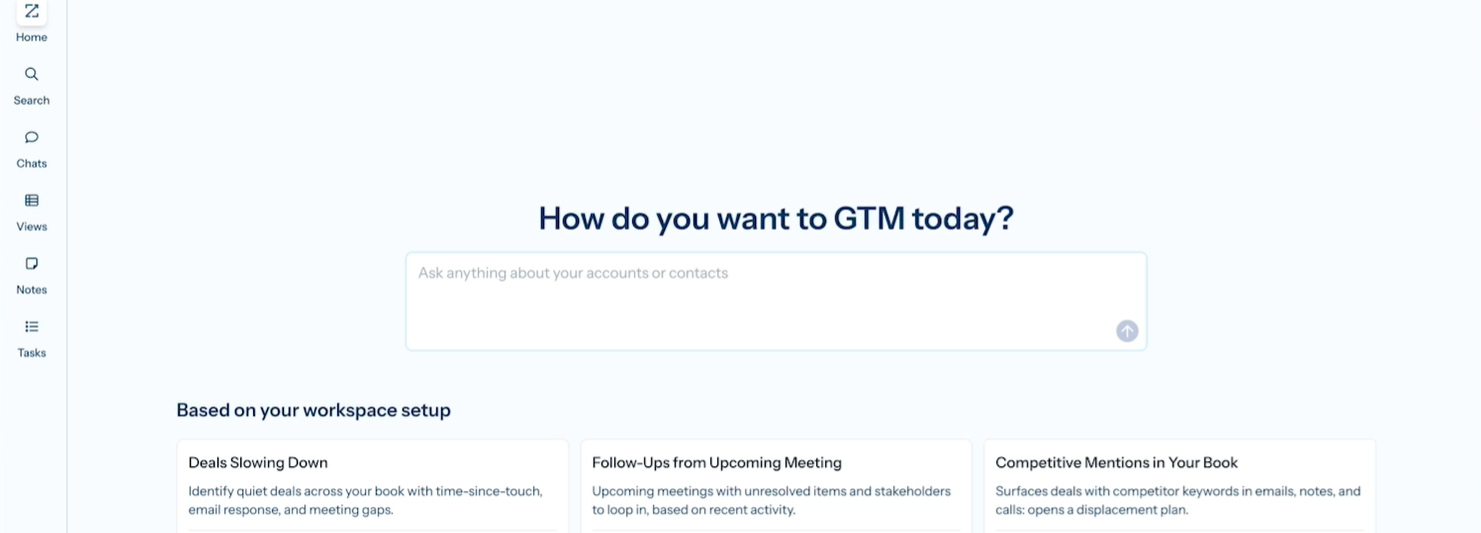
Outreach happens through your own email, phone, and ad channels, using data and intelligence that LinkedIn automation tools don't have access to.
The architectural difference matters most for LinkedIn account safety. Both Meet Alfred and Waalaxy operate in a gray zone relative to LinkedIn's Terms of Service, which prohibit automated activity. Meet Alfred's own LinkedIn Automation Dos & Don'ts guide acknowledges that "algorithms change regularly and no one can know everything."
This is a structural risk of any LinkedIn automation tool, regardless of whether it runs from the cloud or a browser extension.
Multi-channel outreach: breadth vs. depth
If your outreach strategy extends beyond LinkedIn, the platforms diverge sharply.
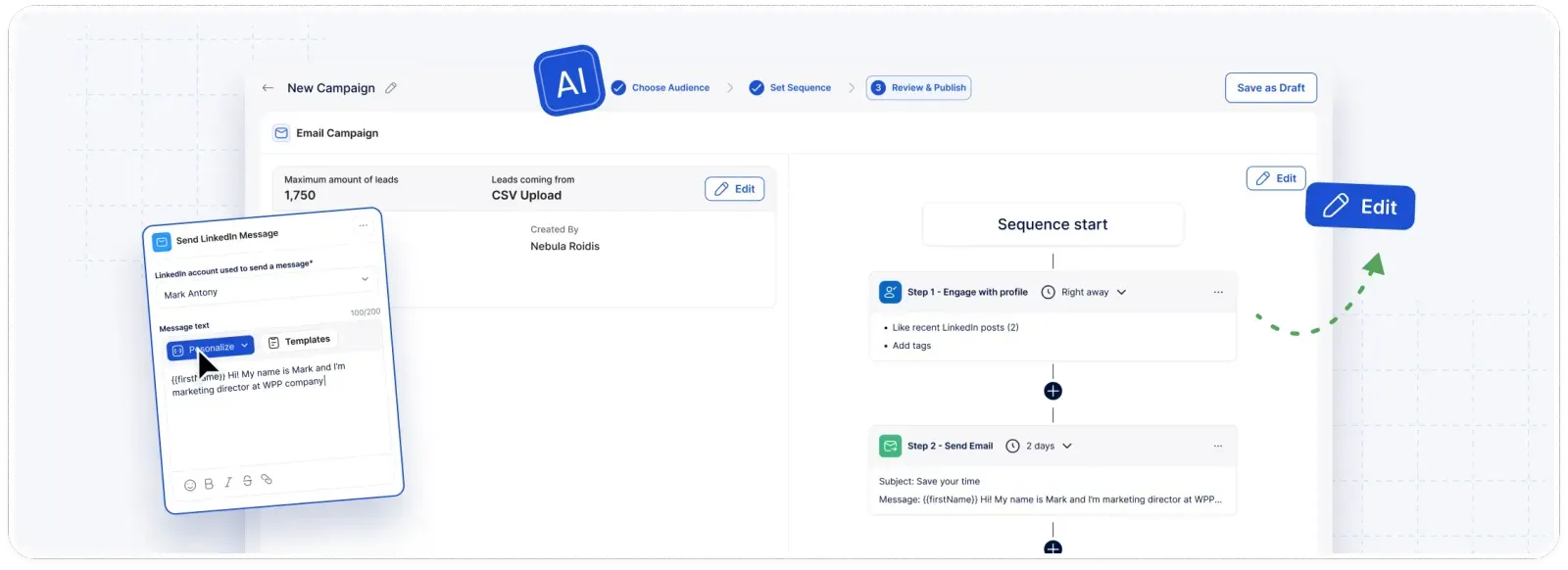
Meet Alfred is the stronger multi-channel option of the two outreach tools. Its Multichannel Sequences feature lets you build a single campaign that chains LinkedIn connection requests, email messages, and Twitter/X DMs in any order.
Source: Meet Alfred
The sequence is logic-aware: a follow-up step triggers only after a LinkedIn connection accepts, and Twitter steps fire only when the lead's profile contains a handle. Email supports Gmail, G Suite, Outlook, and SMTP/IMAP, with up to 400 emails per day on Gmail and 800 on G Suite. All three channels share one analytics dashboard.
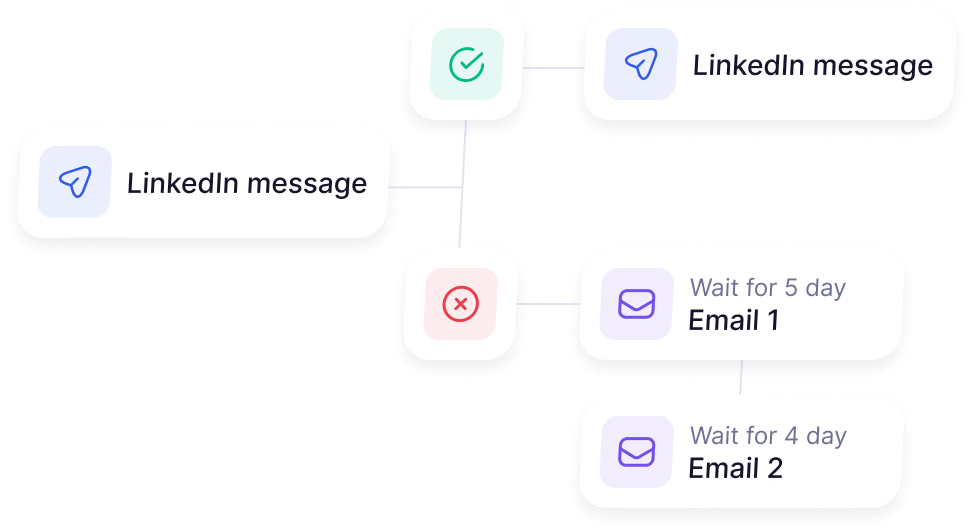
Waalaxy treats multi-channel as a premium feature. Cold email sequences are locked to the Business plan at €69/user/month, the highest self-serve tier. Below that, you're limited to LinkedIn.
Source: Waalaxy
Even on the Business plan, Waalaxy's email capabilities are less developed than its LinkedIn features. Users report that cold email outreach lacks rich text formatting and has limited variable insertion compared to the LinkedIn module. There is no Twitter/X outreach channel.
ZoomInfo approaches multi-channel from the intelligence layer up. Rather than automating channel mechanics, it powers outreach across every channel with verified data and buying signals. Through its partnership with Salesloft, ZoomInfo feeds buyer intelligence directly into multi-touch sequences spanning phone, email, and LinkedIn.
GTM Studio orchestrates plays across email, calls, display ads, and direct mail, triggered by buyer behavior. The difference: ZoomInfo's multi-channel outreach is signal-driven (a prospect researching your competitor triggers a specific play), not sequence-driven (send message A, wait three days, send message B).
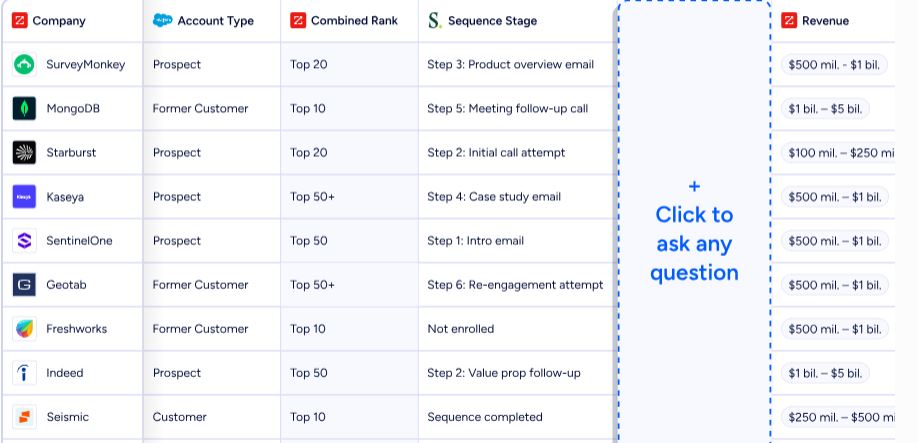
Seismic's sales team attributed 39% of active pipeline to opportunities identified or influenced by ZoomInfo signals, combining internal CRM data, external signals, and AI-generated context to craft account- and persona-based messages that drew immediate responses. (Seismic)
The data gap underneath outreach automation
LinkedIn automation tools assume you already know who to contact. The quality of that assumption determines whether your campaigns generate pipeline or just activity.
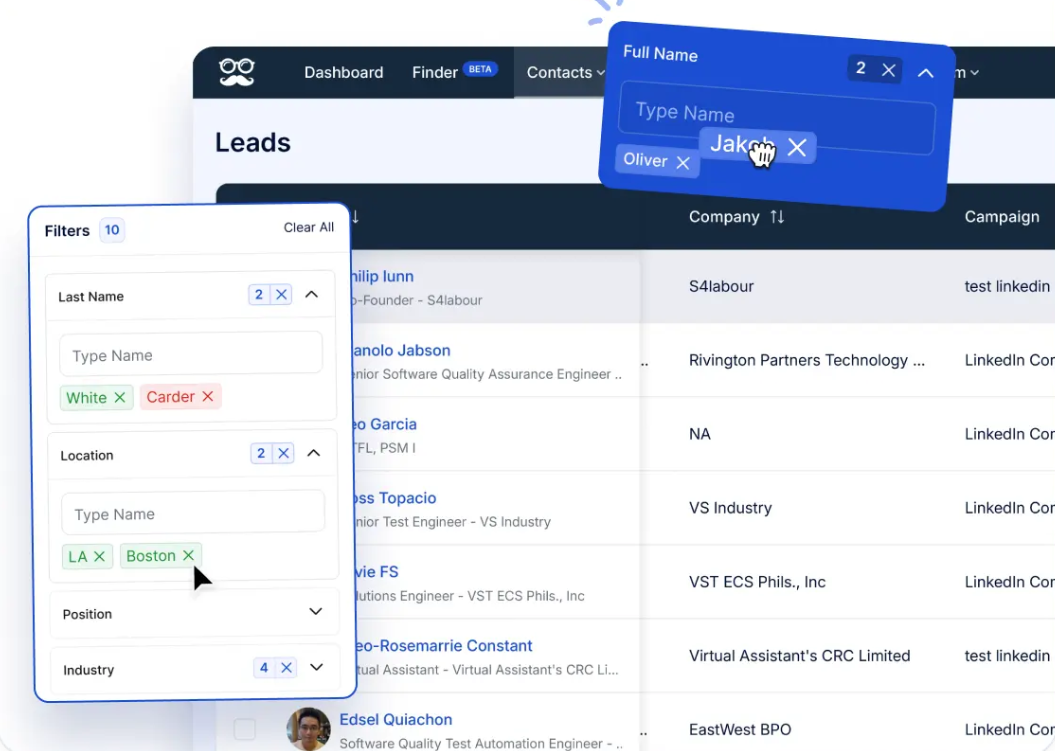
Meet Alfred's data sources are LinkedIn itself and its Lead Finder, an AI engine that discovers leads by job title, industry, location, and company size. Lead Finder requires no Sales Navigator subscription and returns enriched contact details including email addresses and phone numbers.
Source: Meet Alfred
The LinkedIn CRM scrapes profile data from first-degree connections, including emails and phone numbers where available. This helps build prospect lists, but it's limited to what LinkedIn profiles contain and what basic enrichment tools can surface.
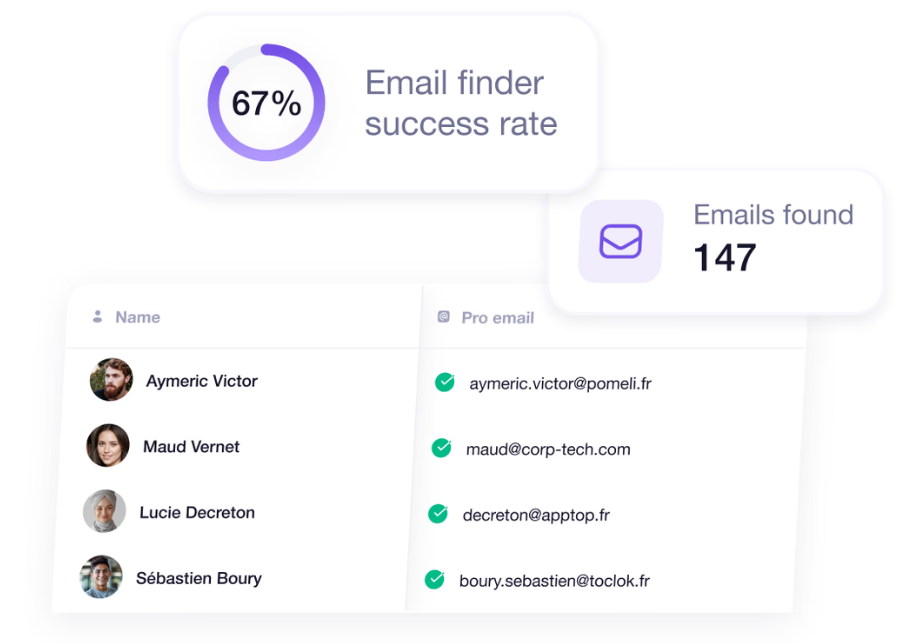
Waalaxy pulls prospects directly from live LinkedIn search results, Sales Navigator, or Recruiter Lite. Its Email Finder uses a waterfall enrichment method querying 20+ data sources to find verified professional emails, claiming a 61%+ match rate and less than 1% bounce rate. This is stronger than Meet Alfred's enrichment, but it's still reactive: you search LinkedIn, Waalaxy enriches what it finds.
Source: Waalaxy
ZoomInfo operates at a different scale. Its B2B database spans 500M contacts, 100M companies, 135M+ verified phone numbers, 120M direct-dial phone numbers, and 200M+ verified business email addresses.
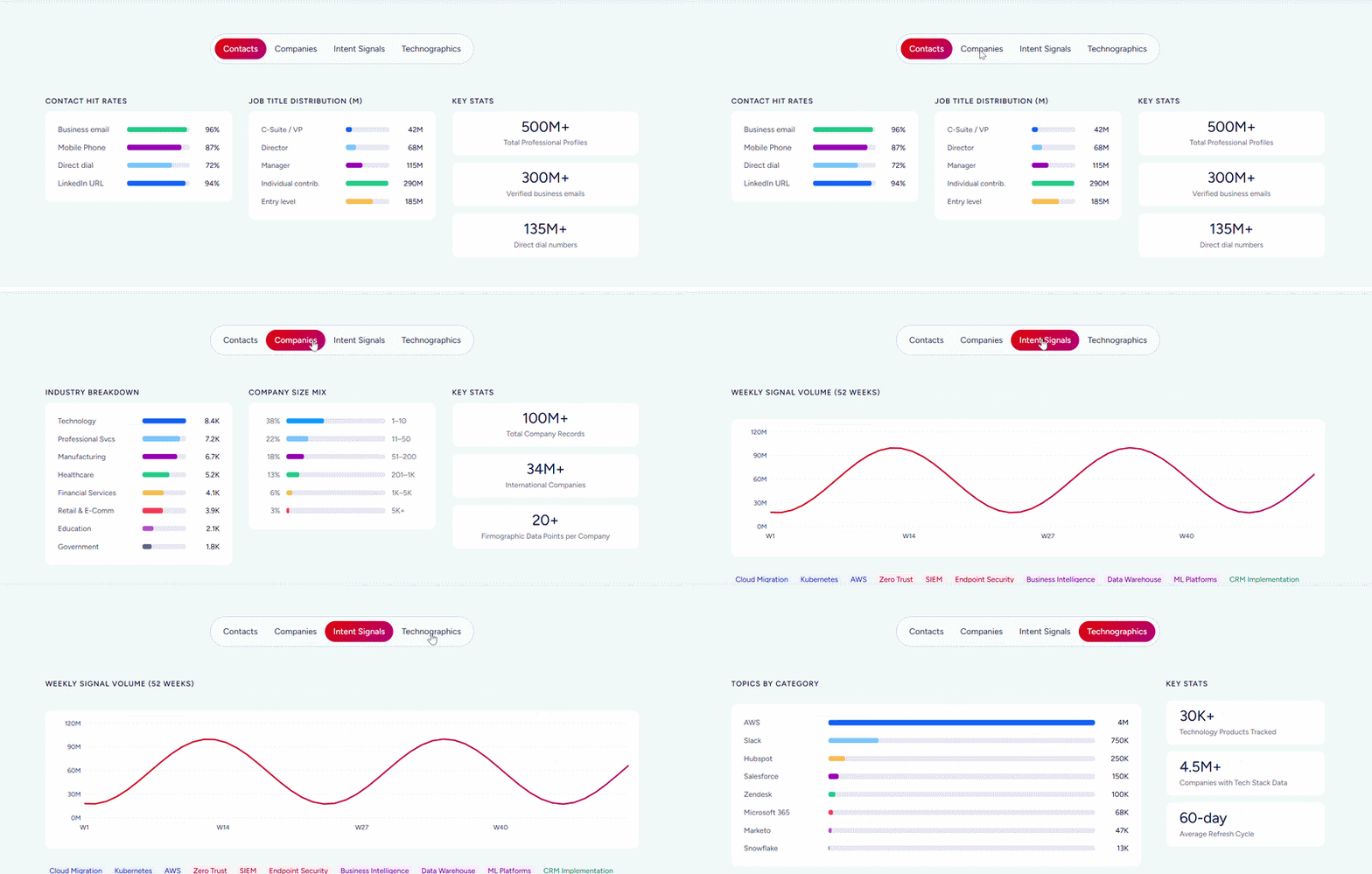
A multi-source pipeline maintains this data, including automated ML scanning of 28 million site domains daily, third-party partner data covering 95 million businesses, a community of 200,000+ ZoomInfo Lite users who share data back, and an in-house Data Training Lab of 300+ human researchers. First-party data reaches up to 95% accuracy.
But scale alone isn't the differentiator.
ZoomInfo's data includes dimensions LinkedIn automation tools don't touch: buyer intent signals that reveal when companies are actively researching solutions, technographics profiling tech stacks across 30+ million companies, website visitor identification that resolves anonymous traffic to companies and buying team members, and org chart intelligence that maps decision-making hierarchies.
In a Fortune 500 competitive RFP analyzing 25 million contacts across vendors, the independent consultant concluded that "no other competitor came even close."
The practical impact: LinkedIn automation tools help you reach more people faster. ZoomInfo helps you reach the right people at the right time, with context about why they're worth reaching.
Vensure's VP of Revenue Operations described ZoomInfo's data advantage: "ZoomInfo gives us the information we need to execute. We don't have to go through and spend our time digging. It's already there, so we can be three steps ahead." (Vensure)
AI capabilities reflect different ambitions
All three platforms use AI, but for different purposes.
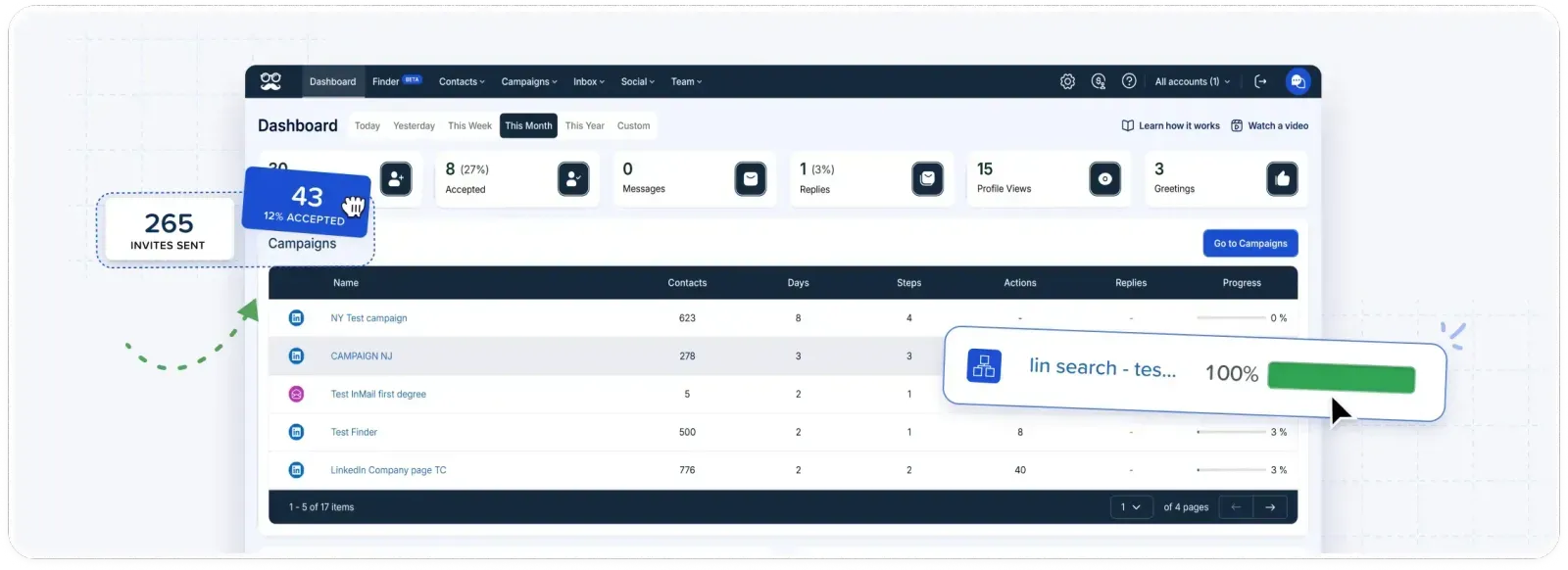
Meet Alfred's AI focuses on two areas. AI Personalization pulls lead data from LinkedIn profiles and CSVs to populate dynamic message variables (first name, company, title, industry).
Source: Meet Alfred
Customizable AI Settings control the pacing and timing of automated actions to mimic human behavior. Meet Alfred recently launched both features. The AI makes messages less generic and keeps accounts safer. It does not analyze buyer signals, recommend accounts, or generate strategic insights.
Source: Meet Alfred
Waalaxy's Waami AI takes a structured approach to message generation. Users input their target audience, value proposition, differentiating factor, and call to action, and Waami generates a prospecting message. Trained on Waalaxy's usage data, it produces messages based on patterns that have historically generated replies on the platform.
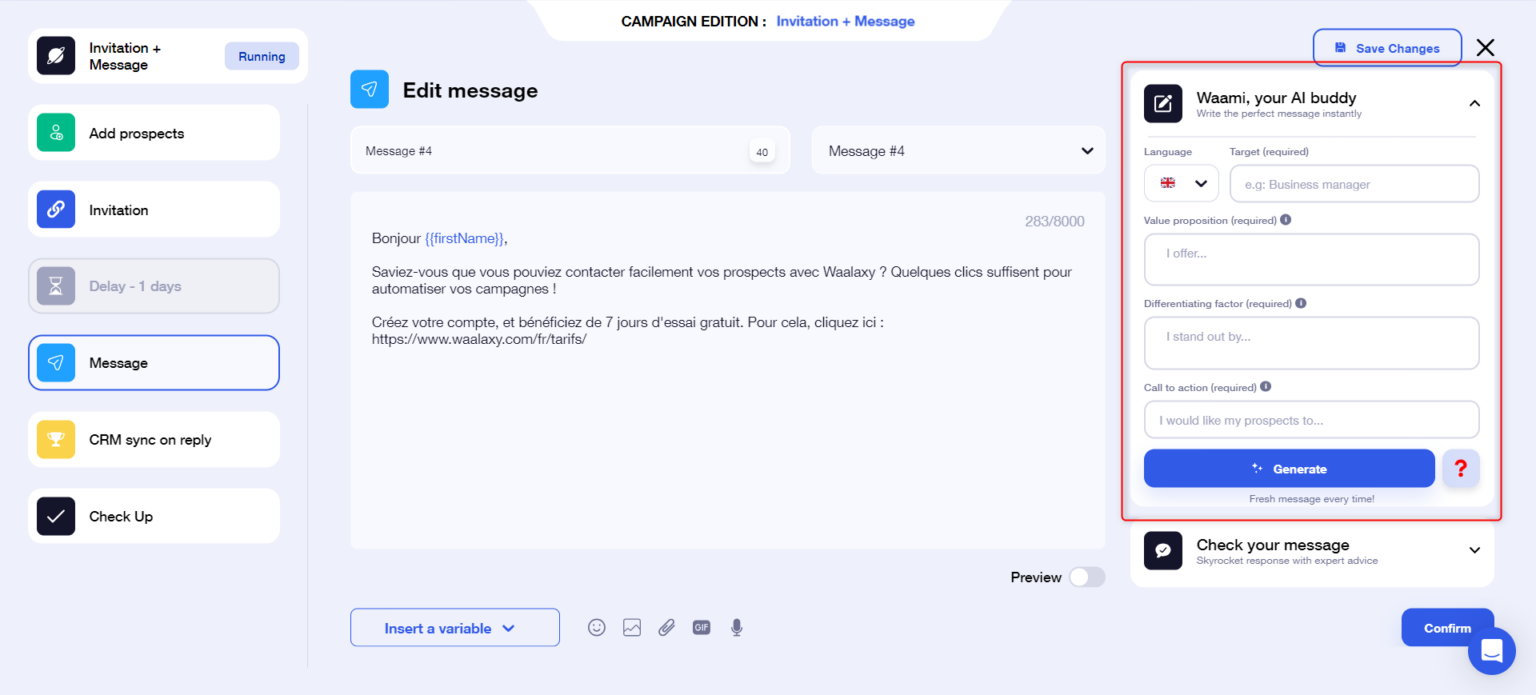
Source: Waalaxy
Waalaxy also offers an AI Prospect Finder that suggests similar prospects and an AI Prospect List Cleaner that removes irrelevant contacts before campaigns launch.
ZoomInfo's AI operates across a broader surface. The GTM Context Graph processes 1.5B+ data points daily, combining ZoomInfo's third-party data with a customer's CRM records, conversation transcripts, and behavioral signals.
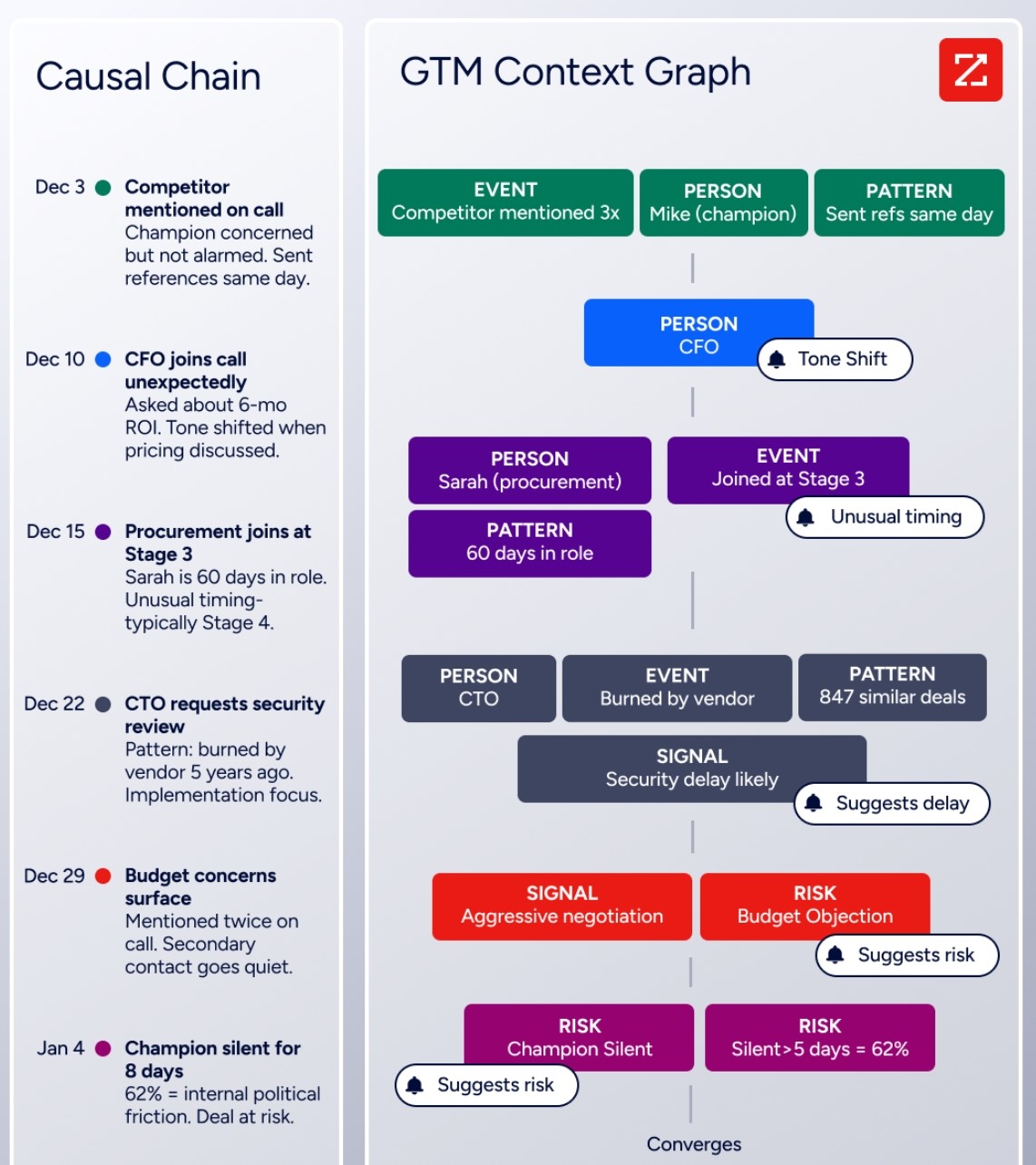
The result is AI that doesn't just personalize messages but understands deal dynamics: why a deal accelerated, which signal combinations predict closed-won outcomes, and which accounts match your proven win patterns.
In GTM Workspace, AI agents handle account research, draft outreach informed by buying signals, surface next best actions, and update CRM fields.
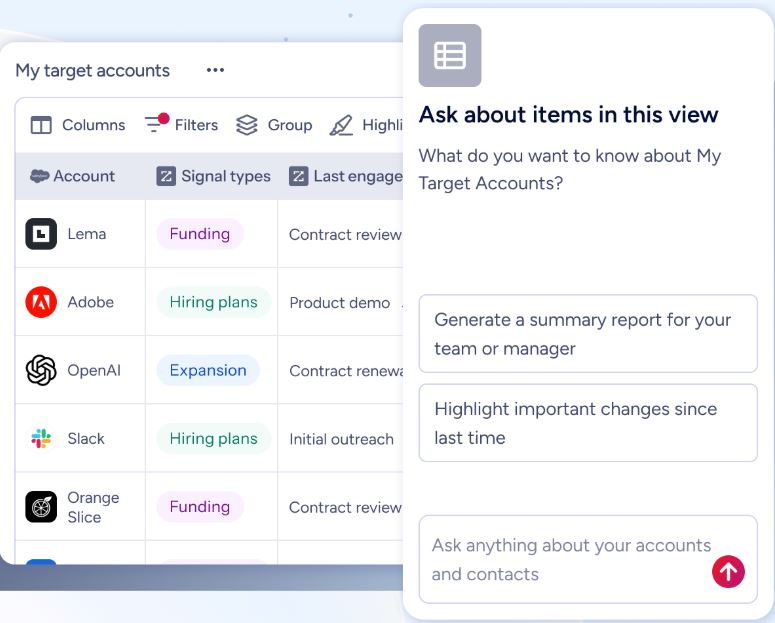
In GTM Studio, marketers describe audiences in natural language and launch multi-channel plays that improve as engagement data accumulates.
The distinction matters: AI that writes a message is different from AI that tells you whether the message is worth sending.
Campaign management and inbox tools
How you manage live campaigns and conversations determines how much time you actually save.
Meet Alfred's Smart Inbox consolidates LinkedIn messages, InMails, and Sales Navigator conversations in one view. When a prospect replies, the system detects the reply and pauses the campaign sequence for that contact, preventing further automated follow-ups from firing.
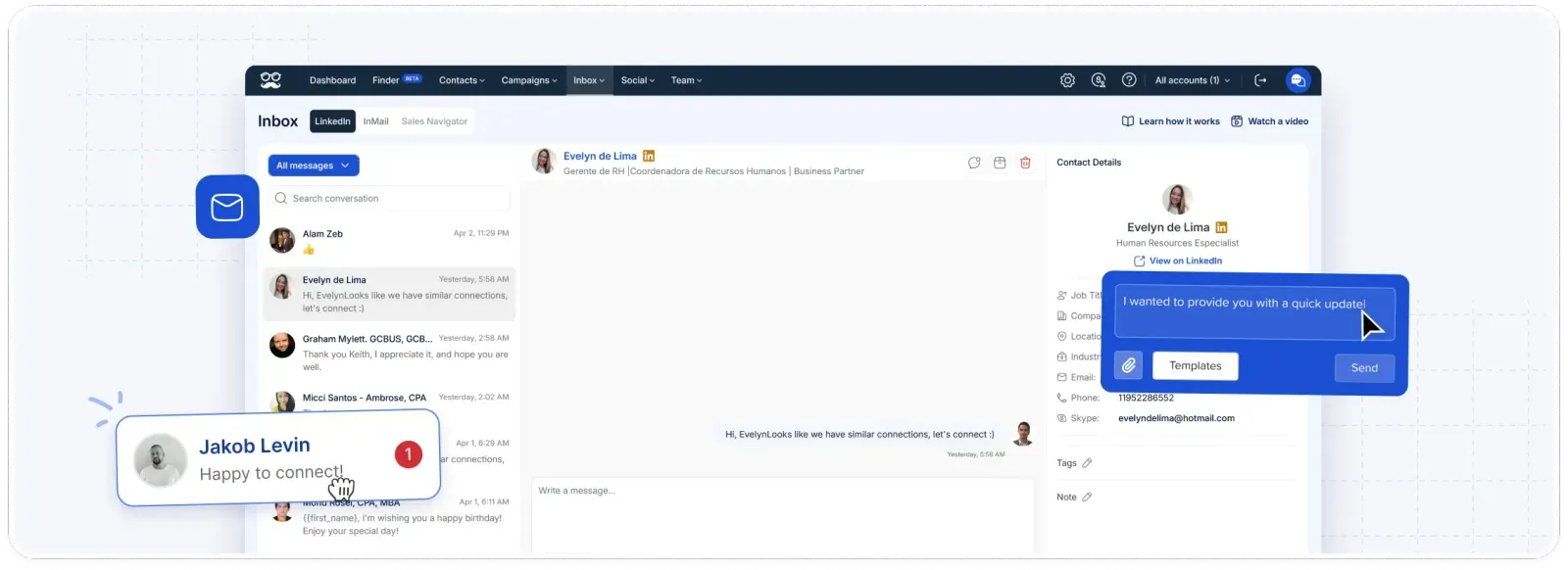
Source: Meet Alfred
Users can search conversations, filter by platform or tags, use pre-saved message templates, and return leads to a campaign from within the inbox. For campaigns, Meet Alfred supports ten distinct LinkedIn lead sources including LinkedIn Search, Sales Navigator, CSV uploads, post engagers, company pages, and event attendees.
Waalaxy's LinkedIn Inbox is a paid add-on at €20/month that replaces LinkedIn's native messaging interface. It adds conversation tagging, scheduled follow-ups, saved replies triggered by typing #, message scheduling, and CRM integration.
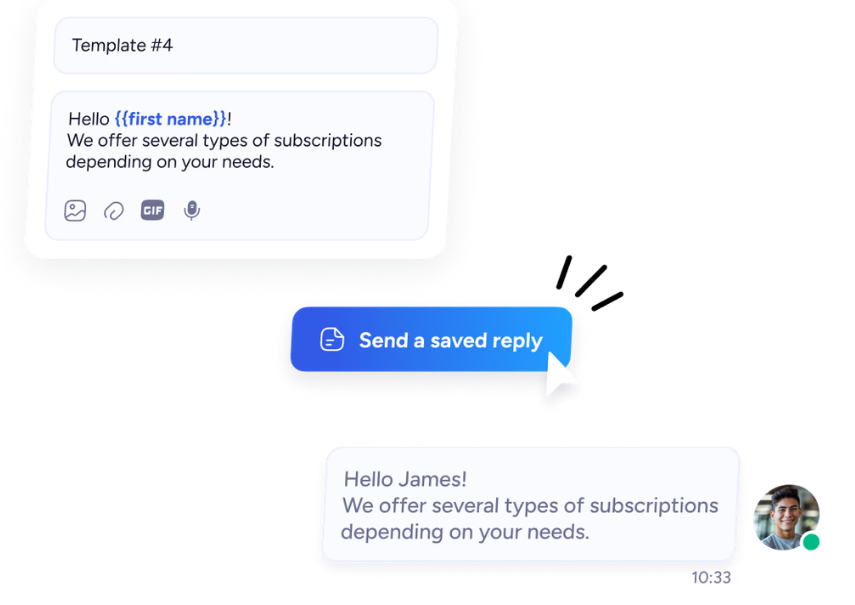
Source: Waalaxy
Campaign management is simpler by design: users pick from 99+ pre-built sequences rather than building custom workflows. This is deliberate. Waalaxy constrains options to reduce decision complexity. However, team members cannot view shared conversations in the inbox, which limits collaboration.
ZoomInfo's GTM Workspace takes a different approach. Rather than managing message queues and reply inboxes, sellers work from an Action Feed that surfaces in-market buyers matched to target criteria, with pre-drafted actions on every signal.
An AI Assistant generates one-click account briefs pulling CRM history, company news, and stakeholder context. Views provide dynamic, filterable interfaces combining CRM data with buying signals. The workflow shifts from "manage your outreach sequences" to "act on the highest-priority signals now."
Team features and agency support
For teams and agencies managing outreach across multiple accounts, the platforms offer different levels of support.
Meet Alfred has the strongest agency offering of the two outreach tools. The Team plan at $79/user/month includes role-based access control, a shared Team Inbox, and an impersonation feature that lets admins manage campaigns and inbox without sharing credentials.
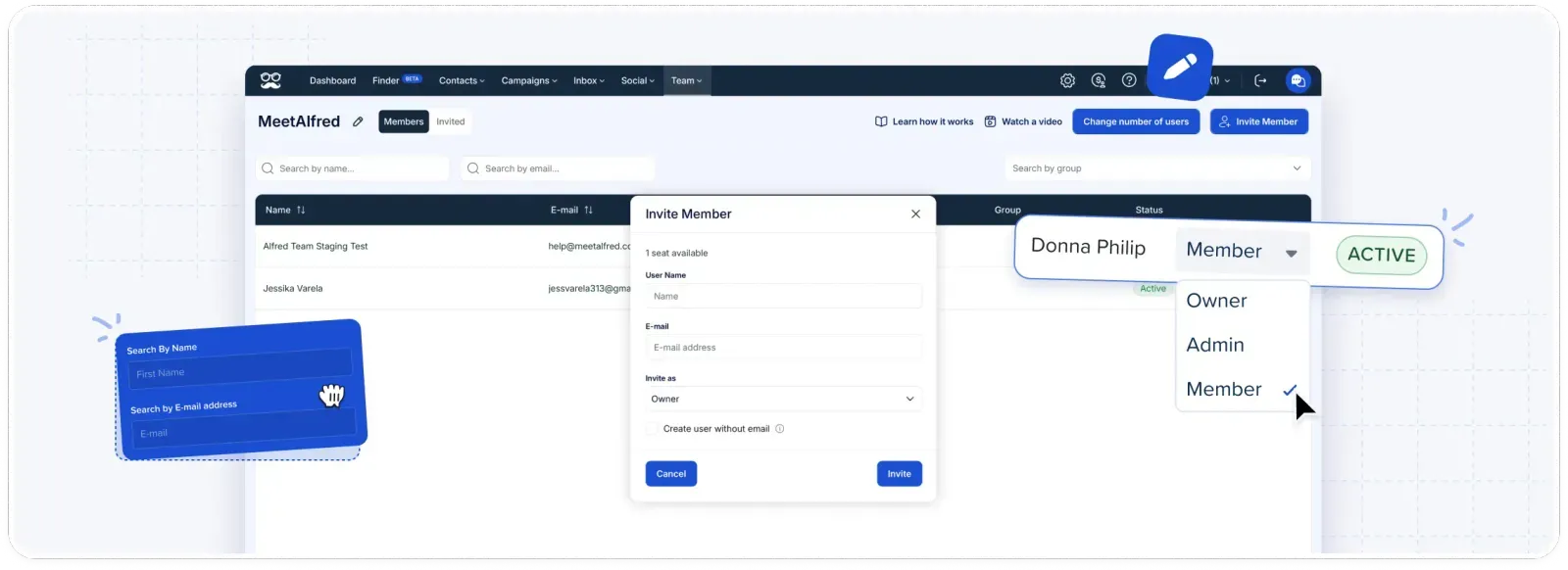
Source: Meet Alfred
Lead sharing with cross-account deduplication prevents the same prospect from being contacted by multiple reps. At 5+ seats, teams unlock a branded white-label solution with custom domain, logo, and colors. At 10+ seats, a dedicated account manager, migration support, and priority support are included. Team Stats provide per-member performance dashboards.
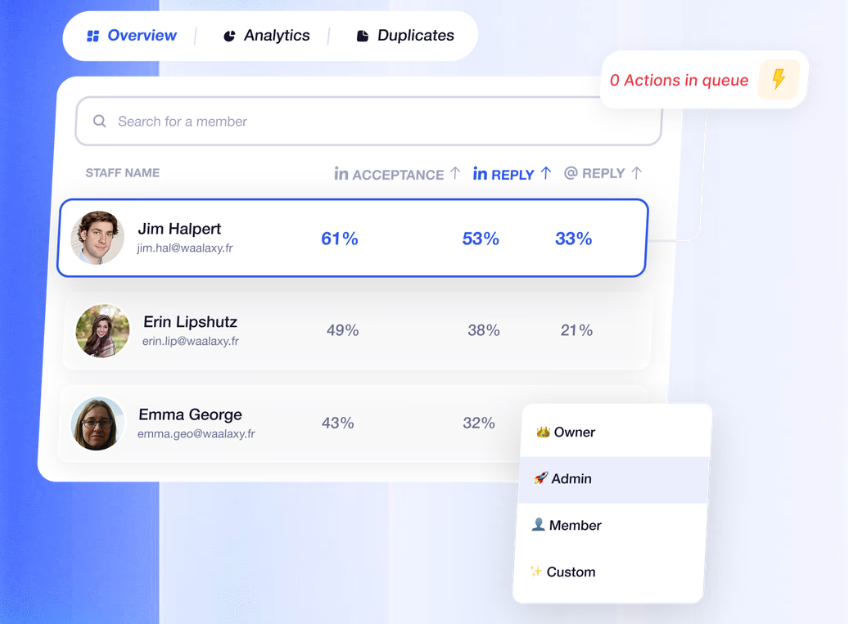
Waalaxy added team features through its Teams product, offering 1-click access to member accounts, anti-duplicate prospect import, shared lead lists, and the ability to share a single Sales Navigator license across the team.
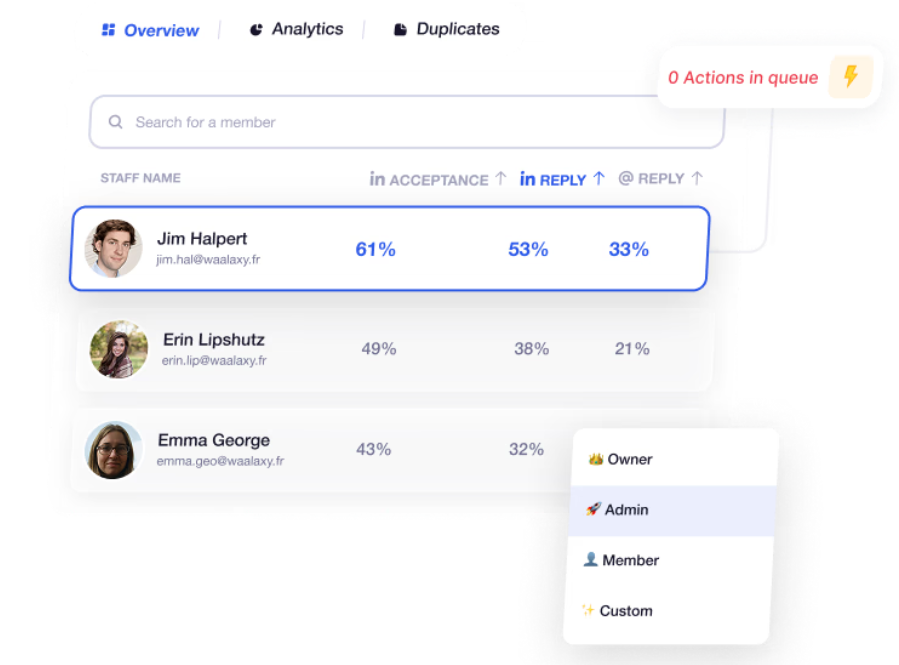
Source: Waalaxy
Enterprise plans for 5+ LinkedIn accounts include volume discounts, team analytics, and dedicated onboarding. Waalaxy does not offer white-label capabilities, and its team inbox is limited (no shared conversation access between members).
ZoomInfo serves teams at a different scale. Its GTM Studio lets RevOps and marketing teams build, enrich, and activate GTM plays from a centralized canvas that feeds priorities directly into GTM Workspace for seller execution.
Native integrations with Salesforce, HubSpot, and Microsoft Dynamics keep all activity synchronized. With 35,000+ companies served (including Adobe, Snowflake, and Thomson Reuters), ZoomInfo is built for teams where outreach is one part of a larger coordinated GTM strategy, not the entire strategy.
Pricing reflects different markets
Each platform's pricing reveals who it's built for.
Meet Alfred uses per-seat, per-month pricing. The Basic plan at $59/user/month is LinkedIn-only with a cap of 3 campaigns. The Pro plan at $99/user/month removes the campaign cap and adds email, Twitter/X, Sales Navigator support, InMail automation, Zapier integrations, and data export.
The Team plan at $79/user/month (cheaper per seat than Pro) adds team management and white label. Annual billing cuts prices by 50%. A 10-person team on the Team plan pays $790/month at list price, or roughly $395/month annually.
Waalaxy prices on a tiered per-user model. The free plan includes 80 LinkedIn invitations per month. Pro at €19/month gets 300 invitations, follow-up messages, and CRM sync. Advanced at €49/month increases to 800 invitations and adds live chat support. Business at €69/month is the only tier with cold email, and includes 500 Email Finder credits.
Additional email credits are purchased as recurring add-ons that don't roll over between months. The LinkedIn Inbox add-on costs €20/month extra. Annual billing saves 50%.
ZoomInfo uses custom-quoted pricing based on seats and credits with no publicly listed prices. Plans are organized into Sales and Marketing product lines, each with Professional, Advanced, and Enterprise tiers. Credits are consumed on data exports, not on searches or views.
The entry point is higher than either outreach tool, but the comparison is misleading: ZoomInfo replaces not just an outreach automation tool but potentially a separate data provider, intent signal vendor, conversation intelligence platform, and sales engagement tool.
ZoomInfo Lite offers a permanent free tier with access to the B2B database, 10 monthly export credits, and a Chrome extension. A 7-day free trial of paid features is also available.
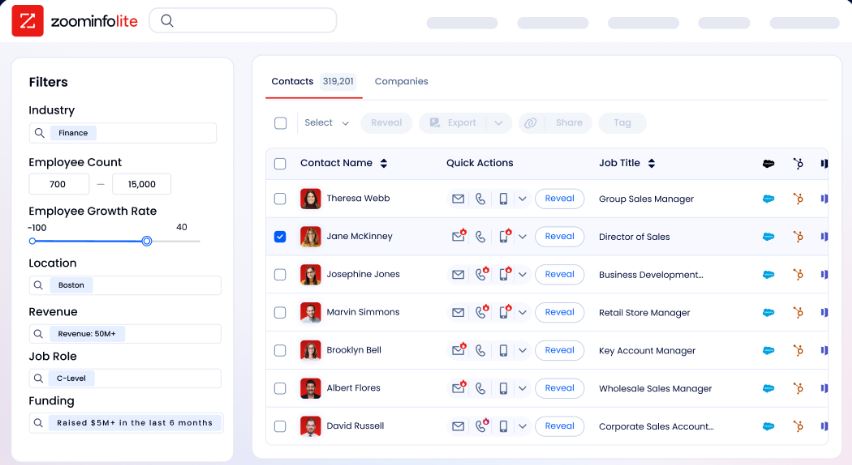
The question isn't which tool costs less per seat. It's which tool delivers more pipeline per dollar spent. A $99/month outreach tool sending messages to unqualified prospects costs more than a platform that directs every action toward verified, in-market buyers.
Integrations and ecosystem
Meet Alfred offers native HubSpot and Salesforce integrations on the Teams/Agency/Enterprise plans. Pro users connect through Zapier and webhooks. A REST API is available with endpoints for leads, campaigns, connections, and replies. Channel integrations cover LinkedIn, email (Gmail, G Suite, Outlook via SMTP/IMAP), Twitter/X, and Facebook/Instagram for social posting.
Waalaxy offers native integrations with HubSpot and Pipedrive, with Salesforce and other CRMs available through Zapier, Make, or n8n. The homepage cites "CRM Sync to 2,000+ tools," which reflects Zapier and Make's ecosystem, not Waalaxy's own integration count. API-based lead import is restricted to Advanced and Business plans. No public API for custom development.
ZoomInfo's App Marketplace lists 120+ partner integrations across CRM, marketing automation, sales engagement, data warehouses, and communications. Featured integrations include Salesforce, HubSpot, Microsoft Dynamics 365, Snowflake, and Salesloft. The Enterprise API provides programmatic access to ZoomInfo's data across Search, Enrich, Copilot AI, Marketing, and Engagement endpoints.
The MCP server connects AI models directly to ZoomInfo's data as a native tool, supporting Claude and ChatGPT. API access is included in all relevant plans.
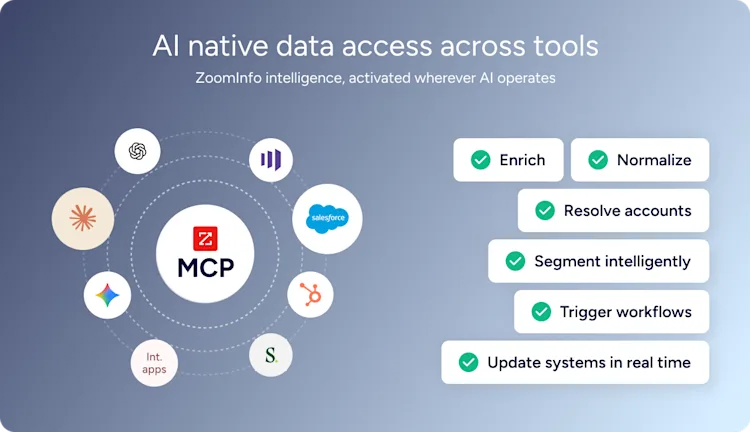
BDO Canada's Senior Marketing Intelligence Analyst described the API integration: "The plug-and-play aspect of the API means I can integrate it very easily into any process and get information at a moment's notice," with an 87% reduction in time spent on internal data dashboard updates. (BDO Canada)
Security, compliance, and LinkedIn account risk
Meet Alfred publishes a Security & Compliance page covering AWS hosting, SSL/HTTPS encryption, Cloudflare DDoS protection, and encrypted database storage. Payment processing runs through Stripe (PCI DSS Level 1). The platform maintains GDPR compliance with a Data Processing Agreement and CCPA compliance. It does not publicly claim ISO 27001, SOC 2, or other third-party security certifications.
Waalaxy is operated by SAS Waapi under French law, compliant with GDPR and CCPA. Payment processing runs through Stripe. Beyond this, Waalaxy does not publish specific security infrastructure details, certifications, or a dedicated security page.
ZoomInfo holds a certification stack (renewed annually): ISO 27001, SOC 2 Type II, ISO 27701, TRUSTe GDPR and CCPA validations. It is a registered data broker in California and Vermont and maintains a dedicated Trust Center. For enterprises in regulated industries, this compliance infrastructure is often a requirement, not a preference.
On LinkedIn account risk: both Meet Alfred and Waalaxy automate actions that technically violate LinkedIn's Terms of Service. Meet Alfred mitigates risk through cloud-based dedicated IPs and human-behavior pacing. Waalaxy mitigates through randomized action quotas and extension-detection countermeasures.
Neither can eliminate the risk. ZoomInfo avoids this risk category by providing verified contact data for direct outreach through email and phone, rather than automating LinkedIn's interface.
Meet Alfred vs. Waalaxy vs. ZoomInfo: Which should you choose?
The right choice depends on where you are in the outreach maturity curve.
Choose Meet Alfred if:
You need LinkedIn, email, and Twitter/X in coordinated campaign sequences
You're an agency that needs white-label outreach capabilities for clients
Cloud-based execution (no browser required) matters for reliability
You want a LinkedIn CRM, Smart Inbox, and Lead Finder in one tool
Your data needs are met by LinkedIn profiles and basic enrichment
Choose Waalaxy if:
You're an individual or small team starting LinkedIn outreach
Simplicity and speed to first campaign are your top priorities
You want a free plan to test before committing budget
LinkedIn is your primary (or only) outreach channel
You prefer picking from pre-built sequences over building custom workflows
Choose ZoomInfo if:
You need verified B2B data at scale, not LinkedIn profile scraping
Buyer intent signals and account intelligence should drive your outreach, not automation alone
Your team needs AI that researches accounts, prioritizes opportunities, and drafts outreach based on buying signals
You want a platform that spans prospecting, engagement, conversation intelligence, and marketing in one system
Enterprise-grade security and compliance are requirements for your organization
See how ZoomInfo works and how its data and intelligence can transform your pipeline.
Meet Alfred and Waalaxy both solve a real problem: manual LinkedIn prospecting is slow, repetitive, and doesn't scale. They automate the mechanics of outreach effectively.
But the mechanics are only half the equation. The other half is knowing who deserves your outreach, whether they're actually in-market, and what message will resonate given their situation. That intelligence layer separates sending more messages from generating more pipeline.
ZoomInfo provides it, built on nearly two decades of B2B data collection, and delivers it through AI that turns signals into action.
Levanta's CEO described ZoomInfo's evolution: "ZoomInfo's not just a contact data company anymore. They've built a full system of execution. GTM Intelligence actually works the list, writes the outreach, triggers the play, and helps drive predictable growth." (Levanta)
Meet Alfred vs. Waalaxy vs. ZoomInfo FAQ
What is the main difference between Meet Alfred, Waalaxy, and ZoomInfo?
Meet Alfred is a cloud-based multi-channel outreach tool that automates LinkedIn, email, and Twitter/X campaigns from a single platform. Waalaxy is a Chrome extension focused on LinkedIn automation with optional email on its highest plan.
ZoomInfo is a GTM platform built on a B2B dataset of 500M contacts, 100M companies, 135M+ verified phone numbers, and 200M+ verified business emails. It provides not just outreach automation but buyer intent signals, conversation intelligence, and AI-driven account prioritization.
Which platform is cheapest to get started with?
Waalaxy offers a permanent free plan with 80 LinkedIn invitations per month. ZoomInfo Lite is also free with 10 monthly export credits and access to the B2B database. Meet Alfred offers a free trial with no credit card required. For paid plans, Waalaxy's Pro starts at €19/month, Meet Alfred's Basic at $59/month, and ZoomInfo uses custom pricing based on seats, credits, and features.
Is it safe to automate LinkedIn outreach with Meet Alfred or Waalaxy?
Both tools operate in a gray area relative to LinkedIn's Terms of Service, which prohibit automated connection requests and messaging. Meet Alfred reduces risk through cloud-based dedicated IP addresses and human-behavior pacing. Waalaxy uses randomized action quotas and extension-detection countermeasures. Neither can fully eliminate the risk of LinkedIn account restrictions.
ZoomInfo takes a different approach by providing verified contact data (direct dials and business emails) for direct outreach, avoiding LinkedIn automation risk.
Which platform has the best data for prospecting?
ZoomInfo's B2B database covers 500M contacts, 100M companies, 135M+ verified phone numbers, and 200M+ verified business emails, maintained by 300+ human researchers and reaching up to 95% accuracy on first-party data.
Meet Alfred's Lead Finder offers basic enrichment from LinkedIn profiles. Waalaxy's Email Finder uses waterfall enrichment across 20+ sources with a claimed 61%+ match rate, which is stronger than Meet Alfred's enrichment but narrower than ZoomInfo's multi-dimensional data.
Can I use ZoomInfo and a LinkedIn automation tool together?
Yes. ZoomInfo's data can complement LinkedIn outreach tools. You could use ZoomInfo to identify in-market accounts and verified contacts, then export those contacts to Meet Alfred or Waalaxy for LinkedIn campaign execution. ZoomInfo's API and integrations with CRMs like HubSpot and Salesforce also allow data to flow into whatever outreach tools you use downstream.
Which platform is best for agencies managing multiple client accounts?
Meet Alfred has the strongest agency offering of the three, with a white-label solution (available at 5+ seats) that includes custom domain, logo, colors, and branded emails. It also offers account impersonation for admins and cross-account lead deduplication. Waalaxy has team features including centralized dashboards and anti-duplicate protection, but no white-label capability. ZoomInfo serves agencies at the data and intelligence layer rather than as a white-label outreach tool.
Do any of these platforms include buyer intent data?
Only ZoomInfo provides buyer intent signals. ZoomInfo Intent tracks signals from 210 million IP-to-Organization pairings and 6 trillion+ new keyword-to-device pairings sourced monthly, identifying when companies are actively researching solutions in your category.
Neither Meet Alfred nor Waalaxy offers intent data. Their targeting relies on LinkedIn profile attributes (job title, industry, company size) rather than buying behavior.
Which platform has the strongest AI features?
ZoomInfo's AI is the most developed. Its GTM Context Graph processes 1.5B+ data points daily, combining third-party B2B data with a customer's CRM records and conversation transcripts to reason about deal dynamics and recommend actions. AI agents in GTM Workspace research accounts, draft context-aware outreach, and prioritize opportunities.
Waalaxy's Waami AI generates prospecting messages from structured inputs trained on Waalaxy's campaign history. Meet Alfred's AI handles message personalization and behavioral pacing of automated actions.
More Waalaxy comparisons:
