
Choosing between Pipedrive vs. Vtiger for your CRM often comes down to these five questions:
Do you need a focused sales pipeline tool, or a platform that also handles marketing and customer support?
Is your priority fast setup and ease of use, or customization and process enforcement?
Are you a small sales team that wants to start closing deals today, or a growing organization that needs cross-departmental visibility?
How important is it that the data inside your CRM is accurate, enriched, and connected to real buying signals?
Do you want a CRM that manages deals you already know about, or intelligence that helps you find the right deals in the first place?
In short, here's what we recommend:
Pipedrive is built for sales teams that want a clean, visual pipeline and fast time-to-value. Its kanban-style deal management, activity-based selling philosophy, and intuitive interface let small and mid-sized teams start tracking deals within hours, not weeks. With 500+ integrations and pricing starting at $14/month per seat, Pipedrive keeps things simple. The tradeoff: it's a pre-sale tool with no native customer support, limited marketing automation, and no built-in data intelligence. You'll need separate tools to find prospects, verify contact data, and understand which accounts are in-market.
Vtiger takes the opposite approach, bundling sales, marketing, and help desk into a single platform with a shared data model it calls "One View." For growing businesses that need cross-departmental visibility without buying three separate tools, Vtiger's breadth is genuine. Features like CPQ, Deal Room, Playbooks, and built-in Calculus AI give it depth for its price point. But that depth comes with a steeper learning curve, reported performance issues, and a mobile app that lags behind the desktop experience.
Both platforms help you manage deals once they're in the pipeline. But neither solves the upstream problem: finding the right accounts, verifying the contacts, and knowing when a buyer is ready to talk. That's a different job entirely.
ZoomInfo is an AI-powered go-to-market platform built on a large B2B data foundation: 500M contacts, 100M companies, 135M+ verified phone numbers, and 200M+ verified business email addresses. Its GTM Context Graph, which processes 1.5B+ data points daily, unifies this data with your CRM records, conversation transcripts, and behavioral signals to reveal the full context of your accounts. That context gives AI the fuel to show not just what happened, but why it happened, and what to do next. Your team accesses that intelligence through GTM Workspace for sellers, GTM Studio for marketers and RevOps, or APIs and MCP in any front-end, including Pipedrive and Vtiger themselves.
If accurate prospecting data and buyer intelligence sound like the missing layer in your sales stack, see how ZoomInfo works.
Pipedrive vs. Vtiger vs. ZoomInfo at a glance
Pipedrive | Vtiger | ZoomInfo | |
|---|---|---|---|
Primary focus | Sales pipeline management | All-in-one CRM (Sales + Marketing + Support) | AI-powered GTM intelligence and execution |
Pipeline management | Visual kanban, deal rotting, multiple pipelines | Kanban + list view, Playbooks, Deal Room | Managed through CRM integrations; GTM Workspace for seller execution |
Contact data | Store and manage your own contacts | Store and manage your own contacts | 500M contacts, 200M+ verified emails, 135M+ verified phones |
Marketing tools | Campaigns add-on | Built-in email, SMS, social, landing pages | ABM, display ads, intent-driven audience targeting |
Customer support | None | Built-in help desk with SLA management | Not applicable (GTM intelligence platform) |
AI capabilities | AI email writer, AI Sales Assistant, AI reports | Calculus AI (scoring, recommendations, chatbots, generative content) | GTM Context Graph with AI agents, intent signals, conversation intelligence |
Buyer intent data | None | None | 210M IP-to-org pairings, 6T+ keyword-to-device pairings monthly |
Integrations | 172+ native partners + API/MCP for any tool | ||
Deployment | Cloud only | Cloud + self-hosted open source | Cloud |
Starting price | $12/user/month (free plan available) | Custom-quoted; free tier available | |
Free plan | No (14-day trial) | ||
Best for | SMB sales teams that want speed and simplicity | Growing SMBs that need cross-departmental CRM | Revenue teams that need verified data, intent signals, and AI-driven prospecting |
Pipedrive wins on simplicity and speed to value
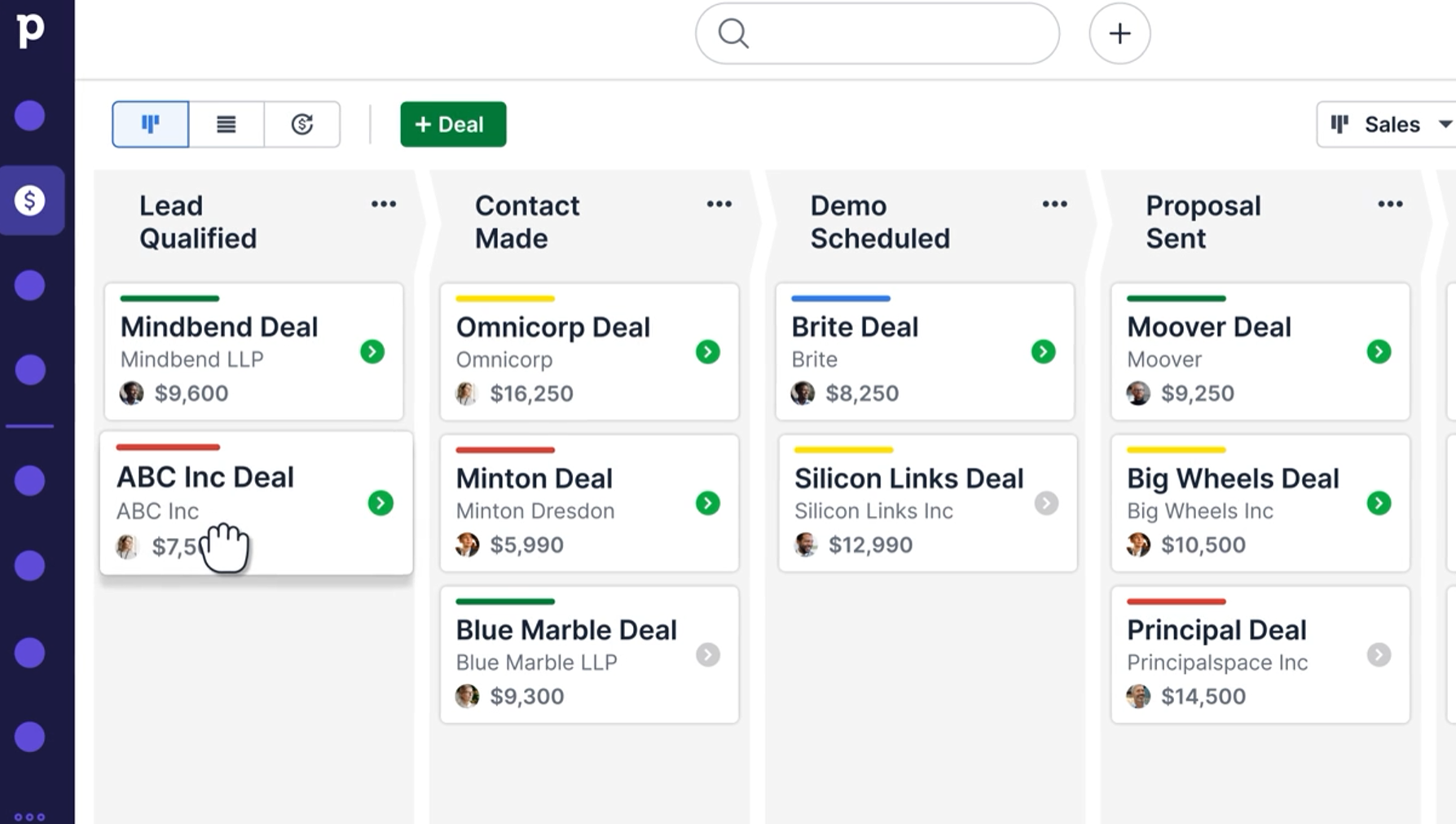
Salespeople founded Pipedrive because they were frustrated with CRMs built for managers, and that philosophy still defines the product. The interface centers on a visual kanban board where every deal sits in a named stage, and colored cues flag deals going cold before a rep even checks. Drag a deal to the next stage, schedule the next activity, move on. No training manual required.
Source: Pipedrive
This focus pays off in adoption. Where enterprise CRMs often require a dedicated administrator, Pipedrive lets salespeople configure it themselves. The 14-day free trial needs no credit card, and most teams are productive within a day. Custom fields, multiple pipelines, and activity types can all be set up without technical help.
The mobile app reinforces this philosophy. In-app calling with automatic logging, a "Nearby" feature that shows geographically close clients, offline activity scheduling, and a business card scanner make Pipedrive usable for field selling, not just deal tracking at a desk.
Where Pipedrive draws boundaries: there's no native help desk, no built-in marketing automation beyond the Campaigns add-on, and no customer success module. It's a pre-sale pipeline tool, and it's honest about that.
Vtiger covers more ground but demands more from you
Vtiger takes the opposite design bet. Instead of doing one thing well, it tries to do everything a small business needs under one roof: sales, marketing, help desk, projects, and inventory, all sharing a single customer record.
The payoff is real. A support agent sees the same customer record a salesperson does, without integration middleware. Marketing engagement data flows directly into lead scoring. A deal converts to a project without re-entering data. For businesses that have outgrown spreadsheets but can't afford (or don't want to manage) a stack of point solutions, this shared data model eliminates an entire category of headaches.
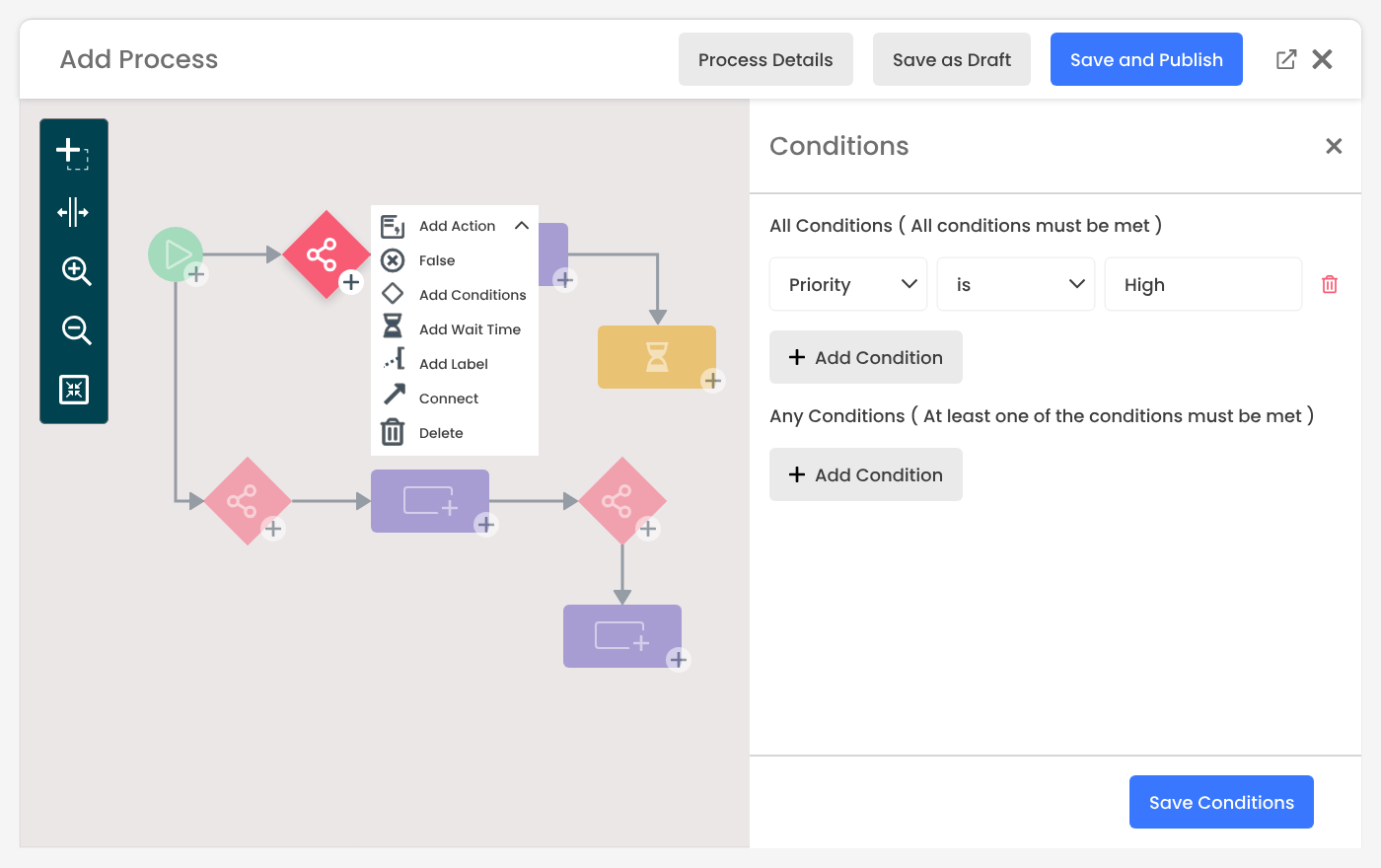
Vtiger also packs features that competitors typically reserve for enterprise tiers. Playbooks auto-create required tasks when a deal enters a stage and block advancement until those tasks are completed, turning stage gates from labels into enforced checkpoints. Deal Room creates a customer-facing microsite per deal with shared documents, Q&A, and a timeline of every action. Process Designer lets admins build cross-department workflows visually without code.
Source: Vtiger
The cost of this breadth is complexity. The most consistent complaint across G2 and Capterra reviews is that Vtiger "requires a dedicated person to be a vTiger expert." Reviewers describe setup of advanced features as "pretty complicated," and they frequently cite performance issues. The mobile app, while functional, feels like a stripped-down version of the desktop experience.
If you're weighing Vtiger against the other big all-in-one SMB suite, see our Vtiger CRM vs. Zoho CRM comparison.
Pipeline management: focused tool vs. full-process enforcement
Both platforms offer kanban-style pipeline views. The difference is in philosophy.
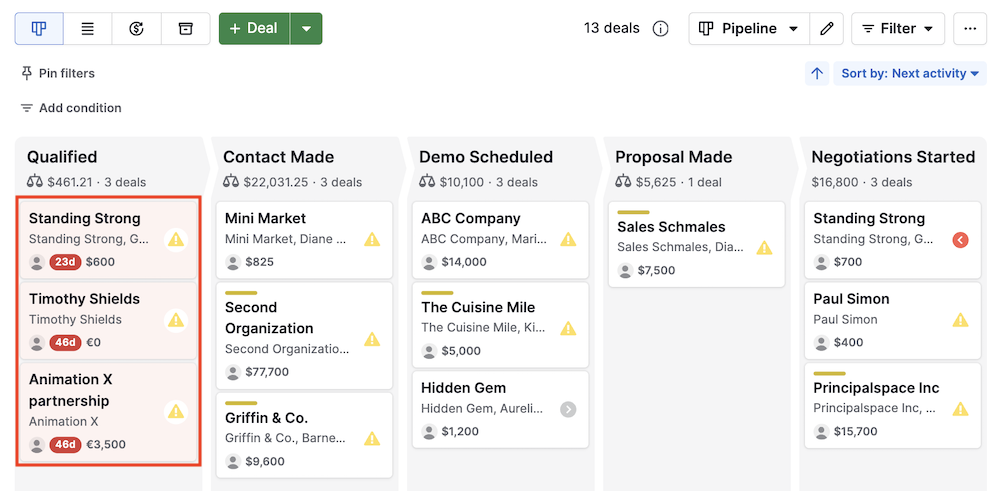
Pipedrive treats the pipeline as the primary workspace. The board is what a rep sees on login, and every interaction (emails, calls, activities, notes) hangs off the deal card. Deal rotting marks idle deals with colored cues after a user-defined period. Three pipeline views (kanban, list, and forecast) give reps and managers different angles on the same data.
Source: Pipedrive
Pipeline customization is straightforward. Create multiple pipelines with custom stages, add custom fields (including auto-calculated types and multi-currency), toggle feature modules on and off. No administrator required.
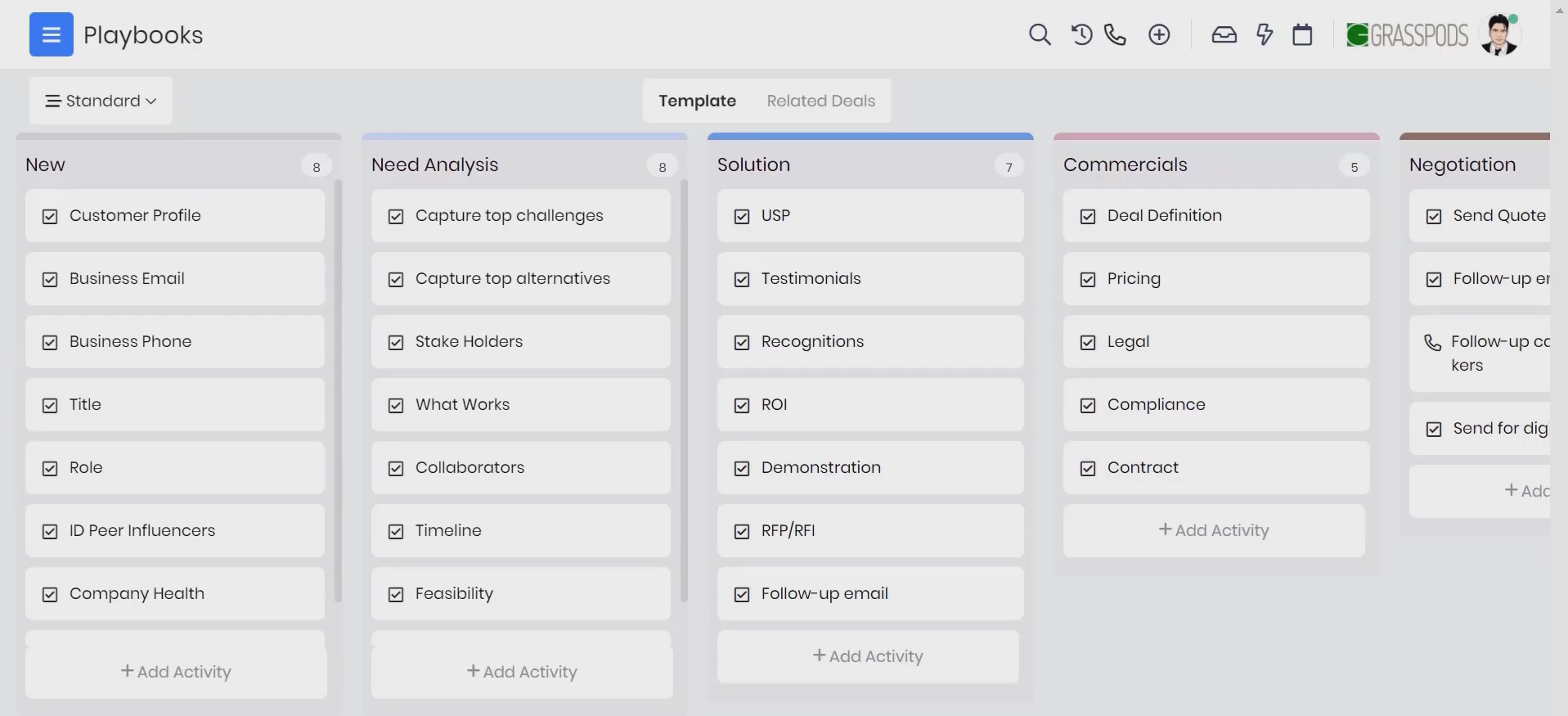
Vtiger adds process enforcement on top of pipeline tracking. Playbooks don't just suggest tasks at each stage; they create them automatically and block stage advancement until tasks are completed. Task dependencies allow time lags between activities, and alert rules notify managers when tasks stay incomplete past a threshold. This matters for sales teams that need repeatable processes rather than just deal visibility.
Source: Vtiger
CPQ adds another layer: sales ops configure product types, families, options, rules, and discounts in an admin interface. When a rep builds a quote, the system calculates pricing from configuration rules, and discount approvals route through Vtiger's built-in approval workflows. Pipedrive can generate documents through Smart Docs, but it doesn't include a native quoting engine with pricing logic.
The tradeoff is clear. Pipedrive gets you tracking deals faster. Vtiger enforces how deals should progress. Teams that value speed and flexibility lean toward Pipedrive. Teams that need process consistency and accountability lean toward Vtiger.
Neither CRM solves the data problem
Both Pipedrive and Vtiger organize data you already have well. Neither helps you find the data you're missing.
A CRM records that you have 500 contacts in your target market. It doesn't tell you that your total addressable market is 5,000 companies, that 200 of them are researching solutions like yours this month, or that the VP of Sales at your top prospect just changed jobs. CRMs manage relationships. They don't tell you which relationships are worth pursuing.
This is where ZoomInfo operates. With 500M contacts, 100M companies, 135M+ verified phone numbers, and 200M+ verified business email addresses, ZoomInfo provides the verified data that CRMs assume someone else already gathered. A multi-source pipeline backed by 300+ human researchers and up to 95% accuracy on first-party data means the direct dial actually rings and the email actually lands. In a Fortune 500 competitive RFP analyzing 25 million contacts, the independent consultant concluded that "no other competitor came even close."
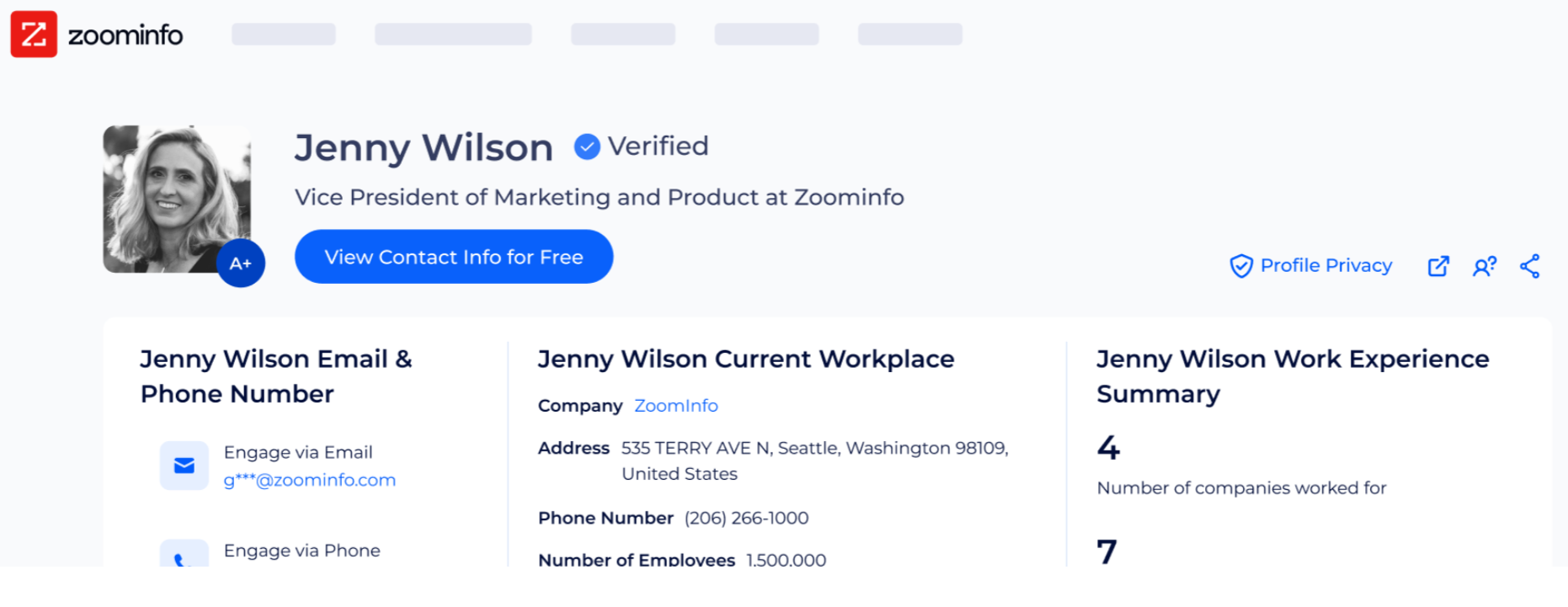
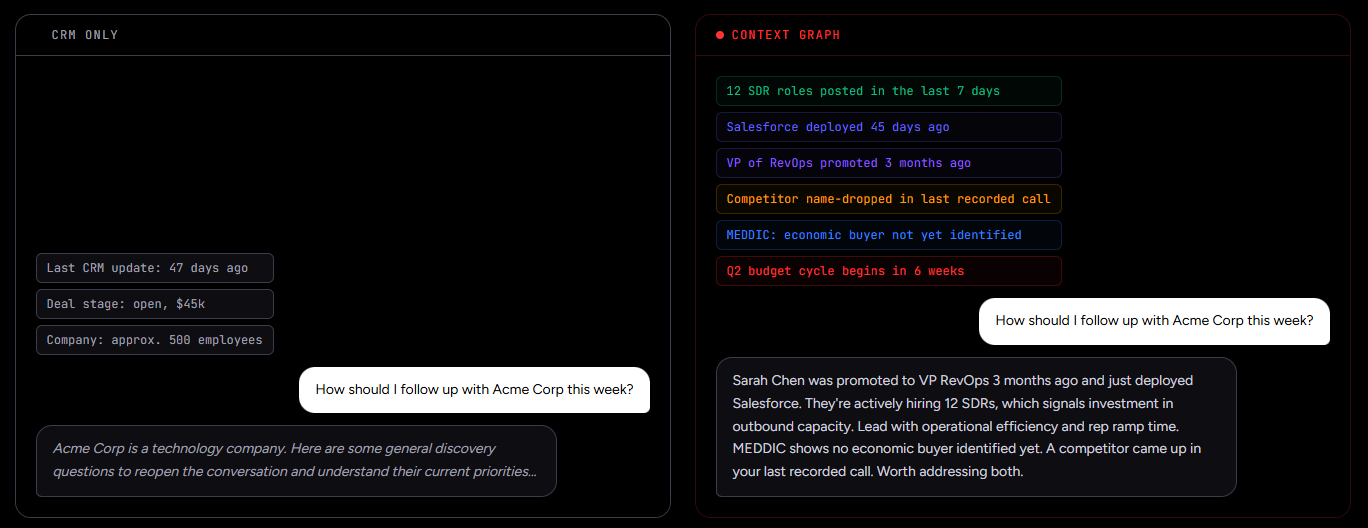
But the data is just the foundation. The GTM Context Graph, which processes 1.5B+ data points daily, fuses ZoomInfo's B2B data with your CRM records, conversation transcripts, and behavioral signals into a single intelligence layer. A CRM records that a deal moved to Stage 3. Conversation intelligence captures that the CFO joined the call and asked about six-month ROI. Intent data shows the company is researching your competitor. The GTM Context Graph connects all three to reveal why the deal moved, and what should happen next.
"It's not just the data itself. It's more about the right data at the right time to help us reach out with the right message across that full buyer journey." — Chelsea Kenyon, Senior Director of Digital Strategy, Redwood Logistics (Case Study)
ZoomInfo integrates natively with both Salesforce and HubSpot, and its APIs and MCP server deliver the same intelligence into Pipedrive, Vtiger, or any other tool in your stack.
AI capabilities reflect each platform's scope
All three platforms have invested in AI, but the implementations solve different problems at different scales.
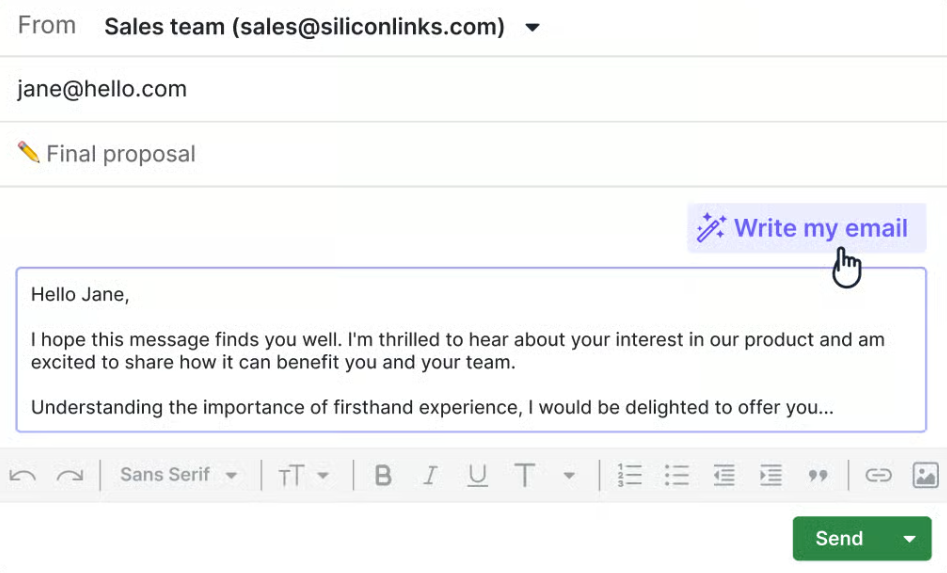
Pipedrive's AI focuses on sales rep productivity. The AI Sales Assistant surfaces win probability predictions, deal activity reminders, and notifications. The AI email writer generates drafts from a prompt with configurable tone and length, and AI email summarization (currently in beta) condenses long threads into summaries with sentiment and readiness-to-buy scores. An AI report generator produces pipeline analyses from conversational prompts. These are practical tools for individual reps, but they operate only on data already inside Pipedrive.
Source: Pipedrive
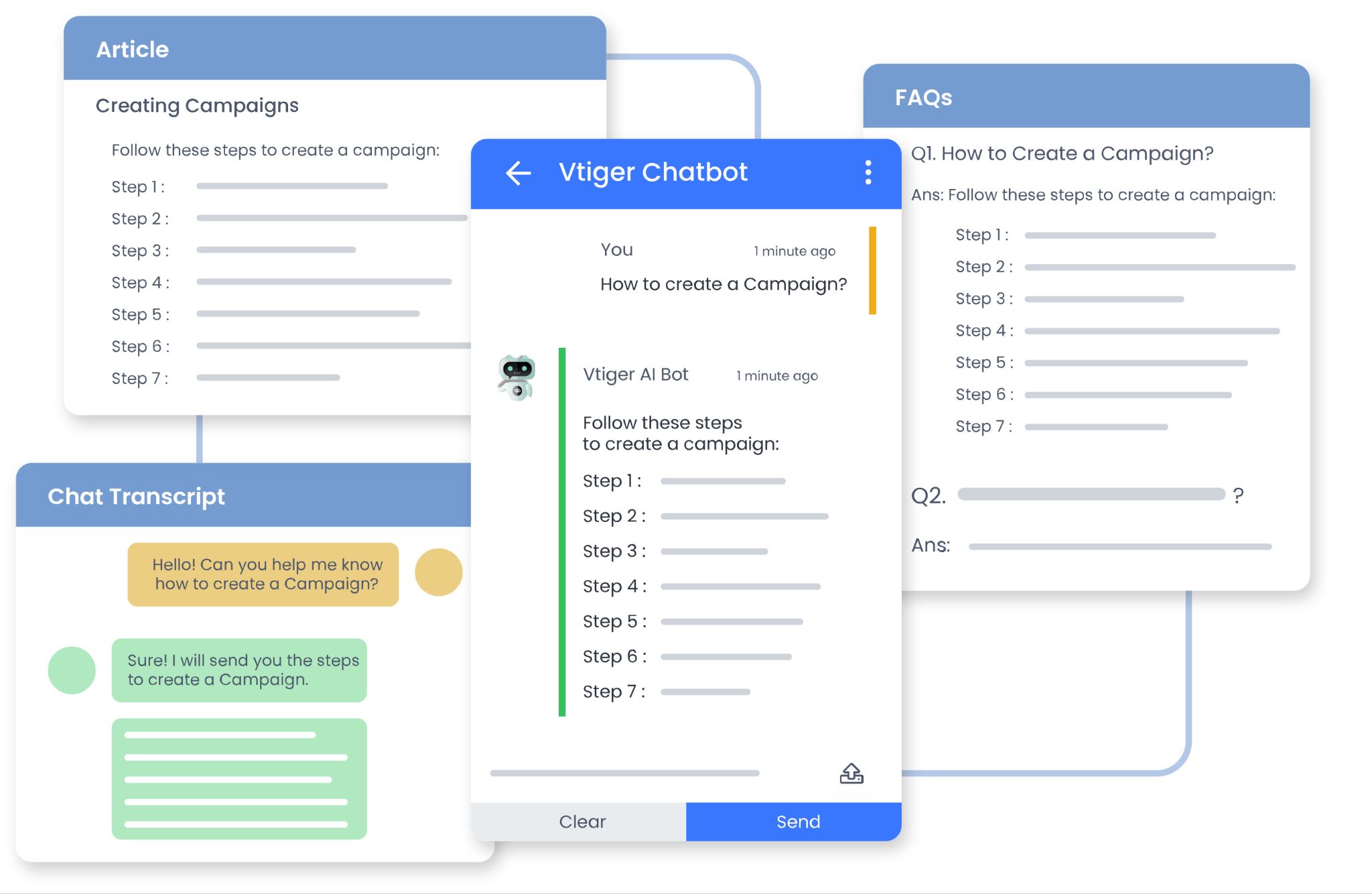
Vtiger's Calculus AI goes broader. It spans deal scoring using fit, sentiment, and engagement signals; call quality analysis monitoring talk-to-listen ratio and speaking speed; best-time-to-contact recommendations; and a chatbot that answers customer questions from your knowledge base. The newer Agent Builder lets teams create AI agents for task automation without code, and the Prediction AI Designer builds custom predictive models from historical CRM data. For an SMB-priced CRM, this is notable depth.
Source: Vtiger
ZoomInfo's AI operates at a different layer. While Pipedrive and Vtiger's AI reasons about data inside the CRM, ZoomInfo's GTM Context Graph reasons across first-party CRM data, third-party intelligence, conversation transcripts, and behavioral signals.
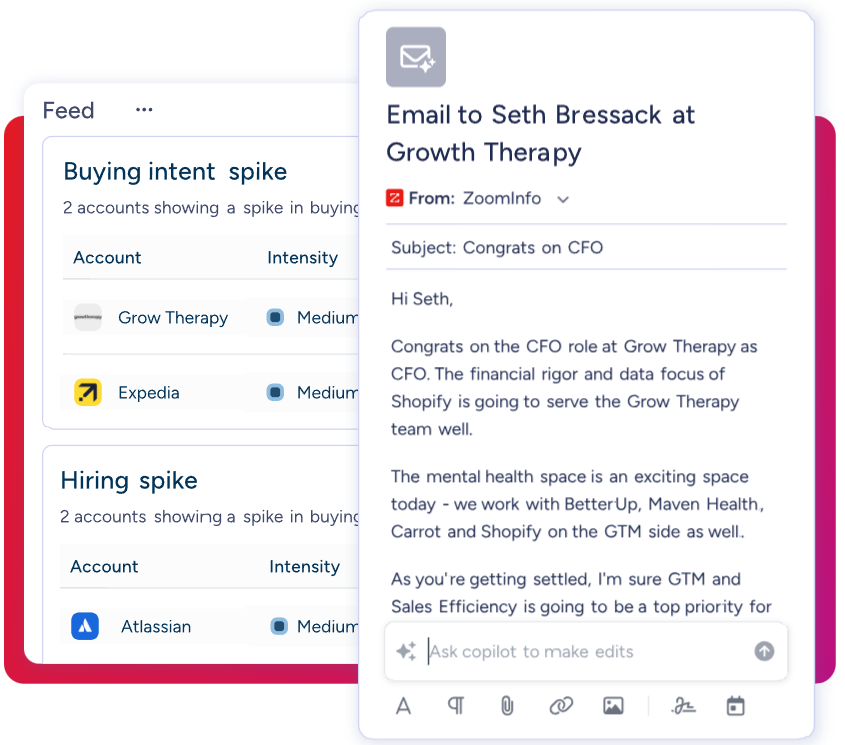
GTM Workspace AI agents research accounts, draft outreach based on full buyer context, monitor signals, and surface next-best actions. The Action Feed delivers a live stream of in-market buyers matched to target criteria, with pre-drafted actions on every signal. Buyer Intent tracks signals from 210 million IP-to-Organization pairings and 6 trillion+ keyword-to-device pairings sourced monthly, and Guided Intent identifies topics historically correlated with deal success rather than requiring manual topic selection.
The distinction: Pipedrive and Vtiger AI helps you work with deals you already have. ZoomInfo AI helps you find the deals you should be working.
Marketing and support: Pipedrive's gaps vs. Vtiger's breadth
This is where the two CRMs diverge most sharply.
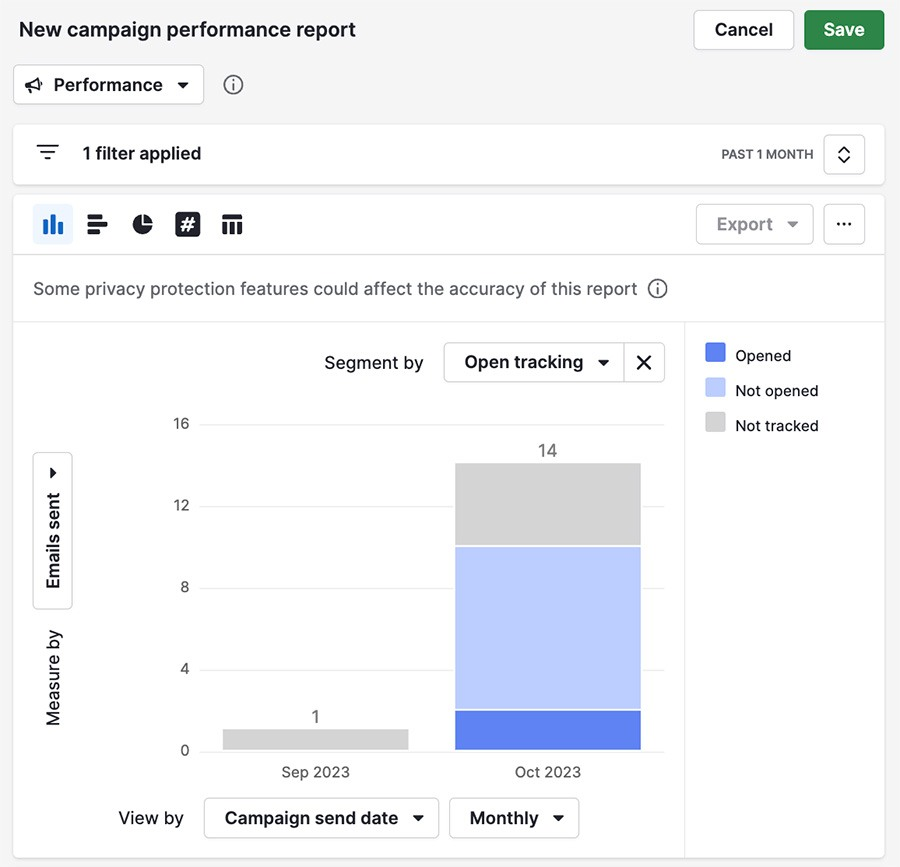
Pipedrive treats marketing as an add-on. Campaigns is a paid module that adds email marketing with a drag-and-drop builder, segmentation from CRM fields, and real-time engagement tracking. It works, and the CRM integration is useful (sales reps see marketing engagement on the contact record). But it's basic compared to dedicated marketing platforms. No landing pages, no SMS campaigns, no social media management.
Source: Pipedrive
Customer support doesn't exist in Pipedrive. There's no ticketing system, no SLA management, no customer portal. Once a deal closes, Pipedrive's job is done. Post-sale workflows require third-party tools.
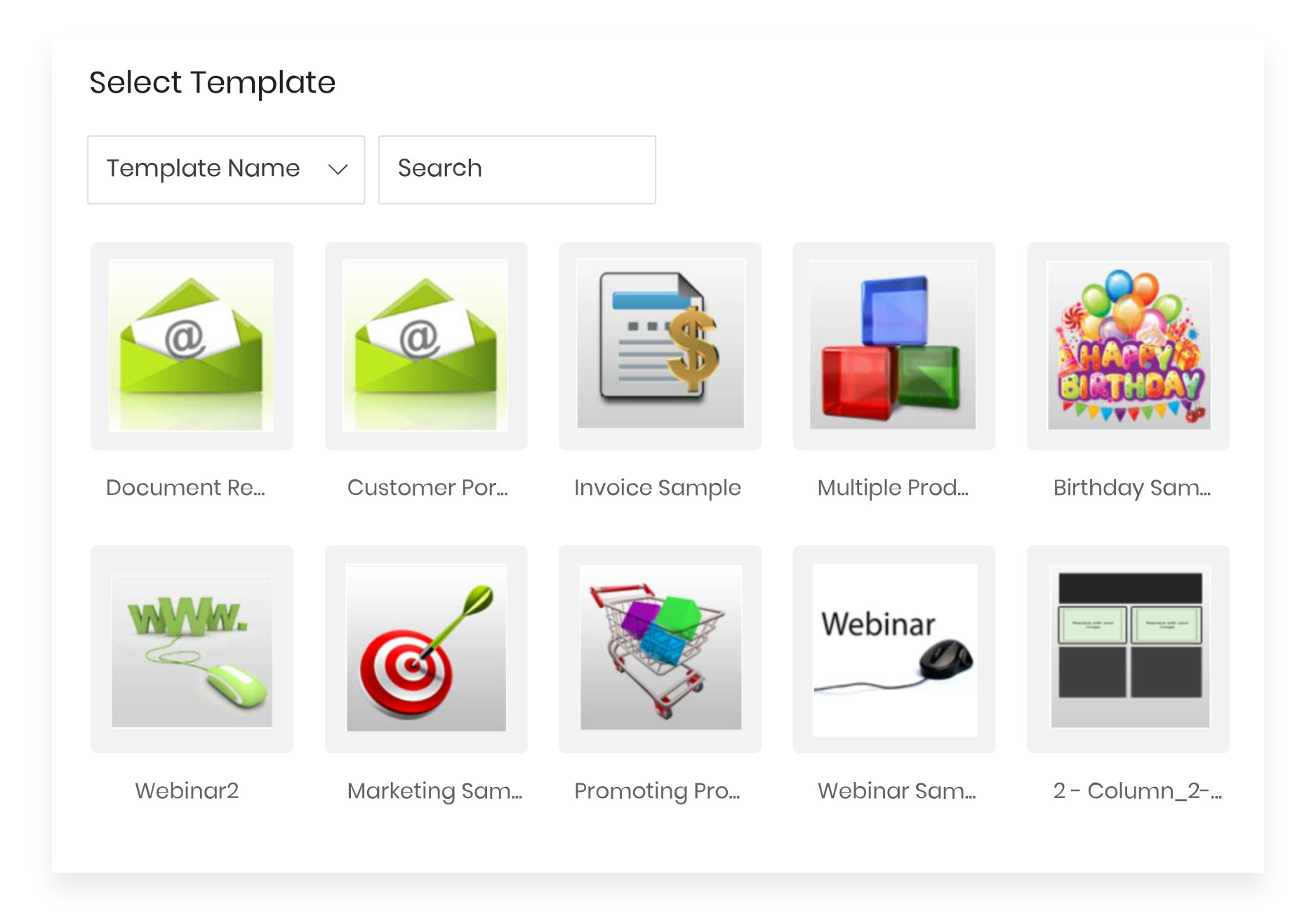
Vtiger includes both natively. The marketing suite covers email campaigns with 500+ templates, landing pages with a drag-and-drop builder, SMS campaigns, and a Social Module that connects Google My Business, Facebook, Instagram, and Twitter. The help desk provides case management with SLA enforcement, a customer self-service portal, Live Chat with an AI chatbot, and Mailroom automation that converts inbound emails into case records.
Source: Vtiger
For a team of 15 that needs to run email campaigns, manage a sales pipeline, and handle support tickets without buying three separate tools, Vtiger's integrated approach has real value. For a team that just needs to close deals and already has marketing and support covered, Vtiger's extra modules add complexity without benefit.
Pricing reflects different buyer profiles
Pipedrive prices per seat, per month. Four tiers: Lite, Growth, Premium, and Ultimate. The entry point is affordable, but features are gated by tier. Email sync, automations, and the meeting scheduler all require Growth or above. Smart Docs, Projects, and LeadBooster come with Premium. Annual billing saves up to 42%. Add-ons like Campaigns and Web Visitors are billed per company, not per seat.
Vtiger also prices per user, per month, but introduces a dual user-type system: Standard Users get full access to all five apps, while Single App Users (available on Professional and above) get full access to one app at a reduced rate. This lets organizations mix sales-only and full-access seats to manage costs.
The free One Pilot plan supports up to 10 users and 3,000 records. Paid plans range from $12/user/month (One Growth, annual) to $50/user/month (One AI). Booster Packs ($5–$50/month each) extend specific limits without a plan upgrade, but they add up: a team that needs extra workflows, custom fields, and a group mailbox could spend $45–60/month on boosters alone.
ZoomInfo uses consumption-based pricing with no publicly listed prices. The model scales around data access, API consumption, and AI activity. ZoomInfo Lite is a permanent free tier with access to ZoomInfo's B2B database, 10 monthly export credits, the Chrome extension, and WebSights Lite. A 7-day free trial is also available. ZoomInfo is a premium investment, but for teams whose pipeline depends on data quality and buyer intelligence, the comparison isn't against CRM pricing; it's against the cost of pursuing the wrong accounts with stale contacts.
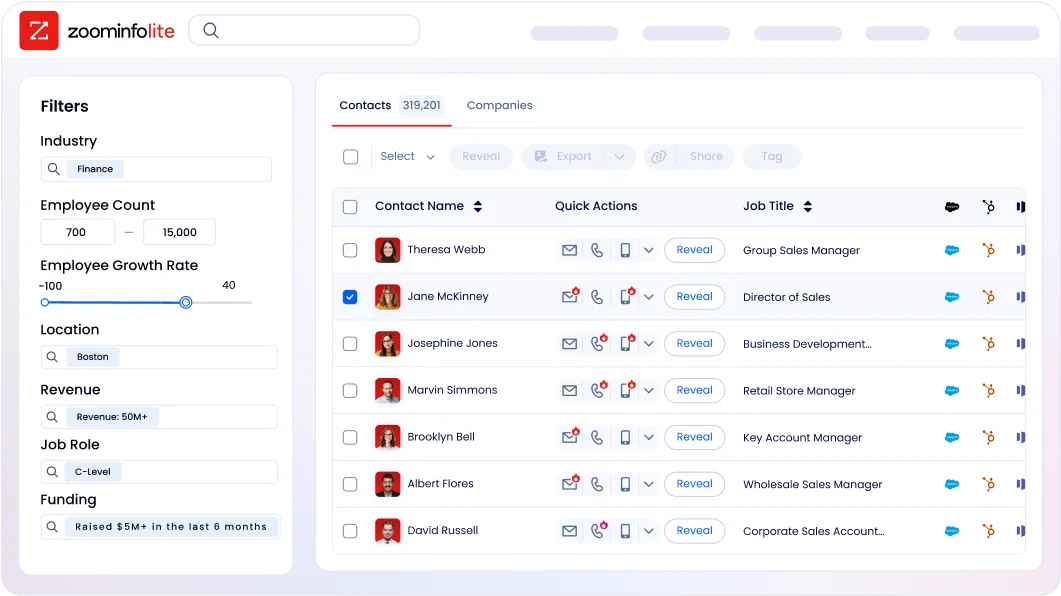
SpringDB reported 2–3x increases in campaign conversions, a 300% increase in database usability, and 30–50% uplift in average deal size using ZoomInfo's data platform. (SpringDB Case Study)
Integrations and technical flexibility
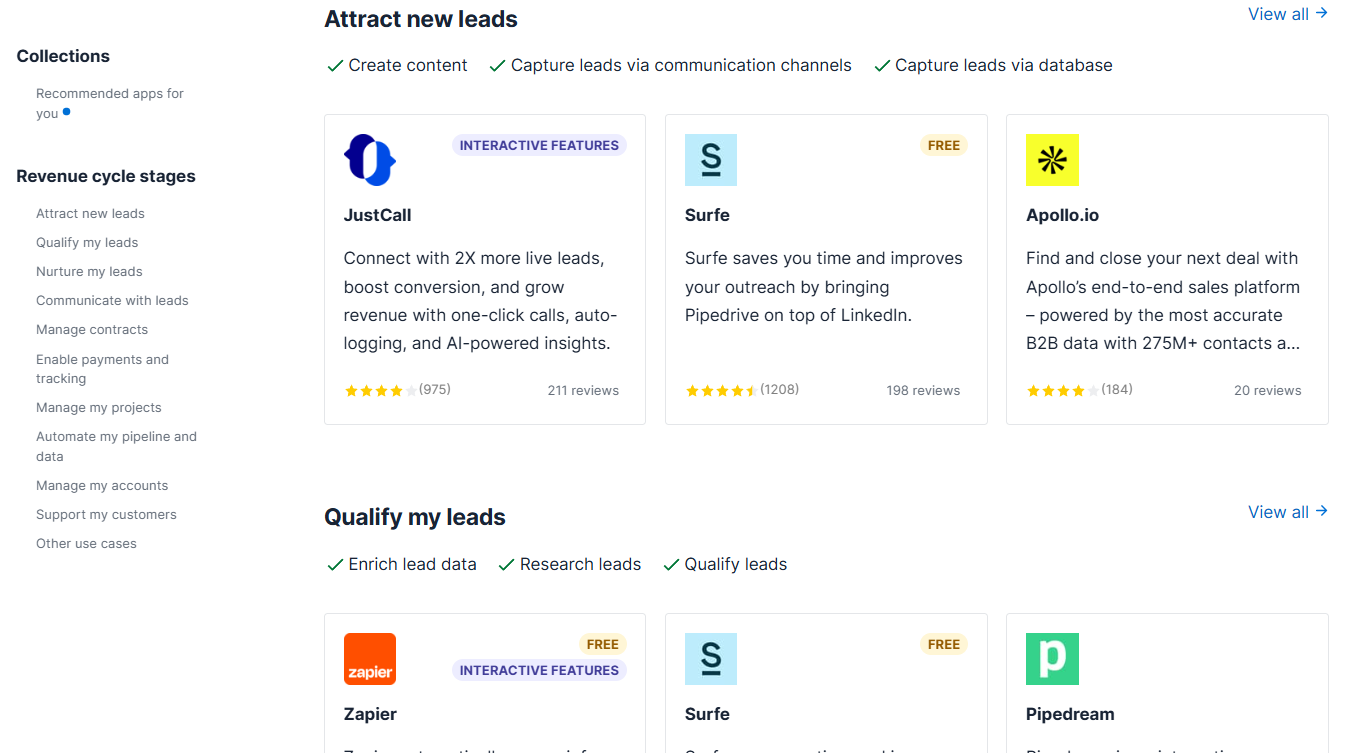
Pipedrive has a mature integration ecosystem. The Marketplace lists 500+ integrations organized by revenue cycle stage. A RESTful API with both v1 and v2 endpoints, OAuth 2.0 authentication, and OpenAPI 3 spec files gives developers solid access. App Extensions allow embedding custom UI inside Pipedrive. A developer sandbox account is free for testing. Rate limits use a token-based system that scales with plan tier and seat count. The Zapier integration alone has 2,444 ratings, signaling heavy usage.
Source: Pipedrive
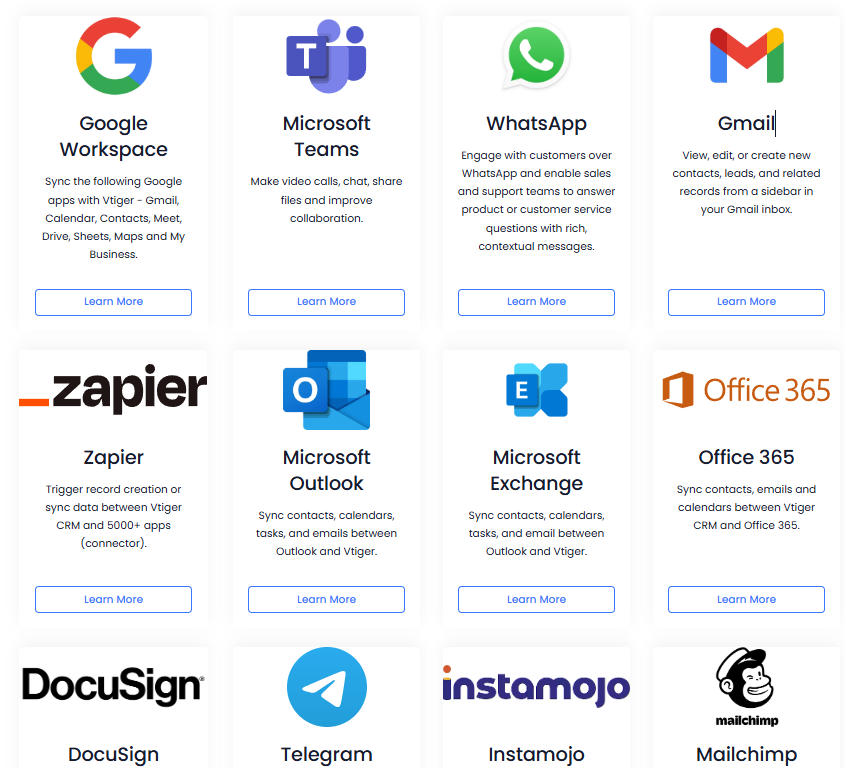
Vtiger claims 500+ integrations across meetings, chat, productivity, social, email, telephony, payments, and more. The REST API uses HTTP Basic Authentication and covers standard CRUD operations plus specialized endpoints like lead conversion and relationship management. The VTAP platform adds a low-code development environment for custom APIs, webhooks, and UI extensions. However, G2 users note that "connecting modules together can be tricky" and integration depth varies. Documentation is fragmented across multiple sites without a unified developer hub.
Source: Vtiger
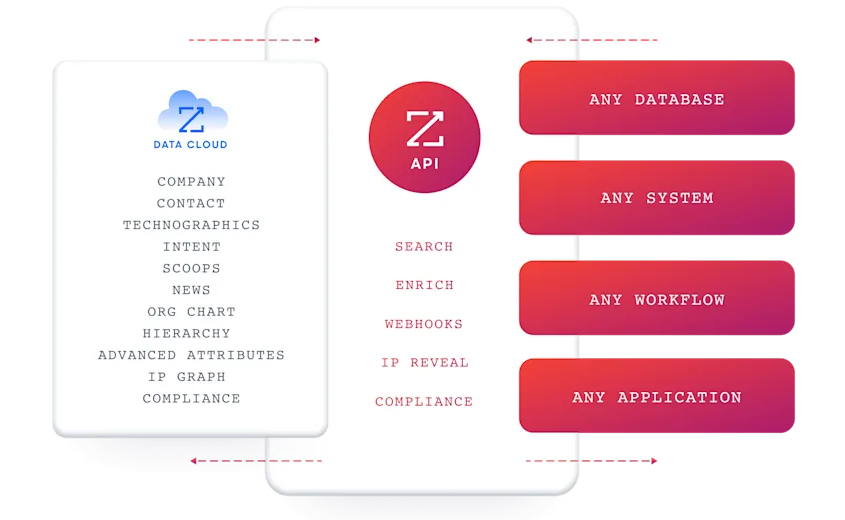
ZoomInfo approaches integration differently. Rather than connecting to other tools, ZoomInfo is the intelligence layer that feeds them. The Enterprise API exposes search, enrichment, AI intelligence, and audience management endpoints. The MCP server connects AI models directly to ZoomInfo's B2B data as a native tool. Cloud Partners deliver data directly into AWS, Google Cloud, Snowflake, and Databricks. The Marketplace lists 172+ integration partners across CRM, marketing automation, sales engagement, and data warehouse categories. API access is included in all relevant plans.
Security and compliance
All three platforms meet enterprise security requirements, but the specifics differ.
Pipedrive holds ISO/IEC 27001:2022, ISO/IEC 27701:2019, SOC 2 Type 2, and SOC 3 certifications. It hosts data on AWS in Europe and the US with separate databases per customer. Features include SSO via SAML 2.0, two-factor authentication, IP allowlisting, and a Security Center dashboard. The company is GDPR compliant and certified under the EU-US Data Privacy Framework.
Vtiger holds ISO/IEC 27001 and ISO/IEC 27701 certifications. Infrastructure runs on AWS, Oracle Cloud, and Azure with data centers across the US, UK, EU, UAE, Australia, Singapore, Japan, and India. Encryption uses TLS 1.2/1.3 in transit and AES-256 at rest. The architecture is single-tenant (each customer instance is isolated). The open-source deployment option gives regulated organizations or those with data residency requirements the ability to self-host entirely.
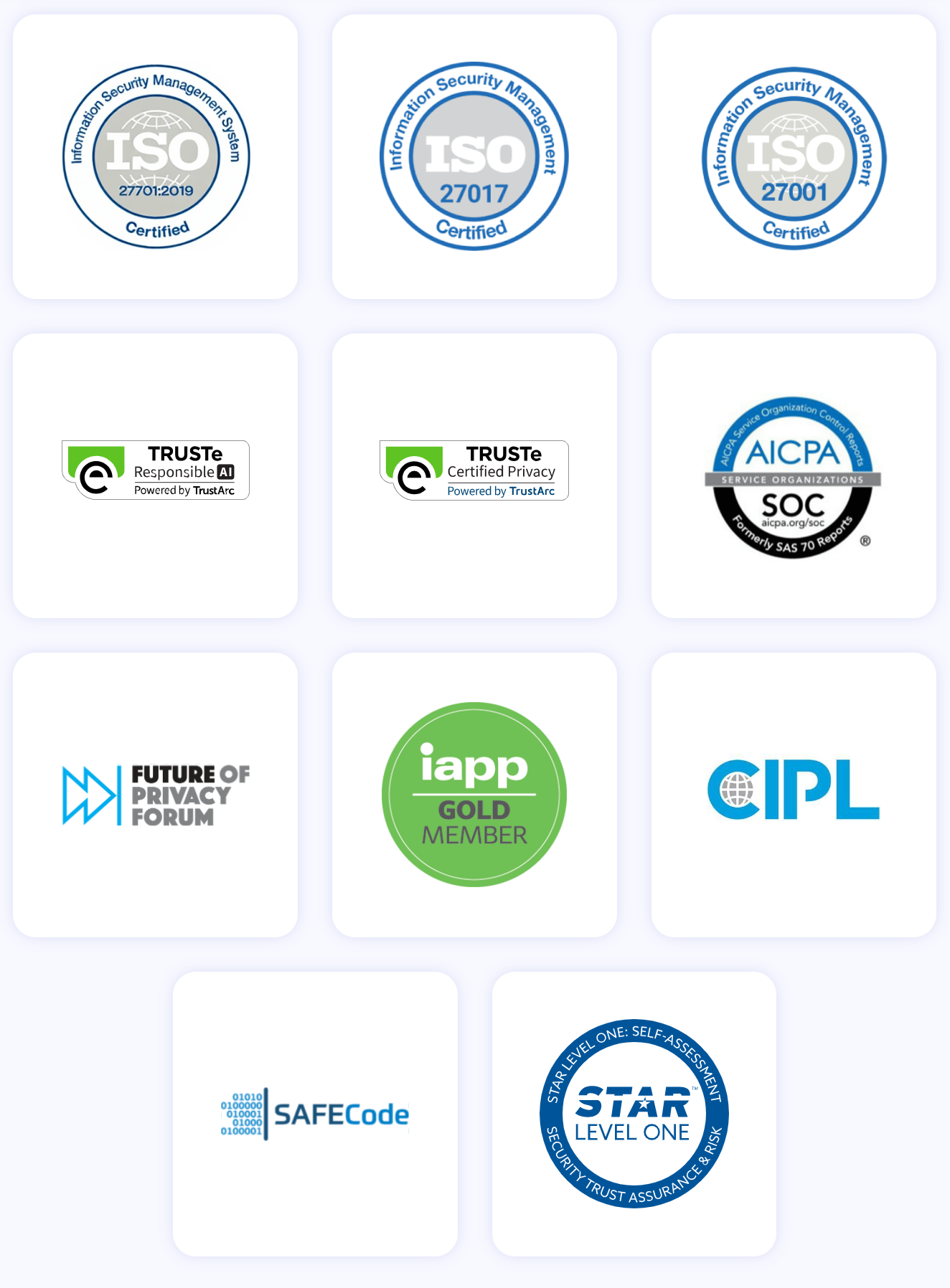
ZoomInfo carries ISO 27001, ISO 27701, SOC 2 Type II, TRUSTe GDPR, and TRUSTe CCPA certifications, all renewed annually. As a company handling B2B contact data at scale, ZoomInfo is a registered data broker in California and Vermont and maintains a dedicated Trust Center. Pipedrive's AI policy is also worth noting: the company states it does not permit third parties to use client data to train AI models.
Pipedrive vs. Vtiger vs. ZoomInfo: Which should you choose?
The choice depends on where your biggest gap is: deal management, cross-departmental CRM, or go-to-market intelligence.
Choose Pipedrive if:
Your primary need is visual, intuitive sales pipeline management
You want fast setup with minimal training
You already have separate tools for marketing and support
Your sales team is small to mid-sized and values simplicity over feature depth
Budget is a primary consideration and you need clear per-seat pricing
Choose Vtiger if:
You need sales, marketing, and support in a single platform
Cross-departmental data visibility matters more than speed of setup
You want process enforcement through Playbooks, CPQ, and approval workflows
You're comfortable investing time in configuration and training
A self-hosted deployment option is important for compliance or data residency
Choose ZoomInfo if:
Your pipeline depends on finding the right accounts and contacts, not just managing existing ones
You need verified direct dials, business emails, and org chart intelligence at scale
Buyer intent signals and AI-driven account prioritization would change your prospecting
You want intelligence that flows into any CRM, any tool, or any AI agent
You're ready to move from reactive deal management to proactive revenue generation
Start with ZoomInfo Lite for free, or request a demo to see the GTM Context Graph in action.
The most effective sales organizations don't treat these as either/or decisions. They use a CRM (Pipedrive or Vtiger) to manage their pipeline and an intelligence platform (ZoomInfo) to fill it with the right opportunities. The CRM tracks where deals are. ZoomInfo reveals which deals are worth pursuing and why.
"ZoomInfo is our one source of truth for account data, and even more so for contact data. There's no other provider in the market that provides you with that level of detail." — Thor Sanderson, Senior Manager of Sales Technology Enablement, Smartsheet (Case Study)
Pipedrive vs. Vtiger vs. ZoomInfo FAQ
What is the core difference between Pipedrive, Vtiger, and ZoomInfo?
Pipedrive is a focused sales CRM built around visual pipeline management and activity-based selling for small and mid-sized teams. Vtiger is an all-in-one CRM that bundles sales, marketing, help desk, projects, and inventory under a single data model. ZoomInfo is an AI-powered GTM platform that provides verified B2B contact data, buyer intent signals, and AI-driven prospecting, feeding intelligence into whichever CRM a team uses.
Which platform is best for a small sales team on a tight budget?
Pipedrive offers the most affordable entry at $14/seat/month with clear per-seat pricing. Vtiger's free One Pilot plan supports up to 10 users and 3,000 records, making it the cheapest way to start if you need CRM, marketing, and support in one tool. ZoomInfo Lite is a permanent free tier with access to B2B data and 10 monthly export credits, useful for teams that need prospecting data alongside their CRM.
Can ZoomInfo replace Pipedrive or Vtiger?
No. ZoomInfo is not a CRM and does not manage deals, track activities, or handle customer support tickets. It operates upstream, providing the verified contacts, company intelligence, and buyer signals that feed into a CRM. Teams typically use ZoomInfo alongside a CRM, not instead of one. ZoomInfo integrates natively with major CRMs including Salesforce and HubSpot, and its APIs and MCP server connect to Pipedrive, Vtiger, and other tools.
Which platform has the best AI capabilities?
ZoomInfo's AI operates at the broadest scale, drawing on 500M contacts, buyer intent signals, conversation intelligence, and CRM data through the GTM Context Graph to surface account-level intelligence and next-best actions. Vtiger's Calculus AI is the most full-featured CRM-level AI, with deal scoring, call quality analysis, predictive models, and a no-code agent builder. Pipedrive's AI is the most focused, helping individual reps draft emails, summarize threads, and generate reports from natural language.
How do the platforms compare on marketing automation?
Vtiger has the most complete built-in marketing suite, including email campaigns with 500+ templates, landing pages, SMS, and social media management. Pipedrive offers Campaigns as a paid add-on for email marketing with CRM integration. ZoomInfo approaches marketing differently, providing account-based marketing with a native display ad network, intent-driven audience targeting, and AI-powered orchestration through GTM Studio, rather than traditional email campaign tools.
Which platform offers a self-hosted or on-premises option?
Only Vtiger offers a self-hosted deployment through its open-source edition, which is a meaningful differentiator for organizations with strict data residency or compliance requirements. Pipedrive and ZoomInfo are cloud-only platforms.
How do the integration ecosystems compare?
Pipedrive and Vtiger both claim 500+ integrations, with Pipedrive's Marketplace being more mature and developer-friendly (OpenAPI spec, developer sandbox, app extensions). Vtiger's integrations vary in depth and reliability according to user reviews. ZoomInfo's 172+ marketplace partners focus on feeding intelligence into CRMs, data warehouses, and engagement tools, with an Enterprise API and MCP server that allow any application to consume ZoomInfo data programmatically.
Do any of these platforms offer buyer intent data?
Only ZoomInfo provides buyer intent data, tracking signals from 210 million IP-to-Organization pairings and 6 trillion+ keyword-to-device pairings sourced monthly. Guided Intent, exclusive to ZoomInfo, identifies topics historically correlated with deal success. Neither Pipedrive nor Vtiger includes intent data; both require third-party tools to identify which accounts are researching solutions.
Keep comparing Pipedrive:
