
Choosing between QuotaPath and Xactly for sales compensation comes down to five questions:
Do you need a platform you can set up in weeks, or are you willing to invest months for deeper enterprise functionality?
Is your compensation structure simple enough for a mid-market tool, or do you need territory overlays, matrix SPIFs, and multi-currency plans?
Do you want published, predictable pricing, or are you comfortable negotiating a custom enterprise contract?
Is it enough to calculate and pay commissions accurately, or do you also need territory planning, quota modeling, and AI-powered forecasting in the same platform?
How important is it that your compensation data connects to the intelligence your GTM team uses to find, win, and grow customers?
Here's what we recommend:
QuotaPath is built for revenue teams that need to get off spreadsheets quickly and give reps real-time earnings visibility. Its AI-Powered Plan Builder lets admins upload a comp plan document and generate a working plan without manual re-entry. Implementation typically takes 45–60 days, and published pricing starts at $35/user/month plus a $525/month platform fee. For SMB and mid-market SaaS companies with 10–500 commissionable reps, QuotaPath is quick to deploy and well supported. However, it cannot merge data from multiple sources at once, lacks forecasting and budget management, and strains under complex enterprise compensation structures.
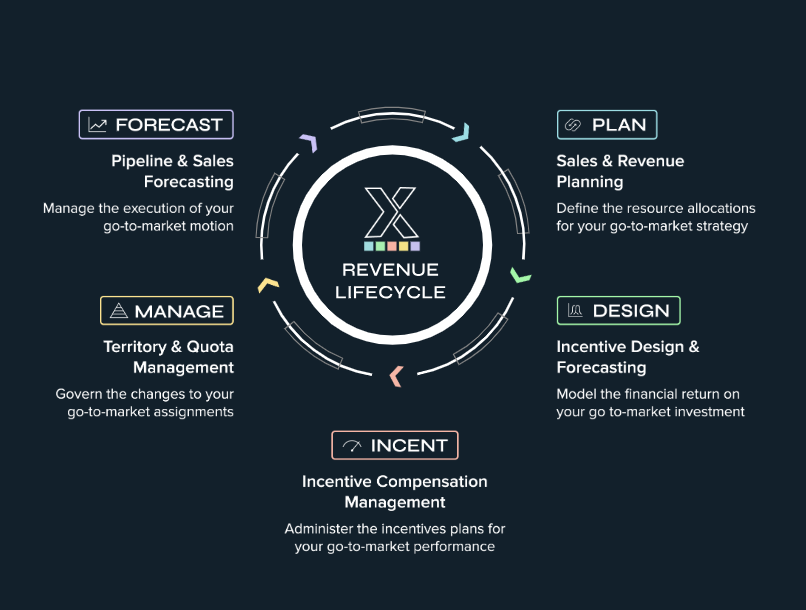
Xactly is the enterprise incumbent, built for organizations that run layered compensation programs across global sales teams. Its Intelligent Revenue Platform spans incentive compensation (Incent), territory and quota planning (Plan), comp plan design simulation (Design), territory management (Manage), AI-powered forecasting (Forecast), and autonomous AI agents (Intelligence). Xactly processes over $7 billion in commissions monthly and draws on 20+ years of proprietary data for pay-and-performance benchmarking. The trade-off: no published pricing, longer implementations, and complexity that demands dedicated compensation administrators.
Both QuotaPath and Xactly solve the commission calculation problem well. But neither answers a question that matters more each year to revenue leaders: how does your compensation data connect to the intelligence driving your go-to-market strategy? That's where ZoomInfo enters the picture.
ZoomInfo is an AI-powered GTM platform that operates at a different layer of the revenue stack. QuotaPath and Xactly focus on paying reps after deals close. ZoomInfo focuses on helping reps find and win those deals. Built on a B2B data platform of 500M contacts, 100M companies, 135M+ verified phone numbers, and 200M+ verified business emails, ZoomInfo's GTM Context Graph combines this data with your CRM records, conversation transcripts, and behavioral signals to show not just what happened in a deal, but why. Revenue leaders who pair a compensation platform with ZoomInfo create a complete loop: ZoomInfo helps reps find and close the right deals, and the compensation platform pays them accurately.
If connecting your compensation strategy to the intelligence that drives pipeline sounds like the missing piece, see how ZoomInfo works.
QuotaPath vs. Xactly vs. ZoomInfo at a glance
QuotaPath | Xactly | ZoomInfo | |
|---|---|---|---|
Core function | Commission tracking and compensation management | Full sales performance management suite | AI-powered GTM intelligence and execution |
AI capabilities | Atlas AI (plan grading, scenario modeling) | Fleet of AI Agents, predictive forecasting, benchmarking | GTM Context Graph, AI-drafted outreach, deal intelligence |
Territory & quota planning | No | Yes (Plan + Manage + AlignStar) | Territory design and TAM analysis via data intelligence |
Forecasting | No | Yes (Forecast module) | Pipeline and deal health intelligence via GTM Workspace |
Data foundation | CRM-synced deal data | 20+ years of proprietary comp data | 500M contacts, 100M companies, 135M+ verified phones, 200M+ verified emails |
Implementation | 45–60 days | 6+ months typical | Deploys in weeks |
Pricing | $35–$50/user/month + platform fee (published) | Quote-based, no published pricing | Custom-quoted, consumption-based |
Free trial | 30-day free trial | Demo-only (no self-serve trial) | 7-day free trial + permanent free Lite tier |
Best for | SMB to mid-market SaaS (10–500 reps) | Mid-market to large enterprise | Any B2B revenue team finding and closing deals |
Two different approaches to the same problem
QuotaPath and Xactly both exist because the same process keeps breaking at growing companies: calculating and paying sales commissions accurately. They approach the problem from opposite ends.
QuotaPath was founded in 2018 by a team that had lived through the pain firsthand. CEO AJ Bruno, who co-founded TrendKite (acquired by Cision for $225 million), built QuotaPath on the premise that "the way companies pay their salespeople is broken."
The product started as a rep-facing commission tracker and grew into a full compensation management platform, but it kept the original philosophy: make it self-service, make it fast, make it transparent.
Xactly was founded in 2005 by Chris Cabrera, who recognized early that cloud computing could replace the on-premise compensation tools enterprises struggled with. Xactly claims to have been "the first to take ICM to the cloud".
Source: Xactly
Over two decades, the company grew through acquisitions (AlignStar for territory mapping, OpsPanda for capacity planning, TopOpps for AI forecasting) into a full Sales Performance Management suite. Vista Equity Partners acquired Xactly in 2017, took it private, and accelerated the enterprise push.
The result: two platforms that solve the same problem but serve different organizations at different stages.
QuotaPath wins on speed and simplicity
For revenue teams that need to stop managing commissions in spreadsheets this quarter, QuotaPath is hard to beat.
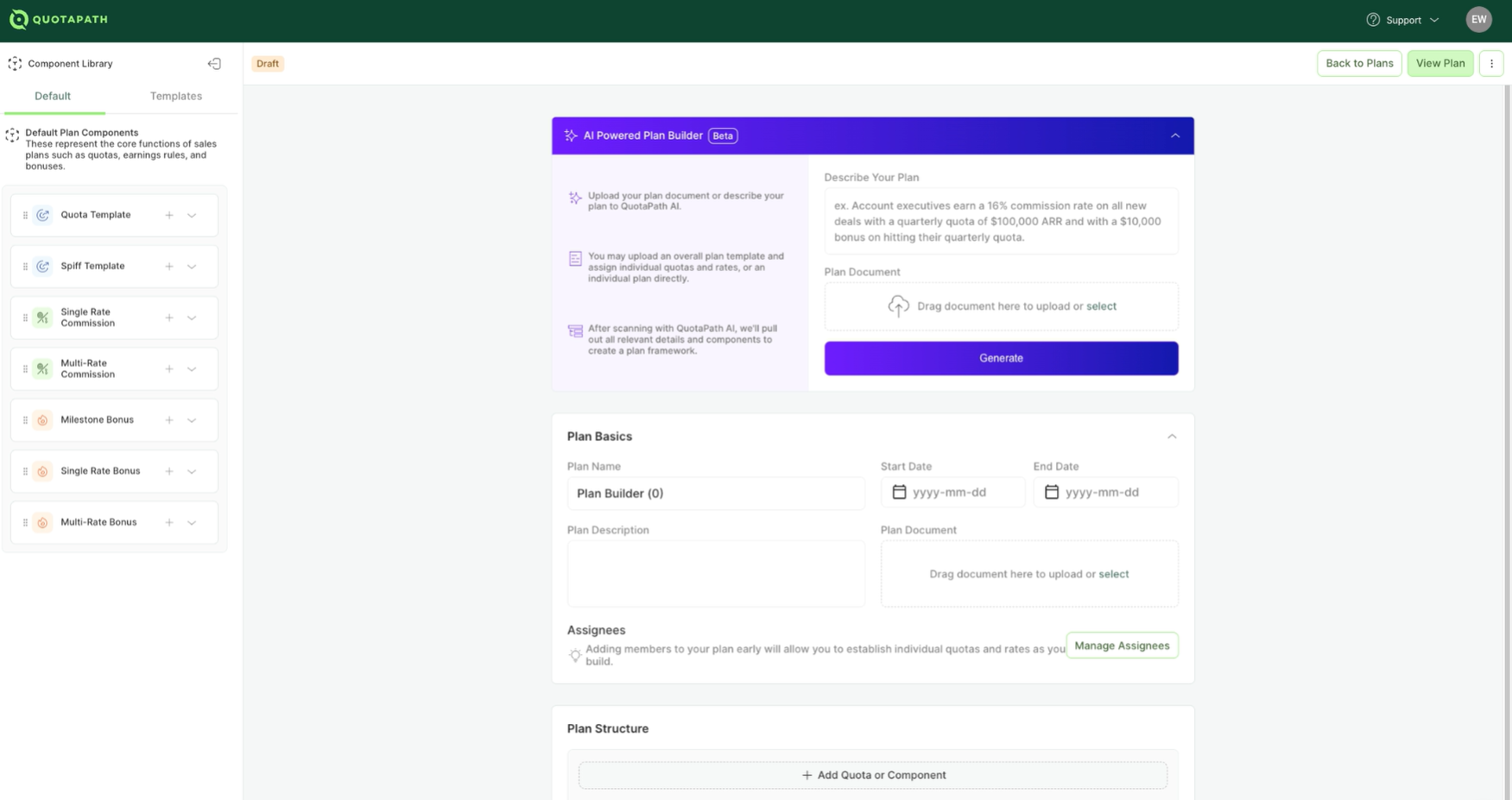
The AI-Powered Plan Builder accepts a compensation plan document (a PDF, for example) and generates a working plan automatically: quotas, commissions, bonuses, and SPIFs mapped from the source document. Admins review the output, adjust where needed, and publish. This collapses what used to be a manual re-entry process into a single step.
Source: QuotaPath
Once plans are live, the self-service model holds. QuotaPath's interface let their RevOps associate build and modify plans independently.
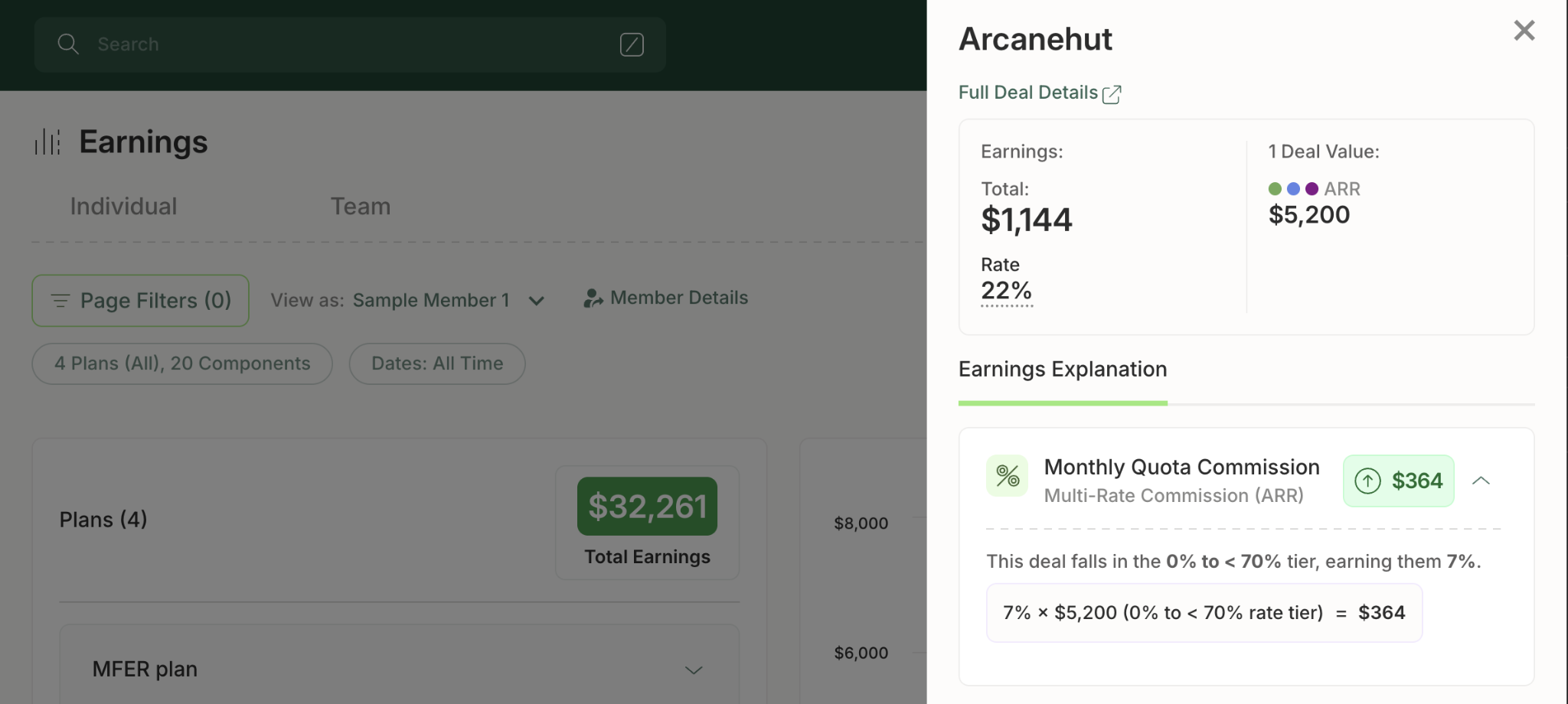
The rep experience is where QuotaPath earns consistent praise. Real-time earnings dashboards show commission breakdowns by deal, with an Earnings Explanation feature that walks through calculation logic in plain language. When reps can see exactly how their pay was calculated, disputes drop. G2 gives QuotaPath a quality-of-support score of 9.6, its highest-rated dimension.
Source: QuotaPath
But QuotaPath's simplicity has limits. The platform cannot merge data from multiple sources at once, which becomes a hard constraint for companies with layered data environments. Capterra reviewers note the platform is "best suited for smaller companies" when plan complexity increases. And there's no territory planning, quota modeling, or revenue forecasting built in. QuotaPath calculates commissions well; it doesn't help you design the go-to-market strategy those commissions support.
Xactly wins on depth and enterprise scale
Xactly operates at a different level of complexity. Where QuotaPath handles commission calculation and payout, Xactly wraps that in a full strategic planning layer.
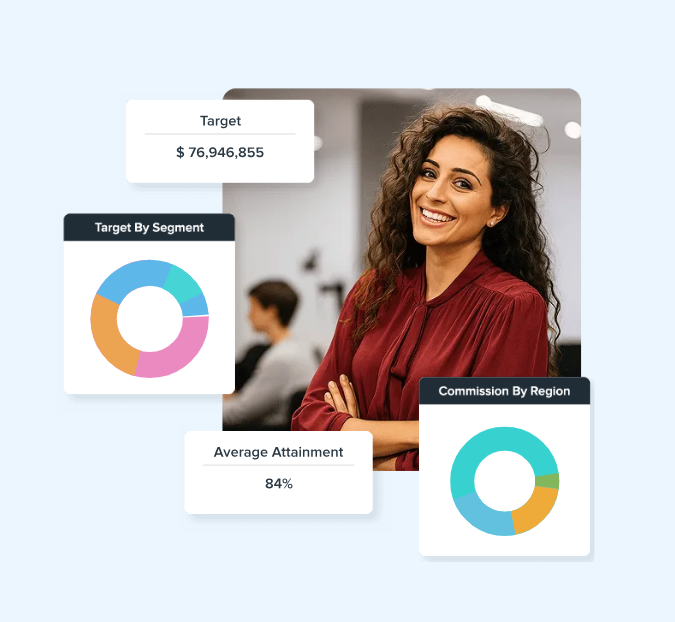
Xactly Incent, the core ICM product, processes over $7 billion in commissions monthly with a 99.8% on-time payment accuracy rate.
Source: Xactly
For public companies or those preparing for IPO, Commission Expense Accounting (CEA) automates ASC 606 and IFRS 15 compliance with dynamic true-ups for contract events.
But Incent is the starting point. Xactly Plan handles territory and quota planning with AlignStar's map-based territory design, which Xactly says can increase revenue and boost sales productivity by 20%.

Source: Xactly
Xactly Design lets compensation teams simulate plan changes against historical data before rollout. Xactly Forecast adds AI-powered pipeline prediction.

Source: Xactly
The AI layer is expanding. In May 2026, Xactly launched its Fleet of Agents: autonomous AI agents for workflow automation, optimization, and plan configuration. The Dispute Management AI Agent, built with ServiceNow, investigates and resolves compensation disputes without human intervention at each step.
Source: Xactly
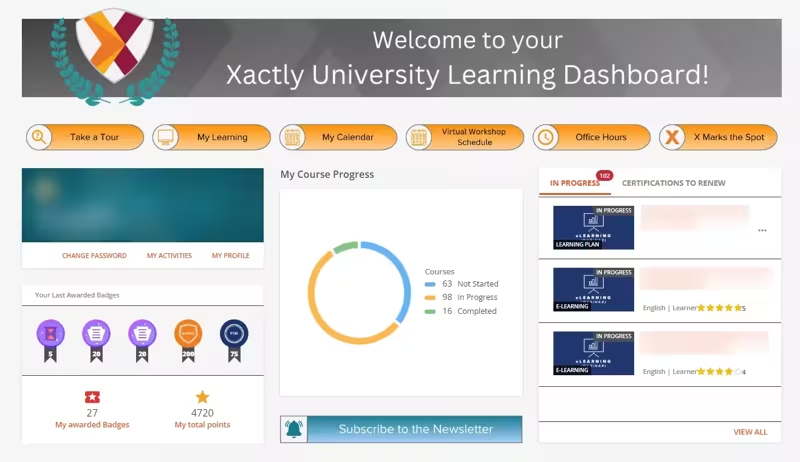
The trade-off is real. Xactly's breadth demands dedicated administration. The existence of Xactly University (a full LMS with instructor-led training, certifications, and role-specific learning paths) and dedicated admin apps signals a real onboarding investment.
No pricing is published; all deals are quote-based. And the platform's acquisition-assembled architecture (AlignStar, OpsPanda, TopOpps) means some modules may feel less unified than a single-codebase product.
ZoomInfo completes the revenue picture
QuotaPath and Xactly answer: "How do we pay reps accurately?"
ZoomInfo answers a different question: "How do we help reps find and close the deals they get paid on?"
ZoomInfo is an AI-powered GTM platform built on a B2B data foundation of 500M contacts, 100M companies, 135M+ verified phone numbers, and 200M+ verified business emails.
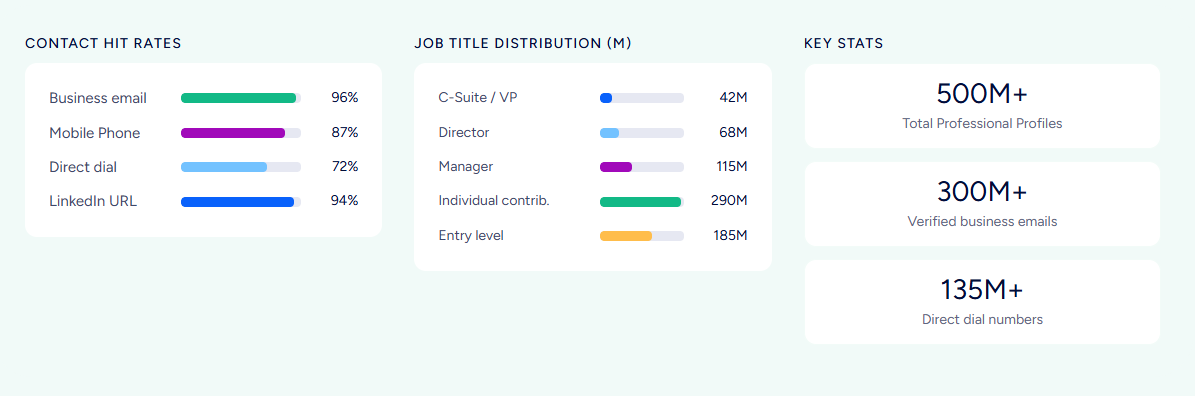
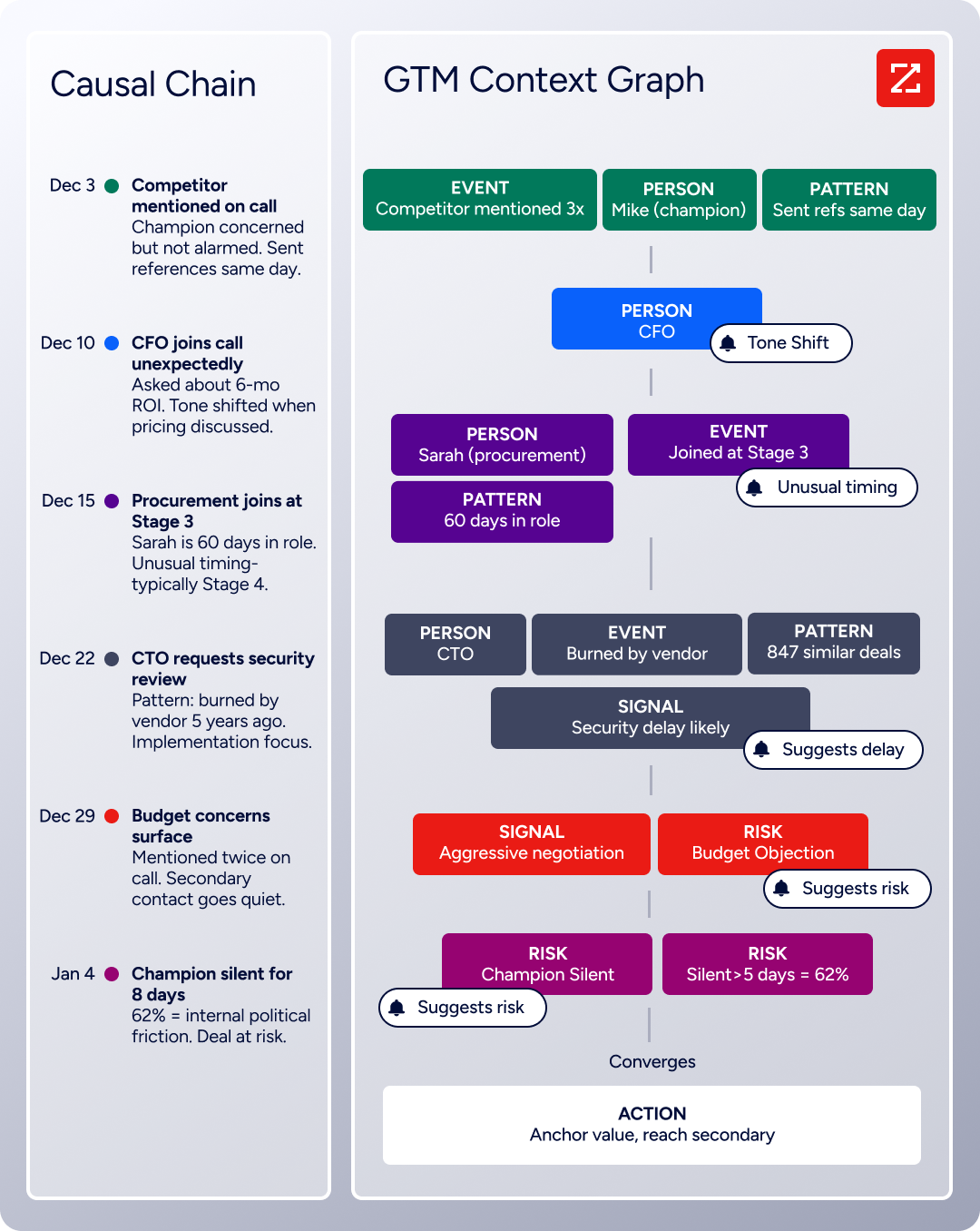
That data, combined with your CRM records, conversation transcripts, and behavioral signals, feeds ZoomInfo's GTM Context Graph, which processes 1.5B+ data points daily to show not just what happened in a deal, but why, and what to do next.
For revenue leaders evaluating compensation tools, ZoomInfo matters because compensation strategy doesn't exist in isolation. A comp plan is only as good as the pipeline feeding it. If reps can't find the right accounts, engage the right contacts, or read buying signals in time, even a well-designed commission structure won't drive results.
GTM Workspace gives sellers a single place where prioritized accounts, AI-drafted outreach, and deal execution come together.
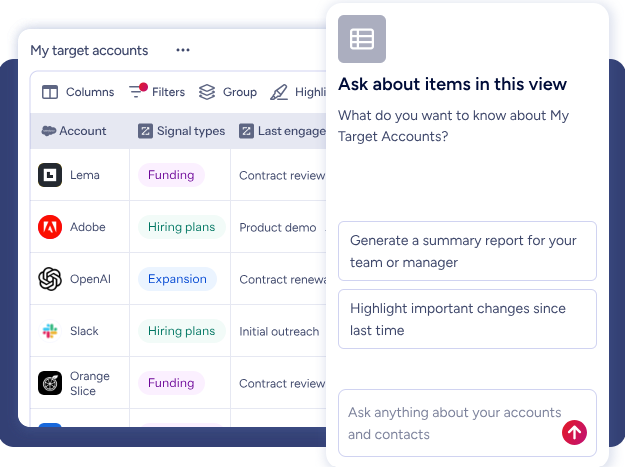
GTM Studio gives marketers and RevOps teams a builder for audience definition, campaign orchestration, and pipeline measurement. APIs and MCP expose the same intelligence to any tool, including compensation platforms, custom agents, or partner systems.
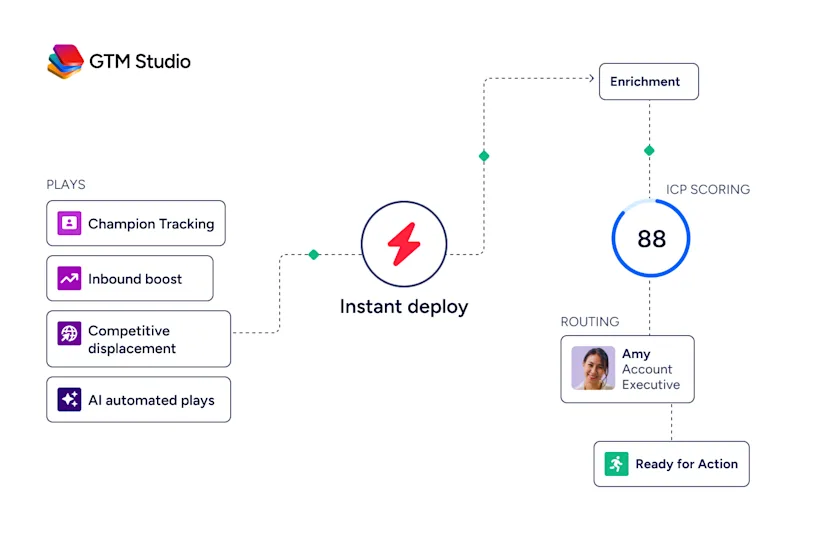
The practical connection: ZoomInfo's data can inform territory design and quota allocation. When you know how many target accounts sit in each territory, what their tech stacks look like, and which ones show buying intent, you set quotas based on real market opportunity rather than guesswork. That intelligence makes whatever compensation platform you choose more effective.
Seismic attributed 39% of active pipeline to opportunities identified or influenced by ZoomInfo signals, boosted productivity by 54%, and saved 11.5 hours per week per seller. (ZoomInfo Case Study)
Pricing structures reflect different markets
QuotaPath is the only platform in this comparison with published pricing, and it's worth understanding what the numbers mean.
QuotaPath uses a two-component model: a per-user monthly fee plus a flat monthly platform fee. The platform fee covers the first five users:
Tier | Per-User/Month | Platform Fee/Month | Effective Minimum (5 users) |
|---|---|---|---|
Growth | $35 | $525 | $525/month ($6,300/year) |
Premium | $50 | $800 | $800/month ($9,600/year) |
Strategic | Custom | Custom | Contact sales |
All billing is annual. The Growth tier includes quota management, leaderboards, plan verification, ASC 606 ledger, and 9 CRM integrations. The Premium tier adds plan modeling, multi-level approvals, custom reporting, API access, and the Rippling payroll integration. Atlas (the AI add-on) is priced separately, starting at $5,000 annually for the Connected tier.
One note: a Capterra reviewer called the pricing page "incredibly misleading" because the mandatory platform fees and annual billing requirement raise actual cost well beyond the headline per-user rates. Buyers should calculate total annual cost, not just the per-seat number.
Xactly publishes no pricing. The pricing page describes three Incent tiers (Core, Plus, Ultimate) and four Strategic Planning modules (Plan, Design, Manage, Forecast), all directing prospects to "Get a Quote." Implementation services, Technical Account Manager add-ons, and professional services cost extra. Contracts auto-renew unless either party provides 60 days' written notice, and seat counts cannot drop mid-term.
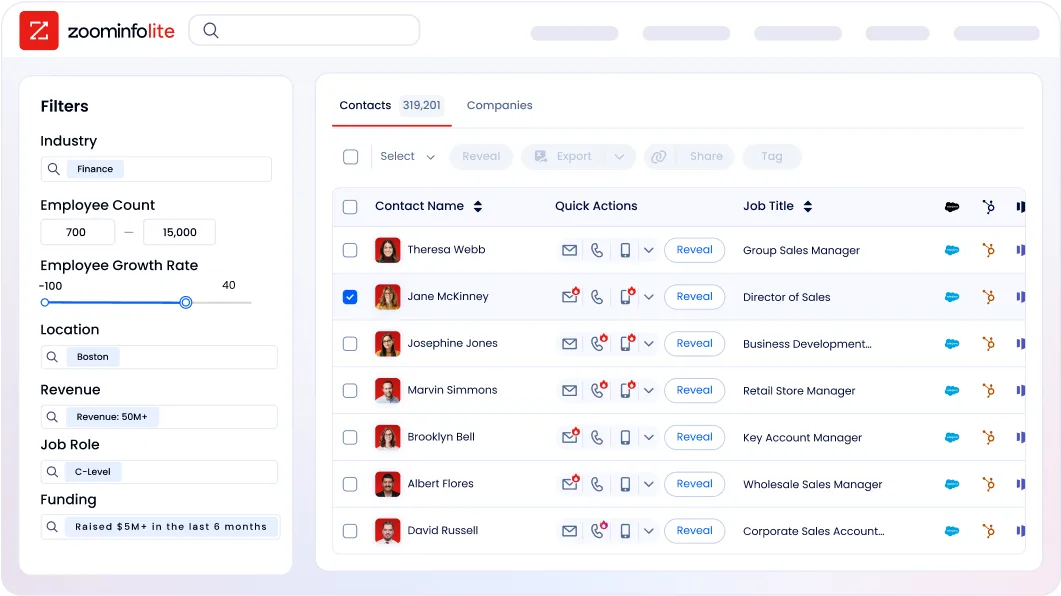
ZoomInfo uses custom-quoted, consumption-based pricing with no published dollar amounts. However, ZoomInfo offers two free entry points that neither competitor matches: ZoomInfo Lite, a permanent free tier with access to the B2B database and 10 monthly export credits, and a 7-day free trial of the full platform.
AI capabilities are evolving on different tracks
All three platforms invest in AI, but each applies it to a different problem.
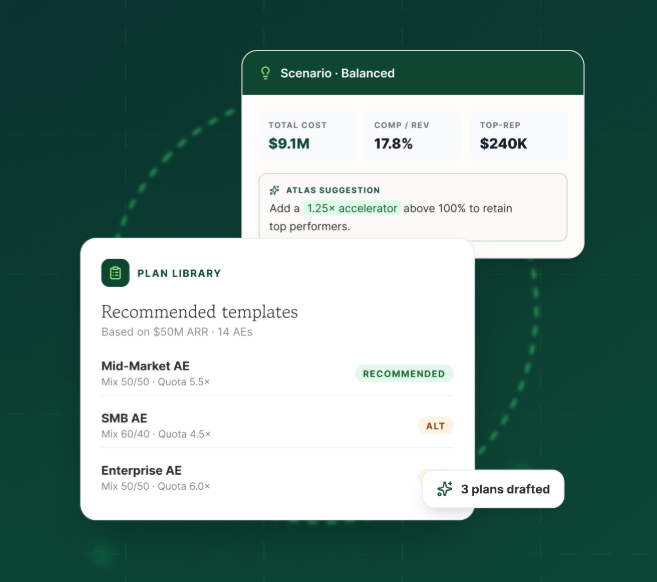
QuotaPath's Atlas is an AI tool focused on compensation plan design and analysis. Its Comp Plan Grader scores plans across five dimensions (Competitiveness, Motivation Alignment, Clarity, Attainability, Complexity) and generates recommendations.
Source: QuotaPath
Performance Modeling runs Monte Carlo simulations, modeling thousands of scenarios to produce P10, median, and P90 earnings distributions. Atlas exists in both standalone and connected modes: anyone can use the standalone version (including a free tier with 5 messages per day) without a QuotaPath subscription.
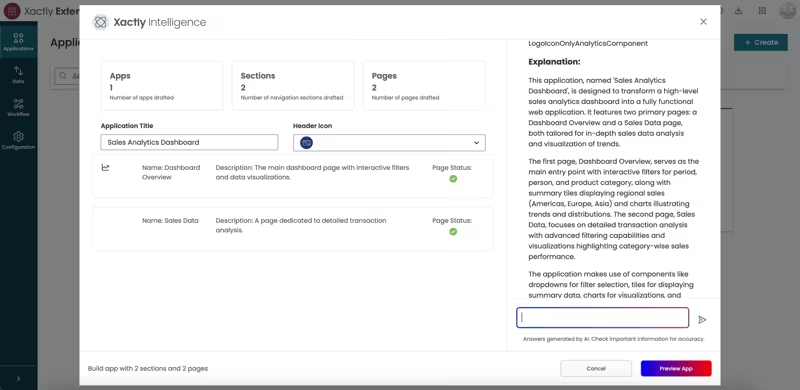
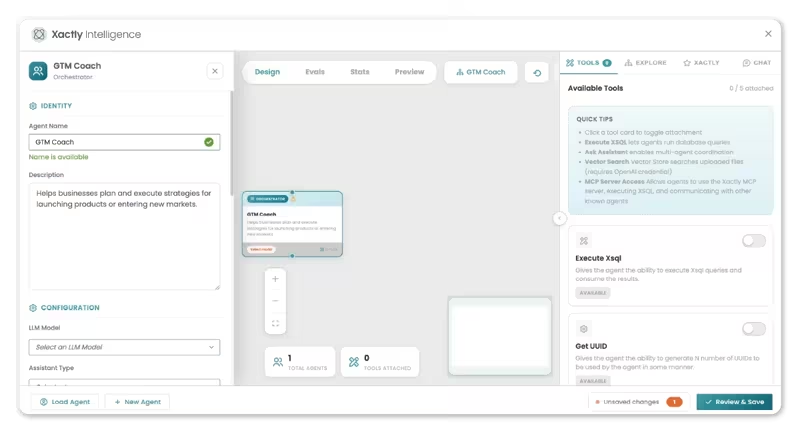
Xactly Intelligence operates across three tiers. Insights deliver predictive analytics (attrition risk, deal health). Assistants provide a chat interface for natural-language queries about compensation data. Agents, launched in May 2026, are autonomous AI workflows that configure plans, resolve disputes, and optimize territories without constant human oversight.
Source: Xactly
The Intelligence Studio lets organizations build custom agents using natural language, drag-and-drop tools, or code. All of it runs on Xactly's 20+ years of proprietary compensation data.
Source: Xactly
ZoomInfo's AI applies to the entire go-to-market workflow. The GTM Context Graph reasons across CRM data, conversation intelligence, and behavioral signals to identify why deals move or stall.
GTM Workspace uses AI agents to research accounts, draft outreach, monitor signals, and update CRM fields automatically. GTM Workspace users report 23% larger pipelines and nearly 60% more meetings per week.
The AI comparison isn't apples-to-apples because the problems differ. QuotaPath and Xactly use AI to design better comp plans and administer them more efficiently. ZoomInfo uses AI to help reps find and close the deals that comp plans reward. They're complementary, not competitive.
Integration ecosystems serve different needs
QuotaPath connects to 25+ native integration sources across CRM (Salesforce, HubSpot, Close, Pipedrive, Zoho, Copper, and others), accounting/ERP (QuickBooks, NetSuite, Xero, Sage Intacct), HRIS (Rippling), payment processors (Stripe, Chargebee), and data warehouses (BigQuery, Snowflake).
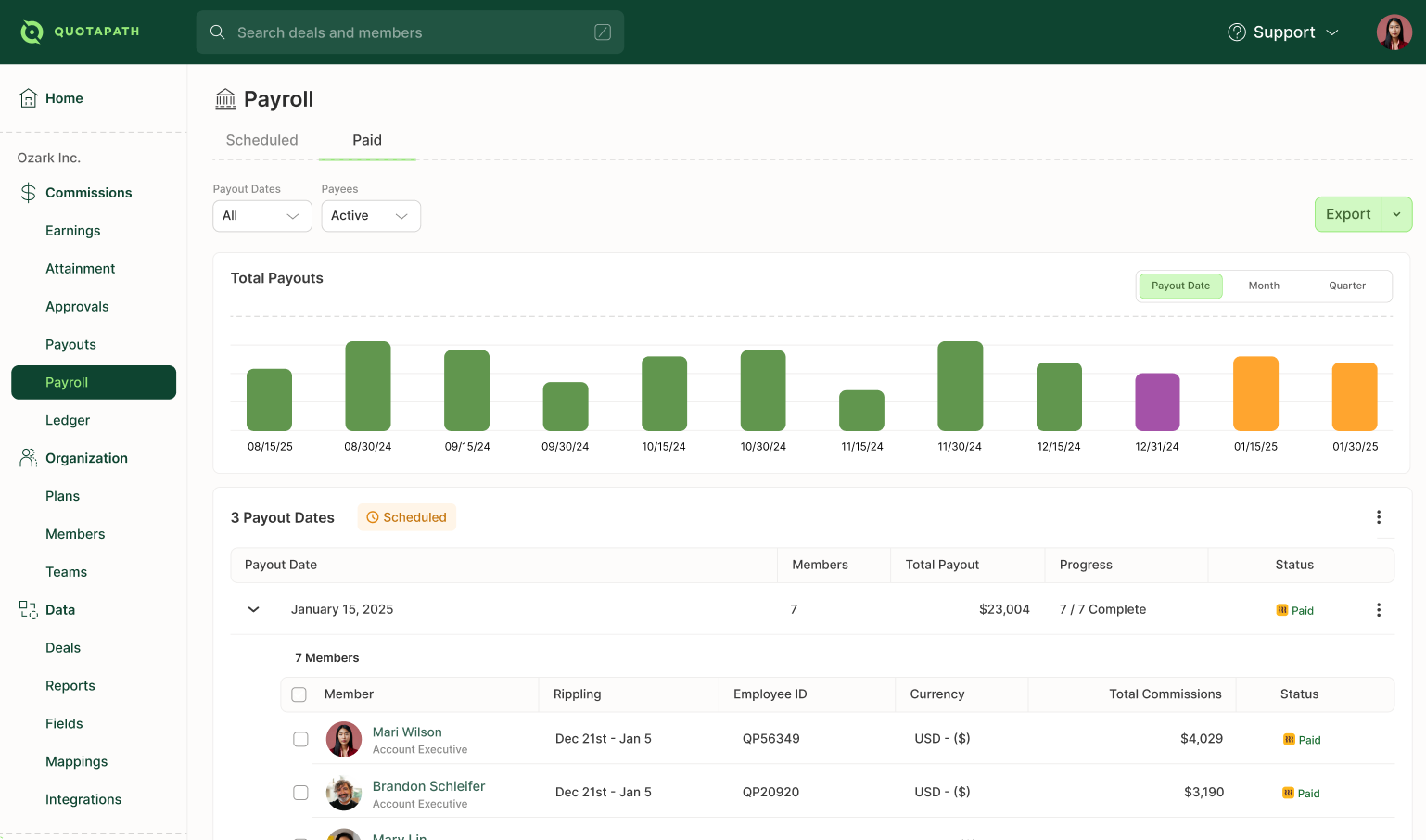
The Rippling integration is worth noting: it pushes resolved commission payouts directly into a Rippling payroll run, closing the loop from deal close to paycheck. An open API is available to all paid subscribers, and both HubSpot Marketplace and Salesforce AppExchange apps let reps view commissions inside their CRM.
Source: QuotaPath
The key limitation: QuotaPath cannot merge data from multiple sources at once. If your deal data lives in Salesforce and your invoice data lives in NetSuite, QuotaPath can join them via a shared ID, but companies with complex multi-source environments may hit constraints.
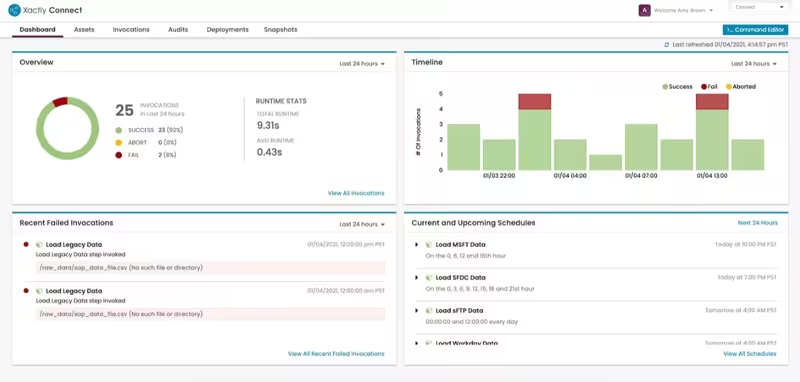
Xactly uses Xactly Connect, a dedicated integration product built on ANSI SQL. It provides REST APIs, ODBC/JDBC drivers, and a graphical web UI for configuring data flows. Native connectors cover Salesforce, NetSuite, and Snowflake, with the Salesforce integration being the deepest: 80% of Xactly customers use Salesforce.
Source: Xactly
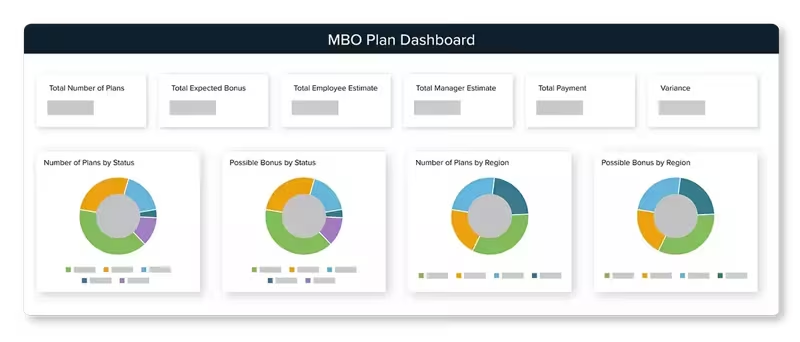
Xactly Extend adds low-code extensibility for custom dashboards and process automations. The Intelligence Connect MCP server enables agent-to-agent coordination with external platforms like ServiceNow, Salesforce, and Claude.
Source: Xactly
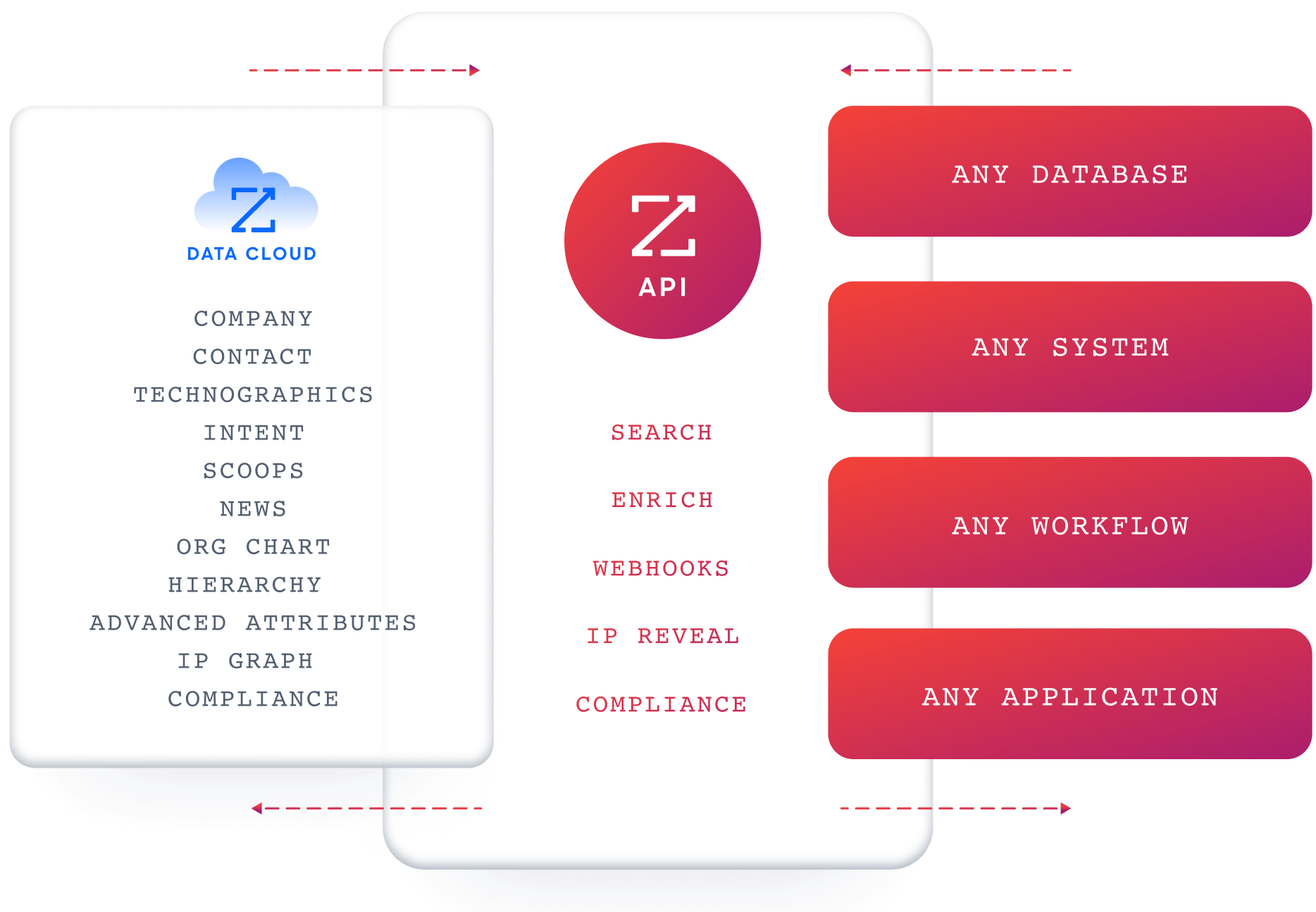
ZoomInfo integrates with 120+ partners across CRM, marketing automation, sales engagement, data warehouses, and more. Featured integrations include Salesforce, HubSpot, Microsoft Dynamics 365, Snowflake, and Salesloft.
The Enterprise API gives programmatic access to ZoomInfo's data and GTM Context Graph, and the MCP server connects AI models to ZoomInfo's B2B data as a native tool. API access comes included in all relevant plans.
Where each platform draws its data advantage
The data story differs for each platform because each needs different data to do its job.
QuotaPath consumes data but doesn't generate it. It syncs deal records from your CRM, applies compensation rules, and calculates payouts. Output quality depends entirely on the deal data flowing in. QuotaPath offers Data Validation tools with real-time alerts to flag sync issues, and Source Record Pages show what data arrived from each integration. But if your CRM data is incomplete or stale, QuotaPath inherits those problems.
Xactly generates its own proprietary data layer. The 20+ years of pay-and-performance benchmarks accumulated since 2005 power its AI, its plan design simulation, and its industry benchmarking. No competitor can replicate this historical depth, and it gives Xactly an advantage in answering questions like "Is our OTE competitive for this role in this industry?" or "How should accelerators scale based on historical attainment patterns?"
ZoomInfo operates a B2B data platform with a multi-source verification pipeline backed by 300+ human researchers and up to 95% accuracy on first-party data.
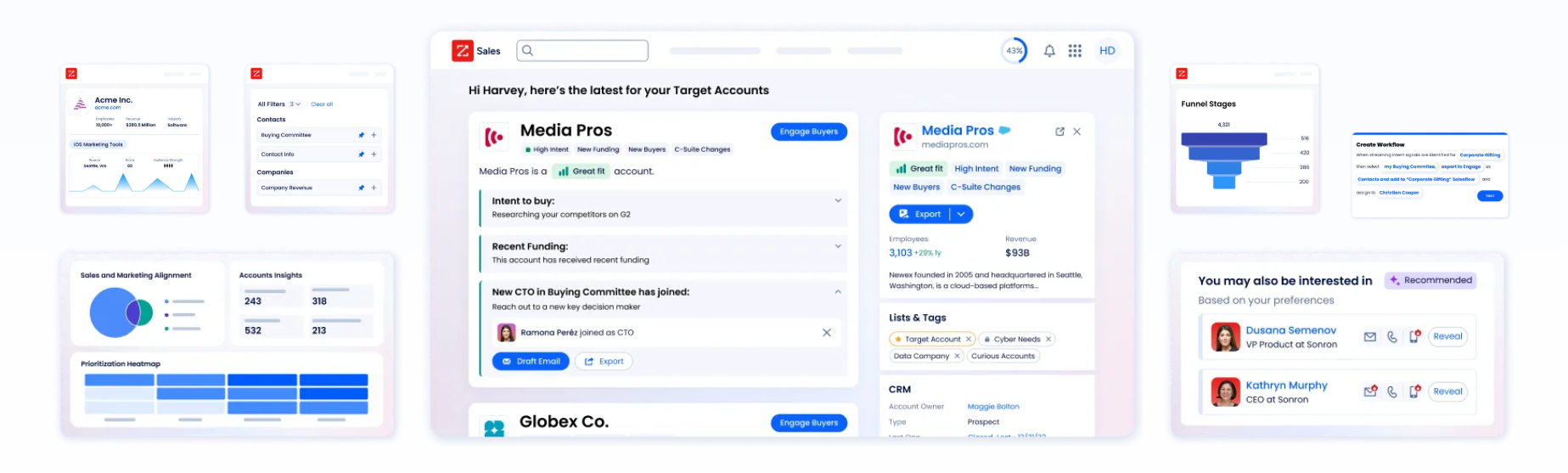
In a Fortune 500 competitive RFP analyzing 25 million contacts across vendors, the independent consultant concluded that "no other competitor came even close." This data isn't about commissions. It's about the upstream intelligence that determines whether your reps have deals to earn commissions on.
Snowflake feeds over 70 company and technographic data fields from ZoomInfo into its Account Propensity Scoring model. Accounts monitored using ZoomInfo-powered scores showed 90% higher opportunity open rates and 2x higher customer conversion rates. (ZoomInfo Case Study)
Compliance and security comparison
Commission data is sensitive. Getting it wrong has legal and financial consequences. Here's how each platform handles it.
QuotaPath holds a SOC 2 Type 1 certification and uses Drata for continuous compliance monitoring. SSO is available through Okta and Microsoft Entra ID on Growth and Premium tiers. For the Atlas AI module, QuotaPath maintains explicit no-training agreements with all LLM providers. ASC 606 compliance is available in the Growth tier and above via the built-in Ledger.
Xactly maintains SOC 2 certification and runs from secure data centers with biometric two-factor access, stateful inspection firewalls, managed IDS, and TLS 1.2 encryption.
Commission Expense Accounting handles both ASC 606 and IFRS 15 compliance with dynamic true-ups. The company runs an active Security Incident Response Team that publishes updates through its Trust site.
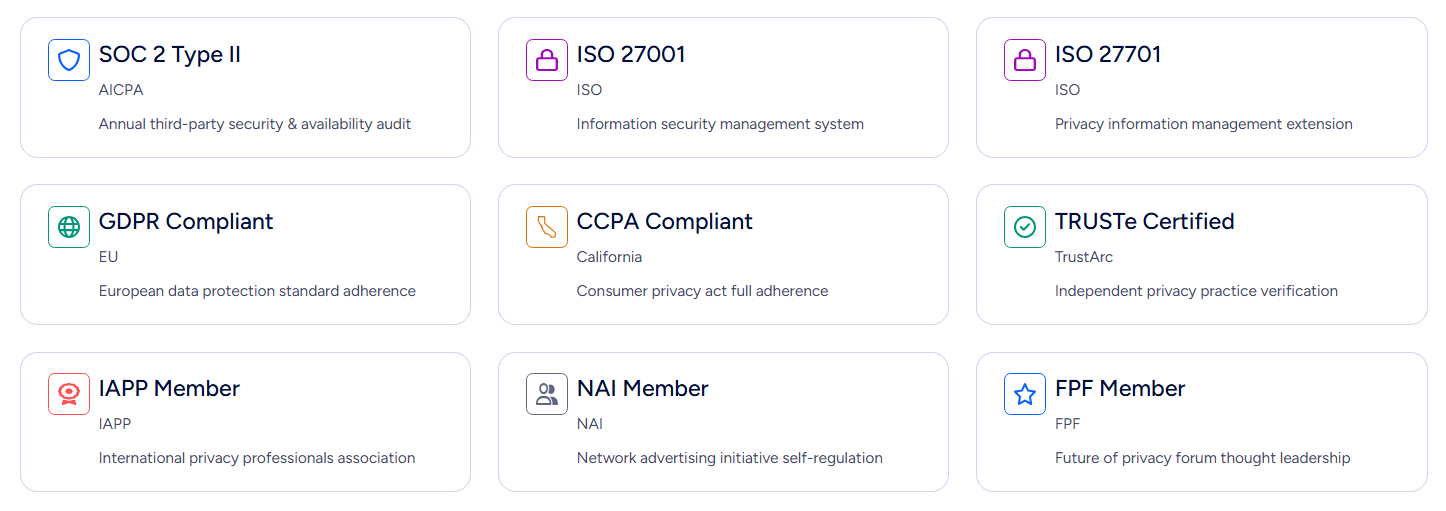
ZoomInfo holds the broadest certification stack: ISO 27001, ISO 27701, SOC 2 Type II, TRUSTe GDPR and CCPA validations, all renewed annually. ZoomInfo is a registered data broker in California and Vermont. For enterprises in regulated industries, this compliance depth is often a prerequisite.
QuotaPath vs. Xactly vs. ZoomInfo: Which should you choose?
These three platforms address different parts of the revenue lifecycle. The right choice depends on where your biggest pain point sits.
Choose QuotaPath if:
You're a growing SaaS company with 10–500 commissionable reps
You need to get off spreadsheets quickly with minimal IT involvement
Your compensation plans are simple enough to manage without dedicated comp administrators
Transparent pricing and fast implementation matter to you
Rep-facing earnings visibility is important for trust and motivation
Choose Xactly if:
You run layered compensation programs across global sales teams
You need territory planning, quota modeling, and forecasting alongside commission management
ASC 606 and IFRS 15 compliance are non-negotiable
You have dedicated compensation administrators who can manage an enterprise platform
Benchmarking against 20 years of industry data would inform your comp strategy
Choose ZoomInfo if:
Your revenue challenge isn't just paying reps accurately; it's helping them find and close more deals
You need territory design and quota allocation informed by real market data, not guesswork
Your sellers need account research, outreach, and deal intelligence in one workspace
You want your compensation data connected to the intelligence driving your GTM strategy
You value data verified at scale (500M contacts, up to 95% accuracy on first-party data)
See ZoomInfo in action with a free trial
The most effective revenue organizations don't choose between these platforms. They use a compensation tool (QuotaPath or Xactly, depending on complexity) alongside ZoomInfo's intelligence. QuotaPath or Xactly ensures reps get paid accurately. ZoomInfo ensures they have the pipeline intelligence to earn those commissions. Together, they create a loop: find the right deals, close them, and pay for performance, all connected by data that makes each step smarter.
"ZoomInfo's not just a contact data company anymore. They've built a full system of execution. GTM Intelligence actually works the list, writes the outreach, triggers the play, and helps drive predictable growth." (Ian Brodie, CEO & Co-Founder, Levanta, ZoomInfo Case Study)
QuotaPath vs. Xactly vs. ZoomInfo FAQ
What is the core difference between QuotaPath, Xactly, and ZoomInfo?
QuotaPath is a commission tracking and compensation management platform built for growing SaaS companies that want off spreadsheets quickly. Xactly is a full Sales Performance Management suite covering commission administration, territory and quota planning, comp plan design simulation, and AI-powered forecasting, designed for mid-market to large enterprises. ZoomInfo is an AI-powered GTM platform that operates upstream of both: it helps revenue teams find and close the deals that compensation platforms pay commissions on, using B2B data and an intelligence layer that captures why deals move or stall.
Which platform is more affordable: QuotaPath or Xactly?
QuotaPath is more accessible on price. Its Growth tier starts at $35/user/month with a $525/month platform fee (covering the first five users), and all pricing is published on its website. Xactly publishes no pricing; all deals are quote-based and aimed at enterprise budgets. QuotaPath also offers a 30-day free trial, while Xactly requires a sales conversation to access the platform.
Can QuotaPath handle complex enterprise compensation plans?
QuotaPath handles multi-tier commission structures, accelerators, bonuses, SPIFs, and shared quotas well for SMB and mid-market companies. However, it cannot merge data from multiple CRM or ERP sources at once, and reviewers note it fits smaller companies best when plan complexity increases. Organizations with territory overlays, matrix-based SPIFs, channel partner tiers, and multi-currency plans are more likely to need Xactly's enterprise capabilities.
How does ZoomInfo complement a compensation platform like QuotaPath or Xactly?
ZoomInfo operates at a different layer of the revenue stack. While QuotaPath and Xactly focus on calculating and paying commissions after deals close, ZoomInfo helps reps identify the right accounts, engage the right contacts, and read buying signals before and during the sales process. ZoomInfo's data can also inform territory design and quota allocation: knowing how many target accounts sit in each territory and which show buying intent helps set quotas based on real market opportunity rather than historical averages.
Which platform has the strongest AI capabilities?
Each applies AI to a different problem. QuotaPath's Atlas grades comp plans, runs Monte Carlo simulations, and models scenario outcomes for compensation design. Xactly's Fleet of Agents automates plan configuration, dispute resolution, and territory optimization using 20 years of proprietary data. ZoomInfo's GTM Context Graph reasons across CRM data, conversation intelligence, and behavioral signals to reveal deal context and power AI-driven prospecting, outreach, and pipeline management. The three AI layers are complementary, not competing.
What integrations does each platform support?
QuotaPath integrates with 25+ sources including Salesforce, HubSpot, QuickBooks, NetSuite, Stripe, Snowflake, and Rippling (for direct payroll push). Xactly connects through Xactly Connect with native integrations for Salesforce, NetSuite, Snowflake, and Workday, plus a low-code extensibility layer and an MCP server for AI agent coordination. ZoomInfo integrates with 120+ partners across CRM, marketing automation, sales engagement, and data warehouses, with API access included in all relevant plans and an MCP server for connecting AI models to its B2B data.
Which platform is fastest to implement?
QuotaPath typically takes 45–60 days, with some customers going live in two weeks. ZoomInfo deploys in weeks. Xactly takes the longest, with multi-month timelines for full enterprise deployments. Xactly's broader scope (territory planning, quota modeling, forecasting, and compensation) requires more configuration time.
Do any of these platforms offer a free plan or trial?
QuotaPath offers a 30-day free trial across all tiers, plus a permanent free tier for its Atlas AI standalone product (5 messages per day). ZoomInfo offers both a 7-day free trial and a permanent free Lite tier with access to the B2B database and 10 monthly export credits. Xactly does not offer a self-serve free trial; access requires a sales conversation and a governed trial agreement.
Comparing QuotaPath and Xactly? These related breakdowns go deeper:
