
Choosing between Salesboom and Salesforce for your CRM often comes down to five questions:
Do you need a CRM that covers sales, marketing, and service at a price built for growing businesses, or are you ready to invest in an enterprise platform with 25 years of market dominance?
Is a dedicated consultant who configures the system to your workflows more valuable than access to a marketplace of 9,000+ partner apps?
Are you a 20-person team that needs everything in one subscription, or a 2,000-person organization that needs industry-specific clouds and AI agents?
How much are you willing to spend per user, and how predictable do you need that cost to be?
Does the quality of data flowing into your CRM matter as much as the CRM itself?
In short, here's what we recommend:
Salesboom is built for small and mid-sized businesses that want CRM, marketing, service, and basic ERP in a single subscription without enterprise pricing. Founded in 2003 in Halifax, Canada, it offers a Build-to-Suit customization model and a FastTrack onboarding program that bundles setup, data migration, and training at a fixed cost.
Plans start at $14 per user per month, and the Professional tier at $45 includes campaign management, AI workflow automation, quote management, and case management. The trade-off: Salesboom's smaller scale means a thinner integration ecosystem, limited third-party validation, and inconsistent support responsiveness.
Salesforce is the world's #1 CRM by IDC market share, serving over 150,000 companies with a platform spanning Sales Cloud, Service Cloud, Marketing Cloud, Commerce Cloud, Data Cloud, and the Agentforce AI agent platform. With $41.5 billion in annual revenue and 76,000+ employees, Salesforce offers depth, a large partner ecosystem, and 17 industry-specific clouds.
But this scale comes at a cost: plans that matter start at $175 per user per month, pricing complexity that Salesforce has acknowledged needs fixing, and implementations that typically require partner-led deployments.
Both platforms manage your customer relationships. But neither can tell you which prospects to call first, whether a buying committee is complete, or why your last deal closed. The intelligence that feeds your CRM determines how well it performs, and that's a different problem entirely.
ZoomInfo is an AI-powered go-to-market platform that lets your sales reps walk into every call knowing why the deal is moving, who's championing it, and what to do next. Your marketers can describe audiences in plain language and launch plays against accounts matching your proven win patterns. Your leaders see deal risk before it surfaces in CRM stage fields.
That depth comes from the GTM Context Graph, an intelligence layer built on the largest B2B dataset in the industry (500M contacts, 100M companies, 135M+ verified phone numbers, and 200M+ verified business email addresses) processing 1.5B+ data points daily by fusing this data with your CRM records, conversation transcripts, and behavioral signals.
Whether your CRM is Salesboom, Salesforce, or anything else, ZoomInfo delivers that intelligence through GTM Workspace for sellers, GTM Studio for marketers and RevOps, or APIs and MCP in any front-end.
If you want to see how better data transforms CRM performance, start with a free ZoomInfo trial.
Salesboom vs. Salesforce vs. ZoomInfo at a glance
Salesboom | Salesforce | ZoomInfo | |
|---|---|---|---|
Primary function | All-in-one CRM + ERP for SMBs | Enterprise CRM and AI platform | AI-powered go-to-market platform |
Starting price | $14/user/month | $25/user/month (Starter); $175 for Enterprise | Consumption-based pricing; free Lite tier available |
Target buyer | SMBs with 5–500 users | Mid-market to enterprise | B2B sales, marketing, and RevOps teams |
AI capabilities | AI Assistant, AI Workflow Automation, Agent Management System | Agentforce (autonomous AI agents), Einstein AI, Atlas Reasoning Engine | GTM Context Graph, AI-powered prospecting, intent signals |
Integrations | QuickBooks, Outlook, Gmail, Zapier | 9,000+ AppExchange apps, MuleSoft, Slack | 120+ integrations, native Salesforce/HubSpot connectors, MCP |
Free plan/trial | 7–30 day trials; 90-day money-back guarantee | Free Suite (2 users); Starter at $25/user/month | ZoomInfo Lite (permanent free tier); 7-day full trial |
Implementation | ~2 weeks (standard); FastTrack program | Weeks to 12 months; typically partner-led | Deploys in weeks |
Best for | Budget-conscious SMBs wanting one platform | Enterprises needing depth, scale, and ecosystem | Teams that need accurate data and buying intelligence in any CRM |
Feature depth: one platform tries to do it all, the other already does
Salesboom's pitch is that you get everything in one subscription.
At the Professional tier, the feature list is broad: sales force automation, campaign management, drip marketing, bulk email, quote management, contract management, case management with auto-assignment and escalation, a knowledge base, AI workflow automation, and a zip code proximity search tool.
The Enterprise tier adds project management, timesheets, human capital management, partner relationship management, and an Agent Management System for deploying AI agents. For a mid-sized company that wants one vendor covering sales, marketing, support, and basic ERP, this breadth at $45–$95 per user is hard to match.
Salesforce goes deeper in every category, but across separate clouds that each carry their own pricing.
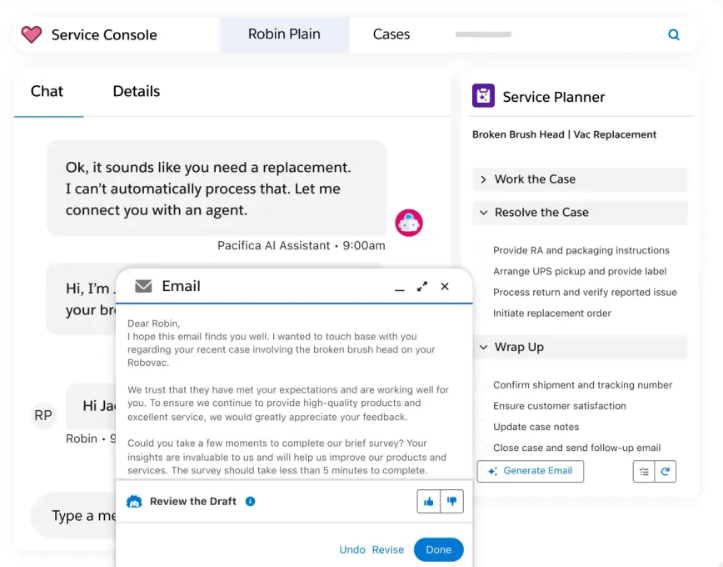
Sales Cloud handles pipeline, forecasting, and AI-powered sales coaching. Service Cloud manages omnichannel customer support with AI case resolution. Marketing Cloud covers everything from B2C journey orchestration to B2B lead nurturing, starting at $1,500 per org per month. Commerce Cloud powers B2C and B2B storefronts. Data Cloud unifies customer data across all sources.
Source: Salesforce
Each Salesforce cloud leads its category. But assembling a full suite (Sales Cloud Enterprise + Service Cloud + Marketing Cloud + Data Cloud) quickly becomes a six-figure annual commitment. Salesboom bundles comparable categories into one subscription.
The trade-off is that Salesboom's depth within each category is shallower. Its marketing automation lacks the journey orchestration and multi-channel sophistication of Salesforce Marketing Cloud. Its service module doesn't match Service Cloud's omnichannel routing or AI-powered case deflection at enterprise scale.
The right choice depends on whether you need breadth at a fixed cost or depth in specific areas with the budget to match.
AI capabilities are moving in the same direction, at very different speeds
Both platforms have placed AI at the center of their strategy. The implementations, however, reflect their different scales and resources.
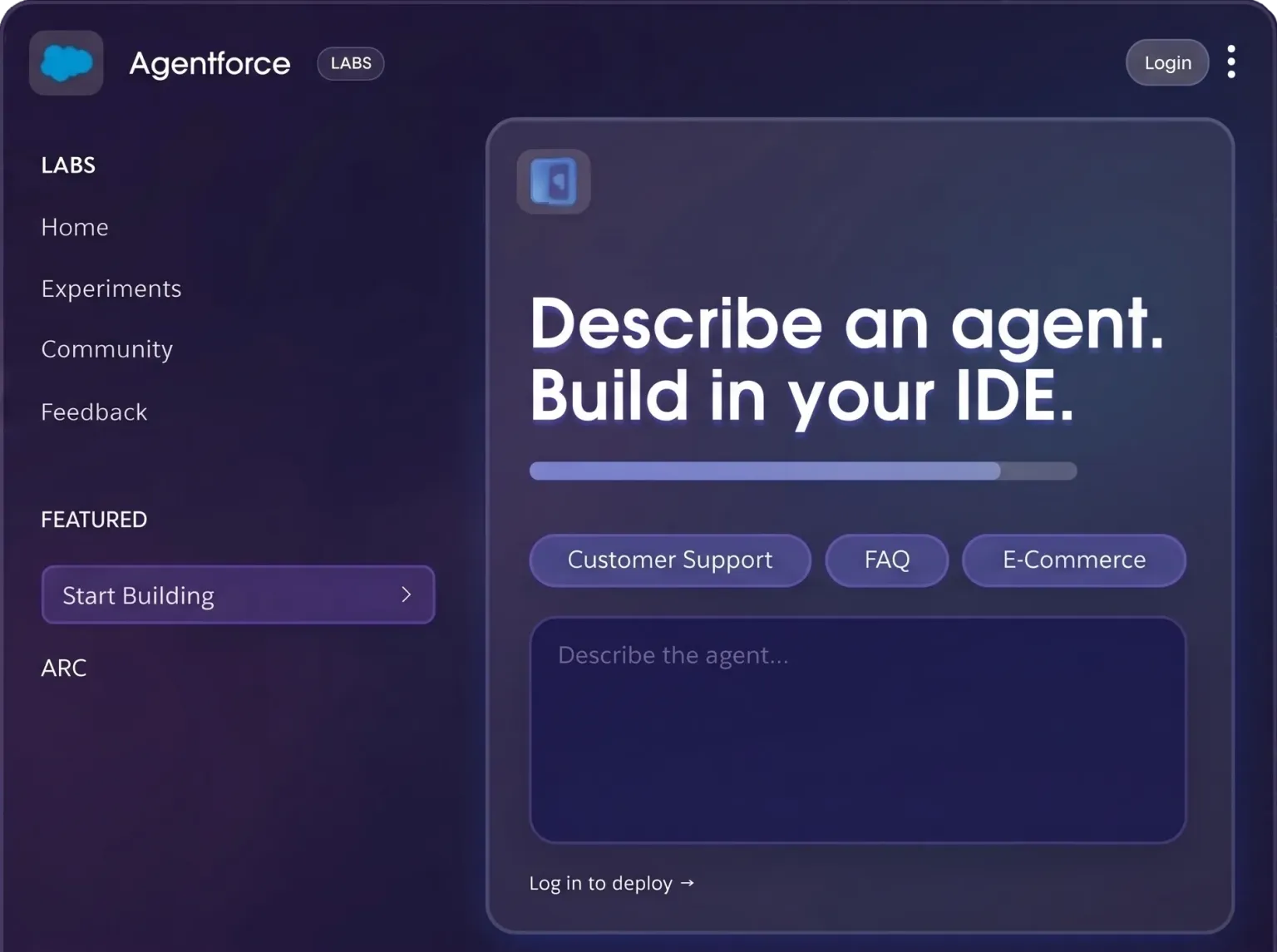
Salesforce's Agentforce is the most ambitious AI deployment in the CRM industry.
Source: Salesforce
Powered by the proprietary Atlas Reasoning Engine, Agentforce agents don't just assist; they act autonomously across sales, service, marketing, and commerce.
The Einstein Trust Layer provides zero data retention with LLM partners, PII masking, and toxicity detection for regulated industries.
Salesboom's AI strategy spans three tiers: Predictive AI (lead scoring, pipeline forecasting), Generative AI (email drafting, meeting summaries), and Agentic AI (autonomous multi-step workflows).
The Agent Management System, available at the Enterprise tier, is marketed as the "world's first Cloud CRM built specifically for AI Agents." It includes a conservative safety architecture: AI agents can never overwrite or delete customer records, and every AI-generated item requires human approval before going live.
Salesboom's differentiator is inclusion: all three AI tiers are available across pricing levels, while Salesforce charges separately for Agentforce features above the Enterprise tier.
The gap is less about ambition and more about proven scale. Salesforce has public case studies with measurable outcomes across thousands of enterprise deployments. Salesboom's AI capabilities are newer and less externally validated, though the pricing makes them accessible to businesses that can't justify Salesforce's AI add-on costs.
The pricing gap reveals two different philosophies
Salesboom and Salesforce sit at opposite ends of the CRM pricing spectrum, and the gap tells you who each platform was designed for.
Salesboom's Team Edition starts at $14 per user per month.
The Professional tier, which the company labels "Most Popular," costs $45 and includes campaign management, drip marketing, AI features, quote and contract management, case management, and a knowledge base. The Enterprise tier at $95 adds territory management, partner relationship management, project management, sandbox environments, and a dedicated account manager.
All plans are month-to-month with no long-term contracts required and a 90-day money-back guarantee.
Salesforce's pricing is more layered.
The Free Suite covers two users with basic CRM. Starter Suite costs $25 per user per month. But most businesses need Pro Suite ($100), Enterprise ($175), or Unlimited ($350) to access features like customization, AI, and workflow automation.
The top-tier Agentforce 1 edition runs $550 per user per month and includes unmetered AI agents, Tableau Next, and Slack Enterprise+. All paid plans require annual contracts.
The math gets stark at scale. A 25-person team on Salesboom Professional pays $1,125 per month. The same team on Salesforce Enterprise pays $4,375 per month, before adding costs for Premier Support (30% of net license fees), Data Cloud credits, Agentforce consumption, or partner-led implementation.
But cost alone doesn't determine value. Salesboom includes capabilities in its $45 Professional tier (campaign management, quote management, case management, AI features) that Salesforce gates at Enterprise ($175) or sells as add-ons.
Salesforce counters with a platform that 19 consecutive Gartner Magic Quadrant Leader designations confirm is the industry standard, and with ecosystem depth that Salesboom cannot match.
The data problem both CRMs share
Here's what neither Salesboom nor Salesforce will emphasize: a CRM is only as good as the data inside it.
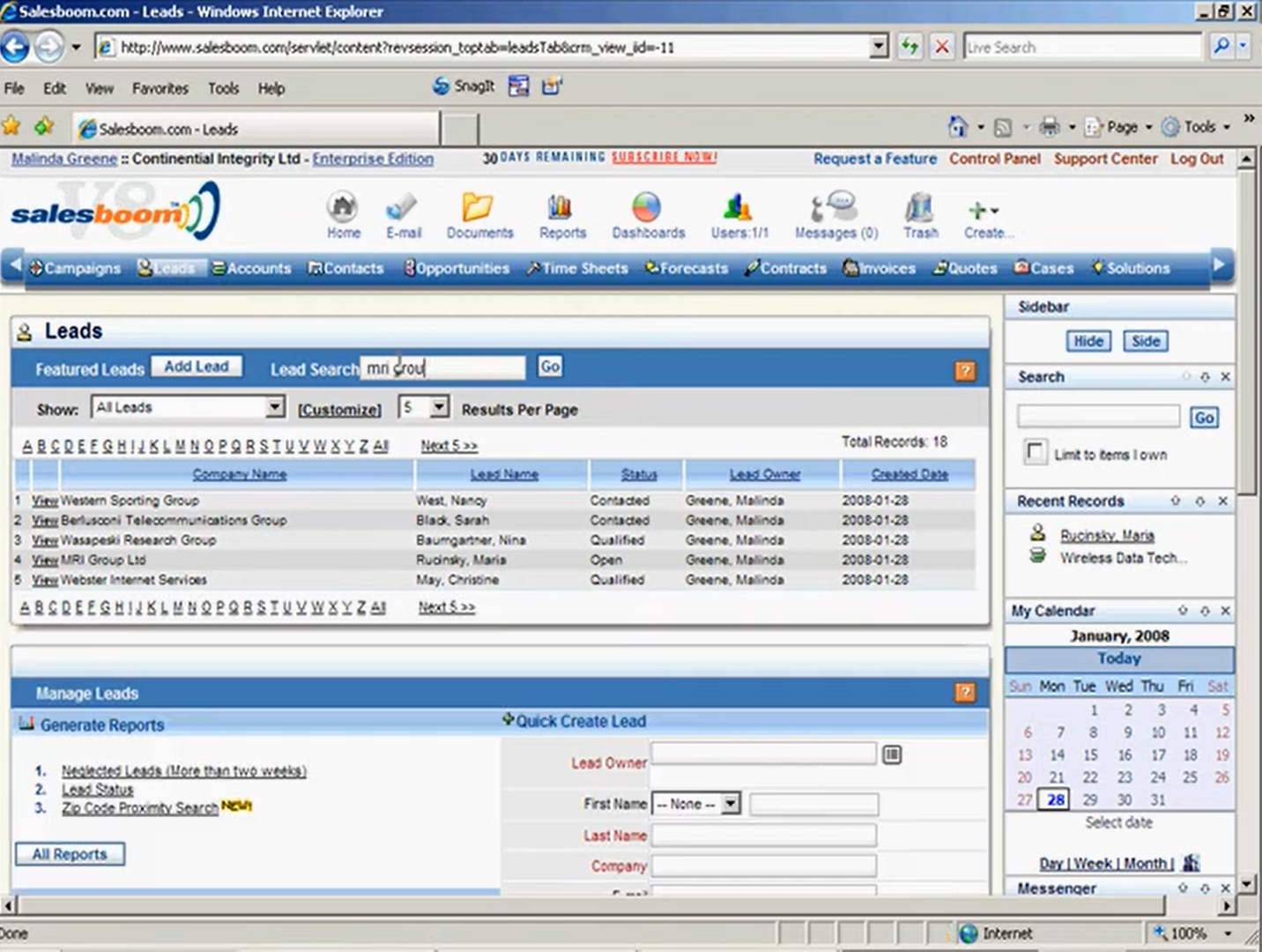
Salesboom includes lead capture tools such as web-to-lead forms, email parsers, and basic lead scoring.
Source: Salesboom
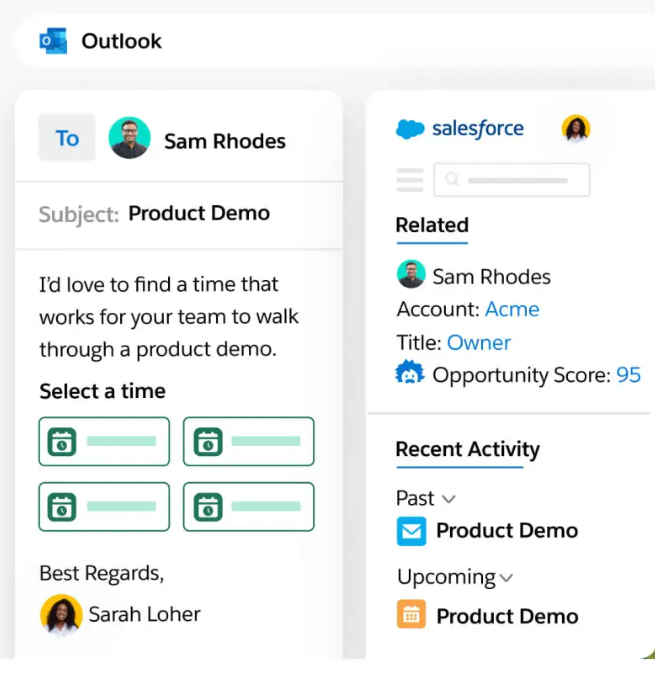
Salesforce offers more sophisticated data capture through Einstein Activity Capture and Data Cloud's 200+ connectors.
Source: Salesforce
But both platforms depend on their users to source, verify, and maintain prospect data. Neither tells you who to target in the first place, whether the contact information is accurate, or when a prospect is actively researching solutions.
This is where ZoomInfo changes the equation.
Instead of waiting for prospects to fill out web forms or relying on reps to research accounts manually, ZoomInfo provides 500M contacts with up to 95% accuracy on first-party data, verified through a pipeline backed by 300+ human researchers and automated ML scanning of 28 million site domains daily.
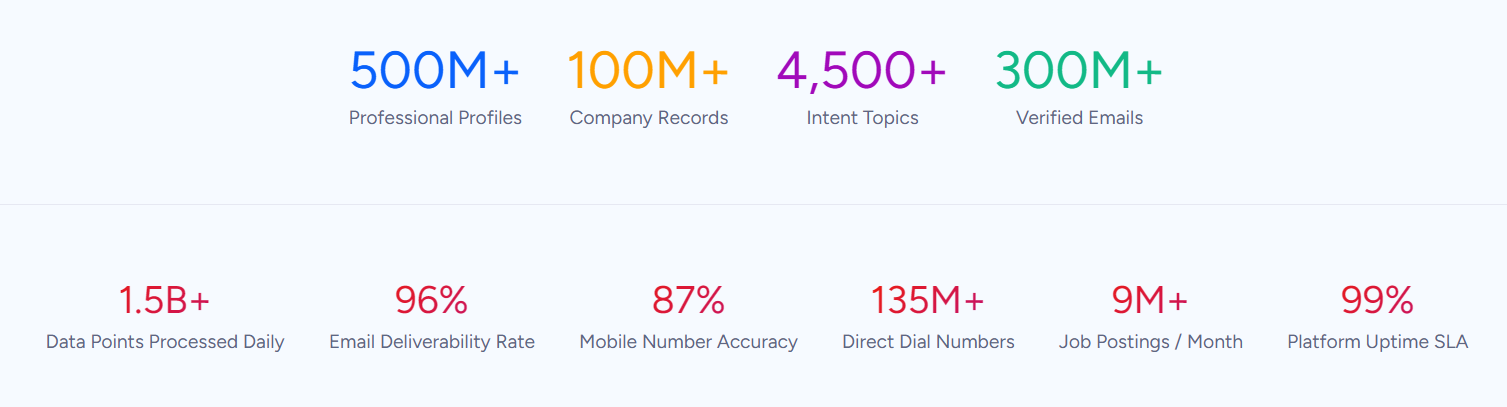
The platform tracks buyer intent signals from 210 million IP-to-Organization pairings and identifies which companies are researching your category before they visit your website.
The GTM Context Graph goes further, processing 1.5B+ data points daily by fusing ZoomInfo's data with your CRM records, conversation transcripts, and behavioral signals into a single intelligence layer. A CRM records that a deal moved to stage 4.
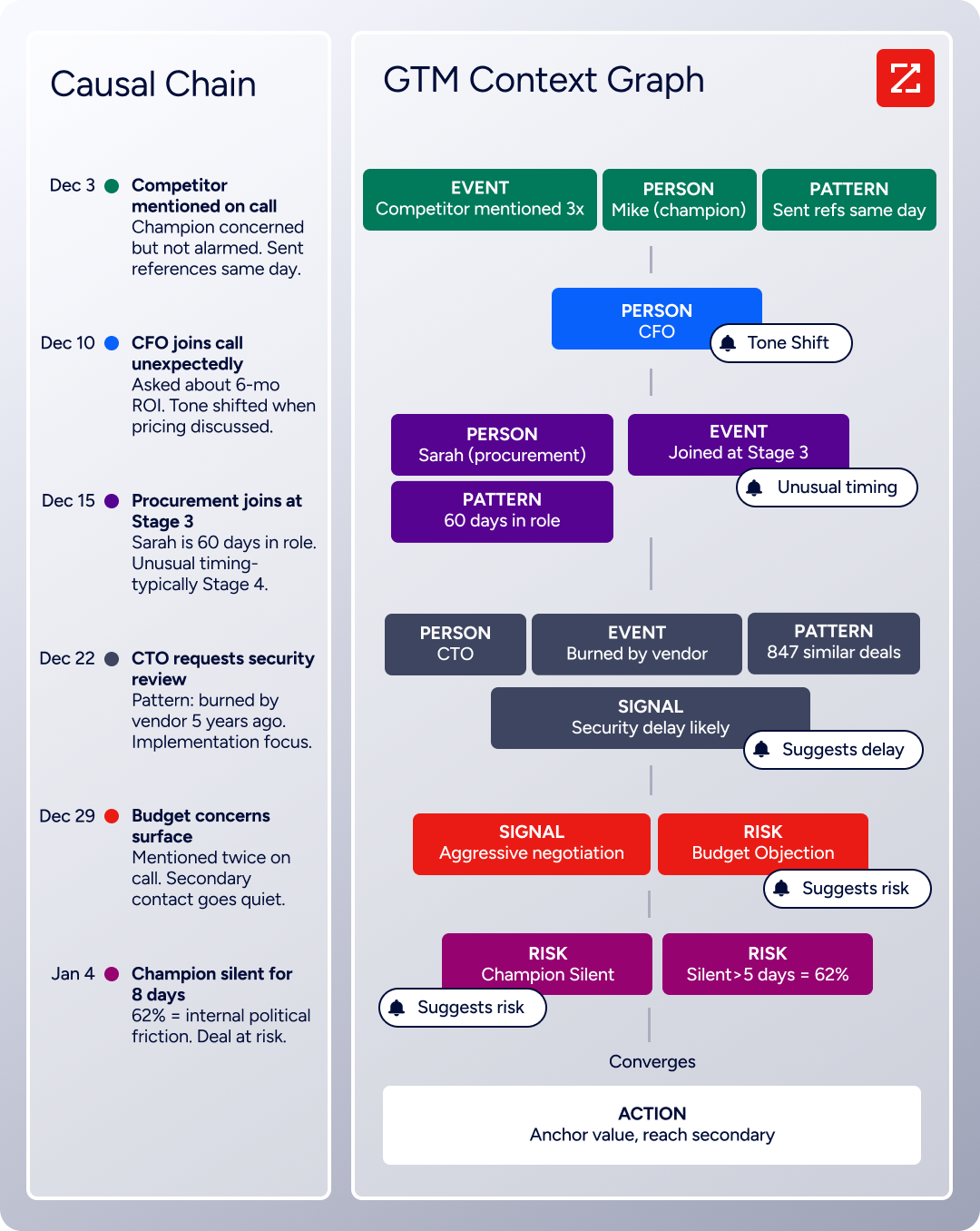
The GTM Context Graph captures that the CFO joined the last call and asked about six-month ROI, that the company is hiring three new VPs, and that this pattern matches your closed-won deals in the segment.
That reasoning flows into every action downstream: the follow-up addresses the specific concern raised, the next play targets accounts with matching signal combinations, and the forecast reflects buying evidence rather than stage labels.
For Salesforce users, ZoomInfo provides a native integration that enriches records, powers prospecting from within the CRM, and syncs intent signals into existing workflows. For Salesboom users, ZoomInfo's API and MCP access feeds the same intelligence into any system through open standards.
The CRM manages the relationship. ZoomInfo makes sure you're building relationships with the right people at the right time.
Seismic attributed 39% of active pipeline to opportunities identified or influenced by ZoomInfo signals, with sales reps saving 11.5 hours per week and boosting productivity by 54%. (Seismic case study)
Customization and implementation: white-glove vs. ecosystem
How each platform adapts to your business reveals different assumptions about who the buyer is.
Salesboom's Build-to-Suit model assigns a dedicated consultant to configure the system to your workflows.
Custom fields, page layouts, module naming, validation rules, and security permissions are handled through a no-code browser interface called the Salesboom Workshop.
The FastTrack Program bundles consulting, needs analysis, configuration, testing, and training at a fixed price with no hourly overruns. Salesboom claims a typical two-week implementation for standard deployments. For teams that want someone else to handle setup, this hands-on approach has appeal.
The risk is in execution. Capterra reviewers have reported cases where paid customizations went undelivered for months. When Salesboom's core value rests on custom-built workflows, delays in delivering those customizations undermine the reason buyers chose it.
Salesforce takes a different approach.
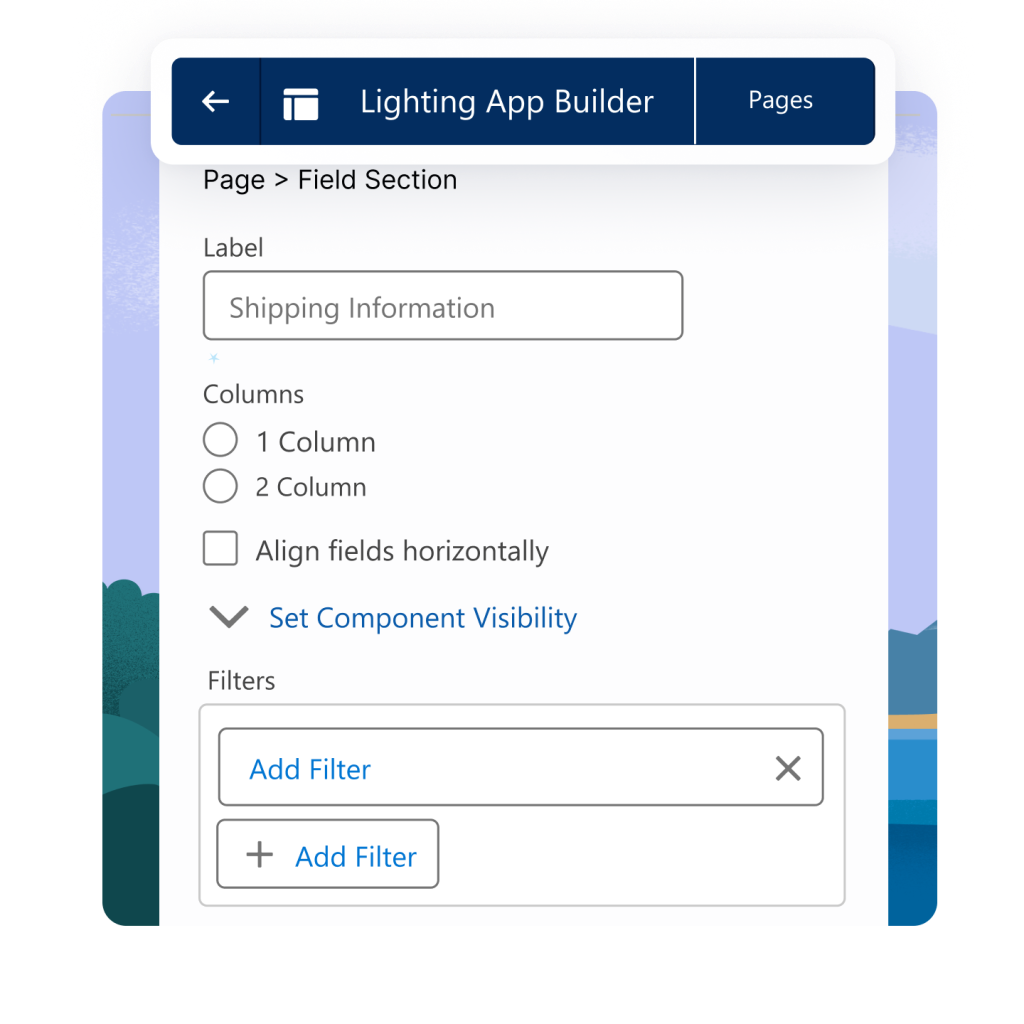
The platform provides Lightning App Builder (drag-and-drop), Flow (workflow automation), and Code Builder (pro-code IDE) for customization. But meaningful configuration requires trained administrators, and over 70% of implementations are partner-led.
Source: Salesforce
The partner ecosystem is large: 160,000+ companies, 5,000 ISVs, and 7,000 system integrators. Implementation timelines range from weeks (simple Sales Cloud) to 3–12 months (enterprise multi-cloud). The AppExchange marketplace with 9,000+ apps and 14+ million installs means most customization needs have pre-built solutions.
The trade-off is clear. Salesboom personalizes through a dedicated consultant. Salesforce personalizes through an ecosystem. One model depends on a single vendor's capacity. The other depends on finding and paying the right partner.
Ecosystem and integrations define scalability
The integration story reveals the widest gap between the two CRMs.
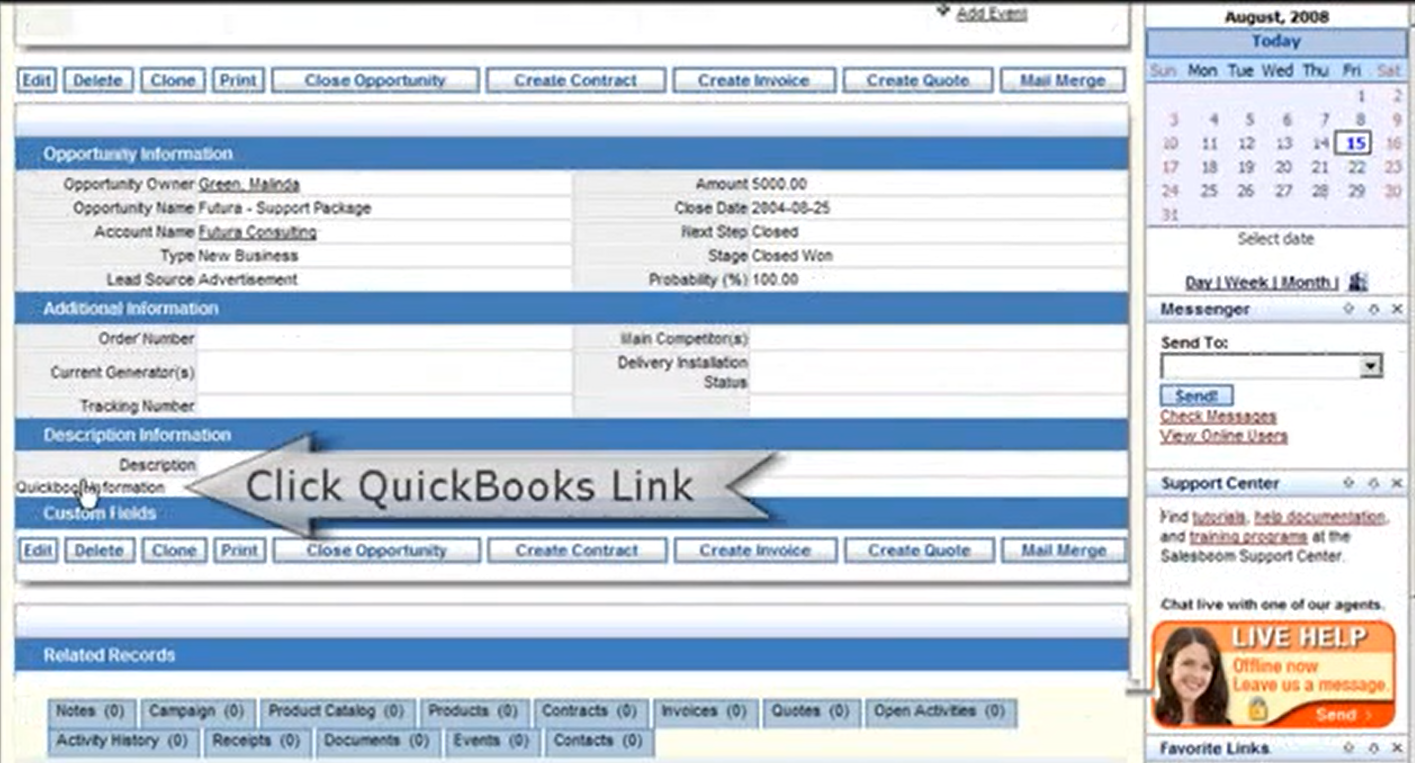
Salesboom ships with native integrations for QuickBooks, Outlook 365, Gmail, Shopify, MailChimp, Slack, DocuSign, and Zapier, among others.
Source: Salesboom
A REST API built on open standards (HTML5, XML, CSS2) enables custom connections, and Zapier connectivity opens access to 5,000+ additional applications. For an SMB that uses QuickBooks for accounting and Outlook for email, this covers the basics.
Salesforce's integration capability operates at a different scale.
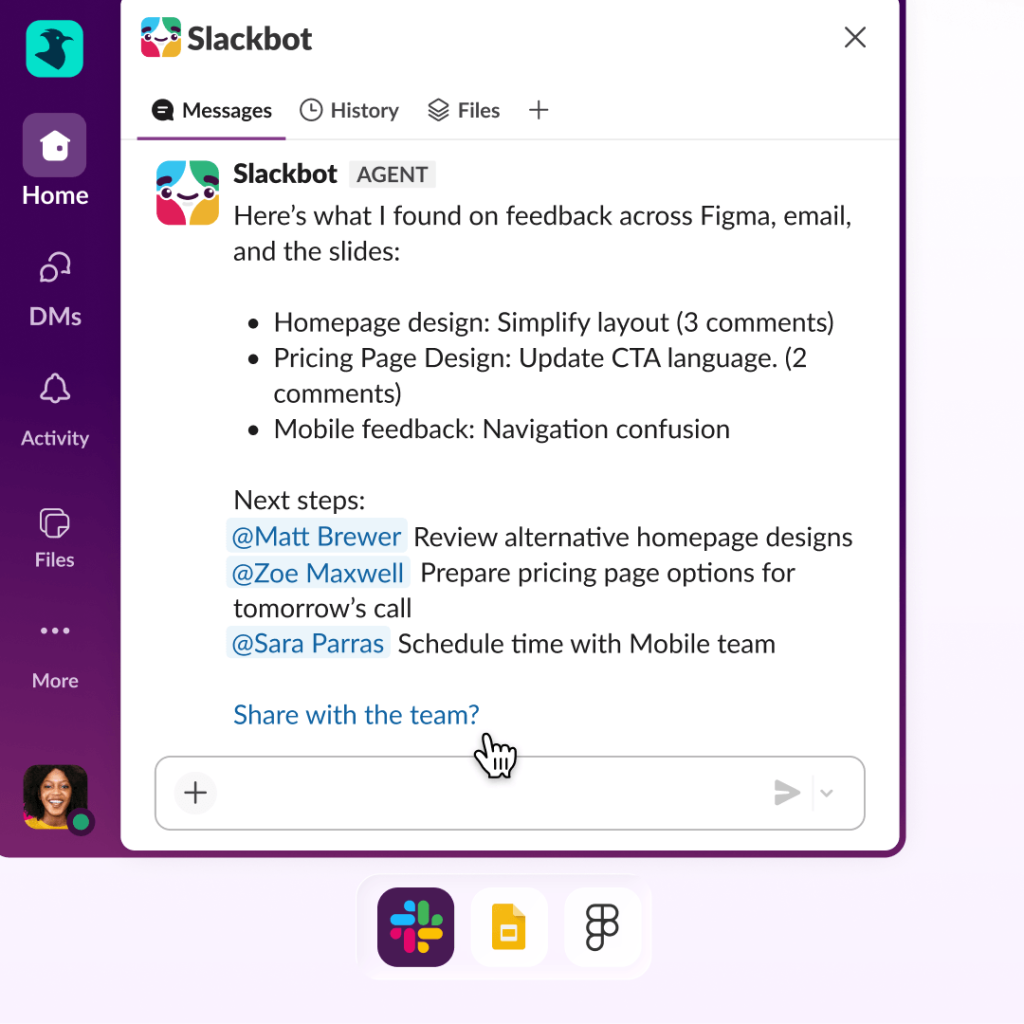
Beyond AppExchange, MuleSoft's Anypoint Platform provides hundreds of pre-built connectors with API management and governance. Slack serves as the collaboration layer, with 5.2 billion messages sent weekly and bidirectional CRM data flowing through Salesforce Channels.
Source: Salesforce
Native integrations with Google Workspace, Microsoft Outlook, and Teams are built in. Data Cloud connects directly to Snowflake, Databricks, Google BigQuery, and AWS without ETL.
For businesses planning to stay small and focused, Salesboom's integration set is sufficient. For businesses that expect to grow into a complex tech stack with enterprise data requirements, Salesforce's ecosystem is a prerequisite.
ZoomInfo fits into both ecosystems.
Its 120+ marketplace integrations include native connectors for Salesforce, HubSpot, Microsoft Dynamics 365, and other major CRMs. For Salesboom, ZoomInfo's Enterprise API and MCP server connect through open standards. The intelligence is CRM-agnostic: whichever system you choose, the same data and GTM Context Graph power your prospecting, prioritization, and outreach.
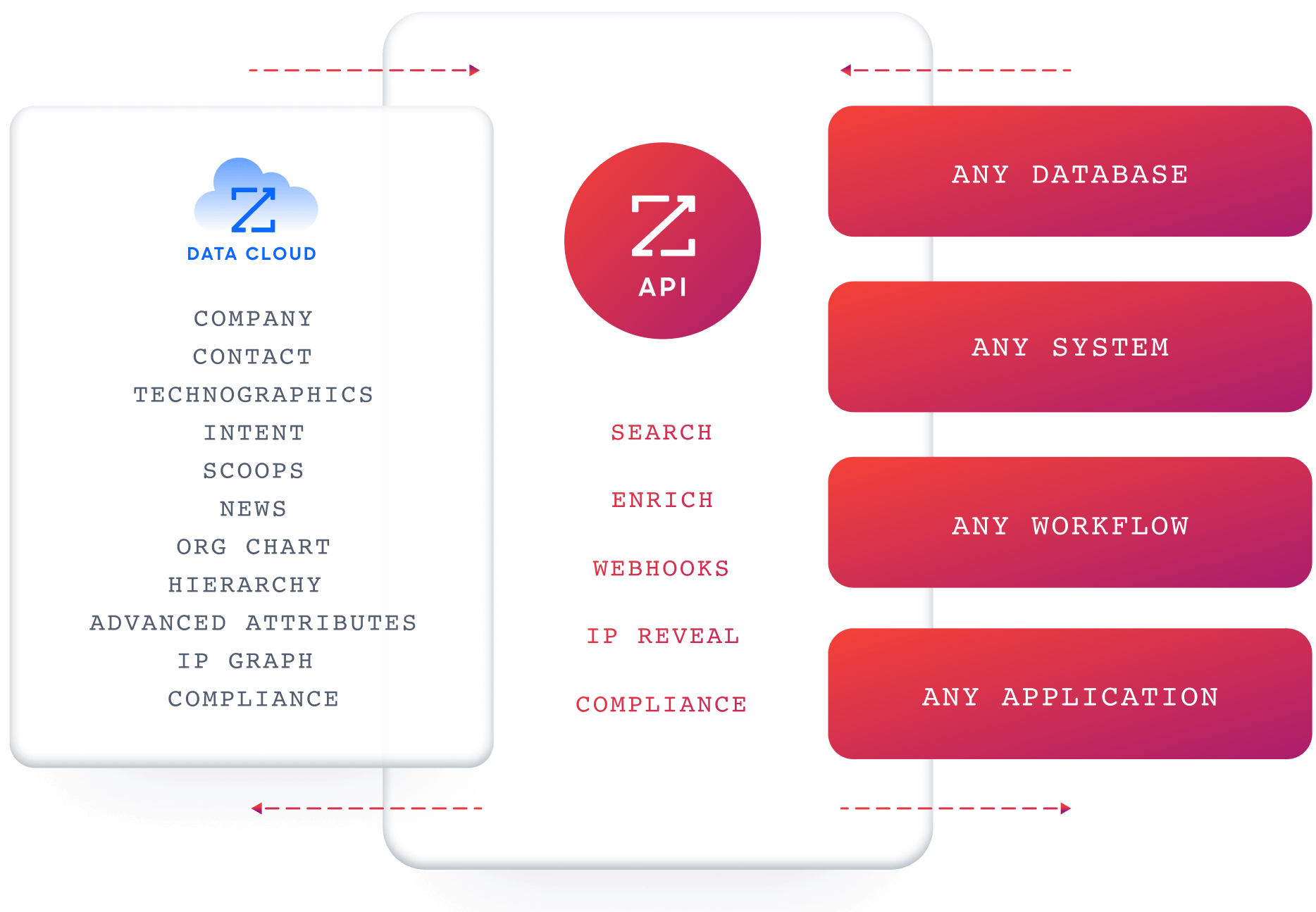
Snowflake feeds over 70 company and technographic data fields from ZoomInfo into its Account Propensity Scoring model. Accounts monitored using ZoomInfo-powered scores showed 90% higher opportunity open rates and 2x higher customer conversion rates. (Snowflake case study)
Salesboom vs. Salesforce vs. ZoomInfo: Which should you choose?
The right combination depends on where your business is today and where it's headed.
Choose Salesboom if:
You're an SMB with 5–500 users who needs CRM, marketing, service, and basic ERP in one subscription
Budget predictability matters and you want month-to-month flexibility without long-term contracts
You prefer a dedicated consultant configuring the system for you over hiring a Salesforce admin
You're in a process-heavy vertical (healthcare, manufacturing, legal) and want industry-specific configuration at mid-market pricing
Your integration needs are straightforward (QuickBooks, Outlook, Gmail, Zapier)
Choose Salesforce if:
You need the deepest CRM platform available, with proven AI, industry clouds, and a large ecosystem
Your organization has or can justify dedicated Salesforce administrators
You require independently certified compliance (SOC 2, ISO 27001, FedRAMP, HIPAA)
Integration with hundreds of enterprise applications is a requirement
You want autonomous AI agents handling sales, service, and marketing at scale
Add ZoomInfo to either if:
Your sales team spends too much time researching prospects instead of selling
You need verified contact data, direct dials, and business emails that work
You want to know which accounts are researching solutions before they contact you
Your CRM data is incomplete, outdated, or inconsistent
You want AI that understands why deals move, not just that they moved
Start with ZoomInfo Lite for free or request a demo to see the full platform.
The CRM you choose manages your customer relationships. The intelligence platform you pair it with determines how many of those relationships you build in the first place. Salesboom and Salesforce each serve different buyers at different stages. ZoomInfo makes either one more effective by ensuring your team targets the right accounts with the right information at the right time.
"ZoomInfo gives us the information we need to execute. It's already there, so we can be three steps ahead." — William Kenimer, VP of Revenue Operations (Vensure case study)
Salesboom vs. Salesforce vs. ZoomInfo FAQ
What is the core difference between Salesboom and Salesforce?
Salesboom is a privately held CRM built for small and mid-sized businesses, bundling sales, marketing, service, and basic ERP into a single subscription starting at $14 per user per month. Salesforce is the world's largest CRM company with $41.5 billion in annual revenue, offering separate clouds for sales, service, marketing, commerce, and data, each with its own pricing.
Salesboom prioritizes value and simplicity. Salesforce prioritizes depth, scale, and ecosystem.
How does ZoomInfo differ from Salesboom and Salesforce?
ZoomInfo is not a CRM. It is a B2B data and go-to-market intelligence platform that provides the contact data, company intelligence, and buyer intent signals that feed into CRMs. ZoomInfo integrates with both Salesforce and other CRMs to enrich records, prioritize accounts, and surface buying signals. It solves the data quality problem that every CRM depends on but none fully address on their own.
Which platform is more affordable for a small team?
Salesboom is cheaper at the license level. A 10-person team on Salesboom Professional costs $450 per month with no annual commitment.
The same team on Salesforce Enterprise costs $1,750 per month on an annual contract, plus potential costs for Premier Support, Data Cloud credits, and implementation.
ZoomInfo Lite is free for individual prospecting, with paid plans using consumption-based pricing.
Can Salesboom handle enterprise-scale deployments?
Salesboom markets its Enterprise Edition at $95 per user per month for large organizations, with features including territory management, advanced workflow automation, and sandbox environments. However, G2 reviewers have noted that the platform may not work well for very large companies due to feature limitations.
Salesforce, with 150,000+ customers including Fortune 500 companies, has a proven track record at enterprise scale that Salesboom has not yet demonstrated.
Does Salesforce justify its higher price?
For organizations that use its depth, yes. Salesforce's AI capabilities (Agentforce), industry-specific clouds across 17 verticals, AppExchange marketplace with 9,000+ apps, and independently certified compliance are capabilities no other CRM matches.
The challenge is that many organizations pay for Enterprise or Unlimited tiers but use only a fraction of the available features. If your needs are straightforward, Salesboom may deliver 80% of the functionality at 25% of the cost.
How does ZoomInfo integrate with Salesforce?
ZoomInfo offers a native Salesforce integration that enriches lead, contact, and account records with verified data within the CRM. Intent signals sync into Salesforce workflows, and ZoomInfo's Account Deal Story surfaces buying intelligence within Salesforce records.
The integration works bidirectionally, with CRM data feeding ZoomInfo's GTM Context Graph to improve account prioritization and outreach recommendations. For a broader look at how ZoomInfo and Salesforce compare as platforms, see our Salesforce vs. ZoomInfo comparison.
Which platform has the strongest AI features?
Salesforce leads in AI with Agentforce, which has delivered 2.4 billion Agentic Work Units and generated $800M in annual recurring revenue.
Salesboom offers AI features across all tiers but with less external validation of outcomes.
ZoomInfo's AI operates at the intelligence layer, using the GTM Context Graph to reason about deal patterns, buying committee dynamics, and account prioritization (a different application from CRM workflow automation).
Is Salesboom a viable Salesforce alternative?
For small and mid-sized businesses that need CRM fundamentals (pipeline management, marketing campaigns, case management, quoting) without enterprise complexity or cost, Salesboom is a viable option.
It was founded as an explicit Salesforce alternative and offers comparable core workflows at a fraction of the price. The trade-offs are a smaller integration ecosystem, less external validation, and inconsistencies in support and custom development delivery.
More Salesforce comparisons:
