

Choosing between Salesforce and SalesNOW for your sales team often comes down to five questions:
Do you need a platform with dozens of modules, or a focused CRM your field reps will actually use?
Does your sales team work from desks, or do they spend most of the day visiting customers?
Can you afford dedicated administrators and a multi-month implementation, or do you need to be running within a week?
Will you pay $175+ per user per month for features you may never touch, or would $30 per user cover what you need?
How important is it that your CRM contains verified data on prospects you haven't met yet, not just records your team enters by hand?
In short, here's what we recommend:
Salesforce is the world's largest CRM platform, serving over 150,000 companies across every industry. Its Customer 360 suite covers sales, service, marketing, commerce, and analytics on one platform, with AI capabilities through Agentforce that can autonomously draft emails, score leads, and resolve support cases. For organizations with the budget and headcount to use it fully, Salesforce offers depth no competitor matches. But that depth comes at a cost: pricing that layers user licenses, add-ons, and consumption credits; implementations that typically require partner consultants; and a learning curve that demands dedicated administrators.
SalesNOW is a mobile-first CRM built for field sales teams, particularly in manufacturing and distribution. At $29.95 per user per month with no contracts, no tiers, and no hidden fees, it removes the friction that keeps small and mid-sized teams from adopting a CRM at all. Native iOS and Android apps with GPS mapping, offline access, and automatic call logging let reps work entirely from the road. But SalesNOW's simplicity is also its ceiling: there's no AI intelligence, limited third-party integrations, and no built-in prospecting data. Your CRM only knows what your team types into it.
Both platforms manage your existing customer relationships. But neither tells you who else you should be selling to, when those prospects are ready to buy, or what to say when you reach them. That's a different problem, and it's the one that determines whether your pipeline grows or stalls.
ZoomInfo is a B2B data and GTM platform built on 500M contacts, 100M companies, 135M+ verified phone numbers, and 200M+ verified business email addresses. Rather than waiting for leads to find you, ZoomInfo identifies which companies are actively researching solutions like yours, surfaces the right decision-makers with verified contact information, and drafts personalized outreach grounded in real buying signals. Its GTM Context Graph (an intelligence layer that fuses your CRM data with conversation intelligence, intent signals, and behavioral data) reveals not just what's happening in your deals, but why. For sales teams using Salesforce, ZoomInfo integrates directly to enrich records and drive AI execution. For teams on any CRM, ZoomInfo's APIs and MCP deliver the same intelligence into whatever tools you already use.
If filling your pipeline with verified, in-market prospects sounds like the missing piece, see how ZoomInfo works.
Salesforce vs. SalesNOW vs. ZoomInfo at a glance
Salesforce | SalesNOW | ZoomInfo | |
|---|---|---|---|
Primary function | Enterprise CRM platform | Mobile-first field sales CRM | B2B GTM intelligence and execution |
AI capabilities | Agentforce agents, Einstein scoring, conversation intelligence | None announced | GTM Context Graph, AI-drafted outreach, intent signals, predictive scoring |
Mobile experience | Mobile app available | Native iOS/Android with GPS mapping, offline access | GTM Workspace accessible on mobile; Chrome extension |
Implementation time | Weeks to 12 months | ||
Prospect database | None built-in | None built-in | |
Integrations | Outlook, Gmail, Constant Contact, MailChimp, REST API | 120+ integrations; Salesforce, HubSpot, Dynamics, APIs, MCP | |
Support | Tiered (free to 30% of license fees for Premier) | Help center, ZoomInfo University, dedicated CSM (Enterprise) | |
Starting price | $25/user/mo (Starter); $175/user/mo (Enterprise) | $29.95/user/mo (single tier, all features) | Free tier available; paid plans custom-quoted |
Contracts | Annual required (most plans) | No contracts, cancel anytime | Annual contracts standard |
Best for | Mid-market to enterprise organizations | SMB field sales teams (manufacturing, distribution) | B2B sales, marketing, and RevOps teams needing prospect data and intelligence |
A tale of two CRMs with the same blind spot
Salesforce and SalesNOW solve the same problem from opposite directions. Salesforce gives large organizations a platform that can do nearly anything, at the cost of complexity. SalesNOW gives small field teams a tool they'll actually use, at the cost of depth.
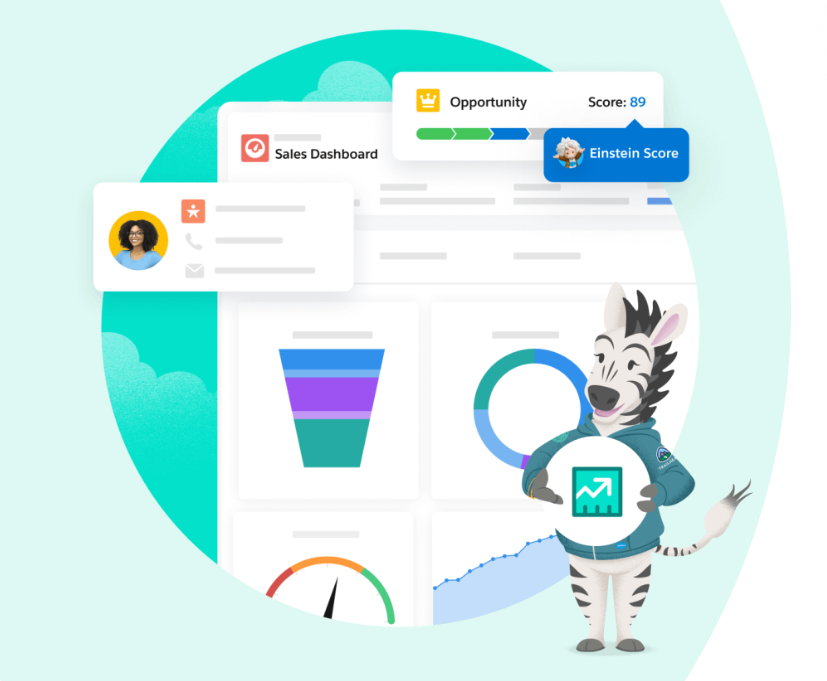
Salesforce's Sales Cloud has led the Gartner Magic Quadrant for Sales Force Automation for 19 consecutive years. Its pipeline management, forecasting, quoting, and workflow automation run as deep as anything on the market. Add Service Cloud, Marketing Cloud, Commerce Cloud, and Agentforce AI agents, and you have a platform that can run the full customer lifecycle from first touch to renewal.
Source: Salesforce
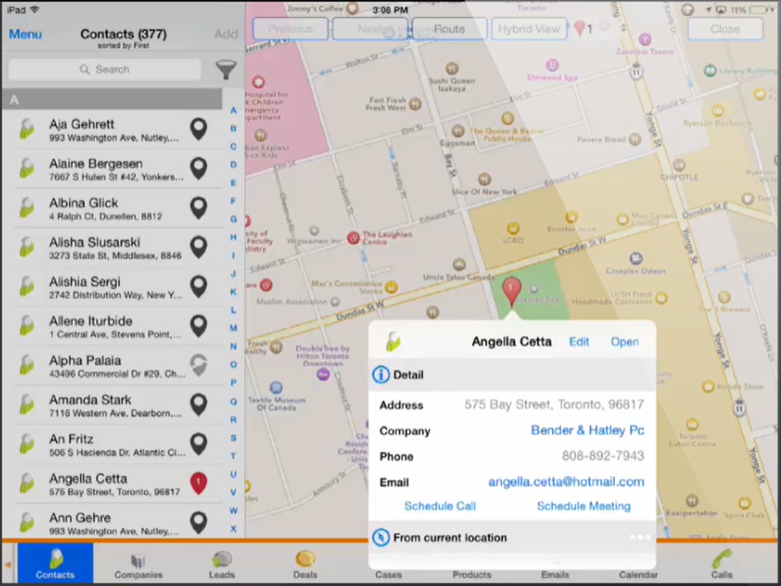
SalesNOW takes the opposite approach. One price, one tier, everything included. Field reps get GPS mapping to find nearby accounts, offline access that works without connectivity, automatic call logging against deal records, and a product database for building quotes on-site. For manufacturing and distribution teams whose reps spend their days driving between customer sites, mobile usability is the whole point.
Source: SalesNOW
But both platforms share this: they only know what gets entered into them. Neither Salesforce nor SalesNOW tells you which companies outside your database are researching solutions like yours right now. Neither verifies that the email address you entered six months ago still works. Neither surfaces the three new VPs your target account just hired. Both platforms manage relationships. Neither one creates them.
Salesforce is the deepest platform, with the steepest price
Salesforce's pricing reflects its ambition to be everything for everyone. The Starter Suite at $25/user/month handles basic lead and account management. But most teams need the Enterprise edition at $175/user/month for AI insights, pipeline intelligence, and workflow automation. The Unlimited edition at $350/user/month adds conversation intelligence and Premier support. And the Agentforce 1 tier at $550/user/month bundles unmetered AI agents, Tableau analytics, and Slack Enterprise.
Those per-user prices are just the starting point. Agentforce AI actions cost additional Flex Credits ($0.10 per action or $2 per conversation). Data Cloud credits are purchased separately. Premier Support adds 30% on top of your license fees. And because over 70% of implementations are led by partners, consulting costs for setup can match or exceed your first year's license fees.
SalesNOW's pricing is the opposite: $29.95/user/month for everything. No tiers, no add-ons, no contracts, no setup fees. Every feature is included: lead management, pipeline tracking, quoting, customer service cases, marketing campaigns, mobile apps, Gmail and Outlook integration, and unlimited support. For a team of 10 reps, that's $300/month. The same team on Salesforce Enterprise would pay $1,750/month before add-ons.
For a 20-person field sales team at a mid-sized distributor, the annual math is stark: roughly $7,200 for SalesNOW versus $42,000 or more for Salesforce Enterprise (before implementation, support, and add-on costs).
SalesNOW wins in the field, Salesforce wins at the desk
SalesNOW was designed from day one for reps who work away from a desk. The difference shows in the details.
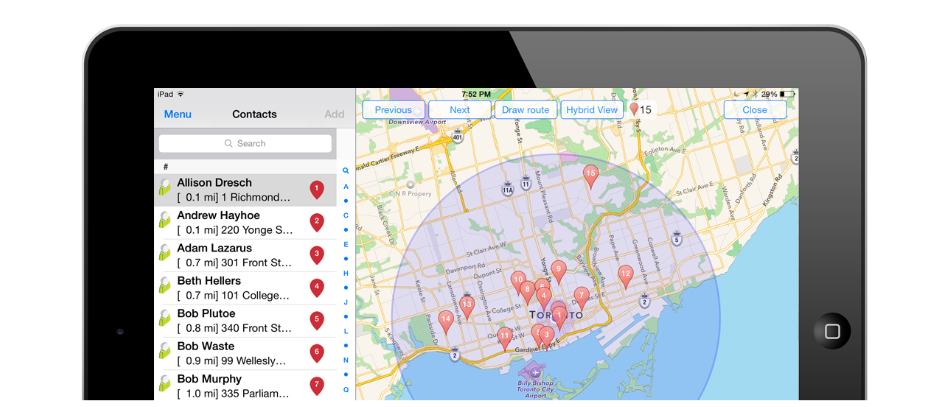
When a meeting cancels, SalesNOW's Search Nearby feature uses the phone's GPS to find customers and prospects sorted by proximity. Reps can call, email, or open the full record from the map pin. Select a day's meetings and the app creates a driving route automatically. When a rep finishes a call, the phone log records automatically against the deal without manual entry. And when connectivity drops in a warehouse or rural area, the app keeps working offline and syncs when service returns.
Source: SalesNOW
Salesforce has a mobile app, but it's a companion to the desktop experience, not a replacement. The platform's real power lives in the browser: automation flows, multi-object reports, customizable Lightning pages, and admin configuration that requires training to operate. The Salesforce mobile app provides real-time CRM access, but the depth of configuration and reporting on desktop doesn't fully translate.

Source: Salesforce
For inside sales teams, enterprise account management, and multi-department organizations, Salesforce's desktop capabilities are the right tool. For reps who log most of their activity from a truck cab or a customer's loading dock, SalesNOW's mobile-native design removes the friction that kills CRM adoption.
The data gap that both CRMs leave open
Here's where the comparison between Salesforce and SalesNOW misses the larger question: where does the data in your CRM come from?
Salesforce can manage millions of records with automation. SalesNOW can put those records in a field rep's pocket with offline access. But neither platform generates the records in the first place. Both rely on your team to research prospects by hand, find contact information, type it in, and hope it's accurate.
This is the problem ZoomInfo was built to solve.
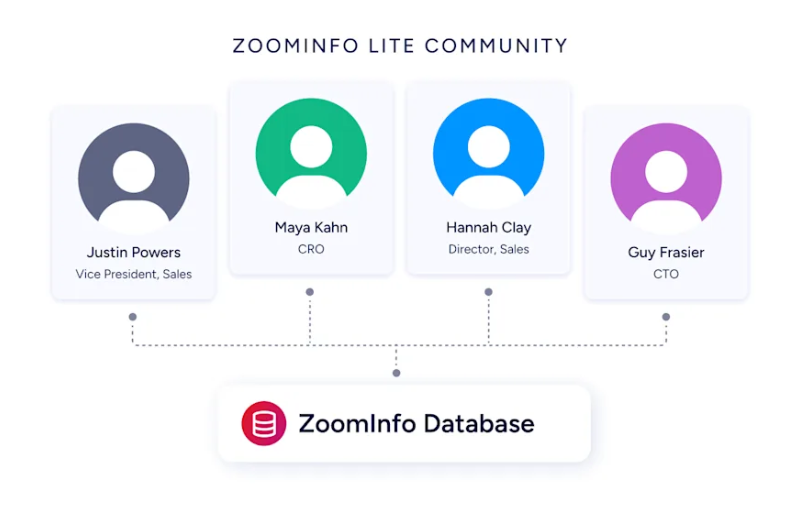
ZoomInfo maintains the largest B2B database in the industry, verified through automated ML scanning of 28 million site domains daily, a community of 200,000+ users who share data back, and an in-house Data Training Lab of 300+ human researchers. First-party data reaches up to 95% accuracy. In a Fortune 500 competitive RFP analyzing 25 million contacts across vendors, an independent consultant concluded that "no other competitor came even close."
Source: ZoomInfo
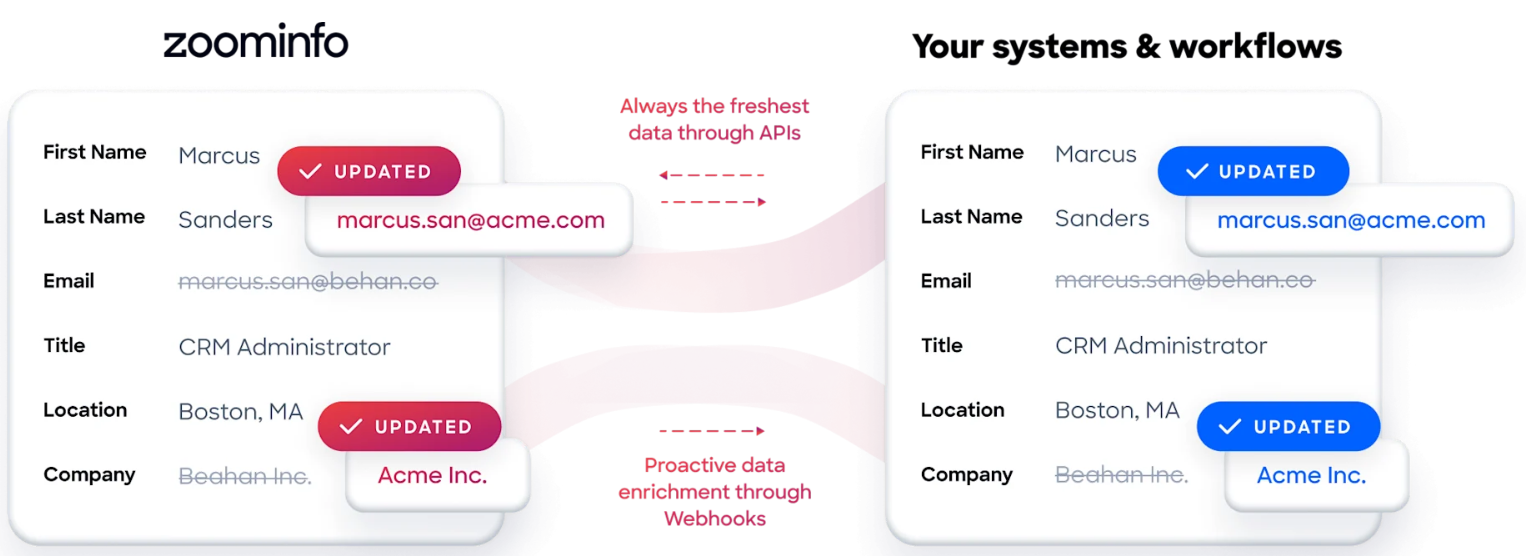
For Salesforce users, ZoomInfo's native integration enriches CRM records with verified contacts, company attributes, technographics, and org charts directly inside Salesforce. For SalesNOW users, ZoomInfo's REST API and MCP access can push the same intelligence into any system. The data works regardless of which CRM you choose.
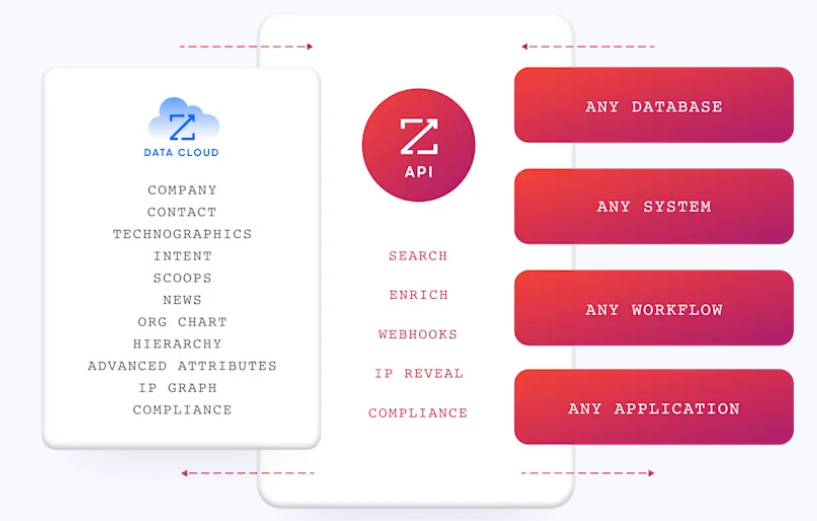
Source: ZoomInfo
"ZoomInfo gives us the information we need to execute. We don't have to go through and spend our time digging. It's already there, so we can be three steps ahead." (Vensure)
AI capabilities are not created equal
Salesforce has made AI the center of its strategy. Agentforce deploys autonomous AI agents across sales, service, and marketing that handle tasks like prospecting, lead engagement, coaching, and quoting.
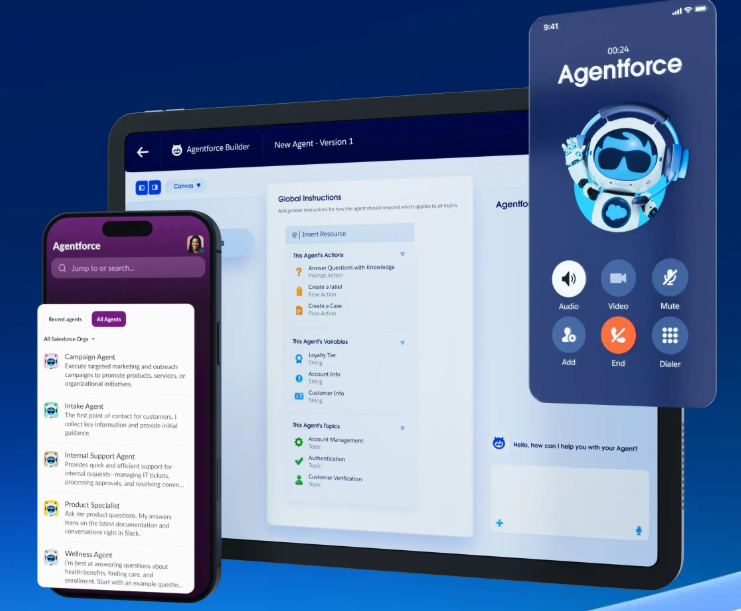
Source: Salesforce
The Atlas Reasoning Engine drives a reason-act-observe-adapt loop, and the Einstein Trust Layer provides zero data retention and PII masking for enterprise compliance. Salesforce reports that Agentforce resolves 85% of its own support requests without human escalation.
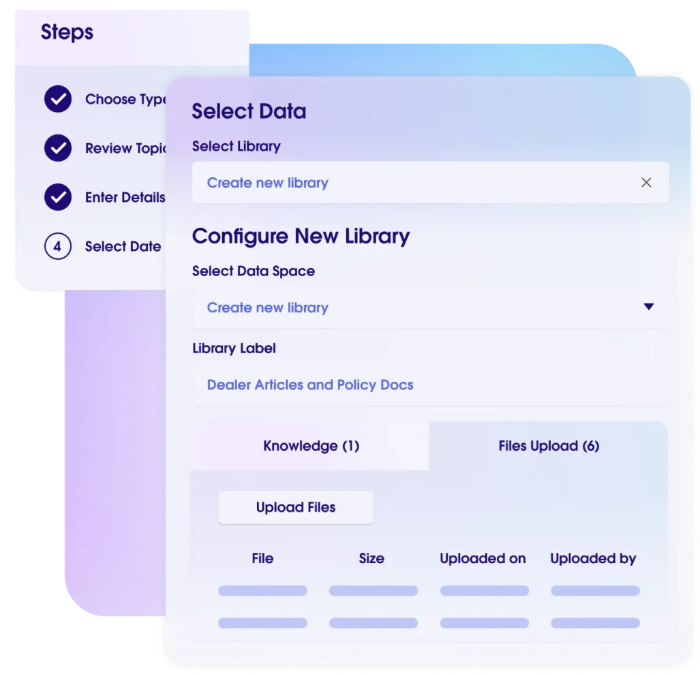
Source: Salesforce
But Agentforce reasons only over what's inside your Salesforce org. If your CRM data is incomplete or stale, the AI inherits those gaps. As CEO Marc Benioff acknowledged: "You have got to get your data right."
SalesNOW has no publicly announced AI capabilities. The platform focuses on workflow automation, custom fields, and manual process efficiency rather than AI intelligence.
ZoomInfo's AI operates on a different foundation. The GTM Context Graph processes 1.5B+ data points daily, combining ZoomInfo's third-party B2B data with your CRM records, conversation transcripts from Chorus, email interactions, and behavioral signals.
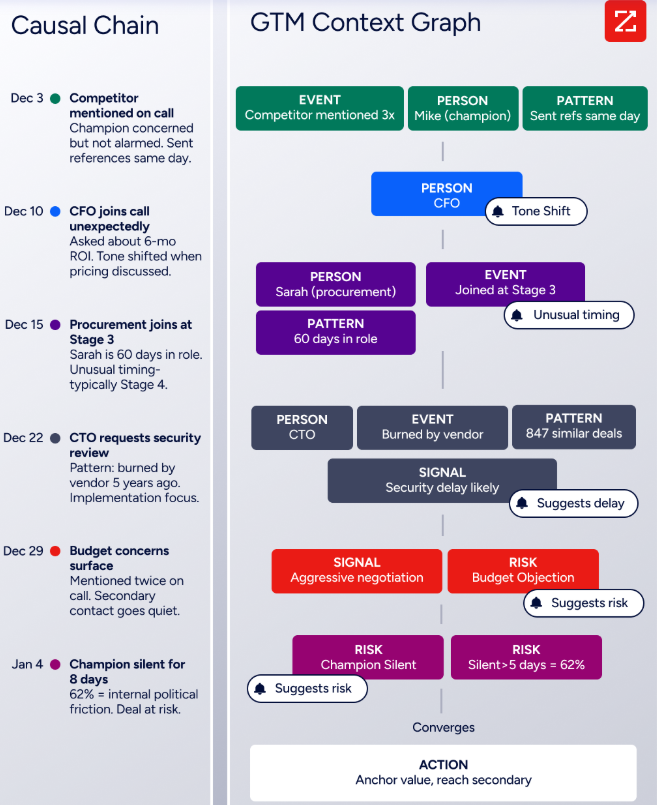
Source: ZoomInfo
The result is AI that understands not just that a deal moved stages, but why it moved: the CFO joined the last call and asked about ROI, a budget battle stalled progress for eight days, or a competitor was mentioned in a way that signals risk.
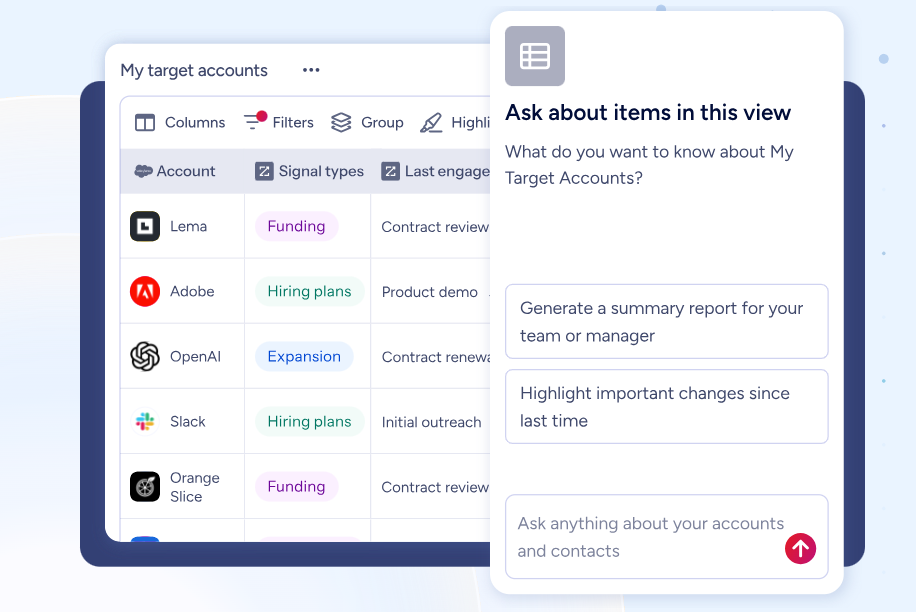
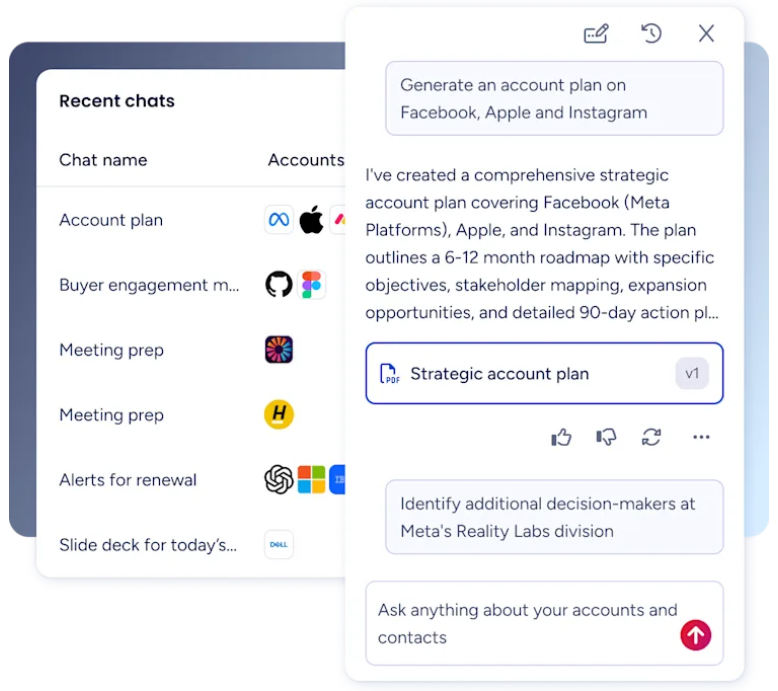
This context produces practical outcomes. GTM Workspace gives sellers AI-drafted outreach that addresses specific concerns raised in conversations, account briefs generated in seconds, and a live feed of buying signals matched to target criteria.
Source: ZoomInfo
Seismic's sales team attributed 39% of active pipeline to opportunities identified or influenced by ZoomInfo signals, and reported 54% productivity gains.

Source: ZoomInfo
"It's bringing data together faster than anyone could. It's both a time saving and a quality improvement." (Seismic)
For a deeper look at how Salesforce's AI capabilities and data approach compare to ZoomInfo's, see our Salesforce vs. ZoomInfo breakdown.
Implementation and adoption tell you who each platform was built for
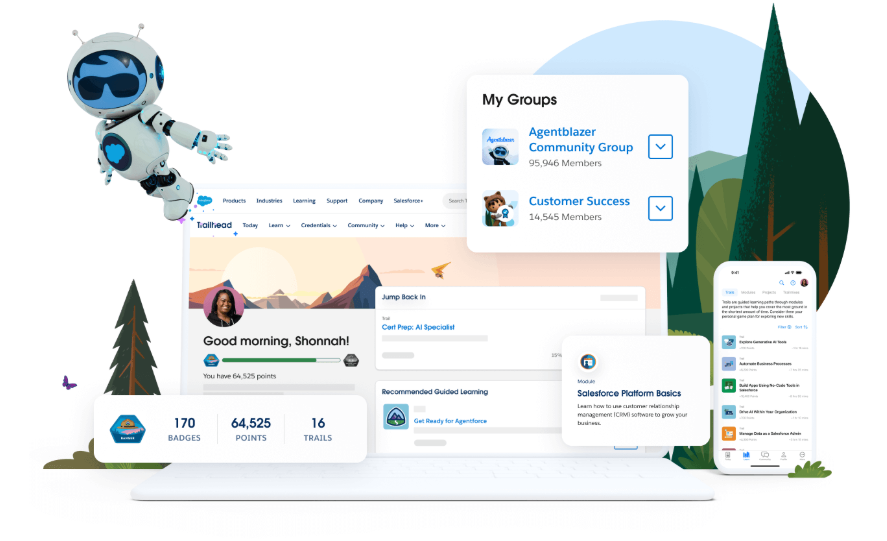
Salesforce implementations range from weeks for a basic Sales Cloud setup to 3-12 months for enterprise multi-cloud deployments. The platform requires trained administrators, and the Trailhead learning platform offers 1,500+ badges because there's that much to learn.
Source: Salesforce
For organizations with the resources to invest, the payoff is a system that can model virtually any business process. For those without dedicated admins, the platform often ends up under-configured and under-adopted.
SalesNOW promises implementation within a week, backed by its consulting team handling setup, data import, and configuration.
SalesNOW's team configures the system to match your workflow before go-live, records training sessions for new hire onboarding, and provides unlimited phone and email support at no extra cost. For non-technical sales teams at small and mid-sized companies, this hands-on approach at $29.95/month is why 90% of customers in manufacturing and distribution stay for over two years.
ZoomInfo's onboarding program runs 30 to 90 days depending on scope, structured across planning, technical implementation, education, and adoption phases. The program produced a 25% improvement in customer satisfaction scores and won Rocketlane's Golden Comet award for Best Customer Onboarding Team of 2024.
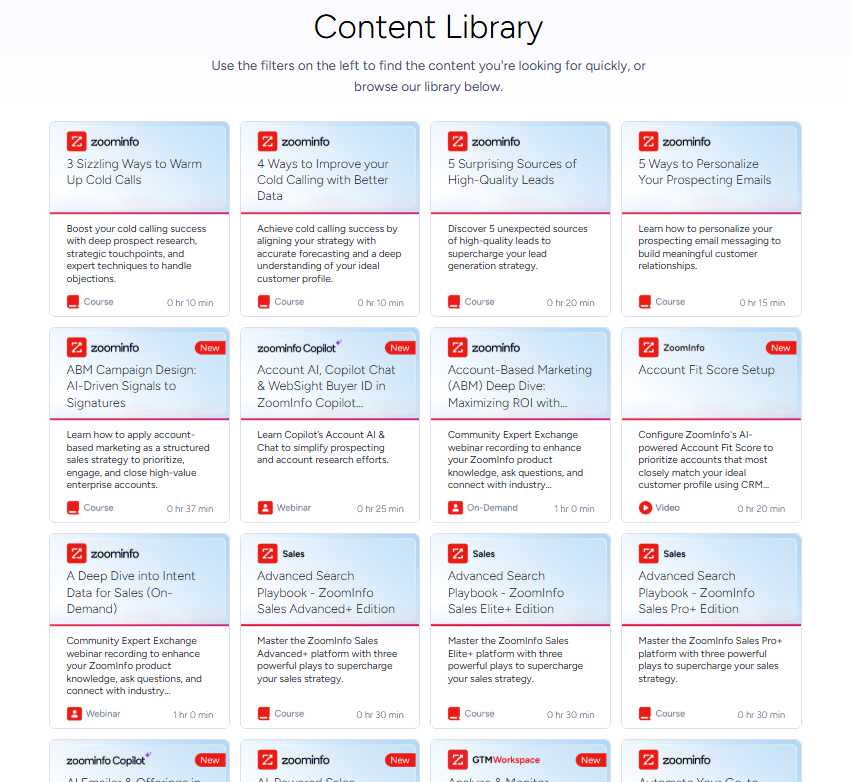
ZoomInfo University provides role-specific learning paths and certifications. For teams adding ZoomInfo alongside an existing CRM, the integration typically deploys in weeks, since it enriches an existing system rather than replaces one.
Source: ZoomInfo
Integration ecosystems reflect different strategies
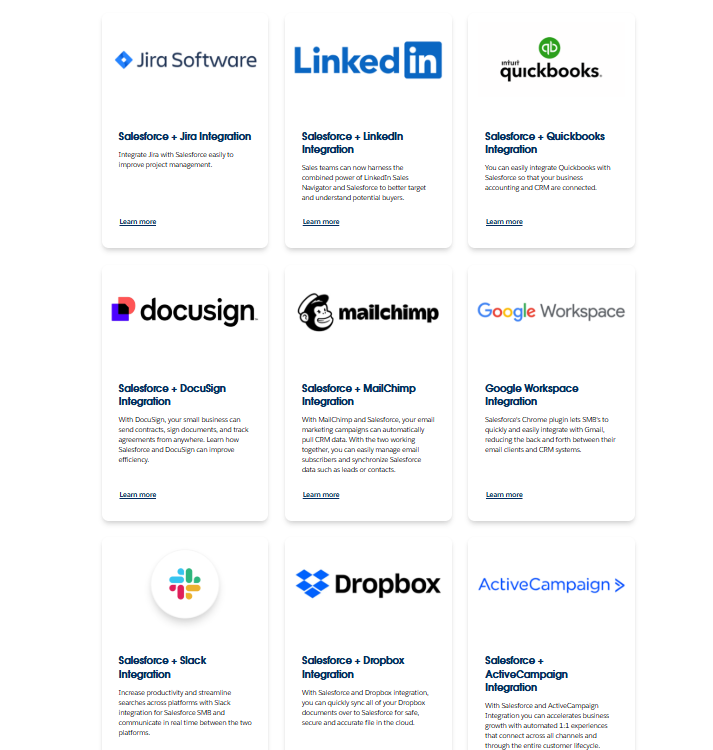
Salesforce operates the largest enterprise app marketplace in the world: 9,000+ partner apps with 14+ million installs, and 91% of customers use at least one AppExchange app. Underneath the marketplace, MuleSoft handles API management and integration. If a tool exists in enterprise software, Salesforce probably connects to it. The trade-off: configuring and maintaining these integrations requires technical expertise, and many add their own subscription costs.
Source: Salesforce
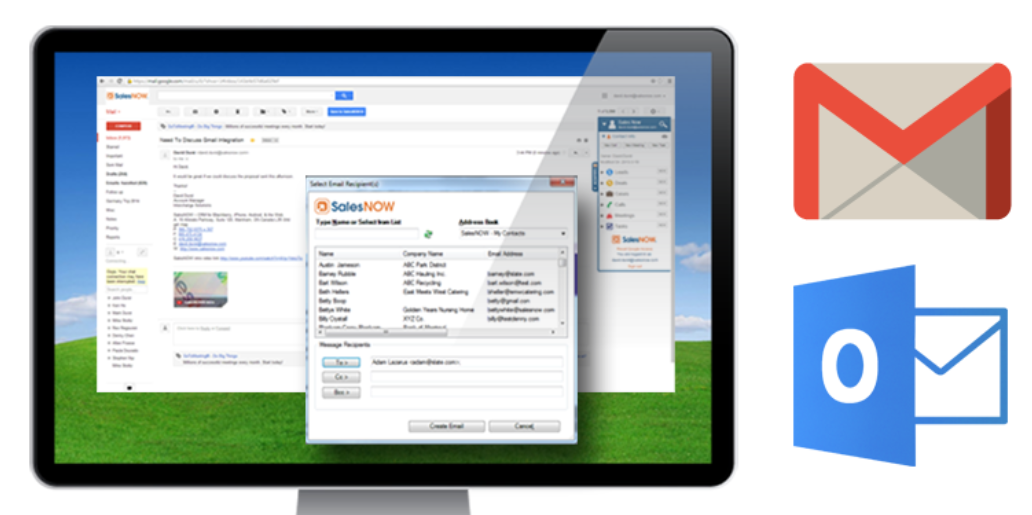
SalesNOW's integration ecosystem is deliberately narrow. Native connections to Outlook, Gmail, Constant Contact, and MailChimp cover the tools most small sales teams use daily. A REST API enables custom connections (particularly to ERP systems in manufacturing), but building those integrations requires either SalesNOW's consulting team or your own developers. There is no app marketplace and no publicly documented Zapier integration.
Source: SalesNOW
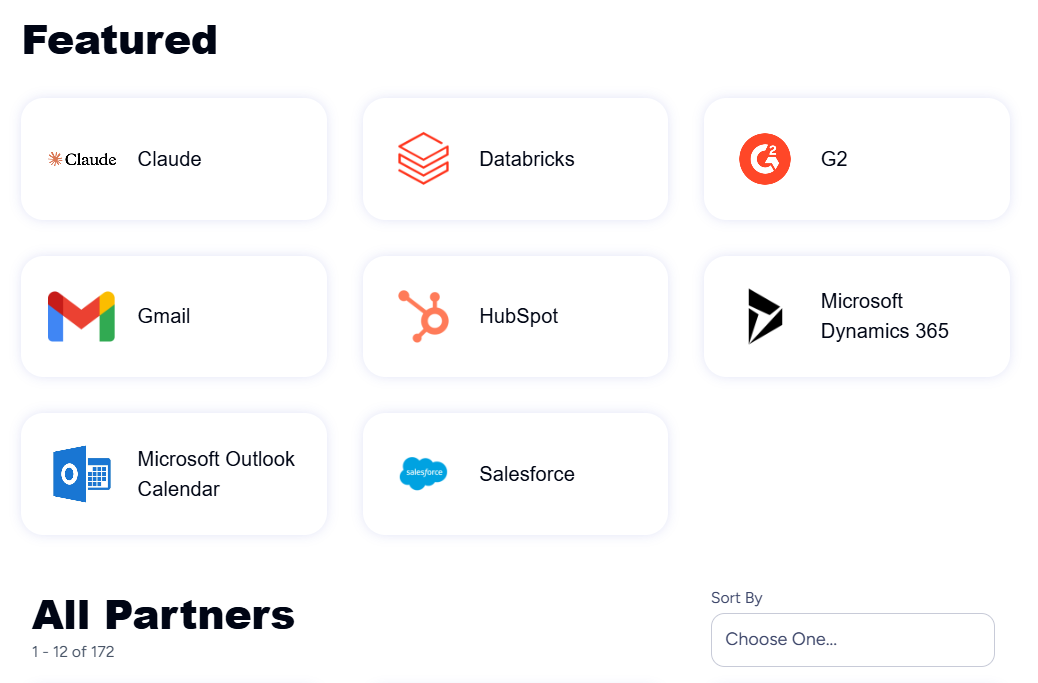
ZoomInfo's App Marketplace lists 120+ integrations across CRM, marketing automation, sales engagement, and data warehouse categories.
Source: ZoomInfo
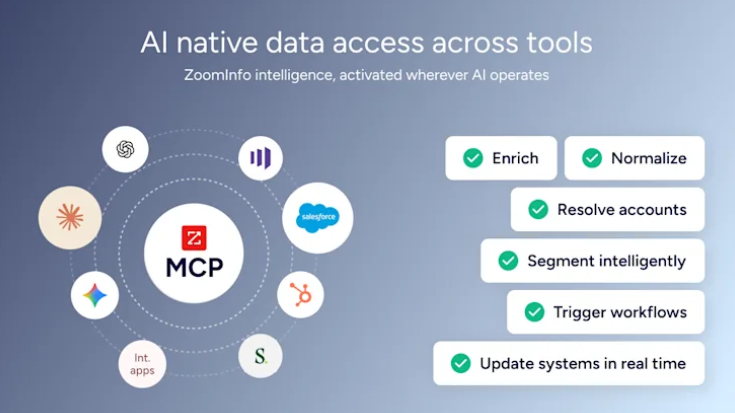
The key integrations (Salesforce, HubSpot, Microsoft Dynamics, Snowflake) are bidirectional connections that push enriched data and buying signals into existing workflows. API access is included in all plans, and the MCP server connects ZoomInfo's intelligence directly to AI agents in tools like Claude and ChatGPT.
Source: ZoomInfo
"The plug-and-play aspect of the API means I can integrate it into any process and get information at a moment's notice." (BDO Canada)
Who each platform is built for
The differences between these three platforms aren't flaws. They're design choices that serve different buyers.
Salesforce is built for organizations where CRM is the operating system of the business, not just a sales tool. When a company needs sales, service, marketing, and commerce on one data model with automation, AI agents, and thousands of apps, Salesforce can absorb that complexity. It requires investment (in budget, administration, and training), but for companies that make it, the return is a system that scales from 10 users to 10,000.
SalesNOW is built for the sales manager who needs the team to stop tracking deals in spreadsheets. When reps spend their days on the road visiting customer sites, they need a CRM that works from their phone, stays functional without internet, and doesn't require a three-month implementation. SalesNOW's two-time Frost & Sullivan Best Practices Award in mobile sales force automation confirms what its users already know: for field sales in manufacturing and distribution, mobile-first design is the product, not a feature.
ZoomInfo is built for the question that comes before CRM selection: how do we find the right prospects, understand when they're ready to buy, and reach them with the right message? Whether your CRM is Salesforce, SalesNOW, HubSpot, or Dynamics, ZoomInfo fills your pipeline with verified, in-market opportunities. GTM Workspace gives sellers a workspace for AI execution.
Source: ZoomInfo
GTM Studio gives marketers and RevOps teams a canvas for building and launching GTM plays. And APIs and MCP deliver the same intelligence into any tool your team already uses.
Source: ZoomInfo
Salesforce vs. SalesNOW vs. ZoomInfo: Which should you choose?
These three platforms serve different roles in a sales organization. Choosing between them depends on what problem you're solving first.
Choose Salesforce if:
You need a full CRM platform spanning sales, service, marketing, and commerce
Your organization can invest in dedicated Salesforce administrators
AI automation across the customer lifecycle is a priority
You want the broadest integration ecosystem available
Your budget supports $175+/user/month plus implementation and support costs
Choose SalesNOW if:
Your sales team works primarily in the field visiting customers
You need a CRM running in a week, not three months
Transparent pricing at $29.95/user/month with no contracts matters to your budget
Mobile-first design with GPS mapping and offline access is essential
You're in manufacturing or distribution and need quoting and product catalog tools in the field
Choose ZoomInfo if:
Your pipeline depends on finding and reaching new prospects, not just managing existing contacts
You need verified B2B contact data, buying intent signals, and AI-driven outreach
Your sales and marketing teams need shared intelligence on which accounts to pursue and why
You want a platform that works inside your existing CRM (Salesforce, HubSpot, Dynamics, or others)
You're building toward AI GTM execution across sales, marketing, and RevOps
Ready to see how ZoomInfo's data and intelligence can work for your sales team? Start with ZoomInfo Lite for free or request a demo of the full platform.
The strongest sales organizations don't choose one tool and hope it covers everything. They build a stack where each layer does what it does best. A CRM manages your customer relationships. ZoomInfo feeds that CRM with verified data and intelligence that turns it from a record-keeping system into a revenue engine.
Whether you run Salesforce's enterprise platform or SalesNOW's mobile-first CRM, the quality of your pipeline depends on the quality of your data. ZoomInfo provides that foundation.
Salesforce vs. SalesNOW vs. ZoomInfo FAQ
What is the core difference between Salesforce, SalesNOW, and ZoomInfo?
Salesforce is an enterprise CRM platform covering sales, service, marketing, and commerce in one system with AI automation. SalesNOW is a mobile-first CRM designed for field sales teams, particularly in manufacturing and distribution, with one flat price and no contracts. ZoomInfo is a B2B data and GTM intelligence platform that provides verified prospect data, buying intent signals, and AI execution tools that work alongside any CRM.
Which platform is cheapest for a small sales team?
SalesNOW is the most affordable CRM at $29.95 per user per month with all features included and no contracts. Salesforce's Starter Suite begins at $25 per user per month but limits features significantly; most teams need the Enterprise edition at $175 per user per month. ZoomInfo offers a permanent free tier (ZoomInfo Lite) with 10 monthly export credits and access to its B2B database, while paid plans are custom-quoted based on usage.
Can ZoomInfo replace Salesforce or SalesNOW?
ZoomInfo is not designed to replace a CRM. It complements one. While ZoomInfo's GTM Workspace provides an execution workspace for sellers, the platform's core strength is delivering verified B2B data, buying signals, and AI intelligence into whatever CRM your team uses. ZoomInfo integrates natively with Salesforce and connects to other CRMs via APIs.
Which platform is best for field sales teams?
SalesNOW was built for field sales. Its native mobile apps include GPS mapping for finding nearby accounts, route optimization for a day's meetings, offline access that works without connectivity, and automatic call logging against deal records. Salesforce has a mobile app but centers on the desktop experience. ZoomInfo's value for field teams is in the data layer: verified contact information and account intelligence that field reps can access before and during customer visits.
Does SalesNOW have AI features like Salesforce?
SalesNOW has not announced AI features as of mid-2026. The platform focuses on workflow automation, custom fields, and mobile usability. Salesforce's Agentforce provides autonomous AI agents for sales, service, and marketing. ZoomInfo's GTM Context Graph delivers AI account intelligence, outreach drafting, and buying signal detection.
How do the platforms handle data quality and enrichment?
Salesforce and SalesNOW both rely on users to enter and maintain data manually, though Salesforce offers Data Cloud for data unification at additional cost. ZoomInfo addresses data quality at its core, maintaining 500 million contacts and 100 million companies with up to 95% accuracy on first-party data, verified through automated scanning, a user community that shares data back, and 300+ human researchers. ZoomInfo can enrich Salesforce records automatically and provides API access for custom enrichment workflows.
Which platform has the broadest integration ecosystem?
Salesforce has the largest integration ecosystem, with 9,000+ apps on the AppExchange and 14+ million installs. ZoomInfo's App Marketplace lists 120+ integrations covering major CRMs, marketing platforms, and data warehouses, plus open API and MCP access for custom connections. SalesNOW integrates natively with Outlook, Gmail, Constant Contact, and MailChimp, with a REST API available for custom integrations.
What does ZoomInfo's free tier include?
ZoomInfo Lite is a permanent free plan (not a trial) that includes access to the B2B database with 100 million+ verified profiles, 10 monthly export credits, individual and company search with advanced filters, the ReachOut Chrome Extension, WebSights Lite for up to 10 website visitor reveals per day, built-in email sending, and HubSpot integration. It does not include mobile phone numbers, full intent signals, advanced automation, or Salesforce integration.
More Salesforce comparisons:
