
If you're comparing Salesforce vs. Infusionsoft (now called Keap since a 2019 rebrand), you're looking at two platforms that share a category label but almost nothing else. One is built for 10-person coaching firms. The other runs the sales operations of Fortune 500 companies.
The real questions you should be asking are:
Are you managing a handful of client relationships or thousands of enterprise accounts?
Do you need a single tool that handles email, invoicing, and appointments, or a platform that integrates with dozens of specialized systems?
Is your sales cycle a few touchpoints or a months-long, multi-stakeholder process?
How much are you willing to spend per month, and what does "worth it" look like for your business?
Do you have the data you need to fill your pipeline, or are you relying on your CRM to solve that problem too?
In short, here's what we recommend:
Salesforce is the CRM for organizations that have outgrown simple tools. As the #1 CRM by IDC market share worldwide, it serves over 150,000 companies with a platform spanning sales, service, marketing, commerce, and AI-powered agents.
Its Sales Cloud tracks leads, opportunities, and forecasts with a depth that smaller CRMs cannot match, while Agentforce deploys autonomous AI agents to handle repetitive work. However, Salesforce's power comes with enterprise pricing, implementation complexity that typically requires partner involvement, and a learning curve that demands dedicated administrators.
Keap is an all-in-one CRM and automation platform designed for small businesses. It bundles CRM, email marketing, text messaging, sales pipeline, appointment scheduling, invoicing, and payment processing into a single subscription, targeting owners and operators who personally handle both sales and marketing.
Keap has been trusted by over 200,000 small businesses for 20+ years and its automation capabilities remain strong for service businesses. The trade-off: a $299/month starting price that's steep for its target market, limited integrations, and an interface that carries the weight of its Infusionsoft heritage.
Both platforms manage customer relationships. Neither generates the intelligence that fills your pipeline with the right prospects at the right time. That's a fundamentally different problem, and it's where ZoomInfo enters the picture.
ZoomInfo is an all-in-one AI GTM platform built on the most comprehensive B2B data in the industry: 500M contacts, 100M companies, 135M+ verified phone numbers, and 200M+ verified business email addresses. Where Salesforce and Keap store and organize the relationships you already have, ZoomInfo identifies the prospects you should be pursuing and tells you when they're ready to buy.
Its GTM Context Graph, an intelligence layer that fuses this data with your CRM records, conversation transcripts, and behavioral signals, reveals not just what's happening in your pipeline, but why. ZoomInfo integrates directly with Salesforce and delivers its intelligence through the GTM Workspace for sellers, GTM Studio for marketers and RevOps, or APIs and MCP in any other tool.
If you're evaluating CRMs and wondering where your next pipeline will come from, see how ZoomInfo's data intelligence changes the equation.
Salesforce vs. Keap vs. ZoomInfo at a glance
Salesforce | Keap (Infusionsoft) | ZoomInfo | |
|---|---|---|---|
Primary function | Enterprise CRM and AI platform | Small business CRM and automation | B2B data intelligence and GTM platform |
Target market | Mid-market to enterprise | 1–25 employee service businesses | Enterprise and upper mid-market B2B |
Starting price | $25/user/month (Starter) | $299/month (all features included) | Custom-quoted; free Lite tier available |
Contact database | Stores your data | Stores your data | 500M contacts with verified emails and direct dials |
Sales automation | AI agents, pipeline management, forecasting | Email/SMS sequences, pipeline, appointments | Signal-triggered workflows, AI-drafted outreach |
Marketing tools | Separate Marketing Cloud (from $1,500/org/month) | Built-in email, SMS, landing pages | ABM, intent data, display advertising, audience targeting |
Integrations | 9,000+ AppExchange apps | ~87 marketplace apps + Zapier | 120+ native integrations, APIs, MCP |
Learning curve | Steep; requires trained administrators | Moderate to steep | Moderate; 90-day structured onboarding |
Best for | Growing and enterprise sales teams | Solo owners and small service teams | B2B revenue teams that need pipeline intelligence |
Salesforce and Keap serve fundamentally different markets
Salesforce was built for companies where sales is a team sport.
Multiple reps, territories, approval workflows, forecasting models, and cross-departmental handoffs. It's the system of record for organizations where 72% of sales reps' time goes to non-selling activities and the CRM needs to automate as much of that overhead as possible.
Keap was built for the owner who is the sales team.
The coach who runs group programs, the consultant managing a dozen clients, the photographer booking sessions. These businesses need follow-up automation, appointment scheduling, and invoicing in one place, not territory planning or opportunity scoring across a 50-person sales floor.
The mismatch creates the most common mistake in this comparison: choosing Salesforce when Keap would suffice, or sticking with Keap when the business has outgrown it.
A 5-person consulting firm doesn't need Sales Cloud Enterprise at $175/user/month. They need automated follow-up sequences, a booking page, and invoicing. Keap handles all of that in one subscription.
A 100-person B2B company doesn't need Keap's all-in-one simplicity. They need pipeline visibility across regions, forecasting that rolls up to leadership, and an ecosystem of specialized tools. Salesforce handles that, and has been the Gartner Magic Quadrant Leader for Sales Force Automation for 19 consecutive years.
Keap's automation shines for one-person operations
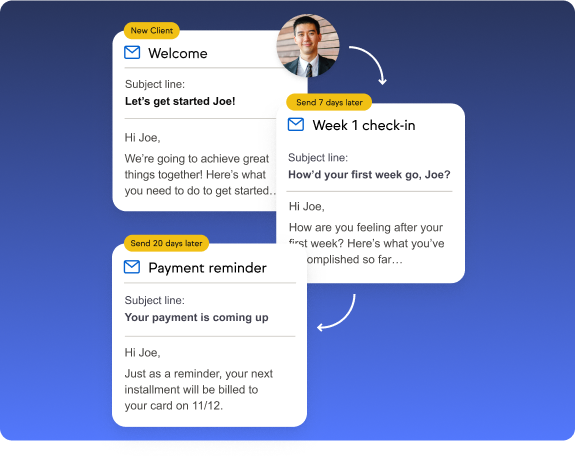
Keap's strongest feature is its Lifecycle Automation framework, which maps every customer touchpoint from lead capture through repeat revenue.
The automation builder operates on a simple "when, then, stop" logic: a prospect fills out a form (when), receives a personalized email sequence (then), and the sequence stops when they book an appointment or make a purchase (stop).
Source: Keap
This approach works because the businesses using Keap typically run one or two sales processes. A life coach has a discovery call funnel. A home services company has an estimate-to-close pipeline. Keap's pre-built automation templates cover these patterns well, and the platform reports its users average a 20% email open rate versus the industry standard of 17.9%.
Where Keap adds particular value is combining channels that other small business tools separate. Automated text messages triggered by contact actions sit inside the same automation builder as email sequences. One automation can send an email, wait for a response, and follow up by text if no action is taken, without connecting separate tools.
But Keap's automation has limits. G2 reviewers note automations are "sometimes buggy and don't trigger when they are supposed to for no apparent reason." Reporting is basic, with Capterra reviewers describing it as lacking customization depth. And the mobile app only provides access to contacts and tasks, with campaign management and email functions unavailable on mobile.
Salesforce's depth comes with real complexity
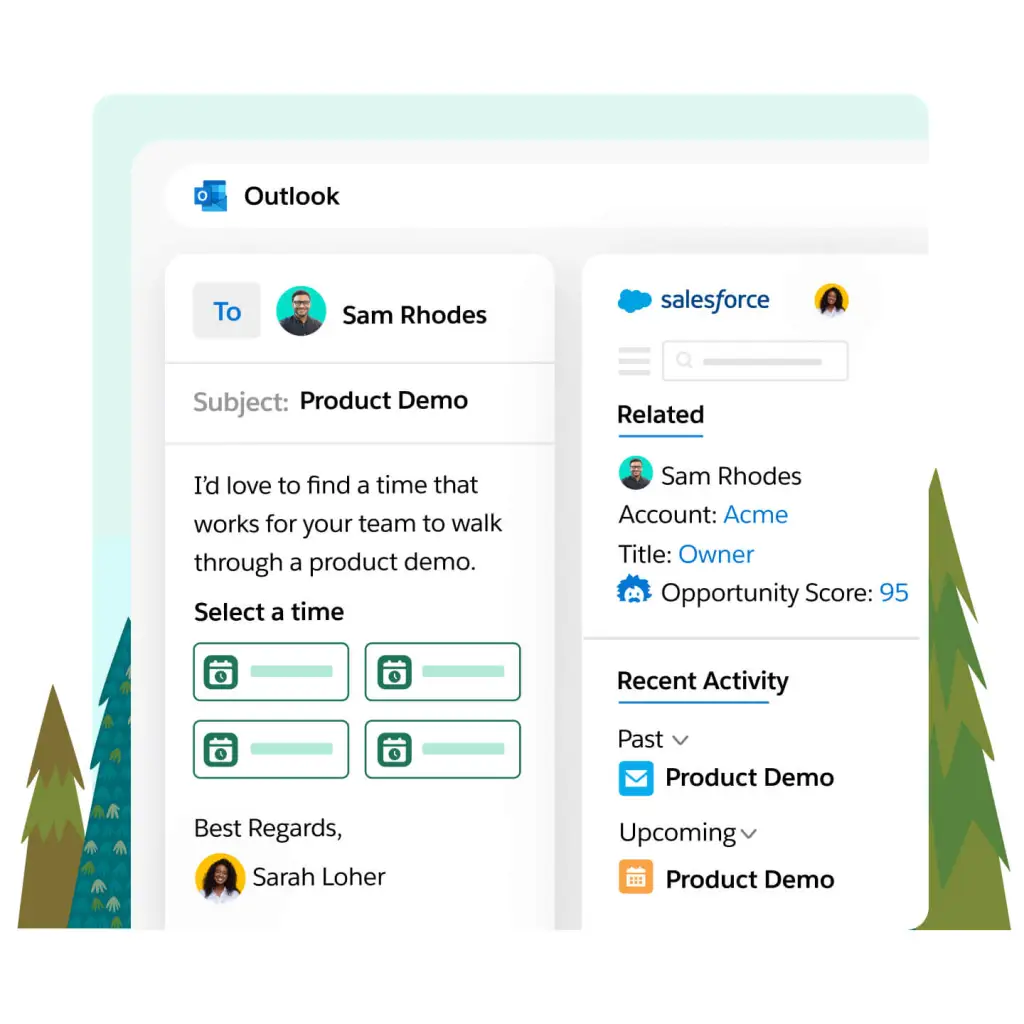
Salesforce's Sales Cloud offers capabilities Keap doesn't attempt.
Lead scoring powered by Einstein AI, pipeline management with deal insights and change signals, multi-step approval workflows, territory planning, CPQ (configure, price, quote), and revenue lifecycle management from first conversation through billing.
Source: Salesforce
The platform's AI layer, Agentforce, has reached $800M in annual recurring revenue by deploying autonomous agents that handle prospecting research, inbound lead engagement, sales coaching, and automated quoting (75% faster with Agentforce).
These aren't simple automation triggers. They're AI agents that reason about account data, plan actions, and execute without constant human prompting. Salesforce resolves 85% of its support requests without human escalation using these agents.
The ecosystem is equally deep. The AppExchange marketplace includes 9,000+ partner apps with 14 million+ installs, and 91% of customers use at least one AppExchange app. Virtually any business process or tool can connect to Salesforce natively.
But Salesforce's depth is also its biggest barrier. The platform requires dedicated administrators trained for meaningful configuration beyond the basics. Over 70% of implementations are led by partners, adding cost and complexity.
Implementation timelines range from weeks for basic Sales Cloud to 3–12 months for enterprise multi-cloud deployments. Salesforce itself acknowledged its pricing model "needed to be easier to understand, more predictable, and more flexible" in a September 2025 update.
A CRM without good data is an expensive address book
Here's what the Salesforce vs. Infusionsoft comparison usually misses: both platforms are record-keeping systems at their core. They organize and automate the relationships you already have. Neither answers the questions that come before CRM matters: Which companies should you target? Who are the decision-makers? When are they actively evaluating solutions?
Salesforce stores the contacts your team has already found. Keap nurtures the leads who already filled out a form. But where do those contacts and leads come from?
For small service businesses using Keap, referrals and local marketing may generate enough leads.
But for B2B organizations selling to other companies, the pipeline problem is a data problem. And it's the problem ZoomInfo was built to solve.
For a head-to-head look at how Salesforce and ZoomInfo compare, see our Salesforce vs. ZoomInfo breakdown.
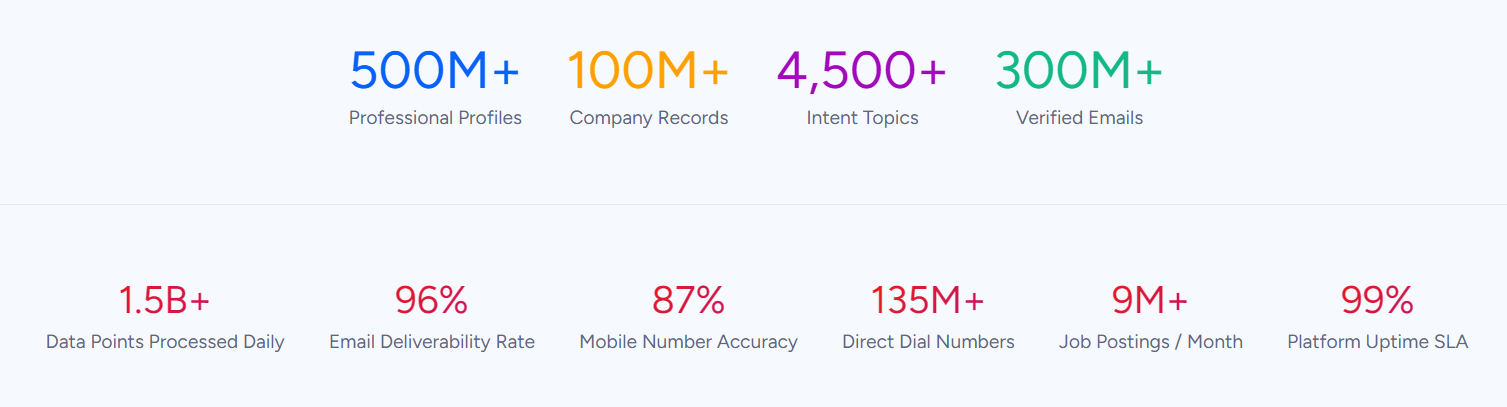
ZoomInfo operates the most comprehensive B2B data platform in the industry.
500M contacts, 100M companies, 135M+ verified phone numbers, 120M direct-dial phone numbers, and 200M+ verified business email addresses, verified through a multi-source pipeline backed by 300+ human researchers with up to 95% accuracy on first-party data.
In a Fortune 500 competitive RFP analyzing 25 million contacts across vendors, the independent consultant concluded that "no other competitor came even close."
This isn't a feature you bolt onto a CRM as an afterthought. It's the foundation that determines whether your CRM contains the right accounts, the right contacts, and the right information to close deals.
ZoomInfo gives us the information we need to execute. We don't have to go through and spend our time digging. It's already there, so we can be three steps ahead. (Vensure)
ZoomInfo turns CRM data into deal intelligence
Raw contact data is a starting point. Understanding why deals move or stall is what separates productive sales teams from busy ones.
ZoomInfo's GTM Context Graph — an intelligence layer that processes 1.5B+ data points daily — fuses ZoomInfo's B2B intelligence with a customer's CRM records, conversation transcripts, and behavioral signals.
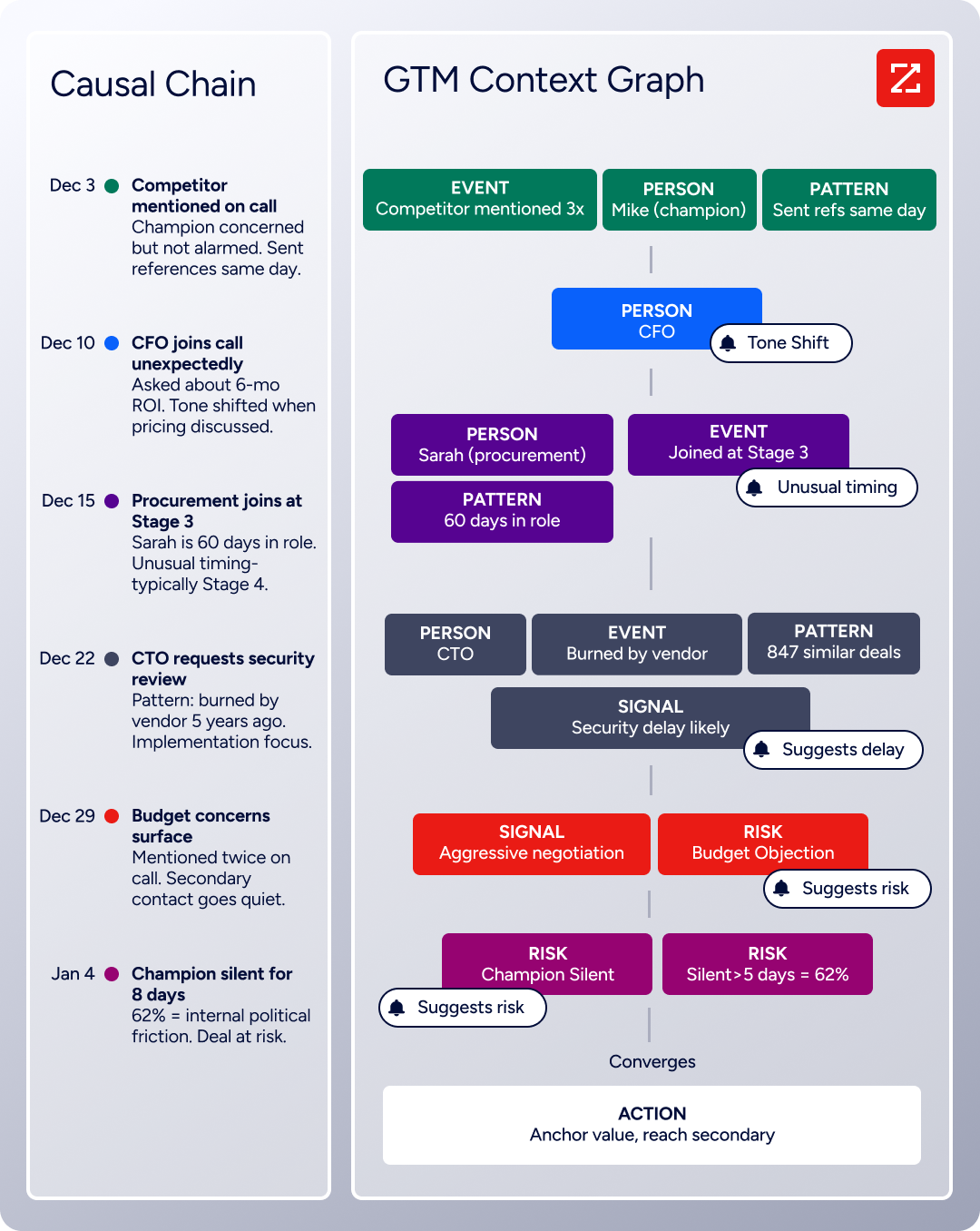
As ZoomInfo's Chief Product Officer Dominik Facher writes: "The CRM recorded the state change. It has no record of why it happened." A deal might accelerate because the CFO joined the last call and asked about six-month ROI. It might stall because the VP went quiet during an internal budget battle. CRMs capture the stage change. The GTM Context Graph captures the context behind it.
This intelligence flows into three access points. GTM Workspace gives sellers a single surface where prioritized accounts, AI-drafted outreach, and deal execution converge. GTM Studio gives marketers and RevOps an AI-powered canvas to design, enrich, and launch GTM plays without engineering support. And APIs and MCP expose the same intelligence to any custom agent, internal tool, or third-party platform.
For Salesforce users specifically, the integration is direct. ZoomInfo enriches Salesforce records with verified contact data, org charts, technographics, and intent signals. Sellers see ZoomInfo's intelligence inside their CRM without switching tools.
That combination of our internal CRM data, external signals, and AI that's given all that context has helped us craft very specific account- and persona-based messages. And people have responded to them right away. (Seismic)
Pricing reflects three different business models
Keap uses a single-plan, contact-based model.
All features are included starting at $299/month (billed annually), with 2 user seats. Additional users cost $39/month each. SMS and voice add-ons range from $24 to $279 per month depending on volume. Cancelling an annual contract early incurs a $299 early termination fee, and cancellation must be completed verbally with a representative. Implementation services cost $500 (discounted from $1,500).
Salesforce pricing is tiered and additive.
Sales Cloud ranges from Free (2 users) through Starter ($25/user/month), Pro ($100), Enterprise ($175), and Unlimited ($350). But the CRM is just the beginning. Marketing Cloud starts at $1,500/org/month. Agentforce AI agents cost $2 per conversation or $500 per 100,000 Flex Credits. Premier Support adds 30% of net license fees.
A realistic mid-market Salesforce deployment with multiple clouds can reach tens of thousands per month before factoring in partner-led implementation costs.
ZoomInfo uses consumption-based pricing with no published dollar amounts.
Pricing scales around seats, data credits, API consumption, and AI activity. The company offers ZoomInfo Lite as a permanent free tier with access to the B2B database, 10 monthly export credits, and limited website visitor identification. A 7-day free trial provides broader access.
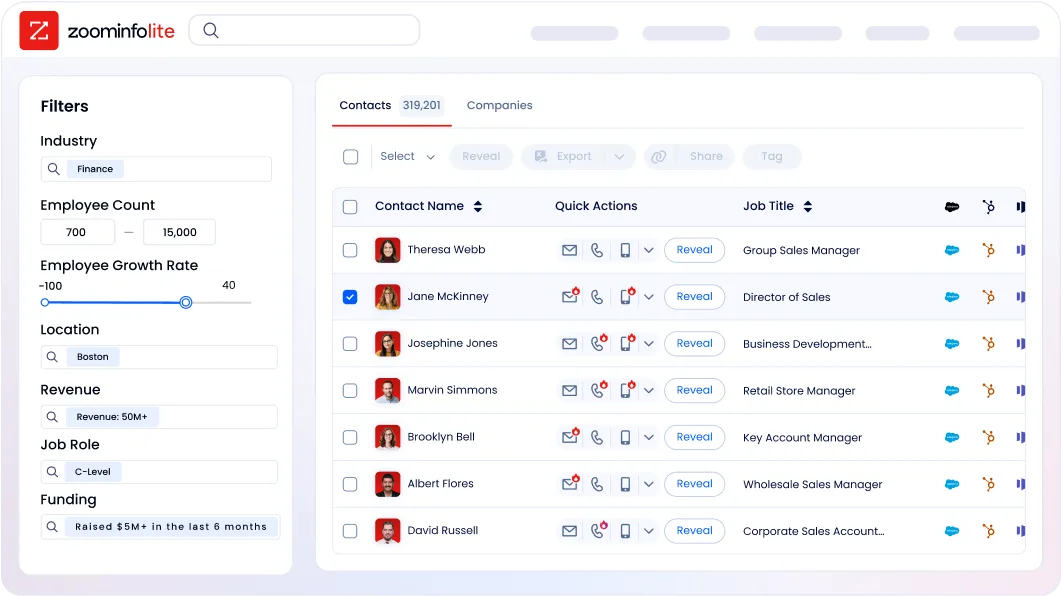
The pricing comparison only makes sense relative to what each tool does. Keap replaces 4–7 separate small business tools. Salesforce is the system of record for enterprise revenue operations. ZoomInfo provides the intelligence layer that makes your revenue operations effective, regardless of which CRM you use.
Integration ecosystems show where each platform lives
Keap's integration ecosystem is its most significant limitation for growing businesses.
With approximately 87 apps in its marketplace and Zapier covering 5,000+ additional apps, most non-standard integrations require workarounds. Reviewers note that "connectivity to other programs is difficult to achieve." For small businesses running standard workflows, this is manageable. For businesses that need their CRM to connect to industry-specific tools, it becomes a constraint.
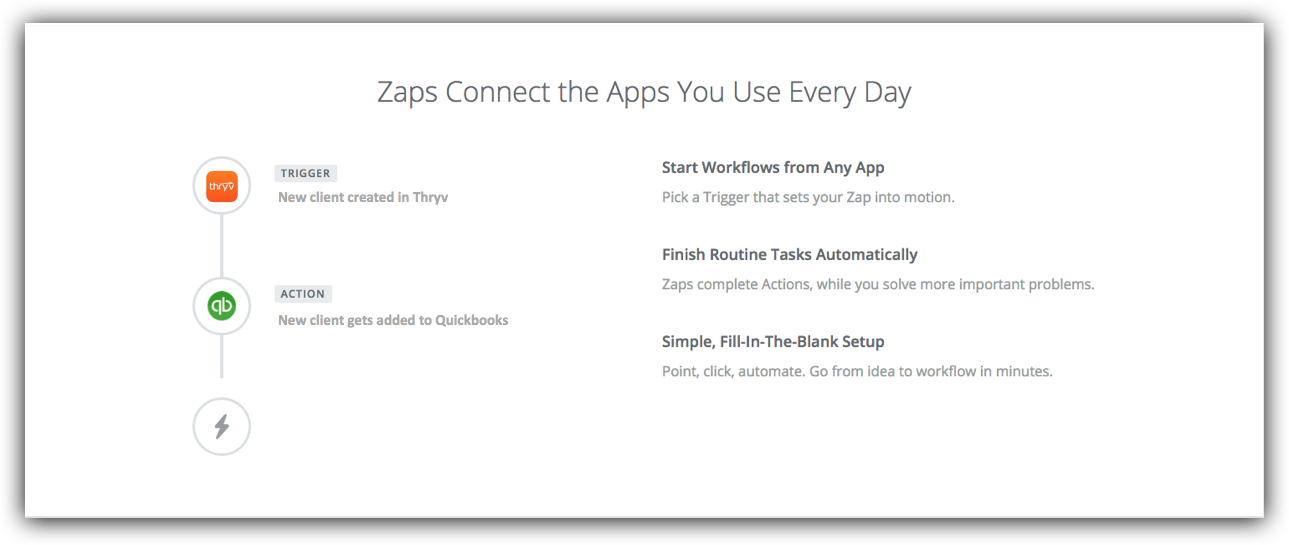
Source: Keap
Salesforce's integration story is the opposite extreme.
The AppExchange is the world's largest enterprise cloud marketplace, and MuleSoft (acquired for $6.5 billion) provides hundreds of pre-built connectors for complex enterprise integrations. The ecosystem spans 160,000+ companies, 5,000 ISVs, and 7,000 system integrators.
ZoomInfo integrates with both CRM environments but aligns naturally with Salesforce's enterprise ecosystem.
The ZoomInfo App Marketplace lists 120+ partner integrations, with Salesforce, HubSpot, and Microsoft Dynamics 365 as featured connections. For teams building custom tools, ZoomInfo's Enterprise API and MCP server expose B2B intelligence to any AI agent or application. API access is included in all relevant plans.
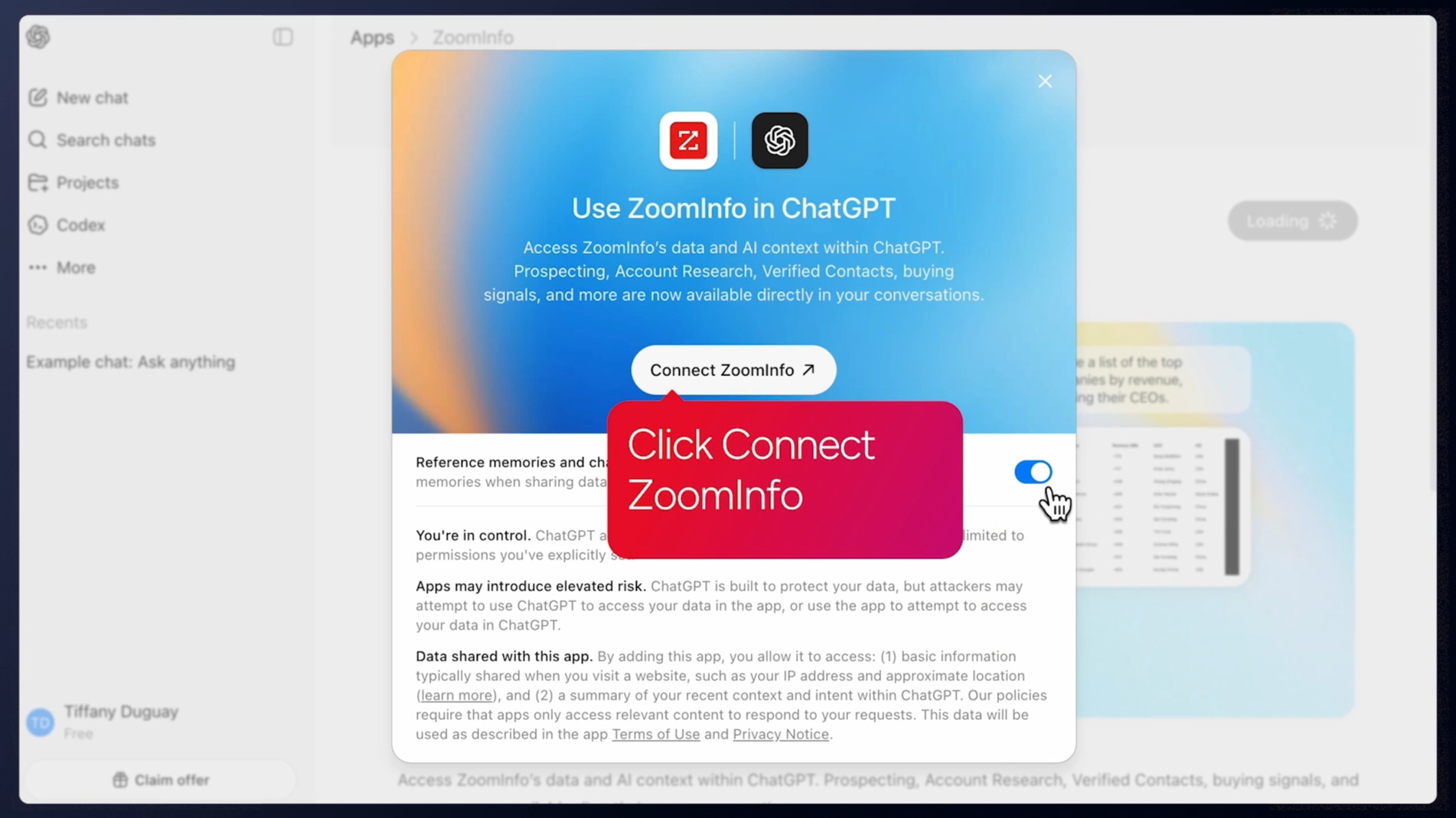
Source: ZoomInfo
ZoomInfo is our one source of truth for account data, and even more so for contact data. There's no other provider in the market that provides you with that level of detail. (Smartsheet)
Salesforce vs. Keap vs. ZoomInfo: Which should you choose?
The right choice depends on your business, your team, and where you need the most help.
Choose Keap if:
You run a small service business with 1–25 employees
You need CRM, email, text, scheduling, and invoicing in one place
Your sales process is straightforward with one or two pipelines
You prefer managing everything yourself without dedicated IT support
Your leads come primarily from referrals, local marketing, or inbound forms
Choose Salesforce if:
You have a dedicated sales team that needs pipeline management, forecasting, and territory planning
Your business requires enterprise-grade integrations and a deep app ecosystem
You can invest in trained administrators and partner-led implementation
You need AI-powered agents that automate sales workflows at scale
Your growth trajectory demands a platform that extends from 10 users to 10,000
Add ZoomInfo if:
You sell to other businesses and need verified contact data to fill your pipeline
You want to know which accounts are actively researching solutions like yours
Your CRM data is incomplete, stale, or missing the decision-makers who matter
You're using Salesforce and want to enrich it with B2B intelligence that powers AI-driven execution
You need an intelligence layer that works across your entire GTM stack, not just inside one tool
See how ZoomInfo's data intelligence powers your pipeline with a free trial.
The Salesforce vs. Keap decision is about business size and complexity. Keap is right for small operations that need simplicity. Salesforce is right for teams that need depth. But for B2B organizations, neither question is complete without asking where your pipeline data comes from.
ZoomInfo answers that question with the most comprehensive B2B intelligence available, integrated directly into the tools your team already uses.
ZoomInfo has literally changed the way we go to market. (Impartner)
Salesforce vs. Keap (Infusionsoft) vs. ZoomInfo FAQ
Is Infusionsoft the same as Keap?
Yes. Infusionsoft rebranded to Keap in January 2019. The company, founded in 2001, launched a simplified product alongside the rebrand while maintaining its legacy Infusionsoft product as "Max Classic." In October 2024, Keap was acquired by Thryv Holdings for $80 million in cash. The Keap product continues to operate under its own brand.
Which is better for a small business: Salesforce or Keap?
For businesses with 1–25 employees running service-based operations (coaching, consulting, home services, fitness), Keap is the more practical choice. It bundles CRM, email, text, appointment scheduling, invoicing, and payment processing into a single $299/month subscription.
Salesforce's entry-level tiers are cheaper per user, but realistic deployments for growing teams quickly reach higher costs, and the platform requires dedicated administration that most small businesses lack.
Can ZoomInfo replace Salesforce or Keap?
No. ZoomInfo is not a CRM. It does not manage customer records, sales pipelines, or invoicing. It provides the B2B intelligence data (verified contacts, company information, intent signals, and buying committee insights) that makes your CRM effective. ZoomInfo integrates directly with Salesforce and works alongside CRMs to improve data quality and pipeline generation.
How much does Salesforce actually cost for a mid-sized business?
Salesforce pricing is additive. Sales Cloud Enterprise costs $175/user/month, but most teams also need features beyond the base CRM. Marketing Cloud starts at $1,500/org/month. Agentforce AI costs $2 per conversation. Premier Support adds 30% of net license fees.
Over 70% of implementations are partner-led, adding further cost. A mid-market deployment across multiple clouds can reach $50,000 or more annually depending on team size and feature requirements.
Does ZoomInfo integrate with Keap?
ZoomInfo's native integrations focus on enterprise CRMs like Salesforce, HubSpot, and Microsoft Dynamics 365. A direct native integration with Keap is limited, though ZoomInfo's API access and connections through tools like Zapier can bridge the gap for businesses that need B2B intelligence alongside Keap.
What makes ZoomInfo's data different from what's already in my CRM?
A CRM stores the data your team has manually entered or imported. ZoomInfo provides 500 million verified contacts, 100 million company profiles, 135 million verified phone numbers, and 200 million verified business email addresses, maintained through automated ML scanning of 28 million site domains daily, third-party data partnerships, and 300+ human researchers.
Beyond contacts, ZoomInfo includes buyer intent signals, technographic data, org charts, and a GTM Context Graph that reveals why deals move or stall.
Is Keap worth $299 per month?
For the right business, yes. Keap replaces the cost of separate email marketing, text messaging, appointment scheduling, invoicing, and CRM tools. For a small service business using four or five separate subscriptions, consolidation can save both money and time.
The businesses that get the most value typically run multiple automation sequences and actively use the pipeline management and payment features. Businesses with minimal lead volume or simple follow-up needs may find the price hard to justify.
Which platform is best for B2B sales teams focused on outbound prospecting?
ZoomInfo is purpose-built for this use case. Its B2B database, buyer intent signals, and AI-driven outreach tools through GTM Workspace are designed specifically for identifying and engaging target prospects.
Salesforce manages the pipeline those prospects enter.
Keap is not designed for B2B outbound at scale, as its automation and contact tools target inbound service-business workflows.
More Salesforce comparisons:
