
Choosing between Salesforce and Showpad for your sales organization comes down to five questions:
Do you need a full CRM to manage your pipeline, or a platform that helps sellers prepare for and win conversations?
Is your main challenge tracking deals and automating workflows, or getting the right content and coaching to sellers when they need it?
Are you building a sales tech stack from scratch, or filling a gap in your existing one?
Do your sellers struggle more with pipeline visibility and deal execution, or with finding the right materials and delivering strong presentations?
Is your prospect data good enough to make either platform effective?
In short, here's what we recommend:
Salesforce is the world's #1 CRM by market share. Its Sales Cloud delivers pipeline management, forecasting, AI deal insights, and workflow automation on a platform over 150,000 companies already use. With Agentforce, Salesforce deploys autonomous AI agents that research accounts, draft outreach, and coach reps through deals. But Salesforce is a CRM first. It tracks where deals are. It doesn't equip sellers with the content, training, or buyer engagement tools to move those deals forward.
Showpad fills that gap. A Leader in the 2025 Gartner Magic Quadrant for Revenue Enablement Platforms, Showpad is designed for sales enablement: centralizing content, coaching reps with AI roleplays, and creating digital sales rooms where buyers engage on their own schedule. But Showpad is not a CRM. It doesn't manage your pipeline, run forecasts, or automate sales workflows. It needs a CRM underneath it.
Here's what most comparisons miss: Salesforce tells you where your deals stand. Showpad helps sellers present a stronger case. But neither solves the foundational problem: knowing which accounts to prioritize, who the real buyers are, and what signals show they're ready to engage.
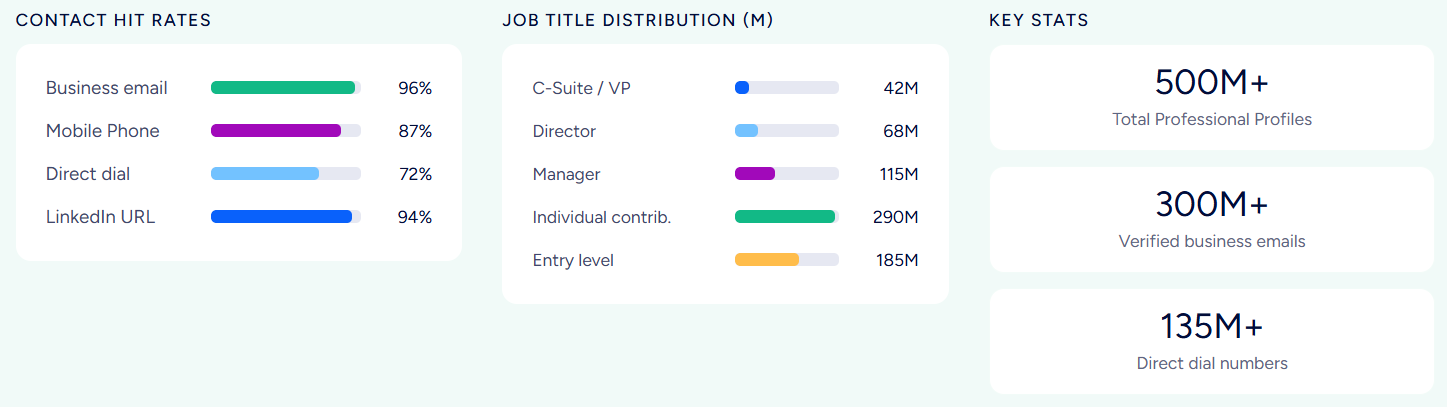
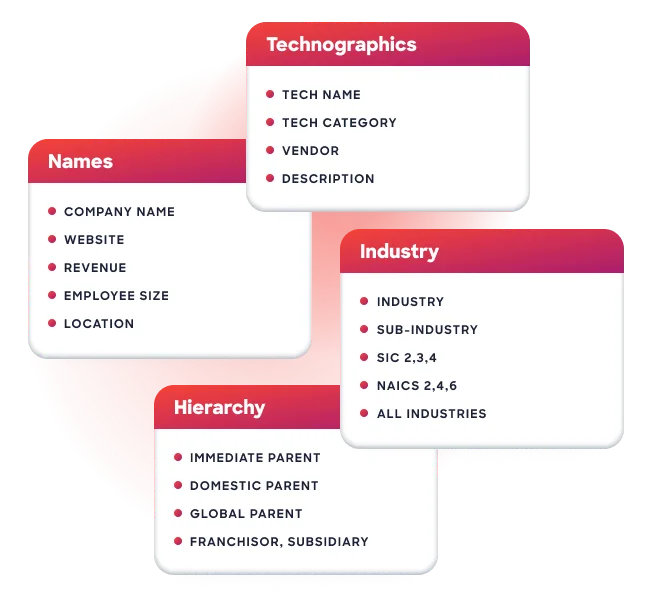
ZoomInfo is a GTM platform that provides the intelligence layer both Salesforce and Showpad depend on. With 500M contacts, 100M companies, 135M+ verified phone numbers, and 200M+ verified business email addresses, ZoomInfo runs the largest B2B data platform available. Its GTM Context Graph processes 1.5B+ data points daily, combining that data with your CRM records, conversation transcripts, and behavioral signals to show not just what happened in a deal, but why. Sellers use GTM Workspace for prioritized accounts and AI-drafted outreach. Marketers and RevOps teams use GTM Studio to build and launch plays. Engineering teams pipe the same data into any tool through APIs and MCP.
If verified data and contextual intelligence sound like your missing foundation, see how ZoomInfo works for your team.
Salesforce vs. Showpad vs. ZoomInfo at a glance
Salesforce | Showpad | ZoomInfo | |
|---|---|---|---|
Primary function | CRM and sales automation | Sales enablement and content management | B2B data intelligence and GTM execution |
Core strength | Pipeline management, forecasting, AI agents | Content delivery, coaching, buyer engagement | Verified contact data, buyer intent, GTM Context Graph |
AI capabilities | Agentforce autonomous agents across CRM | RolePlayAI, Genie Assistant, Field Meeting AI | GTM Workspace AI agents, GTM Context Graph intelligence |
Sales content | Basic document storage | Centralized library with 3D/AR, digital sales rooms | Not a content platform |
Sales coaching | Conversation intelligence via add-ons | Built-in PitchAI, roleplay, competency tracking | Chorus conversation intelligence |
Prospecting data | Stores what you enter | Not a data platform | 500M contacts, 135M+ verified phone numbers |
Buyer intent | Limited native signals | Content engagement analytics | Intent data from 210M IP-to-org pairings |
Integrations | 9,000+ AppExchange apps | 65+ pre-built integrations | 120+ integrations, API/MCP access |
Starting price | $25/user/month (Starter Suite) | Custom (demo required) | Custom (free Lite tier available) |
Best for | Managing the full sales cycle and CRM | Equipping sellers with content and training | Identifying, prioritizing, and reaching the right buyers |
These platforms solve three different problems
The "Salesforce vs. Showpad" comparison misleads because it implies the two are interchangeable. They aren't. They address different stages of the same revenue challenge.
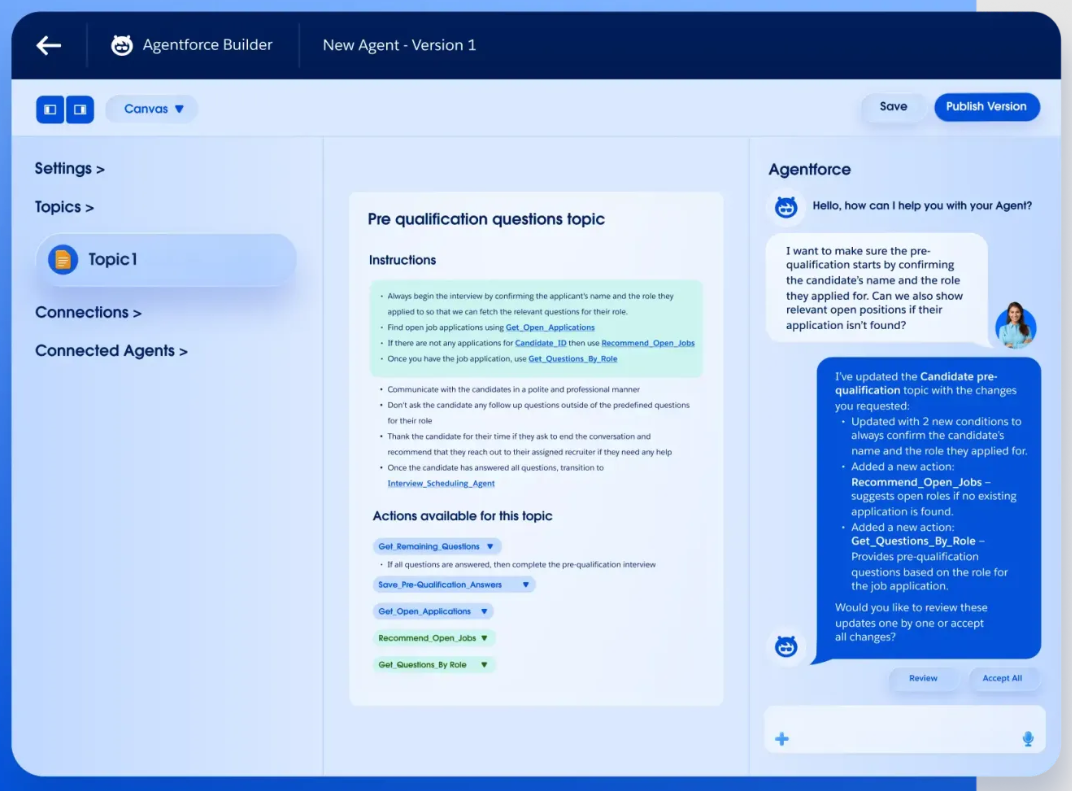
Salesforce answers: Where do our deals stand, and how do we move them through the pipeline? It's your system of record for accounts, contacts, opportunities, and activities. Every deal lives here. Every forecast rolls up from here. When a sales leader asks "how's Q3 looking," Salesforce is where they look. Agentforce extends this with AI agents that research accounts, draft follow-ups, and update CRM fields automatically.
Source: Salesforce
Showpad answers: Are our sellers prepared to have the right conversations with the right materials? It's where marketing uploads battle cards, product decks, and case studies, and where sellers find them in seconds instead of digging through SharePoint folders. Showpad's AI roleplay lets reps practice pitches and get instant feedback. Its Shared Spaces give buyers a branded microsite to review materials on their own schedule.

Source: Showpad
ZoomInfo answers: Who should our sellers talk to, and when? Before Salesforce can track a deal or Showpad can arm a seller with content, someone has to identify the right account, find the decision-makers, and determine whether they're in-market. ZoomInfo's data and GTM Context Graph make that intelligence available at every stage, from prospecting to deal execution to renewal risk detection.
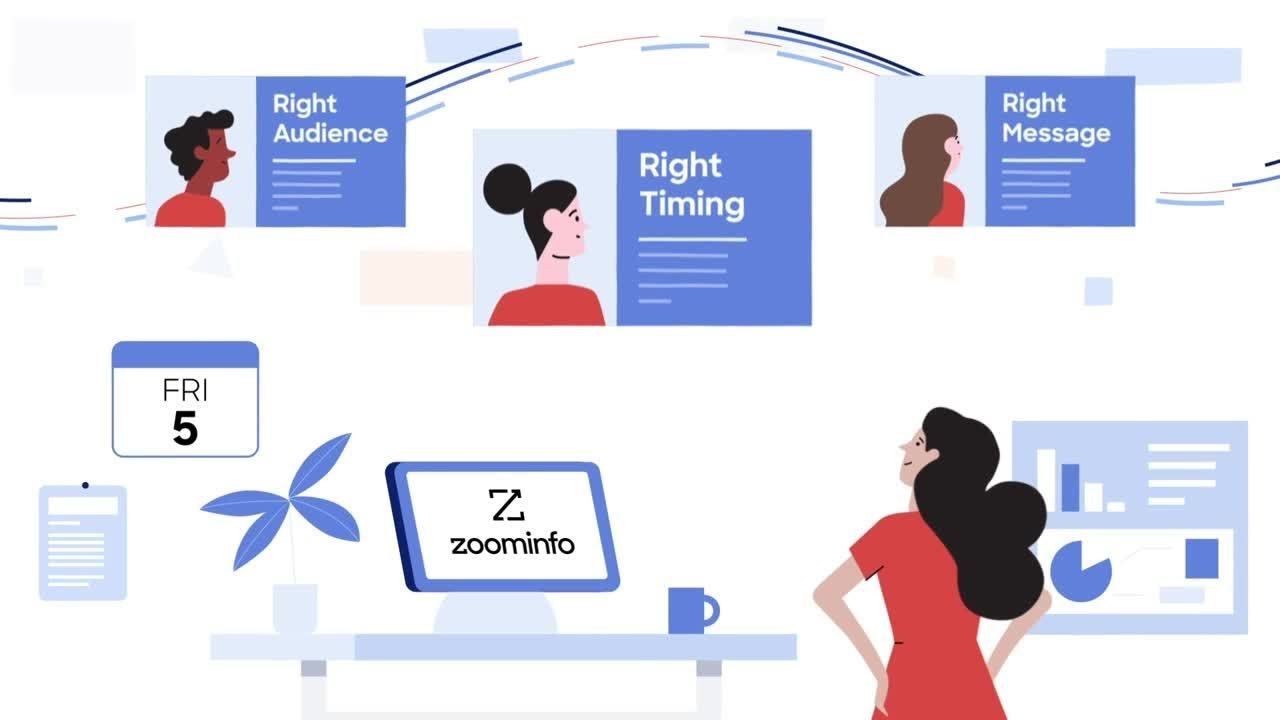
These are not competing investments. They're layers in a working sales stack.
CRM depth: Salesforce has no equal here
Salesforce doesn't just lead the CRM market. It defined it.
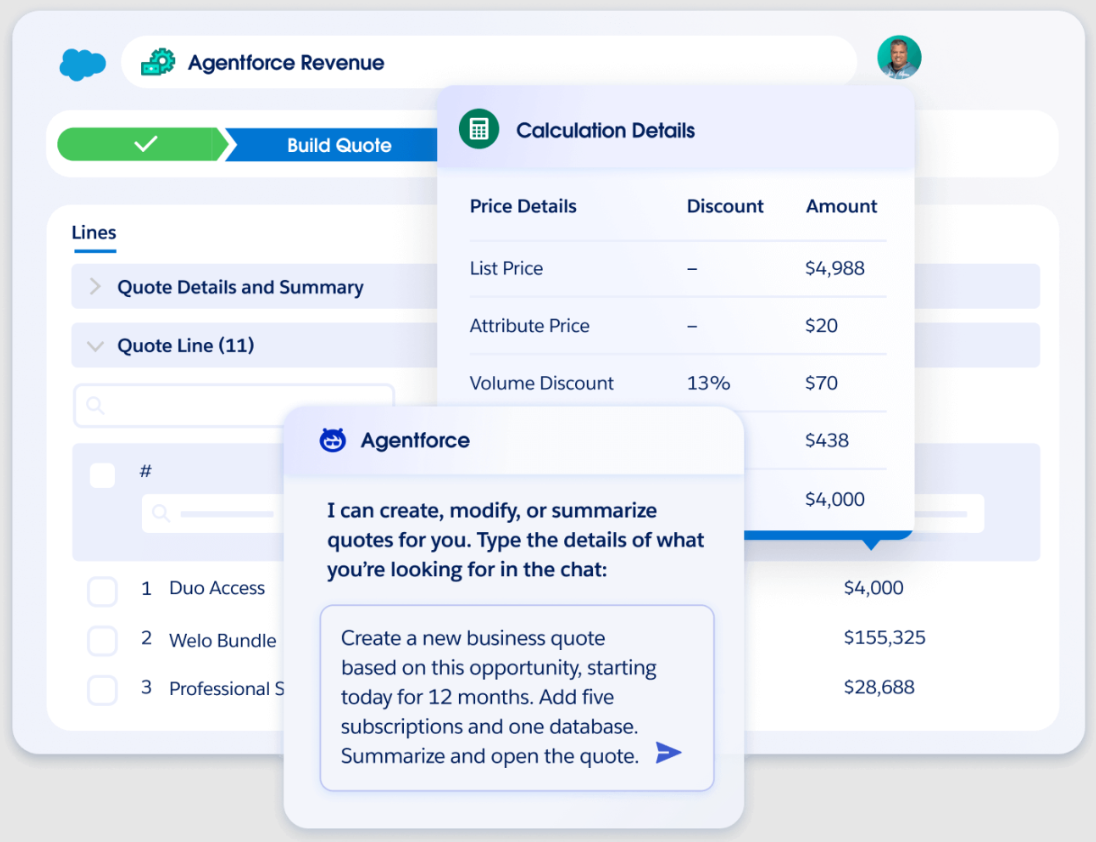
Sales Cloud covers the full revenue lifecycle: lead management with Einstein scoring, pipeline management with AI deal insights, forecast rollups, CPQ (configure-price-quote), contract management, and partner portals. A sales organization can run its entire operation, from first touch to cash, within Salesforce. Revenue Lifecycle Management extends this from quoting through billing and subscription management, closing the gaps between sales and finance.
Source: Salesforce
Neither Showpad nor ZoomInfo tries to replace this. Showpad integrates with Salesforce to log sharing activity and surface content recommendations inside CRM records. ZoomInfo integrates with Salesforce to push enriched contact data, intent signals, and account intelligence into CRM fields.
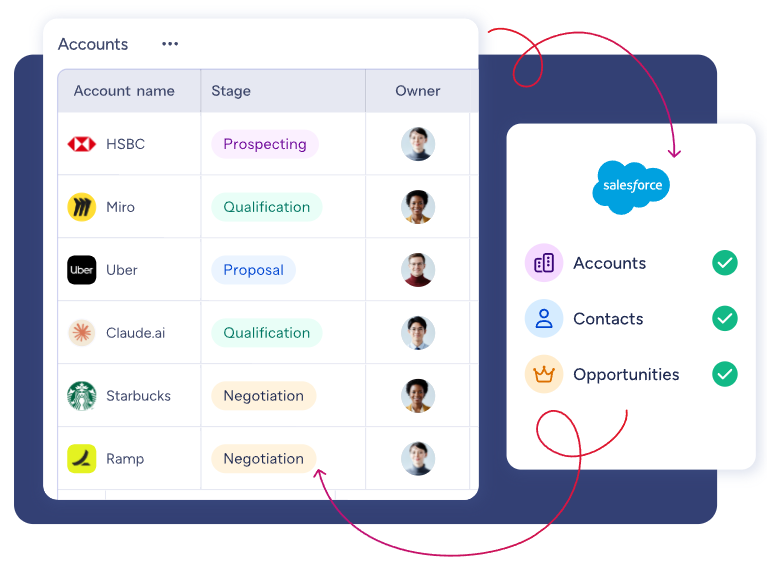
The distinction matters: Salesforce is infrastructure. If your organization doesn't have a CRM, Salesforce (or a comparable alternative) comes first. The question is what you layer on top.
Sales enablement: Showpad's domain
Salesforce can store documents and offers basic knowledge management. But it was never designed to solve the enablement problem: getting the right content, training, and buyer engagement tools to sellers when they need them.
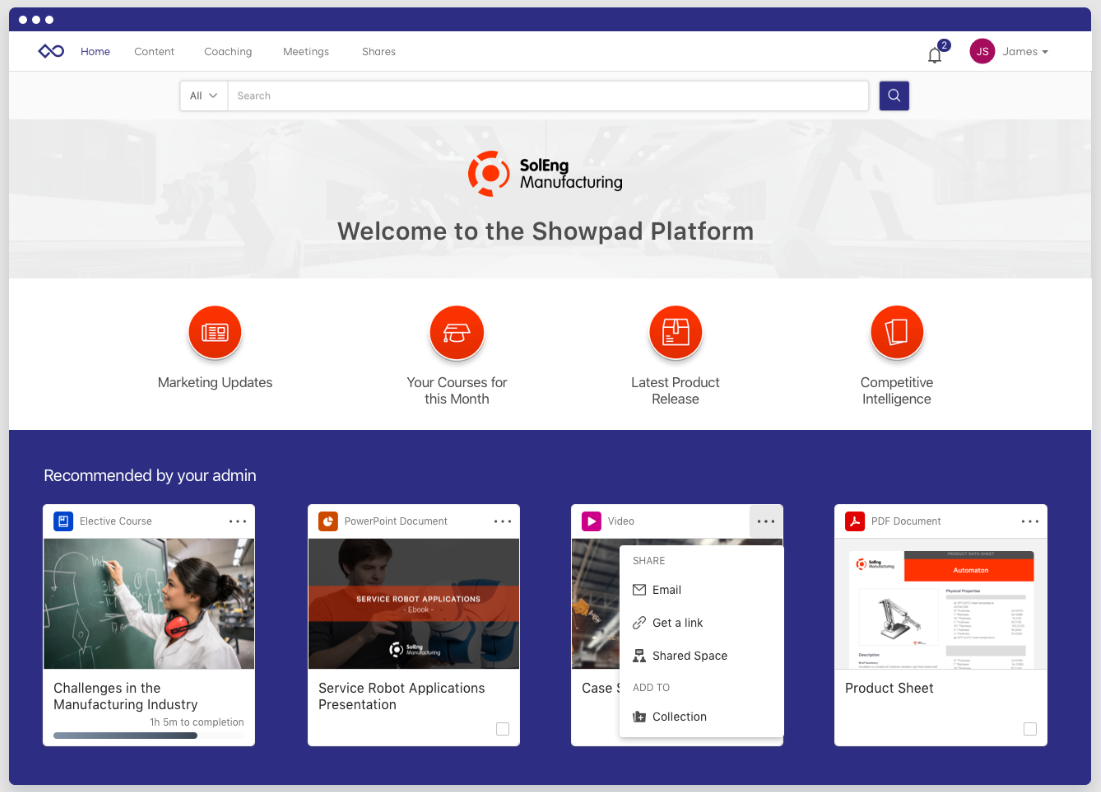
This is where Showpad operates. Its content management creates a centralized, searchable library where marketing controls what's published and sellers find what they need. LibraryIQ uses AI to spot duplicates, flag outdated materials, and recommend organizational improvements. For companies selling physical products, Showpad supports 3D models and 360° showrooms that display products digitally during field sales meetings.
Source: Showpad
Showpad Coach handles training at scale. RolePlayAI simulates buyer conversations in 12+ languages, giving reps a low-stakes environment to practice before real calls. The platform reports 70% higher knowledge retention compared to traditional training. Managers can track competencies, review pitches, and spot skill gaps across the team without sitting in on every call.
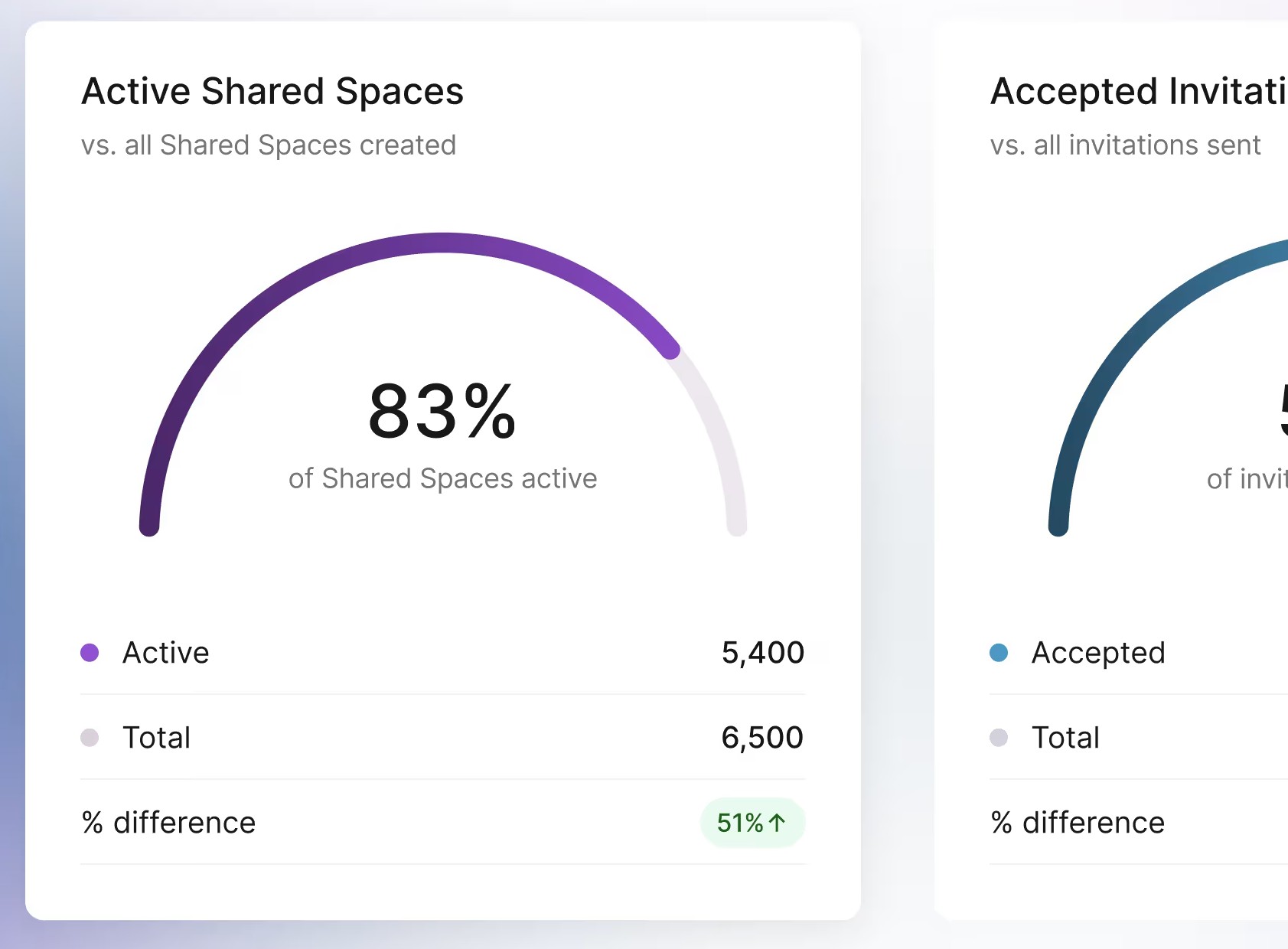
Shared Spaces create branded digital sales rooms where sellers and buyers collaborate throughout complex deals. Sellers share content, build Mutual Action Plans, and track which materials buyers viewed and when. This engagement data feeds back into analytics that connect content usage to win rates.
Source: Showpad
Salesforce's Agentforce can draft emails and research accounts, but it doesn't manage a content library, create interactive sales rooms, or run AI-coached roleplays. These are different capabilities for different problems.
Prospecting intelligence: ZoomInfo's foundation
Both Salesforce and Showpad assume someone has already identified the right accounts and contacts. Neither generates that intelligence natively.
Salesforce stores the contacts and companies your team enters. If the data is incomplete, stale, or missing key decision-makers, everything downstream suffers: forecasts rely on incomplete pipeline, reports reflect outdated accounts, and reps waste time chasing contacts who've changed jobs.
Showpad helps sellers present well once they're in a conversation. But it can't tell a rep which accounts show buying intent, who the economic buyers are, or whether the company just raised funding and is expanding.
ZoomInfo solves both problems. Its platform covers 500M contacts and 100M companies with up to 95% accuracy on first-party data, verified by automated ML scanning of 28 million site domains daily and 300+ human researchers. In a Fortune 500 competitive RFP analyzing 25 million contacts across vendors, an independent consultant concluded that "no other competitor came even close."
Buyer Intent data tracks signals from 210 million IP-to-Organization pairings and 6 trillion+ keyword-to-device pairings monthly. Guided Intent (exclusive to ZoomInfo) identifies topics historically correlated with deal success rather than requiring manual topic selection.
WebSights resolves anonymous website traffic to companies and buying team members, with Automatic Traffic Filtering that separates real visitors from bots. Your sales team knows who's researching your solution before a single form gets filled out.
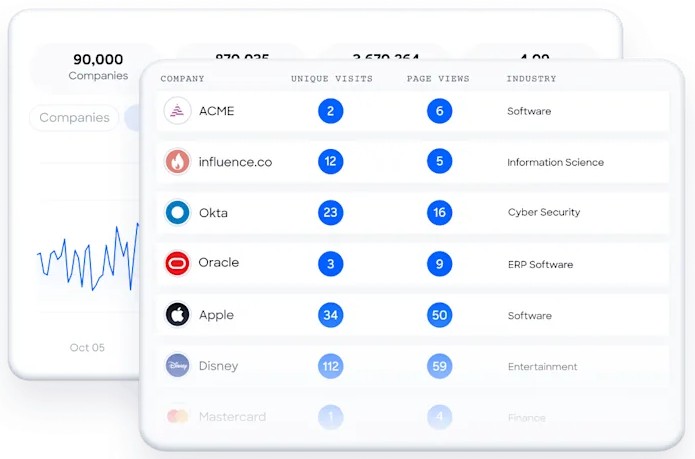
Seismic's sales team attributed 39% of active pipeline to opportunities identified or influenced by ZoomInfo signals, with 54% productivity gains and 11.5 hours saved per week per seller. (Seismic case study)
For a deeper look at how Salesforce and ZoomInfo compare on data quality, CRM enrichment, and go-to-market intelligence, see our Salesforce vs. ZoomInfo comparison.
AI capabilities take three distinct approaches
All three platforms have invested in AI, but the capabilities reflect their core purpose.
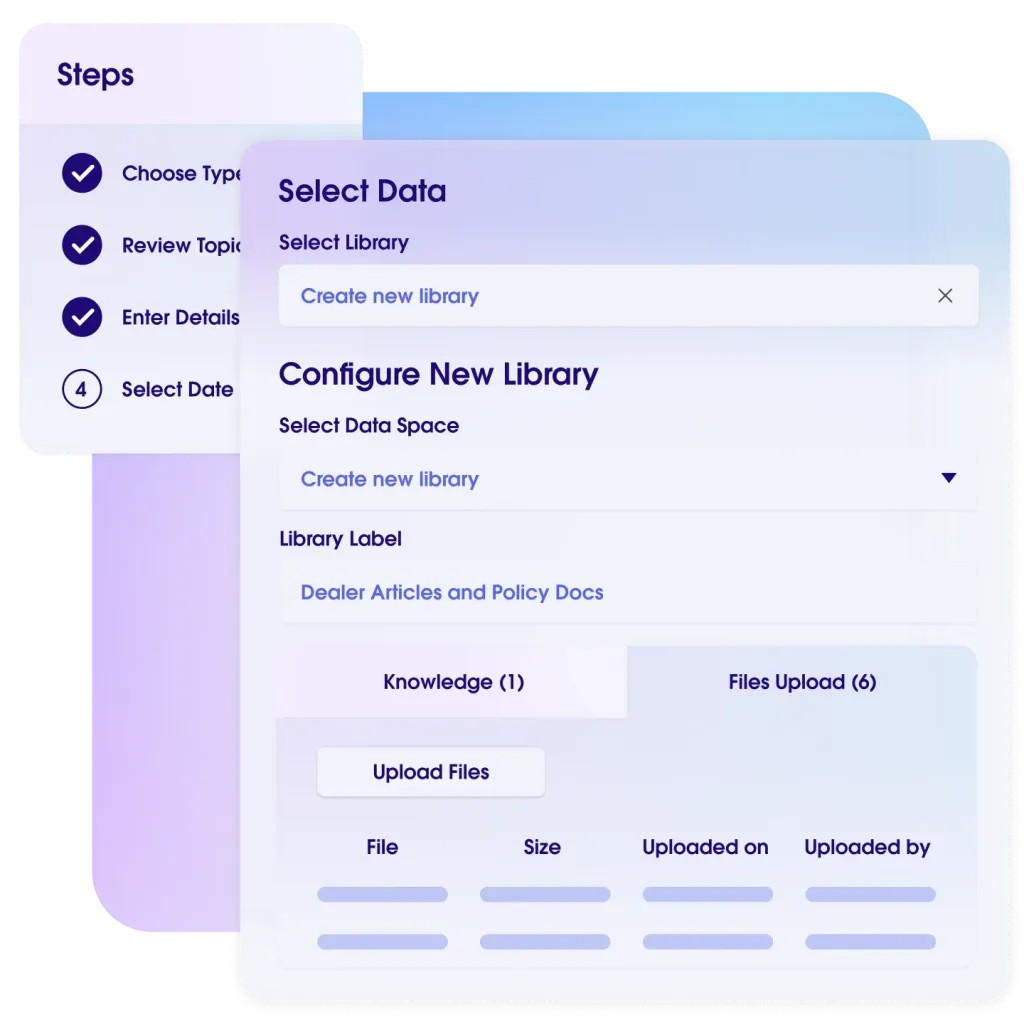
Salesforce's Agentforce deploys autonomous AI agents powered by the Atlas Reasoning Engine. These agents handle account research, generate follow-ups, coach reps, and manage CRM updates.
Source: Salesforce
The Einstein Trust Layer enforces zero data retention with LLM partners, PII masking, and toxicity detection. Salesforce's AI is broad: it touches sales, service, marketing, commerce, and IT. The strength is breadth across the CRM platform. The limitation is that agents are only as good as the data inside Salesforce, and most CRM data is incomplete (Forbes estimates 91% of CRM data is incomplete).
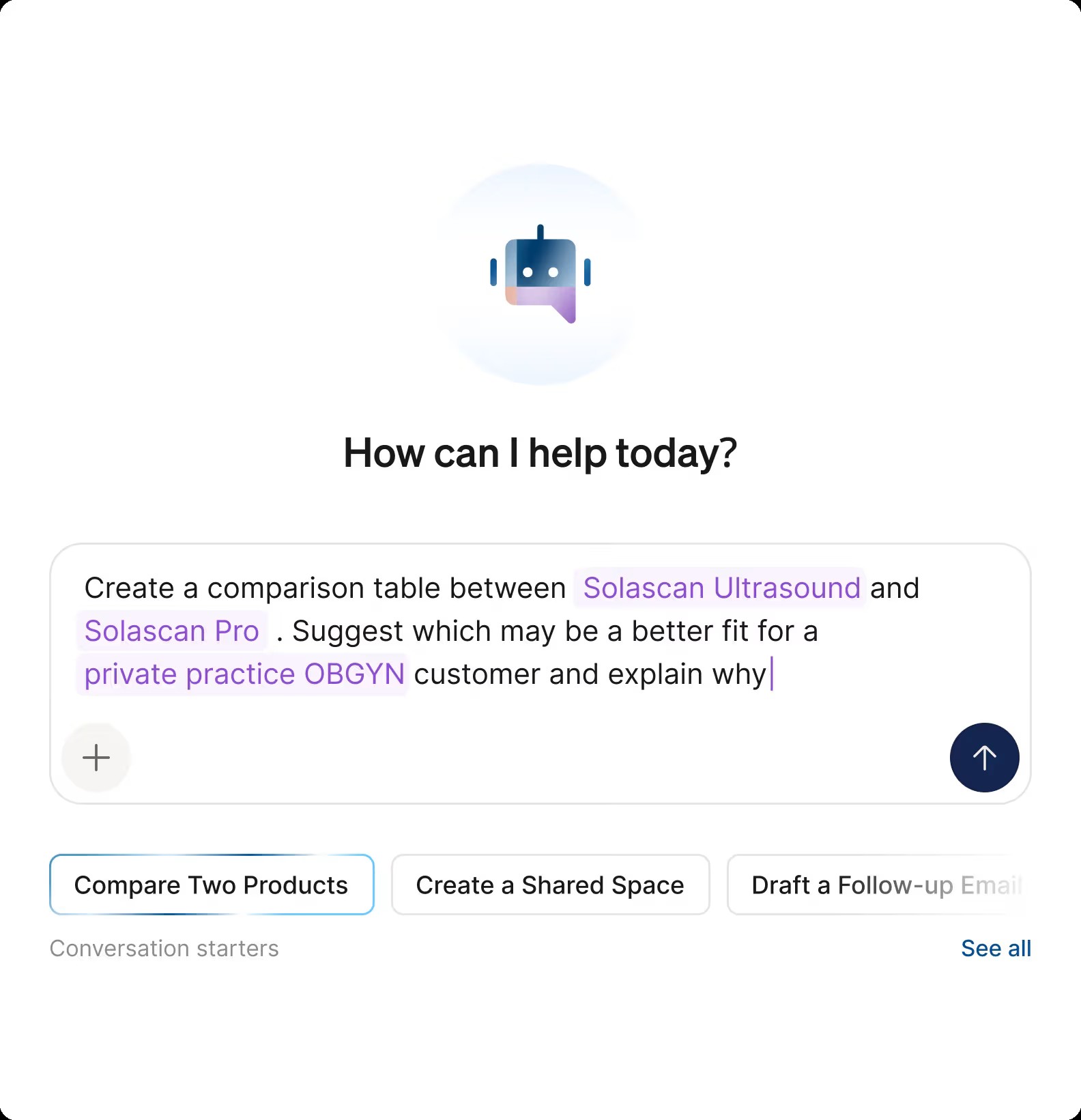
Showpad's AI is narrower and specialized for enablement. Genie Assistant gives sellers instant answers about products, objection handling, and competitor positioning, grounded in the organization's approved content. RolePlayAI simulates buyer conversations with real-time feedback on language, structure, and sales technique. AuthoringAI converts existing slides into narrated training with voiceovers in 30+ languages. Field Meeting AI captures meeting notes, updates CRM, and drafts follow-up emails.
Source: Showpad
Showpad stays independent of any single AI provider, choosing open-source models for each use case within a secure AWS environment. The strength is depth within the enablement workflow. The limitation: Showpad's AI doesn't extend into pipeline management, forecasting, or prospecting.
ZoomInfo's AI operates through the GTM Context Graph, which processes 1.5B+ data points daily and captures why deals move or stall, not just that they did. GTM Workspace gives sellers AI agents (built on Anthropic's Claude) that generate account briefs, draft outreach addressing specific buyer concerns, and surface next-best actions from real-time intent signals.
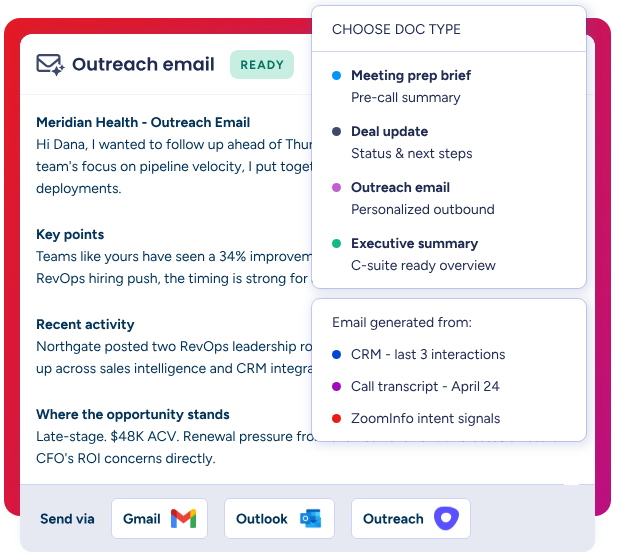
GTM Studio lets marketers and RevOps teams describe audiences in plain language and launch multi-channel plays instantly. The strength is AI grounded in the largest B2B dataset available. The limitation: ZoomInfo's AI focuses on intelligence and execution, not CRM workflow automation or content management.
Thomson Reuters increased closed-won deals by 40% and achieved 115% average quota attainment each month using ZoomInfo's AI-powered workspace. (ZoomInfo GTM Workspace)
Integration architectures tell different stories
How these platforms connect to the rest of your stack reveals their priorities.
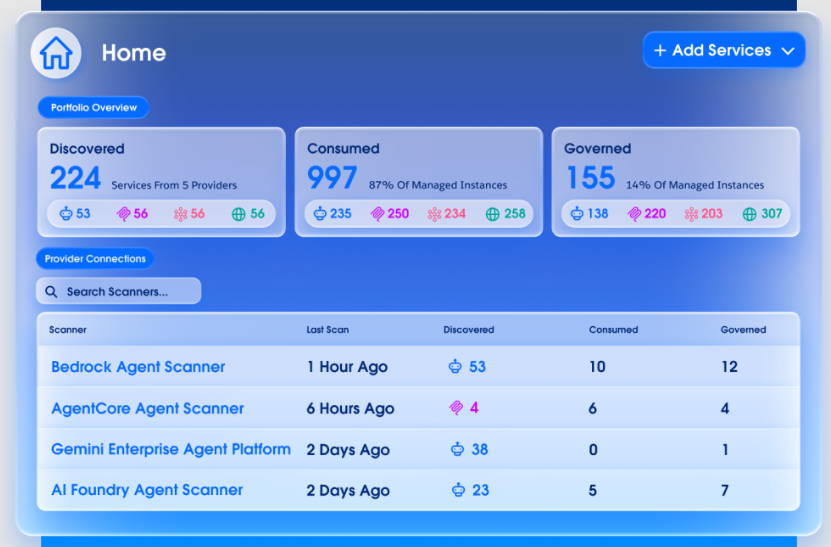
Salesforce operates as the hub. With 9,000+ apps on AppExchange and 14+ million installs, Salesforce is the system everything else connects to. MuleSoft handles API management for complex integrations. REST, SOAP, Bulk, and Pub/Sub APIs make the platform accessible to any business application. For organizations that standardize on Salesforce, this ecosystem is an advantage. The trade-off: Salesforce's scope means you may need dedicated administrators and integration specialists, especially as you scale beyond basic Sales Cloud.
Source: Mulesoft
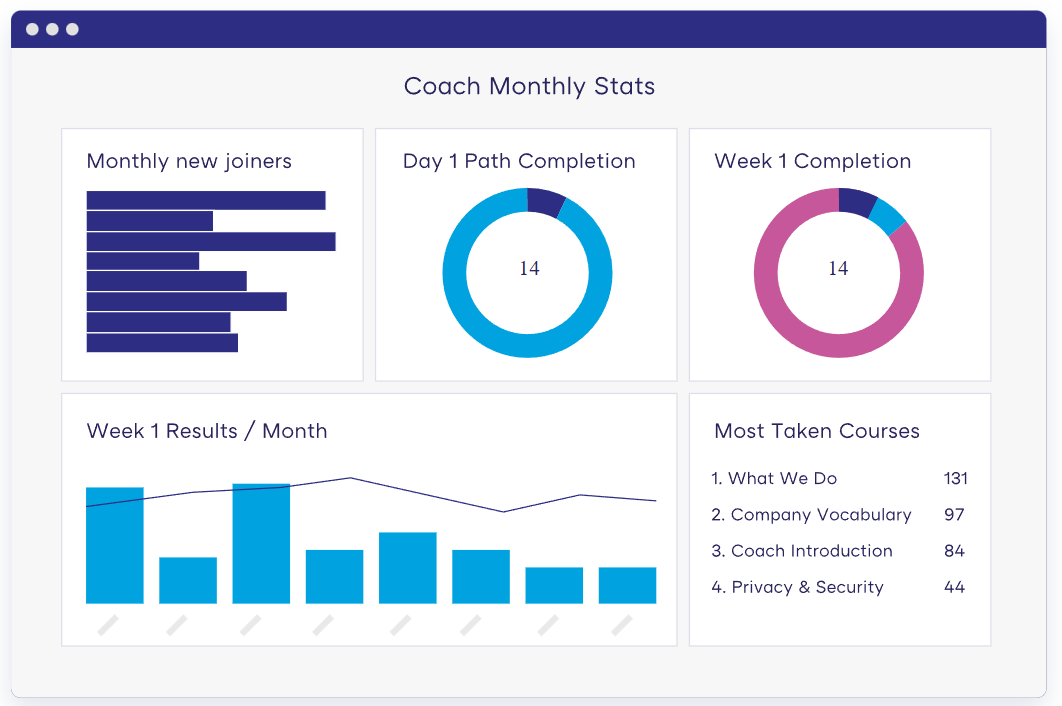
Showpad connects to the tools sales teams already use. 65+ pre-built integrations cover CRM (Salesforce, Dynamics), marketing automation (Marketo), email (Outlook, Gmail), and cloud storage (SharePoint, Google Drive, Box). The Salesforce integration logs sharing activity and surfaces content recommendations within CRM records automatically. An open API and SDK allow custom development, and webhooks trigger events when content is shared, viewed, or reshared. The integration scope is narrower than Salesforce's but enough for enablement.
Source: Showpad
ZoomInfo works everywhere. API access comes included in all relevant plans, and the MCP server connects AI models to ZoomInfo's data with no custom coding beyond initial setup. The ZoomInfo App Marketplace lists 120+ integrations, including Salesforce, HubSpot, Dynamics 365, Snowflake, and Salesloft. For engineering teams, the Enterprise API provides full programmatic access to the data and GTM Context Graph, with Data Cubes for direct ingestion into data warehouses. The same intelligence powering ZoomInfo's own products is accessible in any third-party tool, AI agent, or custom application.
Pricing reflects different buying decisions
These platforms sit in different price brackets because they serve different functions.
Salesforce uses a tiered per-user model. Sales Cloud ranges from free (up to 2 users) through $25/user/month (Starter Suite) to $175/user/month (Enterprise) and $350/user/month (Unlimited).
Agentforce adds separate costs: $2 per conversation or $500 per 100,000 Flex Credits. Add-ons for Service AI ($125/user/month), Digital Engagement ($75/user/month), and Field Service (from $175/user/month) stack up fast. Premier Support costs 30% of net license fees on top. Over 70% of implementations are partner-led, adding consulting costs. Salesforce is a large investment, and pricing complexity is a known problem. Salesforce itself acknowledged the model "needed to be easier to understand, more predictable, and more flexible."
Showpad charges per user across three tiers (Professional, Advanced, and Expert) but does not publish prices. Add-on bundles (Learn+, Collaborate+, Empower+) extend capabilities. A Forrester TEI study found a 3-month payback period and 5x ROI. Professional services for implementation, training, and change management cost extra. Annual billing is standard.
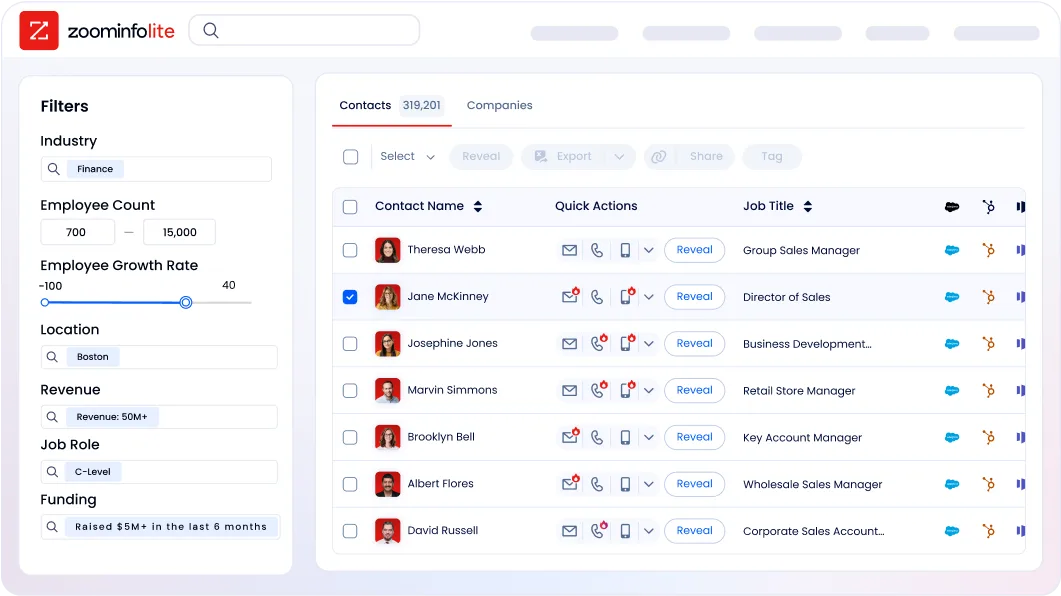
ZoomInfo uses custom-quoted, consumption-based pricing that scales with user seats, data credits, and API consumption. Like Showpad, paid tiers have no public prices. ZoomInfo offers two free entry points: ZoomInfo Lite (permanent free tier with 10 monthly export credits and access to the B2B database) and a 7-day free trial of the full platform. Paid plans span Sales, Marketing, and Operations lines, each with Professional, Advanced, and Enterprise tiers.
The real pricing question isn't which costs less. It's which combination delivers the most revenue. A well-tuned CRM with bad data produces misleading forecasts. Good content in Showpad means nothing if sellers target the wrong accounts. The stack has to work together.
Who each platform is built for
The ideal user profiles overlap less than you'd expect.
Salesforce serves organizations of every size across 17 industry verticals, from a free CRM for two-person teams to global enterprises running Sales, Service, Marketing, and Commerce Clouds at once. The platform delivers the most value to organizations with dedicated Salesforce administrators who configure workflows, manage integrations, and maintain data quality. Companies without that investment often use 20% of what they pay for.
Source: Salesforce
Showpad serves large enterprises with field-heavy sales teams, especially in industries with dense product catalogs, regulatory requirements, and global distribution. Showpad is strongest in manufacturing, medical devices, healthcare, and enterprise technology, where sellers need offline access, compliance-controlled content, and product visualization. It's less suited for inside sales teams or organizations that don't invest in structured enablement programs.
ZoomInfo focuses on enterprise and upper mid-market B2B companies with outbound sales motions, ABM programs, or data enrichment needs. Named customers include Adobe, Snowflake, PayPal, Deloitte, and JPMorgan. The platform serves sales teams (prospecting, pipeline), marketing teams (ABM, demand gen, advertising), and RevOps teams (data quality, lead routing, workflow automation). ZoomInfo is not built for B2C companies or organizations without an outbound or data-driven go-to-market motion.
Conversation intelligence: a telling comparison
How each platform handles sales conversation data shows their different priorities.
Salesforce offers conversation intelligence through add-ons within its Unlimited and Agentforce editions, including call insights via the Call Explorer feature. This surfaces call summaries, action items, and sentiment within the CRM record. But it's one feature among dozens in Sales Cloud, not the platform's focus.

Source: Salesforce
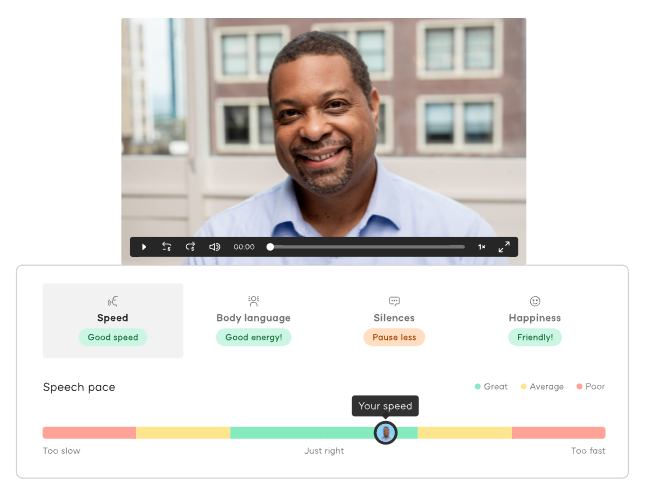
Showpad's PitchAI evaluates recorded pitches with instant feedback on language patterns, conversation structure, and sales technique. Field Meeting AI captures meeting notes, converts voice notes into structured CRM data, and drafts follow-up emails. The emphasis is on coaching and post-meeting action: helping sellers improve, not just analyzing what happened.
Source: Showpad
ZoomInfo's Chorus captures and analyzes all customer calls, meetings, and emails, holding 14 technology patents. What sets Chorus apart is Connected Intelligence: every call participant's ZoomInfo profile, company data, and relevant signals appear alongside the recording. A manager reviewing a call sees not just what was said, but the full context of who was in the room and what's happening at their company. Chorus also feeds the GTM Context Graph, extracting why deals move or stall: why a champion went quiet, what a competitive mention signals, when executive sponsorship entered.
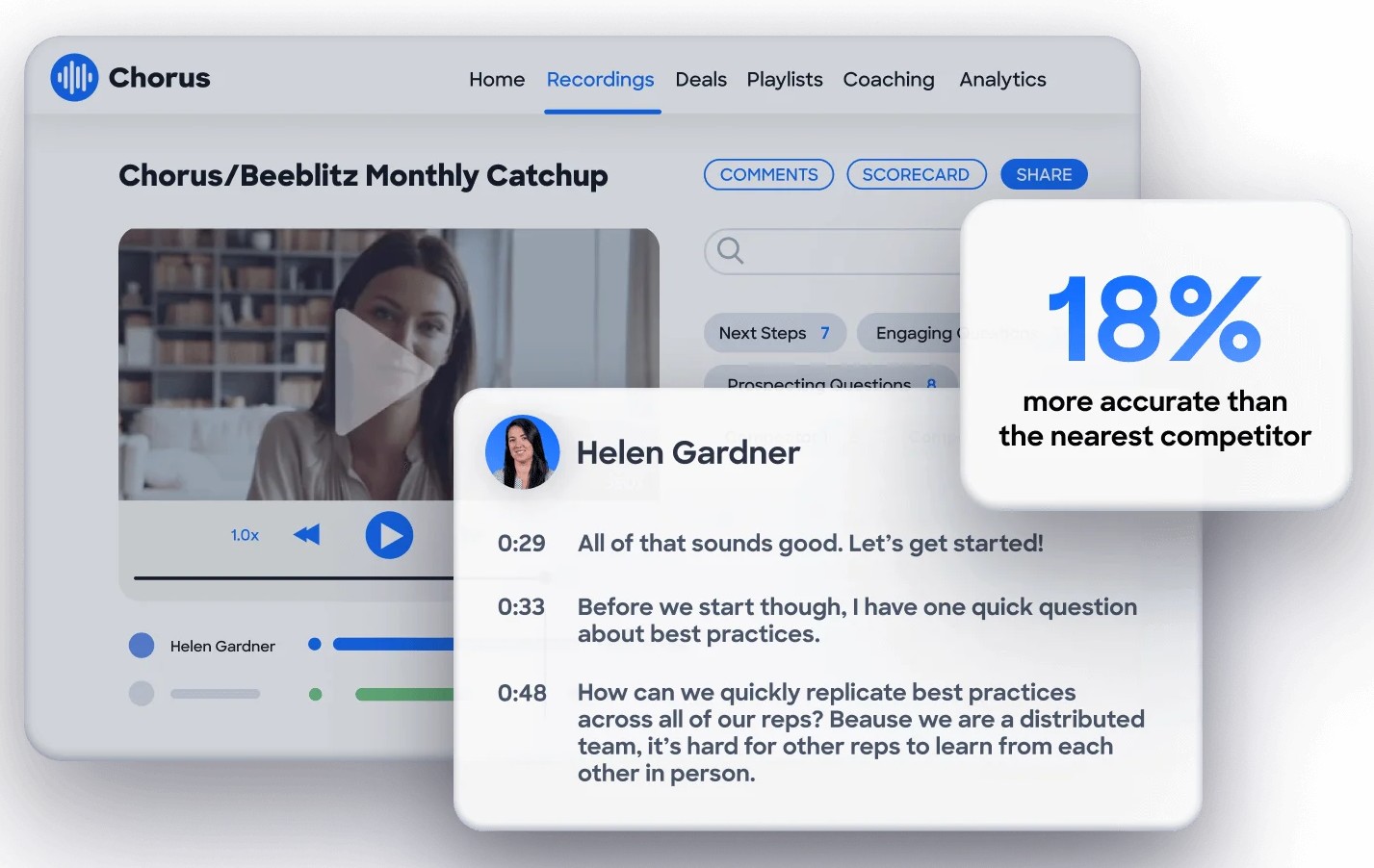
Three approaches to conversation data: Salesforce records it in the CRM, Showpad coaches sellers to improve from it, and ZoomInfo connects patterns across thousands of conversations to predict what happens next.
Salesforce vs. Showpad vs. ZoomInfo: Which should you choose?
These aren't mutually exclusive choices. Most strong sales organizations use tools from all three categories. The question is which to invest in first, based on your biggest gap.
Choose Salesforce if:
You need a CRM to manage pipeline, accounts, and the full sales cycle
Sales automation, forecasting, and workflow orchestration are priorities
You want a platform spanning sales, service, marketing, and commerce
You have (or plan to hire) dedicated administrators for configuration and maintenance
You're ready to invest in AI agents that automate CRM tasks
Choose Showpad if:
Your sellers struggle to find the right content at the right time
Sales onboarding takes too long and coaching doesn't scale
You need digital sales rooms for complex, multi-stakeholder deals
Your industry requires compliance-controlled content with offline access
You want to connect content engagement directly to revenue outcomes
Choose ZoomInfo if:
Your team wastes time on outdated contacts and unqualified accounts
You need to identify in-market buyers before they reach out
CRM data quality and enrichment are persistent problems
You want AI prospecting, outreach, and deal intelligence grounded in verified B2B data
You need intelligence that works across any tool, not just inside one platform
Start with ZoomInfo Lite for free, or request a demo to see the full GTM platform.
The strongest sales organizations don't choose between CRM, enablement, and intelligence. They build a stack where Salesforce manages the pipeline, Showpad arms sellers with content and coaching, and ZoomInfo provides the data foundation that makes both effective. Each layer compounds the value of the others. Remove one, and the system works harder for the same results.
"ZoomInfo is our one source of truth for account data, and even more so for contact data. There's no other provider in the market that provides you with that level of detail." (Thor Sanderson, Senior Manager of Sales Technology Enablement, Smartsheet; Smartsheet case study)
Salesforce vs. Showpad vs. ZoomInfo FAQ
What is the fundamental difference between Salesforce, Showpad, and ZoomInfo?
Salesforce is a CRM that manages pipeline, accounts, forecasting, and sales automation. Showpad is a sales enablement platform that centralizes content, coaches sellers with AI roleplays, and creates digital sales rooms for buyer engagement. ZoomInfo is a B2B data intelligence platform that provides verified contact data, buyer intent signals, and AI-powered GTM execution. They serve different functions and work together rather than as replacements for each other.
Do Salesforce and Showpad integrate with each other?
Yes. Showpad has a native Salesforce integration that logs sharing activity, surfaces content recommendations within CRM records, and connects engagement data to opportunities. This lets marketing teams track how content influences deals and sellers access Showpad materials without leaving Salesforce.
Which platform helps most with prospecting and finding new accounts?
ZoomInfo leads in prospecting. Its database covers 500M contacts and 100M companies with up to 95% accuracy on first-party data, plus buyer intent signals from 210 million IP-to-Organization pairings. Salesforce stores contact data your team enters but doesn't generate new prospect intelligence. Showpad doesn't include prospecting data at all.
How do the AI features compare across the three platforms?
Salesforce's Agentforce deploys autonomous AI agents that handle CRM tasks like account research, outreach drafting, and pipeline management. Showpad's AI focuses on enablement: roleplay coaching, content search, training creation, and meeting follow-ups. ZoomInfo's AI operates through the GTM Context Graph, unifying B2B data, CRM records, and conversation intelligence to identify which accounts to target, what to say, and when to engage. Each platform's AI is specialized for its core function.
Which platform is most expensive?
Salesforce typically costs the most due to its scope, with Enterprise edition at $175/user/month before add-ons for AI agents, digital engagement, and support plans. Implementation and ongoing administration add further expense. Showpad and ZoomInfo both use custom-quoted pricing without published rates. ZoomInfo offers a permanent free tier (ZoomInfo Lite) with 10 monthly export credits, while Salesforce offers a free CRM for up to 2 users.
Can ZoomInfo replace Salesforce as a CRM?
No. ZoomInfo is not a CRM. It does not manage pipeline, track deal stages, run sales forecasts, or automate sales workflows. ZoomInfo integrates with CRMs like Salesforce, HubSpot, and Microsoft Dynamics to push enriched data, intent signals, and account intelligence into CRM records. The two platforms serve complementary roles.
Which platform is best for sales training and coaching?
Showpad is designed for this. Its Coach product includes AI roleplays in 12+ languages, structured learning paths, competency tracking, and peer pitch review. Showpad earned Leader status in Forrester's Sales Readiness Solutions Wave with the highest possible score in the innovation criterion. Salesforce offers conversation intelligence as an add-on. ZoomInfo's Chorus analyzes sales conversations for coaching insights but does not include structured training programs or roleplay simulation.
Do I need all three platforms?
Not necessarily, but the combination addresses the full sales challenge. If your primary issue is CRM and pipeline management, start with Salesforce. If your sellers have a CRM but struggle with content and preparation, add Showpad. If your team targets the wrong accounts with bad data, ZoomInfo fills the intelligence gap. Many enterprise sales organizations invest in all three because each solves a problem the others don't.
More Salesforce comparisons:
