
Choosing between Seismic and Showpad comes down to five questions:
Do you need compliance controls for regulated industries like financial services, or is field sales mobility and offline access your priority?
Is your organization large enough to support a dedicated enablement admin team, or do you need a platform that drives adoption without heavy governance?
How important is content automation (assembling personalized decks from CRM data in seconds) versus immersive content (3D models, 360-degree showrooms, augmented reality)?
Are you willing to invest months in implementation for enterprise depth, or do you need to go live in weeks?
And the question most enablement buyers overlook: does your team know which accounts to prioritize and when those buyers are in-market?
In short, here's what we recommend:
Seismic is the enterprise enablement platform for organizations that need depth and control. The Seismic Enablement Cloud brings content management, learning, coaching, meeting intelligence, and digital sales rooms into one system, with Aura AI embedded throughout.
Its LiveDocs content automation engine lets reps generate personalized, brand-compliant presentations from CRM data in seconds. With 400+ financial services firms on the platform and a pending merger with Highspot, Seismic is consolidating as the standard for large enterprises in regulated industries.
The tradeoff: implementation runs months, the learning curve is steep, and pricing demands a sizable budget.
Showpad is the enablement platform for field-heavy organizations that need their reps to actually use the tool. Its eOS (Enablement Operating System) combines content management, coaching, and buyer engagement with an intuitive interface.
Showpad's strength is getting reps productive in the field, with offline access, 3D models and 360-degree showrooms, and a deployment timeline of 6-9 weeks. Following its October 2025 merger with Bigtincan, the platform is expanding its AI capabilities while keeping its field-first focus.
The tradeoff: analytics and reporting lag behind Seismic's, and backend stability has drawn user complaints.
Both platforms solve the enablement execution problem: getting the right content, training, and buyer engagement tools into your reps' hands. But neither answers a more fundamental question: which accounts should your reps engage in the first place, and when are those buyers ready to buy?
ZoomInfo is the GTM intelligence platform that feeds your enablement stack. With 500M contacts, 100M companies, 135M+ verified phone numbers, and 200M+ verified business emails, ZoomInfo gives your team the data to identify buyers.
Its GTM Context Graph combines this data with your CRM records, conversation transcripts, and behavioral signals to reveal not just what's happening in your deals, but why. Intent signals tell you when accounts are in-market. AI-drafted outreach addresses the specific concerns buyers raised.
The result: Seismic's own sales team uses ZoomInfo and attributes 39% of active pipeline to opportunities identified or influenced by ZoomInfo signals. Your enablement platform arms your reps with content and training. ZoomInfo tells them where to aim.
If building an intelligence-powered enablement stack sounds right, see how ZoomInfo works.
Seismic vs. Showpad vs. ZoomInfo at a glance
Seismic | Showpad | ZoomInfo | |
|---|---|---|---|
Primary function | Revenue enablement platform | Revenue effectiveness platform | GTM intelligence platform |
Core strength | Content automation and compliance | Field sales adoption and immersive content | B2B data, intent signals, and deal intelligence |
AI approach | Aura AI (grounded in org content) | Vendor-independent open-source models | GTM Context Graph (fuses 1P + 3P data) |
Content automation | LiveDocs (CRM-connected templates) | Automated Content Builder (template-based) | N/A (feeds data into enablement tools) |
Digital sales rooms | DSRs with Mutual Action Plans | Shared Spaces with buyer collaboration | N/A |
Learning & coaching | AI role-play, revenue-tied analytics | RolePlayAI, PitchIQ, peer learning | N/A |
Buyer intent data | Not native | Not native | 210M IP-to-Org pairings, Guided Intent |
Contact database | Not a data platform | Not a data platform | 500M contacts, 120M direct dials |
Implementation | Months (enterprise-scale) | 6-9 weeks | Weeks |
Pricing | Enterprise-quoted (no public pricing) | Tiered (Professional, Advanced, Expert) | Consumption-based (free tier available) |
Best for | Large enterprises in regulated industries | Field-heavy orgs needing high adoption | Any GTM team needing buyer intelligence |
Content management: automation versus adoption
Seismic and Showpad both centralize sales content in a governed library. How they get reps to use that content is where they diverge.
Seismic's defining content feature is LiveDocs, a content automation engine that turns PowerPoint and Word files into data-connected templates. Administrators define which elements are variable (customer name, logo, pricing tier) and which are locked for brand compliance.
When a rep needs a personalized deck, they complete a guided wizard, and LiveDocs assembles the document by pulling live data from CRM and other connected sources.
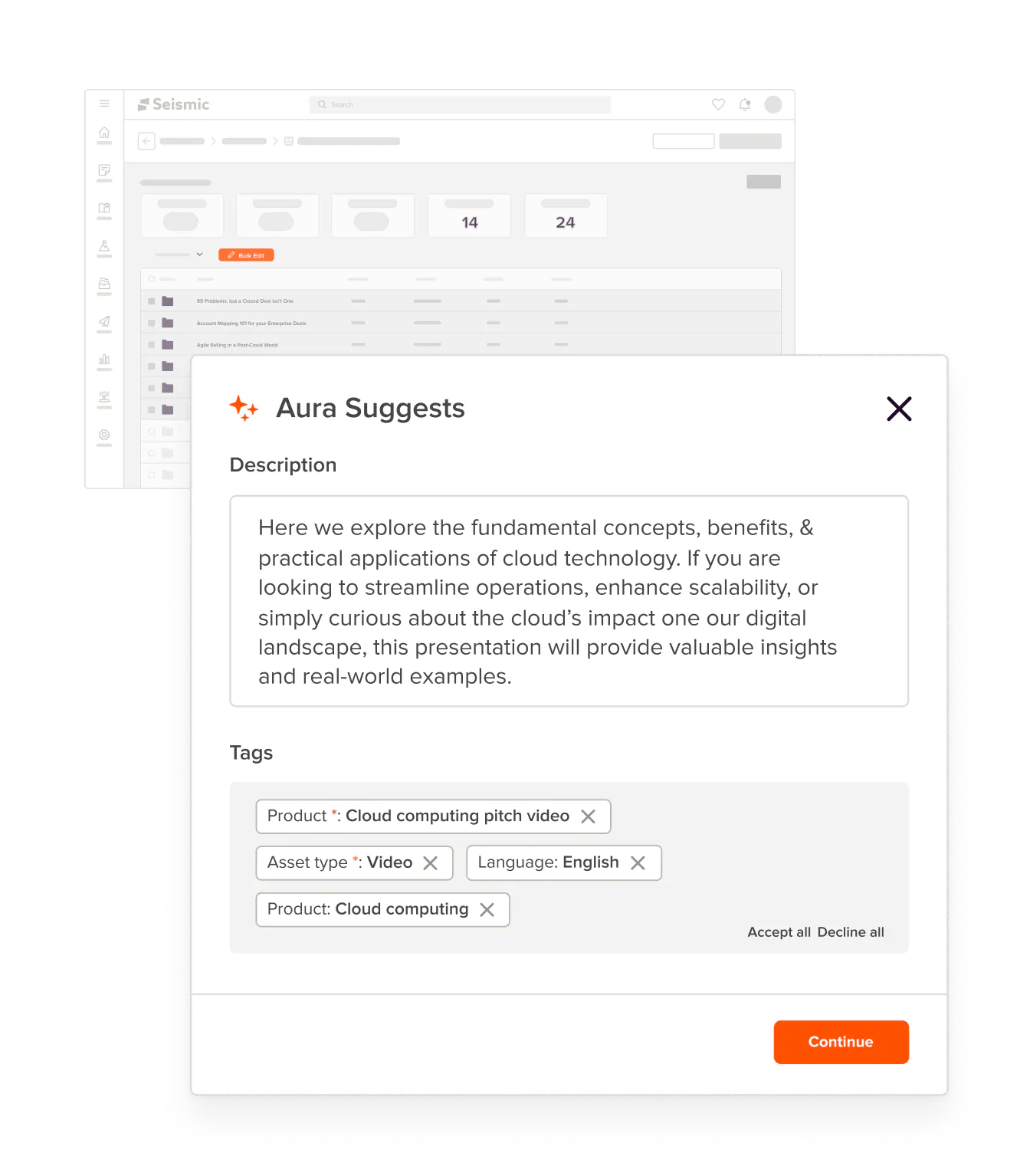
Aura AI reduces the governance burden by auto-generating tags and descriptions during upload and flagging duplicates.
Source: Seismic
For distribution, LiveSend replaces email attachments with trackable links that record page-level engagement data in real time.
Oracle tracked 34,000+ content shares via LiveSend in three months. Marketing teams get aggregate analytics connecting content usage to pipeline outcomes.
Showpad takes a different approach. Instead of content automation, it focuses on making content findable and usable in the field.

The platform organizes content through Experiences, curated collections that administrators build with drag-and-drop tools.
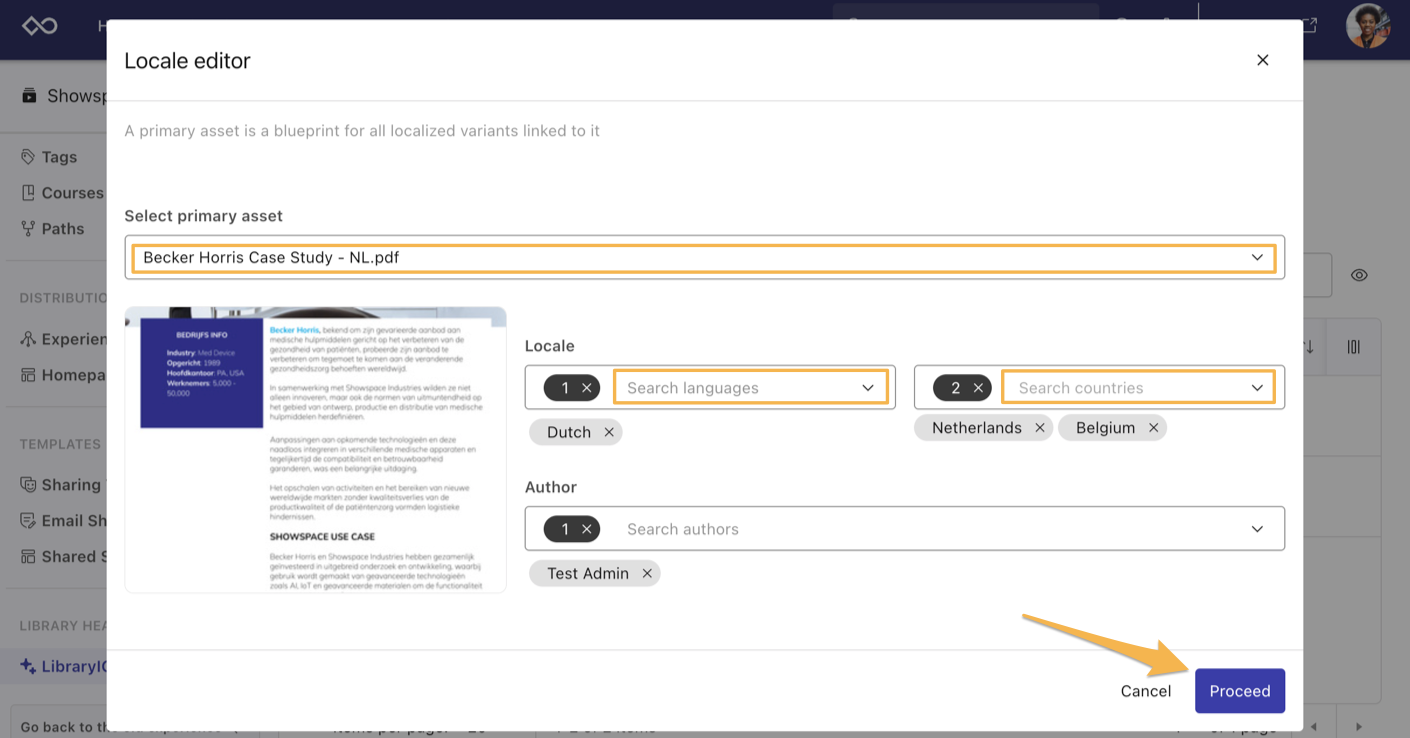
LibraryIQ uses AI to identify duplicates, localized variants, and organizational gaps.
Source: Showpad
Where Showpad pulls ahead is immersive content. The platform supports 3D models and 360-degree showrooms that turn physical products into interactive digital experiences.
For a medical device manufacturer or industrial equipment company, this is not a novelty; it's the difference between explaining a product and showing it. Full offline access means field reps can present at trade shows or factory floors without worrying about connectivity.
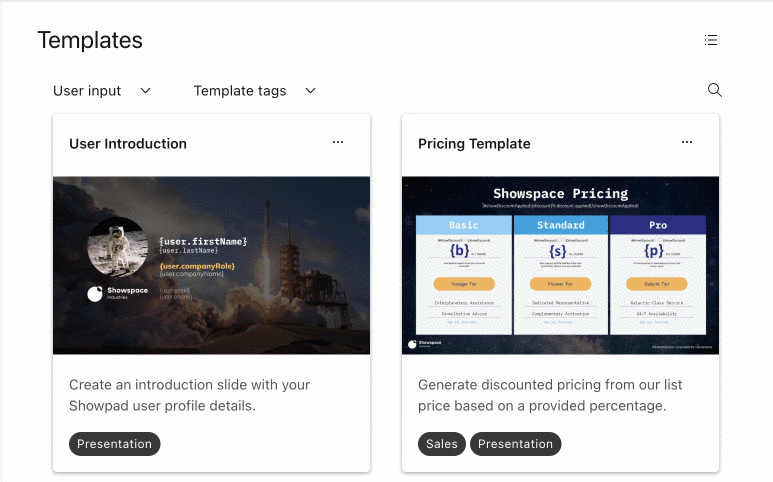
Showpad also offers an Automated Content Builder for template-based personalization, though it does not match LiveDocs' depth of CRM integration and template architecture.
Source: Showpad
The tradeoff is clear: Seismic gives you stronger content automation and analytics. Showpad gives you a platform reps will open every day.
Learning and coaching: depth versus accessibility
Both platforms acquired their coaching capabilities. Seismic bought Lessonly in 2021. Showpad acquired LearnCore and VoiceFox in 2018. How they integrated those acquisitions reveals their priorities.
Seismic Learning & Coaching is built for revenue teams, not as a general-purpose LMS. The platform offers structured learning paths segmented by role, region, and experience level, with interactive courses combining video, quizzes, and embedded sales content from the Seismic library.
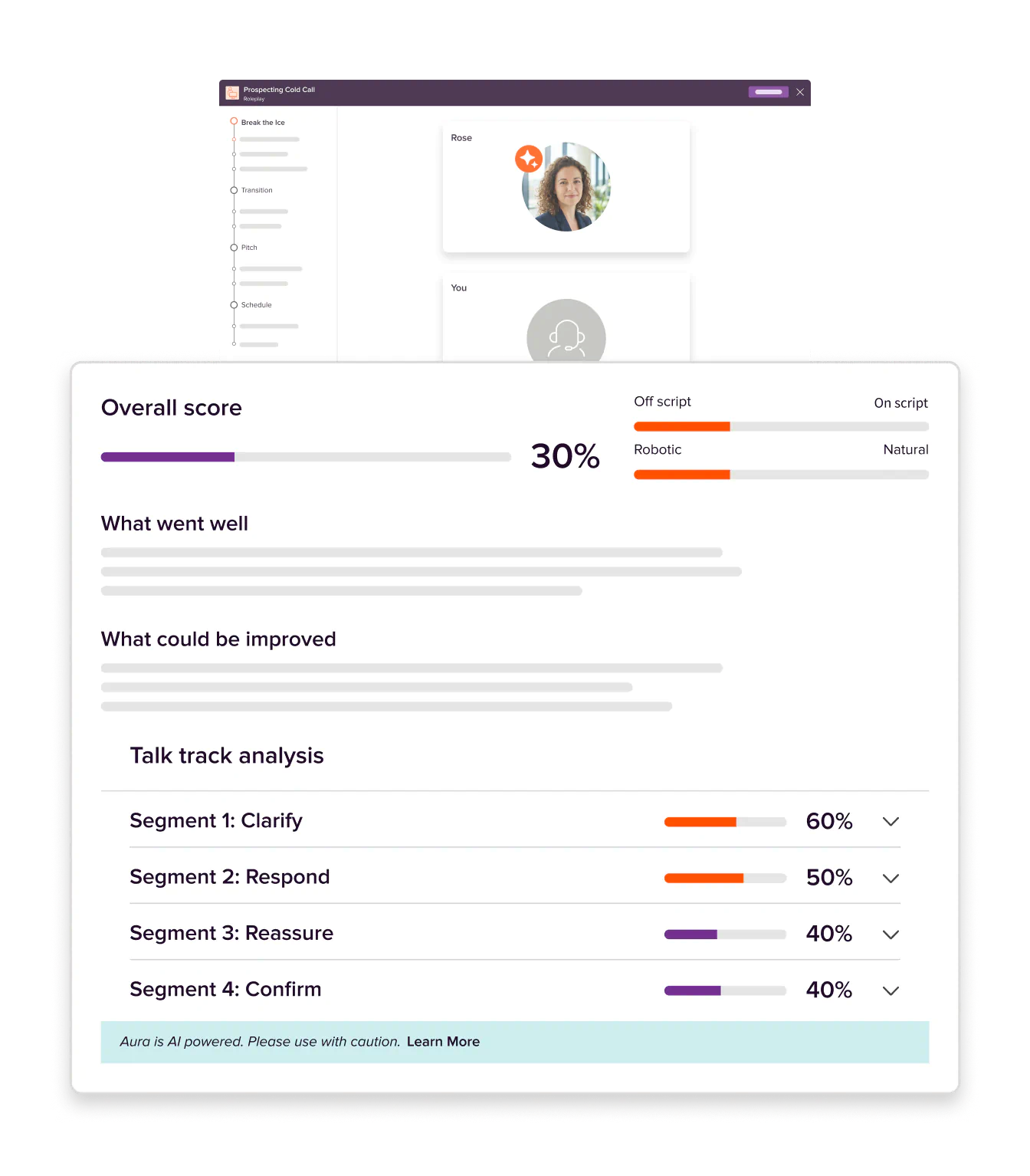
Aura AI powers role-play scenarios where reps practice against AI personas and receive automated feedback on pacing, filler words, and confidence.
Source: Seismic
The differentiator is how Seismic ties learning to revenue. Unlike traditional LMSs that track completion rates, Seismic links training activity to deal velocity, ramp time, and win rates.
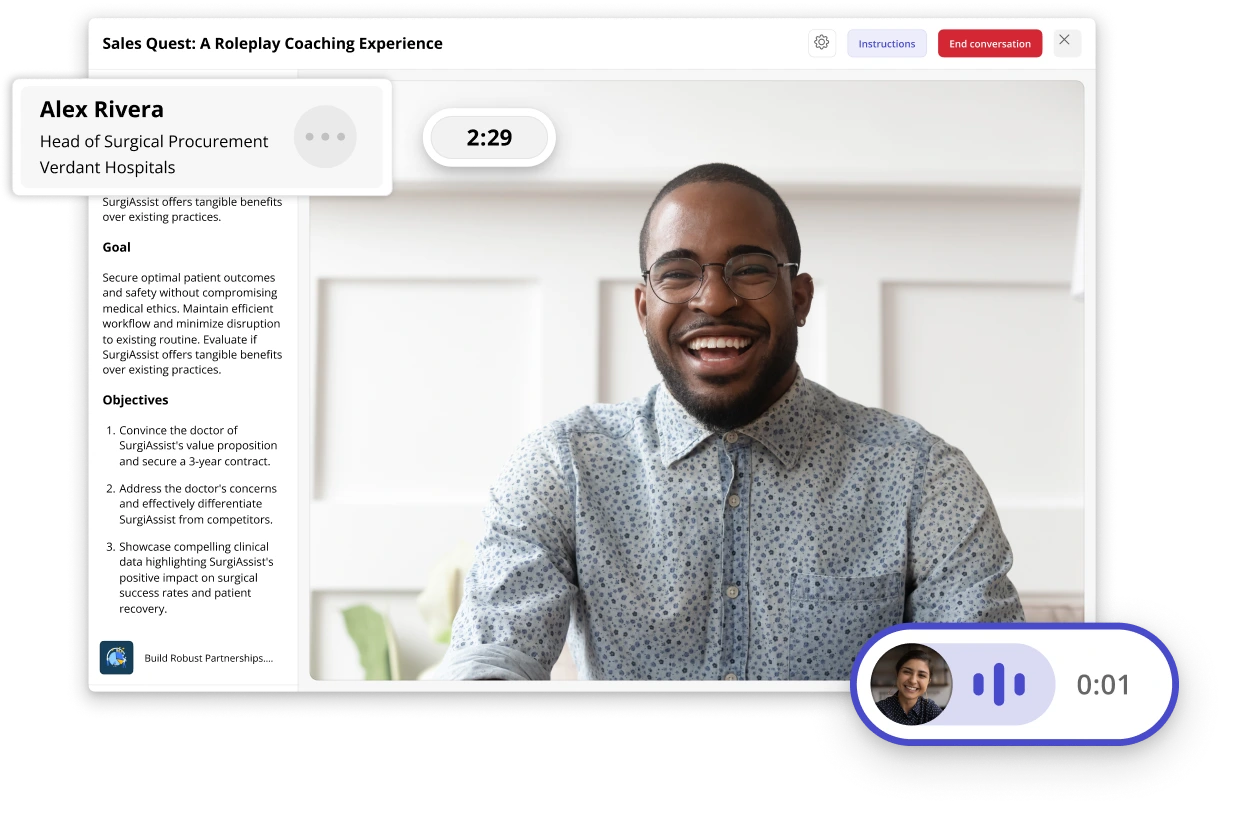
Showpad Coach focuses on making practice accessible at scale. Its RolePlayAI simulates real-time customer conversations in text chat, turn-based audio, and real-time audio across 12+ languages.
Source: Showpad
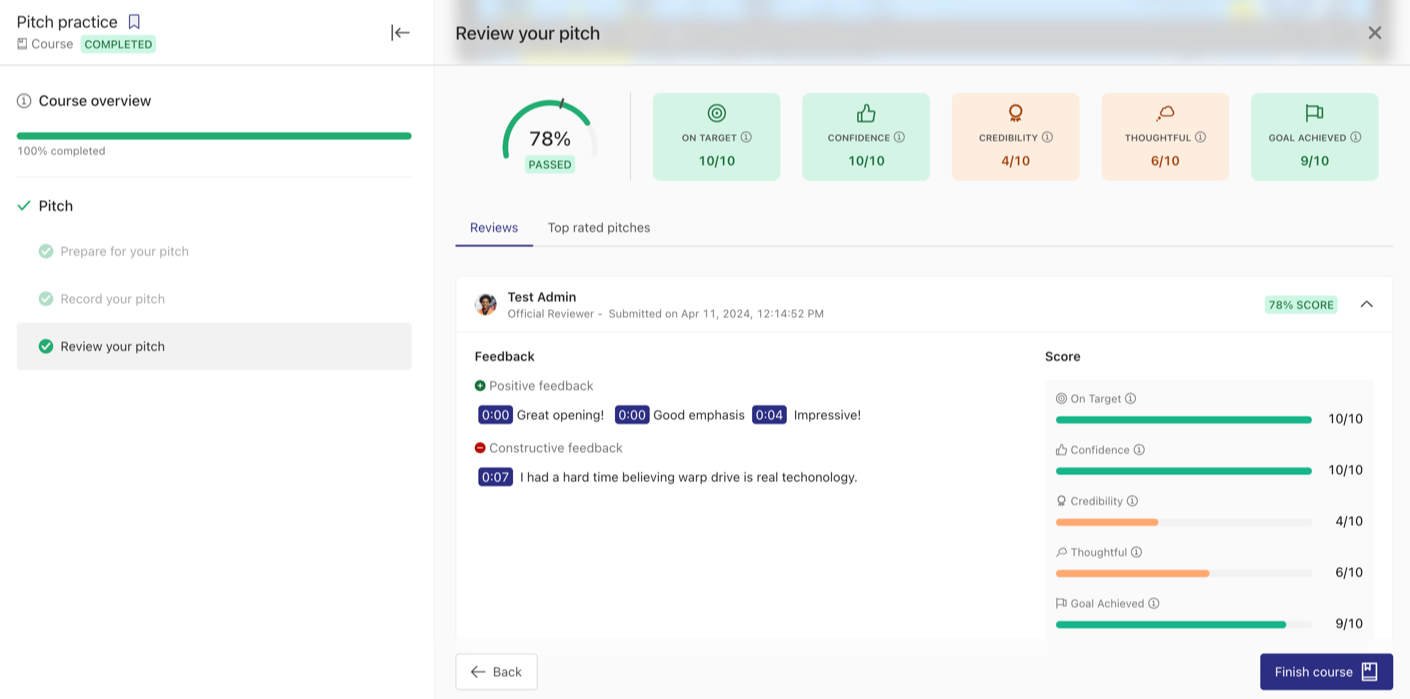
PitchIQ lets reps record sales pitches and receive AI coaching with instant feedback. A peer learning layer lets sellers view top-rated pitches from their highest-performing colleagues.
Source: Showpad
The practical difference: Seismic gives enablement leaders more visibility into whether coaching changes field behavior and moves revenue. Showpad gives reps a lower-friction path to practice.
Organizations with dedicated enablement managers will get more from Seismic's analytics. Organizations that need reps practicing on their own will prefer Showpad's accessibility.
Buyer engagement: two approaches to the same deal
Modern B2B deals involve an average of 13 stakeholders, making coordinated buyer engagement essential. Both platforms offer digital spaces for deal collaboration, but they serve different selling motions.
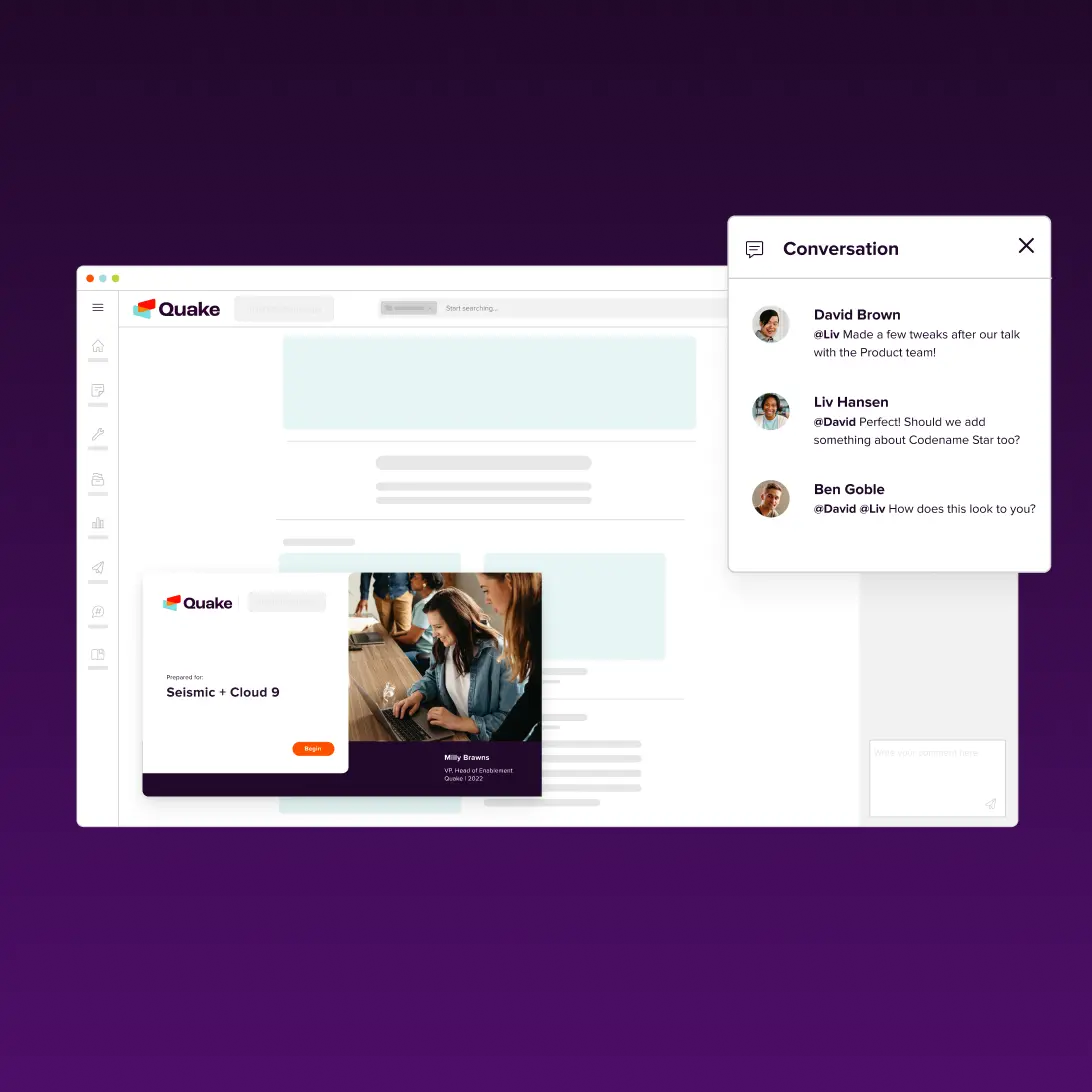
Seismic's Digital Sales Rooms are built for complex, multi-stakeholder enterprise deals. Sellers create DSRs from CRM-connected templates, fill them with personalized content and recorded video introductions, and share access via branded LiveSend links.
Source: Seismic
Buyers enter without needing a Seismic account. The Winter 2026 release added Mutual Action Plans (MAPs) within DSRs, shared buyer-seller timelines with collaborative milestones and overdue action flagging.
Stakeholder mapping tracks which individuals accessed the room and how much they engaged, helping sellers identify champions and blockers.
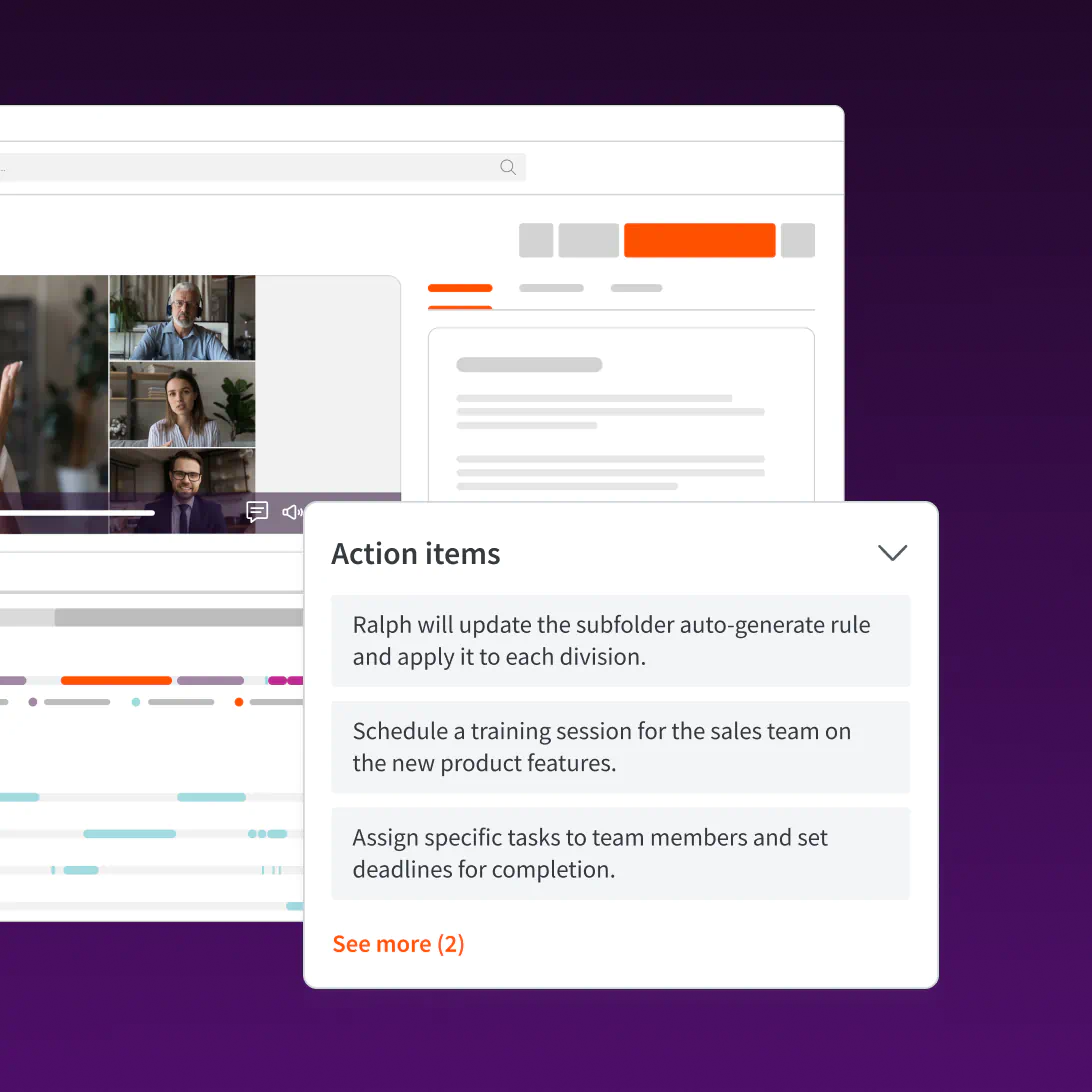
Seismic also includes Meeting Intelligence, which transcribes calls, generates AI summaries with action items, and recommends follow-up content based on conversation context.
Source: Seismic
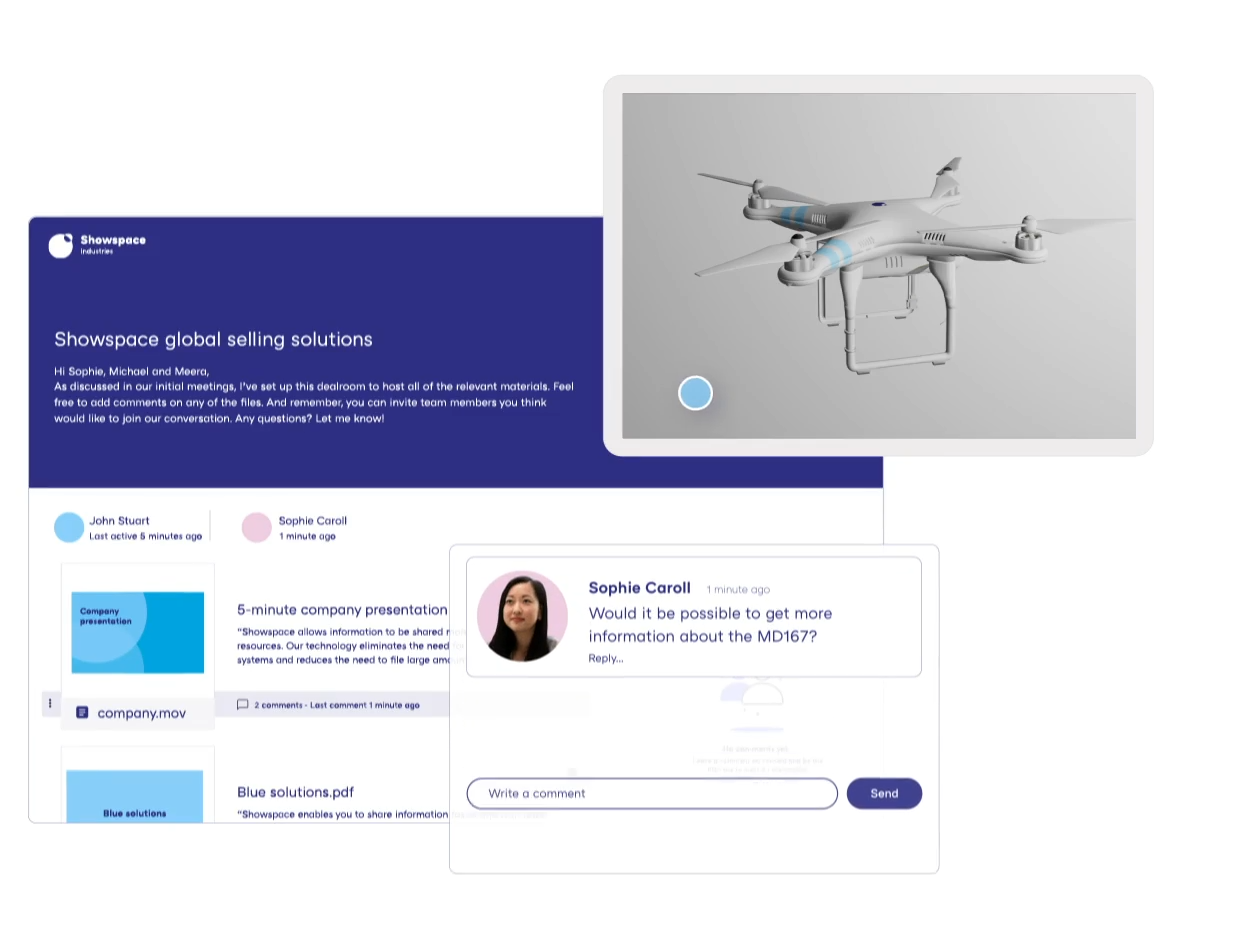
Showpad's Shared Spaces serve a similar function but emphasize collaborative selling for field-heavy industries. Sellers create branded microsites where buyers can view content, leave comments, tag colleagues, and (with the Collaborate+ add-on) upload their own documents.
Mutual Action Plans are available through the API for tracking deal milestones. Shared Spaces can be auto-created when deals advance in CRM, reducing manual setup.
Where Showpad stands apart is interactive engagement for physical products. The combination of 3D models, 360-degree showrooms, and AR experiences within Shared Spaces lets field reps bring products to life during in-person meetings, then leave the digital room as a persistent resource the buying committee returns to on its own.
Source: Showpad
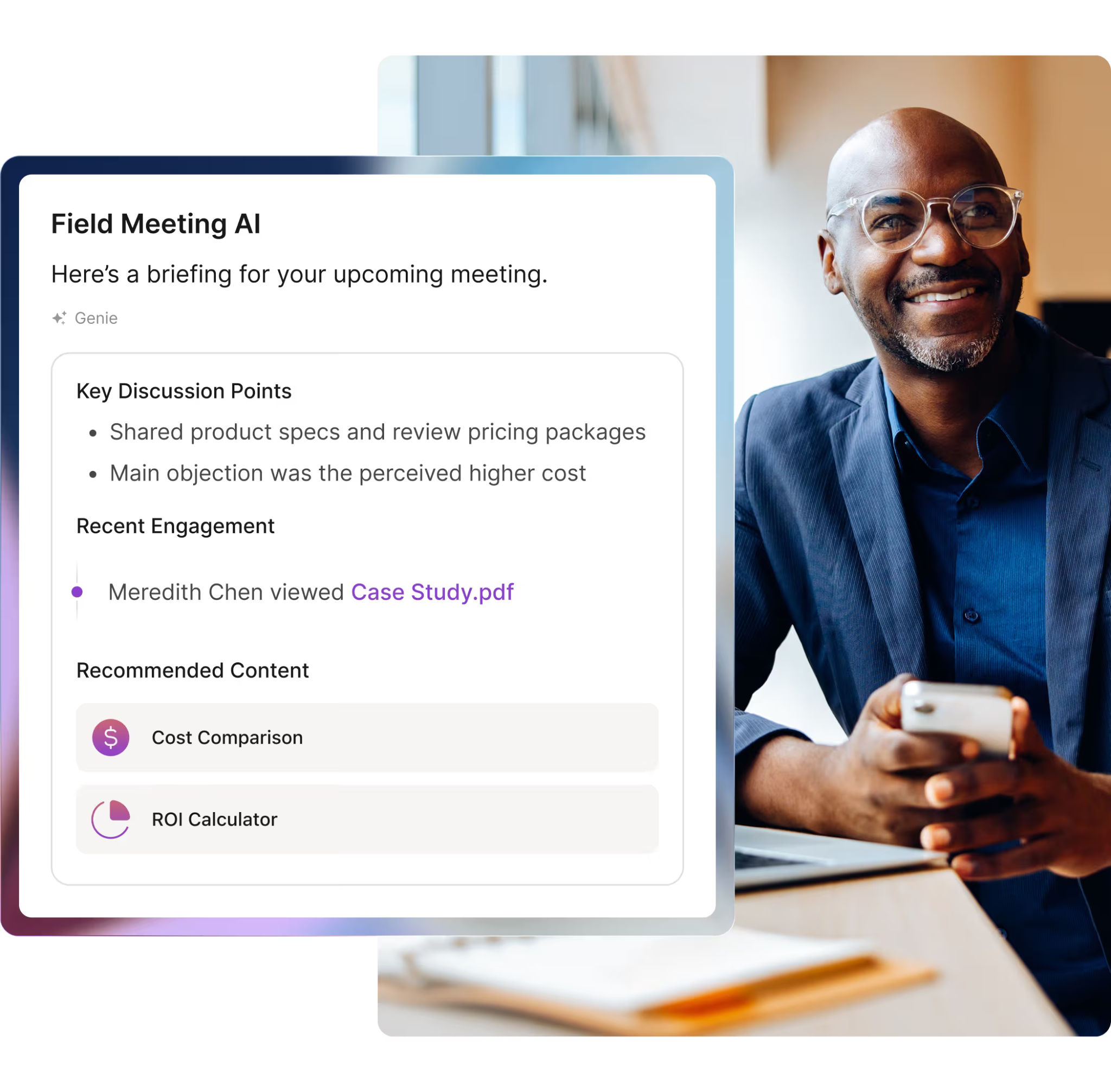
Showpad also introduced Field Meeting AI, which captures insights from field conversations, updates CRM, and drafts follow-up emails. This targets reps who sell face-to-face rather than over video calls.
Source: Showpad
For enterprise deals running over video, Seismic's meeting intelligence and stakeholder mapping give sellers more deal visibility. For field sales teams presenting physical products, Showpad's immersive content and offline capability are hard to match.
AI: grounded content versus vendor independence
Both platforms are investing in AI, but their architectures reflect different bets.
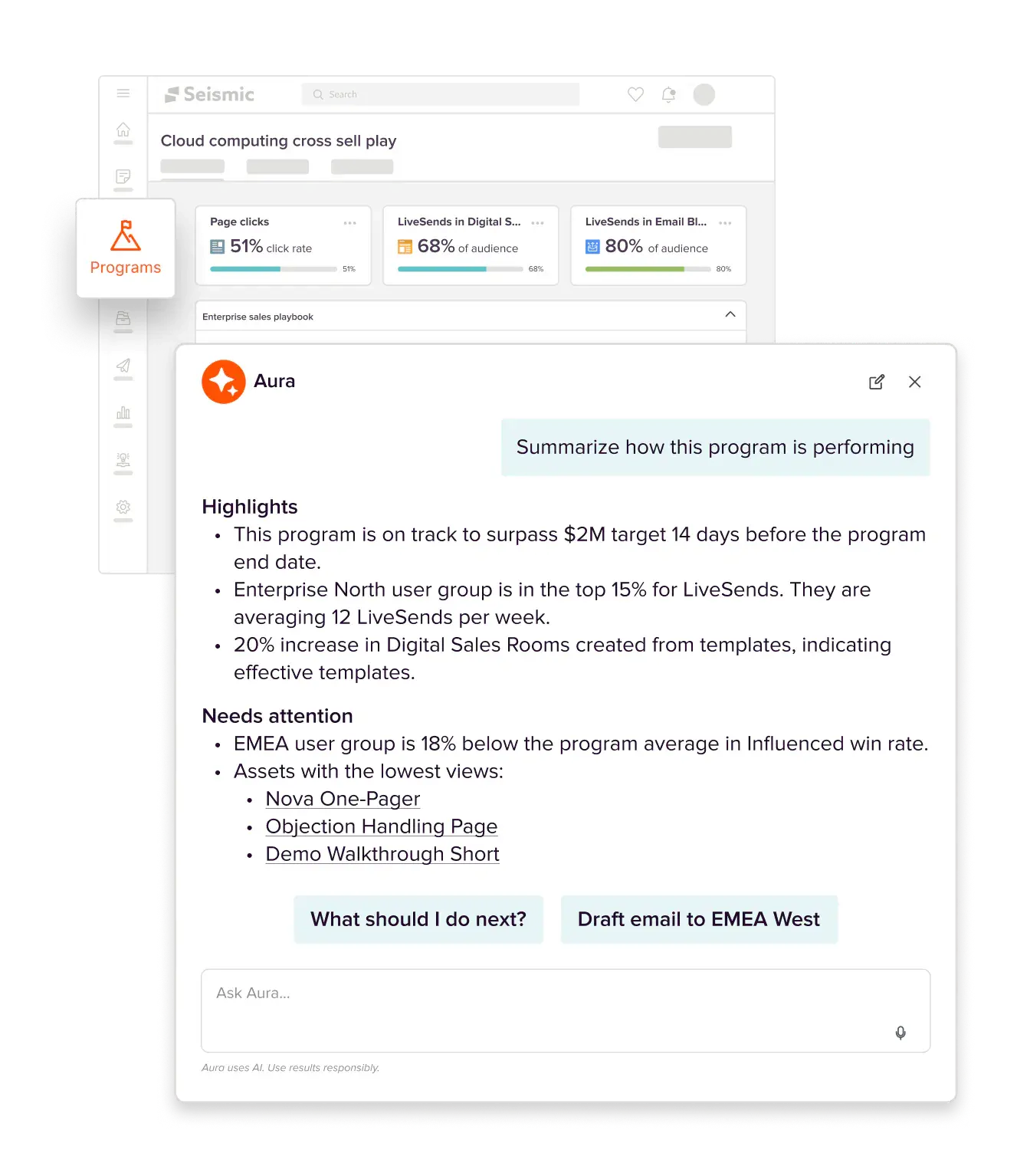
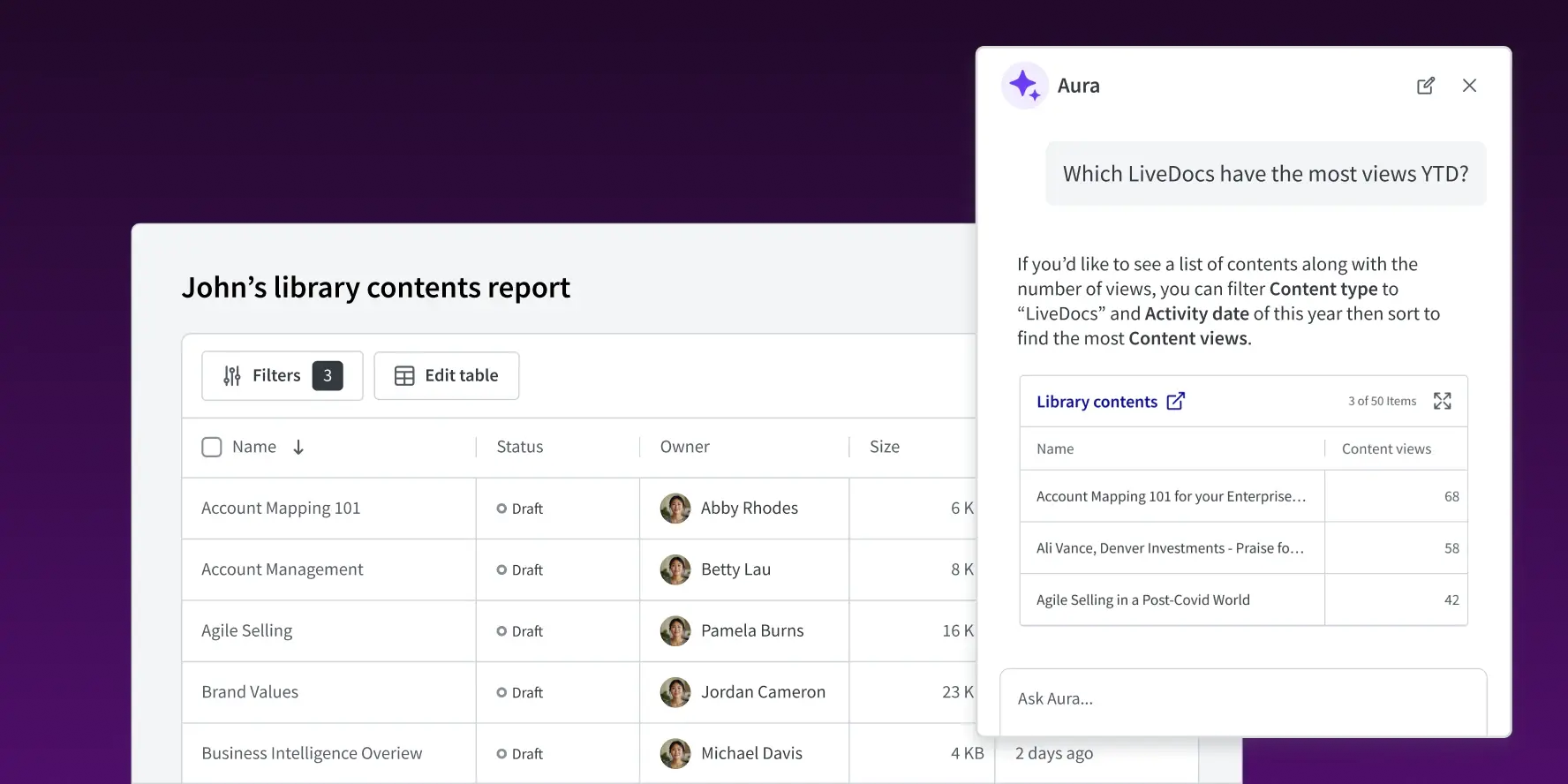
Seismic's Aura AI trains against each organization's approved Seismic content, not open-web data. Every AI-generated answer, recommendation, and asset reflects the company's knowledge base, messaging, and permissions model.
Source: Seismic
Seismic states that Aura does not hallucinate from generic training data and cites sources within the organization's system of record.
Aura operates through specialized agents: the Presentation Agent builds personalized PowerPoint decks from CRM data inside PowerPoint, the Role-Play Agent simulates customer conversations, and the Analytics Agent answers reporting questions in plain language.
Source: Seismic
Seismic also holds ISO 42001 certification for AI governance, an early marker for enterprise buyers evaluating AI risk.
Recent releases added MCP (Model Context Protocol) support for interoperability with external AI systems.
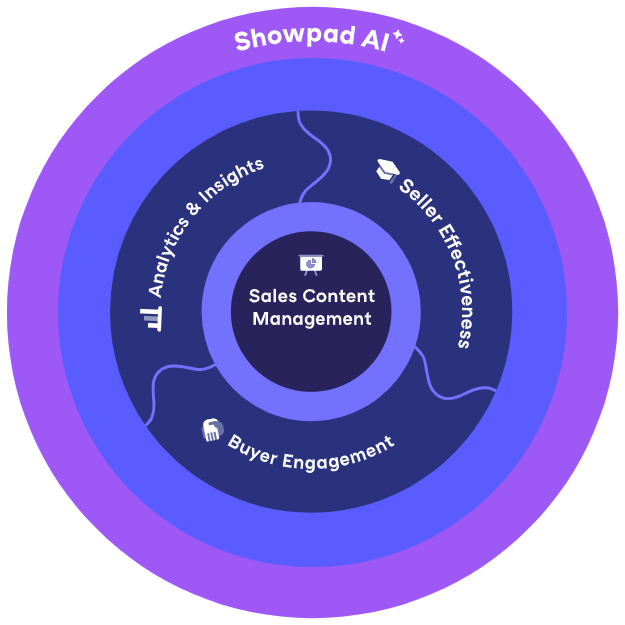
Showpad takes the opposite approach: independence from any specific AI provider. The platform uses open-source AI models tailored to each use case, run within a secure AWS environment.
Source: Showpad
This independence means Showpad can swap underlying models as the AI landscape changes without platform-wide dependencies.
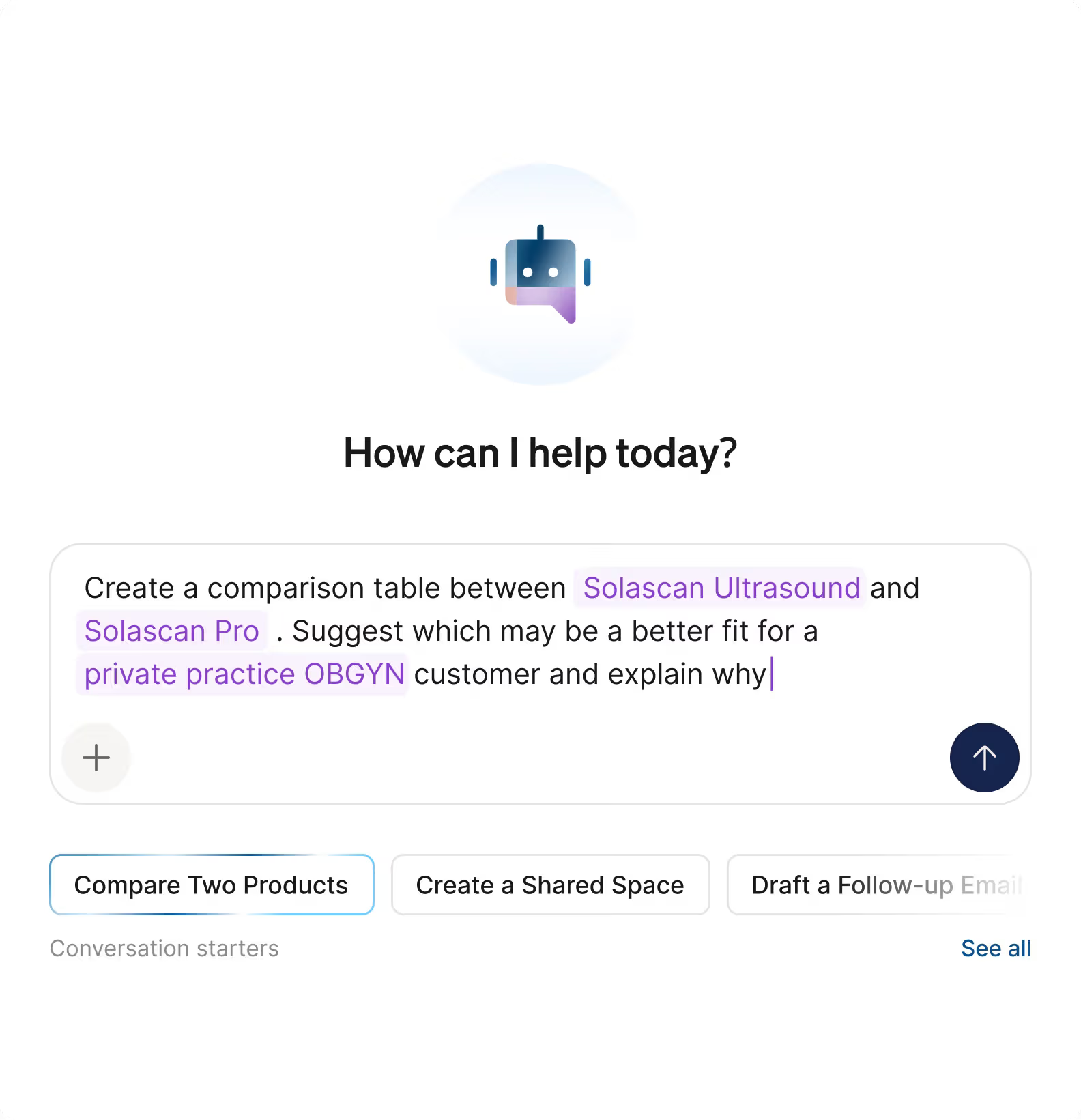
Showpad's AI suite includes Genie Assistant for instant answers and task delegation through permission-based agents, RolePlay AI for conversation practice, AuthoringAI for turning slides into narrated training content in 30+ languages, and Field Meeting AI for post-meeting CRM updates and follow-ups.
Source: Showpad
Seismic's grounded-in-your-content approach reduces hallucination risk and supports compliance-heavy industries. Showpad's vendor-independent architecture offers more flexibility as AI models improve. Neither approach is wrong; they reflect the risk profiles of their target buyers.
Enablement without intelligence is half the equation
Seismic and Showpad both excel at arming reps once they're in a deal. They organize content, train sellers, and track buyer engagement. But neither answers the questions that come first: Which accounts should your team pursue? Who are the decision-makers? When is a prospect ready to buy?
This is the gap ZoomInfo fills.
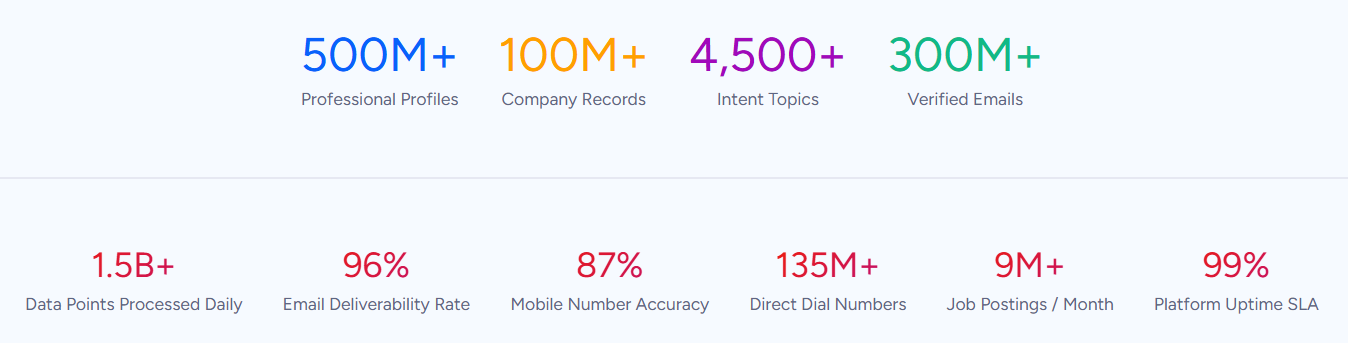
ZoomInfo runs the largest B2B data platform in the industry: 500M contacts, 100M companies, 135M+ verified phone numbers, and 200M+ verified business emails, verified by 300+ human researchers with up to 95% accuracy on first-party data.
Source: ZoomInfo
That data is not static. ZoomInfo's GTM Context Graph combines this third-party intelligence with your CRM records, conversation transcripts, and behavioral signals, processing 1.5B+ data points daily to capture not just what happened in a deal, but why.
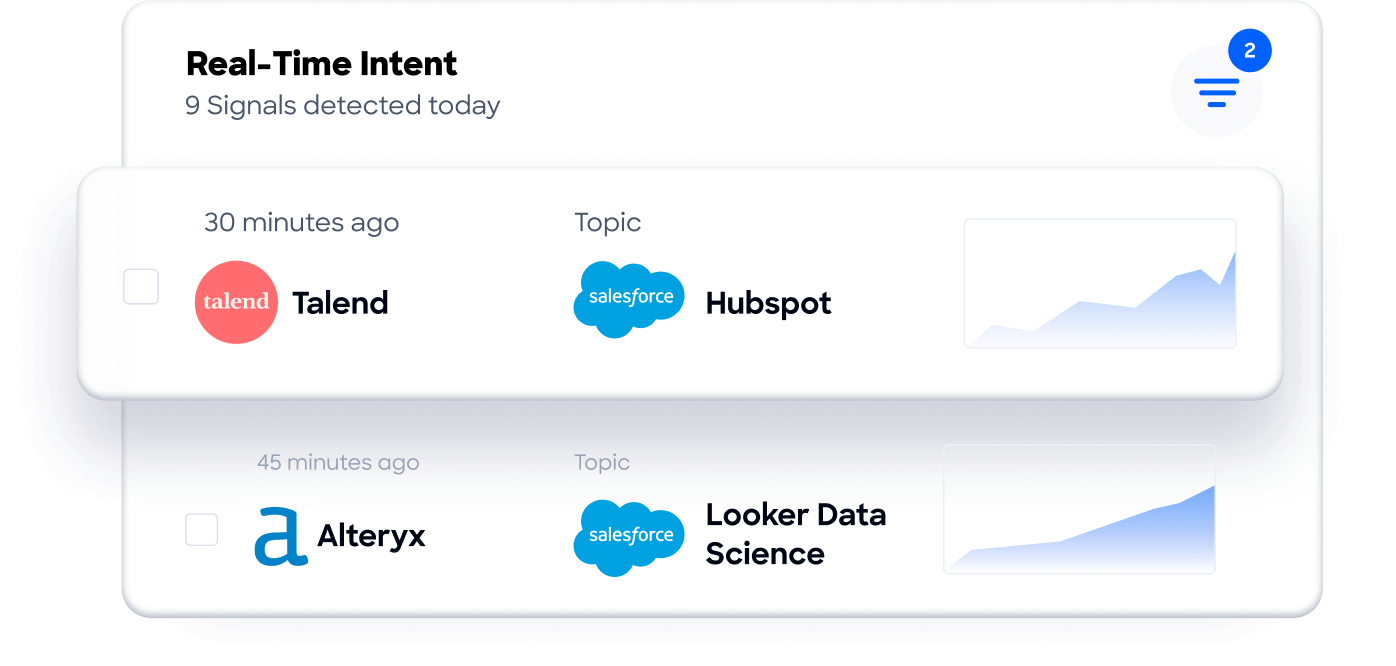
Buyer Intent data tracks signals from 210 million IP-to-Organization pairings and 6 trillion+ keyword-to-device pairings sourced monthly.
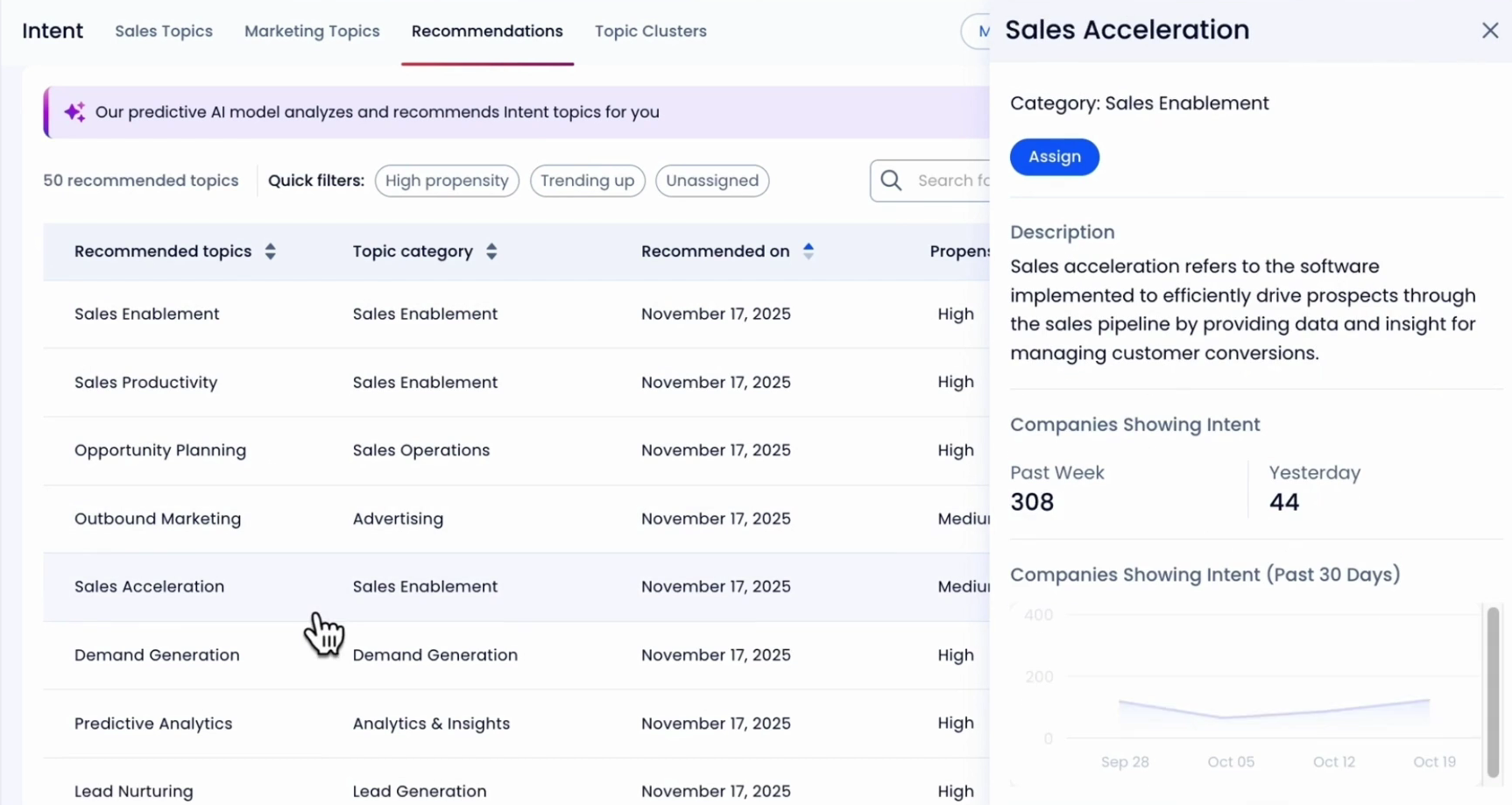
Guided Intent, exclusive to ZoomInfo, identifies topics historically correlated with deal success rather than requiring manual topic selection.
Source: ZoomInfo
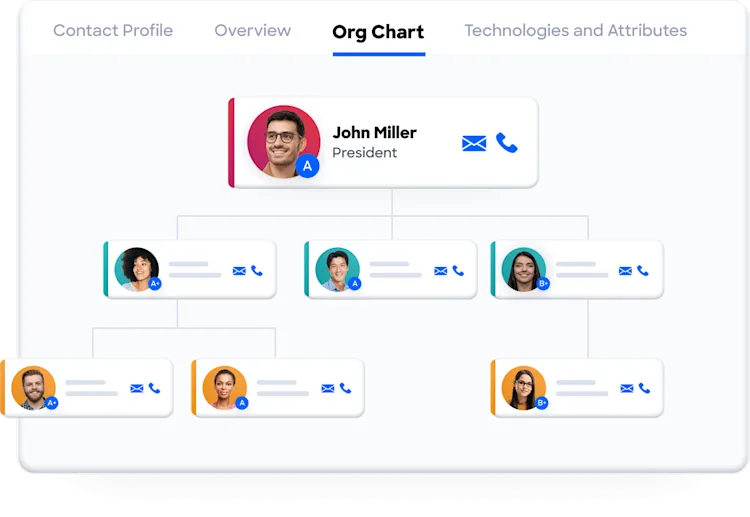
This matters for enablement because the best content, delivered by a well-coached rep, still fails if it reaches the wrong account at the wrong time. Intent signals tell your team when a prospect is researching solutions. Org charts reveal the decision-makers. Technographics show what tools a prospect already uses, so reps can tailor their pitch.
Source: ZoomInfo
Seismic's own sales organization uses ZoomInfo and attributes 39% of active pipeline to opportunities identified or influenced by ZoomInfo signals, with reps 54% more productive.
"That combination of our internal CRM data, external signals, and AI that's given all that context has helped us craft very specific account- and persona-based messages. And people have responded to them right away." (Toby Carrington, Chief Business Officer, Seismic)
ZoomInfo delivers this intelligence through three channels. GTM Workspace gives sellers a single view of prioritized accounts, AI-drafted outreach, and deal context. GTM Studio gives marketers and RevOps a builder for audience definition and campaign orchestration in natural language. APIs and MCP expose the same intelligence to any custom tool, including your Seismic or Showpad instance.
The enablement platform tells your rep what to say. ZoomInfo tells them who to say it to, and when.
Industry fit shapes the choice
Seismic and Showpad both serve enterprise organizations, but their strongest verticals barely overlap.
Seismic dominates financial services. Nine of the top 10 U.S. banks and 400+ financial services firms use the platform. Its compliance layer enforces regulatory-reviewed content at the point of distribution, maintains audit trails, and locks brand-critical elements.
For wealth managers, asset managers, and insurance organizations under strict regulatory requirements, this compliance architecture is not optional.
Seismic also has strong penetration in technology and SaaS, where companies like HubSpot, IBM, and Salesloft use it to equip large, distributed sales teams.
Showpad has established itself as the leader in Manufacturing, Healthcare, and Technology. Customers include GE Healthcare, Schneider Electric, Atlas Copco, and Coca-Cola. Forrester recognized Showpad as "best for enterprise customers with a global footprint who support hybrid sales teams."
The platform's offline access, 3D product visualization, and mobile-first design are built for reps who sell in the field, not from behind a laptop.
ZoomInfo complements either platform across industries. Its nine vertical datasets (including franchise ownership, restaurant operations, and commercial fleet intelligence) extend its reach beyond traditional tech and financial services.
Whether your reps use Seismic or Showpad for enablement, ZoomInfo's data and intent signals provide the targeting layer underneath.
Pricing and implementation
The three platforms price differently, reflecting their different roles in the GTM stack.
Seismic does not publish pricing. All deals are negotiated through custom order forms, with annual billing and non-cancellable commitments as the standard structure.
Seismic Content comes in Professional and Enterprise Premier editions. Seismic Learning is purchased separately. Add-ons (Meeting Intelligence, Dynamic Watermarking, LiveSend Custom Domain, and others) cost extra.
According to available information, enterprise deals typically range from $20,000 to $120,000+ annually. Implementation commonly runs four months or longer, and most organizations engage professional services for setup.
Showpad publishes its tier structure but not specific prices. Three tiers (Professional, Advanced, and Expert) offer progressively more AI features, analytics, and customization.
Add-on bundles (Learn+, Collaborate+, Empower+) extend coaching, buyer collaboration, and content automation. Pricing is per-user with annual billing.
ZoomInfo uses consumption-based pricing scaled around data access, API consumption, and AI activity. Sales, Marketing, and Operations products each have their own tiers (Professional, Advanced, Enterprise).
Unlike either enablement platform, ZoomInfo offers a permanent free tier: ZoomInfo Lite provides access to the B2B database with 10 monthly export credits, website visitor reveals, and HubSpot integration at no cost.
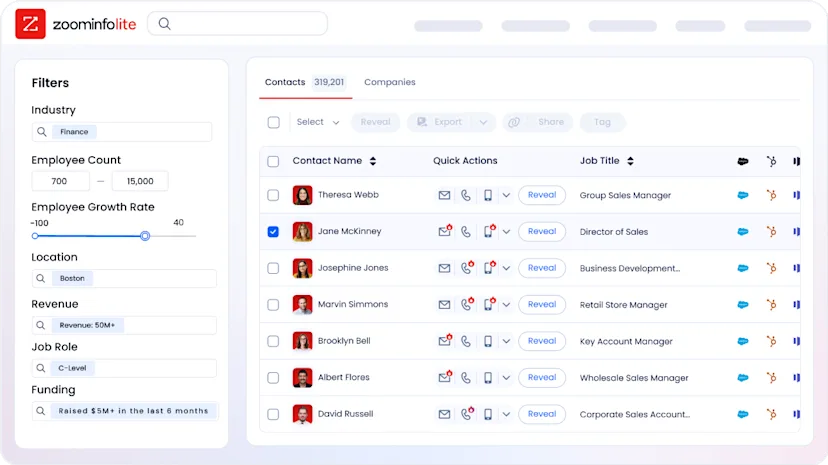
Source: ZoomInfo
A 7-day free trial is also available. Paid plans are custom-quoted, with credits consumed only when data is exported.
The implementation contrast matters. Seismic requires months of setup, content migration, and change management. Showpad gets teams live in weeks. ZoomInfo deploys in weeks for core prospecting and intent monitoring, with deeper GTM Context Graph integration scaling from there.
What the mergers mean for buyers
Both enablement platforms are consolidating.
Seismic announced its intent to merge with Highspot in February 2026, combining the two largest pure-play enablement platforms.
The combined company will operate under the Seismic brand with CEO Rob Tarkoff (who replaced co-founder Doug Winter in October 2025).
For buyers, this merger signals that the enablement market is moving toward fewer, larger platforms. It also raises the integration and product roadmap questions that come with any major merger.
Showpad completed its merger with Bigtincan in October 2025, backed by Vector Capital. The combined company operates under the Showpad brand with CEO Apratim Purakayastha.
Bigtincan brought additional AI capabilities (GenieAI Pro) and a five-time Leader position in the Aragon Research Globe.
Post-merger product consolidation is underway, with the best capabilities from both platforms being unified into Showpad eOS.
ZoomInfo is not in a merger cycle. As a public company (NASDAQ: GTM) with $1.25 billion in annual revenue and $455 million in free cash flow, it offers the stability of a profitable, independent platform. For buyers evaluating multi-year commitments, vendor stability during post-merger integration is worth weighing.
Seismic vs. Showpad vs. ZoomInfo: Which should you choose?
The right stack depends on your sales motion, your industry, and how much you're willing to invest in enablement infrastructure.
Choose Seismic if:
You operate in financial services, insurance, or another regulated industry where content compliance is mandatory
You have a dedicated enablement team to manage content governance, tagging, and learning paths
Content automation (LiveDocs) is critical for personalizing presentations at scale
You need analytics connecting enablement activities to revenue outcomes
You're prepared for a multi-month implementation and enterprise-level pricing
Choose Showpad if:
Your sales team works primarily in the field with complex physical products
High user adoption is your top priority and you cannot afford a tool reps ignore
You need offline access, 3D product visualization, or AR capabilities
You want to be live in weeks rather than months
You sell in manufacturing, medical devices, healthcare, or industrial sectors
Add ZoomInfo to either if:
You need to know which accounts are in-market before your reps engage
Your team wastes time pursuing accounts that are not ready to buy
You want AI-drafted outreach grounded in real buyer signals, not generic templates
You need verified contact data (direct dials, business emails) for decision-makers in your target accounts
You want an intelligence layer that feeds into your enablement platform, CRM, and any other tool via API or MCP
Start with ZoomInfo Lite for free, or explore the full platform.
"It's bringing data together faster than anyone could. It's both a time saving and a quality improvement." (Toby Carrington, Chief Business Officer, Seismic)
The best revenue teams do not choose between enablement and intelligence. They combine them. Seismic or Showpad arms your reps with the right content, coaching, and buyer experience. ZoomInfo directs that effort at the accounts and contacts that matter. Together, they form a GTM stack where content reaches the right buyer at the right moment, backed by data that tells your team why that moment matters.
Seismic vs. Showpad vs. ZoomInfo FAQ
What is the core difference between Seismic, Showpad, and ZoomInfo?
Seismic and Showpad are revenue enablement platforms that manage sales content, training, coaching, and buyer engagement. They compete for the same enablement budget.
ZoomInfo is a B2B intelligence platform that provides contact data, company insights, and buyer intent signals. It complements both enablement platforms, feeding the targeting and timing intelligence that tells reps which accounts to prioritize.
Which enablement platform is better for regulated industries?
Seismic. Over 400 financial services firms use the platform, including nine of the top 10 U.S. banks. Its compliance layer enforces regulatory-reviewed content at the point of distribution with full audit trails. Showpad serves regulated verticals like medical devices and healthcare but does not match Seismic's depth in financial services compliance controls.
Which platform has better user adoption?
Showpad consistently reports higher adoption metrics. Customers cite 93% adoption at Viessmann, 80% day-to-day usage at Automatic Irrigation, and 100% utilization rates in Forrester's Total Economic Impact study. Showpad's intuitive interface earns a 9.0 out of 10 ease-of-use rating.
Seismic is more capable but carries a steeper learning curve, with reviewers noting that content search becomes less reliable as libraries grow without rigorous manual tagging.
How does ZoomInfo work with Seismic or Showpad?
ZoomInfo provides the intelligence layer upstream of enablement. Its buyer intent data identifies when accounts are researching solutions. Its contact database provides verified direct dials and emails for decision-makers.
Its GTM Context Graph reveals why deals are moving or stalling. This intelligence feeds into the enablement workflow: your reps use Seismic or Showpad to deliver the right content, and ZoomInfo ensures they deliver it to the right people at the right time.
What do the Seismic-Highspot and Showpad-Bigtincan mergers mean for buyers?
Both enablement platforms are consolidating. Seismic announced its intent to merge with Highspot in February 2026, combining the two largest pure-play enablement vendors.
Showpad completed its merger with Bigtincan in October 2025 under Vector Capital.
Both mergers signal consolidation toward fewer, larger platforms. Buyers evaluating multi-year commitments should weigh the risks of post-merger product integration and roadmap changes.
Which platform offers the fastest time to value?
Showpad deploys in 6-9 weeks with a documented 3-month payback period.
Seismic implementations typically run four months or longer, often requiring professional services for setup.
ZoomInfo deploys in weeks for core prospecting and intent monitoring, with a permanent free tier (ZoomInfo Lite) available for immediate access to B2B data.
How do the AI capabilities compare across all three platforms?
Seismic's Aura AI is grounded in each organization's approved content, reducing hallucination risk and supporting compliance. It holds ISO 42001 certification for AI governance.
Showpad maintains independence from any specific AI provider, using open-source models tailored to each use case.
ZoomInfo's GTM Context Graph processes 1.5 billion data points daily, combining third-party B2B data with CRM records and conversation intelligence to reveal why deals move or stall.
Each AI approach serves a different function: Seismic's for content and coaching, Showpad's for field seller productivity, ZoomInfo's for account intelligence and targeting.
Can I use ZoomInfo without Seismic or Showpad?
Yes. ZoomInfo operates independently as a complete GTM intelligence platform. It provides prospecting, intent monitoring, CRM enrichment, marketing orchestration, and AI-driven outreach through its own products (GTM Workspace for sellers, GTM Studio for marketers and RevOps). It integrates with 120+ tools through its App Marketplace and is accessible via API and MCP in any third-party application.
See more Seismic and Showpad comparisons:
