
Choosing between SalesHood and Seismic for revenue enablement comes down to five questions:
Do you need a platform your team can adopt in weeks, or are you willing to invest months for more customization and governance?
Is transparent, published pricing important to your buying process, or are you prepared to negotiate an enterprise contract?
Do you primarily need AI coaching and rep readiness, or content automation with compliance controls for regulated industries?
Is your sales organization mid-market (50–500 reps) or large enterprise (500+ reps across global offices)?
Does your enablement strategy connect to live buyer intelligence, or does your training operate separately from the data that tells reps who to call and when?
In short, here's what we recommend:
SalesHood is the enablement platform built for mid-market B2B teams that need results fast. Founded by Elay Cohen, Salesforce's former SVP of Sales Productivity, SalesHood combines content management, learning, AI coaching, sales playbooks, digital sales rooms, and impact analytics in a single platform with published pricing starting at $45/user/month. Its AI Coaching Agents deliver real-time feedback on tone, pace, and strategy.
The catch: SalesHood fits the mid-market segment best, and AI coaching submissions are capped at 10 per license on the Essential plan, pushing heavier users to higher tiers.
Seismic is the enterprise enablement platform for organizations that need content governance, compliance enforcement, and scale. Named a Leader in the Gartner Magic Quadrant and Forrester Wave for Revenue Enablement Platforms, Seismic's Enablement Cloud serves 2,000+ organizations including 9 of the top 10 U.S. banks. Its LiveDocs content automation and Aura AI engine power everything from personalized presentations to AI-generated podcasts in 17 languages.
The tradeoff: Seismic doesn't publish pricing, implementations typically run four months or longer, and the platform requires dedicated enablement staff to manage content taxonomy and governance.
Both platforms do their jobs well: training reps, organizing content, and tracking enablement outcomes. But neither solves the problem that determines whether your enabled reps actually close deals, which is the quality of buyer intelligence feeding their workflows. A well-trained seller calling the wrong person at the wrong company at the wrong time still loses.
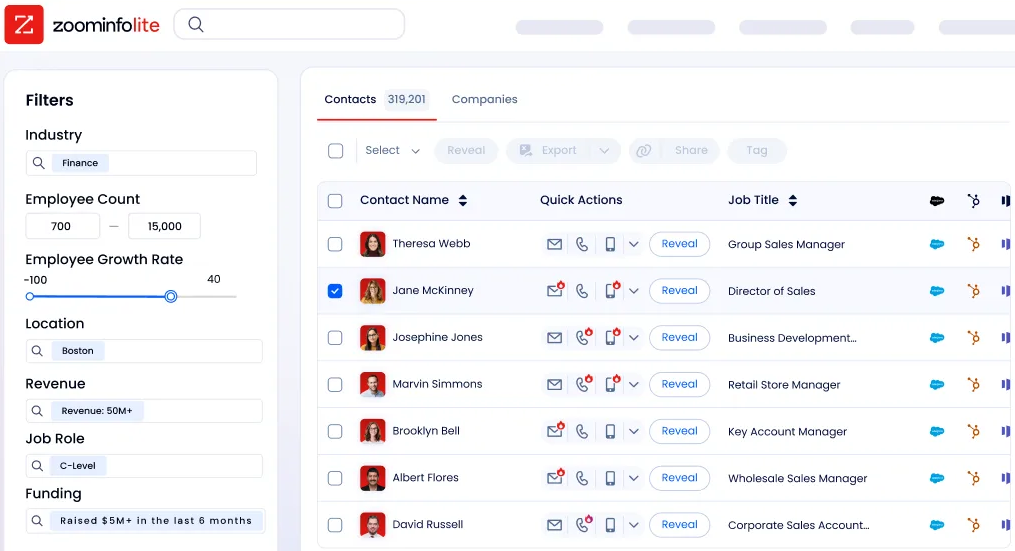
ZoomInfo is an AI-powered GTM platform built on a data foundation of 500M contacts, 100M companies, 135M+ verified phone numbers, and 200M+ verified business emails.
Its GTM Context Graph processes 1.5B+ data points daily, unifying this data with your CRM records, conversation transcripts, and behavioral signals to reveal the full context of your accounts.
That context gives AI the fuel to show not just what happened, but why it happened, and which actions will capitalize on that momentum.
With that intelligence, your team can run sales motions from GTM Workspace (for sellers), build campaigns in GTM Studio (for marketers and RevOps), or pipe the same data into their own tools through the API and MCP. ZoomInfo isn't a replacement for SalesHood or Seismic. It's the buyer intelligence foundation that makes either one more effective.
If connecting buyer intelligence to your enablement workflows sounds like the missing piece, see how ZoomInfo works.
SalesHood vs. Seismic vs. ZoomInfo at a glance
SalesHood | Seismic | ZoomInfo | |
|---|---|---|---|
Primary function | Revenue enablement (training, coaching, content, buyer engagement) | Revenue enablement (content, learning, coaching, meeting intelligence) | GTM intelligence and buyer data |
Content automation | AI Search, AI Content Writer, Content Audit | LiveDocs templates with CRM data, AI-generated slides | N/A (provides the data that feeds content) |
AI coaching | AI Role Play + AI Pitch Practice with scored feedback | Aura AI role-play with conversation analysis | N/A (provides account context for coaching scenarios) |
Digital sales rooms | Client Sites with embedded MAPs | DSRs with LiveSend tracking, no buyer account needed | N/A (provides buyer intelligence for DSR personalization) |
Total integrations | Salesforce, HubSpot, Box, Drive, Dropbox, Slack, SharePoint | ||
Analyst recognition | |||
Published pricing | Not published (enterprise-negotiated) | Custom-quoted, consumption-based | |
Free trial | No public trial | Structured trial by arrangement | 7-day free trial + ZoomInfo Lite (permanent free) |
Best for | Mid-market B2B SaaS teams wanting fast time-to-value | Enterprise and regulated industries needing governance at scale | Any B2B team needing accurate buyer data and signals |
Content management: depth vs. speed
SalesHood and Seismic both centralize sales content, but their design philosophies point in different directions.
Seismic treats content as a system that requires engineering. Its LiveDocs technology turns standard PowerPoint and Word files into templates with componentized placeholders connected to live CRM data.
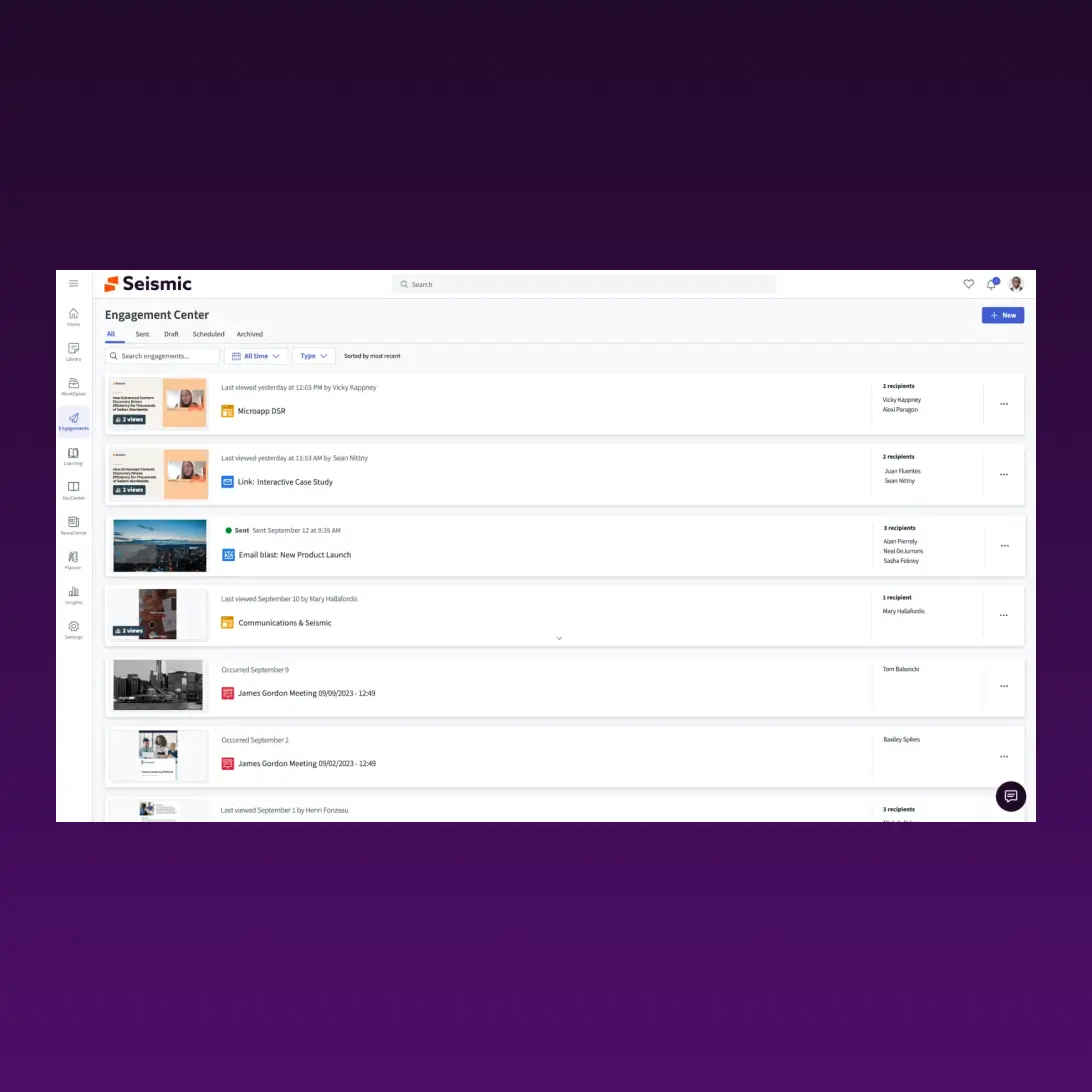
When a rep needs a personalized pitch deck, they complete a guided wizard and LiveDocs assembles the document automatically, pulling account data from Salesforce or Dynamics 365.
For teams that create thousands of customized presentations (financial advisors preparing client pitchbooks, for instance), this automation is a real advantage.
The tradeoff is governance overhead. Multiple G2 reviewers note that as content libraries grow, search relevance degrades without disciplined metadata tagging.
Aura AI auto-generates tags and detects duplicates at upload time, which helps, but large libraries still require ongoing administrative work to stay functional.
SalesHood takes a lighter approach. Its Sales Library centralizes assets with AI-powered search that delivers synthesized answers rather than file lists.
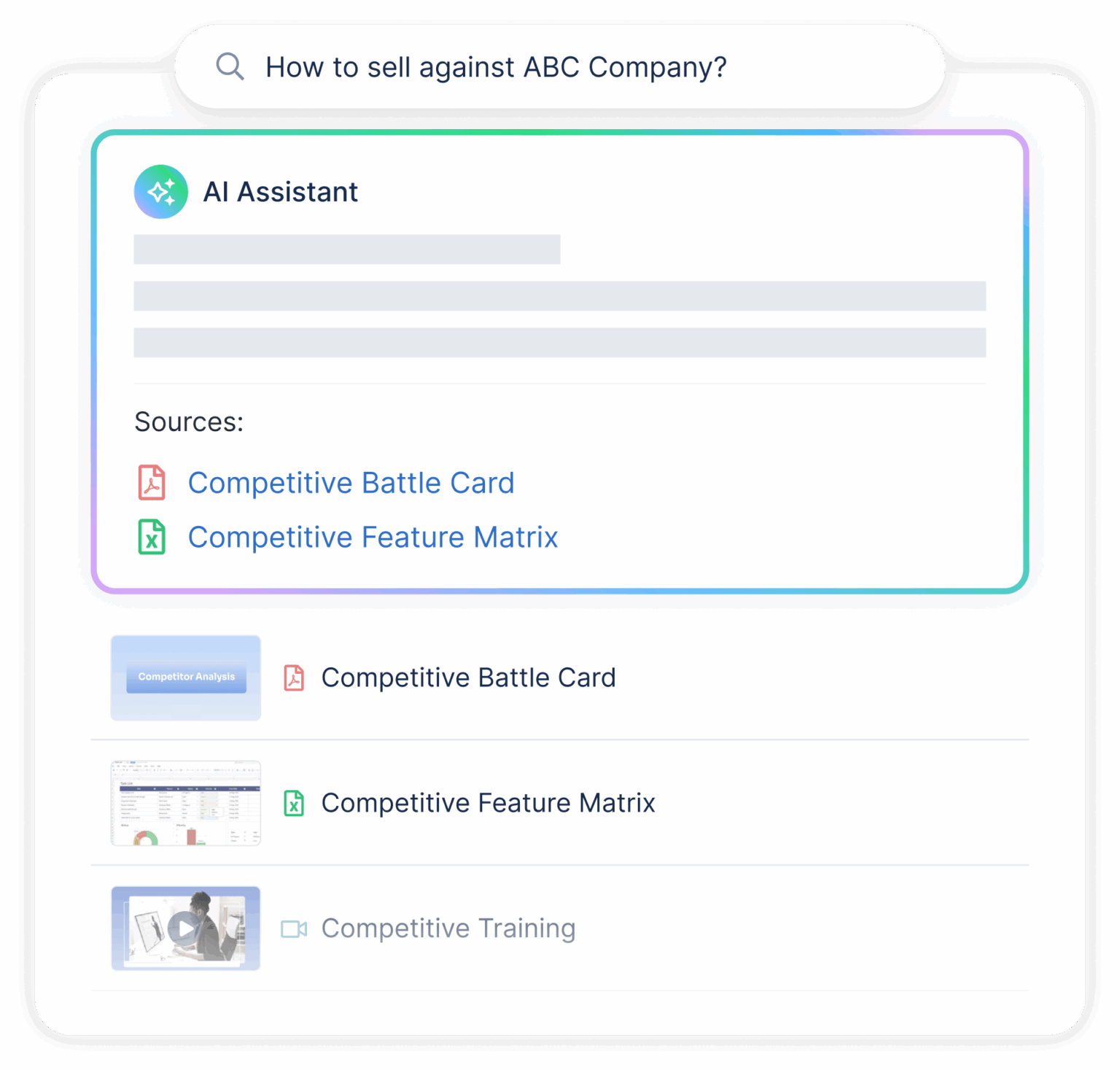
An AI Content Audit tool scans the library for accuracy, relevance, and discoverability issues. On the Pro tier and above, CRM Content Recommendations surface relevant assets inside Salesforce, Microsoft, and Gmail without requiring reps to visit a separate portal.
SalesHood's content layer is simpler, which cuts both ways. Enablement teams can get a functional library running in days. But SalesHood doesn't offer anything comparable to LiveDocs' template automation or Seismic's governed content assembly for high-volume, compliance-sensitive use cases.
The gap widens in regulated industries. Seismic's content governance (version control, role-based permissions, content expiration, audit trails) is built for environments where the wrong version of a document reaching a client creates legal liability. 400+ financial services firms rely on Seismic for exactly this reason. SalesHood's governance controls work for most B2B SaaS teams but aren't designed for the same compliance intensity.
AI coaching: continuous system vs. platform capability
Both platforms have invested heavily in AI coaching, but their architectures differ.
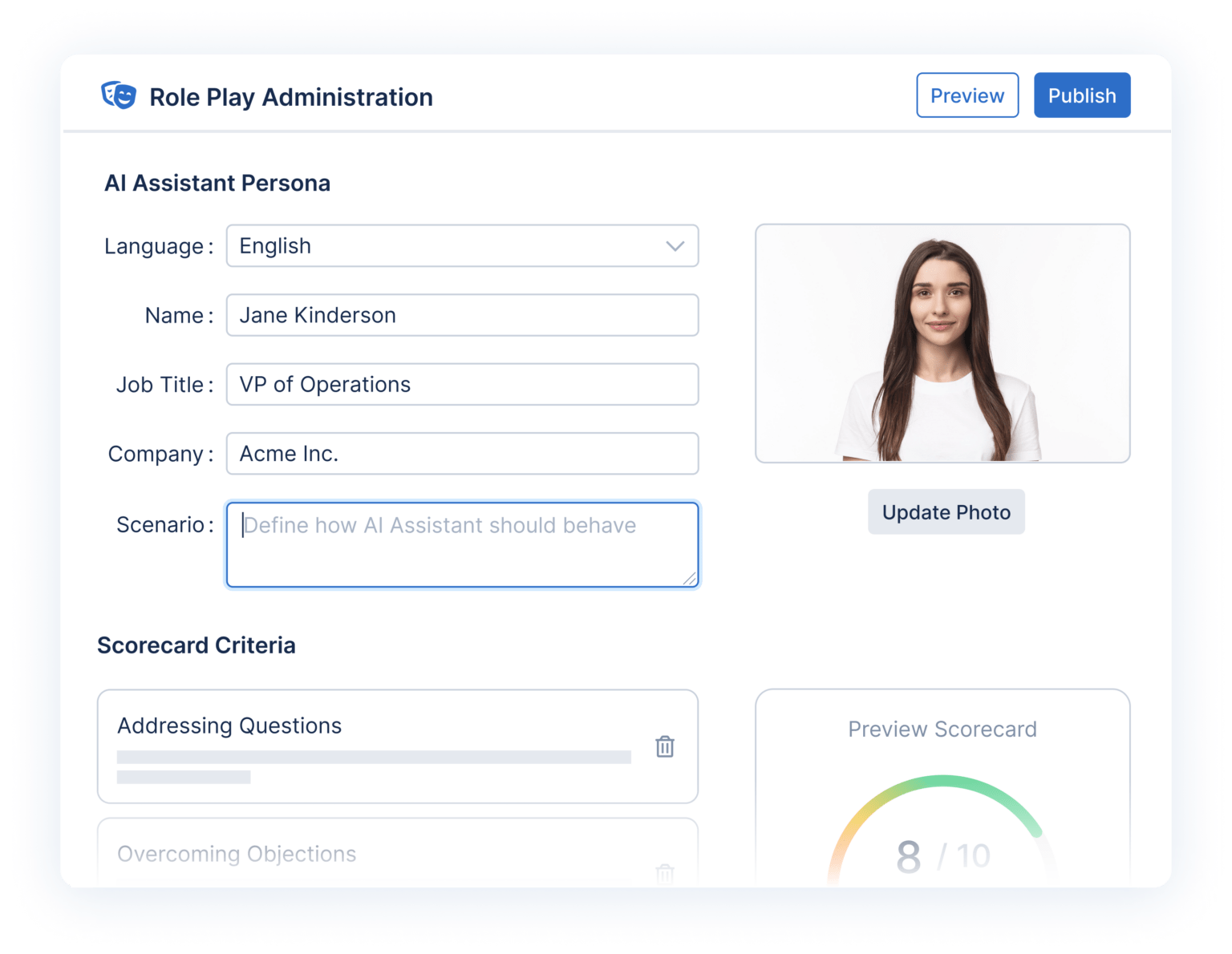
SalesHood frames AI coaching as an integrated system, not a standalone feature. Its AI Coaching Agents combine AI Role Play simulations, AI Pitch Practice, real-time feedback, and structured coaching flows into what the company calls a "continuous coaching system."
Source: SalesHood
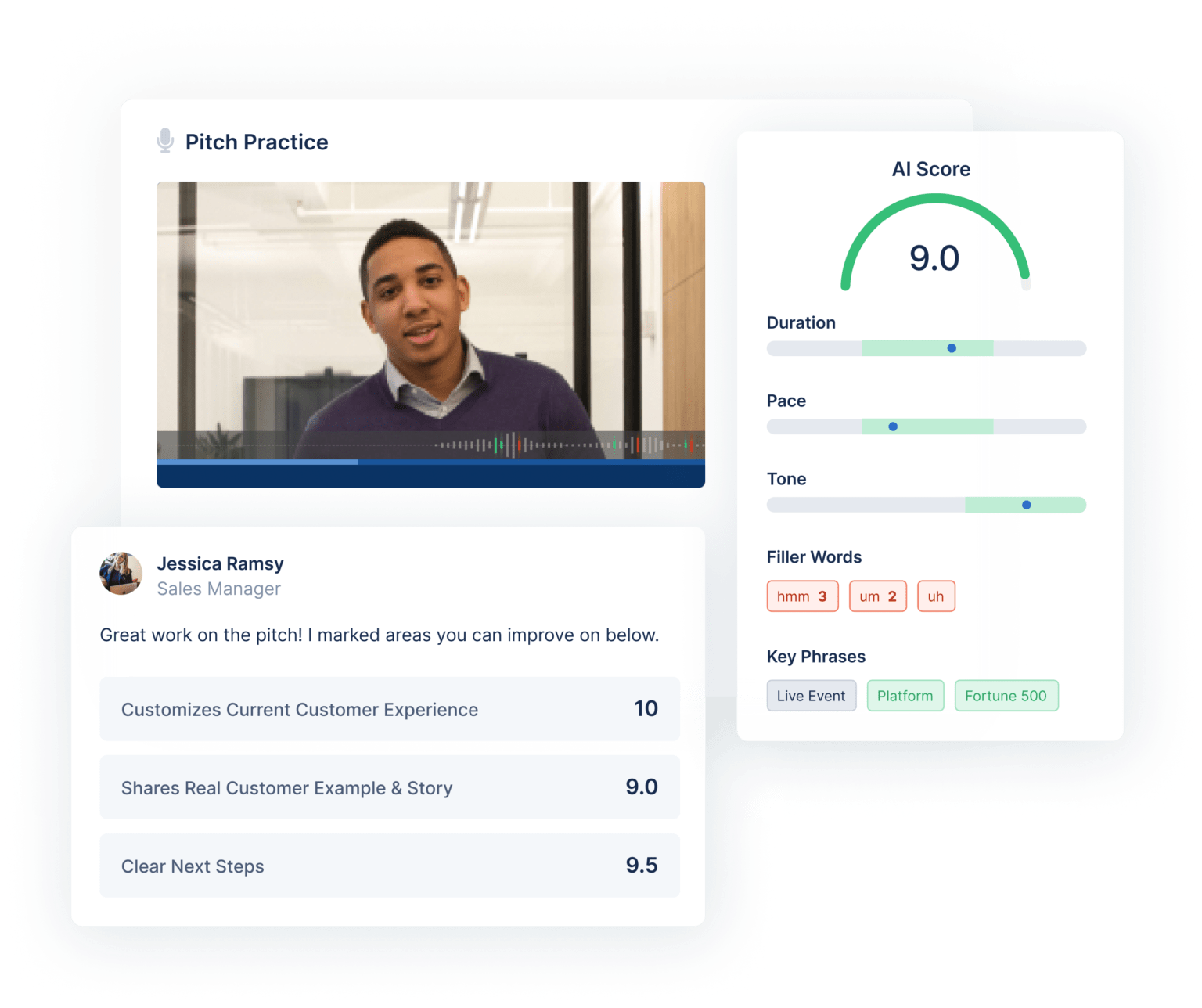
Reps practice objection handling, discovery calls, and demos against AI personas that simulate realistic buyer behavior using branching logic and natural language understanding.
Source: SalesHood
After each session, the AI scores clarity, positioning, tone, pace, and empathy, among other dimensions.
SalesHood published research in March 2026 arguing that standalone role play falls short without integrated context.
The company's data from 34,000+ AI coaching sessions supports the claim: connecting coaching to onboarding, playbooks, and deal execution produces 40% faster ramp readiness and 38% skill improvement.
The limitation is usage caps. The Essential plan allows only 10 AI coaching submissions per license, Pro caps at 80, and only the Unlimited plan ($85/user/month) removes limits. For training programs that require daily practice, this pushes the effective cost above headline pricing.
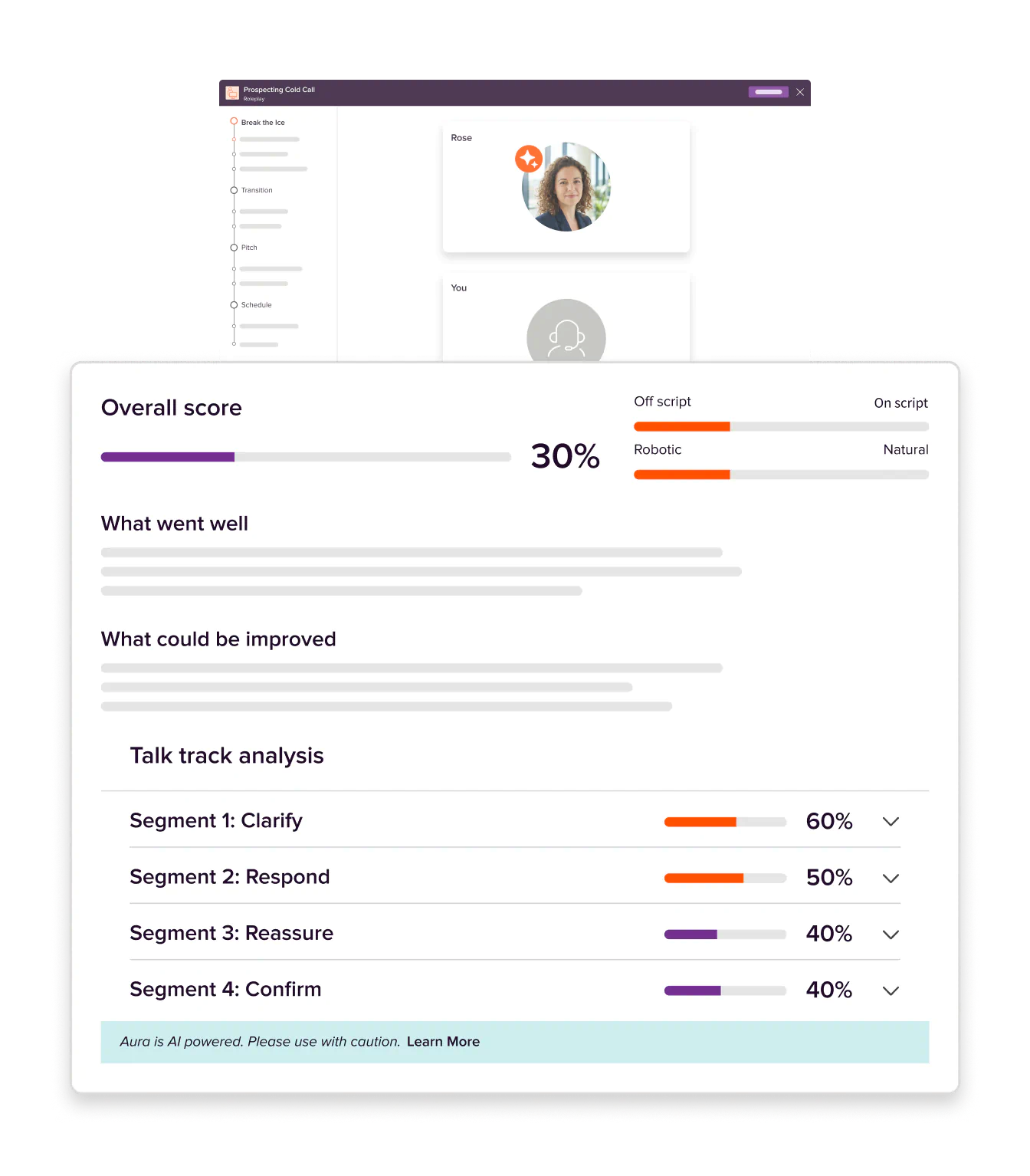
Seismic delivers AI coaching through Aura AI, which powers role-play scenarios, automated feedback, and skills assessments.
Source: Seismic
Aura role-play simulates buyer personas and auto-scores responses on pacing, keyword usage, filler words, and confidence.
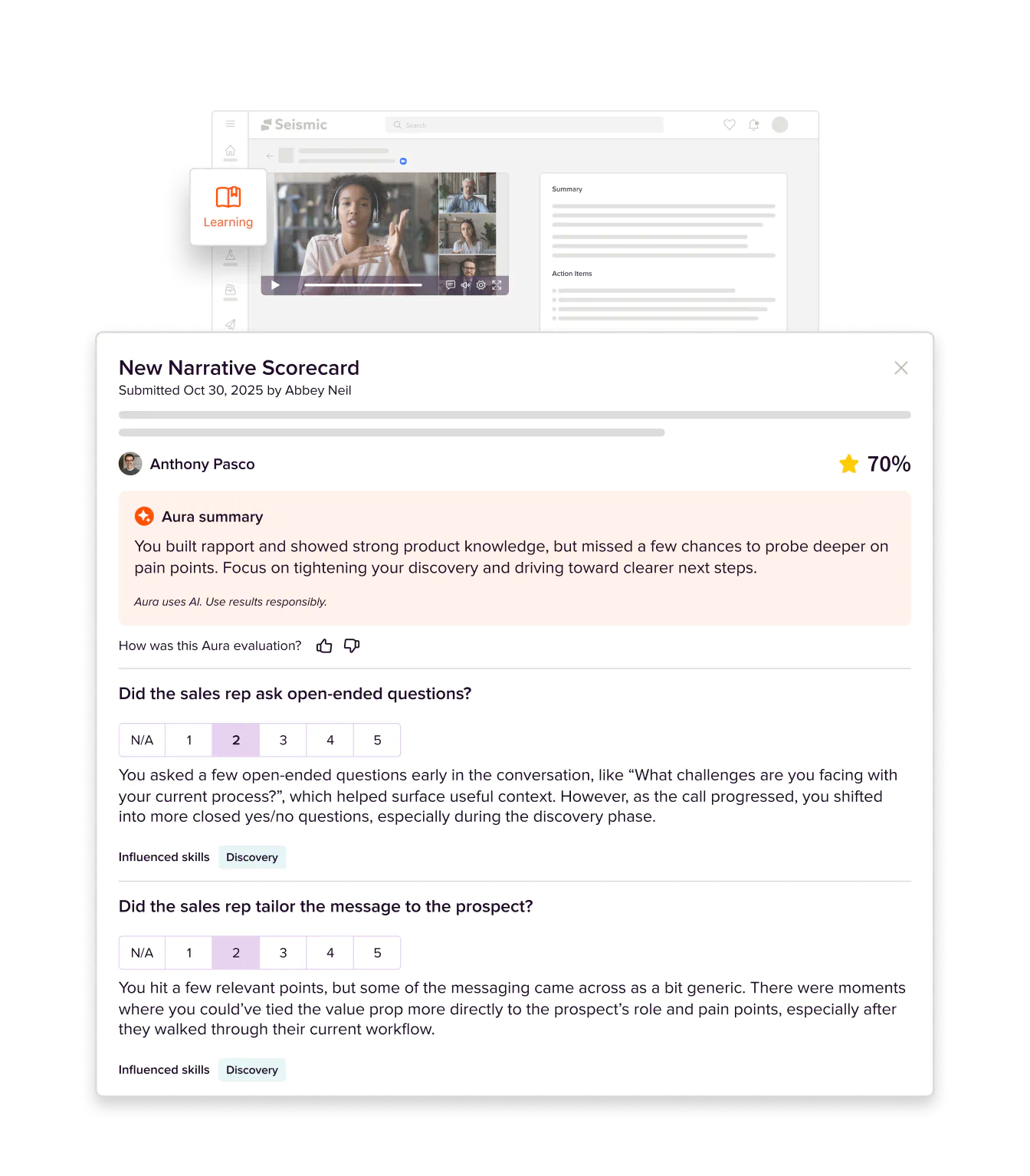
Where Seismic pulls ahead is the connection between practice and live performance: skill scores update automatically from both practice sessions and actual customer meetings captured through Meeting Intelligence.
Source: Seismic
That closed loop between practice and real calls shows managers whether coaching translates into field behavior.
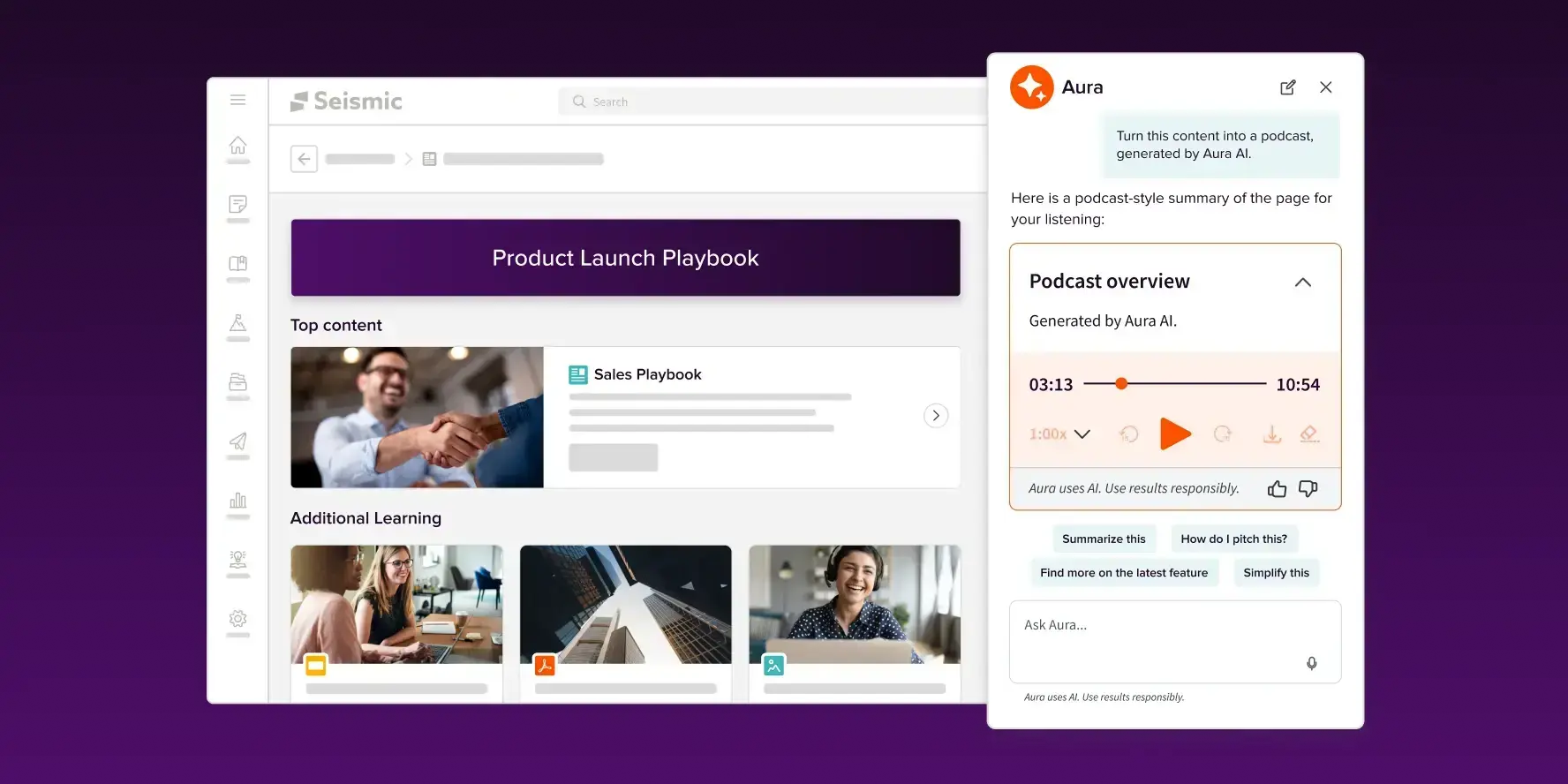
Seismic also introduced multimodal learning in Winter 2026, converting any Seismic content into AI-generated podcasts in 17 languages. This gives distributed teams a way to absorb training content during commutes or field time.
Source: Seismic
The practical difference: SalesHood's coaching is more prescriptive and tightly woven into the enablement lifecycle, with explicit readiness scorecards and certification gates. Seismic's coaching is broader, drawing on meeting intelligence and content performance data to build a fuller view of rep readiness. Neither approach is wrong. The right choice depends on whether you need a focused coaching system (SalesHood) or a platform that connects coaching to the full spectrum of rep activity (Seismic).
Digital sales rooms and buyer engagement
Both platforms recognize that B2B deals increasingly live in shared digital spaces rather than email threads. Their digital sales rooms reflect similar philosophies with different execution details.
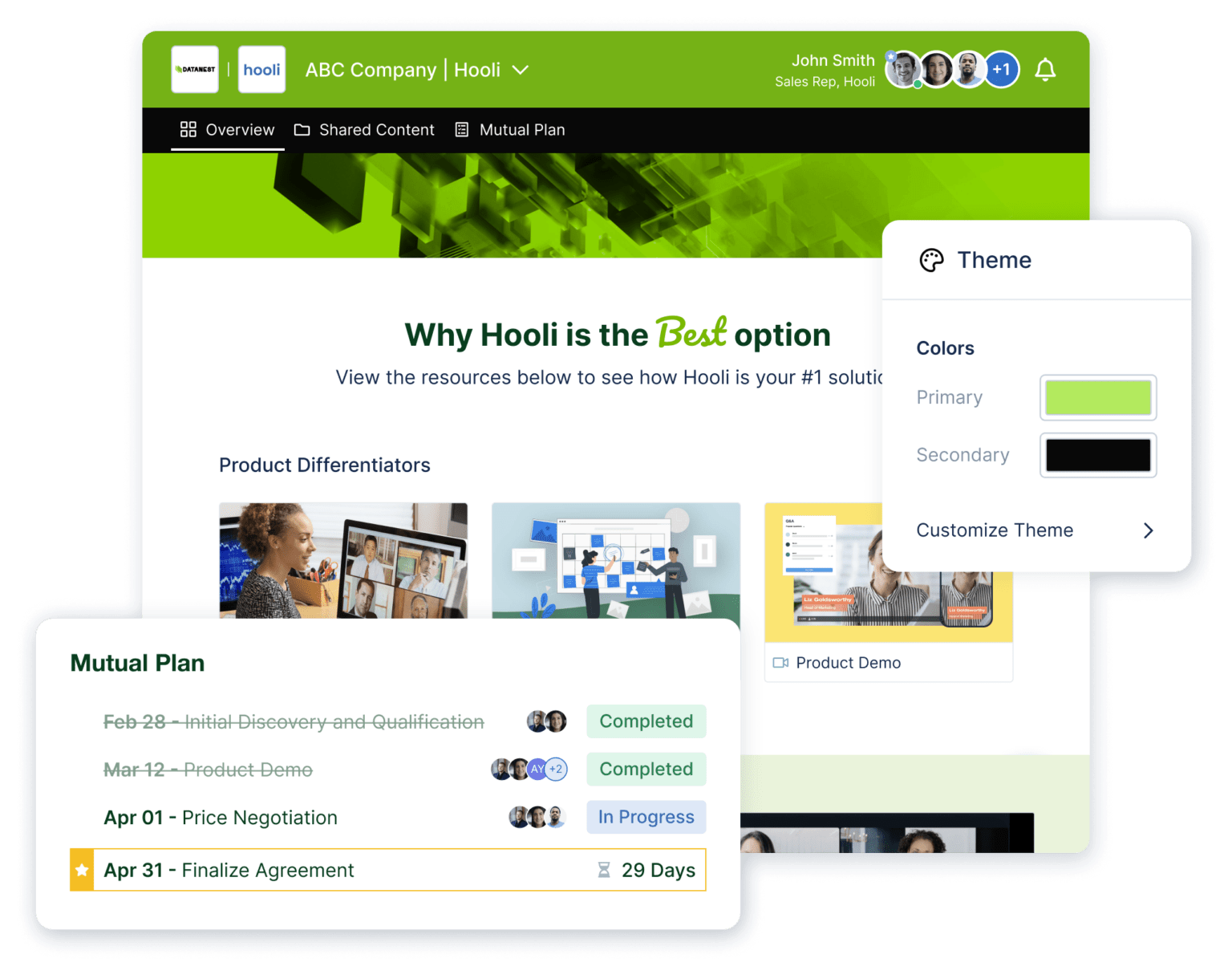
SalesHood calls them Client Sites: personalized, branded microsites where sellers and buyers collaborate through the deal. Sellers build Client Sites from no-code templates and embed video messages, call recordings, proposals, and deal-specific assets.
Mutual Action Plans are embedded directly in the DSR, with milestone tracking, owner assignment, and deadline management.
Source: SalesHood
SalesHood's DSRs are available on Pro and Unlimited tiers only. The MAP methodology is specific: introduce early when a champion is identified, use the buyer's go-live date to work backwards, write action items in the customer's own language, and validate with the economic buyer.
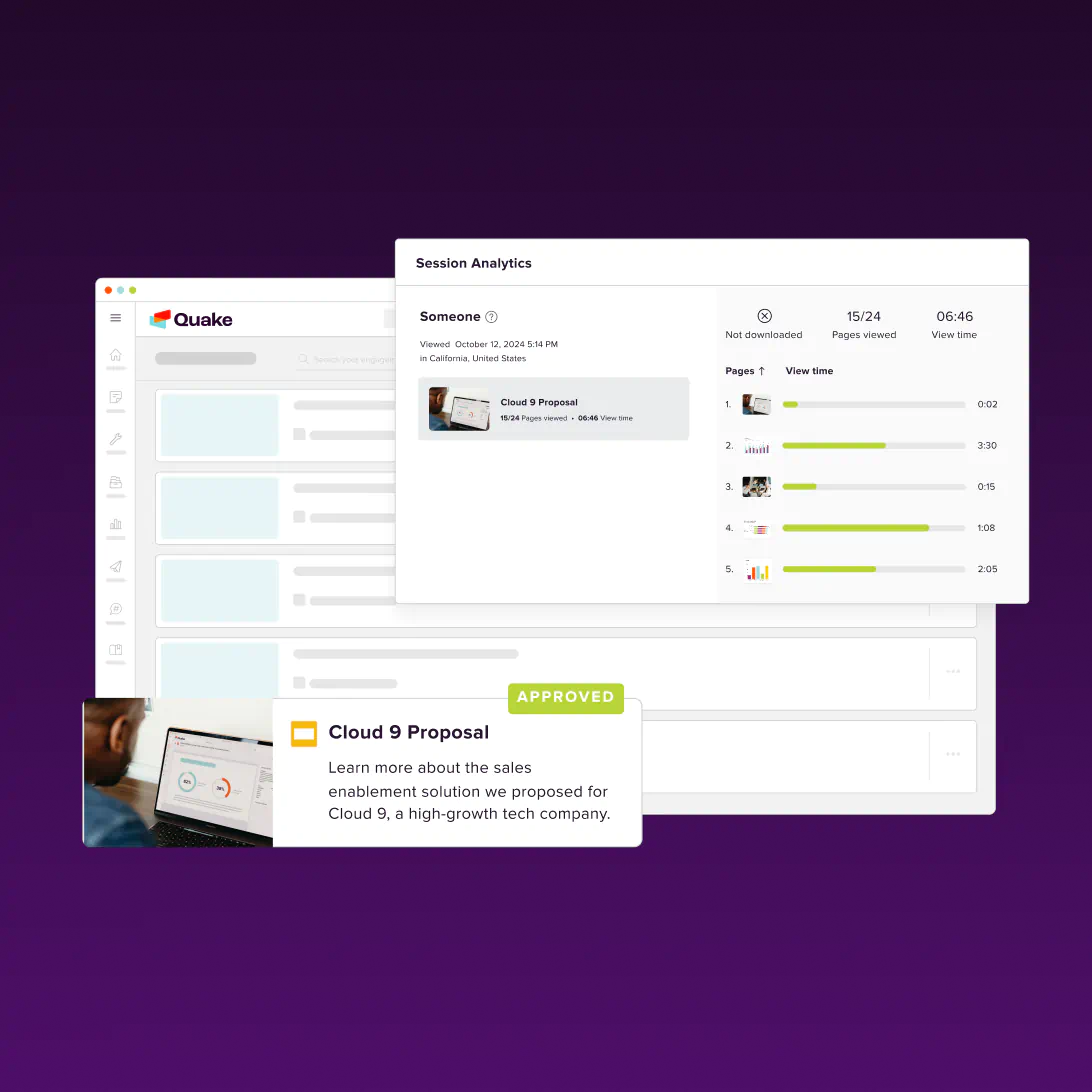
Seismic offers Digital Sales Rooms with drag-and-drop templates and personalized video introductions. Buyers access the room via a LiveSend link and don't need a Seismic account, which removes friction in the buying process.
Source: Seismic
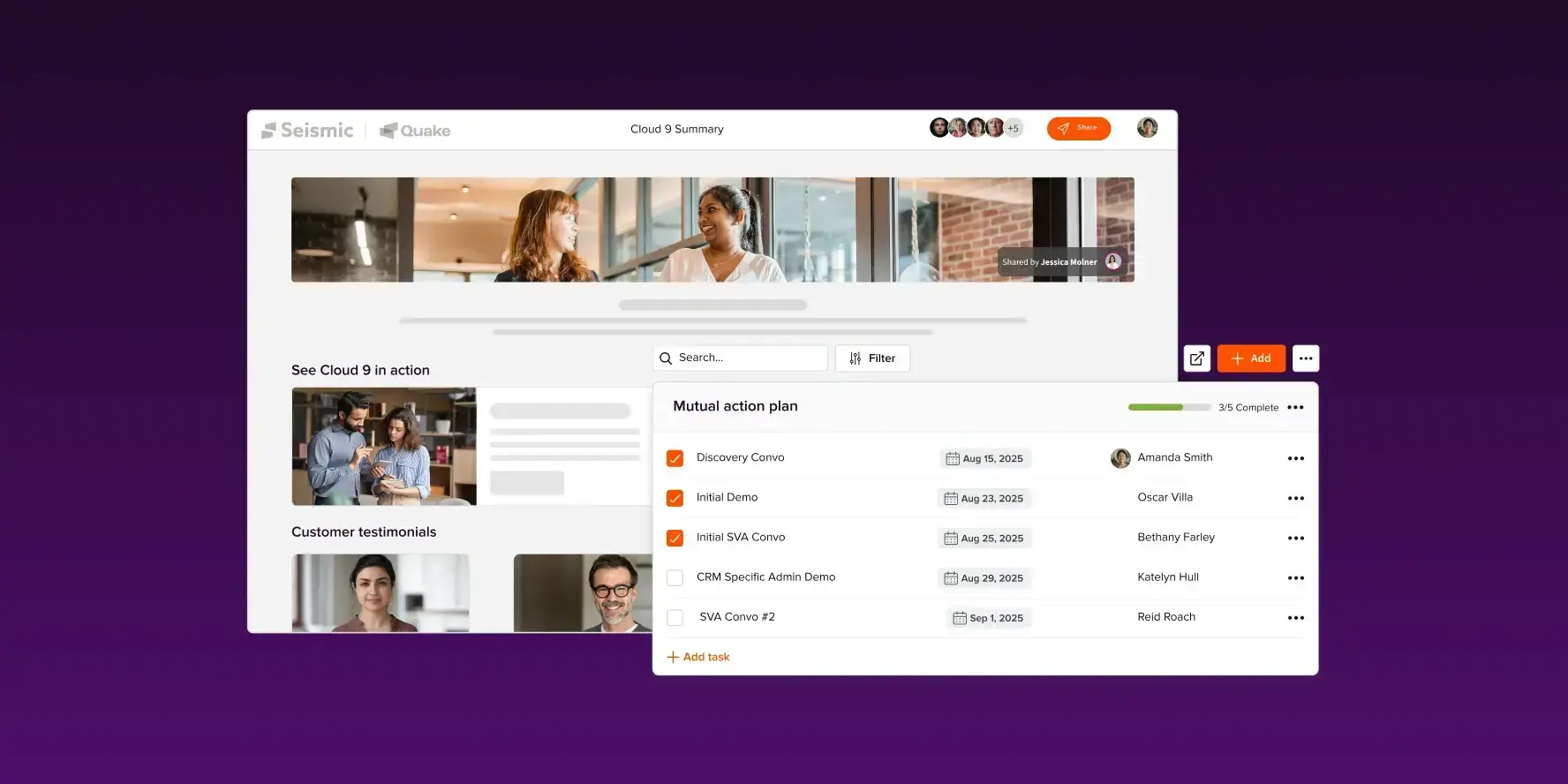
LiveSend sends real-time notifications when a buyer opens a link and records page-level time-on-content data. Seismic added Mutual Action Plans to DSRs in Winter 2026, with shared buyer-seller timelines and overdue action flagging.
Source: Seismic
Where Seismic's DSRs stand out is stakeholder-level tracking. With an average of 13 stakeholders per B2B deal, knowing which individuals engage (and which don't) helps sellers identify champions and blockers.
Both platforms treat buyer engagement data as a deal qualification signal. The difference is that Seismic's LiveSend analytics extend beyond the DSR to any content shared through the platform, creating a broader view of buyer interest across the full deal lifecycle.
Enablement without intelligence is training in the dark
Here's the gap neither SalesHood nor Seismic fills: buyer intelligence.
Both platforms train reps to sell effectively. Both organize content so reps can find what they need. Both track whether reps complete their training and engage their buyers.
But neither tells your reps which accounts are in-market right now, who the decision-makers are, what their direct phone numbers are, or what signals indicate they're ready to buy.
That's the problem ZoomInfo solves. ZoomInfo provides the data and signal layer that feeds into whatever enablement platform you choose.
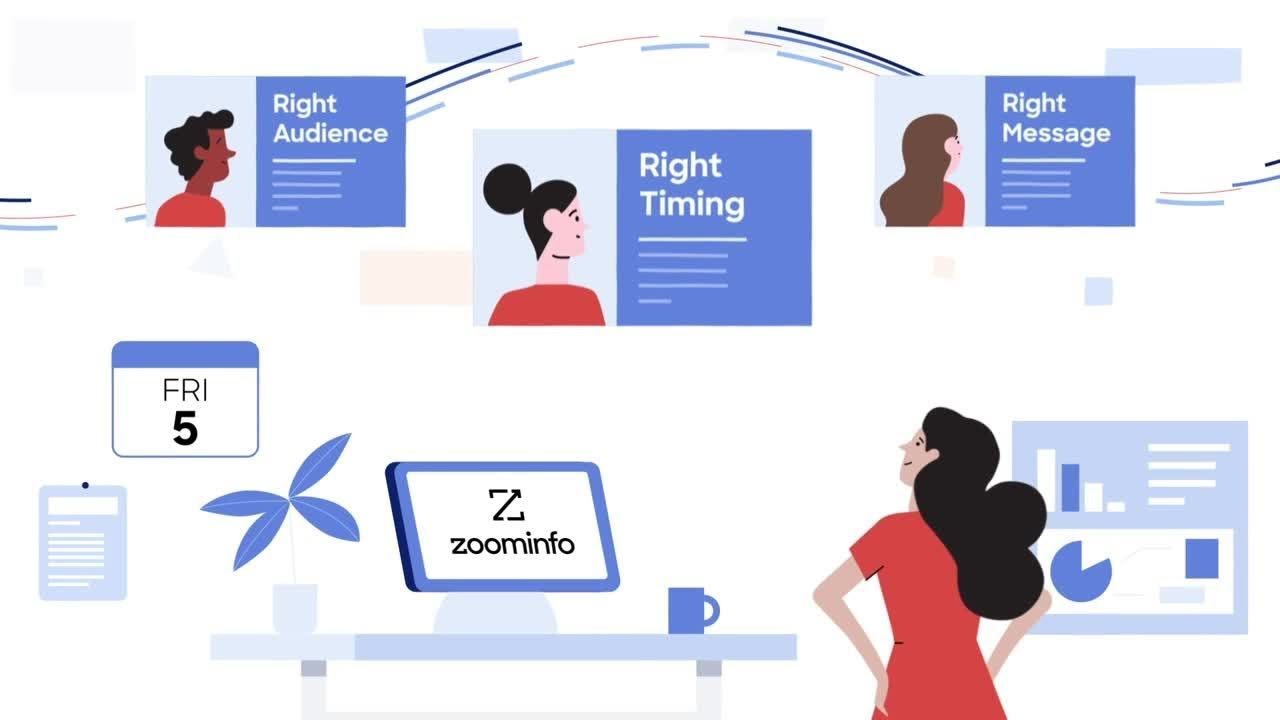
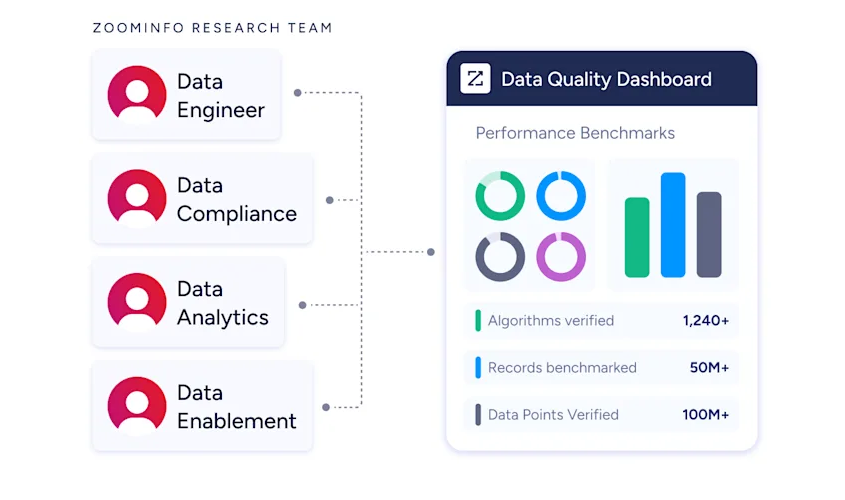
Its database spans 500M contacts, 100M companies, 135M+ verified phone numbers, and 200M+ verified business emails, verified through a multi-source pipeline backed by 300+ human researchers and delivering up to 95% accuracy on first-party data.
Source: ZoomInfo
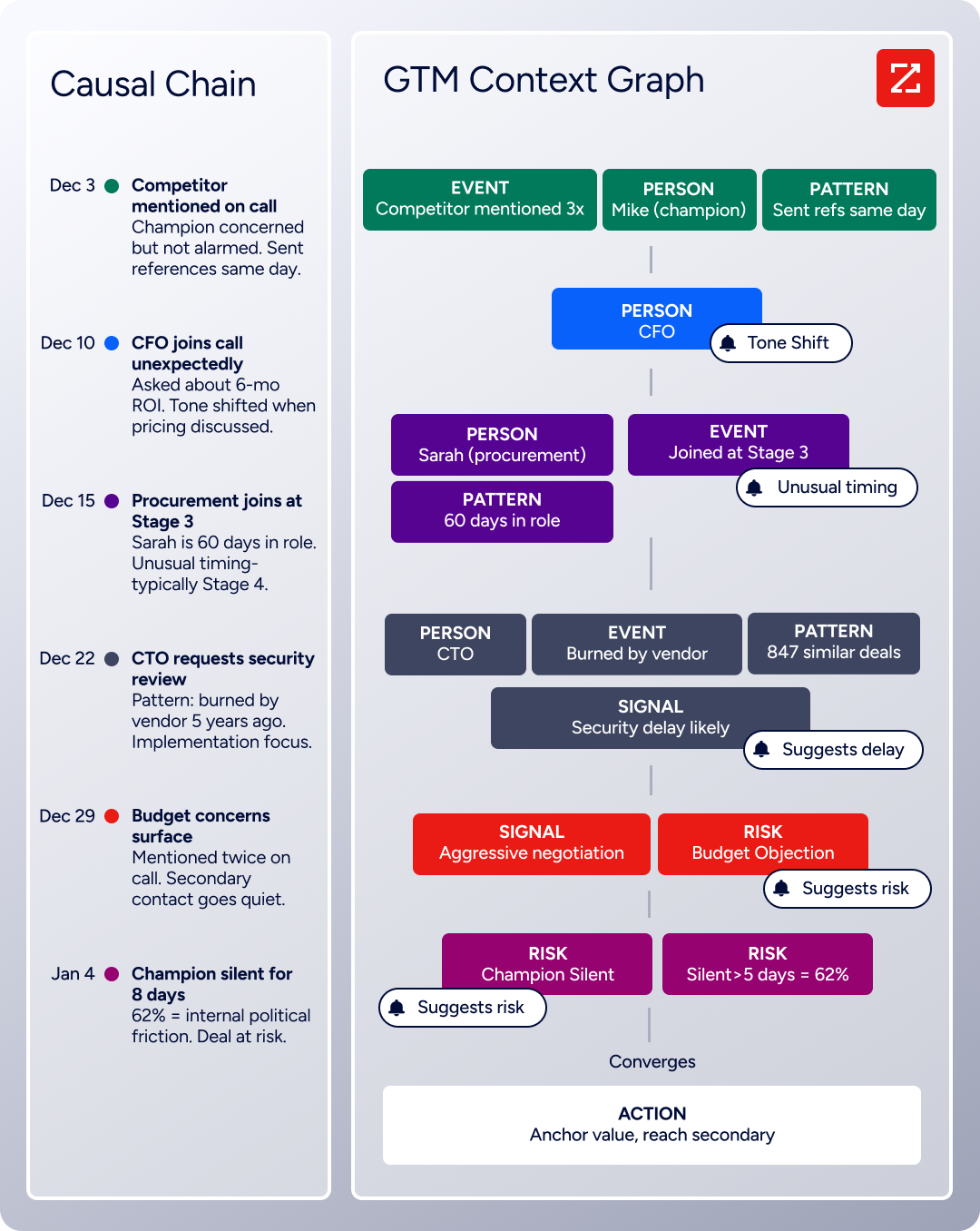
But the data is only the first layer. ZoomInfo's GTM Context Graph, an intelligence layer that processes 1.5B+ data points daily, fuses this third-party intelligence with your CRM records, conversation transcripts, email interactions, and behavioral signals.
As ZoomInfo's CPO Dominik Facher writes: "The CRM recorded the state change. It has no record of why it happened."
The GTM Context Graph captures why deals move or stall, connecting entities, signals, conversations, and outcomes so AI can act on go-to-market decisions rather than just reading CRM fields.
For enablement teams, this changes the equation. Instead of training reps on generic scenarios, you can coach them on real accounts showing real buying signals.
Instead of filling digital sales rooms with standard content, you can personalize based on what the buyer's organization is actually researching. Instead of measuring enablement success by training completion rates, you can trace the line from training activity to revenue outcomes powered by verified buyer data.
Source: ZoomInfo
The proof? Seismic, one of the platforms in this comparison, is a ZoomInfo customer. Seismic's sales team attributed 39% of active pipeline to opportunities identified or influenced by ZoomInfo signals, while becoming 54% more productive.
When the market leader in sales enablement relies on ZoomInfo to power its own selling motion, that tells you how much the intelligence layer matters.
Seismic's Chief Business Officer Toby Carrington described the impact: "That combination of our internal CRM data, external signals, and AI that's given all that context has helped us craft very specific account- and persona-based messages. And people have responded to them right away." (ZoomInfo case study)
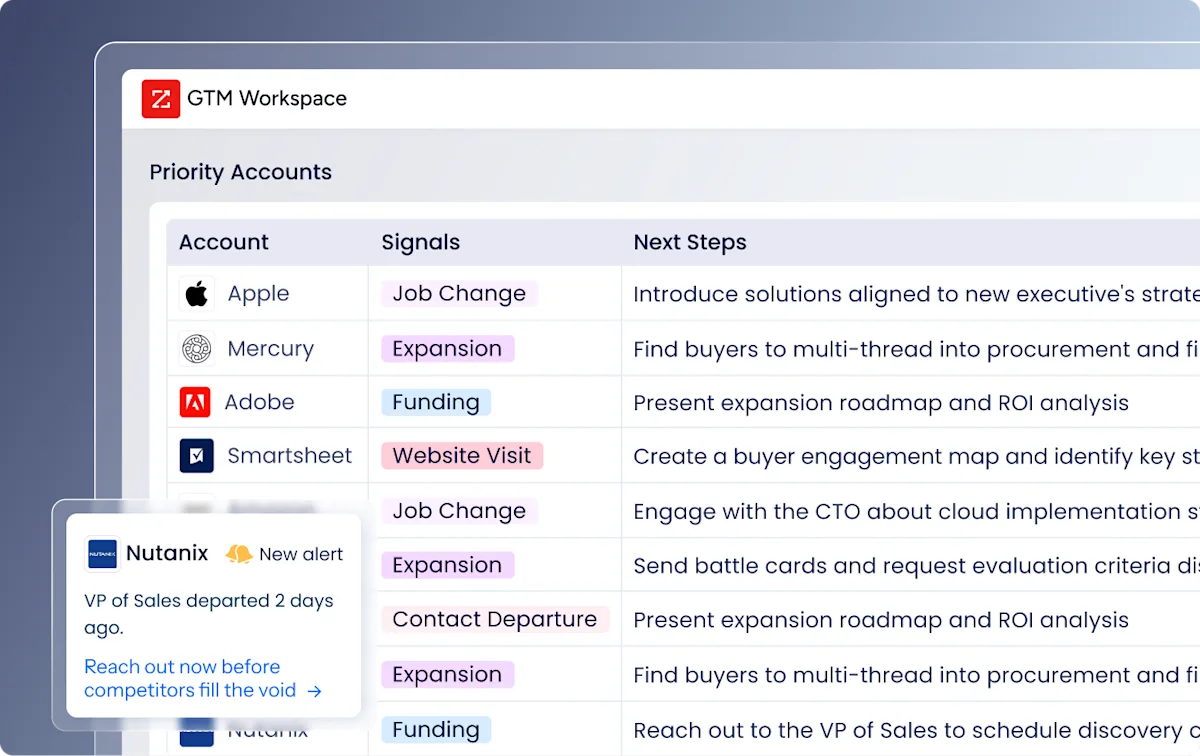
ZoomInfo delivers this intelligence through three channels. GTM Workspace gives sellers a single screen where prioritized accounts, AI-drafted outreach, and deal execution come together.
Source: ZoomInfo
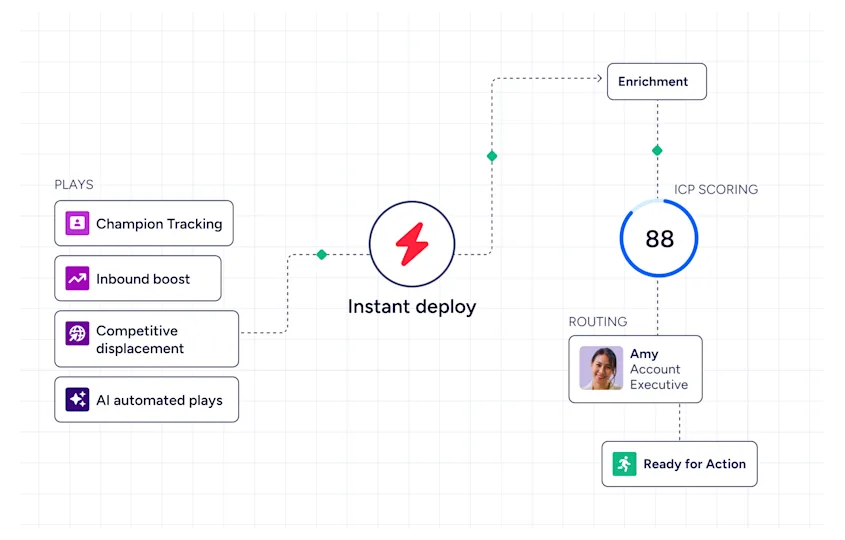
GTM Studio gives marketers and RevOps a builder for audience definition, campaign orchestration, and pipeline measurement.
Source: ZoomInfo
And APIs and MCP expose the same intelligence to any custom tool, AI agent, or partner platform. All three draw from one GTM Context Graph, so your choice of interface never limits the intelligence available.
Pricing tells you who each platform was built for
The pricing structures reveal each company's target customer more clearly than any positioning statement.
SalesHood publishes three tiers:
Essential: $45/user/month — Learning management, content management, AI Search, 10 AI coaching submissions, 10 learning paths, standard integrations, 2 languages
Pro: $65/user/month — Adds 80 AI coaching submissions, Digital Sales Rooms, Mutual Action Plans, CRM Content Recommendations, custom reports, SAML SSO, file sync with SharePoint, 6 languages
Unlimited: $85/user/month — Unlimited AI coaching, unlimited pages, Salesforce Correlation Engine, 18 languages, Premium Customer Success
MEDDICC/MEDDPICC is a paid add-on across all tiers, which may surprise buyers who see it featured prominently in SalesHood's marketing. No free trial is publicly advertised.
Seismic does not publish pricing. The pricing page returns a 404 error, and all commercial discussions start with a demo request.
Seismic sells two main product lines separately: Seismic Content (Professional and Enterprise Premier editions) and Seismic Learning, each priced independently. Contracts are non-cancellable with annual billing, and seat quantities cannot be reduced mid-term.
Reviewer estimates put enterprise deals at $20,000 to $120,000+ annually. Implementation and professional services cost extra.
ZoomInfo uses a consumption-based pricing model that scales around data access, API consumption, and AI activity.
ZoomInfo offers two free entry points: a 7-day free trial with core features and ZoomInfo Lite, a permanent free tier with access to the B2B database, 10 monthly export credits, and WebSights Lite. This lets teams validate data quality before committing.
Total cost matters more than list price. SalesHood's transparent pricing makes budgeting straightforward, but buyers should model the real cost at full deployment: MEDDICC add-ons, tier upgrades for AI coaching limits, and language requirements can push effective per-seat costs above the headline number. Seismic's opaque pricing makes direct comparison difficult, and total cost of ownership includes not just licenses but the dedicated enablement headcount and professional services required to maintain the platform. ZoomInfo adds cost to the stack, but it's a different line item: buyer intelligence rather than enablement software.
Implementation and time to value
SalesHood's founding story shapes its deployment approach. CEO Elay Cohen built the platform after watching Salesforce spend "tens of millions annually" on global travel to onboard, train, and certify its sales teams.
The result is a platform designed for speed. SalesHood claims customers can realize value in days, not months, aided by pre-built templates and quickstart frameworks on all tiers. G2 awards for Easiest Setup and Most Implementable back this up.
Seismic's implementation reflects its enterprise scope. The platform requires building content taxonomies, configuring role-based permissions, setting up LiveDocs templates, and training administrators on governance workflows.
Reviewers cite four-month or longer implementation timelines, and the Seismic Exchange marketplace includes an "Accelerating Adoption" app, a sign that structured change management is a recognized part of deployment.
For organizations with large content libraries and complex compliance requirements, this investment makes sense. For teams that need to launch an enablement program this quarter, it's a barrier.
ZoomInfo's deployment sits between the two. GTM Workspace "deploys in weeks, not months" and integrates natively with Salesforce, HubSpot, and Microsoft Dynamics. The MCP server requires only one-time configuration to connect AI assistants to ZoomInfo's data.
For teams adding ZoomInfo to an existing enablement stack, the integration adds to the workflow rather than disrupting it.
Support models differ accordingly. SalesHood includes 24/7 email-based support on all tiers and Premium Customer Success with strategic consulting on Unlimited.
Seismic offers a standard SLA committing to 99.5% uptime, with Platinum tiers providing 24x7 support, 1-hour P1 response, and a dedicated Technical Account Advisor at additional cost.
ZoomInfo provides support through its Help Center, ZoomInfo University, and ZoomInfo Labs professional services.
Source: ZoomInfo
Spekit's RevOps Manager Ben Perceval described the ZoomInfo integration experience: "Anything that minimizes our team's need to switch contexts is beneficial. ZoomInfo offers a unified view, eliminating the need to navigate between systems." (ZoomInfo case study)
SalesHood vs. Seismic vs. ZoomInfo: Which should you choose?
The best choice depends on your organization's size, industry, and where the biggest gap sits in your revenue motion.
Choose SalesHood if:
You're a mid-market B2B company that needs enablement results this quarter
AI coaching and rep readiness are your top priorities
Transparent pricing matters to your procurement process
You want an all-in-one enablement platform without months of implementation
Your content governance needs are straightforward (not regulated industries)
Choose Seismic if:
You're an enterprise with 500+ reps and dedicated enablement staff
Content governance and compliance are non-negotiable (financial services, healthcare, manufacturing)
You need content automation with CRM-connected templates
Meeting intelligence and conversation analytics matter to your coaching strategy
You want the broadest integration ecosystem in the enablement category
Add ZoomInfo to either if:
You want your enablement investment to connect to verified buyer intelligence
Your reps need accurate contact data, direct dials, and intent signals to act on their training
You're building a GTM motion where data quality determines pipeline quality
You want AI that understands why deals move, not just what happened in the CRM
You need the same data foundation in your enablement platform, your CRM, and your custom tools
Start with ZoomInfo's free trial or ZoomInfo Lite to test the data before you commit.
SalesHood and Seismic each represent a strong approach to revenue enablement, built for different segments and different needs. But whichever platform you choose, the intelligence feeding your reps' workflows matters as much as the training itself. The most polished pitch deck in the world doesn't help if it's sent to the wrong person. The best coaching program doesn't move revenue if reps spend their time on accounts that aren't in-market.
ZoomInfo connects enablement to reality: verified contacts, live buying signals, and contextual intelligence that turns training into closed deals. If Seismic's own sales team runs on ZoomInfo, your team probably should too.
SalesHood vs. Seismic vs. ZoomInfo FAQ
What is the core difference between SalesHood, Seismic, and ZoomInfo?
SalesHood and Seismic are revenue enablement platforms that train, coach, and equip sales teams with content and tools to sell more effectively.
SalesHood is built for mid-market B2B companies and emphasizes fast deployment with AI coaching, while Seismic is built for enterprises and emphasizes content automation and compliance governance.
ZoomInfo is an AI-powered GTM platform that provides the buyer intelligence layer (contact data, company data, buying signals, and contextual intelligence) that powers both enablement platforms.
Which enablement platform is more affordable?
SalesHood is more transparent on price, with published tiers at $45, $65, and $85 per user per month. Seismic does not publish pricing, and enterprise contracts reportedly range from $20,000 to $120,000+ annually.
Beyond list price, total cost of ownership differs: SalesHood requires less administrative overhead and shorter implementation, while Seismic typically requires dedicated enablement staff and professional services for setup.
Which platform has stronger AI coaching capabilities?
Both platforms offer AI role-play with automated feedback, but their approaches differ. SalesHood treats AI coaching as an integrated system spanning onboarding, playbooks, and deal execution, with published outcomes including 40% faster ramp readiness and 38% skill improvement across 34,000+ coaching sessions.
Seismic's Aura AI role-play connects practice to live meeting performance through Meeting Intelligence, so skill scores update automatically from both practice and real customer calls.
SalesHood's Essential plan limits AI coaching to 10 submissions per license, while Seismic's AI coaching limits are not publicly disclosed.
Can ZoomInfo integrate with SalesHood and Seismic?
ZoomInfo integrates across the GTM stack through its API, MCP server, and 120+ marketplace partners. Seismic is a documented ZoomInfo customer that attributes 39% of active pipeline to ZoomInfo signals.
ZoomInfo's data and signals can feed into either enablement platform through CRM integrations (Salesforce, HubSpot, Microsoft Dynamics) or direct API connections, enriching the buyer intelligence available to sellers inside their enablement workflows.
Which platform is better for regulated industries?
Seismic is the stronger choice for regulated industries like financial services, healthcare, and manufacturing. Its content governance layer enforces brand-compliant, regulatory-reviewed content at the point of distribution, and 400+ financial services firms rely on it.
Seismic also holds ISO 42001 certification for AI governance. SalesHood has SOC 2 and ISO 27001 certifications but does not match Seismic's depth of compliance-specific features for regulated verticals.
What does ZoomInfo add that an enablement platform doesn't provide?
Enablement platforms train reps and organize content, but they don't tell your team which accounts are in-market, who the decision-makers are, or what their verified contact information is.
ZoomInfo fills this gap with 500M contacts, 135M+ verified phone numbers, buyer intent signals, and the GTM Context Graph (an intelligence layer that captures why deals move or stall). This data determines whether your enabled reps spend time on the right accounts with the right messages.
How does implementation time compare across all three platforms?
SalesHood claims value in days and weeks, supported by pre-built templates and G2 awards for Easiest Setup. Seismic implementations typically run four months or longer due to content taxonomy setup, governance configuration, and change management requirements.
ZoomInfo's GTM Workspace deploys in weeks with native CRM integrations, and the MCP server requires only one-time configuration.
Is the Seismic-Highspot merger relevant to this comparison?
In February 2026, Seismic announced its intent to merge with Highspot, combining the two largest enterprise enablement platforms. The merged company will operate under the Seismic brand. For buyers evaluating enablement platforms today, this merger signals consolidation in the enterprise enablement market and may affect product roadmaps, pricing, and support. It does not change ZoomInfo's complementary role as the intelligence layer powering these platforms.
Comparing SalesHood and Seismic? These related breakdowns go deeper:
