

Choosing between Spiff and Xactly for incentive compensation management comes down to five questions:
Are you already running Salesforce, and do you want commission data inside your CRM?
Do you need commission automation alone, or a full sales performance management suite covering territories, quotas, forecasting, and plan design?
How complex are your commission structures, and do they span multiple geographies, currencies, and partner channels?
Is your team large enough to justify enterprise tooling, or would a simpler platform get you results faster?
Do you have the upstream data quality and buyer intelligence to ensure the deals feeding your commission engine are the right ones?
In short, here's what we recommend:
Salesforce Spiff is built for sales organizations already running Salesforce who want commission visibility inside their CRM. Reps see projected earnings on every opportunity page, admins design plans in a spreadsheet-like interface, and the system runs natively inside Sales Cloud. At $75/user/month, it's a clear entry point for companies moving off spreadsheets. However, non-Salesforce users face $250/month per connector for third-party integrations, support quality has declined since the Salesforce acquisition, and Spiff covers commission calculation only, not territory planning, quota setting, or forecasting.
Xactly is the enterprise sales performance management platform for organizations that need the full revenue operations picture. Beyond commission administration, Xactly offers territory mapping, quota planning, incentive design simulation, pipeline forecasting, and AI agents, all powered by 20+ years of proprietary pay-and-performance data. For companies with complex, multi-role compensation structures and compliance requirements, Xactly delivers 99.8% on-time payment accuracy. The tradeoff: pricing is entirely quote-based, implementation is complex, and the platform assumes you have a dedicated compensation or RevOps team to run it.
Both platforms solve the commission calculation problem well. But commissions are only as good as the deals that trigger them. If your pipeline runs on incomplete data, stale contacts, and missed buying signals, even a well-configured commission engine pays out on deals that shouldn't be in the pipeline, or misses deals that should. That's where upstream intelligence matters.
ZoomInfo is a GTM platform that operates at a different layer of the revenue stack. Rather than calculating commissions after deals close, ZoomInfo ensures the right deals enter the pipeline in the first place. Built on B2B data covering 500M contacts, 100M companies, 135M+ verified phone numbers, and 200M+ verified business emails, ZoomInfo's GTM Context Graph combines this data with your CRM records, conversation transcripts, and behavioral signals to reveal not just what's happening in your deals, but why. For sales leaders designing commission plans around territory coverage, quota attainment, and pipeline accuracy, ZoomInfo provides the intelligence foundation that makes those plans work. Sellers access it through GTM Workspace, marketers and RevOps through GTM Studio, and engineering teams through APIs and MCP.
If building your commission strategy on verified data and real buyer intelligence sounds like the missing piece, see how ZoomInfo works.
Spiff vs. Xactly vs. ZoomInfo at a glance
Salesforce Spiff | Xactly | ZoomInfo | |
|---|---|---|---|
Primary function | CRM-native commission calculation | Full sales performance management suite | GTM intelligence platform |
Commission automation | Yes, core product | Yes, core product (Incent) | Not a commission tool; powers the data and signals that inform commission-relevant decisions |
Territory & quota planning | Not included (separate Salesforce add-on) | Included (Plan, Manage) | Provides the account data, org charts, and market intelligence used to build territory and quota models |
Forecasting | Not included | Included (Forecast) | GTM Context Graph surfaces deal health signals and buying patterns that improve forecast accuracy |
AI capabilities | Spiff Assistant (plan Q&A) | Fleet of Agents, AI Assistants, predictive insights | GTM Context Graph with AI agents for account research, outreach, and deal intelligence |
Pricing | $75/user/month (annual) | Quote-based only | Custom-quoted, consumption-based; free tier available |
CRM integration | Native Salesforce only; others via paid connectors | Salesforce, HubSpot, Dynamics via Xactly Connect | Salesforce, HubSpot, Dynamics via native integrations and API/MCP |
Best for | Salesforce-native teams moving off spreadsheets | Enterprise RevOps teams needing end-to-end SPM | Revenue teams needing accurate data, buyer signals, and pipeline intelligence upstream of compensation |
Commission calculation: Spiff's core strength, Xactly's starting point
Both platforms automate commission calculations. Where they diverge is scope: what each product covers beyond that core function.
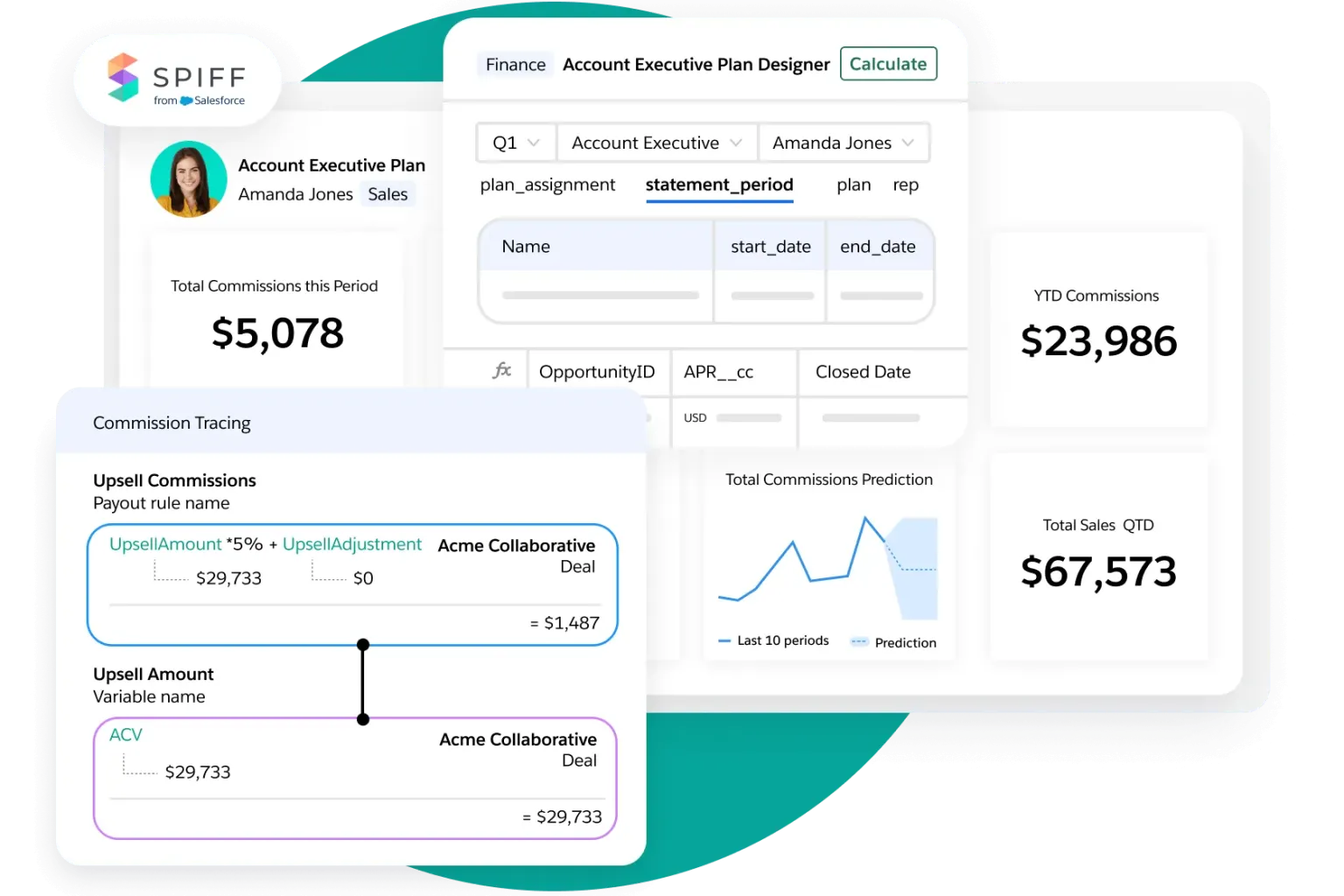
Salesforce Spiff does one thing and does it well: automate commission calculation for sales teams. Admins build plans in Spiff Designer, a spreadsheet-like interface with pre-built models, formula functions, and version control.
Source: Spiff
The platform handles tiered accelerators, multi-currency conversions, clawbacks, and split commissions. Reps see their earnings in real time through customized statements, and finance teams get an audit trail with ASC 606/IFRS 15 compliant expense reports.
Source: Spiff
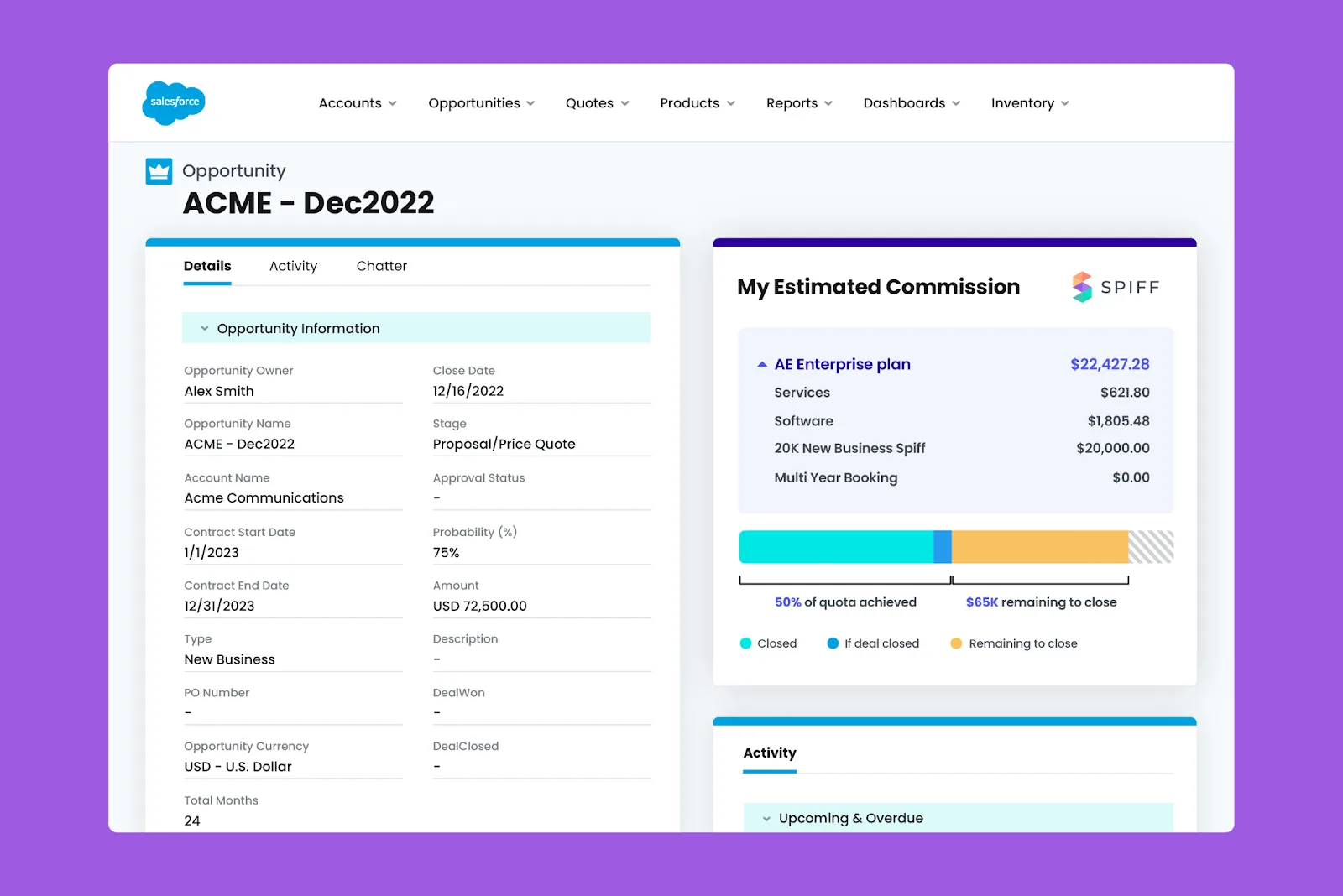
The Commission Estimator is where Spiff differentiates most clearly. It sits directly on Salesforce opportunity and quote pages, showing reps their projected commission and quota attainment as they configure deals. This moves commission visibility from a post-close report to a pre-close decision tool. Reps can model pricing scenarios and see the earnings impact before submitting a deal, which ties discounting behavior to compensation incentives.
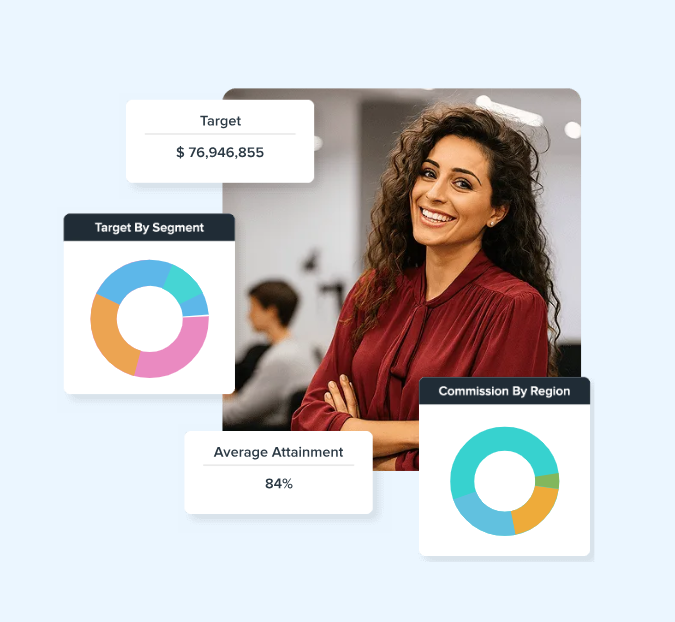
Xactly Incent covers the same commission calculation territory but operates at a different scale. The calculation engine processes over $7 billion in commissions monthly across global organizations with tens of thousands of payees.
Source: Xactly
Xactly's three Incent tiers (Core, Plus, Ultimate) gate features progressively: Core handles basic automation, Plus adds ASC 606 compliance and prior period processing, and Ultimate adds AI agents, industry benchmarking, and advanced modeling.
What separates Xactly from Spiff at the commission layer is the proprietary 20-year pay-and-performance dataset that powers its AI. This data fuels benchmarking against industry norms, predictive insights on plan performance, and the Incent Plan Configuration Agent that helps admins build plans using natural language. No competitor, Spiff included, has two decades of cross-company compensation data to train models on.
Spiff owns the Salesforce workflow; Xactly plays across CRMs
For organizations running Salesforce Sales Cloud, Spiff's native integration is its strongest advantage.
Spiff was built for Salesforce before Salesforce acquired it. Over 70% of its customer base was already on Sales Cloud at the time of acquisition. The Commission Estimator installs as a managed package component on opportunity and quote pages, commission statements render inside Salesforce, and the data sync is native rather than connector-dependent. For Salesforce shops, this eliminates the integration layer entirely.
The cost of this tight coupling is that non-Salesforce users pay a premium. Each third-party connector (for HubSpot, Pipedrive, NetSuite, or other systems) costs $250/connector/month through Workato's iPaaS infrastructure. A team integrating two non-Salesforce systems adds $500/month on top of per-seat costs, and the integration experience is less polished.
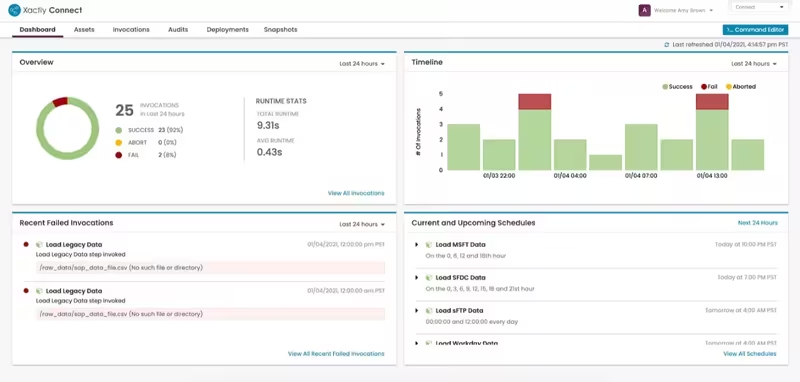
Xactly takes a broader approach through Xactly Connect, its dedicated integration product. Connect provides native connectors to Salesforce, NetSuite, and Snowflake, plus REST APIs, ODBC/JDBC drivers, and ETL capabilities using ANSI SQL. 80% of Xactly customers use Salesforce, but the platform doesn't penalize organizations on other CRMs the way Spiff does. The Xactly for CRM add-on extends native integration into Salesforce, ServiceNow, and Microsoft Dynamics.
Source: Xactly
Beyond commissions: territory, quota, forecasting, and design
This is where the comparison between Spiff and Xactly stops being apples-to-apples.
Spiff is a commission calculation tool. If your organization also needs territory planning, quota allocation, or revenue forecasting, you'll need separate Salesforce products (Sales Planning, Maps, Revenue Intelligence) or third-party tools. Salesforce bundles these into a broader SPM suite, but each is a separate purchase with separate pricing.
Xactly's platform covers the full revenue operations lifecycle in one environment:
Xactly Plan handles territory design and quota allocation. The AlignStar module provides map-based territory design with drag-and-drop adjustment, an Alignment Report Card grades territory balance, and an Optimizer runs what-if scenarios to model the impact of proposed changes.

Source: Xactly
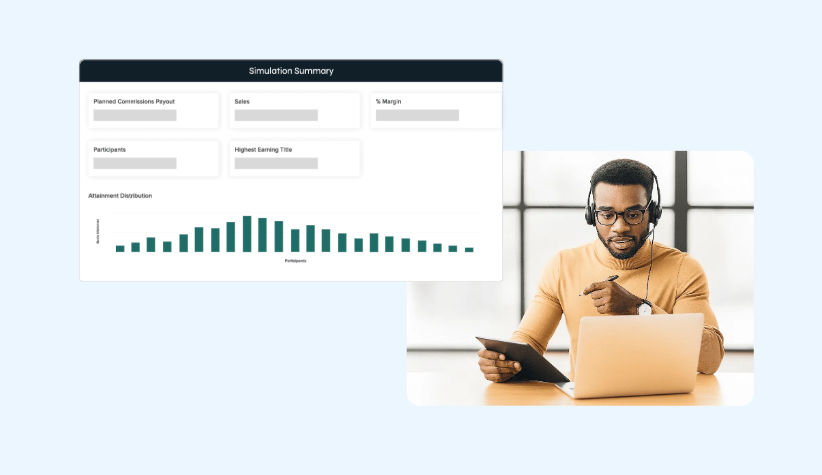
Xactly Design lets teams simulate compensation plans before rollout. Teams run unlimited what-if scenarios against historical data to predict how plan changes will affect total payout spend, pay equity, and seller behavior. Xactly positions this as a substitute for external consultants.
Source: Xactly
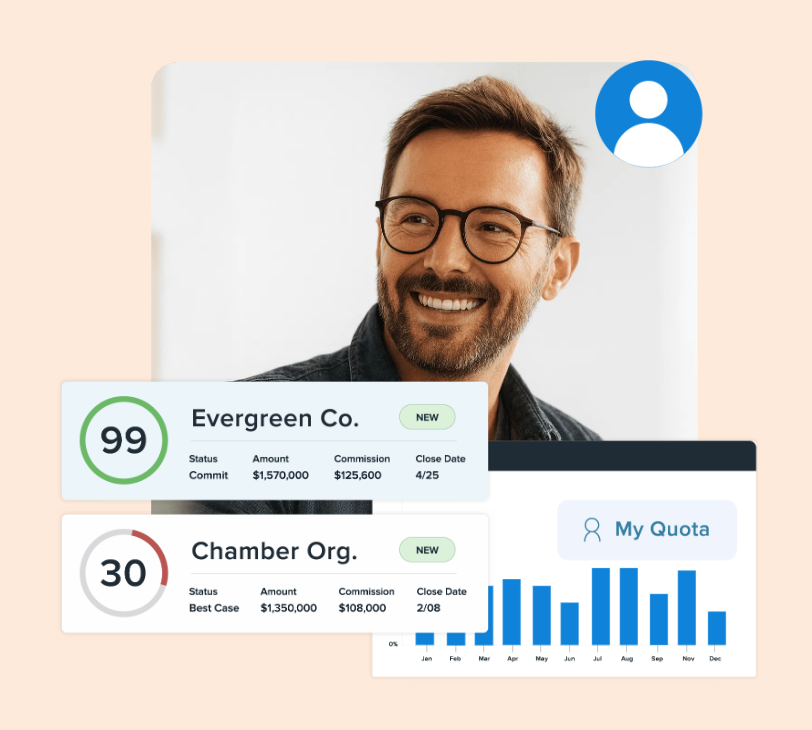
Xactly Forecast applies AI deal health scoring and pipeline analysis. It consolidates CRM and ERP data into a single dashboard, generates deal Health Scores by analyzing thousands of data points (including email sentiment, meeting frequency, and historical rep performance).
Source: Xactly
Xactly Manage handles territory and quota assignments operationally, covering mid-cycle roster changes, automated credit assignments, and dispute resolution workflows.

Source: Xactly
For organizations that only need commission automation, this breadth is overhead. For organizations managing hundreds of reps across multiple territories, roles, and plan structures, the unified workflow from territory design through commission payout eliminates the data handoffs and reconciliation errors that occur when these functions live in separate tools.
The upstream problem neither commission tool solves
Commission platforms assume the data flowing in is accurate. Spiff syncs deal data from Salesforce. Xactly pulls from CRM, ERP, and HCM systems. Both calculate payouts based on whatever data arrives.
But neither platform addresses a basic question: are the right deals in the pipeline to begin with?
Commission plan effectiveness depends on upstream factors: whether territories are built on accurate market data, whether reps are targeting the right accounts, whether pipeline coverage reflects actual buying activity, and whether quota targets are grounded in real market opportunity. If the data feeding these decisions is incomplete or stale, even a well-configured commission engine produces misaligned outcomes. Reps chase low-value accounts, territories are imbalanced, quotas are unrealistic, and commission spend doesn't correlate with revenue growth.
This is the layer where ZoomInfo operates. As a GTM platform, ZoomInfo provides the data foundation and intelligence that make commission-relevant decisions more accurate.
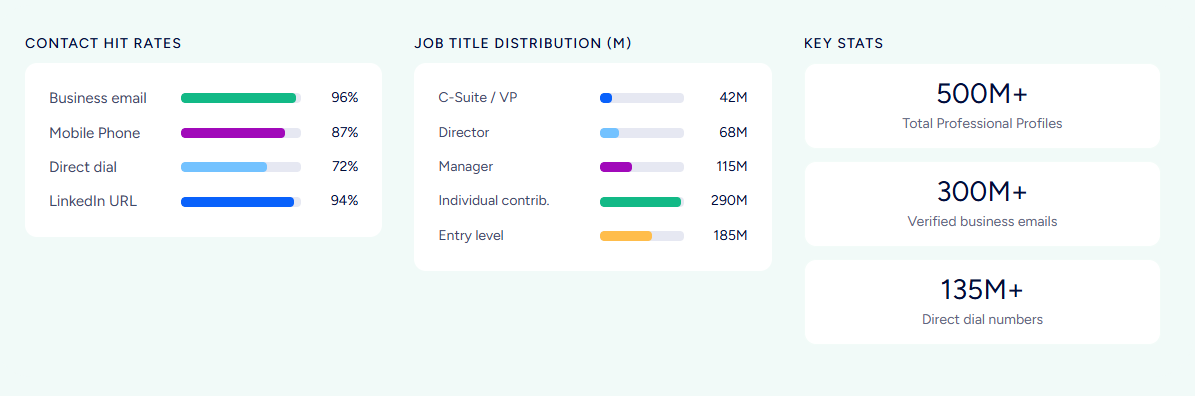
For territory and quota planning, ZoomInfo's B2B data (500M contacts, 100M companies, 135M+ verified phone numbers) gives RevOps teams the market intelligence to size territories based on real account density, buying potential, and competitive presence, not arbitrary geographic splits. 300+ company attributes enable segmentation by industry, headcount, revenue, technology stack, and department structure.
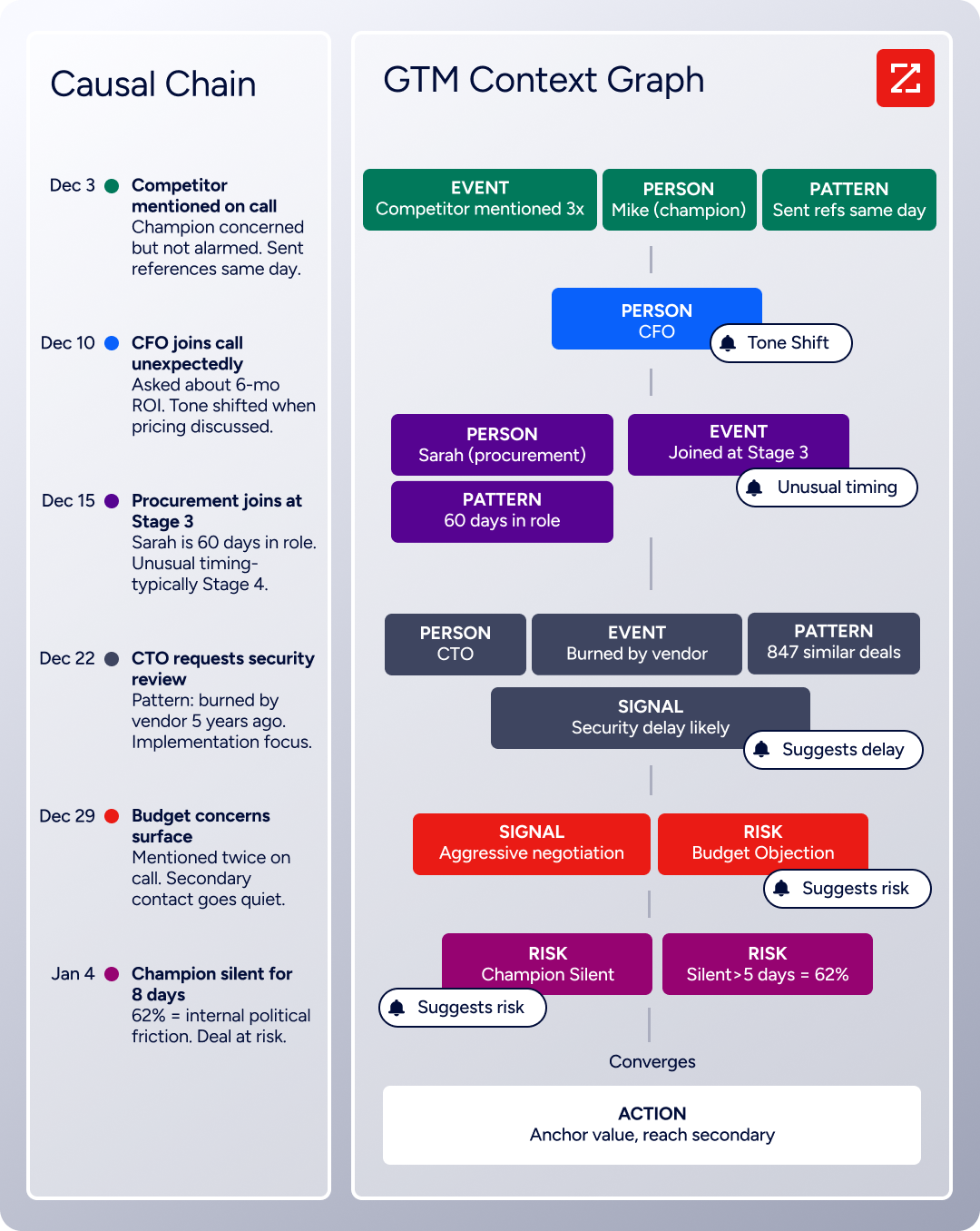
For pipeline accuracy, ZoomInfo's GTM Context Graph (processing 1.5B+ data points daily) combines ZoomInfo's third-party data with CRM records, conversation transcripts, and behavioral signals to surface why deals move or stall. Sales leaders can identify which deals are backed by real buying signals versus rep optimism, improving both forecast accuracy and the commission payouts that depend on it.
For rep productivity, GTM Workspace gives sellers one surface where prioritized accounts, AI-drafted outreach, and deal execution converge. Reps spend less time researching and more time selling, which directly affects the attainment metrics that commission plans measure.
Seismic's sales team boosted productivity by 54%, saved 11.5 hours per week, and attributed 39% of pipeline to ZoomInfo signals. (Seismic Case Study)
Pricing models reflect different buyer profiles
The three platforms target different budget conversations.
Salesforce Spiff has the most transparent pricing: $75/user/month, billed annually. One tier, one price. Additional costs include $250/connector/month for non-Salesforce integrations and 30% of net contract price for premium support. For a 50-rep team on Salesforce with no external integrations, that's $45,000/year for the software license alone, before implementation costs.
Spiff is also available as part of the $550/user/month Agentforce 1 Sales Edition bundle, which includes Sales Planning, Maps, Tableau, and Slack Enterprise+. For organizations already considering a broad Sales Cloud investment, the bundle economics may make standalone Spiff pricing less relevant.
There is no free trial available. Buyers commit to an annual contract before using the product.
Xactly publishes no dollar amounts. All pricing is quote-based, with three Incent tiers (Core, Plus, Ultimate) and four separate Strategic Planning modules (Plan, Design, Manage, Forecast) each priced individually. Contracts are annual with automatic renewal unless 60 days' notice is provided. Fees are non-cancelable and non-refundable. Implementation services, TAM add-ons, and professional services are priced separately.
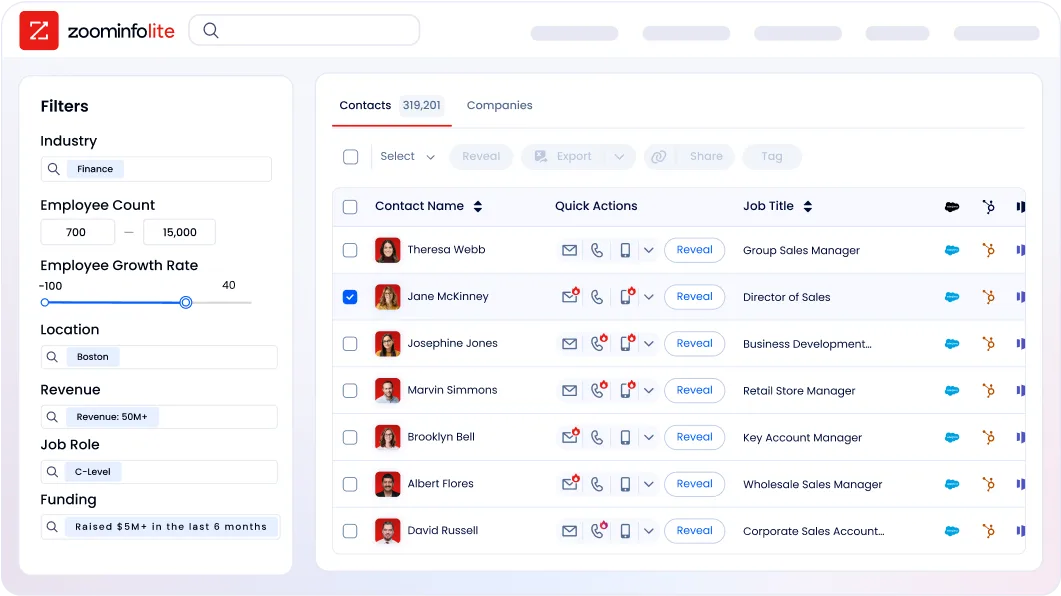
ZoomInfo uses custom-quoted, consumption-based pricing. Unlike both commission platforms, ZoomInfo offers a permanent free tier: ZoomInfo Lite provides access to the B2B database with 10 monthly export credits, WebSights Lite, and HubSpot integration at no cost. A 7-day free trial of paid features is also available, no credit card required.
Data accuracy and compliance
Both commission platforms take compliance seriously, but their approaches differ.
Spiff uses machine learning record matching across CRM, ERP, HCM, and payroll systems, reducing cross-system data errors. Statement locking, effective dating, and a System Activity Log create a layered audit trail. ASC 606/IFRS 15 compliant expense reports are generated automatically, with ledger-level subgrouping down to individual obligation lines.
On the security side, Spiff on Hyperforce falls under Salesforce's enterprise security program, including SOC 1 Type II, SOC 2 Type II, and ISO 27001/27017/27018/27701 certifications. The ISO certificate names "Salesforce Spiff on Hyperforce" as a covered service.
Xactly delivers 99.8% on-time commission payment accuracy and a 65% increase in compliance efficiency. The Commission Expense Accounting (CEA) module handles ASC 606/IFRS 15 compliance with dynamic true-ups for contract events and full capitalization and amortization schedules. Xactly maintains SOC 2 certification and operates data centers with 24x7 monitoring, biometric access, and TLS 1.2 encryption with per-transaction session re-verification.
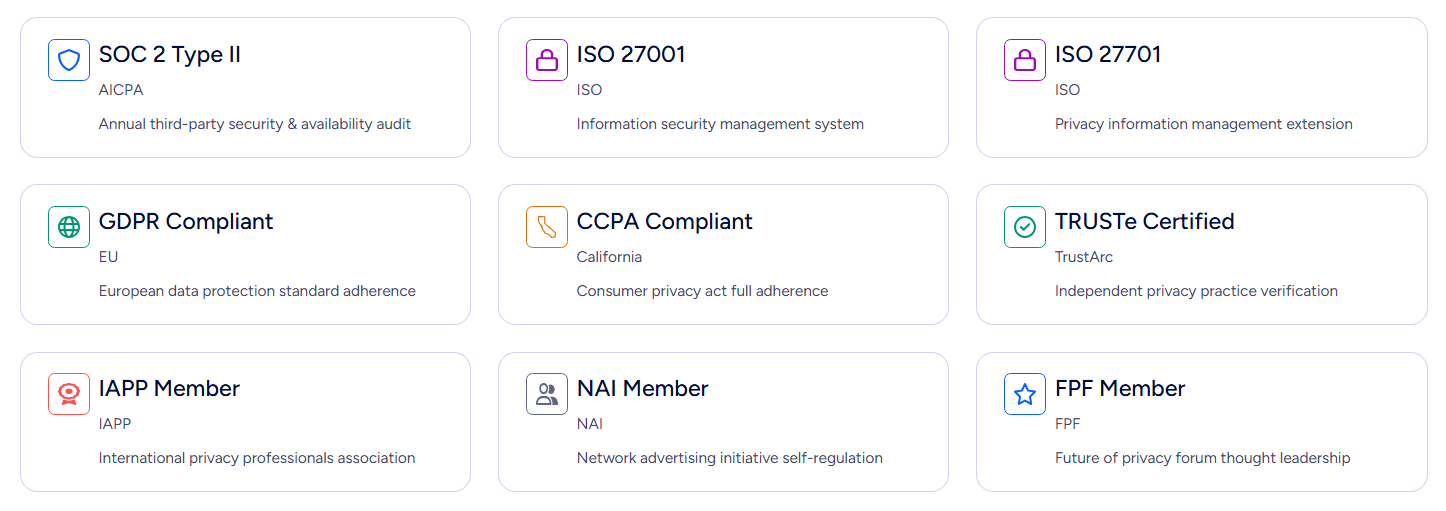
ZoomInfo holds ISO 27001, ISO 27701, SOC 2 Type II, TRUSTe GDPR, and TRUSTe CCPA certifications, all renewed annually. As a registered data broker in California and Vermont, ZoomInfo builds compliance into the data layer itself, which matters for organizations using ZoomInfo data to inform territory planning or account targeting decisions that flow into commission calculations.
Support and onboarding
Support quality is one of the areas where buyer experience varies most.
Spiff's support has been a pain point since the Salesforce acquisition. G2 reviews describe Salesforce deflecting questions to seminars rather than resolving them directly.
The standard support plan is free but limited to Knowledge Articles, Trailhead modules, and the Trailblazer Community. Premium support at 30% of net license price adds phone, email, tickets, and live chat with 24-hour Monday through Friday coverage.
On the training side, Salesforce offers a Spiff Onboarding workshop, six live Trailhead Academy workshops, a sandbox environment for testing, and a Salesblazer Community Slack channel.
Xactly reports a 95.9% customer support satisfaction rate and 99.97% actual SLA uptime. Support is available via dedicated phone lines across North America, Europe, Asia-Pacific, and Japan.
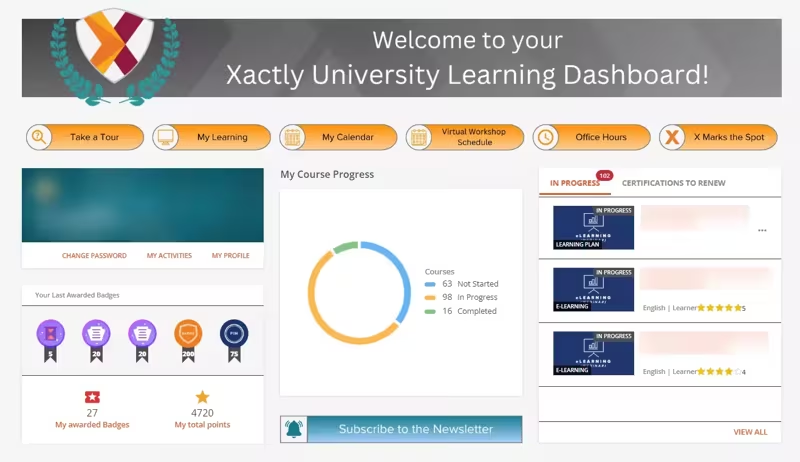
Xactly University provides structured training with instructor-led and self-paced courses, certifications, and customizable learning paths.
Source: Xactly
ZoomInfo redesigned its onboarding from 30 to 90 days, structured across planning, technical implementation, education, and adoption phases. This produced a 25% improvement in customer satisfaction scores and won Rocketlane's Golden Comet award for Best Customer Onboarding Team of 2024. ZoomInfo University provides role-specific learning paths and product certifications.

AI capabilities across the three platforms
All three platforms invest in AI, but the scope and maturity differ.
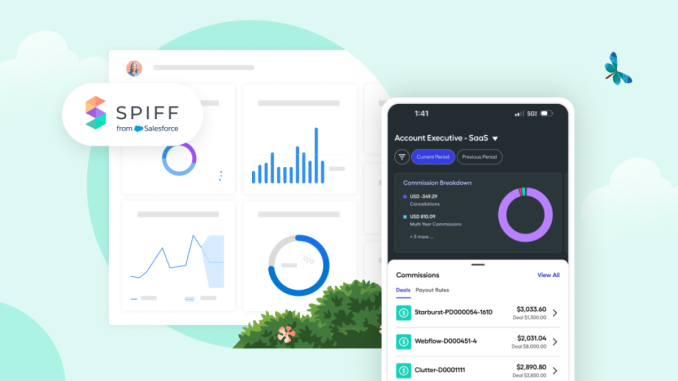
Spiff offers the Spiff Assistant, a conversational AI tool that explains commission plan logic, optimizes formulas, and answers questions in natural language. It's useful but narrow, limited to helping admins and reps understand and troubleshoot commission calculations.
Source: Spiff
Salesforce has announced AI-powered plan design as a future capability, framing it as part of the broader Agentforce initiative.
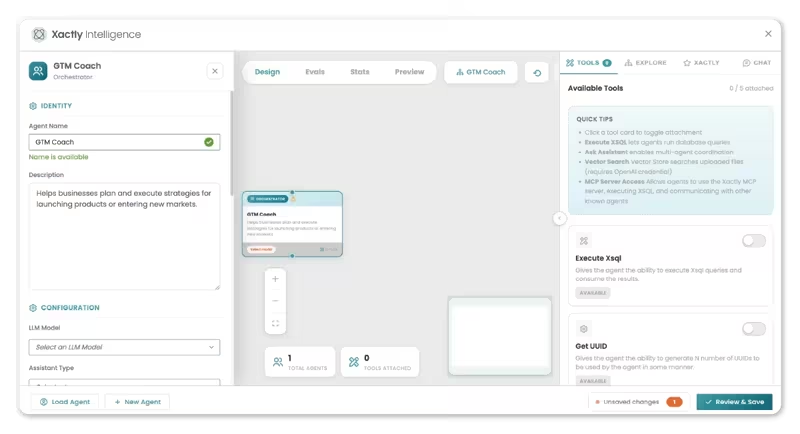
Xactly has made AI a central bet. The Fleet of Agents (launched May 2026) includes Workflow, Optimization, Builder, and External agent types. The Dispute Management Agent integrates with ServiceNow to resolve compensation disputes end-to-end.
Source: Xactly
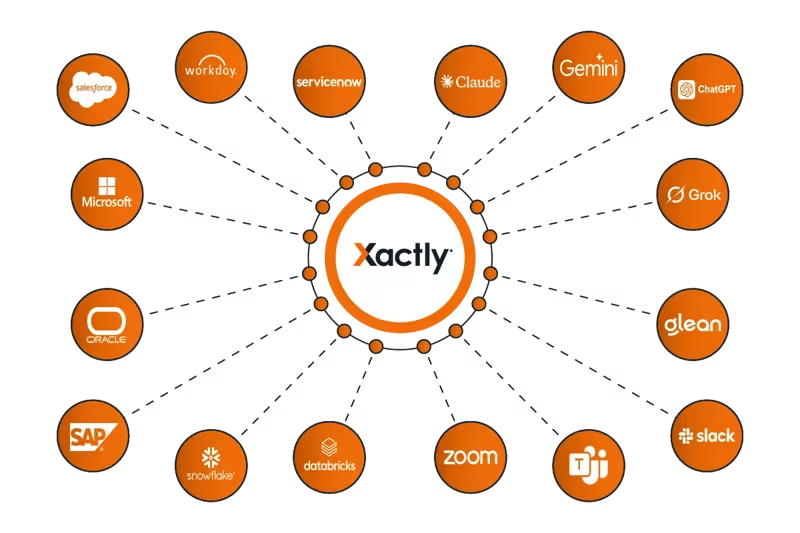
Intelligence Studio lets organizations build custom agents using natural language or drag-and-drop interfaces. An MCP server enables agent-to-agent coordination across Xactly and external platforms. Every agent draws on Xactly's 20-year proprietary dataset.
Source: Xactly
ZoomInfo's AI operates at the go-to-market intelligence layer.
GTM Workspace AI agents (built on Anthropic's Claude) handle account research, outreach generation, signal monitoring, and CRM updates.
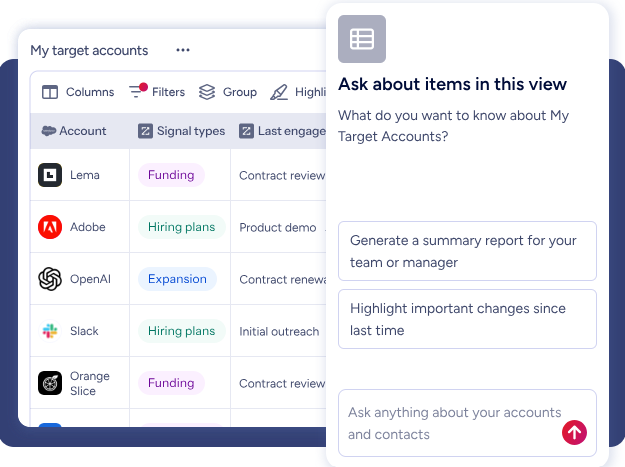
GTM Studio lets marketers and RevOps teams build audiences using natural language and launch multi-channel plays that get smarter as prospects respond. The GTM Context Graph powers all of this, capturing not just what happened in a deal but why, and making that reasoning available through APIs, MCP, or ZoomInfo's native products.
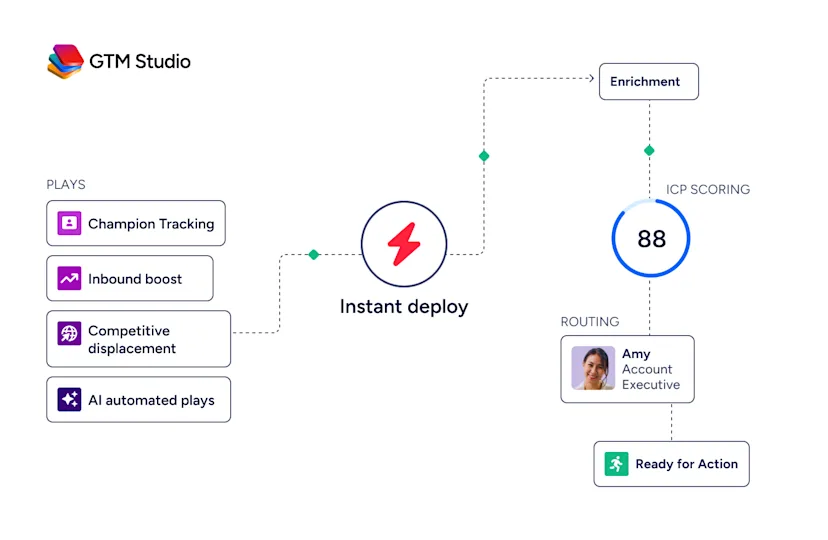
"ZoomInfo's not just a contact data company anymore. They've built a full system of execution. GTM Intelligence works the list, writes the outreach, triggers the play, and helps drive predictable growth." (Levanta)
Spiff vs. Xactly vs. ZoomInfo: Which should you choose?
The choice depends on what problem you're solving and where you are in the revenue operations maturity curve.
Choose Salesforce Spiff if:
You run Salesforce Sales Cloud and want commission visibility inside the CRM
Your commission structures are moderately complex (tiers, accelerators, splits) but don't require full SPM
You want faster time to value than enterprise ICM platforms, with plans set up in days
Your primary goal is replacing spreadsheet-based commission management with automation
You have a dedicated admin or RevOps resource to manage configuration
Choose Xactly if:
You need the full sales performance management suite: territory planning, quota allocation, incentive design, forecasting, and commission administration
Your organization has complex, multi-role compensation structures spanning multiple regions and currencies
ASC 606/IFRS 15 compliance and audit readiness are critical requirements
You want AI-powered plan design and industry benchmarking from 20 years of proprietary data
You have a dedicated compensation or RevOps team to manage the platform
Choose ZoomInfo if:
You need accurate, verified B2B data to build territory plans, size quotas, and target the right accounts
You want buyer intelligence that surfaces in-market signals and deal context upstream of commission calculations
Your sellers need a workspace that tells them who to contact, when to engage, and what to say
You want one platform that works across sales, marketing, and RevOps, accessible through native products or any tool via API/MCP
You care about pipeline quality as much as pipeline quantity, because your commission strategy is only as good as the deals feeding it
See how ZoomInfo's GTM intelligence can strengthen your revenue strategy.
The most effective revenue organizations don't treat commission management and go-to-market intelligence as separate purchases. Spiff or Xactly handles the commission layer. ZoomInfo provides the data, signals, and intelligence that make the decisions upstream of commissions (territory design, quota setting, account targeting, pipeline prioritization) more accurate. When both layers work together, commission spend aligns with actual revenue opportunity rather than guesswork.
Spiff vs. Xactly vs. ZoomInfo FAQ
What is the key difference between Salesforce Spiff and Xactly?
Salesforce Spiff is a CRM-native commission calculation tool designed for organizations running Salesforce, priced at $75/user/month. Xactly is a full sales performance management platform covering commission administration, territory planning, quota allocation, incentive design, and AI-powered forecasting. Spiff fits teams that only need commission automation; Xactly is built for enterprise RevOps teams managing the entire revenue operations lifecycle.
How does ZoomInfo fit into the commission management conversation?
ZoomInfo is not a commission tool. It operates upstream, providing the B2B data, buyer intelligence, and GTM context that inform the decisions feeding into commission calculations. Territory plans built on ZoomInfo's 500M contacts and 100M companies reflect actual market opportunity. Pipeline prioritized by ZoomInfo's intent signals and deal health scoring improves quota attainment. The intelligence layer makes commission plans more effective by ensuring the right deals reach the pipeline.
Which platform is better for organizations not running Salesforce?
Xactly is the stronger choice for non-Salesforce organizations. Its Xactly Connect integration product provides native connectors to multiple CRMs plus REST APIs and ODBC/JDBC drivers. Salesforce Spiff charges $250/connector/month for each non-Salesforce integration and delivers a less polished experience outside the Salesforce ecosystem.
What does Xactly cost compared to Spiff?
Spiff publishes transparent pricing at $75/user/month billed annually, with additional costs for third-party connectors and premium support. Xactly does not publish pricing; all tiers and modules are quote-based. Xactly's enterprise positioning and broader feature set suggest a higher total cost of ownership, though exact comparisons require a custom quote.
Which platform offers better compliance capabilities for ASC 606 and IFRS 15?
Both platforms offer ASC 606/IFRS 15 compliance. Spiff includes automated commission expense reports with ledger-level subgrouping in its base plan. Xactly's Commission Expense Accounting module (available at the Plus and Ultimate tiers) provides dynamic true-ups for contract events and full capitalization and amortization schedules. Xactly reports a 65% increase in compliance efficiency using its platform.
Can ZoomInfo integrate with Spiff or Xactly?
ZoomInfo integrates with Salesforce, HubSpot, and Microsoft Dynamics via native integrations, and with any system via its Enterprise API and MCP server. Since Spiff operates within Salesforce and Xactly connects to Salesforce via Xactly Connect, organizations can use ZoomInfo's data alongside either commission platform. ZoomInfo enriches the CRM data that Spiff and Xactly both rely on for commission calculations.
Which platform has the best AI capabilities?
Each platform's AI addresses a different problem. Spiff's AI explains commission logic and helps troubleshoot plans. Xactly's Fleet of Agents automates compensation workflows, dispute resolution, and plan configuration using 20 years of proprietary data. ZoomInfo's AI operates at the GTM layer, with agents that research accounts, draft outreach, monitor buying signals, and surface deal intelligence across the revenue process. The three are complementary rather than competing.
Does Salesforce Spiff offer a free trial?
No. Salesforce states they do not currently offer trial licenses for Spiff. Buyers must commit to a paid annual contract. Xactly maintains a trial agreement but has no self-serve trial on its website. ZoomInfo offers both a permanent free tier (ZoomInfo Lite with 10 monthly export credits) and a 7-day free trial of paid features, no credit card required.
Comparing Spiff and Xactly? These related breakdowns go deeper:
