
Choosing between Sugar Market vs. Act-On for your marketing automation often comes down to these five questions:
Do you need marketing automation connected to your CRM and ERP data, or a standalone platform that plugs into any CRM?
Is your marketing team running complex account-based campaigns across long sales cycles, or focused on multichannel lead generation and nurture?
How important is AI-powered lead scoring that works without manual model configuration?
Are you willing to invest time learning a complex platform, or do you need something your team can adopt quickly?
Does the quality of the contact and company data feeding your campaigns matter as much as the automation itself?
In short, here's what we recommend:
Sugar Market is the marketing automation module built into the SugarAI suite, designed for mid-sized B2B companies in manufacturing, distribution, and financial services that need their marketing engine connected to CRM and ERP data.
It covers email campaigns, nurture workflows, landing pages, forms, events, and AI-powered lead scoring in a single platform, with 180+ ERP integrations pulling account data that standalone marketing tools can't access.
The trade-off: Sugar Market works best when paired with Sugar Sell, its learning curve is steep, and its pricing starts at $1,000/month for 10,000 contacts with no free trial.
Act-On targets the same mid-market but with a different philosophy: CRM-agnostic marketing automation with native CRM integrations across all major providers. Its strengths are email deliverability (Act-On runs its own SMTP servers), multichannel campaigns spanning email, SMS, social, and direct mail, and an Active Contact pricing model that charges only for contacts you actually email, not your full database.
Act-On also earns consistent praise for customer support that feels like a partnership rather than a ticket queue. However, its $900/month starting price for 2,500 active contacts is expensive relative to lighter alternatives, and its interface is undergoing a slow overhaul.
Both platforms automate the middle of your funnel well. But marketing automation is only as good as the data it runs on. If the contacts in your database are incomplete, the emails are wrong, and you can't tell which accounts are in-market, even the best nurture sequence fires into a void. That's the gap neither Sugar Market nor Act-On was built to close.
ZoomInfo is a go-to-market platform built on a data foundation of 500M contacts, 100M companies, 135M+ verified phone numbers, and 200M+ verified business emails.
Its GTM Context Graph (an intelligence layer processing 1.5B + data points daily) unifies this data with your CRM records, conversation transcripts, and behavioral signals to reveal not just what happened, but why, and which accounts to act on next. Rather than replacing your marketing automation, ZoomInfo feeds it with verified data and buying signals.
Marketers build and launch plays from GTM Studio, sellers act on leads through GTM Workspace, and teams can power their own tools through the API and MCP in any front-end. Because ZoomInfo integrates with both Sugar Market and Act-On (plus Salesforce, HubSpot, Dynamics, and 120+ other tools), it strengthens whichever automation platform you choose.
If you want to see what better data and intent signals would do for your marketing automation, explore ZoomInfo's capabilities with a free trial.
Sugar Market vs. Act-On vs. ZoomInfo at a glance
Sugar Market | Act-On | ZoomInfo | |
|---|---|---|---|
Primary function | CRM-native marketing automation | CRM-agnostic marketing automation | AI-powered go-to-market platform |
Pricing model | Contact-based (10K contact blocks) | Active Contact (pay only for contacts emailed) | Consumption-based (custom-quoted) |
Starting price | ~$1,000/month (10K contacts) | $900/month (2,500 active contacts) | Free tier available (ZoomInfo Lite); paid plans custom-quoted |
AI lead scoring | SugarPredict (zero-config, updates every 15 min) | AI Predictive Lead Score (daily updates) | Account Fit Score, intent signals, GTM Context Graph |
CRM integration | Native with Sugar Sell; also Salesforce, Dynamics, NetSuite | Native with Salesforce, Dynamics, SugarCRM, NetSuite, Zendesk Sell | Salesforce, HubSpot, Dynamics, and 120+ integrations |
Email deliverability | Standard infrastructure | Own SMTP servers with dedicated deliverability services | Not an email sender; enriches and verifies contacts for your ESP |
Free trial | No | 30-day trial (Advanced Analytics only) | 7-day free trial + permanent free tier (ZoomInfo Lite) |
Key differentiator | ERP-connected marketing automation | Multichannel automation with Active Contact pricing | B2B data and buying intent intelligence |
Best for | SugarAI CRM users in manufacturing and distribution | Mid-market B2B teams wanting flexible CRM integration | Teams that need verified contacts, buying signals, and audience intelligence |
Sugar Market and Act-On solve similar problems differently
Sugar Market and Act-On both help mid-sized B2B marketing teams automate campaigns, score leads, and hand qualified prospects to sales. The difference is in what each platform assumes about your tech stack and your team.
Sugar Market assumes you're building (or already running) the SugarAI suite. It's built on a shared CRM database, sharing the same data model as Sugar Sell at the lead, contact, account, opportunity, and campaign level. When a sales rep updates a contact's lifecycle stage in Sugar Sell, a Listener can immediately enroll that contact in the right nurture campaign.
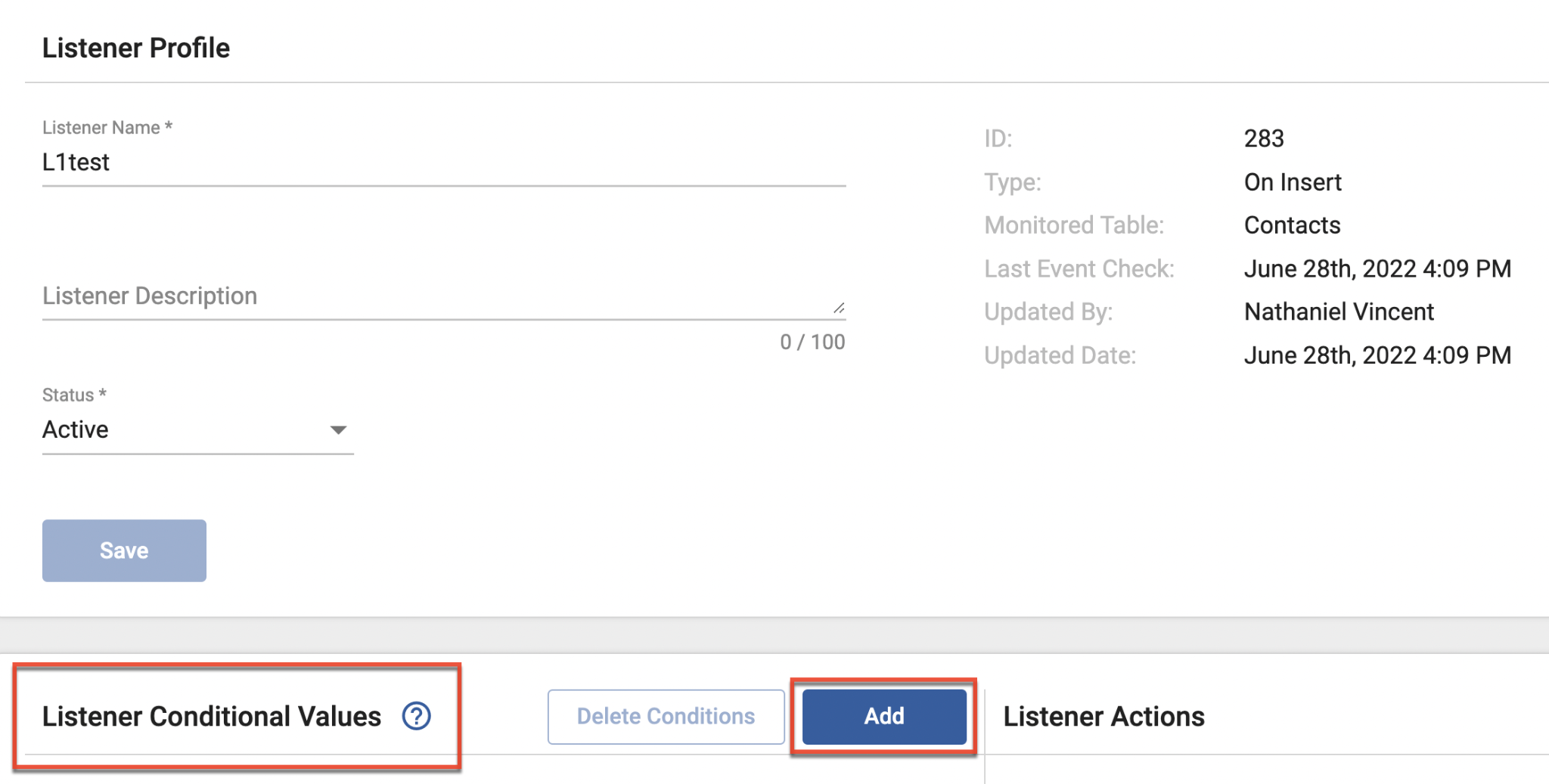
Source: Sugar Market
When a nurture step fires, it can create a Task or Opportunity in the CRM without leaving the marketing platform. This depth is hard to replicate with bolt-on integrations.
Act-On assumes you want your marketing automation to work with whatever CRM you already have. It offers native integrations with Salesforce, Microsoft Dynamics, SugarCRM, NetSuite, and Zendesk Sell, with particularly deep data flow in its Salesforce integration.
For teams that aren't standardized on Sugar Sell (or aren't ready to commit to a single CRM ecosystem), Act-On's flexibility is an advantage. You get the CRM connection without the CRM dependency.
Email and multichannel marketing: Act-On goes wider
Act-On covers more communication channels out of the box. Its platform spans email, SMS, social media, landing pages, web agents, and direct mail in a single automation environment. The SMS capability is native to the platform and built into automated programs, not bolted on through a third-party connector. Act-On also runs its own SMTP servers, giving it direct control over email deliverability.
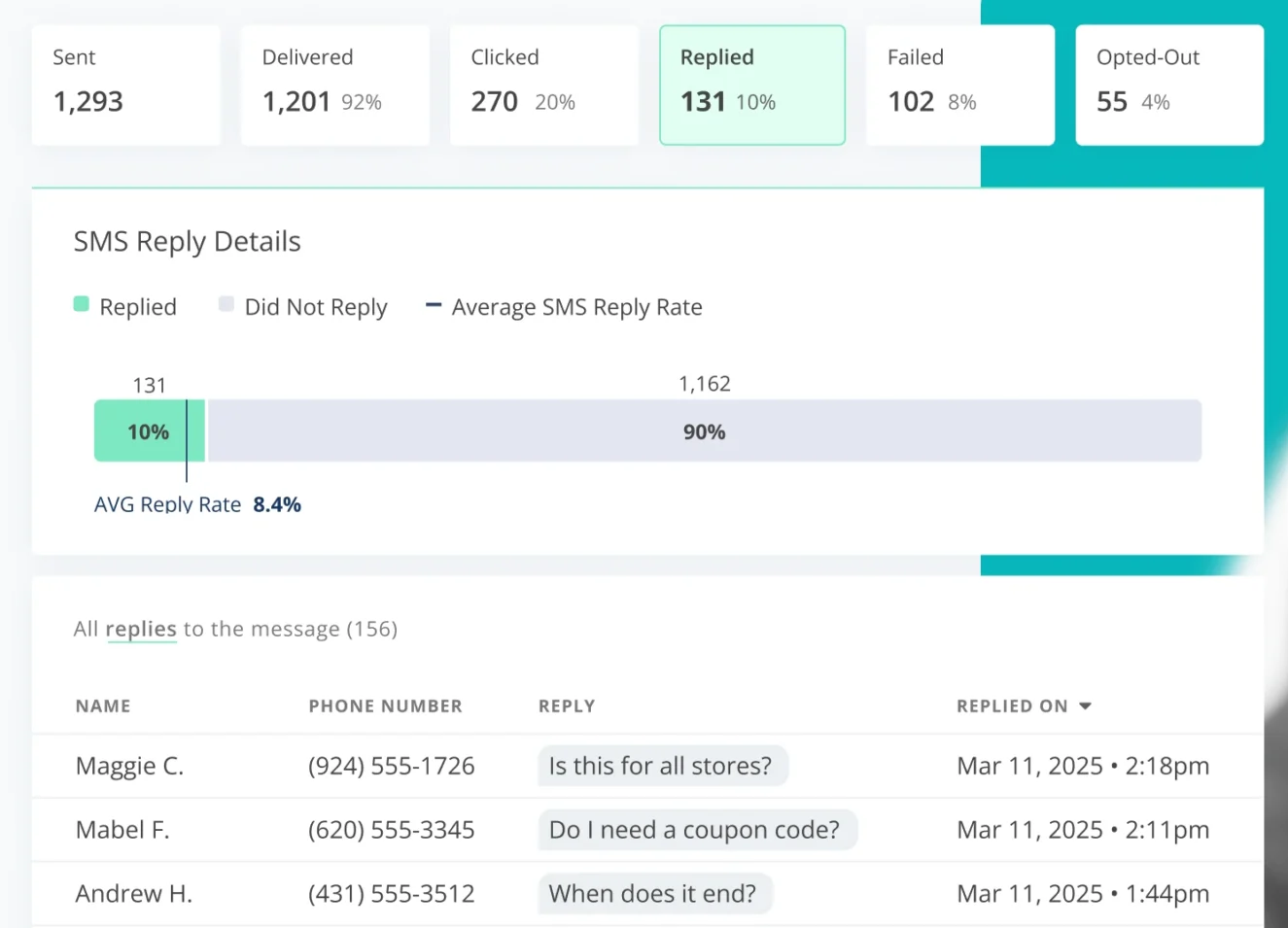
Source: Act-On
For email, Act-On supports A/B testing with up to five variants and an Adaptive Send feature that delivers each email when individual contacts are most likely to engage, using a predictive algorithm that analyzes up to 25 months of behavioral data.
Sugar Market's email builder is solid. Its drag-and-drop editor supports dynamic content at every visible element (subject line, from name, from address, reply-to, and body), and its A/B testing with auto-winner send routes the winning variant to the remaining audience after a minimum four-hour evaluation. A useful Gmail clipping protection gauge warns when HTML approaches the 102KB threshold.
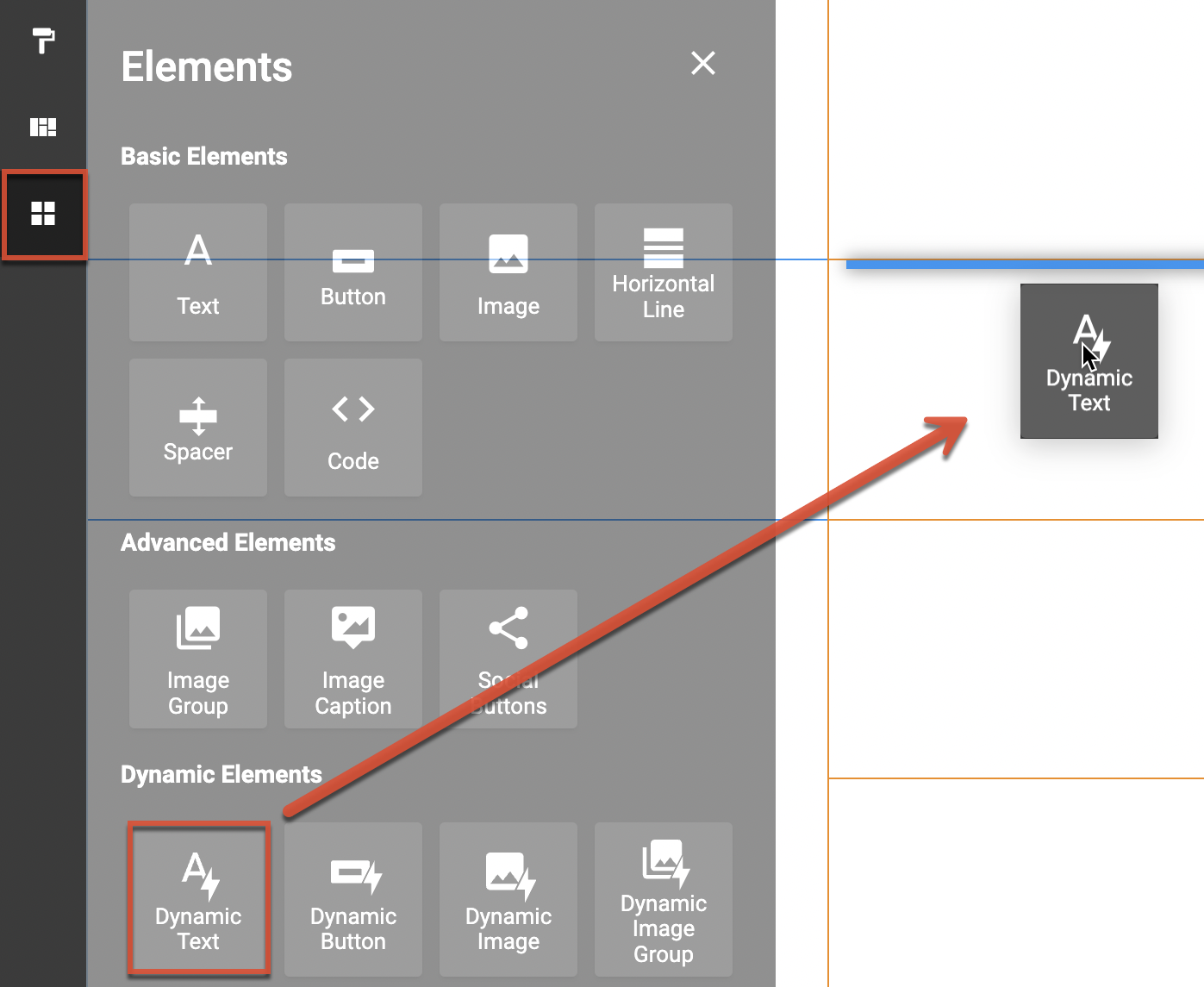
Source: Sugar Market
Where Sugar Market falls short is channel breadth. Its primary channel is email, with no publicly documented native SMS or WhatsApp capability. For teams that need SMS as part of their automated nurture sequences, Act-On has the edge.
For a closer look at Act-On's full feature set and user ratings, see our Act-On review.
Lead scoring: two flavors of AI, one gap both share
Both platforms offer dual-layer lead scoring: manual rules plus AI-powered predictions.
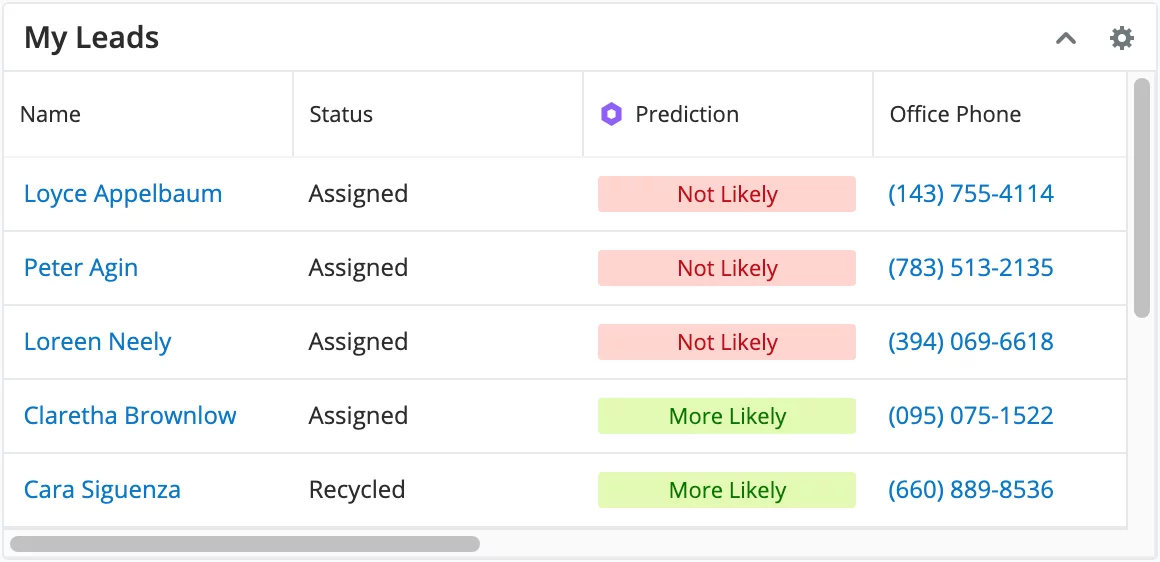
Sugar Market's SugarPredict trains on your historical MQL conversion data and updates prediction scores every 15 minutes, with no manual configuration required. The rule-based scoring engine supports unlimited scoring profiles across web activity, email engagement, landing pages, events, and demographic fields, with each profile independently mapped to CRM fields.
Source: Sugar Market
Its Account-Based Scoring rolls up individual contact scores to the account level every 30 minutes, using an outlier-removal algorithm to keep the number meaningful.
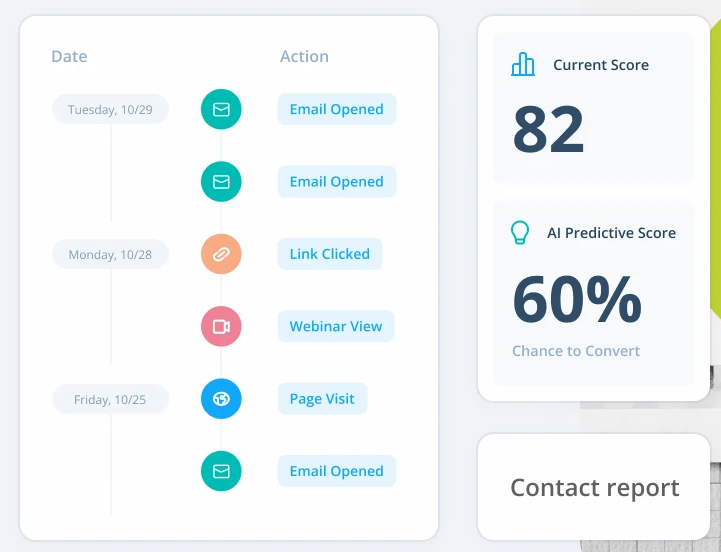
Act-On's AI Predictive Lead Score uses machine learning trained on tracked contact behaviors and CRM outcomes, updating once daily. Its manual scoring supports multiple score sheets (up to four beyond the default) for different teams, regions, or products. Act-On's advantage is that scores sync into whichever CRM you use, giving sales lead intelligence where they already work.
Source: Act-On
Both approaches work. But both platforms score leads using only the data they can see: form submissions, email clicks, web visits, and whatever your CRM contains. Neither platform generates the underlying contact data, company intelligence, or third-party buying signals that make scores meaningful.
ZoomInfo fills this gap. ZoomInfo's Buyer Intent data tracks signals from 210 million IP-to-Organization pairings and 6 trillion+ new keyword-to-device pairings sourced monthly. Its Guided Intent identifies topics historically correlated with deal success rather than requiring manual topic selection.

Source: ZoomInfo
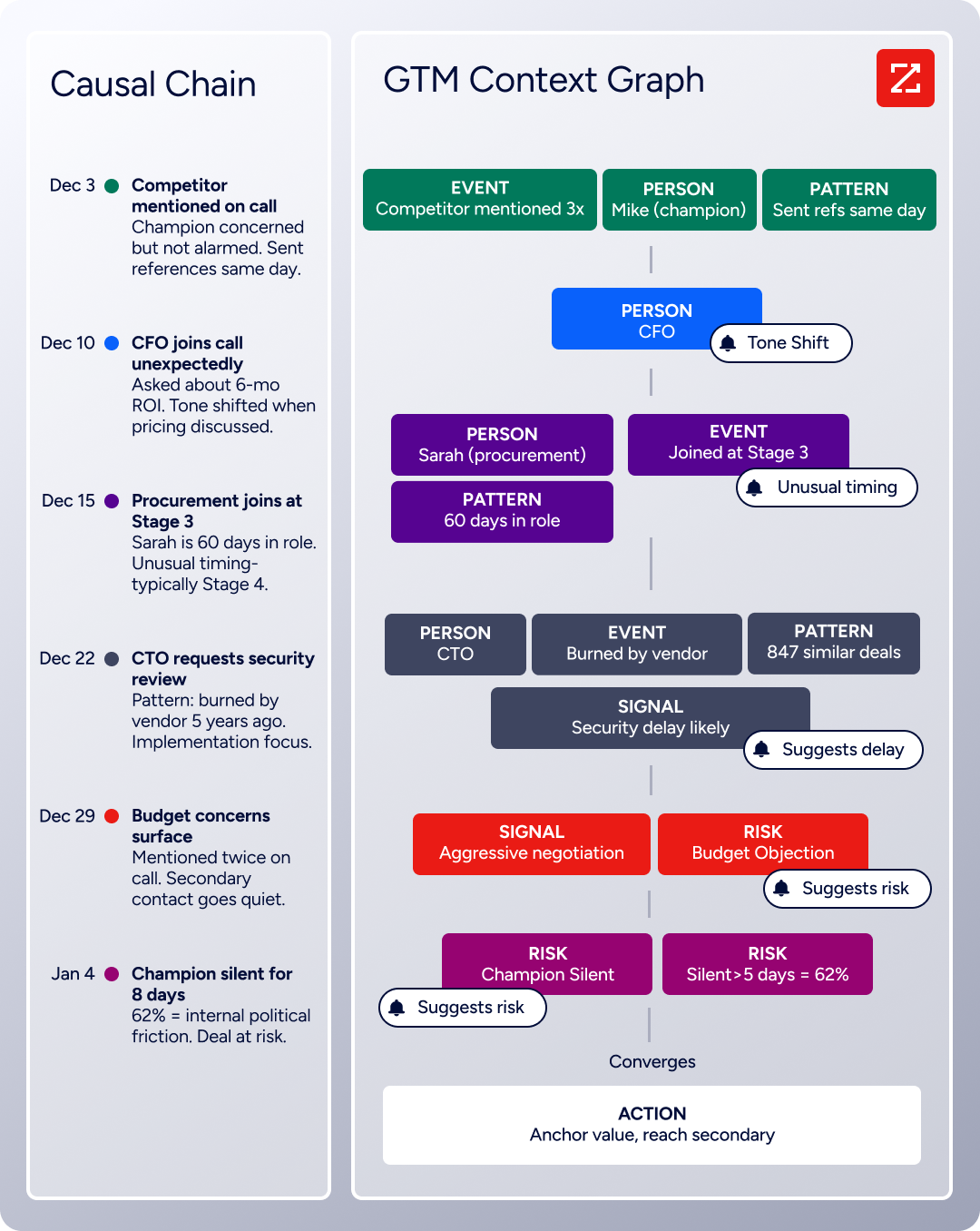
And the GTM Context Graph layers this intent data with CRM records, conversation intelligence, and behavioral signals to surface which accounts are worth pursuing and why. Feeding these signals into Sugar Market or Act-On turns lead scoring from an internal exercise into one informed by market activity.
Source: ZoomInfo
Seismic's sales team attributed 39% of active pipeline to opportunities identified or influenced by ZoomInfo signals, while achieving 54% higher productivity. (Seismic case study)
Nurture workflows: Sugar Market's CRM depth vs. Act-On's channel flexibility
Sugar Market's Nurture Builder is a visual drag-and-drop canvas where action elements (Send Email, Pause, Add to List, Push to CRM, Create Task, Create Opportunity) and conditional elements (Email Opened, Link Click, Web Activity, Form Completion, Evaluate Field Value) connect with directional arrows.
Source: Sugar Market
Its distinguishing feature is the Listener system, which monitors CRM records for field changes every five minutes and can automatically enroll contacts in nurtures based on CRM updates. If a rep changes a deal stage in Sugar Sell, the marketer's nurture responds without any manual handoff.
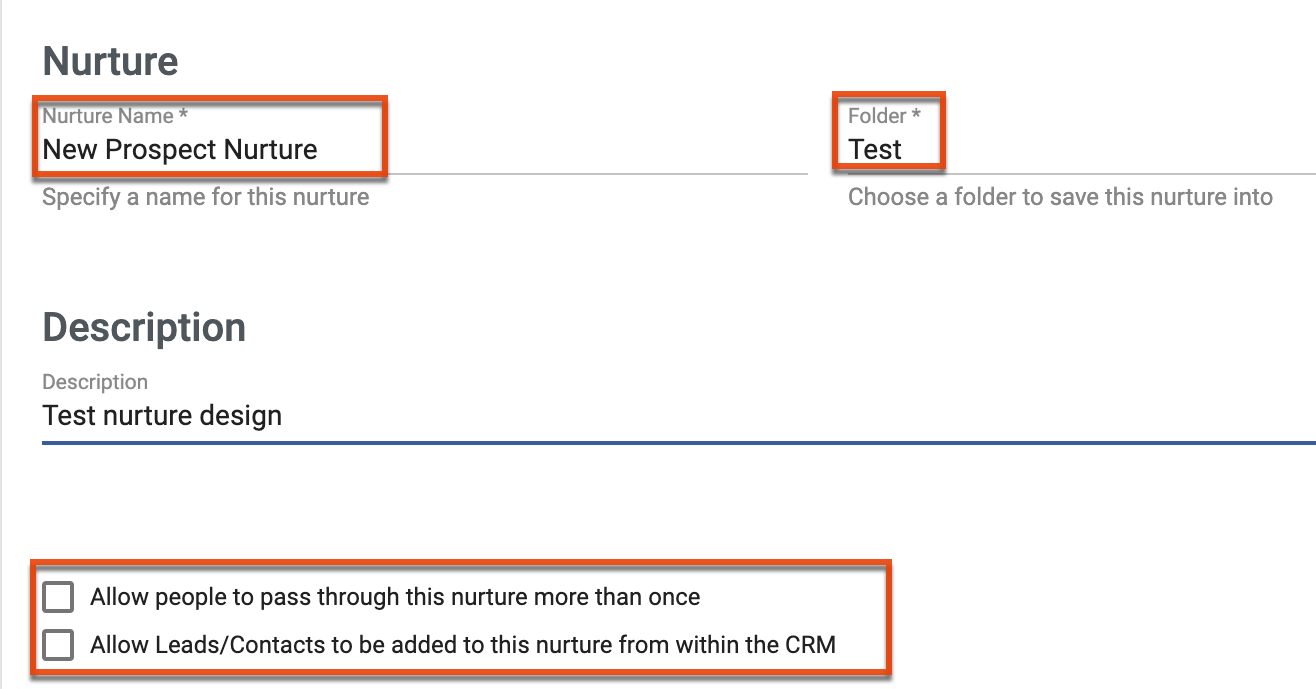
Sugar Market also ships with six pre-built nurture themes covering common use cases (New Prospect, Remarketing, Promotional Subject Swap), which lowers the barrier for teams without dedicated marketing ops expertise.
Act-On's Automated Journey Builder takes a similar visual approach, with steps including Send Email, Send SMS, Branch, and Wait. The difference is channel flexibility: Act-On can weave SMS messages into email nurture sequences, and its social publishing features let marketers promote landing pages and content to LinkedIn and X from within the same workflow.
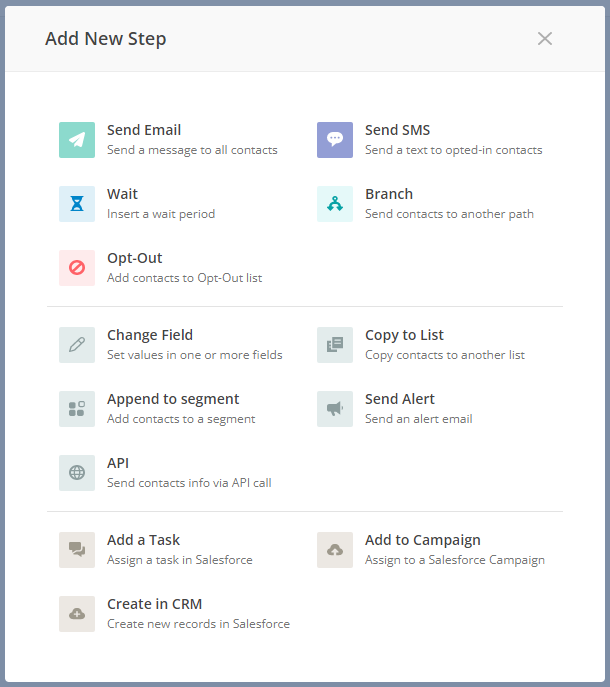
Source: Act-On
Act-On also offers a Marketing Automation Network for organizations with multiple divisions, enabling division-level communication while maintaining a parent account for corporate messaging. For companies with distributed marketing teams, this is a practical feature Sugar Market doesn't match.
Analytics and reporting take different approaches
Sugar Market's analytics are deep for its price tier. Its Advanced Analytics module runs on Looker, providing ad hoc data exploration, saved reports, and configurable dashboards without a separate BI tool. The SEO Audit tool scores any web page out of 100 across 14 criteria, and the built-in Google Ads management uses AI to automate keyword bidding for teams without paid search expertise.
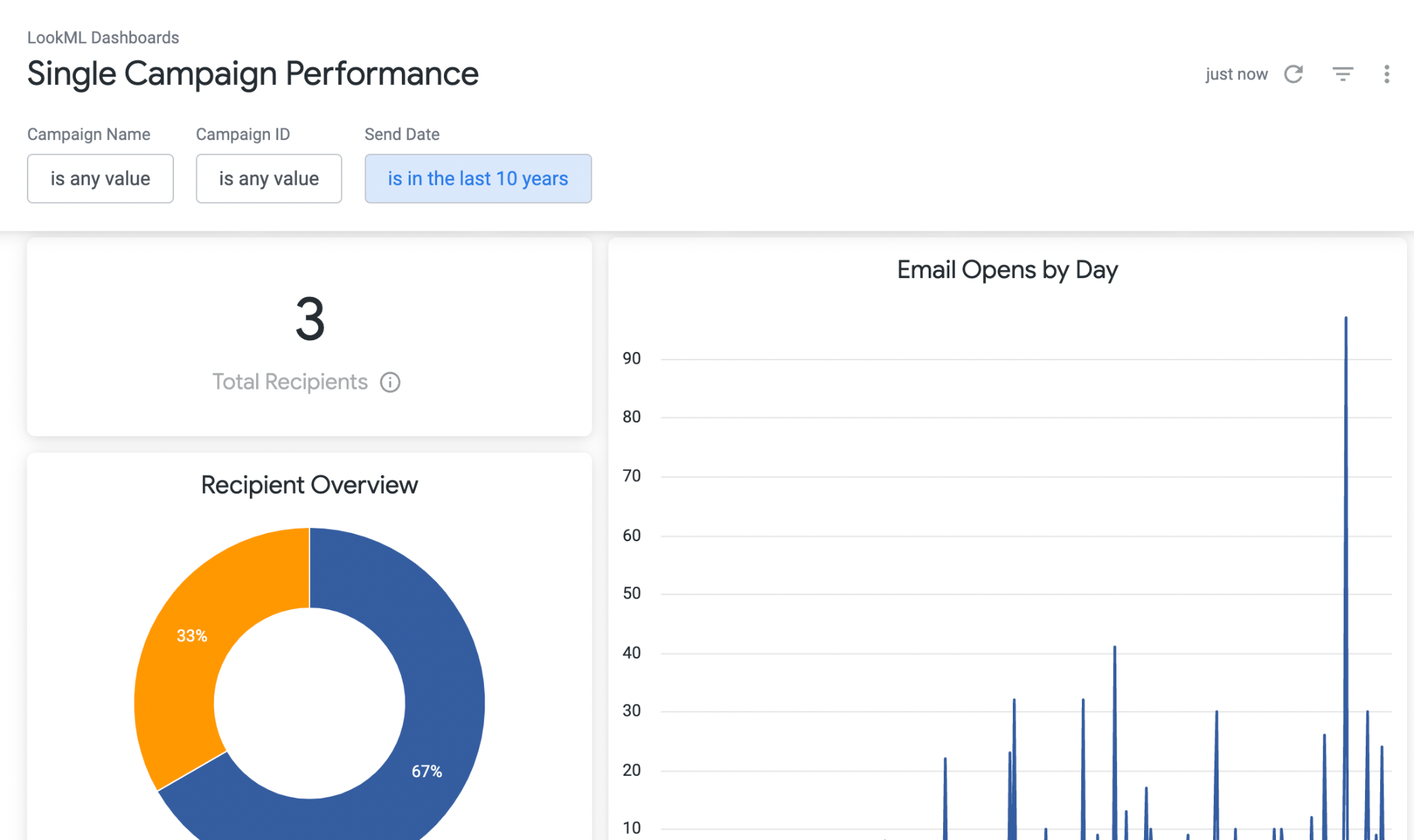
Source: Sugar Market
Sugar Market also handles anonymous-to-known visitor resolution, retroactively transferring a visitor's entire browsing history to their Lead or Contact record once identity is established through a form submission or email click.
Act-On's analytics are organized around three reporting tiers (Standard Reporting, Dynamic Business Analytics, and Premium AI Analytics), with the AI tier adding natural language query processing and SpotIQ automated analysis that discovers trends and outliers automatically.
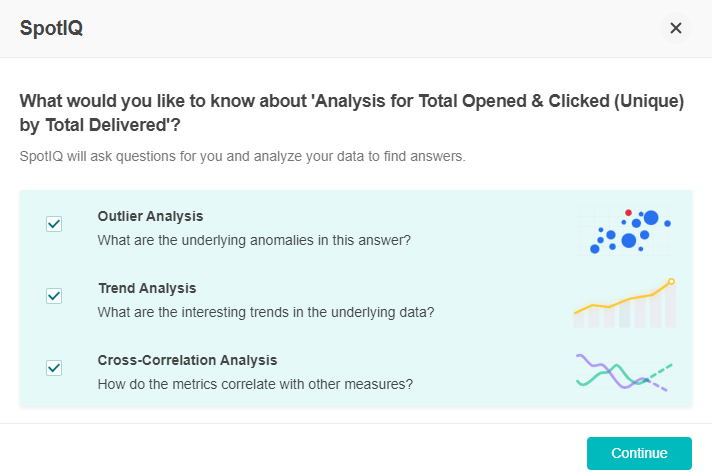
Source: Act-On
Act-On's Data Studio enables raw data exports to external BI platforms with full field customization, supporting exports up to 400,000 records.
Both platforms show you campaign performance. But for identifying which accounts are in-market before they touch your landing page, ZoomInfo's WebSights resolves anonymous website traffic to specific companies and buying team members, including direct contact information, with automatic traffic filtering that distinguishes real visitors from bots.

Source: ZoomInfo
Combined with intent signals and the GTM Context Graph, this turns website analytics from a retrospective report into a prospecting tool.
The data problem marketing automation can't solve alone
Marketing automation platforms are execution engines. They send emails, score leads, run nurtures, and track engagement. What they don't do is generate the underlying data that makes those actions effective.
Both Sugar Market and Act-On depend on the data already in your CRM and the contacts already in your database. If your database has gaps (missing contacts on buying committees, stale email addresses, incomplete company data), every campaign runs at a fraction of its potential.
Nurture sequences reach the wrong people. Lead scores reflect incomplete behavior. Account-based campaigns miss accounts that are actively researching your category.
ZoomInfo addresses this directly. Its data platform covers 500M contacts and 100M companies, verified through a multi-source pipeline backed by 300+ human researchers with up to 95% accuracy on first-party data. In a Fortune 500 competitive RFP analyzing 25 million contacts across vendors, the independent consultant concluded that "no other competitor came even close."
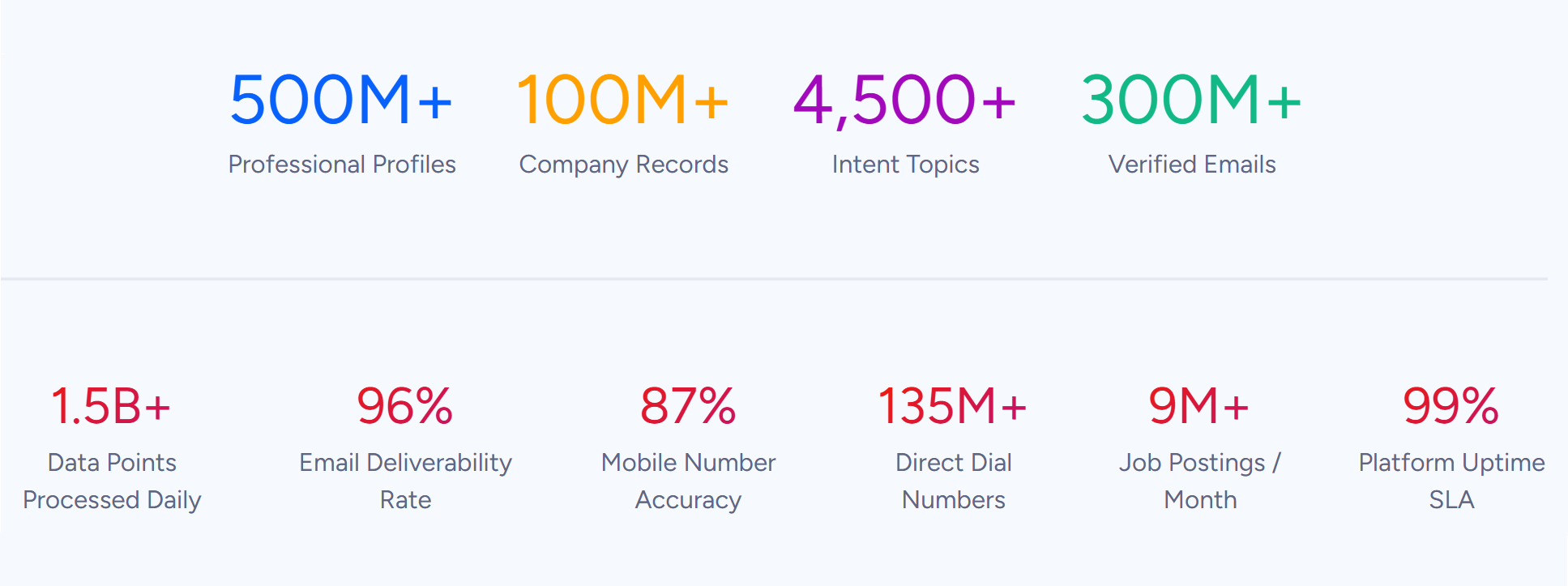
Source: ZoomInfo
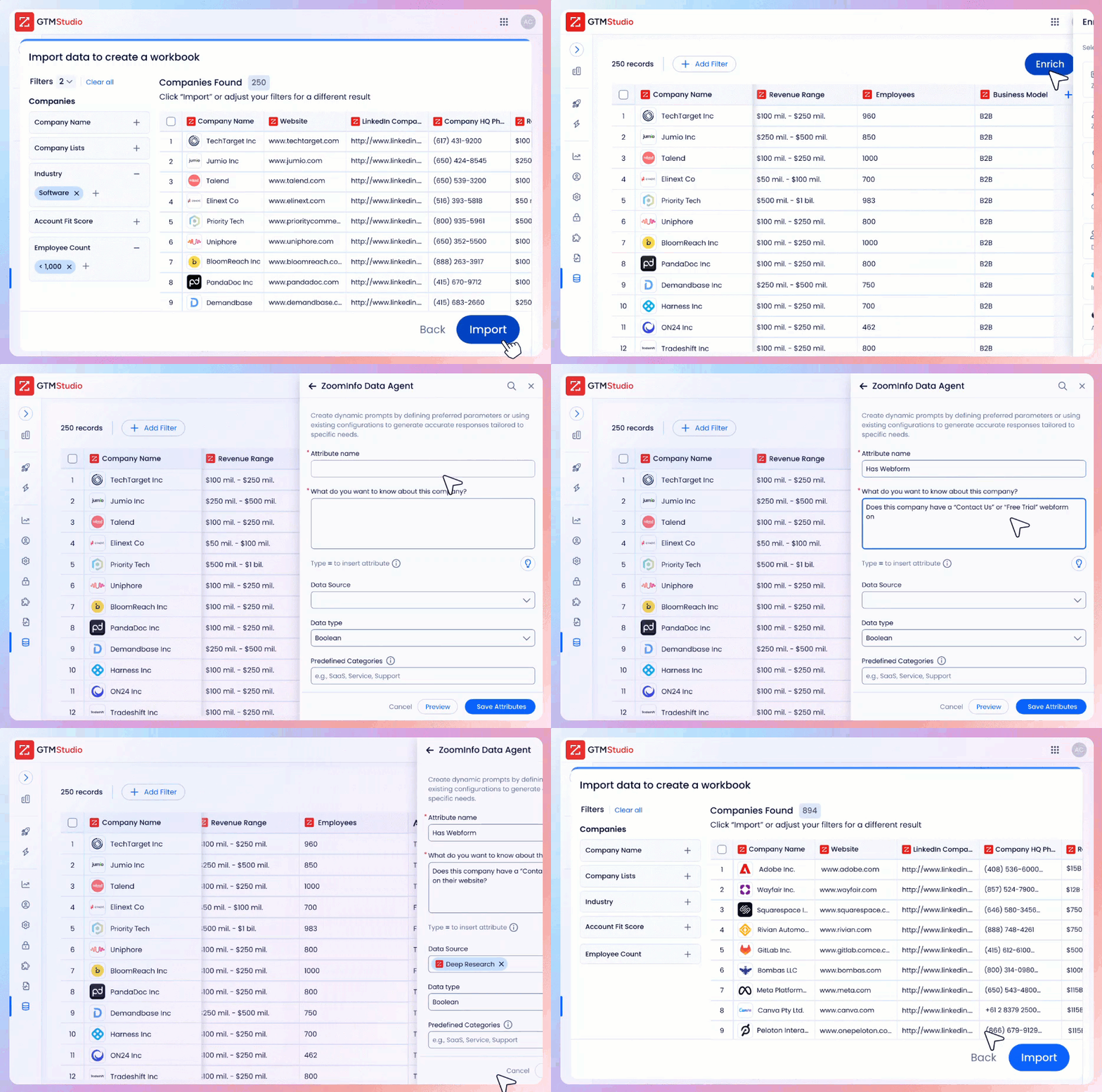
For marketing teams specifically, ZoomInfo's GTM Studio lets marketers describe audiences in natural language, enrich them with first- and third-party data, and launch multi-channel plays. Where Sugar Market and Act-On require you to build and maintain your contact database manually, ZoomInfo continuously enriches it.
Source: ZoomInfo
Where both platforms score leads based on internal activity, ZoomInfo adds third-party intent signals that reveal when accounts are researching your category before they visit your site.
ZoomInfo integrates with both platforms. Act-On lists ZoomInfo among its ABM integrations, and Sugar Market connects through the SugarAI ecosystem. The result isn't a replacement for your marketing automation. It's a data and intelligence layer that makes your marketing automation work better.
Redwood Logistics achieved a 99% reduction in cost-per-click and a 310% increase in click-through rate using ZoomInfo's data-driven audience insights. (Redwood Logistics case study)
Pricing reveals different trade-offs
Sugar Market uses contact-based pricing in blocks of 10,000, starting at approximately $12,000/year (~$1,000/month) for the core package. Contracts are available in 12, 24, or 36-month terms.
The model charges by total contacts in your database, not per seat, so unlimited team members can access the platform at no additional cost. That's an advantage for organizations where multiple marketers, sales reps, and managers need visibility into campaign data.
The downsides: no free trial is available, pricing above 10,000 contacts isn't publicly disclosed, and overage fees apply automatically if you exceed your contact cap after a four-week grace period. Downgrades require written notice more than 30 days before renewal. Implementation, premium support, and cloud sandboxes are all paid extras.
Act-On uses an Active Contact model starting at $900/month for 2,500 active contacts. The distinction matters: you pay only for contacts you actually email in a given month, not your full database. If you have 10,000 contacts but only email 2,500, you pay for 2,500. Act-On claims this can produce up to 48% savings compared to competitors like Marketo.
Act-On requires annual contracts and auto-renews with a 5% fee increase unless you give 30 days' notice. CRM integration, Data Studio, ABM, SMS, and AI-powered analytics are paid add-ons on the Professional tier. Multiple reviewers describe Act-On as one of the most expensive tools on the market when accounting for the features most teams need.
For a detailed breakdown of Act-On's plans and add-on pricing, see our Act-On pricing breakdown.
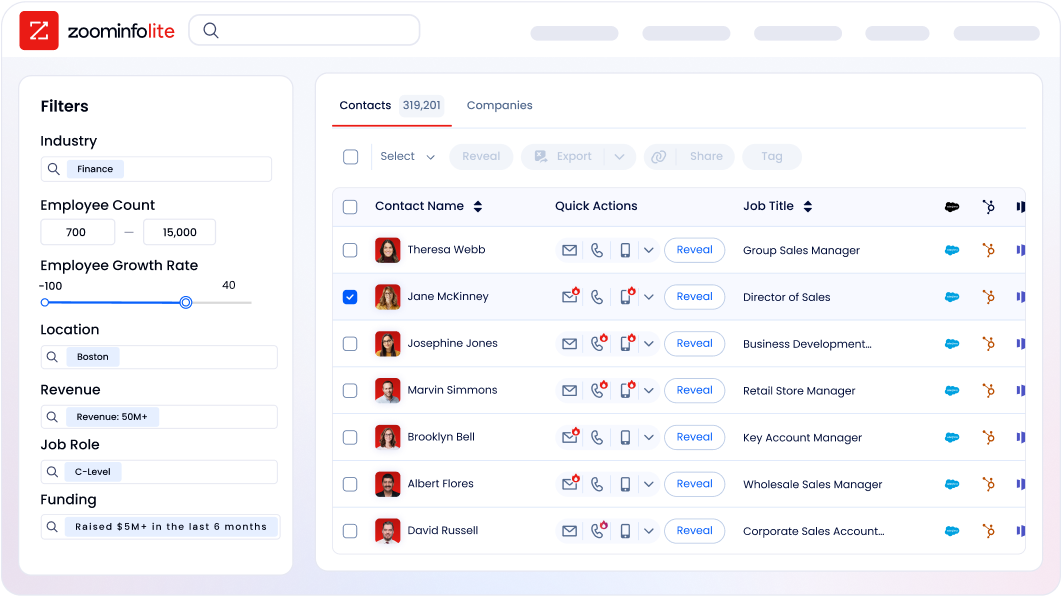
ZoomInfo uses consumption-based pricing with no publicly listed prices; all plans are custom-quoted based on usage, seats, and features. However, ZoomInfo offers two free entry points that neither Sugar Market nor Act-On provides: ZoomInfo Lite (a permanent free tier with access to the B2B database, 10 monthly export credits, and WebSights Lite) and a 7-day free trial of the full platform.
Source: ZoomInfo
For teams evaluating whether better data would improve their marketing, these free options remove the risk of committing before you see results.
CRM integration depth varies significantly
Sugar Market's CRM integration is its strongest card. Because it shares a database architecture with Sugar Sell, the sync is a shared data model rather than an API-based integration. The CRM connector matches at the lead, contact, account, opportunity, and campaign level.
The Listener system monitors CRM field changes and fires automated marketing actions in response. For Sugar Sell users, this is the tightest marketing-to-sales handoff available.
Sugar Market also natively integrates with Salesforce, Microsoft Dynamics, Infor, Sage, and NetSuite, including custom object sync for Salesforce and Dynamics. But its value weakens the further you move from the SugarAI ecosystem. The Bullhorn CRM retirement in June 2025 signals that non-Sugar connectors are being deprioritized.
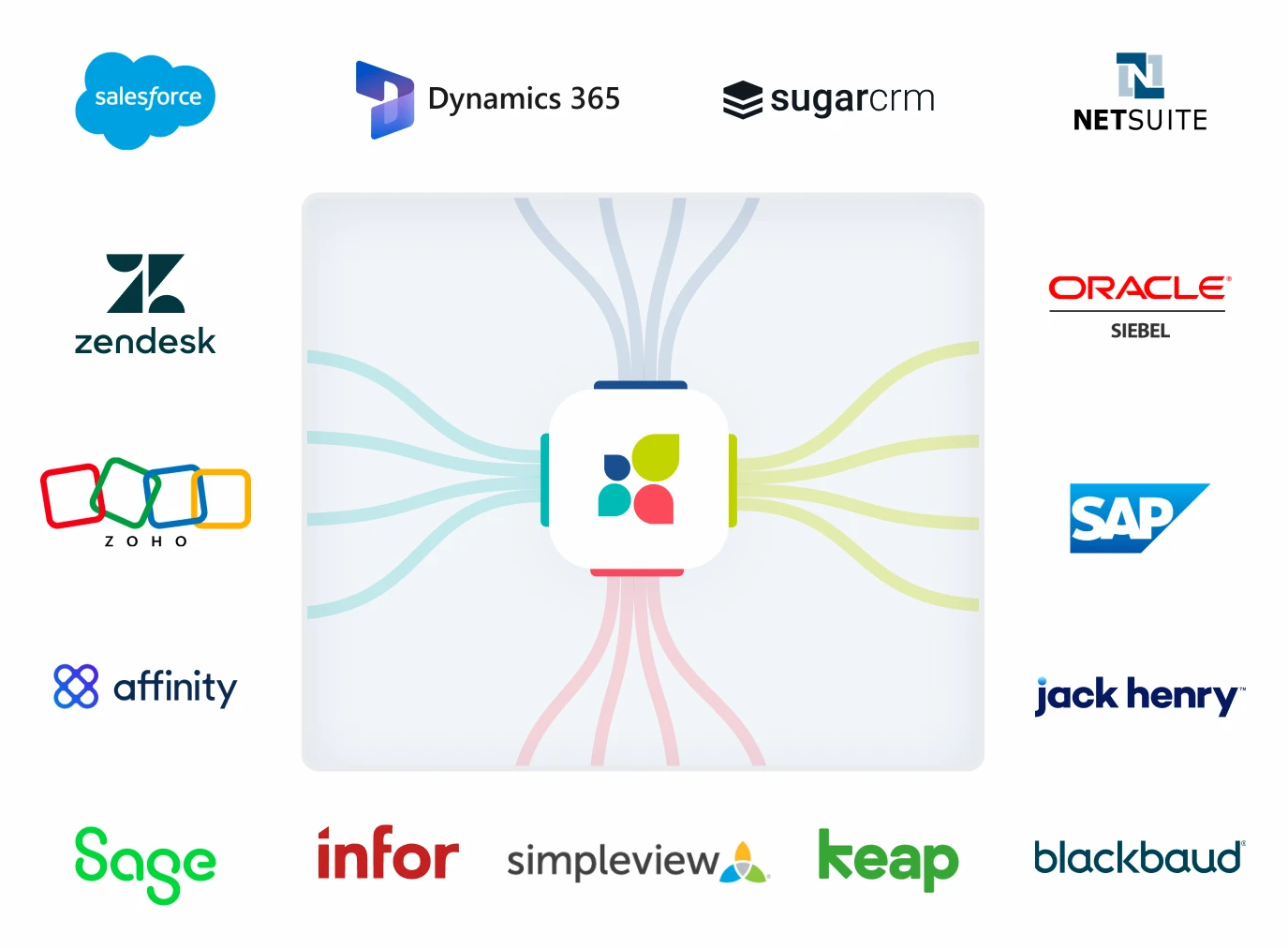
Act-On positions itself as having the "industry's BEST CRM integrations" across all major providers, including Salesforce, Microsoft Dynamics, SugarCRM, NetSuite, and Zendesk Sell. Its Salesforce integration offers bidirectional syncing with flexible data flow. For teams using a CRM outside the SugarAI ecosystem, Act-On is the more flexible choice
Source: Act-On
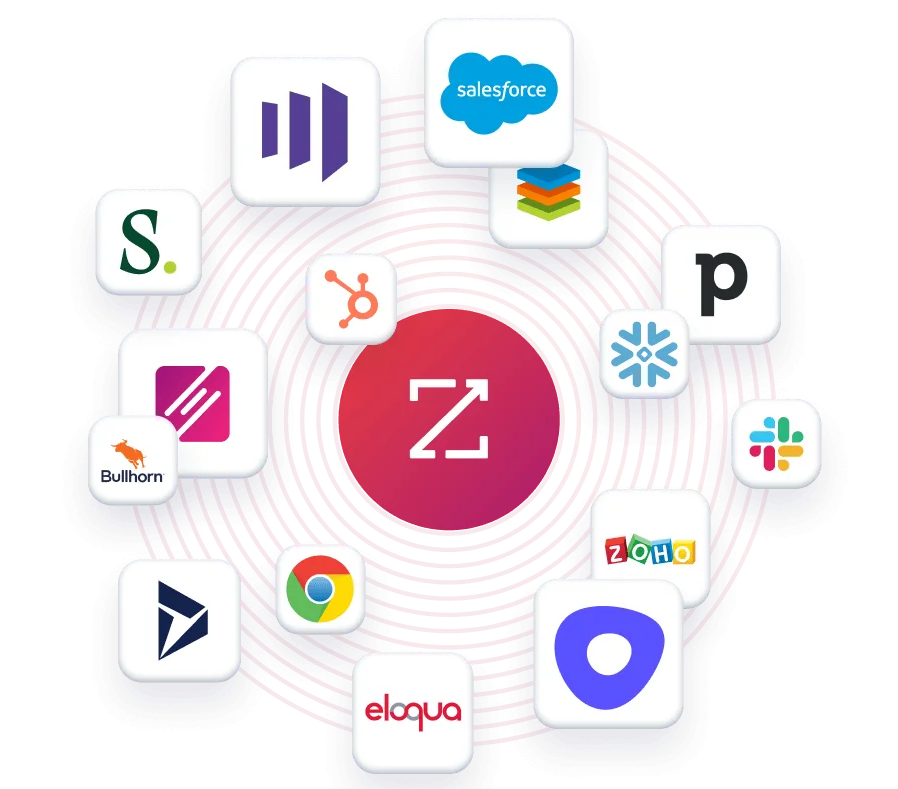
ZoomInfo integrates with both platforms plus 120+ tools across CRM, marketing automation, sales engagement, and data warehouses. Its API access is included in all relevant plans, and the MCP server enables AI agents to access ZoomInfo's data natively. For teams building a multi-tool go-to-market stack, ZoomInfo acts as the data layer connecting everything.
Source: ZoomInfo
Support and onboarding: Act-On leads on service, Sugar Market on documentation
Act-On's reputation for customer support holds up across review platforms. Reviewers describe it as some of the best SaaS support they've experienced and praise the personalized attention and partnership approach.
The company offers live technical support via chat, phone, Zoom, and its support site, with Premium and Premium+ tiers adding faster SLAs and dedicated deliverability consulting. Act-On also holds a 2026 Buyer's Choice Award from TrustRadius.
Sugar Market's support runs through SugarAI's tiered model: Standard (12x5 regional coverage, email-based) is included, with Enhanced and Premium upgrades available for purchase. Customers who bought through a partner get routed to that partner for all support, which means support quality varies depending on the reseller.
Sugar Market's documentation, however, is extensive: the User Guide, CRM Integration Guide, and SugarClub community (10,000+ members) provide thorough self-service resources.
ZoomInfo supports customers through its Help Center, ZoomInfo University (role-specific learning paths and certifications), and dedicated account management for enterprise customers. Its redesigned onboarding, extended from 30 to 90 days, produced a 25% improvement in customer satisfaction scores.

Source: ZoomInfo
Sugar Market vs. Act-On vs. ZoomInfo: Which should you choose?
The right choice depends on where your biggest gap is: campaign execution, CRM alignment, or data quality.
Choose Sugar Market if:
You're already using Sugar Sell or planning to adopt the SugarAI suite
You need marketing automation that shares a database with your CRM, not just an integration
Your industry is manufacturing, distribution, or financial services with long sales cycles
ERP-connected account intelligence matters for your campaigns
You want unlimited users without per-seat charges
Choose Act-On if:
You want marketing automation that works natively with multiple CRM platforms
Multichannel campaigns (email, SMS, social, direct mail) in a single workflow are important
Email deliverability is a priority and you want your platform running its own SMTP infrastructure
Active Contact pricing appeals to you because you don't email your full database
You value a support team that earns consistent praise for partnership-level service
Add ZoomInfo if:
Your marketing campaigns are limited by incomplete contact data, missing buying committee members, or stale records
You need to know which accounts are actively researching your category before they fill out a form
You want AI-powered audience building and multi-channel play execution through GTM Studio
Your sales team needs verified direct dials and emails, not just MQLs from marketing
You want one platform that enriches and activates data across whatever tools you already use
Start with ZoomInfo Lite for free, or request a demo to see the full platform.
Sugar Market and Act-On are both capable marketing automation platforms. Sugar Market fits best when your CRM is Sugar Sell and your business relies on ERP data. Act-On fits best when CRM flexibility and multichannel reach matter more than CRM-native depth.
But whichever platform you choose, the quality of the data feeding it determines whether your campaigns reach the right people at the right time. ZoomInfo fills that gap with B2B data, intent signals that reveal buying behavior, and a data layer that makes every tool in your stack work harder.
Impartner saw a 45% increase in website engagement after using ZoomInfo's data and insights for account-based marketing. (Impartner case study)
Sugar Market vs. Act-On vs. ZoomInfo FAQ
What is the core difference between Sugar Market, Act-On, and ZoomInfo?
Sugar Market is a CRM-native marketing automation platform built into the SugarAI suite, strongest when paired with Sugar Sell and ERP data in manufacturing and distribution. Act-On is a CRM-agnostic marketing automation platform with native integrations across all major CRMs, multichannel campaign support including SMS, and an Active Contact pricing model.
ZoomInfo is a go-to-market platform that feeds both Sugar Market and Act-On with verified contacts, company data, and buying intent signals rather than replacing them.
Which platform is more affordable?
Act-On starts at $900/month for 2,500 active contacts, charging only for contacts you actually email. Sugar Market starts at approximately $1,000/month for 10,000 total contacts with unlimited users.
ZoomInfo offers a permanent free tier (ZoomInfo Lite with 10 monthly export credits) and a 7-day free trial. Paid ZoomInfo plans are custom-quoted. Neither Sugar Market nor Act-On offers a free tier, and Sugar Market has no free trial at all.
Which platform has better lead scoring?
Both Sugar Market and Act-On offer rule-based scoring plus AI-powered predictive scoring. Sugar Market's SugarPredict updates every 15 minutes and requires no manual setup; Act-On's AI Predictive Lead Score updates daily. Sugar Market adds Account-Based Scoring that rolls contact scores to the account level every 30 minutes. However, both platforms score leads based only on internal activity data.
ZoomInfo adds third-party intent signals and verified contact data that make lead scoring more accurate by revealing buying behavior happening outside your website and CRM.
Can I use ZoomInfo with Sugar Market or Act-On?
Yes. ZoomInfo integrates with both platforms. Act-On lists ZoomInfo among its ABM integrations, and Sugar Market connects through the SugarAI ecosystem. ZoomInfo enriches the contact data in your marketing automation platform with verified emails, phone numbers, company attributes, and technographics, and feeds intent signals that indicate when accounts are in-market.
Which platform is best for email deliverability?
Act-On has an edge in email deliverability because it maintains its own SMTP servers and offers dedicated Email Deliverability Services. Sugar Market uses standard email infrastructure. ZoomInfo is not an email sender; instead, it improves deliverability indirectly by ensuring the contact data feeding your campaigns is accurate and verified, which reduces bounce rates and protects sender reputation.
Which platform is easier to learn?
Act-On is generally considered easier to get started with, particularly for basic features like the drag-and-drop email editor and standard automations. Reviewers note it is simpler than competitors like Marketo. Sugar Market carries a steep learning curve for complex features and typically requires implementation partner support.
ZoomInfo's breadth involves real onboarding, but its free tier and 7-day trial allow teams to evaluate the data before committing.
Do I need both a marketing automation platform and ZoomInfo?
Marketing automation platforms like Sugar Market and Act-On handle campaign execution: sending emails, running nurtures, scoring leads, and tracking engagement.
ZoomInfo handles the intelligence layer: who to target, which accounts are in-market, and whether the contact data in your CRM is accurate and complete. Most B2B marketing teams benefit from both. ZoomInfo makes your marketing automation more effective by ensuring campaigns reach the right people with the right timing.
Which platform is best for account-based marketing?
ZoomInfo is the strongest choice for ABM. It was named a Leader in the Gartner Magic Quadrant for ABM Platforms in both 2024 and 2025, and its GTM Studio lets marketers build and launch account-based plays using natural language.
Sugar Market offers Account-Based Scoring and ABM capabilities within the SugarAI suite. Act-On offers ABM as a paid add-on at the Enterprise tier. For ABM with intent data, verified contacts, and cross-channel orchestration, ZoomInfo provides the most complete option.
More Sugar Market and Act-On breakdowns:
