
Choosing between Xactly and Varicent for sales performance management comes down to five questions:
Do you need a platform your compensation team can administer without coding, or are you willing to invest in technical resources for plan complexity?
Is your priority speed to value and business-user control, or configurability for complex comp structures?
How important is AI-powered forecasting and pipeline intelligence alongside your compensation engine?
Do you need industry benchmarking data in the platform, or will you bring your own benchmarks?
Is the data feeding your territories, quotas, and incentive plans accurate enough to make any SPM platform work?
In short, here's what we recommend:
Xactly is an SPM platform for revenue teams that want compensation, territory planning, quota management, and forecasting in one place. Its Intelligent Revenue Platform connects Incent (commission administration), Plan (territory and quota design), Forecast (pipeline prediction), and Design (plan simulation) with a 20+ year proprietary dataset of pay-and-performance benchmarks.
The trade-off: no public pricing, enterprise complexity, and seven products (AI agents, custom extensions) that demand dedicated administration.
Varicent is an SPM platform designed for enterprises running thousands of payees across complex global hierarchies. Named a Leader in the Forrester Wave for SPM (Q1 2025) and recognized as "the only solution evaluated with an in-depth set of AI capabilities," Varicent connects incentive compensation, sales planning, and seller insights on a single data model.
The trade-off: a steep learning curve, a specialized development language that requires technical resources, and no public pricing or free trial.
Both platforms solve the same core problem: replacing spreadsheets and manual processes in compensation, territory, and quota management. But neither addresses the quality of the data flowing into your sales plans. Territories designed on incomplete account data produce unbalanced coverage. Quotas set against stale pipeline numbers produce unreachable targets. Incentive plans built on inaccurate CRM records produce disputed commissions. The SPM platform is only as good as the data feeding it.
ZoomInfo is a GTM platform that provides the data foundation both Xactly and Varicent depend on. With 500M contacts, 100M companies, 135M+ verified phone numbers, and 200M+ verified business email addresses, ZoomInfo gives revenue operations teams the verified account and contact data they need to design accurate territories, set realistic quotas, and keep CRM records complete.
Its GTM Context Graph processes 1.5B+ data points daily, fusing this data with CRM records, conversation intelligence, and behavioral signals to show not just what happened in a deal, but why. That intelligence is accessible through GTM Workspace for sellers, GTM Studio for marketers and RevOps, or the API and MCP in any front-end.
If your SPM investment is only as good as the data behind it, see how ZoomInfo can strengthen your revenue foundation.
Xactly vs. Varicent vs. ZoomInfo at a glance
Xactly | Varicent | ZoomInfo | |
|---|---|---|---|
Core focus | SPM + revenue intelligence | SPM + orchestration | B2B data, GTM intelligence, and execution |
ICM strength | 99.8% on-time payment accuracy; $7B+ processed monthly | Highest Forrester score in calculation processing; 100% accuracy at Pitney Bowes since 2017 | Not an ICM platform; provides the upstream data that feeds ICM |
Territory planning | AlignStar map-based design with route optimization | Precedence-based rules, multi-hierarchy, map visualization | Territory design powered by 500M contacts, 100M companies, and 300+ company attributes |
AI capabilities | Fleet of Agents (May 2026), 20-year proprietary data, Intelligence Studio | Forrester-recognized AI architecture, GenAI assistants for ELT, planning, design, and research | GTM Context Graph processing 1.5B+ data points daily; AI agents in GTM Workspace |
Forecasting | Dedicated Forecast product with deal Health Scores | Connected through sales planning scenario modeling | Pipeline intelligence and buyer intent signals across 500M contacts |
Industry benchmarking | 20+ years proprietary pay-and-performance data | Not a standalone feature | 100M company profiles with firmographics, technographics, and org charts |
Pricing | Quote-based; tiered (Core, Plus, Ultimate) | Quote-based; per-payee or per-person-on-quota | Consumption-based; free tier (ZoomInfo Lite) available |
Free trial | By request only | None | 7-day free trial + permanent ZoomInfo Lite |
Key integrations | Salesforce, Workday, ServiceNow, HubSpot, Snowflake | Salesforce, Workday, ServiceNow, HubSpot, Power BI | 120+ integrations; Salesforce, HubSpot, Dynamics 365, Snowflake, and more |
Incentive compensation: Two approaches to the same math
Both Xactly and Varicent exist to solve the same problem: automating commission calculations too complex and too important for spreadsheets. How they get there reflects different design philosophies.
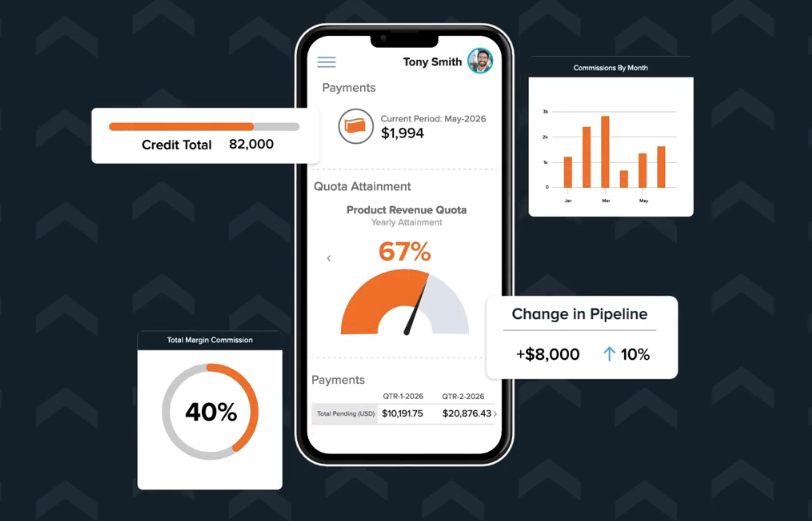
Xactly Incent processes over $7 billion in commissions and bonuses monthly across its global customer base. Administrators build plans using a Compensation Configurator with reusable rules, quotas, and rate tables.
At the Ultimate tier, AI trained on 20+ years of proprietary data accelerates plan setup. Reps receive itemized commission statements with deal-level drill-down through native Android and iOS apps. A built-in payout and dispute resolution system logs and tracks commission inquiries.
For public companies, the Commission Expense Accounting module automates ASC 606 and IFRS 15 compliance, including dynamic true-ups for contract events.
Source: Xactly
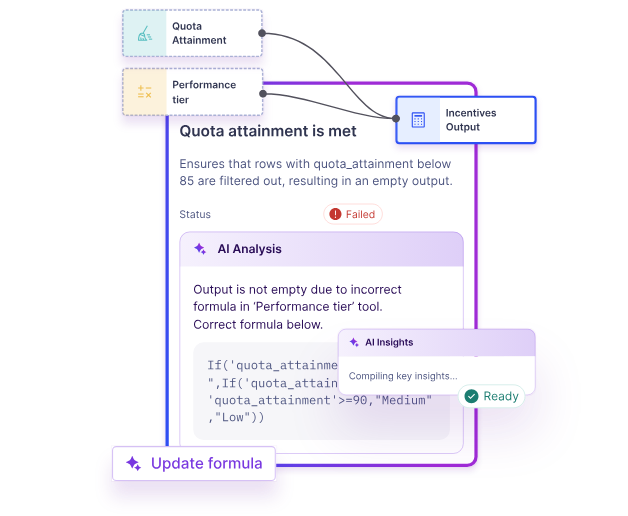
Varicent Incentives starts from a different point. Rather than a configurator with reusable components, Varicent offers a plan-builder with pre-built components and a Designer Assistant that helps admins build, test, and adjust plans without spreadsheets or coding.
Sellers access interactive compensation statements, quota attainment data, and AI-predicted payout forecasts from any device and can submit and resolve discrepancies directly. The Research Assistant resolves seller questions by referencing actual plan logic, not just data snapshots.
Source: Varicent
The practical difference shows up in administration.
Xactly positions itself around "fast time-to-value, business-friendly administration" that doesn't require IT for standard tasks. Varicent draws consistent feedback from G2 and TrustRadius reviewers about complex table dynamics and a specialized development language that requires coding knowledge for routine plan changes.
Varicent's AI assistants are its response to this gap, but the platform still demands more technical investment than Xactly for day-to-day administration.
Territory and quota planning: Maps vs. models
How each platform handles territory design and quota allocation reveals distinct priorities.
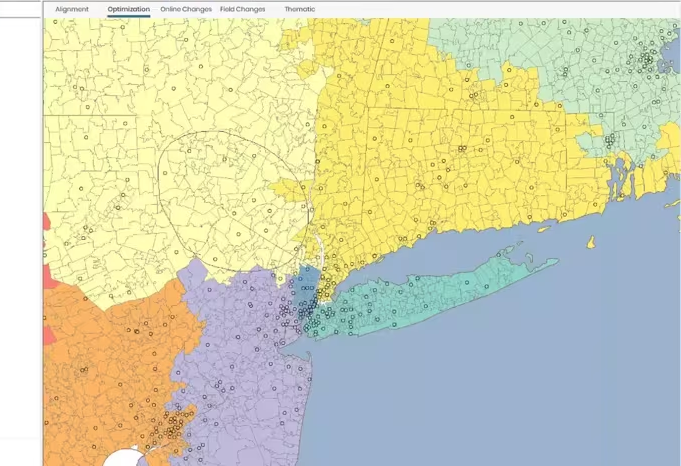
Xactly Plan includes AlignStar, a territory mapping product with an interactive map interface, lasso tool, and an automated Alignment Report Card that grades territory balance against company objectives.
Route optimization helps reps minimize drive time within geographic zones. Quota allocation connects to capacity modeling, with side-by-side scenario comparisons and a reality check that validates top-down goals against actual sales capacity.
Source: Xactly
Varicent Sales Planning takes a model-first approach.
Teams define territories across user-defined hierarchies, with definitional elements shared across territories to support matrix structures. A precedence-based rules engine handles named account assignment automatically, removing named accounts at higher territory levels before geography rules apply.
Teams can set quotas top-down or bottom-up, allocate across time using a seasonality schedule, and filter down from any member of the territory roll-up hierarchy. The Sales Planning Assistant supports scenario modeling and capacity balancing, letting teams test options and see the impact of changes in minutes.
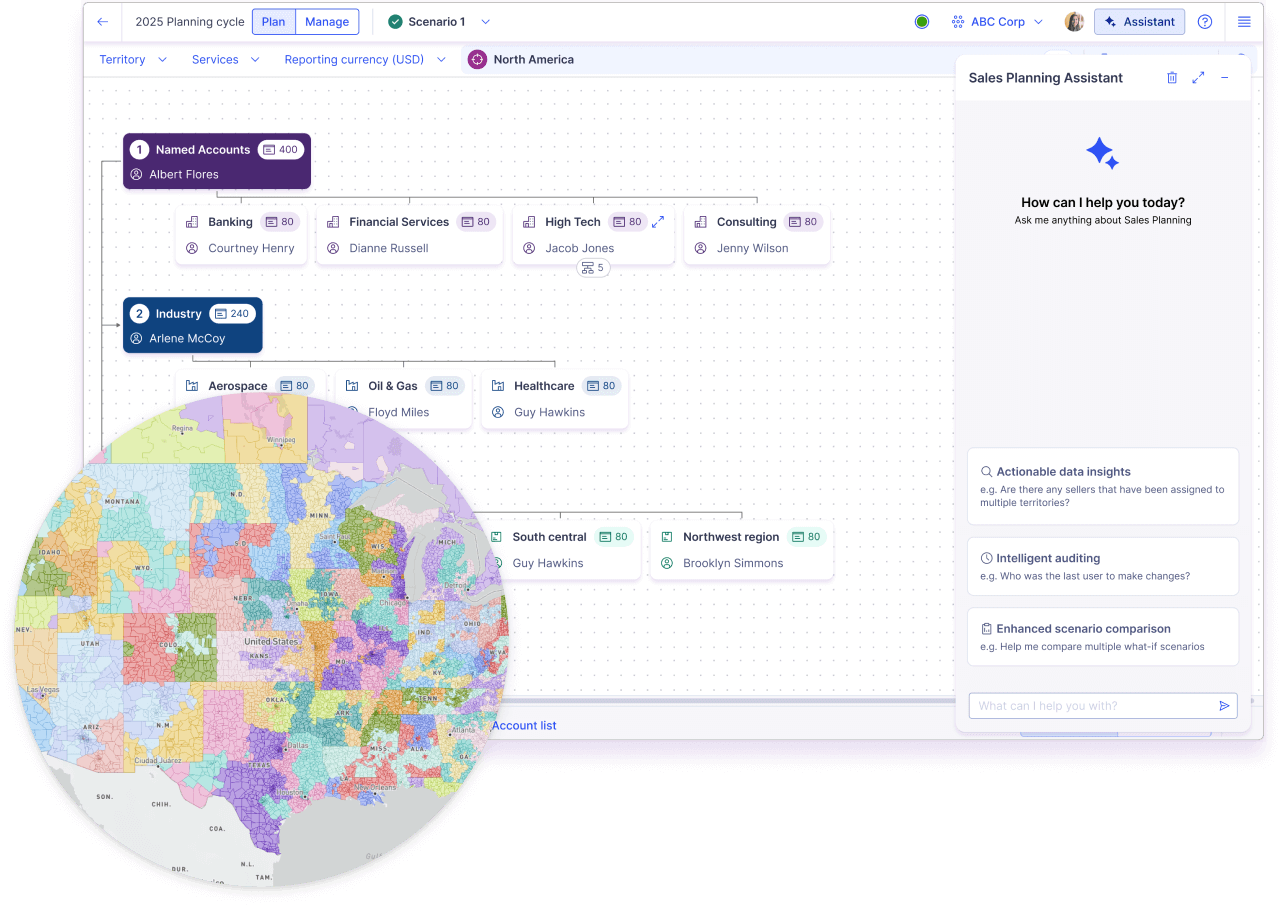
Source: Varicent
The key distinction: Xactly's AlignStar provides geographic territory design with visual map tools and field optimization. Varicent provides structural territory modeling with multi-hierarchy support and precedence-based rules for complex enterprise structures.
Organizations with large field sales teams drawing geographic boundaries may prefer Xactly's map-first approach. Organizations running matrix territory structures across overlapping hierarchies may prefer Varicent's model-first approach.
But both platforms share a dependency: the account and contact data underlying every territory and quota decision. Territories built on incomplete company data produce coverage gaps. Quotas set against accounts with missing context produce unrealistic targets.
This is where ZoomInfo fits.
With 100M company profiles and 300+ company attributes, ZoomInfo provides the verified firmographic, technographic, and org chart data that territory and quota planning require. When Palo Alto Networks needed to redesign their segmentation, they turned to ZoomInfo: "ZoomInfo has been a major thought leader and partner in how we approach segmentation, territory planning, and hierarchy clarity."
That planning data feeds into CRM systems, which in turn feed Xactly or Varicent.
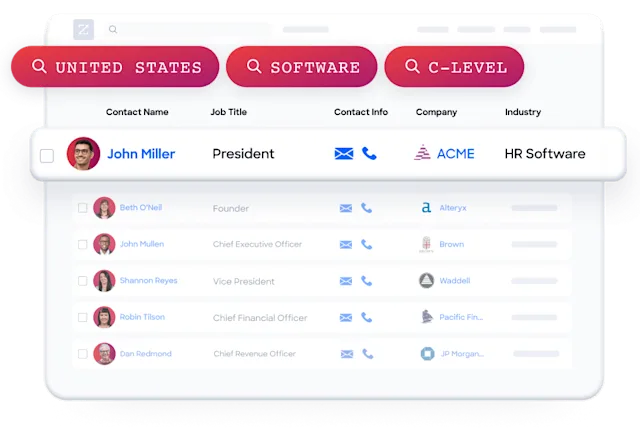
Source: ZoomInfo
"Company ID is transformational. It's a really clean approach to hierarchies and gives us a way to clearly communicate territory boundaries to our sellers." (Palo Alto Networks)
AI strategy: Agents vs. architecture
Both platforms are betting on AI, but the approaches differ.
Xactly's AI strategy centers on agentic automation.
In May 2026, Xactly launched its Fleet of Agents at the Upside conference, introducing four agent types: Workflow Agents (orchestrating multi-step processes), Optimization Agents (surfacing recommendations from benchmarks), Builder Agents (letting practitioners configure custom agents in natural language), and External Agents (connecting to Workday, Salesforce, and ServiceNow via MCP).
The Intelligence Studio serves as the command center where customers compose, deploy, and manage custom agents within enterprise governance. Every agent draws on proprietary compensation data spanning 20+ years. The ServiceNow agent-to-agent integration, starting with the Dispute Management Agent, is the first production deployment of cross-platform agentic AI for revenue operations.
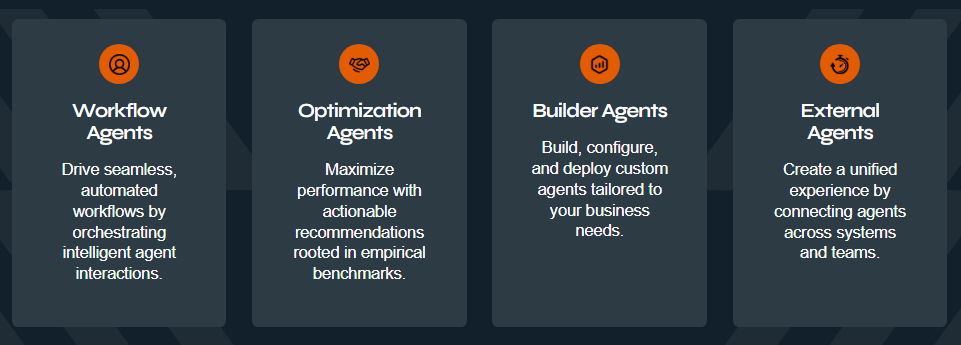
Source: Xactly
Varicent's AI strategy centers on architecture.
Four GenAI assistants (ELT, Sales Planning, Designer, and Research) operate with full context of territories, quotas, incentives, and forecasts. CEO Marc Altshuller stated: "Most AI tools make individual work faster. We're focusing on what makes the entire system better." Varicent positions its AI as "connected intelligence" where data, models, and processes learn from each other rather than staying siloed.
The practical difference: Xactly is building toward autonomous agents that execute workflows independently. Varicent is building AI that makes the existing platform smarter as a system. Xactly offers extensibility (customers can build custom agents). Varicent offers contextual awareness within the compensation workflow (the Research Assistant understands actual plan logic, not just data).
Both face a shared limitation. Neither can reason about data they don't have.
Xactly's 20-year benchmark dataset is strong for compensation design, but it doesn't include real-time buyer signals and market intelligence that inform whether a territory plan makes sense. Varicent's connected data model is strong for understanding how plan changes cascade, but it doesn't include the account intelligence that determines whether territories are properly sized.
ZoomInfo's GTM Context Graph processes 1.5B+ data points daily, fusing B2B contact data with CRM records, conversation intelligence, and behavioral signals to capture the context behind deal outcomes.
When a territory plan needs to account for which accounts are actively in-market, or when a quota needs to reflect real buying activity rather than historical averages, the GTM Context Graph provides the signal layer that SPM platforms lack. This intelligence is available through the API and MCP that connect to any downstream system, including the CRMs that feed Xactly and Varicent.
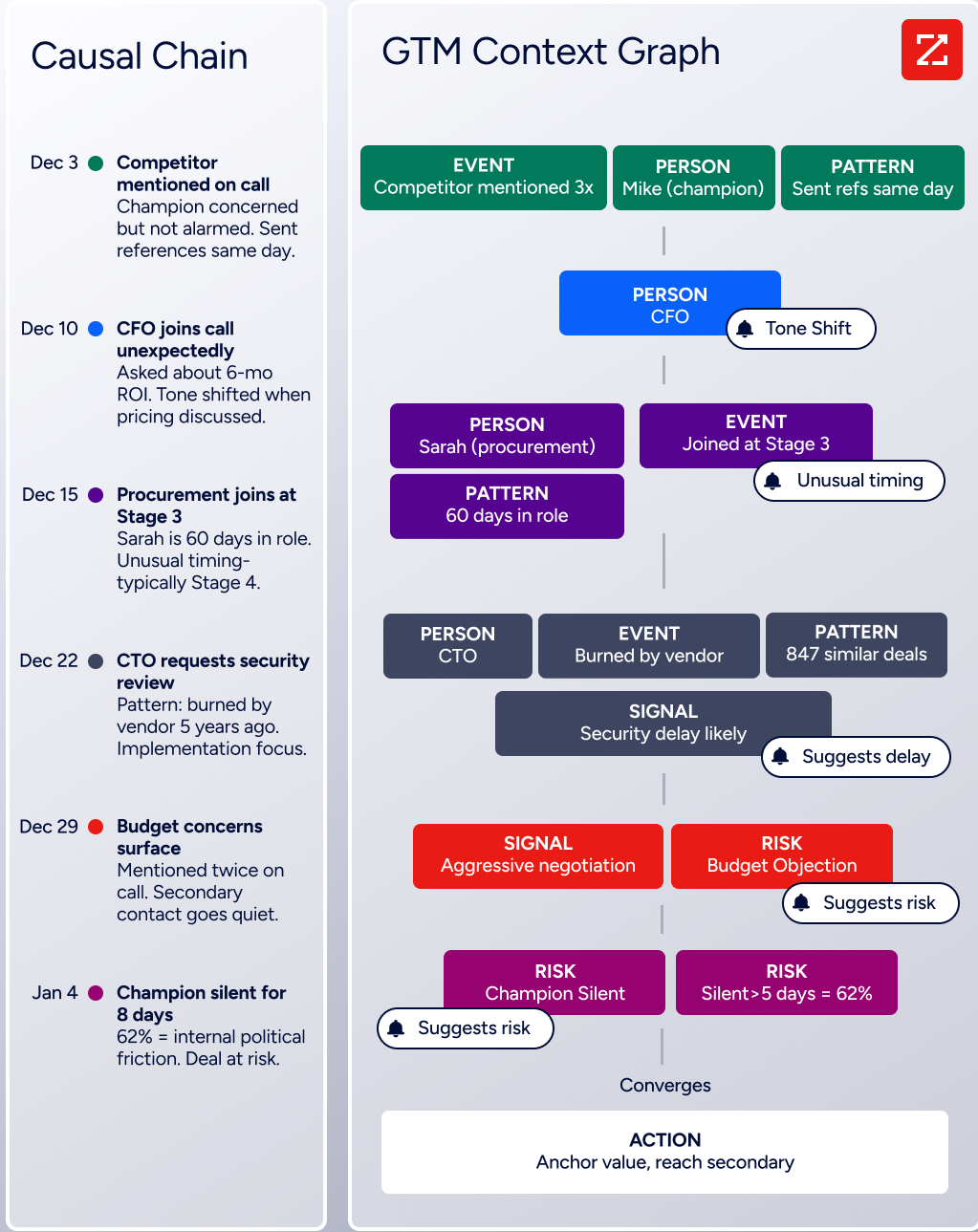
Source: ZoomInfo
"That combination of our internal CRM data, external signals, and AI that's given all that context has helped us craft very specific account- and persona-based messages. And people have responded to them right away." (Seismic)
Forecasting and pipeline intelligence
This is where Xactly holds an advantage over Varicent, and where ZoomInfo adds a different kind of value.
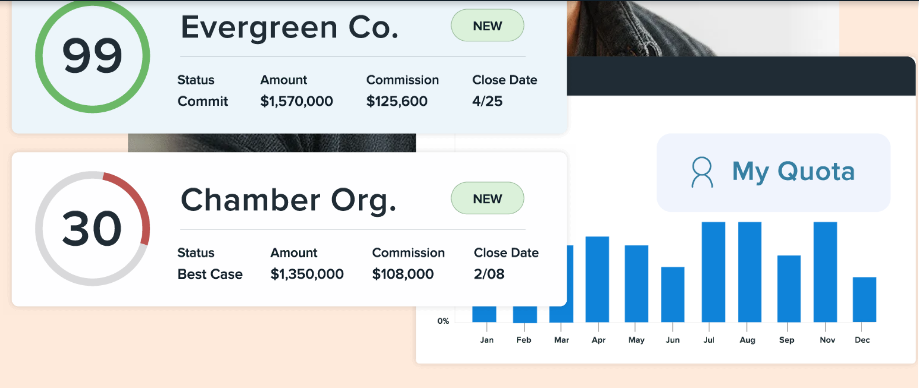
Xactly Forecast is a dedicated pipeline and revenue forecasting product that consolidates CRM and ERP data into a single dashboard.
AI-powered deal Health Scores analyze thousands of data points (email sentiment, meeting frequency, historical rep performance) to flag at-risk revenue before managers catch it. The Commission Earnings Forecasting add-on connects pipeline data to compensation projections, showing reps how closing specific deals affects their earnings.
Source: Xactly
Varicent does not offer a dedicated forecasting product.
Its approach to pipeline intelligence is embedded within Sales Planning through scenario modeling and the Sales Planning Assistant, which lets teams test how headcount, territory, and quota changes affect revenue projections.
This helps with planning but does not provide the deal-level pipeline visibility, health scoring, or real-time pipeline change detection that Xactly Forecast delivers.
ZoomInfo approaches forecasting from the data side.
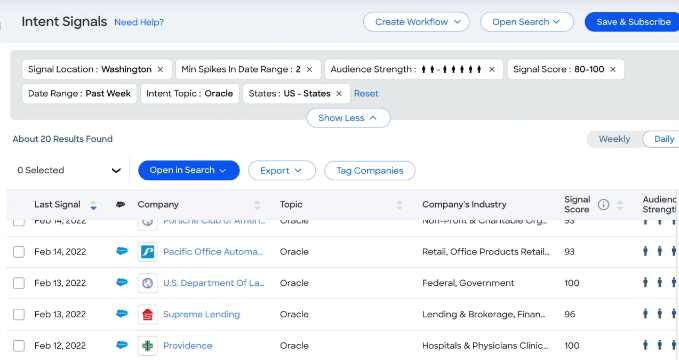
Buyer Intent tracks signals from 210 million IP-to-Organization pairings and 6 trillion+ new keyword-to-device pairings sourced monthly. Guided Intent, exclusive to ZoomInfo, identifies topics historically correlated with deal success rather than requiring manual topic selection. These signals feed into the GTM Context Graph, where they combine with CRM data and conversation intelligence to produce deal-level context that shows why opportunities are advancing or stalling.
Seismic attributed 39% of active pipeline to opportunities identified or influenced by ZoomInfo signals and reported 54% productivity gains.
Source: ZoomInfo
For organizations that need deal-level forecasting in their SPM stack, Xactly has the stronger native answer. For organizations that want better signal intelligence informing those forecasts, ZoomInfo provides the upstream data layer.
Seller transparency and dispute resolution
Both platforms recognize that commission disputes drain productivity. Their approaches reveal an architectural difference.
Xactly gives reps customized incentive statements with deal-level drill-down, accessible through native mobile apps.
The built-in dispute resolution system logs, tracks, and resolves inquiries. AI Assistants (at the Ultimate tier) let reps ask natural-language questions about their earnings. The ServiceNow Dispute Management Agent goes further, investigating and resolving compensation disputes end-to-end without human intervention.
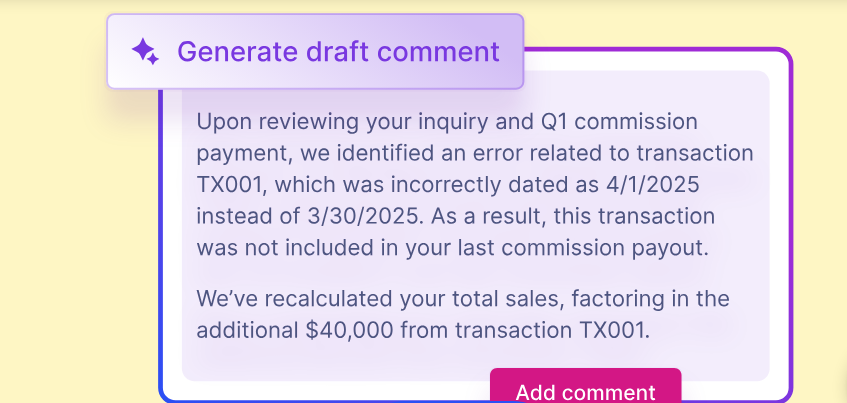
Varicent's Seller Insights product includes the Research Assistant, which Varicent positions as architecturally distinct: "Most AI tools sit on top of your data. They see raw numbers, not the rules and logic that drive a sales plan. Research Assistant is built into the core of Varicent, so it understands the plan end to end." When a seller submits a dispute, the Research Assistant reviews the inquiry in context, assembles relevant plan details, troubleshoots the logic, and drafts a response for admin review.
Source: Varicent
Both solutions reduce dispute volume and administrative burden. The difference is in how the AI understands the plan.
Varicent's Research Assistant operates against actual compensation logic. Xactly is moving toward autonomous resolution through cross-platform agents. Organizations that prioritize plan-aware dispute explanation may prefer Varicent. Organizations that prioritize full automation of the dispute workflow may prefer Xactly's agentic direction.
Integrations and ecosystem
Where each platform connects reveals its strategic priorities.
Xactly integrates natively with Salesforce, Microsoft Dynamics, Workday, ServiceNow, and HubSpot. The Salesforce partnership, in place since 2006, runs deepest: 80% of Xactly customers use Salesforce, with bi-directional data sync and workflow-specific adoption walkthroughs.
Xactly Connect provides REST APIs and ODBC/JDBC drivers using ANSI SQL syntax, saving 170+ hours per month through integration automation. The Intelligence Connect MCP server exposes Xactly data to Claude, ChatGPT, Salesforce, or ServiceNow agents.
Source: Xactly
Varicent integrates with Salesforce, Microsoft Dynamics, HubSpot, Power BI, Tableau, Snowflake, and Google Analytics through its native ELT platform.
Strategic partnerships include Workday (certified Innovation Partner) and ServiceNow (CRM-to-SPM data integration in the ServiceNow Store from Q4 2025). The AgentSync partnership adds insurance-specific producer management. Implementation partners include Deloitte, KPMG, Accenture, and Argano.
ZoomInfo connects to both ecosystems.
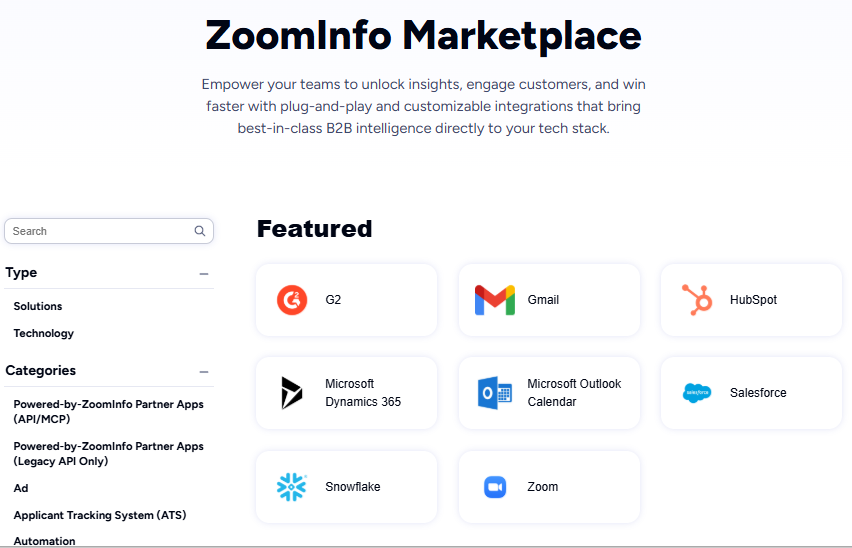
The ZoomInfo App Marketplace lists 120+ integrations including Salesforce, HubSpot, Microsoft Dynamics 365, and Snowflake. API access is included in all relevant plans, and the MCP server lets any AI agent access ZoomInfo data natively. ZoomInfo data can enrich the CRM records that Xactly and Varicent rely on, improving territory assignments, quota accuracy, and the contact data behind compensation calculations.
Source: ZoomInfo
"The plug-and-play aspect of the API means I can integrate it very easily into any process and get information at a moment's notice." (BDO Canada)
Contract terms and pricing transparency
Neither Xactly nor Varicent publishes pricing, but the contract structures differ in ways that matter for procurement.
Xactly charges on a named-seat subscription model.
Seat counts cannot decrease during an active term. Preventing auto-renewal requires 60 days' written notice. Fees may increase once per 12-month period at the greater of a negotiated percentage or CPI.
Varicent charges per-Entitlement, with one Entitlement per Payee for incentive compensation and one Entitlement per Person on Quota for territory and quota planning. Preventing auto-renewal requires only 30 days' written notice.
However, if the renewal order isn't executed before the subscription expires, Varicent converts to rolling 90-day terms at a 30% fee increase. All fees are non-refundable.
ZoomInfo uses consumption-based pricing where customers pay based on usage.
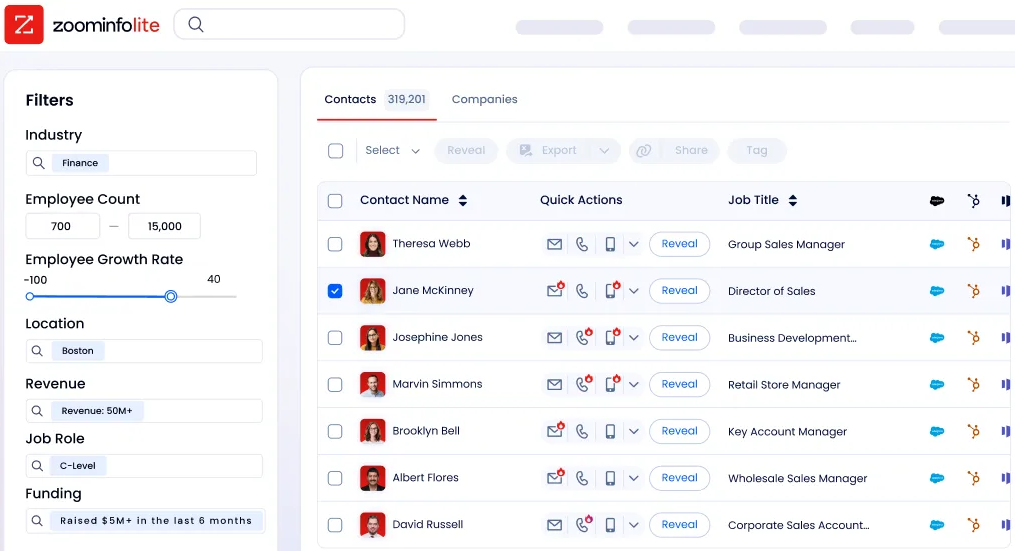
Unlike both SPM platforms, ZoomInfo offers low-commitment entry points: ZoomInfo Lite is a permanent free tier with access to the B2B database and 10 monthly export credits, and a 7-day free trial provides full platform access. No credit card required for either.
Source: ZoomInfo
Security and compliance
All three platforms maintain enterprise security certifications, though the depth varies.
Varicent holds the broadest certification set among the two SPM platforms: ISO 27001, ISO 27017, ISO 27018, SOC 2 Type II, and SOC 1 Type II.
The SOC 1 Type II certification (for financial reporting controls) applies specifically to Incentive Services, relevant for customers whose compensation data feeds audited financial statements. GDPR, CCPA, PIPEDA, and multiple US state privacy laws are covered under the DPA. Daily backups with 90-day immutable retention and incident response notification within 72 hours.
Xactly maintains SOC 2 certification and ASC 606/IFRS 15 compliance through the CEA module.
Infrastructure security includes TLS 1.2 encryption, stateful inspection firewalls, IDS, and real-time disk replication. An active Security Incident Response Team publishes updates on the Trust site. Xactly does not publicly disclose ISO 27001 or additional privacy-specific certifications on its trust site.
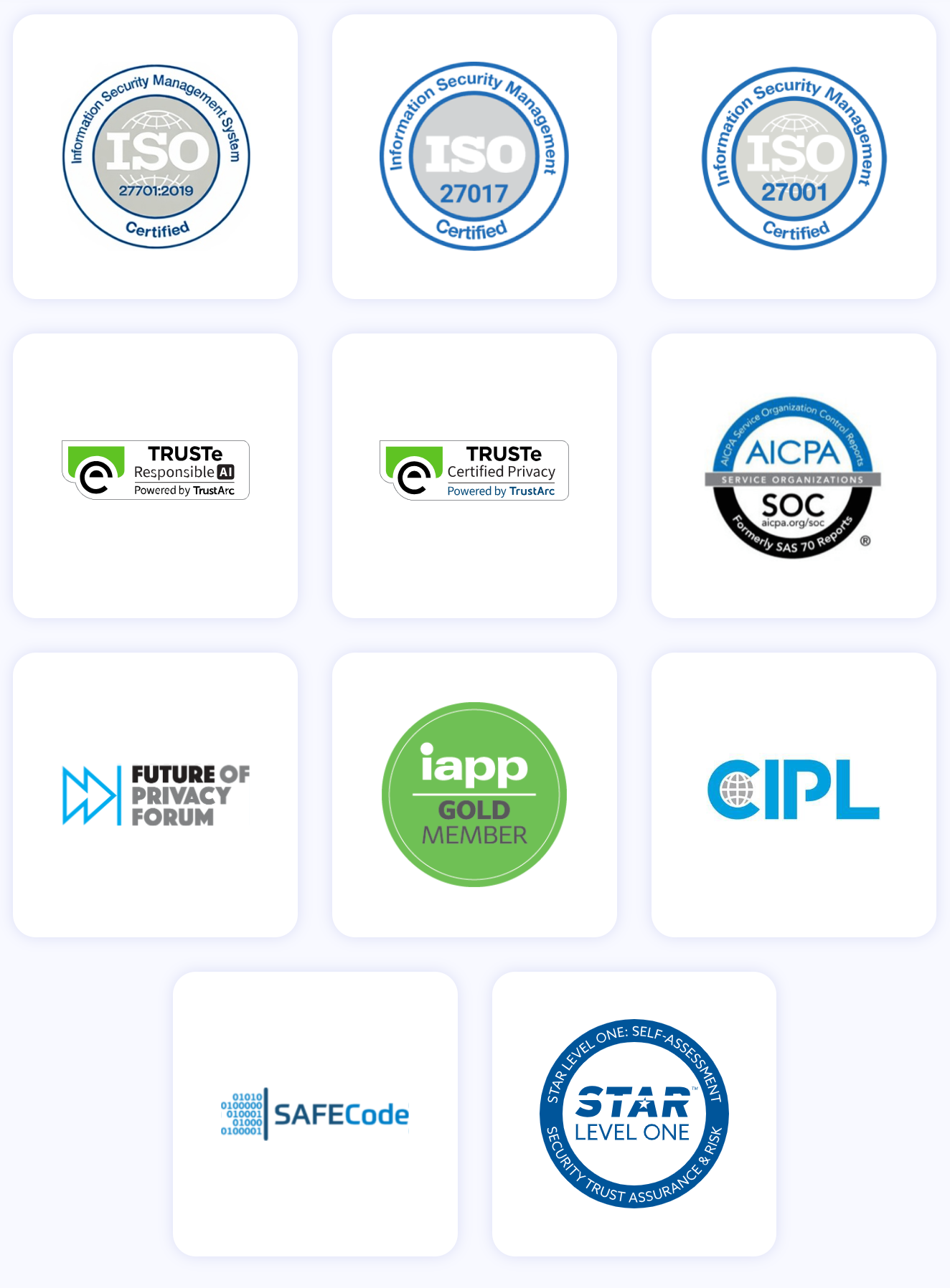
ZoomInfo holds ISO 27001, ISO 27701, SOC 2 Type II, TRUSTe GDPR, and TRUSTe CCPA certifications, all renewed annually. As a registered data broker in California and Vermont, ZoomInfo operates under direct regulatory oversight of its data practices.
Xactly vs. Varicent vs. ZoomInfo: Which should you choose?
These platforms operate at different layers of the revenue operations stack. The right choice depends on which layer is your current constraint.
Choose Xactly if:
You need compensation, territory planning, quota management, and forecasting in one platform
Business-user administration without IT dependency matters
Industry benchmarking against 20+ years of proprietary data would improve your comp plan design
Your organization is investing in agentic AI for autonomous revenue workflows
ASC 606/IFRS 15 compliance automation is a procurement requirement
Choose Varicent if:
You run thousands of payees across complex global hierarchies with layered comp plans
AI plan modeling and dispute resolution would reduce your compensation team's administrative burden
You need strong calculation processing for multi-tiered, multi-currency structures
Your organization has dedicated technical resources to manage platform complexity
Financial services, insurance, or regulated industry compliance is a priority
Add ZoomInfo if:
The data feeding your territories, quotas, and comp plans is incomplete or unreliable
You need verified account and contact data to design balanced territories and set realistic quotas
Your sellers need buyer intent signals and deal context that your SPM platform cannot provide
You want one data foundation accessible in your CRM, your SPM platform, and any AI agent through APIs and MCP
You want to start with a free tier before committing
See how ZoomInfo's data foundation strengthens your revenue operations with a free trial.
The question of Xactly vs. Varicent is about how to manage compensation. But the harder problem most revenue organizations face isn't calculation accuracy. It's data accuracy upstream. Territories built on verified account intelligence produce balanced coverage. Quotas informed by real market signals produce achievable targets. Compensation plans fed by clean CRM data produce fewer disputes.
ZoomInfo provides that upstream foundation, making whichever SPM platform you choose work better.
"ZoomInfo is our one source of truth for account data, and even more so for contact data. There's no other provider in the market that provides you with that level of detail." (Smartsheet)
Xactly vs. Varicent vs. ZoomInfo FAQ
What is the core difference between Xactly and Varicent?
Both are Sales Performance Management platforms that automate incentive compensation, territory planning, and quota management.
Xactly positions itself as a modular platform with a 20-year proprietary benchmark dataset, a dedicated forecasting product, and AI agents for autonomous workflows. Varicent positions itself as a platform with the highest Forrester score for calculation processing, a unified data model connecting incentives to sales planning, and GenAI assistants embedded across the platform.
Which platform handles the most complex compensation structures?
Both handle enterprise complexity.
Varicent earned the highest Forrester score in calculation processing and supports thousands of payees with multi-tiered, multi-currency plans. CDW manages 6,000 payees and 125 plans in Varicent. Xactly processes over $7 billion in commissions monthly with 99.8% on-time payment accuracy and supports splits, draws, accelerators, clawbacks, and MBOs at scale.
Does either platform include sales forecasting?
Xactly offers a dedicated Forecast product with AI-powered deal Health Scores, pipeline change detection, and commission earnings projections. One customer reported an 87% improvement in pipeline accuracy after implementation.
Varicent does not have a standalone forecasting product but includes scenario modeling and capacity planning through its Sales Planning module.
How does ZoomInfo relate to Xactly and Varicent?
ZoomInfo is not a competitor to either platform. It is a complementary data layer.
ZoomInfo provides verified B2B contact and company data (500M contacts, 100M companies) that feeds the CRM systems both Xactly and Varicent depend on. Better upstream data means more accurate territories, more realistic quotas, and fewer compensation disputes from incomplete records.
Which platform is better for regulated industries?
Varicent holds the broader security certification set (ISO 27001, 27017, 27018, SOC 2 Type II, SOC 1 Type II) and specializes in financial services and insurance, including producer/broker compensation management. Xactly provides ASC 606/IFRS 15 compliance automation through its Commission Expense Accounting module, a go/no-go requirement for public companies. Both serve regulated enterprise customers.
Can I try either platform before buying?
Neither offers self-serve free trials.
Xactly maintains a trial subscription agreement, but access goes through the sales team. Varicent offers no free trial or free tier. ZoomInfo is the only platform among the three with a permanent free tier (ZoomInfo Lite with 10 monthly export credits) and a 7-day free trial requiring no credit card.
How do the contract terms compare?
Xactly requires 60 days' written notice to prevent auto-renewal, and TermScout rated its contract in the top 13% for customer favorability. Varicent requires only 30 days' notice but imposes a 30% price increase if renewal isn't executed before the subscription expires. Both charge non-refundable fees and prohibit seat reductions mid-term.
Which platform has better AI capabilities?
Both are investing heavily.
Varicent was the only SPM vendor Forrester recognized for in-depth AI capabilities, with GenAI assistants built into the platform. Xactly launched a Fleet of Agents in May 2026 with four agent types, an Intelligence Studio for custom agent creation, and the first agent-to-agent integration with ServiceNow. Varicent's AI runs deeper within the compensation workflow; Xactly's AI is broader and more extensible across systems.
See how Xactly compares across other platforms:
