
Choosing between ActiveCampaign and Iterable for marketing automation often comes down to five questions:
Are you an SMB that needs email, CRM, and automation in one affordable package, or an enterprise running cross-channel campaigns at scale?
Do you need automation logic with a built-in sales CRM, or a platform built for mobile push, in-app messages, and SMS alongside email?
Is self-serve setup with a 14-day trial important, or are you prepared for a sales-led buying process with custom pricing?
Can your marketing team build campaigns without engineering help, or do you have dedicated ops support for complex data models?
For B2B teams, the critical question: does your marketing automation know who to target and when they're ready to buy, or is it sending campaigns into the dark?
In short, here's what we recommend:
ActiveCampaign is the marketing automation platform for small and mid-sized businesses that want email, SMS, WhatsApp, and CRM under one roof. Its visual automation builder handles branching logic that responds to behavioral triggers in real time. Active Intelligence, launched in 2025, adds AI agents that build campaigns from plain-language prompts and optimize send times per subscriber.
With plans starting at $15/month, a 14-day free trial, and 1,000+ integrations, ActiveCampaign gives small marketing teams enterprise-level automation without enterprise pricing. The trade-off: pricing climbs as contact lists grow, the CRM is lighter than dedicated sales tools, and advanced features have a learning curve.
Iterable is the cross-channel engagement platform for enterprise consumer brands that need to orchestrate email, SMS, mobile push, web push, in-app messages, and WhatsApp from one visual studio. Its Nova AI suite handles channel selection, send-time optimization, and predictive audience scoring, while its data architecture supports nested storage and real-time activation without a separate CDP.
Iterable earned the highest innovation score in Forrester's Q1 2026 email marketing evaluation. The catch: no published pricing, no free trial, weaker out-of-the-box reporting than either competitor, and an enterprise sales process that slows evaluation.
Both platforms solve the "how to engage" problem well. But for B2B teams, there's a question neither answers on its own: who should you target, and when are they ready to hear from you? That gap turns good campaigns into wasted sends.
ZoomInfo is a GTM platform that provides the intelligence layer B2B marketing automation needs. With 500M contacts, 100M companies, 135M+ verified phone numbers, and 200M+ verified business email addresses, ZoomInfo gives your marketing team the largest B2B dataset available. But the data is the foundation, not the product.
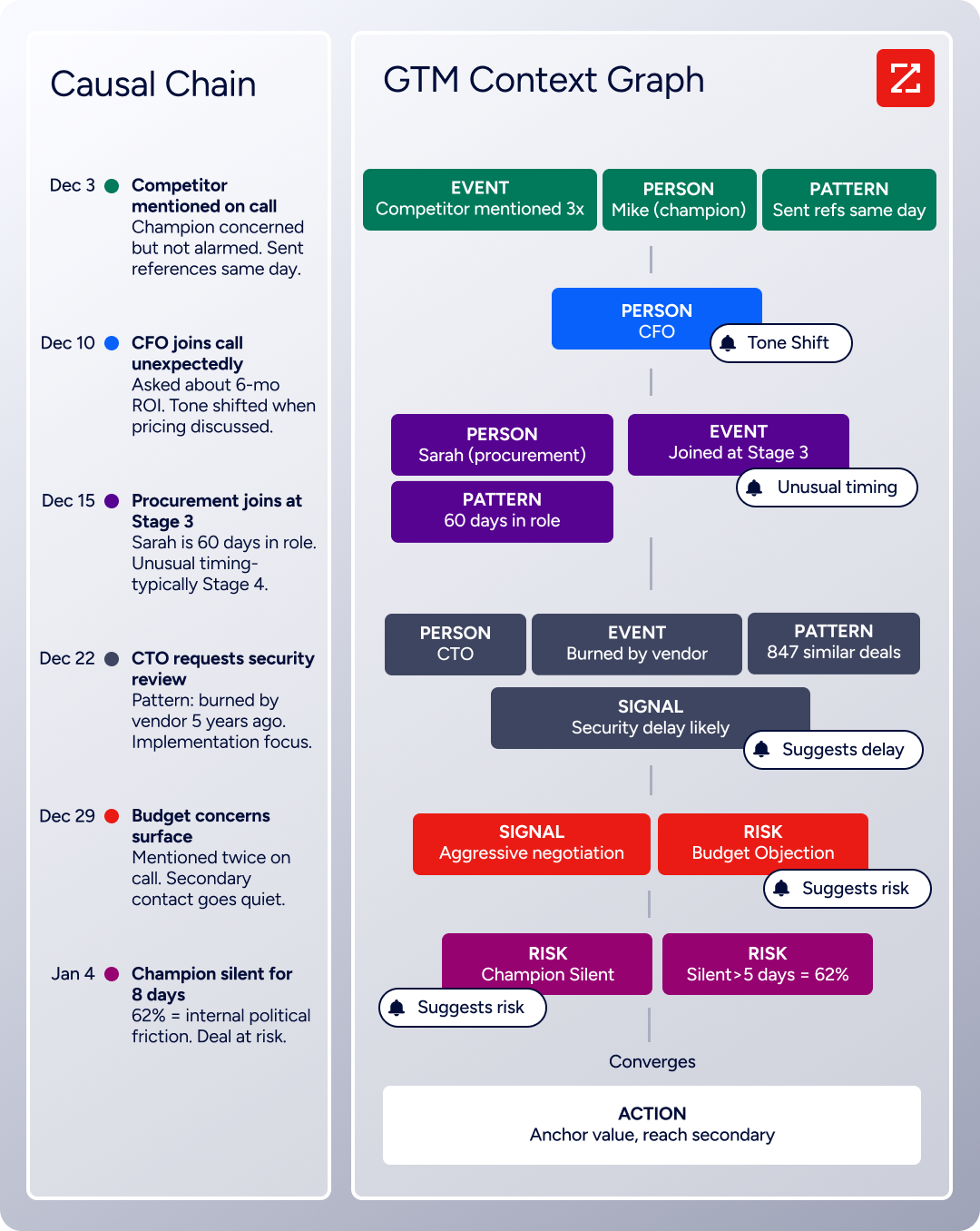
ZoomInfo's GTM Context Graph combines this data with your CRM records, conversation transcripts, and behavioral signals to show not just who your buyers are, but why they're in-market now.
That intelligence flows into whatever tools your team uses: GTM Studio for marketers building and launching plays, GTM Workspace for sellers running outreach, or APIs and MCP to power ActiveCampaign, Iterable, or any other tool in your stack.
If your marketing automation is only as good as the data feeding it, see how ZoomInfo's intelligence layer changes your campaigns.
ActiveCampaign vs. Iterable vs. ZoomInfo at a glance
ActiveCampaign | Iterable | ZoomInfo | |
|---|---|---|---|
Core function | Marketing automation + CRM | Cross-channel customer engagement | B2B data intelligence + GTM orchestration |
Channels | Email, SMS, WhatsApp | Email, SMS, push, in-app, WhatsApp, web push | Email, display ads, calls, direct mail, social |
AI capabilities | Active Intelligence (12+ agents) | Nova AI (predictive goals, channel decisioning) | GTM Context Graph + AI agents |
CRM included | Yes (built-in) | No | Yes (via GTM Workspace) |
Integrations | 1,000+ | 125+ technology partners | 172+ marketplace partners + API/MCP |
Data layer | Customer-provided contacts only | Customer-provided + warehouse ingestion | 500M contacts, 100M companies, intent signals |
Analyst recognition | 300+ G2 badges (Spring 2026) | Forrester Strong Performer; Gartner Challenger | Gartner Leader (ABM); Forrester Leader (Intent) |
Pricing model | Contact-based, starting at $15/mo | Custom enterprise contracts | Custom consumption-based |
Free trial | 14-day, no credit card | No free trial or free plan | 7-day trial + permanent free tier (Lite) |
Best for | SMBs and mid-market B2B/B2C | Enterprise consumer brands | B2B teams needing buyer intelligence |
ActiveCampaign and Iterable serve different markets by design
ActiveCampaign and Iterable both automate marketing messages across channels. But they were built for different buyers, and those design decisions show up everywhere.
ActiveCampaign grew from a bootstrapped email tool into a full marketing automation platform serving 180,000+ businesses across 170+ countries. Its core market is the growth-stage company with 10 to 500 employees that has outgrown Mailchimp but doesn't need Marketo. The platform bundles email, SMS, WhatsApp, landing pages, and a CRM into one subscription.
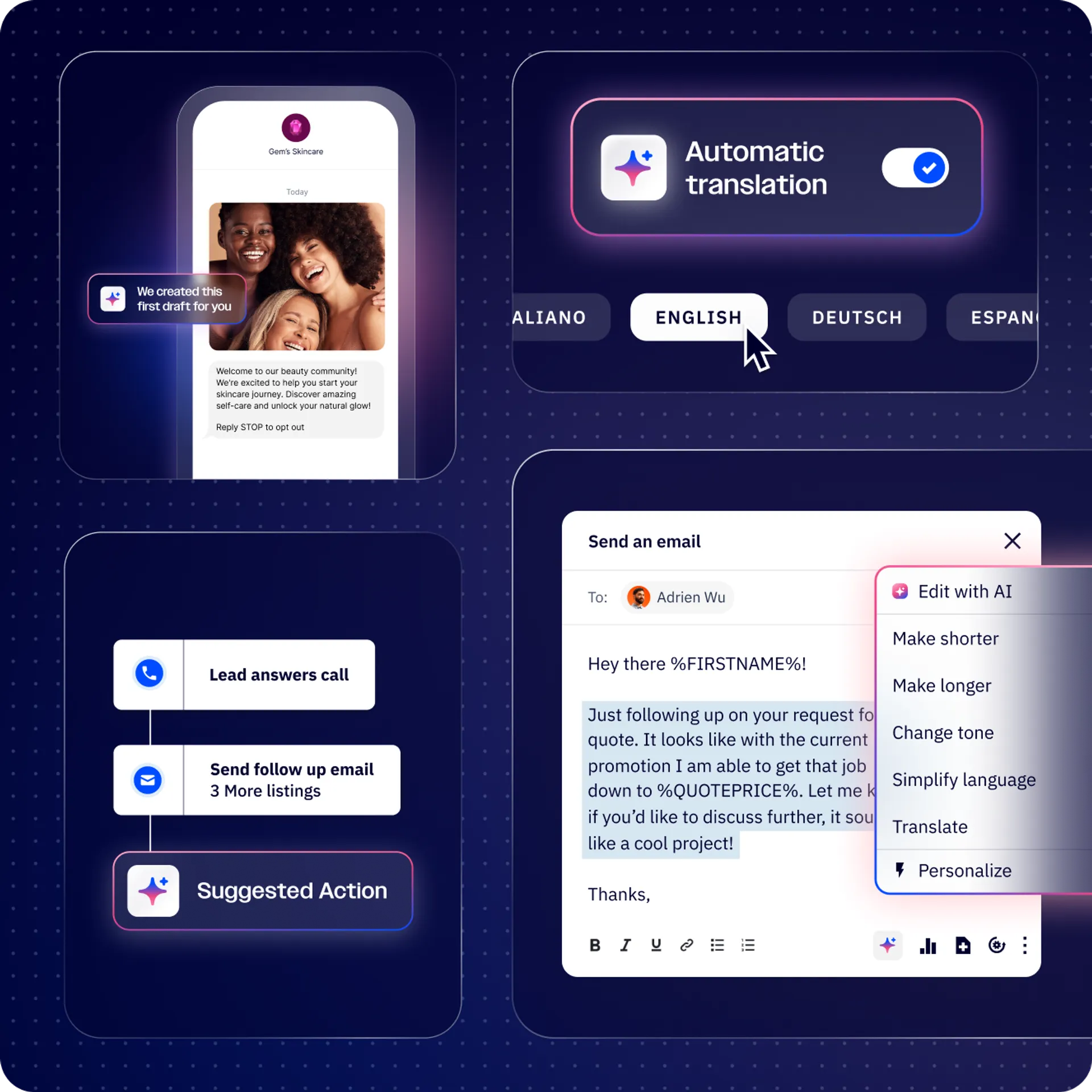
Source: ActiveCampaign
Pricing starts at $15/month and scales by contact count. You can sign up, set up automations, and send your first campaign the same day.
Iterable targets a different buyer entirely. It serves mid-to-large enterprise consumer brands. There's no published pricing, no self-serve signup, and no free tier. Access starts with a sales demo. The platform was designed from the start as a cross-channel system covering email, SMS, mobile push, web push, in-app messages, embedded messages, WhatsApp, and Mobile Inbox.
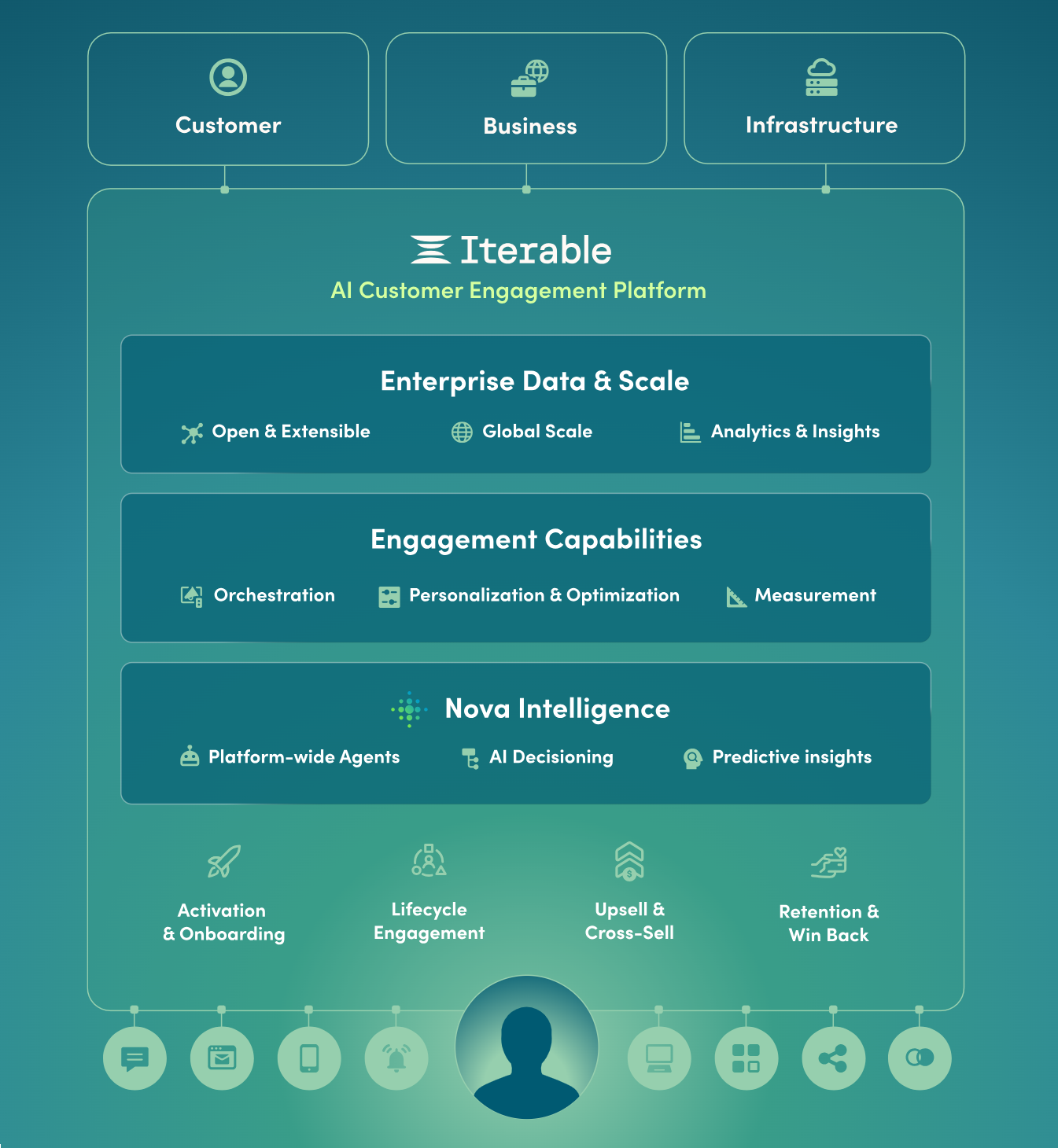
Source: Iterable
The distinction matters. If you're a 50-person B2B SaaS company that needs email automation with a built-in CRM, Iterable's enterprise sales process and mobile-heavy channel mix are more than you need. If you're a consumer app with millions of users across iOS, Android, and web, ActiveCampaign's email-first architecture and lightweight CRM won't match your channel requirements.
Automation depth: visual builders with different strengths
Both platforms use visual, drag-and-drop automation builders. The difference is what each builder is optimized for.
ActiveCampaign's automation builder is its signature feature. Capterra reviewers (4.6/5 across 2,559+ reviews) consistently name "advanced email automation tools" as the platform's top strength. The builder supports branching logic with split actions, conditional paths, and behavioral triggers that respond to email clicks, site visits, tag changes, purchase history, and custom field updates.
Plus plans and above have no cap on automation actions. Active Intelligence adds another layer: describe a goal in plain language, and AI agents build the automation, including wait periods, branching paths, and action steps.

Source: ActiveCampaign
Iterable's automation lives in Studio, a visual journey canvas that coordinates messages across every channel from one place. Where ActiveCampaign's builder favors email-centric nurture flows, Studio treats every channel as a first-class tile. Email, SMS, push, in-app, and embedded messages sit on the same canvas with the same logic layer.
Journey Assist (which Iterable calls the market's first prompt-based journey builder) generates full journey structures from natural language descriptions.
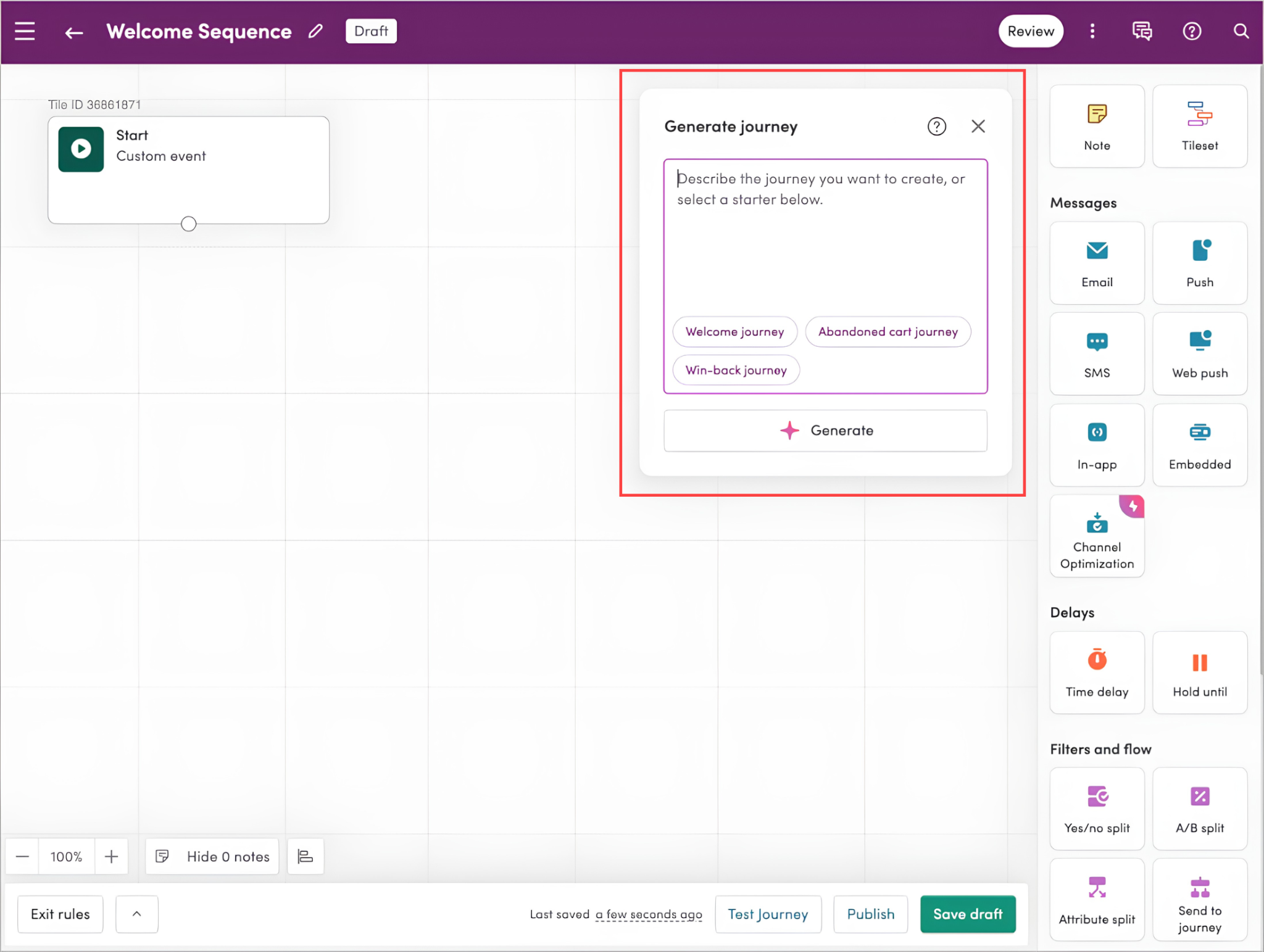
Source: Iterable
For most B2B marketing teams, ActiveCampaign's automation covers the ground. Its conditional logic, tag-based segmentation, and CRM integration handle lead nurture, abandoned cart recovery, trial conversion, and re-engagement flows. For enterprise B2C teams running mobile-heavy lifecycle programs, Iterable's channel-agnostic canvas is the stronger fit.
AI capabilities take different approaches
Both platforms have invested in AI over the past two years, but the implementations reflect their different markets.
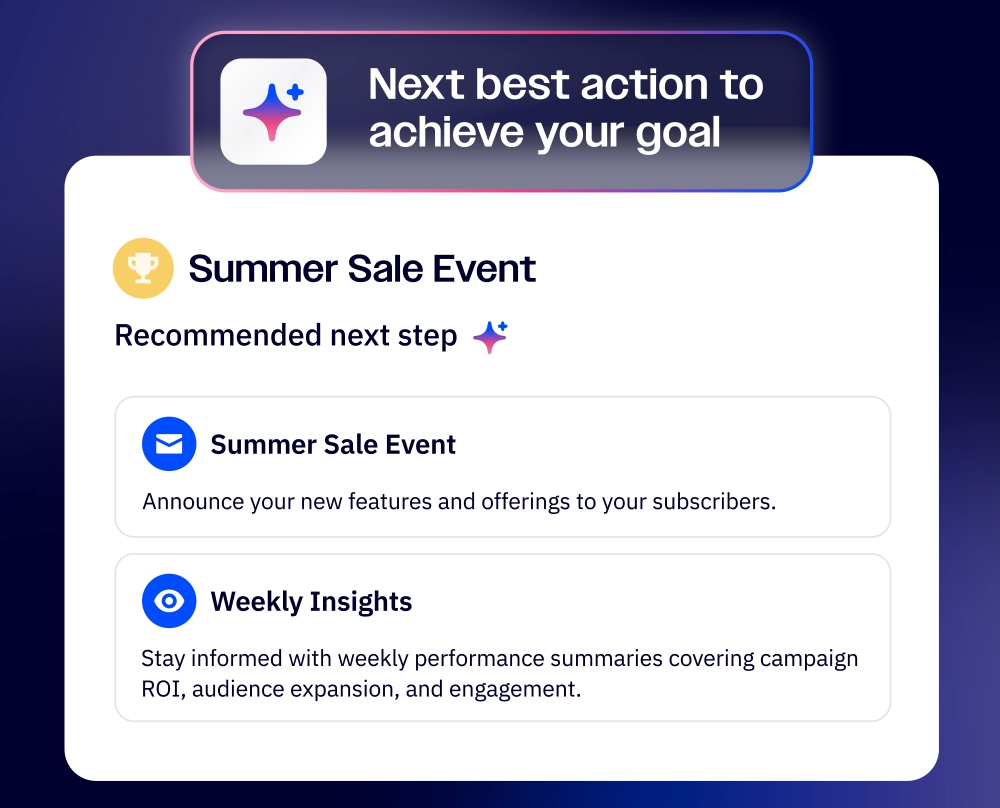
ActiveCampaign's Active Intelligence, launched in May 2025, is the fastest-growing feature in the platform's history. It works through AI agents covering campaigns, automations, segments, personalization, forms, goals, and insights.
The framework has three phases: Imagine (a Goals agent maps a stated objective to proven strategies), Activate (agents build campaigns including personalized content and segmented lists), and Validate (the Goals agent shows real-time performance insights).
AI-Suggested Actions draws on billions of anonymized data points from similar businesses to recommend sequences. Predictive Sending analyzes each contact's engagement history to deliver emails when that person is most likely to open.
Source: ActiveCampaign
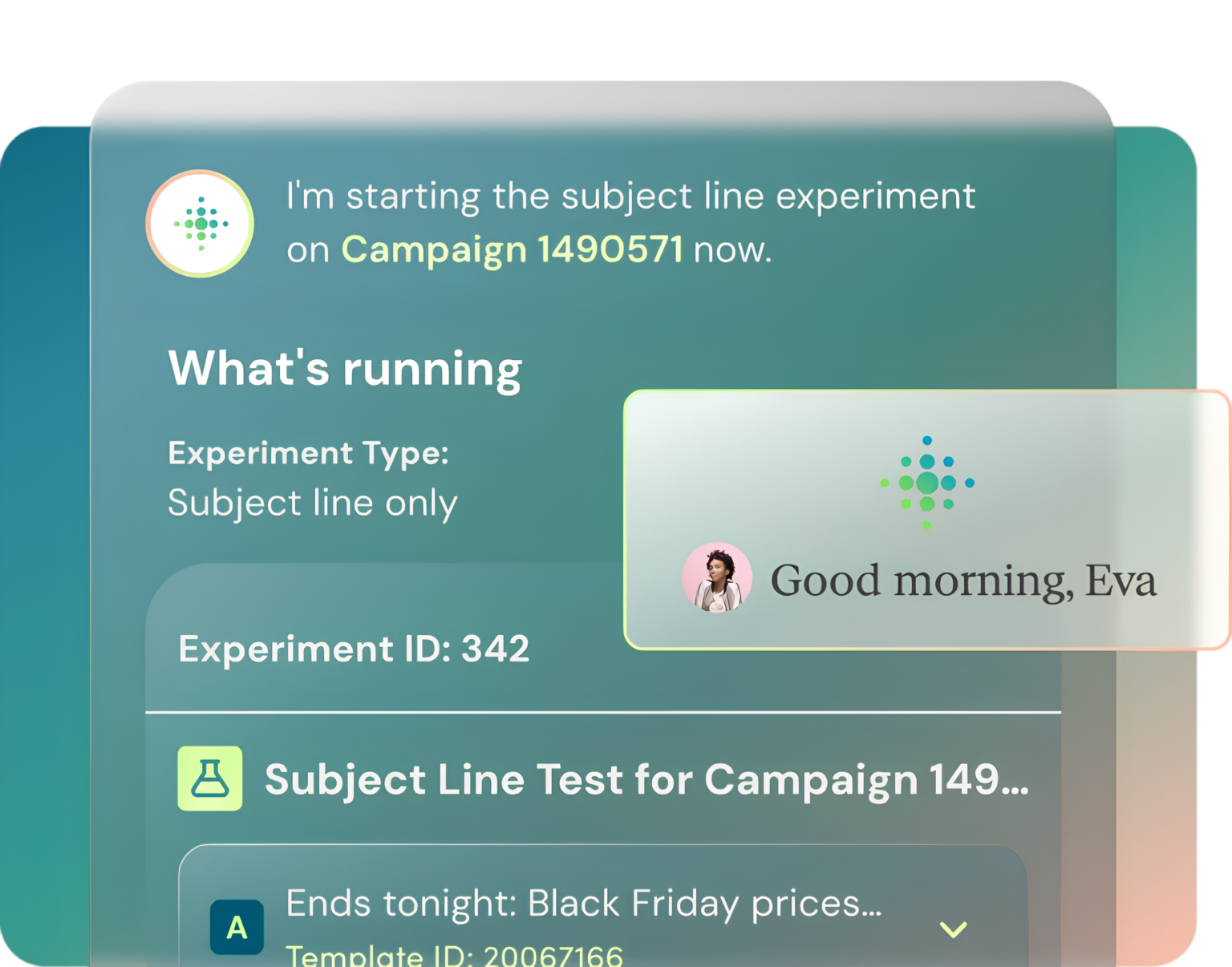
Iterable's Nova Intelligence takes a three-layer approach: Nova Insights surfaces performance signals, Nova Decisioning evaluates real-time behavioral data to choose the next action per person, and Nova Agents handle campaign setup, copy generation, template QA, experiments, and performance summaries through natural language.
Source: Iterable
Channel Decisioning selects the channel and send frequency per person automatically. Predictive Goals scores every user on their probability of completing a custom-defined outcome, whether positive (purchase, upgrade) or negative (churn, abandonment).
Brand Affinity classifies each contact as loyal, positive, neutral, or negative based on cross-channel engagement using a time-weighted model with exponential decay.
The philosophical difference: ActiveCampaign frames Active Intelligence as "autonomous marketing", where AI builds what marketers need. Iterable frames Nova as "Glassbox AI", where every AI decision is explainable and auditable.
ActiveCampaign optimizes for time savings (its research claims 13+ hours saved per week for AI users). Iterable optimizes for transparency (marketers can see exactly why each action was taken).
Neither platform solves the B2B intelligence problem
ActiveCampaign and Iterable both execute campaigns well once you've identified your audience. But they share a limitation: they only know what you tell them about your contacts.
ActiveCampaign's automation fires when contacts act on your emails, website, or forms. Iterable's journeys trigger on events your app or site sends to the platform. Both systems are reactive. They respond to signals from people already in your database.
For B2C brands, this works. Your customers identify themselves by downloading your app, subscribing to your newsletter, or making a purchase. The data flows in.
For B2B teams, the picture is different. Your total addressable market is researching solutions, visiting competitor sites, and forming buying committees right now, and neither ActiveCampaign nor Iterable can tell you who they are, when they're ready, or which stakeholders to reach.
ZoomInfo changes the equation. Instead of waiting for prospects to find you, ZoomInfo's GTM Context Graph identifies who's in-market before they fill out a form. It processes 1.5B+ data points daily, combining 500M contacts and 100M companies with your CRM records, conversation transcripts, and behavioral signals. The result is an intelligence layer that shows not just what's happening in your pipeline, but why.
Source: ZoomInfo
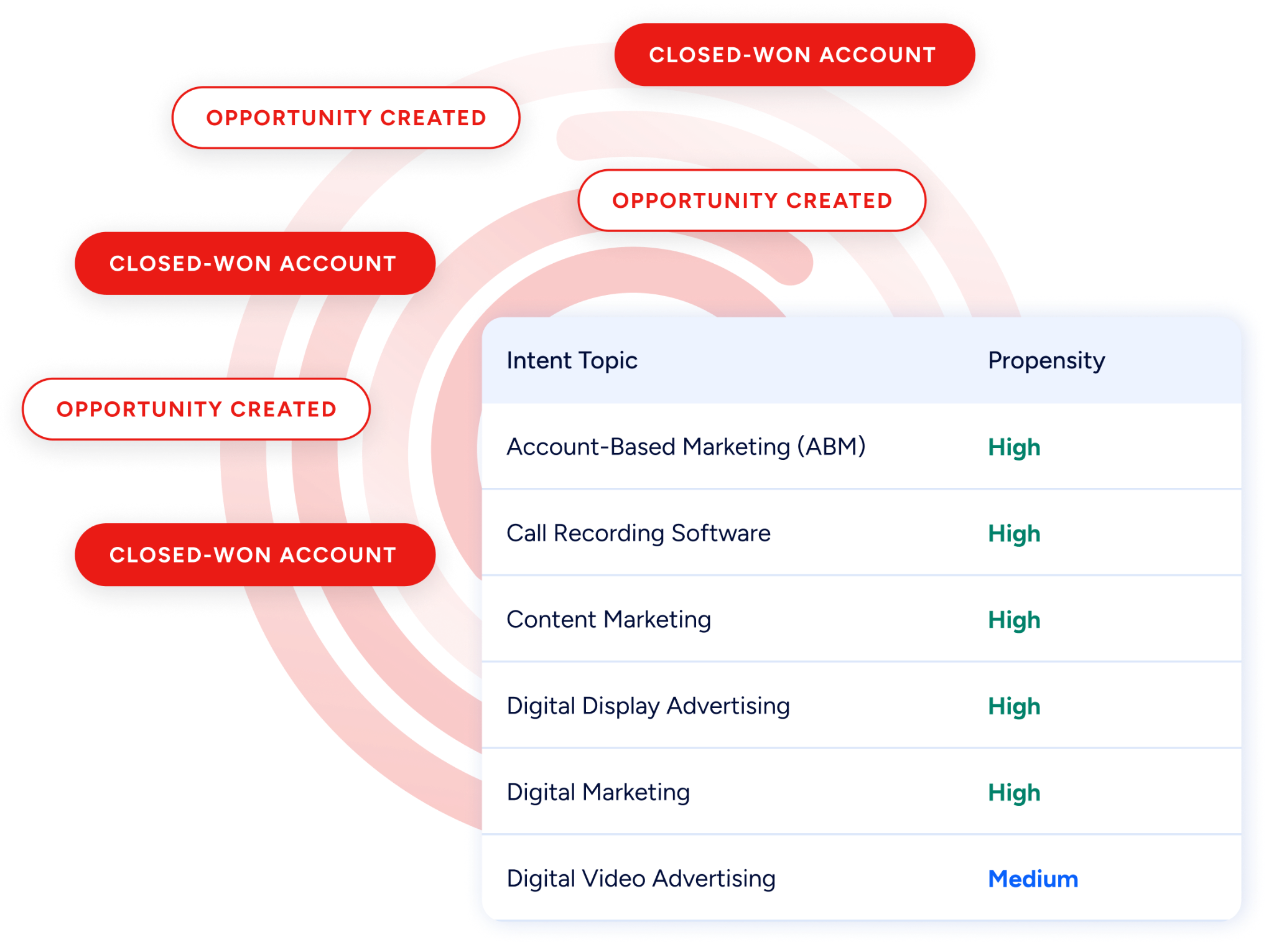
Buyer Intent data tracks signals from 210 million IP-to-Organization pairings and 6 trillion+ new keyword-to-device pairings monthly. Guided Intent (exclusive to ZoomInfo) identifies topics historically correlated with deal success rather than requiring manual topic selection.
Source: ZoomInfo
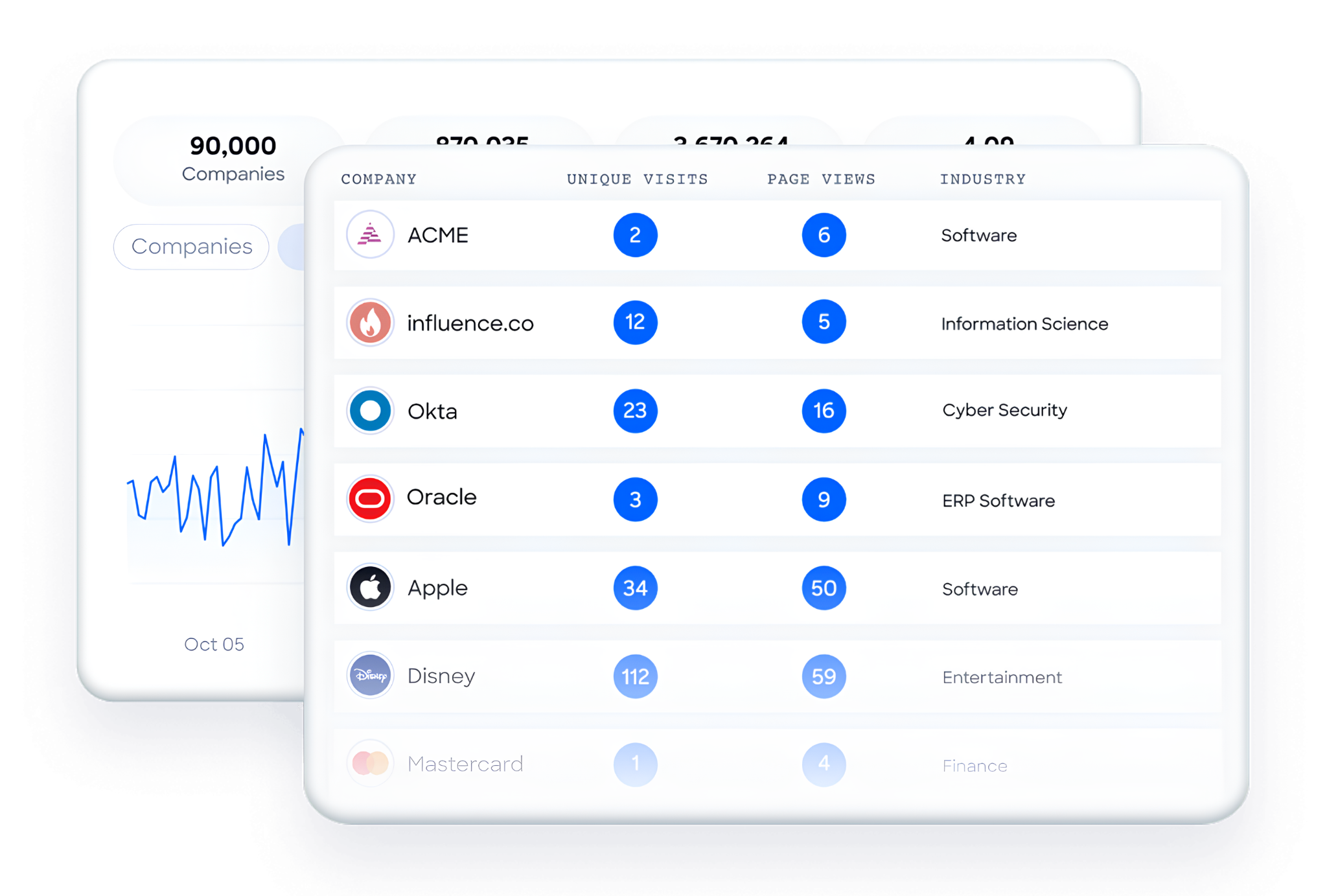
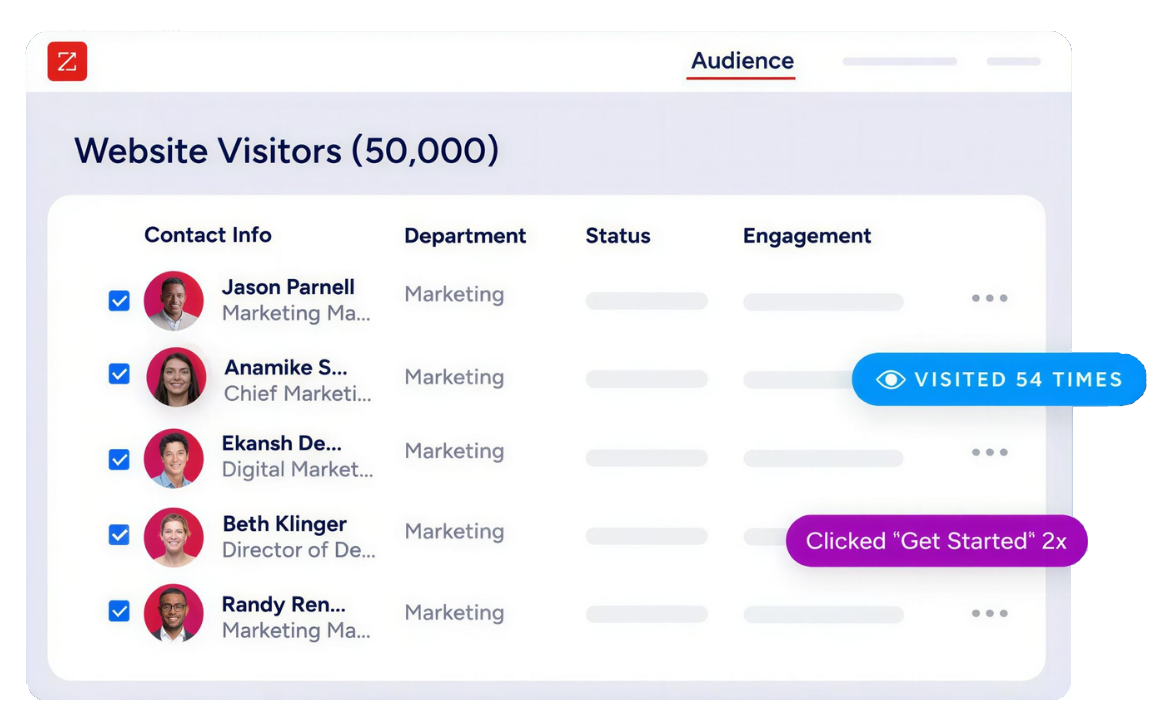
WebSights resolves anonymous website traffic to companies, including buying team identification and direct contact info, with Automatic Traffic Filtering to separate real visitors from bots.
Source: ZoomInfo
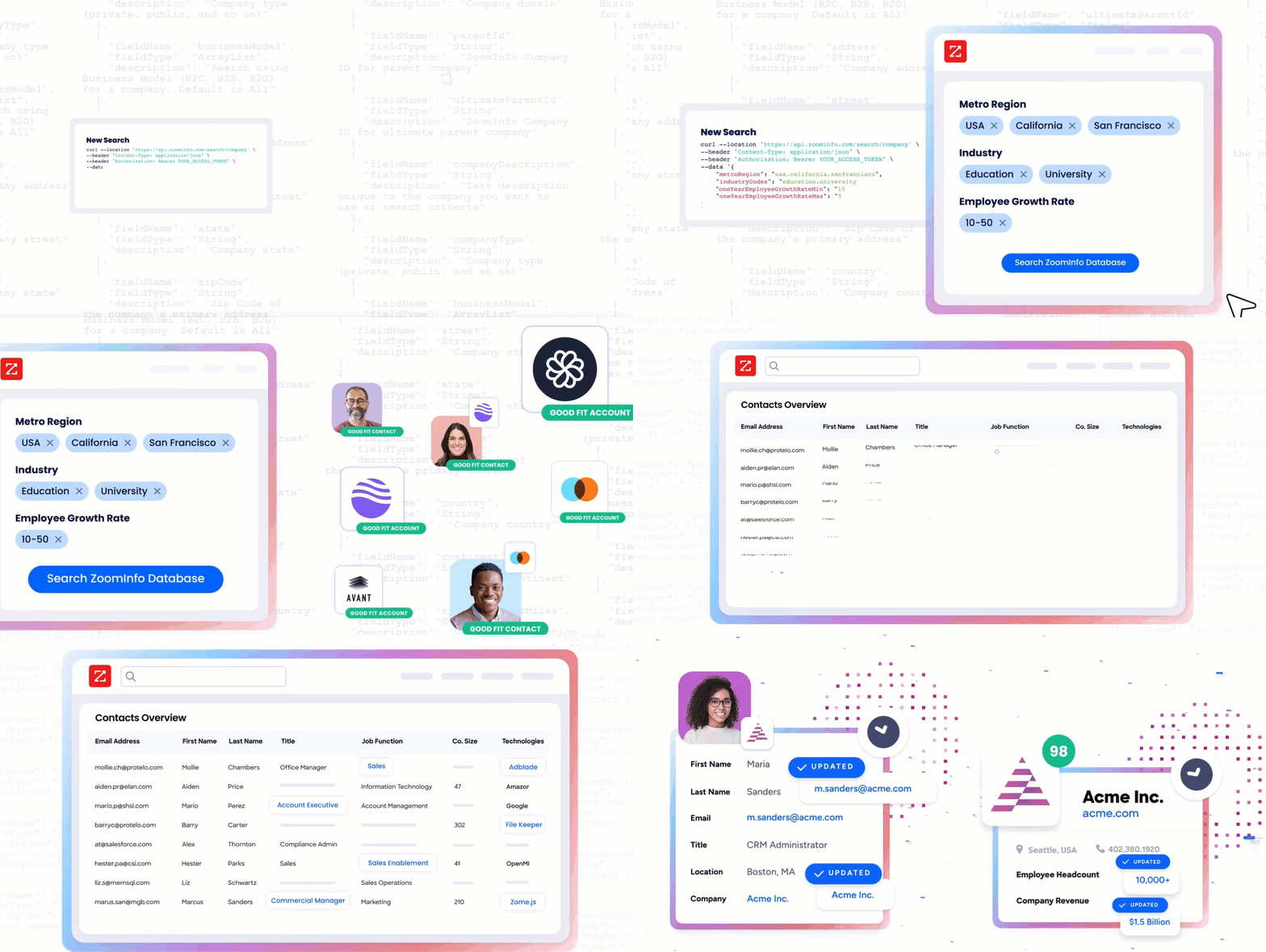
That intelligence doesn't stay locked inside ZoomInfo. It flows into your marketing automation through APIs and MCP, or through native integrations with Salesforce, HubSpot, and Microsoft Dynamics. The same buyer signal that surfaces in GTM Workspace for your sales rep can trigger a nurture sequence in ActiveCampaign or Iterable for your marketing team.
Source: ZoomInfo
Seismic's sales team attributed 39% of active pipeline to opportunities identified or influenced by ZoomInfo signals, boosted productivity by 54%, and saved 11.5 hours per week. As Toby Carrington, Chief Business Officer, put it: "That combination of our internal CRM data, external signals, and AI that's given all that context has helped us craft very specific account- and persona-based messages. And people have responded to them right away." (Seismic case study)
CRM and sales alignment set them apart
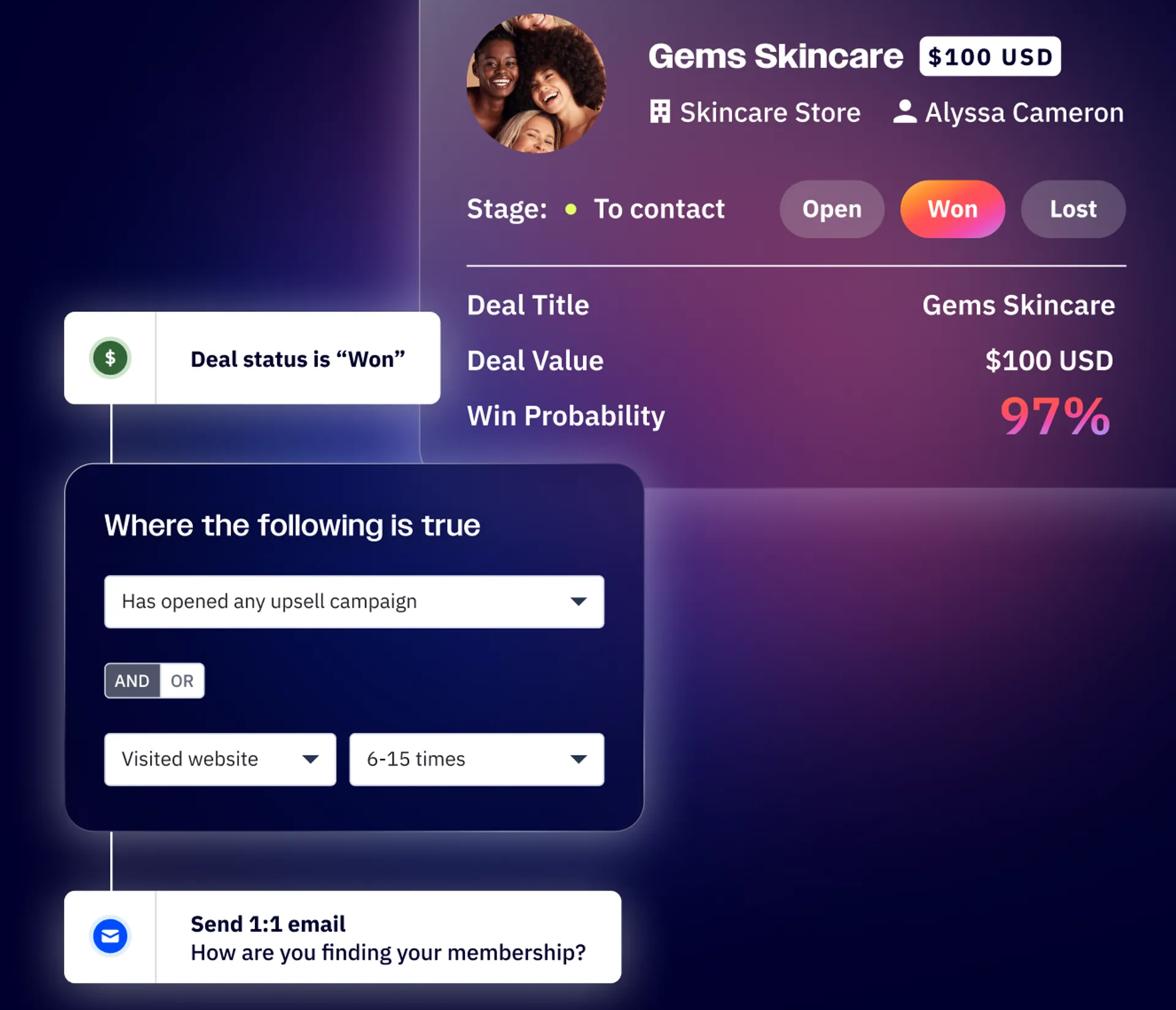
ActiveCampaign includes a built-in CRM with visual Kanban-style pipelines, deal scoring, lead scoring, sales routing, and 1:1 email tracking. For SMBs that want marketing automation and lightweight sales management in one system, this is an advantage.
Source: ActiveCampaign
The CRM runs in the same platform as email, SMS, and automation, so deal records carry full behavioral history without integration work. Active Intelligence adds win probability scores and next-best-action guidance at the deal level.
The CRM has limits. Users who need pipeline forecasting, territory management, or CPQ find it insufficient compared to Salesforce or HubSpot CRM. Think of it as a marketing companion for managing sales follow-up, not a standalone sales platform.
Iterable has no CRM. It's a marketing engagement platform, not a sales tool. Iterable integrates with CRMs through its API and partner ecosystem, but the platform doesn't manage deals, pipelines, or sales activities.
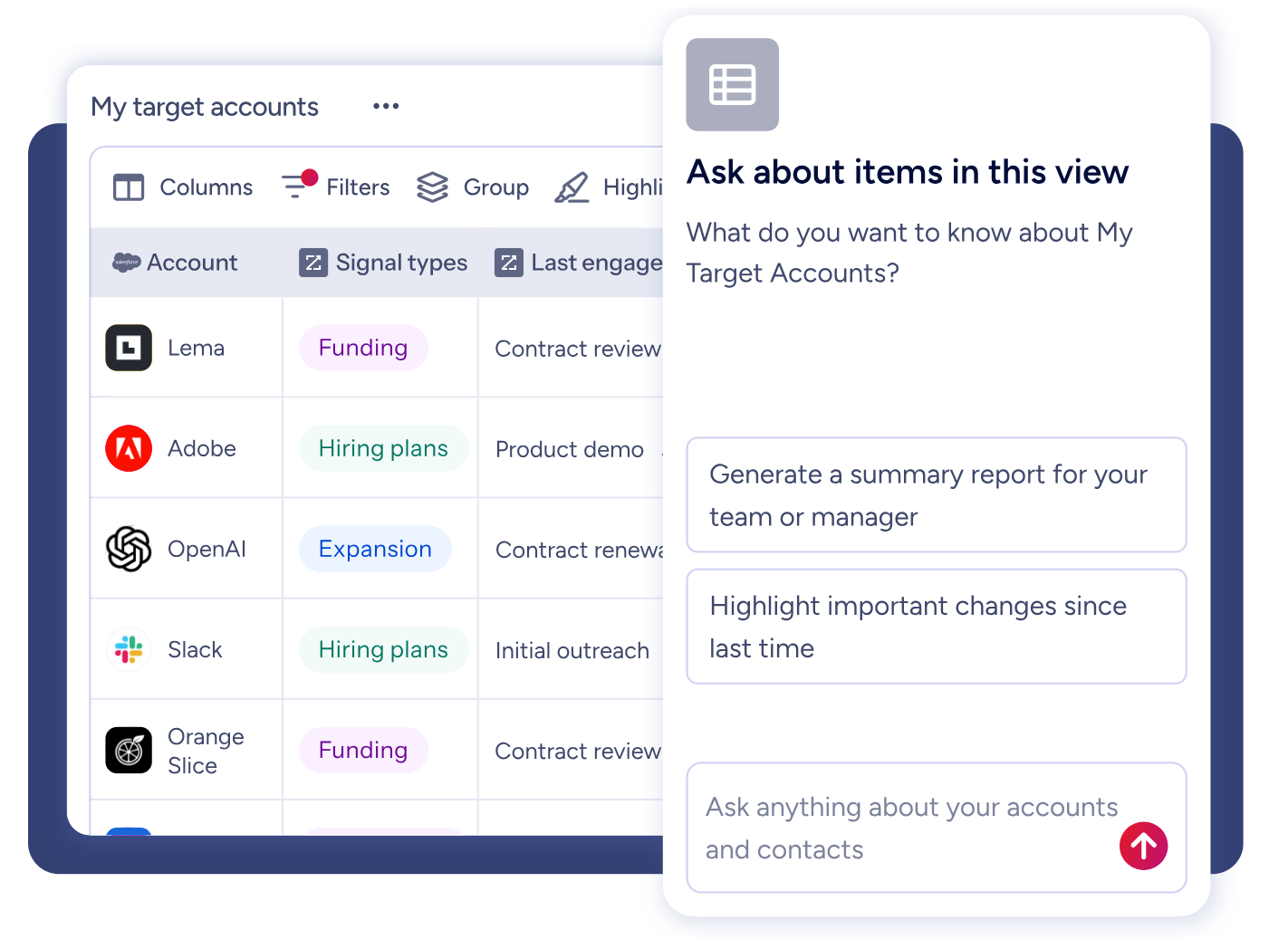
ZoomInfo approaches CRM from the opposite direction. Rather than building a lightweight CRM into a marketing tool, ZoomInfo enriches your existing CRM with data and intelligence. GTM Workspace pulls data from your CRM into a consolidated view where AI agents handle account research, outreach generation, and CRM updates.
Source: ZoomInfo
GTM Studio connects to Salesforce, HubSpot, and Dynamics to enrich, segment, and activate audiences. The intelligence layer sits on top of whichever CRM you already use.
"ZoomInfo is our one source of truth for account data, and even more so for contact data. There's no other provider in the market that provides you with that level of detail," said Thor Sanderson, Senior Manager of Sales Technology Enablement at Smartsheet. (Smartsheet case study)
Channel coverage reflects each platform's audience
The channels each platform supports tell you who it was built for.
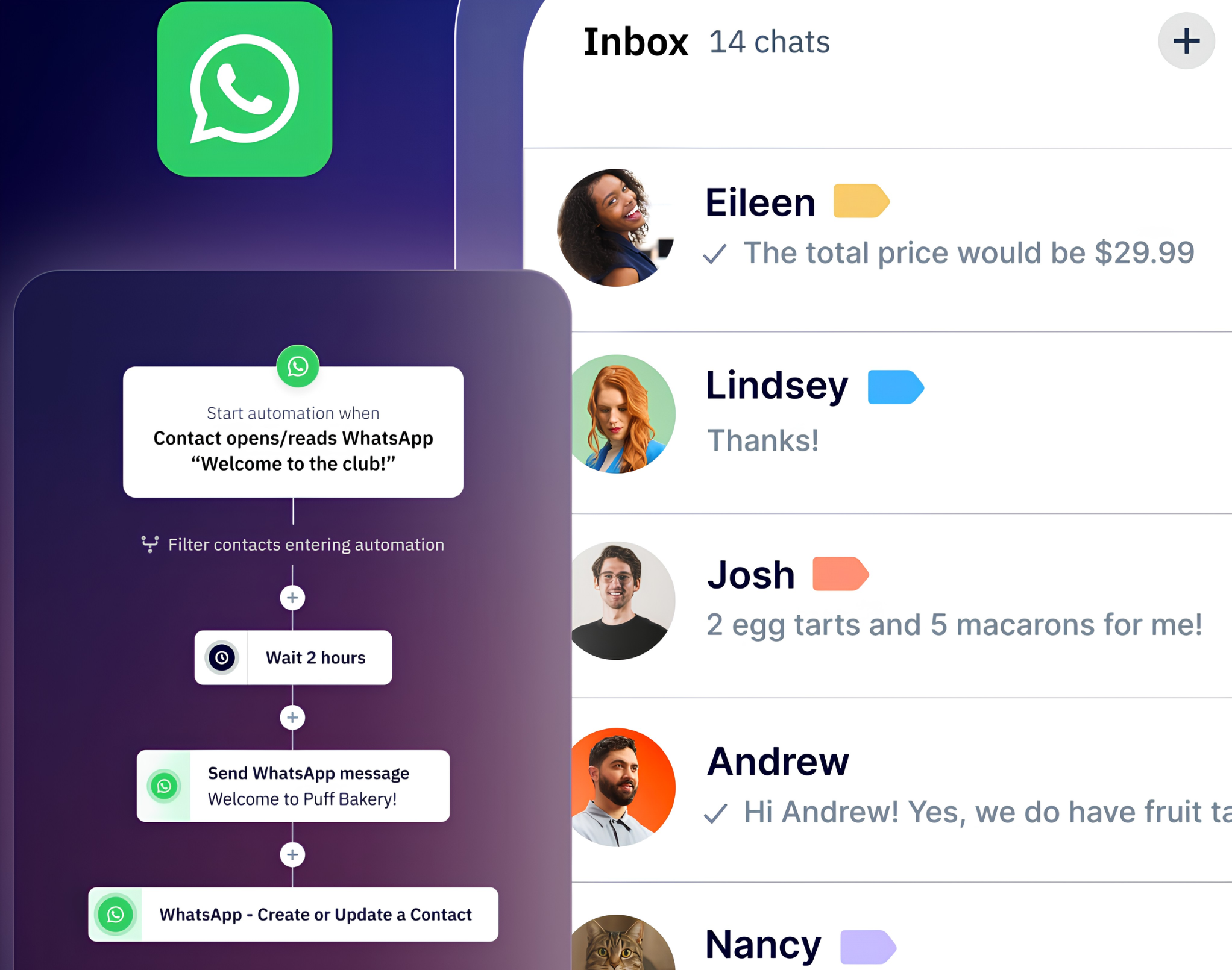
ActiveCampaign covers email (its core), SMS with 2-way messaging, WhatsApp with broadcast, 1:1, and Flows automation, landing pages, and transactional email via Postmark. The WhatsApp capability came through the April 2025 Hilos acquisition and serves international markets where WhatsApp dominates.
Source: ActiveCampaign
ActiveCampaign is a Meta Business Partner with direct WhatsApp Business API access. All channels run from the same automation builder using shared contact data.
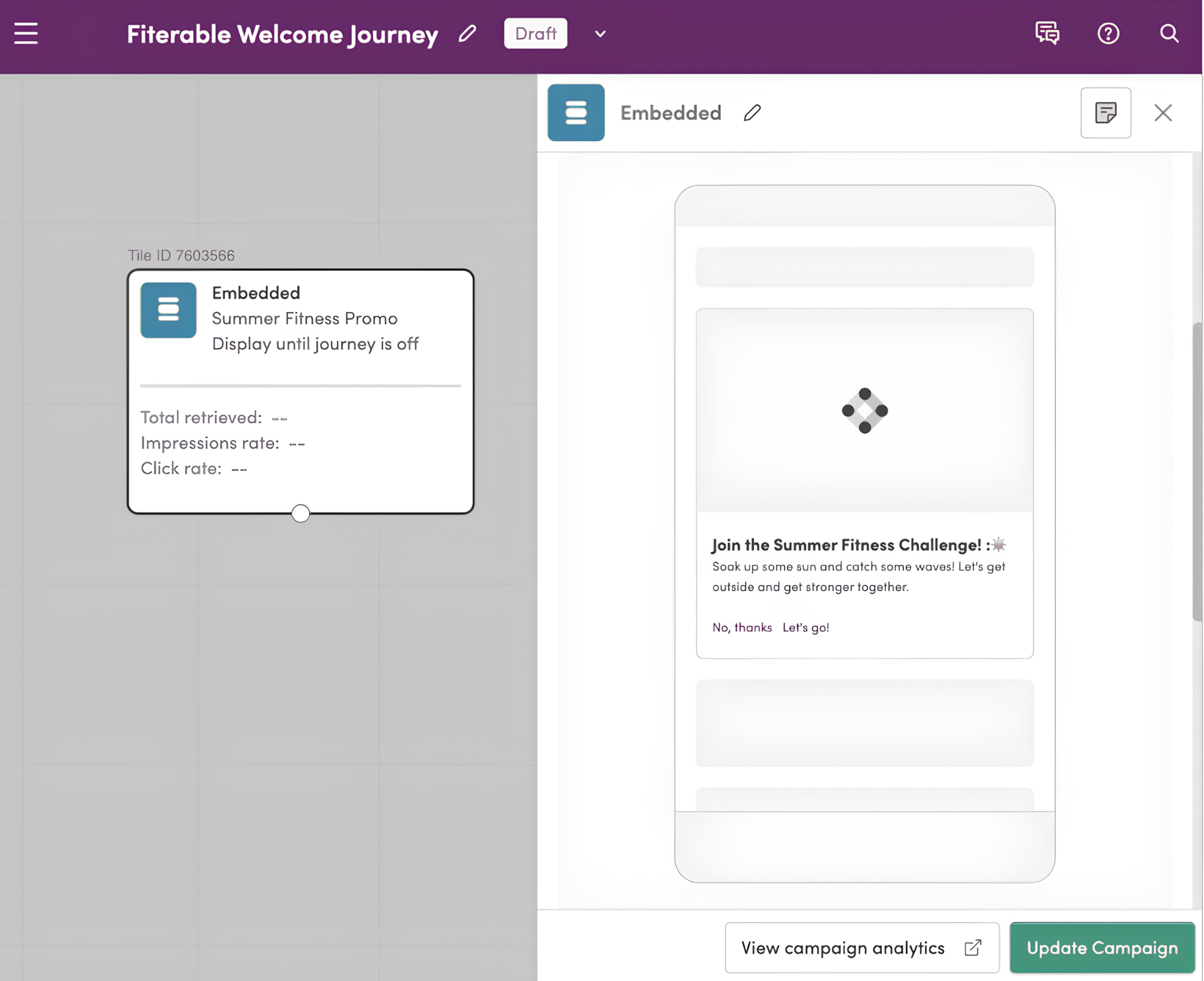
Iterable covers more channels natively: email, SMS/MMS, mobile push, web push, in-app messages, embedded messages, WhatsApp, and Mobile Inbox. The mobile capabilities go deeper. Native SDKs for Android, iOS, and React Native support rich push notifications with custom images, GIFs, and tappable action buttons.
In-app messages support animations and deep-linked destinations. Embedded messages deliver marketing content within a brand's own app UI. For consumer apps where mobile engagement drives revenue, this channel depth is a real differentiator.
Source: Iterable
ZoomInfo orchestrates through different channels: email sequences, display advertising via a native DSP, calls, direct mail, and social. These channels fire on buying signals, not marketing calendars. When an account's intent score spikes, GTM Studio can launch a coordinated play across all channels at once.
Source: ZoomInfo
ZoomInfo's channels are account-based and signal-driven, built for reaching B2B buying committees, not nurturing individual consumer subscribers.
Pricing models reflect different philosophies
ActiveCampaign uses contact-based pricing with four tiers: Starter, Plus, Professional, and Enterprise. The company charges once per unique contact regardless of how many automations, tags, or segments that contact appears in. Starter costs $149/month for 10,000 contacts. A 14-day free trial requires no credit card, and a 30-day money-back guarantee reduces risk.
The Starter plan caps automations at 5 actions and includes one user seat. Plus removes the action cap and adds landing pages, web push, and AI content generation. Professional (3 seats) adds predictive sending, conditional content, and revenue attribution. Enterprise pricing is custom and adds SSO, HIPAA support, and premium CRM integrations.
Two things to watch: email send limits (10x to 15x your contact count per month, depending on tier) with overage fees of $0.005 per email beyond that. And G2 reviewers note that pricing has increased by nearly 100% over three years, climbing fast as contact lists grow.
Iterable publishes no pricing. The /pricing/ URL returns a 404. All pricing lives in negotiated Enterprise Order documents. Contracts auto-renew unless either party provides 30 days' written notice.
Fees are non-refundable and non-cancellable, and services contracted for cannot be decreased during the term. Mid-term downgrades are not allowed. This is standard enterprise contracting, but it means you'll go through a sales cycle before you see a number.
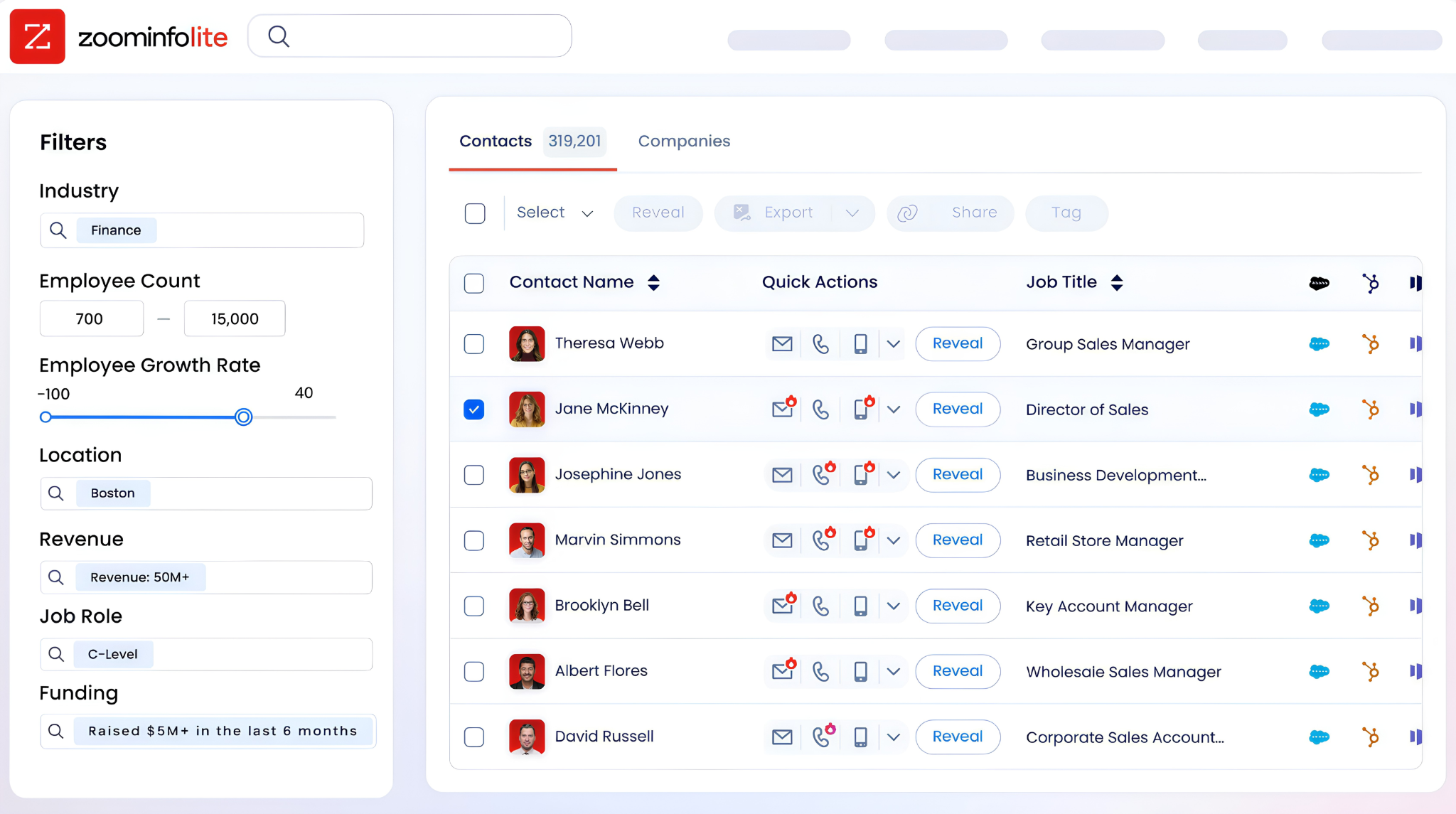
ZoomInfo uses consumption-based pricing with no published prices. But unlike Iterable, ZoomInfo offers two free entry points: ZoomInfo Lite (a permanent free tier with 10 monthly export credits, no credit card required) and a 7-day free trial of the full platform. For teams evaluating whether B2B intelligence adds value before committing, these entry points lower the barrier.
Source: ZoomInfo
Integrations and data flexibility
ActiveCampaign's apps marketplace lists 1,000+ integrations covering CRM, ecommerce, forms, advertising, and communication tools. Key connections include Shopify, WooCommerce, Salesforce (Pro/Enterprise), WordPress, Zapier, and Make.
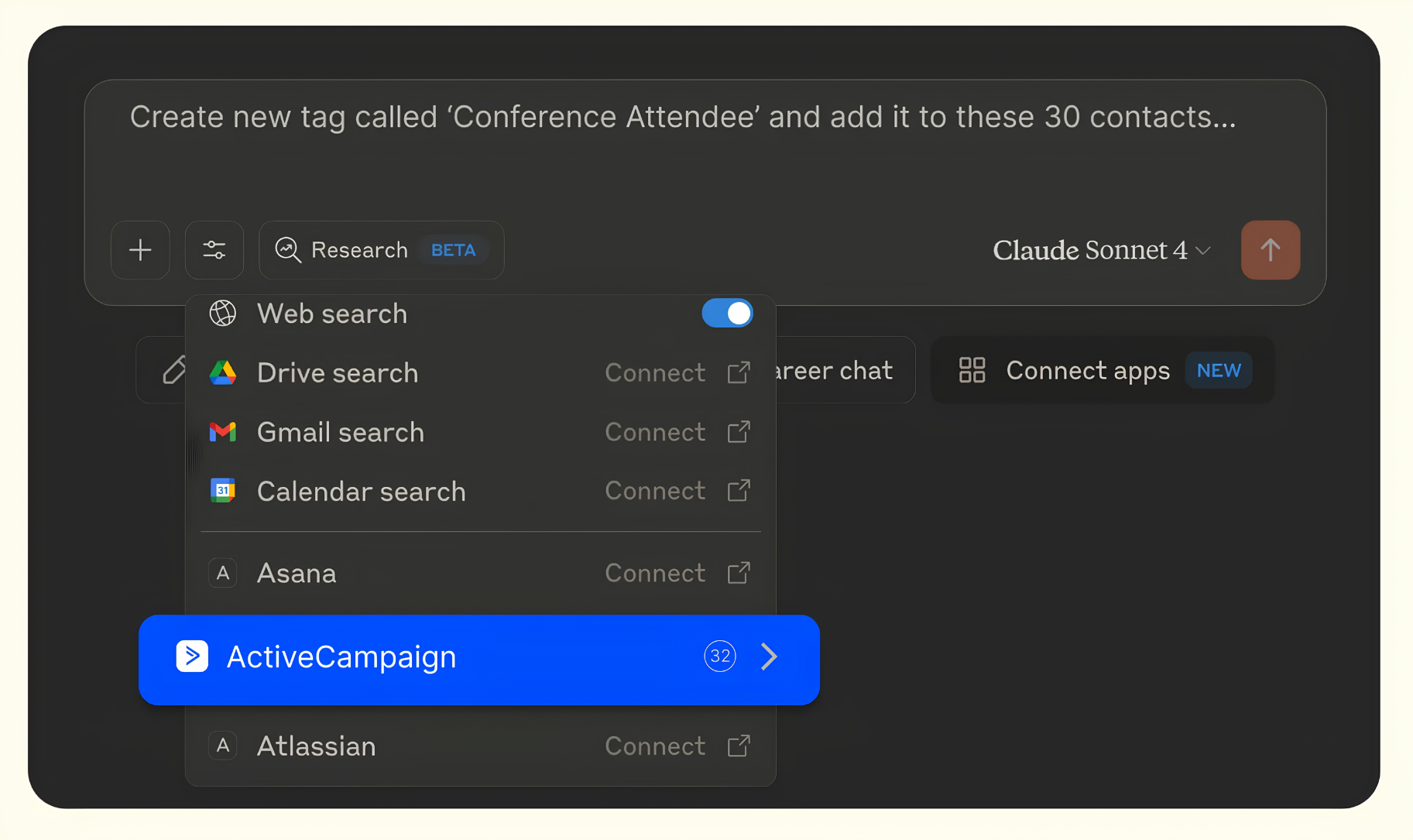
The REST API covers contacts, deals, campaigns, and automations, with a rate limit of 5 requests per second per account. ActiveCampaign also runs an MCP server for AI agent access and was the first marketing platform in Claude's connector directory.
Source: ActiveCampaign
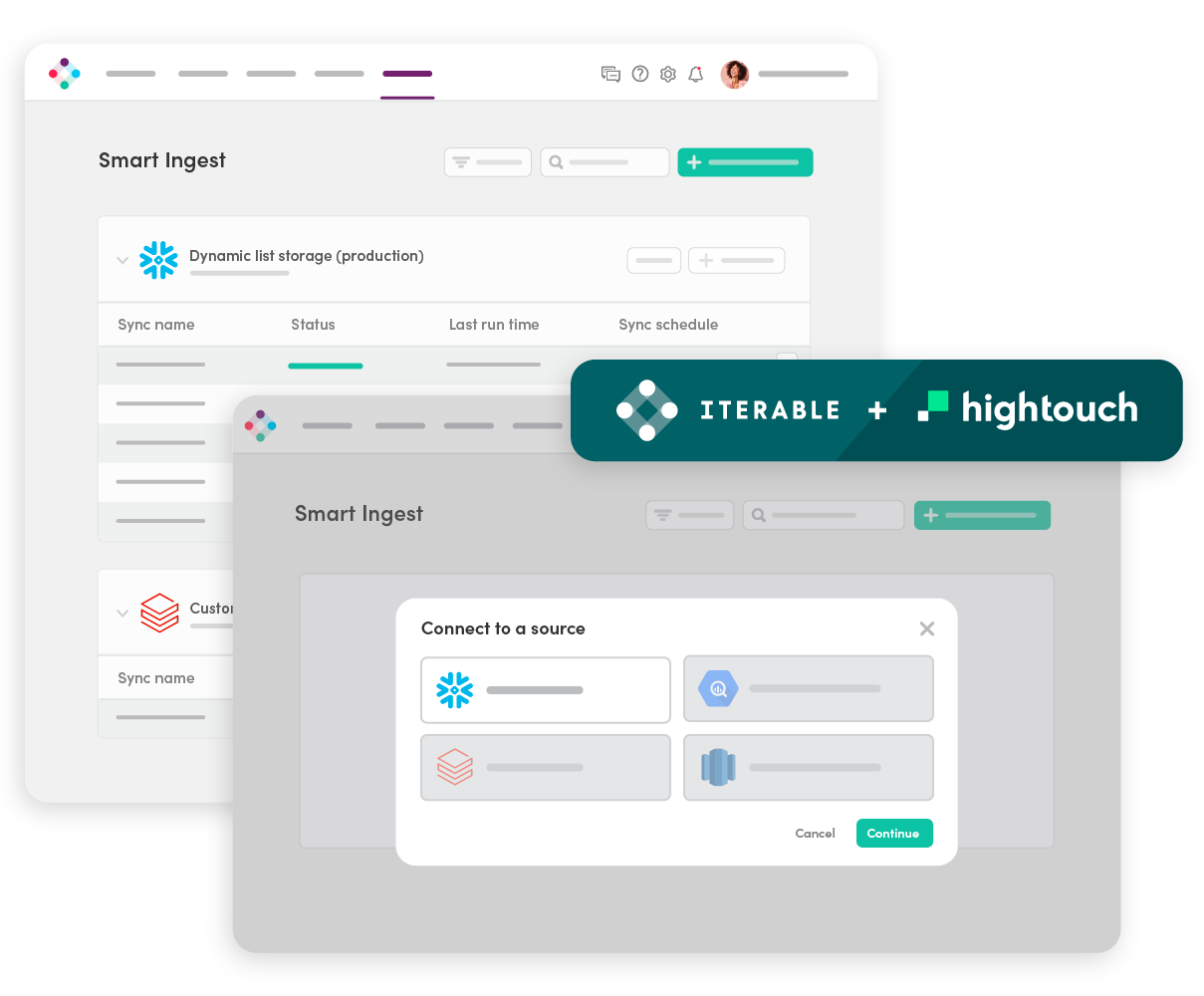
Iterable maintains a technology partner directory with 125+ integrations. The ecosystem is smaller but aimed at enterprise data infrastructure: Segment, Hightouch (with "Smart Ingest" for zero-copy data activation), Snowflake (Secure Data Sharing), Amplitude, and Shopify.
Source: Iterable
The REST API and native SDKs for iOS, Android, React Native, and Web give engineering teams full control over data ingestion and event tracking.
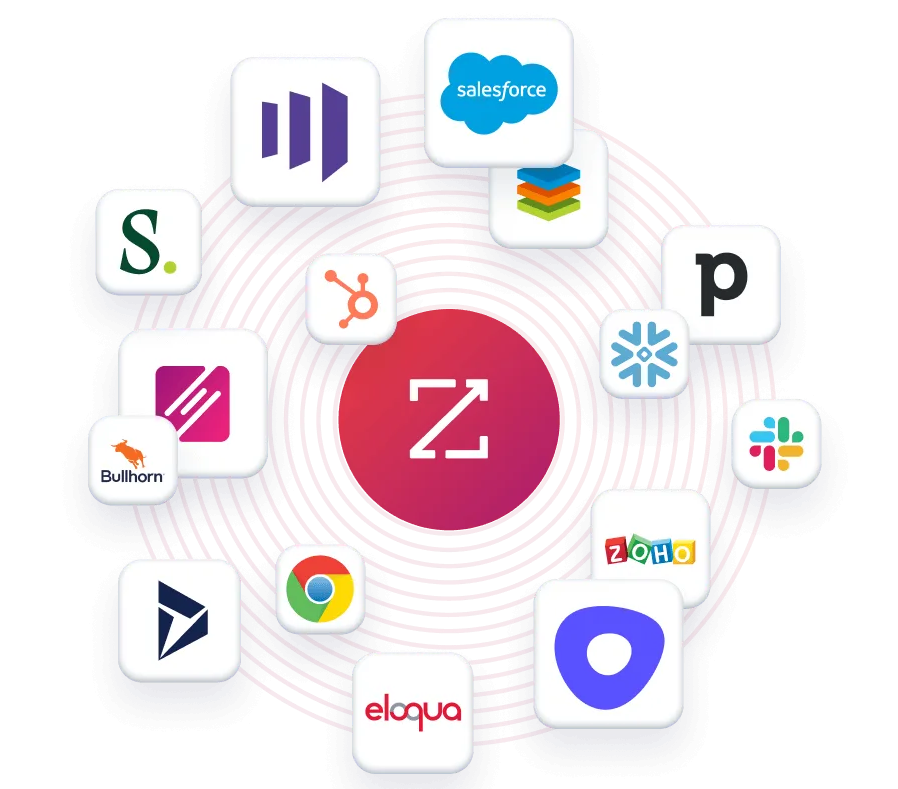
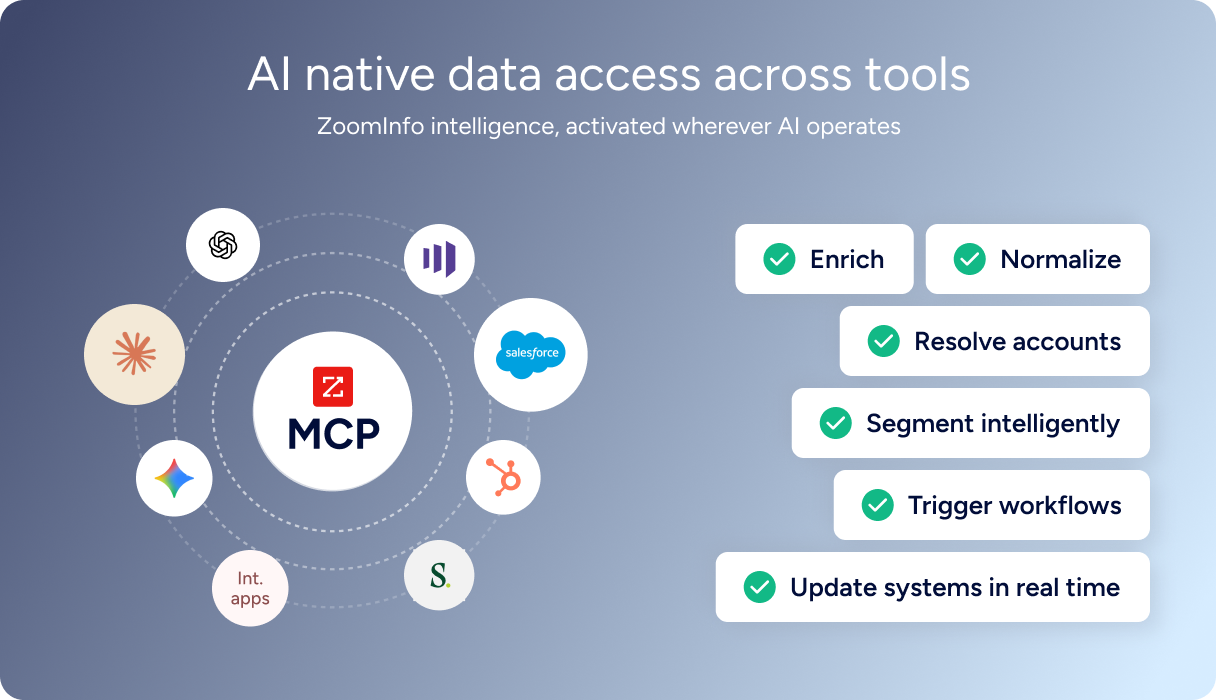
ZoomInfo's App Marketplace lists 172+ integration partners. What sets it apart is the Enterprise API and MCP server, which make ZoomInfo's intelligence available inside any tool.
Source: ZoomInfo
The MCP server supports Claude and ChatGPT natively, with more MCP-compatible tools coming. Cloud Partners delivers data into AWS, Google Cloud, Snowflake, and Databricks. API access is included in all plans.
Source: ZoomInfo
The practical takeaway: ActiveCampaign connects to the tools SMBs already use. Iterable connects to the data infrastructure enterprises already have. ZoomInfo connects its intelligence to any tool at any layer, including both ActiveCampaign and Iterable.
Reporting and analytics: a shared weakness meets a data strength
Reporting is one area where both ActiveCampaign and Iterable have room to grow, and where ZoomInfo fills a gap neither can.
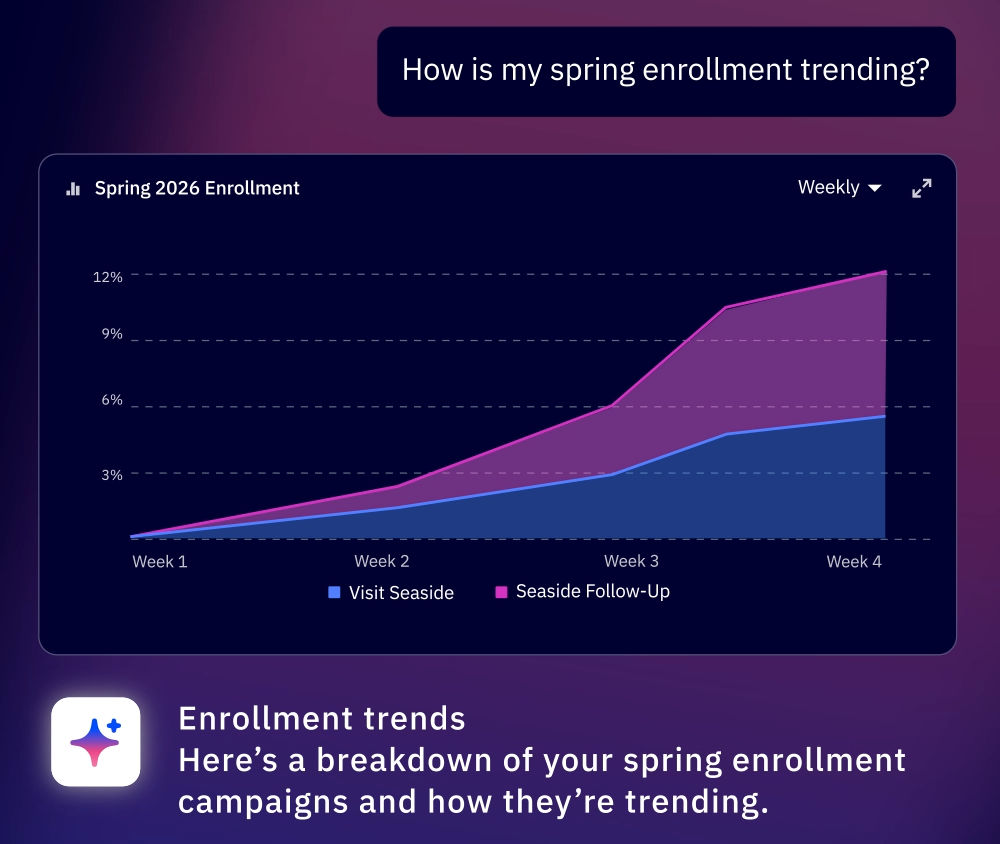
ActiveCampaign provides campaign performance reports, automation reports, contact performance views, sales pipeline reports, and Business Goals tracking that ties campaigns to defined business outcomes. BotSense filters out bot clicks that inflate engagement metrics.
Source: ActiveCampaign
Revenue attribution is available on Enterprise plans. Active Intelligence conversational analytics lets users ask natural-language questions and get instant summaries. The reporting works for SMB and mid-market needs.
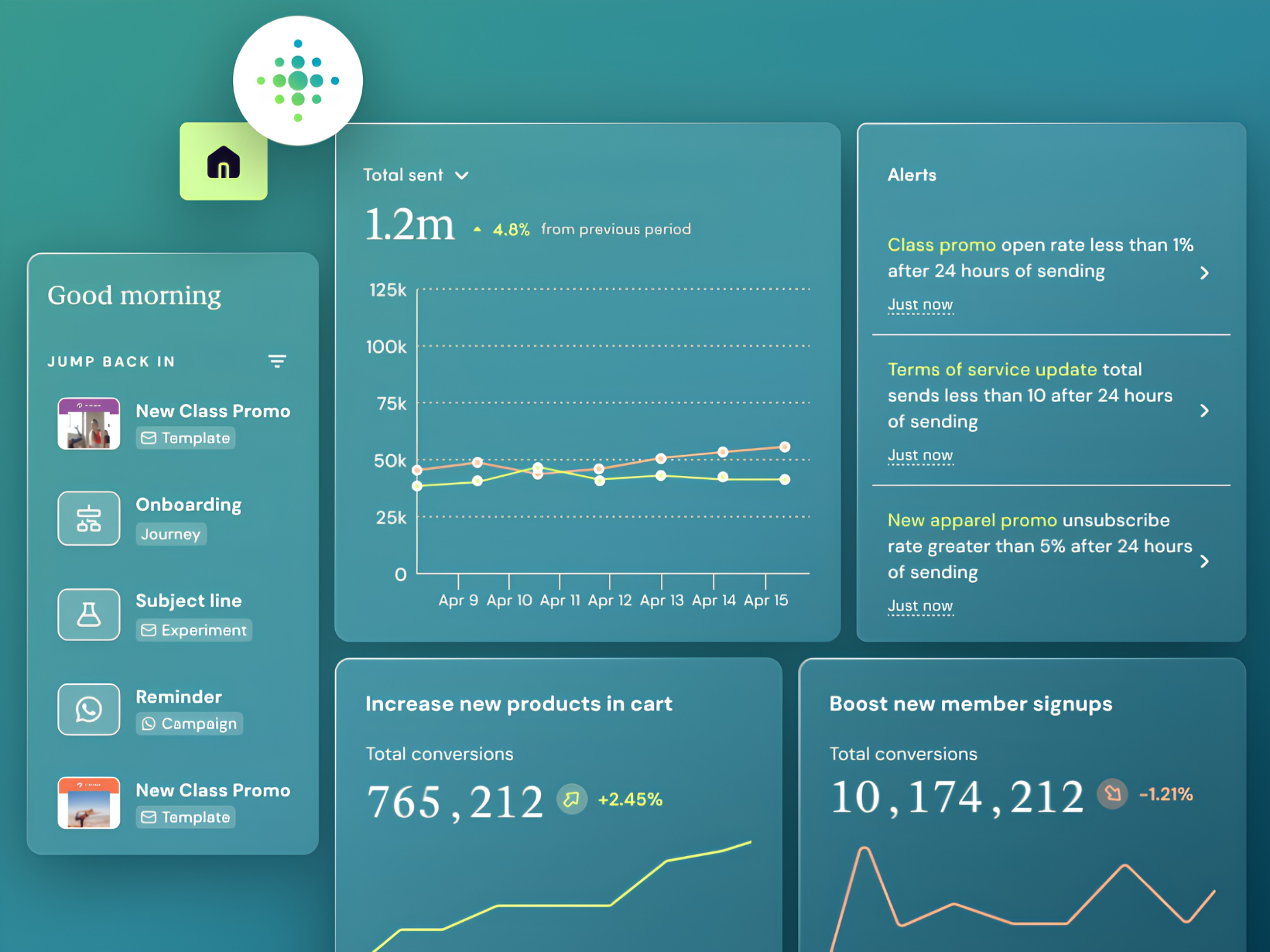
Iterable's reporting is its most cited weakness. G2 reviewers say out-of-the-box reporting provides "only overall and per-campaign analytics" with limited ability to drill deeper. Multi-currency revenue tracking is broken, compiling all revenue in a single sum regardless of currency. Attribution across channels is difficult.
The Iterable Command Center, launched in Spring 2026, addresses some of this with a goal-driven performance hub, but the gap remains for enterprise brands that need cross-channel attribution without a separate BI tool.
Source: Iterable
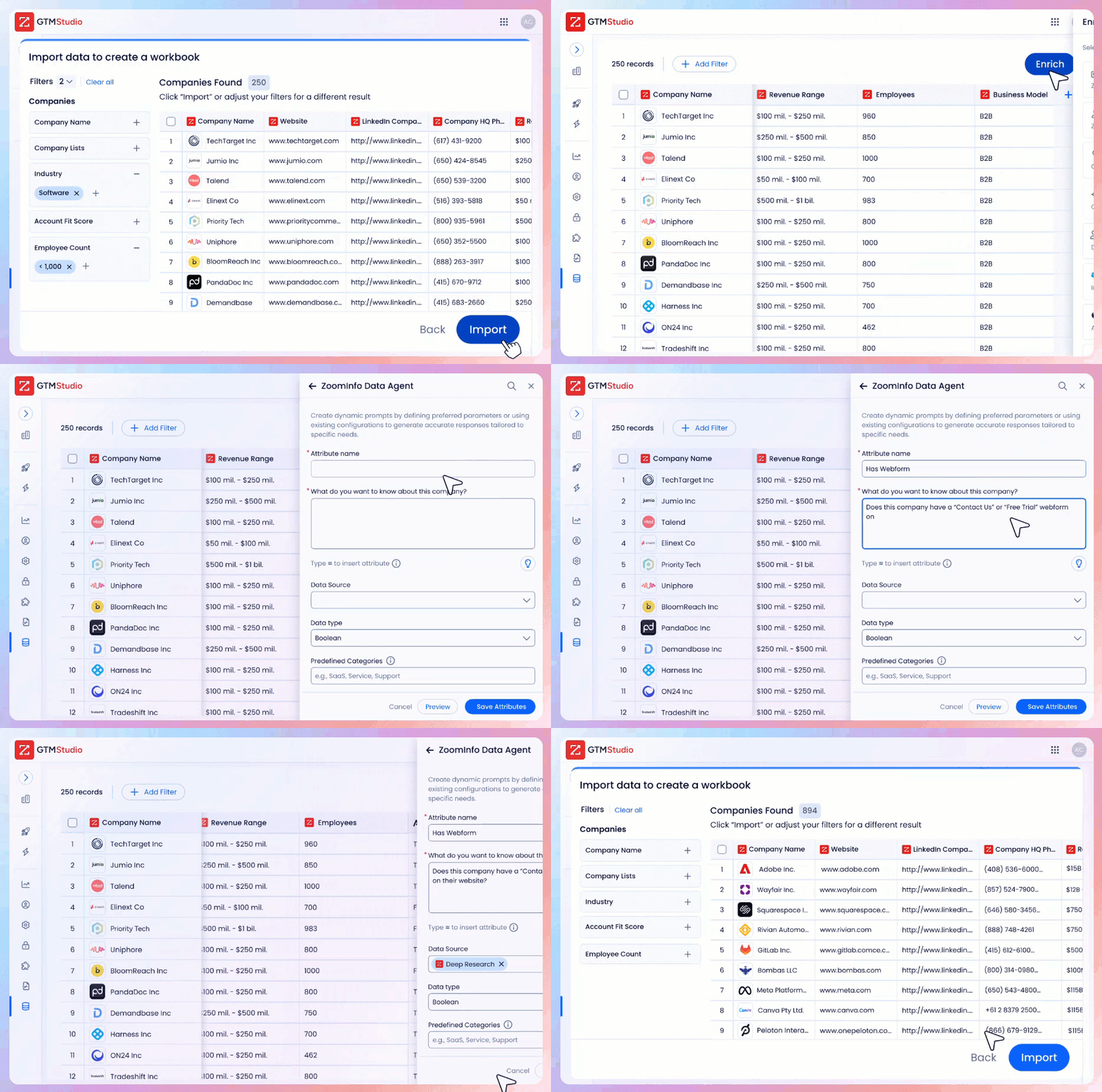
ZoomInfo adds an intelligence dimension neither marketing platform provides. GTM Studio offers AI-powered dashboards tracking engagement, funnel progression, and top-performing segments.
Source: ZoomInfo
More important, ZoomInfo shows you the accounts and contacts your marketing misses entirely: companies researching your category that haven't entered your funnel, stakeholders on buying committees your campaigns haven't reached, and intent signals your marketing automation can't see.
Redwood Logistics used ZoomInfo to achieve a 99% reduction in cost-per-click and a 310% increase in click-through rate, while saving 20-25 hours per week. "It's not just the data itself. It's more about the right data at the right time to help us reach out with the right message across that full buyer journey," said Chelsea Kenyon, Senior Director of Digital Strategy. (Redwood Logistics case study)
Security and compliance for enterprise buyers
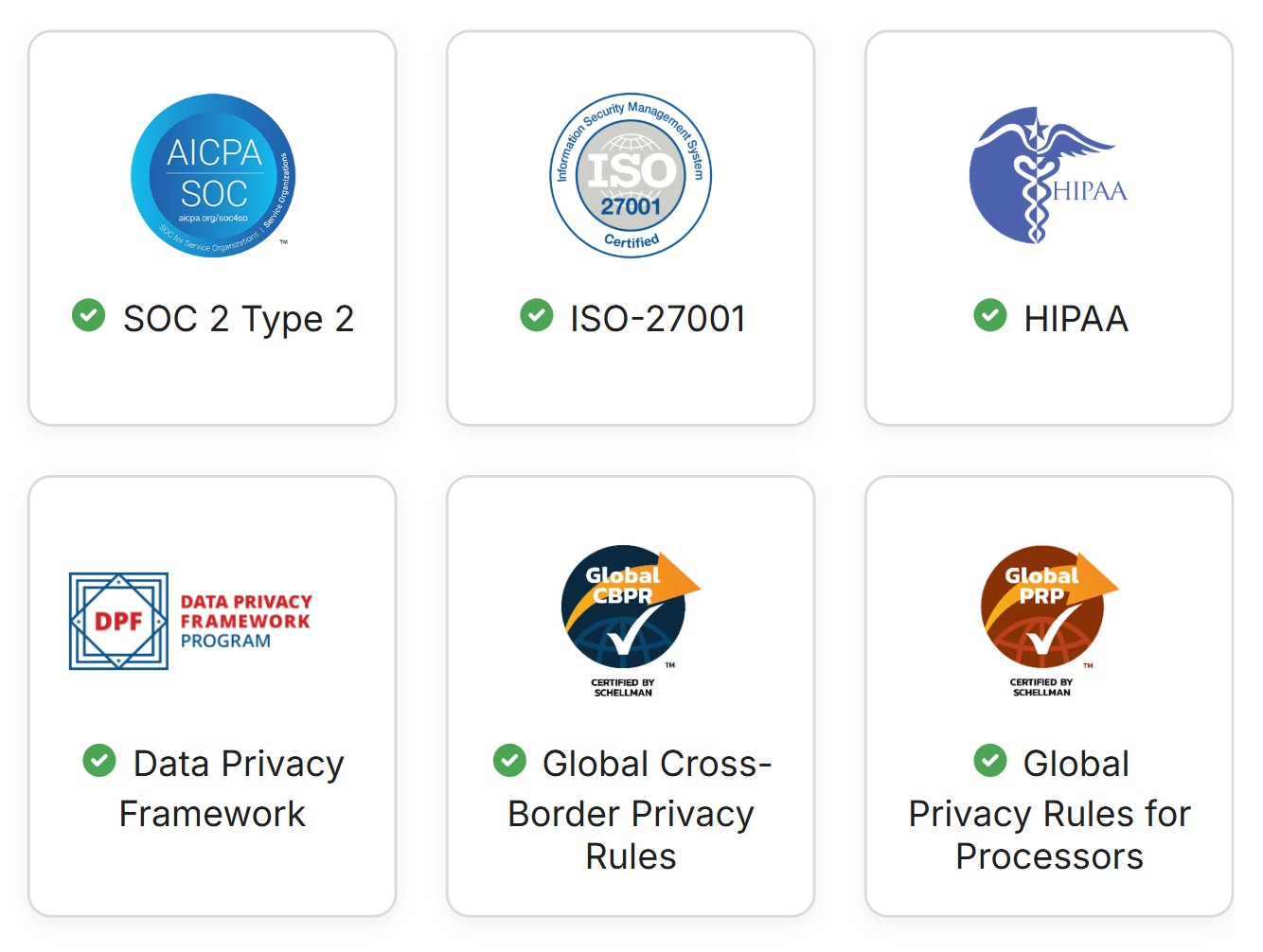
Iterable holds the broadest security certifications: SOC 2 Type 2, ISO 27001, HIPAA, EU-U.S. Data Privacy Framework, Global Cross-Border Privacy Rules, and Global Privacy Rules for Processors. GDPR and UK GDPR compliance is confirmed with Standard Contractual Clauses for international transfers. The platform supports MFA enrollment, granular user permissions, and project-level access controls.
Source: Iterable
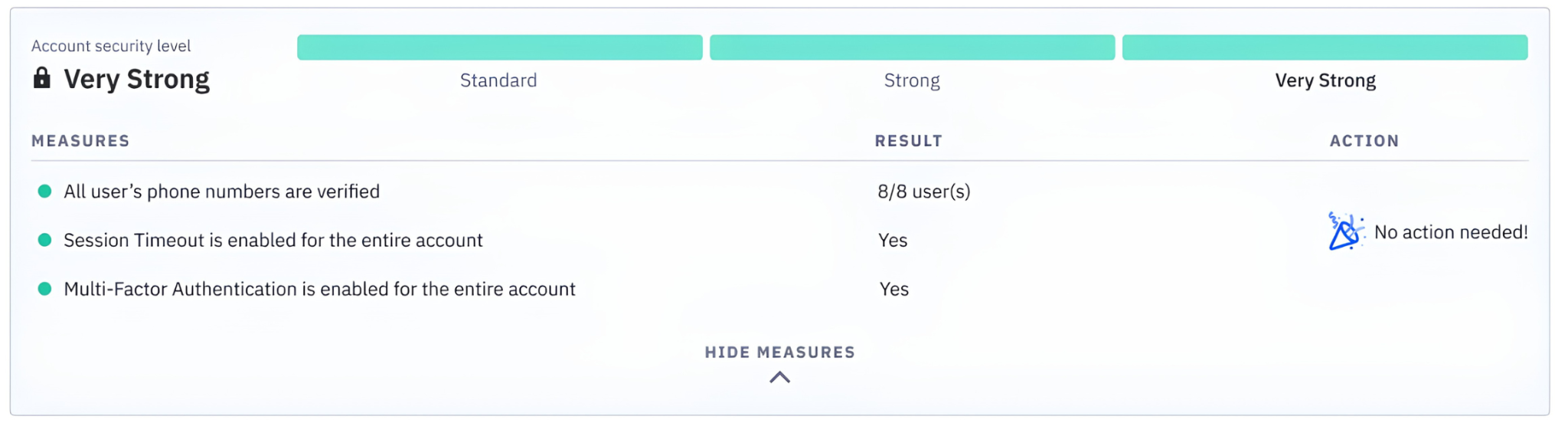
ActiveCampaign provides GDPR compliance with a Data Processing Addendum and Standard Contractual Clauses, EU-US Data Privacy Framework compliance, CCPA and LGPD support, and an in-product Security Checklist. HIPAA support and SSO are available on the Enterprise plan. A public sub-processor list is maintained.
Source: ActiveCampaign
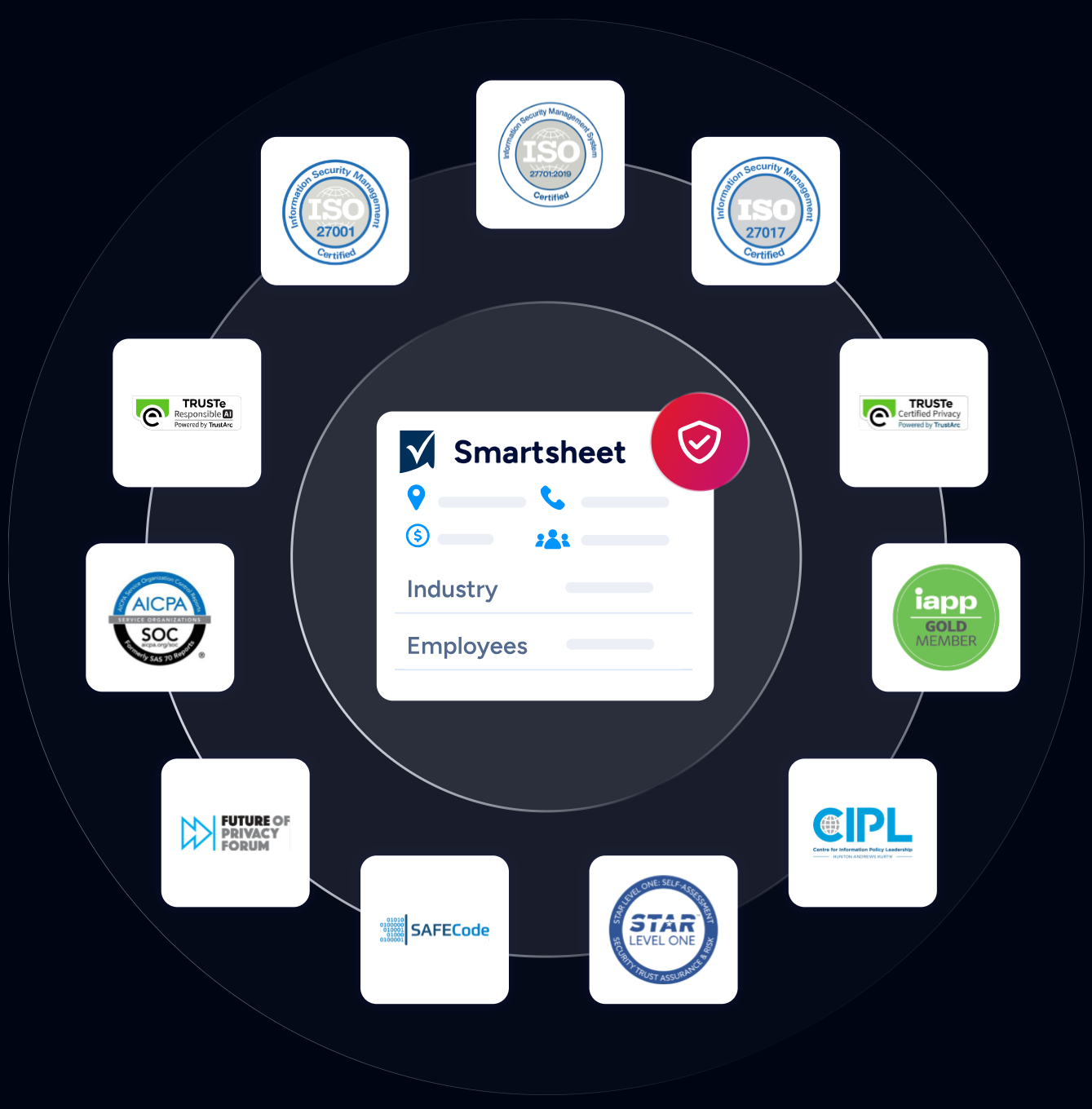
ZoomInfo holds ISO 27001, ISO 27701, SOC 2 Type II, TRUSTe GDPR, and TRUSTe CCPA certifications, all renewed annually. ZoomInfo is a registered data broker in California and Vermont. A Trust Center provides detailed security and privacy documentation. For regulated industries and enterprise procurement teams that require certifications, all three platforms meet the bar.
Source: ZoomInfo
ActiveCampaign vs. Iterable vs. ZoomInfo: Which should you choose?
The right choice depends on your business model, team size, and what's actually limiting your marketing today.
Choose ActiveCampaign if:
You're an SMB or mid-market business that needs email, SMS, WhatsApp, and CRM in one platform
Your marketing team is small (1-5 people) and needs automation to multiply output
Self-serve setup, a free trial, and transparent pricing matter
You want automation logic without enterprise complexity
Your budget is under $500/month for marketing automation
Choose Iterable if:
You're an enterprise consumer brand running lifecycle campaigns across mobile and web
Mobile push, in-app messaging, and embedded messages are central to your engagement strategy
Your data team can support initial setup and ongoing data model management
You want cross-channel journey orchestration with explainable AI optimization
You have the budget and timeline for an enterprise sales and implementation process
Choose ZoomInfo if:
You're a B2B team that needs to know who to target, not just how to reach them
Your marketing automation sends campaigns to contacts without knowing which accounts are in-market
You want buyer intent signals, verified contact data, and account intelligence feeding your existing tools
You need the same intelligence layer powering sales, marketing, and RevOps without tool silos
You want to start free and prove value before committing
See how ZoomInfo's intelligence layer transforms your GTM with ZoomInfo Lite or a free trial.
For many B2B organizations, the answer isn't one platform or another. It's ZoomInfo as the intelligence layer feeding ActiveCampaign or Iterable as the execution layer. The most effective marketing stacks don't choose between knowing who to target and knowing how to engage them. They do both.
"You'll get 10x the value if you think of ZoomInfo as a full platform and not just a tool for one team," said John Kotsuros, Founder and CEO of SpringDB. (SpringDB case study)
ActiveCampaign vs. Iterable vs. ZoomInfo FAQ
What is the fundamental difference between ActiveCampaign, Iterable, and ZoomInfo?
ActiveCampaign is a marketing automation platform with a built-in CRM, designed for SMBs and mid-market businesses that need email, SMS, WhatsApp, and automation in one affordable package. Iterable is a cross-channel customer engagement platform for enterprise consumer brands, covering email, SMS, mobile push, web push, in-app, and WhatsApp with AI-powered journey orchestration.
ZoomInfo is a GTM platform that provides the data foundation (500M contacts, 100M companies, intent signals, and verified contact data) that tells marketing and sales teams who to target and when they're in-market.
Which platform is most affordable for a growing business?
ActiveCampaign is the most accessible, with plans starting at $15/month for 1,000 contacts, a 14-day free trial, and a 30-day money-back guarantee. Pricing scales by contact count; Starter is $149/month for 10,000 contacts. Iterable has no published pricing and requires a sales demo. Contracts are enterprise-negotiated and non-cancellable mid-term.
ZoomInfo offers a permanent free tier (ZoomInfo Lite with 10 monthly export credits) and a 7-day free trial, but paid plans are custom-quoted.
Can ZoomInfo work alongside ActiveCampaign or Iterable?
Yes. ZoomInfo is designed to feed intelligence into other tools, not replace them. ZoomInfo's APIs and MCP server can push verified contacts, intent signals, and account intelligence into ActiveCampaign or Iterable. The buyer intent data and contact information ZoomInfo provides determines who receives your campaigns, while ActiveCampaign or Iterable handles campaign execution and engagement tracking.
Which platform has the strongest AI capabilities?
All three have invested heavily in AI. ActiveCampaign's Active Intelligence includes 12+ AI agents that build campaigns from plain-language prompts and optimize per-subscriber send times. Iterable's Nova AI provides predictive audience scoring, channel decisioning, and explainable "Glassbox AI" where every decision is auditable.
ZoomInfo's GTM Context Graph processes 1.5B + data points daily to identify buyer intent, predict deal outcomes, and surface account intelligence (a different type of AI, focused on who to target rather than how to message them).
Which platform is better for B2B vs. B2C marketing?
ActiveCampaign serves both B2B and B2C, with a CRM and automation that work well for B2B lead nurture and SaaS trial conversion. Iterable is strongest for B2C consumer brands that need mobile push, in-app messaging, and high-volume cross-channel engagement.
ZoomInfo is exclusively B2B, providing the contact data, company intelligence, and buying signals that B2B teams need to identify and reach their market.
How do reporting and analytics compare across the three platforms?
ActiveCampaign provides functional campaign, automation, and pipeline reporting with AI-powered conversational analytics and BotSense for filtering bot clicks. Revenue attribution is available on Enterprise plans.
Iterable's reporting is its most cited weakness: out-of-the-box analytics are limited, multi-currency revenue tracking has known issues, and cross-channel attribution is difficult without a separate BI tool. ZoomInfo adds an intelligence dimension with AI-powered dashboards tracking engagement and funnel progression, plus visibility into accounts and contacts your marketing has not yet reached.
Which platform is easiest to get started with?
ActiveCampaign is the easiest to evaluate, with a 14-day free trial, no credit card required, and self-serve signup. You can set up basic automations and send your first campaign the same day.
ZoomInfo Lite offers a permanent free tier for B2B data exploration. Iterable has the longest evaluation cycle: no free trial, no self-serve signup, and access requires a sales demo followed by an enterprise contracting process.
Do any of these platforms include a CRM?
ActiveCampaign includes a built-in CRM with visual deal pipelines, lead scoring, deal scoring, and sales routing, though it is lighter than dedicated CRM platforms like Salesforce. Iterable does not include a CRM.
ZoomInfo integrates with existing CRMs (Salesforce, HubSpot, Microsoft Dynamics) and provides a seller-focused workspace (GTM Workspace) that overlays CRM data with buyer intelligence, contact data, and AI-generated account insights.
Keep comparing ActiveCampaign:
