
Choosing between ActiveCampaign and AWeber for your email marketing comes down to five questions most comparisons skip:
Do you need marketing automation with branching logic, or are simple email sequences enough?
Is a built-in CRM important for connecting marketing to sales, or do you just need to send emails?
Are you willing to invest time learning a complex platform, or do you need something working by tomorrow?
Does your marketing extend beyond email to SMS and WhatsApp, or is email your only channel?
For B2B teams: do you already know who to target, or is finding the right contacts half the battle?
In short, here's what we recommend:
ActiveCampaign is the automation-first platform for growing businesses that need complex customer journeys. Its visual automation builder handles branching logic, behavioral triggers, and cross-channel sequences across email, SMS, and WhatsApp.
A built-in CRM connects marketing activity to sales pipelines, while Active Intelligence, the platform's AI engine, can build campaigns from a single prompt.
ActiveCampaign works best for teams that have outgrown basic email tools and need one platform for marketing automation and sales management.
The trade-off: a steeper learning curve and pricing that climbs as your contact list grows.
AWeber is the straightforward email platform for small businesses and creators who want reliable email marketing without complexity. Founded in 1998, AWeber has spent 27 years refining a simple premise: make email easy.
Its Workflows cover welcome sequences, lead magnet delivery, and behavioral branching, while 24/7 live support on every plan, including free, is a rarity in the category. AWeber fits creators, coaches, and small teams who need dependable email delivery and fast setup more than automation depth.
Both platforms solve the "how do I reach my audience?" problem well. But for B2B teams, there's a prior question neither answers: who should you be reaching in the first place?
ZoomInfo is a B2B data and go-to-market platform built on a large data foundation: 500M contacts, 100M companies, 135M+ verified phone numbers, and 200M+ verified business emails.
Its GTM Context Graph processes 1.5B+ data points daily, combining this data with your CRM records, conversation transcripts, and behavioral signals to show not just who to contact, but when they're in-market and why the deal is moving.
For B2B companies running campaigns through ActiveCampaign or AWeber, ZoomInfo solves the upstream problem email platforms can't: identifying the right buyers before you draft a single message.
Your team can access this intelligence through the GTM Workspace for sellers, GTM Studio for marketers and RevOps, or APIs and MCP in any other front-end.
If finding the right B2B contacts is half the battle for your team, see how ZoomInfo's data can sharpen your email marketing.
ActiveCampaign vs. AWeber at a glance
ActiveCampaign | AWeber | ZoomInfo | |
|---|---|---|---|
Primary function | Marketing automation + CRM | Email marketing + landing pages | B2B contact data + go-to-market intelligence |
Automation | Visual builder with branching logic | Workflows with split paths and behavioral triggers | N/A (feeds contacts into your automation platform) |
Channels | Email, SMS, WhatsApp | Email, web push notifications | Data delivery across any channel |
CRM included | Yes | No | GTM Workspace (sellers) + GTM Studio (marketers/RevOps) |
AI features | Active Intelligence (12+ AI agents) | AI Writing Assistant, Newsletter Assistant | GTM Context Graph (1.5B+ data points daily), AI-powered account research |
Integrations | 1,000+ | 750+ | 170+ marketplace partners + API/MCP |
Support | Chat/ticket; priority on Pro+ | 24/7 phone, chat, email on all plans | Help center, university, dedicated CSM on enterprise |
Starting price | $15/month (1,000 contacts) | $12.50/month (500 subscribers, annual) | Free (ZoomInfo Lite); paid plans use consumption-based pricing |
Free plan | 14-day trial only | Yes, permanent | ZoomInfo Lite (permanent, 10 credits/month) |
Best for | Growing businesses needing automation depth | Small businesses and creators wanting simplicity | B2B teams needing contact discovery and intent signals |
Automation depth separates the two platforms
This is the clearest dividing line between ActiveCampaign and AWeber.
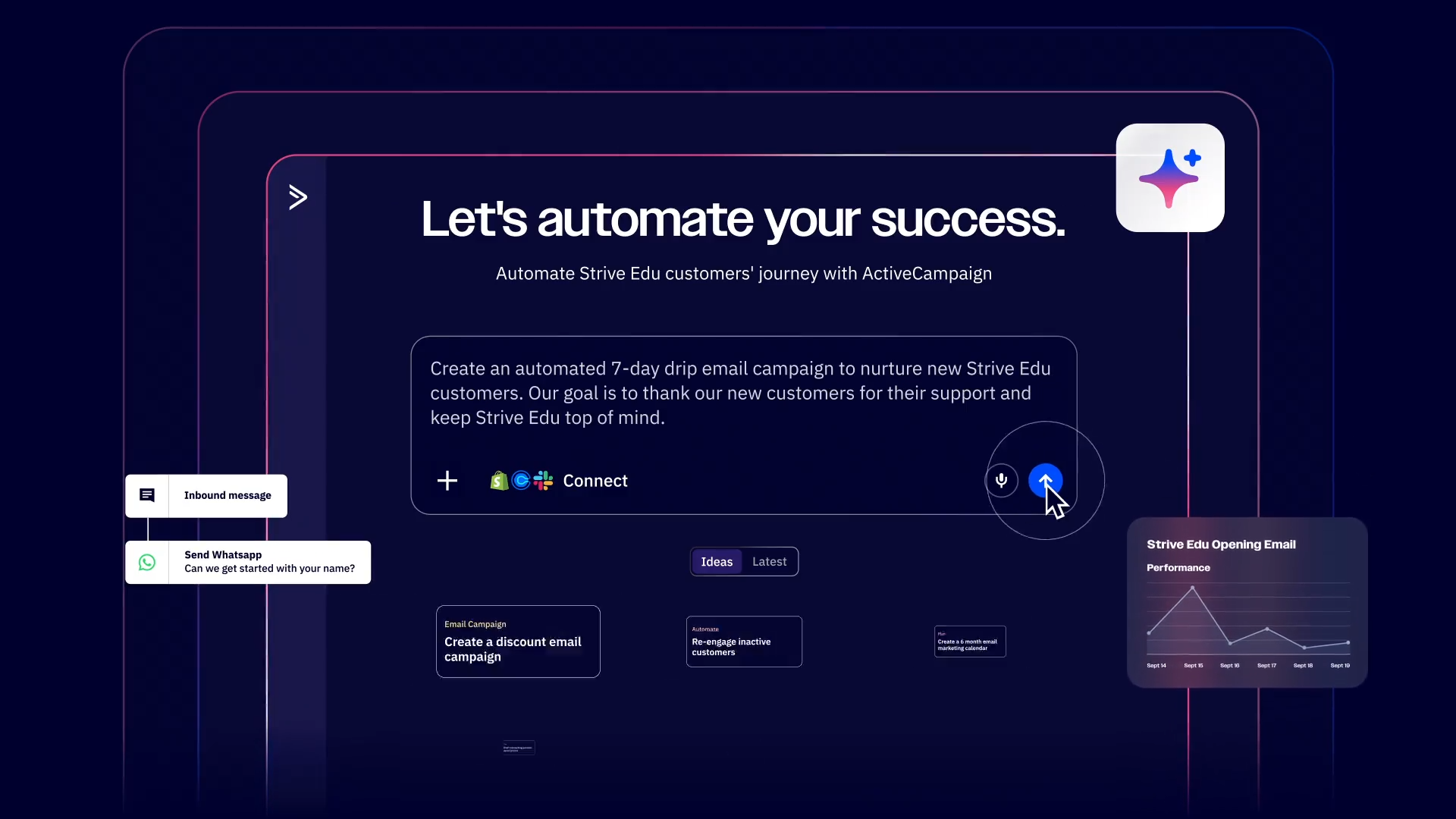
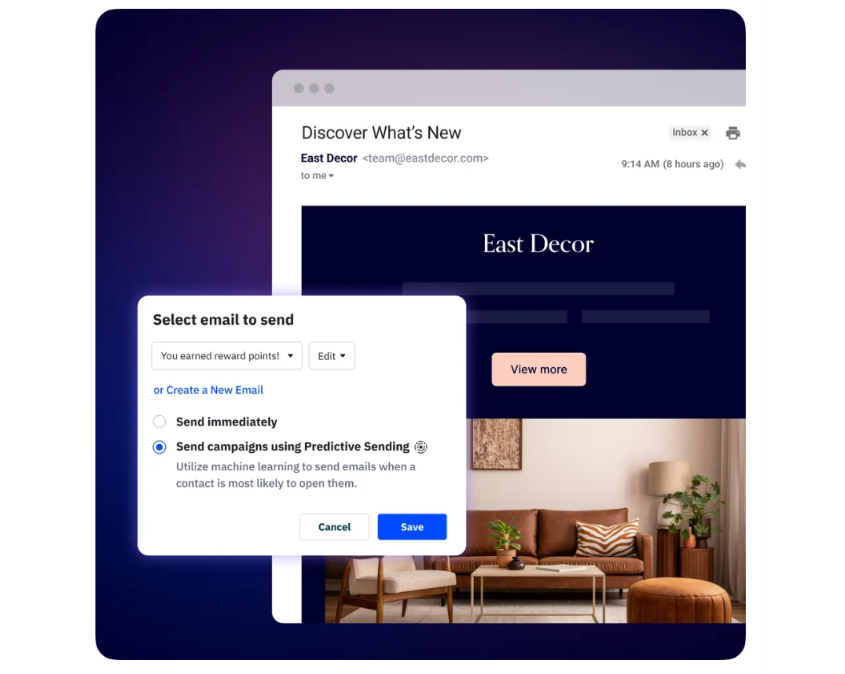
ActiveCampaign's visual automation builder is the platform's core strength. Automations respond to granular behavioral triggers: link clicks, purchase history, tag changes, site visits, custom field updates.
Source: ActiveCampaign
Branching paths route contacts based on what they do, not just who they are. There is no cap on the number of actions in a single workflow on Plus plans and above.
Predictive Sending studies each contact's engagement history and delivers emails when that person is most likely to open, rather than batch-sending to the entire list at once. The automation system spans email, SMS, and WhatsApp from a single canvas.
Source: ActiveCampaign
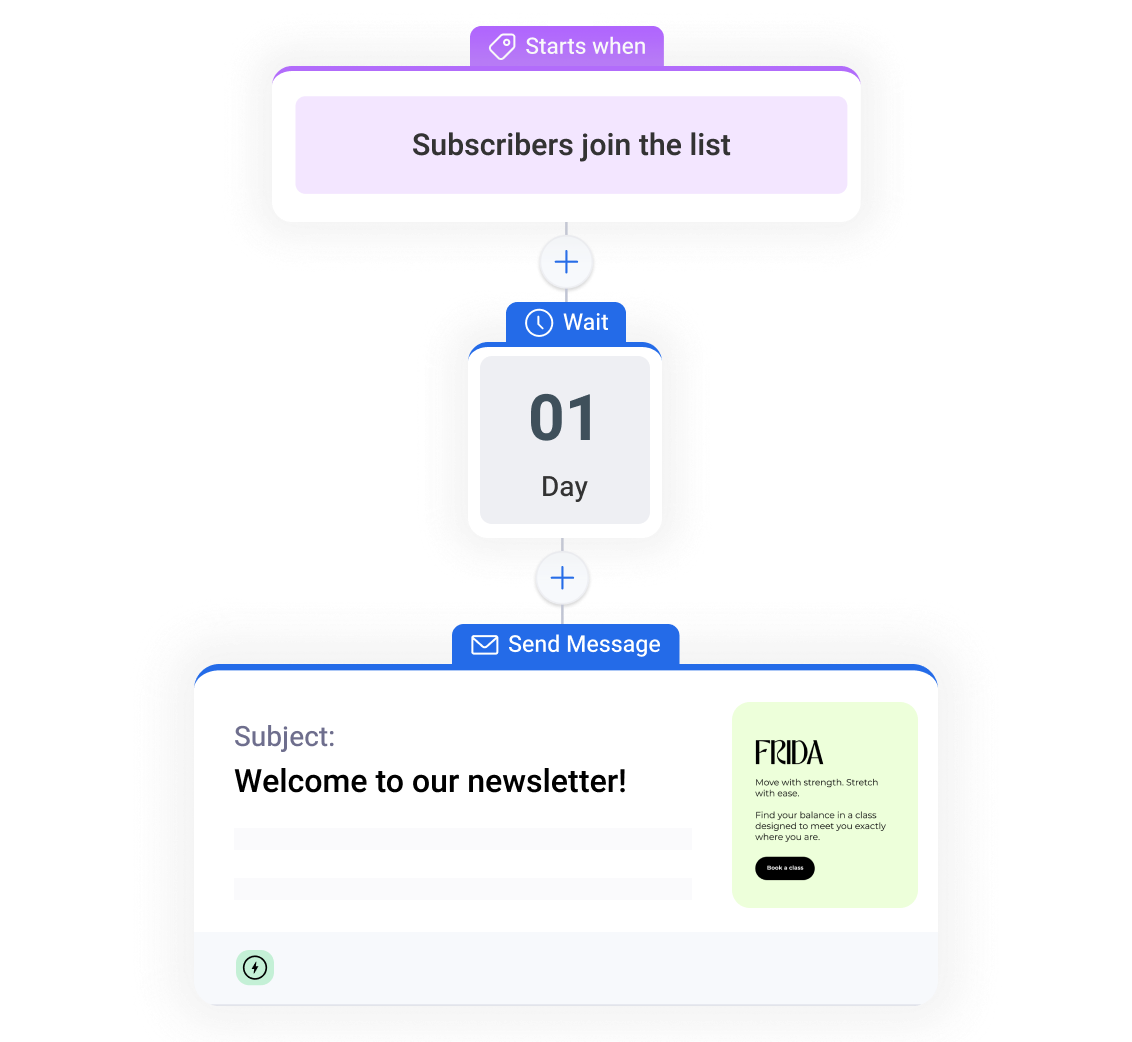
AWeber's Workflows cover the fundamentals. Welcome sequences, lead magnet delivery, RSS-to-email automation, and split paths based on opens, clicks, tags, and purchases handle most small business needs.
Source: AWeber
Each workflow supports up to 500 steps, with the ability to chain workflows via tags for longer sequences. A draft environment lets users test workflows without disturbing live subscribers.
But AWeber's automation has clear limits. There is no native site tracking or page-visit triggers. No lead scoring. No multi-channel automation (SMS and WhatsApp are absent). Building complex multi-conditional logic is more restrictive than in ActiveCampaign.
For a solo coach sending a welcome series and weekly newsletter, these limits don't matter.
For a growing e-commerce brand running abandoned cart recovery, post-purchase upsells, and behavioral re-engagement campaigns at the same time, they will.
The practical question: do you need five-step sequences or fifty-step journeys? AWeber handles the first. ActiveCampaign handles both.
AWeber makes simplicity a feature, not a limitation
AWeber's positioning as "powerfully-simple" holds up in practice. The platform organizes around a small set of building blocks (subscribers, lists, workflows, forms, landing pages, emails, analytics) that keep the learning curve low. Most users are productive within their first session.
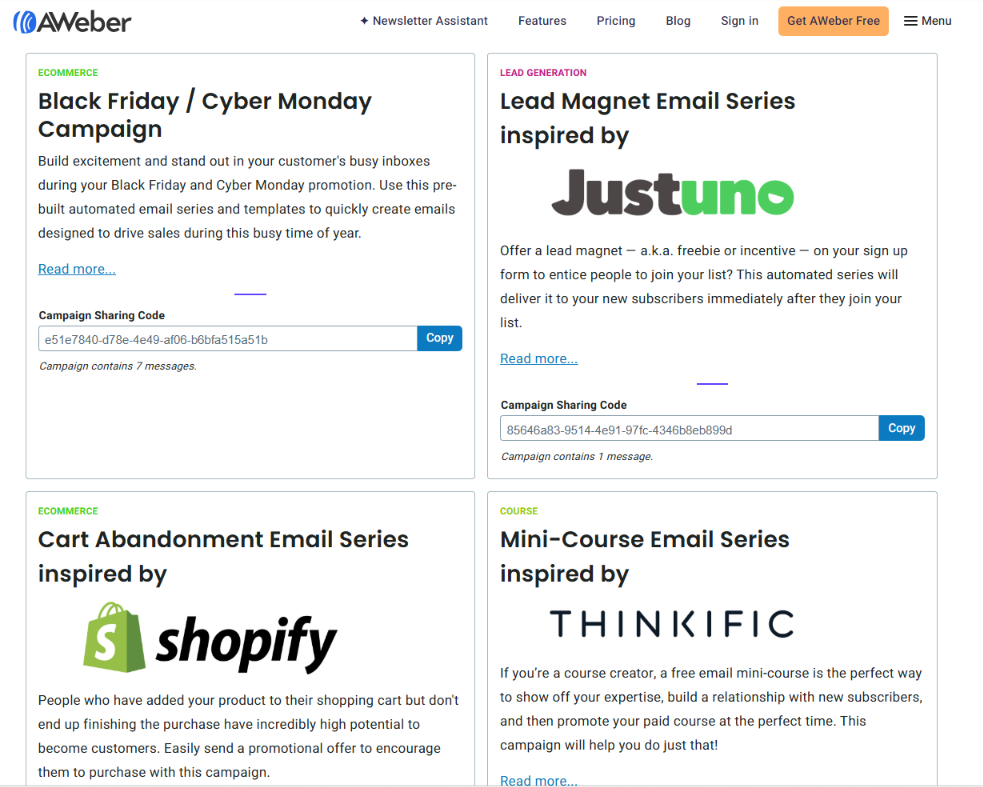
Smart Designer generates branded email templates from a website URL. The Campaign Marketplace provides pre-written email sequences (welcome series, lead magnet delivery, Black Friday campaigns) that users import and deploy the same day.
Source: AWeber
For someone who has never set up an email automation before, AWeber removes enough friction to get a first campaign live within hours.
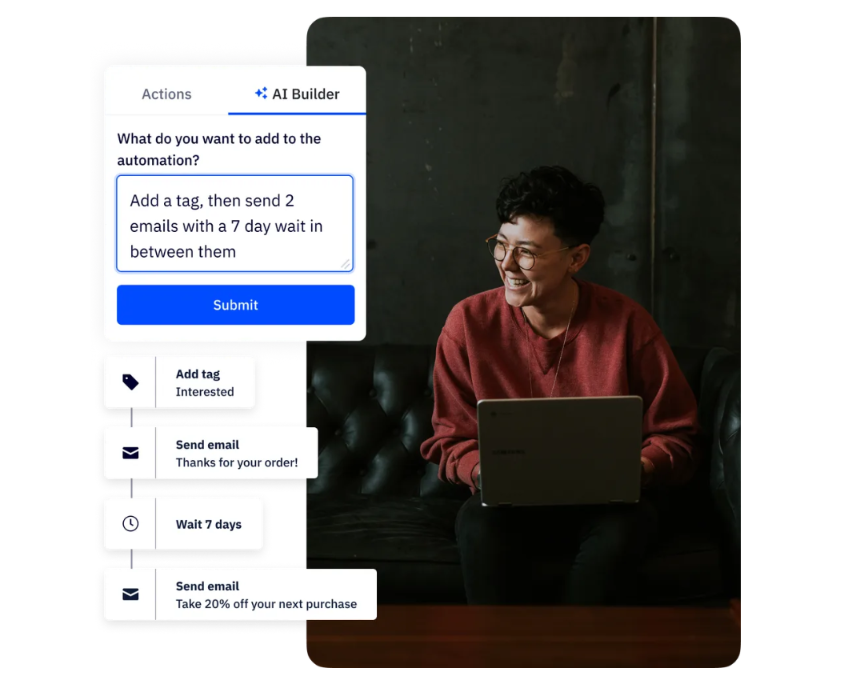
ActiveCampaign is more capable but demands more from users. The automation builder's architecture (triggers, actions, conditions, branching) requires familiarity with automation logic. The help center covers 15+ distinct categories.
Source: ActiveCampaign
ActiveCampaign's own services FAQ acknowledges this: "You absolutely can set up ActiveCampaign on your own, but our services help you skip the trial-and-error phase and get to results faster." Capterra reviewers consistently cite a steep learning curve for advanced features.
This isn't a weakness; it's a design choice. ActiveCampaign builds for the marketer who will invest time mastering conditional logic and tagging systems. AWeber builds for the business owner who wants to write an email, pick a list, and hit send.
AI tools reflect each platform's philosophy
Both platforms have invested in AI, but with different goals.
ActiveCampaign's Active Intelligence, launched in May 2025, is a system-wide AI engine with 12+ agents built for specific tasks.
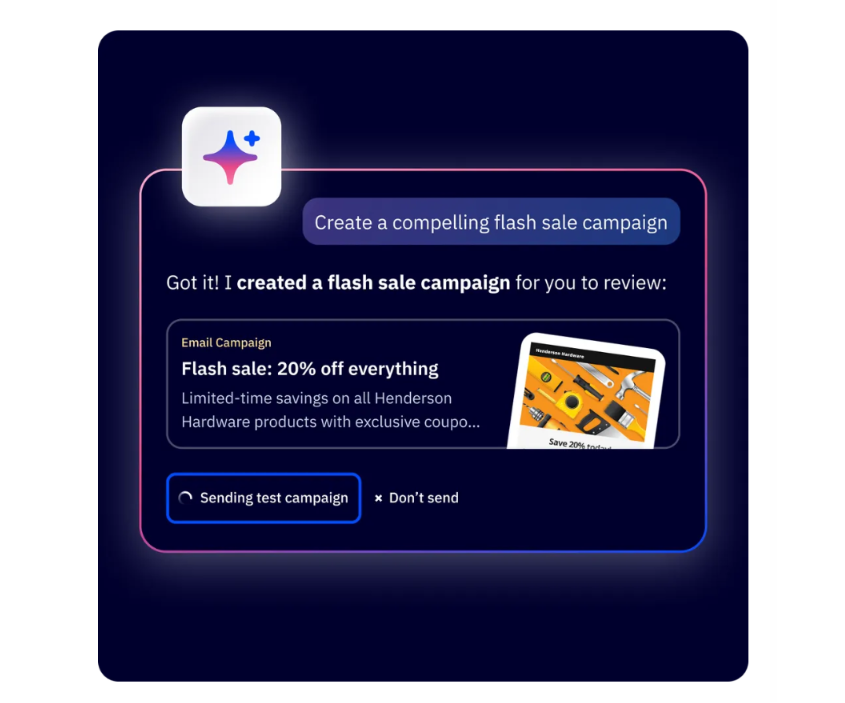
The AI Campaign Builder generates complete campaigns (subject lines, body content, images, layouts) from a plain-language prompt.
Source: ActiveCampaign
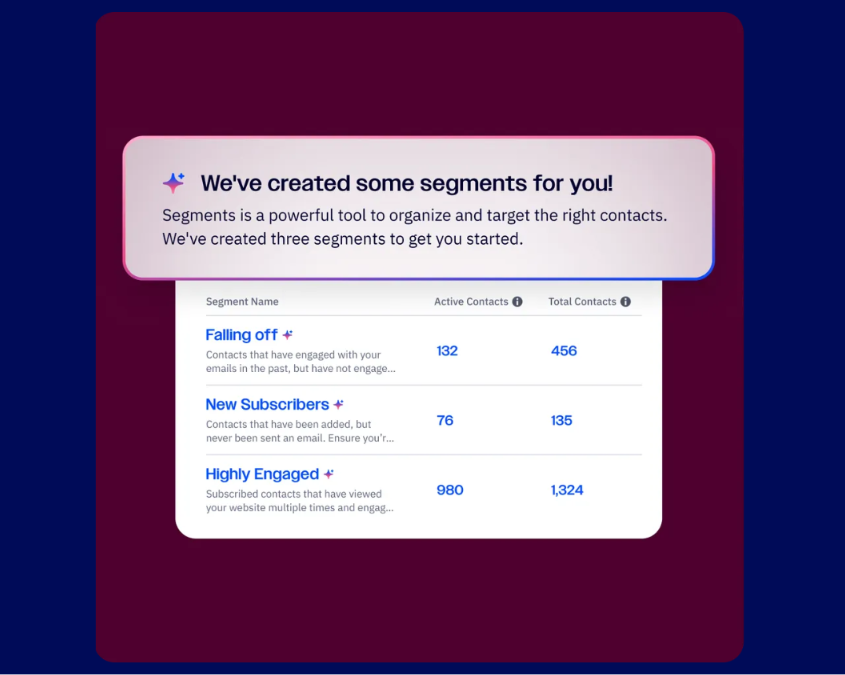
The AI Brand Kit imports brand assets from a website URL. AI-Suggested Segments surface high-value audience groups. Describe a goal, and Active Intelligence builds the campaign to achieve it. ActiveCampaign claims AI users save 13+ hours per week.
Source: ActiveCampaign
AWeber's AI is narrower but focused on its audience. The AI Writing Assistant generates email drafts, subject lines, and promotional copy inside the editor, with no tab-switching required. AWeber claims it helps users write, edit, and send emails 75% faster.
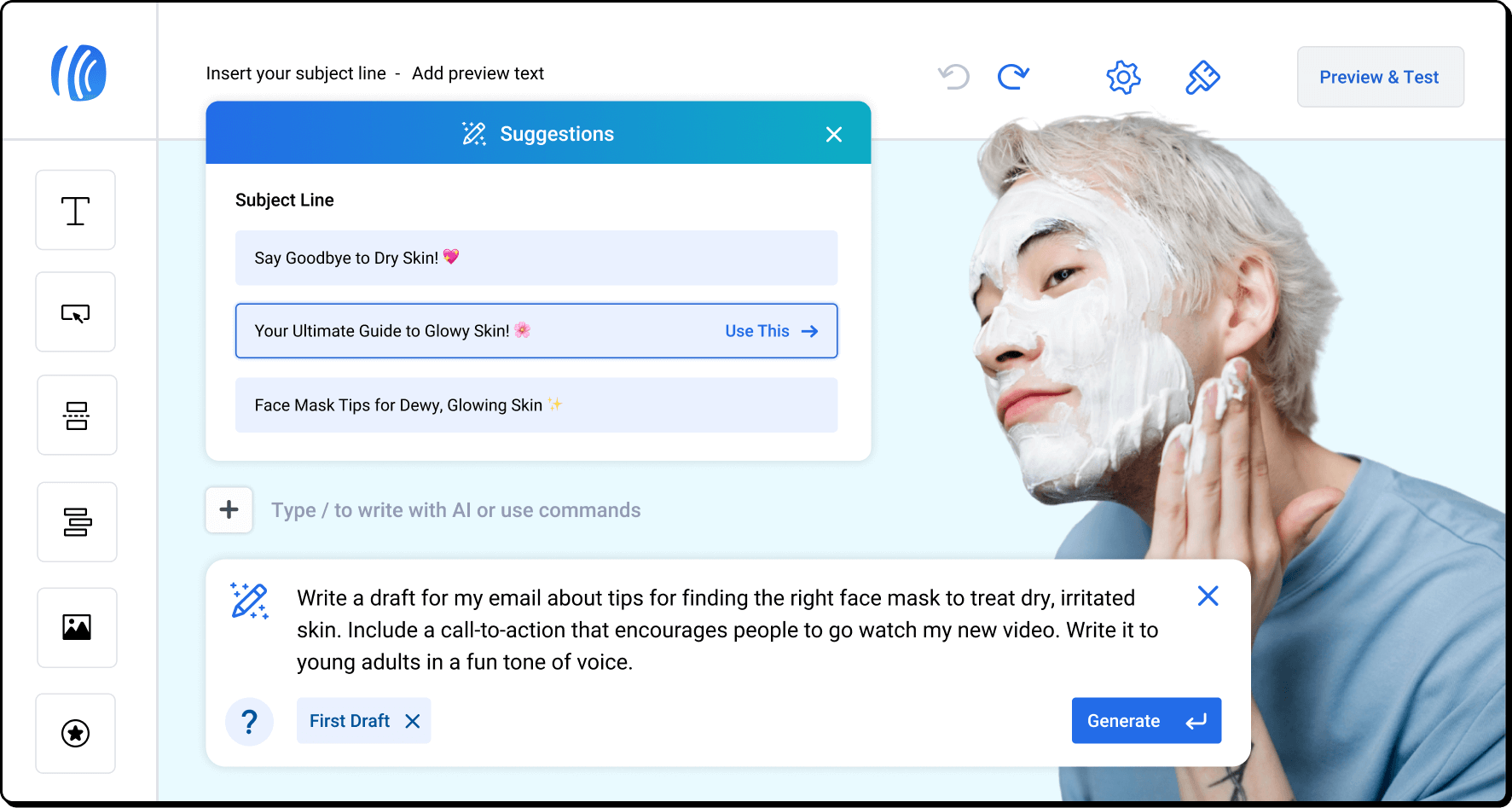
Source: AWeber
The Newsletter Assistant goes further: it learns a user's writing style from their website and past emails, then auto-drafts a complete newsletter each week. Users refine through conversation and send when ready.
The AI Subject Line Assistant uses performance data alongside language models, so suggestions reflect what actually drives open rates.
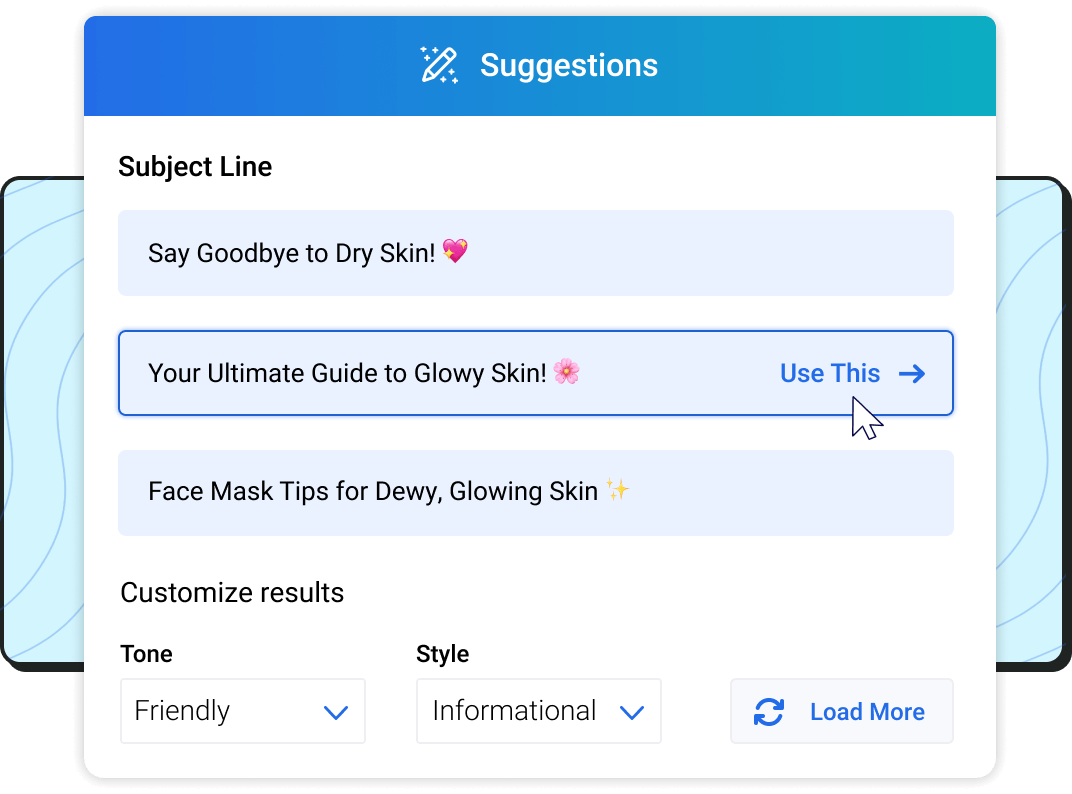
Source: AWeber
ActiveCampaign's AI aims to build strategy. AWeber's AI aims to eliminate writer's block. Both are useful; the difference is scope.
ActiveCampaign goes multi-channel while AWeber stays focused on email
ActiveCampaign supports three messaging channels natively: email, SMS, and WhatsApp. All three run from a single automation builder using shared contact data. A contact's SMS reply can trigger an email follow-up or WhatsApp outreach in the same workflow.
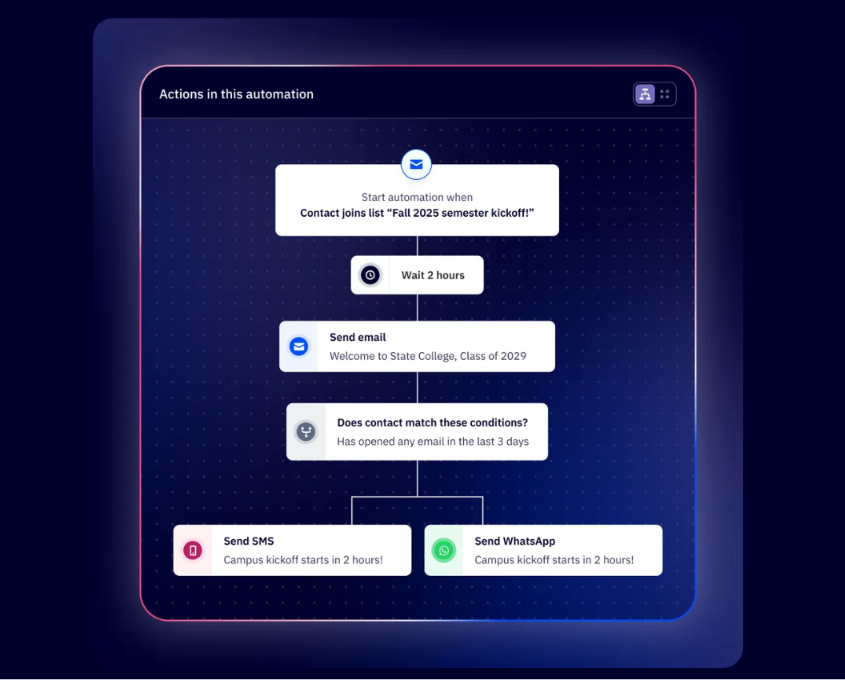
Source: ActiveCampaign
ActiveCampaign operates as a Meta Business Partner for WhatsApp, providing verified API access. The platform supports broadcast messaging, one-to-one chat, a no-code Flows builder for automated conversations, and a shared inbox with routing.
For businesses with customers who prefer text over email, or international audiences where WhatsApp dominates (Latin America, Europe, Southeast Asia), this multi-channel reach matters.
AWeber supports email and web push notifications. No SMS. No WhatsApp. No in-app messaging. Web push notifications are included on all plans at no extra cost and bypass the inbox entirely, delivering short, clickable browser alerts the moment a subscriber comes online.
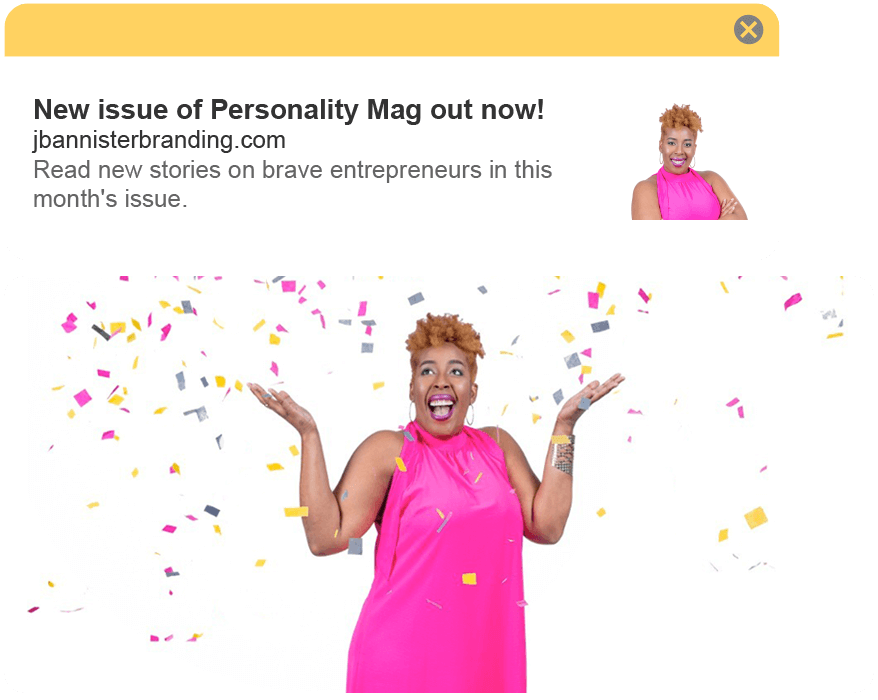
Source: AWeber
For content creators announcing new blog posts or YouTubers pushing new videos, web push is useful. But it complements email rather than replacing SMS or WhatsApp as a messaging channel.
If your marketing is email-only, this distinction doesn't matter. If your audience responds to texts and chat messages, ActiveCampaign is the only choice between the two.
For B2B teams, knowing who to email matters as much as how
ActiveCampaign and AWeber both assume you already have a list of contacts to email. You've built your audience through forms, landing pages, and lead magnets. Both platforms help you nurture that audience.
But for B2B sales and marketing teams, the harder problem is upstream: finding the right accounts to target. Who are the decision-makers at companies that fit your ideal customer profile? What are their verified email addresses and direct phone numbers? Which accounts are researching solutions like yours right now?
Neither ActiveCampaign nor AWeber answers these questions. They're not designed to.
ZoomInfo is. ZoomInfo provides the B2B contact data and buying signals that feed into whatever email platform you choose.
The dataset spans 500M contacts and 100M companies, verified through a collection and verification system backed by 300+ human researchers with up to 95% accuracy on first-party data.
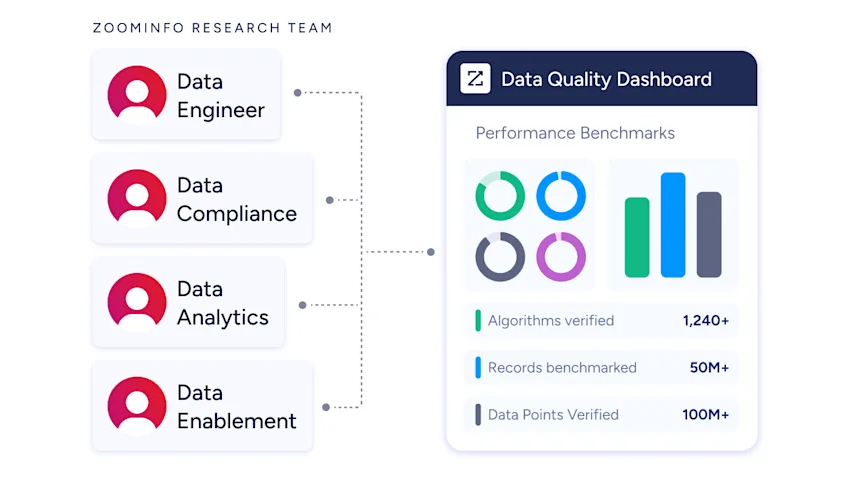
Source: ZoomInfo
Buyer Intent data tracks signals from 210 million IP-to-Organization pairings, identifying which companies are researching your category before they fill out a form.
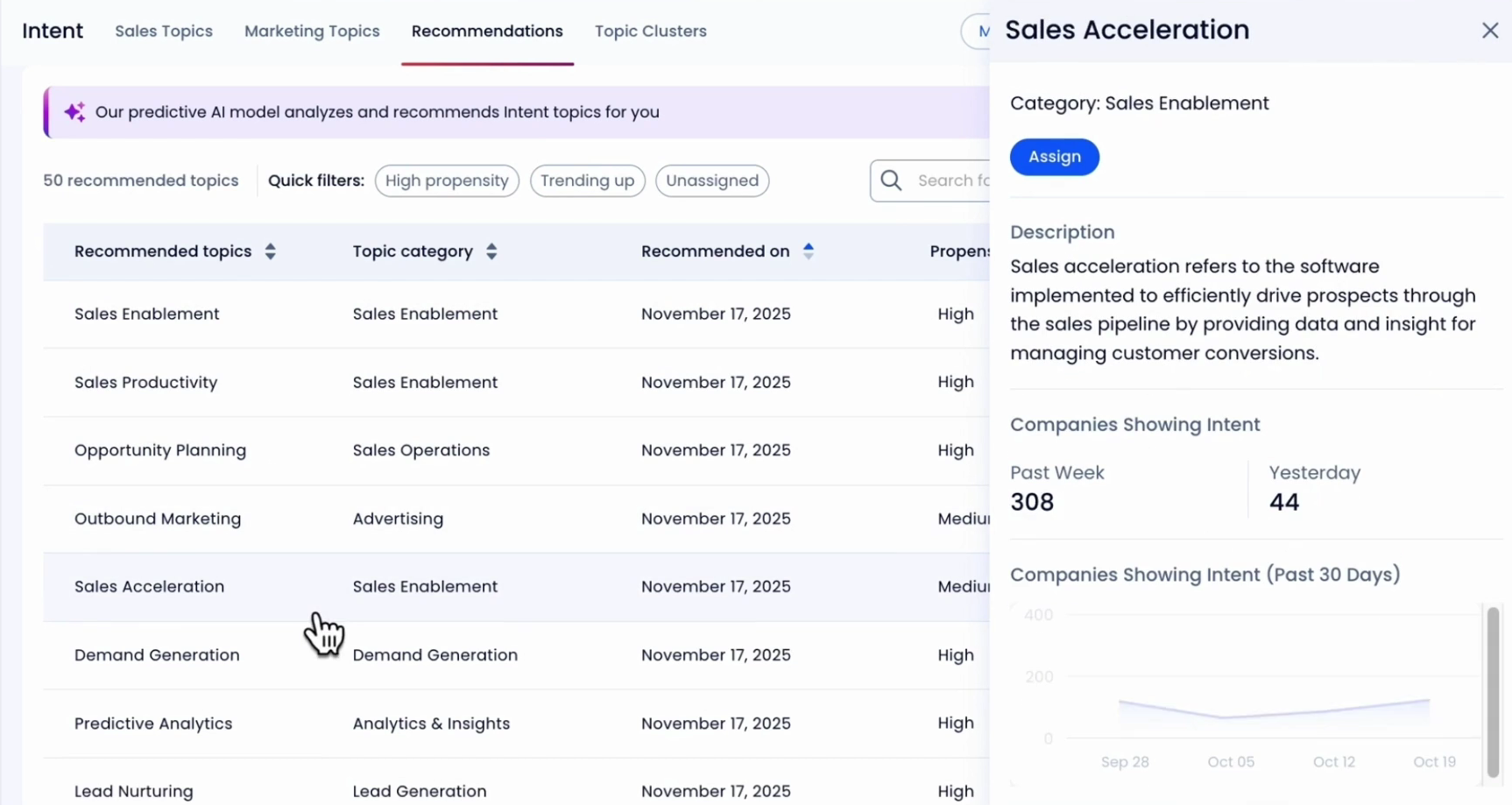
The practical impact: instead of emailing a generic list and hoping someone responds, your ActiveCampaign or AWeber campaigns target verified contacts at companies showing active buying intent. Open rates improve because the email reaches a real inbox. Response rates improve because the timing matches actual interest. ZoomInfo connects to both platforms through its APIs, MCP, and middleware like Zapier.
For B2B companies, ZoomInfo is the data layer that makes either email platform more effective.
"ZoomInfo gives us the information we need to execute. We don't have to go through and spend our time digging. It's already there, so we can be three steps ahead." (Vensure)
Pricing tells you who each platform is built for
AWeber is more affordable at nearly every list size.
AWeber's Plus plan (the full-featured tier) starts at $20/month for 500 subscribers on annual billing. At 10,000 subscribers, it costs $135/month. At 25,000 subscribers, $250/month. The Plus plan includes unlimited automations, landing pages, email lists, and users.
AWeber also offers a permanent free tier and a Lite plan starting at $12.50/month.
ActiveCampaign's Starter plan begins at $15/month for 1,000 contacts but caps automations at five actions per workflow. To unlock unlimited automation actions, you need the Plus plan.
For features like predictive sending, conditional content, and revenue attribution, the Professional plan is required. At 10,000 contacts, the Starter plan alone runs $149/month. Enterprise pricing is custom-quoted. There is no permanent free plan, only a 14-day trial.
A meaningful pricing distinction: ActiveCampaign charges once per unique contact regardless of how many automations or segments that contact appears in.
AWeber's list-based architecture means a subscriber on multiple lists can count more than once, though AWeber recommends keeping all subscribers in one list and using tags to segment.
For budget-conscious small businesses and solo creators, AWeber delivers more value per dollar. For teams that need automation depth, a CRM, and multi-channel capability, ActiveCampaign's higher cost comes with more functionality.
ZoomInfo operates on a different model. ZoomInfo Lite is a permanent free tier with 10 monthly export credits and access to the B2B database. Paid plans use consumption-based pricing (seats, credits, features).
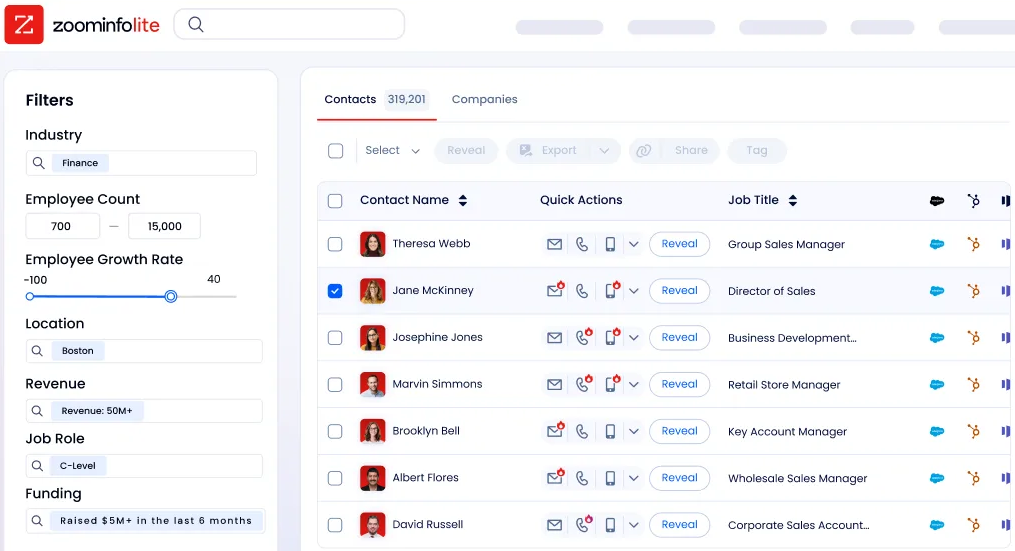
Source: ZoomInfo
For B2B companies that depend on outbound prospecting, the investment in verified contact data often pays for itself through improved targeting. But it's a separate budget line from your email platform subscription, not a replacement for one.
ActiveCampaign vs. AWeber vs. ZoomInfo: Which should you choose?
The right choice depends on what problem you're solving.
Choose ActiveCampaign if:
You need automation with branching logic and behavioral triggers
Multi-channel marketing (email + SMS + WhatsApp) is important to your strategy
You want a built-in CRM that connects marketing to sales pipelines
AI-powered campaign creation and predictive sending appeal to you
You're willing to invest time learning a complex platform
Choose AWeber if:
You need simple, reliable email marketing that works immediately
You're a creator, coach, or small business owner who values ease of use
24/7 live human support on every plan matters to you
Your budget is tight and you want the most features for your money
Email is your primary channel and you don't need SMS or WhatsApp
Add ZoomInfo if:
Your business is B2B and you need verified contact data for outbound campaigns
Finding the right people to email is as important as the emails you send
You want buyer intent signals that show which accounts are in-market
You need campaigns targeting contacts verified at up to 95% accuracy
You want one data platform that feeds into any email tool through APIs and MCP
Explore ZoomInfo Lite for free, or request a demo to see the full platform.
ActiveCampaign and AWeber are both strong email platforms with different design philosophies. ActiveCampaign builds for marketers who want depth and are willing to learn. AWeber builds for business owners who want simplicity and want it now. For most B2C use cases, that's the entire decision.
For B2B teams, the decision has a third dimension. The best automation in the world can't compensate for emailing the wrong people. ZoomInfo provides the verified contact data and buying signals that make whichever email platform you choose more effective, connecting your campaigns to the contacts and accounts that are ready to buy.
"That combination of our internal CRM data, external signals, and AI that's given all that context has helped us craft very specific account- and persona-based messages. And people have responded to them right away." (Seismic)
ActiveCampaign vs. AWeber vs. ZoomInfo FAQ
What is the core difference between ActiveCampaign, AWeber, and ZoomInfo?
ActiveCampaign is a marketing automation platform with a built-in CRM, designed for businesses that need complex email workflows, behavioral triggers, and multi-channel campaigns across email, SMS, and WhatsApp.
AWeber is a straightforward email marketing platform built for small businesses and creators who want reliable delivery, simple automations, and fast setup.
ZoomInfo is a B2B data and go-to-market platform that provides verified contact data, company intelligence, and buyer intent signals. ZoomInfo is not an email platform. It feeds the right contacts into ActiveCampaign or AWeber to improve campaign targeting.
Which platform is cheaper: ActiveCampaign or AWeber?
AWeber is more affordable at most list sizes. AWeber's full-featured Plus plan costs $20/month for 500 subscribers and $135/month for 10,000 subscribers on annual billing.
ActiveCampaign's Starter plan starts at $15/month for 1,000 contacts but limits automations to five actions per workflow, and at 10,000 contacts the Starter plan costs $149/month. ActiveCampaign's higher tiers (Plus, Professional, Enterprise) cost more.
AWeber also offers a permanent free tier, while ActiveCampaign offers only a 14-day trial.
Which platform has better email automation?
ActiveCampaign has significantly more advanced automation. Its visual builder supports unlimited actions per workflow, complex branching logic, behavioral triggers based on site visits and purchase history, predictive send-time optimization per contact, and cross-channel orchestration across email, SMS, and WhatsApp.
AWeber's Workflows cover basic sequences with split paths based on opens, clicks, and tags, and support up to 500 steps per workflow. AWeber handles simple sequences well. ActiveCampaign handles complex customer journeys.
Does AWeber or ActiveCampaign have better customer support?
AWeber provides 24/7 support via phone, live chat, and email on every plan, including free. This is unusual in the industry, and AWeber has won Silver Stevie Awards for customer service six consecutive years.
ActiveCampaign includes chat and ticket support on all paid plans, with priority support on Professional plans and a dedicated account team for Enterprise customers. Specialist sessions are available starting at $79. Both have community forums and self-service resources.
How does ZoomInfo work with ActiveCampaign or AWeber?
ZoomInfo provides the upstream data layer. B2B teams use ZoomInfo to find verified contacts at target companies, identify accounts showing buyer intent signals, and export those contacts into ActiveCampaign or AWeber for email campaigns. Integration works through ZoomInfo's APIs, MCP connections, or middleware like Zapier.
ZoomInfo's dataset (500M contacts, 100M companies, 135M+ verified phone numbers, 200M+ verified business emails) feeds into whichever email platform you use, improving targeting accuracy and campaign performance.
Which platform is best for e-commerce businesses?
ActiveCampaign is the stronger choice for e-commerce. It offers native integrations with Shopify, WooCommerce, and Square, along with behavioral triggers for abandoned cart recovery, post-purchase sequences, and purchase-based segmentation.
AWeber includes basic e-commerce features through its landing page builder with Stripe integration and supports abandoned cart emails, but its automation is more limited for complex e-commerce workflows. ZoomInfo is not designed for e-commerce. It serves B2B sales and marketing teams.
Do ActiveCampaign or AWeber include a CRM?
ActiveCampaign includes a built-in CRM with visual sales pipelines, deal tracking, lead and deal scoring, sales routing, and one-to-one tracked emails.
It works as a marketing companion rather than a standalone sales tool, but it eliminates the need for a separate CRM for many small and mid-size businesses. AWeber does not include a CRM.
Which platform has better AI features?
ActiveCampaign's Active Intelligence is broader in scope, with 12+ AI agents covering campaign creation, automation building, content generation, image generation, segmentation, and performance insights.
Its AI Campaign Builder generates complete campaigns from plain-language prompts. AWeber's AI is narrower but effective for its audience. The AI Writing Assistant generates email drafts in under 15 seconds inside the editor, and the Newsletter Assistant auto-drafts weekly newsletters in the user's voice.
ZoomInfo's AI works differently, using its GTM Context Graph to surface buyer intent, recommend contacts, and generate account research for B2B sales teams.
Keep comparing ActiveCampaign:
