
Choosing between Acoustic and ActiveCampaign for your marketing comes down to a few questions:
Does your business sell to consumers (B2C), to other businesses (B2B), or both?
Do you need a platform that reacts to real-time shopping behavior, or one that builds campaigns from a single prompt?
How large is your contact database, and would you rather pay based on messages sent or contacts stored?
Is a built-in CRM important, or do you already have a separate sales tool?
Is the contact data feeding your campaigns accurate, complete, and current?
In short, here's what we recommend:
Acoustic is built for B2C brands that want to reach customers during actual moments of purchase intent, not on a marketer's schedule. Its flagship product, Acoustic Connect, captures real-time behavioral signals from web and mobile sessions, scores 27 behavioral attributes per contact and per product, and triggers campaigns across email, SMS, WhatsApp, and mobile push the moment intent appears.
Acoustic charges based on messaging volume rather than audience size, which makes it attractive for brands with large customer databases. The trade-off: Acoustic is exclusively B2C, has no public pricing, and its ease-of-use ratings trail competitors because of complexity inherited from its IBM Watson Marketing lineage.
ActiveCampaign serves small and mid-size businesses across both B2B and B2C with what it calls autonomous marketing. Instead of requiring marketers to build every workflow by hand, its Active Intelligence engine uses AI agents that take a business goal and generate campaigns, automations, and content.
With 180,000+ customers, a built-in CRM, 1,000+ integrations, and plans starting at $15/month, ActiveCampaign is accessible to growing teams. But pricing climbs quickly as contact lists grow, and advanced features carry a real learning curve.
Both platforms handle campaign execution well. Acoustic times messages to real-time purchase signals. ActiveCampaign uses AI to build and optimize marketing workflows. But neither answers the question that comes before execution: who should you actually be targeting, and are they ready to buy?
For B2B teams especially, the quality of intelligence feeding your campaigns matters as much as the platform sending them.
ZoomInfo is a B2B intelligence and GTM platform that addresses this layer. Built on 500M contacts, 100M companies, 135M+ verified phone numbers, and 200M+ verified business emails, ZoomInfo's GTM Context Graph processes 1.5B+ data points daily. It fuses this data with your CRM records, conversation transcripts, and behavioral signals to reveal not just who your buyers are, but when they're in-market and why deals move or stall.
Your team accesses this intelligence through GTM Workspace for sales execution, GTM Studio for marketing and RevOps, or APIs and MCP in any front-end. For B2B companies, ZoomInfo doesn't replace your campaign execution tool. It makes it more effective by ensuring you reach the right people at the right time with verified contact data.
If that kind of targeting sounds like the missing piece in your marketing stack, see how ZoomInfo works.
Acoustic vs. ActiveCampaign vs. ZoomInfo at a glance
Acoustic | ActiveCampaign | ZoomInfo | |
|---|---|---|---|
Primary focus | B2C behavioral marketing | B2B/B2C marketing automation + CRM | B2B data intelligence + GTM execution |
Target market | Mid-market to enterprise B2C brands | SMBs and mid-market (B2B & B2C) | Enterprise and upper mid-market B2B |
AI approach | Intent-driven (real-time behavioral signals) | Autonomous (AI agents build campaigns from goals) | Intelligence-powered (GTM Context Graph + AI agents) |
Channels | Email, SMS, WhatsApp, mobile push | Email, SMS, WhatsApp, landing pages | Multi-channel orchestration, display ads, email, calls |
Built-in CRM | No | Yes | Yes (GTM Workspace) |
Pricing model | Messaging volume (no audience-size tax) | Contact-based (scales with list size) | Consumption-based (custom-quoted) |
Public pricing | No (demo required) | Yes (starts at $15/month) | No (custom-quoted; free Lite tier available) |
Free tier | No | 14-day free trial | ZoomInfo Lite (permanent free tier) |
Integration ecosystem | Still maturing | 1,000+ integrations | 172+ marketplace partners + API/MCP |
Best for | B2C brands needing real-time behavioral targeting | Growing businesses needing automation + CRM in one platform | B2B teams needing verified data, intent signals, and account intelligence |
B2C behavioral marketing vs. cross-market automation
The most important difference between Acoustic and ActiveCampaign is who they're built for.
Acoustic is exclusively B2C.
Source: Acoustic
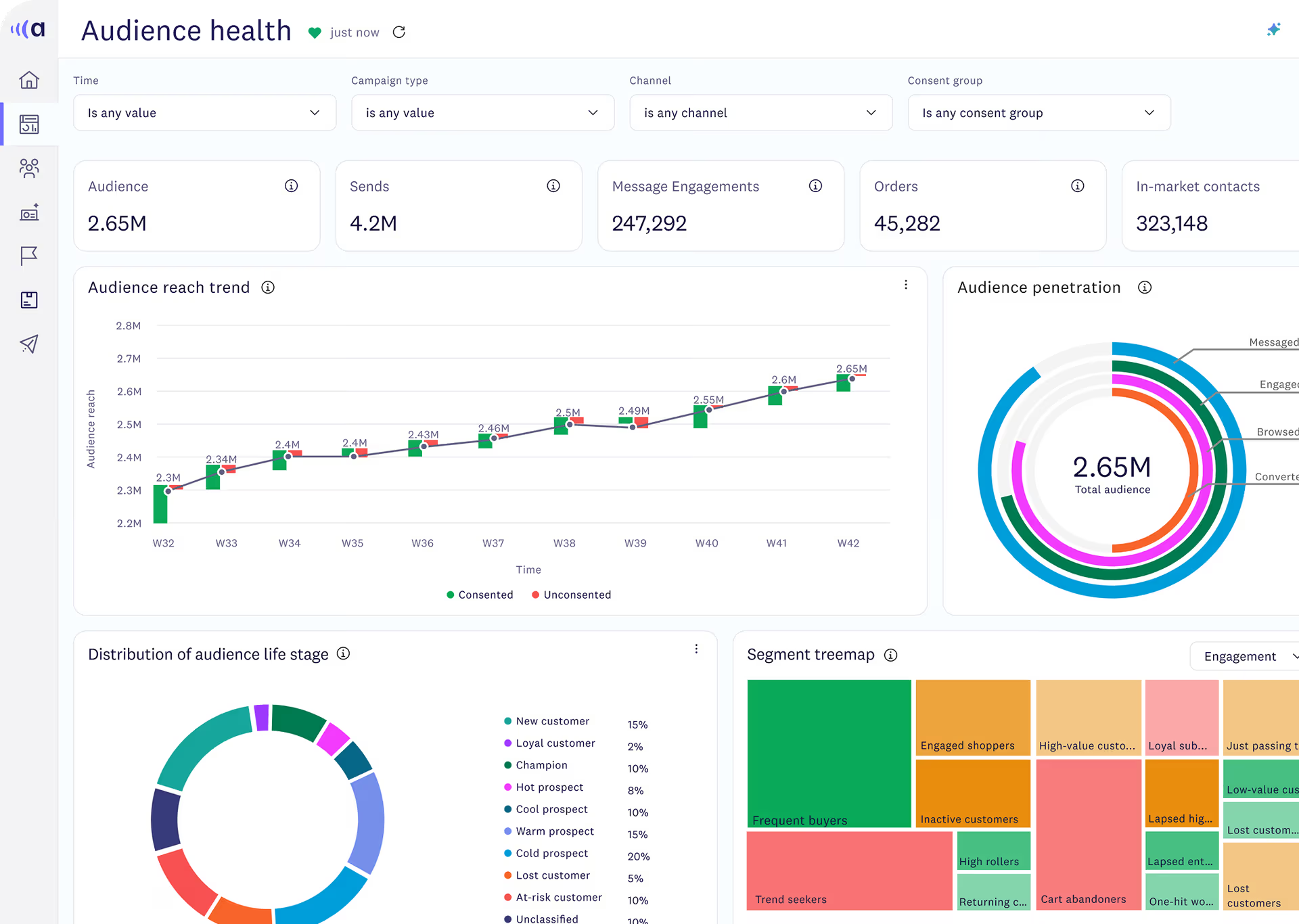
Its architecture assumes the buyer is a consumer whose purchase intent can be detected through browsing behavior, cart activity, and product interaction patterns. The platform watches what shoppers do on your website and in your app, captures those signals in real time, and triggers campaigns the moment intent appears.
Target industries include retail and ecommerce, travel and hospitality, media and entertainment, and financial services. If you sell to businesses rather than consumers, Acoustic is not for you.
ActiveCampaign takes the opposite approach.
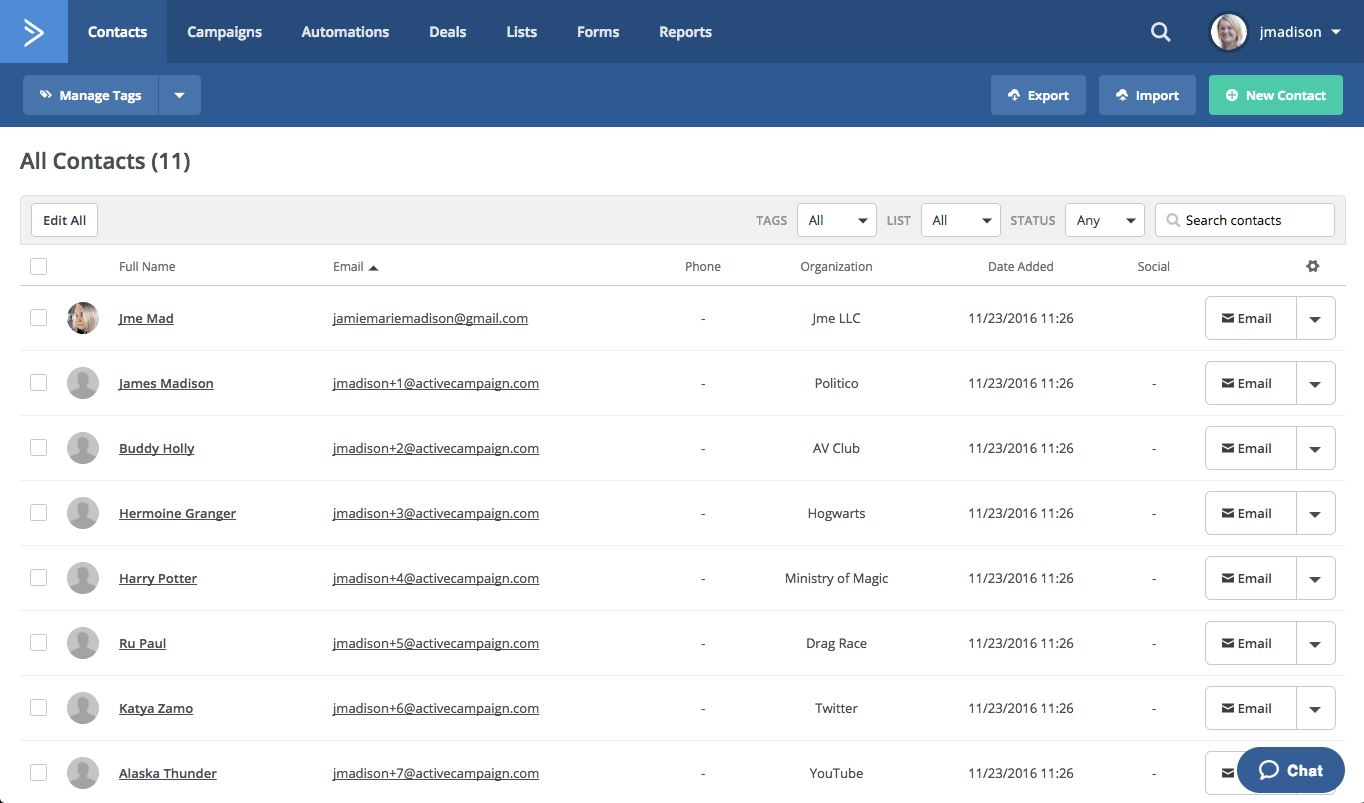
It serves businesses across 170+ countries, spanning ecommerce stores, SaaS companies, service businesses, franchises, healthcare providers, and agencies. Its automation builder handles both B2C workflows (abandoned cart recovery, post-purchase sequences) and B2B motions (lead nurturing, trial-to-paid conversion, deal pipeline management).
The built-in CRM gives sales teams visual pipeline management, lead scoring, and deal tracking alongside marketing automation.
Source: ActiveCampaign
This cross-market flexibility makes ActiveCampaign the default choice for businesses that don't fit neatly into one category. But it also means neither the B2C nor the B2B experience goes as deep as a platform built for just one audience.
For B2B companies specifically, both platforms leave a gap: neither provides buyer intelligence. Acoustic doesn't serve B2B at all. ActiveCampaign has a CRM, but the contact data inside it is only as good as what your team enters or imports.
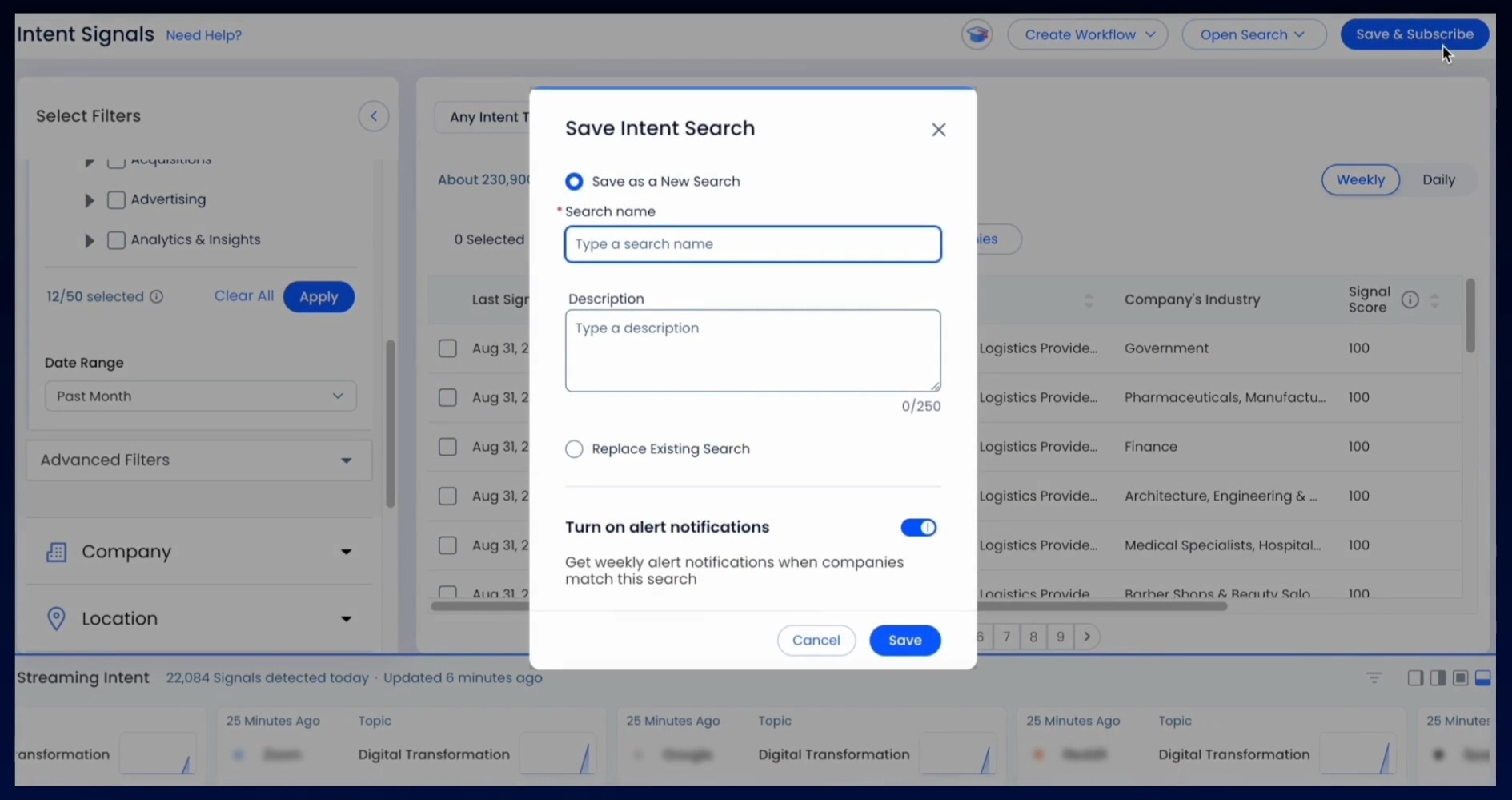
ZoomInfo fills this gap with verified contact data spanning 500M professionals, company intelligence, org charts, technographics, and buyer intent signals that reveal when target accounts are researching solutions like yours.
Source: ZoomInfo
Two different approaches to AI-powered marketing
Acoustic and ActiveCampaign both invest heavily in AI, but their philosophies diverge.
Acoustic's AI is rooted in behavioral observation.
The platform captures real-time signals from web sessions, mobile apps, and connected commerce platforms, then scores 27 behavioral attributes per contact and per product.
These attributes include churn risk, fatigue index, lifecycle stage, product affinity, preferred device, and in-market interest. When the AI detects that a customer is actively shopping during a given window, it triggers the appropriate campaign. Acoustic calls this intent-driven marketing: the platform reacts to what consumers are doing now, rather than running campaigns on a preset schedule.
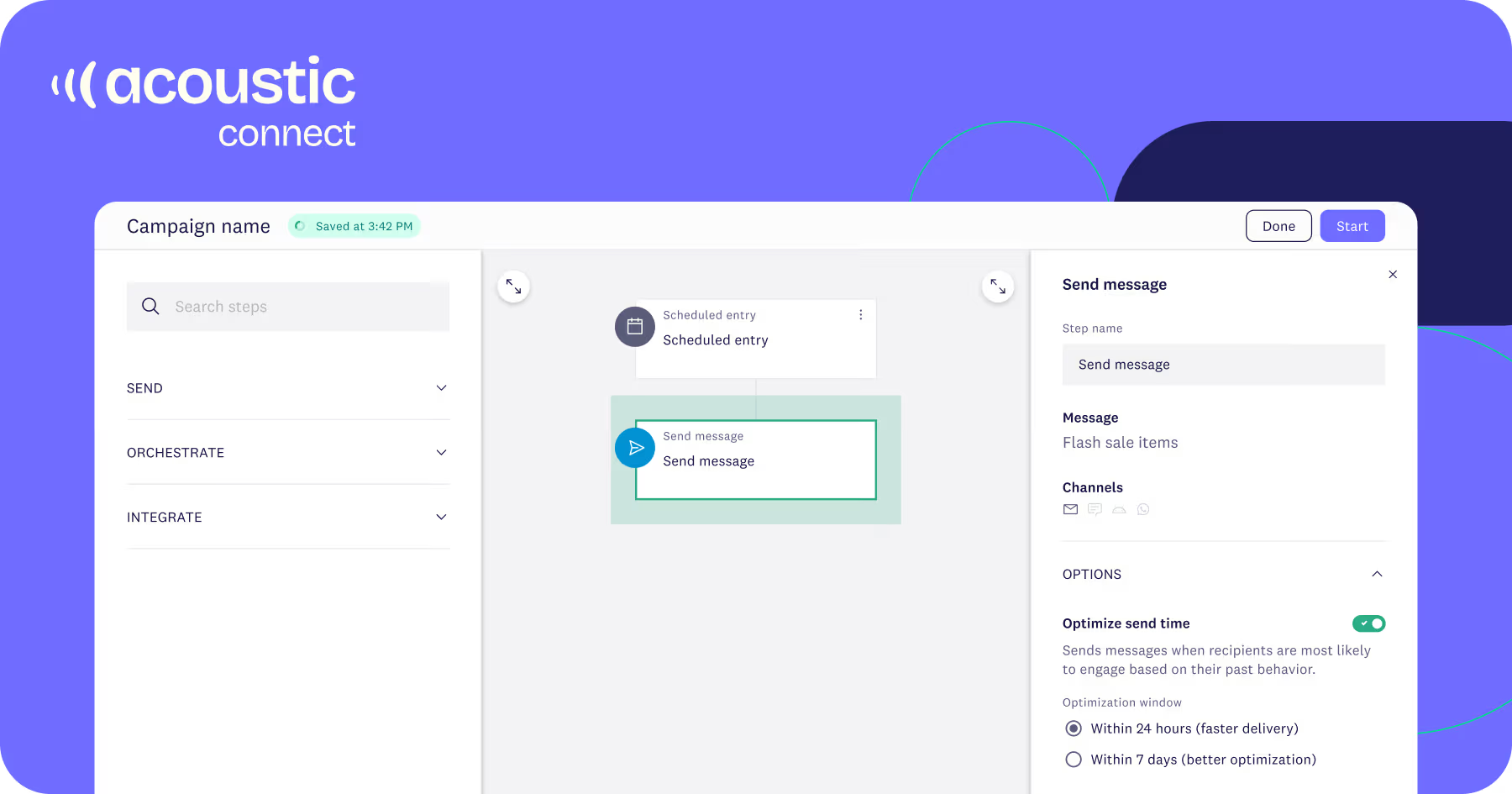
Source: Acoustic
The March 2026 release extended send-time optimization to multi-step campaigns, delivering messages during the 24-hour or 7-day window when a contact is most actively shopping.
ActiveCampaign's AI takes a more generative role.
Active Intelligence, launched in May 2025, includes AI agents that handle campaign creation, automation building, content generation, segmentation, and optimization.
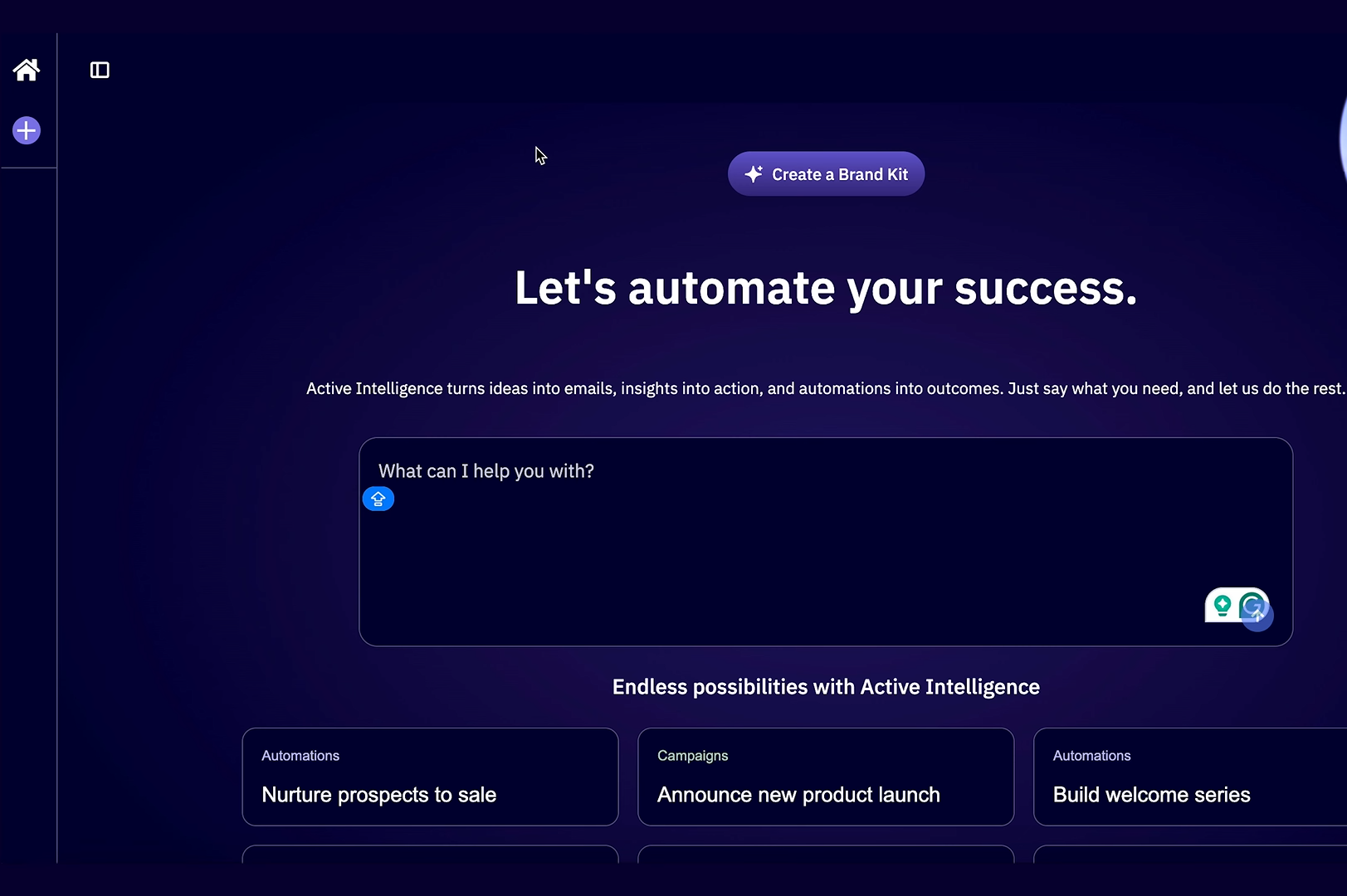
Source: ActiveCampaign
A marketer describes a goal in plain language, and the agents generate a complete campaign (including content, audience, scheduling, and channel selection). The system draws on billions of anonymized data points from similar businesses to inform its recommendations.
ActiveCampaign frames the distinction explicitly: "Marketing automation runs what you build. Autonomous marketing builds what you need." The Spring 2026 keynote introduced agent-to-user AI, where the system surfaces insights and recommendations based on performance signals without the marketer asking.
Both approaches have clear strengths. Acoustic's behavioral AI excels at catching consumers during fleeting purchase windows. ActiveCampaign's generative AI excels when you need to move faster than your team's capacity allows.
ZoomInfo's AI operates at a different layer.
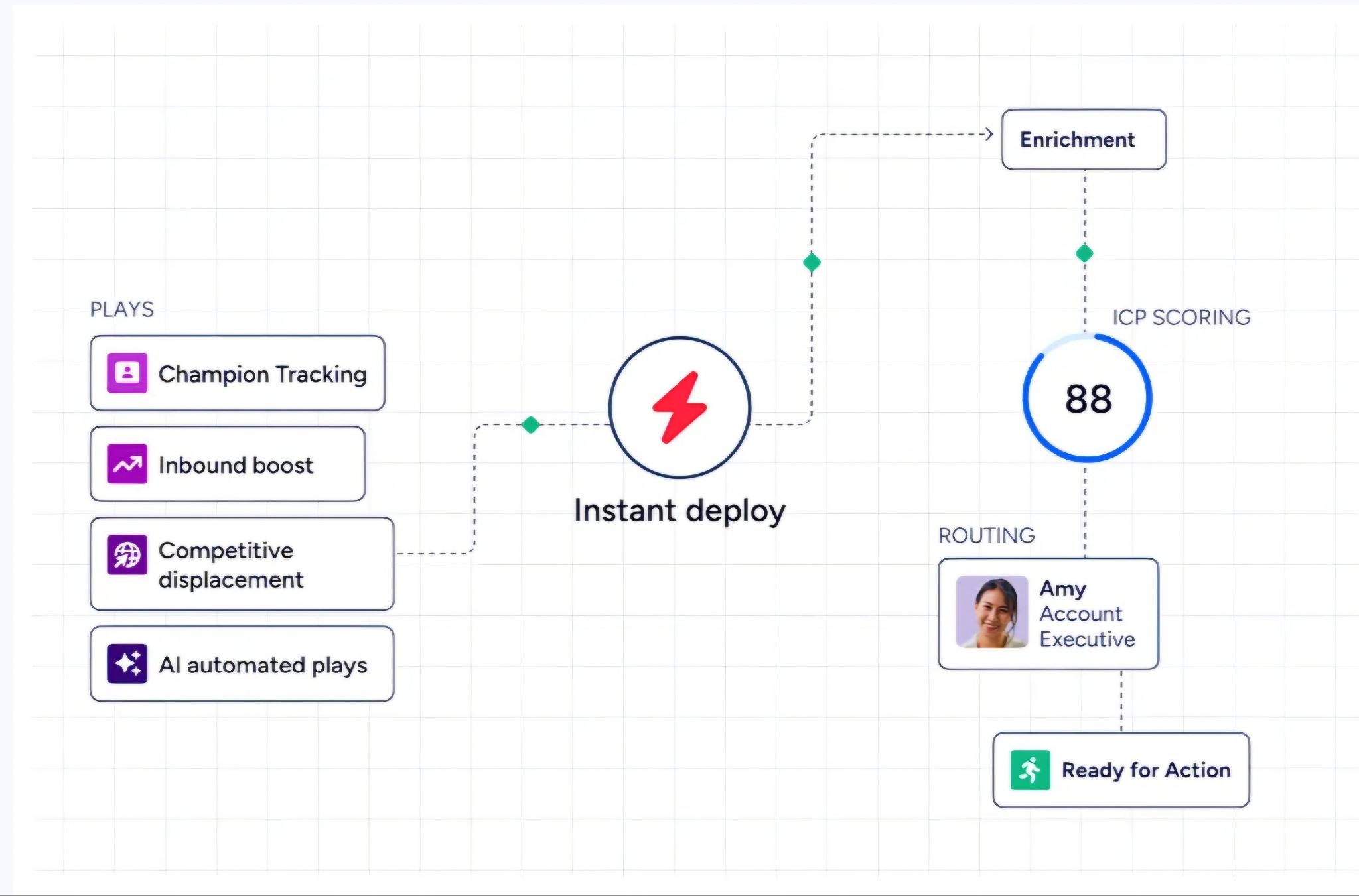
The GTM Context Graph doesn't generate campaigns or time messages. It processes 1.5B+ data points daily to understand account context: why a deal is moving, who the decision-makers are, what signals indicate buying readiness, and which accounts match your proven win patterns.
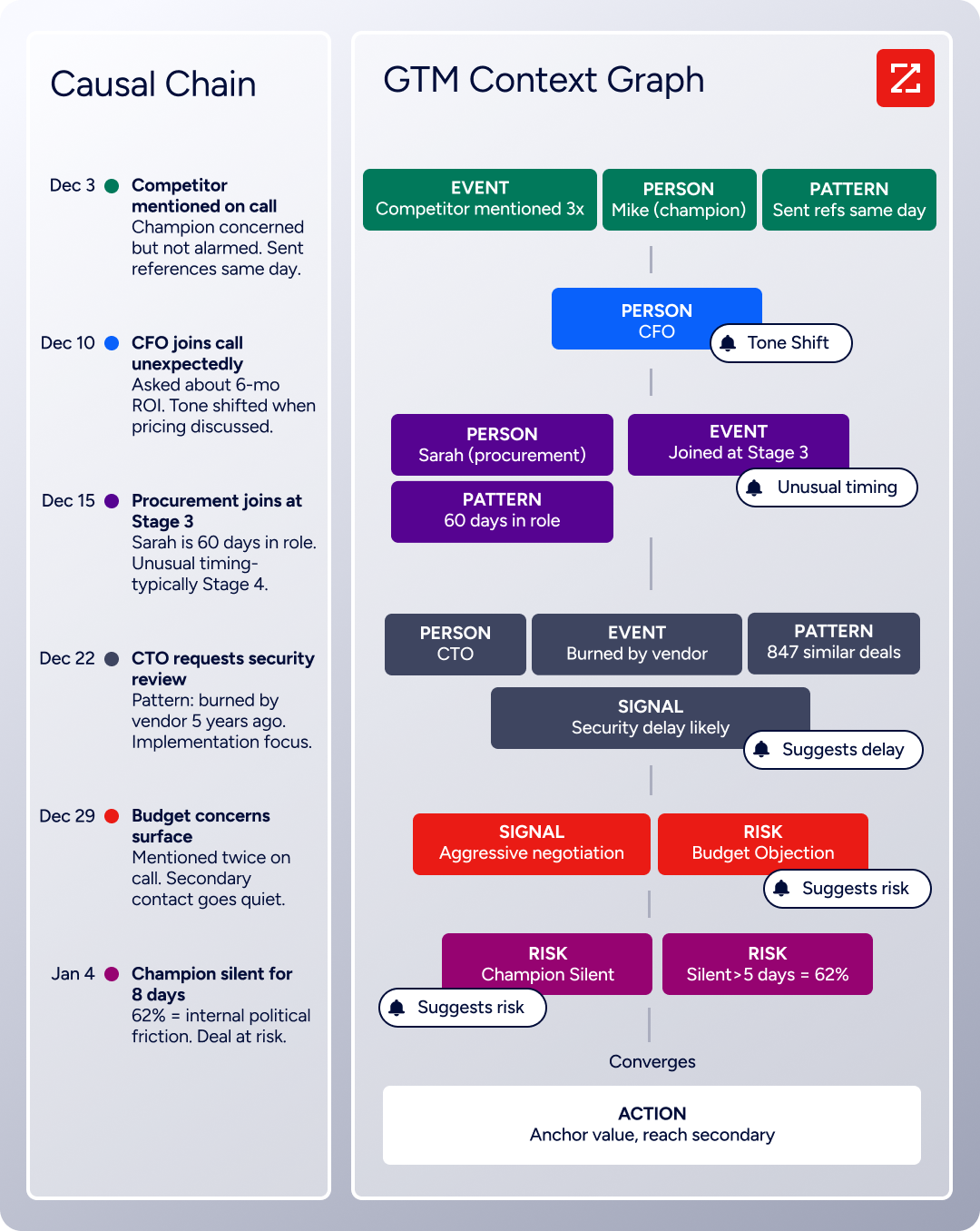
This intelligence feeds into GTM Workspace (where AI agents draft outreach based on full account context) and GTM Studio (where marketers build audience-targeted plays using natural language). The AI doesn't replace your execution platform. It ensures execution targets the right accounts with the right message at the right time.
Seismic's sales team attributed 39% of active pipeline to opportunities identified or influenced by ZoomInfo signals and boosted productivity by 54%. (Seismic case study)
Channel coverage and messaging capabilities
On channel coverage, Acoustic and ActiveCampaign are closely matched.
Acoustic Connect supports email, SMS, WhatsApp, mobile push notifications, and in-app messages.
All channels are managed from a single drag-and-drop canvas, with personalization defined once and applied across channels. The platform's deliverability infrastructure scales to 75 million emails per hour, and its send-time optimization targets the window when a consumer is most actively browsing the website or app, not just when they tend to open email.
Mobile app messaging includes push notifications, inbox messages, and in-app messages with geofencing for location-based personalization.
ActiveCampaign covers email, SMS, and WhatsApp (added via the Hilos acquisition in April 2025), plus landing pages and web push notifications.
It also includes Postmark for transactional email (order confirmations, password resets), giving teams both marketing and transactional messaging in one place. ActiveCampaign's Predictive Sending optimizes delivery timing per recipient based on engagement history.
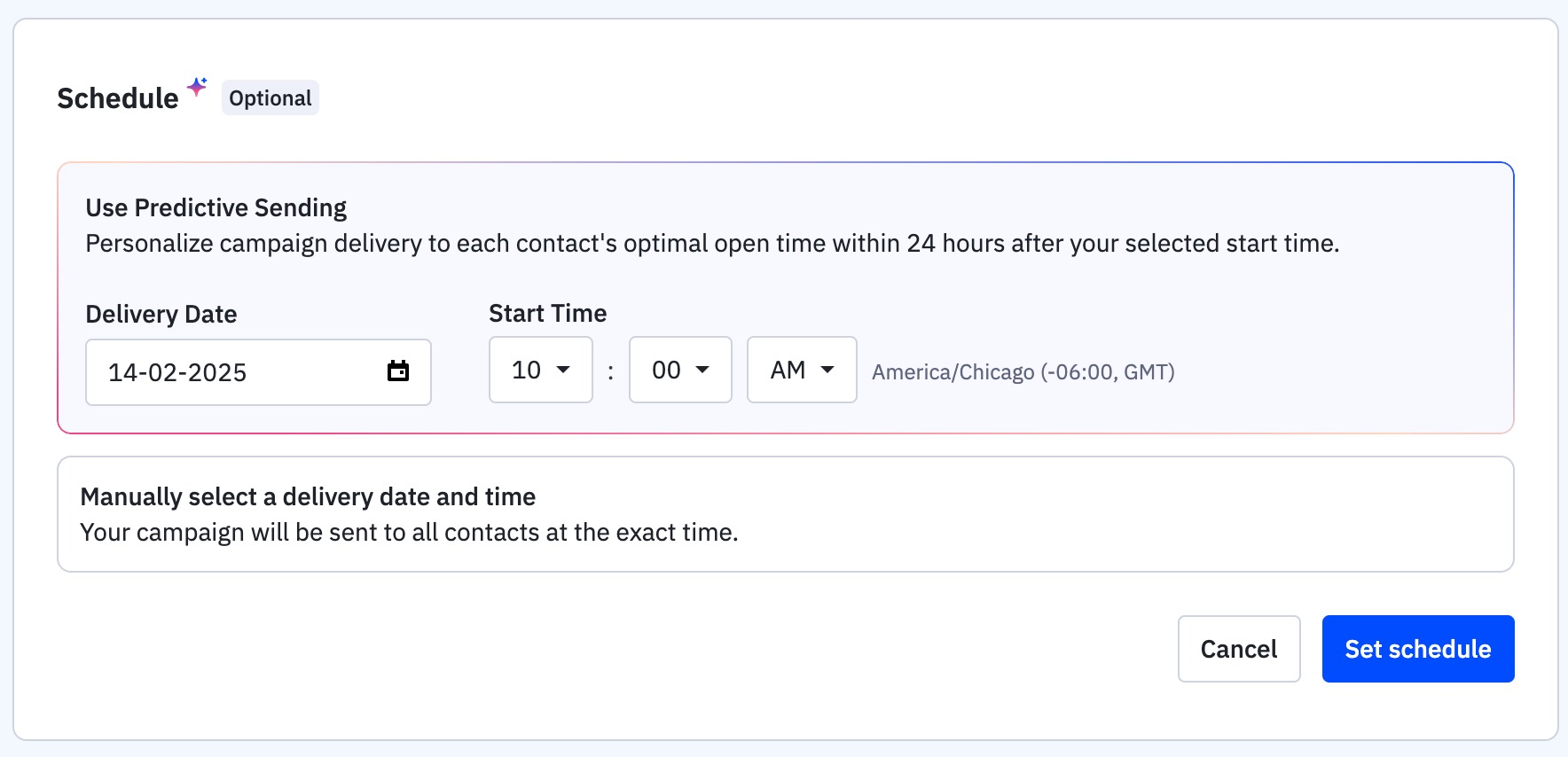
Source: ActiveCampaign
The WhatsApp implementation goes beyond broadcast messaging: a no-code Flows builder handles automated conversations, and a shared inbox manages live agent responses with routing and assignment.
The operational difference is depth versus breadth.
Acoustic's channels are tightly coupled to its behavioral data layer: product catalog data, cart abandonment signals, and product interest scores flow directly into message personalization without any external tool.
ActiveCampaign's channels are tightly coupled to its automation builder and CRM: a WhatsApp reply can trigger an email follow-up, update a deal record, or adjust a lead score, all within one workflow.
ZoomInfo approaches channels differently.
Rather than sending messages, it powers the targeting that makes messages effective. GTM Studio orchestrates multi-channel campaigns across email, display ads, calls, and direct mail, all triggered by buyer signals from the GTM Context Graph. The native demand-side platform deploys display ads based on 300+ company attributes without a separate ad-tech vendor.
Source: ZoomInfo
For teams that prefer their existing execution platform, ZoomInfo's data feeds into other tools through integrations, APIs, and MCP connectors.
CRM and sales pipeline capabilities
This is where Acoustic's B2C focus shows its limits most clearly.
Acoustic has no CRM, no deal pipeline, and no sales functionality.
It is a marketing execution platform for B2C brands. If your team needs to track deals, manage sales conversations, or score leads for sales handoff, Acoustic is not the tool.
ActiveCampaign includes a built-in CRM with visual Kanban-style pipelines, customizable deal stages, and a dual scoring system that evaluates contact-level lead scores and deal-level scores independently.
Sales routing automatically assigns incoming deals based on round-robin rotation, rep expertise, lead score, geography, or deal value. One-to-one tracked emails can be sent directly from deal records, and Chrome and Outlook extensions let reps manage the pipeline from their inbox.
Think of the CRM as a marketing companion rather than a standalone enterprise sales tool. Teams needing deal forecasting, territory management, or CPQ will need a dedicated CRM.
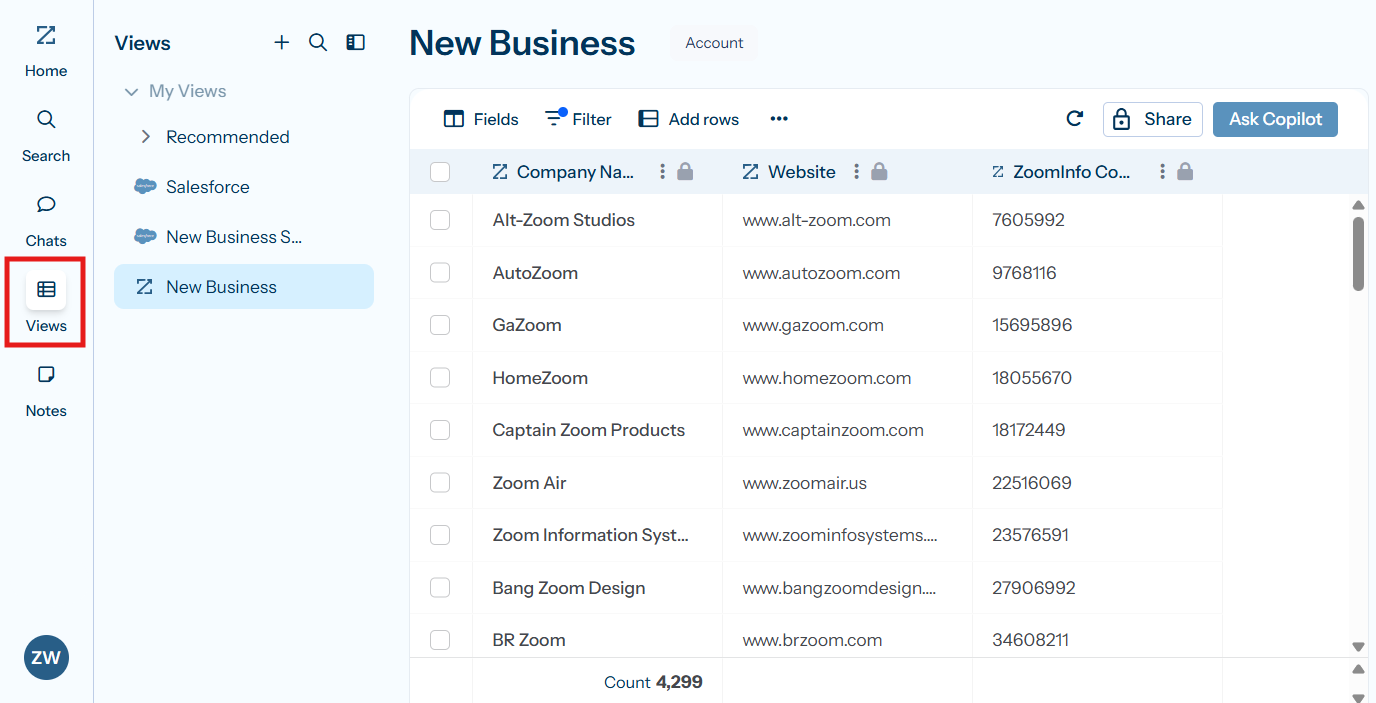
ZoomInfo's GTM Workspace gives sellers a single surface where prioritized accounts, AI-drafted outreach, and deal execution converge.
Source: ZoomInfo
Unlike a traditional CRM, Workspace combines your CRM data with ZoomInfo's third-party intelligence: the AI agents know who the decision-makers are, what signals suggest buying readiness, and what talking points are most relevant based on the full context of the account.
The Action Feed streams in-market buyers matched to target criteria with pre-drafted actions for every signal. Native integrations with Salesforce, HubSpot, and Microsoft Dynamics keep everything synchronized.
Spekit found that opportunities at higher-scoring accounts were 43% more likely to become qualified pipeline and moved 58% faster through qualification. (Spekit case study)
The intelligence gap execution platforms leave open
Both Acoustic and ActiveCampaign assume you already know who you're targeting.
Acoustic captures behavioral signals from people who visit your website or use your app.
These signals are valuable, but they only cover people who have already found you. The platform doesn't help you identify new prospects, map buying committees, or detect companies researching your category elsewhere on the web.
ActiveCampaign works with the contacts in your database.
Its AI can segment, score, and automate communications to those contacts effectively. But its output is bounded by its input. If your contact records are incomplete, outdated, or missing key decision-makers, the most sophisticated automation simply reaches the wrong people faster.
This is the problem ZoomInfo was built to solve.
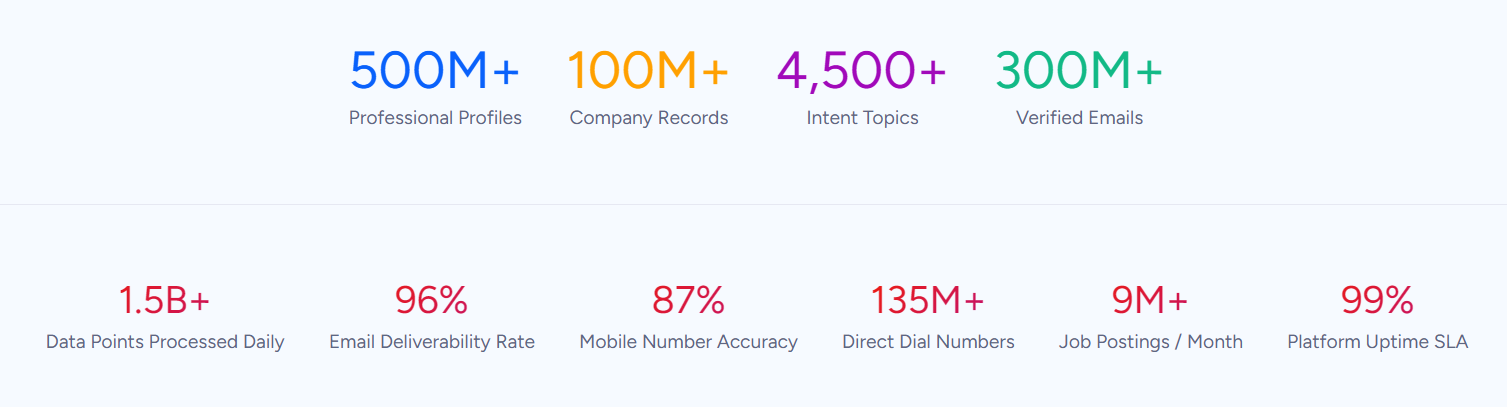
Its data platform covers 500M contacts across 100M companies, verified through a multi-source pipeline backed by 300+ human researchers with up to 95% accuracy on first-party data. Buyer Intent data tracks signals from 210 million IP-to-Organization pairings and 6 trillion+ new keyword-to-device pairings sourced monthly, surfacing companies researching relevant topics before they ever visit your site.
Guided Intent, exclusive to ZoomInfo, identifies topics historically correlated with deal success rather than requiring manual topic selection. WebSights resolves anonymous website traffic to specific companies, identifying not just which company visited but who from that company to contact.
The practical impact is straightforward. Instead of sending campaigns to whoever happens to be in your database, you can target accounts that match your ideal customer profile, show active buying intent, and have verified contact information for the right decision-makers.
That targeting precision flows through whether you execute campaigns in ActiveCampaign, a dedicated sales engagement platform, or ZoomInfo's own GTM Studio.
Redwood Logistics saw a 99% reduction in cost-per-click and a 310% increase in clickthrough rate using ZoomInfo's audience insights. (Redwood Logistics case study)
Pricing models reflect different design choices
The three platforms use different pricing structures, each revealing who they're designed for.
Acoustic charges based on messaging volume rather than audience size.
As the pricing page states: "Most platforms charge more as your audience grows. We don't." This matters for B2C brands with large customer databases (hundreds of thousands or millions of contacts), where audience-based pricing would be prohibitive. Three tiers are available (Professional, Premium, and Ultimate), each a strict superset of the one below. But Acoustic publishes no prices.
All tiers require a demo. Contracts are payable annually in advance with a default 10% annual escalation on renewal unless negotiated otherwise. Each channel (email, SMS, WhatsApp, push) carries a separate volume commitment on top of the base tier fee, and onboarding is mandatory at contract start.
ActiveCampaign uses contact-based pricing that scales with database size.
Plans start at $15/month for the Starter tier with a small contact list, climbing as contacts grow: Starter is $149/month for 10,000 contacts. A 14-day free trial requires no credit card, and a 30-day money-back guarantee applies to first-time subscribers.
ActiveCampaign charges once per unique contact regardless of how many automations or segments that contact appears in, avoiding the duplicate-billing problem some platforms create. Email sends are capped at 10x to 15x the contact limit per month depending on plan tier, with overage fees of $0.005 per additional send. The Enterprise tier requires contacting sales for pricing.
ZoomInfo uses a consumption-based pricing model with no publicly listed prices.
Costs depend on usage patterns, number of seats, monthly credit volume, and features selected. What sets ZoomInfo apart on accessibility is its entry points: ZoomInfo Lite is a permanent free tier (no time limit, no credit card) with access to the B2B database, 10 monthly export credits, individual and company search, HubSpot integration, and a Chrome extension.
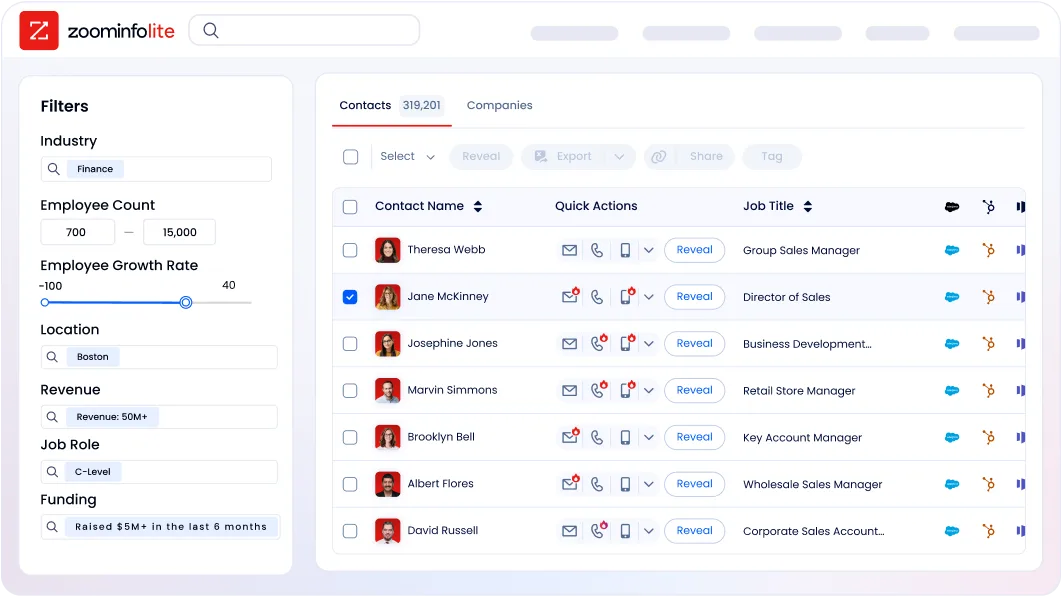
A separate 7-day free trial is available for evaluating paid features. Credits work simply: 1 credit equals 1 export of a professional or company profile, and searching or viewing data within ZoomInfo does not consume credits.
Integration ecosystems at different stages of maturity
Acoustic's integration ecosystem is the narrowest of the three but improving.
The platform launched native integrations with Shopify, WooCommerce, and BigCommerce in January 2026, and added an Amazon S3 integration in March 2026 for connecting to CDPs and data warehouses. A Salesforce integration and a Tessitura CRM integration for arts organizations are documented natively. iPaaS references exist for Zapier, Workato, and Tray.io.
But reviewers note integration limitations requiring custom development for non-native tools, and a browsable integration marketplace is not publicly available. The Acoustic Exchange platform provides REST APIs for event syndication and audience sharing, but building connections still requires more technical effort than competitors demand.
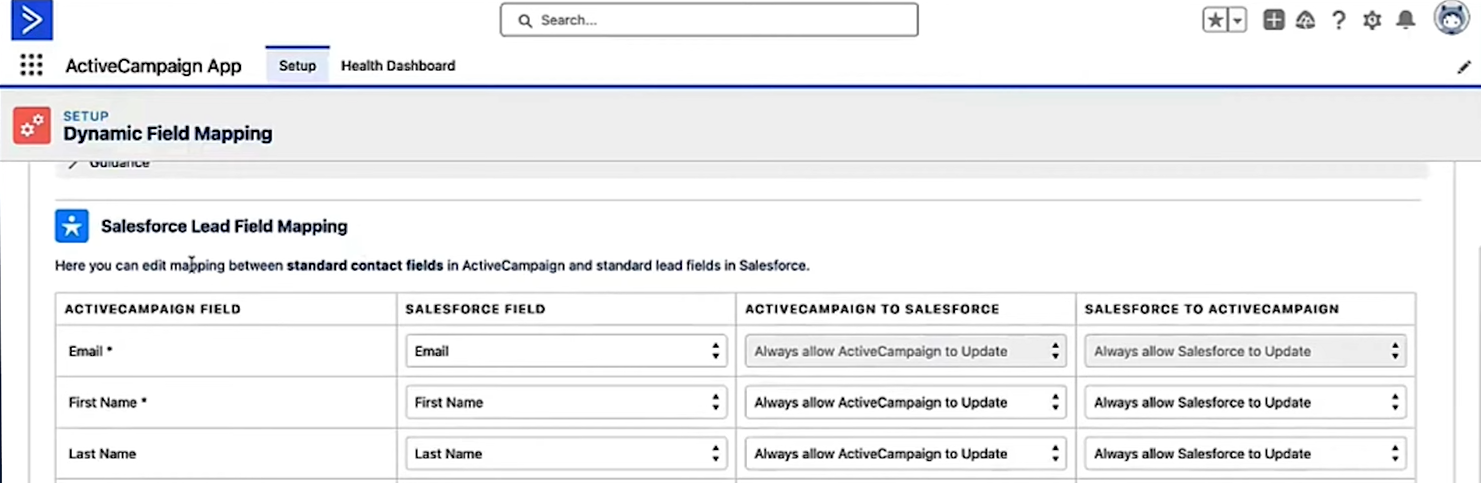
ActiveCampaign has the broadest integration ecosystem of the three, with 1,000+ app integrations spanning CRM, ecommerce, forms, advertising, communication, and developer tools.
Key integrations include Shopify, Salesforce, WordPress, Zapier, Google Ads, and Slack. The platform also supports a REST API, webhooks, and an App Studio for building custom integrations. ActiveCampaign was the first marketing platform in Claude's official connector directory via MCP and also connects to ChatGPT, positioning it well for AI-native workflows.
Source: ActiveCampaign
ZoomInfo takes an infrastructure-first approach.
The App Marketplace lists 172+ partners across CRM, marketing automation, sales engagement, data warehouses, and AI. Featured integrations include Salesforce, HubSpot, Microsoft Dynamics 365, and Snowflake. The Enterprise API provides programmatic access to ZoomInfo's data and intelligence for any application.
The MCP server connects AI models directly to ZoomInfo's B2B data through natural language, and Cloud Partners enable direct data ingestion into AWS, Google Cloud, Snowflake, and Databricks. Because API access is included in all relevant plans, ZoomInfo functions as a data layer that can power any execution platform in your stack.
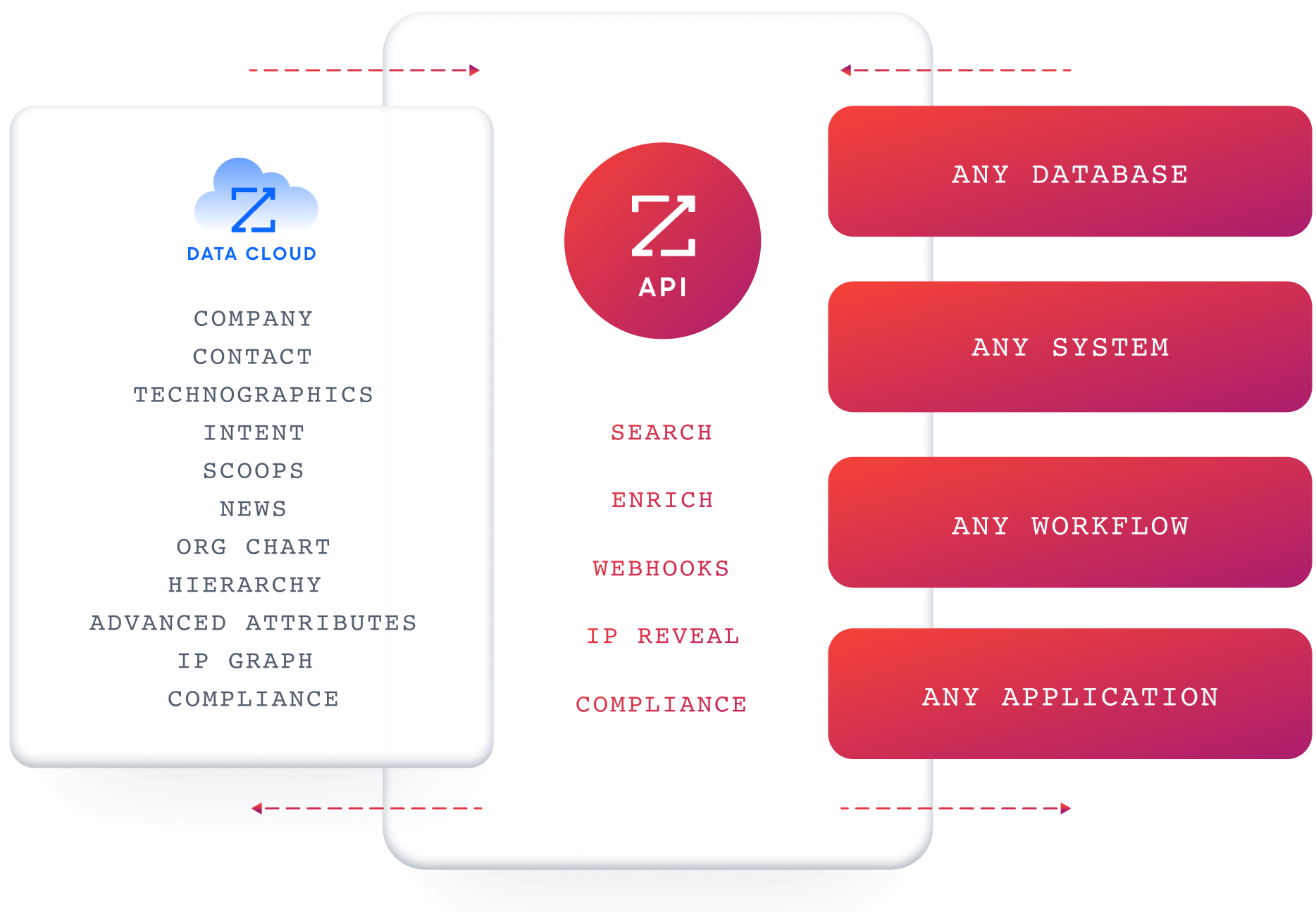
BDO Canada achieved an 87% reduction in time spent on data dashboard updates using ZoomInfo's API. Their Senior Marketing Intelligence Analyst described the API as plug-and-play, integrating easily into any process. (BDO Canada case study)
Acoustic vs. ActiveCampaign vs. ZoomInfo: Which should you choose?
The right platform depends on your business model, your audience, and the problem you need to solve first.
Choose Acoustic if:
Your business is B2C (retail, ecommerce, travel, media, financial services)
You have a large consumer database and want pricing based on messages sent, not contacts stored
Real-time behavioral targeting is critical to your conversion strategy
You want to consolidate point solutions into a single B2C marketing platform
You're prepared for enterprise-level onboarding and implementation
Choose ActiveCampaign if:
You're a small or mid-size business serving B2B, B2C, or both
You want marketing automation, CRM, and AI campaign building in one platform
You need to get started quickly at a manageable price point
A large integration ecosystem matters for your existing tech stack
You want AI that builds campaigns from stated goals, not just runs pre-built workflows
Choose ZoomInfo if:
Your business sells to other businesses and needs verified B2B contact data
You want to identify which accounts are in-market before your campaigns fire
Data quality and targeting precision matter as much as execution speed
You need intelligence that works across your GTM stack, not just one tool
You want a platform your sales, marketing, and RevOps teams can all build on
Start with ZoomInfo Lite for free or request a demo to see the full platform.
Acoustic and ActiveCampaign each solve the execution problem well, for different audiences and at different scales. But execution without intelligence is just volume.
For B2B companies that need to identify the right accounts, reach verified decision-makers, and time outreach to buying signals, ZoomInfo provides the intelligence layer that makes whatever execution platform you choose more effective.
Acoustic vs. ActiveCampaign vs. ZoomInfo FAQ
What is the core difference between Acoustic, ActiveCampaign, and ZoomInfo?
Acoustic is a B2C behavioral marketing platform that triggers campaigns based on real-time consumer intent signals across email, SMS, WhatsApp, and mobile push.
ActiveCampaign is a B2B/B2C marketing automation platform with a built-in CRM and AI agents that build campaigns from stated business goals.
ZoomInfo is a B2B intelligence platform providing verified contact data, company insights, buyer intent signals, and AI-powered account intelligence to support go-to-market execution across any tool.
Which platform is best for B2C marketing?
Acoustic is built for B2C brands, with behavioral analytics, real-time intent scoring across 27 attributes per contact and per product, and native ecommerce integrations with Shopify, WooCommerce, and BigCommerce.
ActiveCampaign also serves B2C businesses, particularly smaller ecommerce stores and service businesses, with features like abandoned cart recovery and post-purchase automation.
ZoomInfo is B2B-only and does not serve B2C use cases.
Which platform is most affordable for small businesses?
ActiveCampaign has the lowest entry point at $15/month with a 14-day free trial and 30-day money-back guarantee.
Acoustic has no public pricing and requires an annual contract with mandatory onboarding fees.
ZoomInfo offers a permanent free tier (ZoomInfo Lite) with 10 monthly export credits and search access, though paid plans are custom-quoted.
Does ActiveCampaign include a CRM?
Yes. ActiveCampaign includes a built-in CRM with visual sales pipelines, contact-level lead scoring and deal-level scoring, sales routing, task management, and one-to-one email tracking. It works as a marketing companion CRM for small teams rather than a full enterprise sales platform.
Acoustic does not include CRM functionality.
ZoomInfo's GTM Workspace provides CRM-integrated account management with AI-powered deal intelligence for B2B sales teams.
How do the AI capabilities compare?
Acoustic's AI focuses on behavioral prediction, using real-time session data to score purchase intent and optimize send timing to when consumers are actively shopping.
ActiveCampaign's Active Intelligence includes AI agents that generate complete campaigns, suggest segments, create content, and optimize automations from plain-language prompts.
ZoomInfo's AI powers the GTM Context Graph, which processes 1.5 billion data points daily to identify buying patterns, surface in-market accounts, and generate account intelligence for sales and marketing teams.
Can these platforms work together?
Yes. ZoomInfo's data and intelligence can feed into ActiveCampaign through integrations and APIs, enriching contact records with verified B2B data and intent signals before ActiveCampaign's automation handles campaign execution.
Acoustic is B2C-only and operates independently from ZoomInfo, though businesses with both B2B and B2C operations could use ZoomInfo for their B2B motion and Acoustic for B2C customer engagement.
Which platform has the best email deliverability infrastructure?
ActiveCampaign reports 99.88% email deliverability and routes messages through a private network, with dedicated IPs, DKIM and DMARC authentication, and Apple Mail Privacy Protection filtering for accurate reporting.
Acoustic's infrastructure supports up to 75 million emails per hour with dedicated IP management and sender reputation monitoring.
ZoomInfo is not primarily an email sending platform, but its verified email database (200M+ verified business emails) ensures that the contact data feeding your campaigns is accurate, which directly protects sender reputation and inbox placement.
Which platform is best for companies with both sales and marketing teams?
ActiveCampaign provides unified marketing automation and CRM for small teams who need both in one place.
ZoomInfo serves both sales (via GTM Workspace with AI-driven account briefs and outreach) and marketing (via GTM Studio for audience building and multi-channel plays) with shared intelligence from the GTM Context Graph, making it the stronger choice for B2B companies where sales and marketing alignment is critical.
Acoustic serves marketing teams only and has no sales pipeline or CRM capabilities.
More ActiveCampaign comparisons:
