
Choosing between ActiveCampaign vs. Constant Contact for your marketing usually comes down to five questions:
Do you need multi-step automation, or are you mostly sending newsletters and event invitations?
Is a built-in CRM with lead scoring important, or do you just need reliable email delivery?
How much time can you invest learning a platform before you see results?
Are you a B2B company that needs to know which accounts are in-market before you write an email?
Do you want to pay for power you might not use, or keep things simple and affordable?
In short, here's what we recommend:
ActiveCampaign is for growing businesses that need automation without enterprise pricing. Its visual automation builder handles complex, branching workflows driven by behavioral triggers across email, SMS, and WhatsApp. The built-in CRM, lead scoring, and Active Intelligence AI system give small marketing teams capabilities that used to require Marketo or Pardot. But that power comes with a real learning curve, prices that climb as contact lists grow, and a landing page builder that frustrates users wanting pixel-level design control.
Constant Contact is built for small businesses and nonprofits that value simplicity and human support over automation depth. Its drag-and-drop editor gets first-time marketers sending professional emails within an hour, and it's the only major platform at this price point with native event management (RSVP, ticketing, automated reminders) and phone support on every paid plan. The trade-off: automation is limited to basic paths with a single trigger per workflow, segmentation is gated by plan tier, and pricing escalates as lists grow.
Both platforms handle the execution side of marketing well. But for B2B teams, there's a gap neither one addresses: knowing which companies are actively researching solutions like yours, who the decision-makers are, and whether your contact data is accurate enough to reach them. That's a different problem entirely.
ZoomInfo is a B2B intelligence platform that sits upstream of your marketing automation. With 500M contacts, 100M companies, 135M+ verified phone numbers, and 200M+ verified business email addresses, ZoomInfo tells you who to target before ActiveCampaign or Constant Contact tells you how. Its GTM Context Graph combines this data with your CRM records, conversation transcripts, and behavioral signals to reveal not just what happened in your pipeline, but why. For B2B companies running campaigns through any marketing automation platform, ZoomInfo is the data foundation that determines whether those campaigns reach the right people at the right time.
If your marketing campaigns need better targeting before better templates, see how ZoomInfo works.
ActiveCampaign vs. Constant Contact at a glance
ActiveCampaign | Constant Contact | ZoomInfo | |
|---|---|---|---|
Primary strength | Marketing automation + CRM | Simple email marketing + events | B2B data intelligence + GTM signals |
Automation depth | Visual builder, unlimited actions, branching logic | 1–3 paths, single trigger, up to 50 steps | GTM plays and signal-triggered workflows |
CRM included | Yes, built-in with deal pipelines | No native CRM | Yes, with B2B contact and company intelligence |
Email deliverability | 93% of customers report better deliverability than competitors | 97% claimed deliverability rate | N/A (feeds data into your sending platform) |
Channels | Email, SMS, WhatsApp | Email, SMS, social posting | Email, display ads, LinkedIn, direct mail via orchestration |
AI capabilities | Active Intelligence (12+ AI agents) | AI Content Generator + ChatGPT app | GTM Context Graph + AI-powered account research |
Integrations | 1,000+ | 300+ | 120+ native + API & MCP access |
Phone support | No | Yes, all paid plans | Dedicated account team (enterprise) |
G2 rating | 4.5/5 (14,500+ reviews) | 4.1/5 | 4.7/5 (Gartner Customers' Choice) |
Starting price | $15/month (1,000 contacts) | $12/month (500 contacts) | Free tier (ZoomInfo Lite); paid plans custom-quoted |
Free trial | 14-day, no credit card | 30-day, no credit card | 7-day trial + permanent free Lite tier |
Best for | Growing businesses needing automation depth | Small businesses and nonprofits | B2B teams needing targeting intelligence |
ActiveCampaign wins on automation, Constant Contact wins on simplicity
This is the defining split between these two platforms, and the right choice depends on what you actually need automation to do.
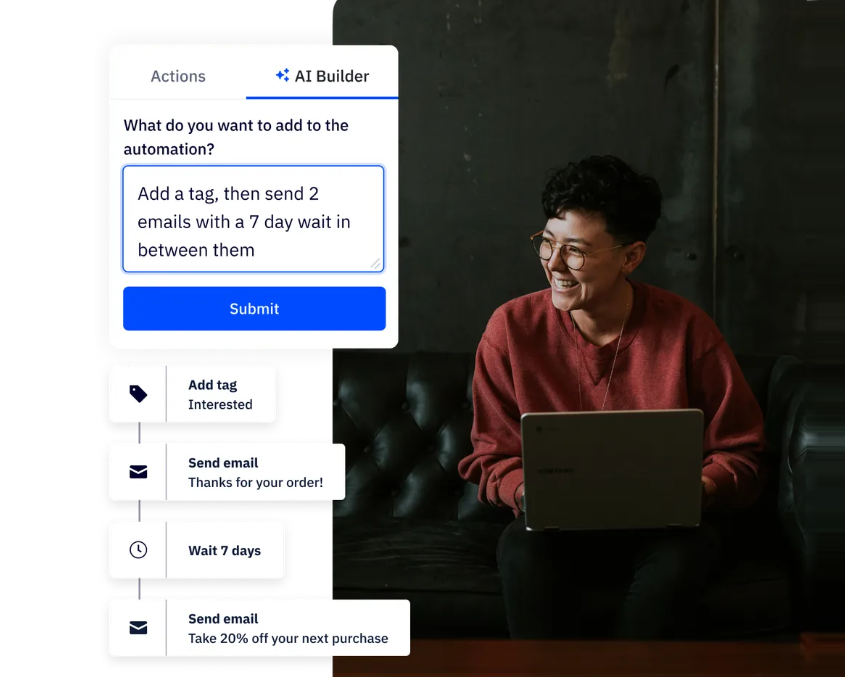
ActiveCampaign's visual automation builder is strong. You can create workflows with unlimited actions, conditional branching based on email clicks, website visits, purchase behavior, or custom field changes, and split contacts down different paths based on engagement signals. The builder supports cross-channel orchestration across email, SMS, and WhatsApp from a single canvas. A SaaS company running a trial-to-paid conversion sequence that adjusts based on which features a user has activated? ActiveCampaign handles it.
Source: ActiveCampaign
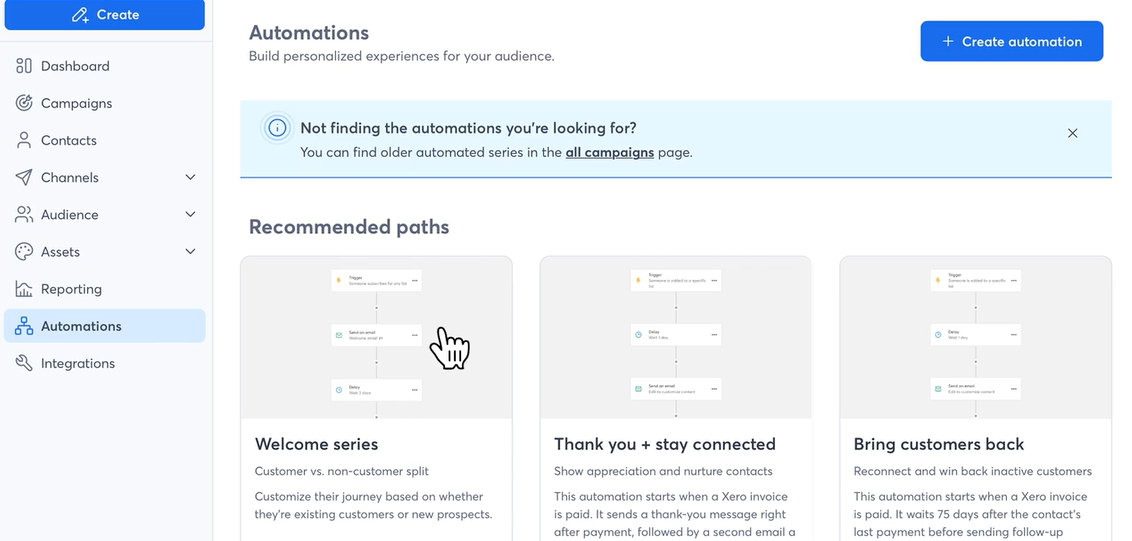
Constant Contact's Automation Path Builder takes the opposite approach. It limits each path to a single trigger, caps Standard plan users at three active paths using pre-built templates only, and reserves custom paths for Premium subscribers. But that simplicity is the point. A restaurant sending weekly specials, a nonprofit sending donor thank-you sequences, or a gym running birthday promotions doesn't need conditional branching across twelve behavioral signals. They need something that works in twenty minutes.
Source: Constant Contact
The friction shows when a business outgrows the simpler tool. Constant Contact users who eventually need multi-condition logic, lead scoring, or CRM-integrated workflows hit a wall that no plan upgrade can fix. ActiveCampaign users who only send monthly newsletters are paying for an engine they never rev past first gear.
Email deliverability: both platforms invest, differently
Deliverability separates email marketing from email hoping. Both platforms take it seriously, but through different mechanisms.
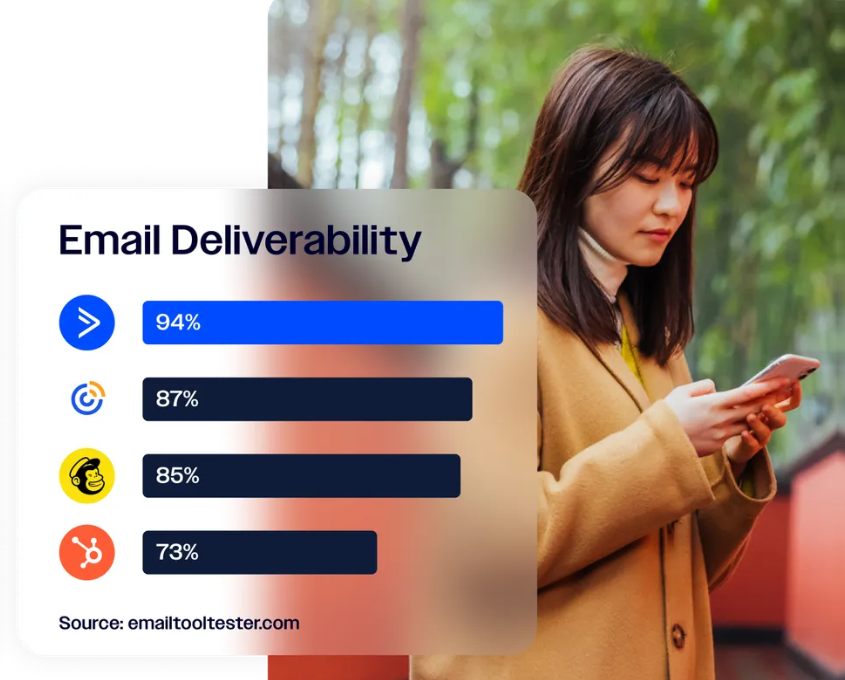
ActiveCampaign routes emails through a private network rather than the public internet, reducing average send time tenfold. The platform supports dedicated IP management, DKIM and DMARC authentication, pre-warmed dedicated IPs, and real-time monitoring. ActiveCampaign reports 99.88% email deliverability, with EmailToolTester independently measuring 94%. Worth noting: the platform can filter Apple Mail Privacy Protection opens from reporting, preventing inflated open rate metrics from distorting your data.
Source: ActiveCampaign
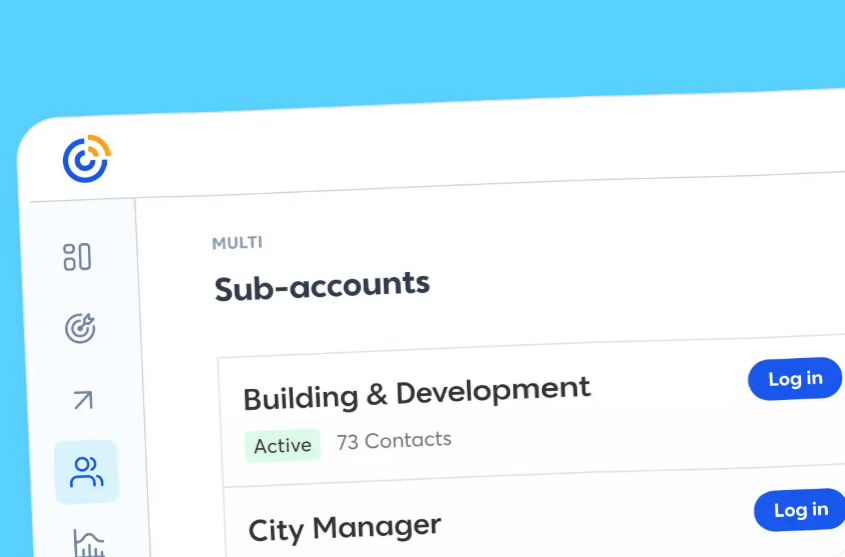
Constant Contact claims a 97% deliverability rate backed by a dedicated deliverability team that monitors new contact signups, list uploads, and email content for suspicious activity. Every email includes a SafeUnsubscribe® link, a branded trust signal to recipients. The platform can also filter bot clicks from reporting, keeping automated security-scanner clicks from inflating your numbers.
Source: Constant Contact
Both approaches work. ActiveCampaign's infrastructure investment appeals to high-volume senders who need granular control. Constant Contact's managed approach appeals to users who want deliverability handled for them without learning what DMARC stands for.
But deliverability only matters if you're sending to real, accurate email addresses. For B2B companies, contact data decays fast as people change jobs, get promoted, or leave companies. This is the problem ZoomInfo solves upstream: maintaining 200M+ verified business email addresses with up to 95% accuracy, verified through a pipeline backed by 300+ human researchers. When your contact data is accurate before it enters your marketing automation platform, deliverability improves as a natural consequence.
Redwood Logistics saw a 99% reduction in cost-per-click and a 310% increase in clickthrough rate after using ZoomInfo's data to improve targeting. As Chelsea Kenyon, Senior Director of Digital Strategy, put it: "It's not just the data itself. It's more about the right data at the right time to help us reach out with the right message across that full buyer journey." (Redwood Logistics)
The upstream problem neither email platform solves
ActiveCampaign and Constant Contact both assume you already know who you're marketing to. You upload a list, segment it, and send campaigns. But where did that list come from? How current is it? Are the people on it still at the companies listed in your CRM?
For B2C businesses (restaurants, retailers, fitness studios), this is rarely a problem. Customers opt in through a storefront or website, and their personal email addresses stay valid for years. But for B2B companies, the data challenge is structural. People change jobs, get promoted, move companies, and their business email addresses go invalid the day they leave. Research teams, partner data, and conference badge scans all decay fast.
This is where ZoomInfo fills a different role in the marketing stack. Instead of helping you send messages, ZoomInfo helps you build the audience those messages should reach. The platform's GTM Context Graph processes 1.5B+ data points daily to identify which companies are actively researching solutions, which contacts within those companies are decision-makers, and what signals suggest readiness to buy.

Source: ZoomInfo
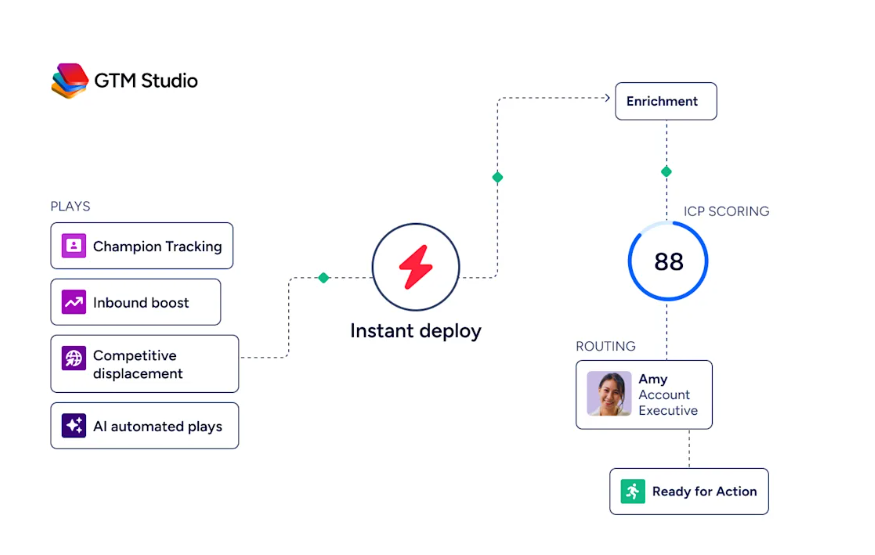
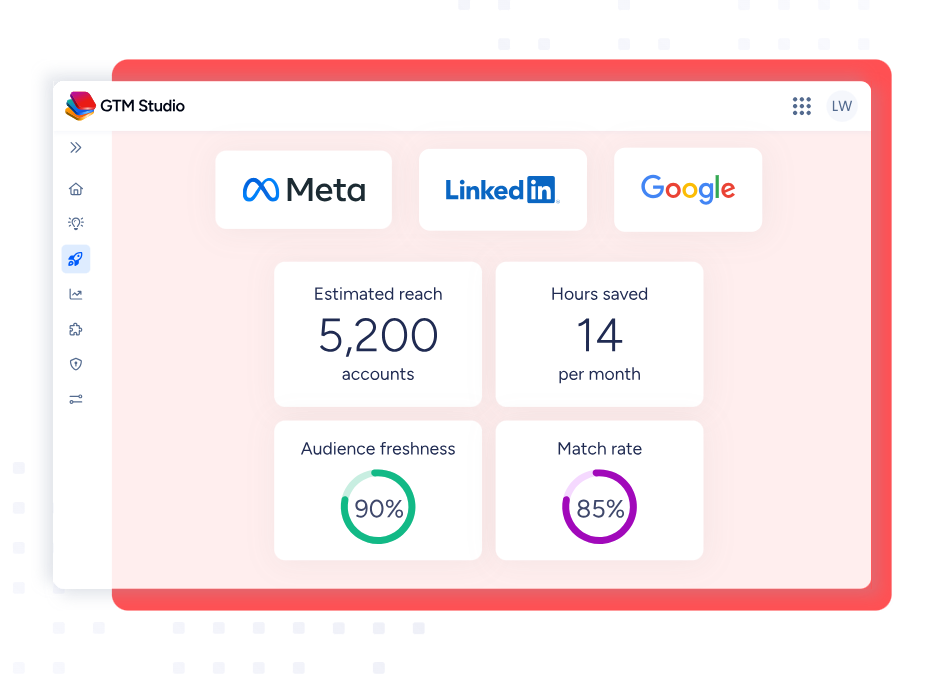
GTM Studio, ZoomInfo's orchestration workspace for marketers and RevOps teams, lets users describe audiences in natural language, enrich them with verified contact data, and activate multi-channel plays without waiting on engineering support.
Source: ZoomInfo
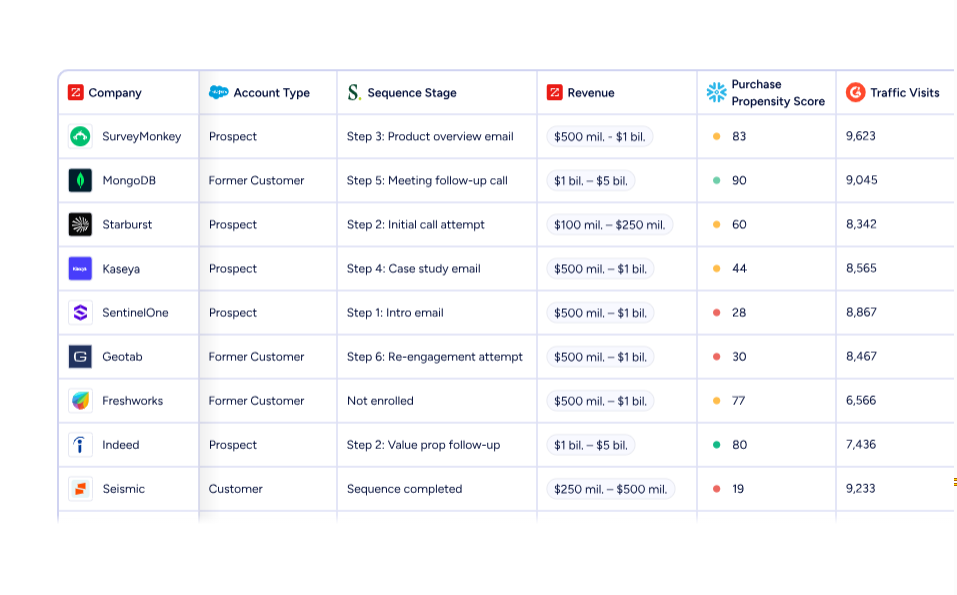
Expansion plays that used to take three weeks now launch in 30 minutes. And unlike static lists that degrade over time, ZoomInfo's waterfall enrichment evaluates 25+ alternative data sources and returns the highest-confidence result, keeping your targeting current.
Source: ZoomInfo
The practical impact: your ActiveCampaign automations or Constant Contact campaigns reach verified contacts at companies showing real buying intent, rather than a list you built at a trade show eighteen months ago.
Impartner saw a 45% increase in website engagement and saved 15 hours using ZoomInfo's data and automation capabilities. "We needed a solution that would allow us to streamline our processes and ensure that we were reaching the right people," said Jeremy Melius, Sr. Director of Marketing Operations. (Impartner)
AI capabilities reflect different ambitions
All three platforms have invested in AI, but the scope varies.
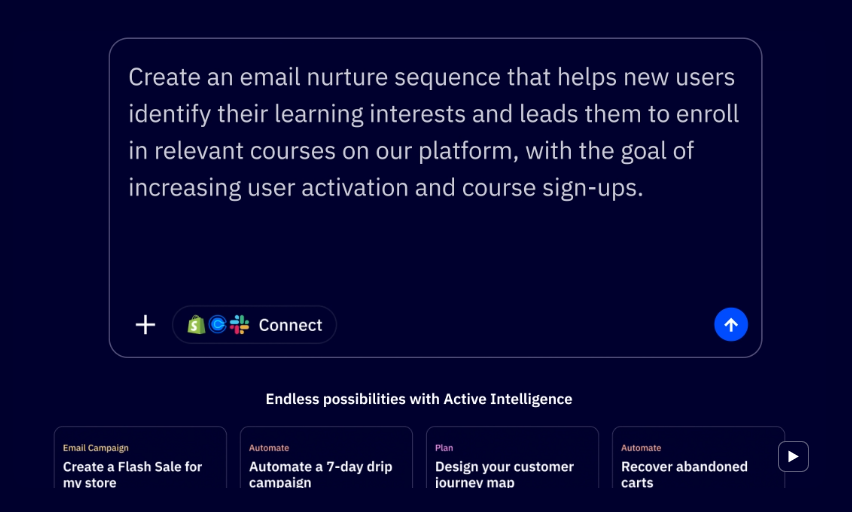
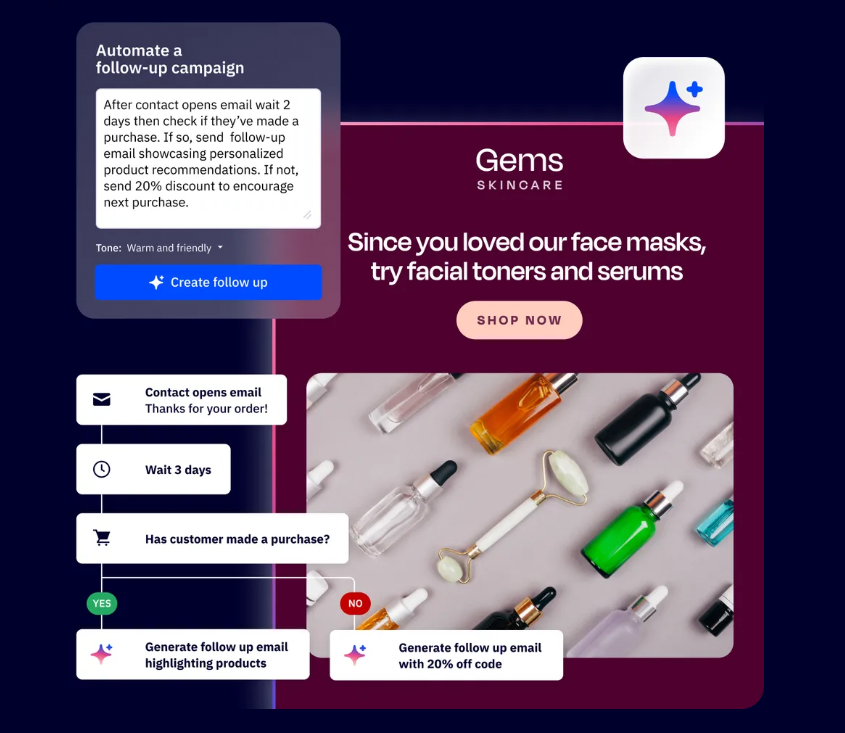
ActiveCampaign has gone furthest among email marketing platforms with Active Intelligence, launched May 2025 and described as the fastest-growing feature in the platform's history.
Source: ActiveCampaign
The system includes 12+ AI agents covering campaigns, automations, segments, personalization, forms, and insights. Users describe a business goal in plain language, and AI agents build campaigns, suggest segments, and optimize send times. Predictive Sending analyzes each contact's engagement history to determine the best send time, rather than choosing a single time for the entire list. ActiveCampaign also launched an MCP connector for Anthropic's Claude, letting AI assistants query campaign stats, update contacts, and trigger automations via natural language.
Source: ActiveCampaign
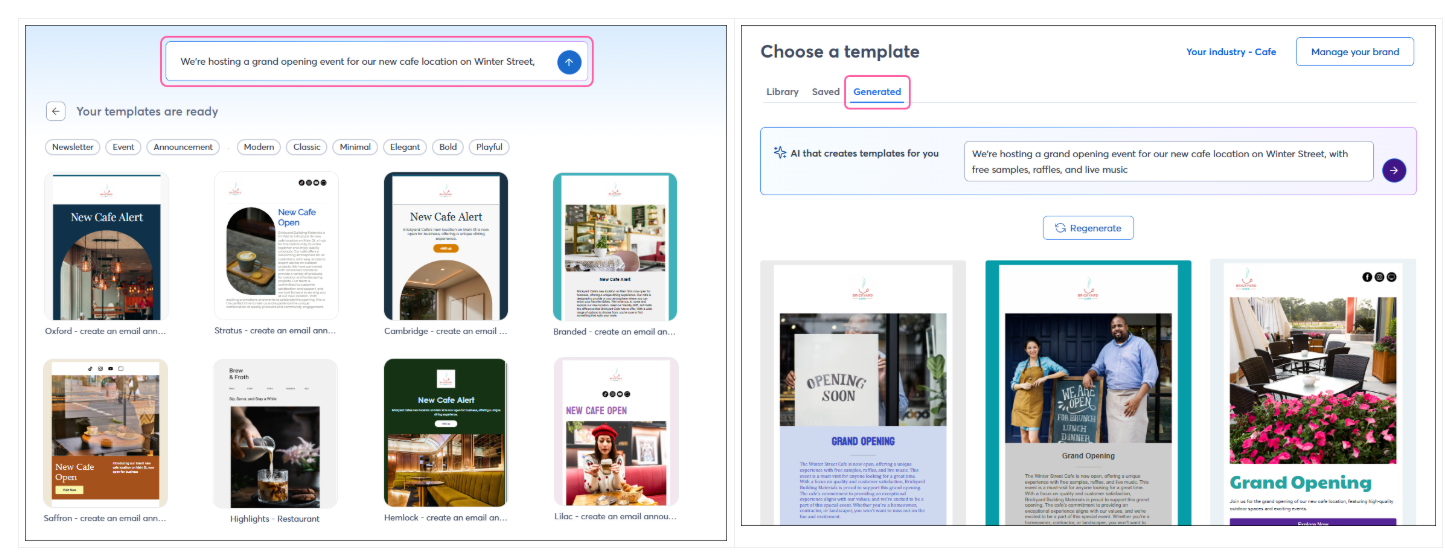
Constant Contact takes a more focused approach. Its AI Content Generator combines a proprietary data layer with OpenAI's ChatGPT to produce email copy, social posts, and SMS messages from short prompts.
Source: Constant Contact
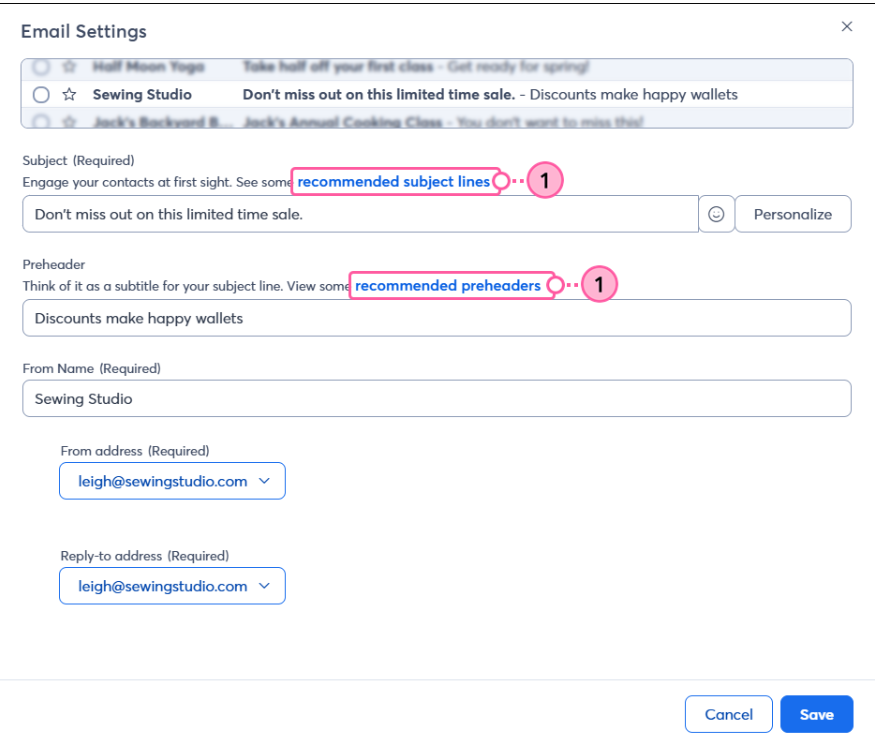
The Campaign Builder generates a recommended multi-channel campaign (channels, content, timing) from a single stated goal. A June 2026 ChatGPT app integration lets users create and analyze campaigns inside ChatGPT. Internal data shows customers who use AI features send marketing emails 23% faster on average. It's practical and accessible, though narrower than ActiveCampaign's agent-based approach.
Source: Constant Contact
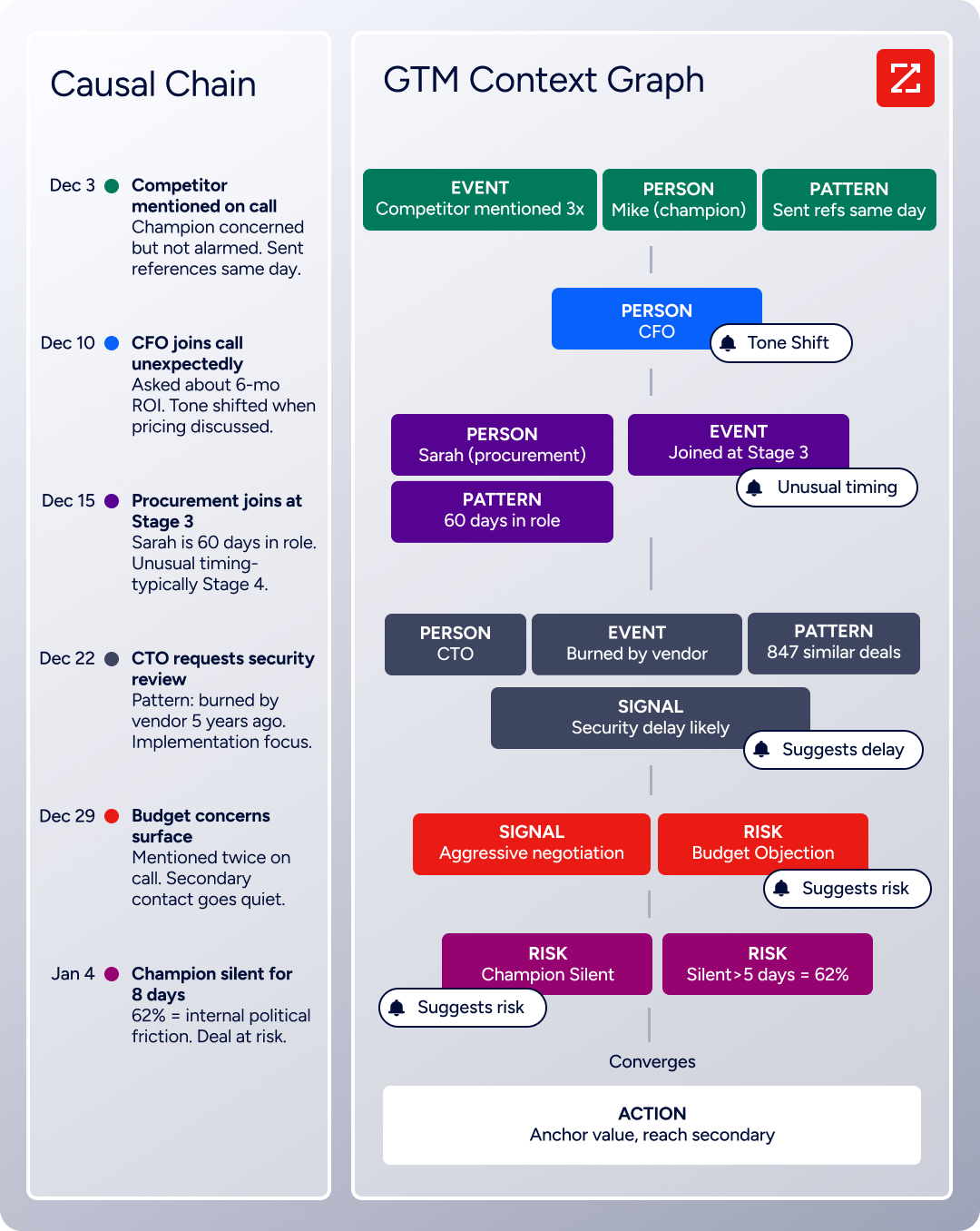
ZoomInfo's AI works at a different level. The GTM Context Graph doesn't draft email copy or suggest subject lines. It reasons across your CRM data, conversation transcripts, intent signals, and ZoomInfo's B2B dataset to identify which accounts to prioritize, what signals indicate they're ready to engage, and what patterns from thousands of similar deals predict will happen next.
Source: ZoomInfo
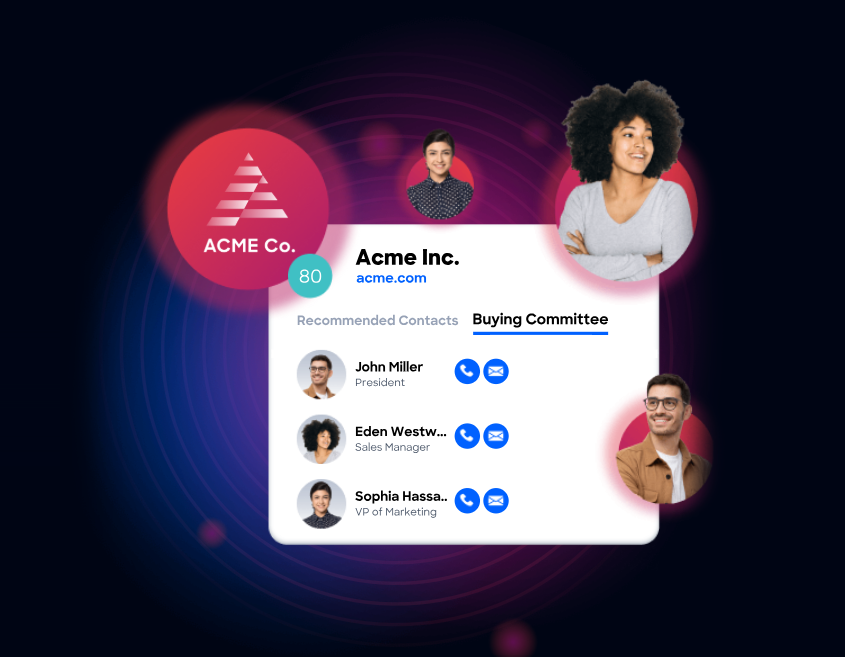
Guided Intent, exclusive to ZoomInfo, identifies topics historically correlated with deal success rather than requiring manual topic selection. The AI doesn't just see that a company visited your pricing page. It connects that visit to an executive hire, a technology change, and a competitor evaluation happening at the same time, and surfaces the complete picture.
Source: ZoomInfo
Seismic attributed 39% of active pipeline to opportunities identified or influenced by ZoomInfo signals and reported 54% productivity gains. "That combination of our internal CRM data, external signals, and AI that's given all that context has helped us craft very specific account- and persona-based messages. And people have responded to them right away," said Toby Carrington, Chief Business Officer. (Seismic)
Multichannel reach comparison
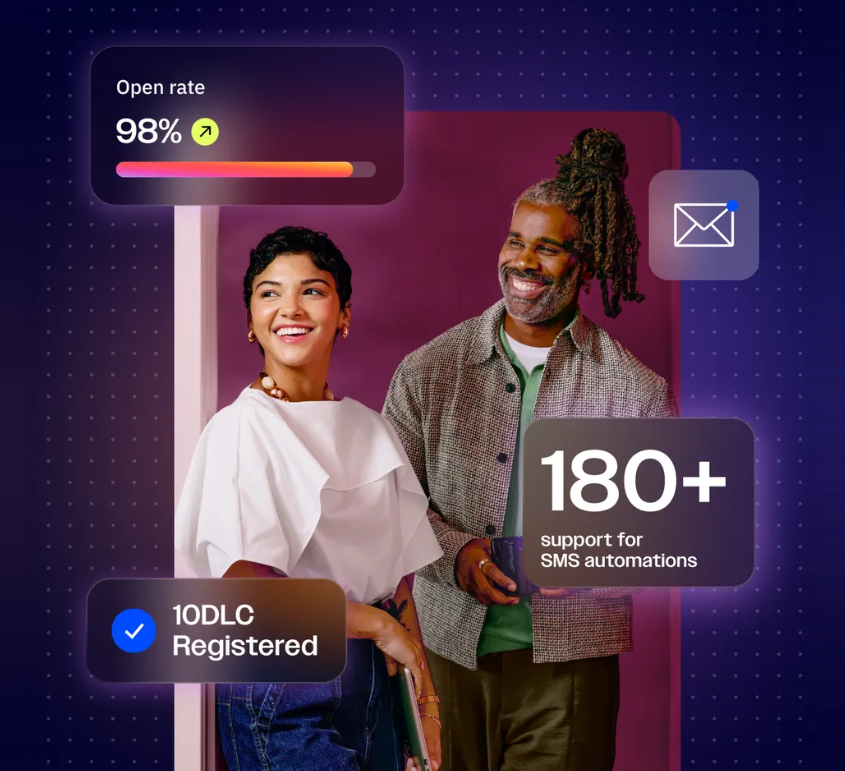
ActiveCampaign covers the widest channel set of the two email platforms: email, SMS (available in 180+ countries), and WhatsApp (added via the April 2025 Hilos acquisition). All three channels coordinate from a single automation builder using shared contact data.
Source: ActiveCampaign
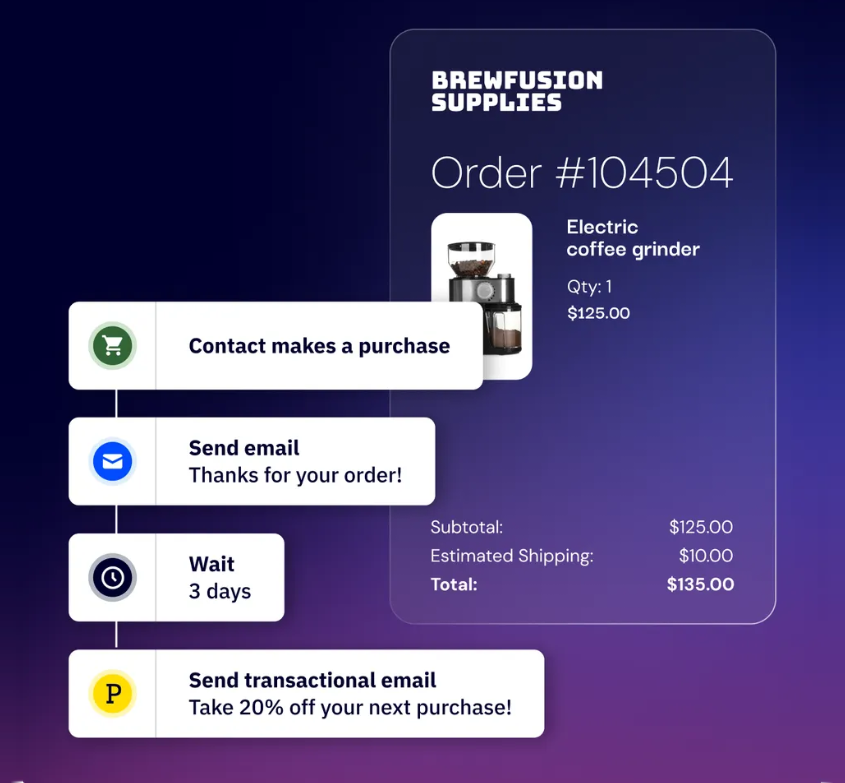
Transactional email is available through Postmark, keeping marketing and operational emails under one roof. What ActiveCampaign doesn't do: social media publishing. You can target Facebook and Google ad audiences, but organic social scheduling requires a separate tool.
Source: ActiveCampaign
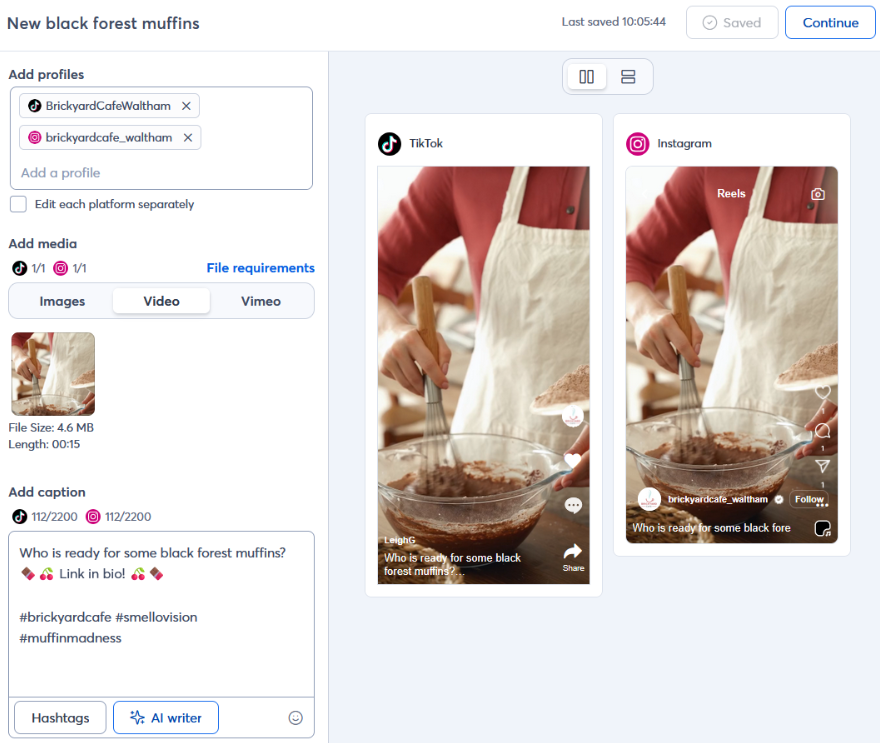
Constant Contact covers email, SMS (currently US and Australia only), and native social media scheduling and posting to Facebook, Instagram, LinkedIn, and TikTok. It also includes paid advertising tools for Facebook, Instagram, Google (via Kliken), and TikTok. The Canva integration lets users design once and publish across platforms. For small businesses managing their entire digital presence from one tool, this social coverage matters.
Source: Constant Contact
ZoomInfo orchestrates through a different lens. GTM Studio activates plays across email, calls, display ads (through a native demand-side platform), LinkedIn, Meta, and direct mail, all triggered by buyer behavior and intent signals rather than manual campaign scheduling. The distinction: ZoomInfo's channels are signal-driven. When an account shows buying behavior, the appropriate campaign fires automatically across the relevant channels.
Source: ZoomInfo
For B2B teams, the combination is often most effective: ZoomInfo identifies the right accounts and contacts, then feeds that intelligence into ActiveCampaign or Constant Contact for campaign execution.
Pricing: the entry price is not the real price
Both platforms use contact-based pricing, and both get more expensive as lists grow. The entry prices look reasonable. The trajectory does not.
ActiveCampaign starts at $15/month for 1,000 contacts on the Starter plan. But Starter caps automations at five actions per workflow, excludes landing pages, and locks out predictive sending, conditional content, and revenue attribution. At 10,000 contacts, the Starter plan runs $149/month. The features most buyers want (unlimited automation actions, landing pages, AI content generation) require the Plus plan, and advanced segmentation, predictive sending, and revenue attribution require Professional. ActiveCampaign charges once per unique contact regardless of how many automations or segments that contact appears in, and offers a 14-day free trial with no credit card required plus a 30-day money-back guarantee for first-time subscribers.
Constant Contact starts at $12/month for the Lite plan with up to 500 contacts. At 2,501–5,000 contacts, the tiers run $80/month (Lite), $110/month (Standard), $200/month (Premium). What makes the pricing less predictable: if a user exceeds send limits for two consecutive months, Constant Contact automatically upgrades the account to the next billing tier without prior consent. The contact tier is also anchored to the highest number of active contacts ever recorded in the account, meaning deleting contacts doesn't lower your pricing tier. Nonprofits receive a 30% prepay discount, and the 30-day free trial requires no credit card.
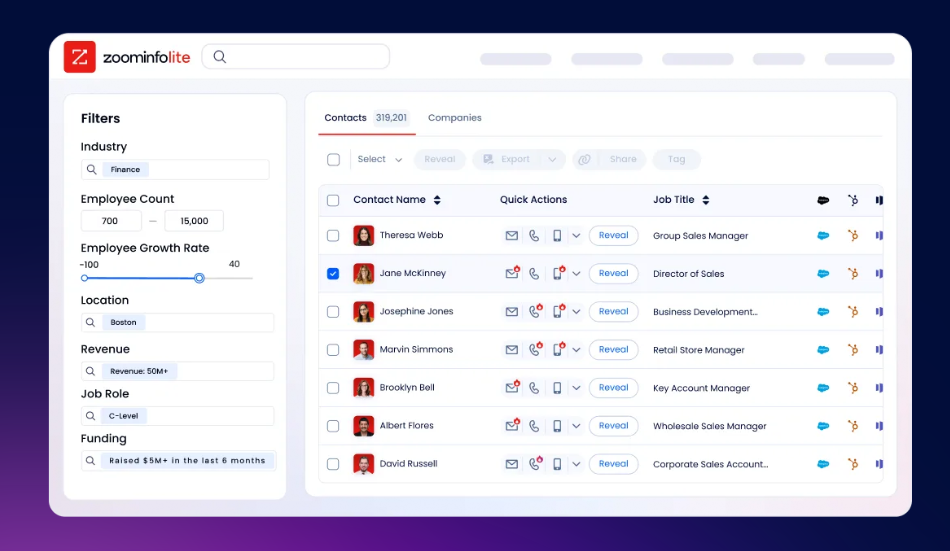
ZoomInfo uses custom-quoted, consumption-based pricing scaled to usage patterns, user count, and feature requirements. There's no published price list, which makes direct cost comparison difficult.
However, ZoomInfo offers two free entry points that neither email platform matches: ZoomInfo Lite, a permanent free tier with access to the B2B database and 10 monthly export credits, and a separate 7-day free trial of the full platform. For B2B teams, the cost equation changes when you factor in what happens without accurate data: wasted send volume, campaigns hitting abandoned inboxes, and sales teams chasing contacts who left the company six months ago.
Source: ZoomInfo
Integration ecosystems show different priorities
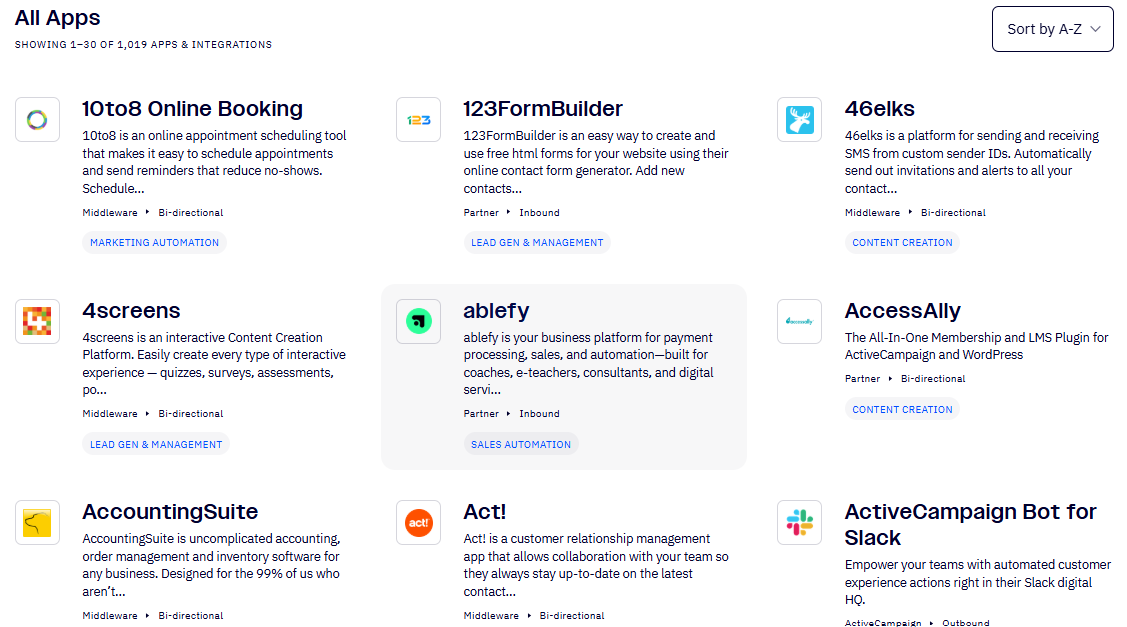
ActiveCampaign's 1,000+ integration marketplace reflects its position as the hub of a marketing stack. Connections with Shopify, WooCommerce, Salesforce, Calendly, and Zapier mean most businesses can connect their existing tools without custom development
Source: ActiveCampaign
The REST API covers contacts, deals, campaigns, automations, and webhooks. For developers, App Studio provides a self-serve portal for building published CX Apps. The MCP server connects to both Claude and ChatGPT.
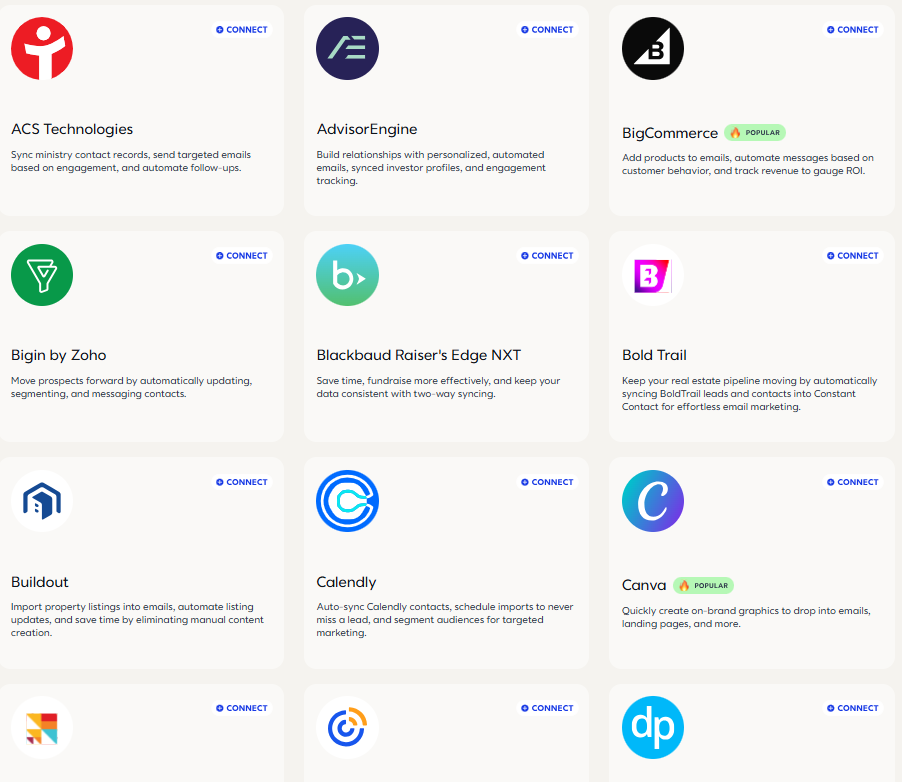
Constant Contact offers 300+ integrations, covering the tools most small businesses use: Shopify, Salesforce, WooCommerce, Wix, Squarespace, Canva, and DonorPerfect (important for nonprofits).
Source: Constant Contact
The V3 REST API provides full programmatic access with OAuth 2.0 authentication and official SDKs in five languages (C#, PHP, Python, Ruby, TypeScript). Constant Contact claims 99.99% API uptime. One limitation: Zapier integrations carry an additional charge beyond the base plan.
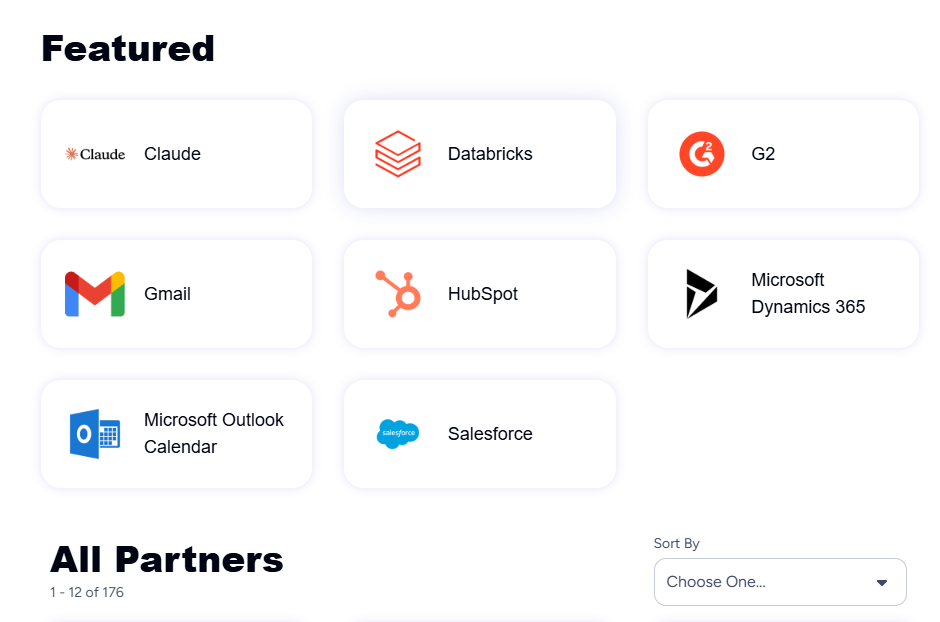
ZoomInfo's integration approach differs architecturally. The App Marketplace includes 120+ integrations focused on CRM, sales engagement, and marketing automation platforms.
Source: ZoomInfo
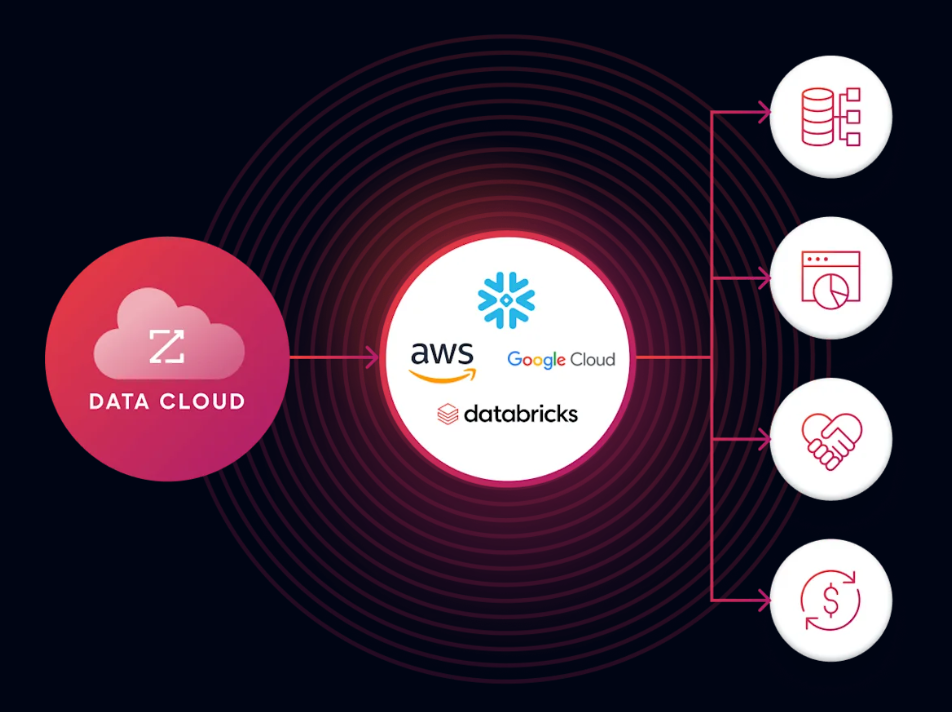
But the primary integration mechanism is the Enterprise API and MCP server, which deliver ZoomInfo's B2B intelligence into any application. Cloud Partner integrations push data directly into AWS, Google Cloud, Snowflake, and Databricks. ZoomInfo acts as infrastructure: data and signals flowing wherever they're needed.
Source: ZoomInfo
"The plug-and-play aspect of the API means I can integrate it into any process and get information at a moment's notice," said Jerry Wilson, Senior Marketing Intelligence Analyst at BDO Canada, which saw an 87% reduction in time spent updating internal data dashboards using ZoomInfo's API. (BDO Canada)
Support models reflect target audiences
Constant Contact's biggest differentiator against ActiveCampaign might not be a feature at all. It's the phone.
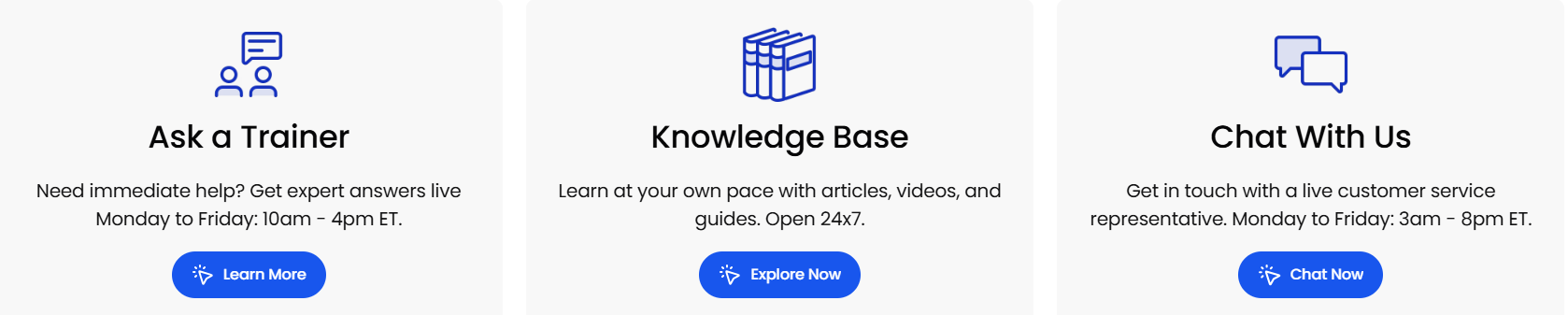
Constant Contact offers live phone support six days a week on all paid plans, not just premium tiers. For a small business owner who can't figure out why their email isn't rendering correctly on mobile, picking up the phone and talking to a person is worth more than any feature comparison. Live chat runs Monday to Friday 3am–8pm ET, and an "Ask a Trainer" program provides guided help during business hours.
Source: Constant Contact
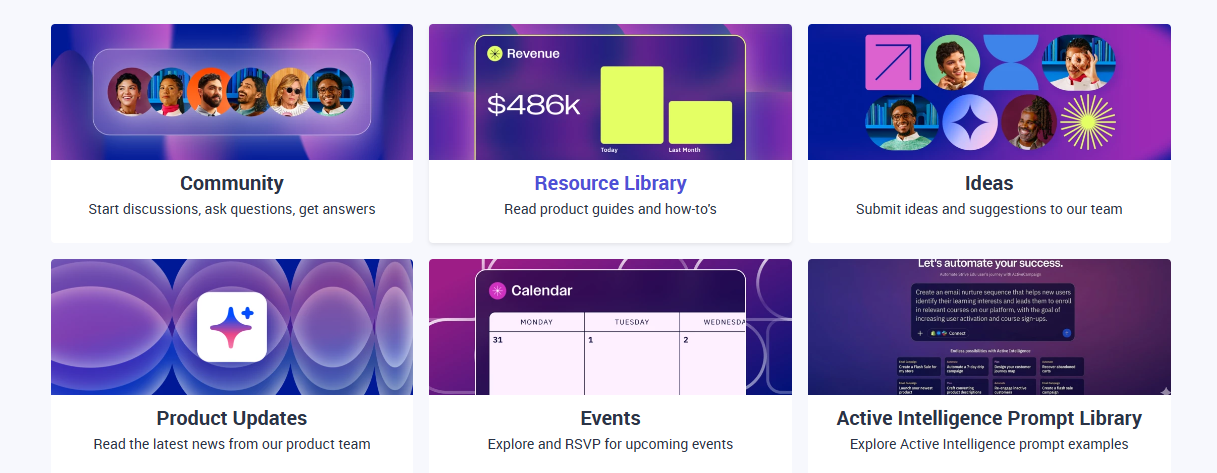
ActiveCampaign includes chat and ticket support on all paid plans, with priority email and chat on Professional plans. Enterprise customers receive a dedicated account team. One-on-one specialist sessions start at $79, including email deliverability consulting. The ActiveCampaign Community has over 180,000 members, and a certified consultant directory connects users with vetted third-party experts. But no phone support.
Source: ActiveCampaign
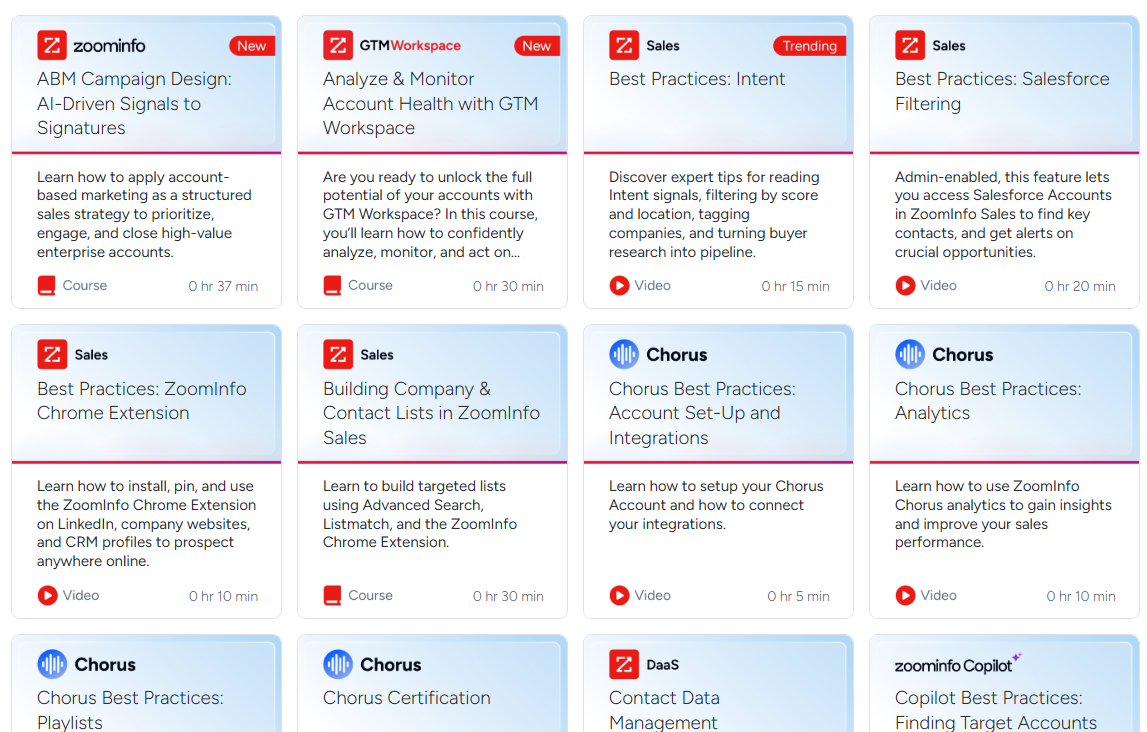
ZoomInfo provides support through a Help Center, ZoomInfo University with role-specific learning paths and certifications, and direct phone support at +1 866-904-9666. Enterprise customers receive dedicated account management and hands-on onboarding. Professional services are available through ZoomInfo Labs.
Source: ZoomInfo
ActiveCampaign vs. Constant Contact vs. ZoomInfo: Which should you choose?
These three platforms solve different problems, and the right answer depends on where your marketing is actually breaking down.
Choose ActiveCampaign if:
You need multi-step, behavior-driven marketing automation
A built-in CRM with lead scoring and deal pipelines matters
Your team can invest time mastering a capable platform
You sell online (SaaS, ecommerce, digital products, courses)
You want email, SMS, and WhatsApp coordinated from one automation builder
Choose Constant Contact if:
You're a small business or nonprofit sending newsletters and event invitations
Phone support is important when something breaks
You need built-in event management with ticketing and RSVP
Simplicity matters more than automation depth
You manage social media posting alongside email from one platform
Add ZoomInfo if:
You're a B2B company and need to know which accounts are in-market
Your contact data is stale or incomplete and it's hurting campaign performance
You want verified decision-maker contacts, not just email addresses from a form fill
Your sales and marketing teams need shared intelligence on target accounts
You want AI that identifies buying signals and surfaces the accounts that matter
Start with ZoomInfo Lite for free, permanent access, no credit card, no time limit.
For B2B companies, the most effective stack often combines execution and intelligence. ActiveCampaign or Constant Contact handles the campaign workflow. ZoomInfo provides the data foundation that makes those campaigns reach the right people. Choosing between the two email platforms is a question of complexity versus simplicity. Adding ZoomInfo is a question of whether your targeting is good enough to justify the sends.
ActiveCampaign vs. Constant Contact vs. ZoomInfo FAQ
What is the main difference between ActiveCampaign and Constant Contact?
ActiveCampaign is a marketing automation platform with a built-in CRM, visual automation builder supporting complex branching logic, and cross-channel orchestration across email, SMS, and WhatsApp. Constant Contact is a simpler email marketing platform focused on ease of use, with native event management, social media scheduling, and phone support on all paid plans. ActiveCampaign is built for businesses that need behavioral automation; Constant Contact is built for businesses that need to send professional emails quickly without a learning curve.
How does ZoomInfo fit alongside ActiveCampaign or Constant Contact?
ZoomInfo is not an email marketing tool. It provides the B2B data intelligence layer that sits upstream of your marketing automation platform. ZoomInfo identifies which companies are actively researching solutions, surfaces verified decision-maker contact data (500M contacts, 200M+ verified business emails), and reveals buying intent signals. That intelligence feeds into whichever platform you use for campaign execution, improving targeting accuracy before a single email is sent.
Which platform is cheapest for a small business?
Constant Contact starts at $12/month for up to 500 contacts on its Lite plan. ActiveCampaign starts at $15/month for 1,000 contacts on the Starter plan. Both escalate as lists grow. At 5,000 contacts, Constant Contact Standard runs $110/month and ActiveCampaign Starter runs roughly $79–$149/month depending on the plan tier. ZoomInfo Lite is permanently free with 10 monthly export credits for B2B contact data.
Which platform has better marketing automation?
ActiveCampaign has stronger automation. Its visual builder supports unlimited actions per workflow (on Plus plans and above), conditional branching, behavioral triggers, and cross-channel orchestration. Constant Contact's Automation Path Builder is limited to a single trigger per path, caps Standard users at three active paths using pre-built templates only, and reserves custom paths for Premium subscribers.
Does Constant Contact have a CRM?
Constant Contact does not have a native CRM. It integrates with Salesforce and other CRMs through its marketplace. ActiveCampaign includes a built-in CRM with visual deal pipelines, lead scoring, deal scoring, and sales automation. ZoomInfo includes full B2B contact and company intelligence with 300+ company attributes, org charts, and buying committee identification.
Which platform is best for nonprofits?
Constant Contact is the strongest choice for nonprofits. It offers a 30% prepay discount for nonprofit organizations, built-in event management with ticketing and RSVP (important for fundraisers and galas), phone support on all paid plans, and an intuitive interface that requires minimal technical expertise. ActiveCampaign does not offer a comparable nonprofit discount.
Which platform has better AI features?
ActiveCampaign has the most advanced AI among email platforms, with Active Intelligence offering 12+ AI agents covering campaigns, automations, segments, and personalization, plus per-recipient Predictive Sending and an MCP connector for Claude. Constant Contact's AI is more focused: an AI Content Generator for drafting email and social copy, a Campaign Builder for AI-recommended channel strategies, and a ChatGPT app integration. ZoomInfo's AI works at the intelligence layer. Its GTM Context Graph reasons across CRM data, conversation transcripts, and intent signals to identify which accounts to target and why.
Can I use all three platforms together?
Yes, and for B2B companies this is often the most effective approach. ZoomInfo provides the intelligence layer (who to target, when they're in-market, verified contact data), while ActiveCampaign or Constant Contact handles campaign execution (email sequences, automated workflows, newsletters). ZoomInfo's data feeds into your marketing platform through CRM syncs, API integrations, or iPaaS tools like Zapier, ensuring your campaigns reach verified contacts at companies showing buying intent.
See how ActiveCampaign stacks up elsewhere:
