
Choosing between ActiveCampaign and Agile CRM for sales and marketing comes down to five questions:
Do you need marketing automation with branching logic, or will basic drip campaigns and contact management do the job?
Is your budget under $10 per user per month, or will you pay more for stronger capabilities?
How important is email deliverability to your results?
Do you need a platform that's evolving with AI, or one that covers the basics reliably?
Are you nurturing contacts you already have, or do you also need to find the right prospects first?
Here's what we recommend:
ActiveCampaign is the choice for SMBs and mid-market companies that need marketing automation paired with a functional CRM. Its visual automation builder supports branching logic, behavioral triggers, and cross-channel orchestration across email, SMS, and WhatsApp. The Active Intelligence AI system, launched in 2025, lets marketers describe goals in plain language and have campaigns built automatically. With 1,000+ integrations, 300+ G2 badges, and 93% of customers reporting deliverability better than competitors, ActiveCampaign has earned its reputation. The trade-off: pricing scales with your contact list and can climb fast, and mastering the full feature set takes time.
Agile CRM serves budget-conscious small teams that want CRM, marketing automation, and a help desk in one platform without paying for three separate tools. Its free plan supports up to 10 users, and paid plans start at $8.99/user/month. For the price, you get contact management, deal pipelines, email campaigns, lead scoring, web tracking, and ticketing. But the interface hasn't had a significant visual update in years, users report slow loading times and marketing automation workflows that behave inconsistently, and some have found that up to 30% of emails sent through the platform don't reach recipients.
Both platforms focus on engaging contacts already in your database. But for B2B companies, a harder problem often comes first: knowing which companies are researching solutions like yours, who the decision-makers are, and how to reach them. That's where the comparison shifts from marketing automation to go-to-market intelligence.
ZoomInfo is a B2B data and AI go-to-market platform built on 500M contacts, 100M companies, 135M+ verified phone numbers, and 200M+ verified business emails. Where ActiveCampaign and Agile CRM help you execute campaigns, ZoomInfo helps you find the right targets and understand when they're ready to buy. Its GTM Context Graph combines this data with your CRM records, conversation transcripts, and behavioral signals to reveal not just what's happening in your pipeline, but why. Your team accesses this intelligence through the GTM Workspace for sellers, GTM Studio for marketers and RevOps, or APIs and MCP in any front-end, including the marketing automation platform you already use.
If finding the right prospects before you automate outreach sounds like the missing step, see how ZoomInfo works.
ActiveCampaign vs. Agile CRM at a glance
ActiveCampaign | Agile CRM | ZoomInfo | |
|---|---|---|---|
Primary focus | Marketing automation + CRM | All-in-one CRM + marketing + helpdesk | B2B data intelligence + GTM execution |
Marketing automation | Visual builder with branching logic | Basic visual builder, instability reported | GTM plays and multi-channel orchestration via GTM Studio |
CRM | Built-in with pipelines, lead/deal scoring | Built-in with pipelines, custom fields | GTM Workspace with AI-driven account prioritization |
AI capabilities | Active Intelligence (12+ AI agents) | None prominently marketed | GTM Context Graph + AI agents across products |
Email deliverability | 93% report better than competitors | Deliverability concerns reported | 200M+ verified business emails; data accuracy up to 95% |
Integrations | 1,000+ | 60+ | 172+ marketplace partners + API + MCP |
Help desk | Not included | Built-in ticketing + knowledge base | Not a help desk tool |
Free plan | 14-day trial only | Free for up to 10 users, 1,000 contacts | ZoomInfo Lite (permanent free tier) |
Starting price | $15/month (1,000 contacts) | $8.99/user/month (annual) | Custom-quoted |
Best for | SMBs needing strong automation | Budget-conscious micro-businesses | B2B teams that need to find and prioritize prospects |
Marketing automation is the defining gap between these platforms
ActiveCampaign and Agile CRM both include marketing automation. The similarity ends there.
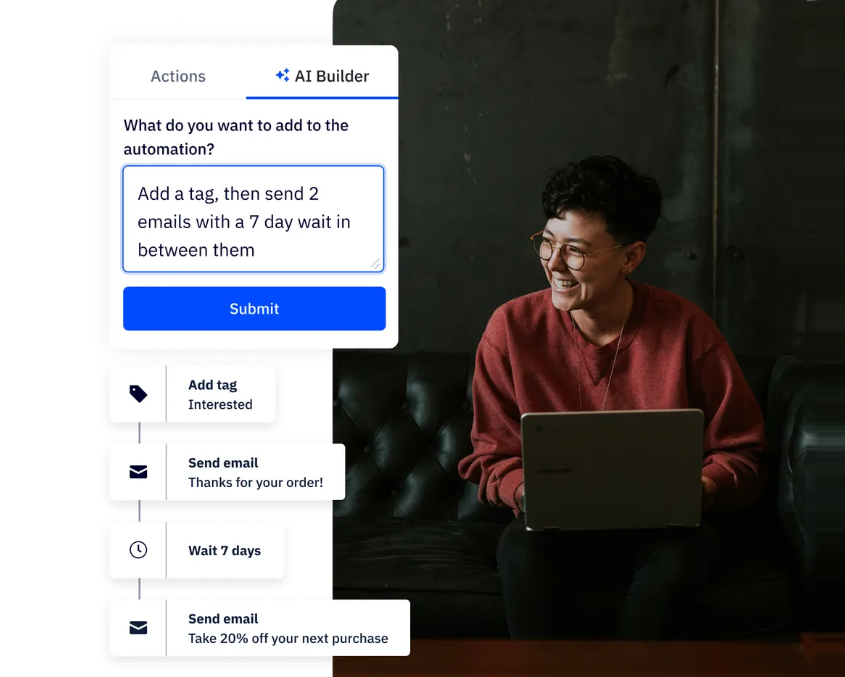
ActiveCampaign's automation builder is its flagship feature. The visual, drag-and-drop interface supports conditional branching, wait steps, if/then logic, and behavioral triggers that respond to email opens, link clicks, site visits, form submissions, and purchase events.
Source: ActiveCampaign
There's no cap on the number of actions per workflow on Plus plans and above. Automations span email, SMS, and WhatsApp from one builder. Predictive Sending analyzes each contact's engagement history and delivers emails when that person is most likely to open, not at a blanket send time for the whole list.
Source: ActiveCampaign
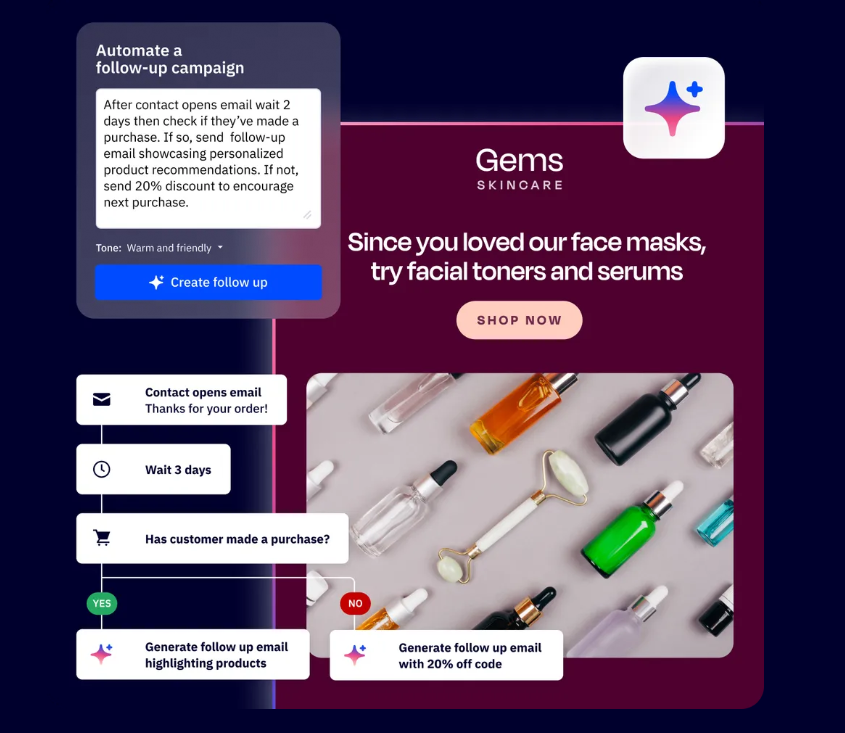
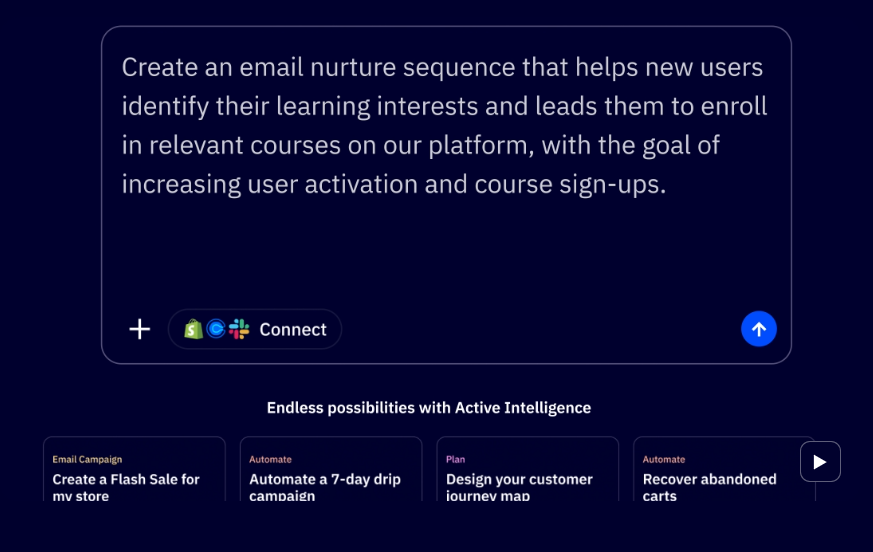
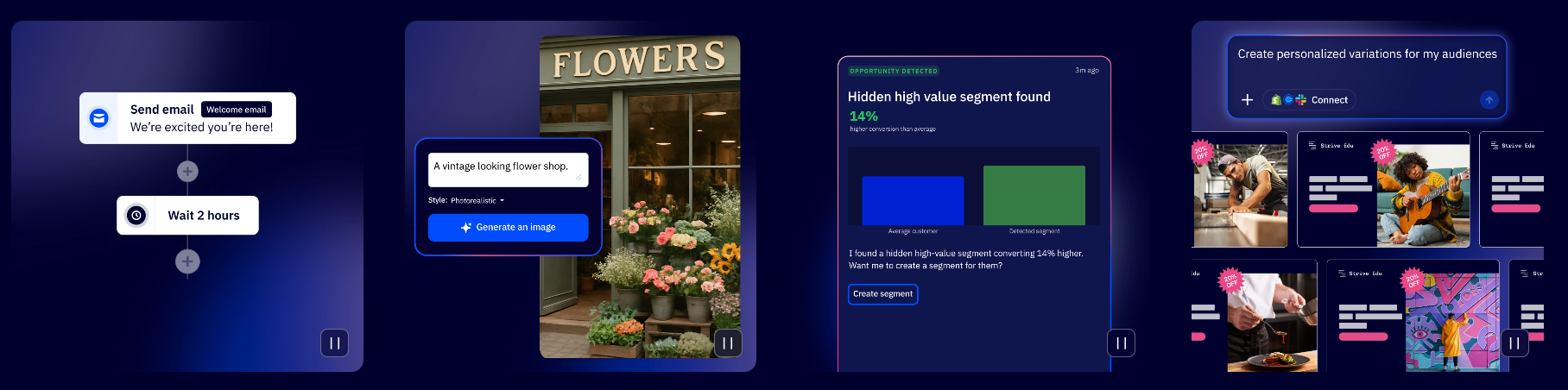
The AI layer goes further. The AI Campaign Builder generates complete campaigns from a plain-language prompt, including strategy, content, images, and layout. AI-Suggested Automations recommend workflows based on billions of anonymized data points from similar businesses, so you're not starting from scratch.
Source: ActiveCampaign
Agile CRM's marketing automation offers a visual campaign builder with email, SMS, and social media nodes. The basics are covered: drip campaigns, lead scoring, web forms and landing pages, and A/B testing. For small teams sending straightforward sequences, it works.

Source: Agile CRM
But reviews tell a different story. Critical G2 reviews describe marketing automation workflows failing or behaving inconsistently. For a platform where automation is the point, unreliable execution is a real risk. The free plan limits you to 1 workflow, and even the Starter plan caps at 5 campaigns. Full automation access requires the Regular plan ($29.99/user/month annual).
For teams that depend on automation running correctly every time, ActiveCampaign's stability and depth are hard to match at any price. Agile CRM's automation handles simple sequences, but pushing it further exposes its limits.
CRM capabilities serve different scales
Both platforms include CRM functionality, but the design philosophies diverge.
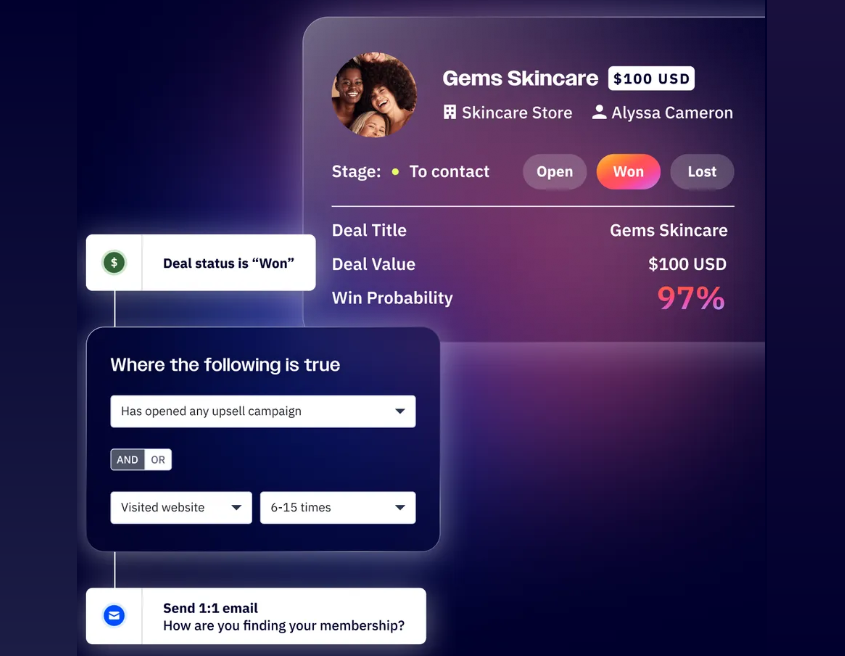
ActiveCampaign built its CRM into a marketing automation platform rather than the reverse. Deals live in customizable pipelines with drag-and-drop Kanban boards. The CRM connects directly to the automation engine, so a form submission can create a deal, a stage change can trigger a task, and a deal entering a new stage can fire a personalized email to the prospect.
Lead scoring and deal scoring run as independent signals, letting your team track "is this person a good lead?" and "is this deal likely to close?" as separate questions. Sales routing assigns leads automatically by round-robin, expertise, geography, or lead score.
Source: ActiveCampaign
The CRM works best as a marketing companion. Teams needing forecasting, territory management, or CPQ will still need a dedicated sales tool.
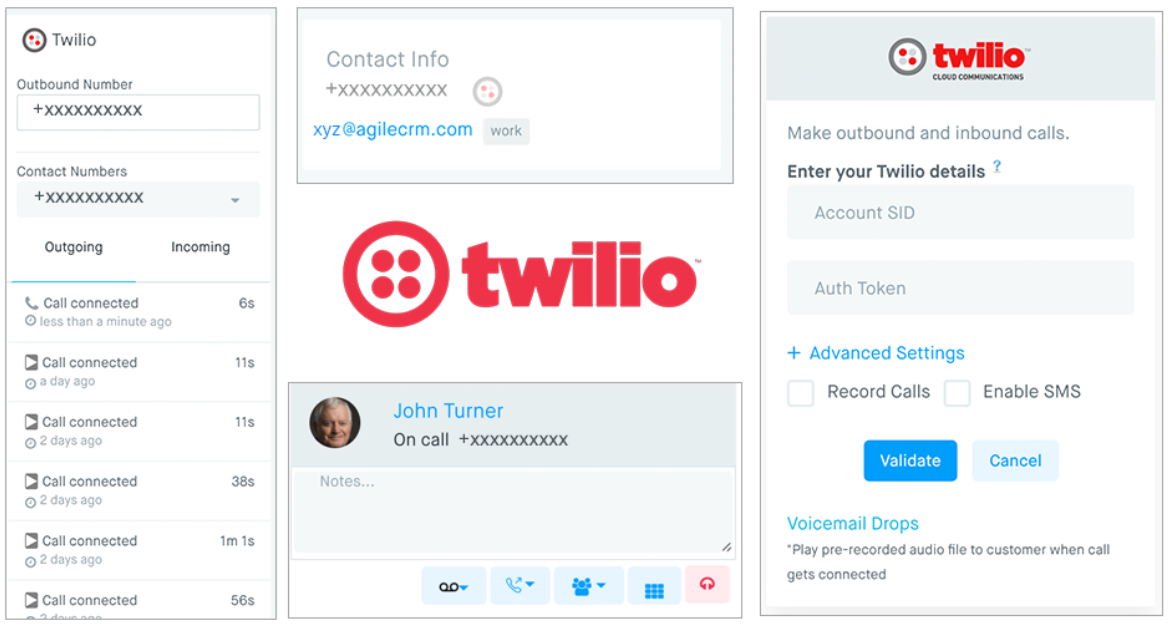
Agile CRM takes the broader approach: sales, marketing, and service in one platform. The 360-degree contact view aggregates email history, website activity, call logs, deal status, and support tickets on a single page. Multiple pipeline tracks support different sales motions. Appointment scheduling syncs with Google Calendar, and Twilio telephony lets reps call contacts directly from the CRM.
The breadth is impressive for the price. The problem is polish. Users describe a dated interface and slow loading times that hurt daily productivity. ActiveCampaign's CRM may be narrower in scope, but it runs more reliably with a modern interface.
The upstream problem neither platform solves
ActiveCampaign and Agile CRM both assume you already know who your prospects are. You import contacts, build segments, and trigger campaigns. This works when you have a healthy database of leads who have opted in and are engaged.
But for B2B companies, a challenge sits upstream of any campaign: finding the right accounts to target, identifying the decision-makers within them, and knowing when those companies are evaluating solutions.
This is the problem ZoomInfo was built to solve.
ZoomInfo's data platform covers 500M contacts and 100M companies, verified through automated ML scanning of 28 million site domains daily, third-party partner data covering 95 million businesses, and an in-house Data Training Lab of 300+ human researchers. First-party data reaches up to 95% accuracy.

Source: ZoomInfo
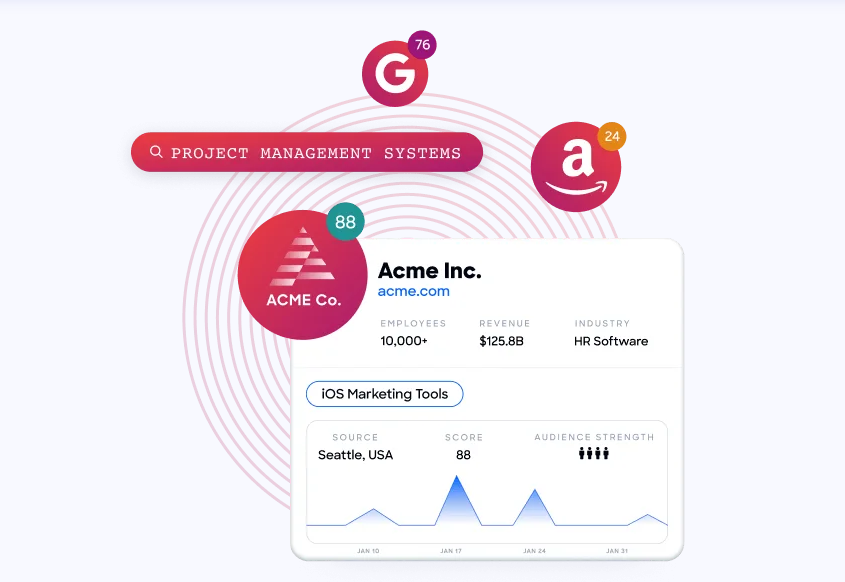
What makes this more than a contact database is the intelligence on top. Buyer Intent data tracks signals from 210 million IP-to-Organization pairings and 6 trillion+ keyword-to-device pairings sourced monthly.
Source: ZoomInfo
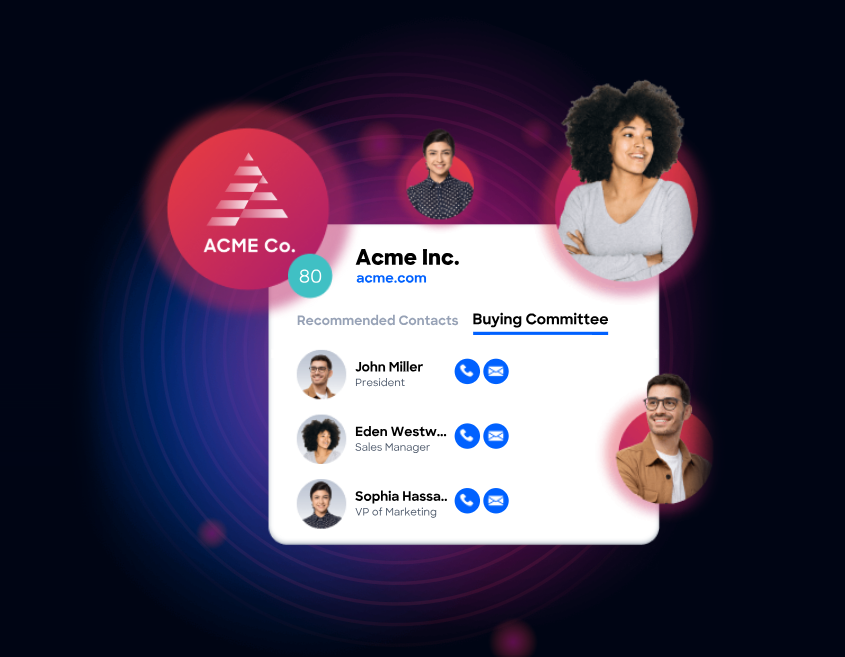
Guided Intent, exclusive to ZoomInfo, identifies topics historically correlated with deal success rather than requiring manual topic selection. WebSights resolves anonymous website traffic to companies, including buying team identification.
Source: ZoomInfo
The practical effect: instead of blasting campaigns to a static list and hoping the right people see them, you target accounts showing buying signals, reach verified decision-makers, and time your outreach to when interest peaks.
"It's not just the data itself. It's more about the right data at the right time to help us reach out with the right message across that full buyer journey." (Chelsea Kenyon, Senior Director of Digital Strategy, Redwood Logistics)
AI tells the story of where these platforms are headed
The AI gap between ActiveCampaign and Agile CRM is large and widening.
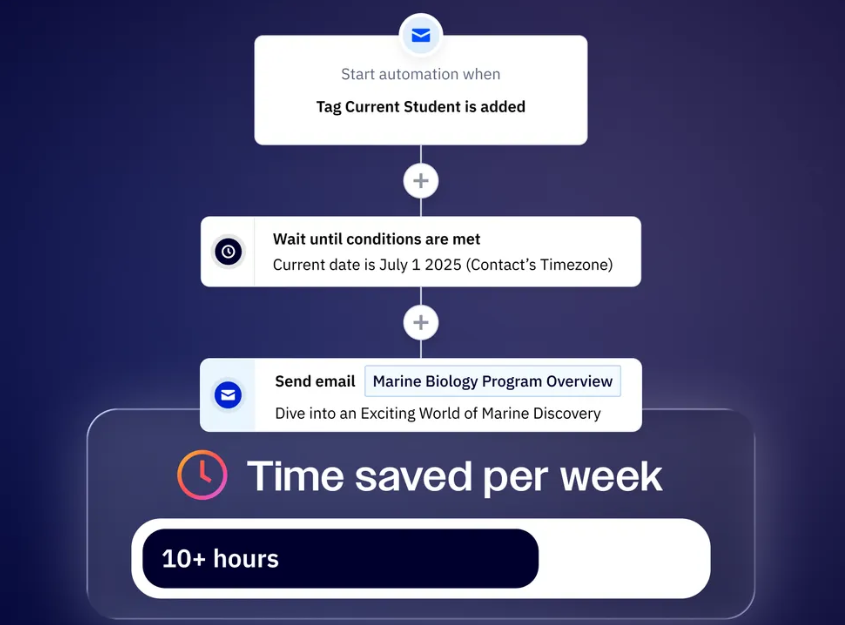
ActiveCampaign launched Active Intelligence in May 2025, calling it the "intelligence behind autonomous marketing." The system includes 12+ AI agents covering campaigns, automations, segments, personalization, forms, and insights.
The company frames the distinction this way: "Marketing automation runs what you build. Autonomous marketing builds what you need."
Source: ActiveCampaign
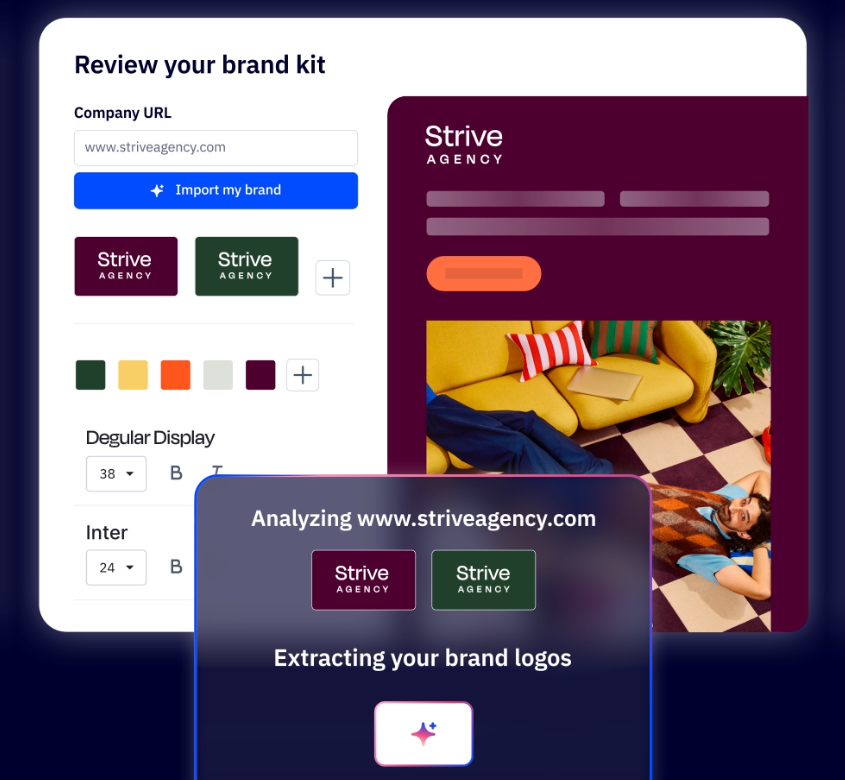
An AI Brand Kit auto-imports logos, fonts, and colors from a website URL. AI-Suggested Segments analyze audience data and surface high-value groups. Active Intelligence was the fastest-growing feature in ActiveCampaign's history.
Source: ActiveCampaign
Several of these agents remain in beta as of early 2026, so reliability and completeness haven't reached general release quality. But the direction is clear.
Agile CRM has no AI features prominently marketed. No AI-written emails, no predictive lead scoring via machine learning, no conversation intelligence. The platform does what it was built to do in 2013, but the feature set has not kept pace with the market's shift toward AI-assisted workflows.
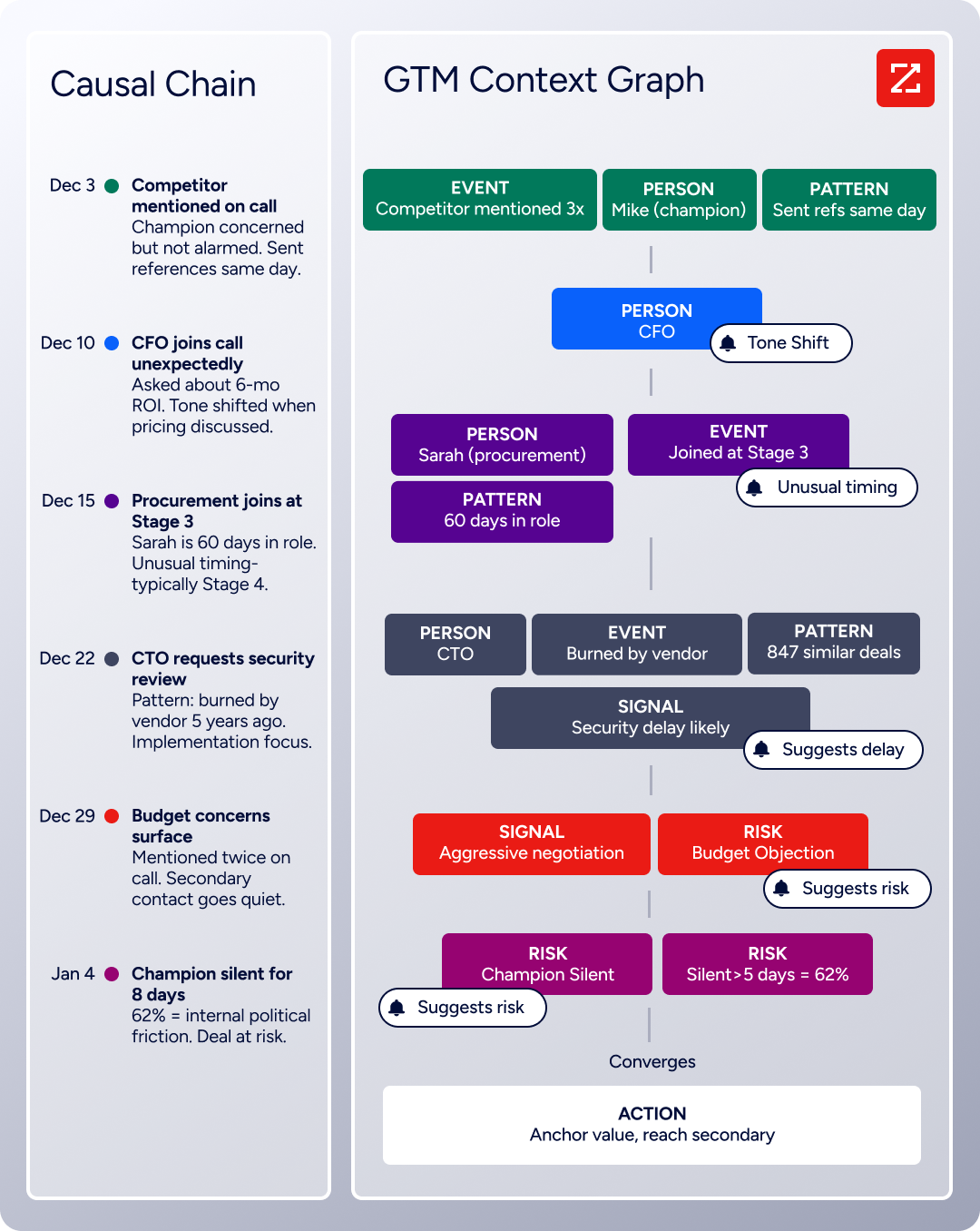
ZoomInfo operates on a different AI layer. The GTM Context Graph processes 1.5B+ data points daily, combining ZoomInfo's B2B data with a customer's CRM records, conversation intelligence from calls and meetings, and behavioral signals. As CPO Dominik Facher writes: "The CRM recorded the state change. It has no record of why it happened." The GTM Context Graph captures that "why," extracting connections between signals and outcomes across thousands of deals.
Source: ZoomInfo
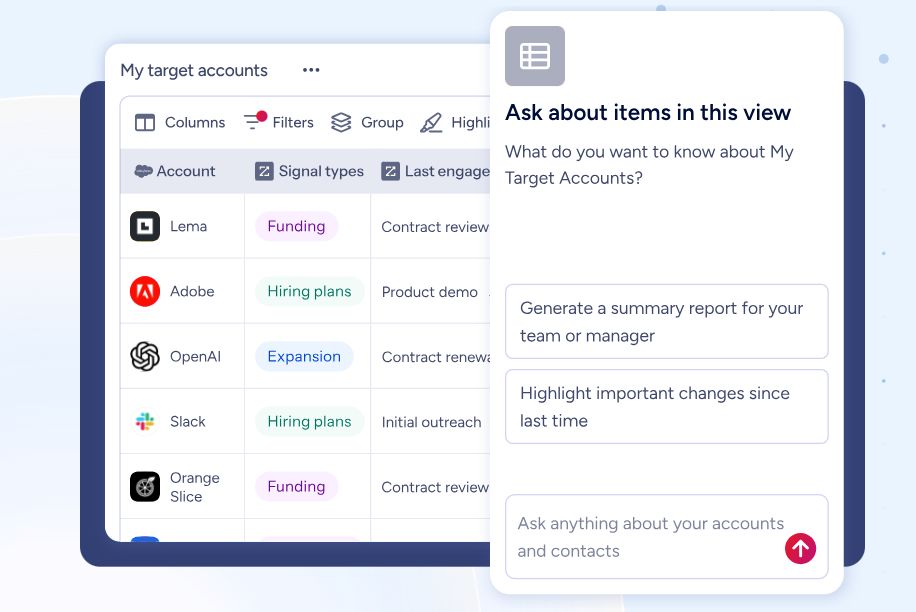
In GTM Workspace, AI agents handle account research, draft outreach, monitor signals, and surface the next best action for every deal. In GTM Studio, marketers describe audiences in natural language and launch plays that get smarter as prospects respond.
Source: ZoomInfo
"That combination of our internal CRM data, external signals, and AI that's given all that context has helped us craft very specific account- and persona-based messages. And people have responded to them right away." (Toby Carrington, Chief Business Officer, Seismic)
The difference in AI maturity reflects each company's investment capacity. ActiveCampaign ($290.5M revenue, $360M raised) can fund real R&D. Agile CRM (~$2.7M ARR, bootstrapped, approximately 39 employees) faces inherent constraints. ZoomInfo ($1.25B revenue, public) invests at a different scale entirely.
Email deliverability determines whether automation even matters
The most sophisticated workflow is worthless if emails land in spam.
ActiveCampaign treats deliverability as infrastructure. Emails route through a private network rather than the public internet, reducing send time by 10x. The platform supports dedicated IP management, DKIM and DMARC authentication, and pre-warmed IPs. EmailToolTester named ActiveCampaign the Best Email Marketing Tool of 2025.
Source: ActiveCampaign
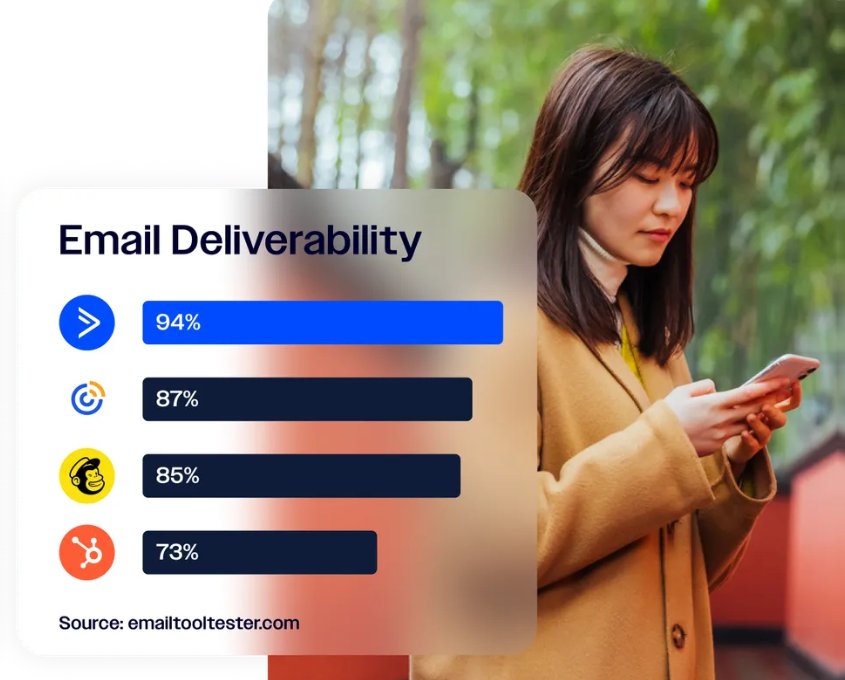
ActiveCampaign reports 99.88% deliverability, with EmailToolTester independently measuring 94%. A free DMARC testing tool is available, and an MPP filter strips inflated open metrics from Privacy Protection users.
Source: ActiveCampaign
Agile CRM's deliverability picture is less clear. Some users report that up to 30% of emails sent through the platform do not reach recipients. For teams running lead nurture sequences or abandoned cart recovery campaigns, a 30% miss rate doesn't just reduce performance; it damages sender reputation, and the damage compounds over time.
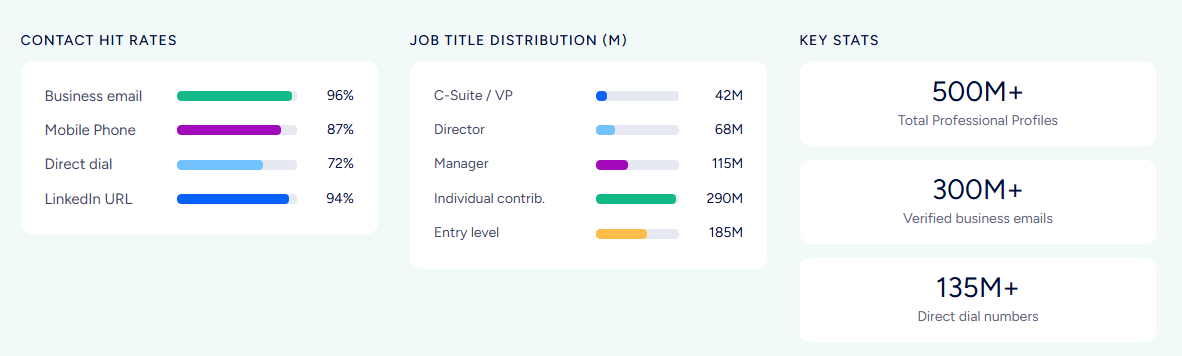
ZoomInfo addresses a different part of the deliverability problem: data accuracy at the source. With 200M+ verified emails at up to 95% accuracy, the contacts you reach are verified as real, current, and active. That means fewer bounces, better sender reputation, and higher inbox placement rates regardless of which email platform you use.
Source: ZoomInfo
For B2B outbound, combining ZoomInfo's verified contact data with ActiveCampaign's deliverability infrastructure gives you a pipeline where both the targets and the delivery mechanism are sound. Agile CRM, with its reported deliverability issues, introduces risk at the execution layer that compounds with any data quality problems upstream.
Pricing comparison reveals different bets
The pricing structures tell you who each platform is built for.
Agile CRM is the most affordable option by a wide margin. The free plan supports up to 10 users with 1,000 contacts, covering basic CRM, email tracking, and one campaign workflow. Paid plans start at $8.99/user/month (annual billing) for the Starter tier with 10,000 contacts. The Regular plan at $29.99/user/month unlocks full marketing automation, SMS, and advanced reporting. Enterprise reaches $47.99/user/month with unlimited contacts.
For a five-person team on Starter, that's under $45/month total. Hard to argue with the math.
ActiveCampaign prices by contact count, not users. Plans start at $15/month with a 14-day free trial and 30-day money-back guarantee. At 10,000 contacts, the Starter plan runs $149/month. The Starter plan includes only 5 actions per automation and one user seat, so most teams will need the Plus plan or higher. Pricing has increased by nearly 100% over the past three years according to G2 reviewers, and costs climb as contact lists grow.
ActiveCampaign charges once per unique contact regardless of how many automations or segments that contact appears in, which avoids the duplicate-billing trap some competitors set.
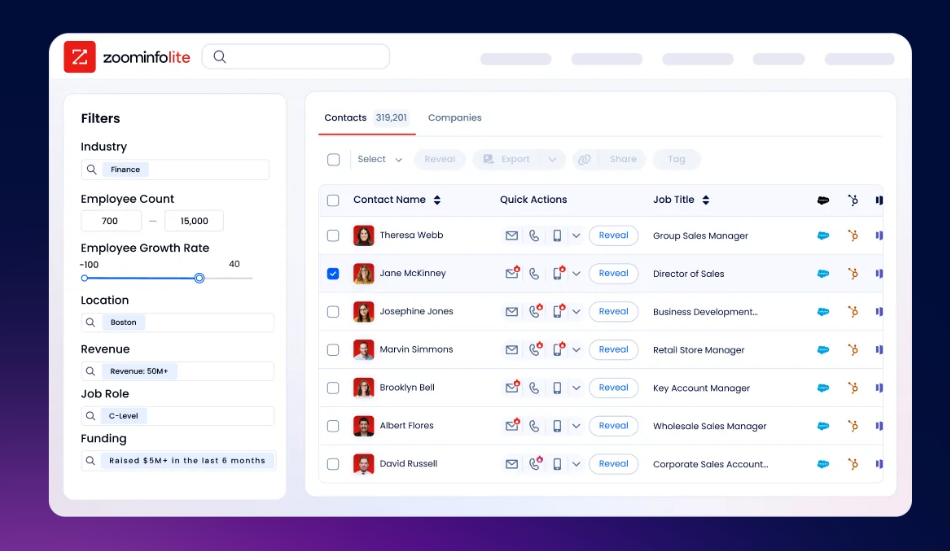
ZoomInfo uses custom-quoted, consumption-based pricing with no publicly listed prices. This is an enterprise product priced for enterprise buyers. ZoomInfo Lite offers a permanent free tier with access to the B2B database, 10 export credits monthly, and basic search and enrichment. A 7-day free trial with broader access is also available.
Source: ZoomInfo
The pricing comparison only makes sense if you understand what each dollar buys. Agile CRM's $8.99/user/month buys a functional but aging all-in-one tool. ActiveCampaign's $149/month (at 10,000 contacts) buys strong marketing automation with reliable deliverability and AI. ZoomInfo's investment buys the intelligence that determines whether your campaigns reach the right people in the first place.
Integrations and support shape the daily experience
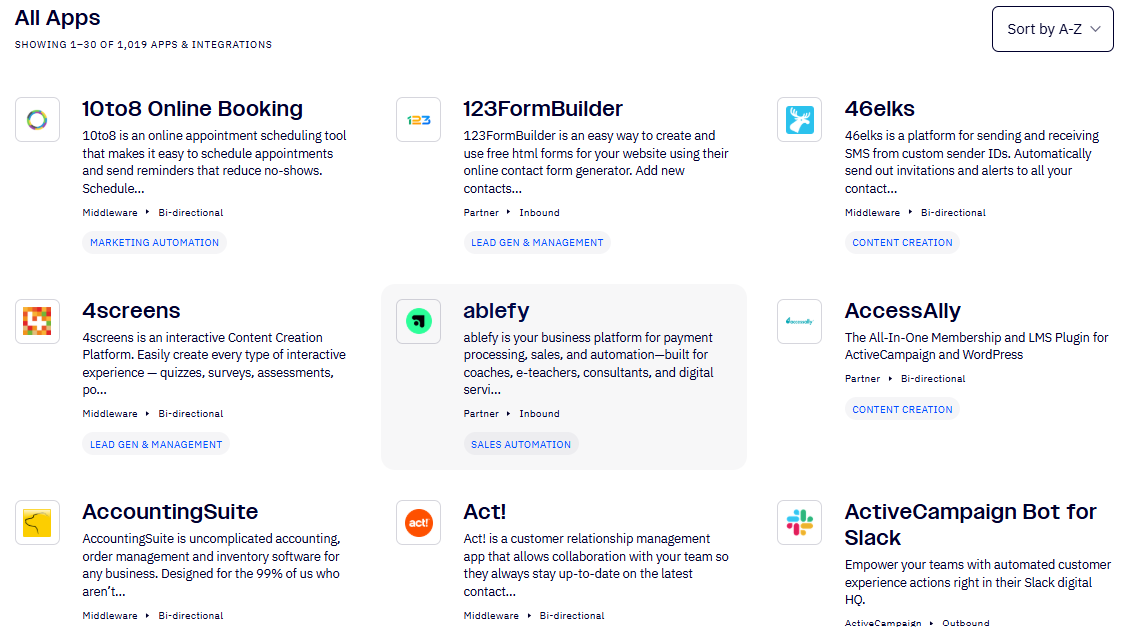
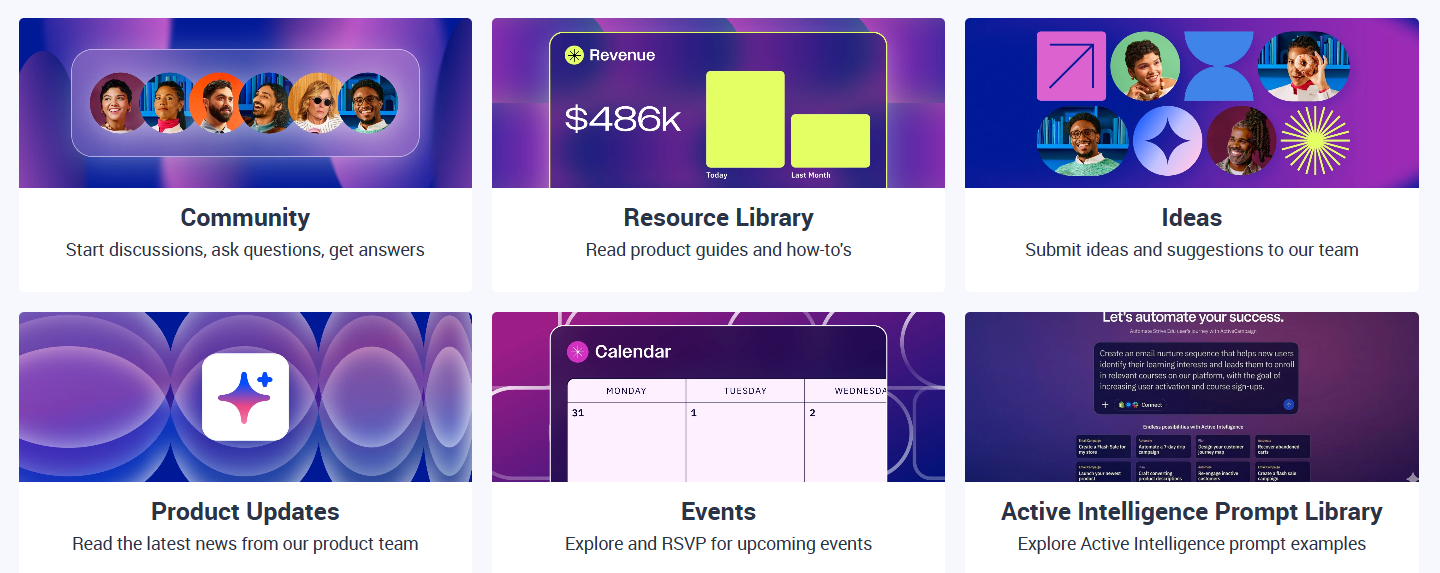
ActiveCampaign has the largest integration ecosystem of the three, with 1,000+ integrations covering CRM, ecommerce, forms, ads, social, communication, and developer tools. Key connections include Shopify, Salesforce, WordPress, Zapier, Google Ads, and Calendly.
Source: ActiveCampaign
The developer portal provides a REST API, webhooks, and App Studio for building custom integrations. Support includes chat and ticket support on all paid plans, with priority support on Professional plans. A 180,000+ member community and a consultant directory complete the ecosystem.
Source: ActiveCampaign
Agile CRM advertises over 60 integrations, including Twilio, Shopify, Stripe, WordPress, Zapier, and Gmail. A REST API hosted on GitHub provides programmatic access, with official SDKs for Java, Python, PHP, .NET, Node.js, and Ruby.
Source: Agile CRM
The integration library covers basic SMB stacks but falls short of ActiveCampaign. Support quality is inconsistent, with some users describing helpful responses and others reporting slow follow-up on complex issues.
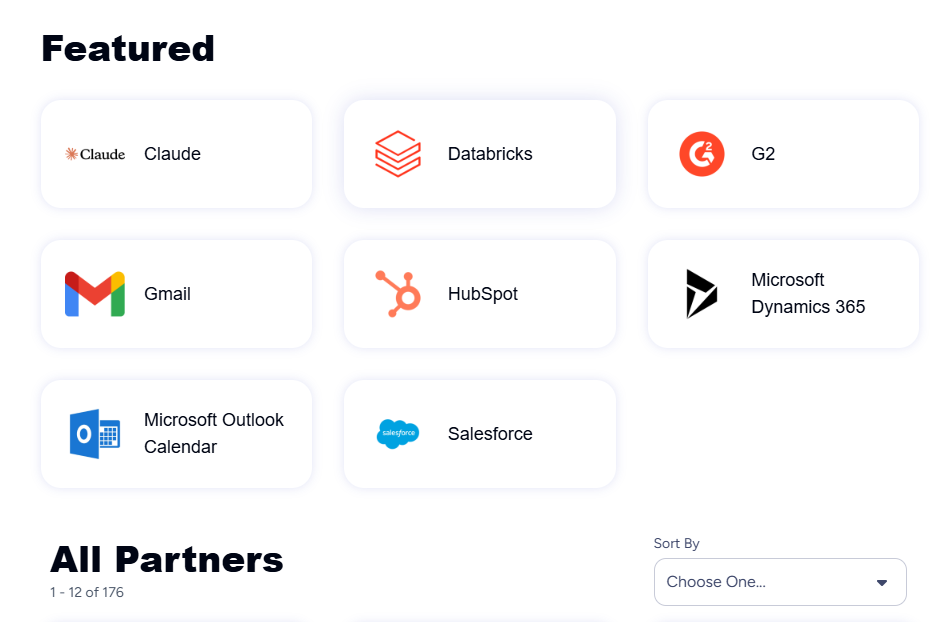
ZoomInfo operates a Marketplace with 172+ integration partners spanning CRM, marketing automation, sales engagement, data warehouse, and AI categories. Featured integrations include Salesforce, HubSpot, Microsoft Dynamics 365, and Snowflake.
Source: ZoomInfo
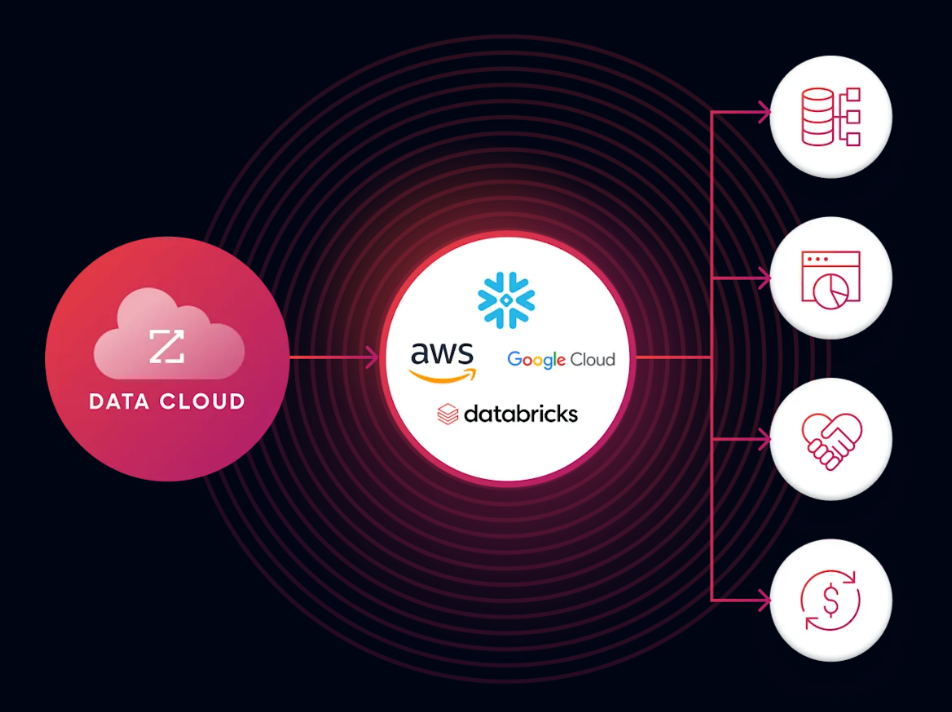
The Enterprise API uses OAuth 2.0 and provides programmatic access to search, enrich, intent, and AI endpoints. The MCP server connects directly to AI models like Claude and ChatGPT, enabling natural-language queries against ZoomInfo's data. ZoomInfo's Cloud Partners program delivers data directly into AWS, Google Cloud, Snowflake, and Databricks.
Source: ZoomInfo
The integration story matters because ZoomInfo feeds data into whatever tools your team already uses. ZoomInfo identifies who to target and verifies their contact information, your CRM tracks the relationship, and ActiveCampaign automates the engagement.
"The plug-and-play aspect of the API means I can integrate it very easily into any process and get information at a moment's notice." (Jerry Wilson, Senior Marketing Intelligence Analyst, BDO Canada)
ActiveCampaign vs. Agile CRM vs. ZoomInfo: Which should you choose?
The right choice depends on where your biggest bottleneck sits: execution, budget, or intelligence.
Choose ActiveCampaign if:
Marketing automation is central to your growth strategy
You need behavior-triggered workflows across email, SMS, and WhatsApp
Email deliverability is critical to your campaigns
You want AI-powered campaign creation and optimization
You're willing to invest in a platform you can grow into
Choose Agile CRM if:
Budget is your primary constraint and you need CRM + marketing + helpdesk under $10/user/month
Your team is small (under 10 people) and needs a free starting point
Your automation needs are straightforward (simple drip campaigns and follow-up sequences)
You need built-in ticketing and support management alongside your CRM
You can work with a dated interface in exchange for affordability
Choose ZoomInfo if:
Your biggest challenge is finding the right prospects, not just engaging the ones you have
You need verified B2B contact data (direct dials and business emails) at scale
Knowing which accounts are in-market would change how your team prioritizes
You want AI that understands why deals move, not just what happened
You need intelligence that works across your existing CRM, marketing automation, and sales tools
See ZoomInfo in action with a free trial, or start with ZoomInfo Lite at no cost.
ActiveCampaign and Agile CRM both answer the question "how do we engage our contacts?" ActiveCampaign answers it with more depth, more reliability, and more AI. Agile CRM answers it at a lower price, with broader functional coverage but less polish.
ZoomInfo answers a different question: "who should we be engaging, and when?" For B2B teams, that question often determines whether the campaigns you build in ActiveCampaign or Agile CRM reach the people who can actually buy.
"ZoomInfo gives us the information we need to execute. We don't have to go through and spend our time digging. It's already there, so we can be three steps ahead." (William Kenimer, Vice President of Revenue Operations, Vensure)
The strongest go-to-market stack pairs intelligence with execution. Choose the intelligence layer that identifies the right targets, then choose the automation layer that engages them.
ActiveCampaign vs. Agile CRM vs. ZoomInfo FAQ
What is the key difference between ActiveCampaign, Agile CRM, and ZoomInfo?
ActiveCampaign is a marketing automation platform with a built-in CRM, designed for SMBs that need email sequences, behavioral triggers, and cross-channel campaigns. Agile CRM is a budget-friendly all-in-one tool bundling sales CRM, marketing automation, and a help desk for small teams. ZoomInfo is a B2B data intelligence and GTM platform that helps teams find the right prospects, verify their contact information, and understand when accounts are in-market, powering the intelligence layer that makes any CRM or marketing tool more effective.
Which platform is cheapest?
Agile CRM is the most affordable, with a permanent free plan for up to 10 users and paid plans starting at $8.99/user/month (annual billing). ActiveCampaign starts at $15/month but scales by contact count, reaching $149/month at 10,000 contacts on the Starter plan. ZoomInfo uses custom-quoted pricing for paid tiers, though ZoomInfo Lite is a permanent free tier with 10 monthly export credits and access to the B2B database.
Which platform has the best marketing automation?
ActiveCampaign leads in marketing automation depth. Its visual builder supports unlimited actions per workflow (on Plus plans and above), conditional branching, behavioral triggers, per-recipient send-time optimization, and AI-powered campaign generation via Active Intelligence. Agile CRM offers a visual campaign builder with email, SMS, and social nodes, but users report workflow instability. ZoomInfo is not a marketing automation platform in the traditional sense; it provides the data and intelligence that make marketing automation more effective.
Is Agile CRM's email deliverability a real concern?
Multiple user reviews report that up to 30% of emails sent through Agile CRM don't reach recipients. ActiveCampaign, by contrast, reports 99.88% email deliverability and was named the Best Email Marketing Tool of 2025 by EmailToolTester. For teams relying on email campaigns for lead nurturing or sales outreach, deliverability differences at this scale directly affect pipeline and revenue.
Can ZoomInfo work with ActiveCampaign or Agile CRM?
Yes. ZoomInfo integrates with 172+ tools via its Marketplace, APIs, and MCP server. The typical workflow: use ZoomInfo to identify and verify target contacts, export them to your CRM, then engage them through ActiveCampaign or Agile CRM's automation workflows. ActiveCampaign is compatible via Zapier and direct API connections. This combination solves both the intelligence problem (who to target) and the execution problem (how to engage).
Which platform has AI features?
ActiveCampaign's Active Intelligence system, launched May 2025, includes 12+ AI agents covering campaign creation, automation building, segmentation, personalization, and analytics. Some agents remain in beta. Agile CRM has no prominently marketed AI capabilities. ZoomInfo's GTM Context Graph processes 1.5 billion+ data points daily and powers AI agents across GTM Workspace and GTM Studio, providing account intelligence, deal-level reasoning, and AI-drafted outreach based on full buyer context.
Which platform is best for a team just getting started?
Agile CRM's free plan (up to 10 users, 1,000 contacts) is the lowest-barrier entry point for teams that need CRM and basic marketing automation. ActiveCampaign offers a 14-day free trial with a 30-day money-back guarantee, but no permanent free plan. ZoomInfo Lite provides free, permanent access to B2B data with 10 monthly export credits, making it the best free starting point for teams focused on prospecting and contact research.
Does Agile CRM include a help desk?
Yes. Agile CRM bundles a help desk with ticketing, labels, canned responses, helpdesk groups for department routing, SLA management, support automation workflows, and a customer self-service knowledge base. Neither ActiveCampaign nor ZoomInfo includes built-in customer support ticketing. For small teams where the same people handle sales and support, this bundled functionality is one of Agile CRM's clearest advantages.
Other ActiveCampaign matchups worth a look:
