
Choosing between ActiveCampaign and Kit for email marketing comes down to a few questions about how you work and who you're trying to reach:
Are you marketing a business to other businesses, or building a personal audience of fans and followers?
Do you need automation with branching logic, or straightforward sequences that run while you create?
Is multi-channel reach (email, SMS, WhatsApp) important, or is email your primary channel?
Do you want a built-in CRM alongside your email tool, or does your business run on direct audience relationships?
Does your success depend on reaching verified decision-makers at specific companies, or on growing an opt-in subscriber list organically?
In short, here's what we recommend:
ActiveCampaign is the marketing automation platform built for businesses that need serious automation. Its visual automation builder handles complex, branching customer journeys across email, SMS, and WhatsApp, and a built-in CRM keeps sales and marketing data in one place. With Active Intelligence generating campaigns from plain-language prompts and 1,000+ integrations connecting to virtually any business tool, ActiveCampaign gives small marketing teams capabilities that would otherwise require an enterprise platform. The trade-offs: a steeper learning curve for advanced features, pricing that climbs as your contact list grows, and no permanent free plan.
Kit (formerly ConvertKit) is the email-first creator platform built for content-based businesses. Its Creator Network helps creators grow through peer recommendations rather than paid ads. Built-in commerce features let creators sell digital products and paid newsletter subscriptions without a separate storefront. Kit's free plan covers up to 10,000 subscribers with unlimited broadcasts. The trade-offs: no multi-channel support beyond email, limited reporting, and automation that handles creator workflows well but lacks the depth businesses need for complex marketing operations.
Both platforms handle email well. But for B2B teams, sending great emails is only half the equation. The other half is knowing exactly who should receive them. That's a different problem, and it's where ZoomInfo comes in.
ZoomInfo is an AI-powered go-to-market platform built on the largest B2B data foundation in the industry: 500M contacts, 100M companies, 135M+ verified phone numbers, and 200M+ verified business email addresses. Its GTM Context Graph (an intelligence layer that processes 1.5B+ data points daily) unifies this data with your CRM records, conversation transcripts, and behavioral signals to show not just who to contact, but why now is the right moment. Your team accesses this intelligence through GTM Workspace for sellers, GTM Studio for marketers and RevOps, or the Enterprise API and MCP in any front-end. ZoomInfo isn't a replacement for ActiveCampaign or Kit. It's the foundation that makes campaigns in either platform reach the right people.
If reaching verified B2B decision-makers at the right time would transform your campaigns, see how ZoomInfo works.
ActiveCampaign vs. Kit vs. ZoomInfo at a glance
ActiveCampaign | Kit | ZoomInfo | |
|---|---|---|---|
Primary purpose | Marketing automation + CRM | Creator email marketing + monetization | AI-powered go-to-market platform |
Target audience | SMBs and mid-market businesses | Individual creators and small creator teams | B2B sales and marketing teams |
Automation depth | Advanced: branching logic, behavioral triggers, unlimited actions | Moderate: visual builder, sequences, creator-focused workflows | N/A (provides data that powers automations) |
Channels | Email, SMS, WhatsApp | Email only | Multi-channel data delivery (API, MCP, native products) |
Built-in CRM | Yes | No | Yes (GTM Workspace for sellers) |
AI capabilities | Active Intelligence: campaign builder, predictive sending, AI agents | AI subject line generator, Kitlytics app | GTM Context Graph, AI account research, intent signals |
Integrations | 1,000+ | Growing App Store + API | 172+ marketplace partners, API, MCP |
Starting price | $15/month (1,000 contacts) | $33/month (1,000 subscribers) | Consumption-based (custom-quoted) |
Free plan | No (14-day free trial) | Yes, up to 10,000 subscribers | Yes (ZoomInfo Lite, 10 monthly export credits) |
Best for | Businesses needing automation + CRM | Creators building audiences and selling digital products | B2B teams needing verified contact data and buyer signals |
ActiveCampaign is built for businesses, Kit is built for creators
This distinction shapes everything else about the two platforms.
ActiveCampaign serves 180,000+ businesses across 170+ countries, from e-commerce stores running abandoned cart recovery to SaaS companies automating trial-to-paid conversion. Its mission is to "help small teams power big business", which in practice means giving a three-person marketing team the automation capabilities that would otherwise require dedicated ops staff and an enterprise budget.
Kit serves 640,000+ creators who run content businesses: authors, podcasters, YouTubers, coaches, and artists. Its mission is to "help creators build more valuable businesses", and the product reflects that focus. The interface is organized around creator outcomes (Grow, Send, Automate, Earn) rather than marketing jargon. Kit is 100% bootstrapped with no venture funding, a deliberate choice to stay aligned with the independent creators it serves.
The practical difference shows up within minutes. ActiveCampaign opens to a dashboard showing campaigns, automations, deals, and contacts. Kit opens to subscribers, broadcasts, and earnings. Neither orientation is better. But choosing the wrong one means fighting the tool instead of using it.
Automation depth: different leagues entirely
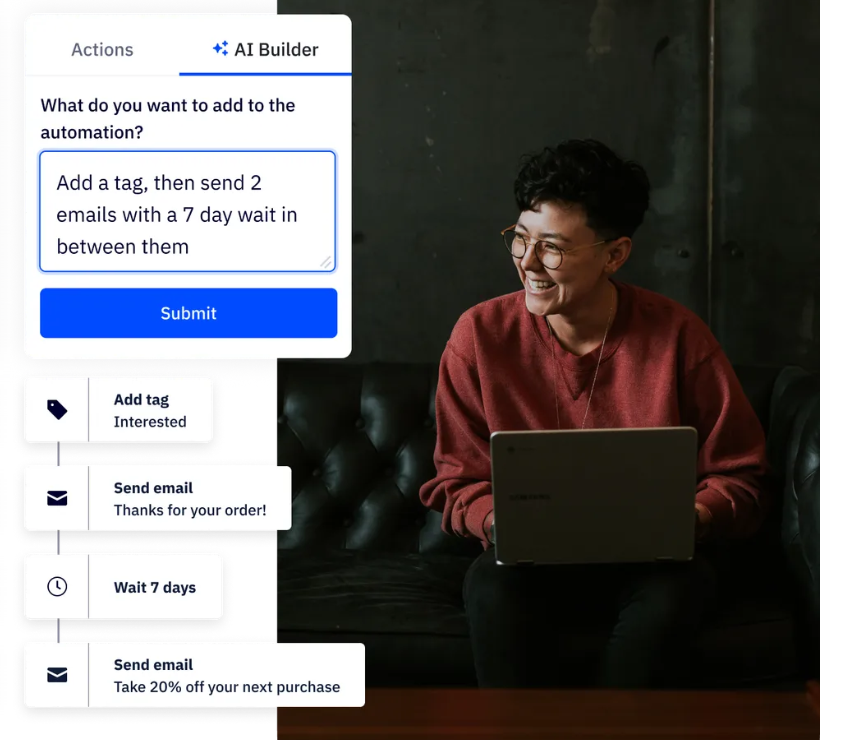
ActiveCampaign's visual automation builder is where the platform earns its reputation. Users build multi-step workflows with conditional branching, behavioral triggers, split testing, and unlimited automation actions on Plus plans and above. A single automation can react to email opens, website visits, form submissions, deal stage changes, and CRM field updates, then route contacts down different paths based on any combination of those signals.
Source: ActiveCampaign
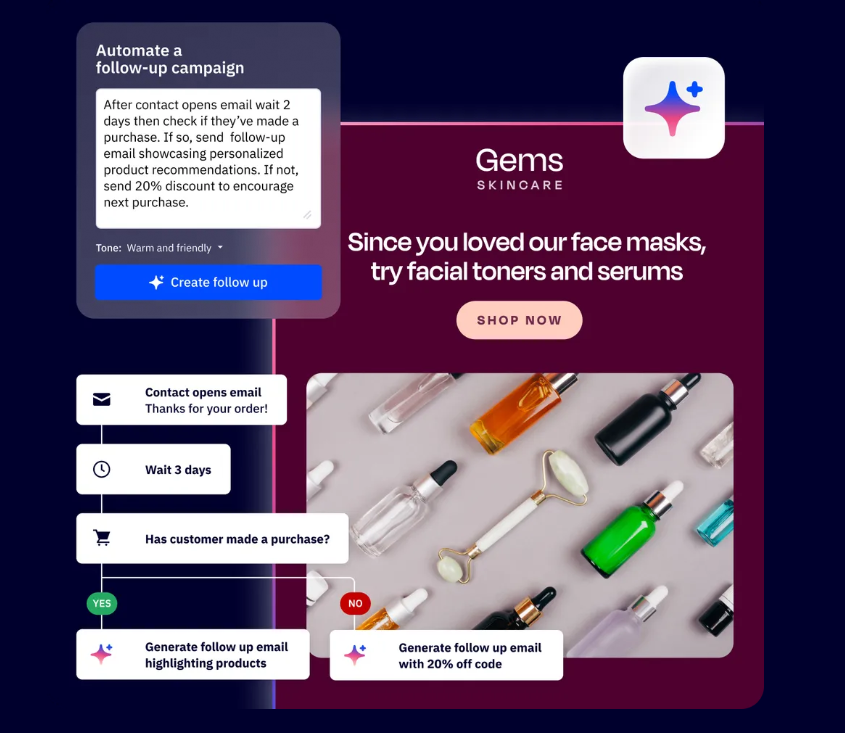
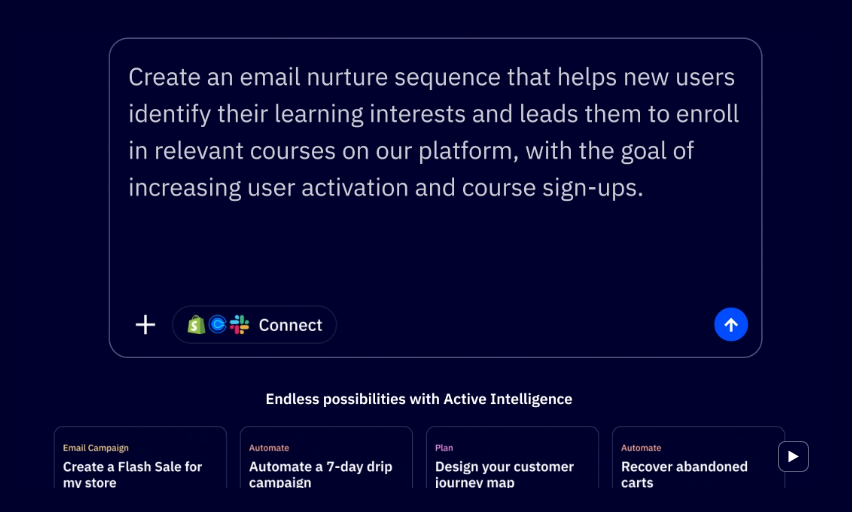
The AI Campaign Builder adds another layer: describe a goal in plain language and Active Intelligence generates a configured automation including wait periods, branching paths, and action steps. ActiveCampaign claims this builds campaigns 3x faster than manual setup.
Source: ActiveCampaign
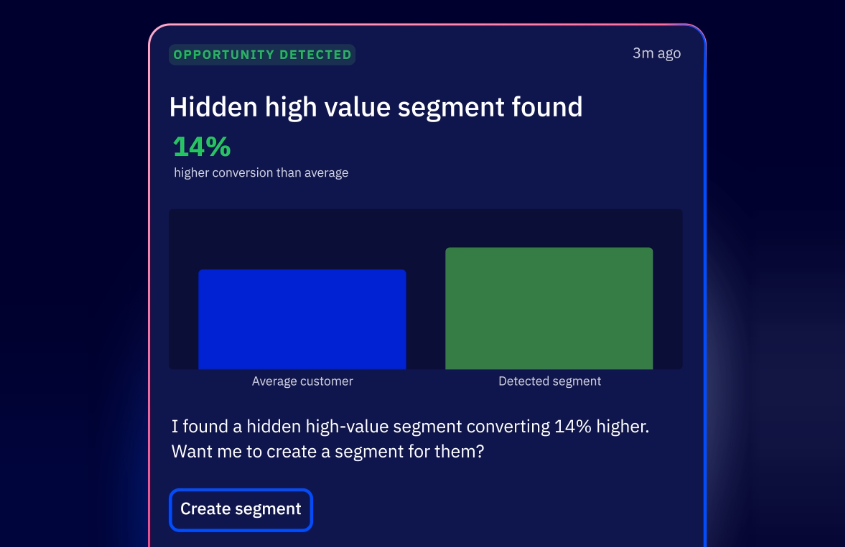
Predictive Sending analyzes each contact's engagement history and delivers emails at the best moment per recipient. Not a single best time for the whole list, but per-recipient optimization.
Source: ActiveCampaign
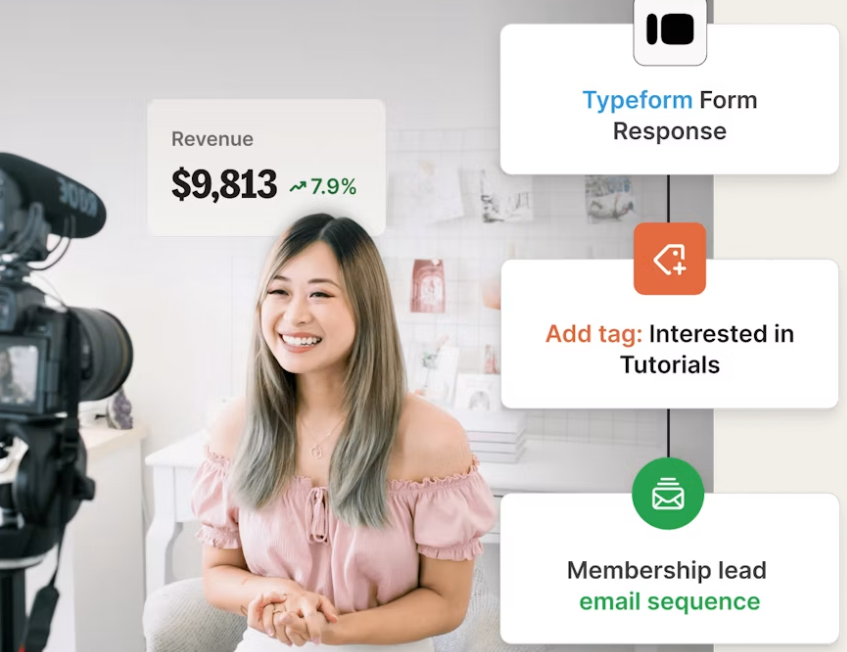
Kit's Visual Automations take a deliberately simpler approach. The canvas-based builder uses three node types (Events, Actions, and Conditions) to create subscriber journeys. Six action types cover the core creator workflows: enrolling in a sequence, adding delays, moving between automations, managing tags, setting custom fields, and sending webhooks.
Source: Kit
Kit's automations handle welcome sequences, product launch funnels, and course delivery well. The ability to continuously loop subscribers through an automation is useful for evergreen content delivery. But the platform doesn't offer A/B testing inside automation workflows, and the free plan limits users to one basic Visual Automation. For creators running a newsletter and selling a course, this is enough. For a business running multi-stage lead nurture campaigns with behavioral scoring, it's a constraint.
Multi-channel reach vs. email focus
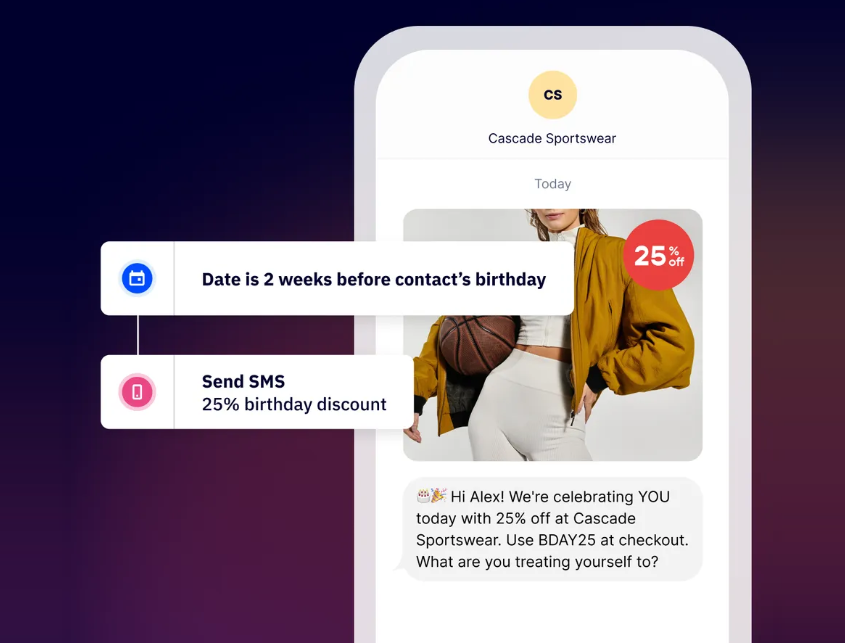
ActiveCampaign operates across three messaging channels from a single platform. Email remains the foundation. SMS Marketing adds a channel with 98% open rates and 90% read within 3 minutes. WhatsApp Messaging, added through the April 2025 Hilos acquisition, brings two-way conversational engagement for markets where WhatsApp dominates.
Source: ActiveCampaign
All three channels feed into the same automation builder. A single workflow can send an email, wait for engagement, then follow up with an SMS if the email goes unopened, all using shared contact data and behavioral triggers.
Kit is email-only. No SMS. No WhatsApp. No push notifications. This is a deliberate product choice. Kit's audience communicates with subscribers through email and social media. Adding SMS infrastructure would increase cost and complexity that most creators don't need. The Manychat integration, launched February 2026, bridges social and email by capturing subscriber emails from Instagram DMs, but the actual messaging channel remains email.

Source: Kit
For businesses selling to other businesses, multi-channel reach matters. A prospect who ignores your email might respond to a text. For creators building a newsletter audience, email is the channel, and Kit focuses on making it work well.
Creator monetization vs. business automation
Kit includes monetization tools that ActiveCampaign doesn't attempt.
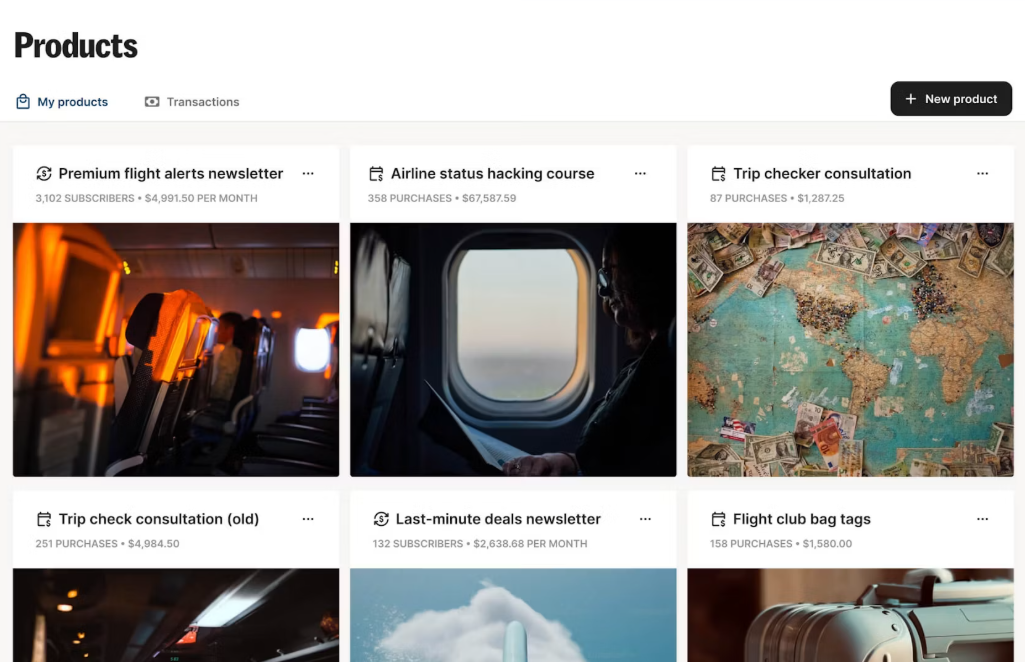
Kit Commerce lets creators sell ebooks, courses, coaching sessions, and digital products with a 3.5% + $0.30 per transaction fee, available even on the free plan. Paid newsletter subscriptions create recurring revenue.
Source: Kit
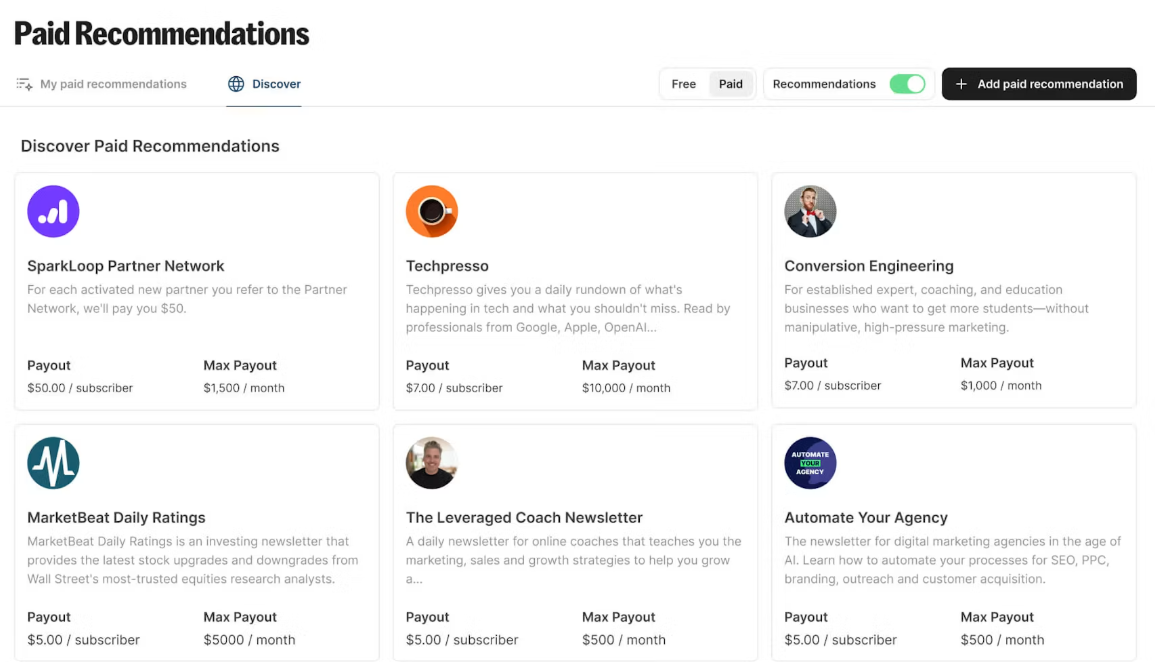
Paid Recommendations let creators earn by recommending other newsletters, and the Creator Network drives organic list growth through mutual cross-promotion among 74,000 professional creators. Kit reports 2x email list growth for creators who use mutual recommendations.
Source: Kit
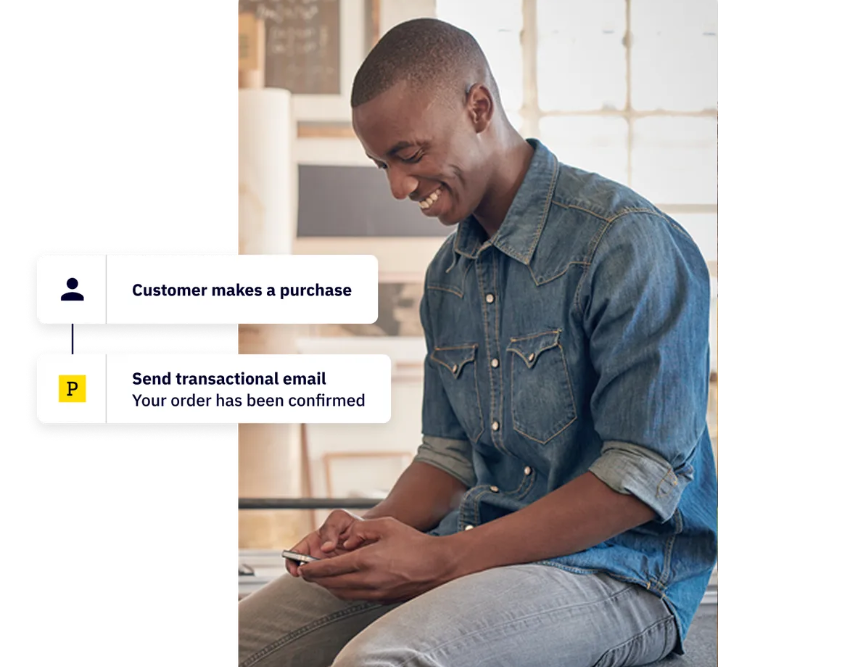
ActiveCampaign doesn't sell digital products or broker newsletter sponsorships. It helps businesses sell more of whatever they already sell, through automation. Abandoned cart recovery, lead scoring, deal pipeline management, upsell sequences, and transactional email via Postmark are revenue tools for businesses with existing products and sales processes.
Source: ActiveCampaign
The distinction maps cleanly to audience. A course creator needs to sell a $97 ebook directly through their newsletter. A SaaS company needs to convert free trial users into paying customers through a 14-day automated nurture sequence. Different problems, different tools.
The CRM gap
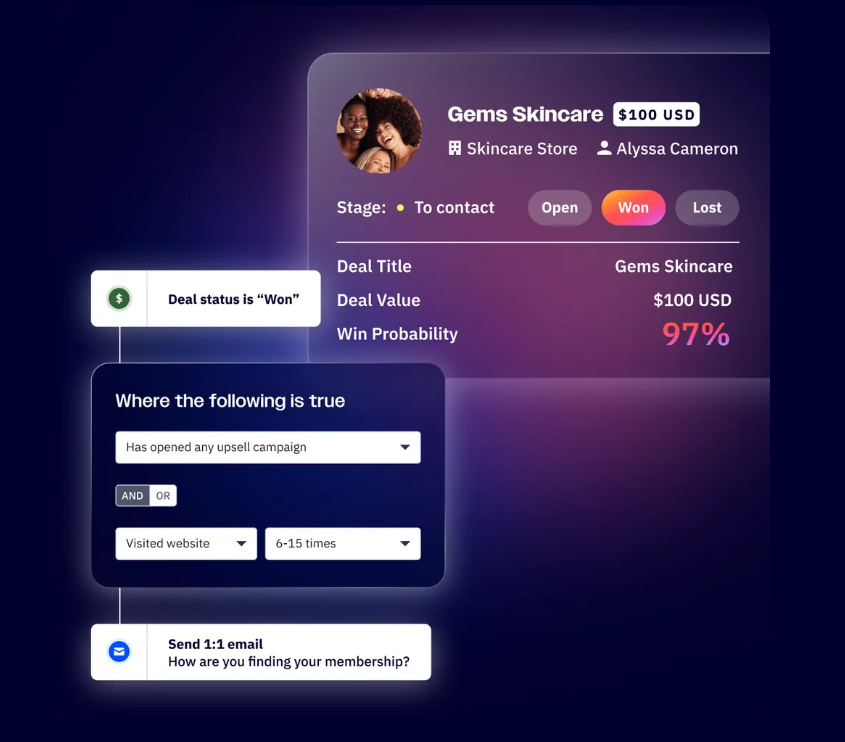
ActiveCampaign includes a built-in CRM with visual deal pipelines, lead scoring, deal scoring, sales routing, and 1:1 tracked emails from deal records. Because the CRM lives inside the marketing platform, deal records carry the full behavioral history of every contact: which emails they opened, which pages they visited, which forms they submitted.
Source: ActiveCampaign
This matters for businesses with sales teams, even small ones. A sales rep can see that a lead opened three emails about pricing, visited the features page twice, and downloaded a whitepaper, all without leaving the deal record. ActiveCampaign also supports AI-powered win probability analysis that predicts deal outcomes based on behavioral data.
Source: ActiveCampaign
The CRM works best as a marketing companion rather than a Salesforce replacement. Businesses needing advanced deal forecasting, territory management, or complex pipeline analytics will still want a dedicated CRM. But for teams that want marketing automation and basic deal tracking without managing two separate platforms, ActiveCampaign's combination is useful.
Kit has no CRM. Subscriber management relies on tags and segments rather than deal pipelines. For a creator selling digital products to an email list, this is fine. For a business tracking deals through a multi-step sales process, it's a missing piece.
For B2B teams, the data behind the campaign matters more than the platform sending it
Here's what most platform comparisons overlook: the email tool is only as effective as the data feeding it.
ActiveCampaign can build a 12-step nurture sequence with behavioral branching and predictive send times. Kit can deliver a newsletter with a 40% average open rate. Both are strong. But neither platform tells you which companies are actively researching solutions in your category right now, who the decision-makers are at those companies, or what their verified contact information is.
That's a different layer of the stack. For B2B teams, it's the layer that determines whether your campaigns reach interested buyers or disappear into inboxes that will never convert.
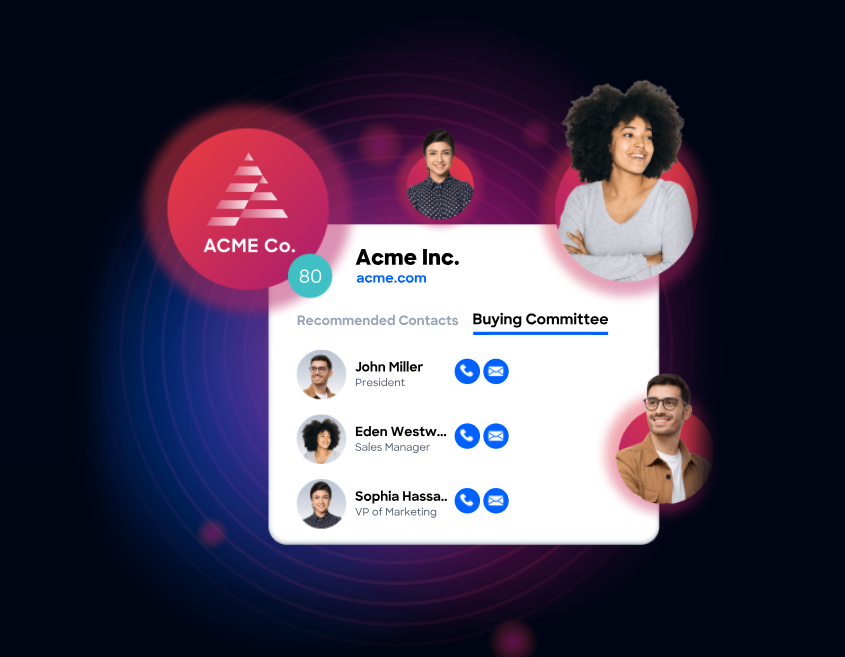
ZoomInfo operates at this data layer. The platform maintains 500M contacts and 100M companies, with 135M+ verified phone numbers and 200M+ verified business email addresses, built and maintained through automated ML scanning of 28 million site domains daily and 300+ human researchers. First-party data reaches up to 95% accuracy. In a Fortune 500 competitive RFP analyzing 25 million contacts across vendors, the independent consultant concluded that "no other competitor came even close."

Source: ZoomInfo
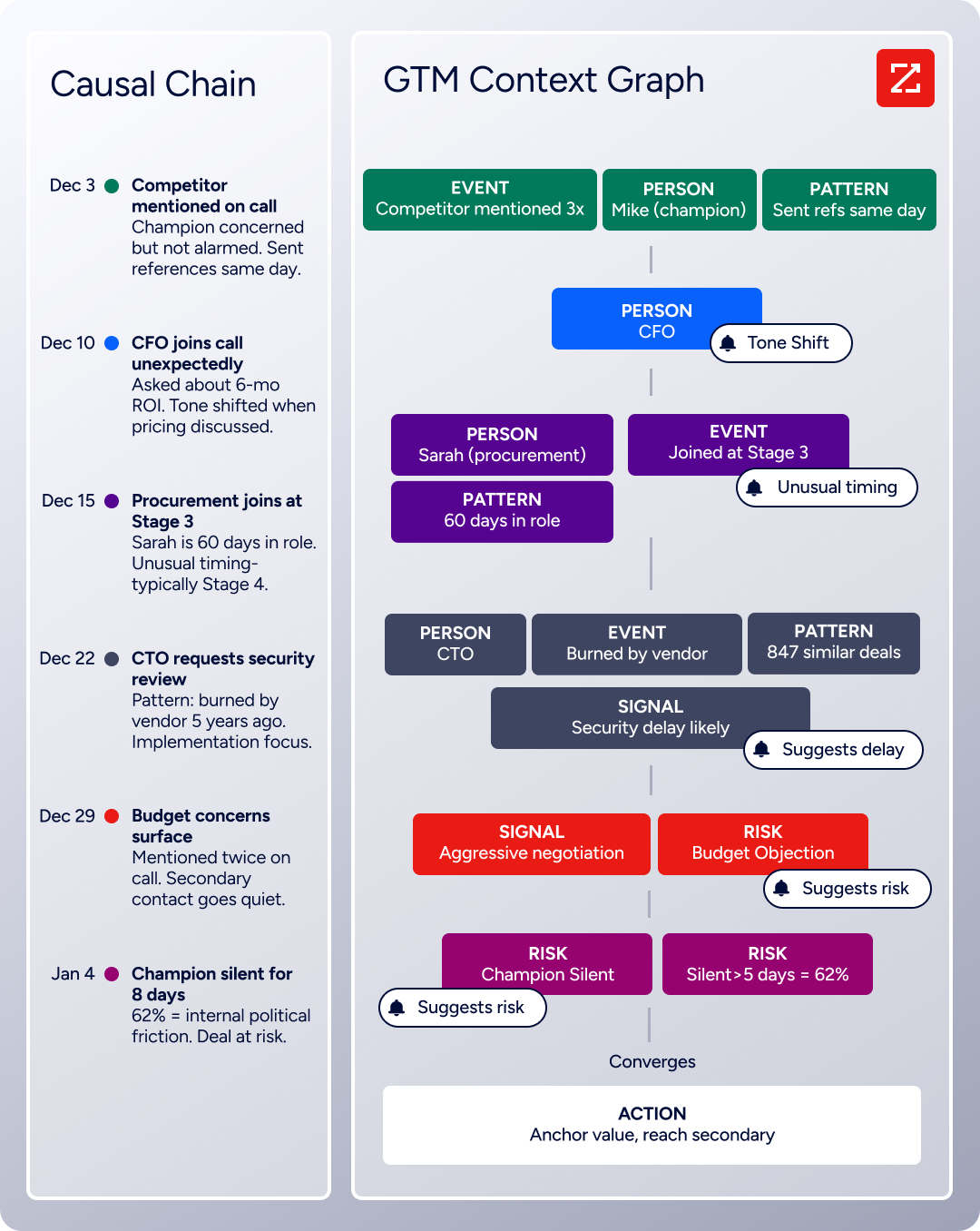
The GTM Context Graph (ZoomInfo's intelligence layer) goes beyond static contact records. It fuses ZoomInfo's third-party data with your CRM records, conversation intelligence, and behavioral signals to identify not just who to contact but why now is the right time.
Source: ZoomInfo
Buyer Intent data tracks signals from 210M+ IP-to-Org pairings and 6 trillion+ new keyword-to-device pairings monthly, surfacing companies researching your category before they ever fill out a form.
Source: ZoomInfo
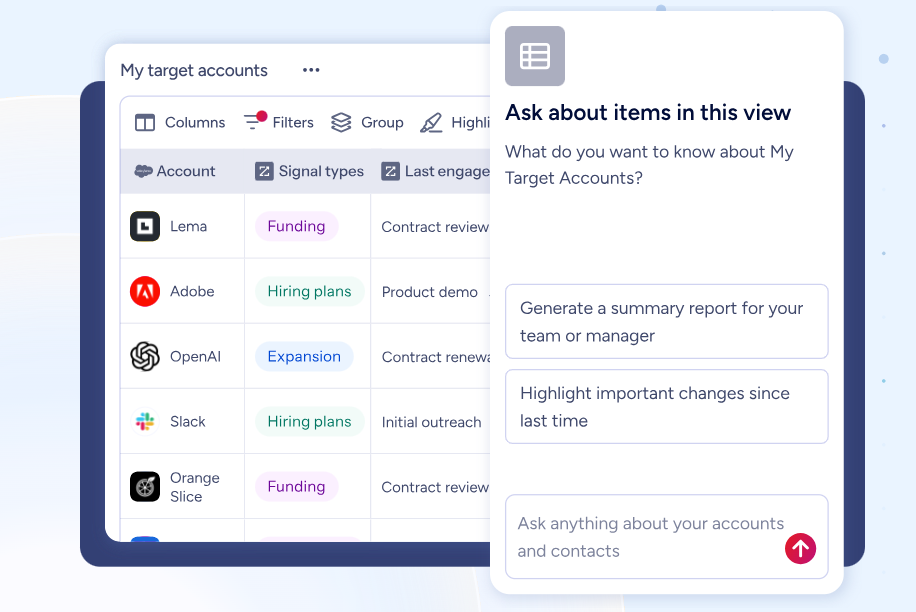
This intelligence reaches your marketing platform through APIs and MCP, or through ZoomInfo's native products: GTM Workspace for sellers and GTM Studio for marketers and RevOps. Instead of broadcasting to your entire list and hoping the right people engage, you target accounts showing buying signals with messaging informed by what ZoomInfo already knows about their situation.
Source: ZoomInfo
"It's not just the data itself. It's more about the right data at the right time to help us reach out with the right message across that full buyer journey." (Redwood Logistics)
For teams running ActiveCampaign's marketing automation, ZoomInfo enriches the contact database with verified data and buyer signals, so automations trigger on real buying behavior rather than guesswork. Redwood Logistics saw a 99% reduction in cost-per-click and a 310% increase in clickthrough rate after applying ZoomInfo's audience insights to their campaigns.
AI capabilities take different approaches
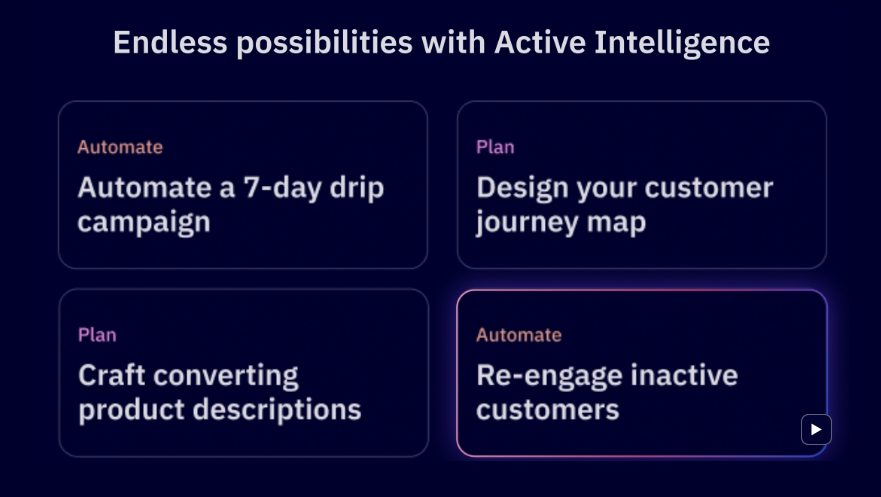
ActiveCampaign has made the larger AI investment of the two email platforms. Active Intelligence, launched May 2025 and described as the fastest-growing feature in ActiveCampaign's history, includes 12+ AI agents covering campaign creation, automation building, segmentation, content generation, and performance insights.
Source: ActiveCampaign
The company draws a distinction between traditional automation and its approach: "Autonomous marketing builds what you need", whereas traditional automation only runs what you build. The announced Agent-to-User AI will proactively surface recommendations based on performance signals without the marketer asking.
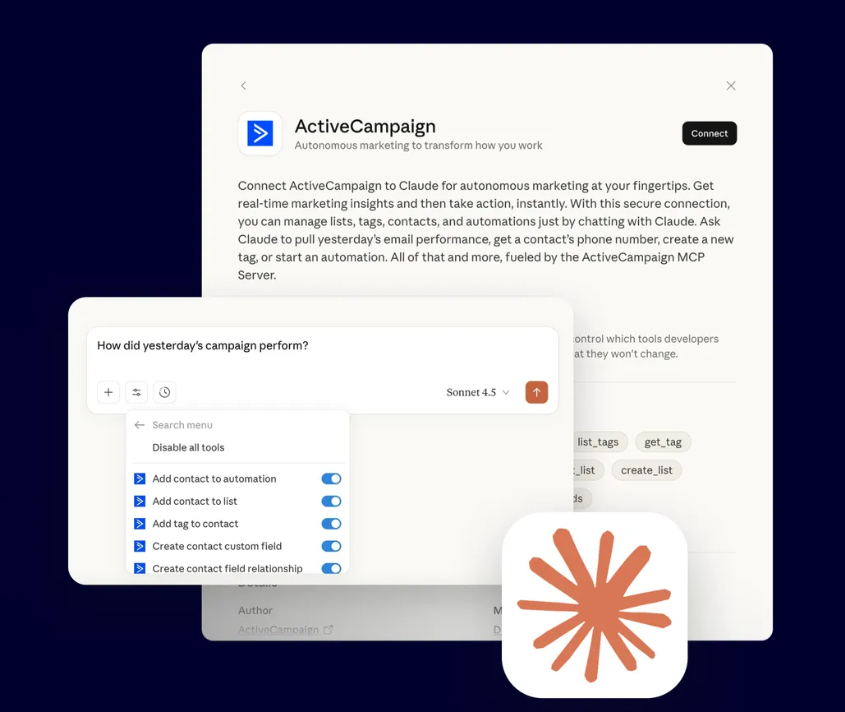
ActiveCampaign also became the first marketing platform in Claude's connector directory via MCP, allowing AI assistants to read email stats, update contacts, and trigger automations through natural language.
Source: ActiveCampaign
Kit's AI features are narrower. An AI subject line generator suggests options based on email content. The Kitlytics app in the App Store uses AI to analyze performance and generate campaigns based on a creator's historical data.
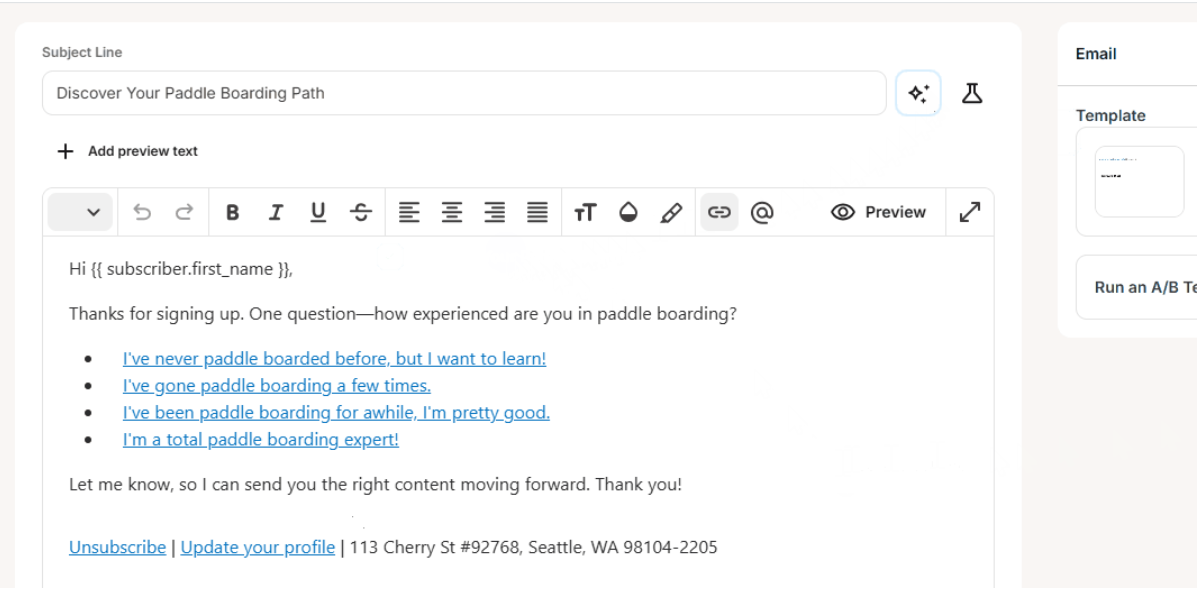
Source: Kit
Kit also offers an MCP server that lets AI clients read and write to a creator's account. These tools are practical, but they reflect Kit's philosophy of keeping things focused rather than building an AI layer across the entire platform.
ZoomInfo's AI operates at the data and intelligence layer rather than campaign execution. The GTM Context Graph analyzes millions of deal patterns to identify which signal combinations predict conversion. Guided Intent, exclusive to ZoomInfo, identifies topics historically correlated with deal success rather than requiring manual topic selection.
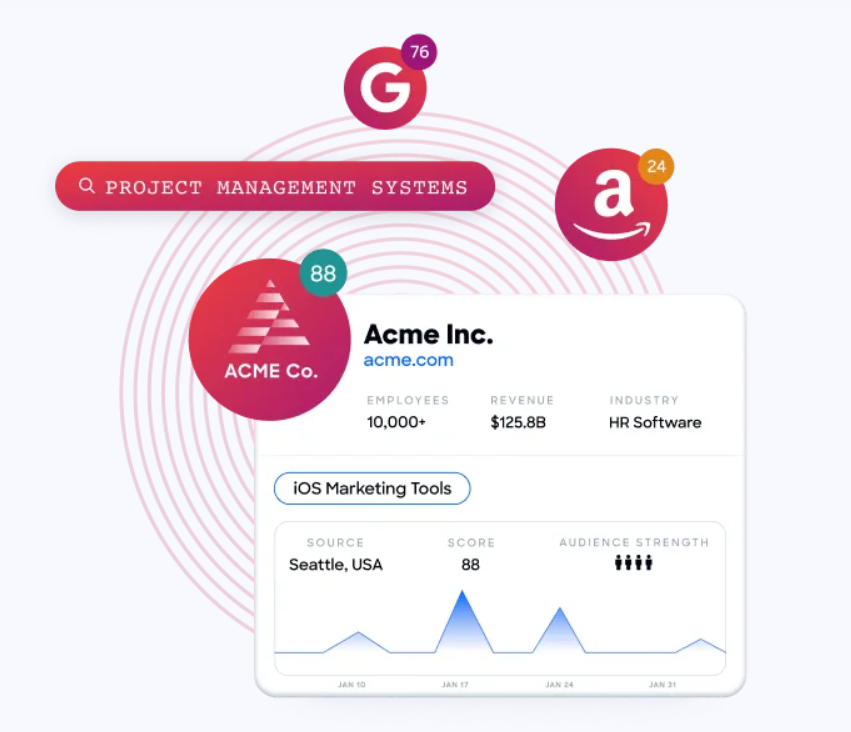
Source: ZoomInfo
AI agents in GTM Workspace automate account research, generate outreach, and surface next-best actions. The ZoomInfo MCP server makes this intelligence available to Claude, ChatGPT, and any MCP-compatible AI tool.
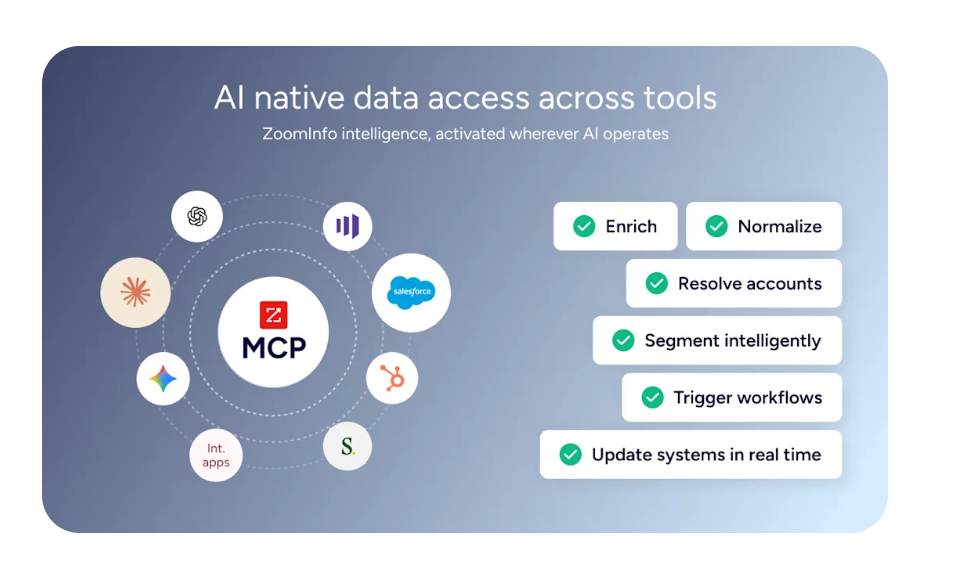
Source: ZoomInfo
Several of ActiveCampaign's Active Intelligence agents remain in beta as of early 2026, meaning reliability and feature completeness may not yet match the marketing claims. Kit's AI features, while less ambitious, ship as stable production features.
Deliverability: both platforms perform well
Both ActiveCampaign and Kit invest in inbox placement, and the numbers reflect it.
ActiveCampaign reports 99.88% email deliverability, with EmailToolTester independently measuring 94%. The platform processed 109 billion emails in 2025 with an average open rate of 40.4%.
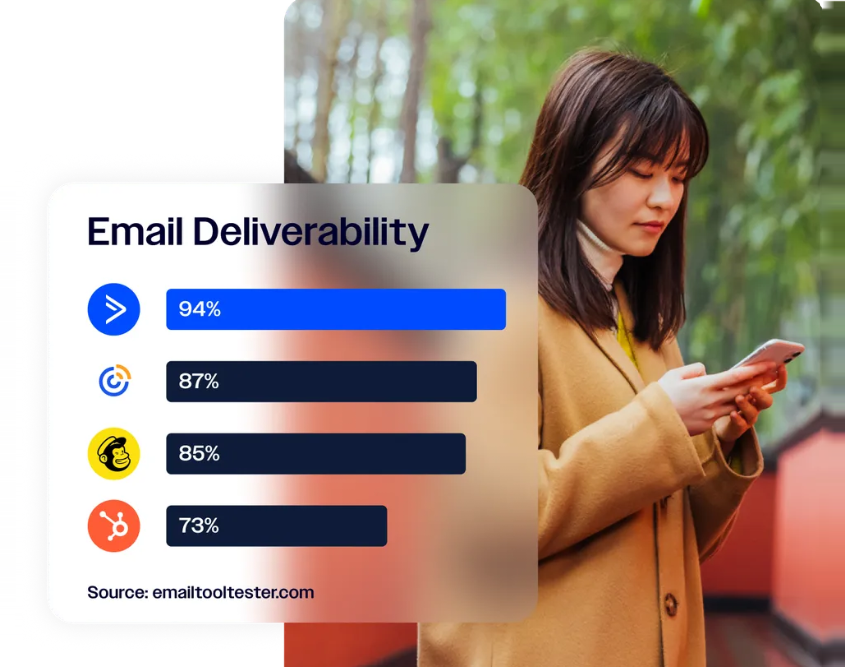
Source: ActiveCampaign
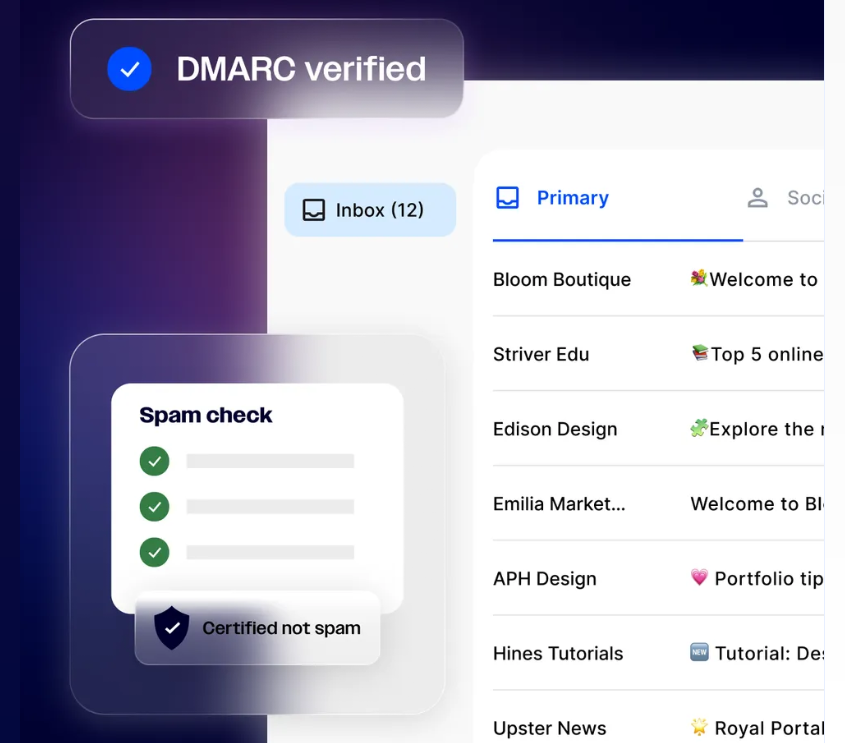
Infrastructure includes private network routing that reduces average send time by 10x, dedicated IP management, and a DMARC testing tool. 93% of surveyed customers report deliverability better than competitors.
Source: ActiveCampaign
EmailToolTester named ActiveCampaign the Best Email Marketing Tool of 2025. ActiveCampaign also includes Apple MPP filtering that strips inflated open metrics caused by Apple Mail Privacy Protection, improving reporting accuracy.
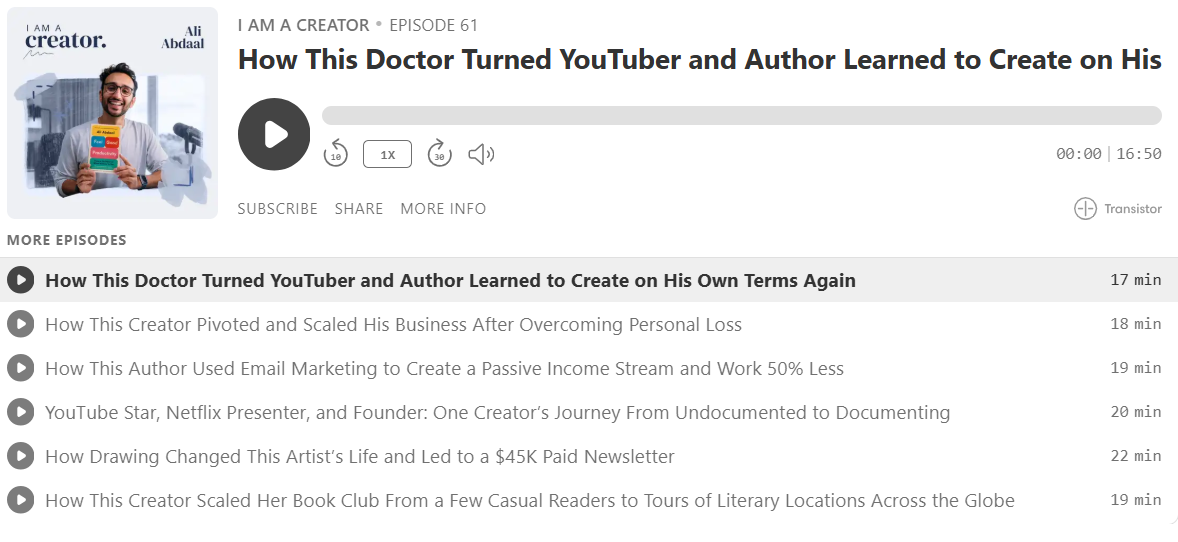
Kit claims a 99.8% delivery rate across over one billion messages sent monthly, with a 40% average open rate. Kit publishes monthly deliverability reports and hosts the Deliverability Defined podcast, an unusually deep commitment to inbox placement.
Source: Kit
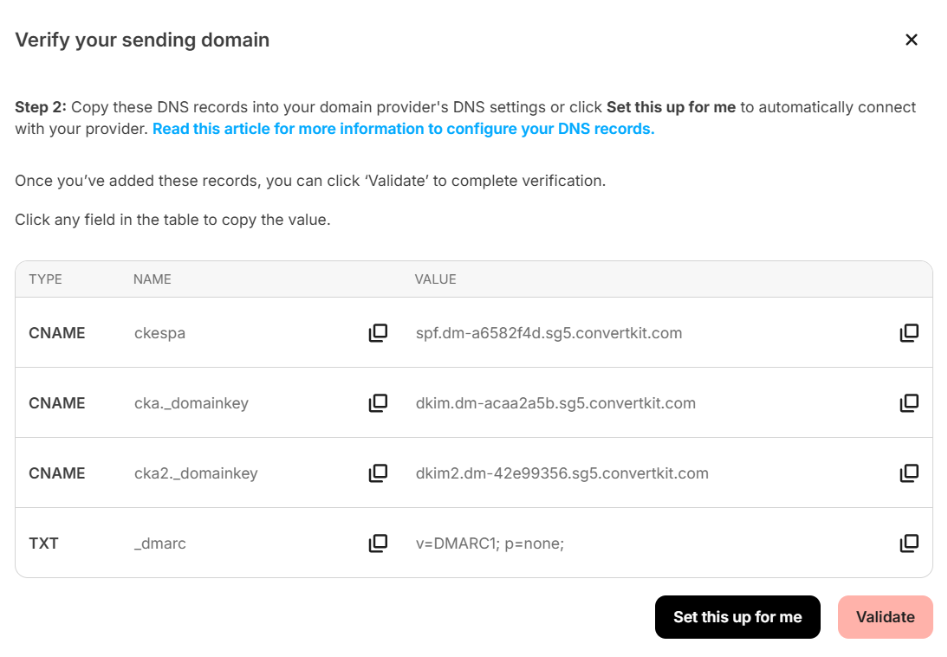
The platform supports domain verification, DMARC setup guidance, and dedicated IPs for high-volume senders.
Source: Kit
Kit has a structural deliverability advantage worth understanding. Because Kit serves almost exclusively permission-based creator audiences (people who actively chose to follow a specific creator), the platform's shared IP pool carries a healthier sender reputation than mixed-sender pools on general-purpose platforms. This doesn't mean Kit has better technology. It means the composition of its user base naturally produces higher engagement signals.
Deliverability is strong on both platforms and shouldn't be the deciding factor between them.
Integration ecosystems show different priorities
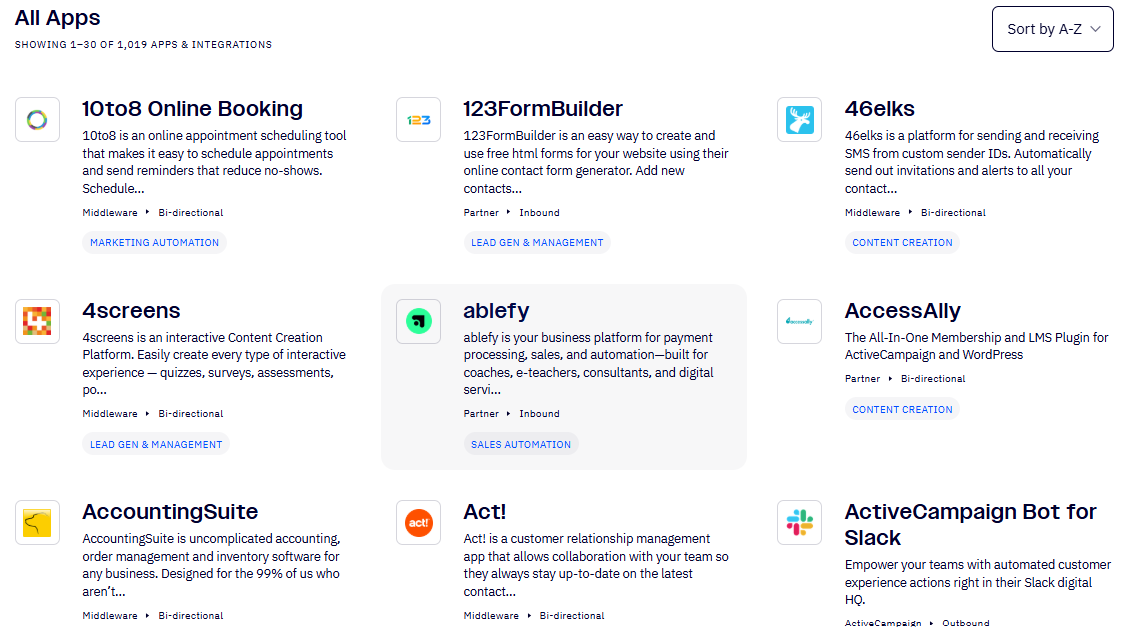
ActiveCampaign's integration marketplace lists 1,000+ app integrations filterable by use case, compatible features, and plan compatibility. Key connections include Shopify, WooCommerce, Salesforce, WordPress, Zapier, and Calendly. The ecosystem reflects ActiveCampaign's business audience: CRM integrations, e-commerce connectors, advertising platforms, and developer tools.
Source: ActiveCampaign
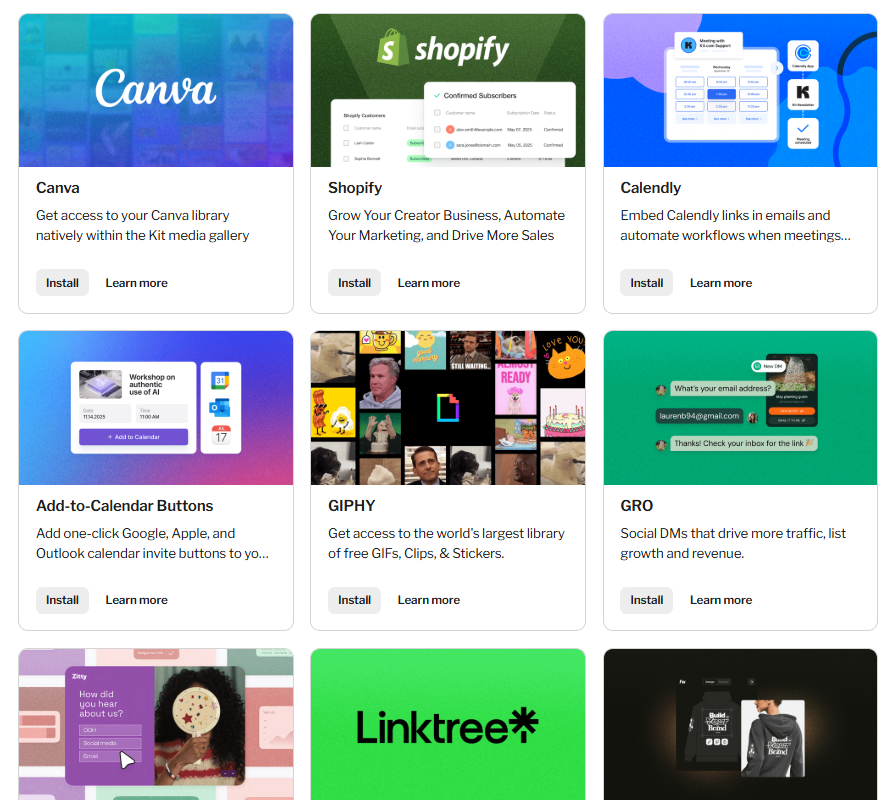
Kit's App Store is newer and more curated, with 70% of Kit's 60,000+ creators having at least one app installed. Categories cover the creator tool stack: Memberships & Courses (Kajabi, Teachable, Mighty Networks), e-Commerce (Shopify), Content (Canva, Unsplash), and Scheduling (Calendly, Luma). Kit apps can embed content directly inside the email editor, so a creator can access their Canva library or Unsplash images without leaving Kit.
Source: Kit
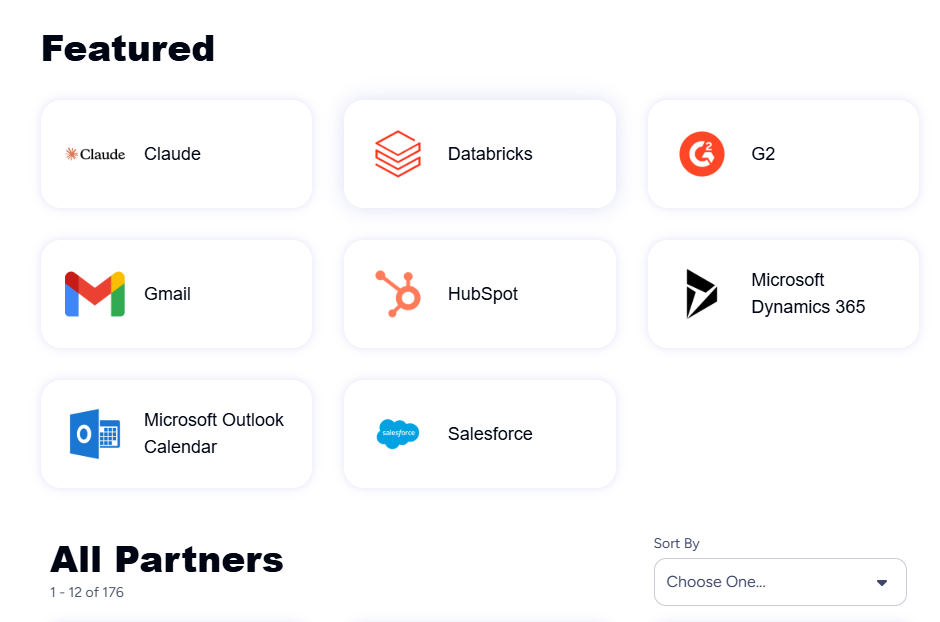
ZoomInfo's App Marketplace lists 172+ partner integrations spanning CRM, marketing automation, sales engagement, data warehouses, and AI.
Source: ZoomInfo
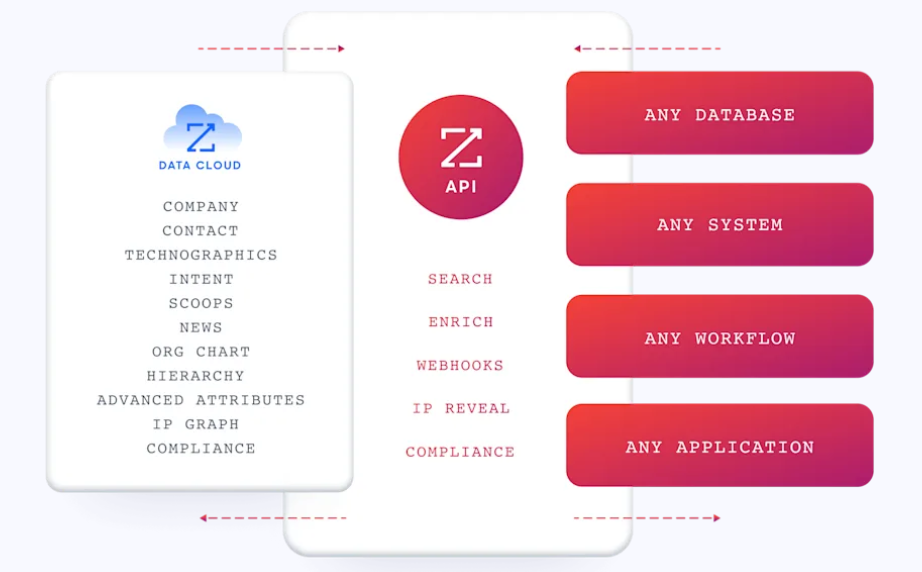
Native connections with Salesforce, HubSpot, Snowflake, and Claude reflect the enterprise B2B buyer. The ZoomInfo MCP server and Enterprise API extend this reach to any custom application or AI agent.
Source: ZoomInfo
Each integration ecosystem mirrors its platform's audience. ActiveCampaign connects to business tools. Kit connects to creator tools. ZoomInfo connects to sales and data infrastructure.
"The plug-and-play aspect of the API means I can integrate it very easily into any process and get information at a moment's notice." (BDO Canada)
Pricing reflects different markets
ActiveCampaign uses contact-based pricing with four tiers (Starter, Plus, Professional, Enterprise). Plans start at $15/month for 1,000 contacts on the Starter plan. Starter at 10,000 contacts runs $149/month. The platform charges once per unique contact regardless of how many automations or segments they appear in. There's no permanent free plan, only a 14-day free trial and a 30-day money-back guarantee for first-time subscribers.
Worth noting: the Starter plan caps automations at 5 actions each and excludes landing pages, conditional content, predictive sending, and advanced segmentation. Most businesses need the Plus or Professional tiers to access the features that justify choosing ActiveCampaign over simpler tools. G2 reviewers report that pricing has increased notably over the past three years and climbs quickly as contact lists grow.
Kit uses subscriber-count pricing across three tiers. The Newsletter plan is free for up to 10,000 subscribers with unlimited broadcasts, the most generous free tier in this comparison. The Creator plan starts at $33/month for 1,000 subscribers (billed annually), and the Pro plan at $66/month for 1,000 subscribers. Kit charges no per-email send limits on any plan and has no charges for tags or segments.
Kit's pricing reputation took a hit in September 2025 when it raised Creator plan pricing from $15 to $33/month for 1,000 subscribers, more than doubling the base cost. G2 reviewers cite pricing as the most common complaint, particularly for early-stage creators not yet generating revenue from their lists.
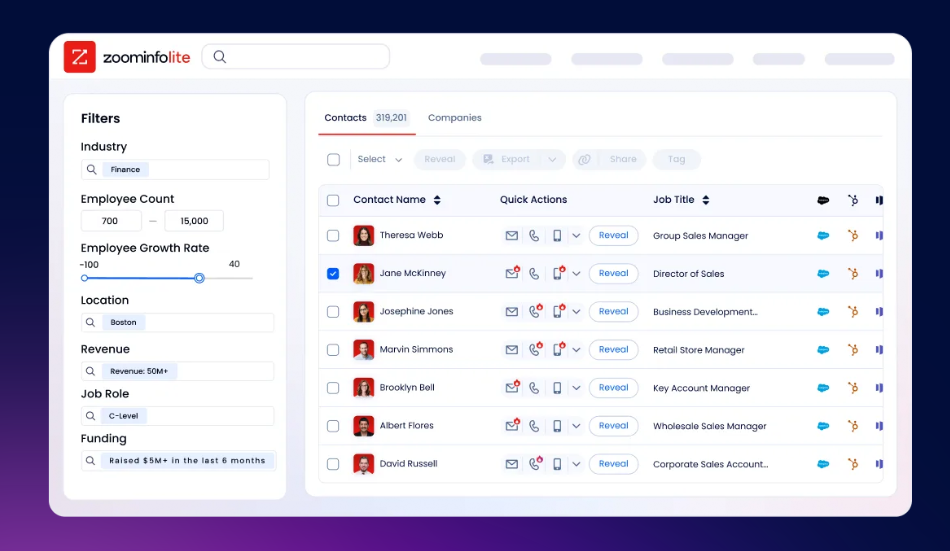
ZoomInfo uses consumption-based pricing with no published prices. A permanent free tier, ZoomInfo Lite, provides access to ZoomInfo's database with 10 monthly export credits, enough for individual prospecting but not team-scale operations. Paid plans scale with seats, credits, and feature tiers.
Source: ZoomInfo
The three tools occupy different budget categories. ActiveCampaign and Kit compete for your email marketing spend. ZoomInfo competes for your sales intelligence and data budget. For B2B teams, combining ZoomInfo's data with either email platform creates a stack where each tool handles what it does best.
ActiveCampaign vs. Kit vs. ZoomInfo: Which should you choose?
The choice comes down to who you are and what you're building.
Choose ActiveCampaign if:
You run a business that needs marketing automation
Multi-channel campaigns (email + SMS + WhatsApp) matter to your strategy
You want a built-in CRM alongside your email tool
Your marketing involves complex, multi-step customer journeys with behavioral triggers
You're willing to invest time learning the platform
Choose Kit if:
You're a creator building an audience through content
You want to sell digital products and paid subscriptions directly from your email tool
Growing through peer recommendations appeals more than paid acquisition
You prefer simplicity and speed over feature depth
You want to start free and scale as revenue grows
Add ZoomInfo if:
Your campaigns target B2B buyers and you need verified contact data
You want to know which accounts are researching solutions like yours
Your marketing ROI depends on reaching the right decision-makers, not just sending more emails
You need intent signals and account intelligence to prioritize your outreach
You want the same data foundation powering your email campaigns, sales motions, and AI agents
See what ZoomInfo can do with a free trial or explore ZoomInfo Lite at no cost.
ActiveCampaign and Kit both excel at email marketing, but they serve different people solving different problems. Pick the platform that matches how you work and who you're trying to reach. If you're in B2B, consider adding ZoomInfo to whichever platform you choose. The best automation in the world can't compensate for reaching the wrong people, and the best newsletter can't convert readers who were never the right audience. Getting the data right is where effective marketing starts.
ActiveCampaign vs. Kit vs. ZoomInfo FAQ
What is the fundamental difference between ActiveCampaign and Kit?
ActiveCampaign is a marketing automation platform with a built-in CRM, designed for businesses that need complex multi-channel campaigns across email, SMS, and WhatsApp. Kit is a creator-focused email platform designed for writers, podcasters, and course creators who want to grow an audience, send newsletters, and sell digital products. ActiveCampaign optimizes for marketing operations and business workflows. Kit optimizes for the creator business model where content is the product.
Which platform has the better free plan?
Kit has the more generous free plan, covering up to 10,000 subscribers with unlimited broadcasts, landing pages, forms, and commerce features. ActiveCampaign has no permanent free plan, only a 14-day free trial and a 30-day money-back guarantee for first-time subscribers. ZoomInfo offers ZoomInfo Lite, a permanent free tier with access to its B2B database and 10 monthly export credits, though this covers B2B data access rather than email marketing.
Can ZoomInfo be used alongside either ActiveCampaign or Kit?
Yes. ZoomInfo provides B2B data and buyer intelligence that can feed into any email marketing platform. Its API and MCP server allow programmatic access to verified contact data, intent signals, and account intelligence. For B2B teams, ZoomInfo identifies who to target and when they're in-market. The email platform then handles campaign execution. The two layers solve different problems and work together.
Which platform is better for B2B marketing?
ActiveCampaign is the stronger choice among the two email platforms for B2B. Its built-in CRM, lead scoring, deal pipeline management, and multi-channel automation are designed for business-to-business workflows. Kit lacks a CRM and is built around creator-to-audience relationships rather than B2B sales cycles. For B2B teams, combining ActiveCampaign's automation with ZoomInfo's data creates an effective stack.
How does pricing compare at 10,000 contacts or subscribers?
Kit's free Newsletter plan covers up to 10,000 subscribers at no cost, though automation is limited to one basic workflow. ActiveCampaign's Starter plan at 10,000 contacts costs $149 per month. Both platforms use dynamic pricing calculators for higher tiers. ZoomInfo's pricing is consumption-based and custom-quoted, occupying a separate budget category from email marketing tools.
Which platform has stronger AI capabilities?
ActiveCampaign has the more developed AI features among the two email platforms, with Active Intelligence offering 12+ AI agents for campaign building, content generation, predictive sending, and AI-suggested segments. Some agents remain in beta. Kit's AI focuses on subject line generation and the third-party Kitlytics analytics app. ZoomInfo's AI operates at the data layer, analyzing billions of data points to identify buying patterns, score accounts, and generate account intelligence through its GTM Context Graph.
Is Kit only for newsletter writers, or can businesses use it too?
Kit is designed for creators, but some small businesses (particularly consultants, coaches, and solo entrepreneurs) use it for audience building and digital product sales. However, businesses needing CRM functionality, multi-channel automation, lead scoring, or team-based workflows will find Kit's feature set insufficient compared to ActiveCampaign. Kit itself frames its ideal user as someone whose content is the business.
What does ZoomInfo add that an email marketing platform doesn't provide?
ZoomInfo provides three things email platforms don't deliver: verified B2B contact data (who to reach, with accurate emails and phone numbers), buyer intent signals (which companies are researching solutions in your category right now), and account intelligence (organizational context like org charts, technographics, and deal patterns that inform outreach strategy). Email platforms handle execution after you know who to target. ZoomInfo handles the identification and intelligence that determine which contacts are worth pursuing in the first place.
More ActiveCampaign comparisons:
