
Choosing between ActiveCampaign vs. Mailchimp for your email marketing and automation often comes down to five questions:
Do you need multi-branch automation workflows, or are you mostly sending newsletters and promotional campaigns?
Is your priority marketing to existing contacts, or finding the right contacts to market to in the first place?
Are you a small team that needs simplicity, or a growing team that needs sophistication?
Do you sell primarily to consumers (B2C/ecommerce), or to other businesses (B2B)?
Is your biggest bottleneck creating campaigns, or knowing which accounts and buyers to target?
In short, here's what we recommend:
ActiveCampaign is the automation-first platform for businesses that have outgrown basic email tools and need behavior-driven marketing workflows. Its visual automation builder handles complex branching logic that most competitors can't match, and the built-in CRM keeps your sales and marketing data in one place.
With the launch of Active Intelligence, ActiveCampaign is pushing into AI-generated campaigns and goal-based automation. The tradeoff: a steeper learning curve and pricing that scales sharply as your contact list grows.
Mailchimp makes email and SMS marketing straightforward for small businesses and ecommerce brands. With 130+ email templates, a free plan, native Shopify and WooCommerce integrations, and Intuit Assist AI built in, Mailchimp gets you sending fast.
It's the platform 11 million businesses already use, and for good reason. But when your automation needs grow complex or your focus shifts toward B2B pipeline, Mailchimp shows its limits.
Both platforms excel at marketing to people already in your database. Neither solves the problem that comes before the campaign: identifying the right companies and buyers to target. That's where a different kind of platform matters.
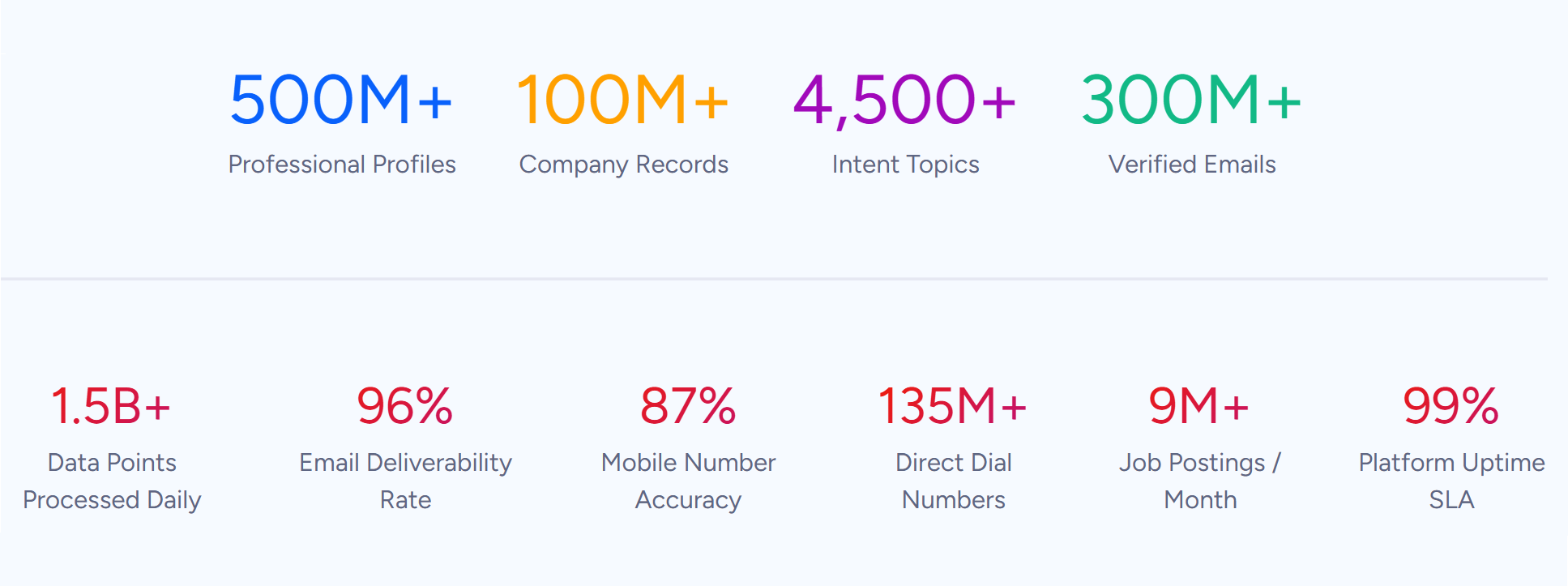
ZoomInfo is a B2B data and GTM platform that operates upstream of both ActiveCampaign and Mailchimp. Built on a B2B data platform covering 500M contacts, 100M companies, 135M+ verified phone numbers, and 200M+ verified business email addresses, ZoomInfo goes beyond storing contact records.
Its GTM Context Graph combines your CRM data, conversation transcripts, and behavioral signals with ZoomInfo's third-party intelligence, processing 1.5B+ data points daily to show not just what's happening in your market, but why.
For B2B teams, this means your campaigns target accounts that match your proven win patterns, your sales reps reach verified decision-makers with direct dials that connect, and your marketing automation runs on continuously verified data rather than a decaying static list.
You access this intelligence through GTM Workspace for sellers, GTM Studio for marketers and RevOps, or APIs and MCP in any front-end, including ActiveCampaign and Mailchimp.
If knowing who to target matters as much as how you reach them, see how ZoomInfo works.
ActiveCampaign vs. Mailchimp at a glance
ActiveCampaign | Mailchimp | ZoomInfo | |
|---|---|---|---|
Core strength | Marketing automation & CRM | Email marketing & ecommerce | B2B data, intelligence & GTM execution |
AI capabilities | Active Intelligence (12+ AI agents) | Intuit Assist (content generation, send-time optimization) | GTM Context Graph with AI account & deal intelligence |
CRM included | Yes (built-in) | Lightweight contact profiles only | GTM Workspace for sellers; integrates with Salesforce, HubSpot, Dynamics |
Email deliverability | 93% of customers report better rates than competitors | >99% average delivery rate | N/A (enriches data for platforms that send) |
Automation depth | Unlimited branching, conditional logic, multi-channel | Up to 200 flows on Standard/Premium; limited branching on lower tiers | AI GTM plays and workflows via GTM Studio |
Channels | Email, SMS, WhatsApp | Email, SMS (add-on), social ads | Multi-channel orchestration (email, ads, calls, direct mail) |
Integrations | 1,000+ | 300+ | 172+ marketplace partners + API/MCP access |
Contact data | You bring your own | You bring your own | 500M contacts, 200M+ verified emails, 135M+ verified phones |
Free plan | 14-day trial only | Yes (250 contacts, 500 emails/month) | ZoomInfo Lite (permanent free tier) + 7-day full trial |
Starting price | $15/month (1,000 contacts) | $13/month (500 contacts) | Custom pricing (consumption-based) |
Best for | SMBs needing advanced automation | Small businesses & ecommerce brands | B2B sales and marketing teams |
ActiveCampaign wins on automation depth
ActiveCampaign's automation builder is the platform's defining feature, and it's where the gap between the two is widest.
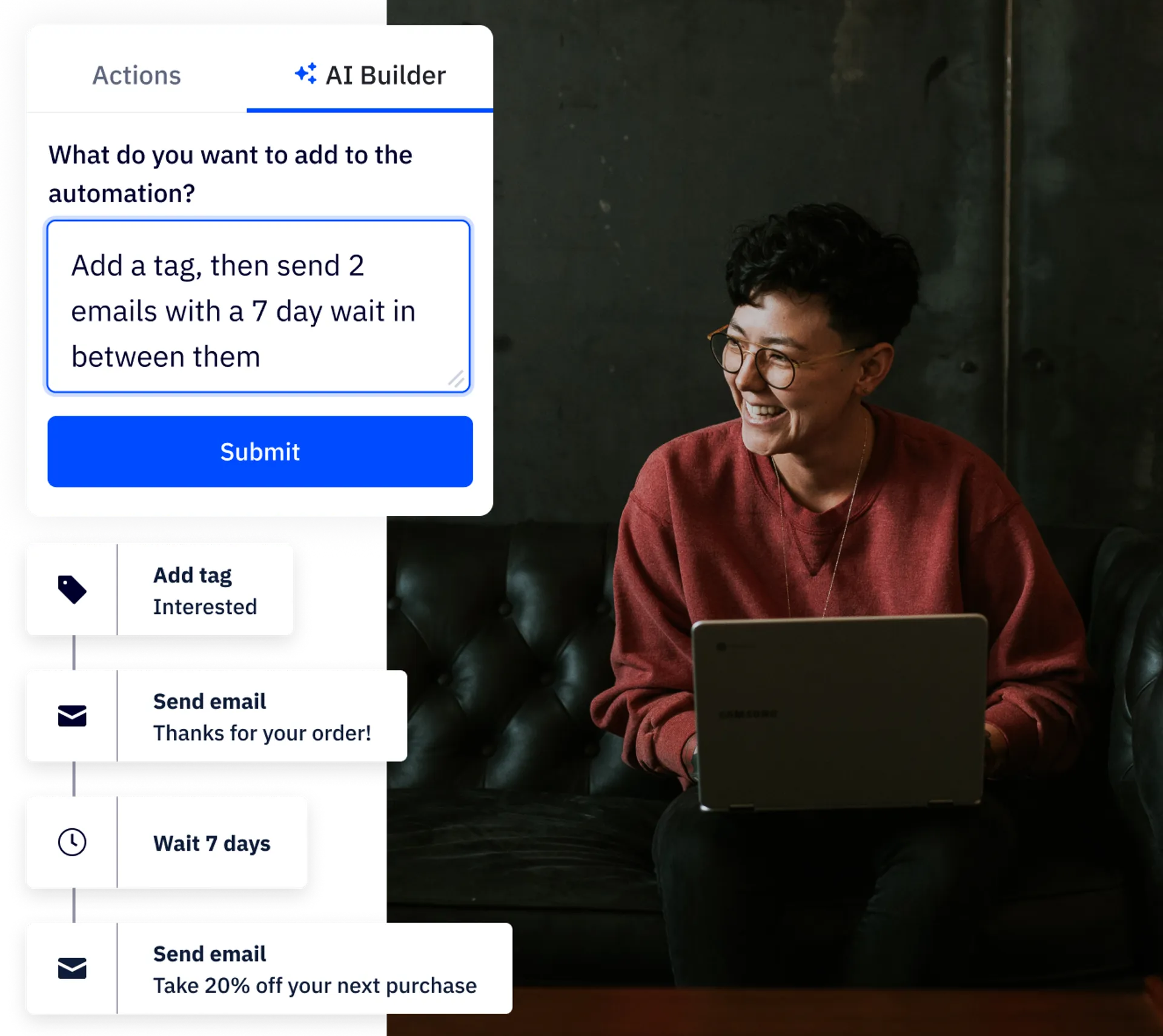
The visual automation builder supports unlimited actions on Plus plans and above, with conditional branching that responds to behavioral triggers: link clicks, tag changes, deal stage movements, purchase events, site visits, and custom field updates.
Source: ActiveCampaign
You can build multi-path journeys where contacts split based on engagement patterns, merge back together, trigger CRM deal creation, assign tasks to sales reps, and adjust lead scores, all in a single workflow.
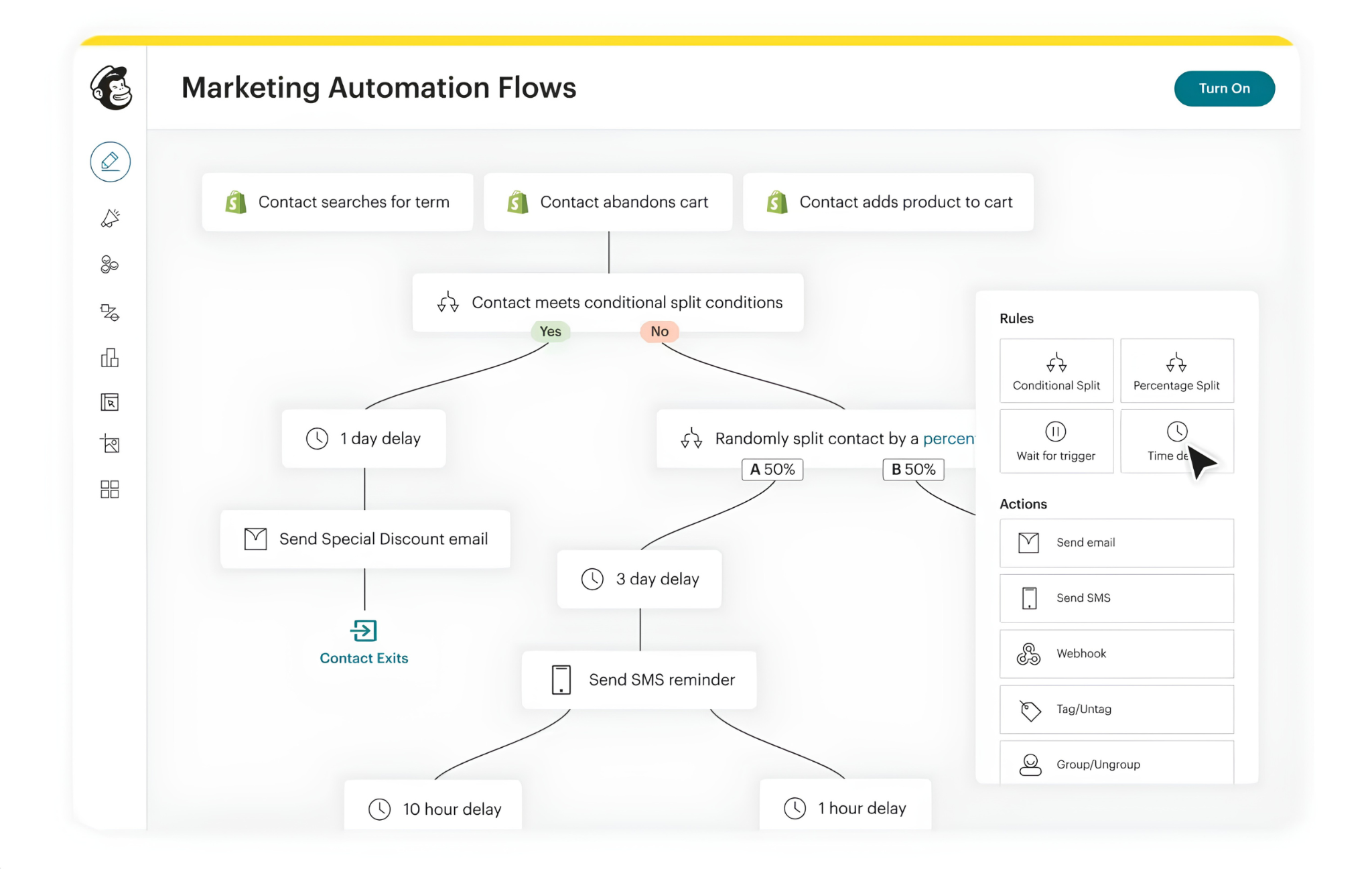
Mailchimp's Marketing Automation Flows (formerly Customer Journey Builder) have improved, especially with the February 2026 update. Standard and Premium plans now support multiple starting points and branching logic, with up to 200 flows.
Source: Mailchimp
But Essentials plan users are limited to 4-step flows, and the conditional logic is simpler than what ActiveCampaign offers. Mailchimp's automation strength is in ecommerce-specific flows (abandoned cart, post-purchase, back-in-stock) rather than behavioral branching.
For a business running a welcome series and a few abandoned cart emails, Mailchimp handles it well. For a business that needs a multi-step nurture flow where contacts branch based on which webinar they attended, what content they downloaded, and which pricing page they visited, ActiveCampaign is built for that complexity.
Mailchimp is easier to start with
Mailchimp's advantage is speed to first send. The platform is designed so a business owner with no marketing experience can create and send a professional email within an hour.
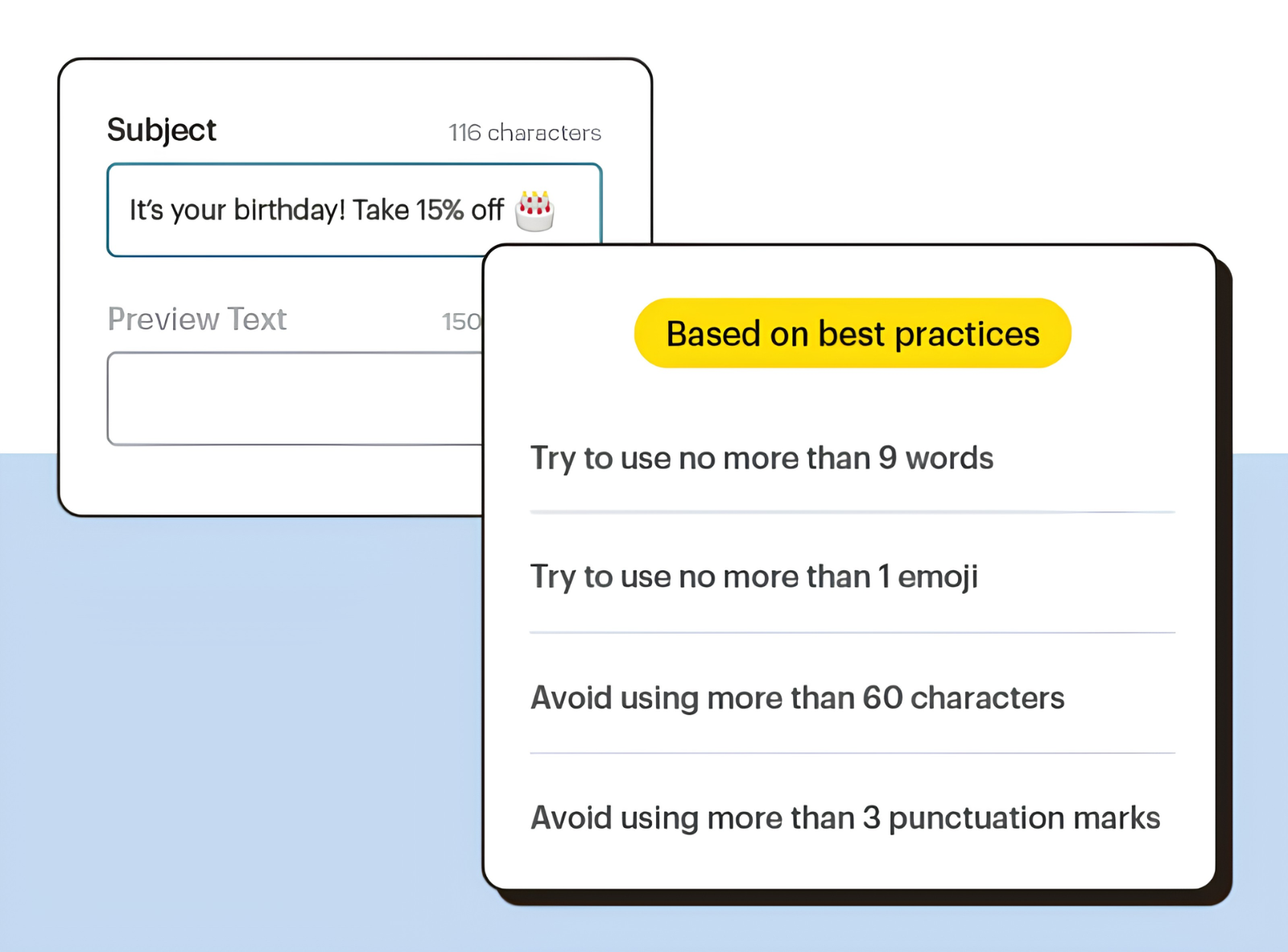
The drag-and-drop editor with 130+ templates covers most use cases. The Subject Line Helper gives real-time feedback as you type. Intuit Assist can generate a first draft from a description of what you want to say. And the free plan (250 contacts, 500 emails/month) lets you start without a credit card.
Source: Mailchimp
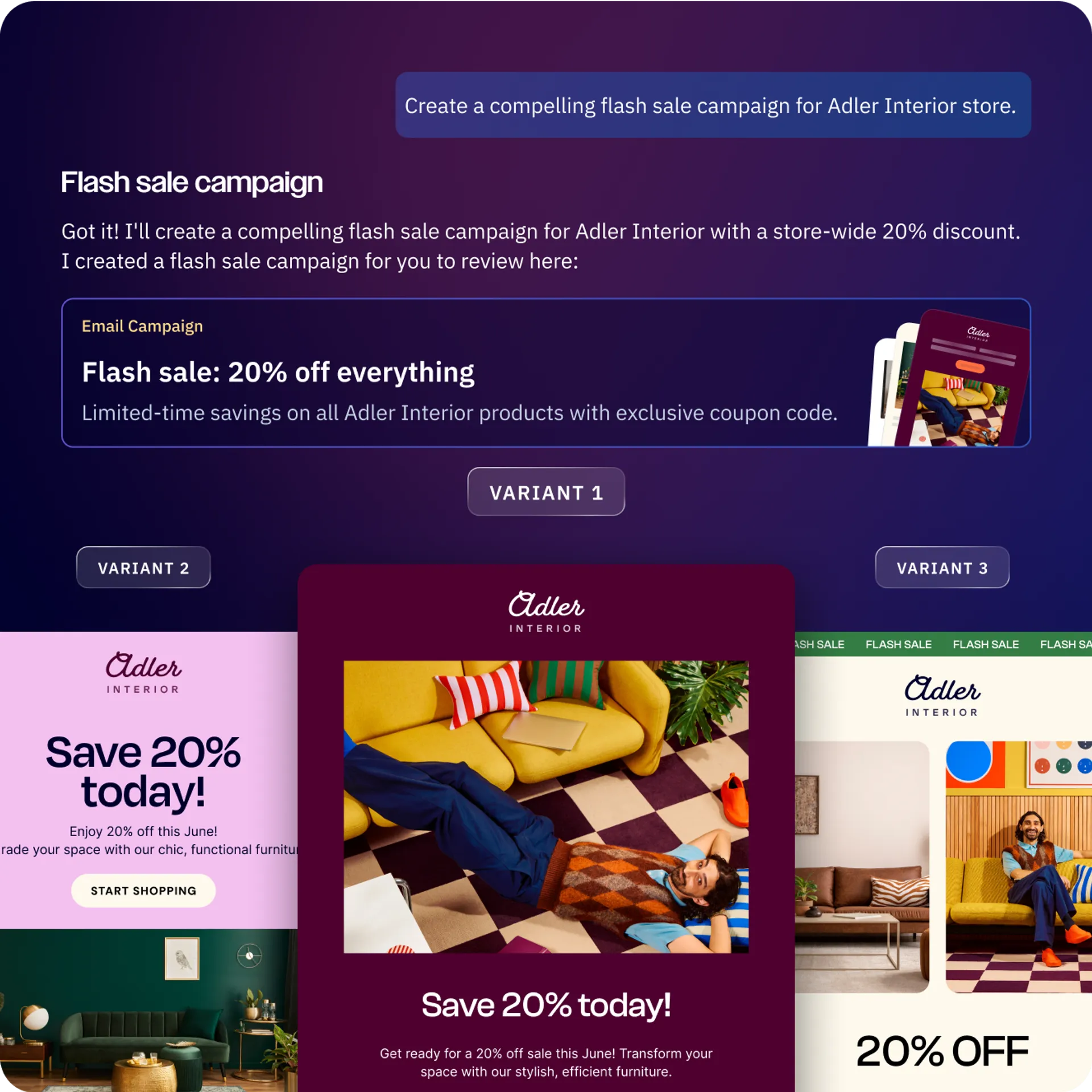
ActiveCampaign offers a 14-day free trial and 250+ templates, but the platform's power comes with a learning curve. The tag-based contact system (instead of list-based), the depth of the automation builder, and the CRM functionality all take time to learn.
Source: ActiveCampaign
Capterra reviewers consistently note that while basic campaigns are accessible, mastering conditional logic, tagging systems, and custom reports requires weeks of ramp-up. ActiveCampaign offers free migration services, a 30-day money-back guarantee, and a dedicated onboarding program, but expect weeks, not hours, to get comfortable.
For Mailchimp users, the tradeoff is that the simplicity that makes it easy to start can become a constraint as needs grow. For ActiveCampaign users, the investment in learning pays off in automation capabilities you won't outgrow.
AI features take different approaches
Both platforms have invested in AI, but their approaches reflect their different priorities.
ActiveCampaign's Active Intelligence, launched in May 2025, is a suite of AI agents that go beyond content generation into goal-directed campaign building. You describe a business goal in plain language, and AI agents handle strategy, audience selection, and campaign structure.

Source: ActiveCampaign
The system includes an AI Campaign Builder that generates complete campaigns from prompts, Predictive Sending that optimizes send times per subscriber, and AI-Suggested Segments that surface high-value audiences. ActiveCampaign reports that AI users save 13+ hours per week. Several agents (Forms, Personalization, Goals, Segments) remain in beta as of early 2026, so reliability is still maturing.
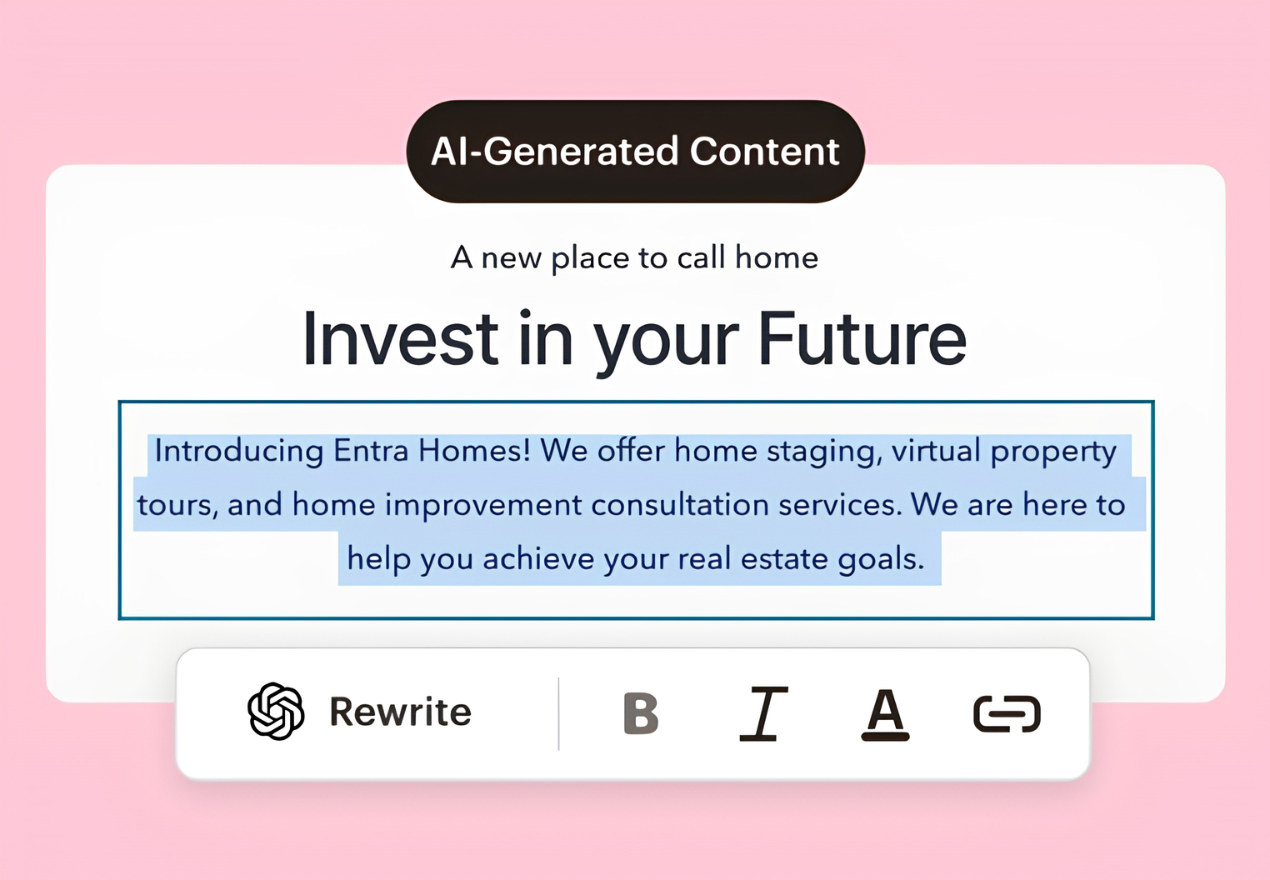
Mailchimp's AI comes through Intuit Assist, the shared AI layer across Intuit's products (TurboTax, QuickBooks, Credit Karma, and Mailchimp). Intuit Assist generates email drafts, builds automation flows, recommends send times, and predicts which subscribers are most likely to purchase.
Source: Mailchimp
The Subject Line Helper draws on data from the 10,000+ emails Mailchimp sends every second, a scale of training data that newer platforms can't replicate. Mailchimp also became the first marketing platform integrated with ChatGPT in February 2026 for SMS content generation.
ActiveCampaign's AI is more ambitious, aiming to automate strategy itself. Mailchimp's AI focuses on content creation and send optimization, but draws on deeper engagement data. Both work best as accelerators for marketers who already know what they want to accomplish.
The CRM question separates the two
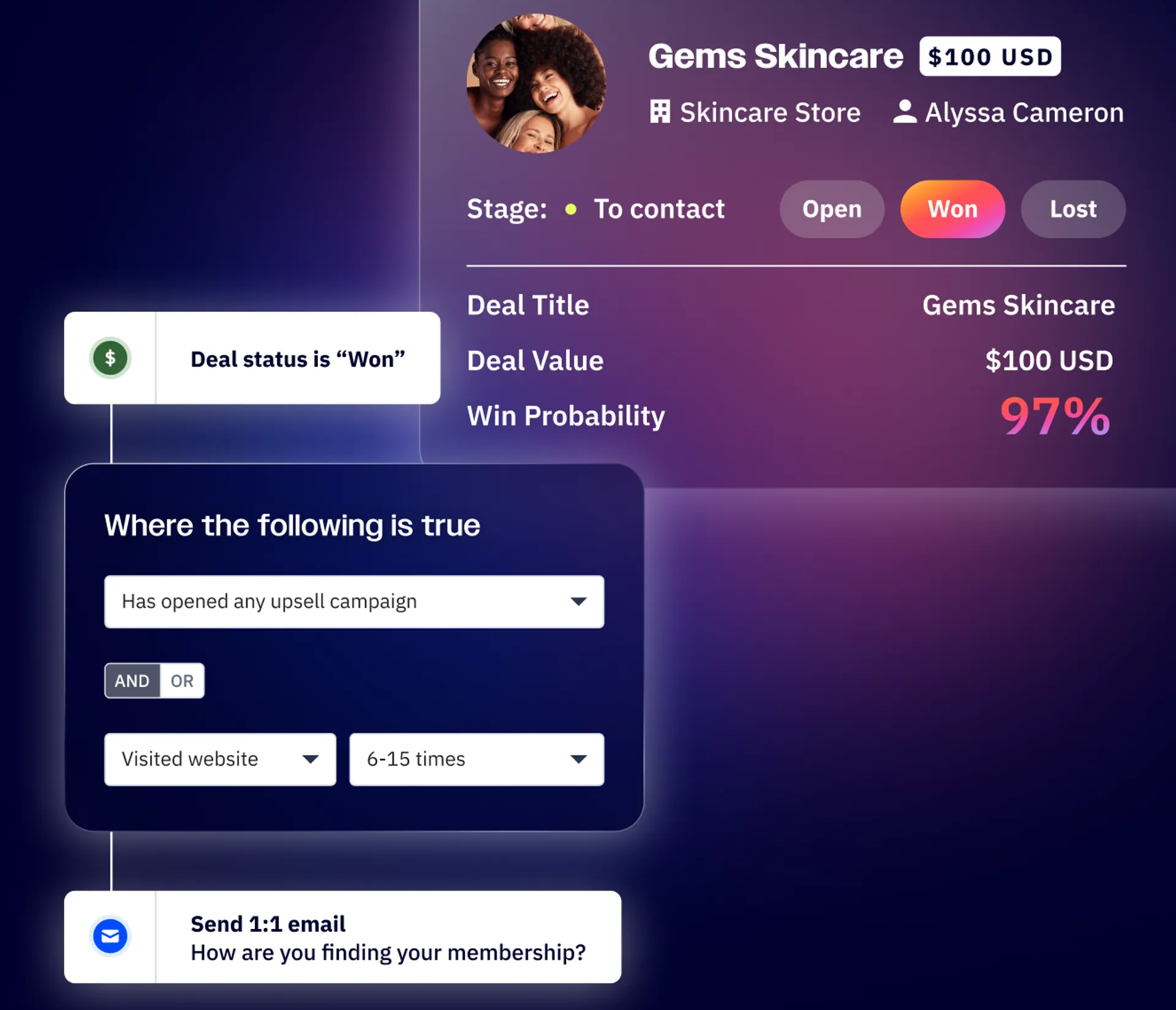
ActiveCampaign includes a built-in CRM with visual deal pipelines, lead scoring, deal scoring, sales routing, and task management. Because the CRM lives inside the same platform as the automation builder, deal records carry the full behavioral history of every contact: which emails they opened, which pages they visited, which forms they submitted.
Source: ActiveCampaign
Automations can create deals, move them between stages, assign tasks to reps, and trigger personalized 1:1 emails, all without a separate tool.
Mailchimp has contact profiles and basic audience management, but it is not a CRM. There are no deal pipelines, no sales routing, no lead scoring.
For ecommerce businesses, Mailchimp's contact profiles include purchase history and predictive scores (likelihood to purchase, predicted lifetime value) when connected to a store. But for businesses with a sales team that tracks deals through stages, Mailchimp requires a separate CRM integration.
This is a defining difference for B2B businesses. If your workflow includes qualifying leads, nurturing them through a pipeline, and handing them to sales, ActiveCampaign handles that natively. Mailchimp doesn't try to.
Neither platform solves the data problem
Both ActiveCampaign and Mailchimp are tools for marketing to contacts you already have. They send emails, trigger SMS, run automations, and track engagement. They don't help you find the right contacts in the first place, and they don't verify whether the data in your lists is accurate, current, or complete.
This is the problem ZoomInfo was built to solve.
ZoomInfo's data platform covers 500M contacts and 100M companies, verified through a multi-source pipeline that includes 300+ human researchers and achieves up to 95% accuracy on first-party data. In a Fortune 500 competitive RFP analyzing 25 million contacts across vendors, the independent consultant concluded that "no other competitor came even close."
Source: ZoomInfo
For B2B teams, this changes the math.
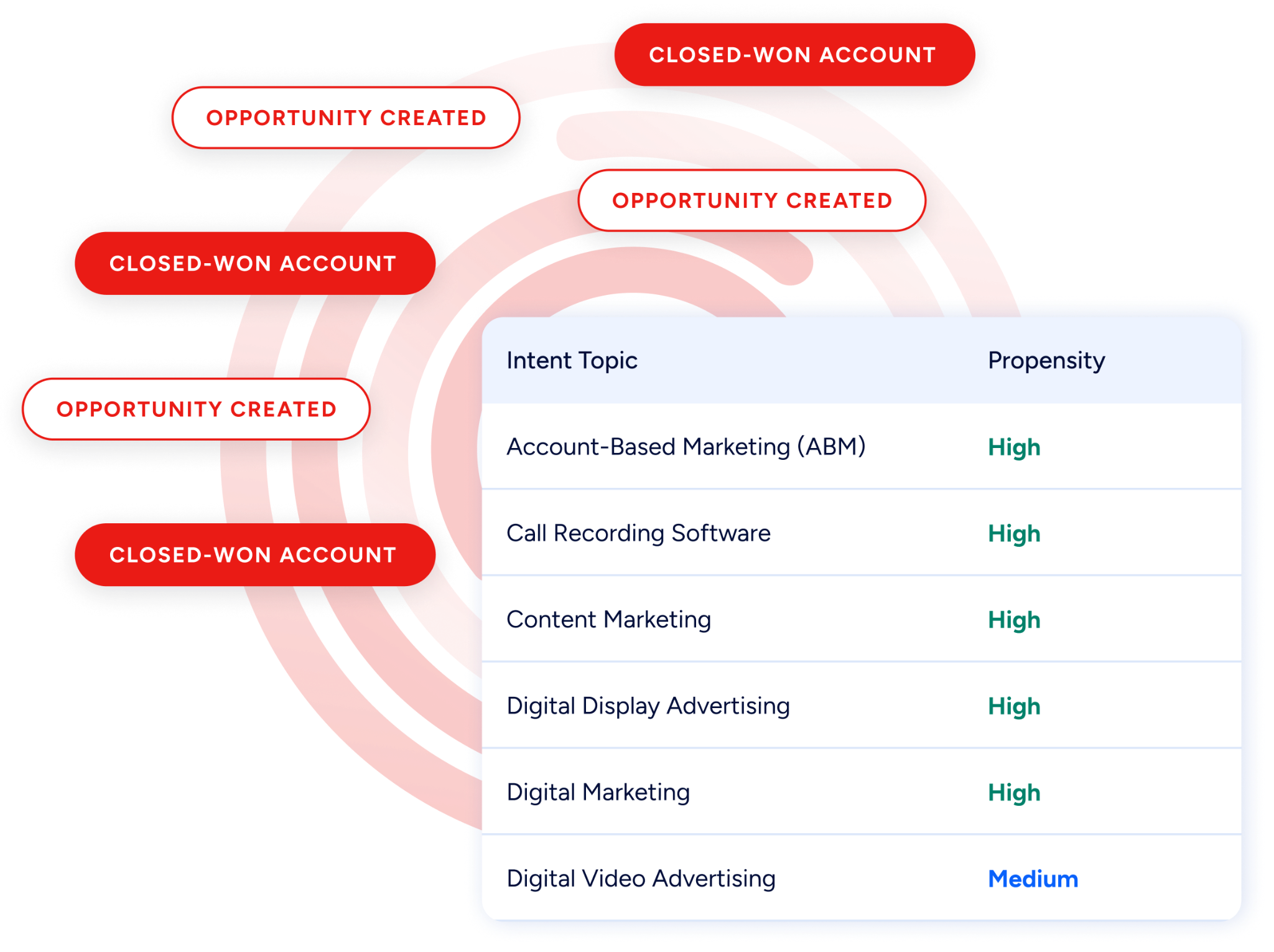
Instead of buying lists from third-party brokers or manually researching prospects on LinkedIn, you search ZoomInfo's database by 300+ company attributes, identify decision-makers with verified direct dials and business emails, layer in buyer intent data showing which companies are actively researching your category, and export those contacts directly into ActiveCampaign, Mailchimp, or your CRM.
Source: ZoomInfo
The data keeps working after the export. ZoomInfo tracks job changes, so you know when a champion moves to a new company. WebSights identifies companies visiting your website before they fill out a form.
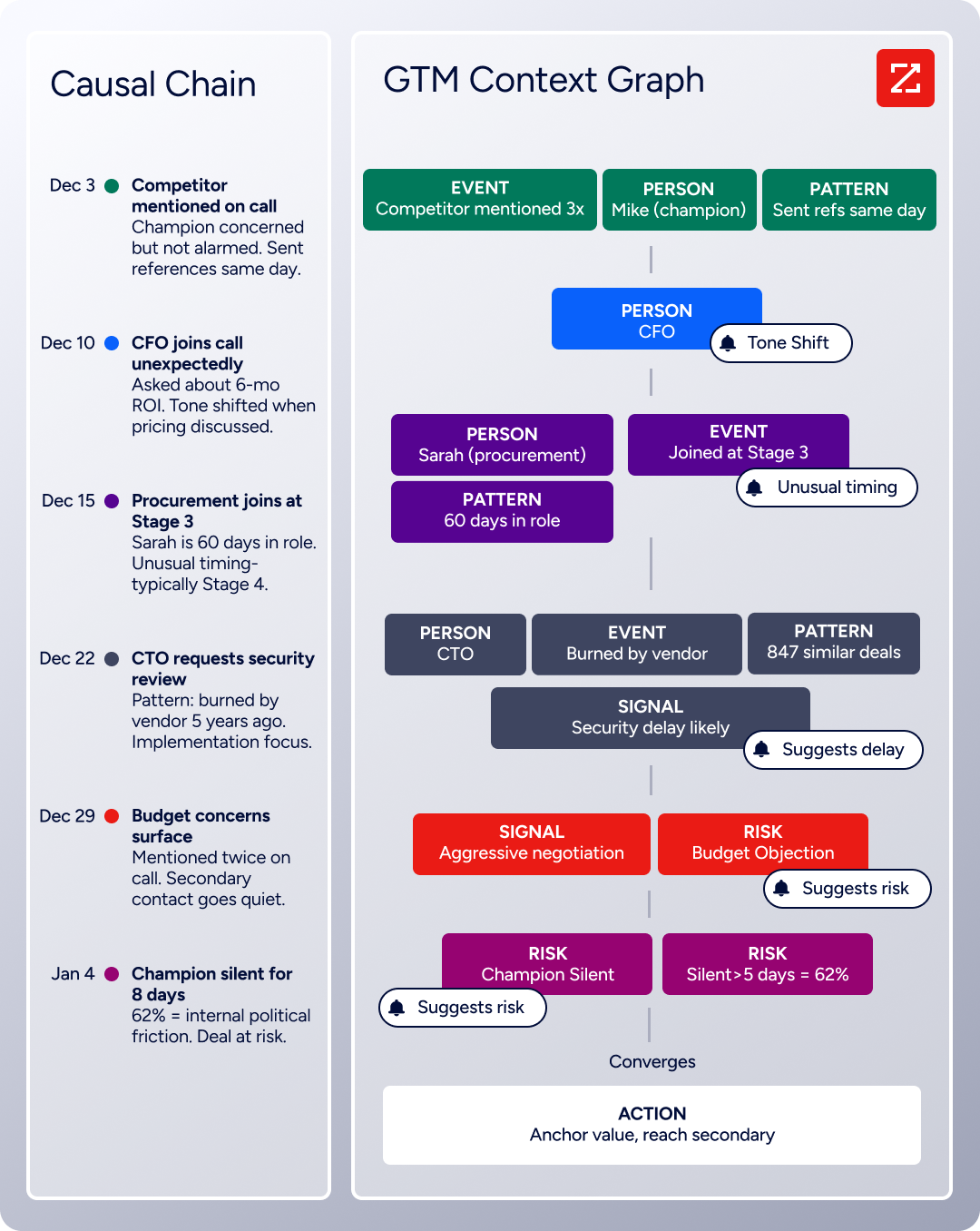
And the GTM Context Graph captures why deals move or stall by combining your CRM data with ZoomInfo's external intelligence, so your next campaign targets accounts that match the patterns behind your actual wins.
Source: ZoomInfo
Snowflake uses ZoomInfo for at least one-third of the most critical data features in their Account Propensity Scoring model, feeding over 70 firmographic and technographic data fields. Accounts monitored using ZoomInfo-powered scores showed 90% higher opportunity open rates and 2x higher customer conversion rates. (Snowflake Case Study)
Ecommerce vs. B2B: The real dividing line
The clearest way to understand the difference between ActiveCampaign and Mailchimp is to look at who each platform serves.
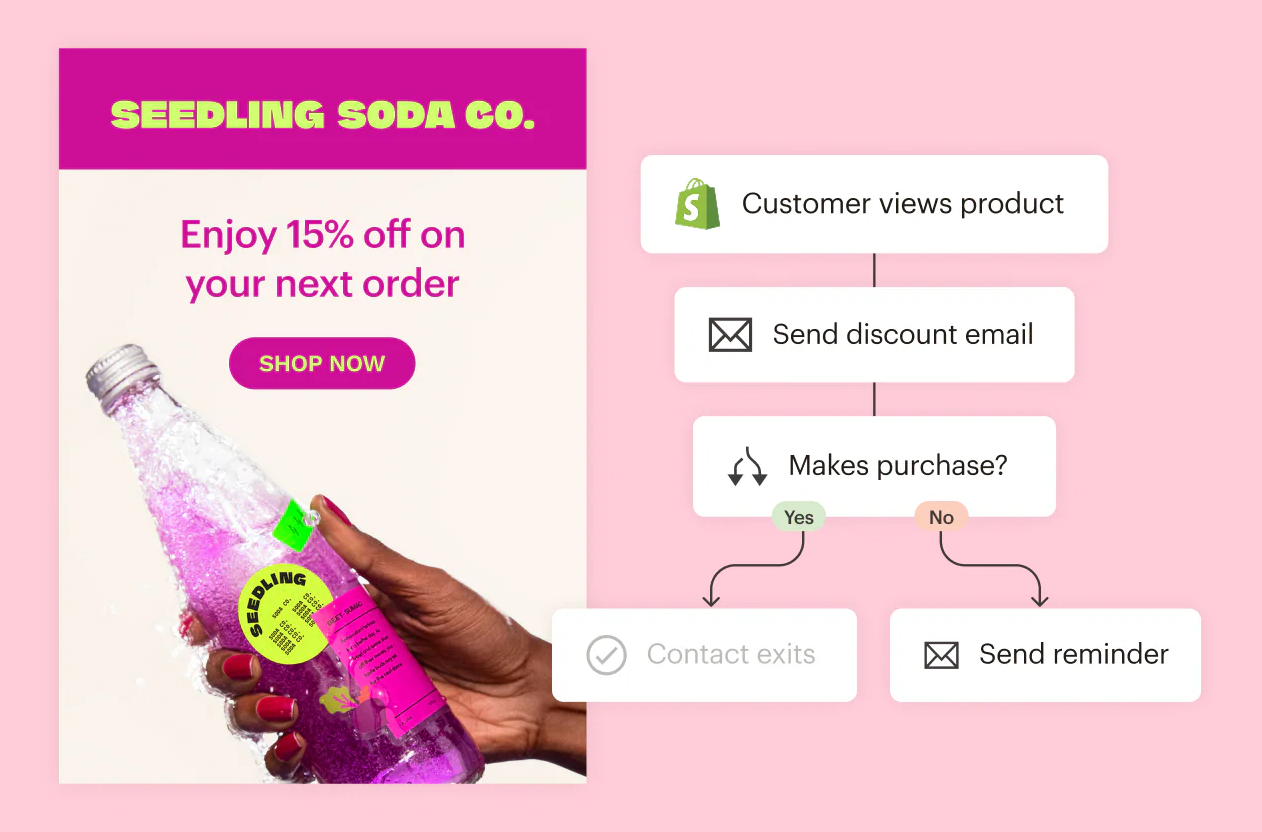
Mailchimp is built for ecommerce and consumer-facing businesses. Its deepest integrations are with Shopify, WooCommerce, Wix, and Square. The automation templates focus on purchase-cycle moments: abandoned cart recovery, post-purchase cross-sell, back-in-stock alerts, and loyalty triggers.
Source: Mailchimp
The February 2026 update added a Site Tracking Pixel for behavior-triggered automations, dynamic ecommerce data in messages (real-time product names and inventory), and Shopify unique discount codes. Mailchimp users combining email and SMS see 97% higher click rates versus email alone, and ecommerce SMS users report up to 22x ROI. This is Mailchimp's strongest territory.
ActiveCampaign spans both B2C and B2B, but its architecture favors complex buyer journeys. The tag-based contact system, lead and deal scoring, CRM integration, and automation branching matter most when you have long sales cycles, multiple stakeholders, and nurture sequences that respond to dozens of behavioral signals.
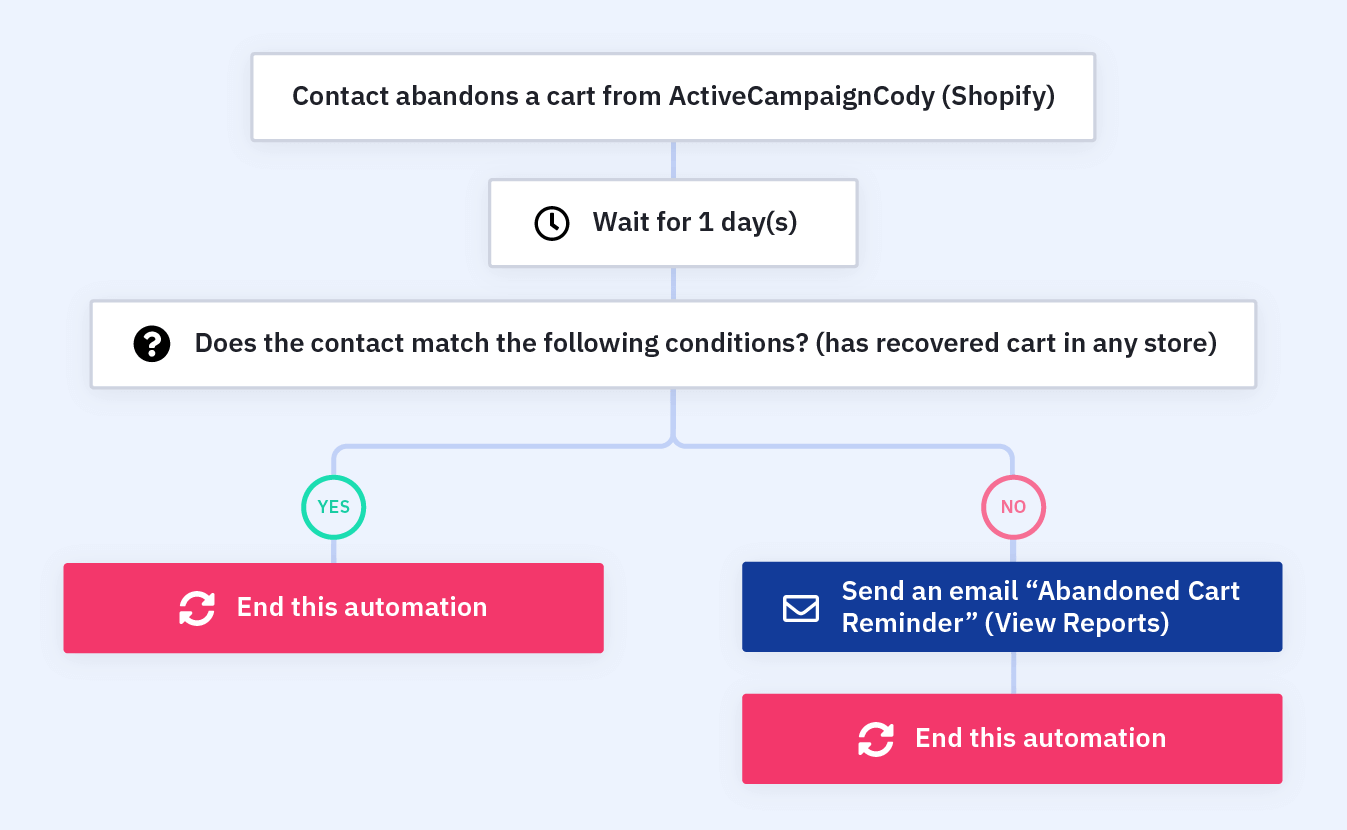
ActiveCampaign serves ecommerce too (with Shopify and WooCommerce integrations, and abandoned cart flows), but its edge is in workflow complexity, not ecommerce-specific features.
Source: ActiveCampaign
ZoomInfo is built for B2B only. It doesn't send emails or run ecommerce automation. It identifies companies, maps buying committees, detects intent signals, and gives sales and marketing teams verified contact data. For B2B teams, ZoomInfo fills the gap neither ActiveCampaign nor Mailchimp addresses: knowing who to target before you build the campaign.
Pricing models reward different behaviors
Both platforms charge based on contact count, but the mechanics differ.
ActiveCampaign starts at $15/month for 1,000 contacts on the Starter plan (14-day free trial, no credit card required). Starter caps automations at 5 actions each. Plus removes that cap and adds landing pages, AI content generation, and web push notifications. Professional (starting with 3 seats) adds advanced segmentation, predictive sending, conditional content, and revenue attribution.
Enterprise adds SSO, HIPAA support, premium CRM integrations (Salesforce, Microsoft Dynamics 365), and a dedicated account team. ActiveCampaign charges once per unique contact regardless of how many automations or segments they appear in. At 10,000 contacts, Starter costs $149/month. G2 reviewers note that pricing has increased over the past three years.
Mailchimp starts at $13/month for 500 contacts on Essentials, with a permanent free plan (250 contacts, 500 emails/month). Standard ($20/month at 500 contacts) unlocks the features most growing businesses need: advanced segmentation, predictive analytics, multivariate testing, send time optimization, dynamic content, and generative AI.
Premium ($350/month) adds unlimited seats and audiences, phone support, and up to 8 multivariate testing variations. Mailchimp's pricing scales steeply by contact tier, and billing is based on peak contact count during the billing period, so inactive contacts that haven't been archived still count.
ZoomInfo uses custom, consumption-based pricing with no published prices. Costs scale around seats, data credits (1 credit = 1 contact export), features, and contract length. ZoomInfo Lite is a permanent free tier with 10 monthly export credits, access to the B2B database, website visitor identification, and HubSpot integration. A 7-day full trial is also available.
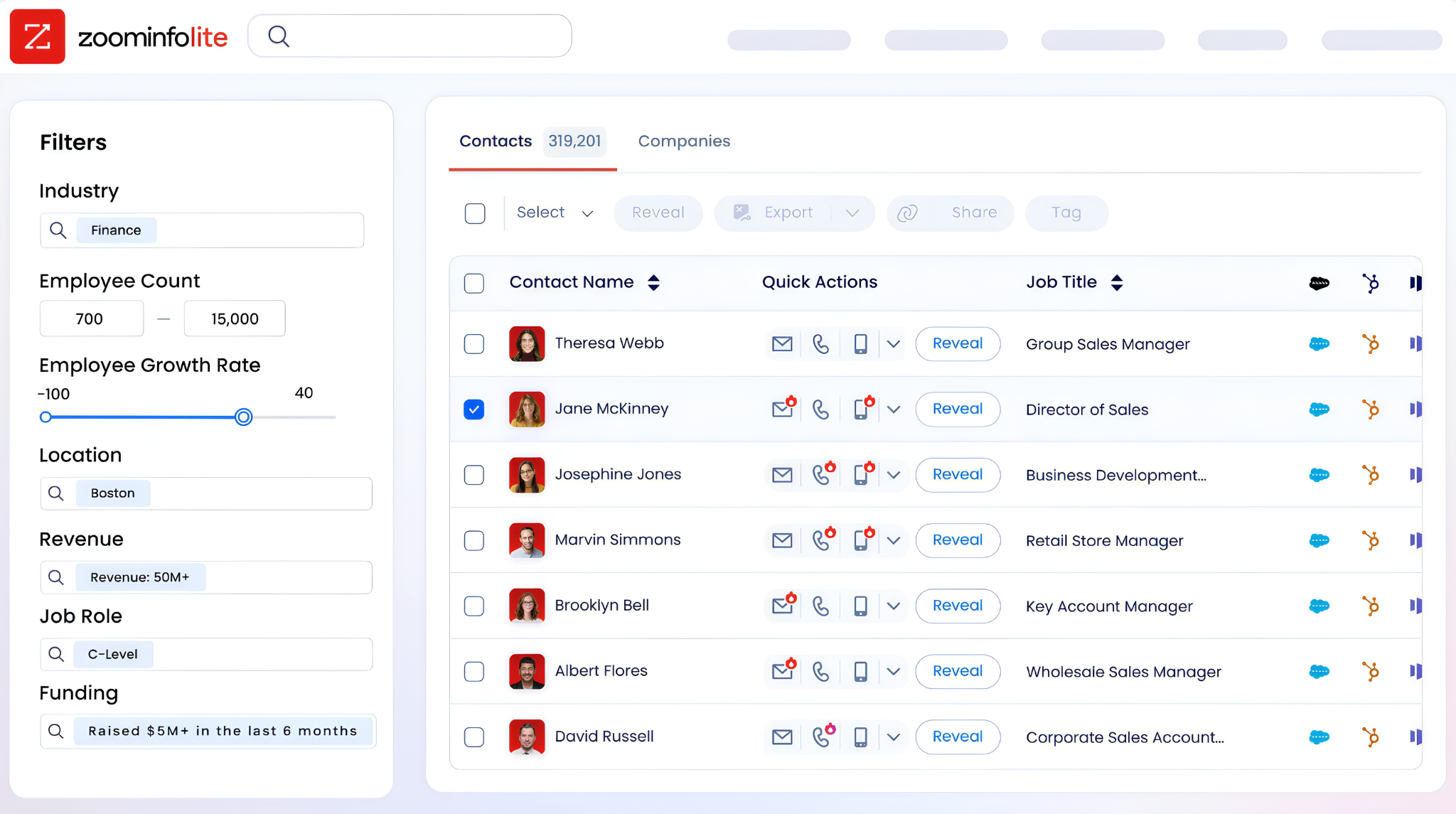
Source: ZoomInfo
For small businesses on tight budgets, Mailchimp's free plan is the lowest-risk entry point. For businesses ready to invest in automation, ActiveCampaign's Starter and Plus plans offer more capability per dollar. For B2B teams where the value of a single qualified lead justifies the investment, ZoomInfo's data and intelligence operate at a different level.
Channel coverage comparison
ActiveCampaign covers email, SMS, and WhatsApp natively, all orchestrated from a single automation builder. The WhatsApp capability (added through the April 2025 Hilos acquisition) includes broadcast messaging, no-code Flows automation, a shared inbox, and CRM sync.
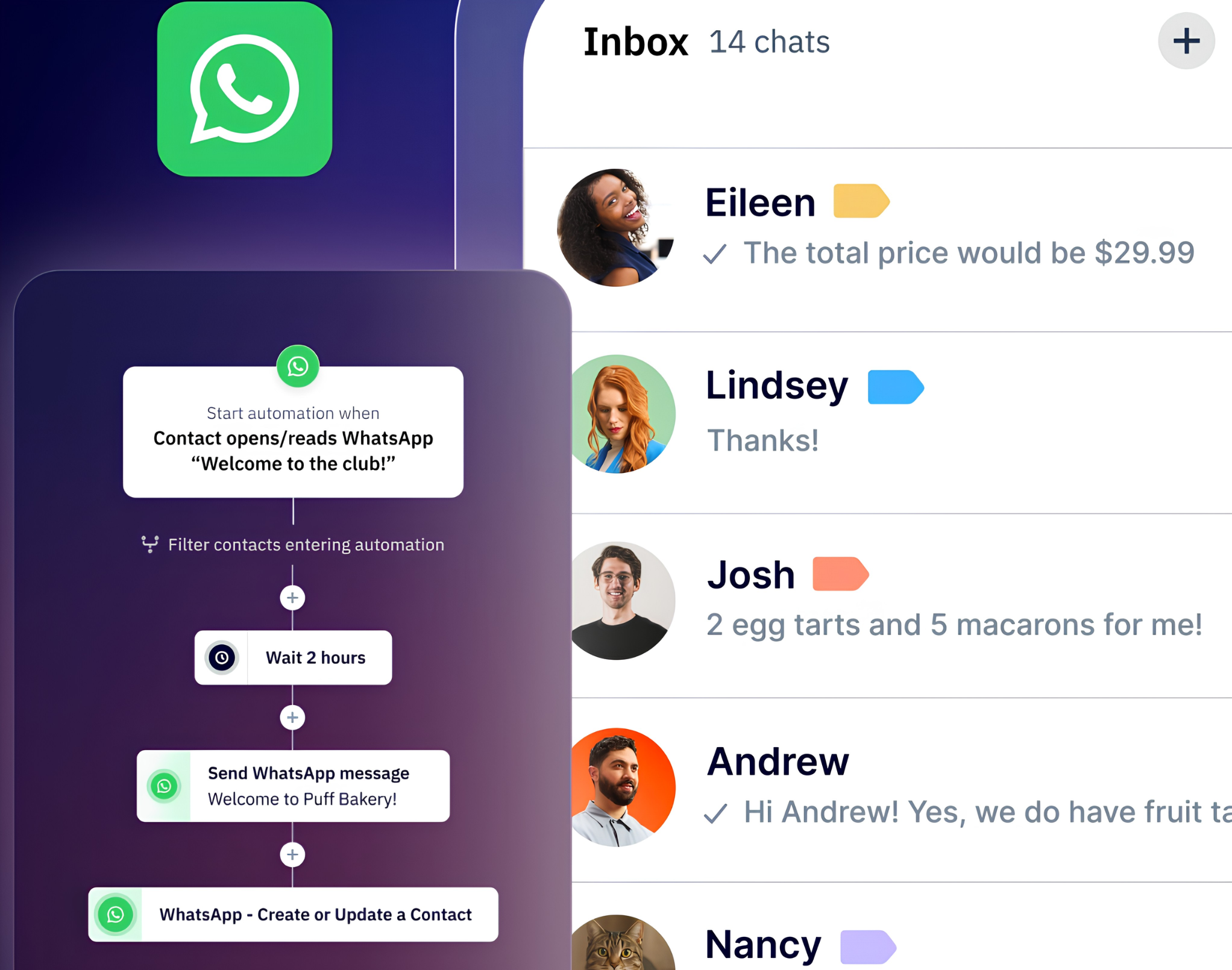
Source: ActiveCampaign
SMS supports two-way messaging across 180+ countries. Transactional email is available through Postmark, which ActiveCampaign acquired.
Mailchimp covers email and SMS, with SMS available as a paid add-on in select countries. MMS is limited to Standard and Premium plans for US and Canada contacts. Social media posting is available on all plans, with scheduling on Standard and Premium. Landing pages, popup forms, and Google retargeting ads are also included. Mailchimp does not offer WhatsApp messaging.
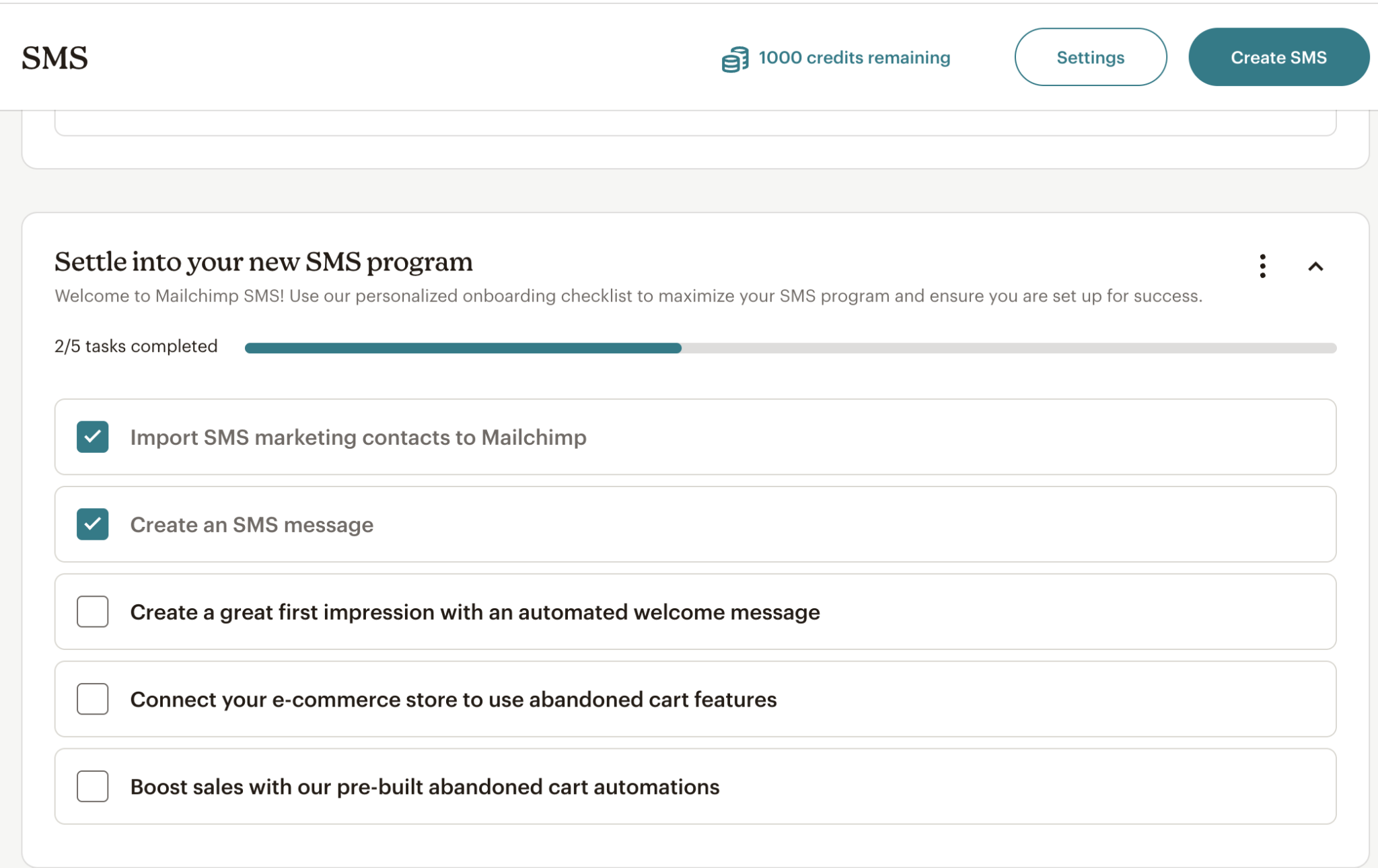
Source: Mailchimp
ZoomInfo orchestrates through GTM Studio across email sequences, phone calls, display ads (via a native Demand-Side Platform), LinkedIn, Meta, Connected TV, and direct mail.
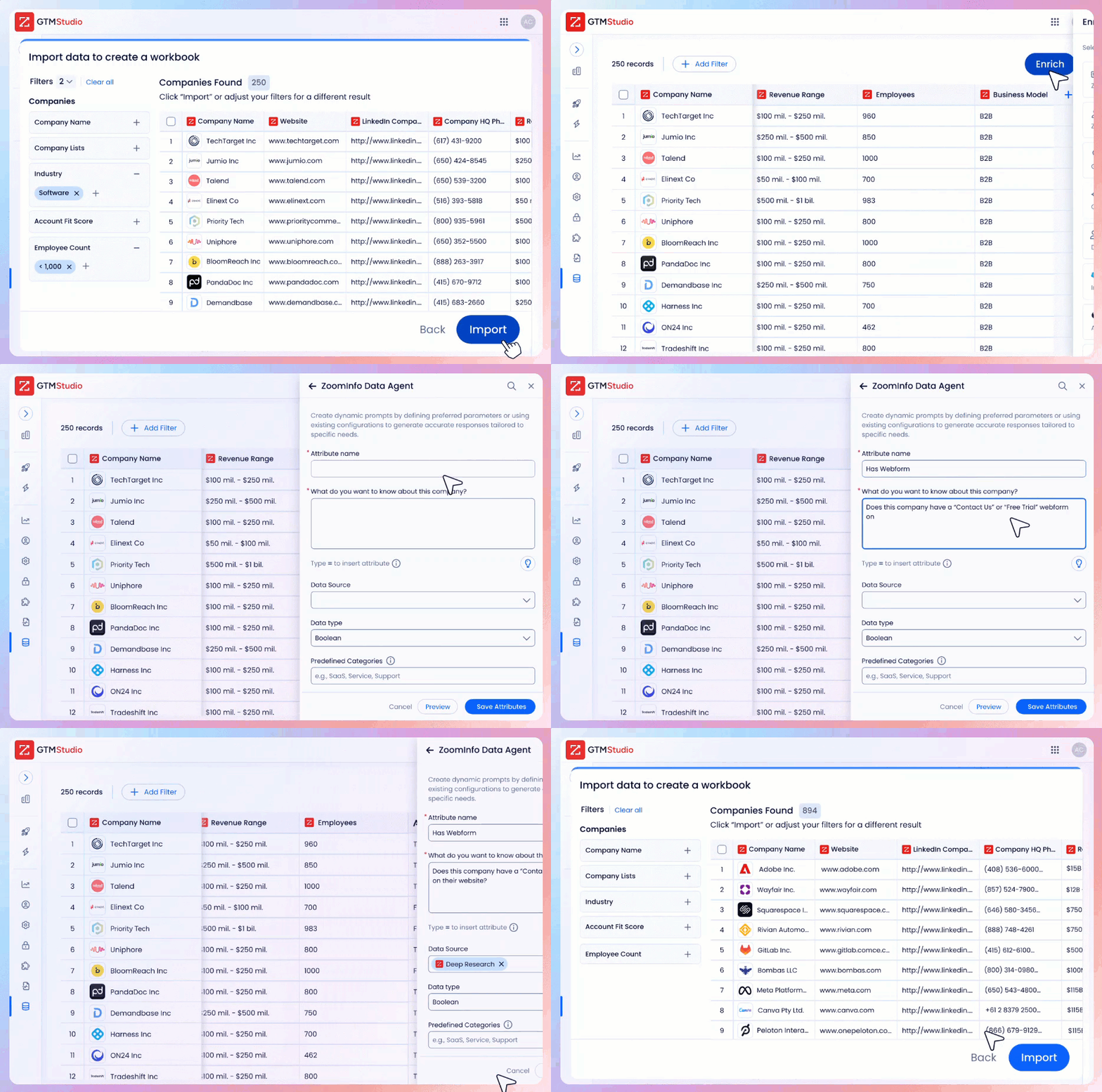
Source: ZoomInfo
ZoomInfo isn't a replacement for ActiveCampaign or Mailchimp in email execution. It identifies which accounts and contacts to reach, then activates campaigns across channels or pushes verified contacts into your existing email platform.
Deliverability infrastructure matters
Email deliverability determines whether your campaigns actually reach inboxes.
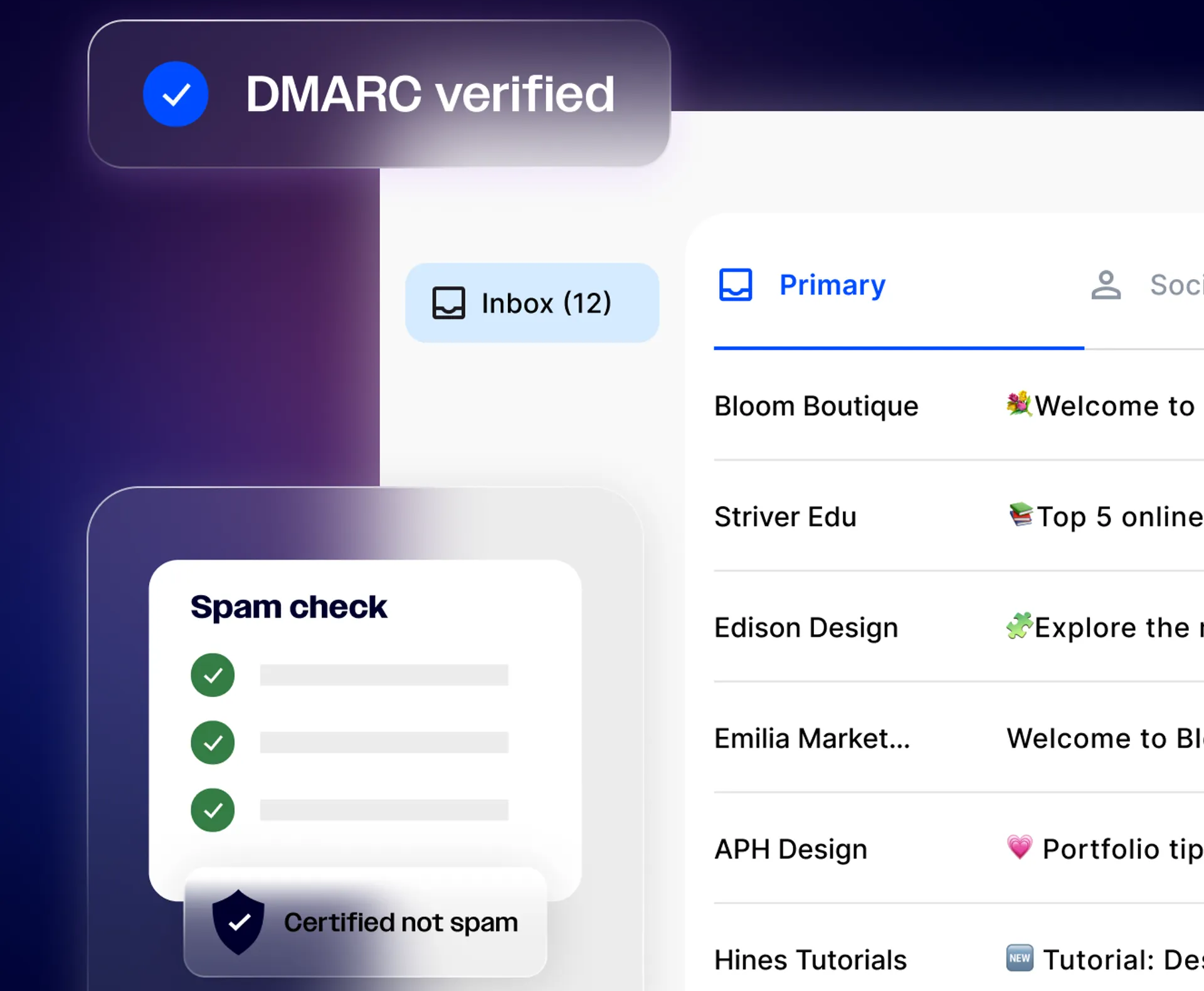
ActiveCampaign reports that 93% of surveyed customers say deliverability beats competitors, with an internally reported 99.88% deliverability rate. EmailToolTester independently measured 94% deliverability and named ActiveCampaign the Best Email Marketing Tool of 2025.
The platform routes emails through a secure private network and offers dedicated IP management, DKIM and DMARC authentication, and an Apple MPP filter that strips privacy-inflated open metrics from reporting.
Source: ActiveCampaign
Mailchimp reports a greater than 99% average email delivery rate and 99.99% transactional email delivery rates. With 24 years of sending infrastructure and 10,000+ emails per second flowing through the system, Mailchimp's deliverability rests on a scale few platforms match.
Both platforms treat deliverability as core infrastructure. For most businesses, either will deliver reliably. The difference is in the tooling: ActiveCampaign provides more granular controls (dedicated IPs, Apple MPP filtering, a DMARC testing tool) that matter for high-volume senders.
Integration ecosystems reflect different scales
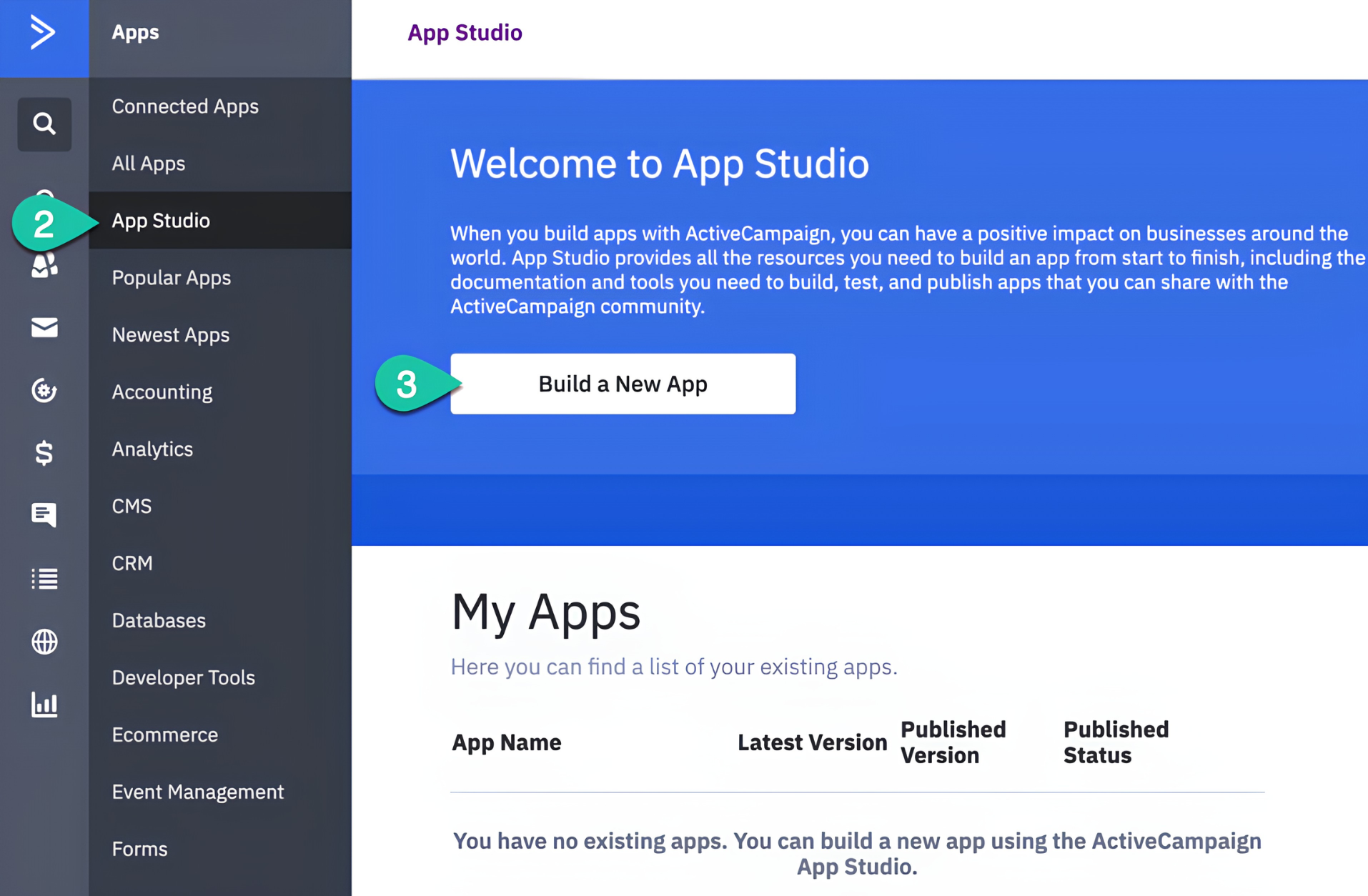
ActiveCampaign offers 1,000+ integrations including Salesforce, Shopify, WordPress, Google Ads, Zapier, Make, Clay, and Calendly.
The platform also has a REST API with GraphQL endpoints for ecommerce, App Studio for building custom integrations, and an MCP server connecting to Claude and ChatGPT. Premium CRM integrations (Salesforce, Microsoft Dynamics 365, Zendesk Sell) are gated to Pro and Enterprise plans.
Source: ActiveCampaign
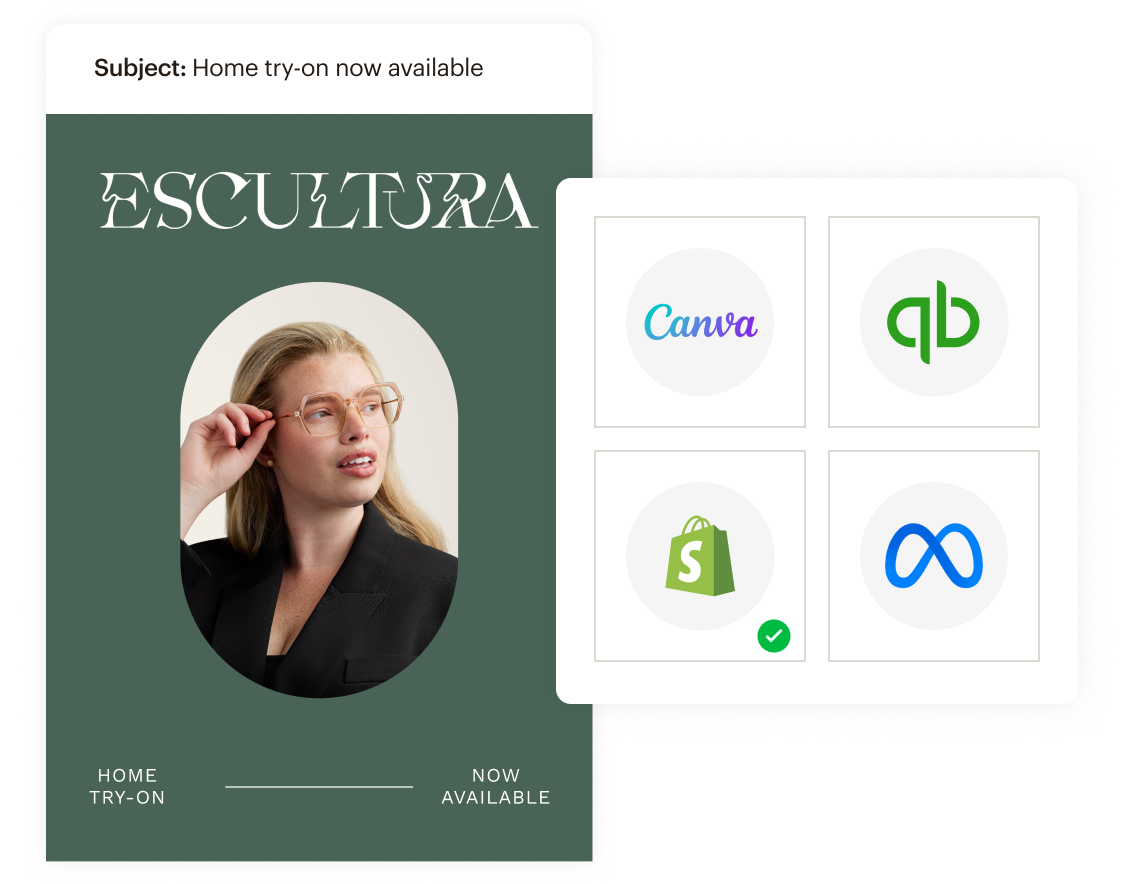
Mailchimp offers 300+ integrations with native connections to ecommerce platforms (Shopify, WooCommerce, Squarespace, Square), design tools (Canva), and the Intuit ecosystem (QuickBooks).
Source: Mailchimp
The QuickBooks integration stands out: it bridges invoice and financial data with marketing audiences, a data source unavailable to standalone email tools. The Marketing API (v3.0) is mature, with official SDKs for PHP, Node.js, Python, and Ruby.
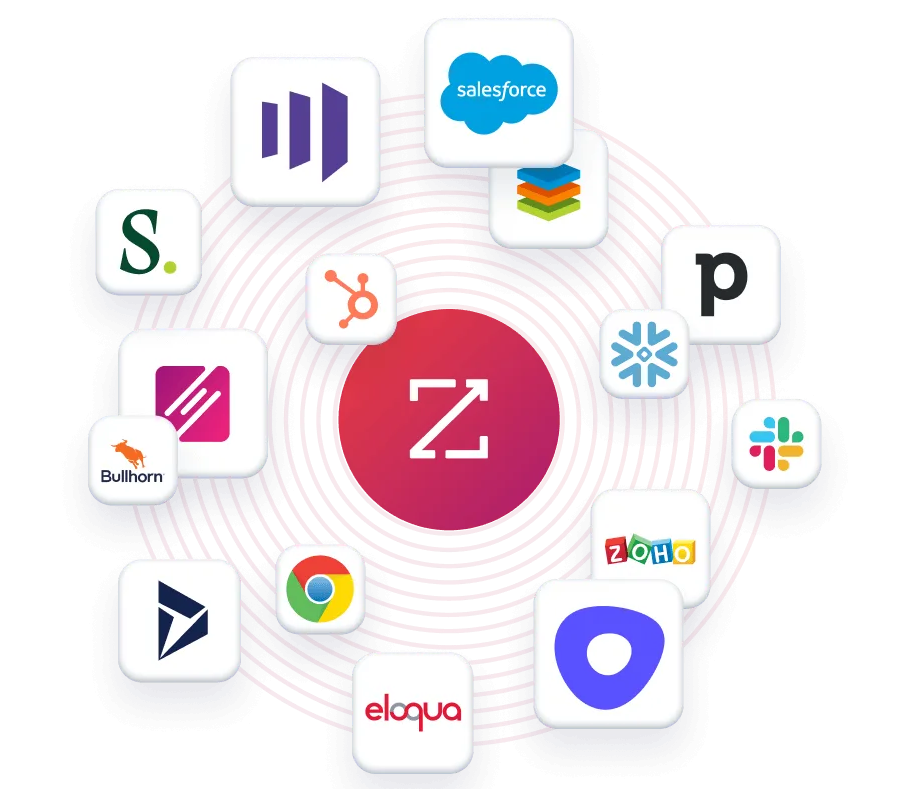
ZoomInfo's App Marketplace lists 172+ partners, with native integrations for Salesforce, HubSpot, Microsoft Dynamics 365, and cloud data platforms (Snowflake, AWS, Google Cloud, Databricks).
Source: ZoomInfo
The Enterprise API and MCP server make ZoomInfo's data accessible inside any application or AI agent. The key distinction: ZoomInfo's integrations push verified data into other tools, while ActiveCampaign and Mailchimp integrations pull behavioral data in.
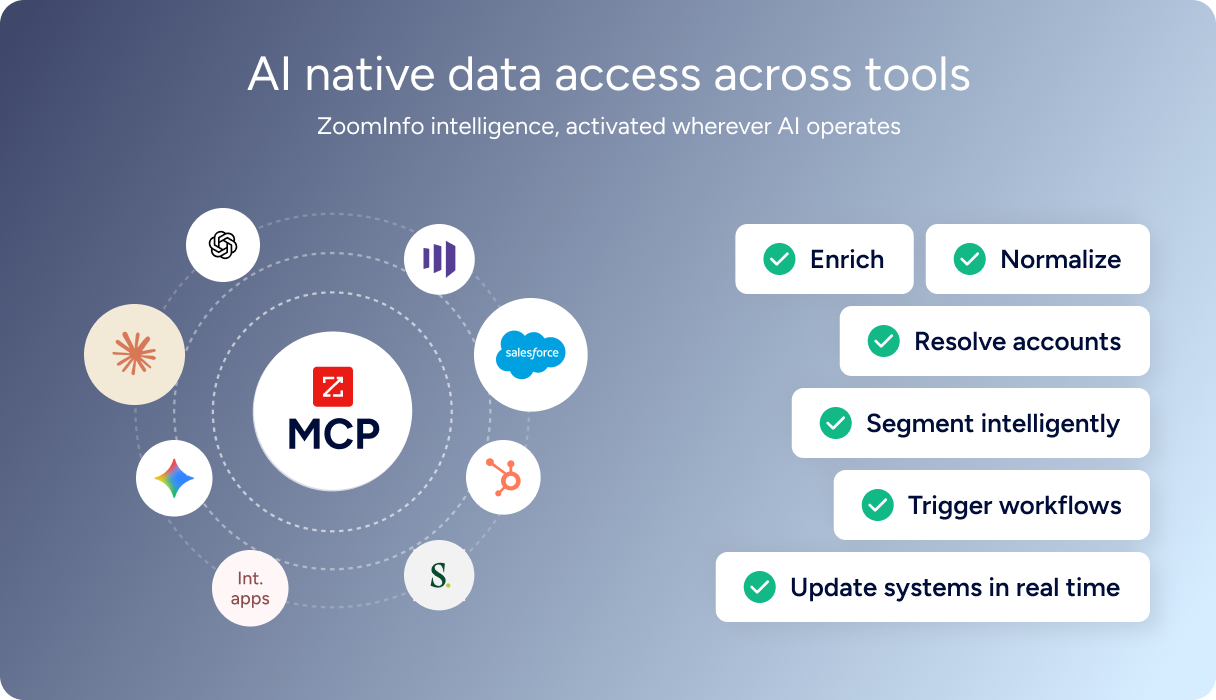
Source: ZoomInfo
"The plug-and-play aspect of the API means I can integrate it very easily into any process and get information at a moment's notice." Jerry Wilson, BDO Canada, achieved an 87% reduction in time spent on data dashboard updates using the ZoomInfo API. (BDO Canada Case Study)
Security and compliance comparison
For businesses in regulated industries, compliance infrastructure is a buying criterion.
ActiveCampaign offers GDPR compliance with a Data Processing Addendum, Standard Contractual Clauses, and UK Addendum. HIPAA support and SSO are available on Enterprise plans. The platform complies with the EU-US Data Privacy Framework, CCPA, and LGPD. A Security Checklist is available in-product on all plans.
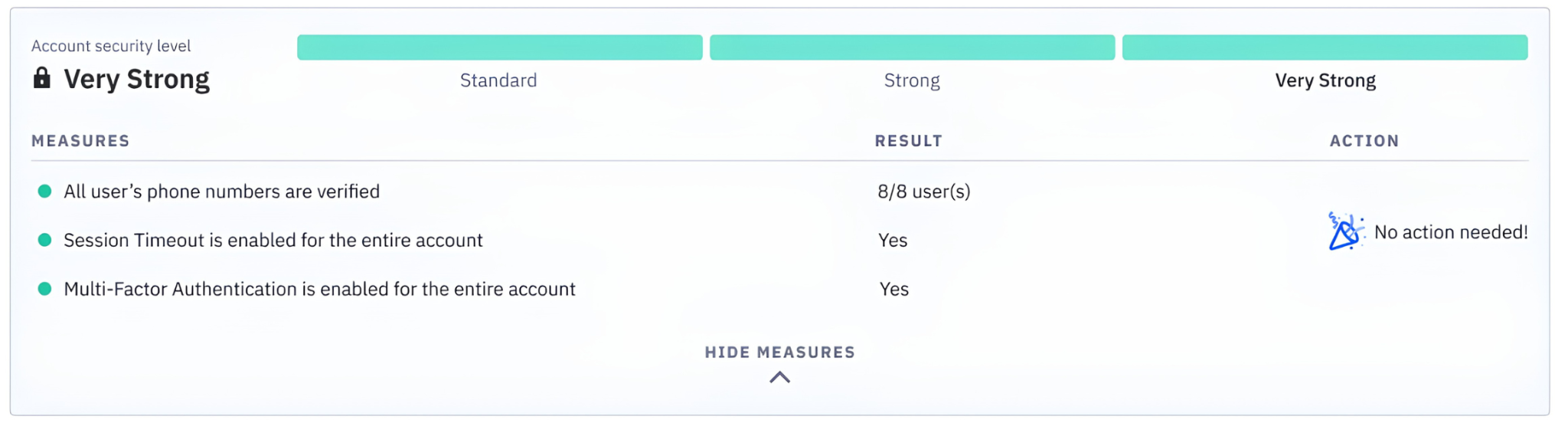
Source: ActiveCampaign
Mailchimp holds SOC 2 and ISO 27001 certifications, with PCI compliance for credit card processing. GDPR compliance is supported through the EU-US Data Privacy Framework and Standard Contractual Clauses. Two-factor authentication and role-based access controls are available. Regular external and internal penetration tests run throughout the year.
ZoomInfo maintains ISO 27001, ISO 27701, SOC 2 Type II, TRUSTe GDPR, and TRUSTe CCPA certifications, all renewed annually. ZoomInfo is a registered data broker in California and Vermont and maintains a dedicated Trust Center.
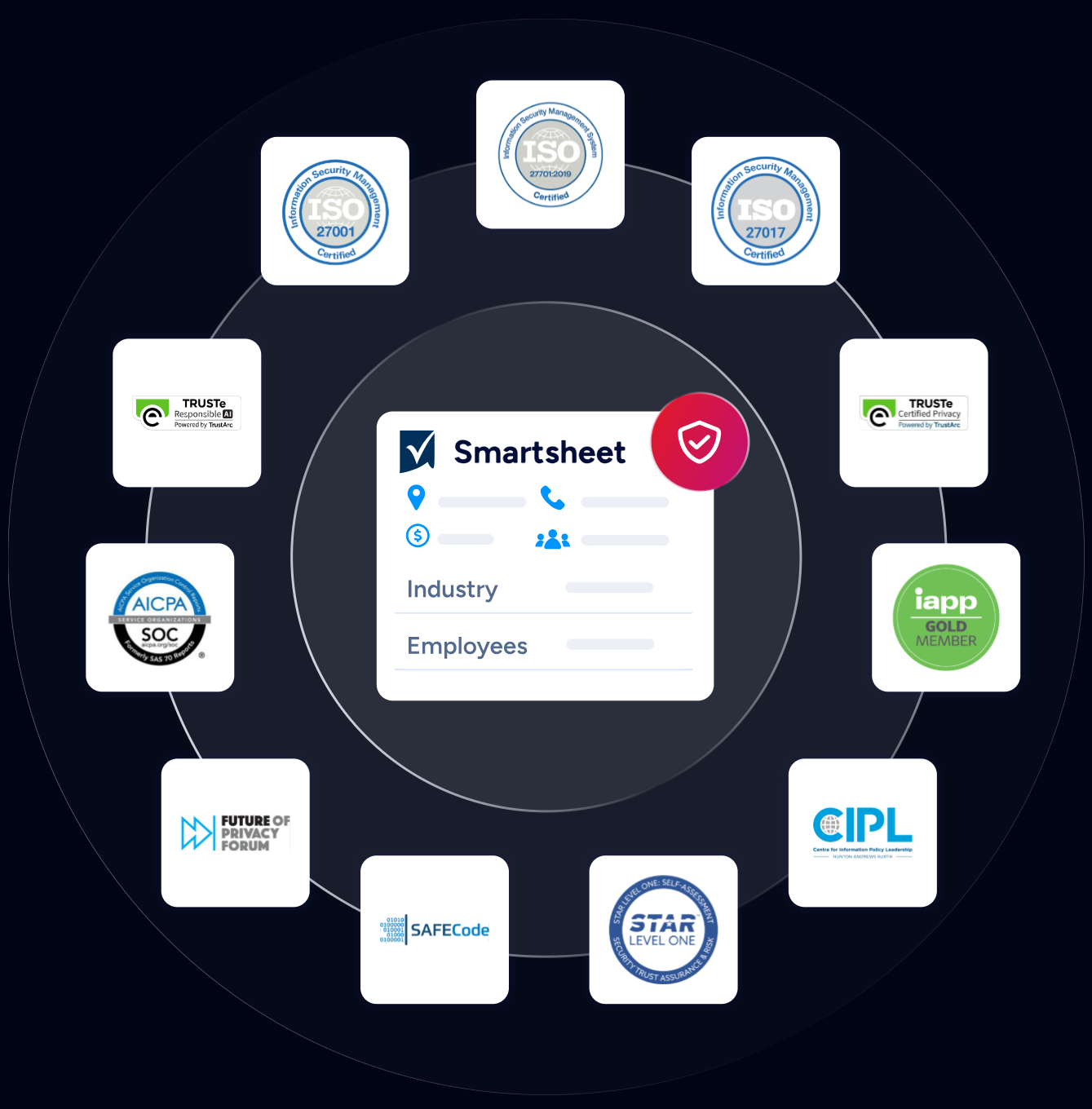
Source: ZoomInfo
ActiveCampaign vs. Mailchimp vs. ZoomInfo: Which should you choose?
The choice depends on what problem you're solving and where your biggest gap is.
Choose ActiveCampaign if:
You need multi-branch automation workflows
Your business model involves nurturing leads through long sales cycles
You want marketing automation and CRM in a single platform
You have the time to invest in learning a capable tool
Cross-channel orchestration (email + SMS + WhatsApp) from one builder matters
Choose Mailchimp if:
You run an ecommerce store on Shopify, WooCommerce, or Square
You need to get a professional campaign out the door quickly
Your budget is limited and the free plan fits your current needs
You value simplicity over automation depth
You're already in the Intuit ecosystem (QuickBooks, TurboTax)
Choose ZoomInfo if:
You sell to other businesses and need verified contact data for prospecting
Your campaigns suffer from stale, incomplete, or inaccurate data
You want to identify in-market buyers before they reach your competitors
You need to align sales and marketing around shared account intelligence
You want AI-driven GTM execution, not just AI-assisted email drafting
Explore ZoomInfo's free trial or start with ZoomInfo Lite at no cost.
ActiveCampaign and Mailchimp are both strong platforms for executing marketing campaigns. The right choice between them depends on whether you need automation depth or ecommerce simplicity.
But for B2B teams, the more important question isn't which email platform to use. It's whether your campaigns reach the right buyers with verified data and intent-driven timing. ZoomInfo answers that question at the data layer, and its intelligence works regardless of which email platform sends your messages.
"ZoomInfo gives us the information we need to execute. We don't have to spend our time digging. It's already there, so we can be three steps ahead." William Kenimer, VP of Revenue Operations, Vensure (Vensure Case Study)
ActiveCampaign vs. Mailchimp vs. ZoomInfo FAQ
What is the fundamental difference between ActiveCampaign, Mailchimp, and ZoomInfo?
ActiveCampaign is a marketing automation platform with a built-in CRM, designed for businesses that need complex behavioral workflows across email, SMS, and WhatsApp. Mailchimp is an email and SMS marketing platform built for small businesses and ecommerce, with strong template libraries and Intuit ecosystem integration.
ZoomInfo is a B2B data and intelligence platform that identifies target companies and buyers, verifies contact data, and detects buying intent signals. It operates upstream of both ActiveCampaign and Mailchimp.
Which platform is best for ecommerce businesses?
Mailchimp is the stronger choice for ecommerce. Its deepest integrations are with Shopify, WooCommerce, Wix, and Square, and its automation templates focus on purchase-cycle moments: abandoned cart recovery, post-purchase flows, back-in-stock alerts, and dynamic product recommendations.
ActiveCampaign also integrates with Shopify and WooCommerce but focuses more on general marketing automation than ecommerce-specific workflows.
Which platform has better automation capabilities?
ActiveCampaign has considerably deeper automation capabilities. Its visual builder supports unlimited branching, conditional logic based on dozens of behavioral triggers, CRM deal creation within workflows, and multi-channel orchestration.
Mailchimp's automation has improved with the 2026 update (multiple starting points, branching on Standard and Premium), but Essentials users are limited to 4-step flows, and the conditional logic is simpler than what ActiveCampaign offers.
How does pricing compare across the three platforms?
Mailchimp is the cheapest entry point with a free plan (250 contacts) and Essentials starting at $13/month. ActiveCampaign starts at $15/month for 1,000 contacts on the Starter plan, with a 14-day free trial. At 10,000 contacts, ActiveCampaign Starter costs $149/month.
ZoomInfo uses custom consumption-based pricing with no published prices, though ZoomInfo Lite offers a permanent free tier with limited data exports.
Do I need ZoomInfo if I already use ActiveCampaign or Mailchimp?
If you sell to other businesses and struggle with incomplete contact data, stale lists, or not knowing which companies are in-market, ZoomInfo fills a gap that neither ActiveCampaign nor Mailchimp addresses.
ZoomInfo's verified contact data (500M contacts, 200M+ verified emails, 135M+ verified phones) and buyer intent signals feed into your existing email platform, so your campaigns target the right people with accurate information. For B2C or ecommerce businesses, ZoomInfo is less relevant.
Which platform has the best AI features?
ActiveCampaign's Active Intelligence includes 12+ AI agents covering campaign building, audience segmentation, content generation, and goal-based automation, though several agents remain in beta. Mailchimp's Intuit Assist focuses on content drafting, send-time optimization, and predictive segmentation, backed by data from 10,000+ emails sent per second.
ZoomInfo's AI operates at the intelligence layer through the GTM Context Graph, which reasons across CRM data, conversation transcripts, and external signals to surface deal insights, account recommendations, and buying committee intelligence.
Which platform offers better support?
Mailchimp offers 24/7 email and chat support on Essentials and above, with phone support reserved for Premium. ActiveCampaign includes chat and ticket support on all paid plans, with priority support on Professional and a dedicated account team on Enterprise.
ZoomInfo offers support through its Help Center, phone support, ZoomInfo University learning paths, and professional services through ZoomInfo Labs. Enterprise customers on all three platforms receive the highest level of dedicated support.
Can I use ActiveCampaign or Mailchimp together with ZoomInfo?
Yes. ZoomInfo integrates with both platforms. You can export verified contacts from ZoomInfo's database directly into ActiveCampaign or Mailchimp, enriching your audience with accurate emails, phone numbers, and company attributes.
ZoomInfo's API and MCP server also enable automated data flows, so your marketing lists stay current without manual exports. ActiveCampaign is listed in ZoomInfo's integration ecosystem, and Mailchimp connects through Zapier and direct API integration.
Other ActiveCampaign matchups worth a look:
