
Choosing between ActiveCampaign and RD Station for your marketing automation often comes down to five questions:
Do you need multi-branch automation workflows, or is straightforward email and WhatsApp campaign management enough?
Is your business primarily in Latin America and dependent on WhatsApp, or do you operate globally across multiple channels?
Are you a team of one or two marketers who need AI to multiply your output, or a larger team that needs structured pipeline management?
Do you need a built-in CRM alongside your marketing automation, and how capable does that CRM need to be?
Can you identify which prospects are ready to buy, or are you sending the same campaigns to everyone and hoping for the best?
In short, here's what we recommend:
ActiveCampaign is the choice for growing businesses that need marketing automation without enterprise complexity. Its visual automation builder handles multi-step, conditional workflows triggered by behavior across email, SMS, and WhatsApp. Active Intelligence translates plain-language goals into configured campaigns, and the platform's 1,000+ integrations connect it to most tool stacks. ActiveCampaign works for teams worldwide, but pricing climbs as contact lists grow, and the learning curve steepens with advanced features.
RD Station is built for Latin American businesses that run on WhatsApp. Its three products (Marketing, CRM, and Conversas) cover the customer journey with WhatsApp as a primary channel, not an afterthought. The free CRM tier and low entry pricing make it practical for small businesses starting with automation. But RD Station's reporting is shallow, its segmentation is limited next to global competitors, and its support and documentation are strongest in Portuguese.
Both platforms nurture leads you already have. But neither answers the prior question: which accounts should you target, and which are in-market now? That gap is where deals slip through, and it's what ZoomInfo addresses.
ZoomInfo is a go-to-market platform that lets sales reps walk into calls knowing why a deal is moving, marketers describe audiences in plain language and launch plays against accounts matching their win patterns, and leaders spot deal risk before it shows up in CRM fields. That depth comes from the GTM Context Graph, an intelligence layer built on a B2B dataset (500M contacts, 100M companies, 135M+ verified phone numbers, and 200M+ verified business email addresses) unified with your CRM records, conversation transcripts, and behavioral signals. Teams access this intelligence through GTM Workspace for sellers, GTM Studio for marketers and RevOps, or APIs and MCP in any third-party tool, including ActiveCampaign or RD Station.
If knowing who to target and when to reach them is the missing piece of your marketing automation, see how ZoomInfo works.
ActiveCampaign vs. RD Station vs. ZoomInfo at a glance
ActiveCampaign | RD Station | ZoomInfo | |
|---|---|---|---|
Core function | Marketing automation + CRM | Marketing automation + CRM + WhatsApp service | B2B data intelligence + GTM platform |
Primary market | Global (170+ countries) | Latin America (Brazil-first) | Global (enterprise B2B) |
Automation depth | Advanced multi-branch workflows | Standard workflows, WhatsApp-first | Signal-triggered GTM plays |
AI capabilities | Active Intelligence (12+ agents) | Mentor IA + AI Agents (WhatsApp) | GTM Context Graph + AI agents |
Native (via Hilos acquisition) | First-class across all products | Not applicable | |
CRM | Built-in, marketing-focused | Built-in, WhatsApp-native | GTM Workspace (sales intelligence) |
B2B data & intent | Not included | Not included | 500M contacts, buyer intent signals |
Integrations | 1,000+ apps | 100+ apps (LATAM-focused) | 172+ partners + API/MCP |
Starting price | $15/month (1,000 contacts) | ~$16/month (1,000 contacts) | Free tier (ZoomInfo Lite); paid plans custom-quoted |
Automation depth separates these platforms
ActiveCampaign and RD Station both offer marketing automation. The depth of what they automate is where they diverge.
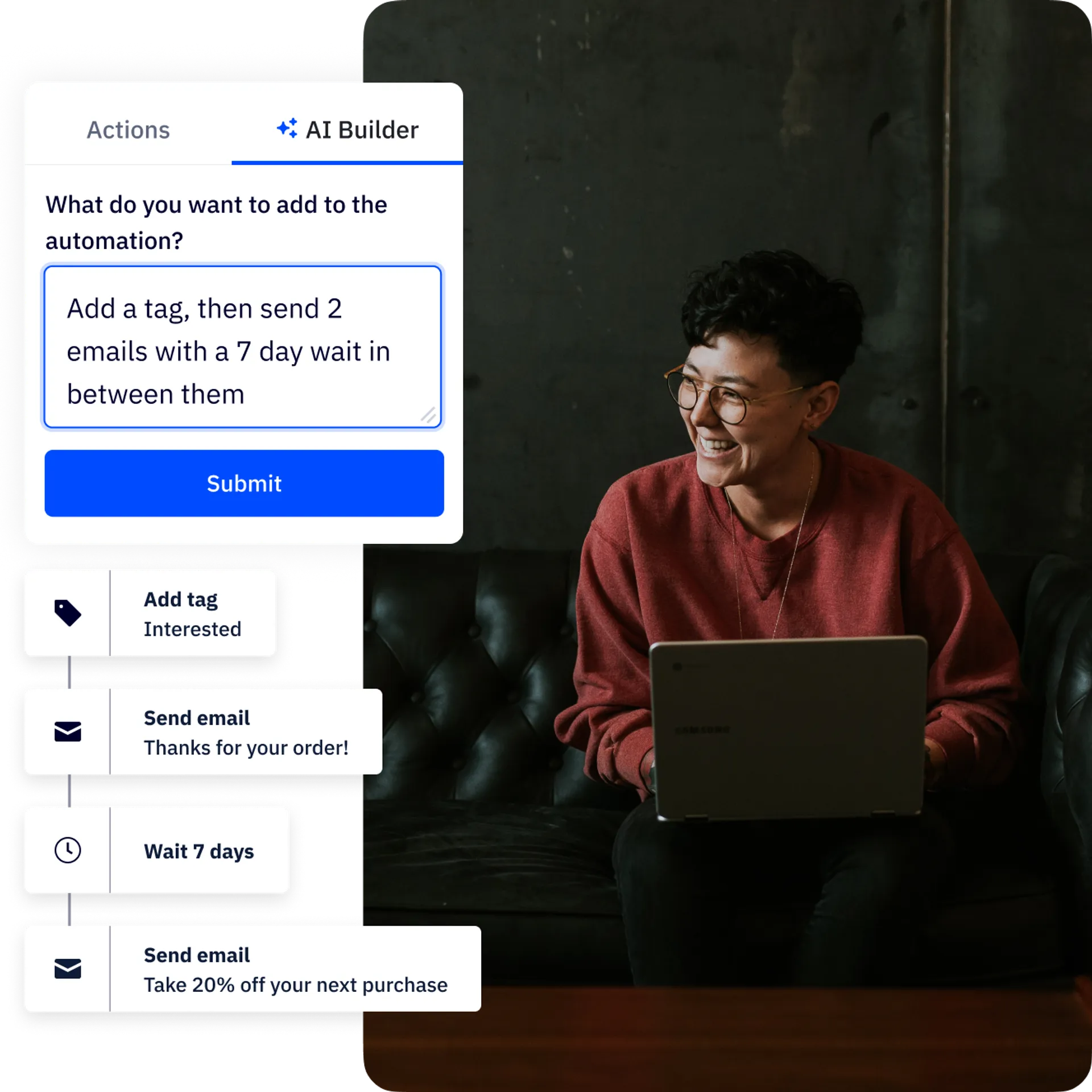
ActiveCampaign's visual automation builder supports unlimited automation actions on Plus plans and above, with conditional branching that routes contacts by behavior, preferences, and engagement. A single workflow can trigger emails, SMS, WhatsApp messages, CRM deal updates, and lead score adjustments across multiple branches.
Source: ActiveCampaign
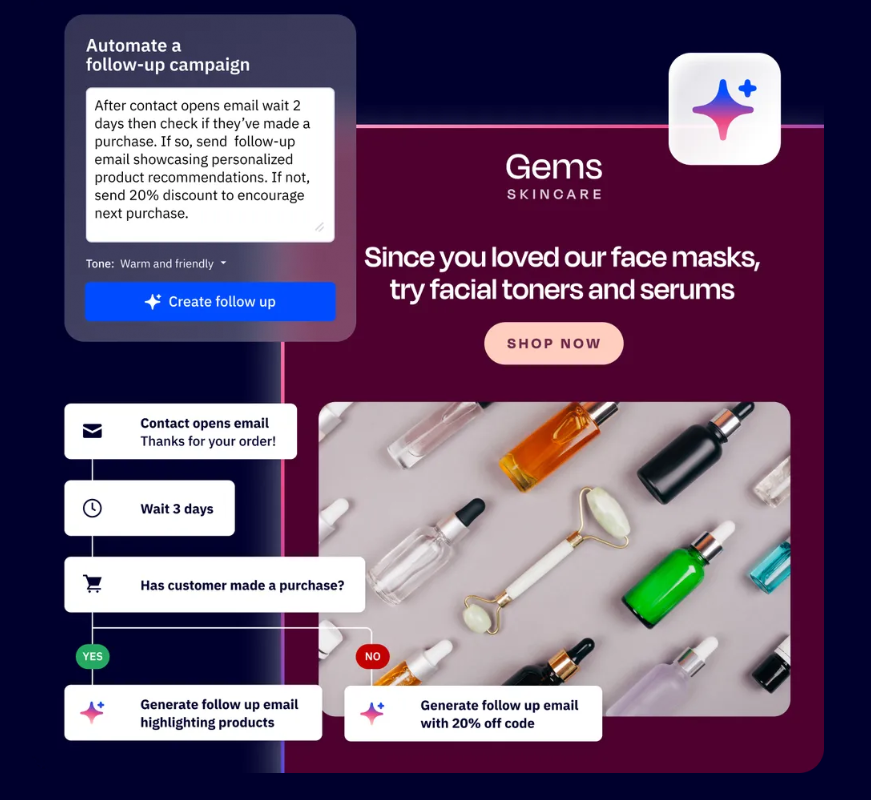
The AI Campaign Builder takes a plain-language prompt and generates a configured automation (wait periods, branching paths, action steps) without manual setup.
Source: ActiveCampaign
Predictive Sending goes further: instead of picking one send time for a list, it studies each contact's engagement history and delivers when that person is most likely to open.
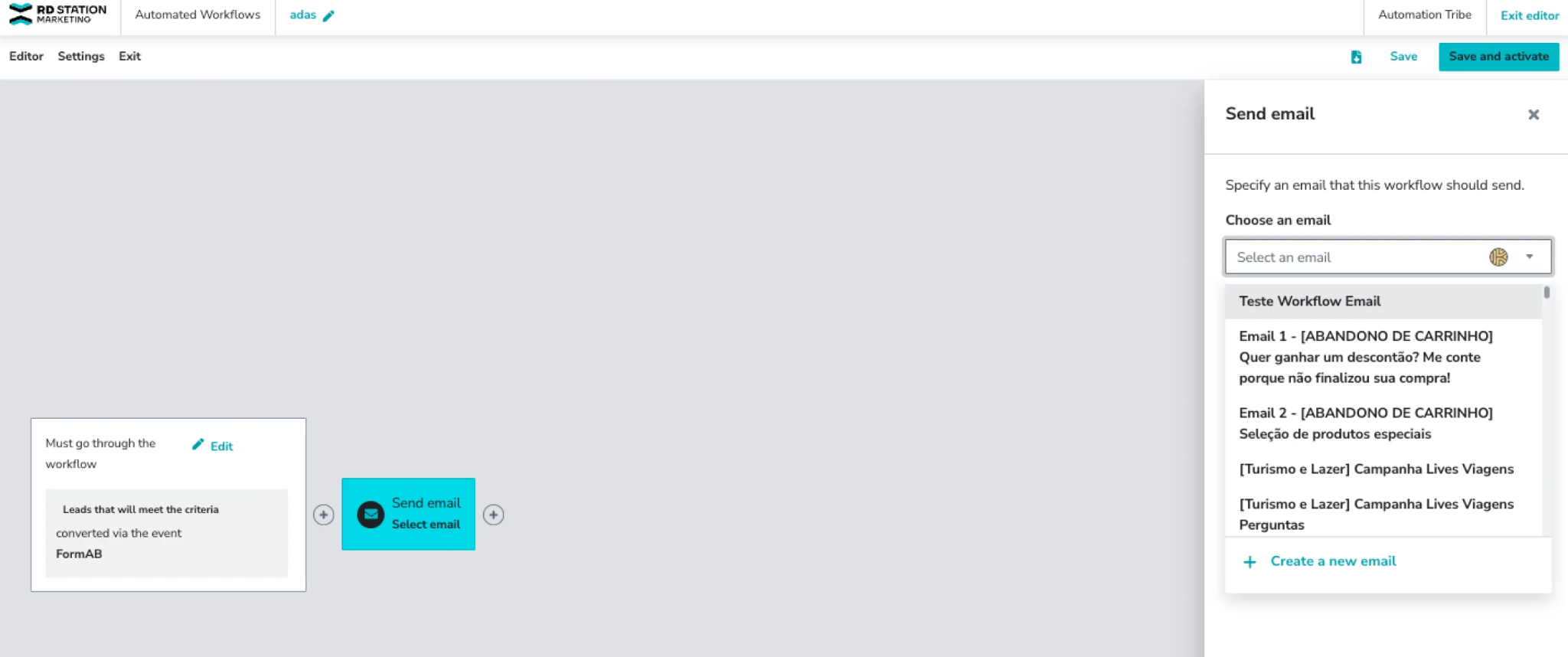
RD Station's automation workflows cover the essentials: triggered sequences based on contact actions or attributes, email sends, WhatsApp messages, lead score adjustments, and CRM handoffs.
Source: RD Station
On Pro plans, users access 180+ segmentation criteria and advanced automation. But there are ceilings. Users report that segmentation is limited, notably the inability to filter contacts who didn't open an email (a standard feature in ActiveCampaign). Multivariate A/B testing of workflow branches is also absent.
For marketers who need behavior-driven journeys with dozens of conditional paths, ActiveCampaign offers more. For teams that need lead nurture sequences connected to WhatsApp and a CRM, RD Station does the job without the learning curve.
WhatsApp tells you where each platform's priorities lie
RD Station treats WhatsApp as the center of its universe. ActiveCampaign treats it as one channel among several.
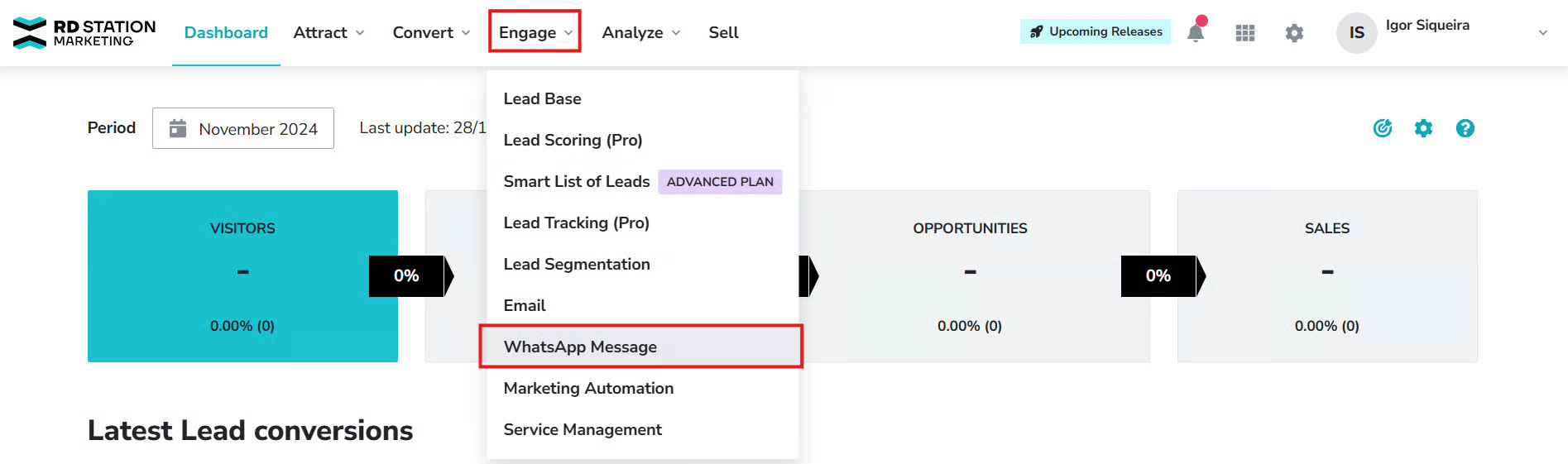
RD Station's WhatsApp capabilities span all three of its products. In Marketing, WhatsApp mass messaging runs through Meta's Business API, with claimed conversion improvements of up to 40%. In CRM, a Chrome extension overlays on WhatsApp Web so sales reps can create contacts, advance pipeline stages, and complete tasks without leaving the conversation.
Source: RD Station
In Conversas, AI agents handle inbound WhatsApp inquiries end-to-end, qualifying leads and routing to humans when needed. 79% of Brazilian sales happen on WhatsApp, and RD Station is built around that reality.
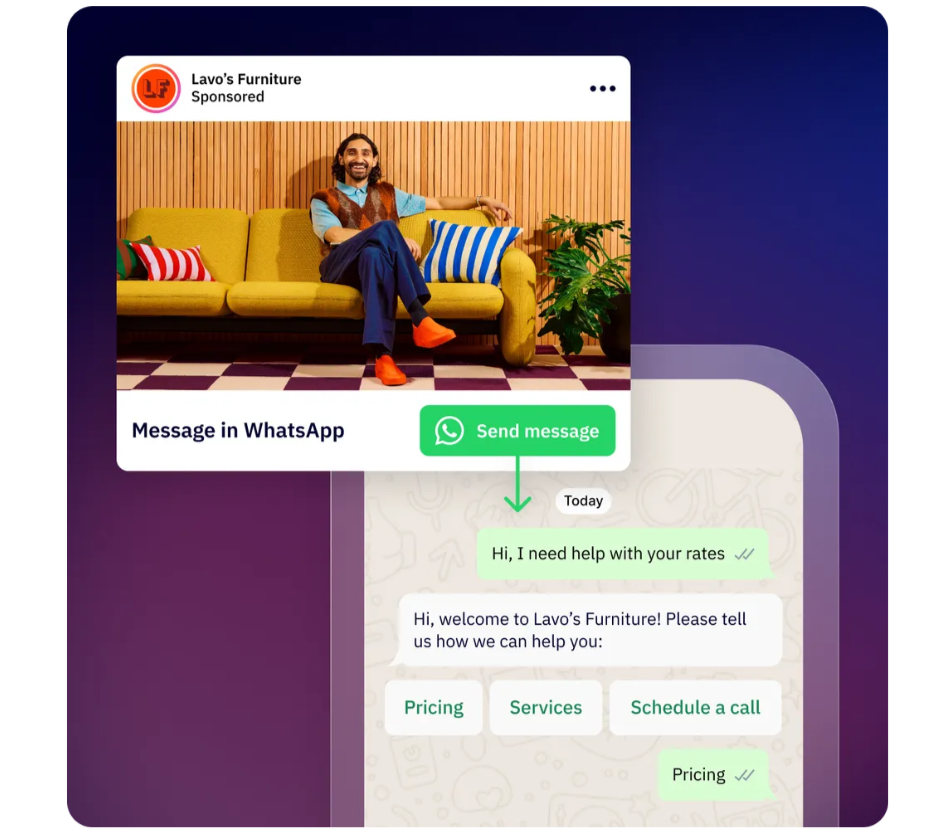
ActiveCampaign added WhatsApp through its April 2025 acquisition of Hilos. The features include broadcast messaging, a no-code Flows builder, 1:1 chat, and a shared multi-user inbox.
Source: ActiveCampaign
The difference: WhatsApp in ActiveCampaign feeds into the same automation builder that handles email and SMS, so a single workflow coordinates all three channels with shared contact data.
For businesses in Brazil and Latin America where WhatsApp is the default channel, RD Station's three-product WhatsApp coverage is hard to match. For global businesses that use WhatsApp alongside email and SMS, ActiveCampaign's cross-channel approach gives more flexibility.
Neither platform tells you who's ready to buy
ActiveCampaign and RD Station both excel at what happens after a prospect enters your database. They send emails, trigger workflows, score leads, and move deals through pipelines.
But they share a blind spot: neither tells you which companies are researching solutions like yours right now, which decision-makers you should reach, or what buying signals suggest a deal is likely to close.
This is where ZoomInfo plays a different role. ZoomInfo doesn't compete with ActiveCampaign or RD Station for your automation budget. It provides the intelligence that makes your automation work better, whichever platform you choose.
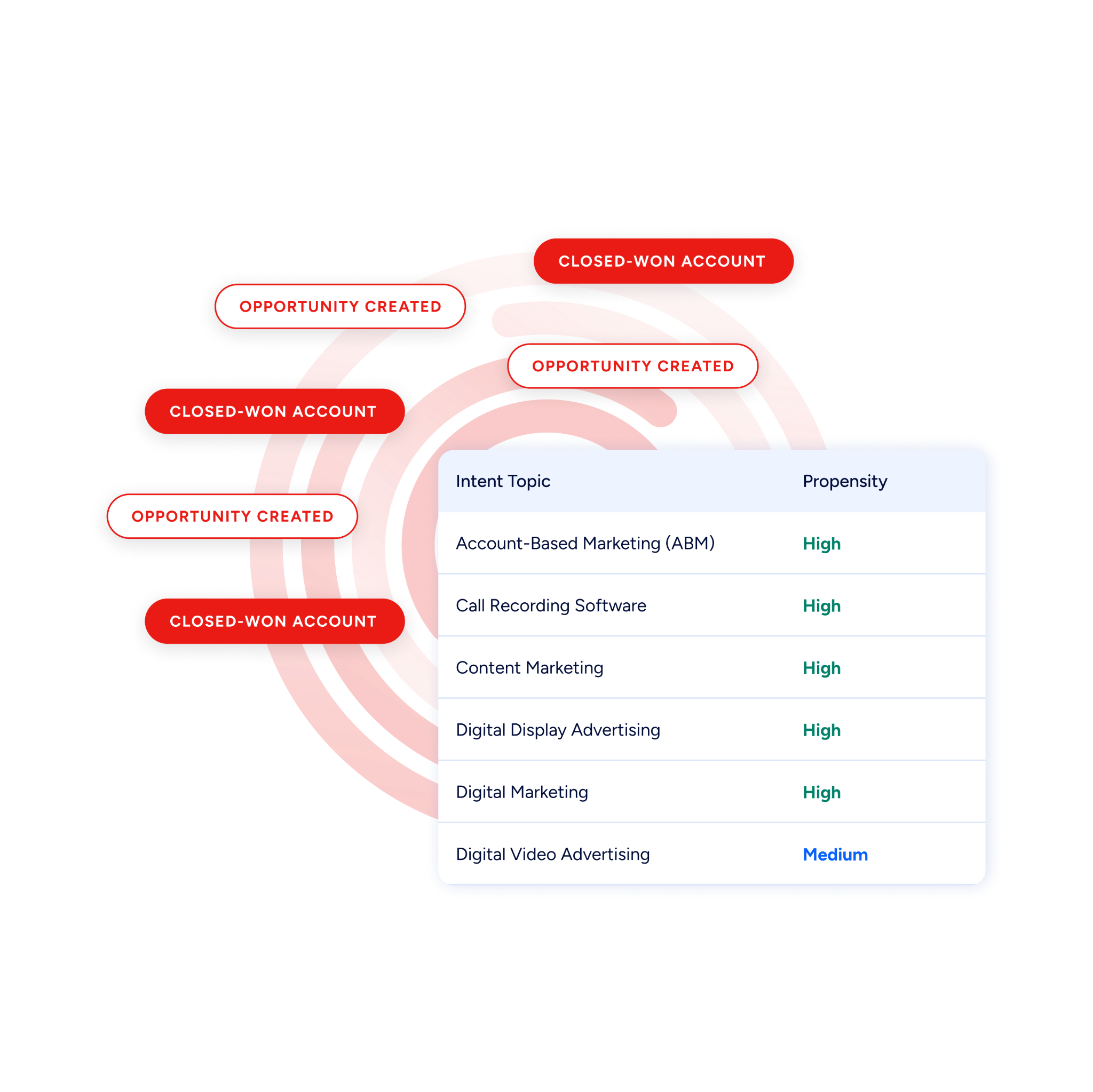
ZoomInfo's Buyer Intent data tracks signals from 210 million IP-to-Organization pairings and 6 trillion+ new keyword-to-device pairings sourced monthly.
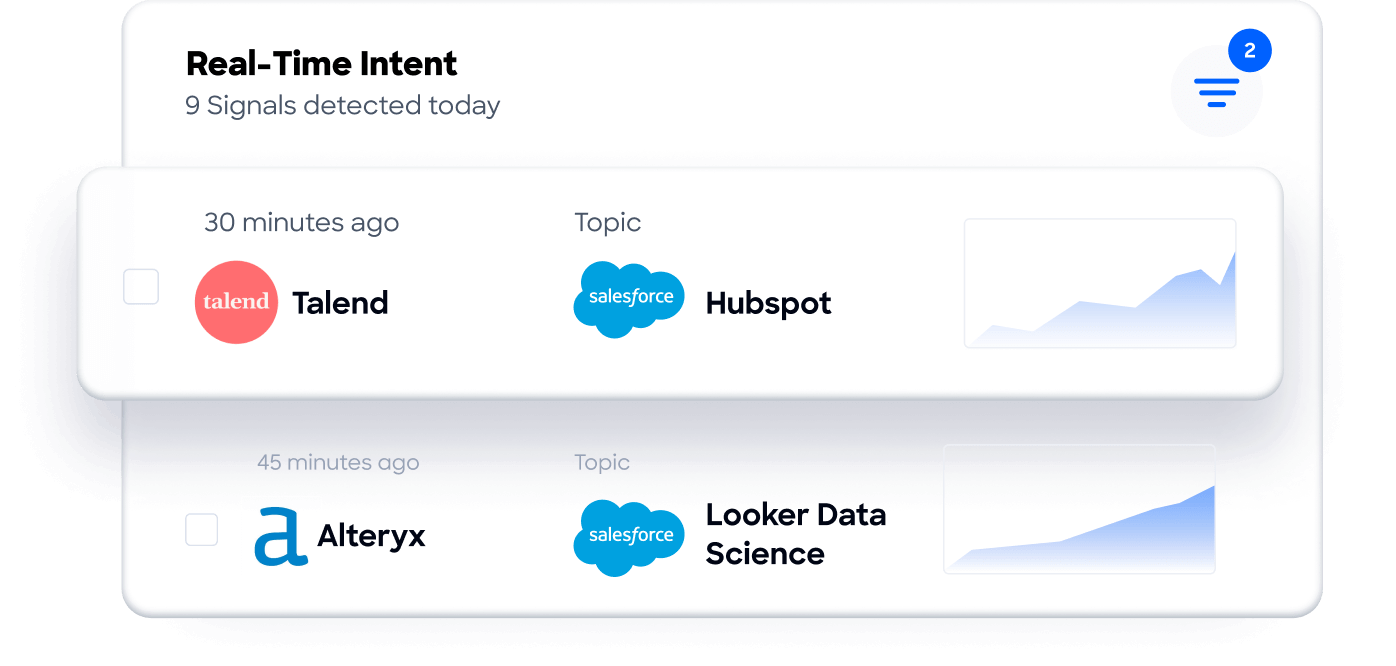
Guided Intent (exclusive to ZoomInfo) identifies the topics correlated with deal success in your business, rather than requiring you to pick topics manually.
WebSights resolves anonymous website traffic to actual companies, identifying buying teams and surfacing contact information.
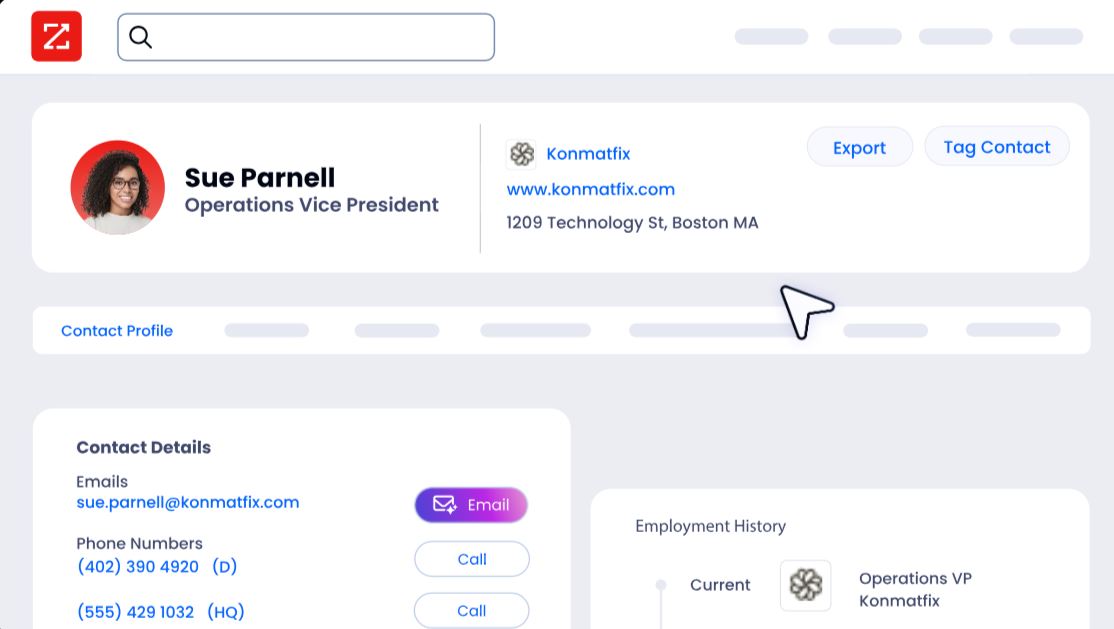
The GTM Context Graph puts this data to work. It processes 1.5B+ data points daily, combining ZoomInfo's B2B data with your CRM records, conversation intelligence, and behavioral signals to show not just what happened in a deal, but why. A CRM records that a deal moved stages.
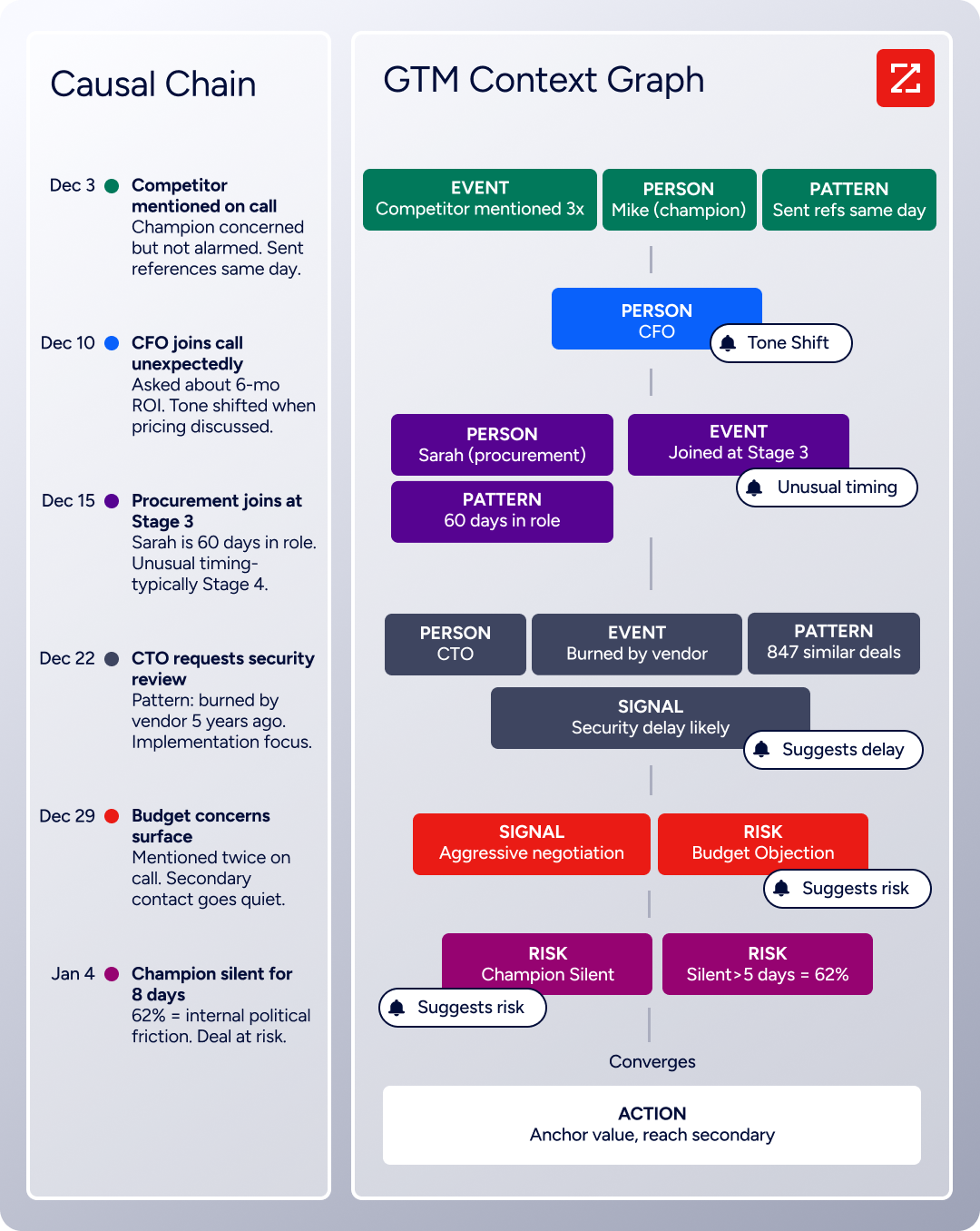
The GTM Context Graph reasons that executive sponsorship entering at this stage, combined with specific questions asked on the last call, matches the pattern behind closed-won deals in your segment.
ZoomInfo's deployment at Seismic attributed 39% of active pipeline to opportunities identified or influenced by ZoomInfo signals, with 54% greater sales productivity. (Seismic case study)
CRM capabilities reflect different design philosophies
Both ActiveCampaign and RD Station include CRMs, but built for different contexts.
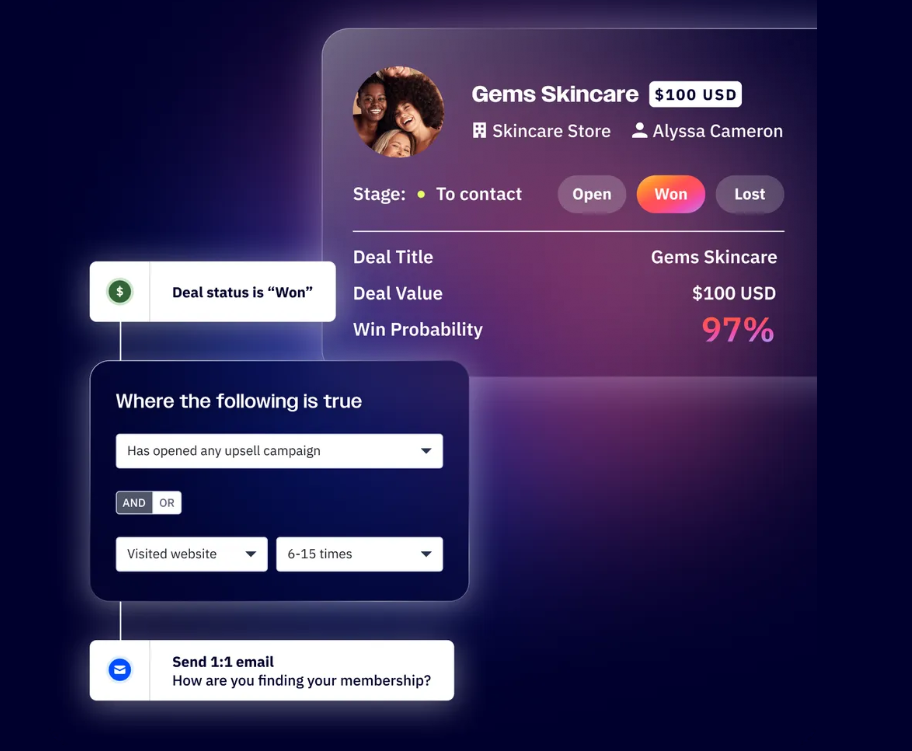
ActiveCampaign's CRM is embedded in the marketing automation platform. Deal records carry the full behavioral history of a contact: every email opened, every page visited, every automation triggered.
Source: ActiveCampaign
The system supports both contact-level lead scores and deal-level scores, letting teams independently track "is this person a good lead?" and "is this deal likely to close?" Sales routing assigns incoming deals automatically by round-robin rotation, expertise, geography, or lead score.
Active Intelligence surfaces win probability scores and next-step guidance at the deal level.
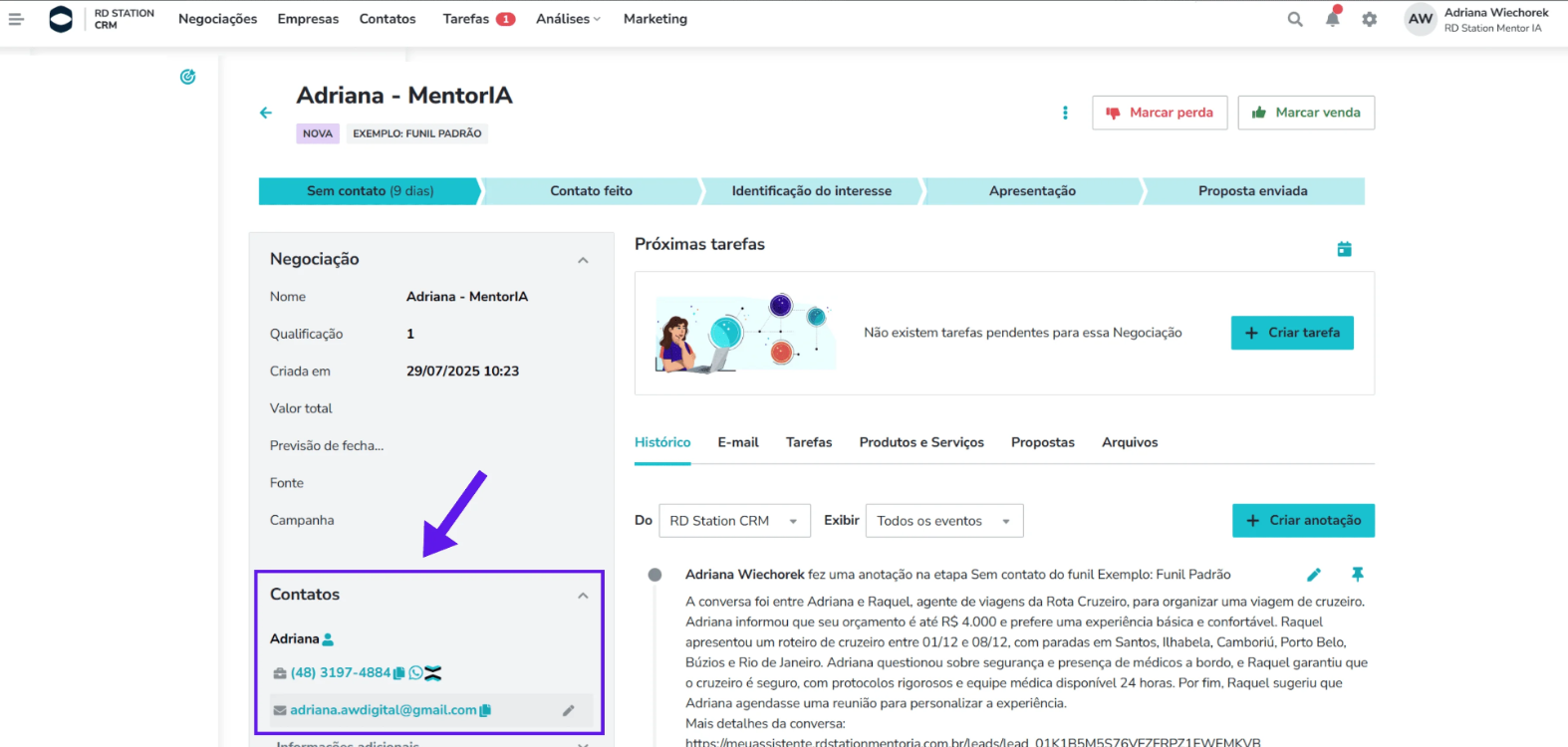
RD Station CRM is built around selling through WhatsApp. Through a Chrome extension, reps can create contacts, update CRM fields, advance pipeline stages, and mark deals won or lost without leaving WhatsApp Web.

Source: RD Station
On mobile, voice commands update the CRM hands-free during conversations. A distinctive feature: reps must complete required fields before advancing a deal to the next stage, enforcing process compliance in the pipeline instead of relying on manager audits.
The free CRM tier supports up to 4 users with a single funnel, making it accessible for small sales teams.
Neither CRM enriches your contact records with external B2B intelligence.
That's where ZoomInfo's GTM Workspace fills a different gap. Workspace gives sellers a Book of Business view that combines CRM data with ZoomInfo's contact database, company intelligence, intent signals, and conversation history.
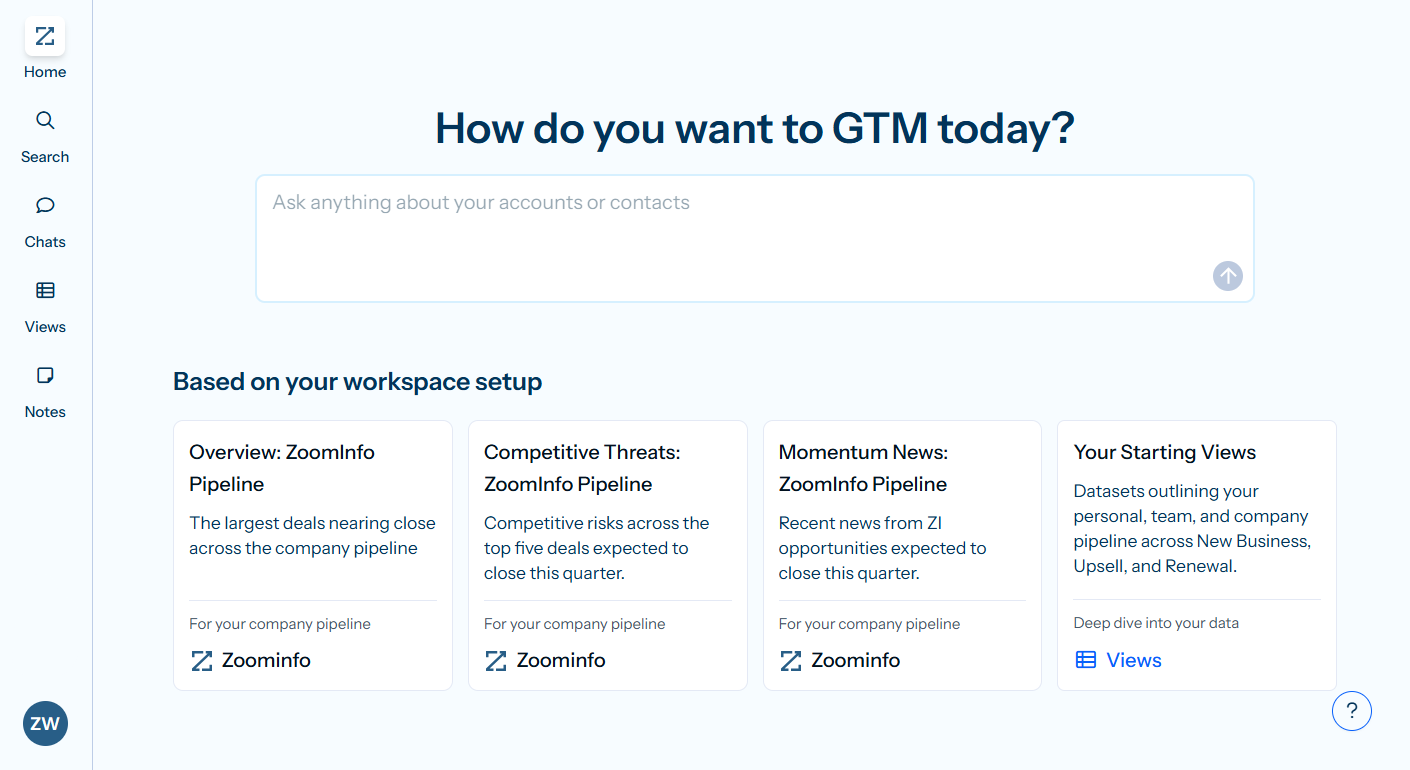
AI agents handle account research, generate follow-ups, monitor signals, and draft outreach from a single view.
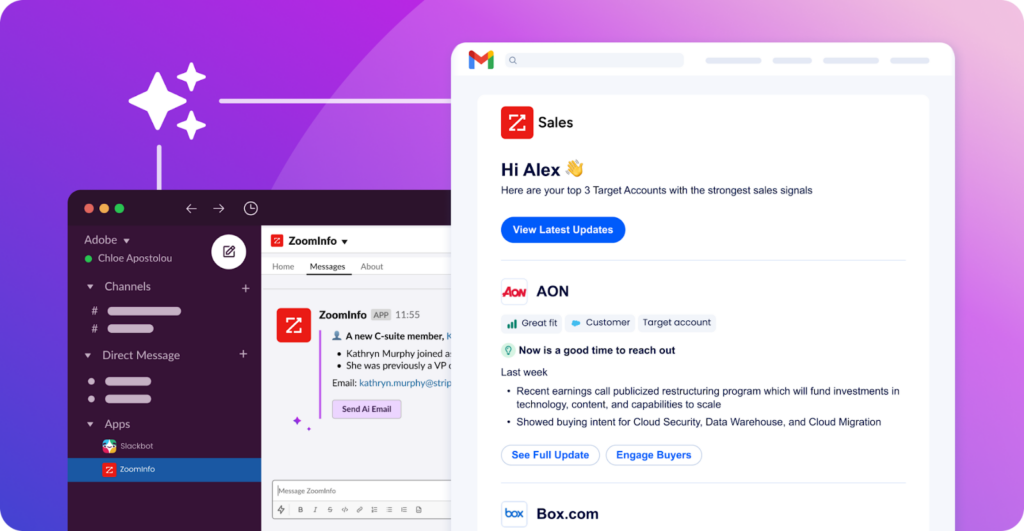
Spekit found that minimizing context-switching proved beneficial. "ZoomInfo offers a unified view, eliminating the need to navigate between systems," said Ben Perceval, RevOps Manager. (Spekit case study)
AI features are moving fast on all three platforms
ActiveCampaign, RD Station, and ZoomInfo are each investing in AI, but in different directions.
ActiveCampaign's Active Intelligence, launched May 2025, grew fast. It works through AI agents covering campaigns, automations, segments, personalization, forms, goals, and insights. The framework has three phases: Imagine (a goals agent maps a stated goal to proven strategies), Activate (agents build campaigns ready to deploy), and Validate (performance insights track progress).
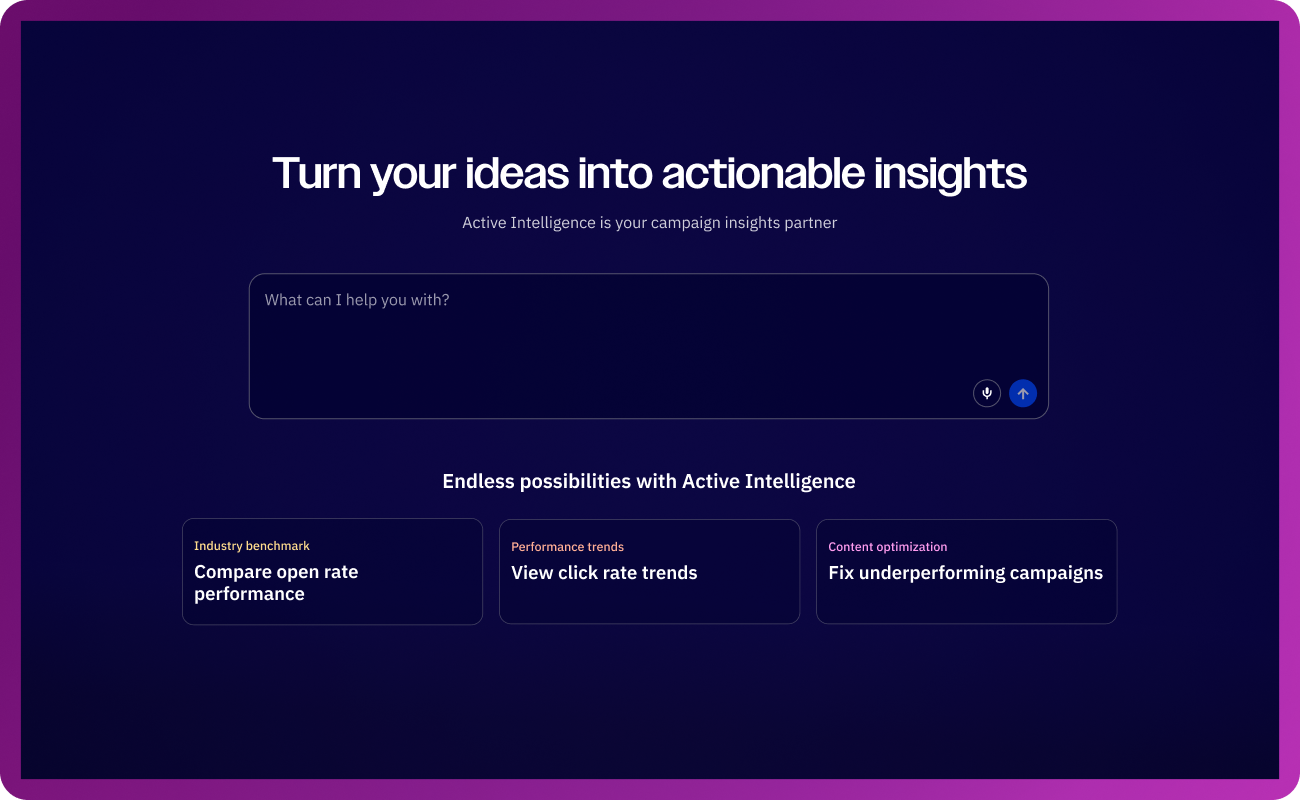
Source: ActiveCampaign
AI-Suggested Actions draw on billions of anonymized data points from similar businesses, a scale advantage where more users improve individual recommendations. Several agents remain in beta as of early 2026, so reliability varies.
RD Station's AI investment centers on Mentor IA, a copilot integrated across all three products, and AI Agents for WhatsApp in Conversas. The WhatsApp AI agents (powered by OpenAI) handle conversations including lead qualification, intent recognition, and customer service. RD Station reports they can go live in under 10 minutes.
Source: RD Station
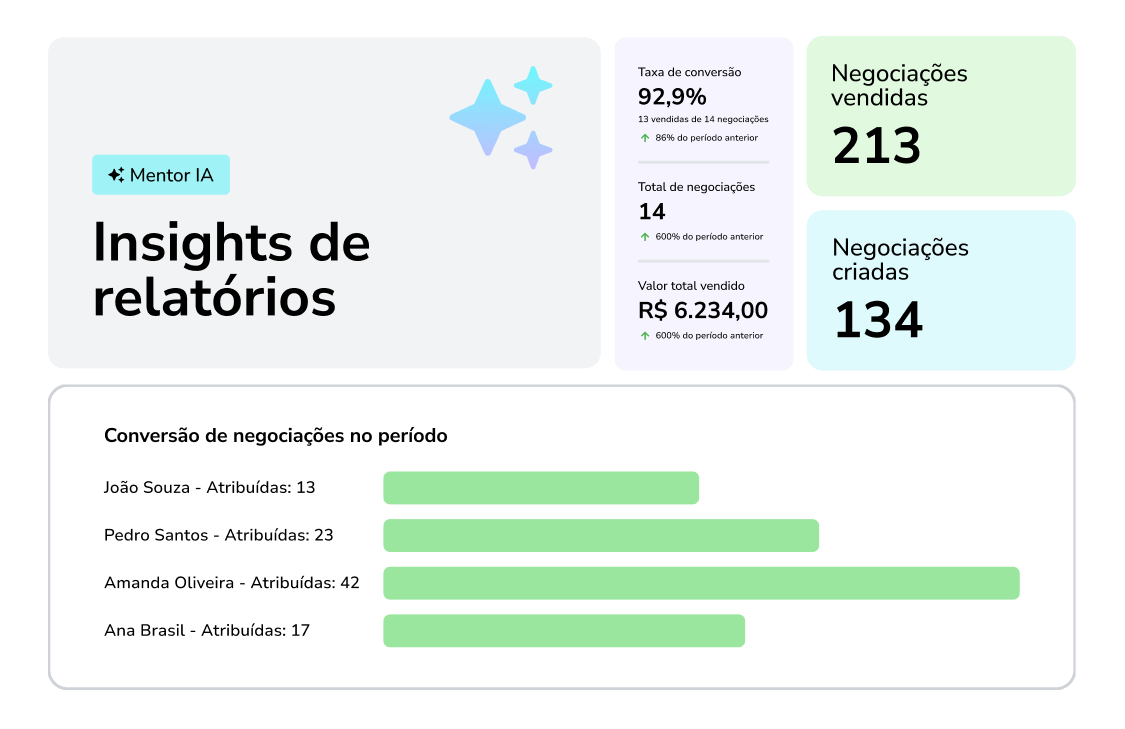
Radar GEO is a free tool that audits how ChatGPT and Google Gemini describe a brand (an early Generative Engine Optimization capability). The AI reporting feature, "Insights de Relatórios", lets managers ask plain-language questions about pipeline data and get answers on demand.
ZoomInfo's AI operates at a different layer. The GTM Context Graph is not a feature bolted onto an existing product but the intelligence layer the platform is built on. In GTM Workspace, AI agents automate account research, outreach, CRM updates, and signal monitoring for sellers.
In GTM Studio, marketers and RevOps teams describe audiences in natural language and launch multi-channel plays targeting accounts that match proven win patterns, with expansion plays that used to take 3 weeks launching in 30 minutes.
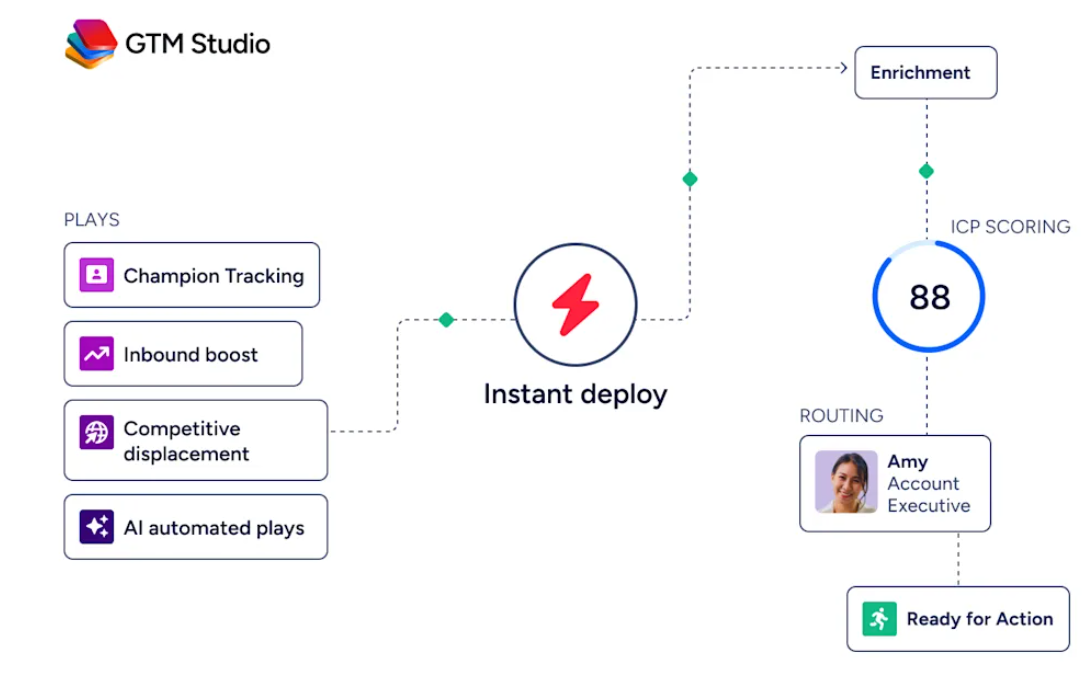
"It's about the right data at the right time to help us reach out with the right message across that full buyer journey," said Chelsea Kenyon, Senior Director of Digital Strategy at Redwood Logistics, where the team saw a 99% reduction in CPC and a 310% increase in CTR. (Redwood Logistics case study)
Email deliverability and data quality shape real-world results
Your automation platform is only as effective as the emails that reach the inbox and the data behind your segmentation.
ActiveCampaign takes deliverability seriously. The platform reports 99.88% email deliverability, with EmailToolTester independently reporting 94%. The infrastructure includes dedicated IP management, DKIM and DMARC authentication, pre-warmed IPs, and private network routing.

Source: ActiveCampaign
Apple MPP filtering strips inflated open metrics caused by Apple Mail Privacy Protection, and BotSense filters bot click activity from engagement data. 93% of surveyed customers report better deliverability than competitors.
RD Station's deliverability infrastructure is less documented publicly. The platform provides email A/B testing and delivery tracking, with a dedicated IP available as a paid add-on (R$347/month on Brazilian plans).
An Email Validator sits on the Prisma Elos roadmap as an upcoming feature, suggesting the capability isn't built yet. External forms on websites lack reCAPTCHA support, leaving lead databases exposed to bot submissions that degrade data quality and deliverability.
ZoomInfo addresses data quality from the other direction: before contacts enter your marketing automation platform. With up to 95% accuracy on first-party data and 200M+ verified business email addresses, ZoomInfo ensures the contacts entering your automations are real, current, and reachable. NeverBounce (acquired by ZoomInfo) adds email verification at the point of entry.
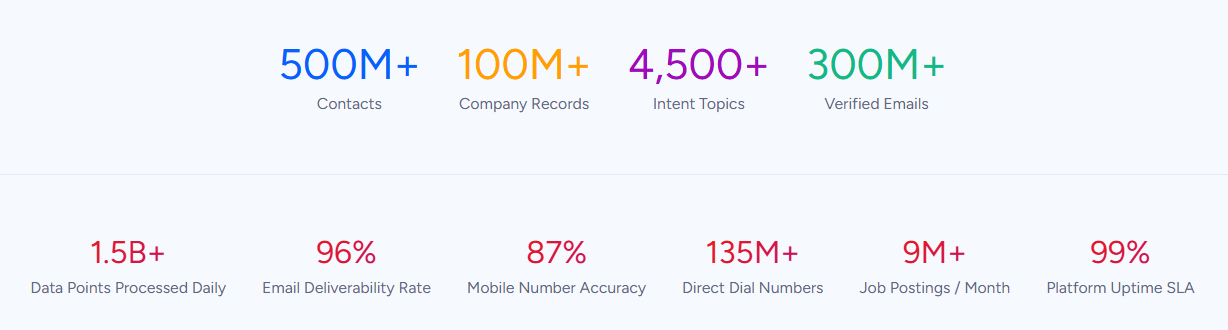
Operations automates deduplication, enrichment, and screening that blocks bad data before it enters your CRM.
Reporting depth varies significantly
ActiveCampaign reports on campaign performance across email, SMS, and WhatsApp, with conversational analytics that let you query campaign KPIs in plain language. Business Goals tracking ties campaigns to business outcomes with AI recommendations.
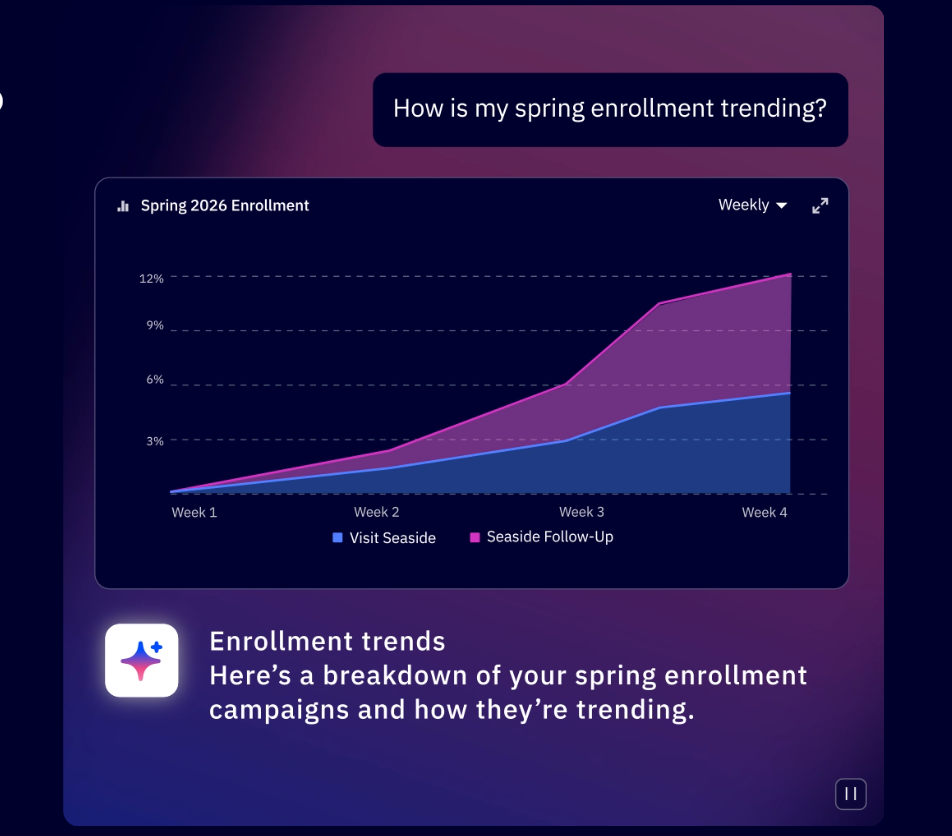
Source: ActiveCampaign
The Professional plan unlocks revenue and conversion attribution, custom event tracking, and split testing with up to five variants. Win Probability predicts deal outcomes with AI. For most mid-market marketing teams, this coverage is sufficient.
RD Station's reporting is a known weakness. Multiple Capterra reviewers describe the reporting module as "very basic", not enough for detailed conversion analytics by channel, geography, or multi-touch attribution.
The Conversion Attribution Analysis feature links closed-won deals to originating marketing campaigns when both Marketing and CRM data live in the same platform, but there is no report builder with drag-and-drop metric composition. Teams that outgrow the built-in dashboards must export data to external BI tools.
ZoomInfo's GTM Studio offers dashboards tracking engagement, funnel progression, and top-performing segments, with analytics that improve as plays run. The intelligence layer connects upstream signals (intent spikes, website visits, buying committee changes) to downstream outcomes (pipeline, revenue, win rates), providing attribution context that standalone automation platforms miss.
Pricing tells you who each platform is built for
The pricing structures reveal each platform's target customer.
ActiveCampaign uses contact-based pricing across four tiers: Starter, Plus, Professional, and Enterprise. Starter costs $149/month for 10,000 contacts, but caps automations at 5 actions per workflow, excludes landing pages, and limits AI features.
Plus removes the automation cap and adds landing pages, AI content generation, and multichannel automation. Professional (3 seats included) adds advanced segmentation, predictive sending, conditional content, and revenue attribution.
Enterprise adds SSO, HIPAA support, premium CRM integrations (Salesforce, Microsoft Dynamics 365), and a dedicated account team with custom pricing.
A useful pricing detail: ActiveCampaign charges once per unique contact regardless of how many automations, tags, or segments that contact appears in, unlike platforms that bill per list appearance.
There is no permanent free plan, only a 14-day free trial and a 30-day money-back guarantee for first-time subscribers. G2 reviewers report that pricing has risen in recent years and climbs quickly as contact lists grow.
RD Station prices its three products separately. Marketing starts at ~USD 16/month for 1,000 contacts (Light), jumps to ~USD 72/month (Basic), and USD 269/month (Pro, 5,000 contacts) with a mandatory 12-month contract. Pro also carries a non-refundable onboarding fee of R$2,699.
CRM offers a permanently free tier for up to 4 users, with paid plans starting at R$73/user/month. Conversas starts at R$989/month for up to 500 clients, plus a mandatory WhatsApp credits wallet (minimum R$300/year).
The total cost of running all three products adds up, but the free CRM tier lets small teams start without paying for sales software.
All RD Station Marketing plans include unlimited registered users, a clear advantage over ActiveCampaign's per-seat limits on higher tiers.
ZoomInfo uses consumption-based pricing with no publicly listed prices. Costs scale with license agreements, data access, API consumption, and AI usage. However, ZoomInfo Lite offers permanent free access to the B2B database with 10 monthly export credits, individual and company searches, the ReachOut Chrome Extension, and HubSpot integration.
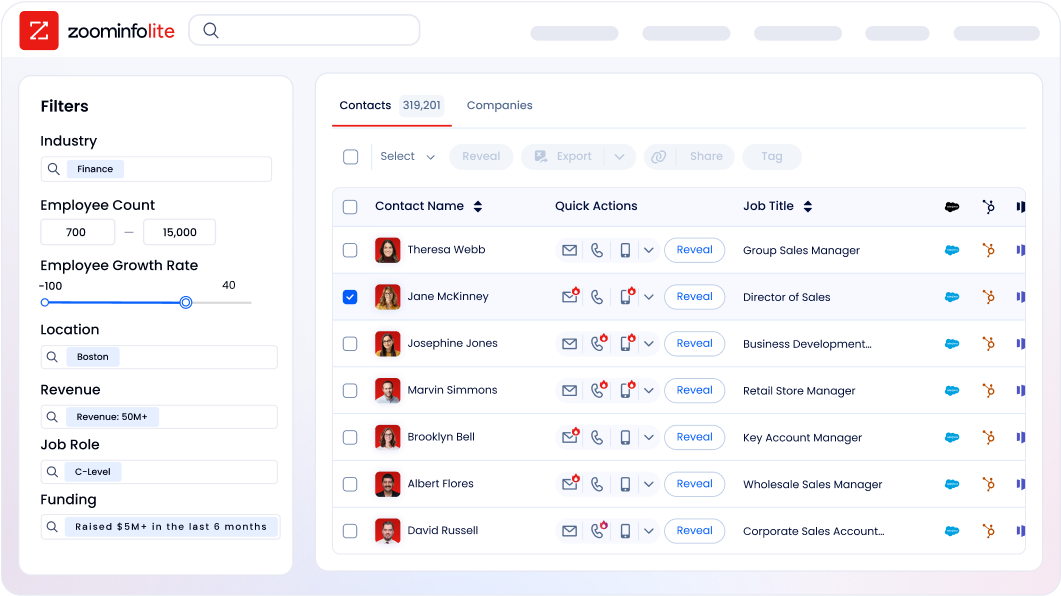
A 7-day free trial of paid features is also available.
The integration question reveals a deeper problem
ActiveCampaign's 1,000+ integrations span CRM, ecommerce, forms, advertising, and communication tools. Shopify, WooCommerce, WordPress, Salesforce, Google Ads, Facebook, Zapier, Make, Clay, and Calendly all connect natively.
The AI/MCP integration lets Claude, ChatGPT, and any MCP-compatible tool interact with ActiveCampaign data through natural language. The platform also offers free migration of contacts, templates, segments, and campaigns from competitor platforms.
RD Station's integration ecosystem is narrower, with over 100 solutions weighted toward the Latin American market. Key integrations include Salesforce, WhatsApp (native), Google Analytics/Ads, Facebook, WordPress, Shopify, WooCommerce, Pipedrive, and Zapier.
A Pluga connector (a Brazilian iPaaS) extends the ecosystem for local workflows. The API is available across plans, though full access requires Pro or above.
Integration depth with global tools is thinner than ActiveCampaign's, and users report custom field sync issues between RD Station Marketing and CRM.
But integration count misses the deeper question: what are you integrating with, and what data flows between them?
ZoomInfo treats integration as infrastructure.
API access is included in all relevant plans, and the MCP server connects ZoomInfo's B2B data to any MCP-compatible AI client. The ZoomInfo App Marketplace lists 172+ integration partners, including native connectors for Salesforce, HubSpot, Microsoft Dynamics 365, Snowflake, and Claude. Cloud Partners deliver ZoomInfo data directly into AWS, Google Cloud, Snowflake, and Databricks.
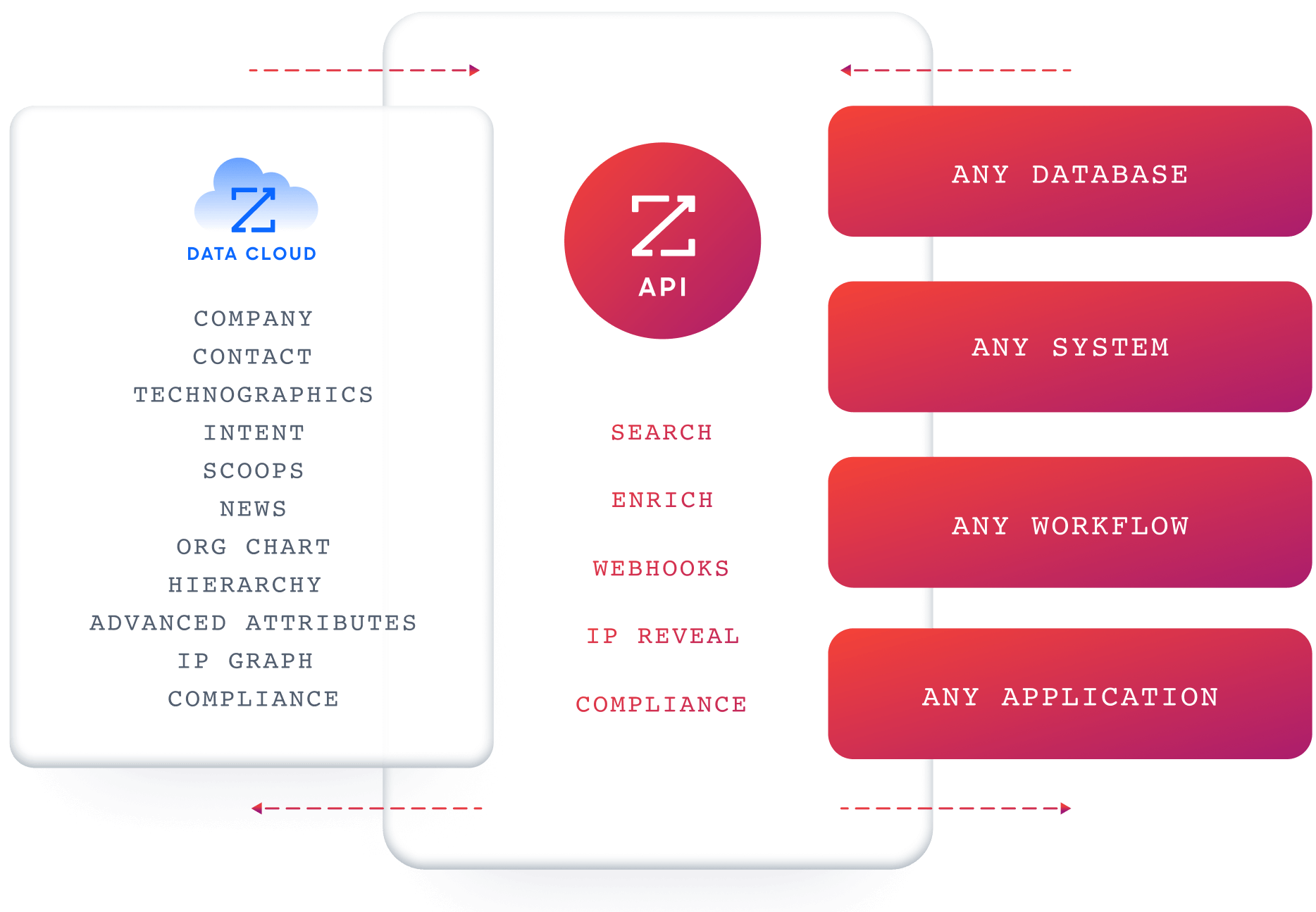
The point: ZoomInfo doesn't replace ActiveCampaign's or RD Station's integrations. It enriches them. When ZoomInfo feeds verified contacts and intent signals into the CRM that ActiveCampaign or RD Station reads from, your automations target the right people at the right time instead of broadcasting to an undifferentiated list.
BDO Canada's Jerry Wilson, Senior Marketing Intelligence Analyst, described the effect: "The plug-and-play aspect of the API means I can integrate it very easily into any process and get information at a moment's notice," resulting in an 87% reduction in time spent on internal data dashboard updates. (BDO Canada case study)
ActiveCampaign vs. RD Station vs. ZoomInfo: Which should you choose?
The choice depends on what you need most: global marketing automation, WhatsApp-native Latin American marketing and sales, or the B2B intelligence layer that makes either platform work better.
Choose ActiveCampaign if:
You need multi-branch marketing automation with behavioral triggers
You operate globally and want email, SMS, and WhatsApp coordinated from one platform
Your team can invest in learning a capable system with a real learning curve
You value AI that builds campaigns from plain-language goals
You need 1,000+ integrations to connect your existing tool stack
Choose RD Station if:
Your business is based in Brazil or Latin America
WhatsApp is your primary customer communication channel
You want marketing automation, CRM, and WhatsApp service under one roof
You need Portuguese-language support, documentation, and community
You want a free CRM tier for a small sales team getting started
Add ZoomInfo to either if:
You need to know which accounts are actively researching solutions like yours
Your marketing automation targets broad lists instead of verified, in-market buyers
You want AI that understands why deals move, not just what happened
Your sales team wastes time on prospects who aren't ready to buy
You need the data foundation that makes automation actually convert
See how ZoomInfo supports your go-to-market with a free trial, or explore ZoomInfo Lite at no cost.
Marketing automation platforms like ActiveCampaign and RD Station are essential for executing campaigns. But execution without intelligence is volume without precision. ZoomInfo provides the data, the signals, and the context that tell you who to reach, when to engage, and why this moment matters. The most effective marketing teams don't choose between automation and intelligence. They use both.
ActiveCampaign vs. RD Station vs. ZoomInfo FAQ
What is the core difference between ActiveCampaign, RD Station, and ZoomInfo?
ActiveCampaign is a global marketing automation platform with advanced conditional workflows, AI campaign building, and a built-in CRM. RD Station is a marketing automation and sales platform built for the Latin American market, with WhatsApp as a primary channel across its Marketing, CRM, and Conversas products.
ZoomInfo is not a marketing automation tool. It is a go-to-market platform that provides 500M contacts, buyer intent signals, and a GTM Context Graph that identifies which accounts are in-market and why, intelligence that feeds into whichever automation platform you choose.
Which platform is more affordable for a small business?
RD Station offers the lowest barrier to entry with a permanently free CRM tier for up to 4 users and Marketing plans starting at approximately USD 16/month for 1,000 contacts. ActiveCampaign starts at $15/month for 1,000 contacts on its Starter plan, though it limits automations to 5 actions per workflow and excludes landing pages.
ZoomInfo Lite is permanently free with 10 monthly export credits and access to the B2B database. For paid plans, both ActiveCampaign and RD Station scale costs by contact volume, with prices climbing as lists grow.
Which platform has better WhatsApp capabilities?
RD Station has deeper WhatsApp integration across its product suite, including WhatsApp mass messaging in Marketing, WhatsApp-native CRM actions (create contacts, advance deals, log notes without leaving WhatsApp), and AI agents that handle inbound WhatsApp service conversations in Conversas.
ActiveCampaign added WhatsApp through its 2025 Hilos acquisition and offers broadcast messaging, a no-code Flows builder, and a shared inbox, but WhatsApp is one channel in a cross-channel automation system rather than the primary selling motion.
Can ZoomInfo work alongside ActiveCampaign or RD Station?
Yes. ZoomInfo complements marketing automation platforms rather than replacing them. ZoomInfo's data, intent signals, and contact intelligence feed into the CRMs and marketing tools that ActiveCampaign and RD Station read from, so your automation workflows target verified, in-market buyers rather than broad lists. ZoomInfo's API and MCP access enable direct integration with any third-party tool, and both platforms can receive enriched data through their respective CRM integrations and workflow connectors.
Which platform is best for businesses outside Latin America?
ActiveCampaign is the stronger choice for global operations, serving 180,000+ businesses in 170+ countries with support for six languages and 1,000+ integrations weighted toward the global tool ecosystem. RD Station's support, documentation, community, and product experience are strongest in Portuguese, with Spanish and English getting less coverage. Non-LATAM buyers frequently cite the Portuguese-first experience as a blocker.
How do the AI capabilities compare across the three platforms?
ActiveCampaign's Active Intelligence includes 12+ AI agents that build campaigns from plain-language prompts, suggest segments based on audience data, and optimize send times per subscriber. RD Station's AI centers on Mentor IA (a cross-product copilot), AI Agents for WhatsApp conversations, and Radar GEO for AI search visibility.
ZoomInfo's AI operates at the intelligence layer through the GTM Context Graph, which processes 1.5B+ data points daily to identify which accounts are in-market, why deals move or stall, and what actions teams should take next.
Which platform has the best reporting and analytics?
ActiveCampaign offers the most complete reporting of the three, with multi-channel campaign analytics, conversational AI queries, split testing (up to five variants), revenue attribution (on Professional plans), and AI-driven win probability predictions. RD Station's reporting is frequently cited by reviewers as basic, lacking multi-touch attribution and custom dashboard building.
ZoomInfo provides analytics through GTM Studio tracking engagement, funnel progression, and campaign-to-revenue attribution, connecting buying signals to outcomes.
Does either marketing platform include B2B contact data or buyer intent signals?
Neither ActiveCampaign nor RD Station provides third-party B2B contact data or buyer intent signals. Both platforms manage and automate communication with contacts you already have. ZoomInfo provides the data layer: 500M contacts, 100M companies, 135M+ verified phone numbers, 200M+ verified business email addresses, and buyer intent data tracking signals from 210 million IP-to-Organization pairings. This is the intelligence that tells you who to add to your marketing automation in the first place.
See how ActiveCampaign stacks up elsewhere:
