
Choosing between ActiveCampaign and Zoho Campaigns for email marketing comes down to five questions:
Do you need marketing automation with complex branching logic, or are straightforward drip campaigns enough?
Is your priority a standalone email platform or tight integration with an existing business suite?
How important is built-in CRM functionality versus connecting to an external CRM?
Are you scaling beyond email into SMS, WhatsApp, and multi-channel campaigns?
Do you know who to target in the first place, or are you sending campaigns blind?
Here's what we recommend:
ActiveCampaign is the automation-first platform for growing businesses that have outgrown basic email tools. Its visual automation builder handles complex, branching workflows that respond to behavioral triggers in real time, and its built-in CRM ties marketing activity directly to sales pipeline. With 1,000+ integrations and channels spanning email, SMS, and WhatsApp, ActiveCampaign gives lean marketing teams the tools to run multi-step campaigns without enterprise budgets. The tradeoff: pricing climbs as contact lists grow, advanced features take time to learn, and the landing page builder trails dedicated tools.
Zoho Campaigns is the obvious pick for teams already inside the Zoho ecosystem. It delivers email and SMS marketing with unlimited sends on paid plans, a free tier covering 2,000 contacts, and native integration with 40+ Zoho applications. For businesses running Zoho CRM, data flows without third-party connectors. Where Zoho Campaigns falls short is automation depth, reporting, and design flexibility. It sends email well. It won't run your marketing strategy.
Both platforms solve the "how do I send emails" problem. But neither answers the harder question: are you reaching the right people? The best automation and the lowest pricing both fail when your campaigns target contacts who've changed jobs, companies that aren't in-market, or decision-makers you don't know exist. That's a data problem, and it needs a data solution.
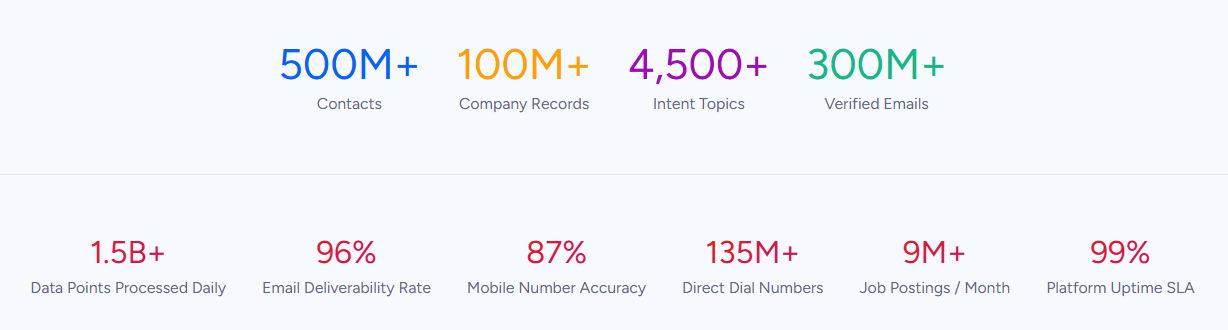
ZoomInfo is a B2B data and go-to-market platform that fills the data gap before email enters the picture. Its data covers 500M contacts, 100M companies, 135M+ verified phone numbers, and 200M+ verified business emails, giving your marketing team a verified picture of who to target. The GTM Context Graph processes 1.5B+ data points daily, combining this data with your CRM records, conversation transcripts, and behavioral signals to show which accounts are in-market and why. That intelligence flows into GTM Workspace for sellers, GTM Studio for marketers, or your email platform of choice through APIs and MCP.
If building campaigns on verified, intent-driven data sounds like the missing piece, see how ZoomInfo works.
ActiveCampaign vs. Zoho Campaigns at a glance
ActiveCampaign | Zoho Campaigns | ZoomInfo | |
|---|---|---|---|
Primary focus | Marketing automation + CRM | Email & SMS marketing | B2B data + go-to-market orchestration |
Automation depth | Visual builder, unlimited actions | Basic to moderate workflows | AI-driven GTM plays and signal-triggered campaigns |
Built-in CRM | Yes, with deal scoring and pipelines | No (integrates with Zoho CRM) | GTM Workspace for sellers, GTM Studio for marketers |
Channels | Email, SMS, WhatsApp | Email, SMS | Email, display ads, calls, direct mail via orchestration |
Contact data | Stores what you import | Stores what you import | 500M contacts, 200M+ verified emails |
Intent signals | None | None | Buyer Intent from 210M IP-to-Org pairings |
Free tier | 14-day trial only | 2,000 contacts, 6,000 emails/month forever | ZoomInfo Lite (permanent, 10 monthly credits) |
Starting price | $15/month (1,000 contacts) | Free; paid plans from ~$4/month | Custom-quoted, consumption-based |
Integrations | 1,000+ | 45+ native Zoho apps + third-party | |
Best for | Growing businesses needing automation depth | Budget-conscious teams in the Zoho ecosystem | B2B teams that need verified contacts and intent data |
ActiveCampaign wins on automation depth
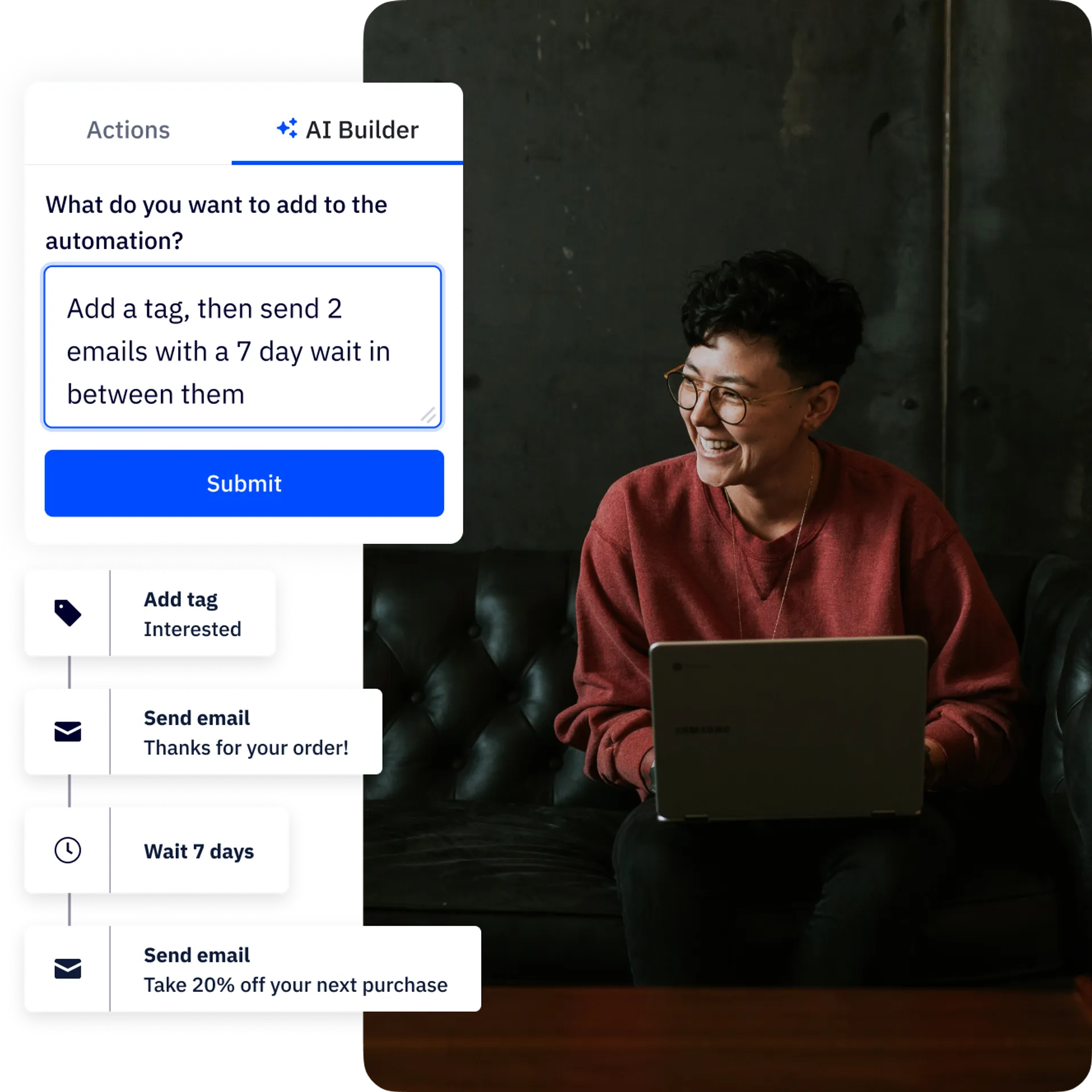
ActiveCampaign's defining advantage is the automation builder. It's a visual, drag-and-drop canvas where marketers design multi-step workflows with conditional branching, wait conditions, split actions, and behavioral triggers.
Source: ActiveCampaign
Want to send different follow-up sequences based on whether a contact clicked a pricing link or a product demo link? ActiveCampaign handles that in a few steps.
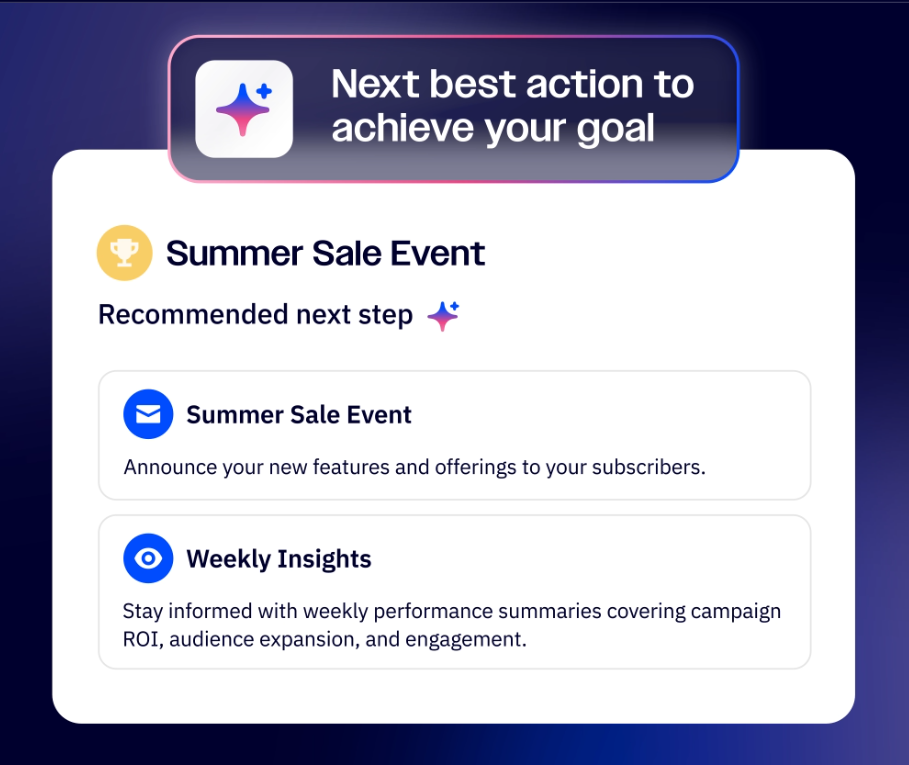
The builder supports unlimited actions on Plus plans and above, so workflows grow as complex as the business requires. AI-Suggested Actions, trained on billions of anonymized data points from similar businesses, recommend complete sequences instead of leaving marketers to build from scratch.
Source: ActiveCampaign
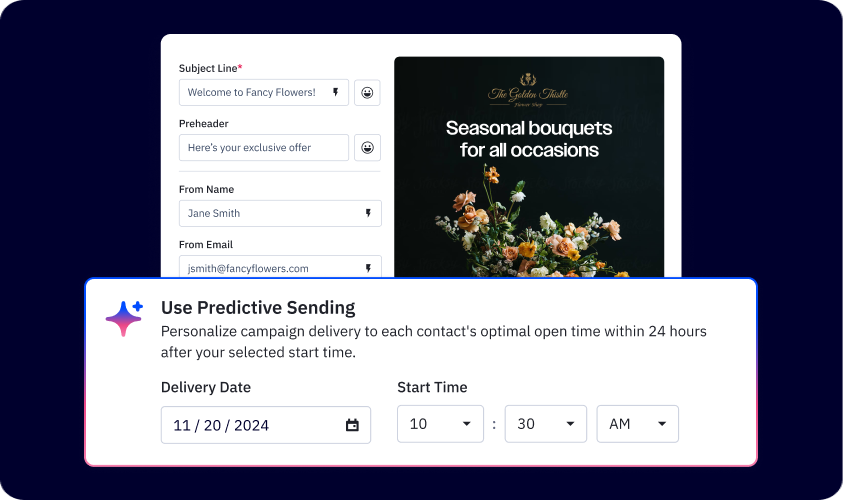
Predictive Sending analyzes each contact's engagement history and delivers emails when that person is most likely to open.
Source: ActiveCampaign
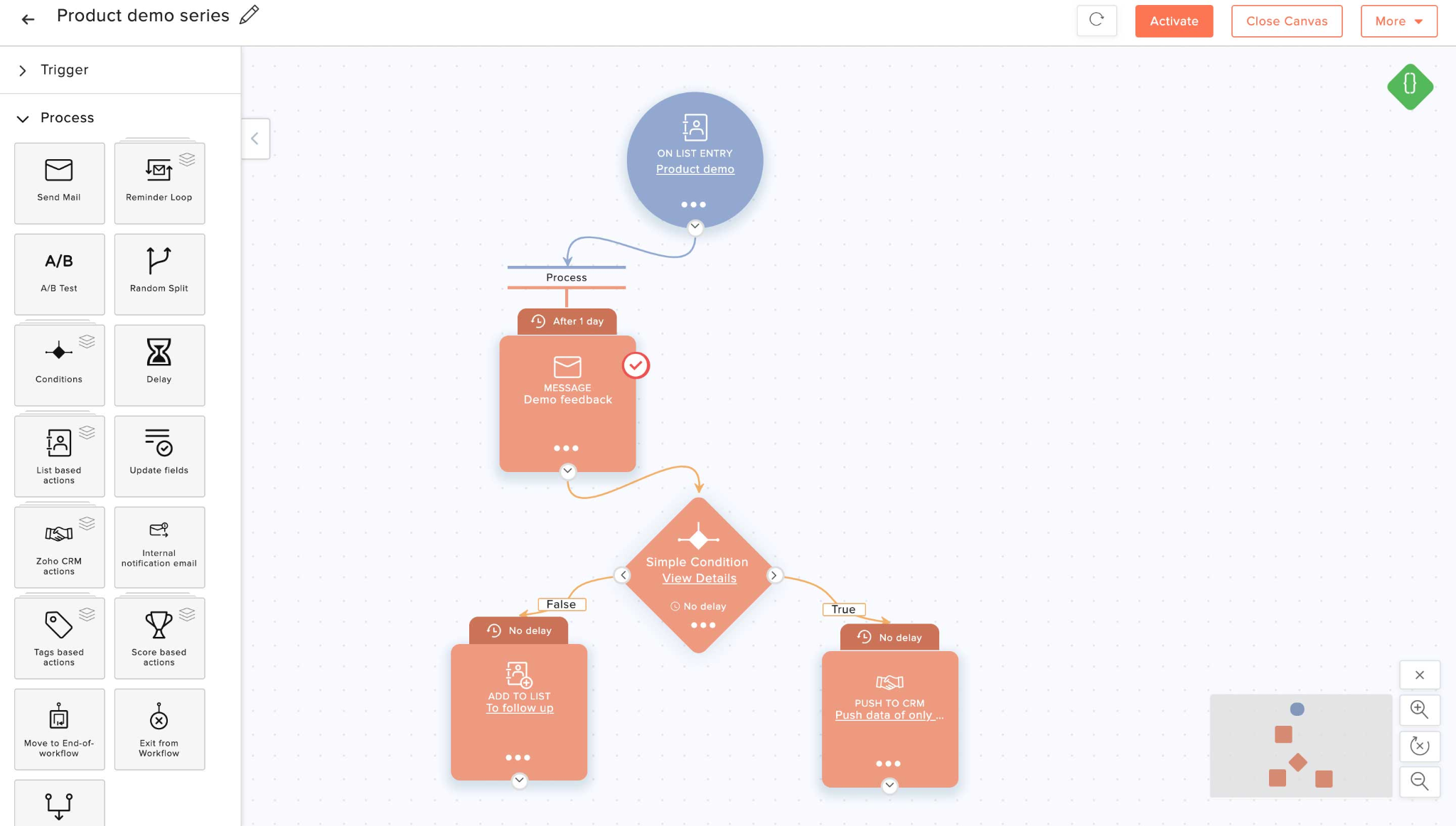
Zoho Campaigns takes a simpler approach. Its drag-and-drop workflow builder covers the essentials: welcome sequences, drip campaigns, cart abandonment, and re-engagement flows.
Source: Zoho
It supports 12 trigger types and useful components like random splits and multi-way conditions. But the full toolkit (25+ components, contact scoring, and advanced branching) is locked behind the Professional plan. Standard plan users get basic workflows only.
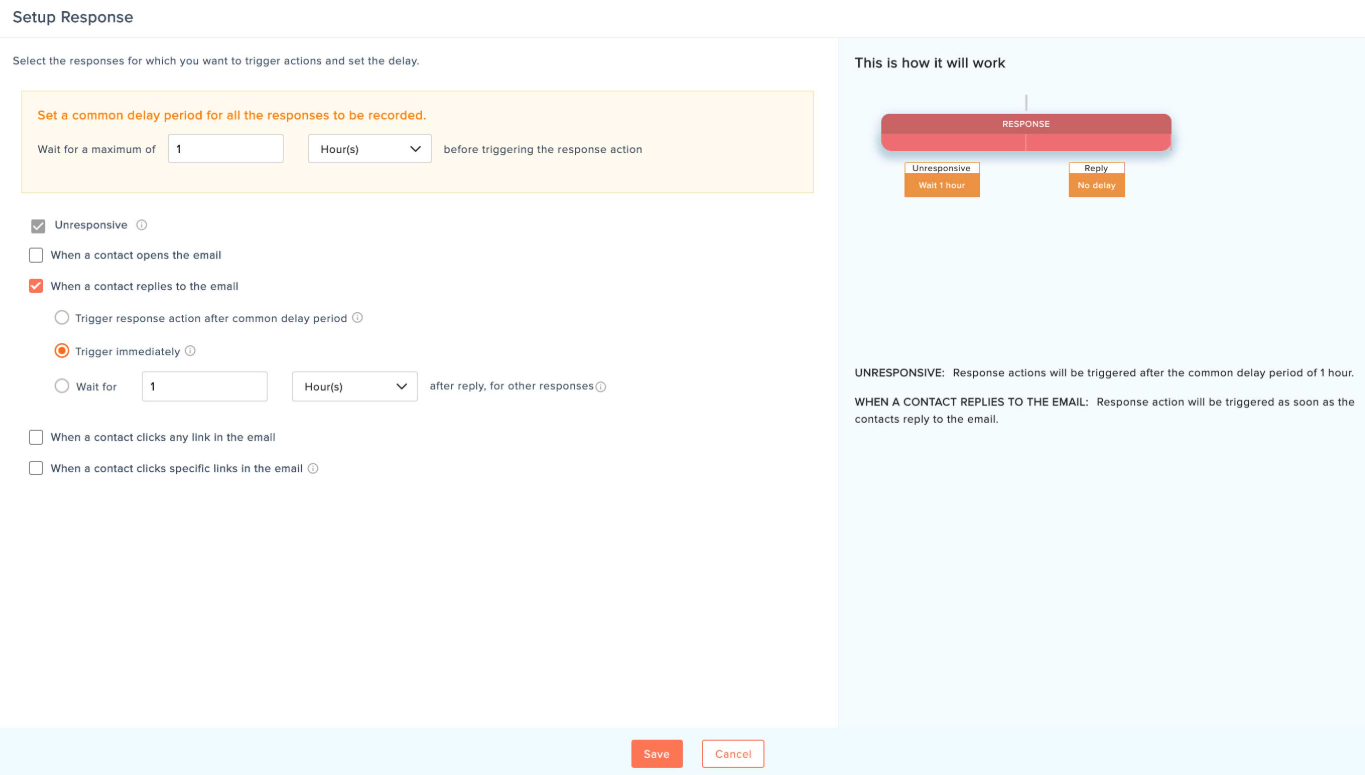
Where Zoho Campaigns stands out is reply tracking as a workflow branch. Contacts who reply to an email route into a distinct sequence, treating the reply as a high-intent signal. Most email automation tools branch only on opens and clicks.
Source: Zoho
The gap between the two widens as campaigns grow more complex. ActiveCampaign assumes marketers will build layered journeys and gives them the tools. Zoho Campaigns assumes most users need straightforward sequences and prices accordingly.
Zoho Campaigns costs a fraction of ActiveCampaign
Zoho Campaigns fights back in pricing.
The Forever Free plan covers 2,000 contacts, 6,000 emails per month, and up to 5 users, with no time limit. Paid plans include unlimited email sends, so the bill doesn't spike when you increase send frequency. Zoho's own comparison shows savings of up to 98% versus Mailchimp at comparable subscriber counts, and the math works similarly against ActiveCampaign at higher tiers.
ActiveCampaign starts at $15/month for 1,000 contacts on the Starter plan, but that tier is limited. Starter caps automations at 5 actions per workflow, excludes landing pages, and skips features like predictive sending and conditional content. The features most marketers need require Plus or Professional. At 10,000 contacts, Starter costs $149/month, and it climbs from there.
The pricing tells you who each platform serves.
Zoho Campaigns targets teams that need reliable email execution without budget anxiety. ActiveCampaign targets teams willing to pay more for automation depth and AI. Neither model is wrong, but a 10,000-contact list will cost very different amounts depending on which you choose.
One factor in ActiveCampaign's favor: it charges once per unique contact regardless of how many automations, tags, or segments that contact appears in. Platforms that charge per list appearance inflate costs when the same contacts sit in multiple segments.
The Zoho ecosystem pull is real
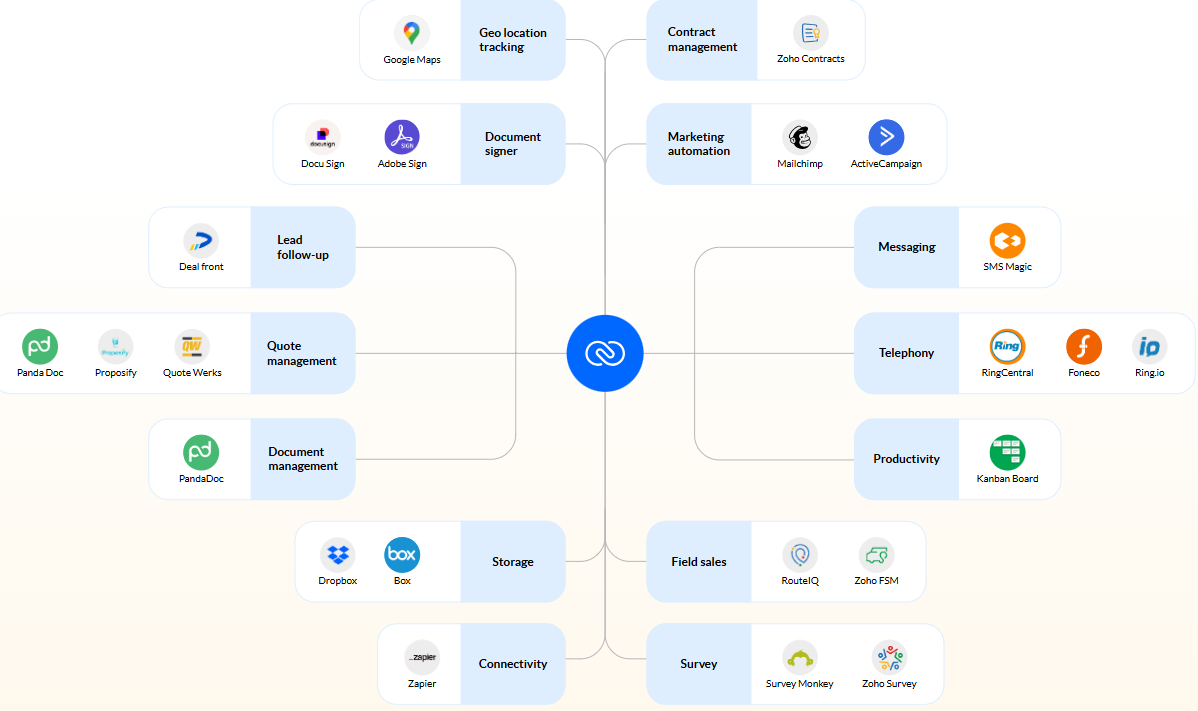
For businesses already running Zoho CRM, Zoho Books, or other Zoho products, Zoho Campaigns integrates natively via single sign-on across 40+ Zoho applications.
The Zoho CRM integration runs deep: bidirectional sync of leads and contacts, campaign activity (opens, clicks) written back to CRM records in real time, campaigns sent from inside Zoho CRM, and unsubscribes that automatically update CRM opt-out flags.
Source: Zoho
ActiveCampaign integrates with Zoho CRM too, but as a third-party connection. ActiveCampaign's strength is its 1,000+ integrations marketplace, covering Shopify, WordPress, WooCommerce, Salesforce, Calendly, Stripe, Zapier, Make, and dozens more. If your stack spans multiple vendors, ActiveCampaign's breadth wins. If your stack is Zoho, Zoho Campaigns is the obvious choice.
The difference shows up in daily work. A marketer on Zoho Campaigns can pull CRM contact attributes into email merge tags, route leads from signup forms into Zoho CRM with field mapping and workflow enrollment, and segment contacts by CRM data without middleware. That native data flow eliminates the integration maintenance that comes with connecting separate vendors.
Neither platform solves the data quality problem
Both ActiveCampaign and Zoho Campaigns are execution tools. They send emails to contacts you give them. Neither tells you whether those contacts still work at the company in your CRM, whether you're missing half the buying committee, or whether the account is even in-market for what you sell.
This is the gap ZoomInfo fills.
ZoomInfo's B2B data platform covers 500M contacts and 100M companies, verified through a multi-source pipeline backed by 300+ human researchers with up to 95% accuracy on first-party data. The email addresses in your campaigns resolve to real people at real companies in the roles you're targeting.
Data alone isn't the full picture. ZoomInfo's Buyer Intent tracks signals from 210 million IP-to-Organization pairings and 6 trillion+ new keyword-to-device pairings each month, showing which companies are researching topics related to your product.
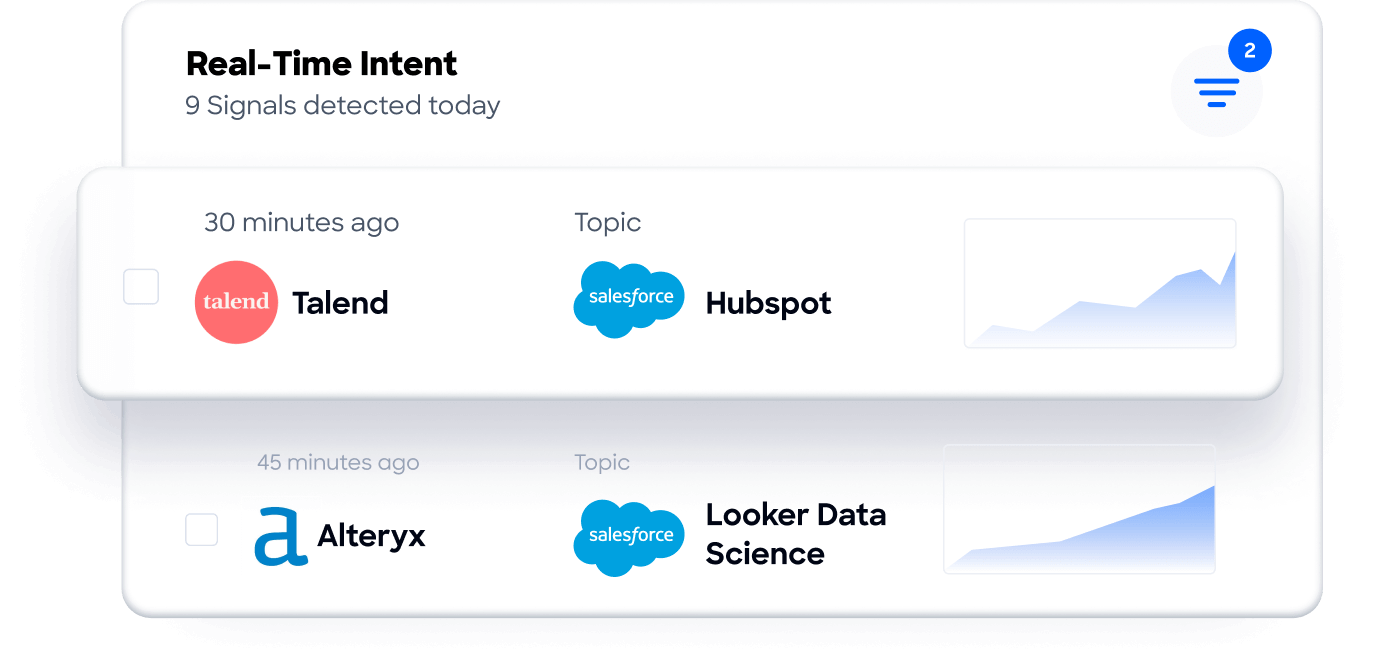
Guided Intent, exclusive to ZoomInfo, identifies topics historically correlated with deal success instead of requiring you to pick topics manually.
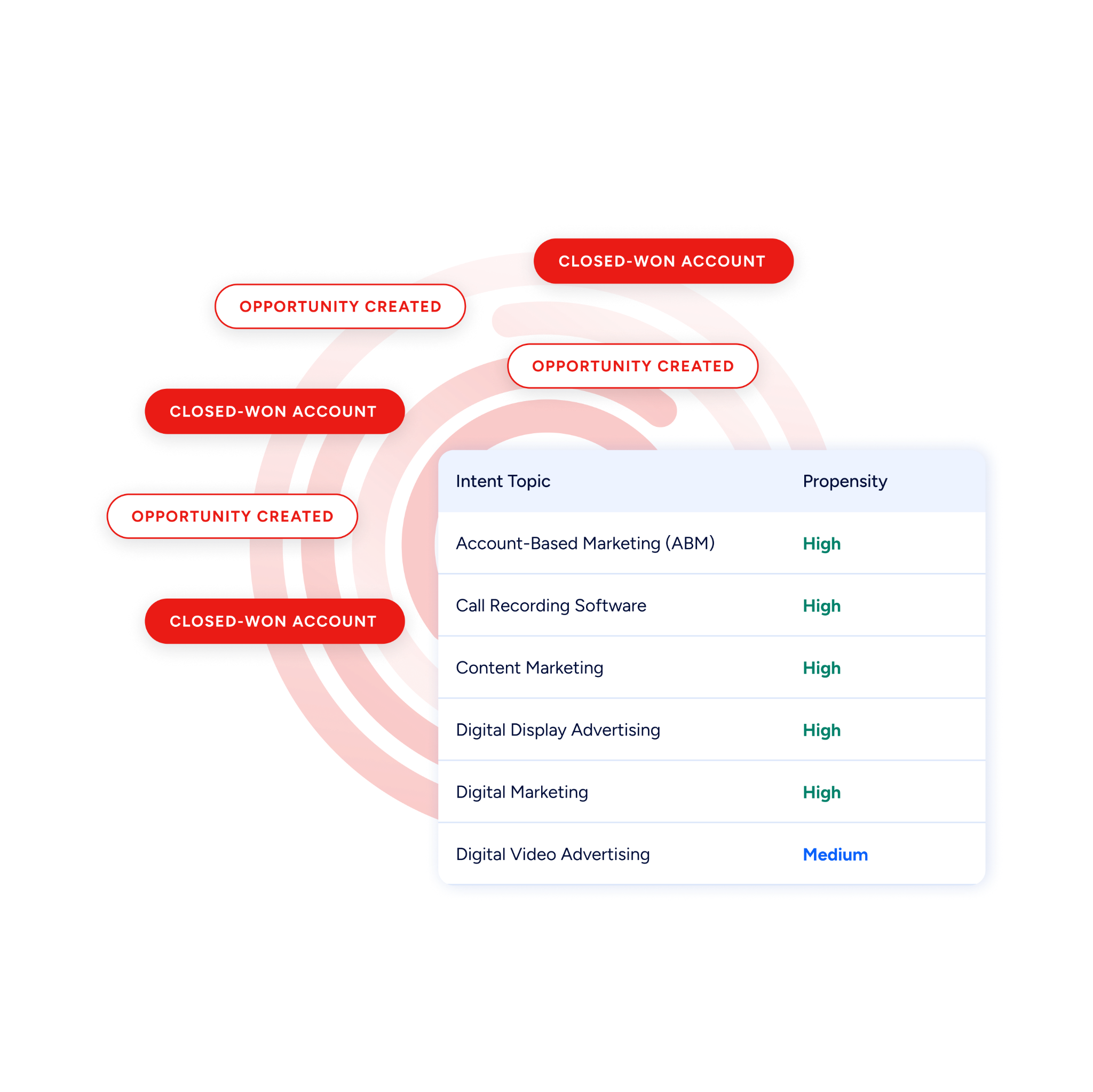
The result: instead of blasting your entire list and hoping the timing is right, you target accounts showing buying behavior now, with verified contact data for the right decision-makers.
ZoomInfo's data helped Redwood Logistics achieve a 99% reduction in CPC and a 310% increase in CTR. "It's not just the data itself. It's more about the right data at the right time to help us reach out with the right message across that full buyer journey," said Chelsea Kenyon, Senior Director of Digital Strategy. (Redwood Logistics)
ActiveCampaign's AI is more ambitious, Zoho's is more practical
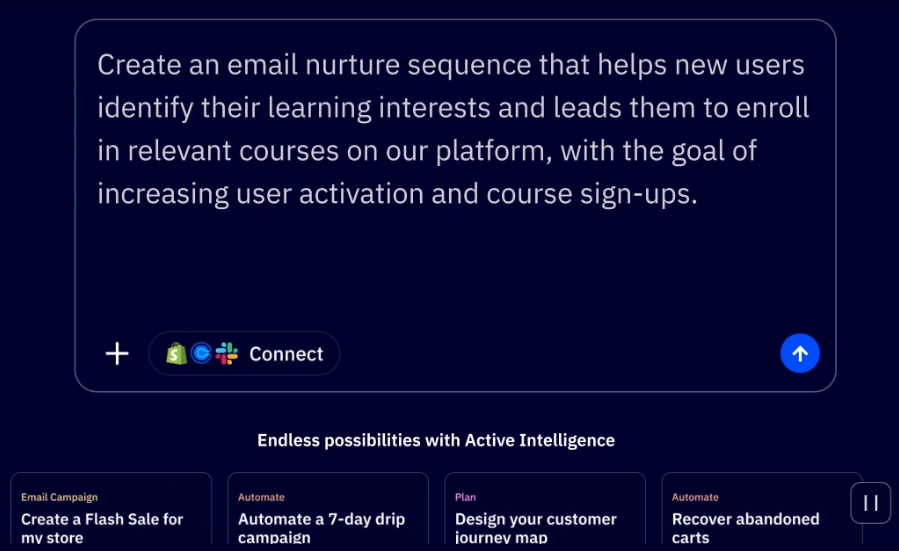
ActiveCampaign is betting big on AI with Active Intelligence, its system-wide intelligence engine. The company frames it as the difference between marketing automation (which runs what you build) and autonomous marketing (which builds what you need).
Source: ActiveCampaign
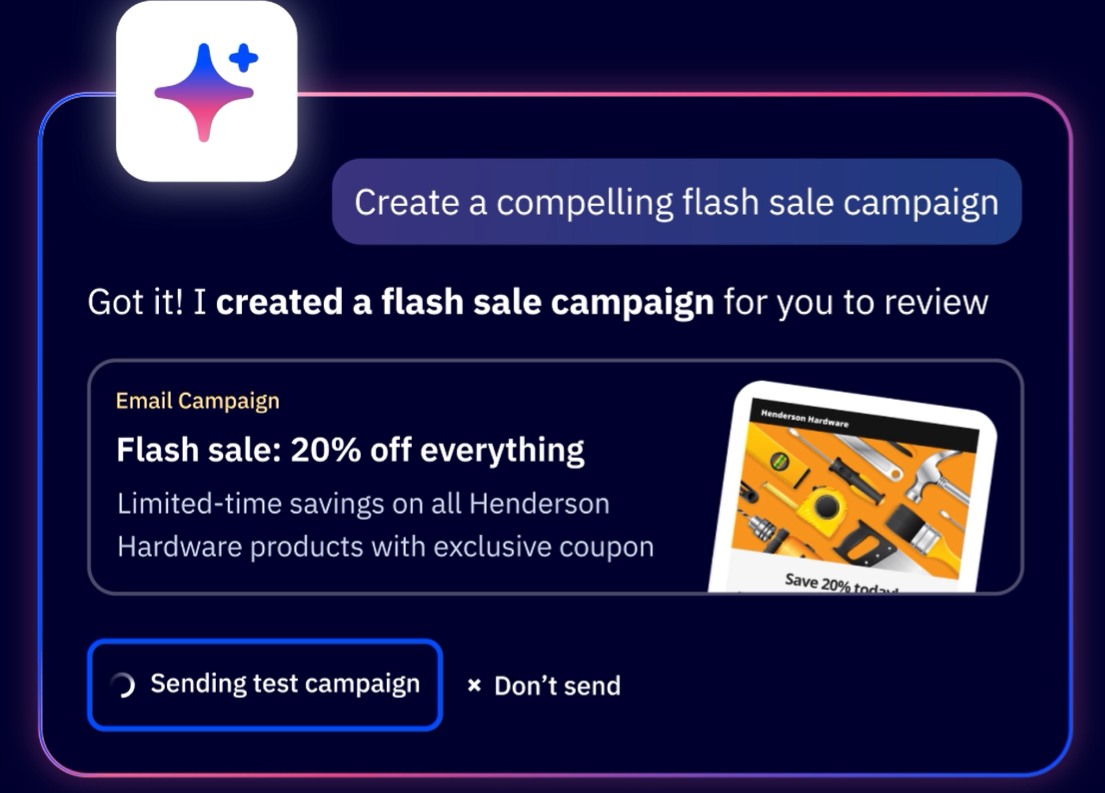
In practice, marketers describe a goal in plain language and AI agents handle campaign creation, segmentation, and optimization. The AI Campaign Builder generates complete email campaigns from a single prompt.
Source: ActiveCampaign
AI-Suggested Segments analyze audience data and surface high-value groups.
The ambition is clear, with caveats. Several Active Intelligence agents (Forms, Personalization, Goals, Segments, and Campaigns) remain in beta as of early 2026. Beta features don't yet match general release quality.
Zoho Campaigns takes a narrower approach. Its Zia integration provides subject line recommendations, send-time optimization per recipient, and predictive engagement scoring. These are useful, focused tools rather than a full AI layer.
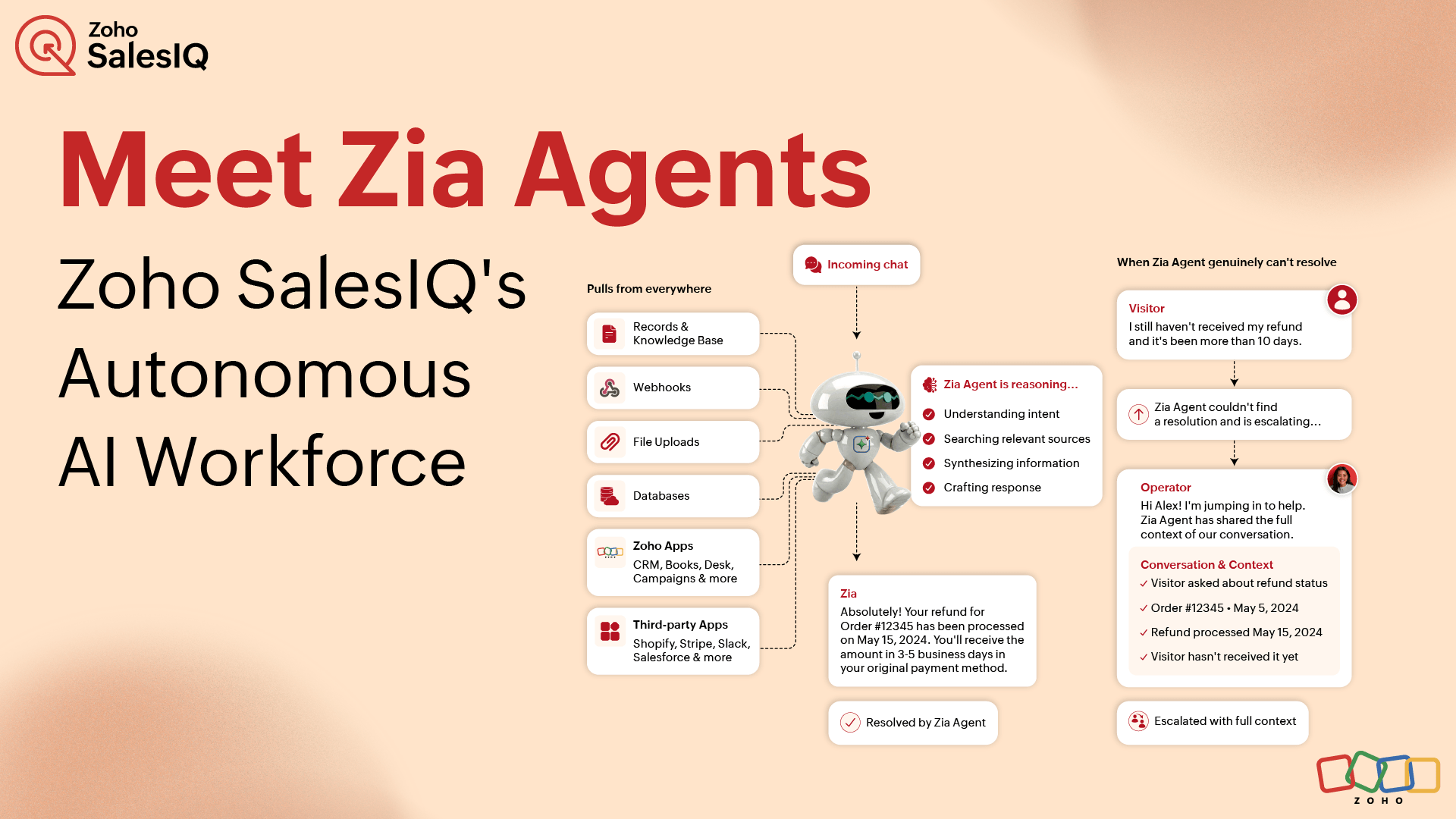
Source: Zoho
Zoho's broader AI strategy centers on the Zia Agent Studio across the Zoho suite, but within Campaigns, AI assists rather than leads.
Where AI changes the equation most is upstream of both platforms. ZoomInfo's GTM Context Graph processes 1.5B+ data points daily and captures why deals move or stall by combining your CRM data, conversation transcripts, and behavioral signals with ZoomInfo's third-party intelligence.
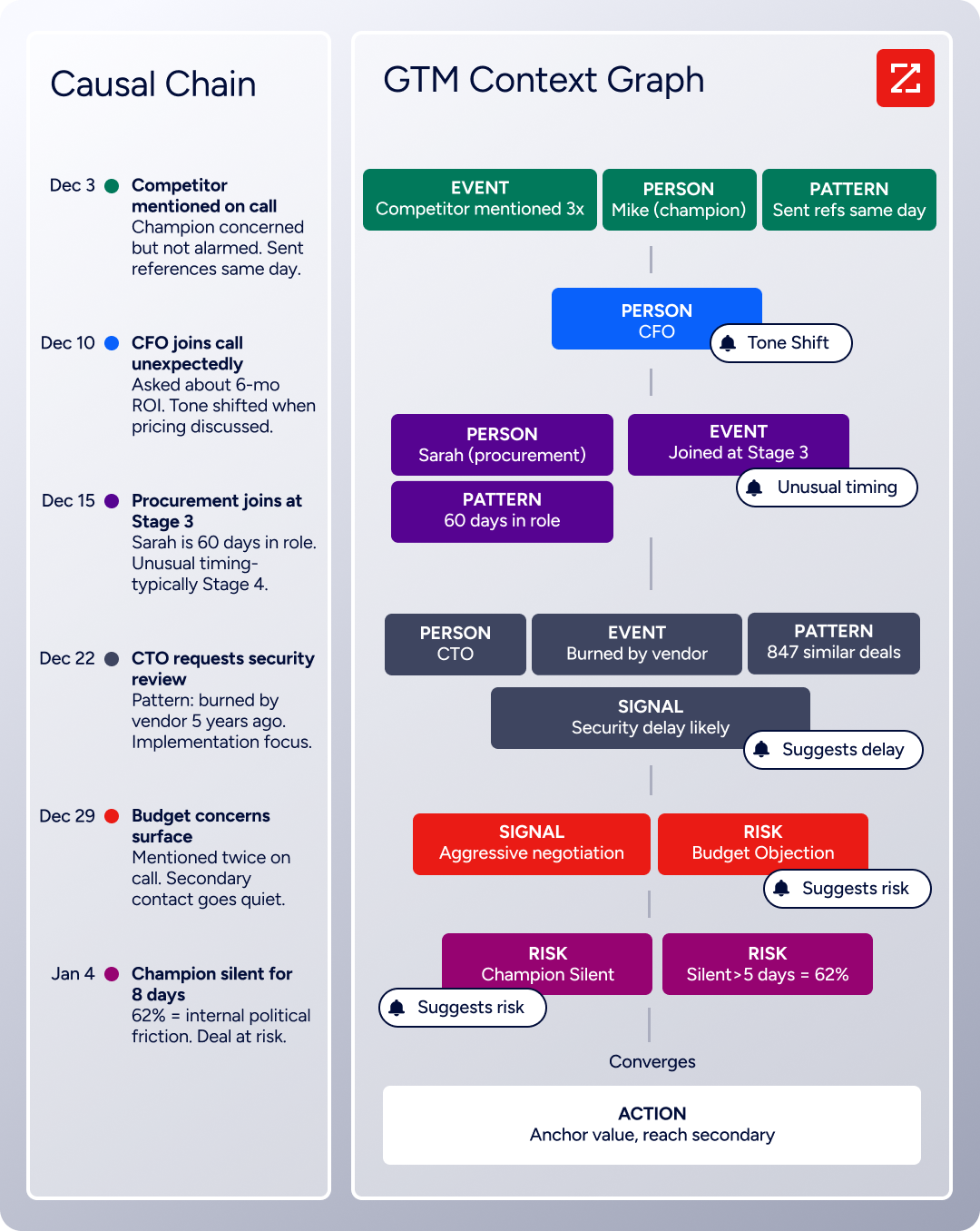
AI-generated outreach in GTM Workspace addresses the specific concerns those signals reveal, and GTM plays in GTM Studio target accounts matching your actual win patterns.
Email deliverability approaches differ
Both platforms take deliverability seriously, with different infrastructure.
ActiveCampaign reports 99.88% deliverability by its own measurement, with EmailToolTester independently reporting 94%. The platform routes emails through a private network instead of the public internet, cutting send time. Authentication covers DKIM and DMARC, with dedicated IP management and pre-warmed IPs for high-volume senders.
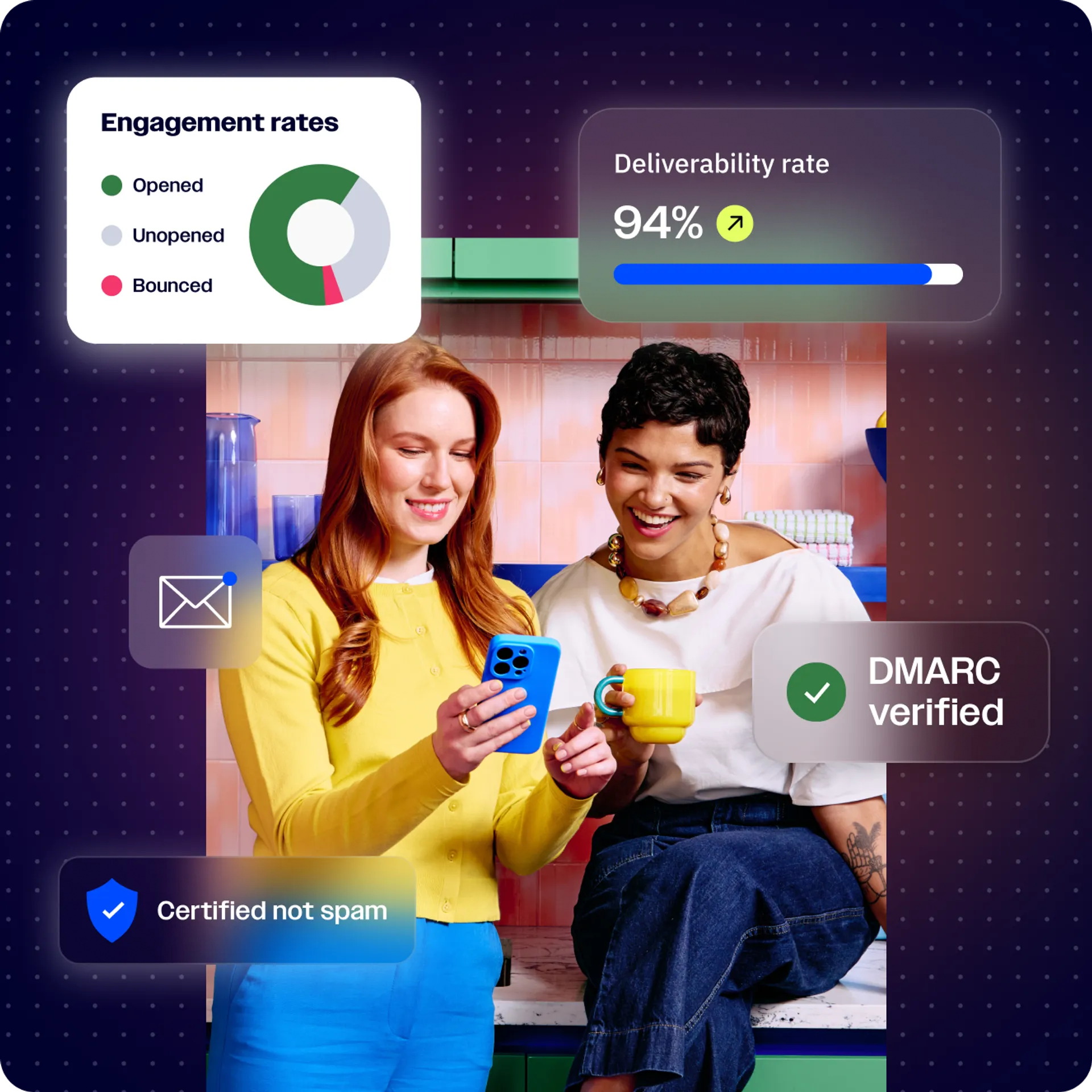
Source: ActiveCampaign
An Apple MPP filter strips inflated open metrics caused by Apple Mail Privacy Protection, giving marketers more accurate engagement data.
Zoho Campaigns holds AICPA SOC certification and CSA Certified Sender status (a European credential that whitelists senders meeting strict anti-spam standards).
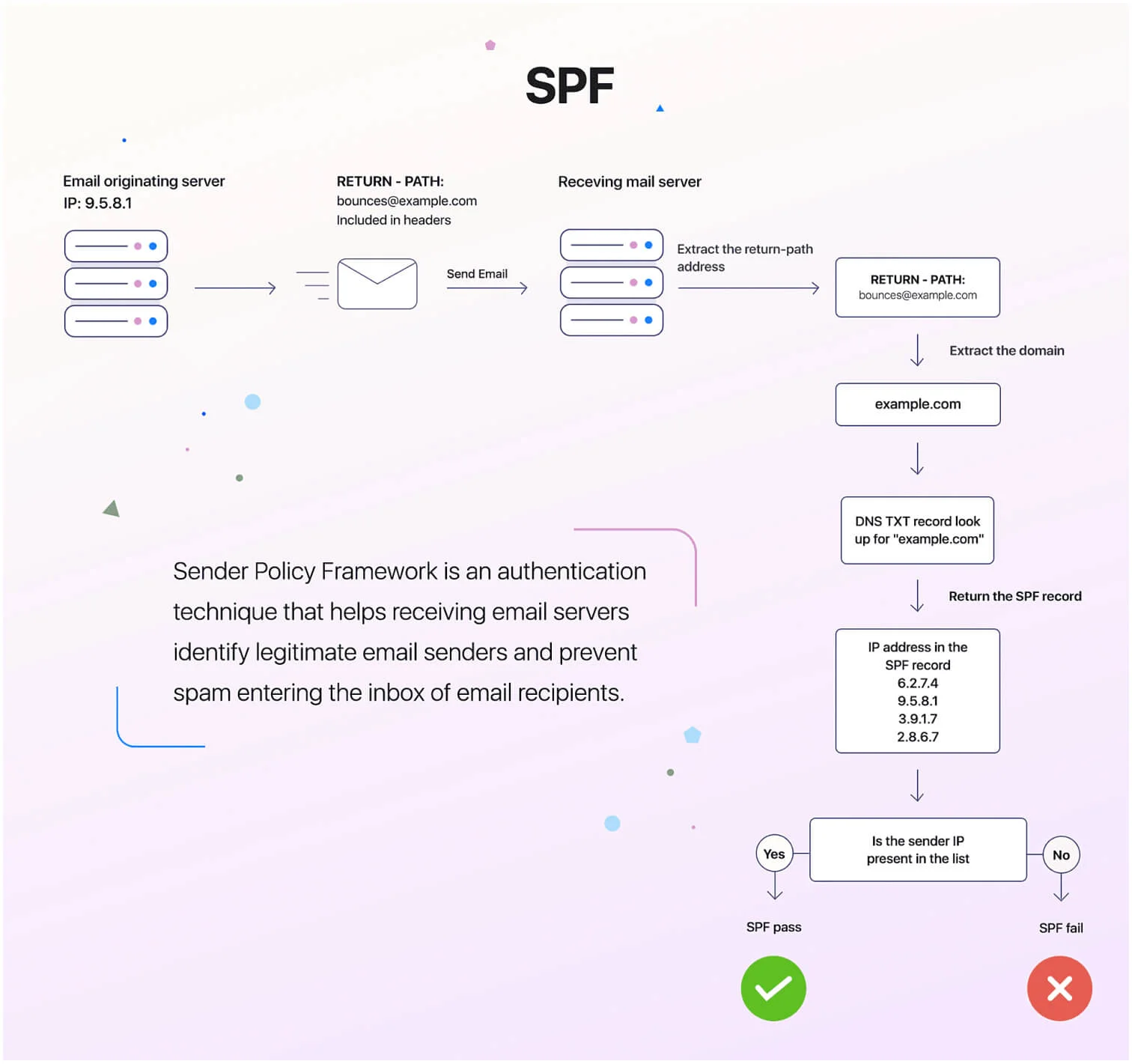
Source: Zoho
The platform's anti-spam engine scans sender domain, email content, and URLs before every send, blocking non-compliant messages. Dedicated IPs are available for senders exceeding 100,000 emails per month, with Zoho's deliverability team monitoring IP reputation.
One friction point: some users report that Zoho's content review process can take days to weeks, blocking time-sensitive sends. This is a tradeoff of Zoho's approach to protecting its shared IP pool, but it frustrates teams on tight schedules.
93% of surveyed customers rate ActiveCampaign's deliverability higher than competitors. The company processed 109 billion emails in 2025 with an average open rate of 40.4% and click rate of 6.7%.
Cross-channel reach favors ActiveCampaign
ActiveCampaign reaches well beyond email. Native SMS marketing is built into the automation builder with two-way messaging and delivery to 180+ countries. WhatsApp messaging, added in 2025 through the Hilos acquisition, includes broadcast messaging, a no-code Flows builder for automated conversations, and a shared inbox for live agent replies.
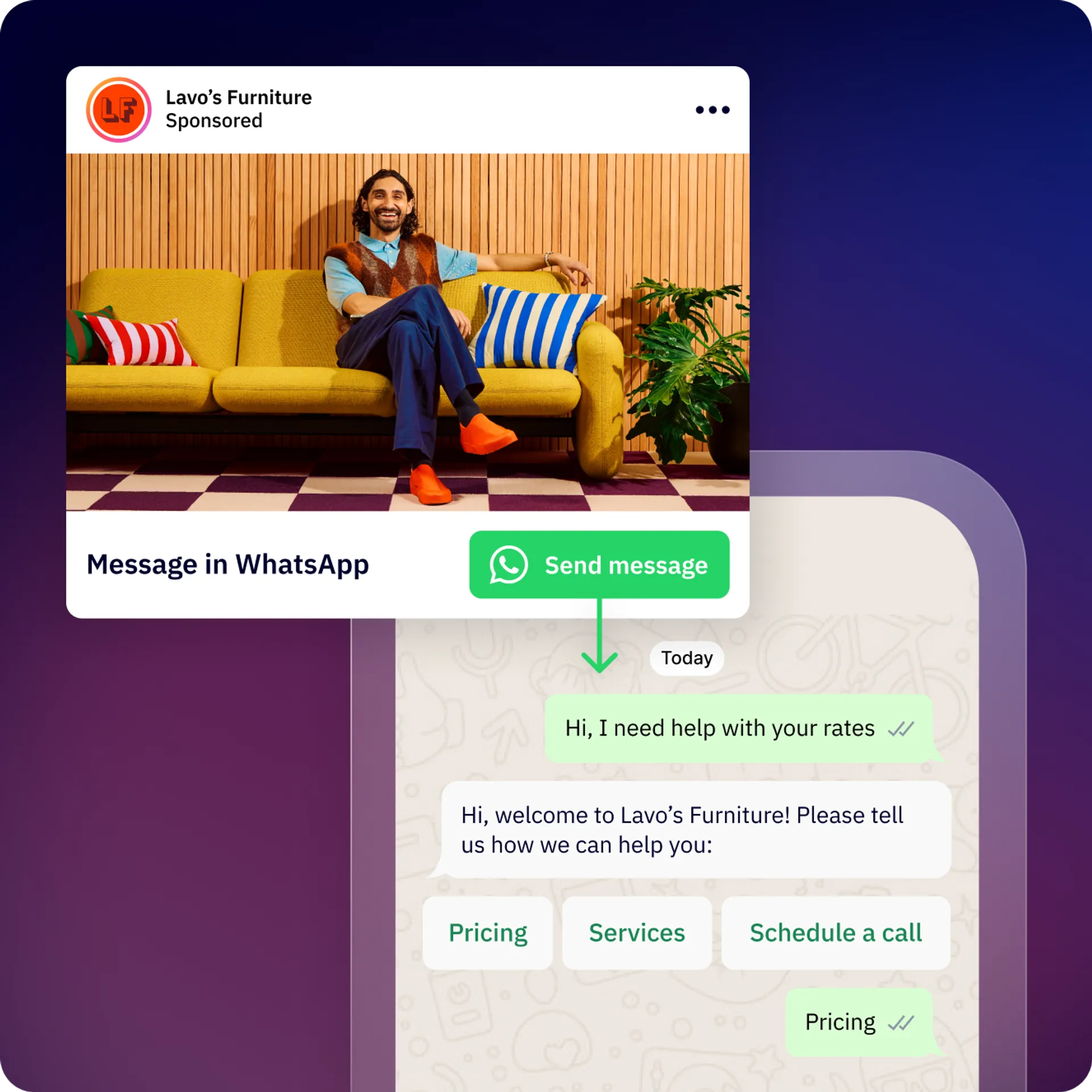
Source: ActiveCampaign
ActiveCampaign is a Meta Business Partner and accesses WhatsApp through the Business API.
All three channels (email, SMS, and WhatsApp) run from a single contact database and automation builder. An SMS reply can trigger an email follow-up, a WhatsApp interaction can update a lead score, and the entire journey runs from one workflow.
Zoho Campaigns supports email and SMS from one platform. SMS works through Zoho's own gateway for the US, Canada, and India, with additional countries covered through 13 third-party gateways including Twilio, Vonage, and MessageBird. SMS credits are purchased separately and roll over unused.
WhatsApp is not a native channel in Zoho Campaigns. For businesses where WhatsApp is a primary communication channel (common in Latin America, Europe, and Southeast Asia), this is a real gap.
CRM capability comparison
ActiveCampaign includes a built-in CRM with visual Kanban pipelines, deal tracking, and lead scoring. Because the CRM shares a platform with email marketing, deal records carry each contact's full behavioral history: which emails they opened, which pages they visited, what content they engaged with.
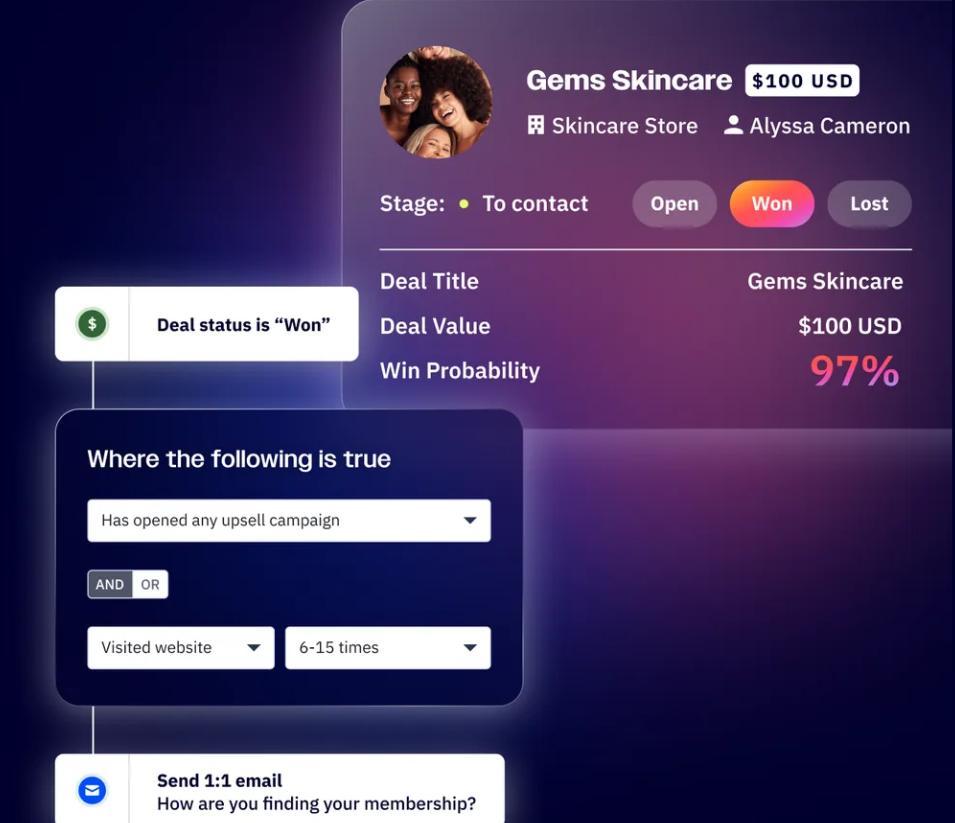
Source: ActiveCampaign
Sales routing assigns deals automatically by round-robin, lead score, geography, or custom fields. Active Intelligence surfaces win probability scores and recommends next actions at the deal level.
This won't replace Salesforce or HubSpot CRM for teams with complex forecasting needs. But for small teams that want marketing and sales on one platform without managing two products, ActiveCampaign eliminates integration overhead.
Zoho Campaigns has no built-in CRM. It relies on Zoho CRM as a separate product. The integration is native and bidirectional, but it's still two products. Some users report needing to manually export and re-upload contacts between Zoho CRM and Campaigns despite same-vendor ownership, a friction that undercuts the ecosystem advantage.
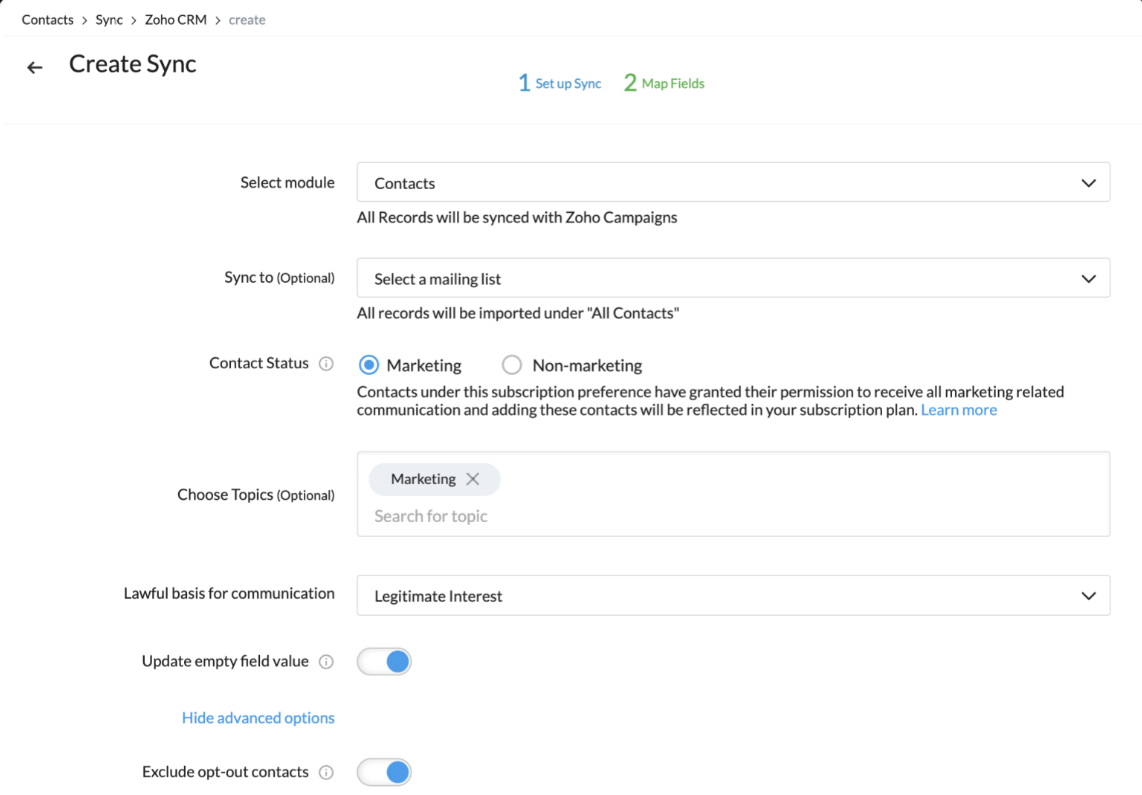
Source: Zoho
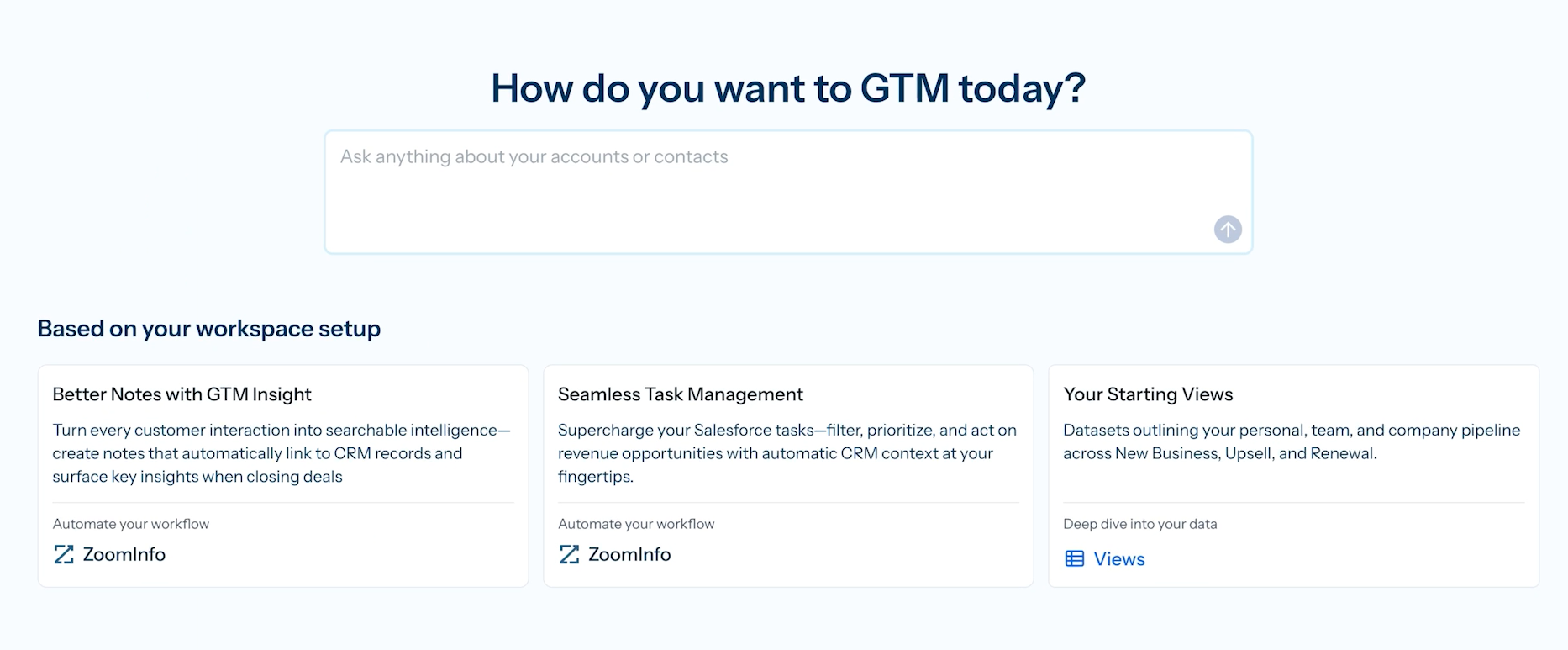
For B2B teams, neither platform's CRM matches ZoomInfo's approach. GTM Workspace gives sellers a Book of Business view that combines CRM data with real-time buying signals, AI-generated outreach, and buying group intelligence. Instead of a static deal record, sellers see in-market buyers matched to their criteria, with pre-drafted actions on every signal.
Seismic attributed 39% of active pipeline to opportunities identified or influenced by ZoomInfo signals, with their sales team reporting 54% more productivity. "That combination of our internal CRM data, external signals, and AI that's given all that context has helped us craft very specific account- and persona-based messages. And people have responded to them right away," said Toby Carrington, Chief Business Officer. (Seismic)
Reporting shows both platforms' limits
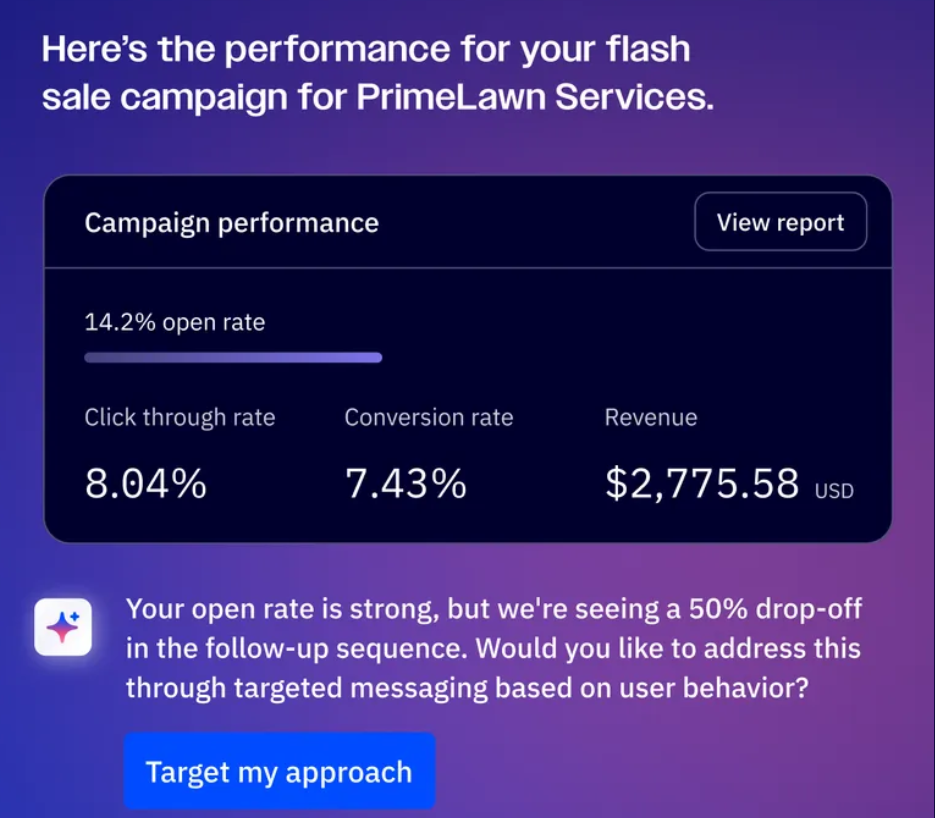
ActiveCampaign offers multi-channel campaign reporting, automation reports, pipeline reports, and revenue attribution (on the Enterprise tier). Active Intelligence adds conversational analytics: users type questions in plain language and get data summaries. BotSense filters bot clicks from engagement data. Split testing supports up to five variants, going beyond standard A/B.
Source: ActiveCampaign
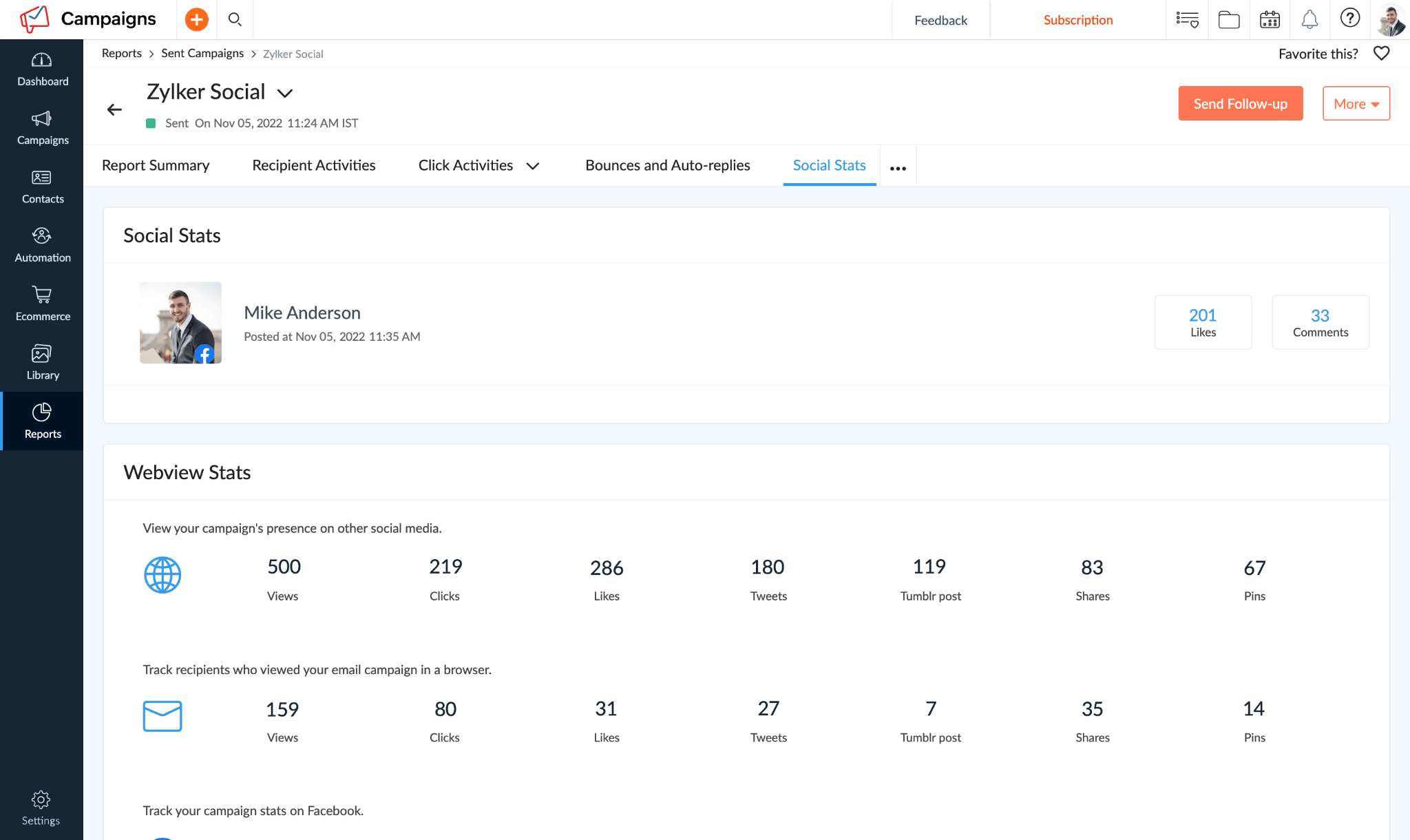
Zoho Campaigns covers the basics: opens, clicks, bounces, unsubscribes, geographic engagement, and device breakdowns. Ecommerce revenue reporting works for connected stores. Data exports to Zoho Analytics for custom dashboards. But users describe the reporting as basic with limited real-time insights. Anyone running attribution or cohort analysis will find it thin.
Source: Zoho
Both platforms measure what happens after you send. Neither tells you whether you targeted the right accounts.
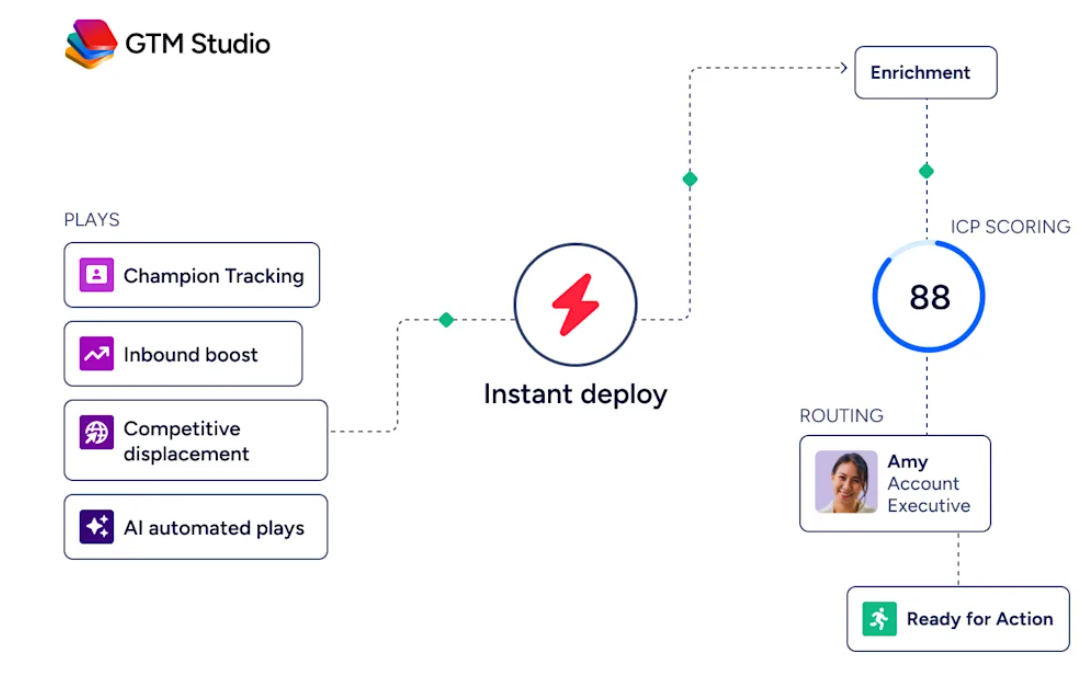
ZoomInfo's GTM Studio tracks engagement, funnel progression, and top-performing segments, connecting campaign execution to pipeline impact. When campaigns run on ZoomInfo's data, reporting links directly to the signals that triggered the campaign, so you measure not just "did they open" but "did it generate pipeline."
Onboarding and support models
Zoho Campaigns offers unlimited free onboarding sessions for up to 60 days on paid plans. Support includes email and callback-based phone, with limited weekend coverage. The platform also runs structured training programs in virtual classroom and one-on-one formats.
ActiveCampaign offers free migration services, transferring contacts, templates, segments, and campaigns from competitor platforms. Support includes chat and tickets on all paid plans, priority support on Professional, and a dedicated account team on Enterprise. A Certified Consultant directory connects you with vetted experts for deeper work. Paid specialist sessions start at $79.
The learning curves differ. Zoho Campaigns is simpler to start with, thanks to fewer features and structured onboarding. ActiveCampaign offers more power but demands more ramp-up. G2 reviewers note that basic automations are accessible, but mastering conditional logic, tagging, and custom reports takes real investment.
ZoomInfo structures onboarding across 30 to 90 days, covering planning, implementation, training, and adoption. The program improved customer satisfaction scores by 25% and won Rocketlane's Golden Comet award for Best Customer Onboarding Team of 2024. ZoomInfo University provides role-specific learning paths, certifications, and live webinars.

Security and compliance comparison
All three platforms take security seriously, with different certification profiles.
Zoho Corporation holds an extensive set of certifications: ISO/IEC 27001, ISO/IEC 27701, ISO/IEC 27017, ISO/IEC 27018, ISO 9001, ISO/IEC 20000-1, ISO 22301, and SOC 2 Type 2. Zoho Campaigns inherits these. Zoho treats GDPR as its baseline standard globally, with campaign features including double opt-in, field encryption, data erasure, and lawful basis tracking.
Data centers operate in the US, EU, India, Australia, Japan, Canada, China, and Saudi Arabia, covering most residency requirements.
ActiveCampaign maintains GDPR compliance with a DPA and Standard Contractual Clauses, CCPA and LGPD compliance, and HIPAA support on Enterprise. SSO is Enterprise-only. A Security Checklist is available in-product on all tiers.
ZoomInfo holds ISO 27001, ISO 27701, SOC 2 Type II, TRUSTe GDPR Practices Validation, and TRUSTe CCPA Practices Validation, all renewed annually. The company is a registered data broker in California and Vermont, with a dedicated Trust Center.
For regulated industries, data residency and specific certifications often decide the choice. Zoho's range of ISO certifications and multi-region data centers gives it an edge where data sovereignty is strict. ZoomInfo's TRUSTe GDPR and CCPA validations provide independent verification of privacy practices for B2B data handling.
ActiveCampaign vs. Zoho Campaigns vs. ZoomInfo: Which should you choose?
These three platforms solve different problems. The right combination depends on where your biggest gap is.
Choose ActiveCampaign if:
You need marketing automation with complex branching workflows
A built-in CRM that ties marketing activity to sales pipeline matters
Cross-channel campaigns spanning email, SMS, and WhatsApp are part of your strategy
You want AI-powered campaign creation and optimization
You're willing to invest time learning the platform
Choose Zoho Campaigns if:
You already use Zoho CRM or other Zoho products
Budget is the primary constraint and unlimited sends matter
Your email marketing needs are straightforward: newsletters, drip campaigns, basic automation
Data residency requirements point to Zoho's multi-region data centers
You want a capable tool without mastering a complex platform
Add ZoomInfo if:
Your campaigns suffer from outdated contacts, missing decision-makers, or blind targeting
You need to know which accounts are in-market before you email them
Your marketing team spends hours building target lists instead of running campaigns
You want AI that understands your pipeline patterns, not just email engagement
You need verified B2B data that flows into any email platform through APIs or direct integrations
See how ZoomInfo's data changes your campaigns.
The ActiveCampaign vs. Zoho Campaigns comparison comes down to depth versus affordability. ActiveCampaign gives you more power at a higher price. Zoho Campaigns gives you solid execution at a fraction of the cost, especially inside the Zoho ecosystem.
But both share a limitation: they're only as good as the data you feed them. ZoomInfo solves this upstream, providing verified contacts, company intelligence, and intent signals that make every campaign more targeted, better timed, and more likely to build pipeline.
Whether you choose ActiveCampaign's automation depth or Zoho Campaigns' simplicity, building on ZoomInfo's data turns an email platform into a pipeline engine.
SpringDB saw 2x-3x increases in campaign conversions and a 300% increase in database usability after building on ZoomInfo's data. "You'll get 10x the value if you think of ZoomInfo as a full platform and not just a tool for one team," said John Kotsuros, Founder and CEO. (SpringDB)
ActiveCampaign vs. Zoho Campaigns vs. ZoomInfo FAQ
What is the core difference between ActiveCampaign, Zoho Campaigns, and ZoomInfo?
ActiveCampaign is a marketing automation platform with a built-in CRM for businesses that need advanced email workflows, behavioral triggers, and cross-channel campaigns across email, SMS, and WhatsApp.
Zoho Campaigns is an email and SMS marketing tool built for the Zoho ecosystem, offering solid execution at lower cost. ZoomInfo is a B2B data platform that provides verified contacts, company intelligence, and buyer intent signals, solving the data quality problem upstream of whichever email platform you use.
Which platform is cheapest for email marketing?
Zoho Campaigns, by a wide margin. Its free plan covers 2,000 contacts and 6,000 emails per month permanently, and paid plans include unlimited sends. ActiveCampaign starts at $15/month for 1,000 contacts, but costs $149/month at 10,000 contacts on Starter, and useful features require higher tiers. ZoomInfo uses custom, consumption-based pricing and is not primarily an email sending tool.
Can ZoomInfo replace ActiveCampaign or Zoho Campaigns?
No. ZoomInfo complements email platforms; it doesn't replace them. ZoomInfo provides the data layer (verified contacts, company intelligence, and intent signals that identify who to target and when). ActiveCampaign and Zoho Campaigns provide the execution layer (sending emails, running automations, managing engagement).
The strongest results come from using ZoomInfo's intelligence to power campaigns in your email platform of choice.
Which platform has better marketing automation?
ActiveCampaign, by a significant margin. Its visual builder supports unlimited actions, behavioral triggers, conditional branching, predictive sending, and AI-powered campaign creation. Zoho Campaigns covers basic workflows (welcome sequences, drip campaigns, cart abandonment) but locks advanced features behind the Professional plan.
ZoomInfo's GTM Studio offers AI-driven campaign orchestration with pre-built GTM plays, but focuses on B2B account targeting rather than subscriber-level email automation.
How do the platforms compare on integrations?
ActiveCampaign has the broadest ecosystem with 1,000+ apps, including Shopify, Salesforce, WordPress, and major CRM and ecommerce platforms. Zoho Campaigns integrates natively with 40+ Zoho apps via single sign-on and connects to third-party tools like Salesforce, HubSpot, and Shopify.
ZoomInfo's marketplace lists 172+ partners and connects to any tool through APIs and MCP, with direct integrations for Salesforce, HubSpot, Microsoft Dynamics 365, and platforms like Snowflake and AWS.
Which platform is best for ecommerce email marketing?
Both ActiveCampaign and Zoho Campaigns support ecommerce. ActiveCampaign integrates with Shopify and WooCommerce for cart recovery, post-purchase flows, and behavioral automation, with its CRM tracking the customer journey. Zoho Campaigns connects to Shopify, WooCommerce, and Zoho Commerce with cart abandonment workflows and AI-based product recommendations.
For ecommerce-first email marketing, dedicated tools like Klaviyo may outperform either, but both handle standard ecommerce automation well.
Do any of these platforms include buyer intent data?
Only ZoomInfo. Its Intent signals track research activity across 210 million IP-to-Organization pairings and 6 trillion+ keyword-to-device pairings monthly. Guided Intent automatically identifies topics correlated with deal success.
Neither ActiveCampaign nor Zoho Campaigns includes intent data; they track engagement with your campaigns but can't tell you which accounts are researching solutions before they interact with your content.
Which platform is best for a team already using Zoho CRM?
Zoho Campaigns, with native bidirectional sync, single sign-on, and campaign activity written back into CRM records. ActiveCampaign also integrates with Zoho CRM, but as a third-party connection. ZoomInfo integrates with Zoho CRM as well, enriching contact data and adding intent signals to the records your campaigns draw from.
More ActiveCampaign comparisons:
